乐高建筑师 - 续章2
本书内容
本页包含《乐高建筑师》续篇内容,涵盖:
- 微尺度建筑设计案例(Gold Wing、Streamliner、Circle Drive、Utopia系列)
- 建筑设计原理(对称与非对称)
- 即兴积木创作技巧
- 乐高大师作品展示(Birgitte Jonsgard、Craig Mandeville)
- 高级建筑技巧(色彩搭配、室内设计、绿色能源)
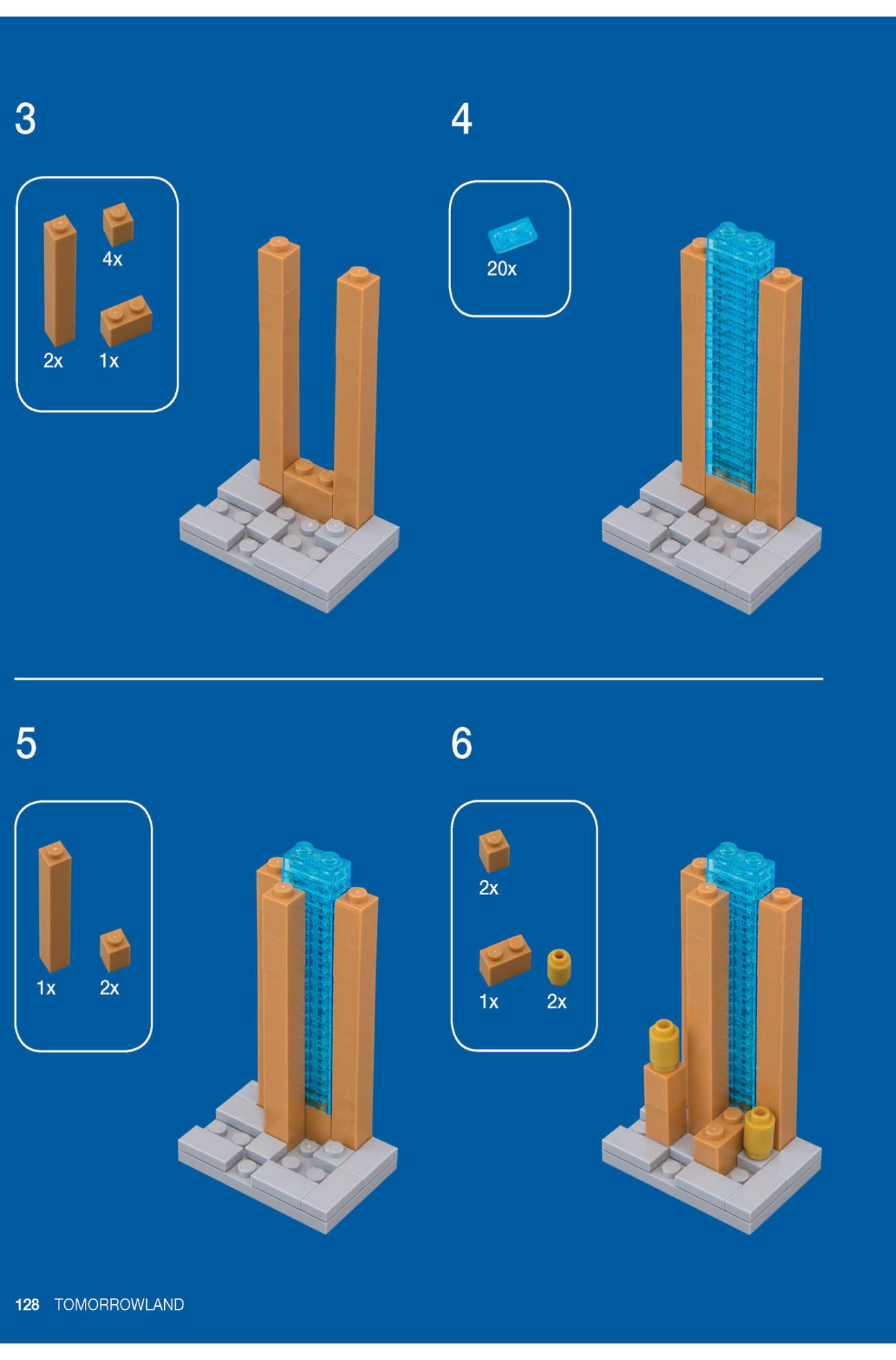
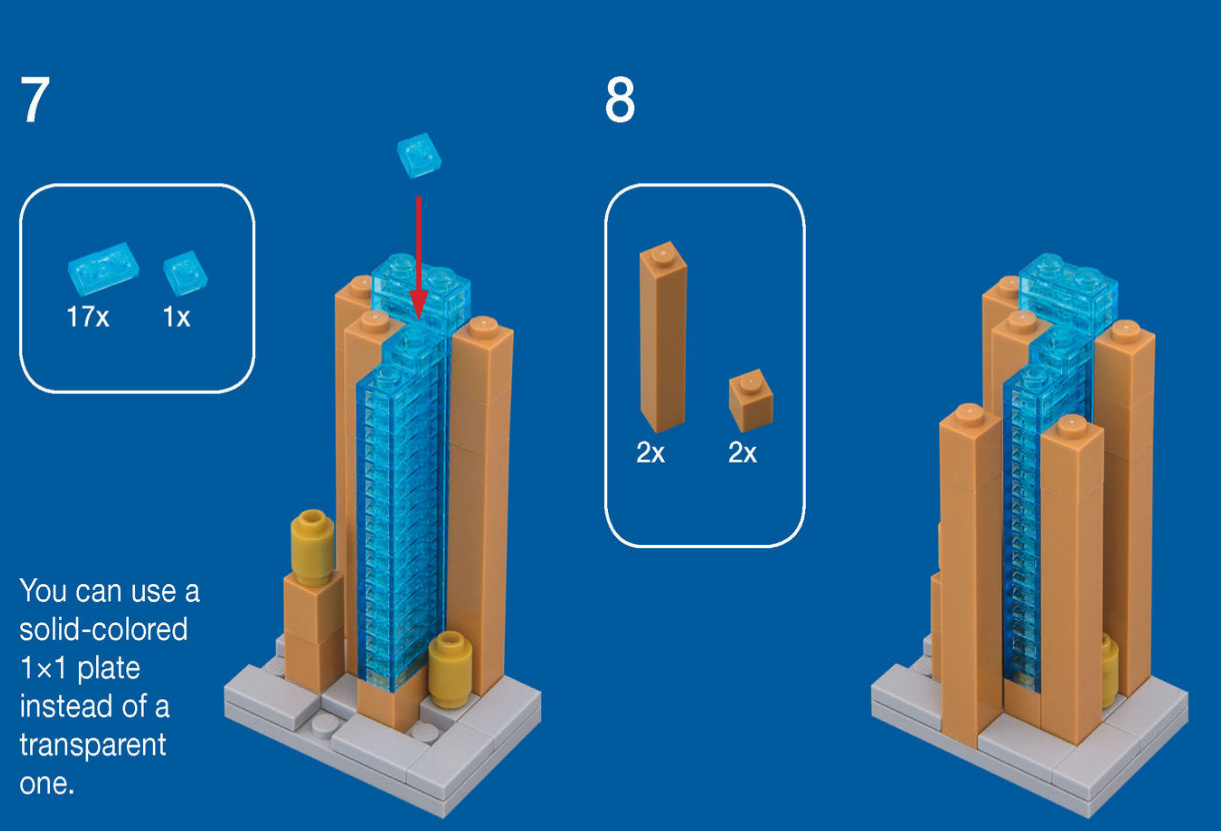
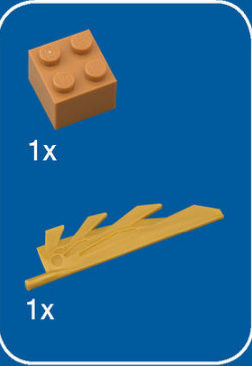
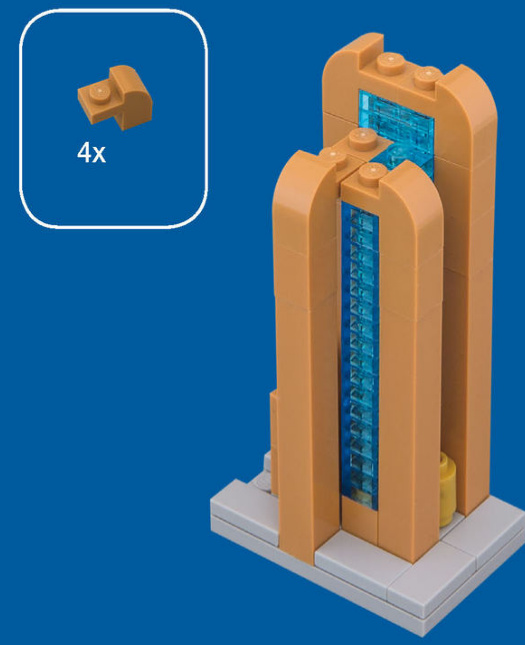
The gold wing fits into the open studofthe gold 1x1roundbrick.
MAKEITYOUROWN
Try these Goldwing variations to inspire your own creations.
Attach1x1 round tilestoSNOTbricks tomakeporthole windows.They may goinandout offashion,but it’s neverabadtimeto bring themback!
In the variation on the right,we use 1x1roundplates toreplacethe lowerwindows. Youcanusethe
sameroundplates to fill in the rear archtocreate moreoffice space.
IMPROVISING WITH BRICKS
If we can use a minifigurefrying pan to top a skyscraper, then the sky’s the limitfor creative LEGO design.Letyour bricks guide the way!
Add a subtle variationincolor bycombining transparentlight blue1x2plates withtransparent mediumblue ones,asshown on the left.
Stack1x2bricks in alternating colorstomake convincing microscale windows.
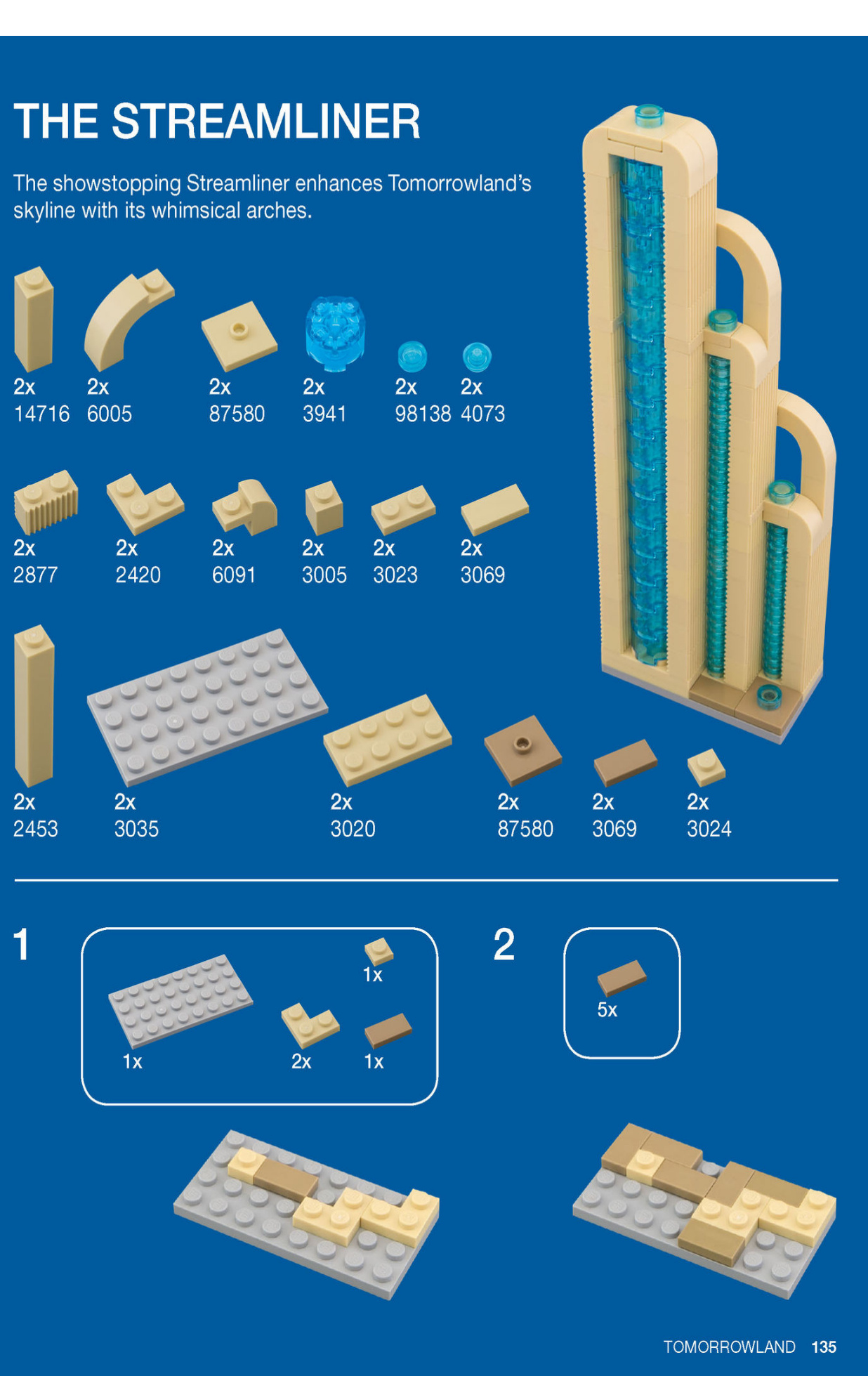
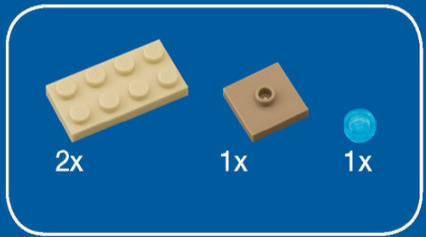
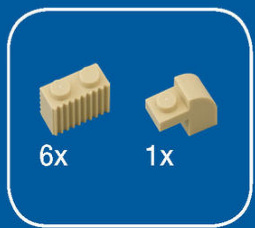
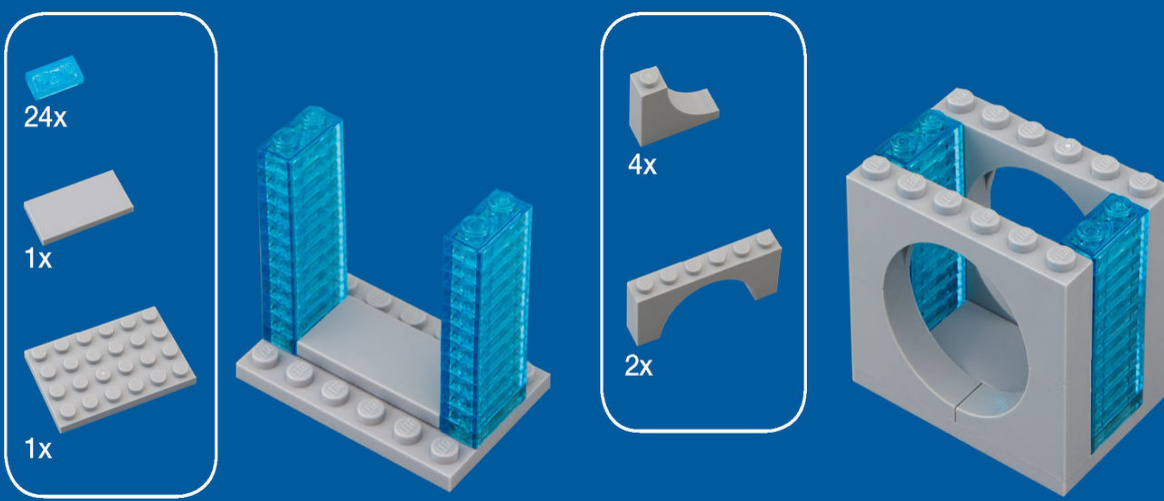
Stack two2x4 platesontop ofeach other.
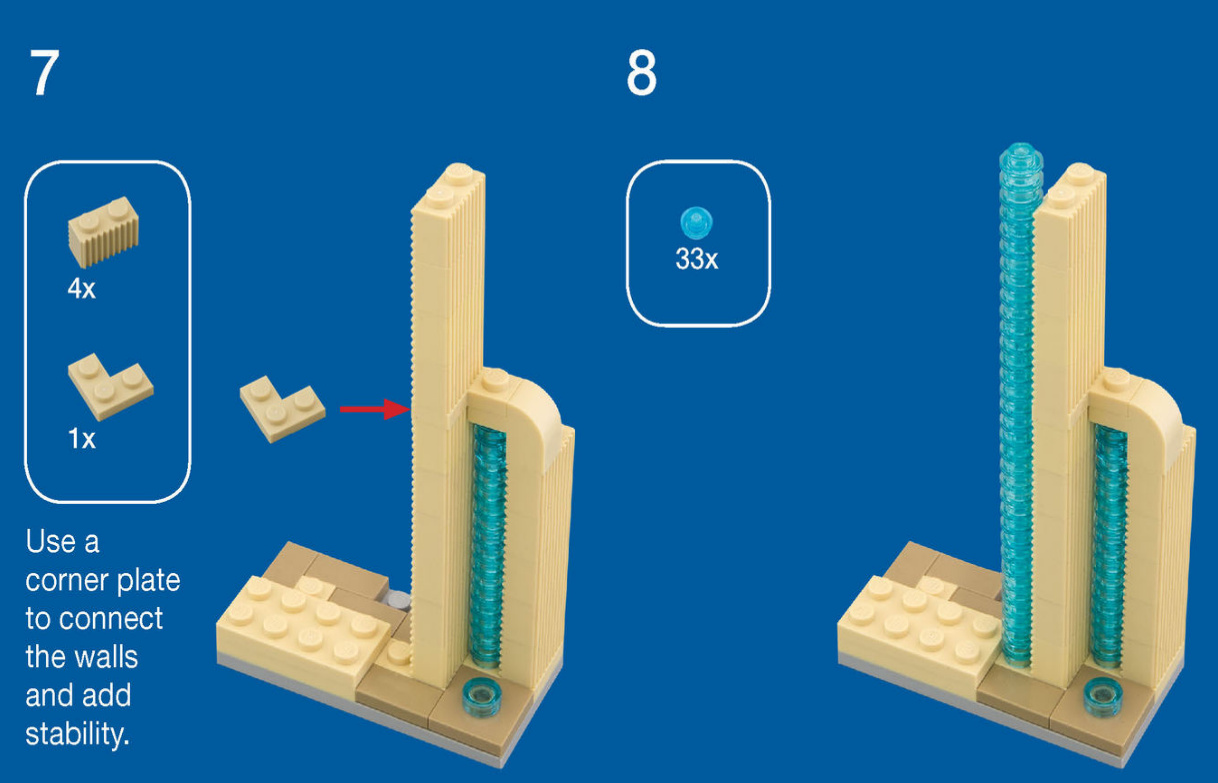
Addanother cornerplate ontop forextra strength.
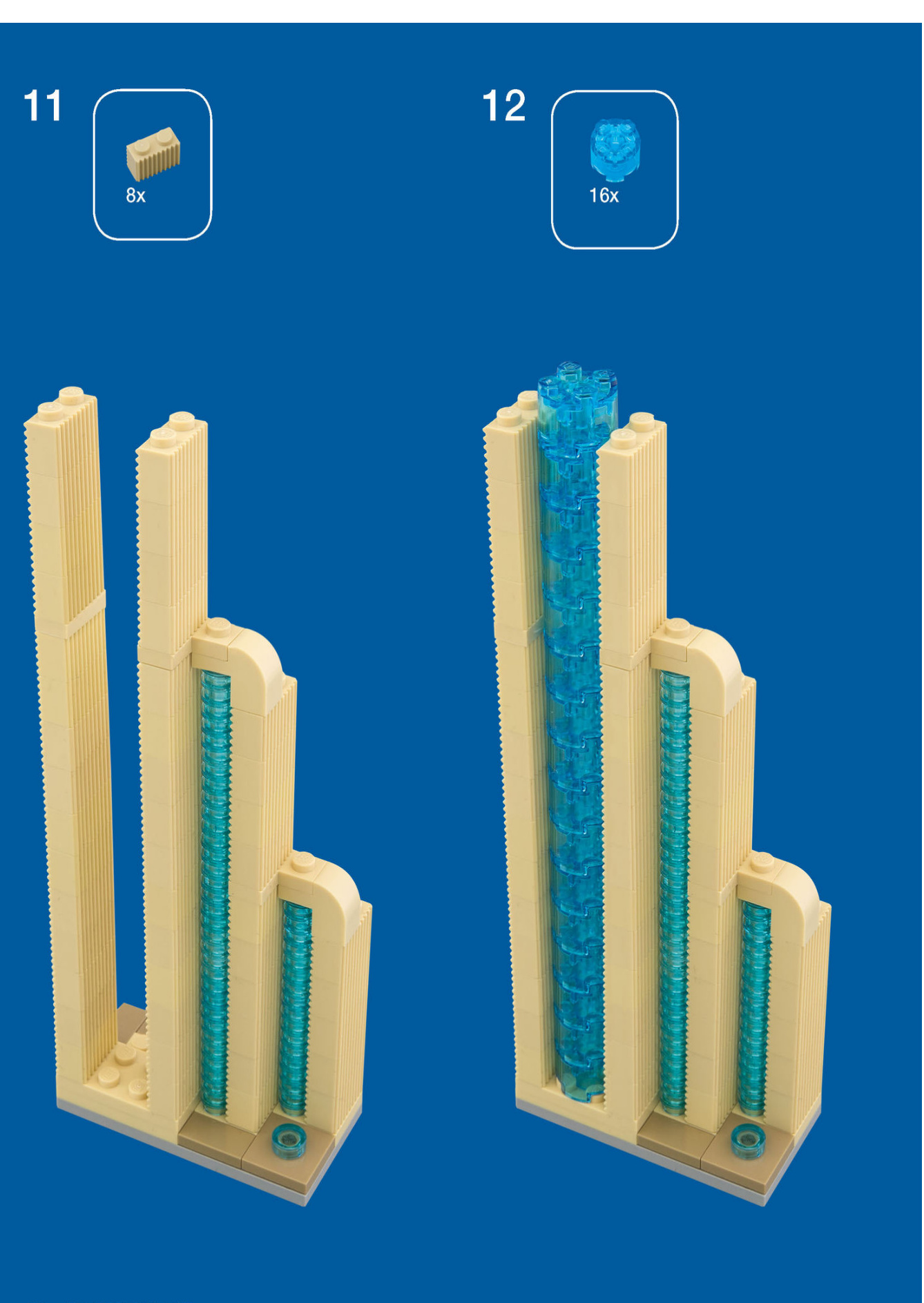
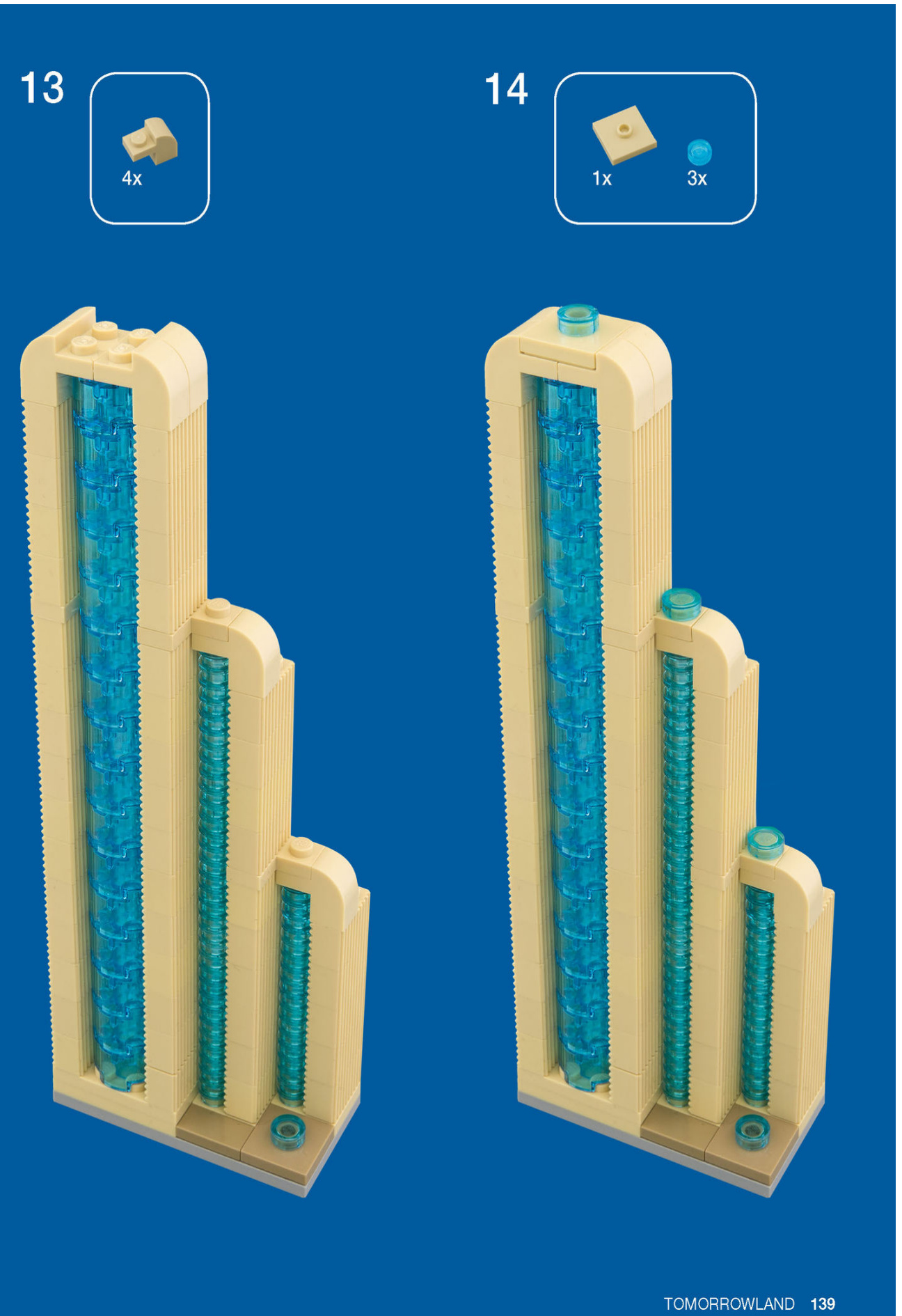
Spin the buildingaround 180degrees tocontinue workingon theotherside.
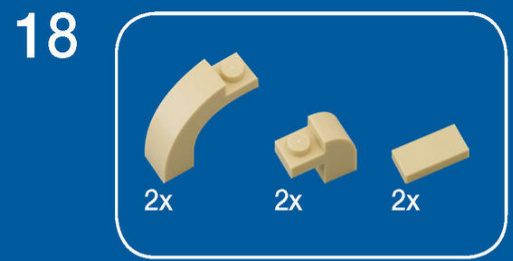
Youcan choosewhich sideofthe buildingisthe front.Either wayworks!
MAKE IT YOUR OWN
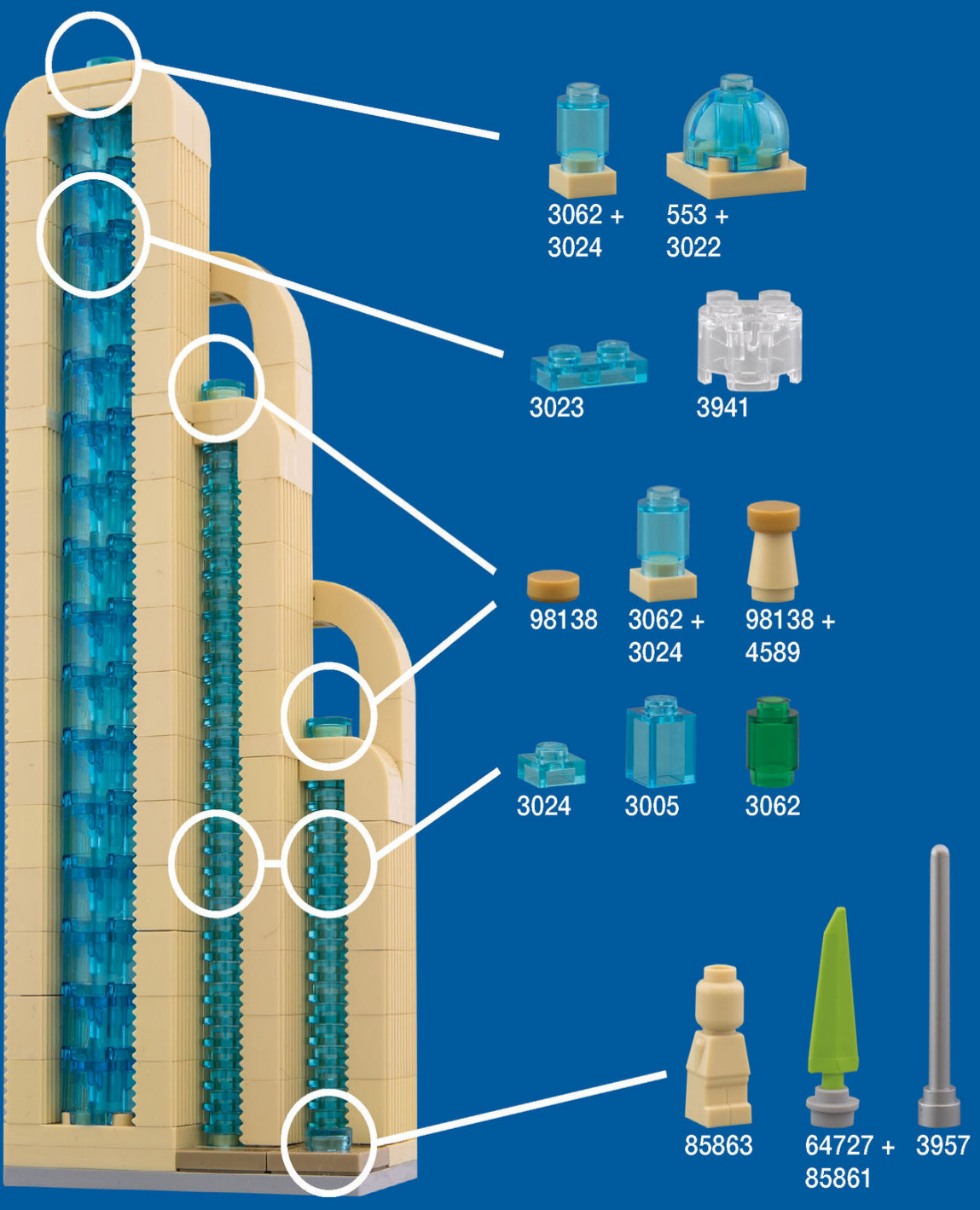
The Streamliner you see here doesn’t totally match the one shown in the introductionofthischapter.WhiletheoriginalStreamlineruses192round plates in the tallesttower, thisversion is moreeconomical, using only 172x2 roundbricksto build thesametower-a goodoption if you don’t have192 roundplates atyour disposal.
BALANCING ACT
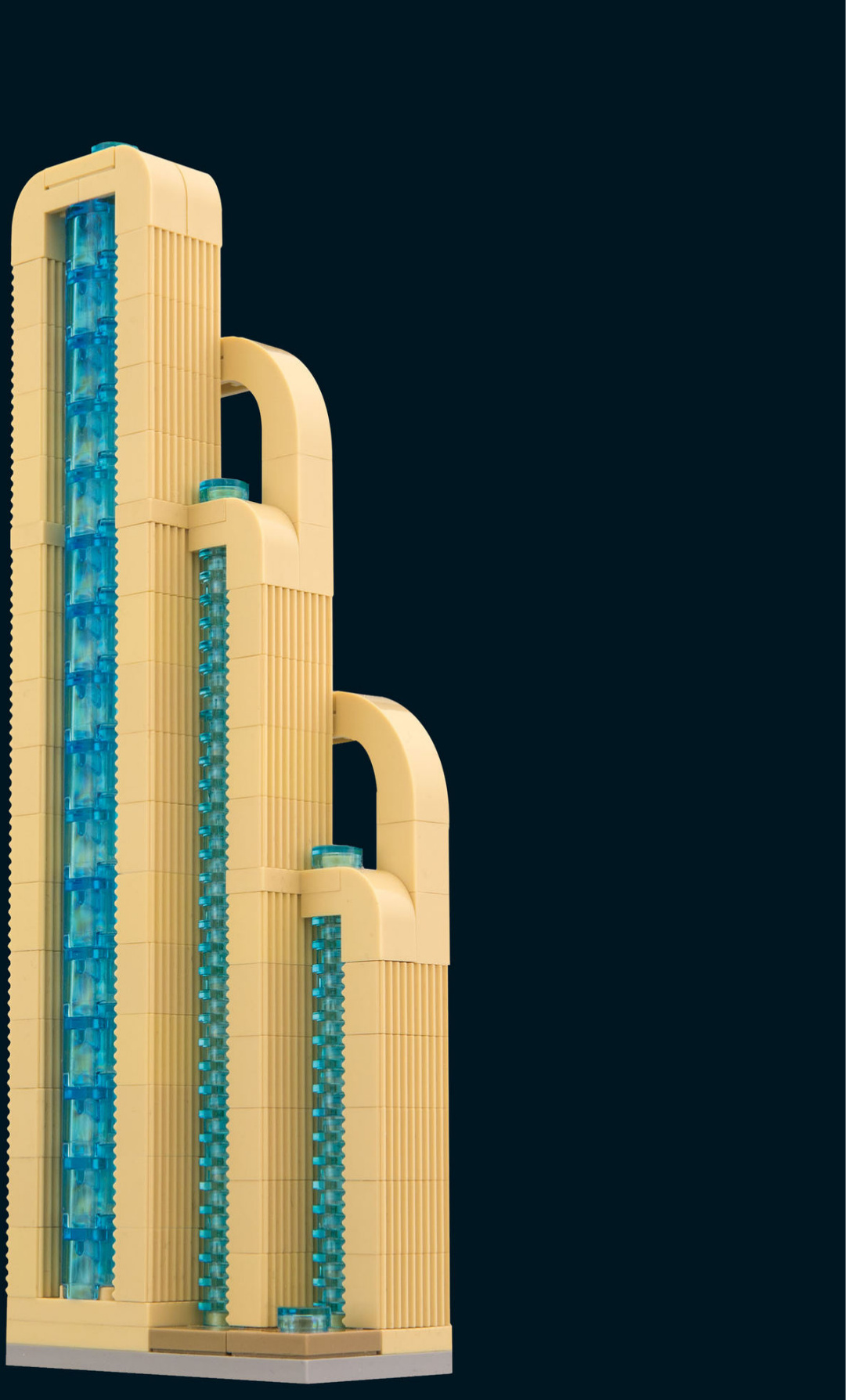
Rebuild a symmetrical version ofthe Streamliner, or do the oppositeandtaketheasymmetryevenfurther.
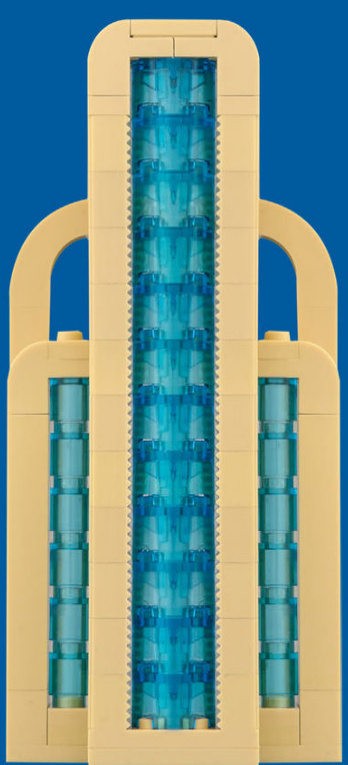
SYMMETRY
A common element in architecture, symmetry can convey asenseofstrength,balance,anddependability,butitcan alsomakebuildingslookstaticandpredictable.
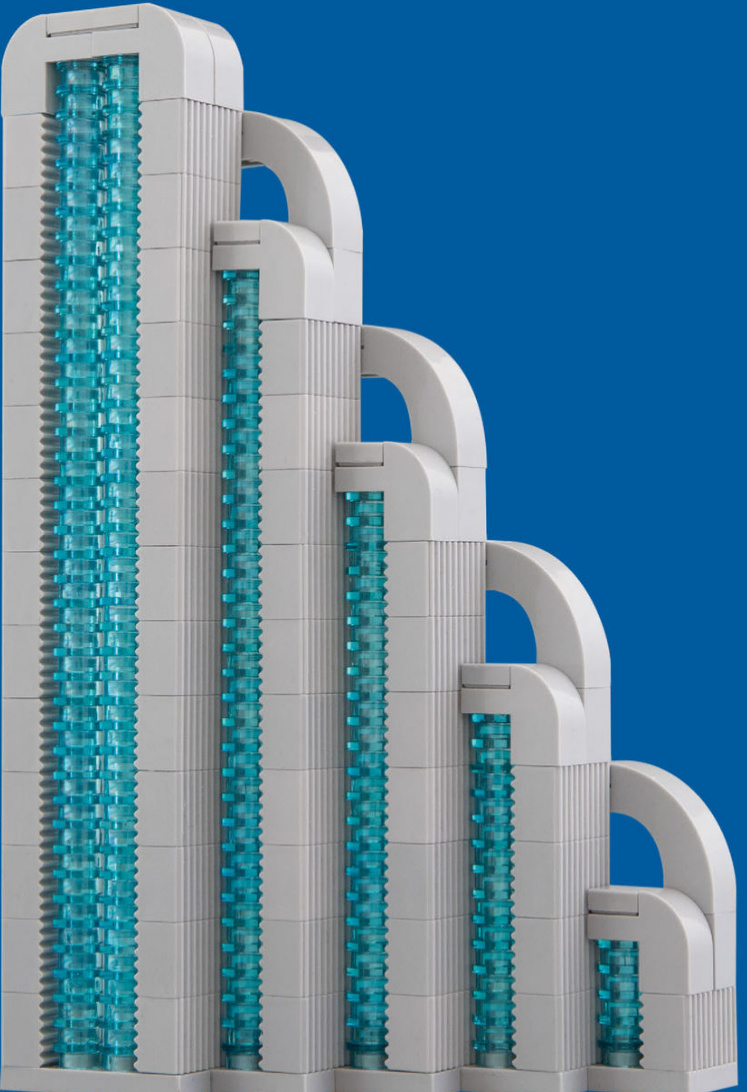
ASYMMETRY
Asymmetry inarchitecture canbevisuallydynamic,but itrequiresmore planning to ensureall oftheelements balanceandharmonizewith eachother.Youmayhave toexperimentandrebuild if necessary.Thereisno correct formula, but sticking toaconsistentpatterncan helpgivesomecontinuityto yourbuild.Inthisexample, eacharch isexactlytwo brickstallerthantheone belowit.

CIRCLE DRIVE
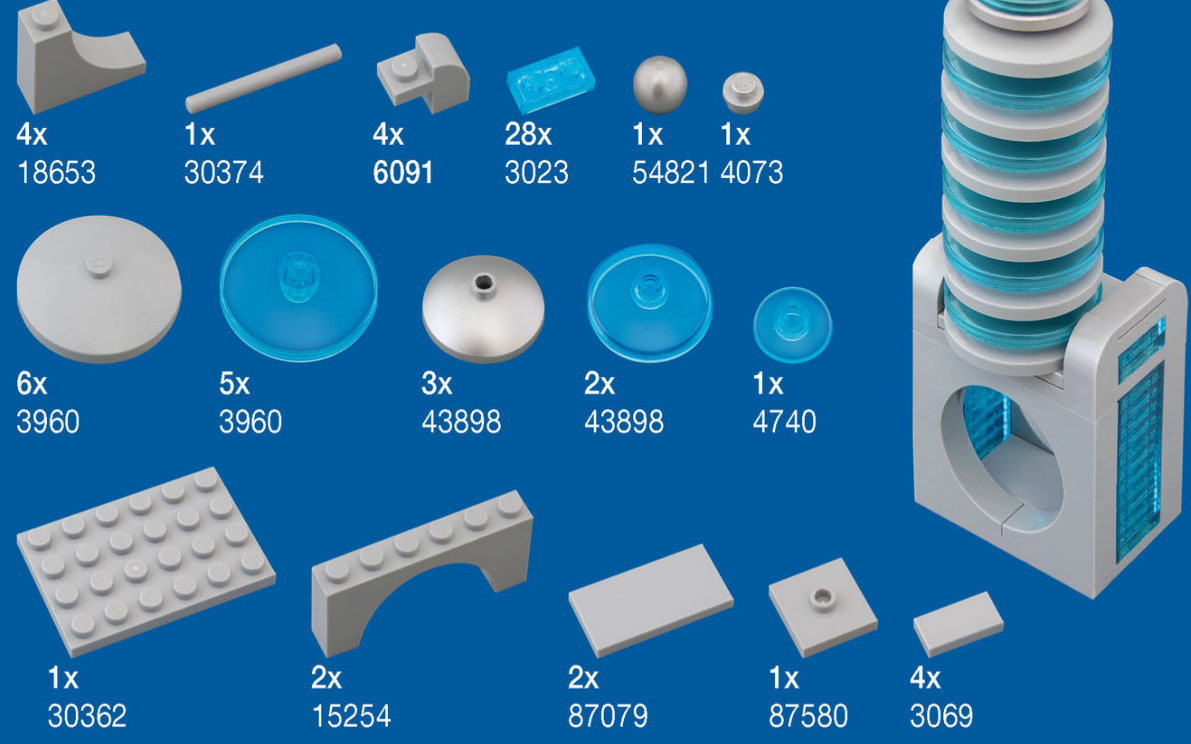
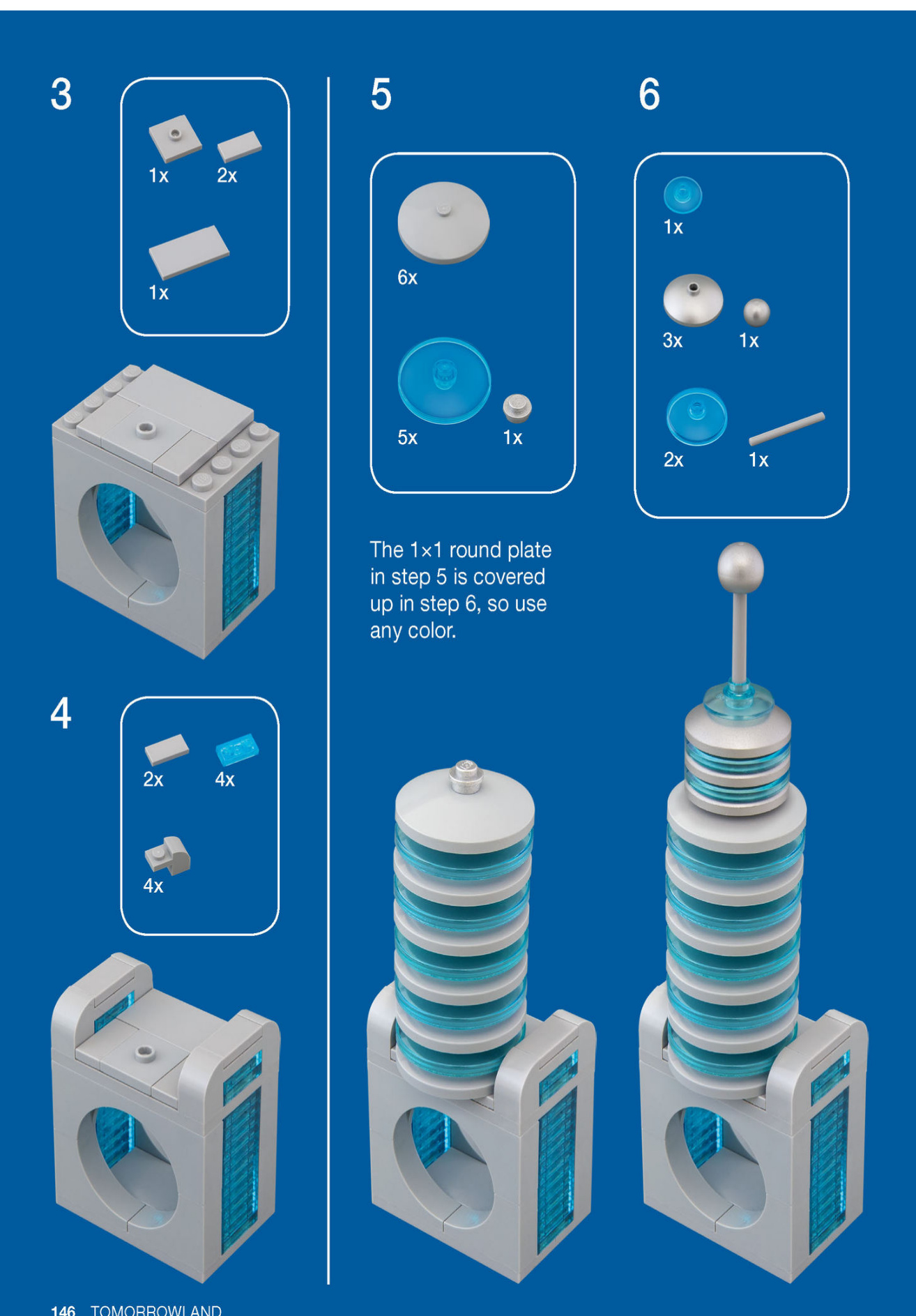
This well-rounded building offers office space, rent-controlled apartments, and an indoor llama pettingzoo.
Stacking dish pieces adds a futuristic touch to your builds.
MAKE IT YOUR OWN
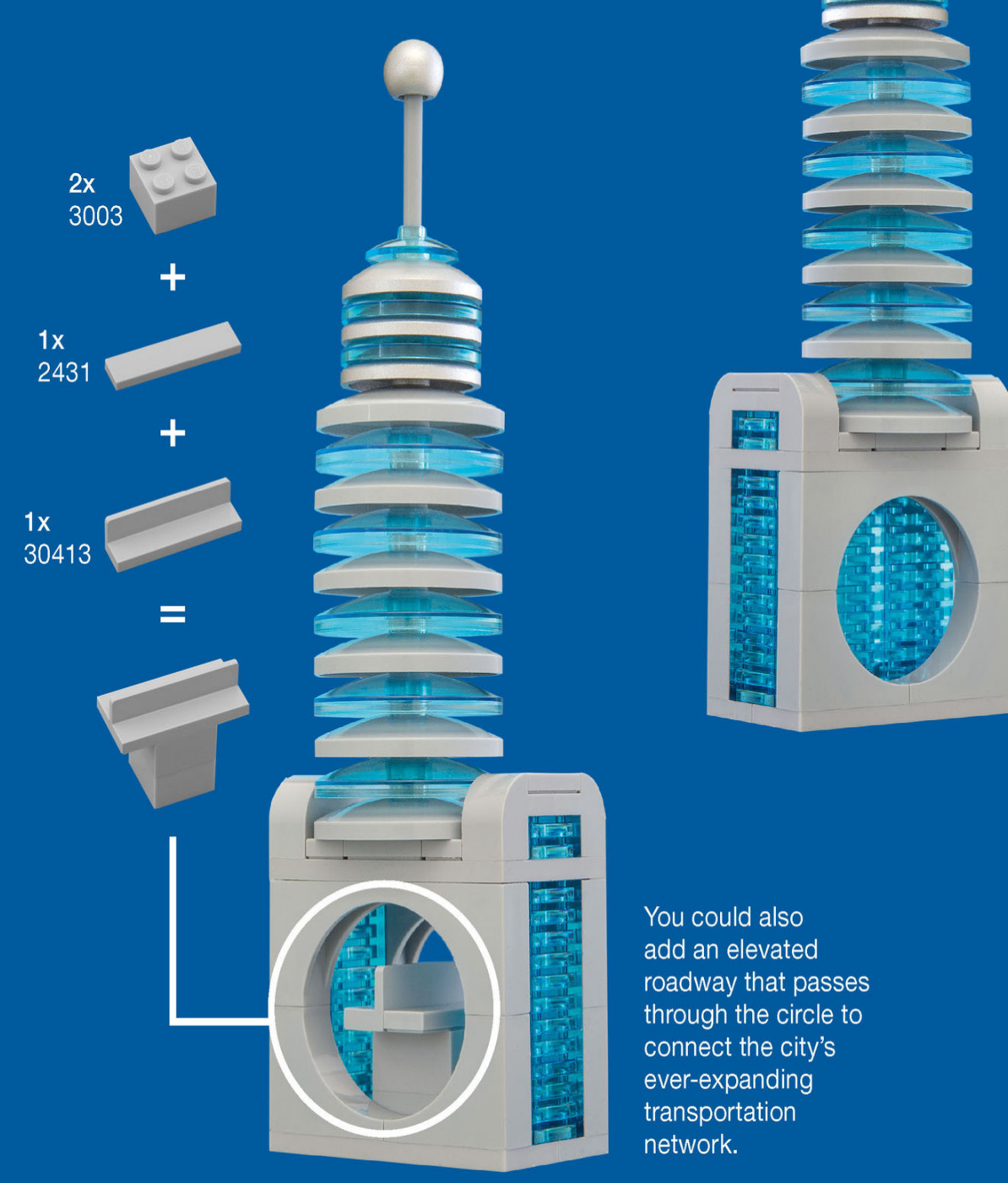
It’s easy to change this building’s height by adding or removing dishes The 4x4 dishescangetwobbly withheight, sobecarefulasyoubuild up.The3x3 dishesshould bestabler.
Youcanremovethe2x4tilefromthegroundfloor tofillinthehollow circlewithmoretransparent1x2plates.

UTOPIA
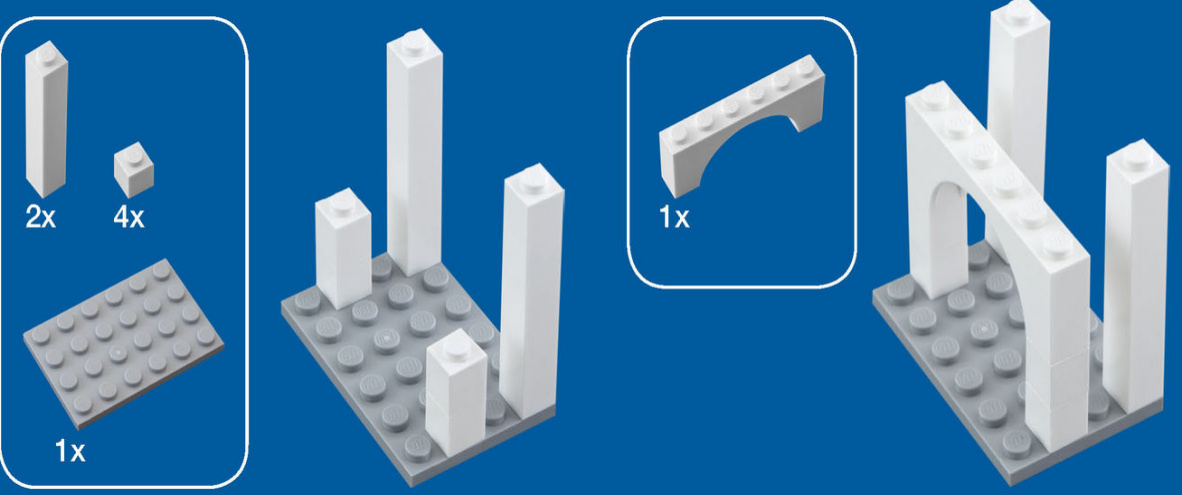
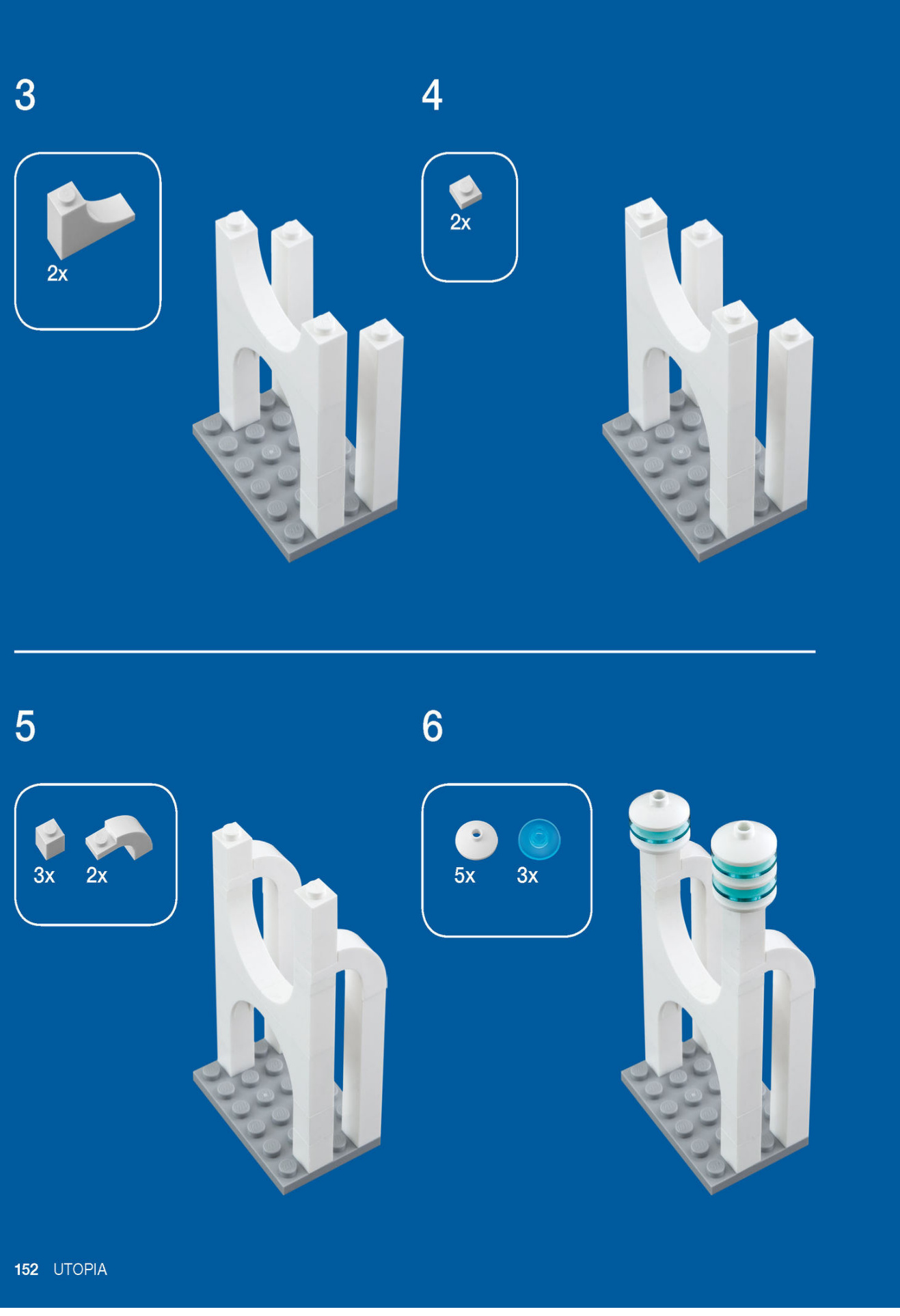
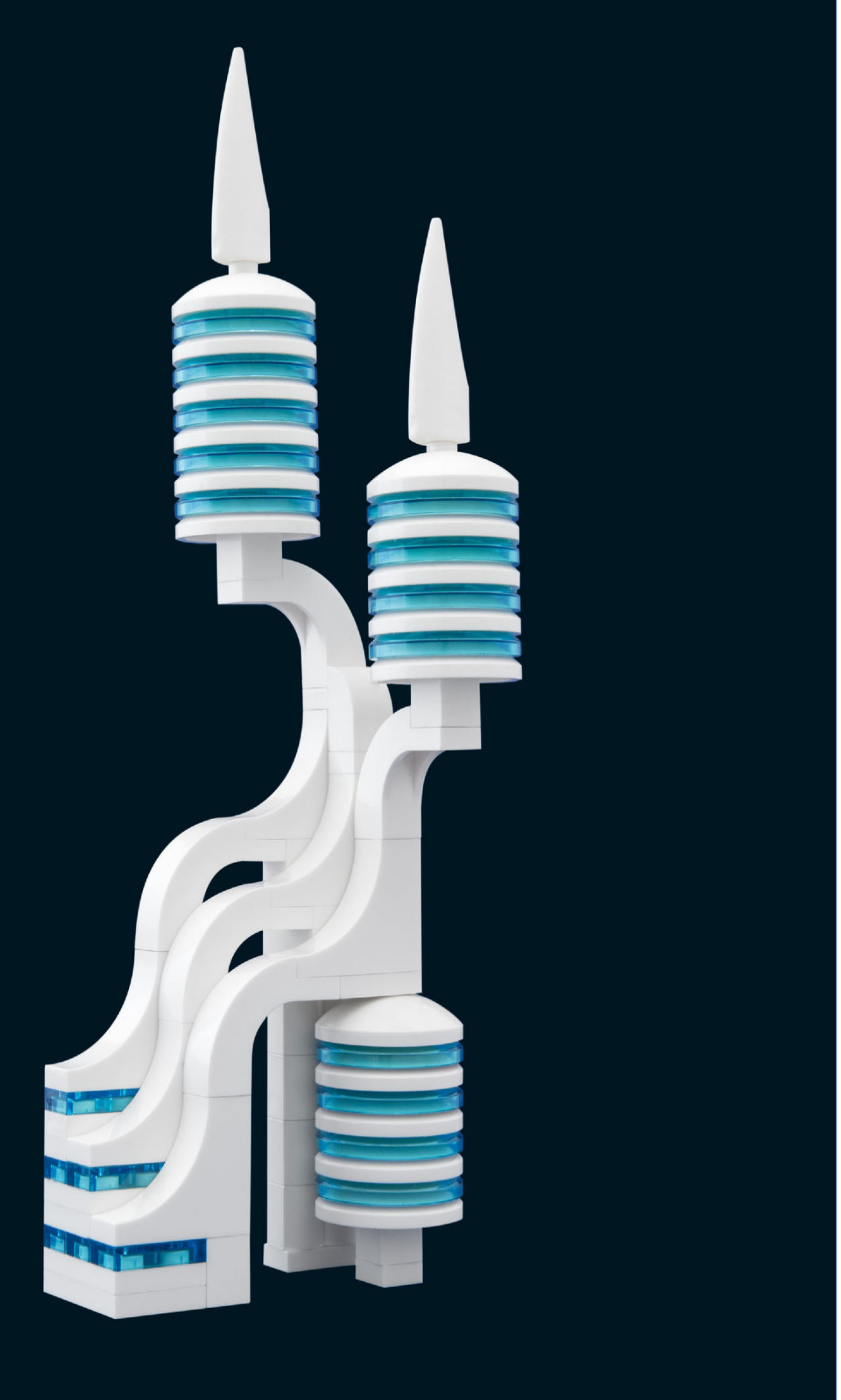
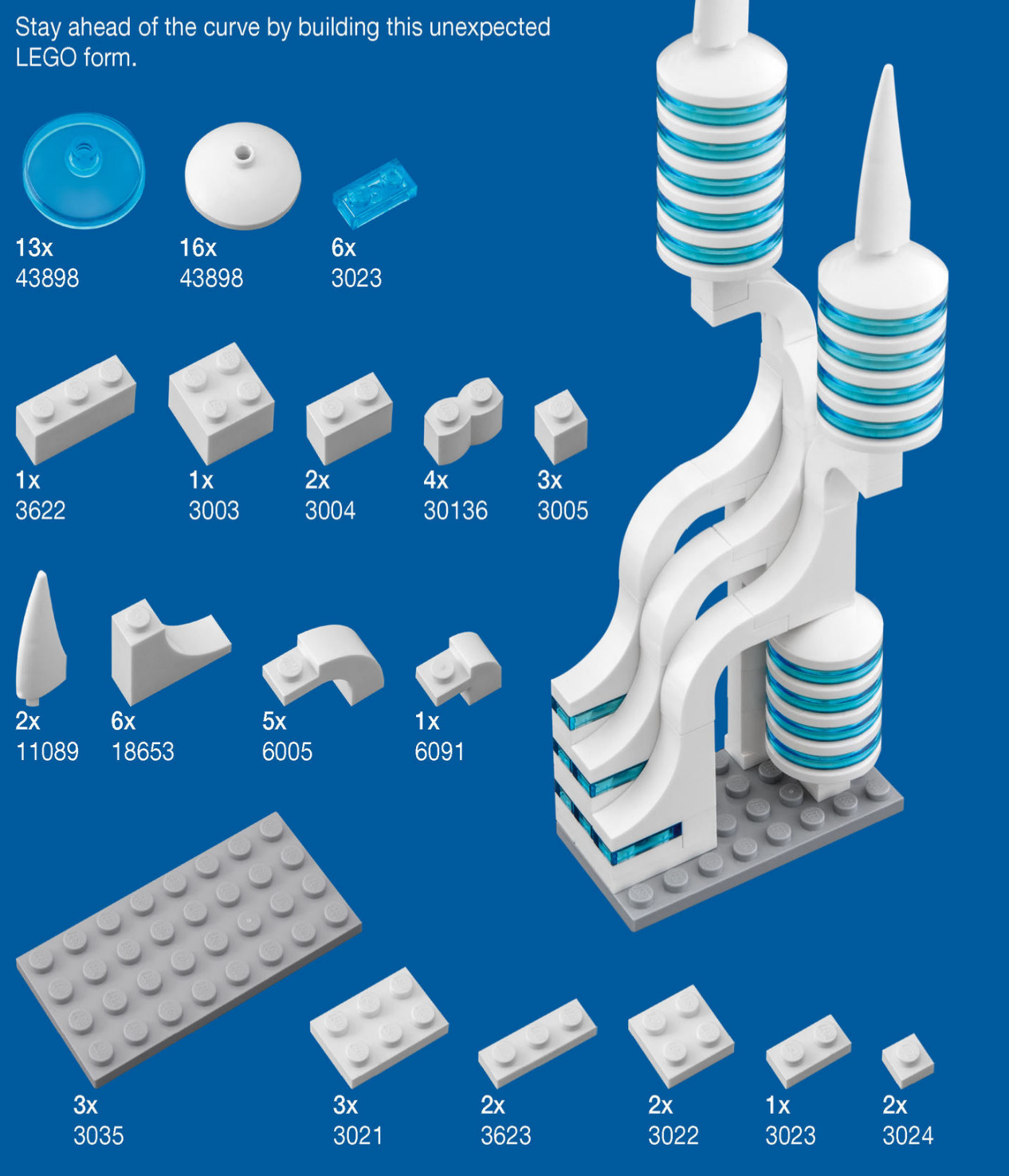
The pursuit of an ideal city is as old as ancient Greece,yet it has remained an elusive goal.People have different visions about what a utopia should be.Lucky for you, you can build your own micro utopia to suit your ideals and no one else’s.
This LEGO city is inspired by architect Zaha Hadid, also known as“the queen of the curve.”The natural-looking curves typicaly found in organic architecture can be a challenge to replicate with LEGO, which has straight angles built into its DNA. You can mimic curves by staggering square bricks, but this leads to slightly jagged contours that resemble a pixelated image in an 8-bit video game.
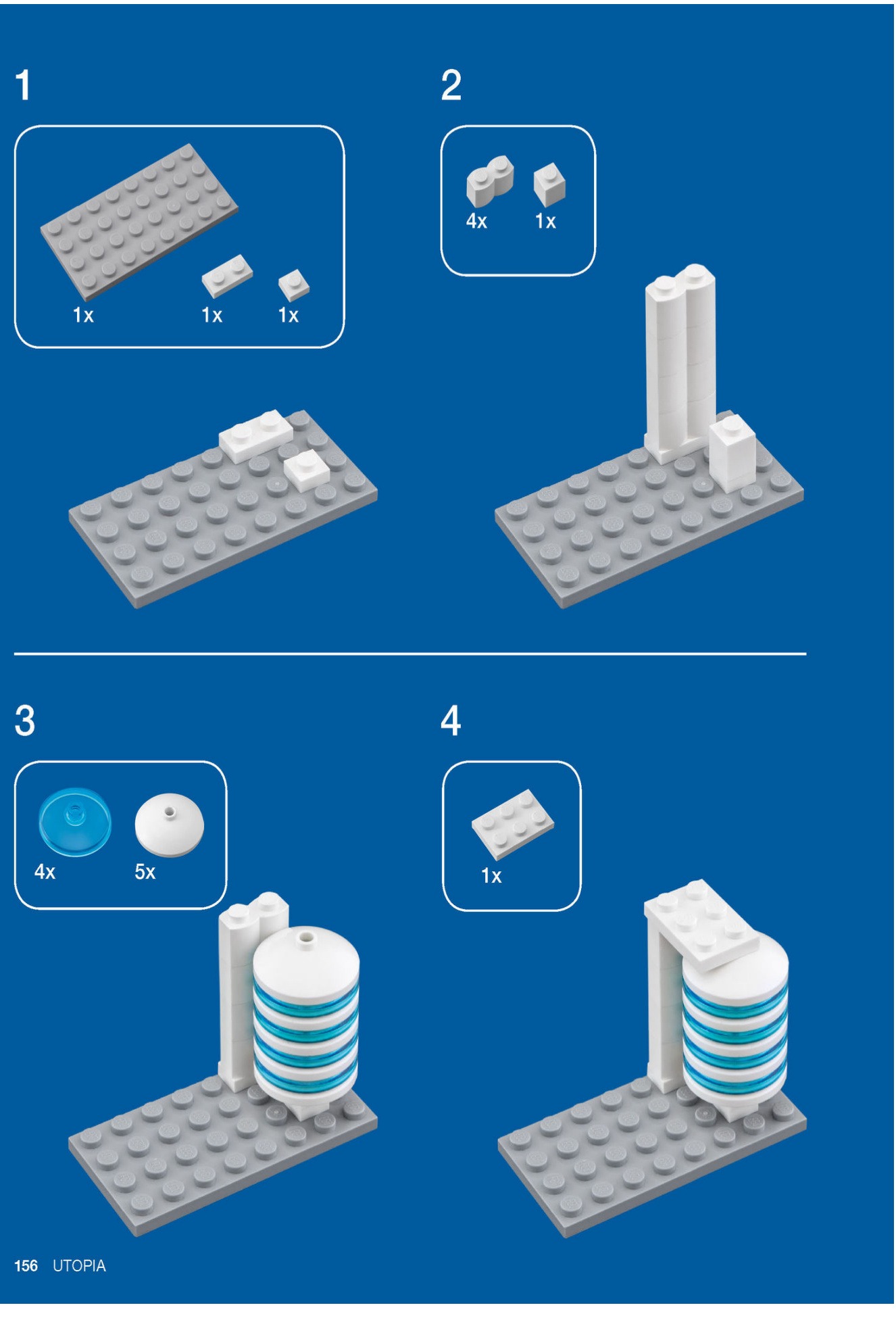
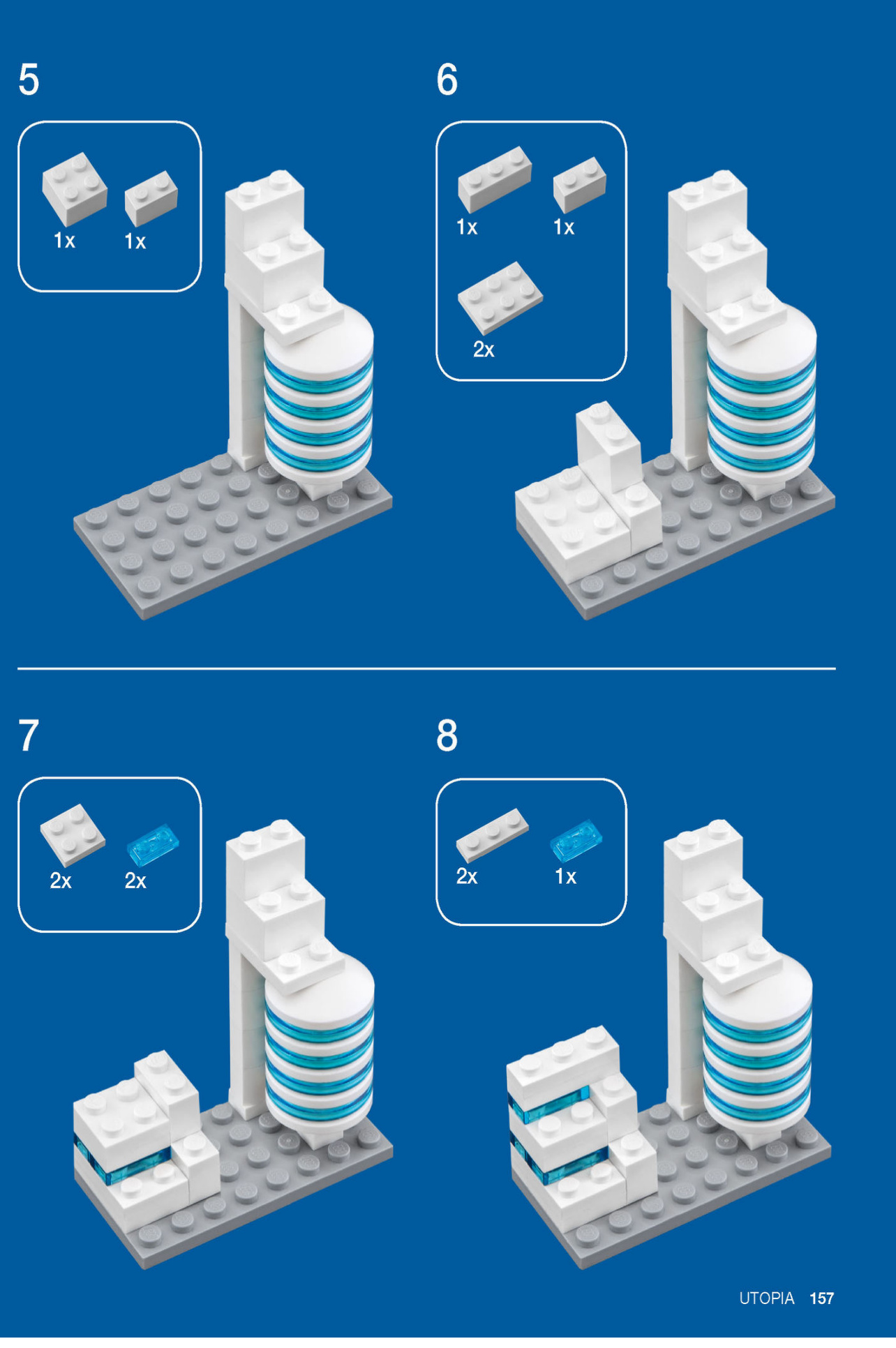
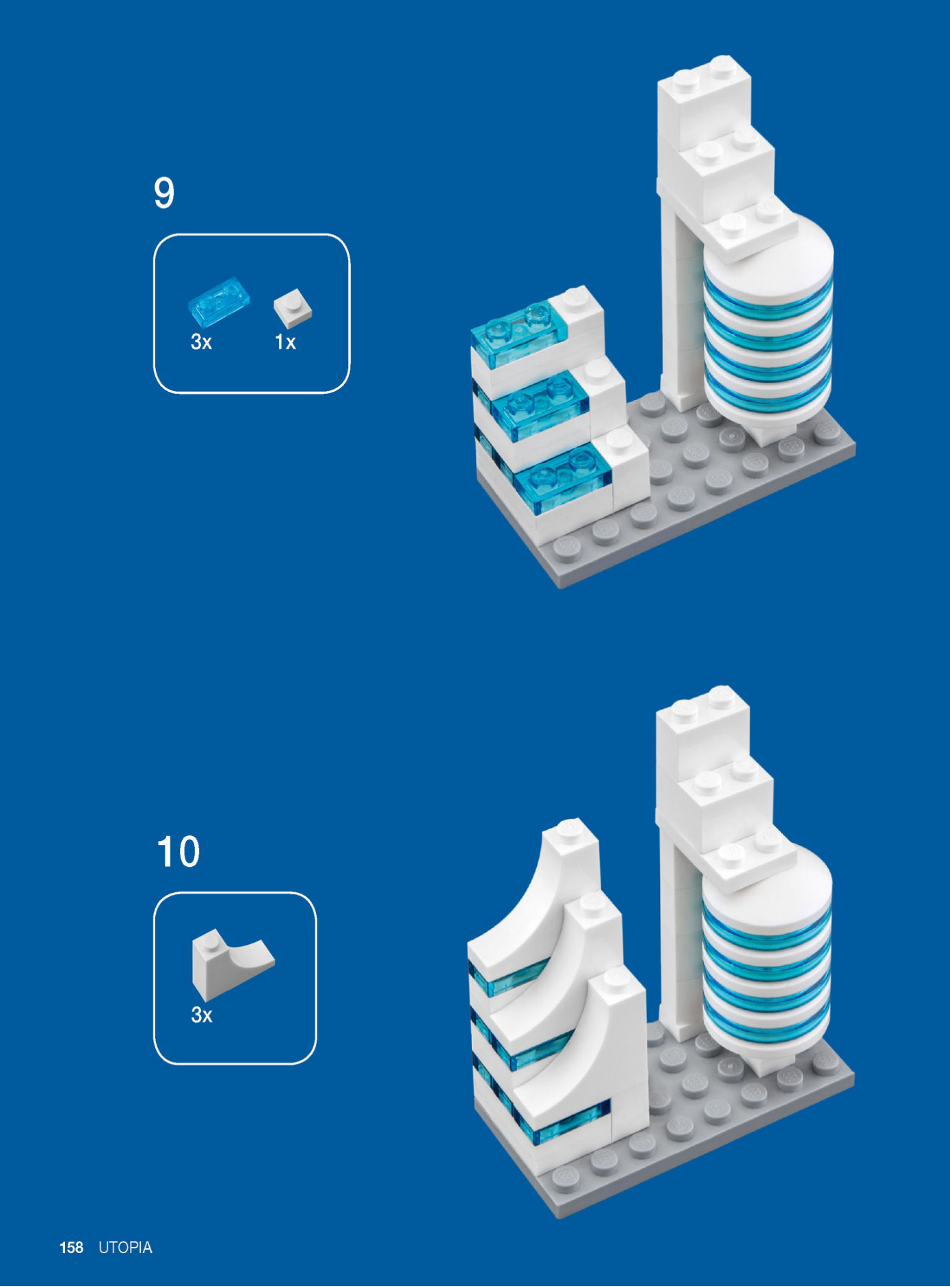
Fortunately, when you build in microscale, you can take advantage of arch and disk elements to convincingly represent truly smooth curves on massive constructions.
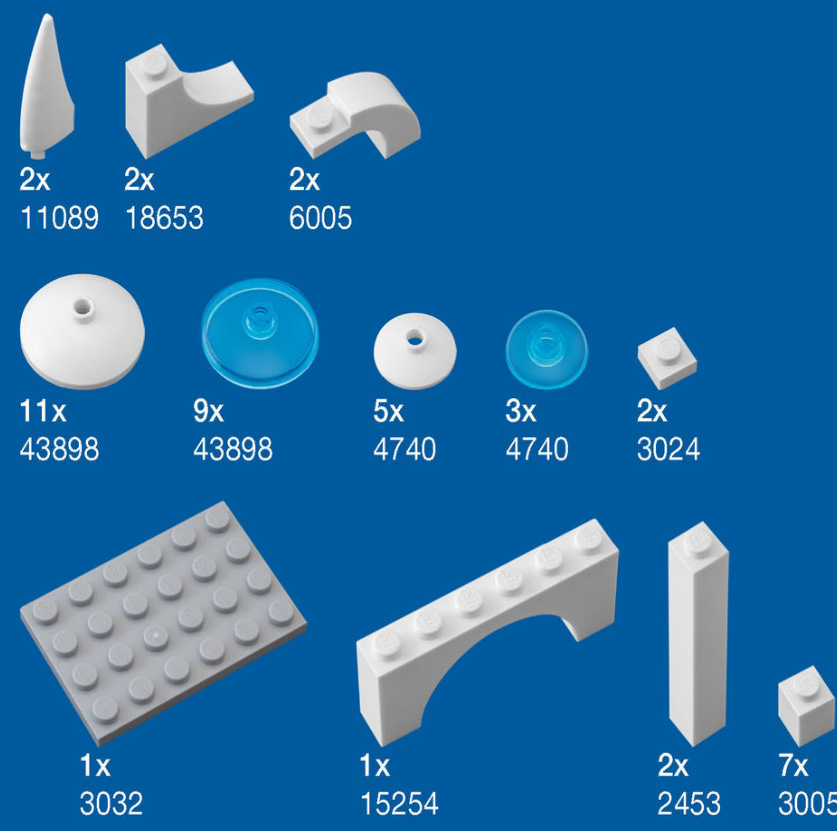
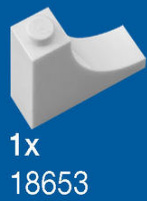
The long-awaited inverted arch (part #18653) released in 2015 is a key component of this city. Combine the inverted arch with other arch elements, and you’llnever have to build in straight lines again.



WATER STRIDER
TheWater Strider’sfour legsgive it theappearance of an abstractanimal thatmaywander offatanymoment

MAKE IT YOUR OWN
TheWater Strider isdesigned toarchoverariver.Youcan usesolidblueplatesinstead oftransparentonesto representthewater.
Customizethe landscape designwithjustafew commonbricks.
THE WAVE LENGTH
TheWavelength building features indoor ski runsbetween theresidentialguartersandtheofficesector.Nooneever complainsaboutthecommutehere.
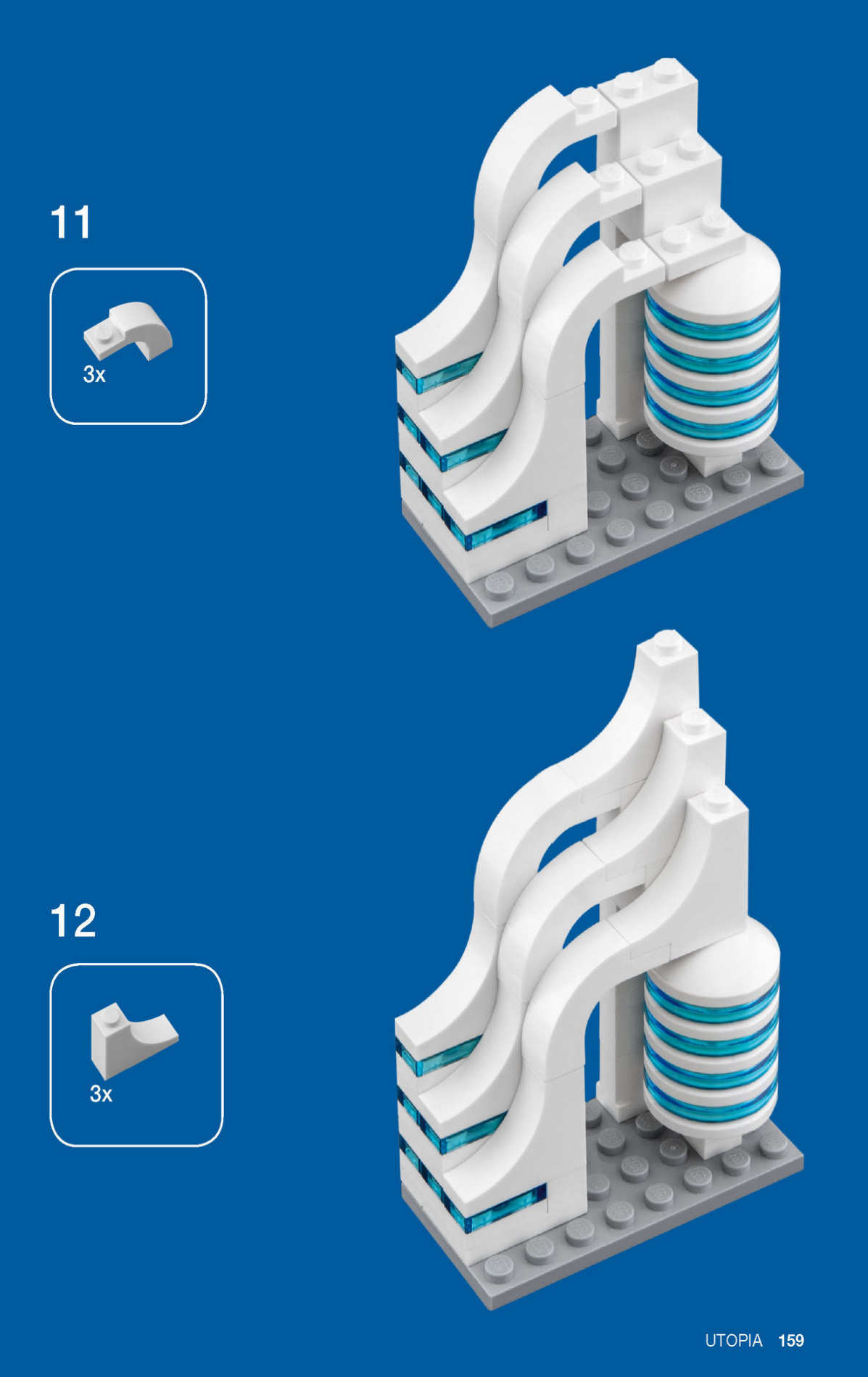


Whenyou attachthe dish stacks, besureto supportthe archesfrom belowwith yourhand to avoid breaking anything.
MAKE IT YOUR OWN
TheWavelength’ssmooth architecture ispurposelyfreeofornamentationto accentuateitsaerodynamicshape.The building’s top sail, however, offersroomfor personalization.

FLOATING FLATS
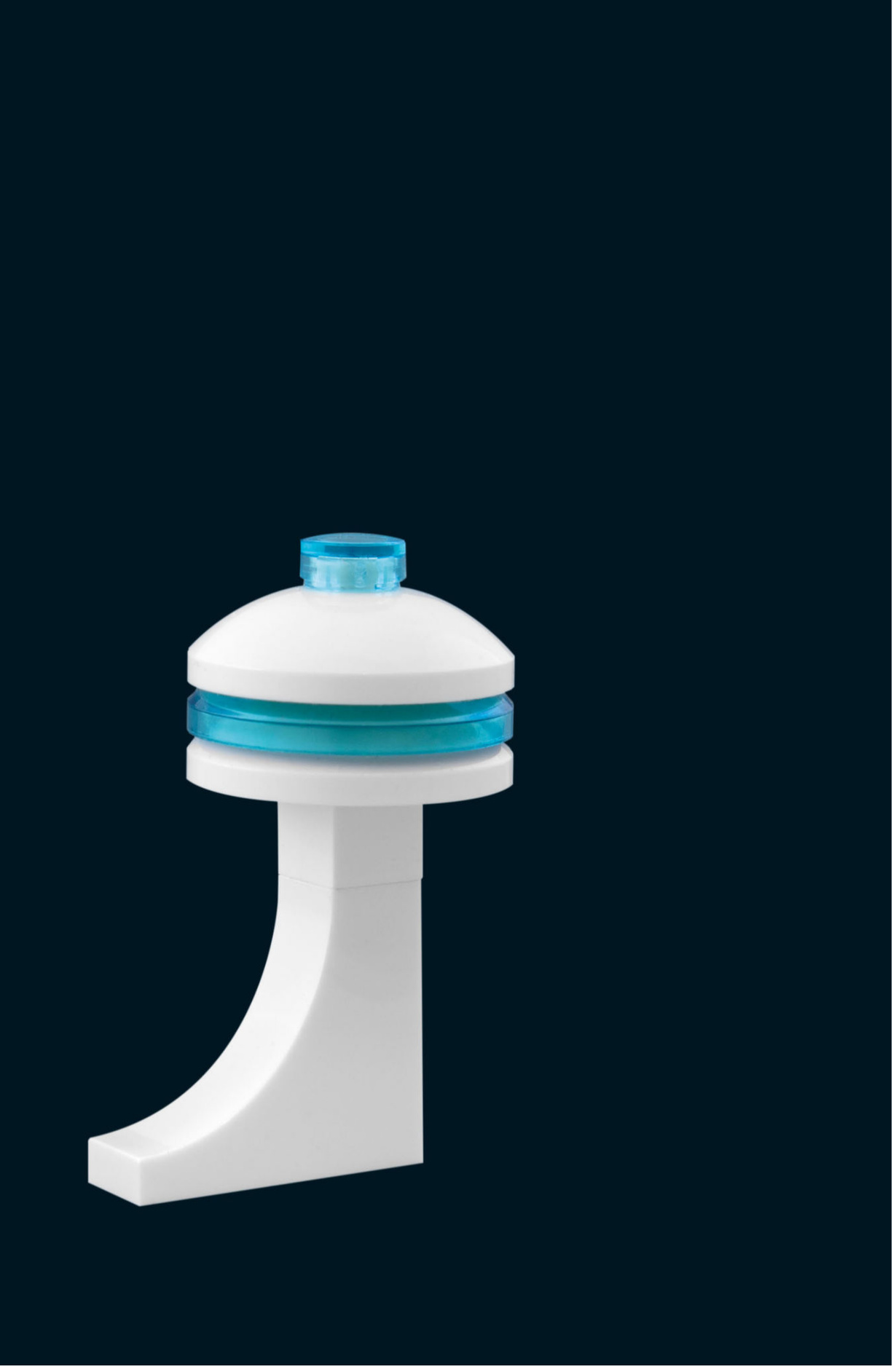
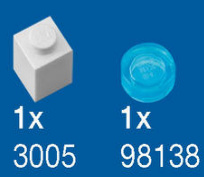
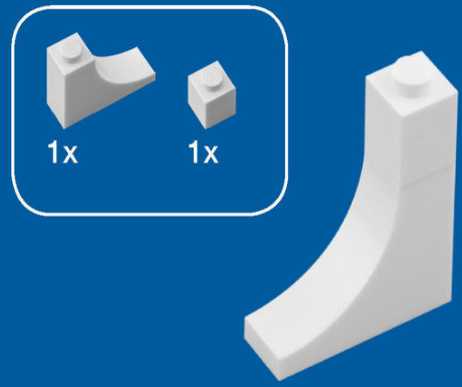
This building’s disk section can detach from its base during earthquakesandhoverlikeaflyingsaucer,virtuallyeradicating casualties.Sixbricksareall youneedforthisbeautifullysimple design.




MAKEITYOUROWN
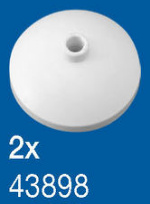
You canfill a wholecitywithvariations of these buildingsusingfivebricks or fewer.The only piecesyoumayneedtomaintainharmonyin designaretheinvertedarchandthedishes.

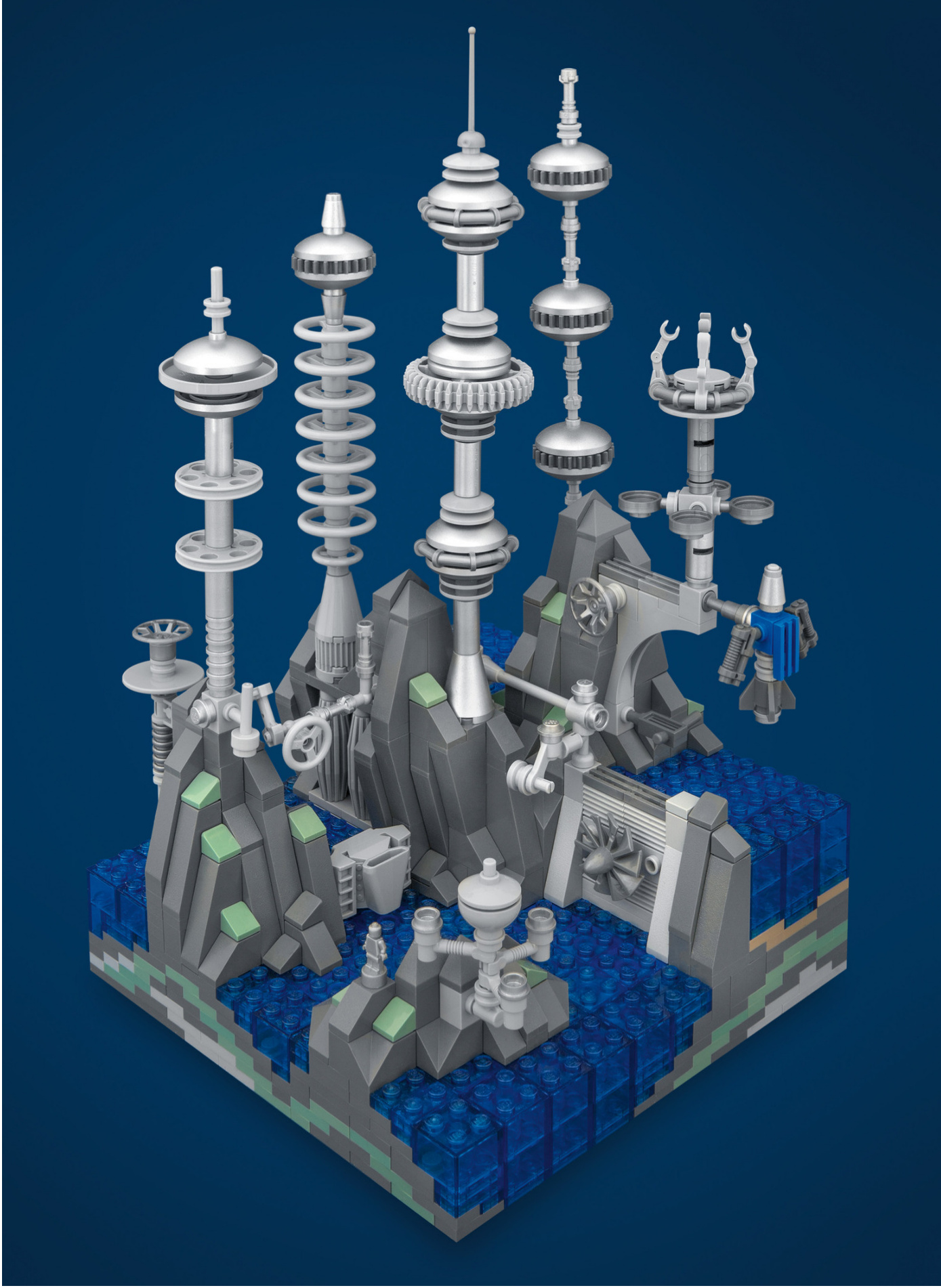
STRANGE NEW WORLDS
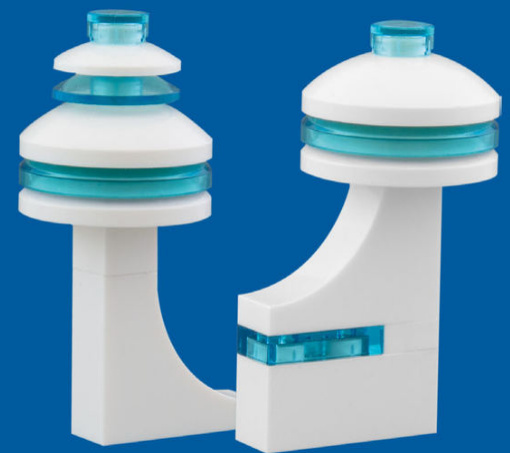
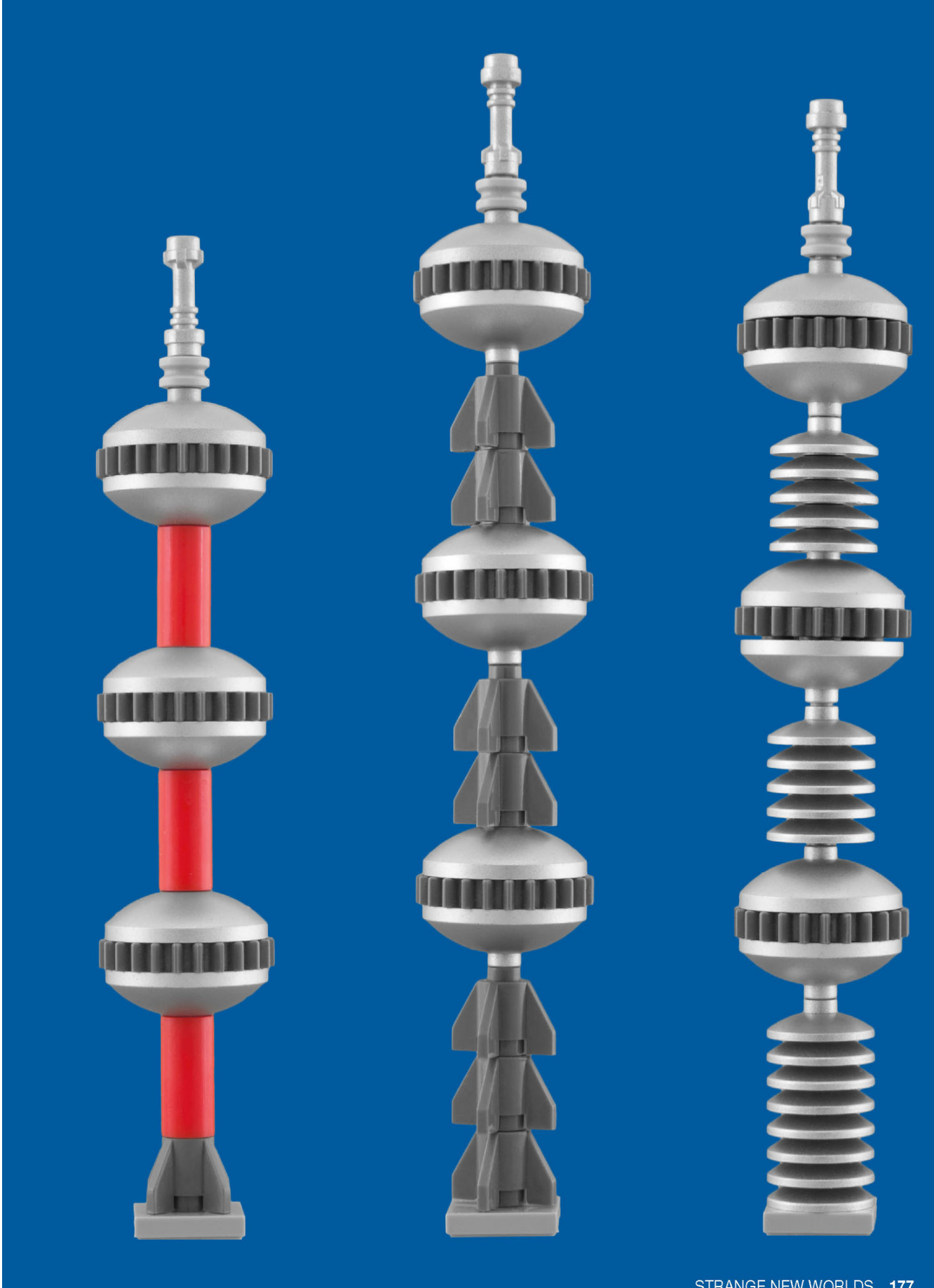
Fictional space colonies have been illustrated with soaring spires since the early days of science fiction. ls there a practical purpose for the spires, or are they a metaphor for reaching for the stars?
It is human nature to explore, and that includes exploring novel ways of LEGO building. Eventually, you might want to leave Earth-bound cities behind and construct a new colony somewhere in the cosmos.
Inhabiting new planets can bring new constraints and freedoms alike for city architecture.Low gravity means you can build taller structures without having them topple over. Dangerous cosmic rays may require reflective surfaces to protect your colonists. Alien invaders may need to be placated with fresh cookies from robotic bakeries. You can invent the problems and solutions for your new world.
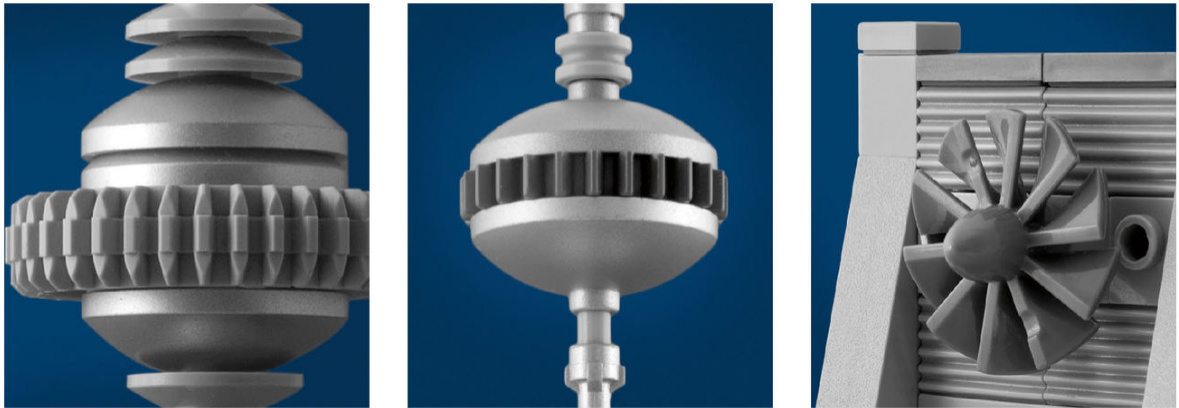
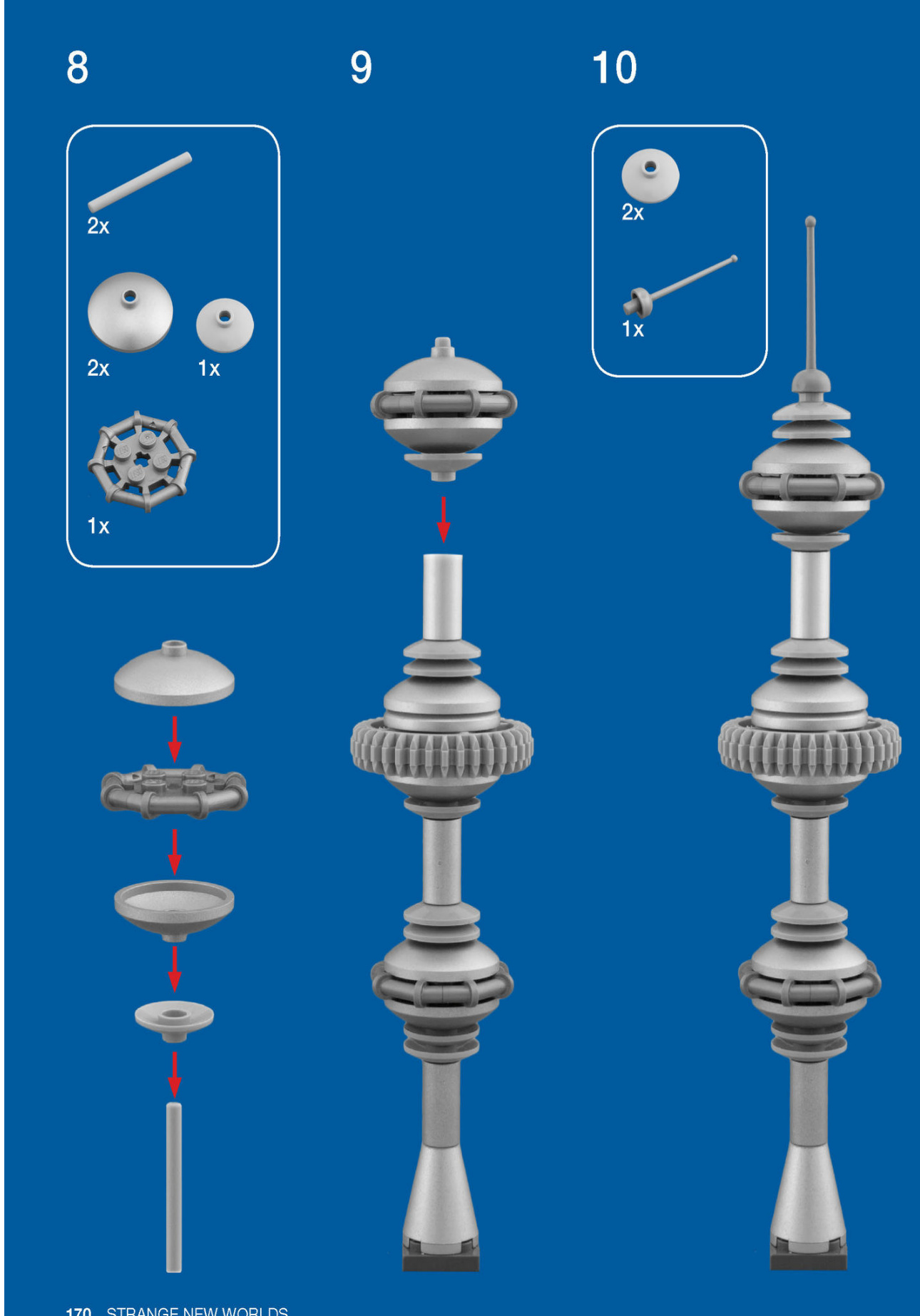
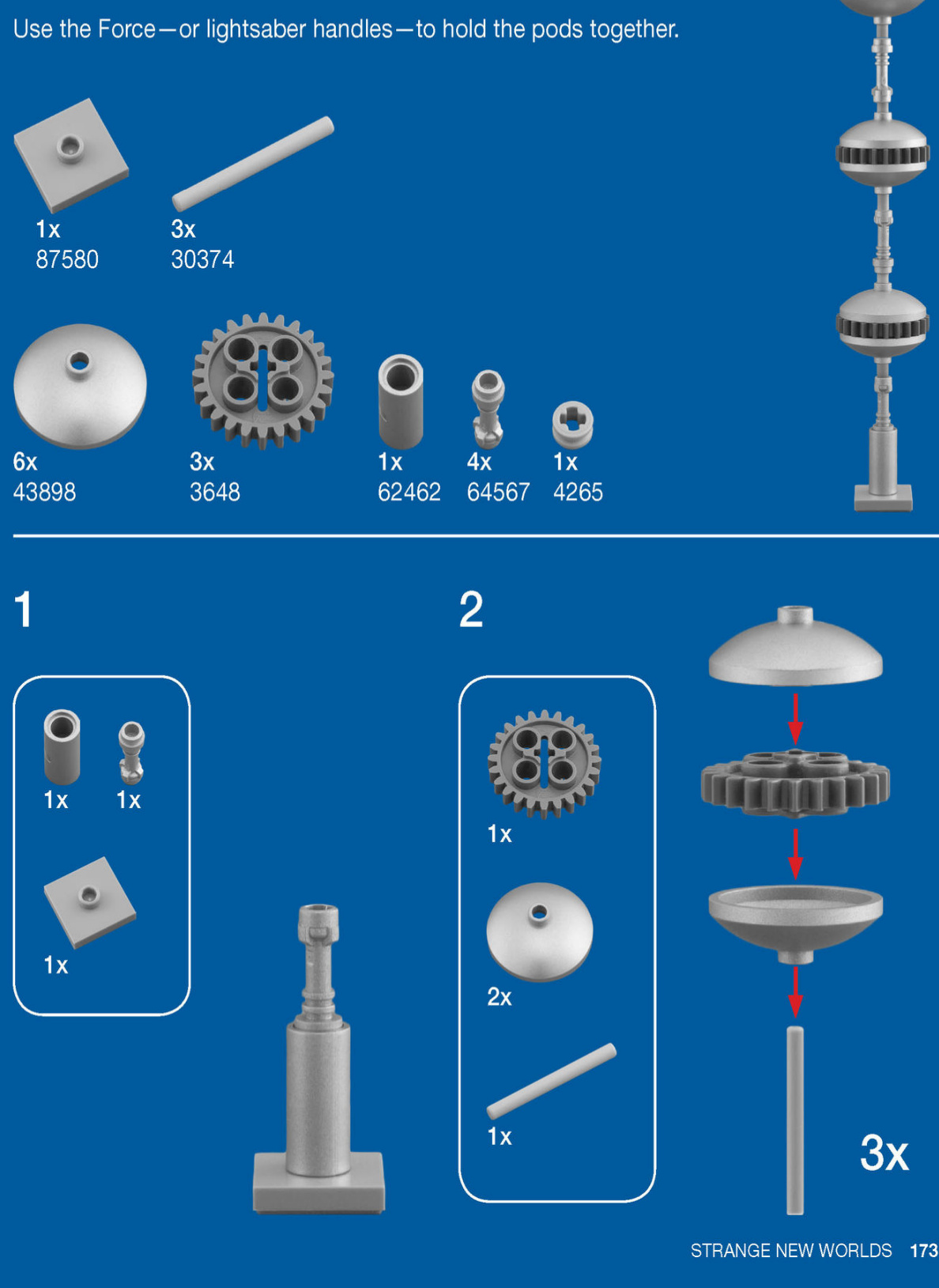
This LEGO micro city involves pushing round elements through LEGO’s 4-stud-long bar element.The building style doesn’t rely on attaching studs to one another, so you can have two pieces of the same type sandwiched together with studs facing opposite directions.
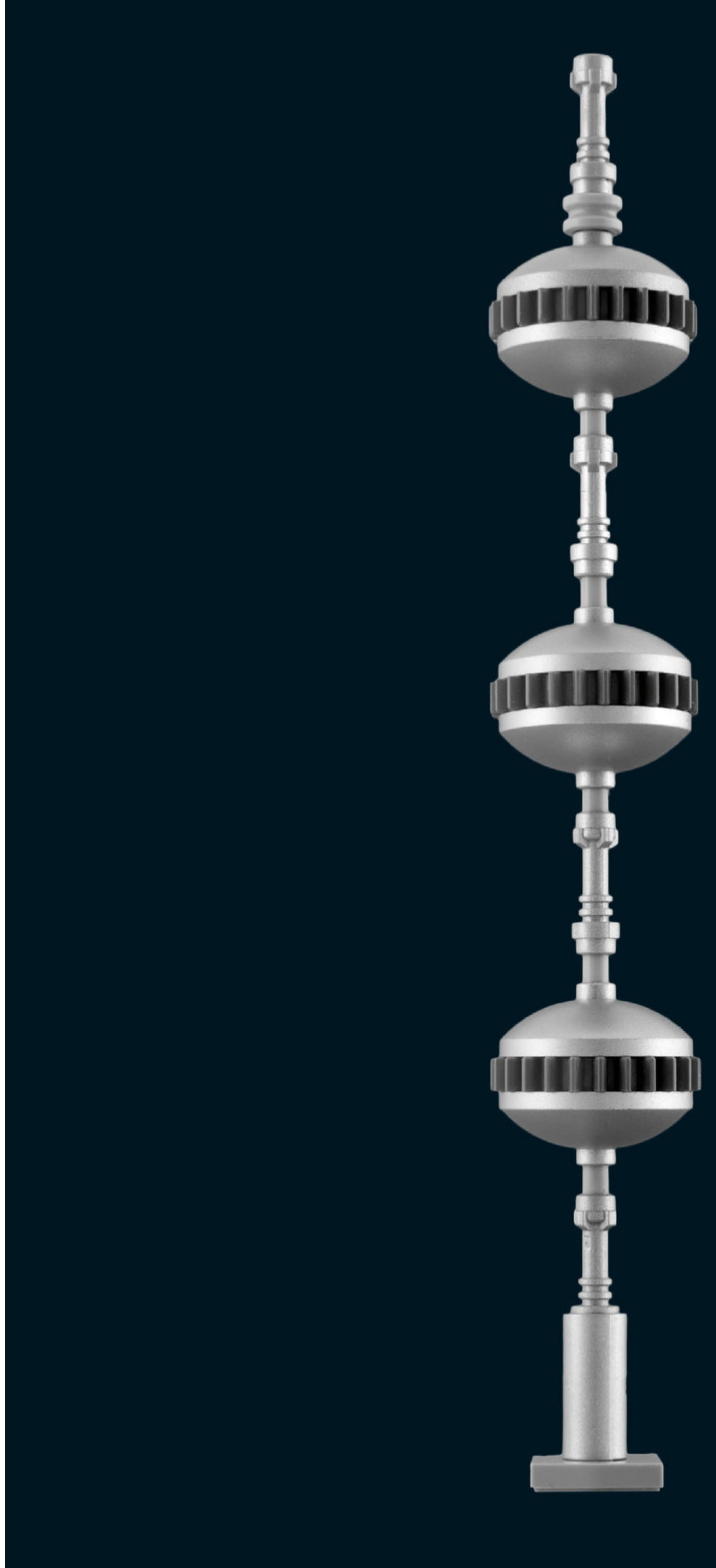
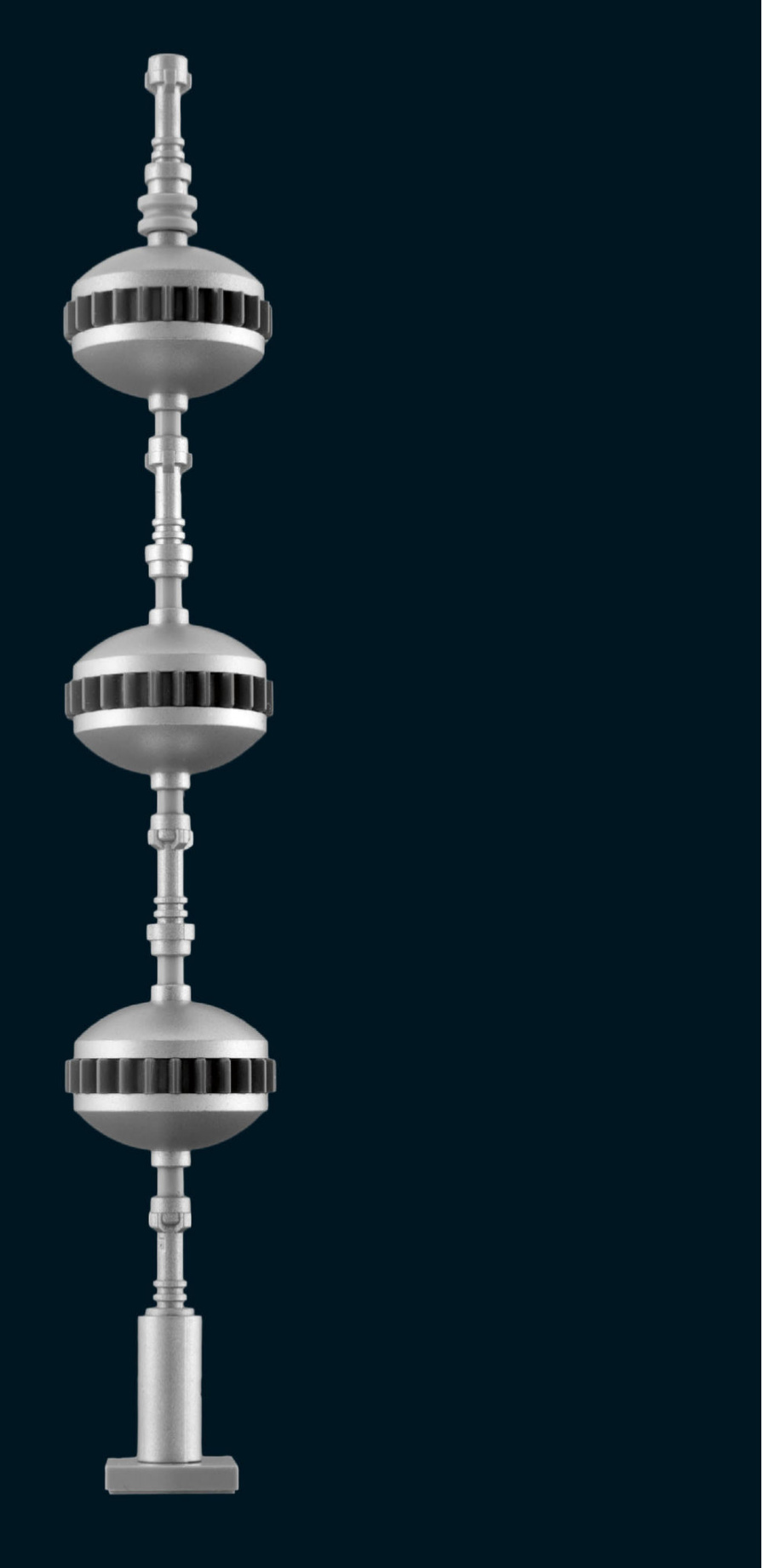
GALAXY SPIRE
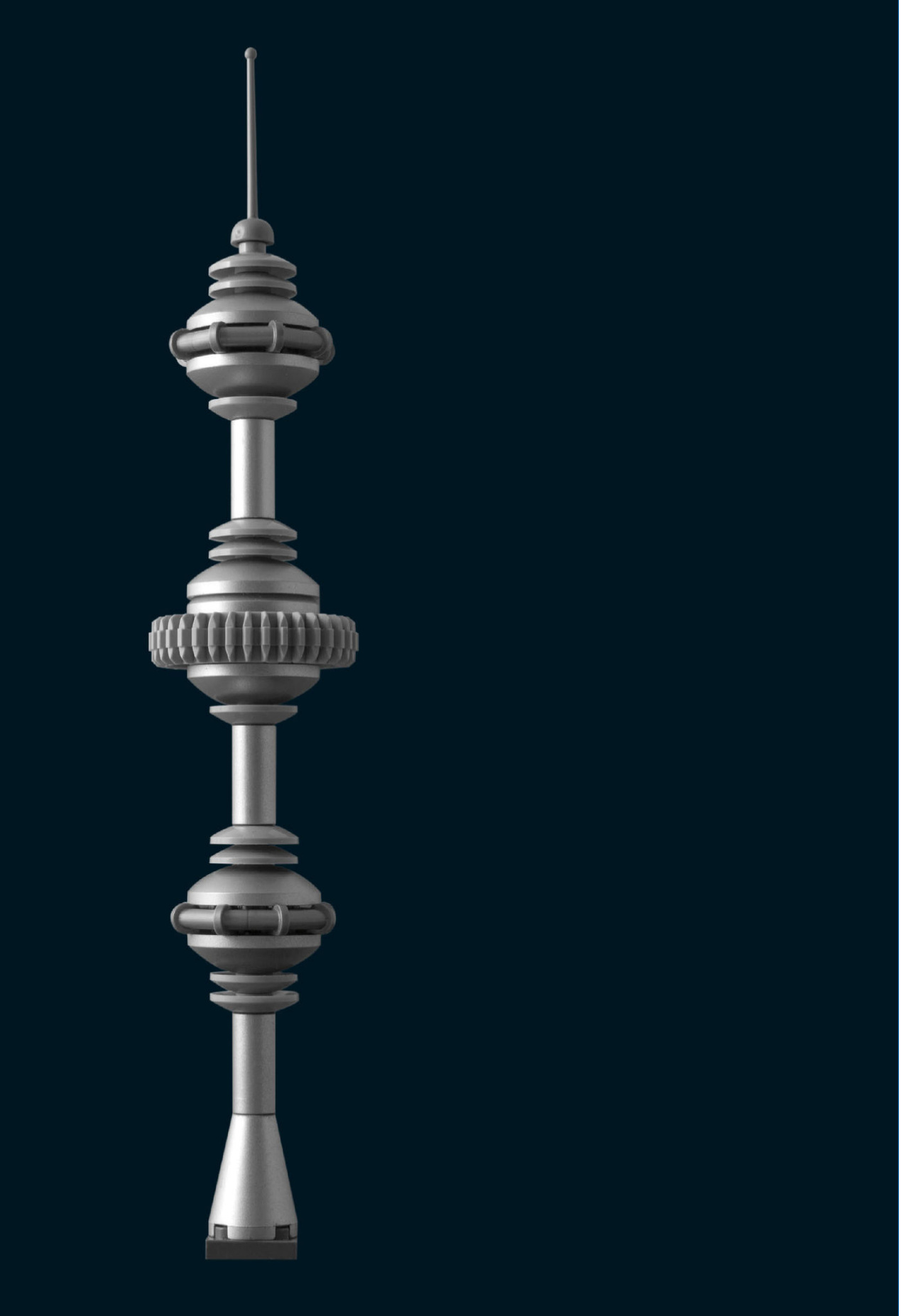
The Galaxy Spire’s antenna transmits broadband Wi-Fi to every corner of the planet, ensuring that new colonists won’t miss out on baby panda live streamsfromEarth.
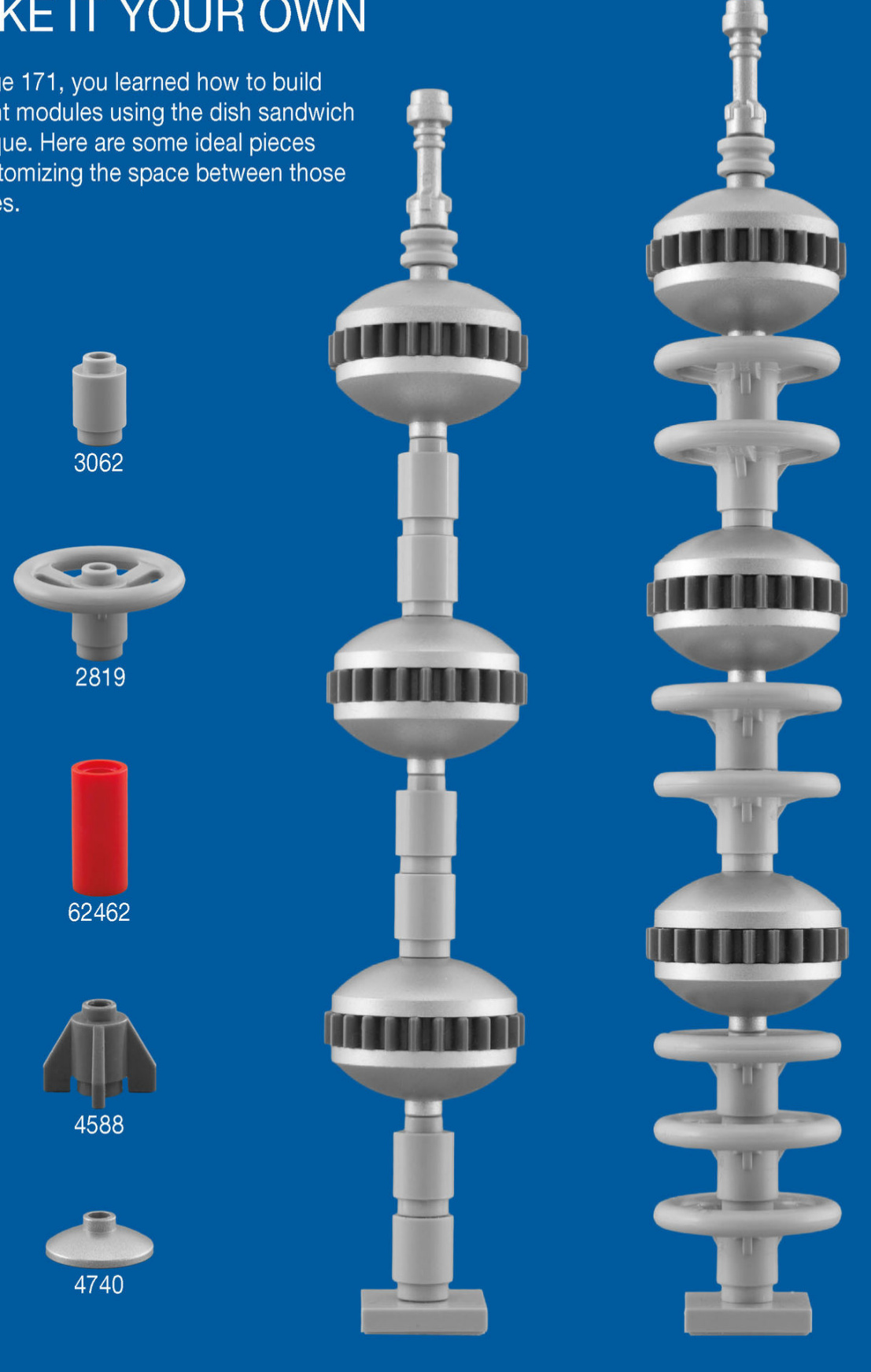
Although the Galaxy Spire uses advanced building techniques, it’s easy to customizewithyourownmoduledesigns.

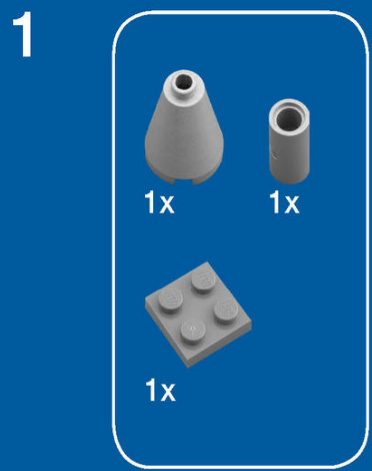
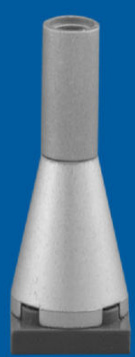
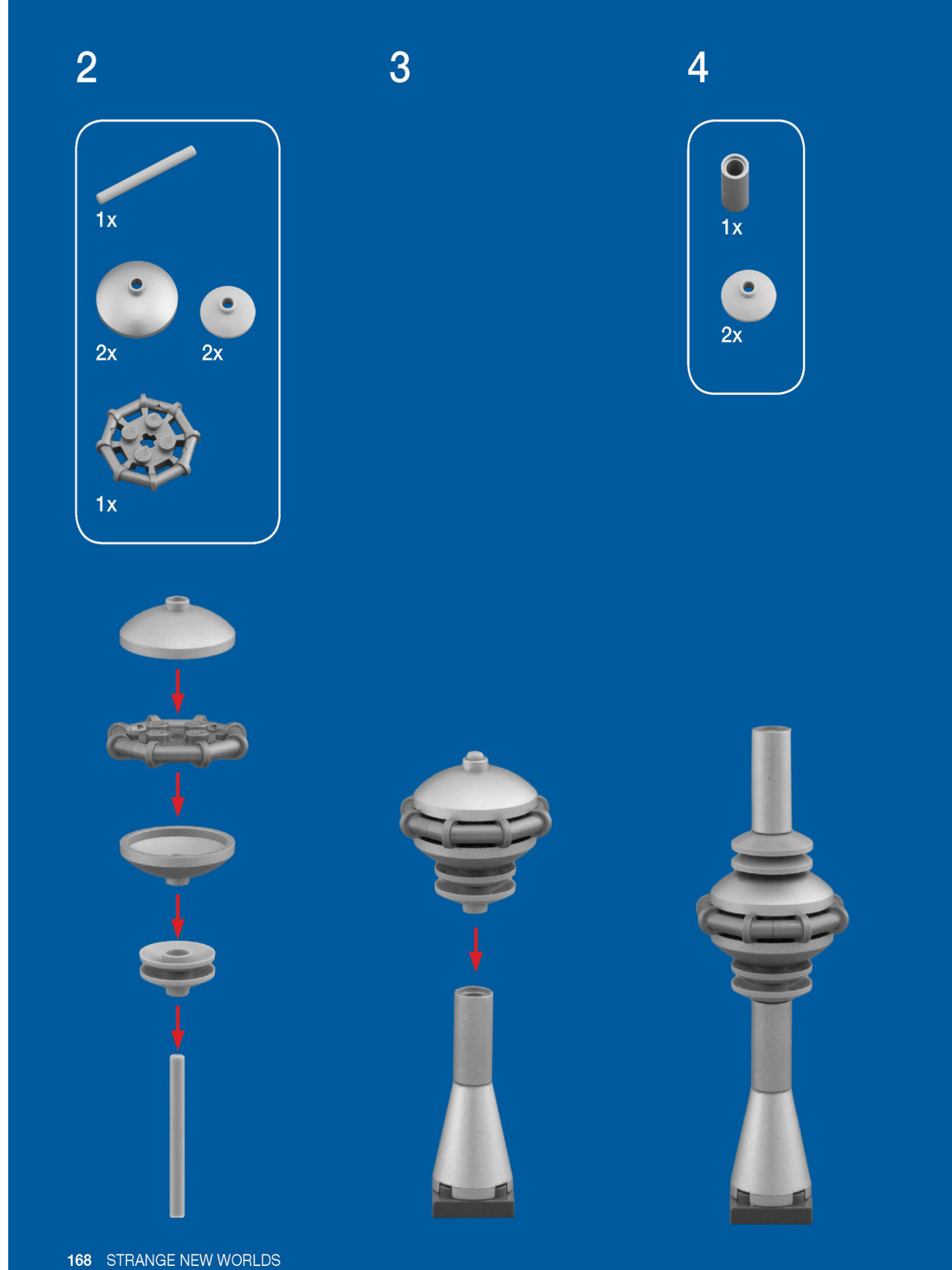
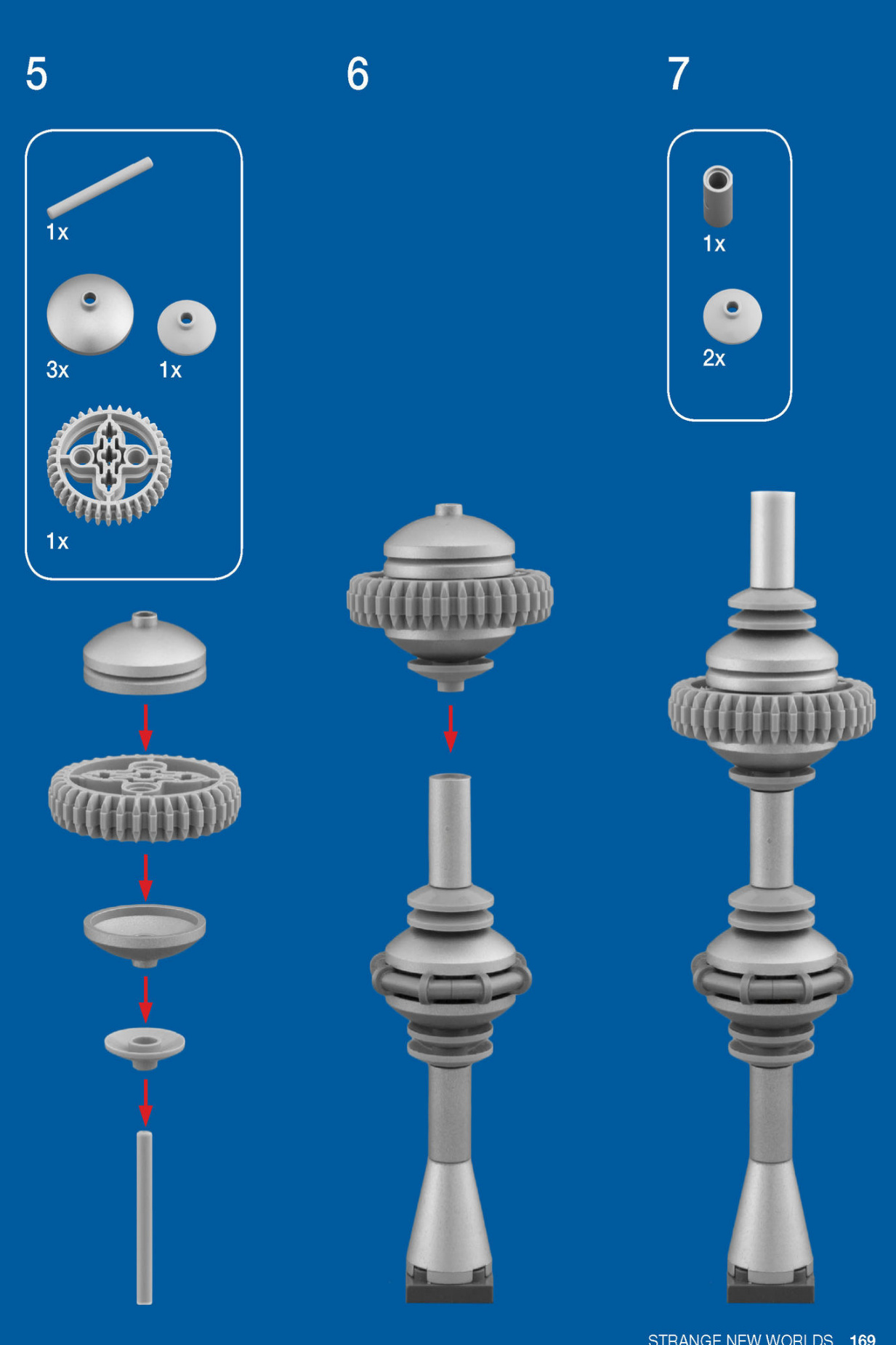
MAKE IT YOUR OWN
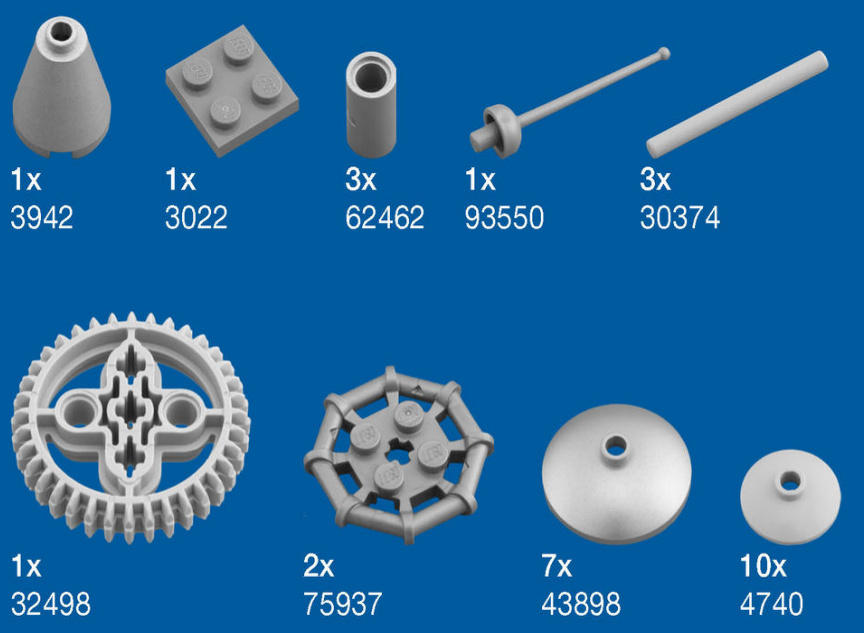
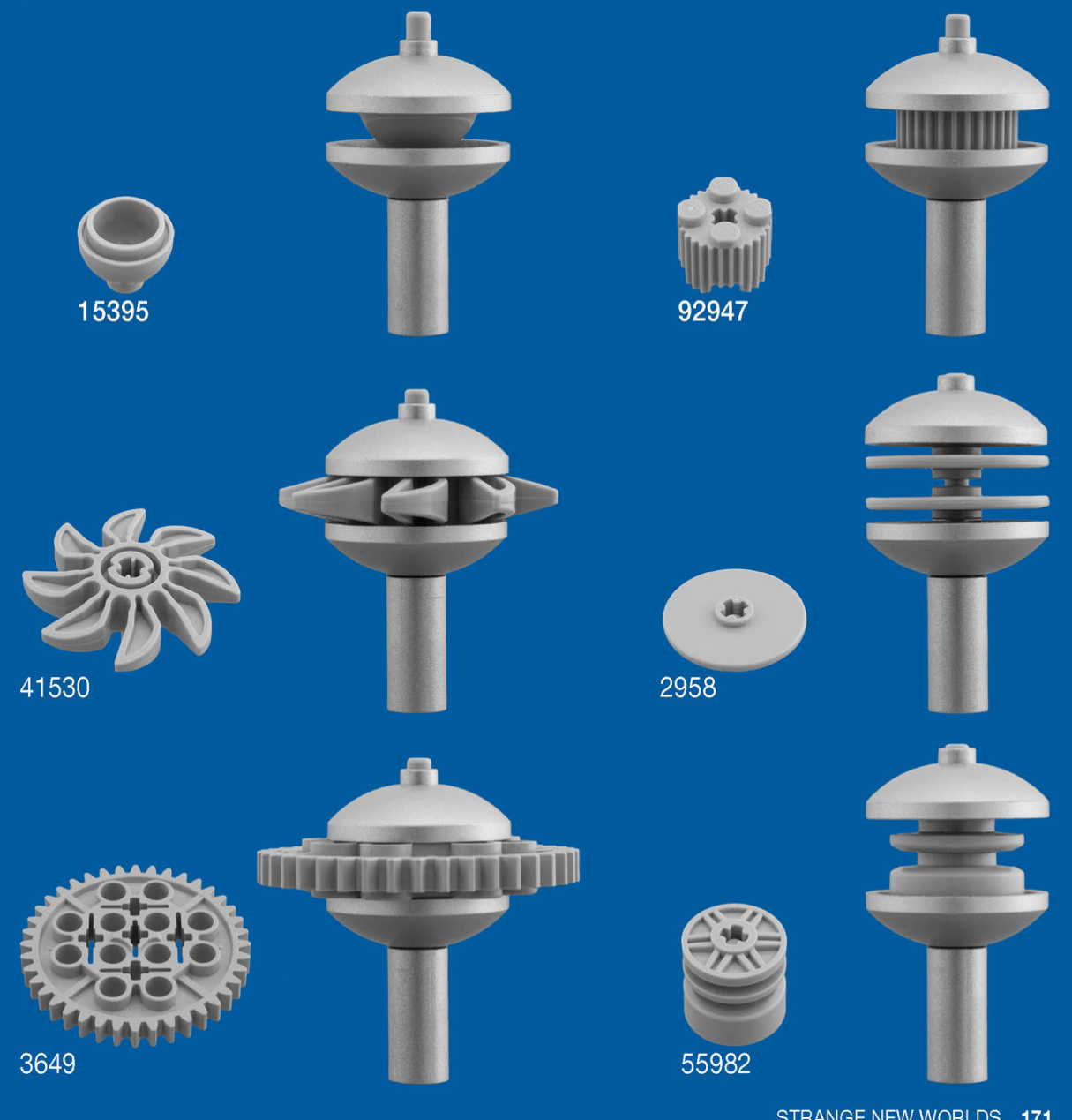
Many round LEGO elements have an axle hole or round hole in the center.
YoucanpushaLEGObarthroughthesepiecestoholdthem inplace.
BUILD A DISH SANDWICH!
In a dish sandwich, dishes are the bread, and thebar is thetoothpick holding the ingredients together.Thefilling is any LEGO element that can fit onto abar.Hereare some examplesof tasty“fillings”you can add to yourdishsandwich.
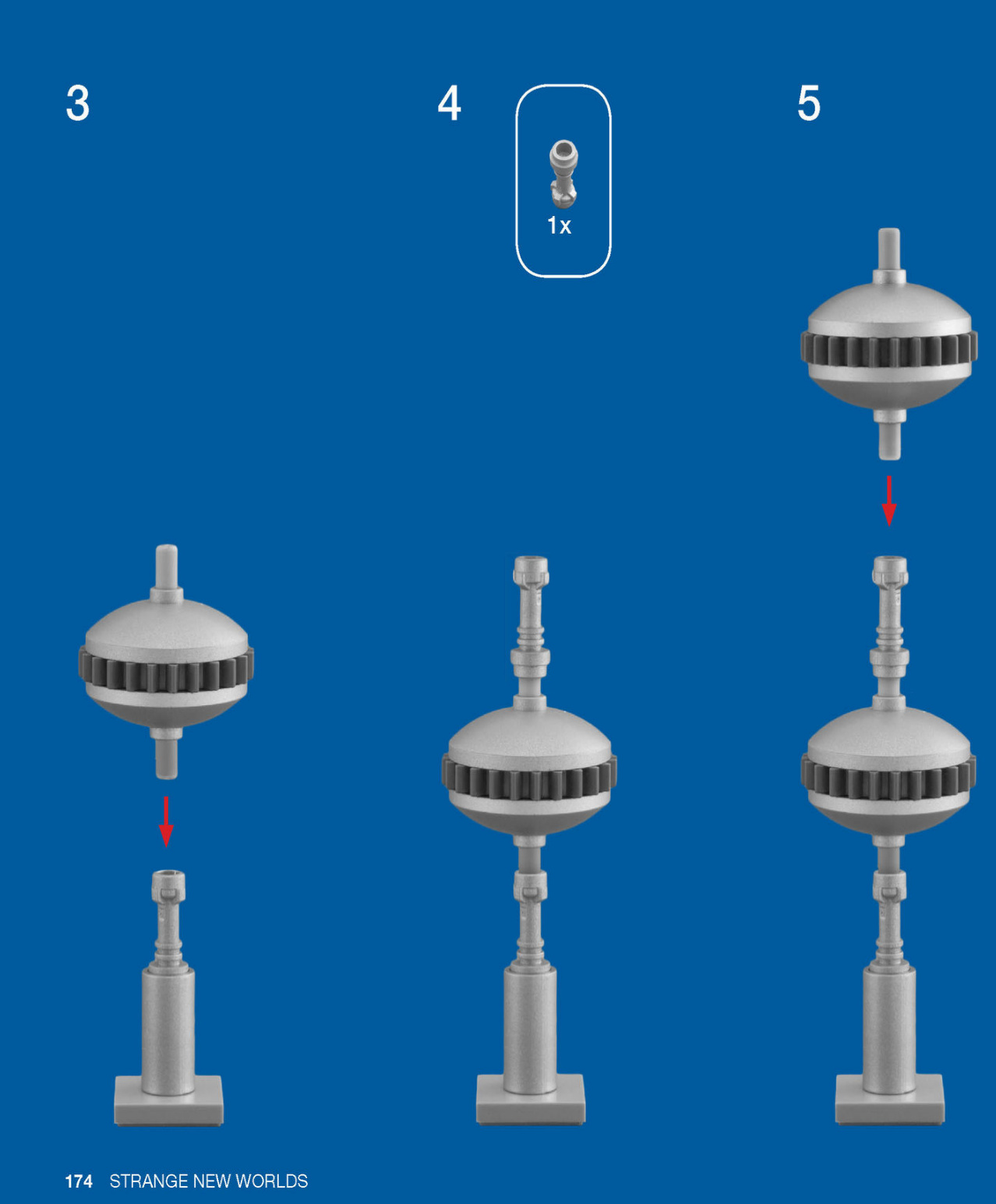
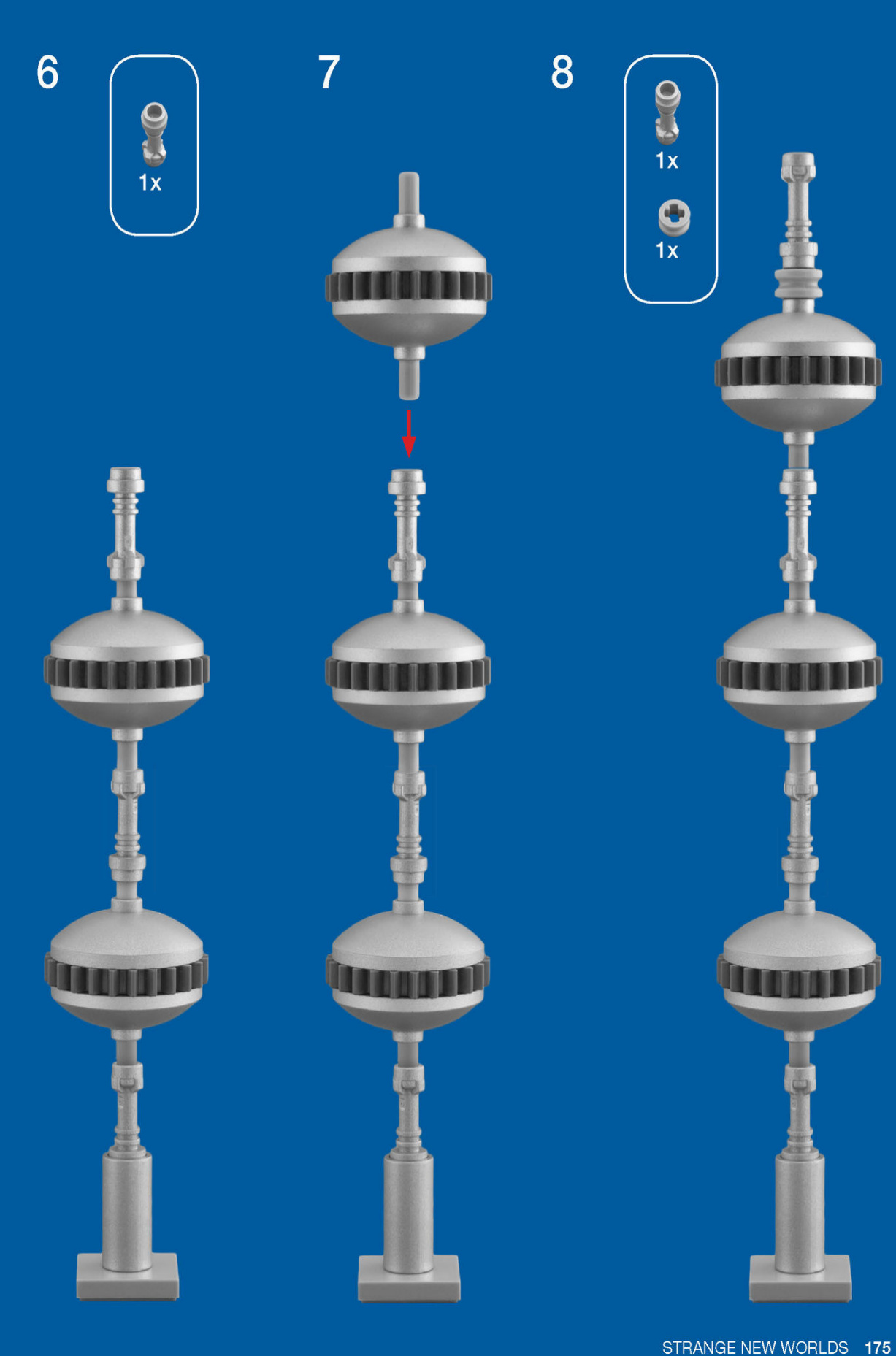
INTERPLANETARYPODS
InterplanetaryPodsareamodularlivingsystemdesignedforquick assemblyandefficienttransferofgossipbetweenpods.
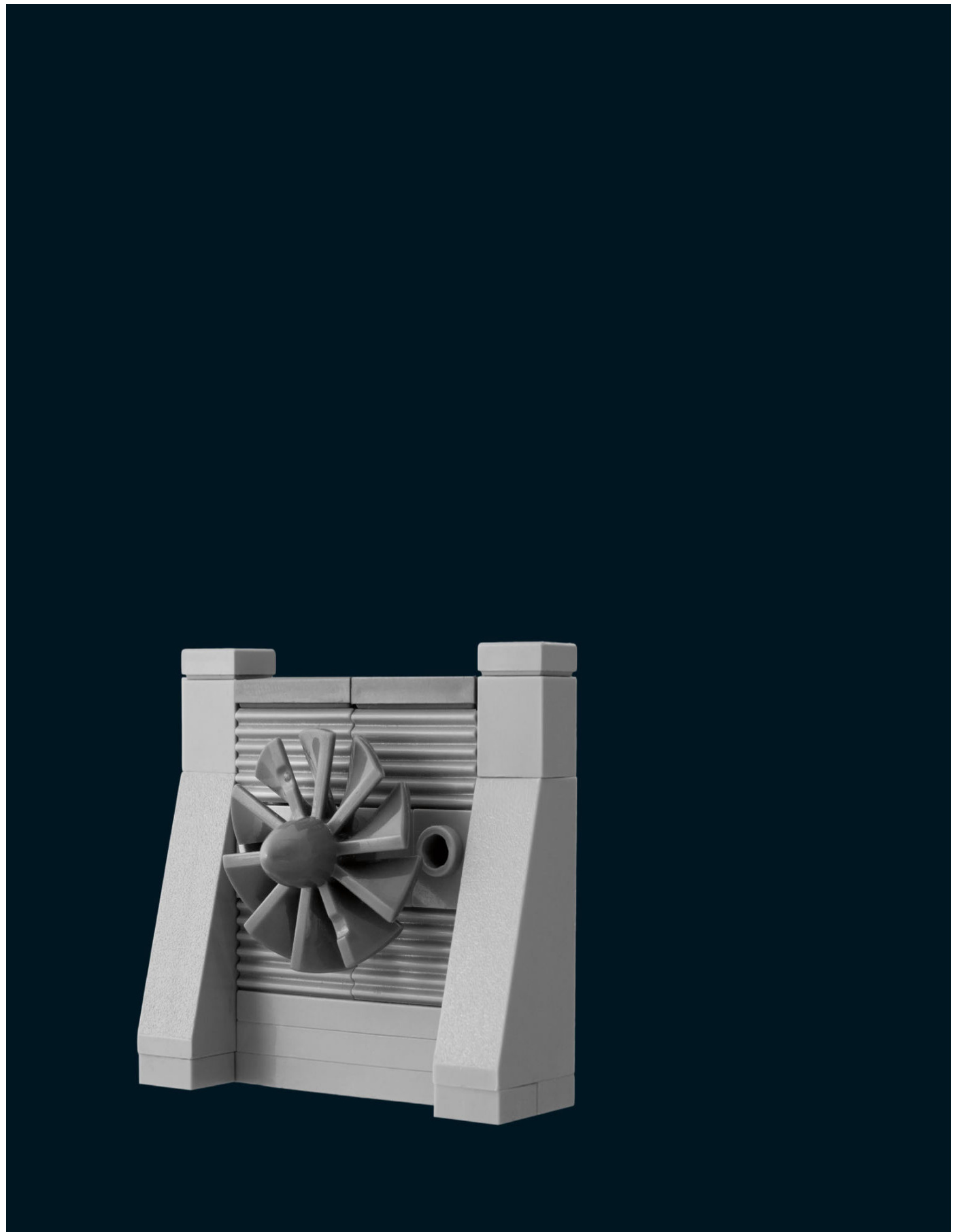
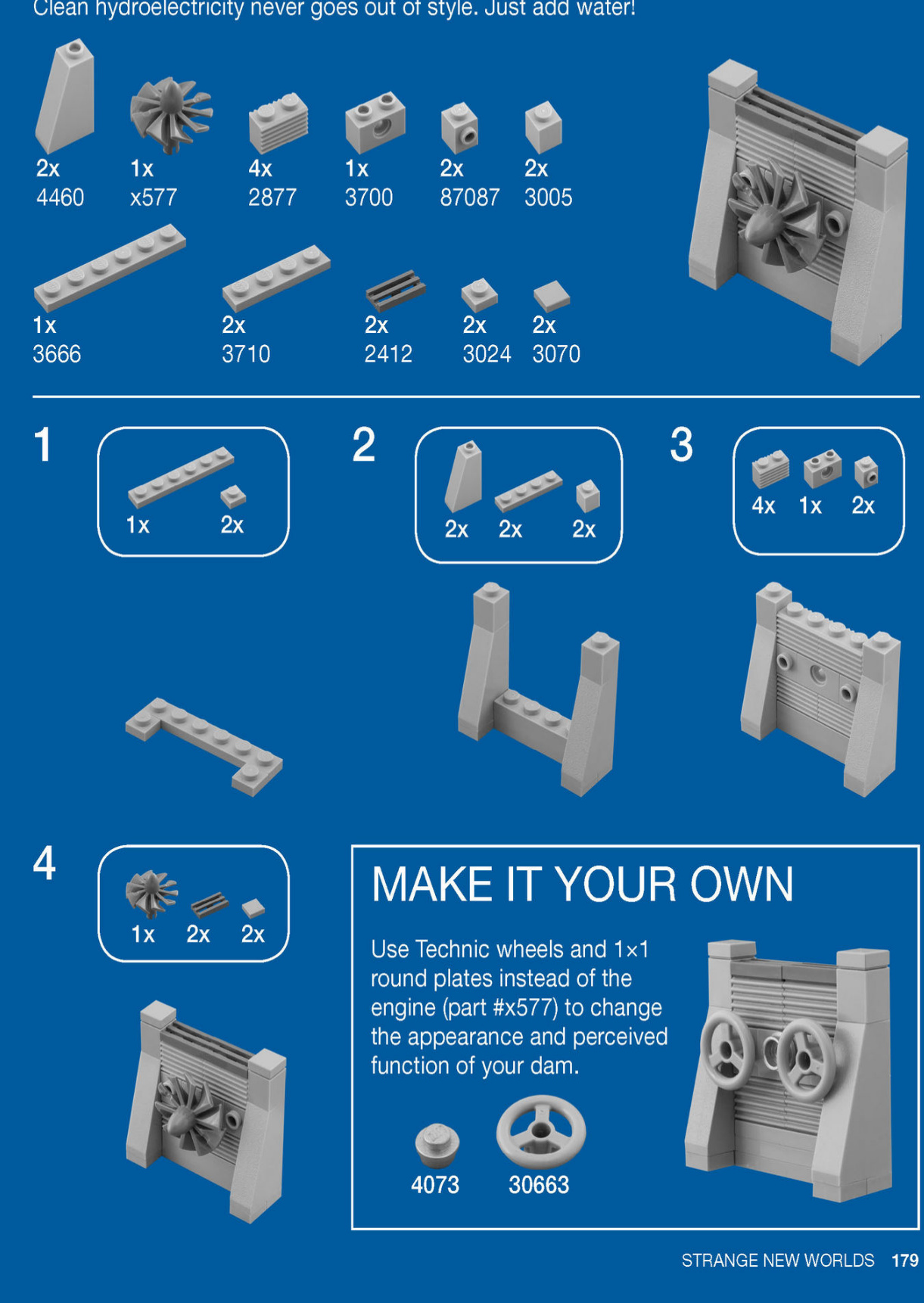
HYDRODAM
THE FINISHING TOUCH
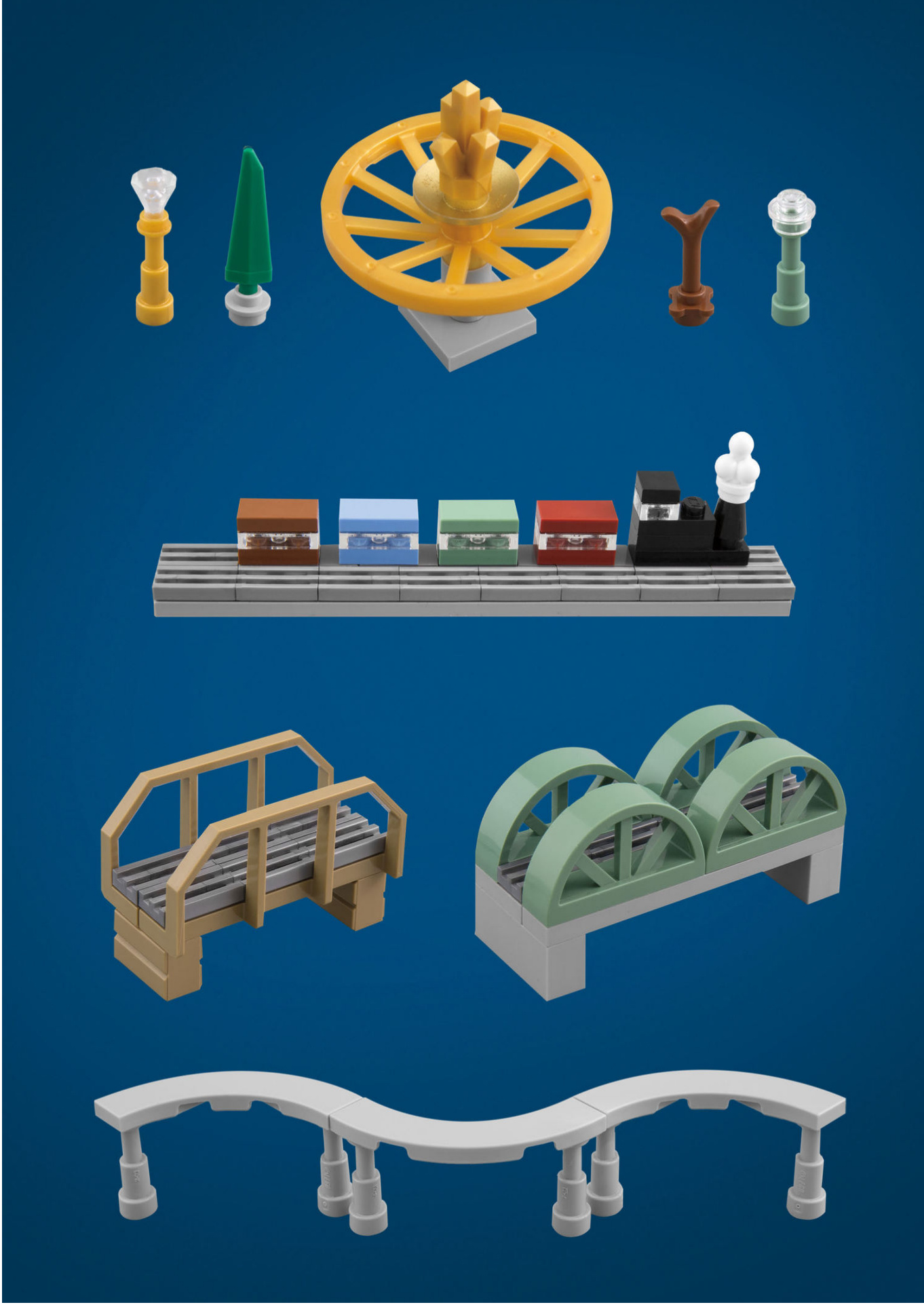
Beauty is in the details. In every creative endeavor, what distinguishes great works from average ones is the attention to detail. Although you might consider trees, statues, and lampposts mere afterthoughts in your micro city design, these details are what transform your city into a cohesive and believable scene.
It doesn’t take a lot of bricks to add these details to your city, but it does take careful thought.Making microscale city details is like being a sashimi chef: there are only a few ingredients, so there’s little room for error. You have to distillthe essence of a train, fountain, or small apartment building using bricks that could fit into an espresso cup.
Here are some ideas for adding beautiful details to your city.
ROAD SAND RAILS
LEGOtilesareavailable in a variety of lengths, and theyall make excellent microscale roads. Usedark grey as asphalt, light grey as pavement,darktanasgravel, andbrownasdirtroads.Forre-creating railroads, 1x2 grille tilesarethebest. Grille tilesarenot currently available in other lengths, but they come in grey, black, silver, and brown.

ELEVATED ROADWAYS
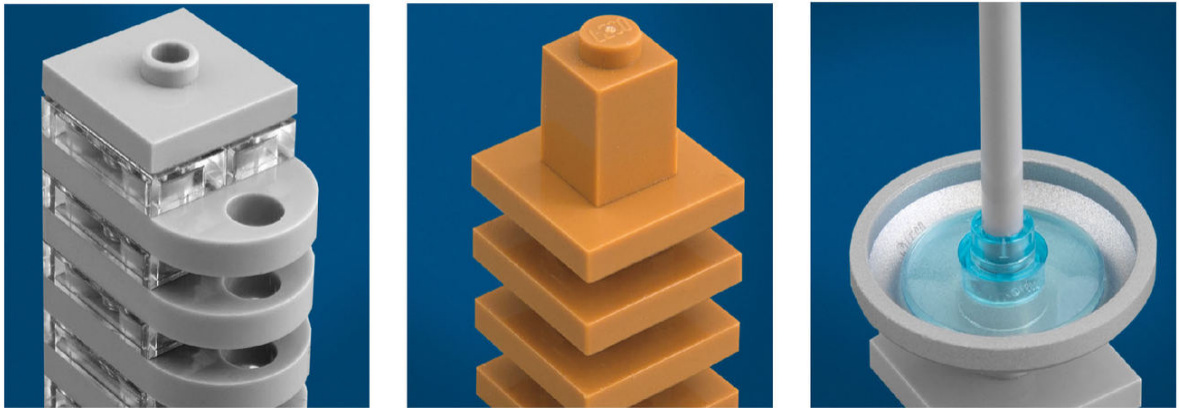
You can raise your roadway by building it on top of supports, called piers.
Roundedpiecesmakethemostaesthetically pleasingpiersin microscale.

MONORAIL
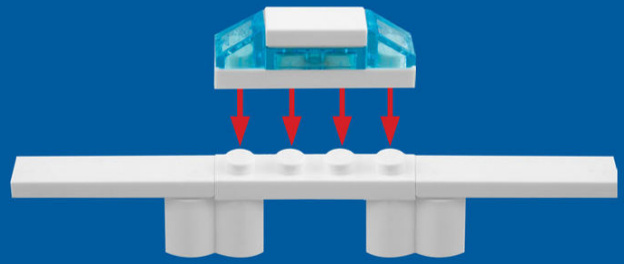
Transport your citizens in style on an aerodynamic monorail. Use white tilepiecesonanelevatedroadwaytomakethemonorail track.
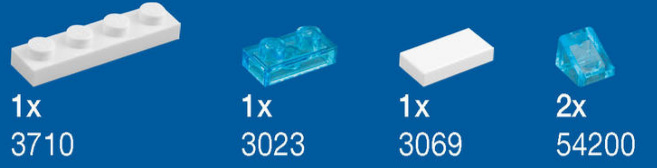
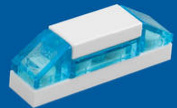
To attachyour monorail car to the track, placea1x4platesomewherealongthe monorailroute.Thecarattachestothe plate as shown here, hidingthe plate’s studs.
TRAINS
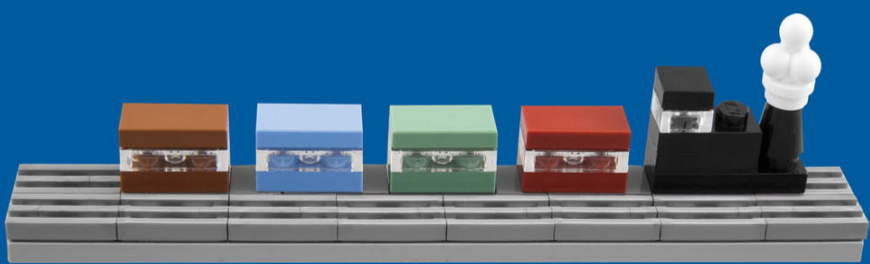
Steam trains add a sense of motion and industry to your city.
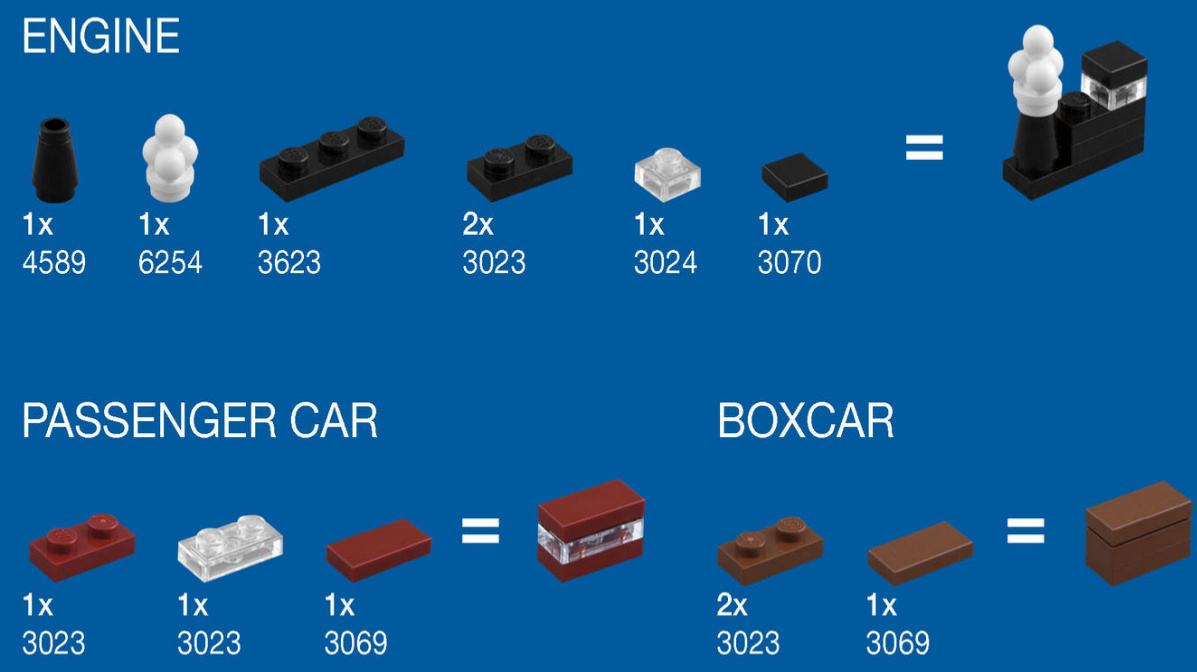
PLACING AT RAIN ON THE TRACKS
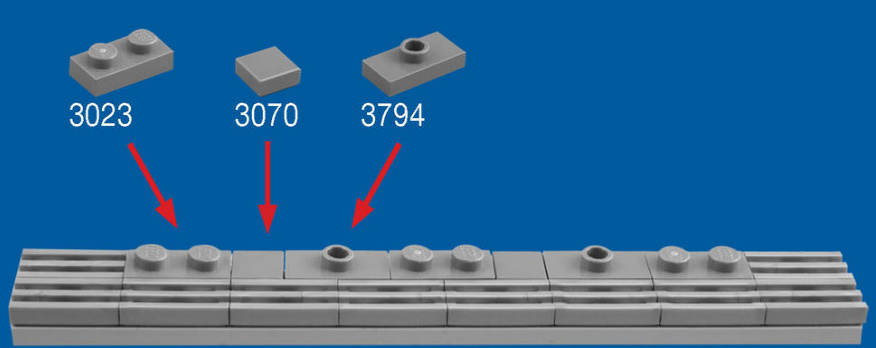
Microscaletrains look bestwithahalf-stud gapbetweenthe cars.Youcanachieve this by repeating a patternof1x2plates 1x1tiles,and1x2 jumperplates as shown.
SHIPS
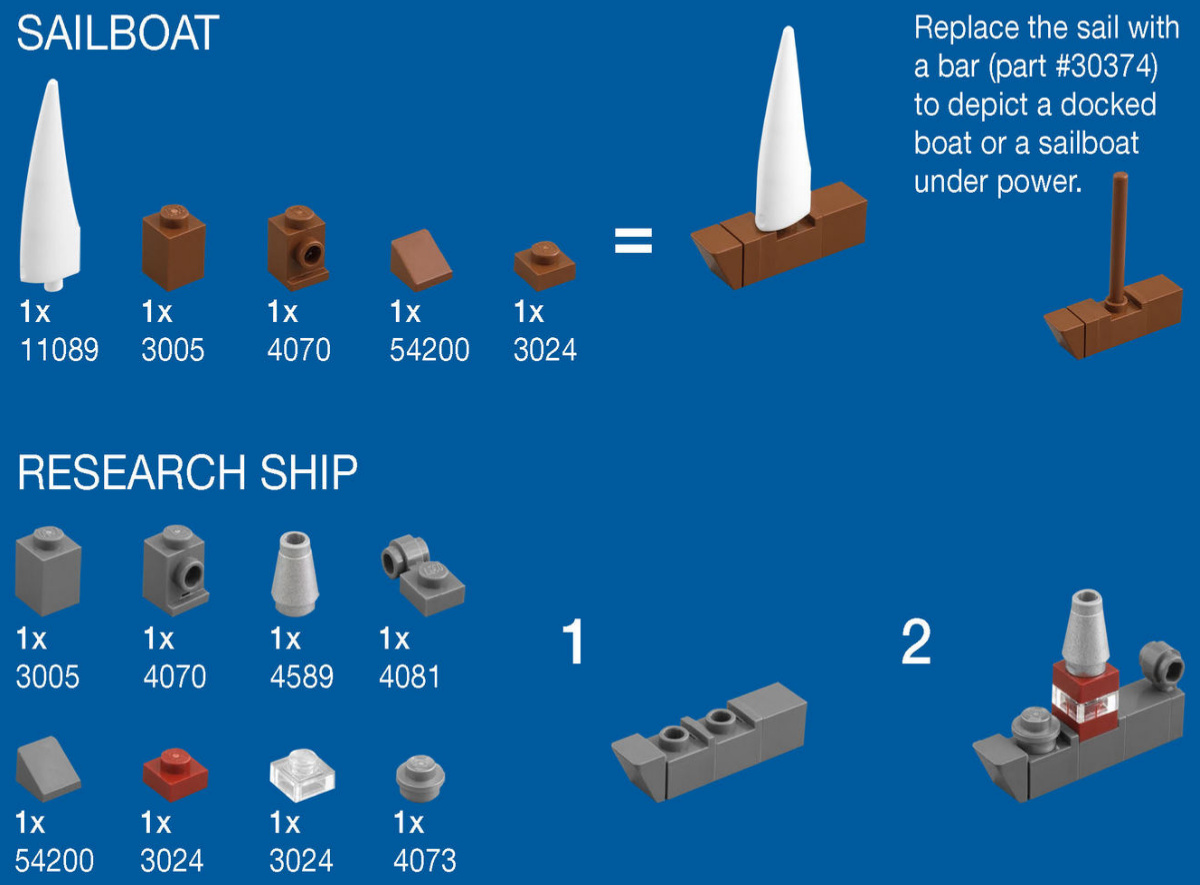
Decorate your sea and sky with microscale ships from any era.
SPACESHIP
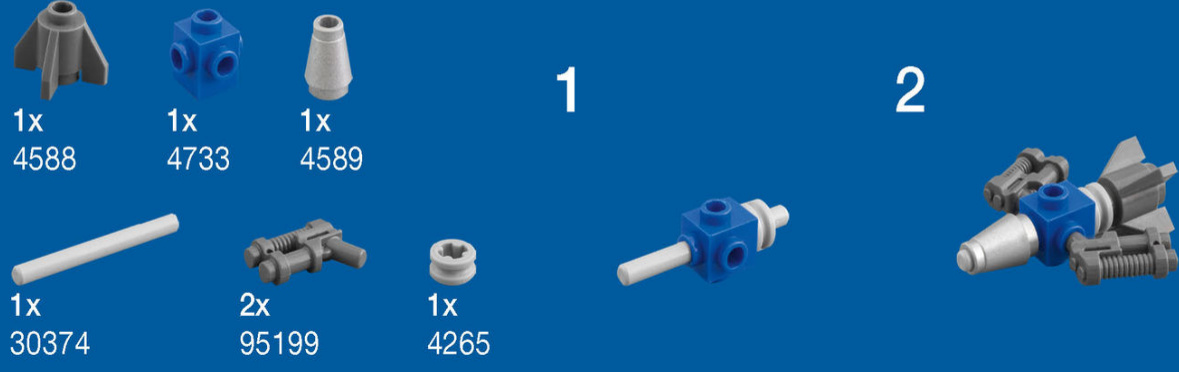
Whenyour spaceshipreturns from its mission, it can bedockedwith one of the two open studs on the bluefuselage, as shown on page164.
LANDSCAPING
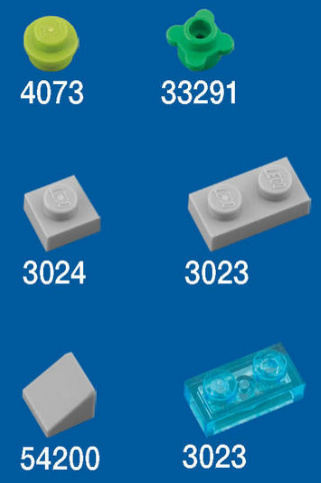
You can make convincing shrubs and bushes by stackingregulargreen1x1roundplatesandgreen1x1round plateswithafloweredge(part#33291).Mixandmatch theplatesatvaryingheightsandindifferentshadesof greentomakethelandscapedesignyourown.


Combineopenstudpieces withthestempiecesthatfit into themto simulateconiferousanddeciduoustrees.
INTHEPARK
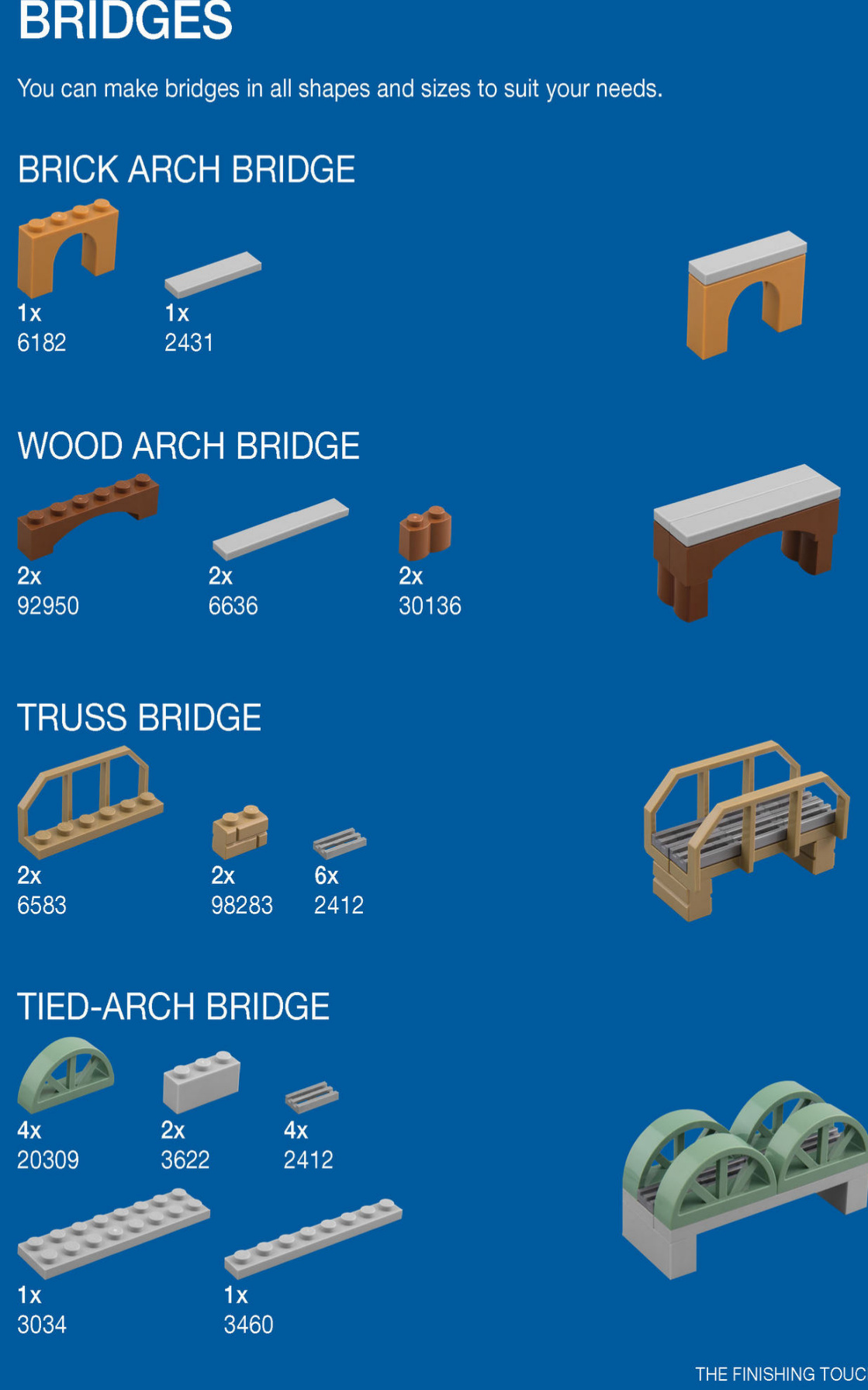
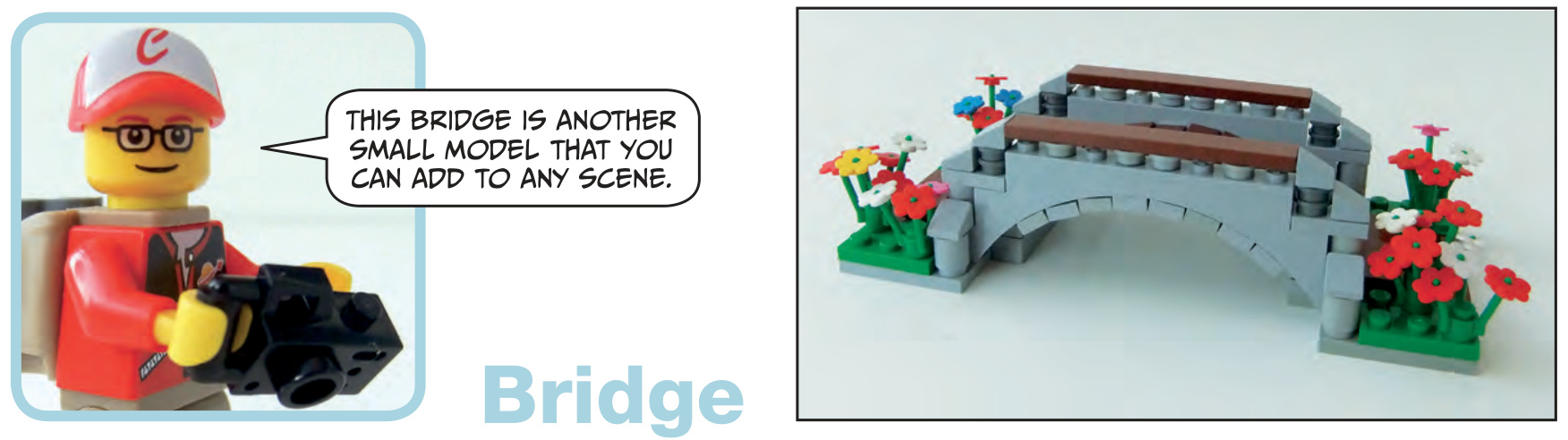
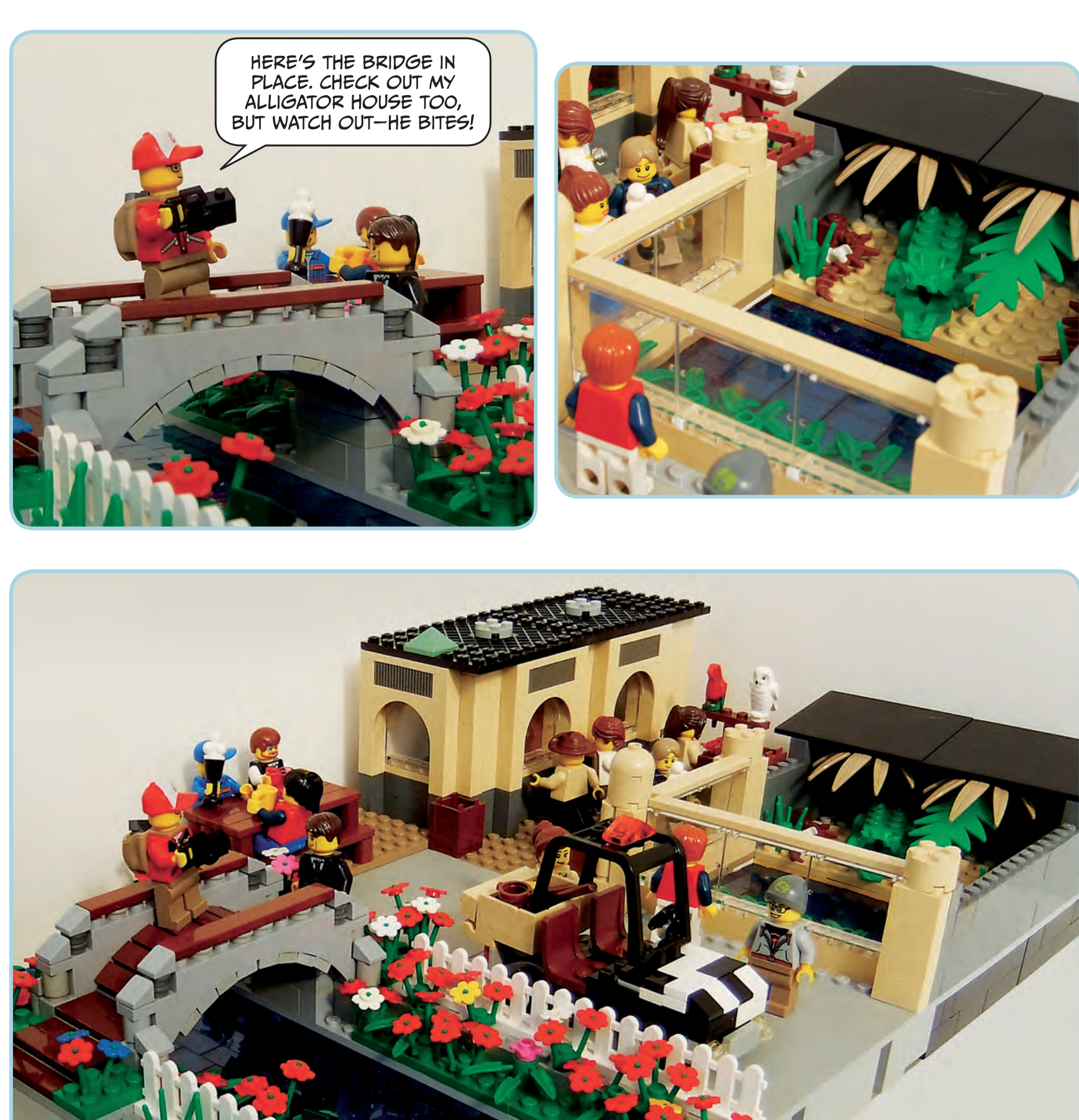
Lampposts and footbridges complement natural features.
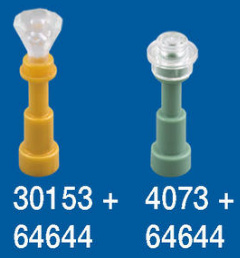
Brightenyour city parksatnightwith decorative lighting.
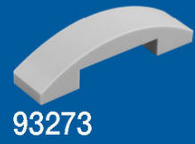
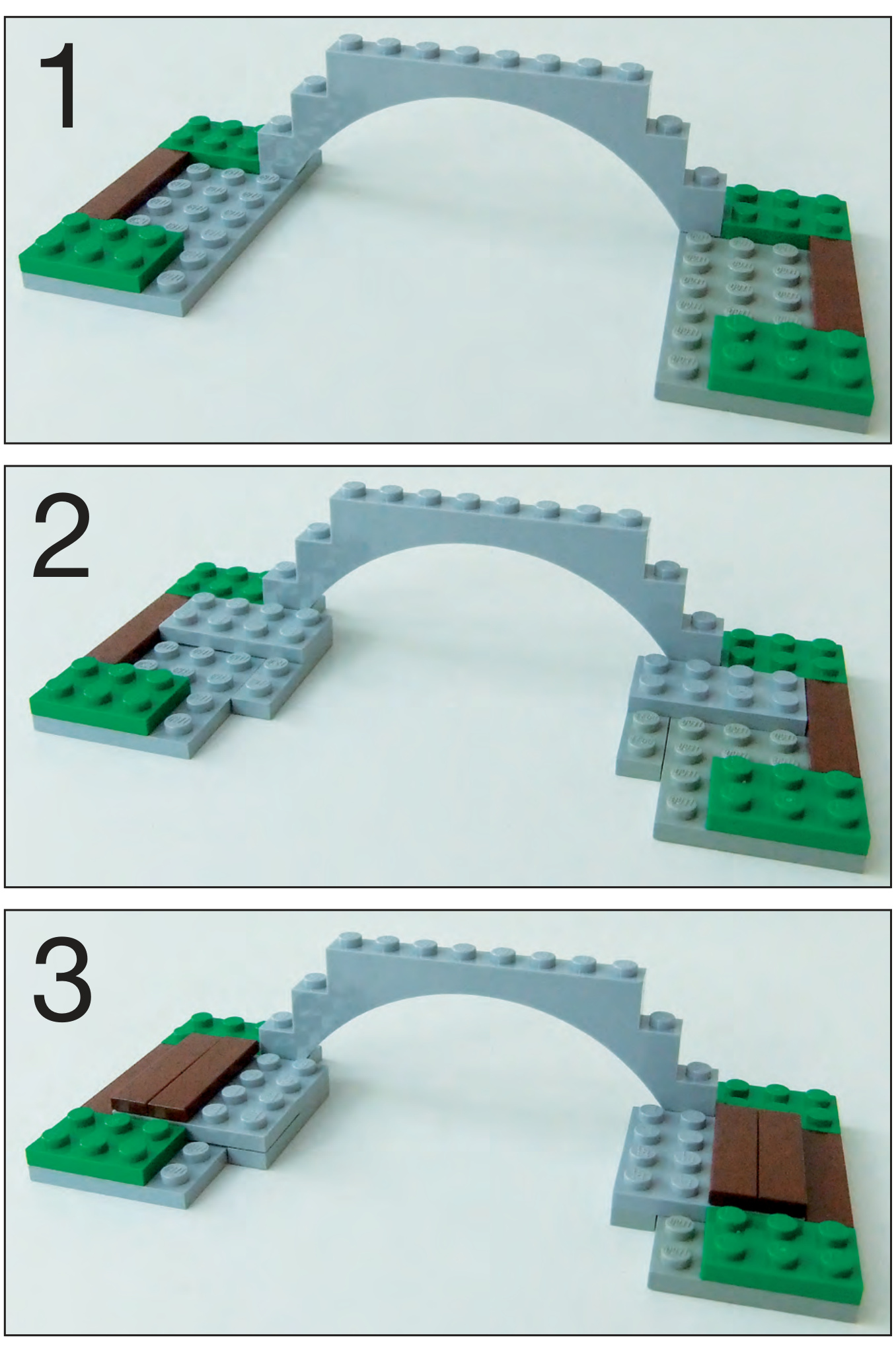
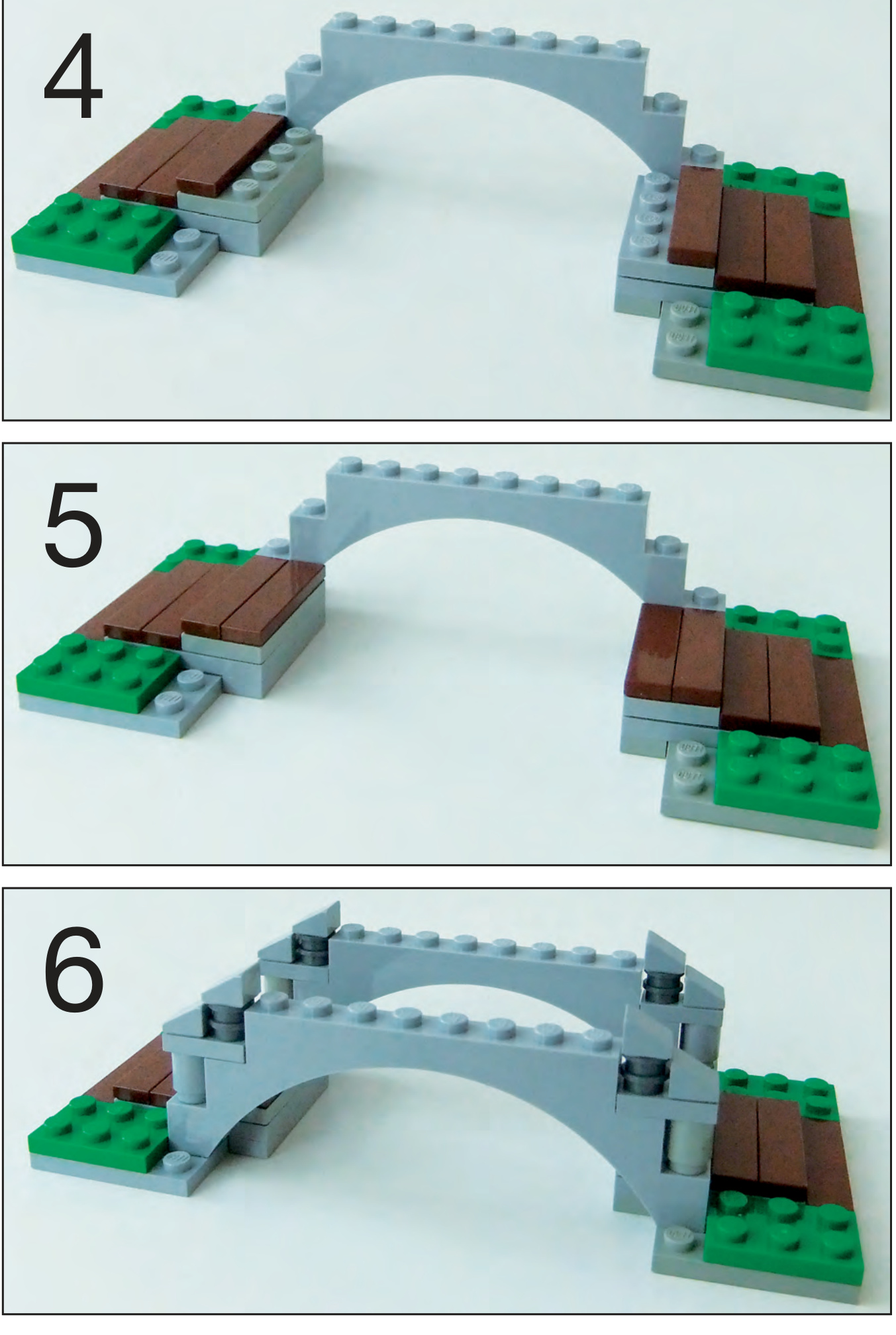
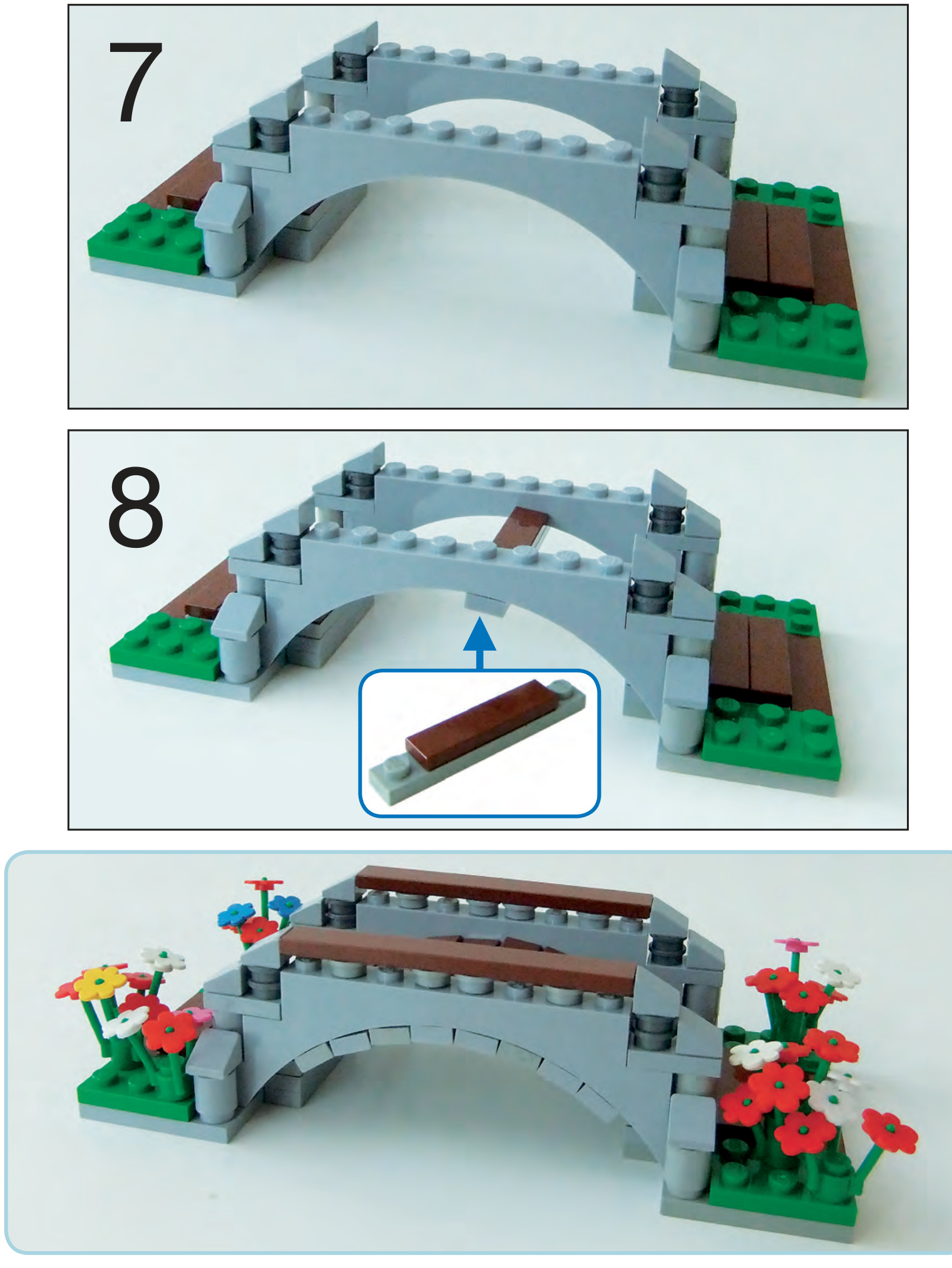
This single piece becomes afootbridge. Usedifferentcolorsto representstone,wood, orbrick.
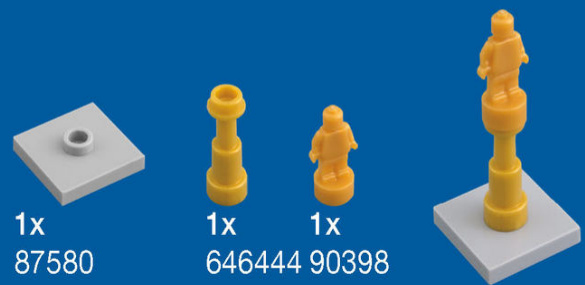
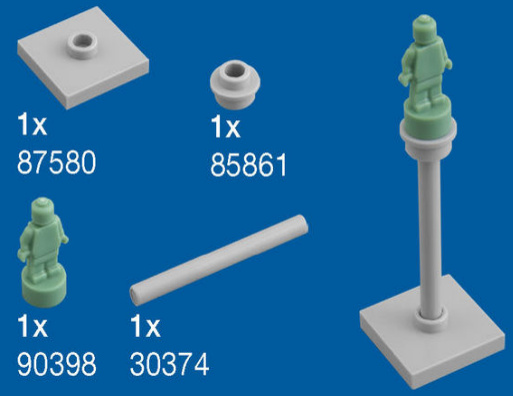
STATUES
Honor your city’s founder with fine sculptures.
FOUNTAINS
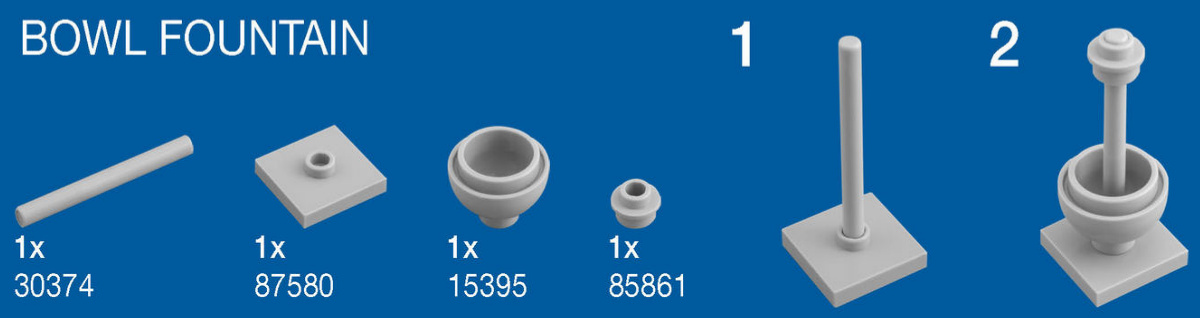
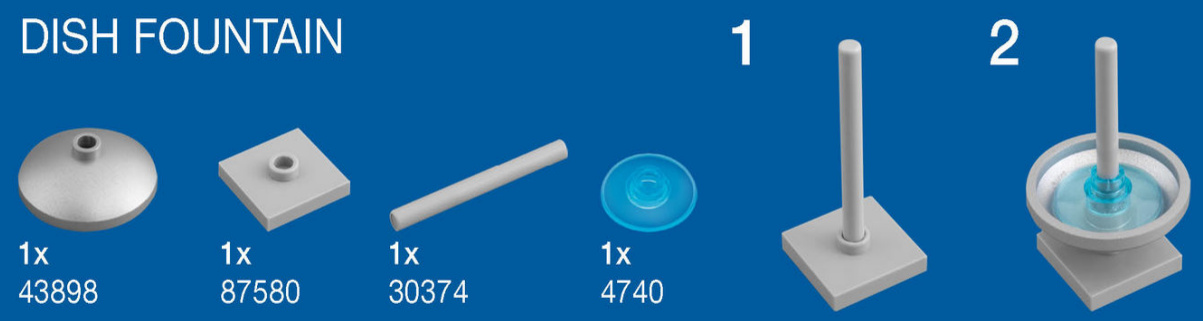
Fountains can do a lot tofreshen up an urban environment and make your citizens happy.
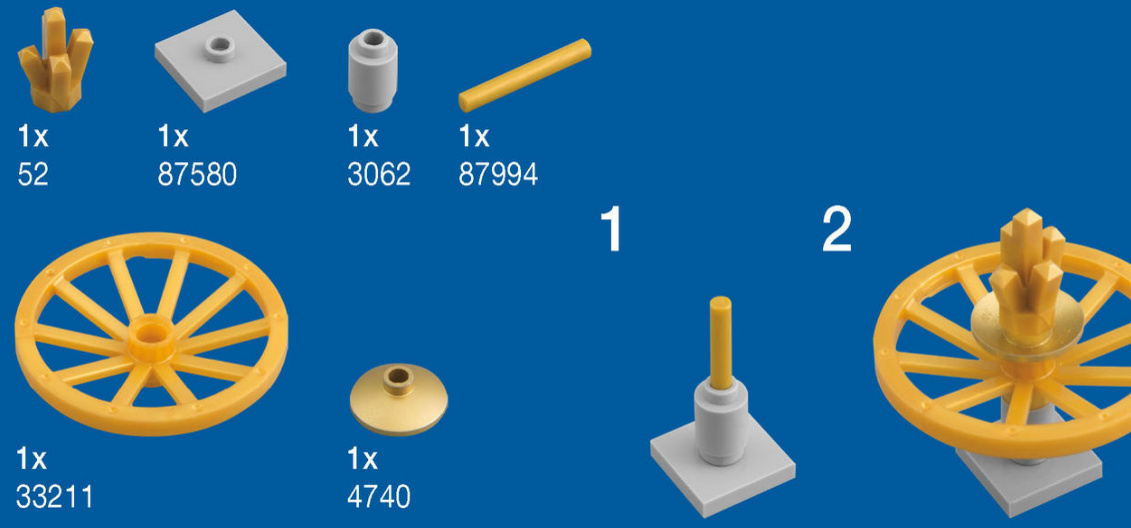
CRYSTALFOUNTAIN
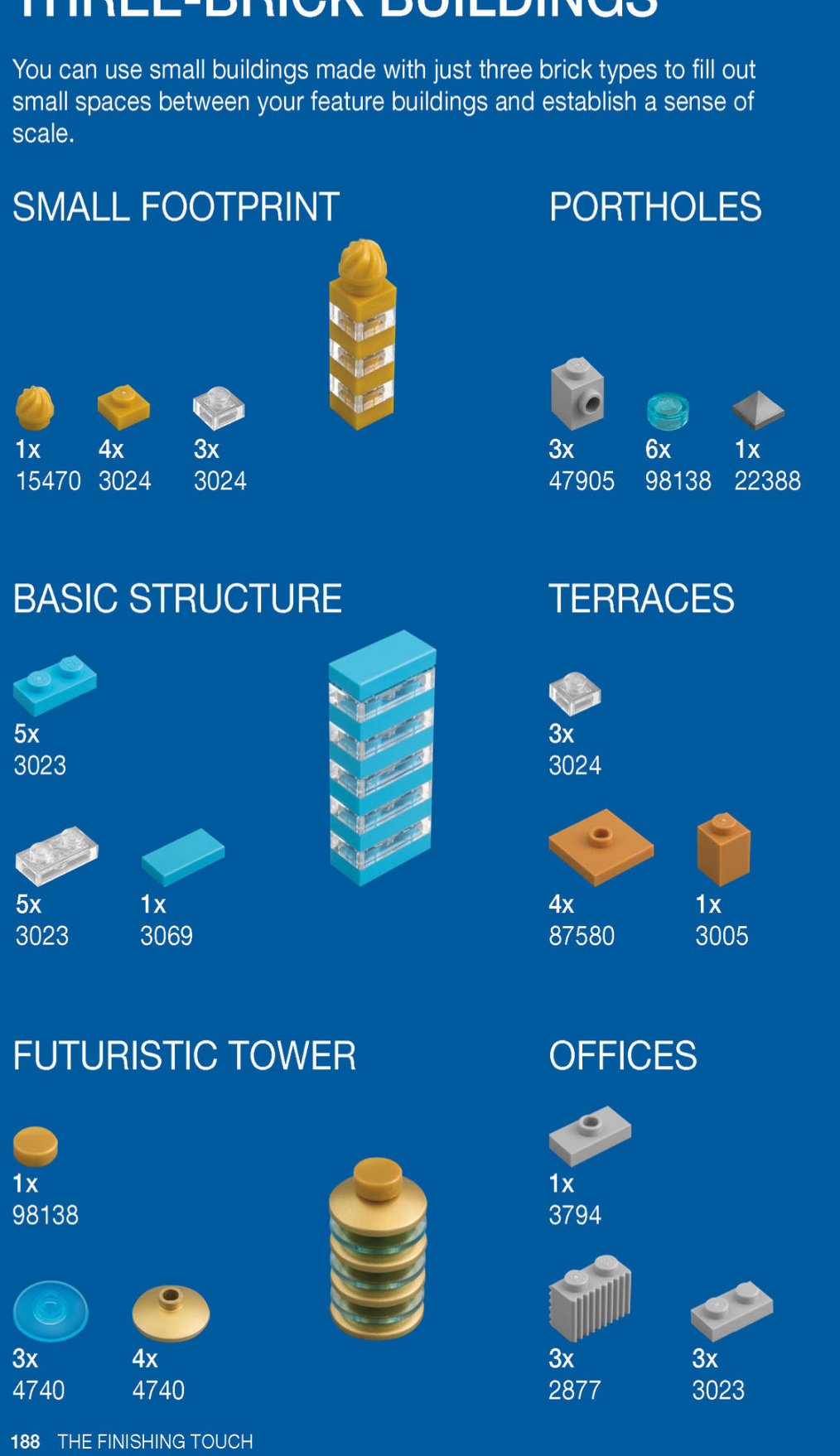
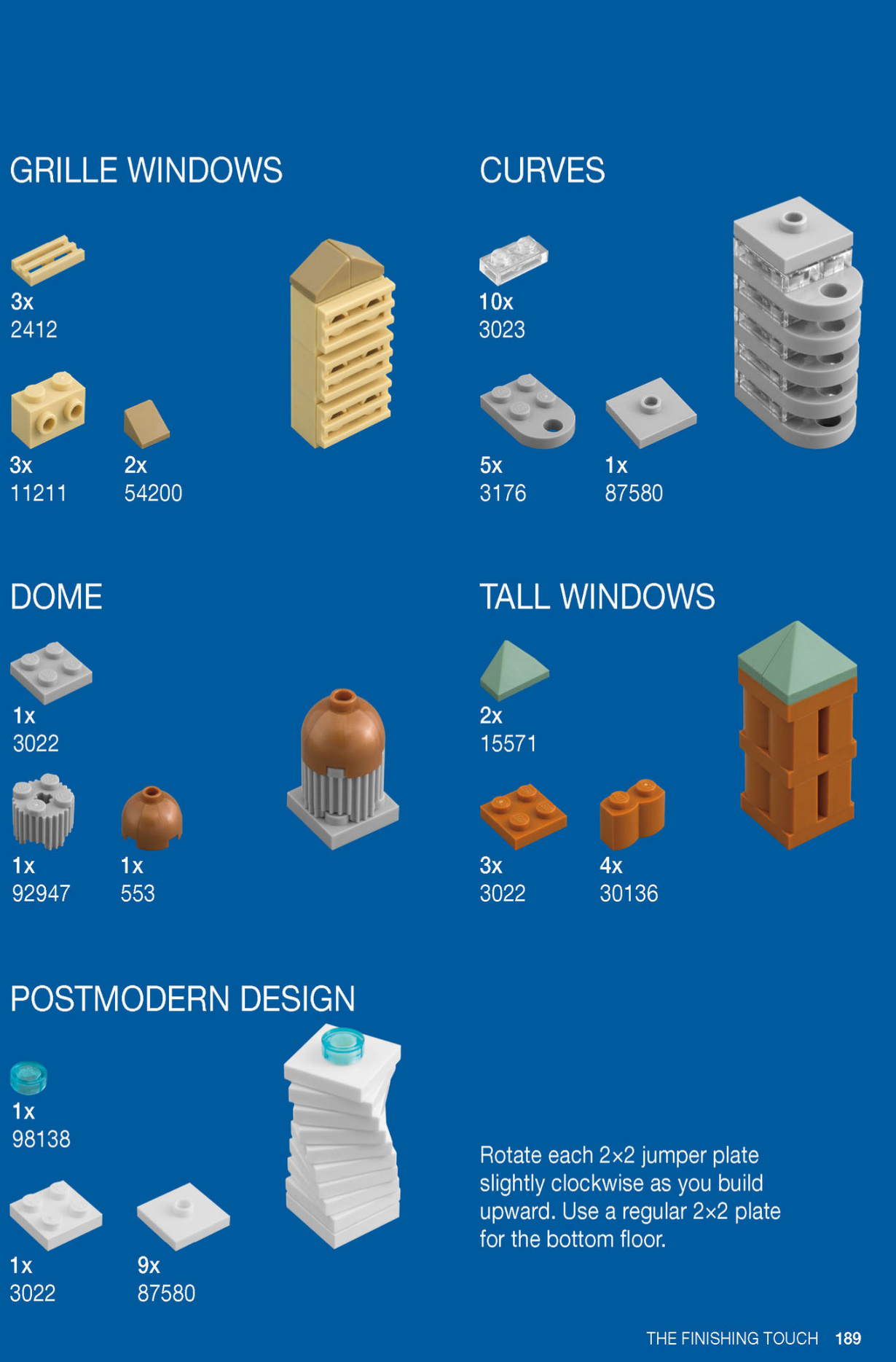
THREE-BRICKBUILDINGS
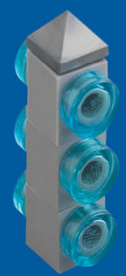
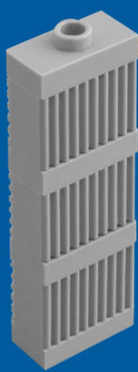

WHAT WILL YOU BUILD?
Make a beautiful city that’s small enough to hold in your hands! Filled with striking photos, step-by-stepinstructions,and countlessideas for customization, LEGOMicroCities shows youhow building small canopenupnewpossibiliesfor the creativebuilder.You’llearn everything youneed toknow to createyour ownmicro city,frombuilding thefoundation toadding convincing architecturaldetails that will bring your city to life.
This book is not authorized orendorsed by the LEGO Group.
The Big Unofficial Lego Builder’s Book


Joachim Klang
Approximately one third of my life was more or less -free, until one day - long before the official Star Wars sets - someone had the idea to build LEGO? vehicles, space ships etc. from the Star Wars movies. I was immediately excited by that idea. I got the necessary bricks and built an AT-AT walker, into which the usual LEGO? figures were supposed to fit.I posted photos of my AT-AT walker on the internet to share my enthusiasm with others. Brilliant feedback encouraged me to further engage with and build other models; 1ooosteine.de even selected my walker as the Model of the Month in 2oo2. To start, I built a Sandcrawler with the help of El-Lutzo, then later an open air stage of the Village People together with a musician and friend, Freddy Sturze. For an exhibition in Berlin (TSL),I built another dream project, the Death Star hangar with over 4oo figures, and finally, with support from misterzumbi’s love for detail, the Empire State Building that covered an area of approximately 3 square meters and was about 3.5 meters tall. We have varied the arrangement of the buildings for every exhibition since then; first, we had them in the 193os arrangement, and later, in that of the 197os. It includes a police car that was meant to become the special model of the TSL in 2oo7. El-Lutzo took part in this as well and created the construction manual. My passion for small vehicles has not dwindled since.
At the moment, I am building the Battle of Minas Tirith, known from the Lord of the Rings, together with Michael von Hovora. After Jurgen Bramigk built the Cologne Cathedral, many members of the Modellbaufans Rheinland Club (mbfr.org) are developing a model of the historic center of Cologne and I am focusing especially on the Museum Ludwig and the Cologne Philharmonic.
You can find me on the internet under the nicks derjoe and Unimoc, my real name, and, of course, also at my company address Joerilla.de

Oliver Albrecht
I became known in the fan base for my large technical models, with pneumatic and mechanic functions, built to 1:13 to 1:2o scale. The Gottwald AK 850 crane from the company Schmidbauer KG that I built from , for example, is one meter long, the gentry two to two-and-a-half meters high. I got the scale drawing for this construction from the internet and converted it based on the tire diameter to size.
I like to build virtually at first, gather the necessary bricks, and then build for real. My building instructions can be found in many internet forums, communities etc.
I have participated at numerous exhibitions with the Modellbaufans Rheinland Club, for example, in the construction of giant house fronts. At the moment, I am also working on the project of the historic center of Cologne, devoting myself to the block of houses between the Bechergasse and the Gasse Unter Taschenmacher on the northern side of the Alter Markt (Old Market).
Foreword
, the colorful construction toy, has a permanent place in children’s rooms all over the world since over 5o years. Generation after generation spends parts of their childhood with clicking the colorful plastic bricks together.
Yet LEGO? bricks have long since emancipated. The fact that adults engage with the so-called toy is no rarity. Thus, a worldwide network of like-minded individuals has formed; they create their own models, present them on platforms and exchange on numerous topics.
Countless creations of young and old can be found on internet sites such as flickr.com, brickshelf.com, mocpages.com and numerous fan club forums. It never gets boring to be an amateur designer because of the constantly growing variety of parts and colors. For some, it’s freestyle puzzling, for others a happy balance to everyday stress. Spurred by other architects’ competitive solutions for construction obstacles and tricky connections, can quickly become a spaceconsuming, time-consuming, and cost-intensive hobby. Even more so if you can share the excitement and appreciation for your own creations on the world wide web with other fans. Eventually, you become aware of how much you are influenced by other works. Some ideas - for example the connection for white sidewall tyres - cannot be improved any further and are included in your repertoire.
In this book, we show you how to achieve first results with a box of random LEGO? bricks in a few steps and build different vehicles or buildings. In the introduction, we explain some basic building techniques such as the SNOT (studs not on top) technique with which it is possible to change the building direction. The main part of the book deals with the town. We have decided on a reduced scale (we call it Midi scale) with which you can build first models rather quickly.
The last part of the book is aimed at professionals who have more experience already and are not afraid to buy certain items to add to their collections. These are indeed available in many outlets out there (e.g. Shop@home, ebay, bricklink, land, brand stores, flea markets etc.). Here, we present some complex models in rare colors with many realistic details.
Throughout the book there are various ways to discover connection variations and part couplings that you may not find in typical building instructions. Perhaps there will be one or the other wow factor that animates you to your own brand-new creations.
Of course we know that your LEGO? collection at home can hardly suffice to recreate everything shown here. But we are sure that a lot is possible with a little creativity. Just play with the shapes and colors, and you will soon find out how much fun your own model can be.
Joachim Klang and Oliver Albrecht

Our Motto:
Just click, do not glue, clip or paint! We only use original bricks.
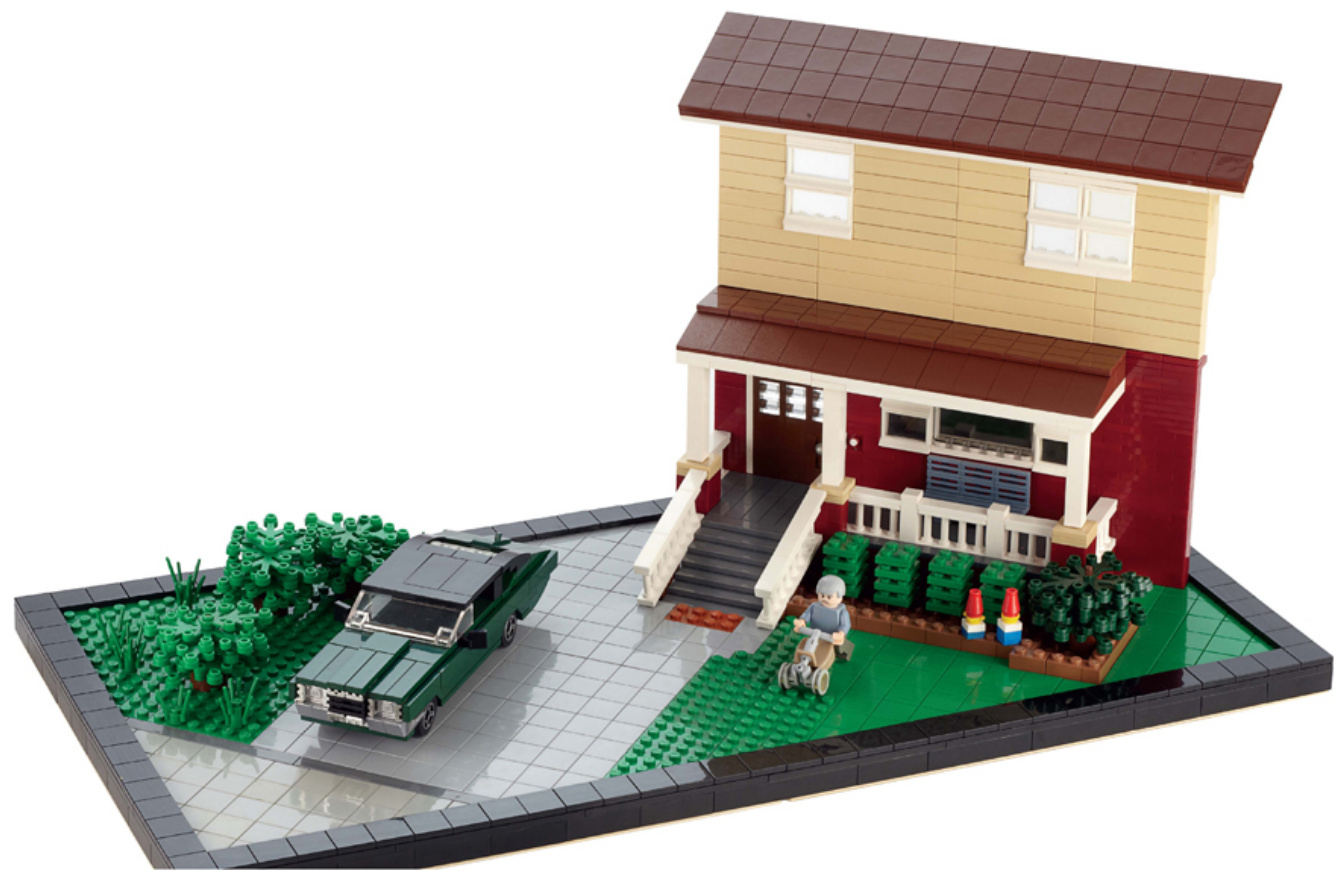
Tips, Tricks and Building Techniques LEGO?-Geometry
In order to find one’s way in the world of bricks, essential terms and the geometry need to be explained first. Generally, there is a difference between bricks, plates, and tiles. Bricks and plates have studs; the surface of tiles is smooth.
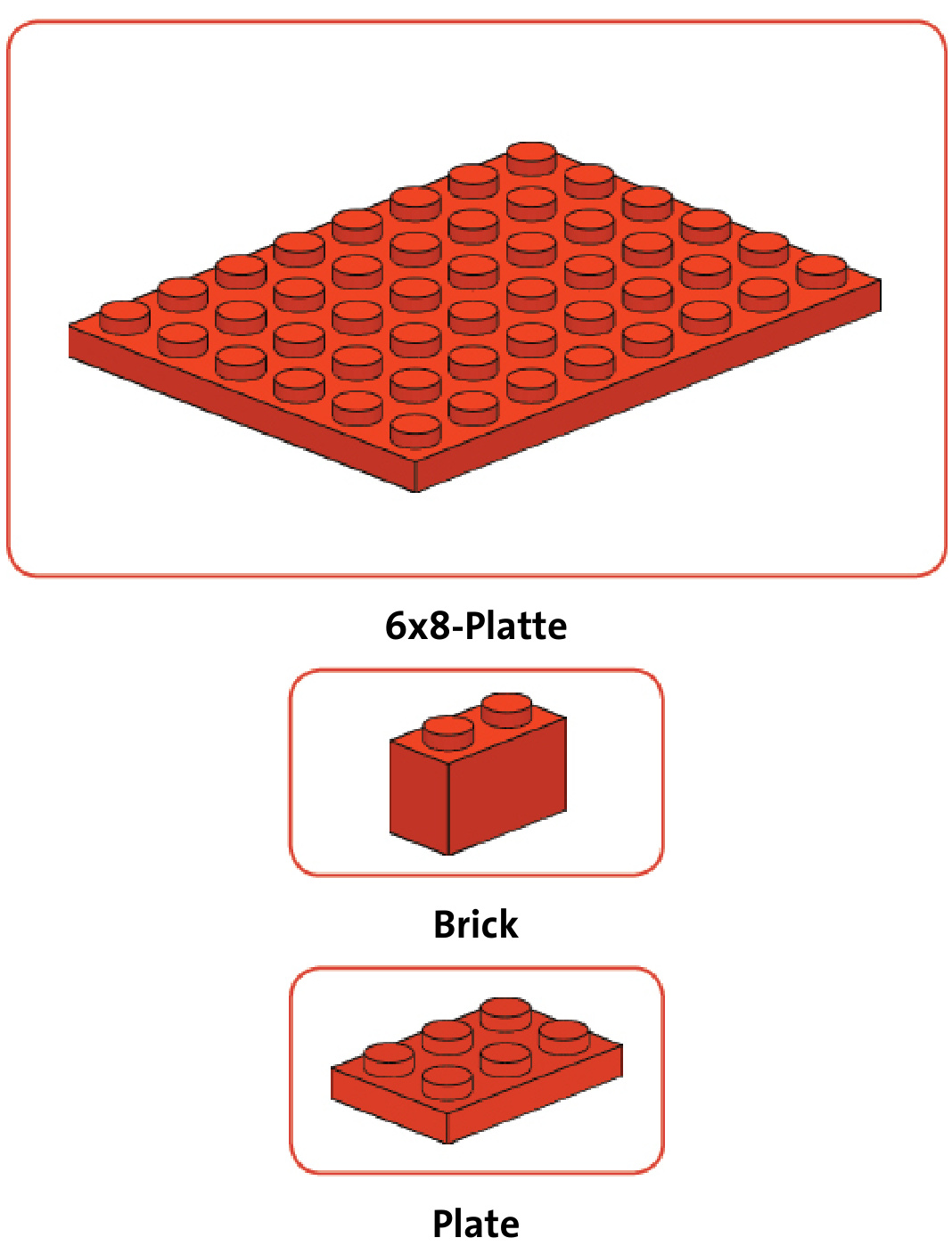
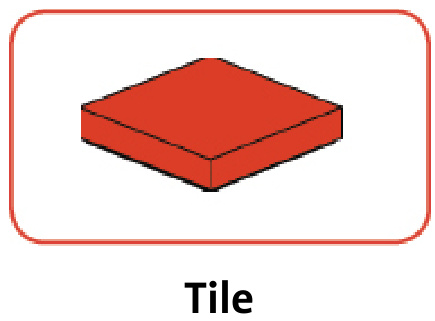
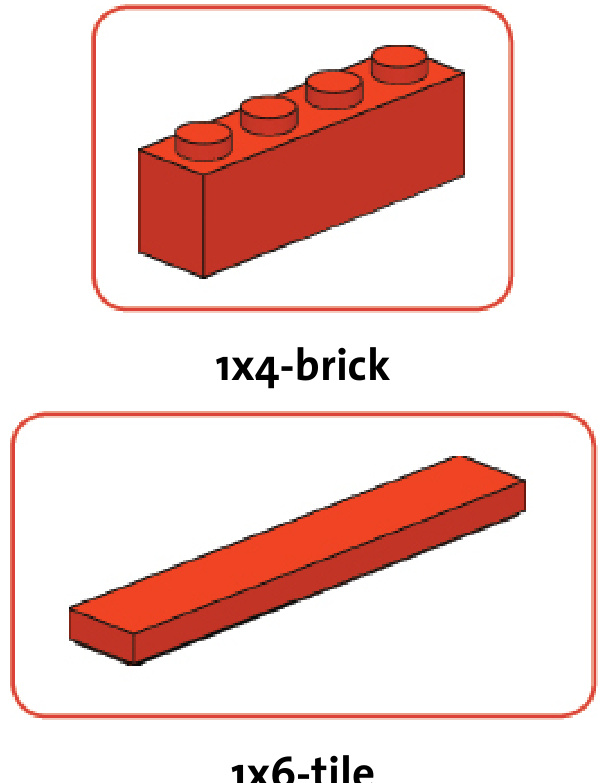
In order to properly identify bricks, plates, and tiles, you count the rows of studs (with tiles, it’s the rows that a plate of the same size would have). Usually, the smaller number is listed first as the width and the larger number comes second as the length. Hence the bricks shown here are:
The underside of almost all components shows the tubes. They are offset from the studs so that the holes and studs can gear into each other and hence allow for the building with bigger bricks than was possible with the hollow bricks from the beginning of . Exceptions are the 1x1 elements that do not need a tube. An element always has one tube less than studs per row.
The geometry of the bricks is easy to understand. There are two standard heights: flat elements (tiles and plates) and high elements (bricks). Plates and tiles are always 1/3 of a brick in height. Stacking 3 plates or 2 plates and 1 tile will result in the height of a brick.
bricks are constructed in a ratio of 5:6. If you want to build a cube, you would have to use a 2x2 brick, a 2x2 plate and a 2x2 tile or four 2x2 plates and a 2x2 tile.
LEGO? colors
To this day, the original colors of bricks form the basic framework: yellow, red, blue, white, and black. Green, gray, and transparent followed quite quickly. Recently, numerous colors (by now 12o, including specialties like chrome, milky or metallic) have been added to the sets; these colors occur with varying frequency or are rather rare.
Even today, builders are repeatedly faced with the problem of not having enough bricks in a certain color to give their model a uniform appearance - particularly in cases of rare colors. That demands creativity. One possible solution is to build the model in the available color. Another one is to reduce the scale in order to get by with the available bricks in the chosen color. Certain elements could be differentiated in other colors to create optical units. Of course, you could also systematically buy bricks in a specific color and implement your idea.
Abbreviations
Several abbreviations and names circulate in the LEGO? fan base:
ABS (Acrylnitril Butadien Styrol)- LEGO? bricks are manufactured primarily from this material nowadays
AFOL (Adult Fan of Lego)
MOC (My own creation)
TLG (The Lego Group)- Abbreviation for the company itself
BURP (Big Ugly Rock Piece)-fantastic rocky landscapes can be built with these bricks
LURP (Little Ugly Rock Piece) -the small version
POOP (Pieces that can or should be made of other Lego pieces)
LUG User Group) - LEGO? fan base
TLC Train Club) - a LEGO? fan base that focuses specifically on building trains
JUMPER - make one out of two: this is a 1x2 plate that has only one stud in the middle.
SNOT (Studs not on top)- this abbreviation refers to a building technique where, using small tricks,for example, an underside can be attached to an underside or the construction direction can be turned go degrees. Some examples follow on the next pages.
Cheese Slopes - sloped bricks
LEGO? Clubs
The following LEGO? clubs are significant:
www.freelug.com - FREELUG, French Enthusiast
User Group
www.brickish.org - The Brickish Association, a UK-based community of Adult Fans of (AFOLS)
www.nelug.org - NELUG, New England LEGO? Users Group
www.1oooSteine.de
www.MBFR.de (Modellbaufans Rheinland)
Bricking Bavaria e.V.
Searching for and Finding Bricks
Some internet forums and homepages offer information about bricks:
Bricklink.com - great for researching which parts are in what set
Peeron.com -very nice set and part reference
Lugnet.com (Lego User Group Network) - offers discussion forums, news, part references, etc.
Ldraw.org- site for virtual LEGO? construction
Building Techniques
With this book, we show you how to achieve first results and build vehicles or buildings with a box of mixed bricks in a few steps. The instructions will become more difficult - from first models with a manageable number of bricks to highly complex professional models.
We don’t want to stick to building theory too long, but rather follow the principle of learning by doing and quickly begin with the first model. The fact that walls are stable when built with an overlapping technique is common knowledge. It could still become necessary to stack individual bricks on top of each other to work a vertical color stripe.In the end please make sure that the top and lowermost bricks are well anchored so that the element does not fall out.
SNOT Technique
The so-called SNOT technique is very helpful when you want to change the building direction within a model. Special SNOT (studs not on top) bricks allow the change of direction due to the fact that they have studs on different sides.
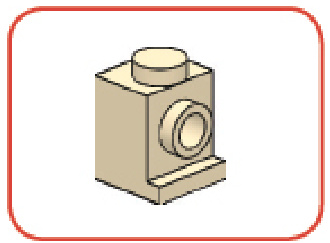
Brick, Modified 1 x 1 with Headlight
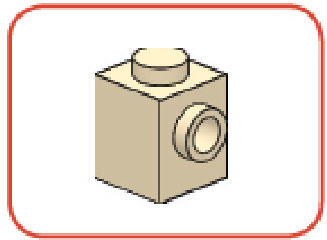
Brick, Modified 1 x 1 with Stud on 1 Side

Brick, Modified 1 x 1 with Studs on 2 Sides
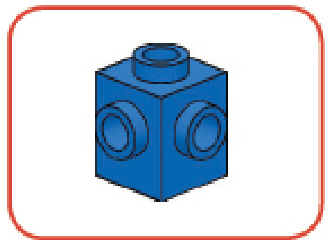
Brick, Modified 1 x 1 with Studs on 4 Sides
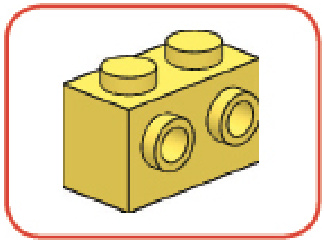
Brick, Modified 1 x 2 with Studs on 2 Sides
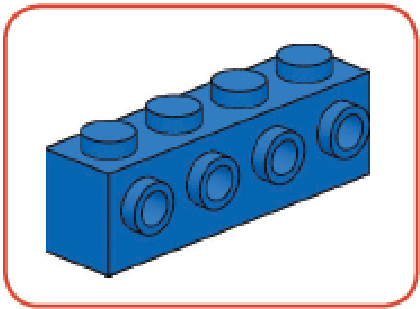
Brick, Modified 1 x 4 with 4 Studs on 1 Side
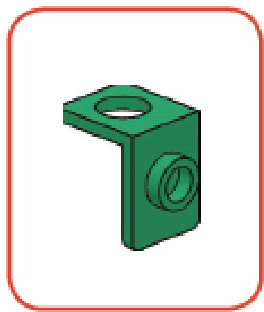
Minifig, Neck Bracket with Back Stud
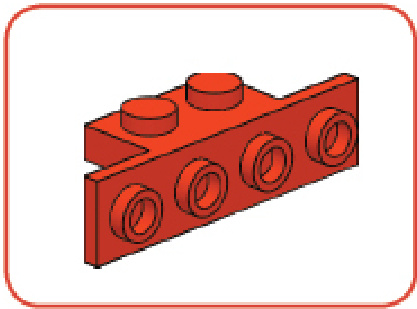
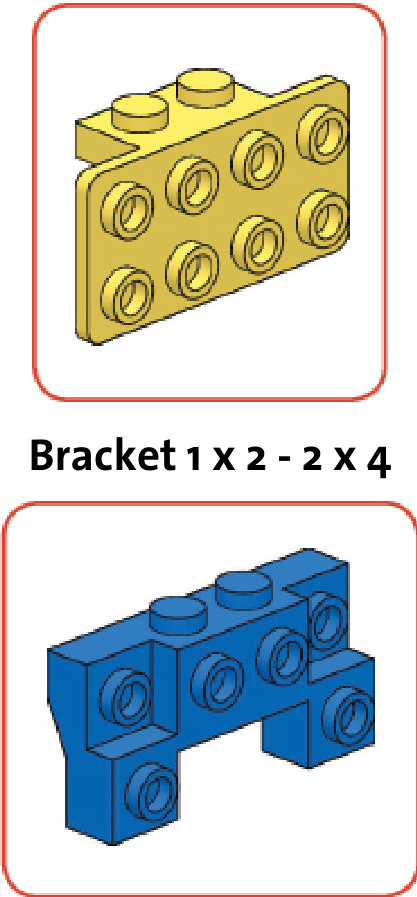
Bracket 1 x 2 - 1 x 4
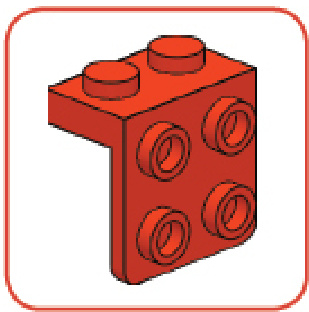
Bracket 1 x 2 - 2 x 2
Brick, Modified 2 x 4 - 1 x 4 with 2 Recessed Studs and Side Arches
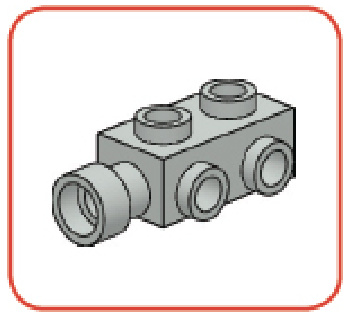
Brick, Modified 1 x 2 x 2/3 with Studs on Sides
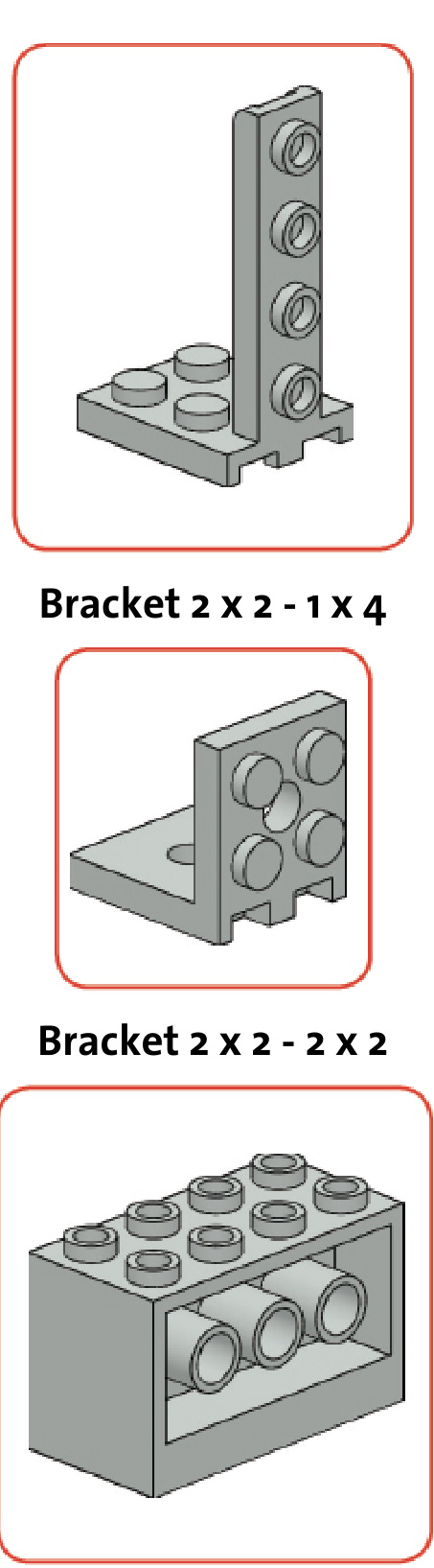
Brick, Modified 2 x 4 x 2 with Holes on Sides
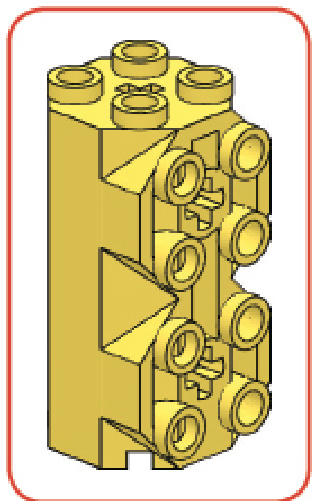
Brick, Modified Octagonal 2 x 2 x 3 1/3 with Side Studs
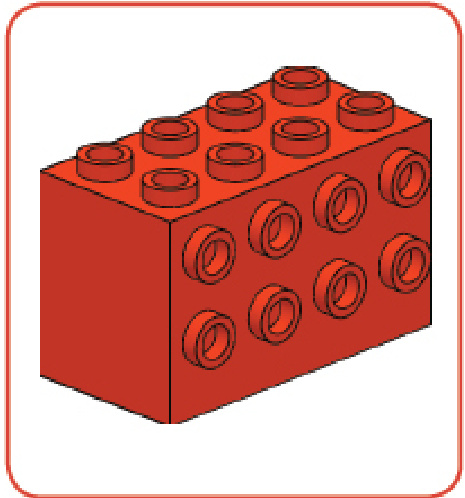
Brick, Modified 2 x 4 x 2 with Studs on Sides
However there are some tricks that also allow such a change of direction when there is no fitting SNOT element:
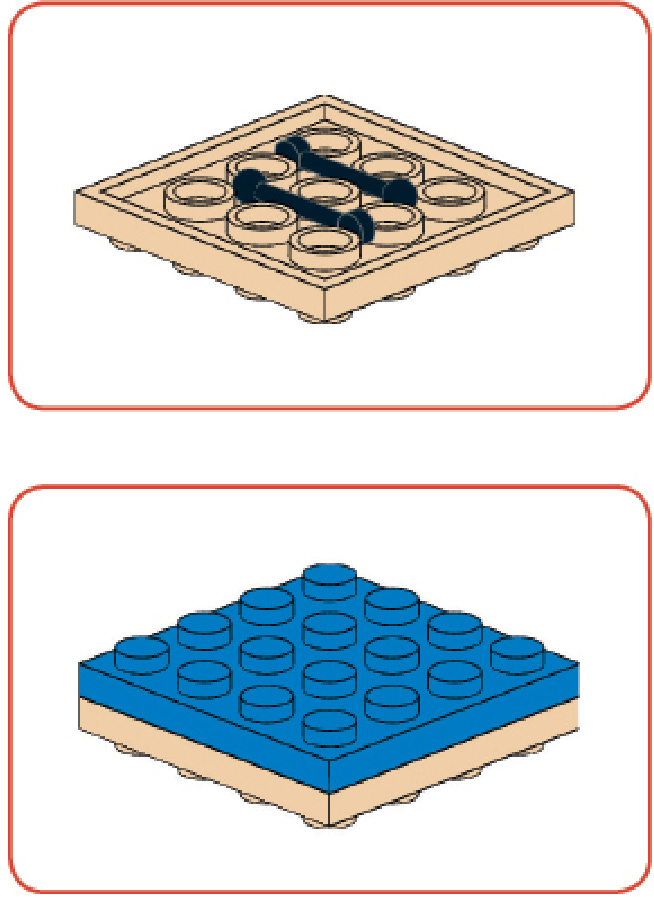
This example shows how to connect two 4x4 plates with their undersides: jam two levers between the tubes of the underside of one plate and attach the second plate to this.You can then continue building in both directions with upturned studs.
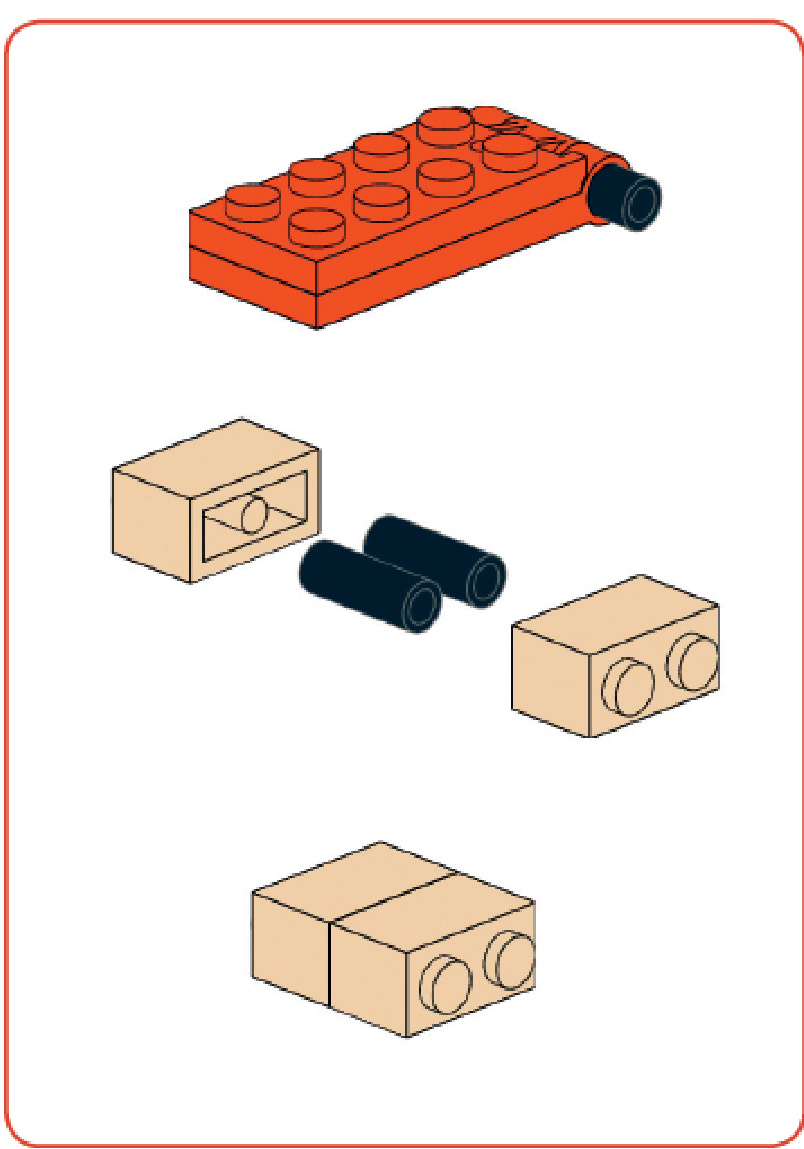
Another option to connect two undersides is to take out the round joint from hinges. They can easily be pressed out with the help of a technic axis for example. If you attach two of these joints to the underside of a 1x2 brick, you can fix another brick to this and thus change the building direction.
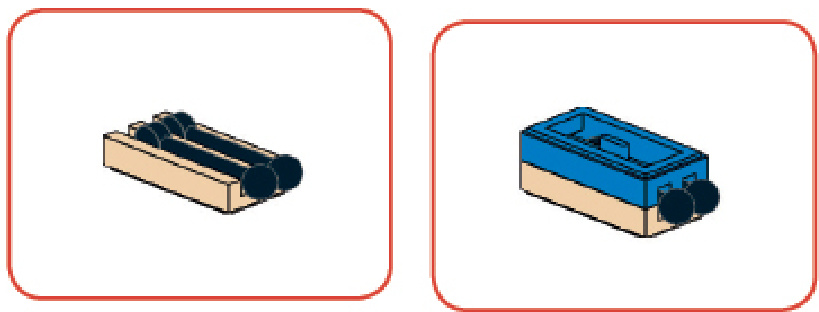
Two tops can be connected with each other by anchoring two levers into the grooves of a grid tile and connecting the grooves of a second grid tile. You can then continue building on both sides with the undersides of the bricks.
Half Stud Connections
However you connect individual bricks, plates and tiles - on top of each other, lengthwise or crosswise - you always build by stacking bricks flush or staggered by one or more studs. It could happen that you want to build staggered by one half stud only, for example to show a small stripe of the bottom brick at a curbstone or a house front. Jumpers are used for this purpose. These are 1x2 or 2x2 plates that have only one center stud.
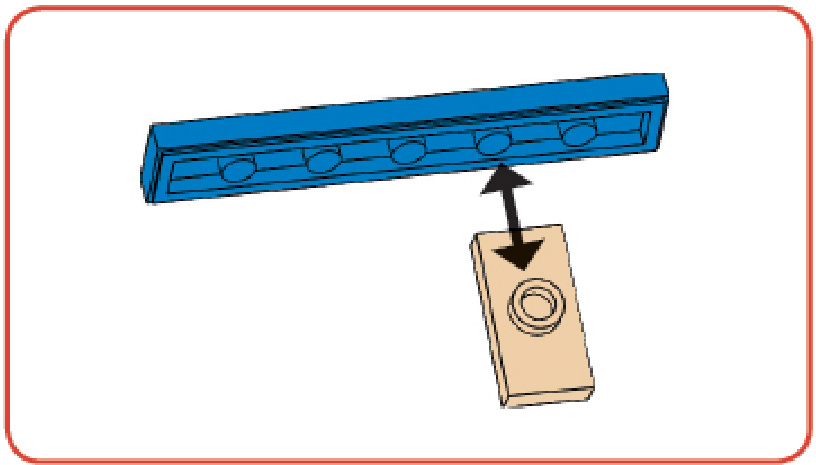
Round Corners
It also happens again and again that you want to build round corners at buildings and other models. Here is our solution:
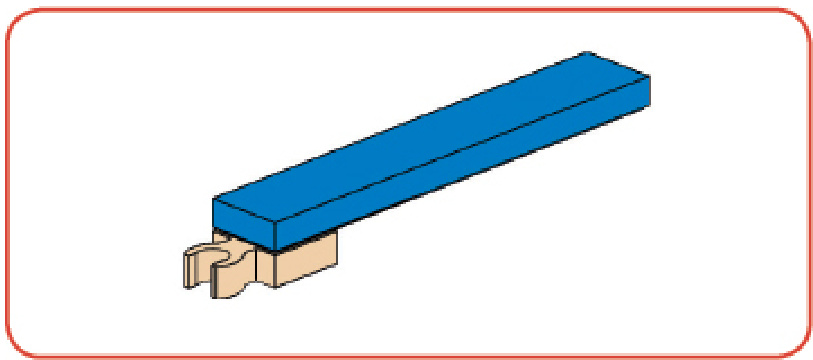
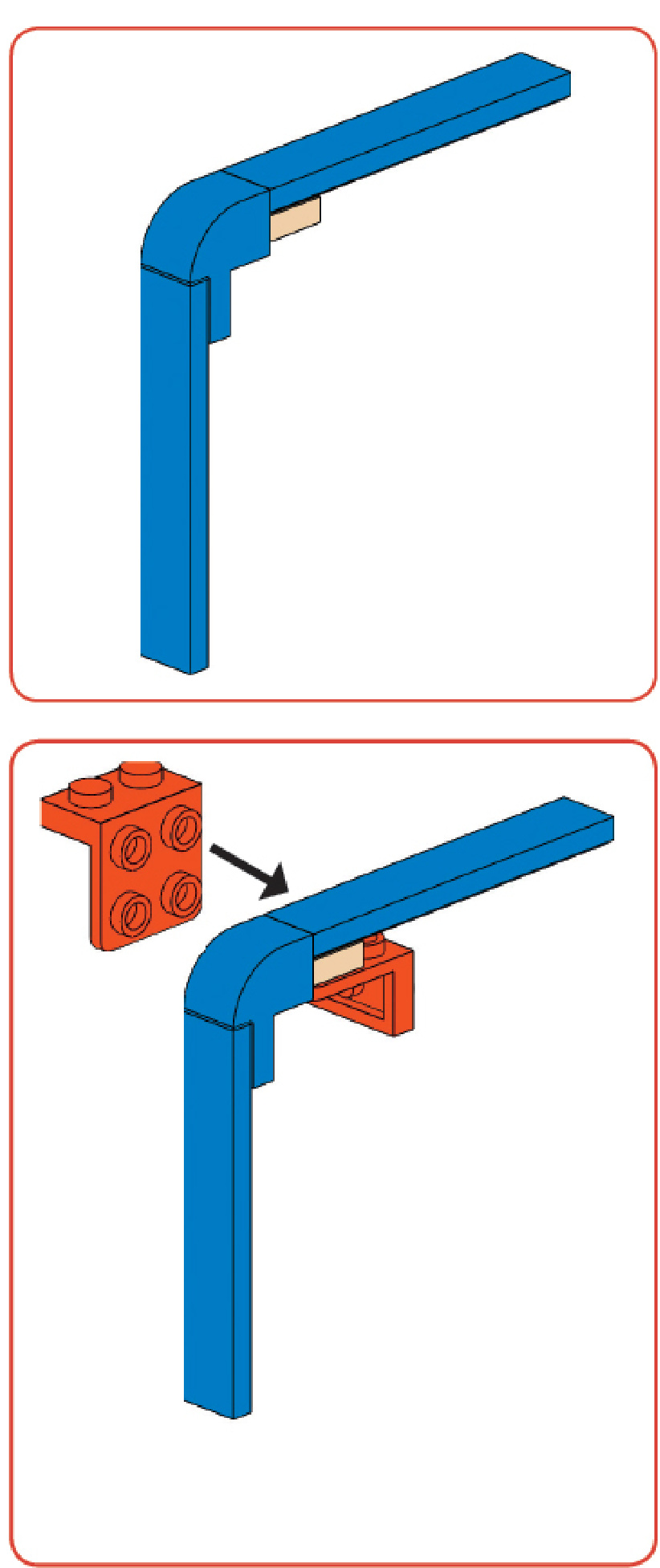
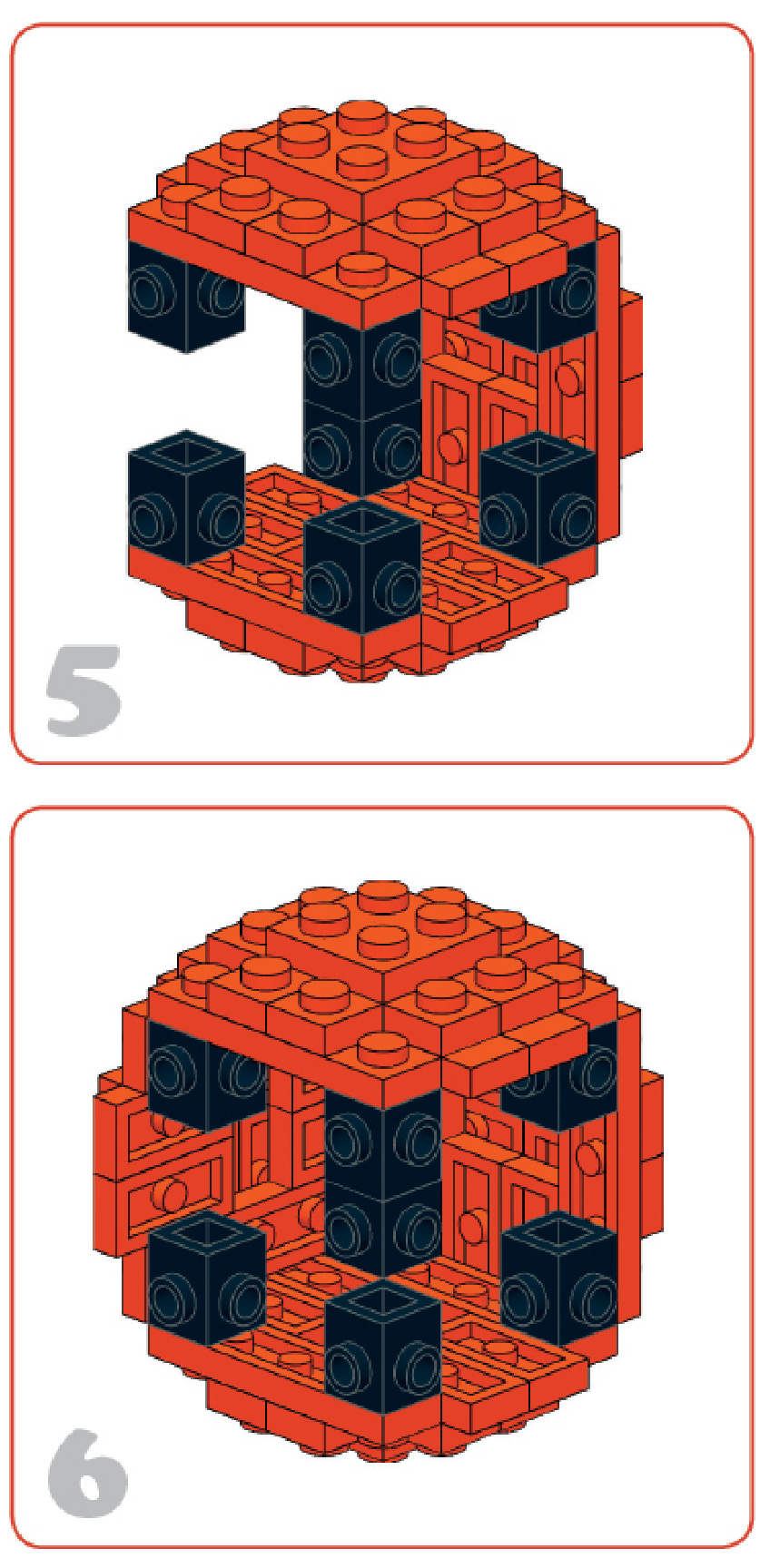
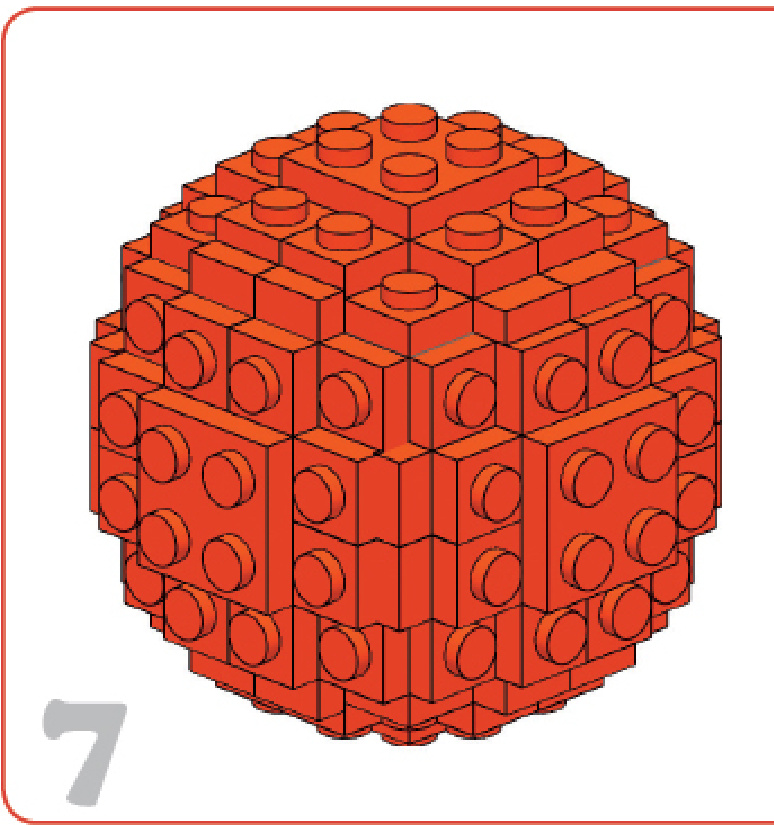
Balls
The particular challenge when building balls is to create a beautiful curvature with angular bricks. A variety of solutions circulate in the forums of this world; here is ours:
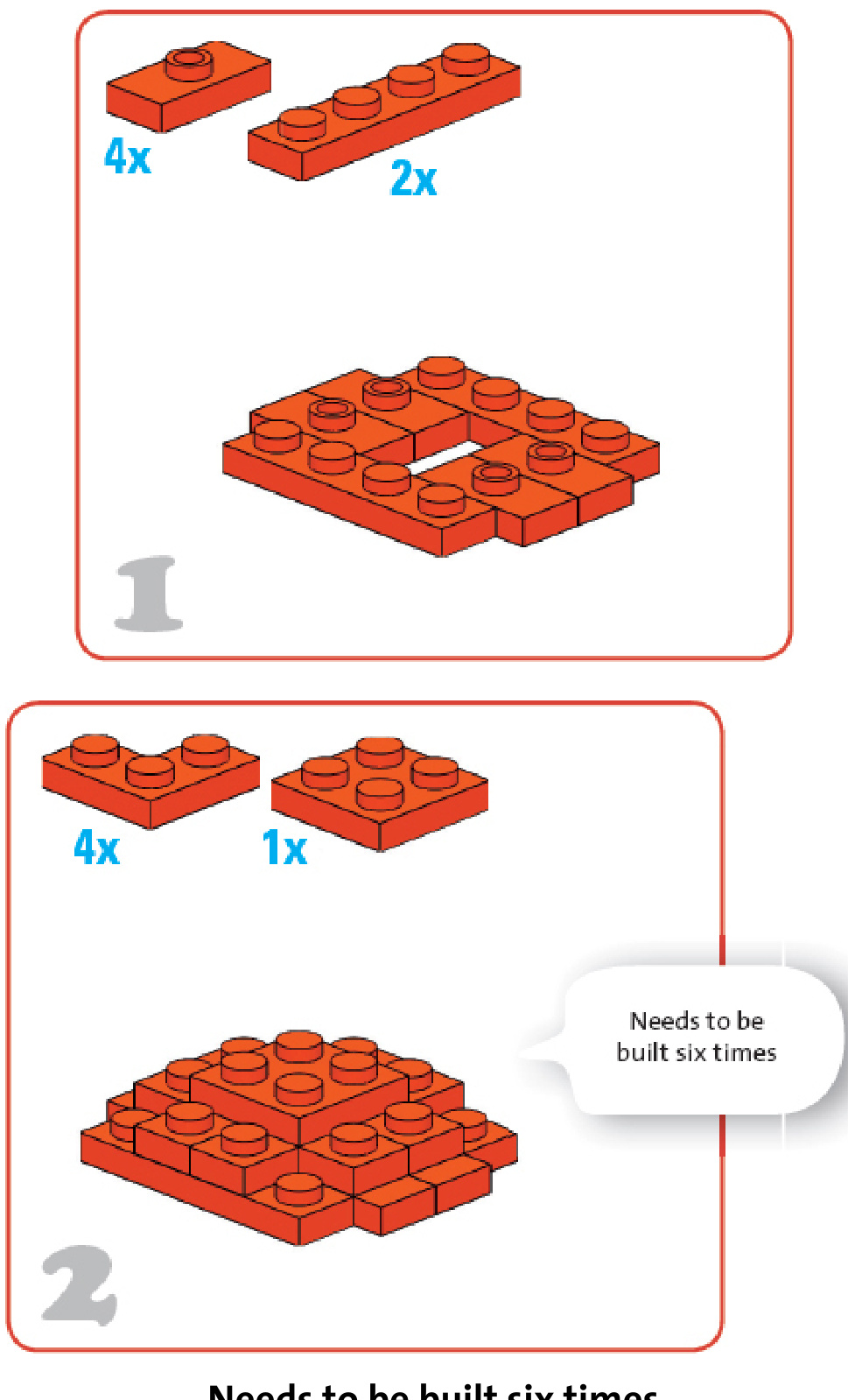
Needs to be built six times
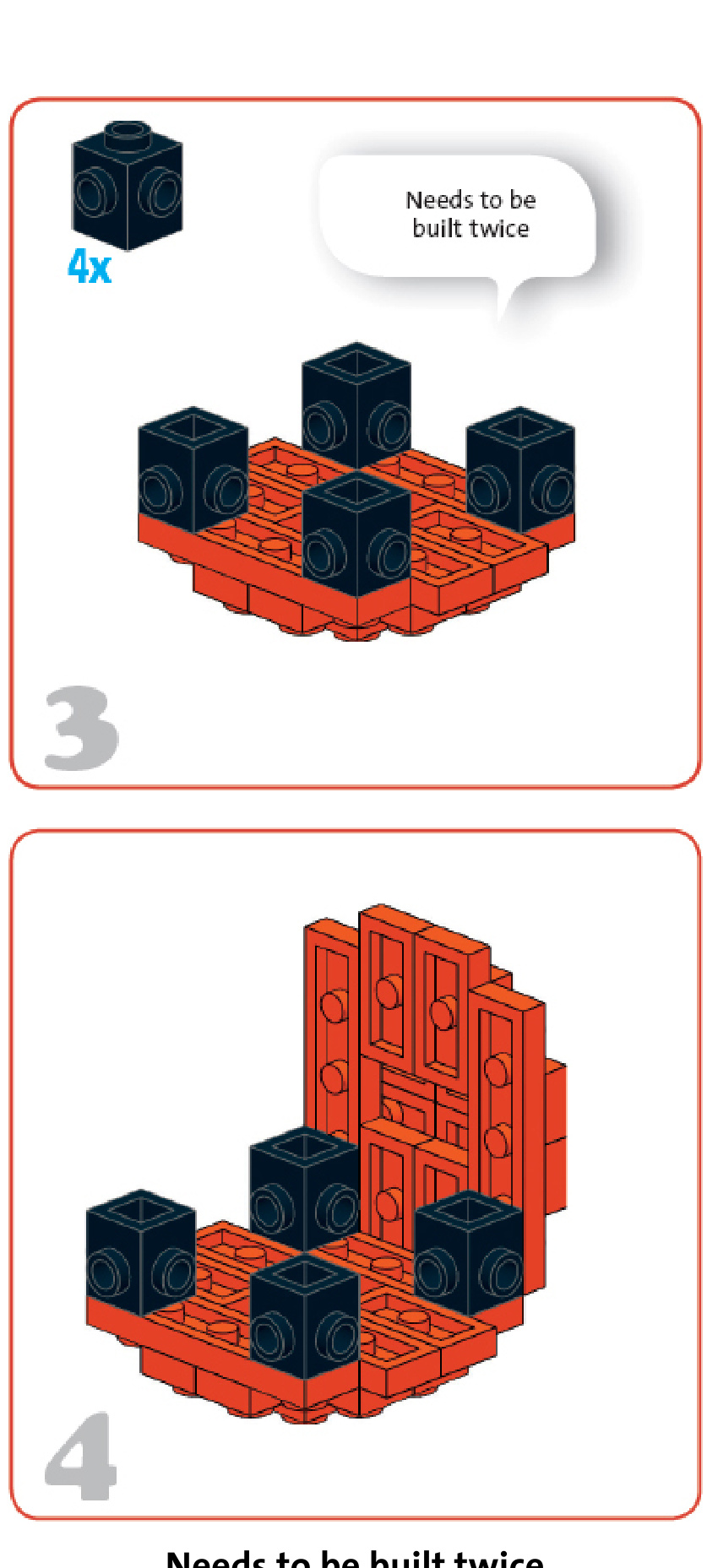
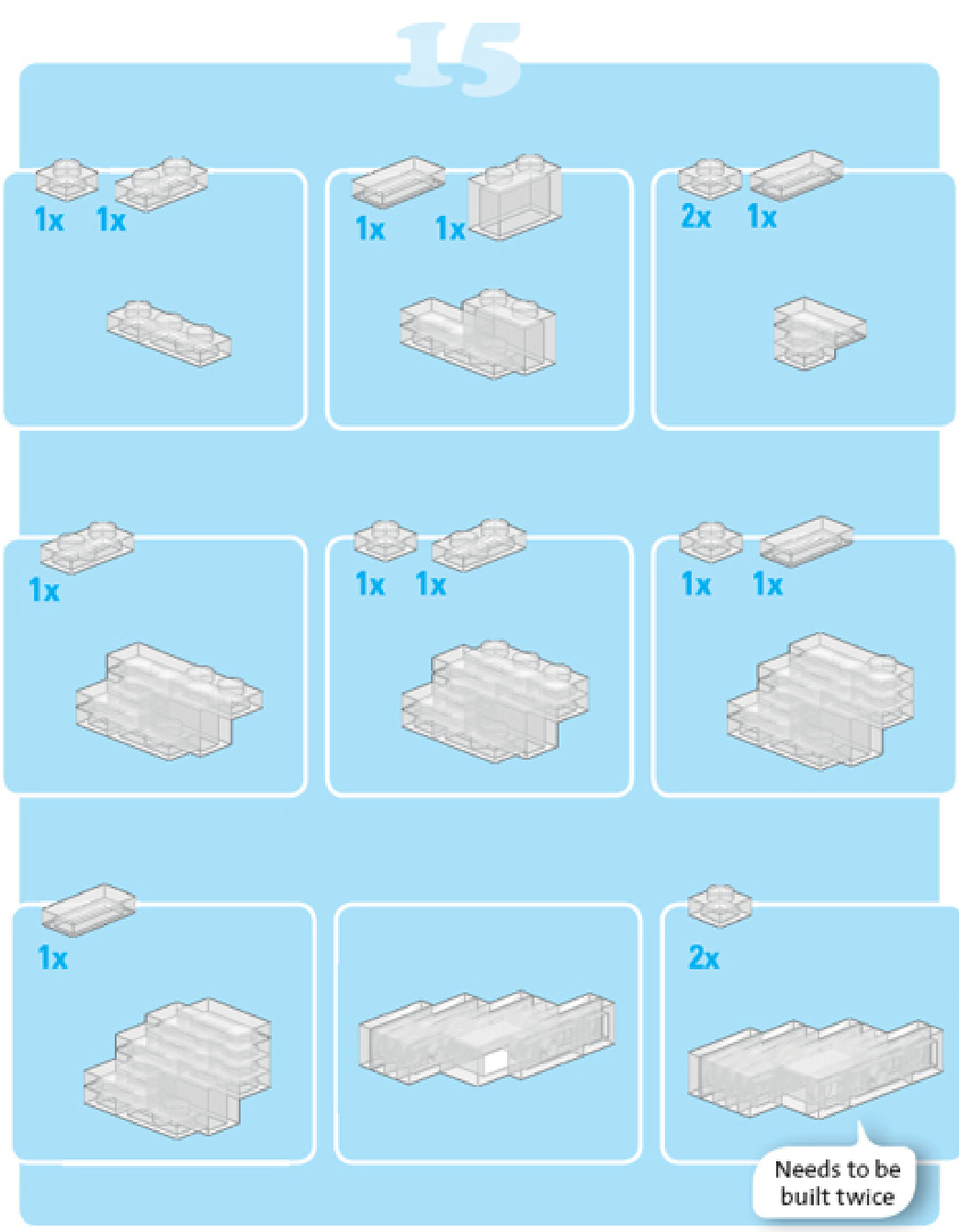
Needs to be built twice
Midi City
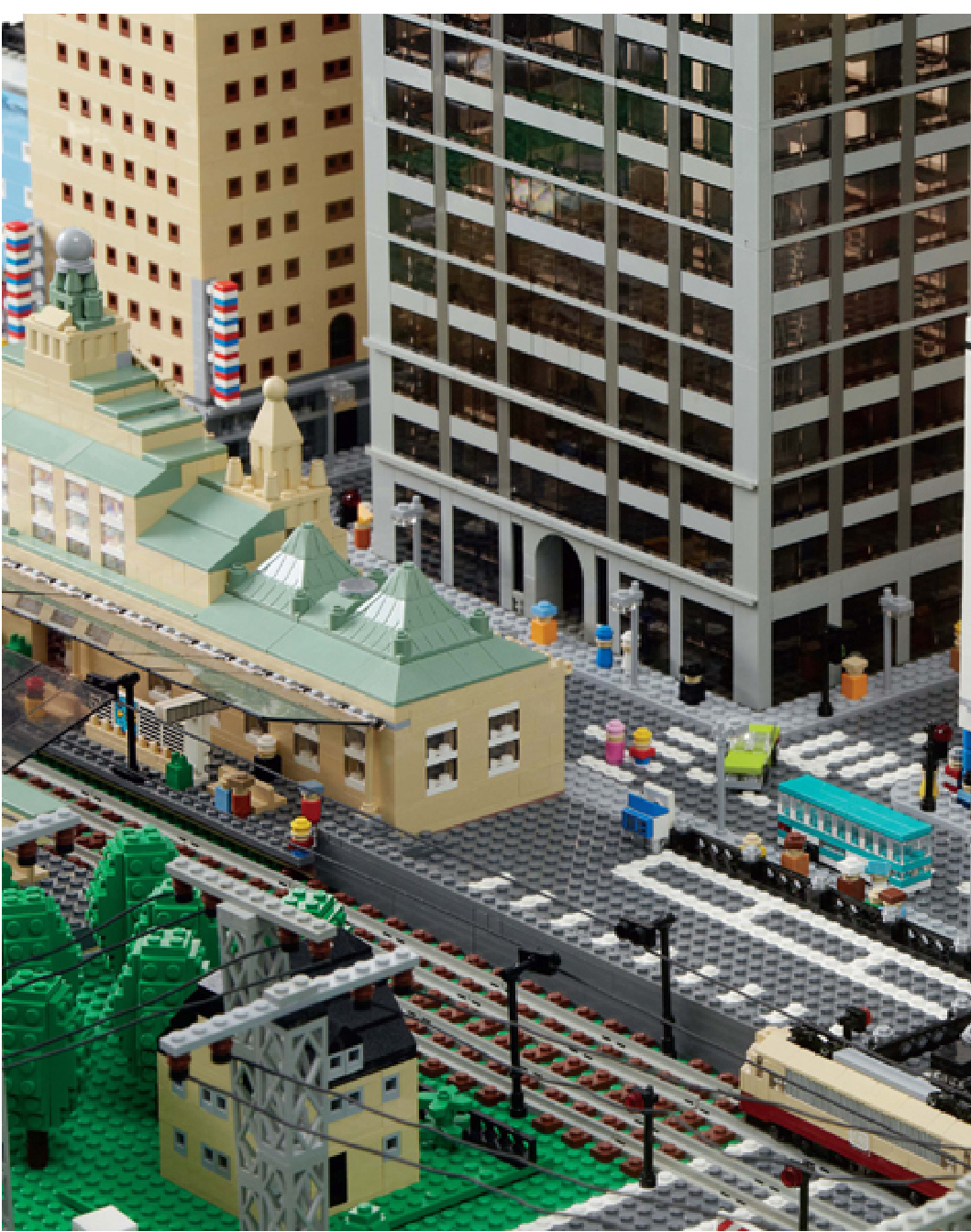
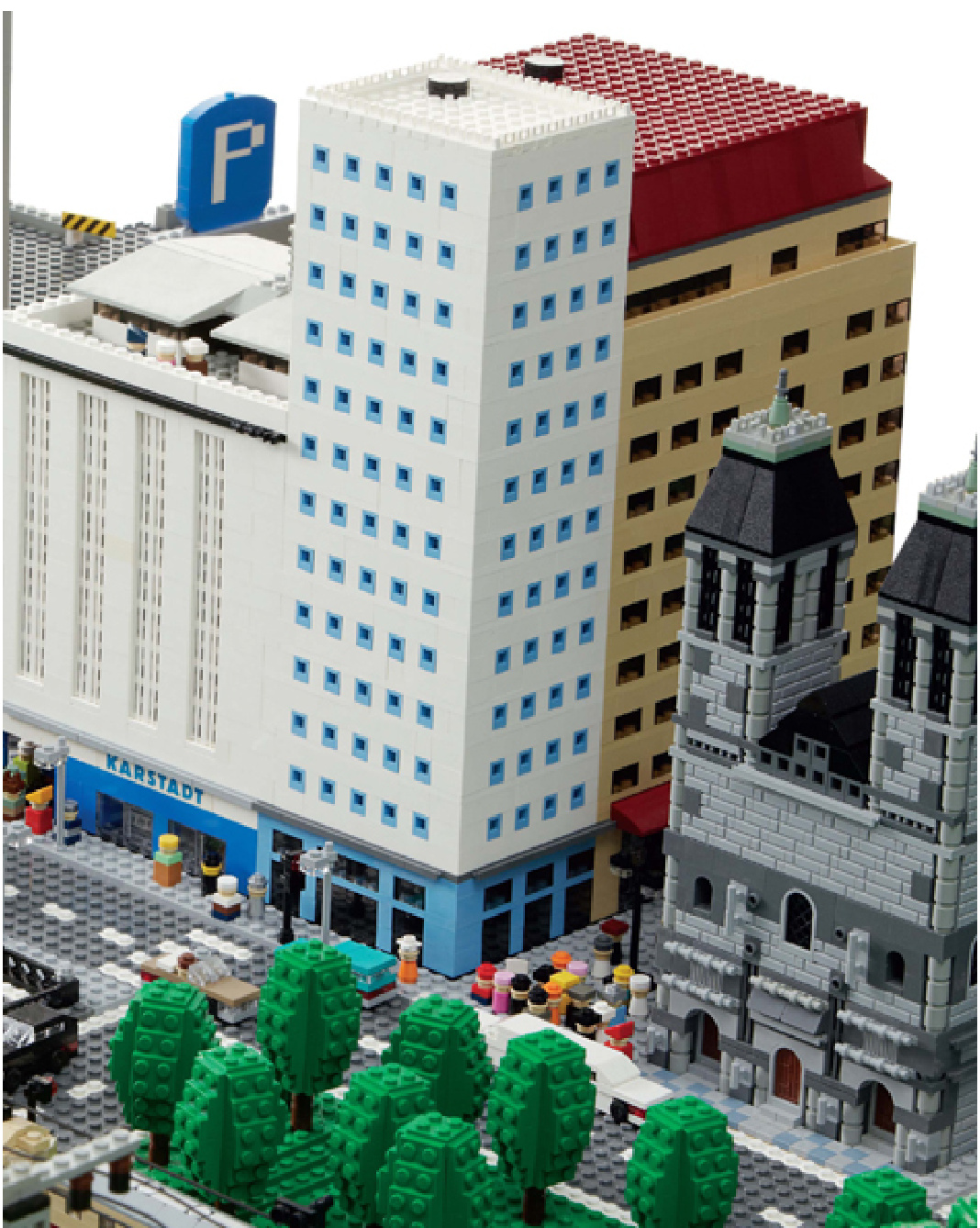
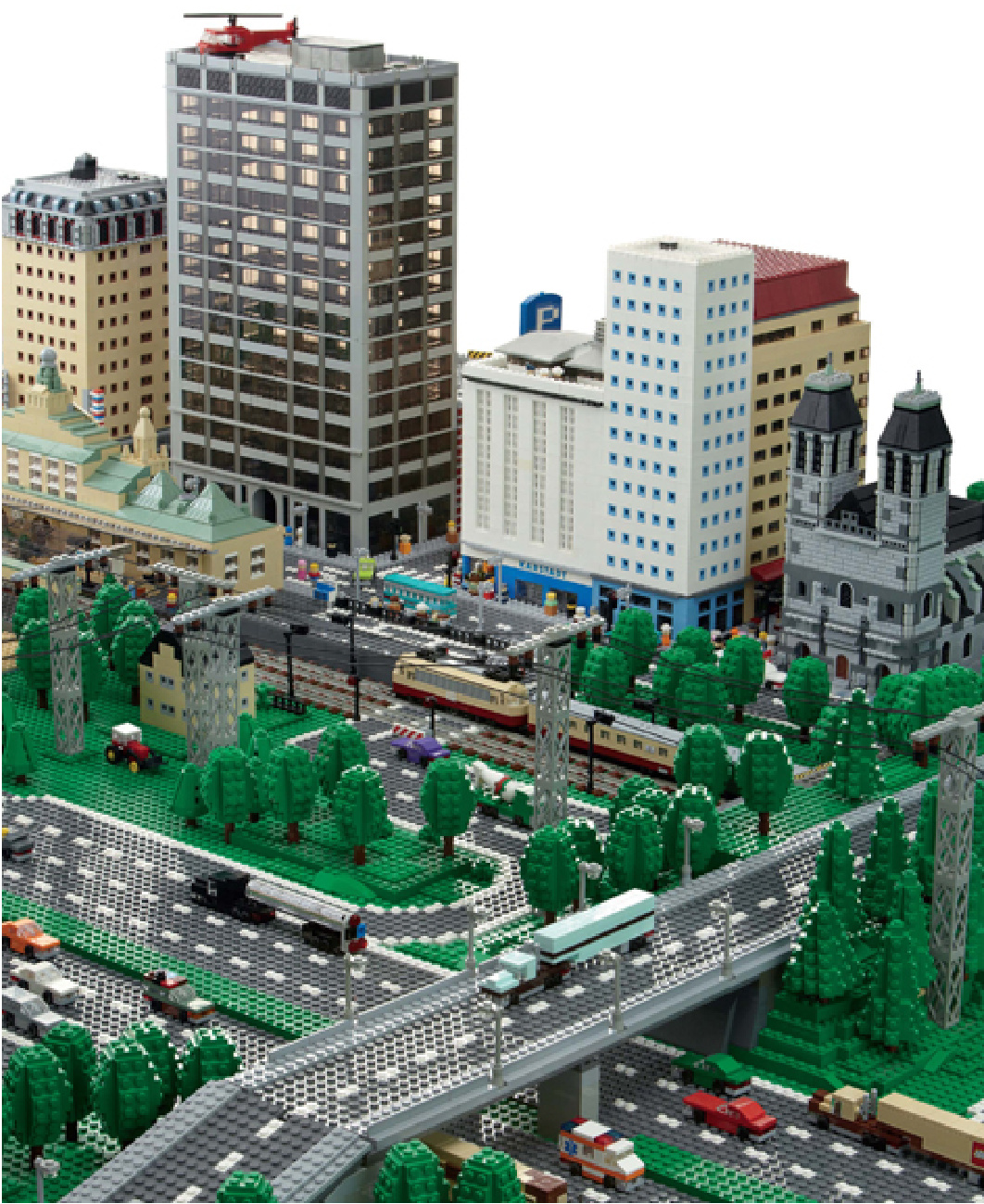
You can build almost anything with bricks: cars, planes, houses, ships, even entire cities are possible. We show you how that works step by step beginning with very simple models that become more complex later in the book. We use as few bricks of Technic as possible and primarily those l bricks that are readily available in stores or that you already have in your LEGO? box.
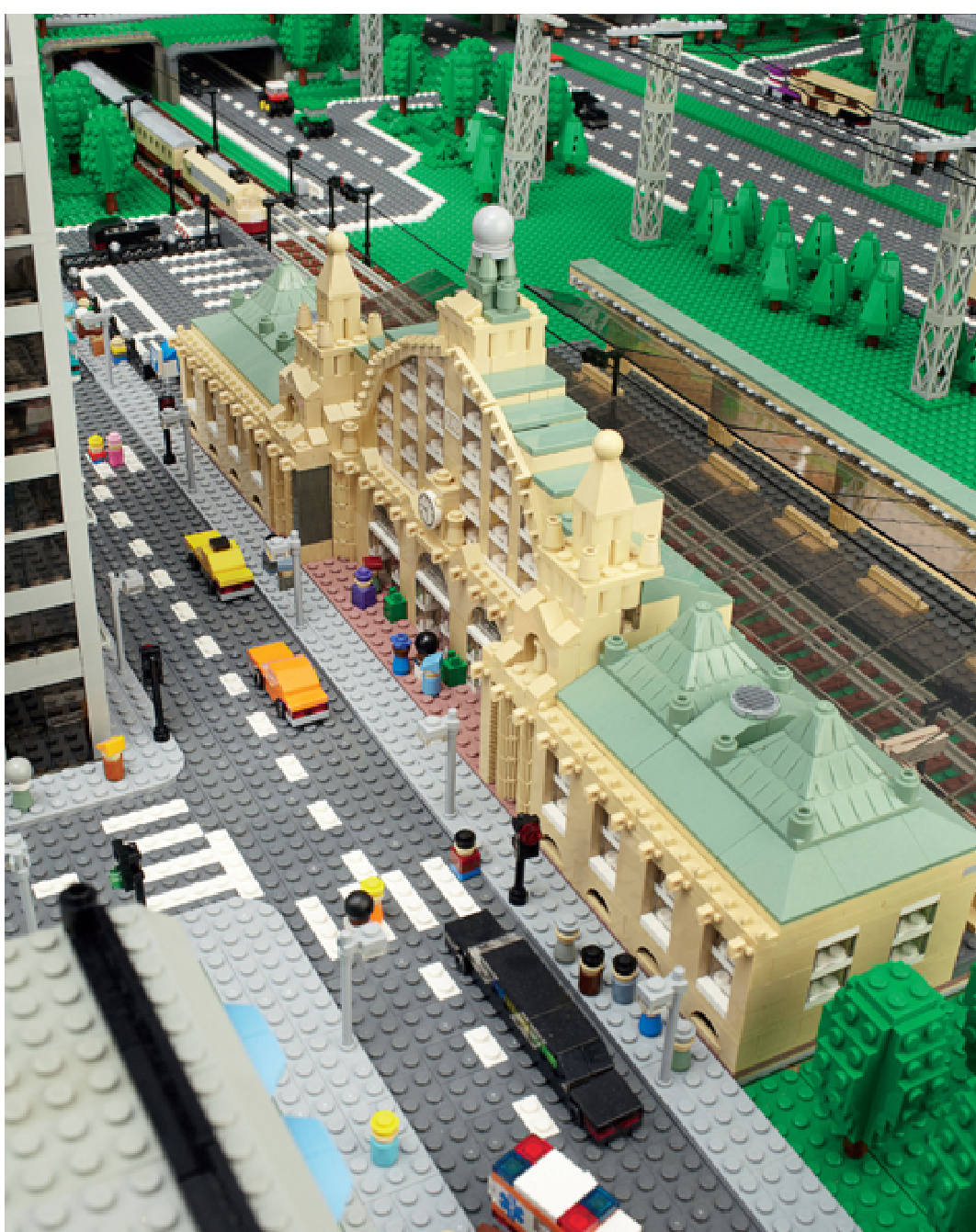
For most of the models shown in this book, we chose the Midi scale that allows to build great first models with little effort and few bricks. This scale is bigger than the figures called minifigs. Normal minifigs thus are too big for the world we build. That’s why we built our figures ourselves to scale; they drive our cars, populate our sidewalks as pedestrians, sit in our coffee shops, and wait for the train on the tracks. The next pages show many funny, crazy, and charming figures.
This scale by the way has no uniform name in the fan base. Some call it Micro; we have decided to stick to Midi.
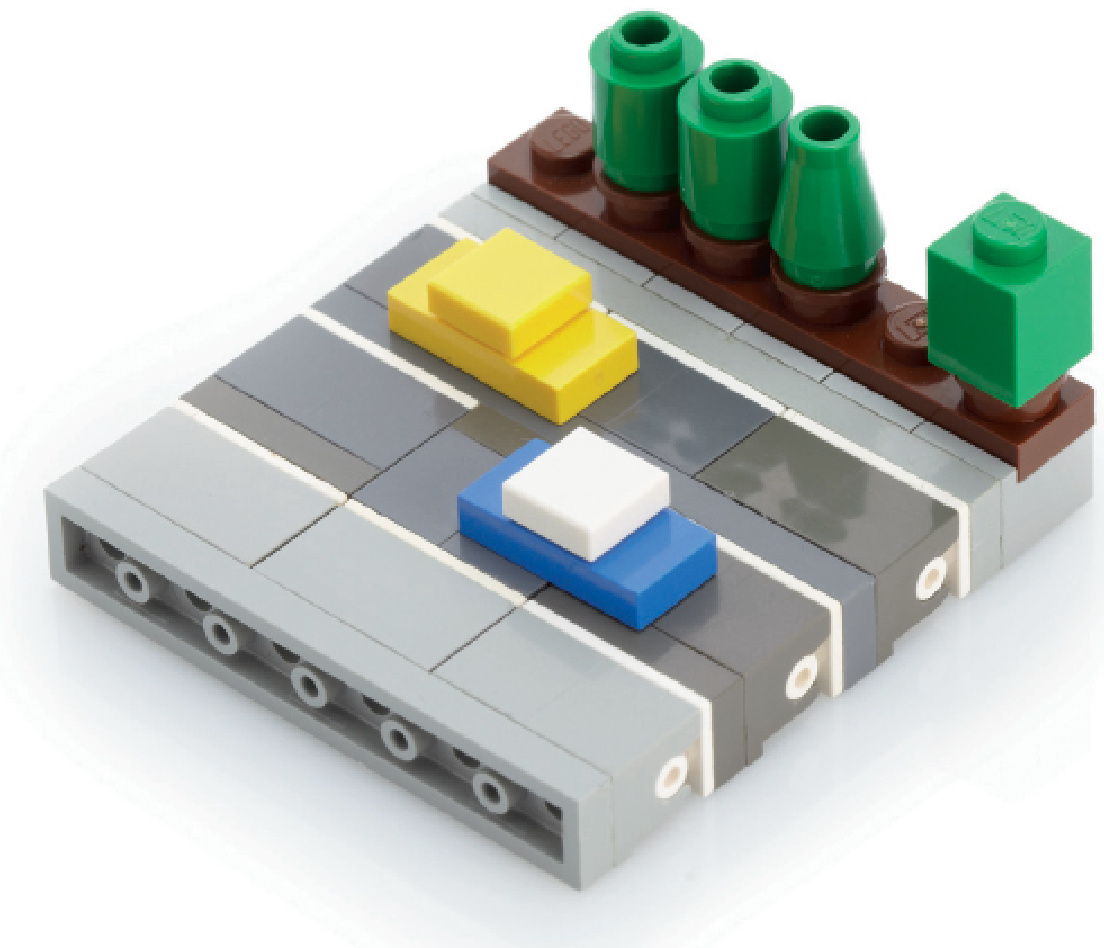
You can build even smaller, of course, like this street scene example. We call this scale Micro. We could probably also call it Nano or Piccolo.
Caddy
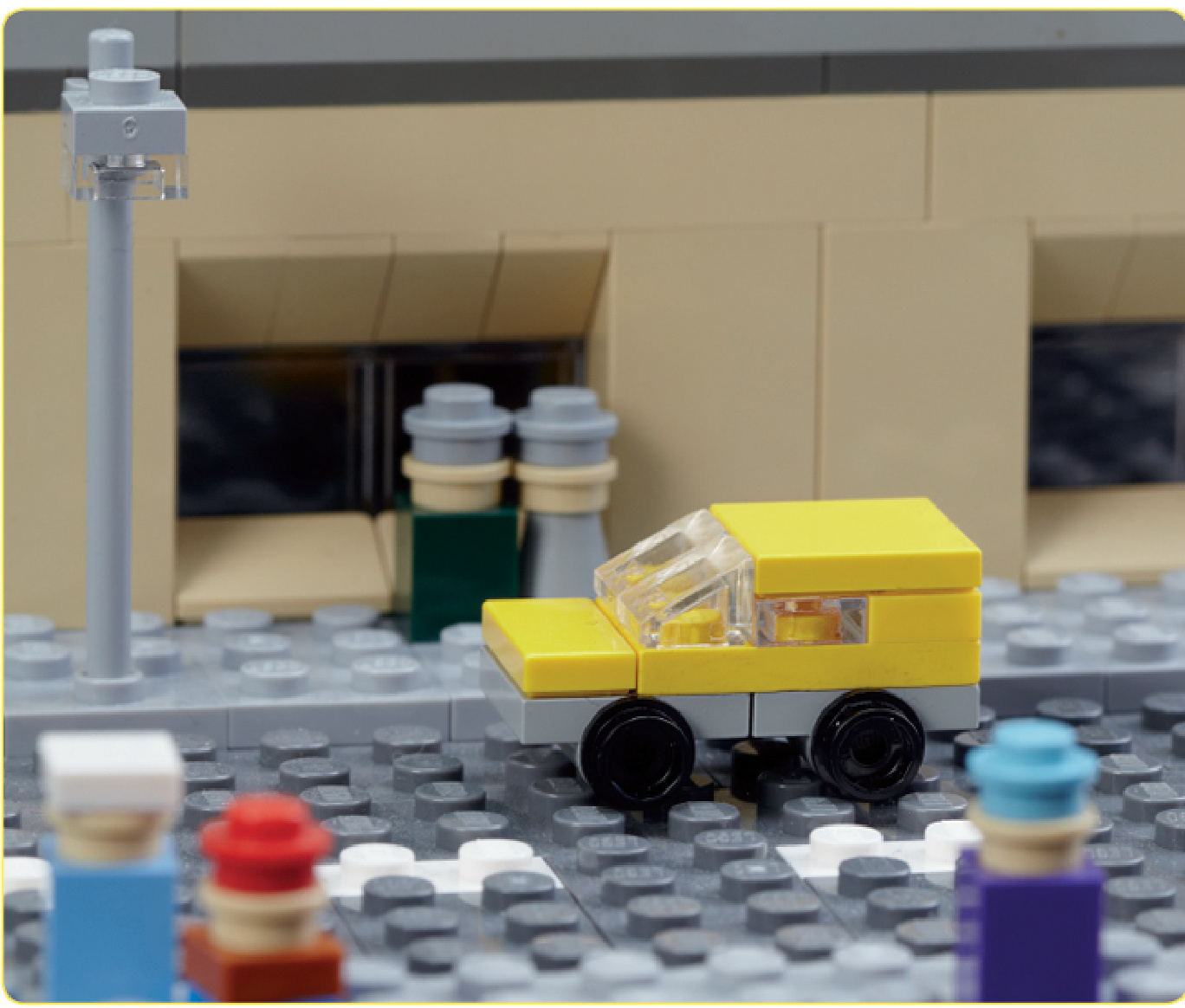
With a length of only four studs, this is the smallest possible way to build a car in Midi scale. Of course, you could build a longer vehicle with this construction technique that can also be found in instructions. A small disadvantage with this construction technique is the mounting of the tires that takes up a lot of space. But, you need very few parts for this model and can thus build an entire fleet - and vary the shape of the rear for example. You could build a hatchback or a convertible instead of a station wagon.
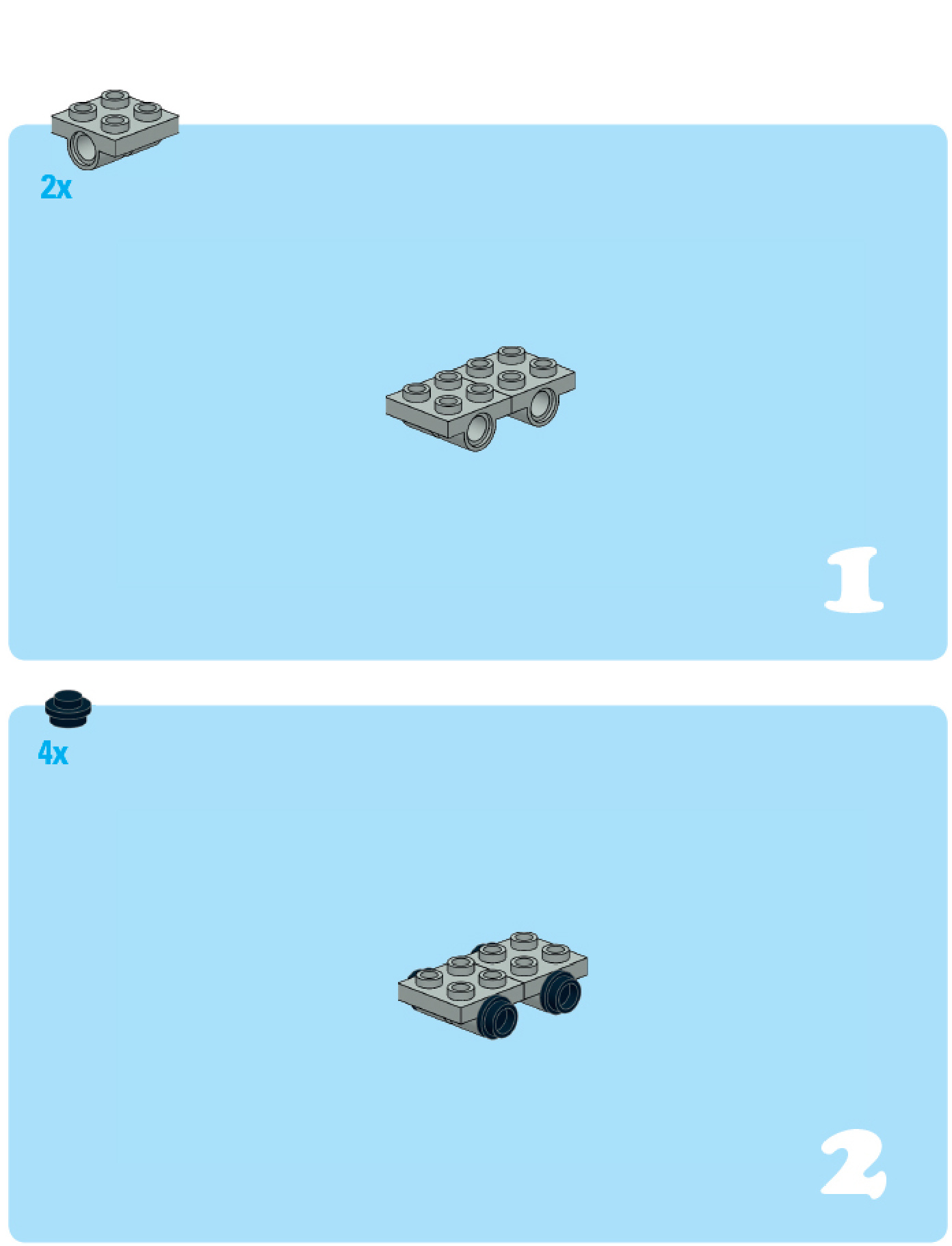
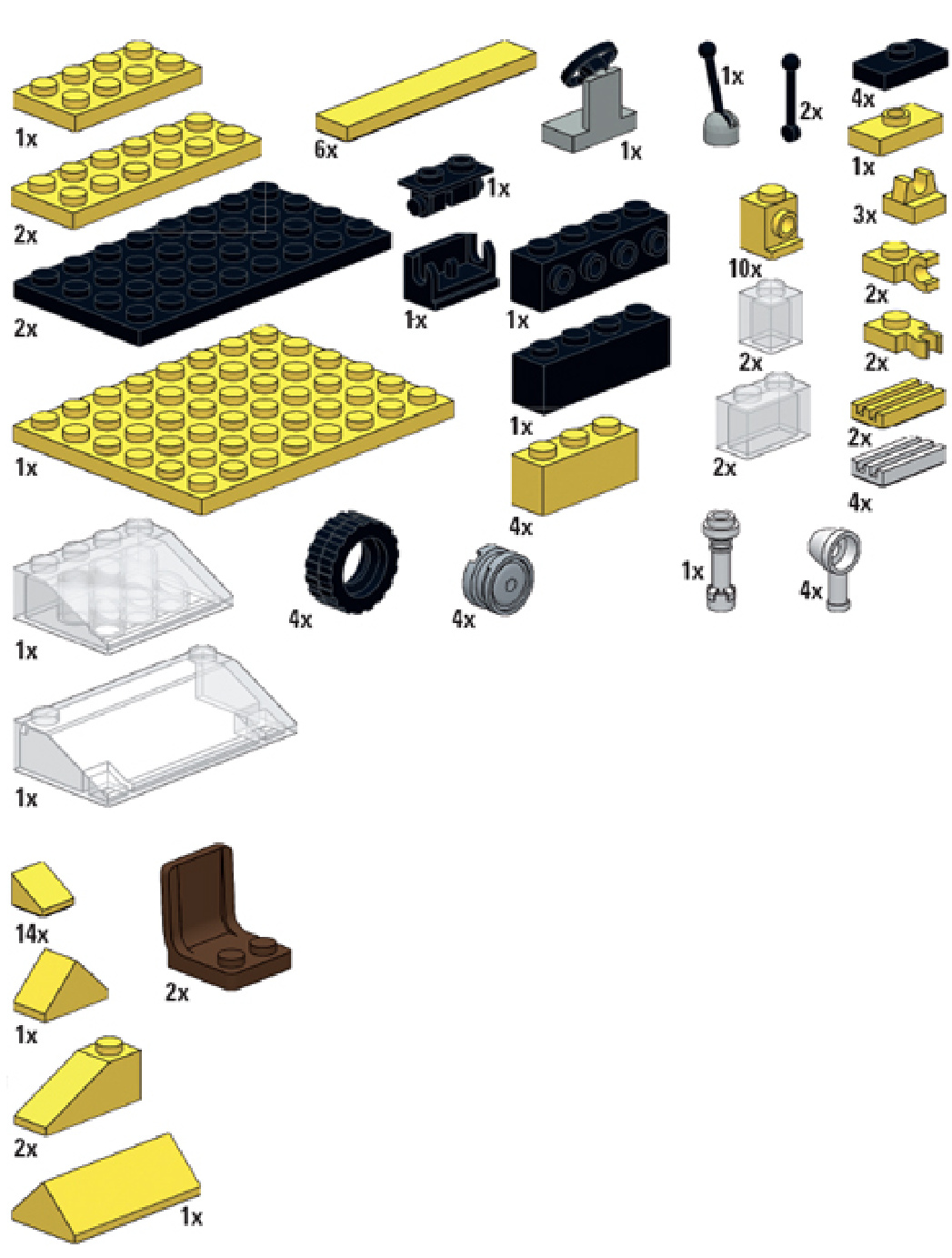
Parts List
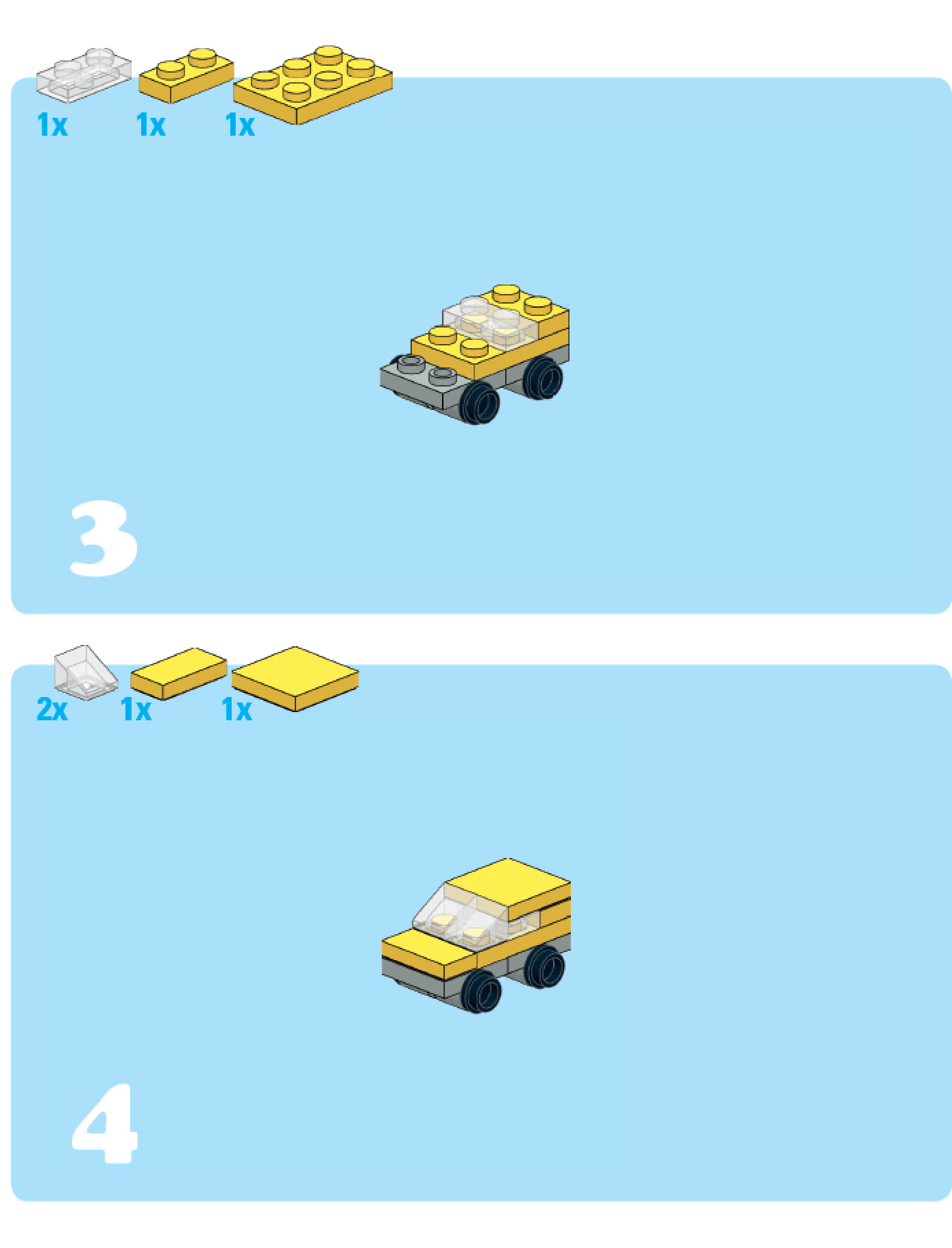
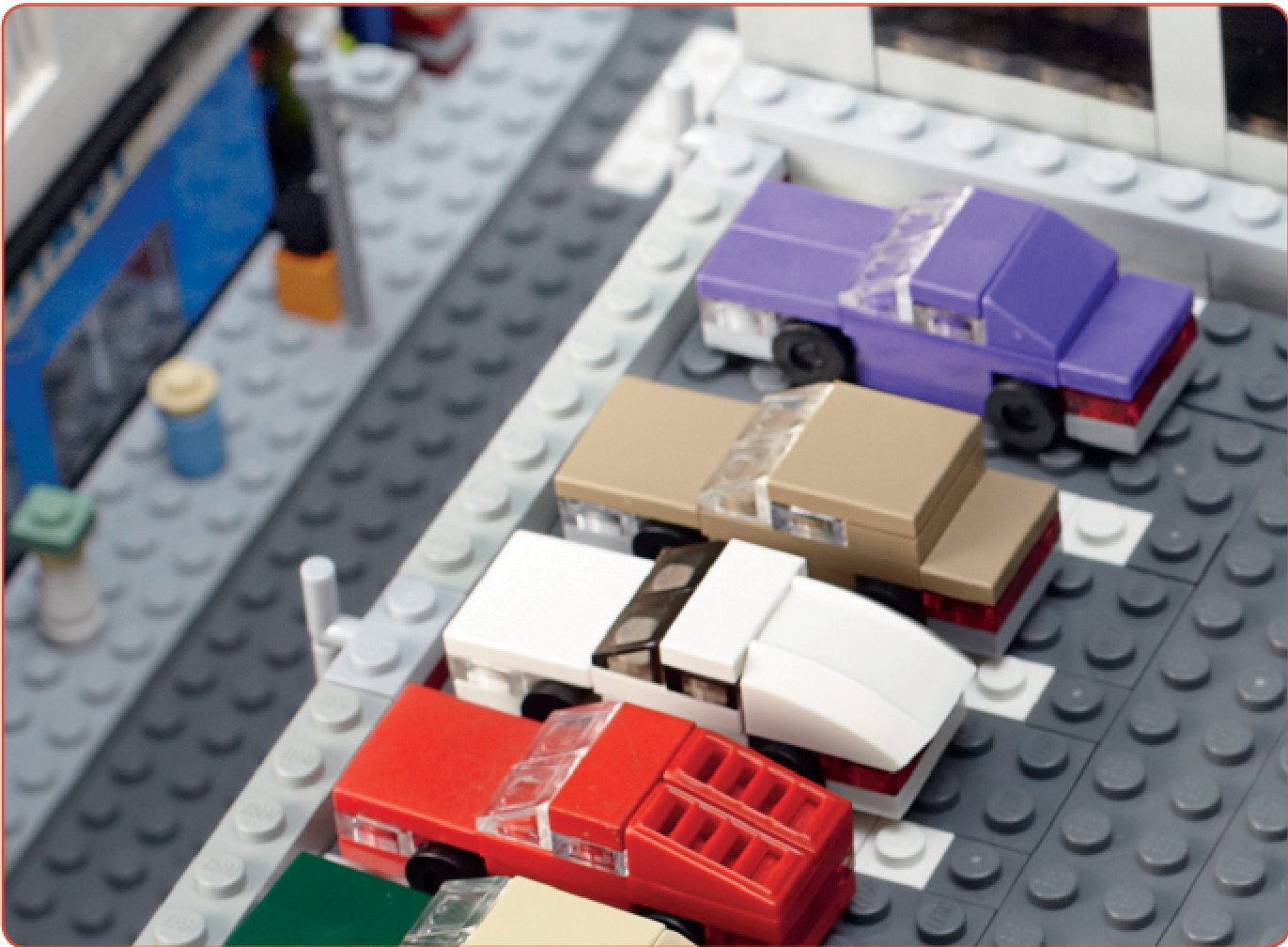
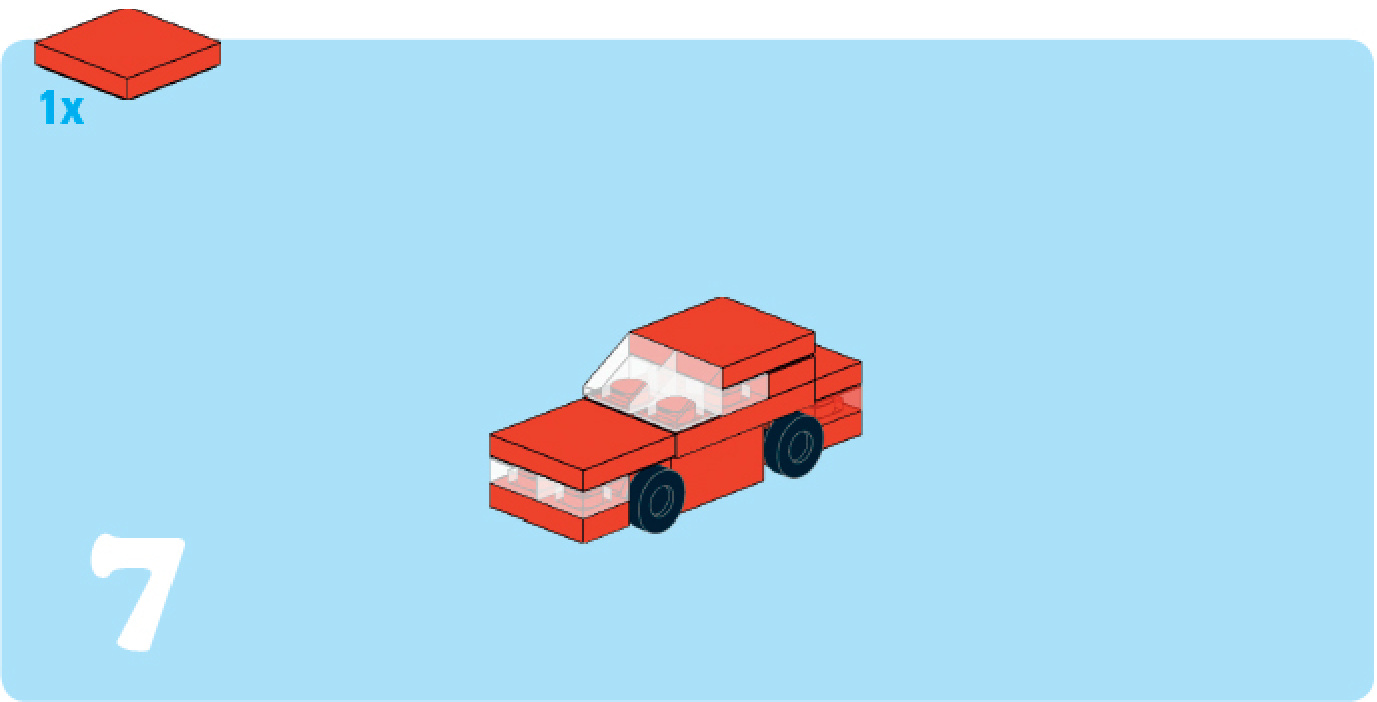
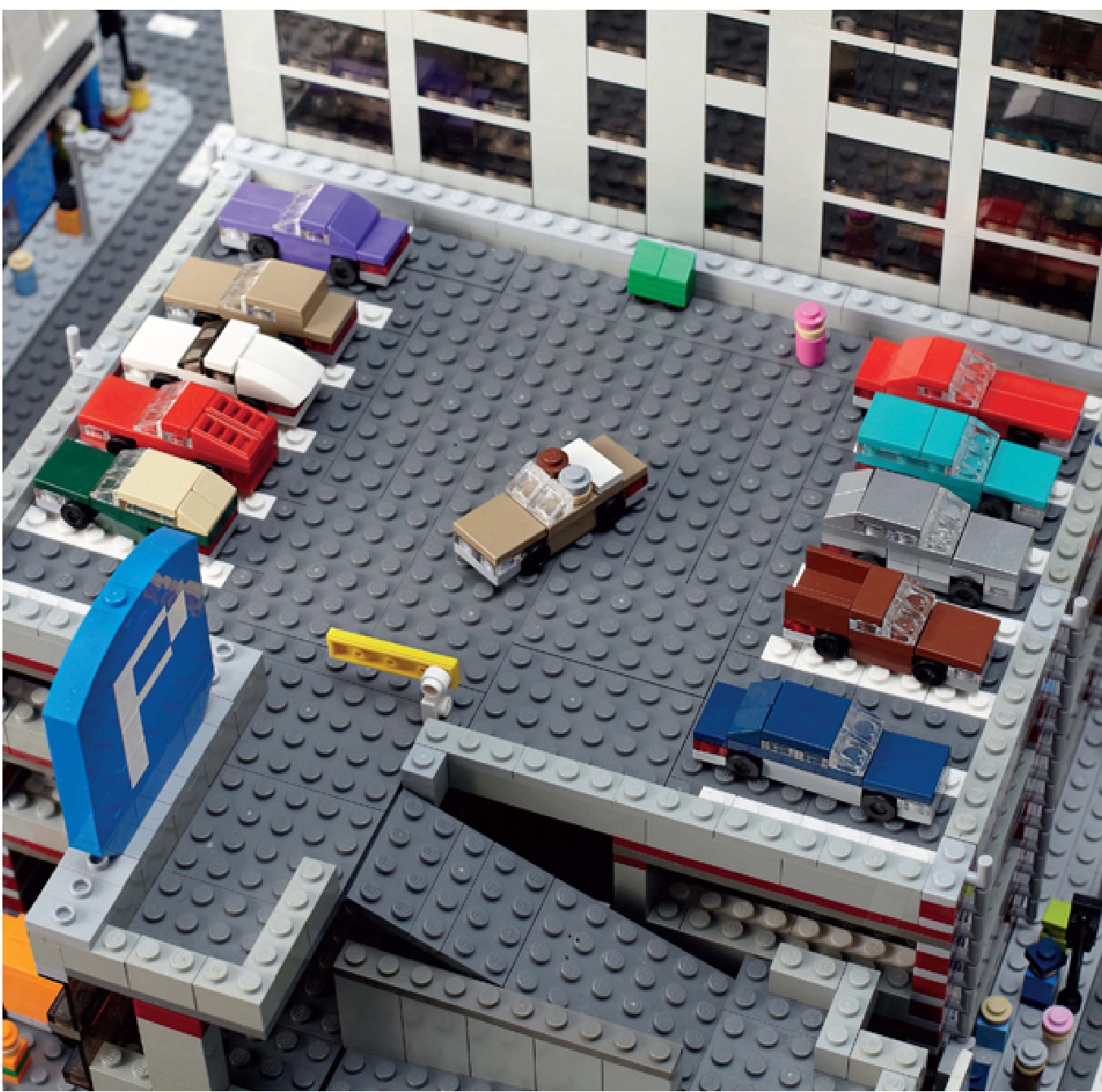
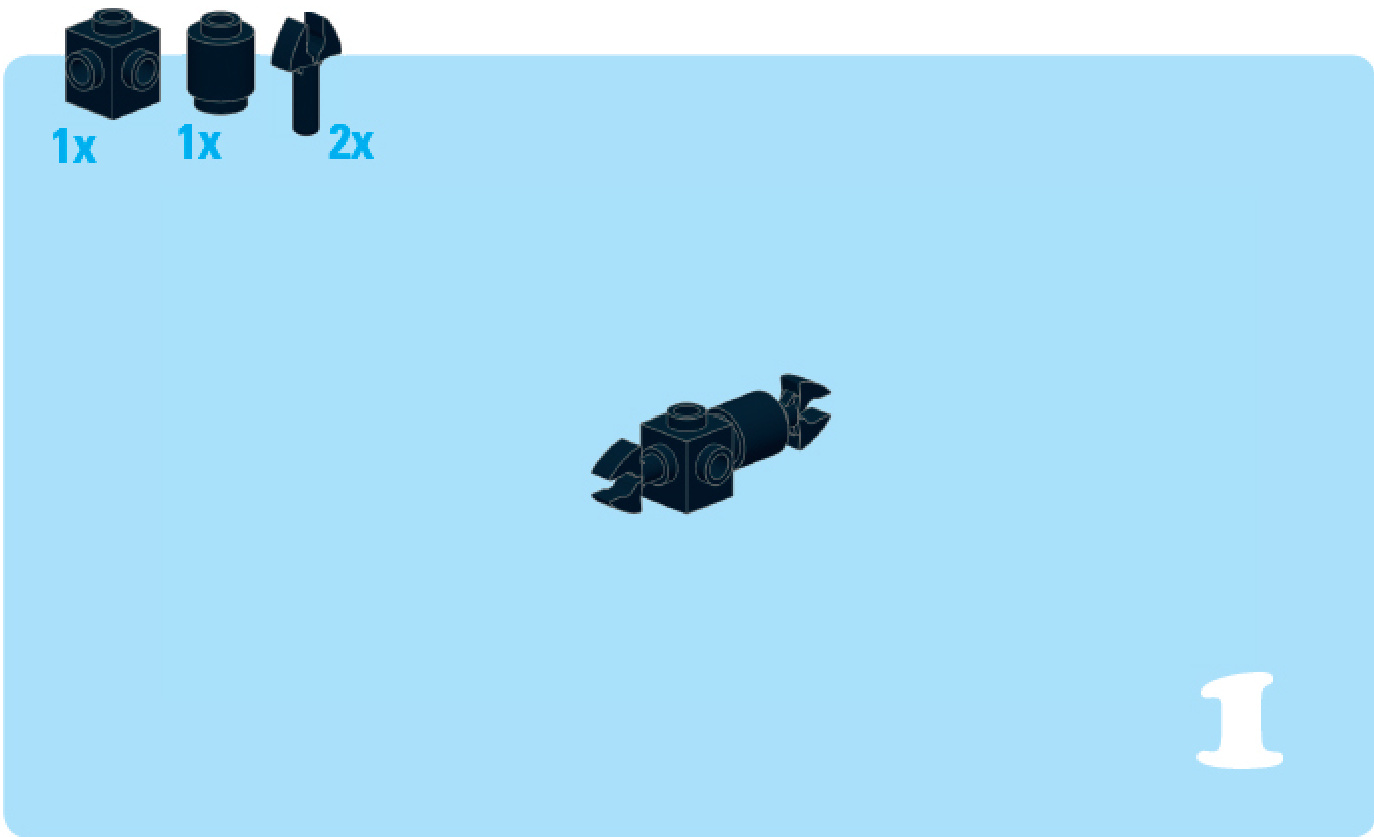
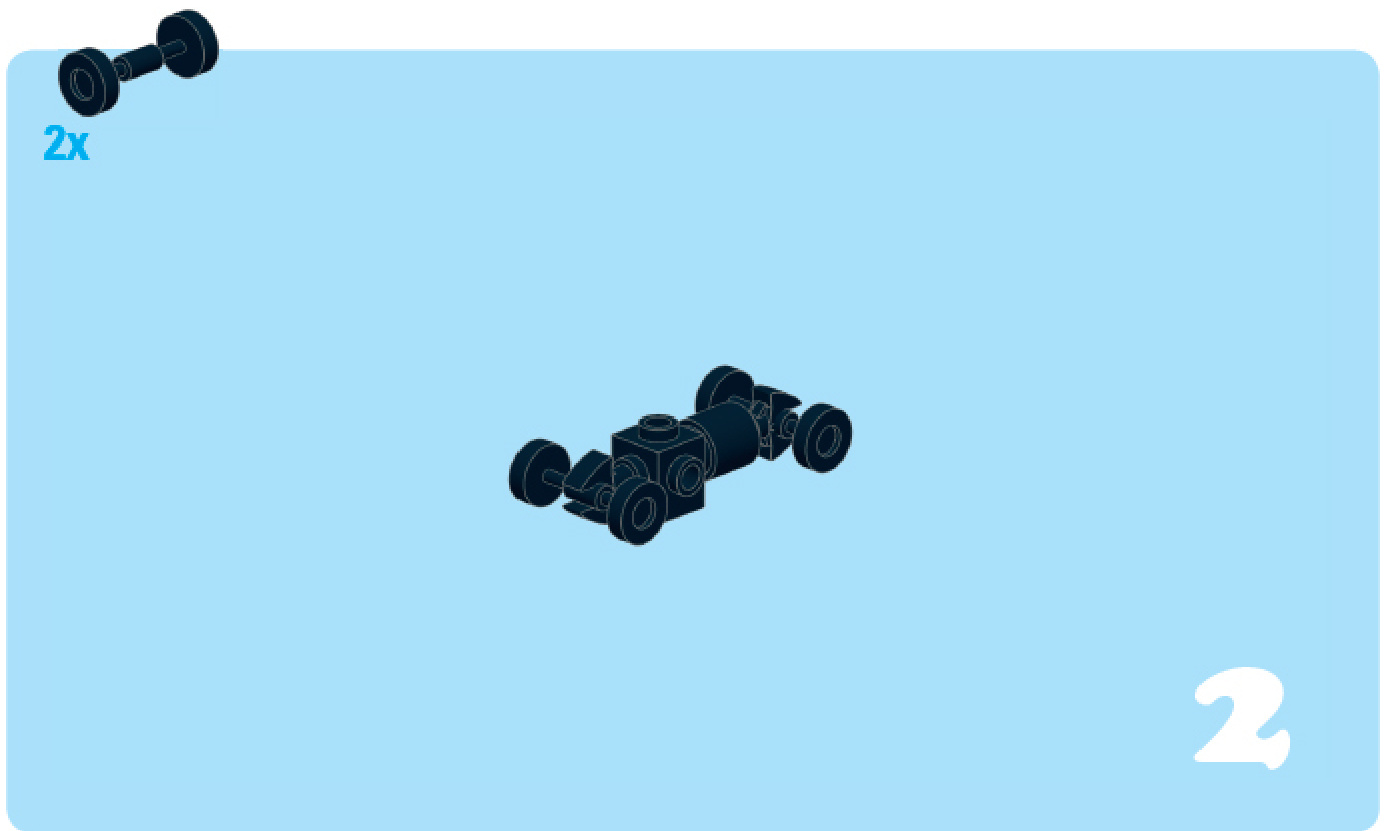
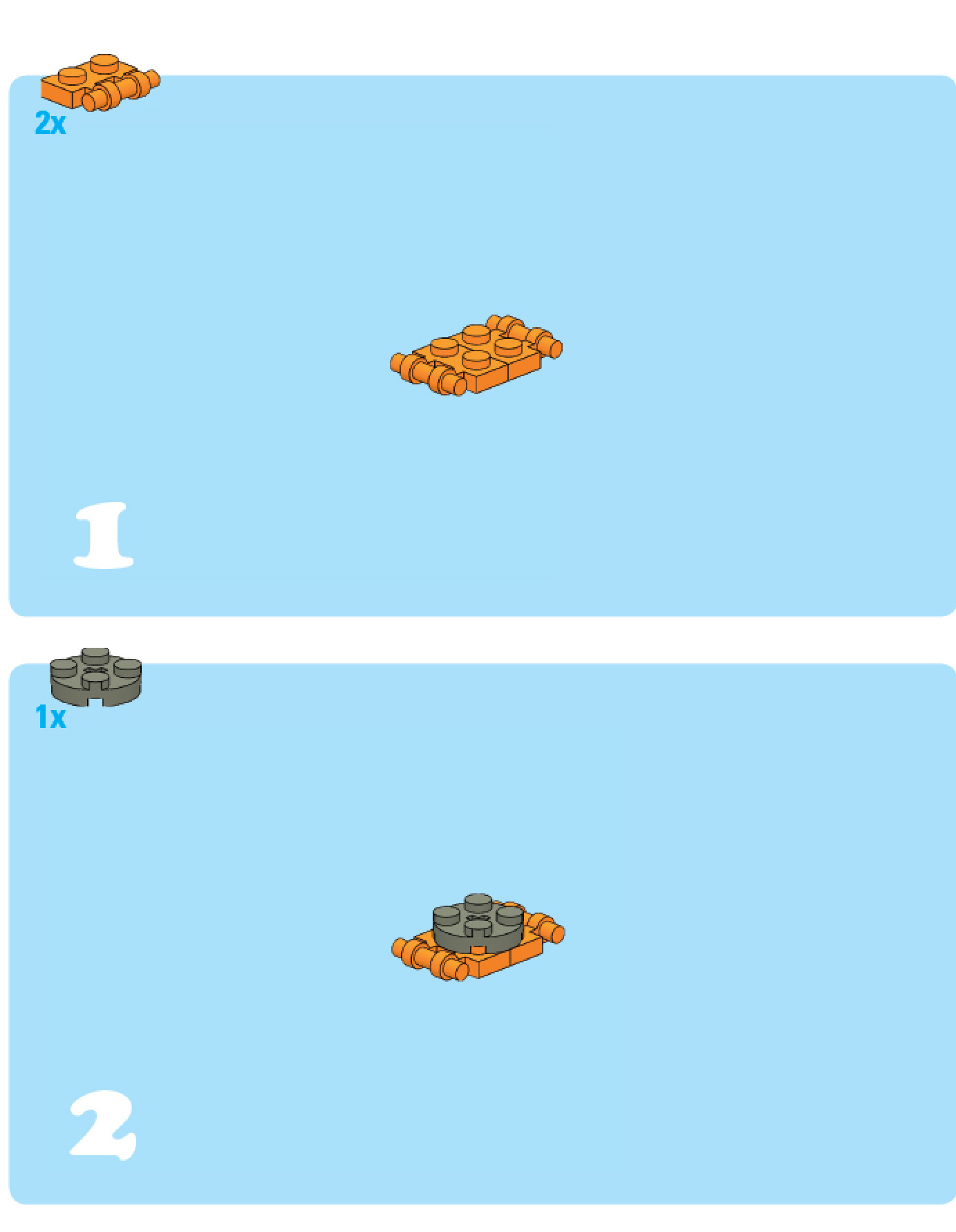
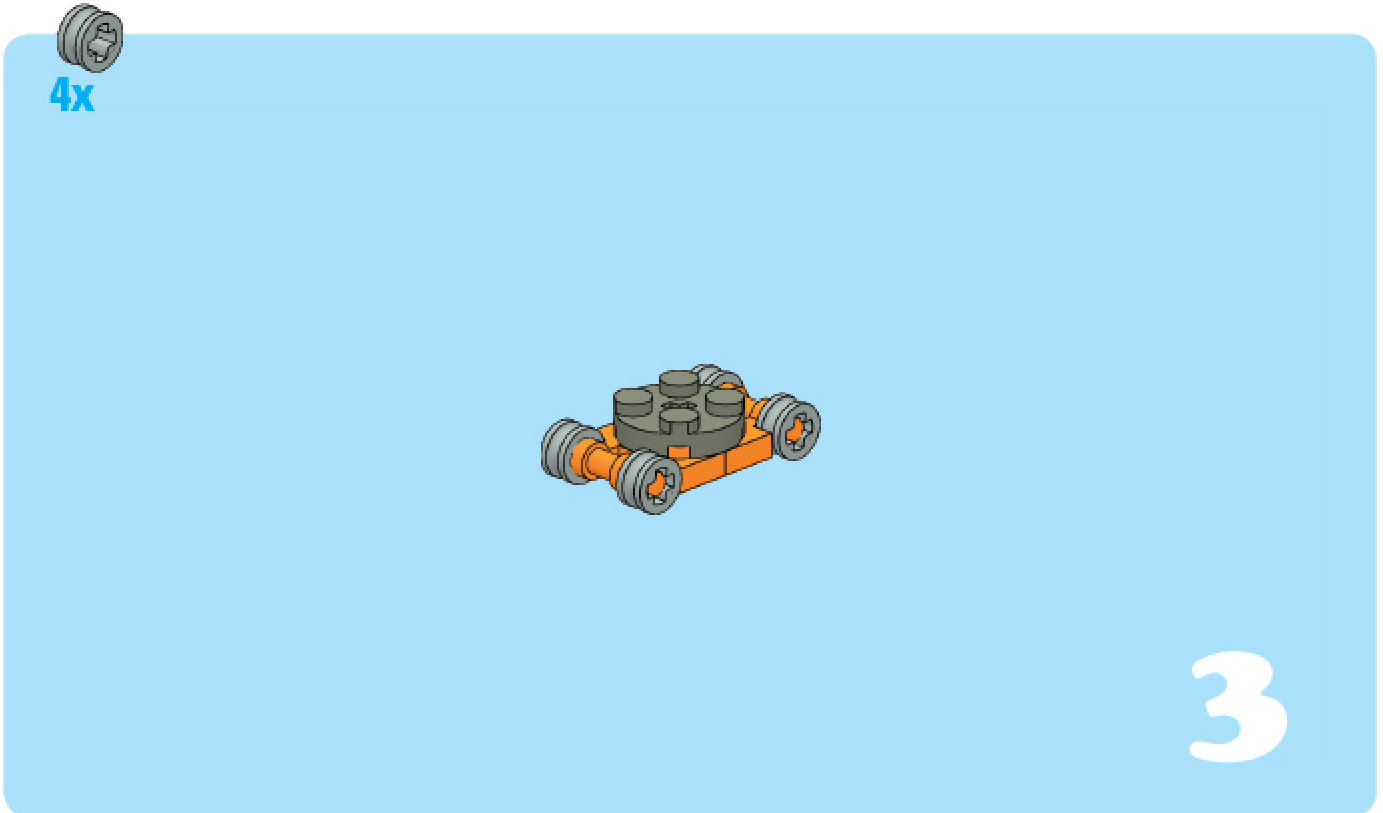
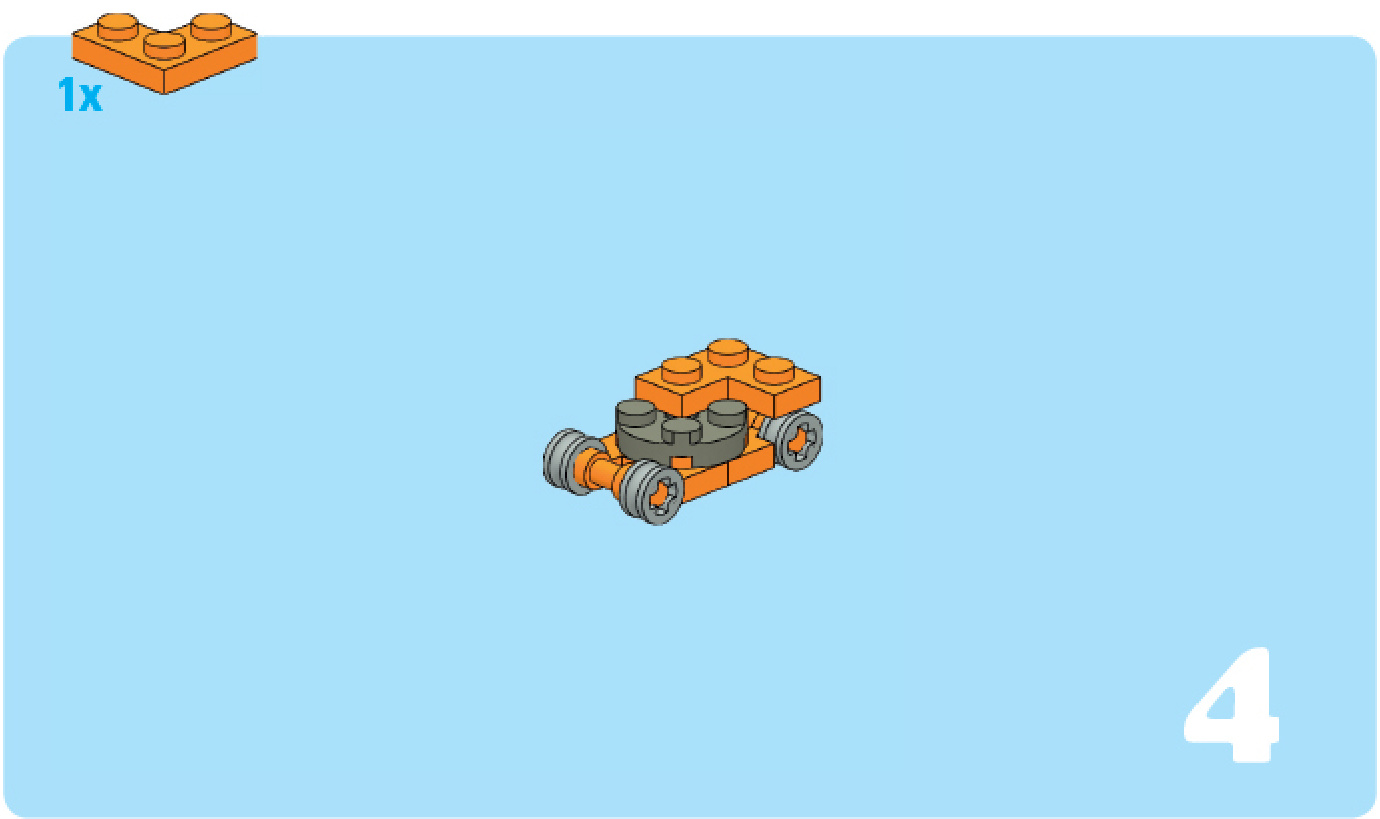
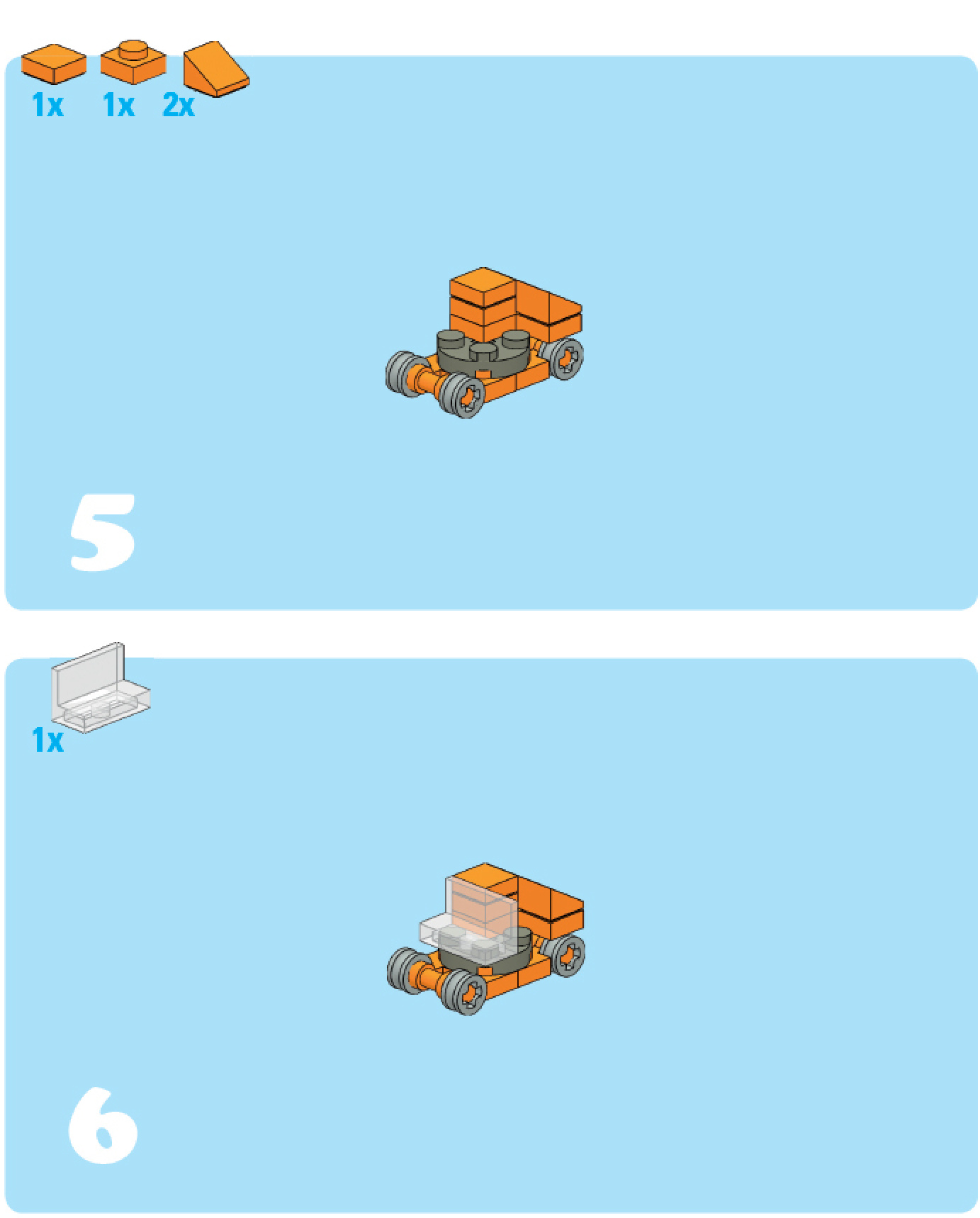
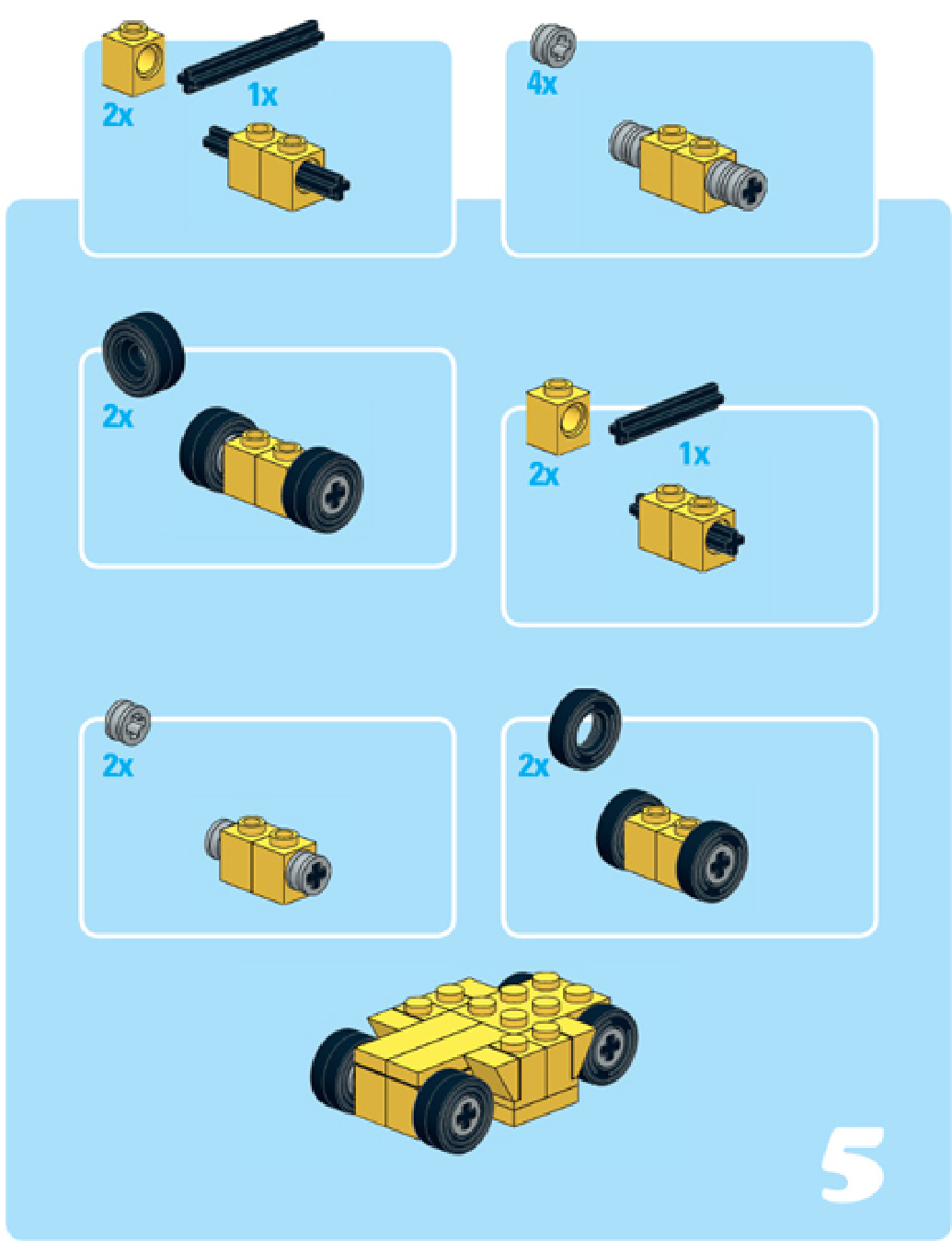
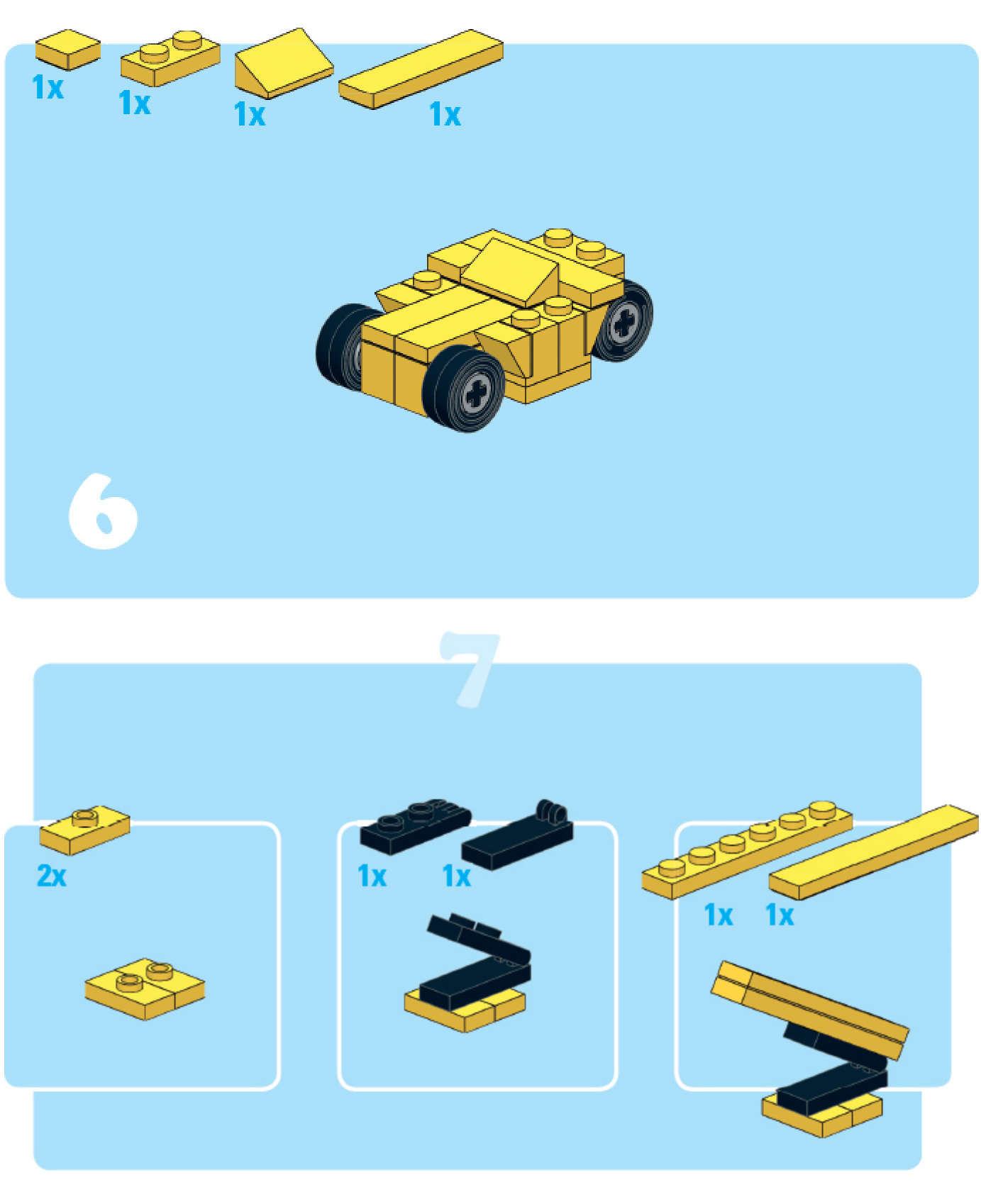
We chose this design for most vehicles shown in this book. With a little more effort, it has the advantage that the tires are easier to mount and vary. Usually, a connection to the street develops on the underside of the vehicle so they have a solid stance. The first 5 steps of this design are always the same; we show only those steps that require new material and deviate from this construction subsequently when introducing some variations. On page 29, you will see a parking lot with many different vehicles - get more inspiration from that!
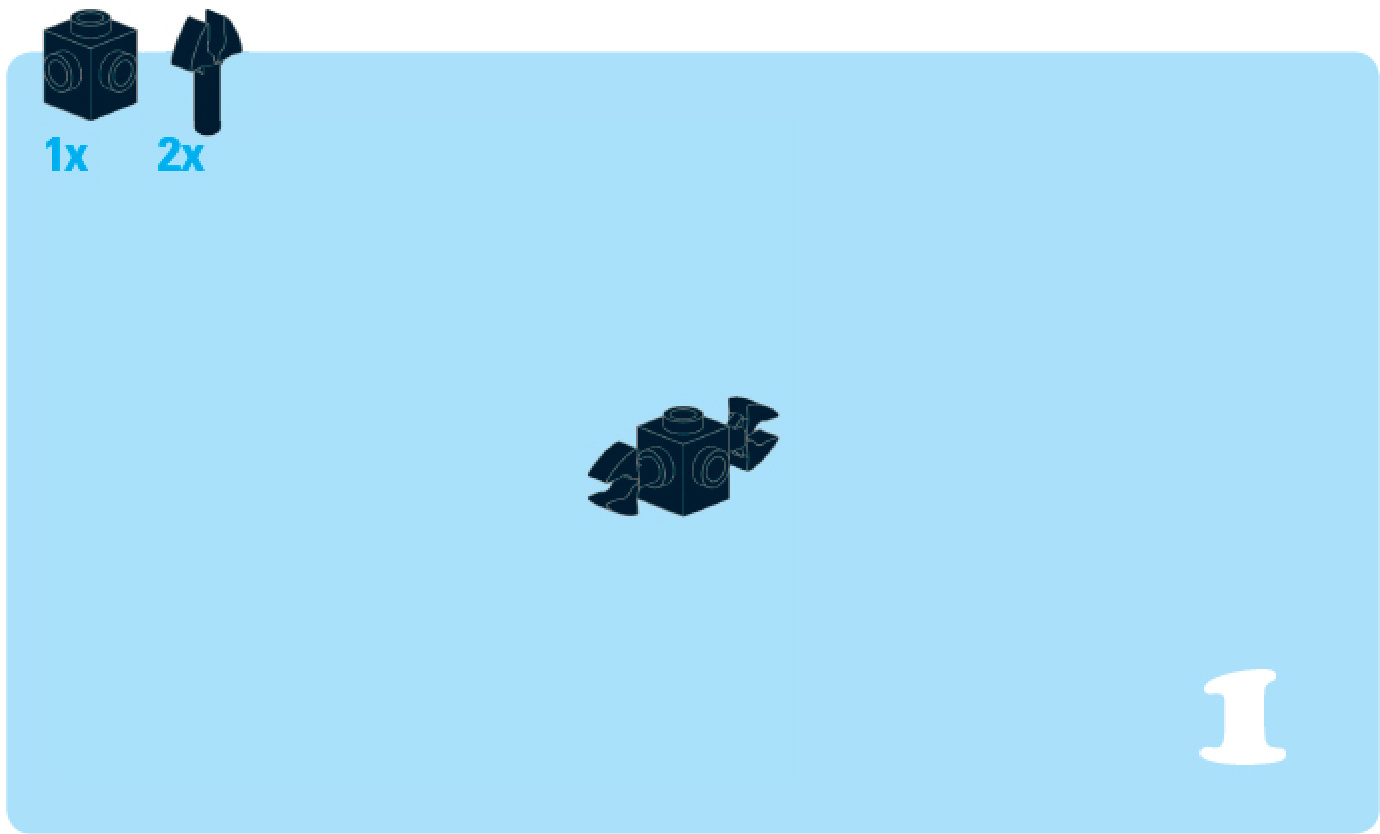
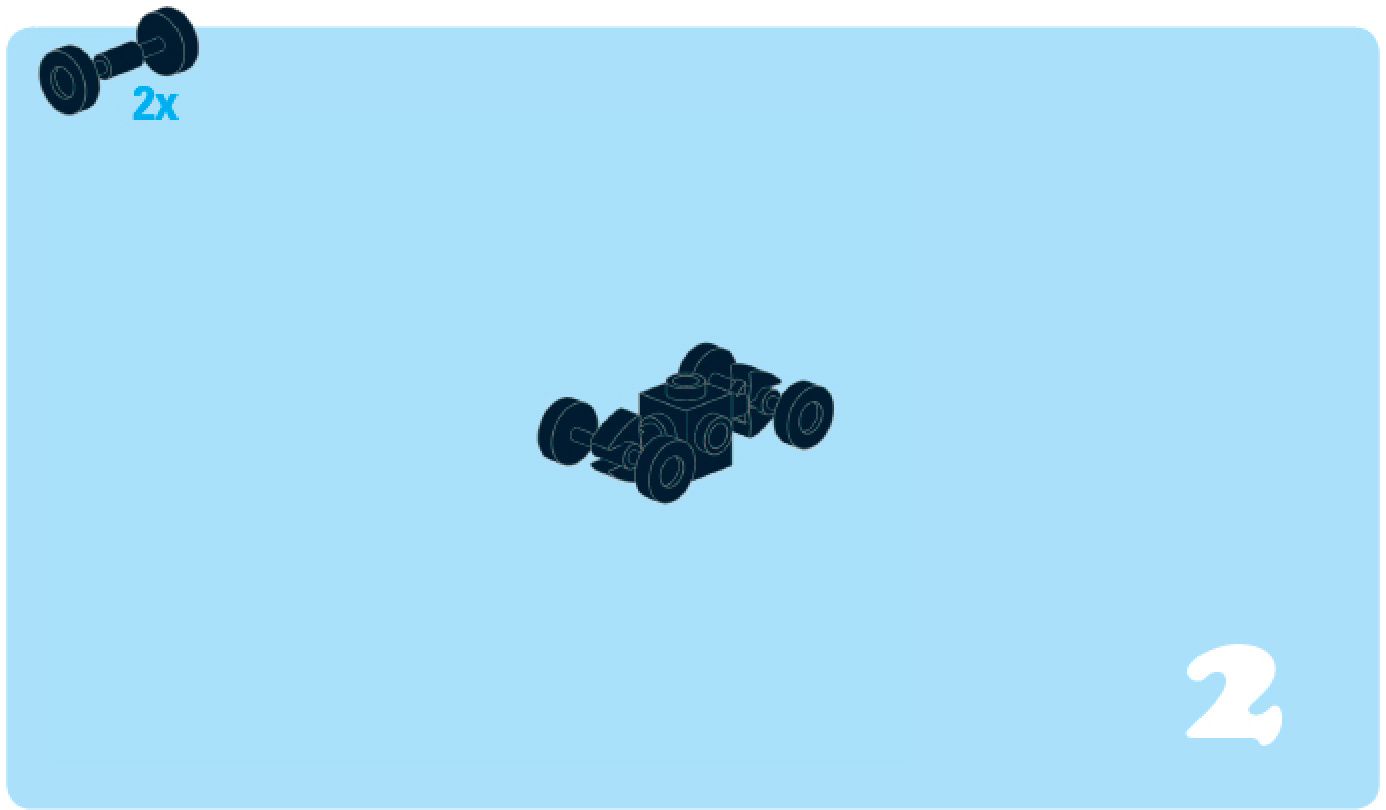
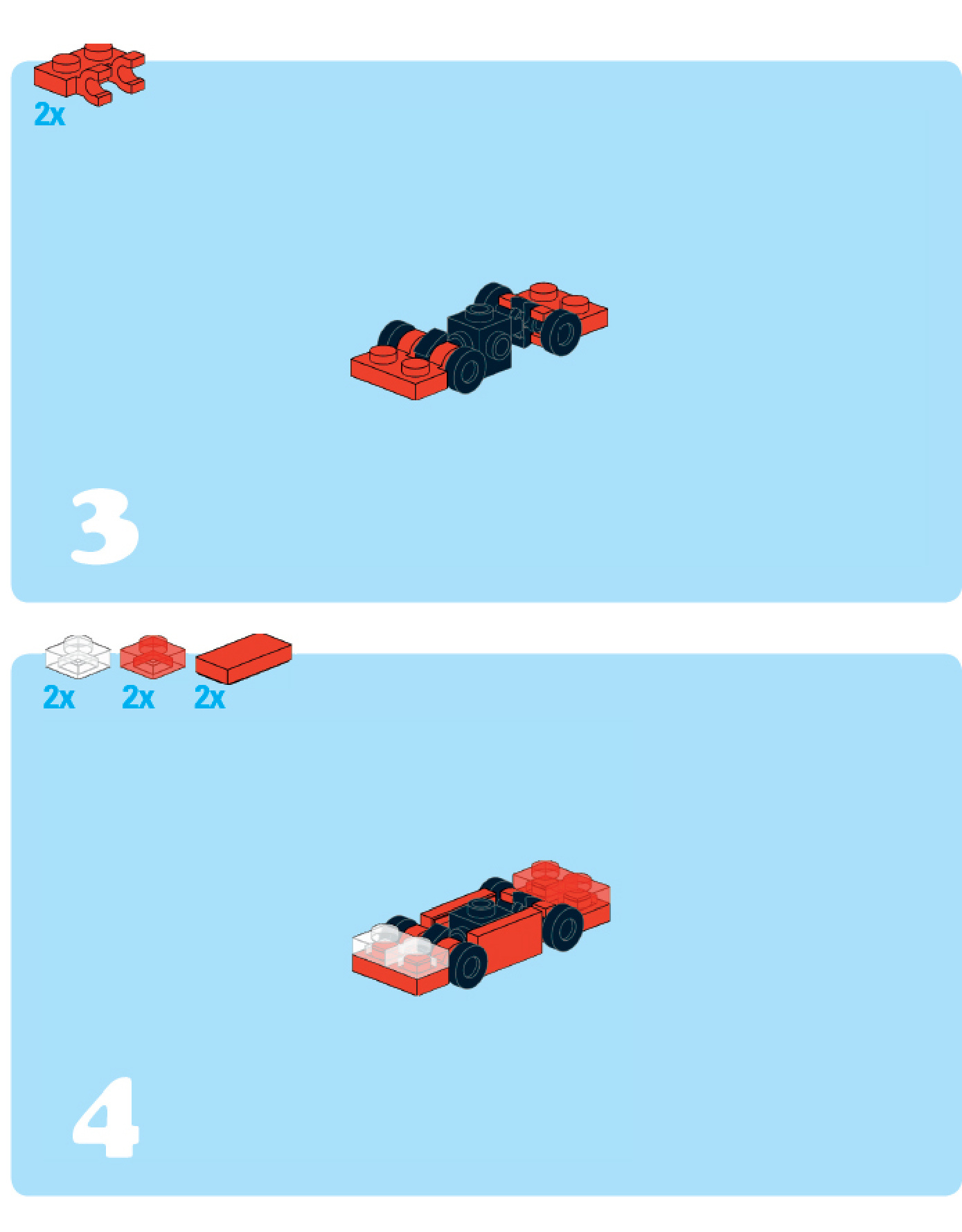
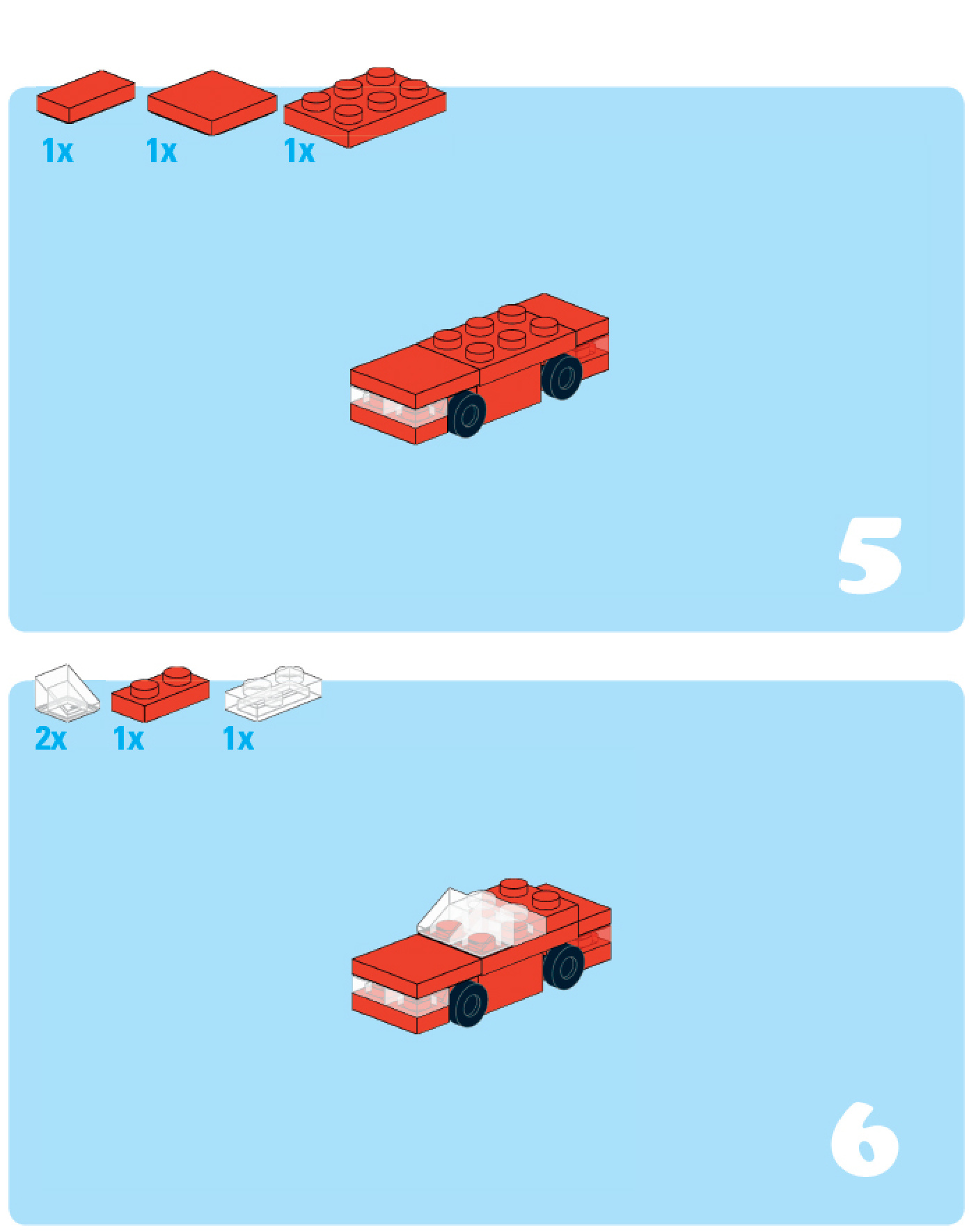
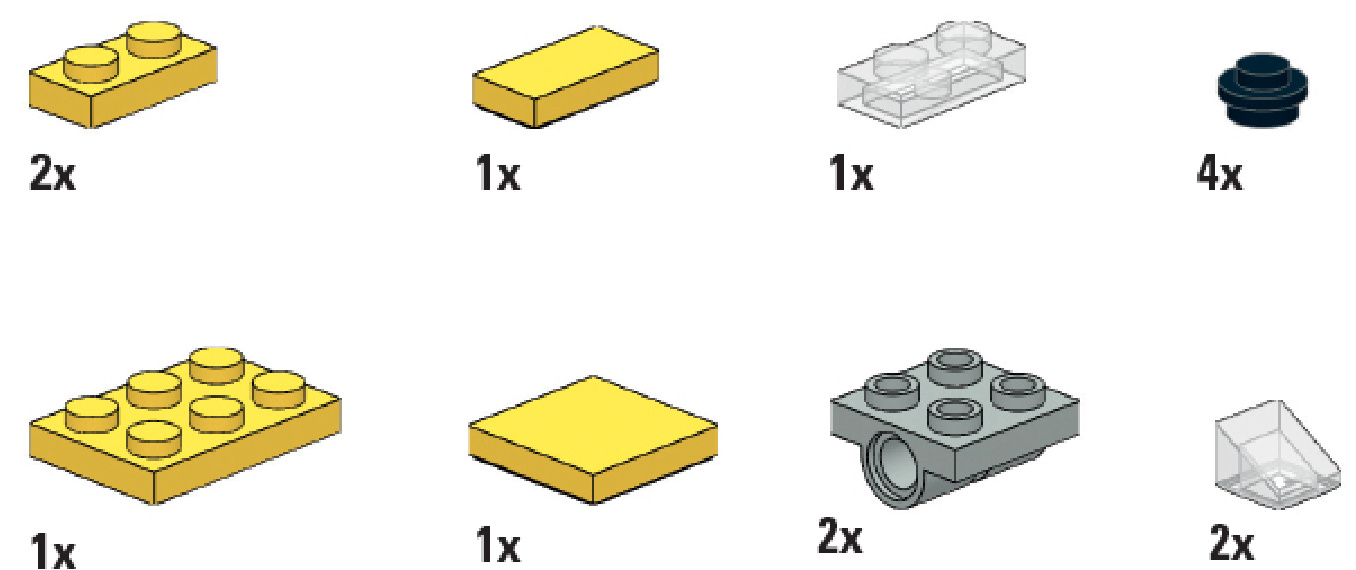
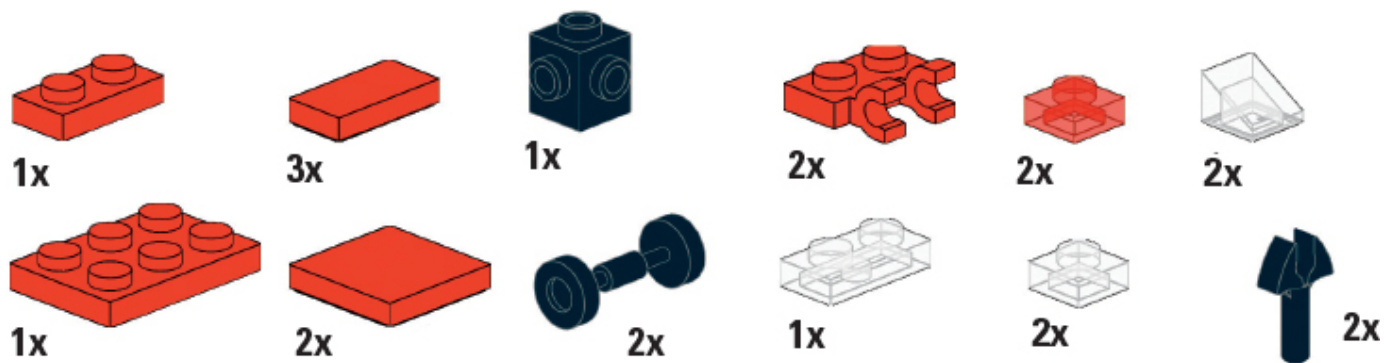
Parts List
Police Car
If you ask children all over the world which type of vehicle they want to build, the police car would be a top choice along with the fire engine, digger, or tractor.
The first 5 steps follow the principle of the design shown in the base model. If you cannot find police tiles in your box, you can use a sticker or simply a blue tile.
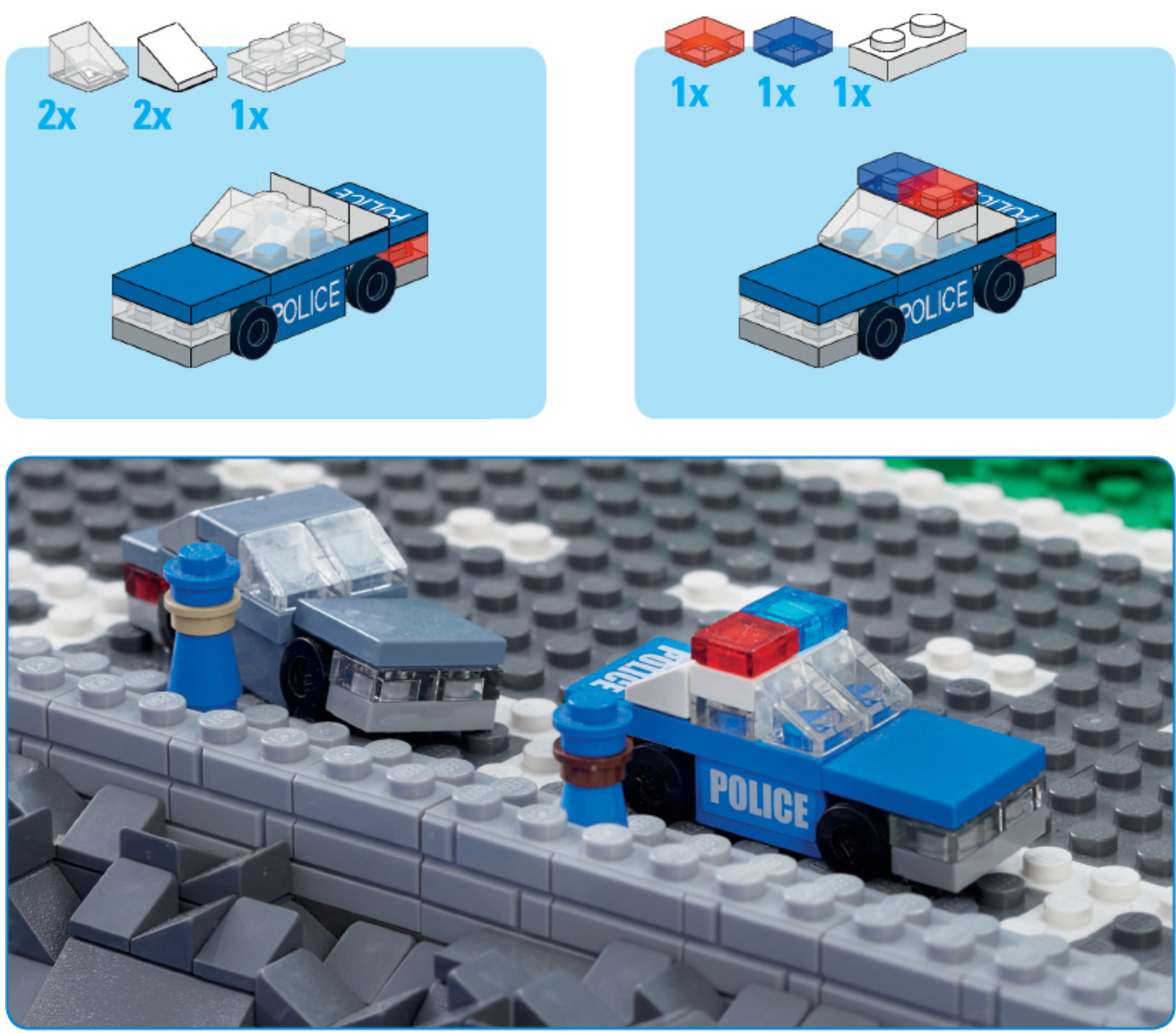
With a few changes - different roof construction and other colors - you can build a completely different car. lnstead of the black tile with the cab print, you can use a sticker or a black or a yellow tile as well.
This model also shows the diversity of the cheese slopes: transclear ones are front windshields, yellow ones are roofs. You can use gray ones as breakers and trans-clear ones as froth on the shore of rivers and lakes.
Station Wagon
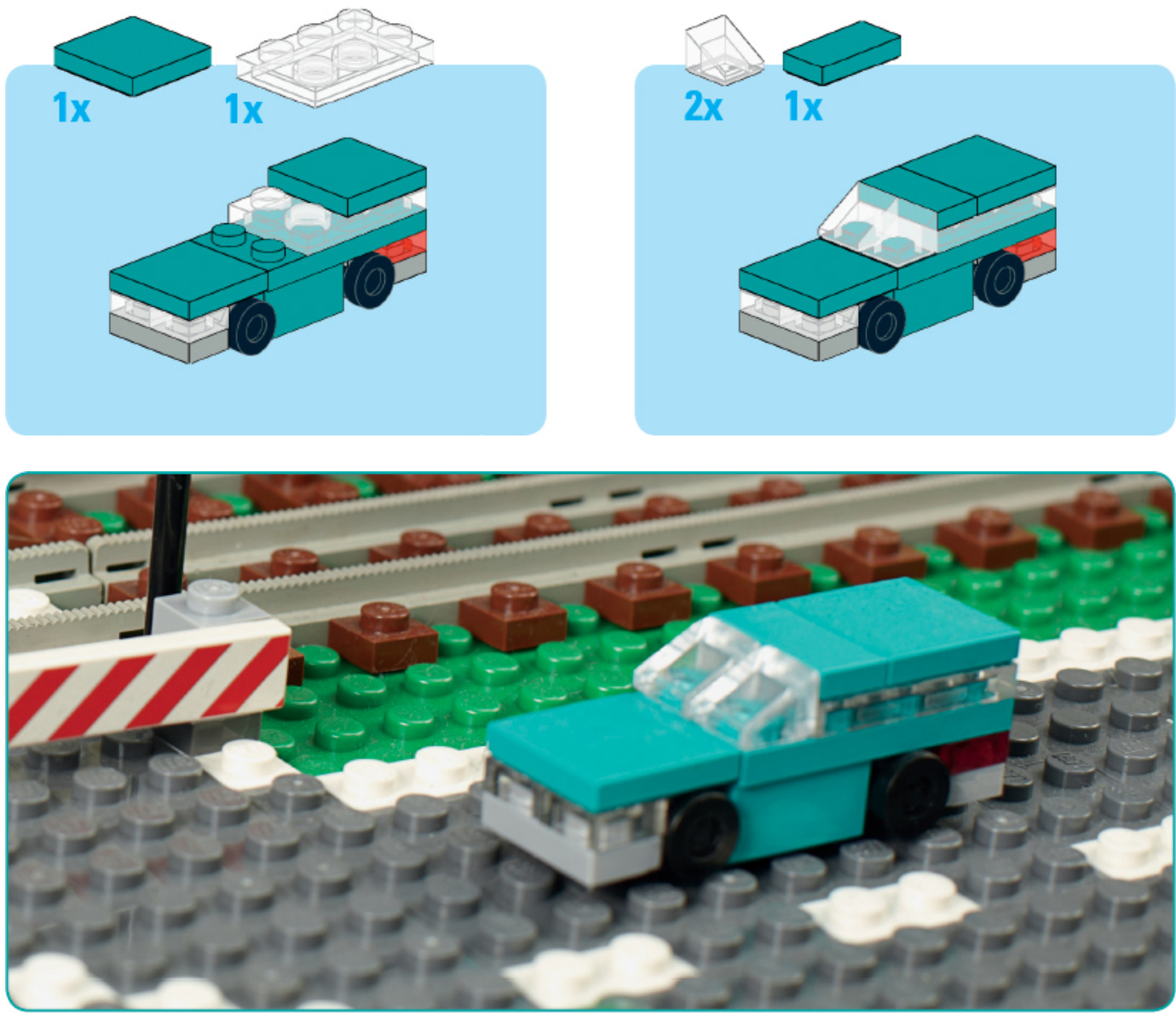
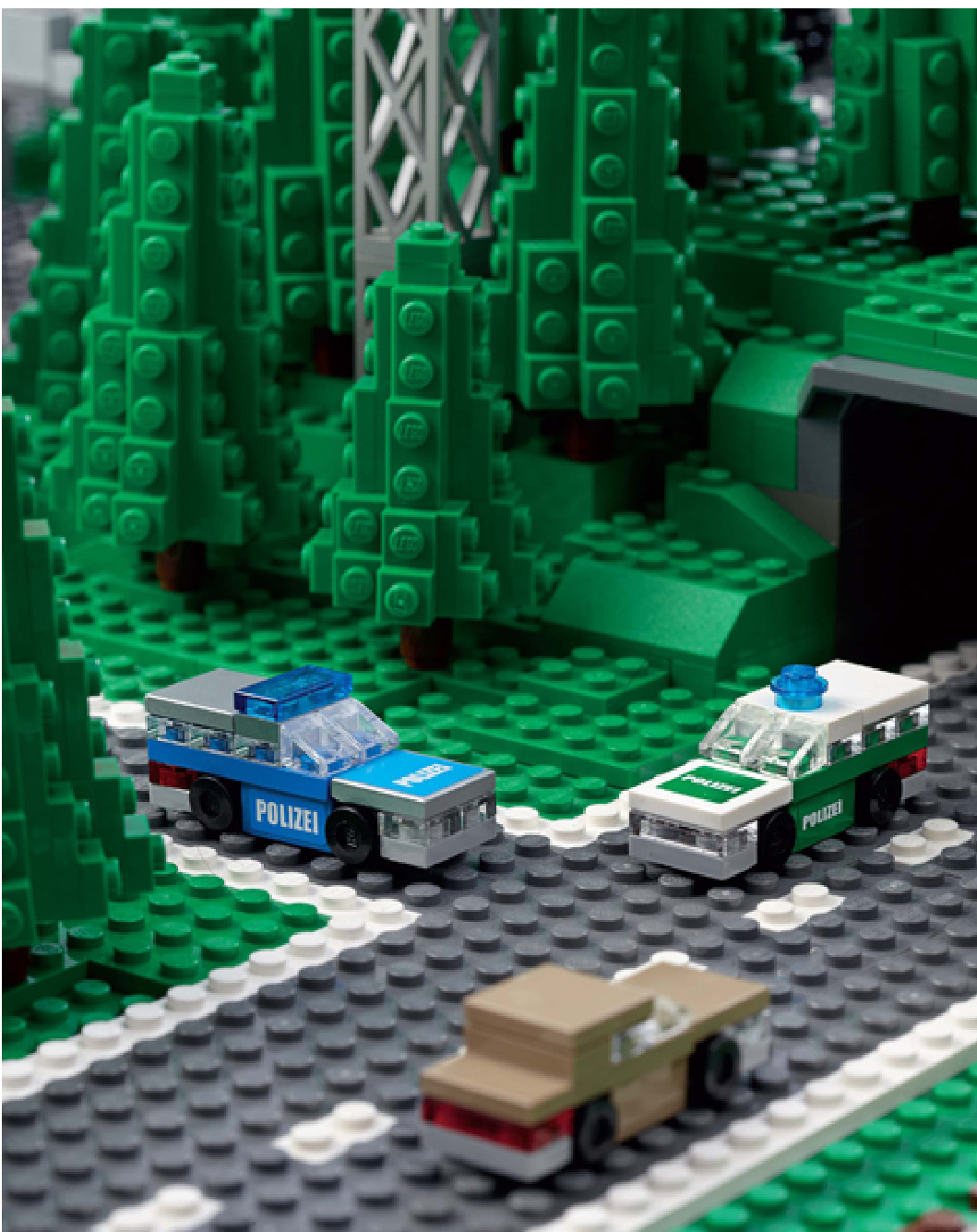
Old and new - you can build a police station wagon with a few changes to this construction guidance, depending on your mood in the old German police green or the new German blue, even an American black and white cop car is possible.
Check out the different solutions for flashing lights. There are always several ways to achieve nice results. Be creative! Station wagons are excellent for using bricks in rare colors, of which there are few parts - we chose turquoise.
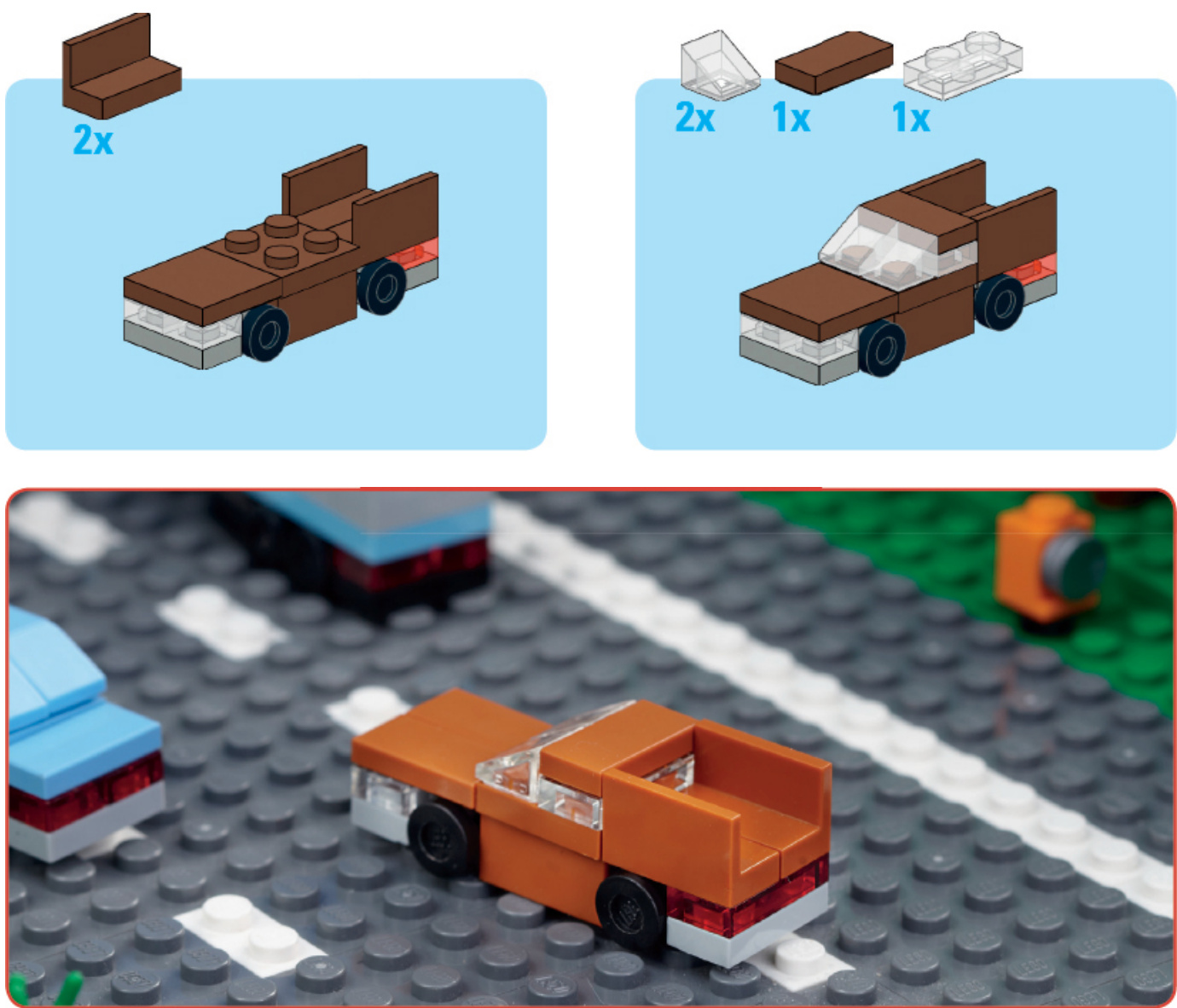
The pickup is also a variation of the base model that results in a totally new model with few changes. Pay attention to the small details with your vehicles - rear lights and headlights for example beautify the models tremendously. This shows nicely that it makes hardly any difference whether you use 1x1 or 1x2 plates in trans-red.
You can build streets and entire highways with few plates. Beautify your city with details such as boulevards, emergency phones, etc.
Convertible
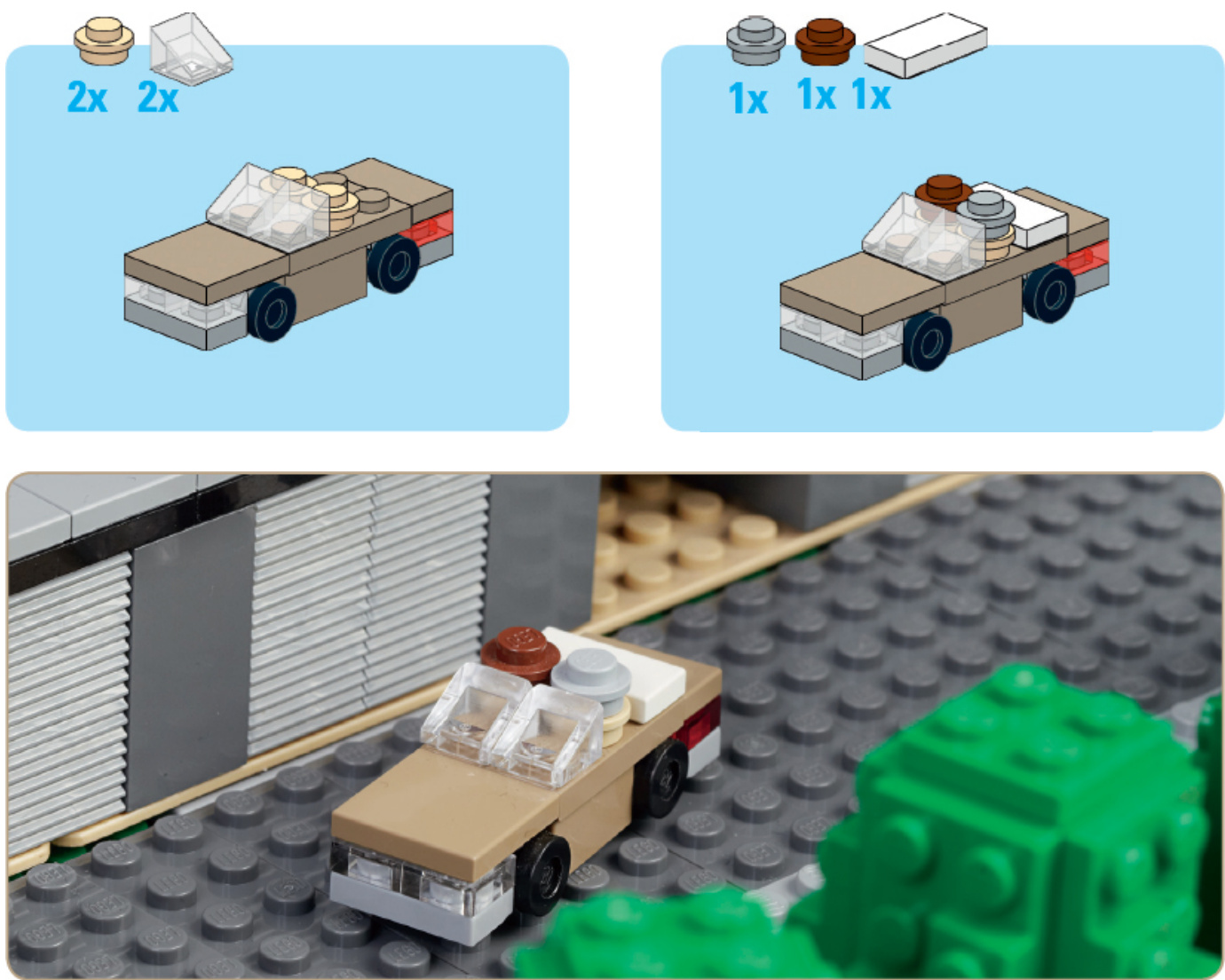
The convertible is a beautiful variation! Unfortunately, the transclear cheese slope is so far only available in 1x1. The fan base hungers after translucent double cheese slopes. We used groove bricks for the garage doors. The bricks are grooved vertically on one side and horizontally on the other one and are available in many different colors. They are excellent for gates and blinds, and also for engine details and container walls.
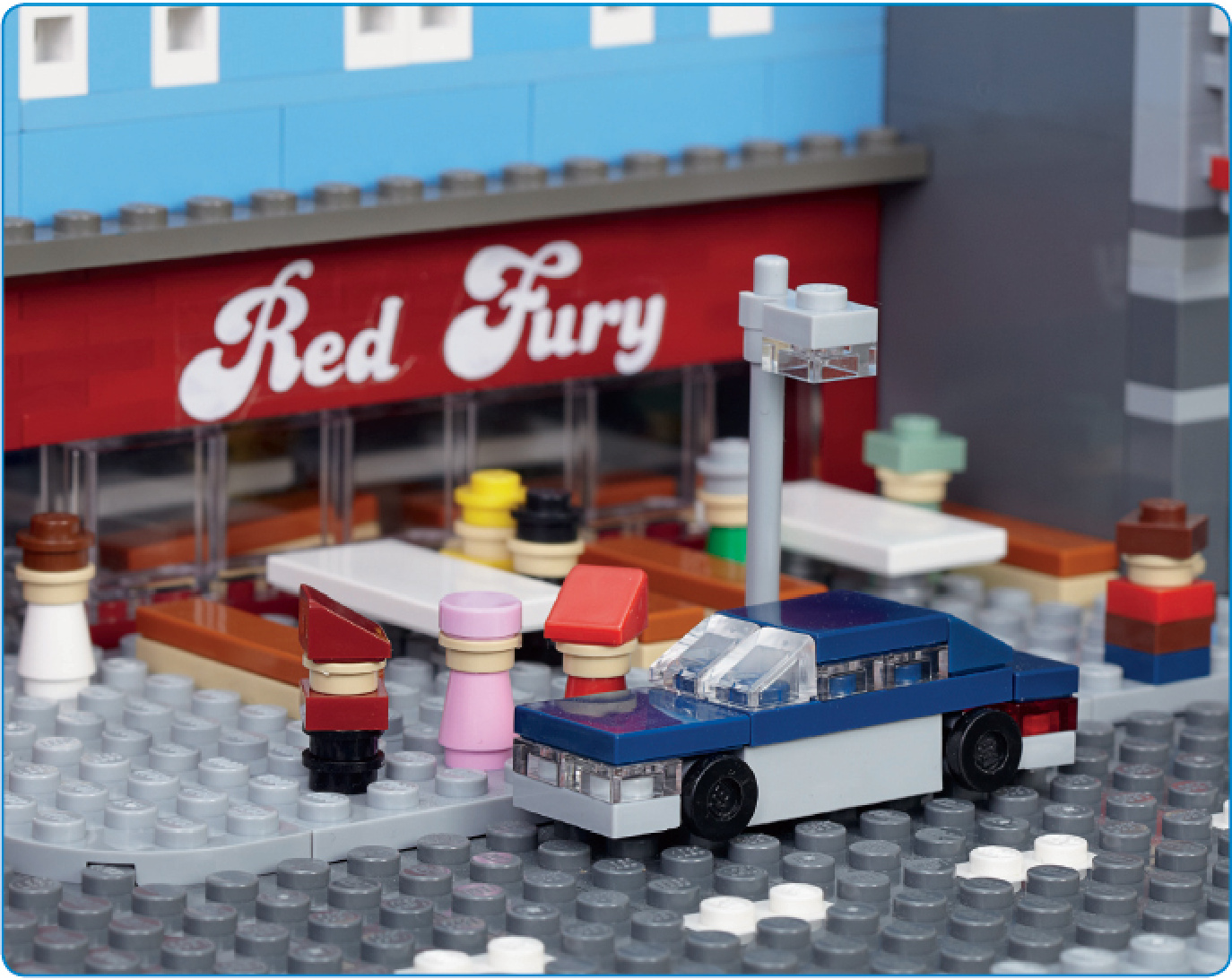
Sedan
We extended the distance between the axles for this model which gives a totally new impression. Furthermore you can see a great example for why you should keep and collect stickers since you never know what you could use them for. The sticker for our Red Fury Café was originally for a plane model.
The photo also nicely shows the rounded plate of the sidewalk. Round plates and bricks result in the effect that studs get half covered. That’s why there is a small gap exactly the size of a stud on the side.
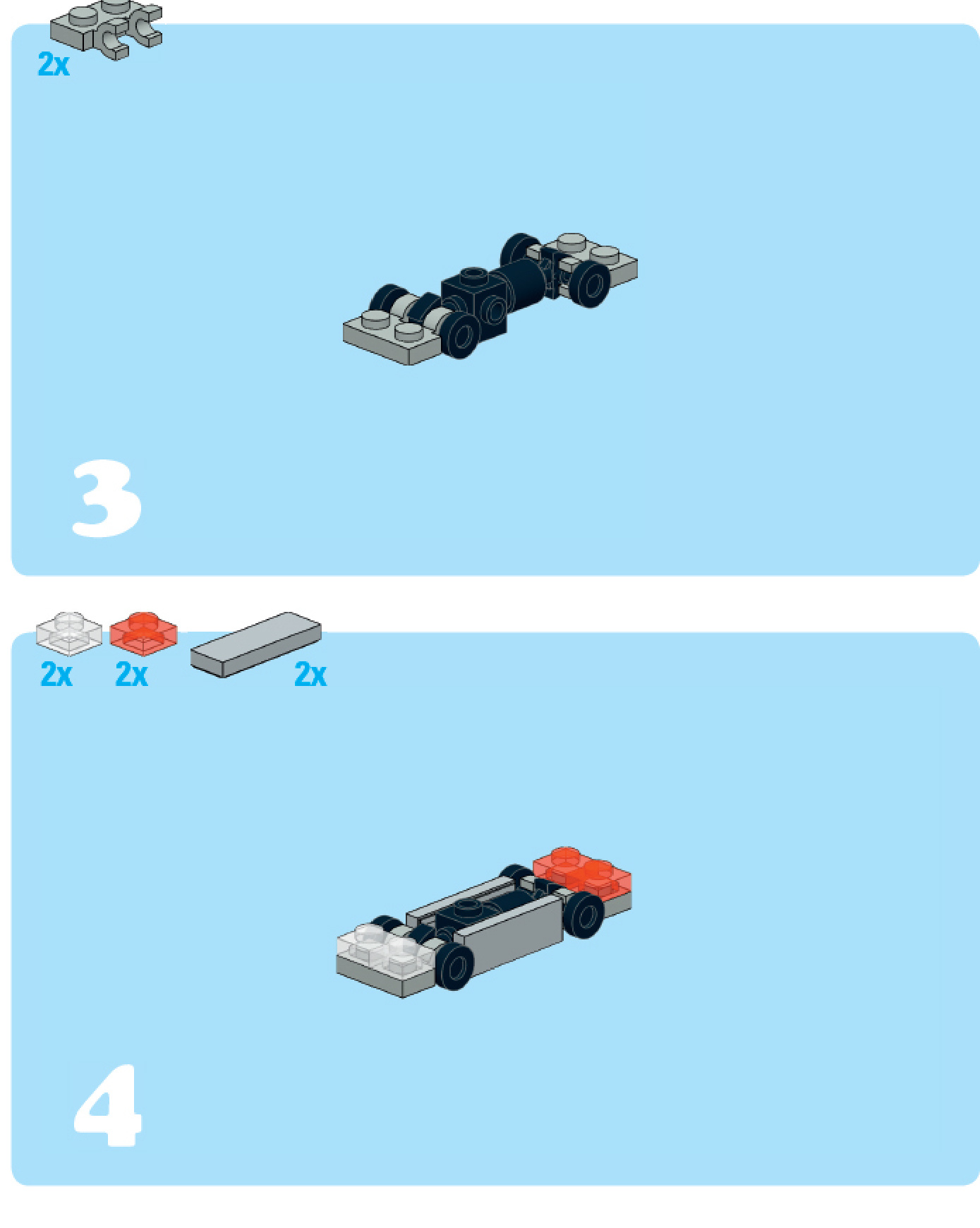
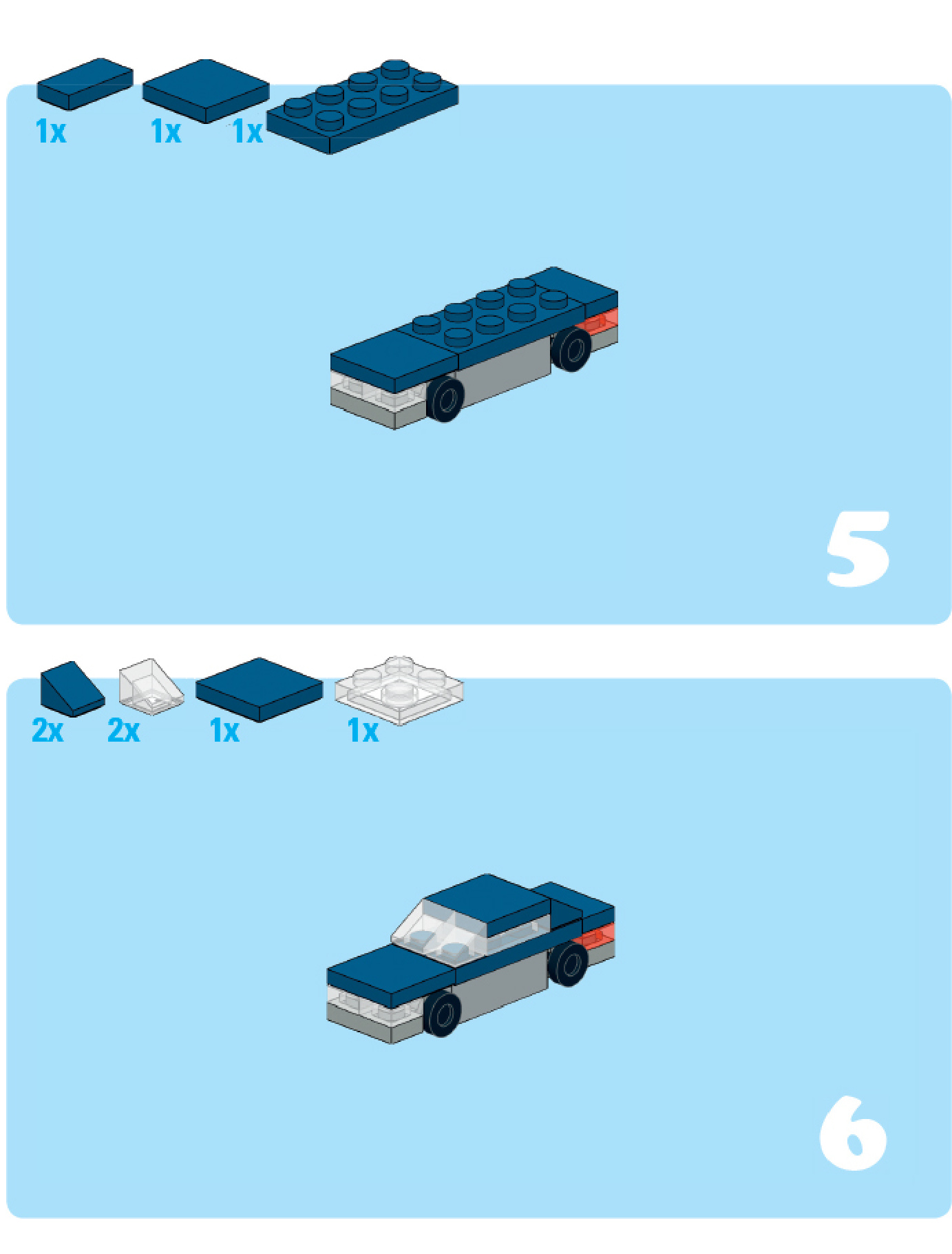
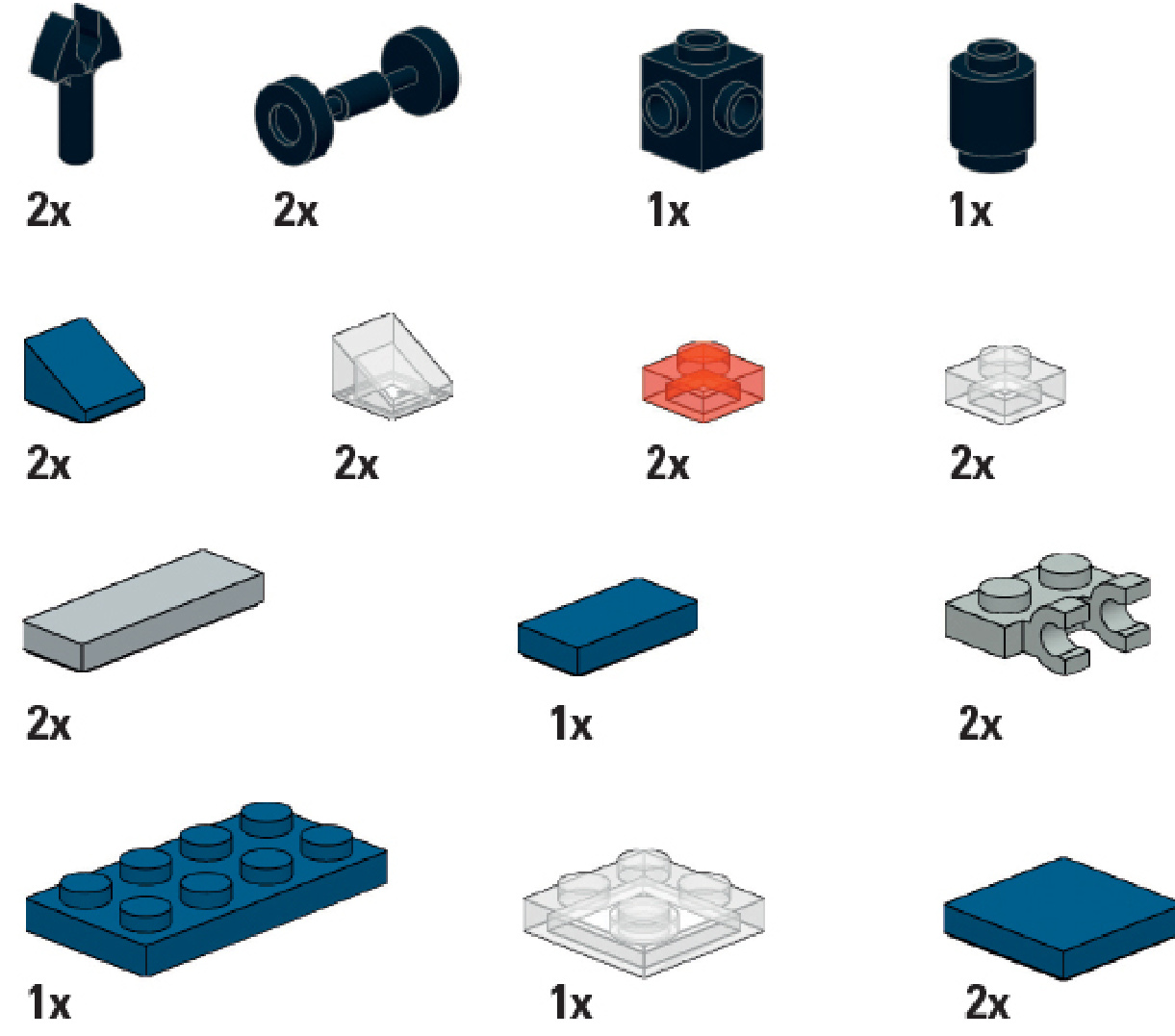
Parts List
Stretch Limousine
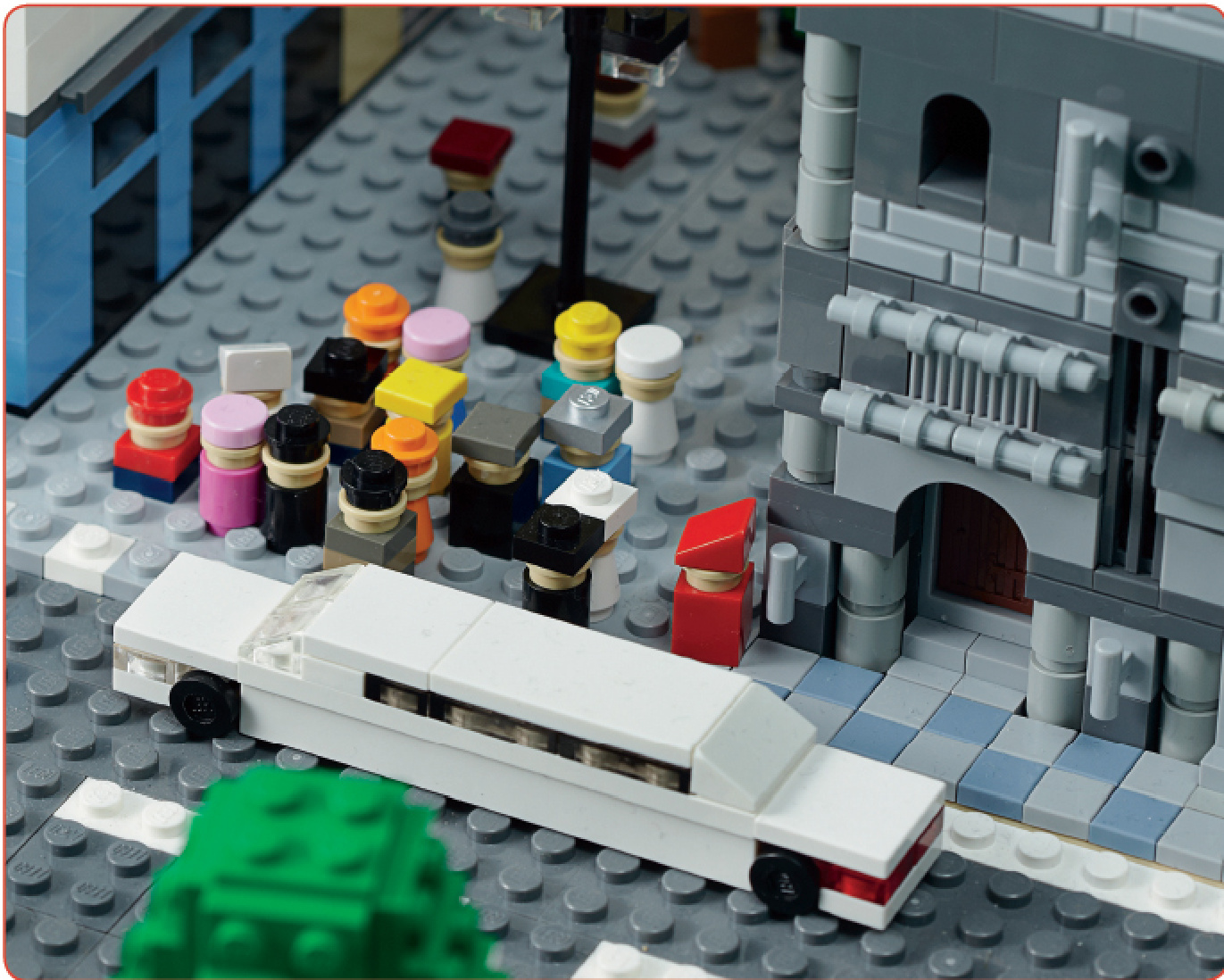
If you extend the distance between the axles even more, you get a stretch limo. We decided on a white vehicle for our wedding scene, but the colors are of course variable as always. You can see here how versatile you can build with just a few bricks. The figures are of course quite abstract but if you take a closer look, the bridal couple and cardinal can be recognized immediately - and all the other guests as well. The photos of the city show numerous variations, hats, caps, crazy hairdos, etc. Be ingenious and experiment with your bricks!
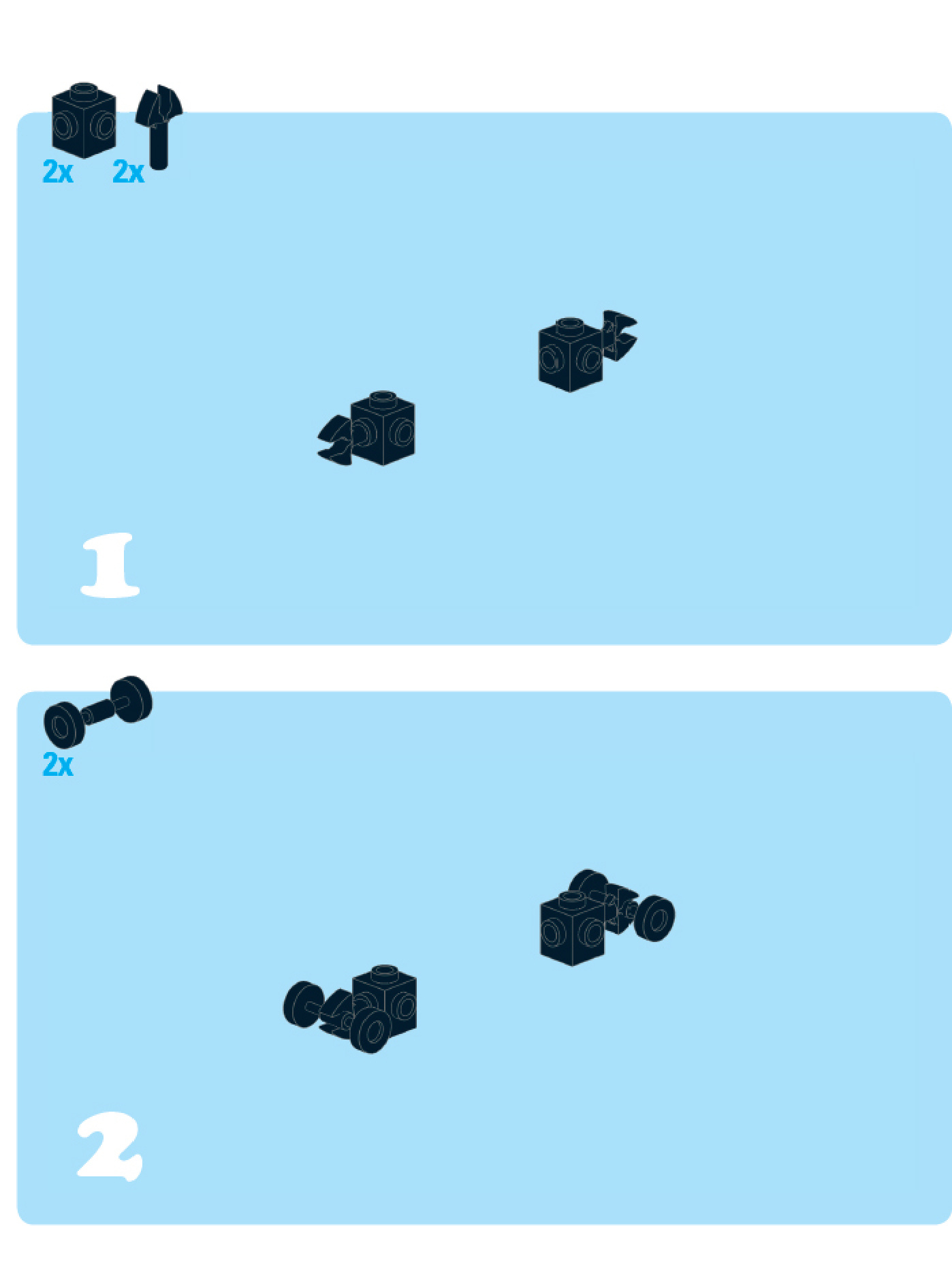
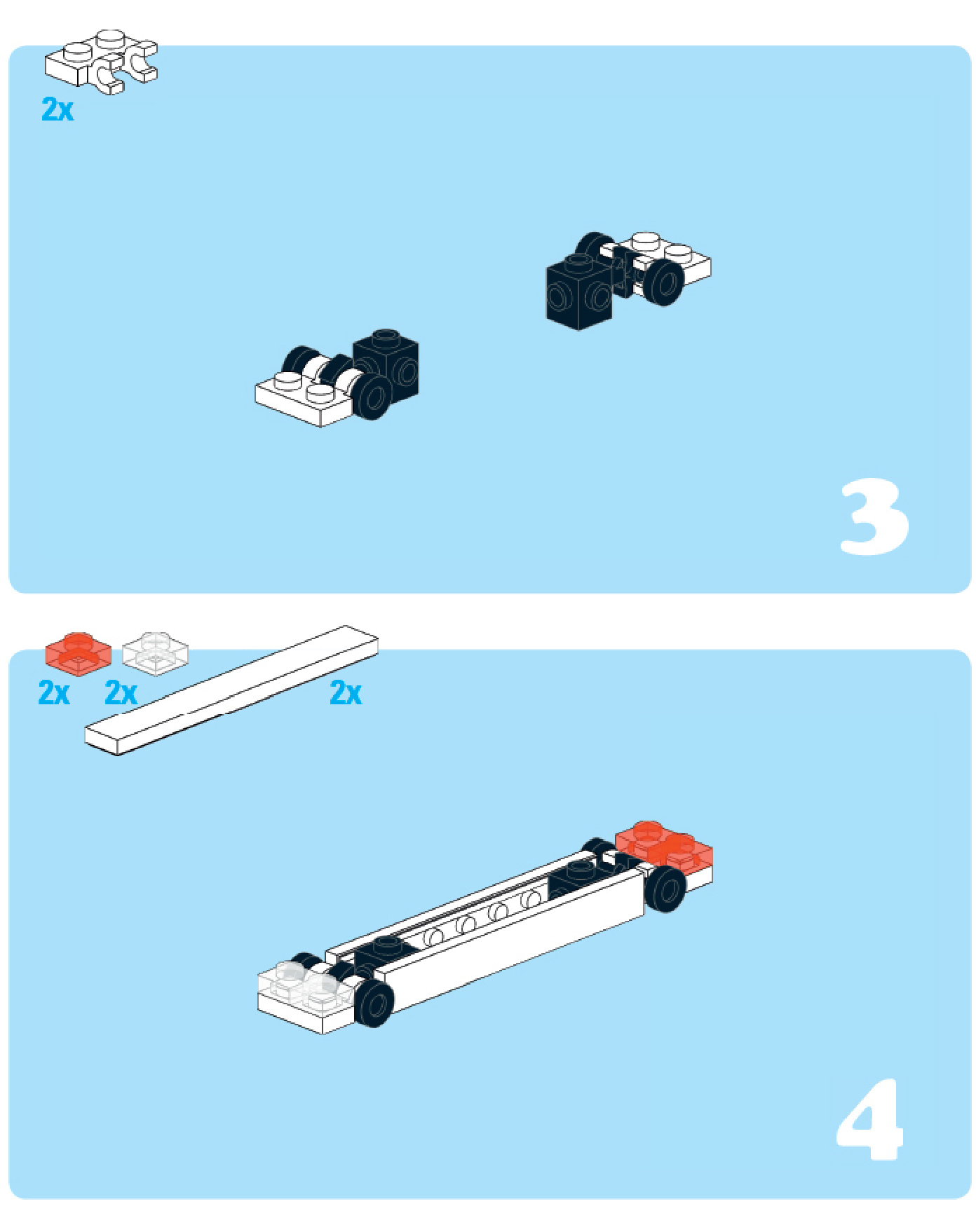
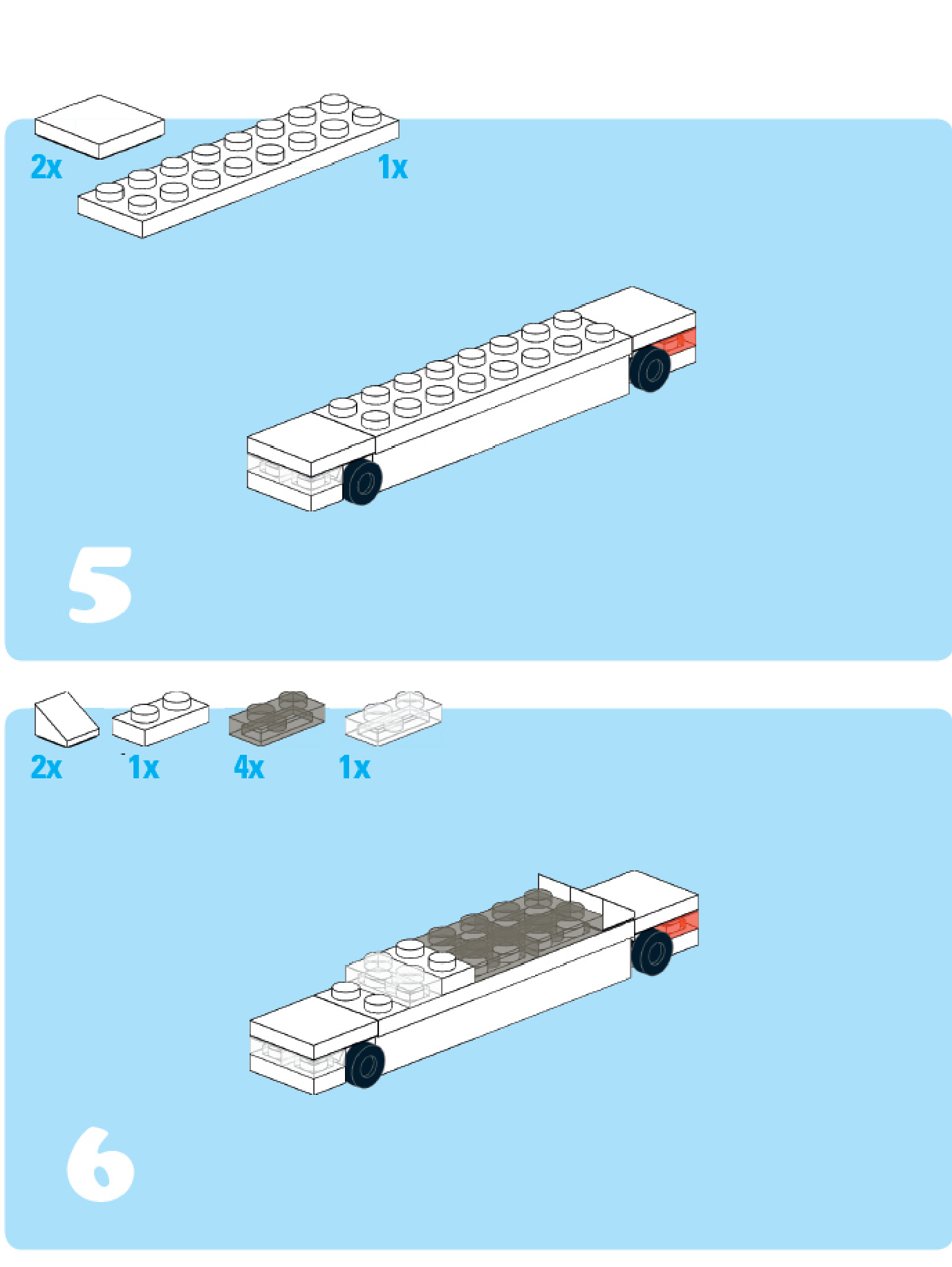
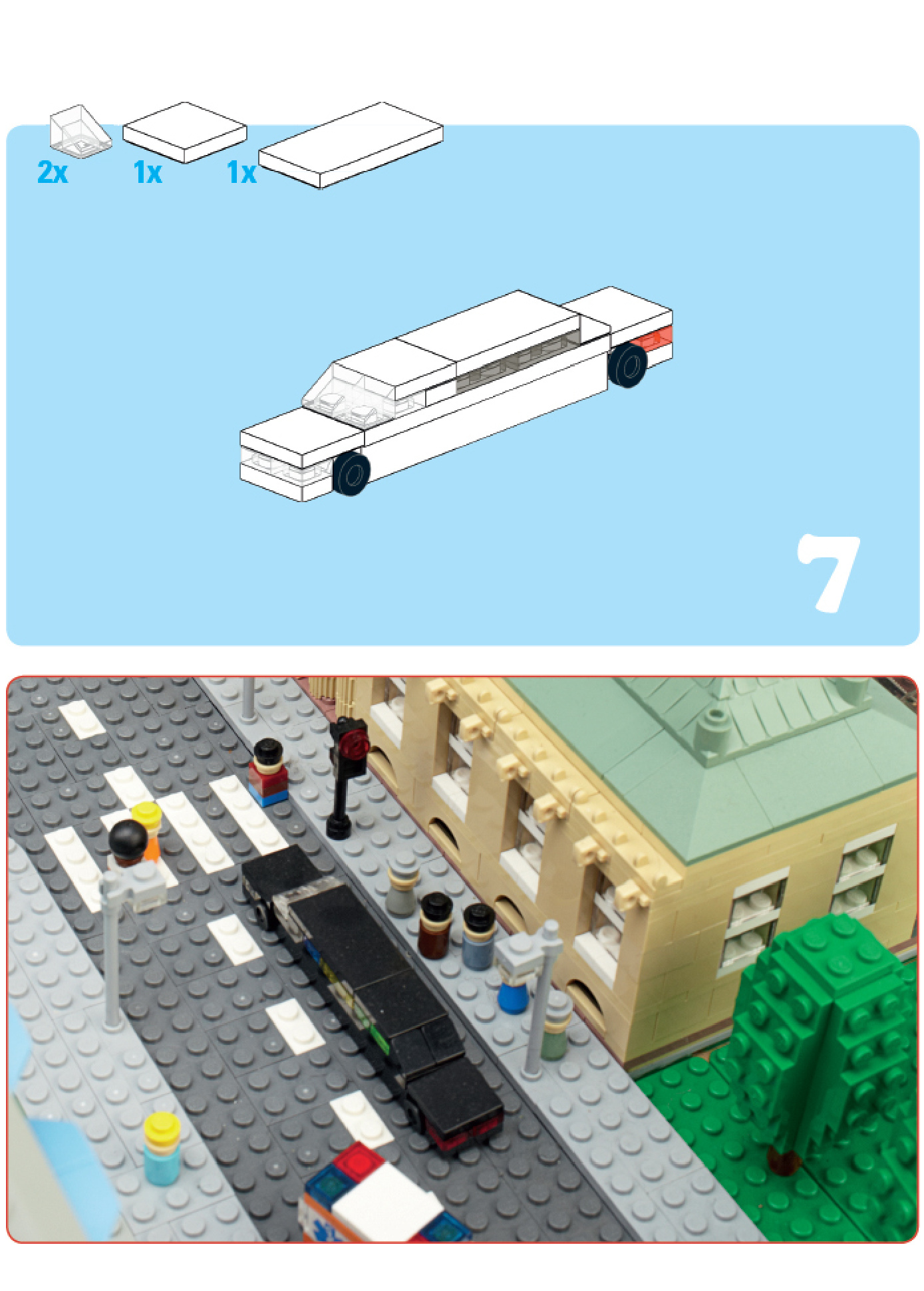
Parts List
Bus
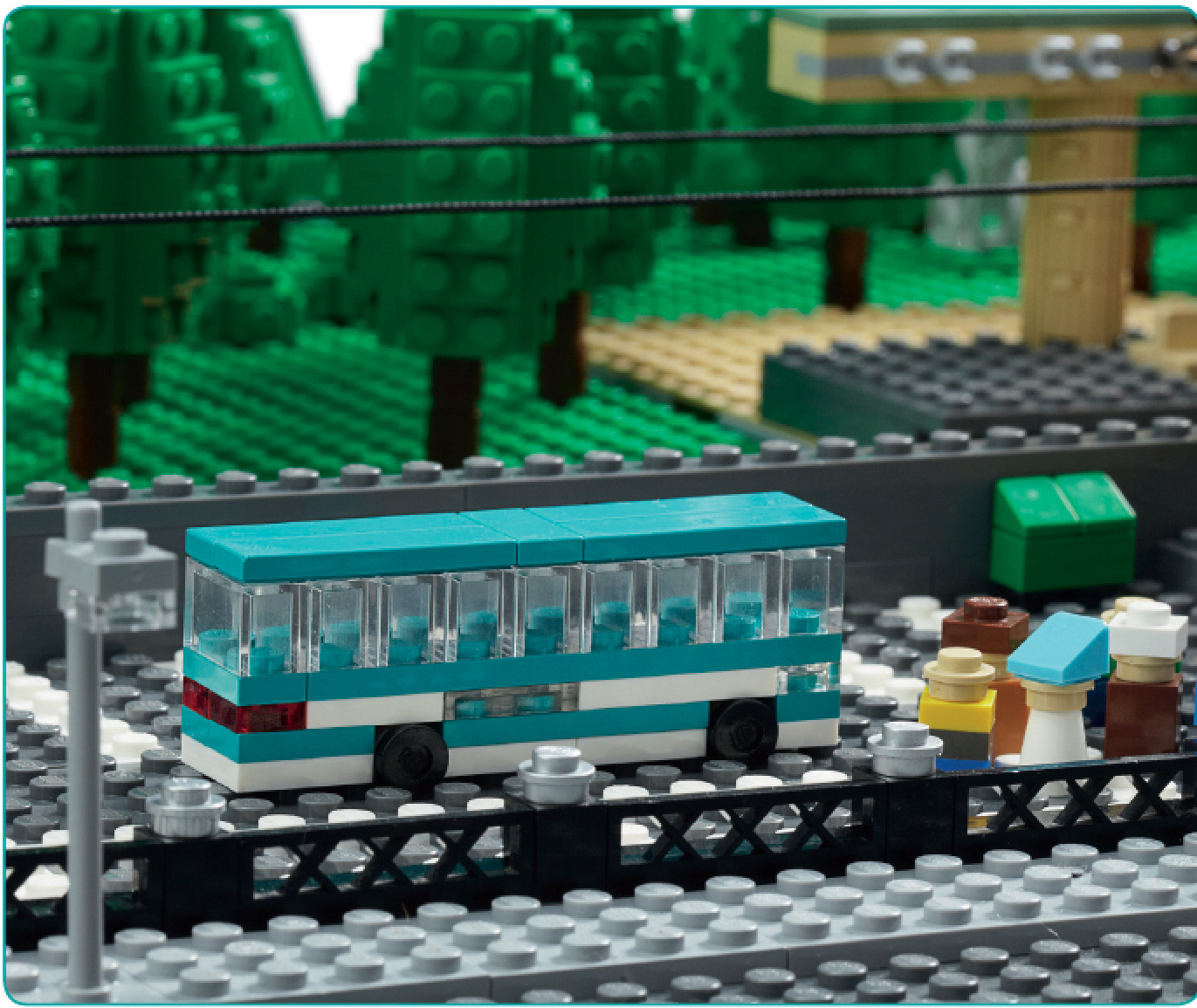
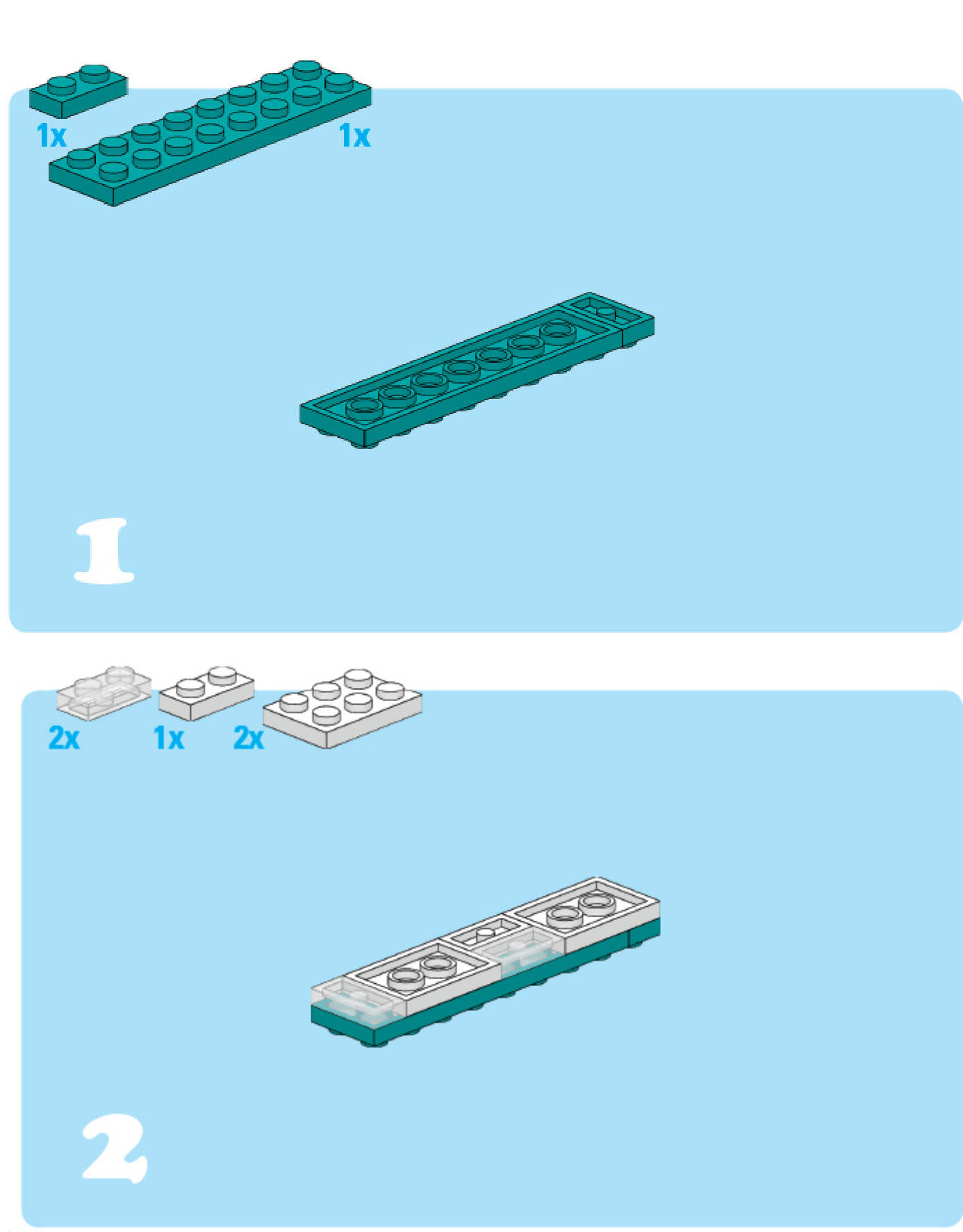
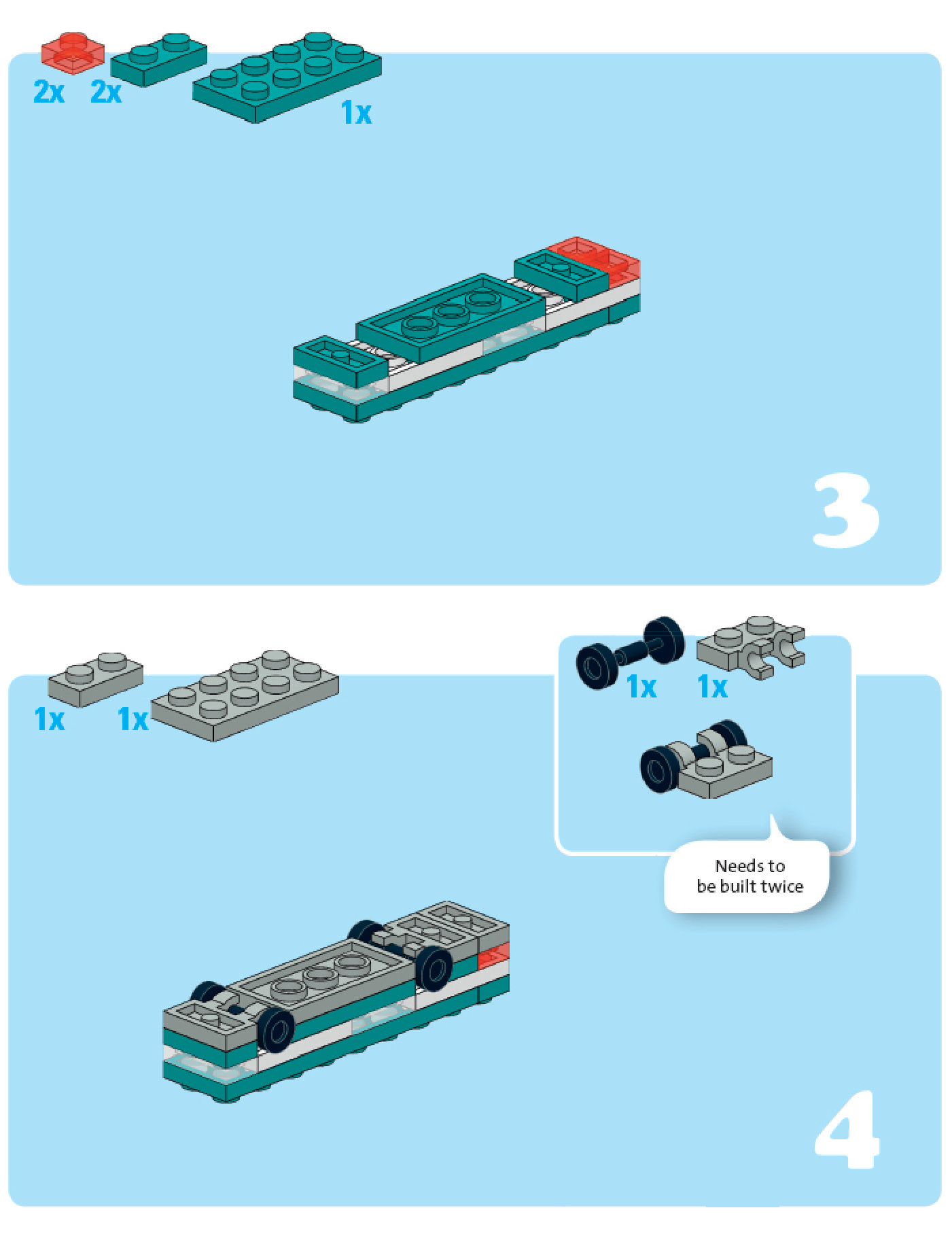
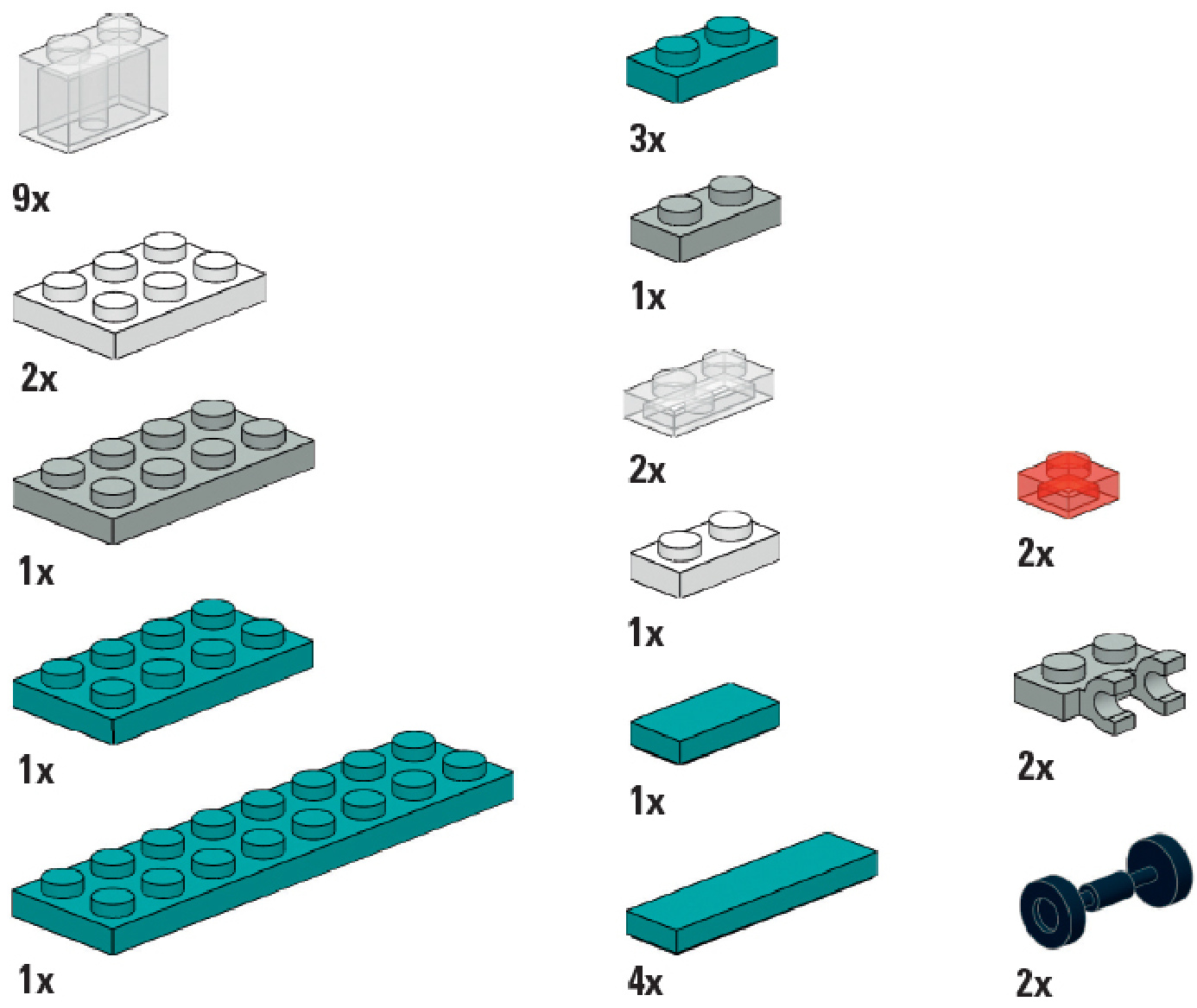
The extravagant colors are used far too rarely; we have thus decided to build our bus in dark turquoise. You will find a variation at the end of the construction guidance. We had to equalize the odd number of studs in the length with a stepped roof, because the tiles in this color are only available in even numbers (2x2 or 2x4) - a beautiful example of how the overcoming of constructional difficulties can lead to great results.
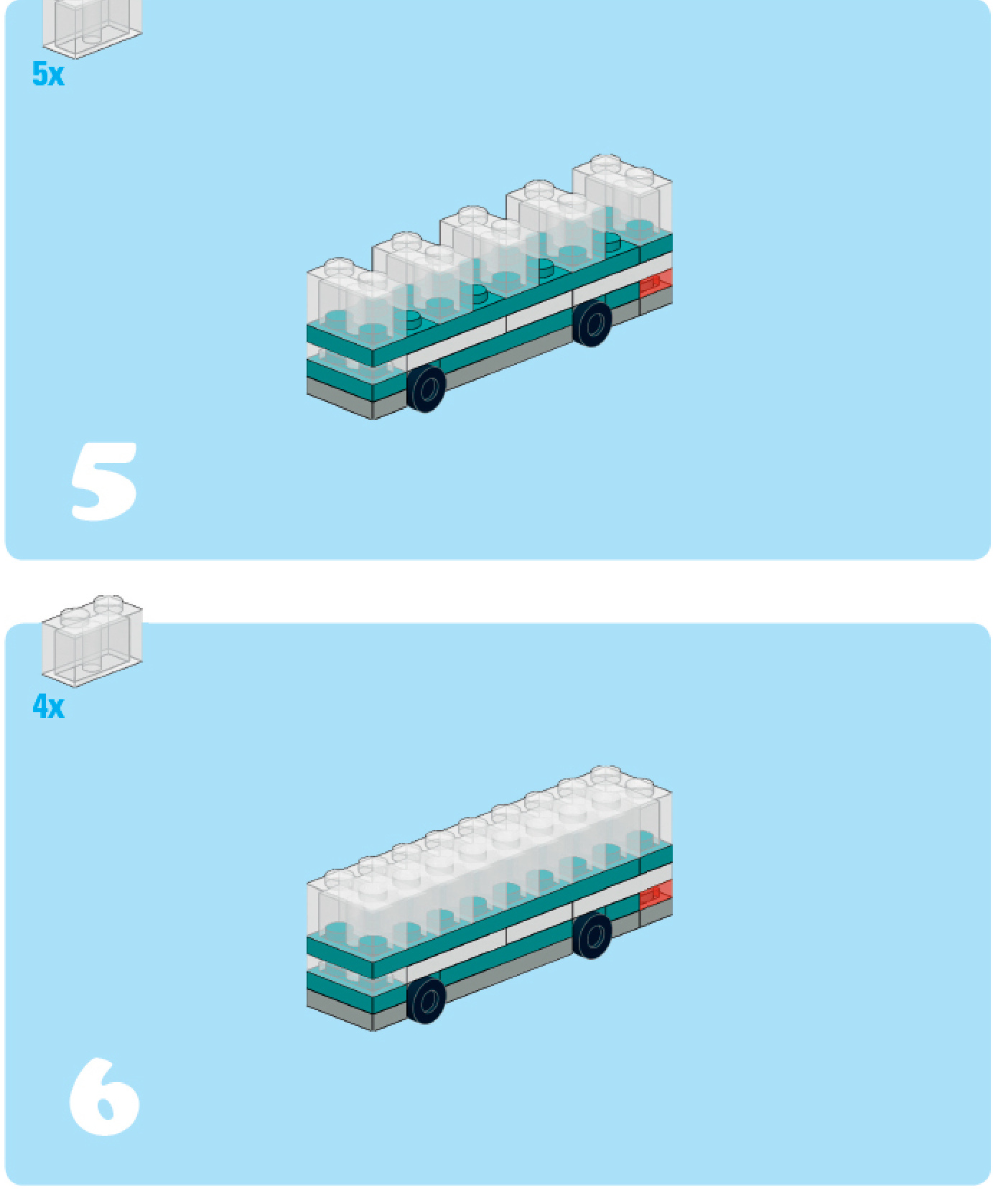
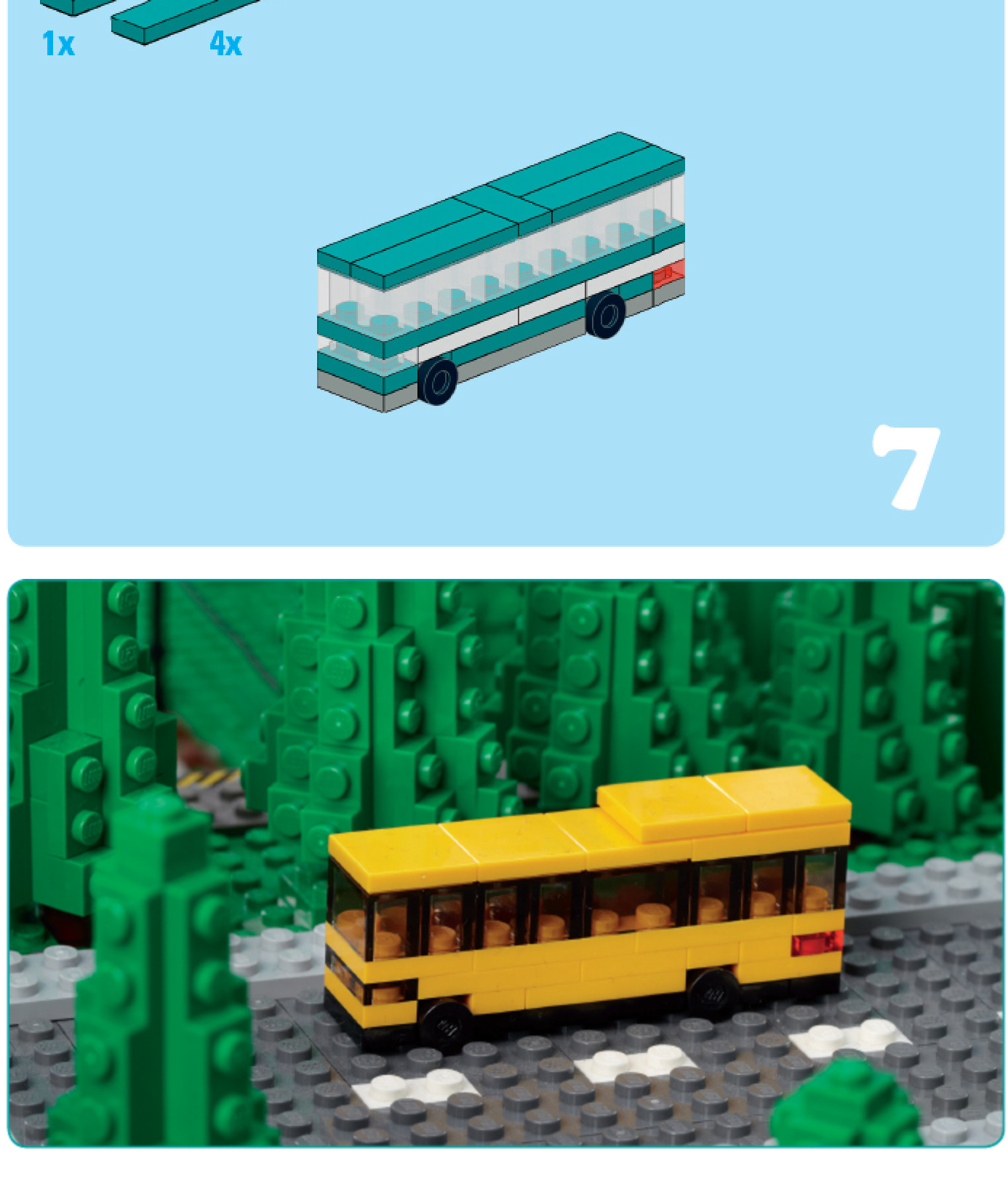
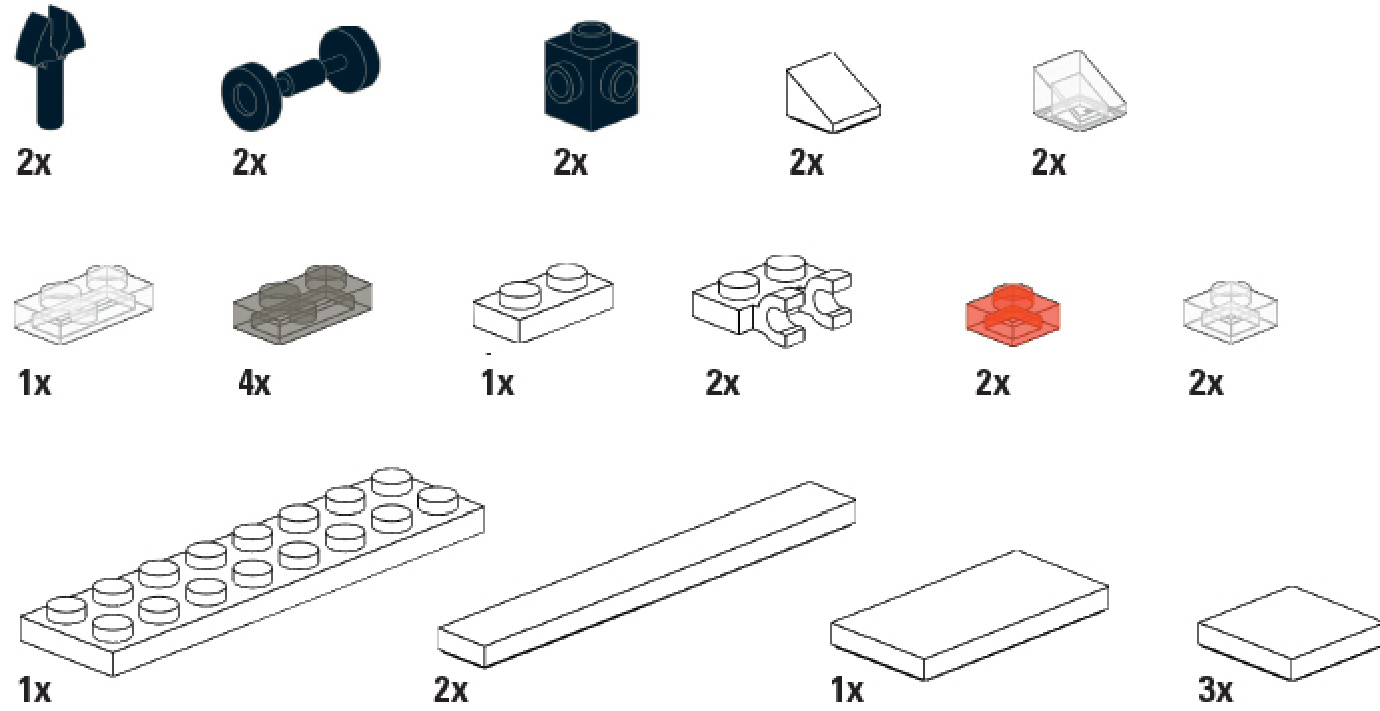
Parts List
Digger
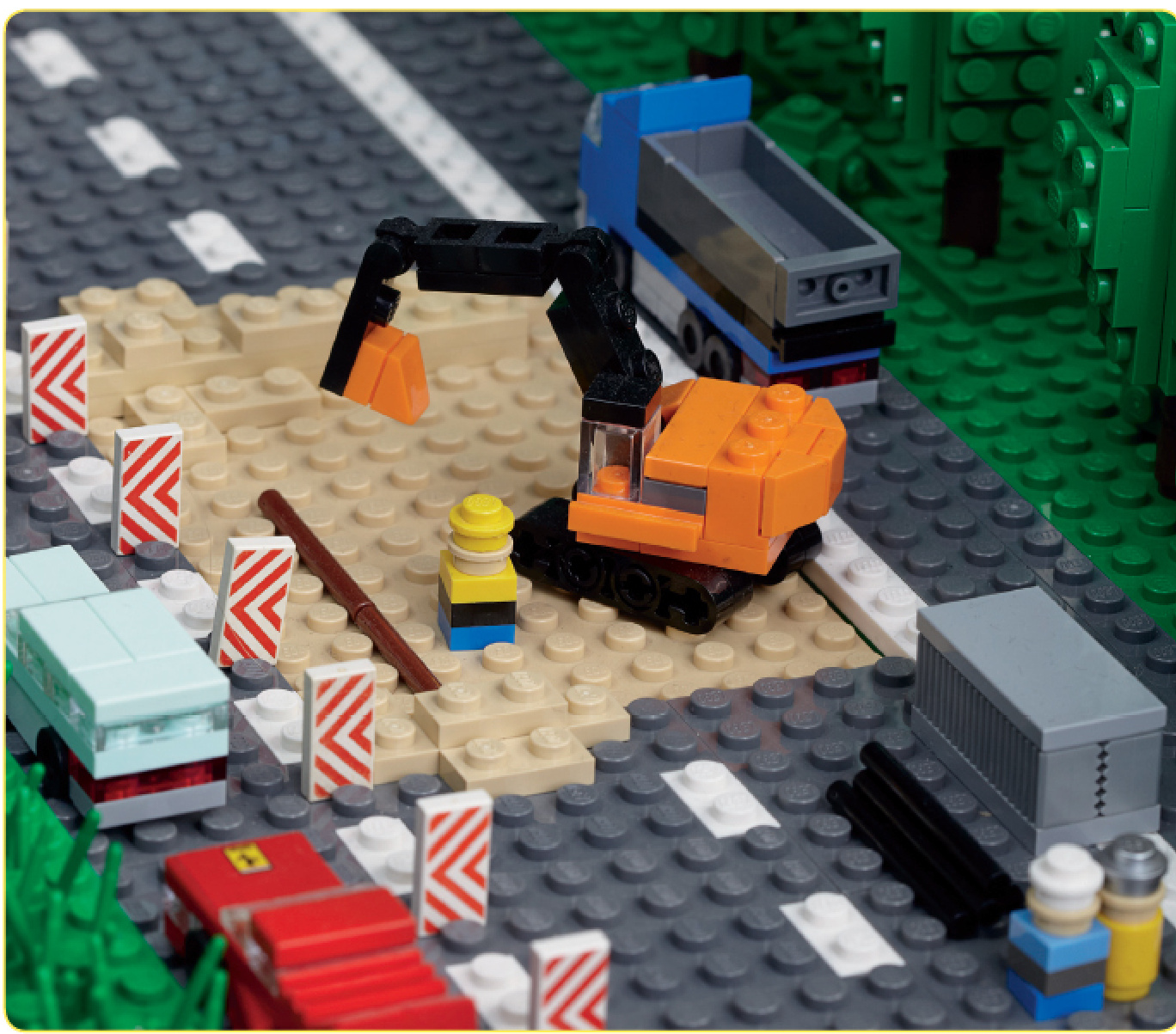
Of course the digger cannot be missing in our book!
SNOT stones are used to design the front. We are building the curves with cheese slopes.
The curbs show you another example for the SNOT technique: we simply stuck the signs between two studs, a technique that has often used in the past.
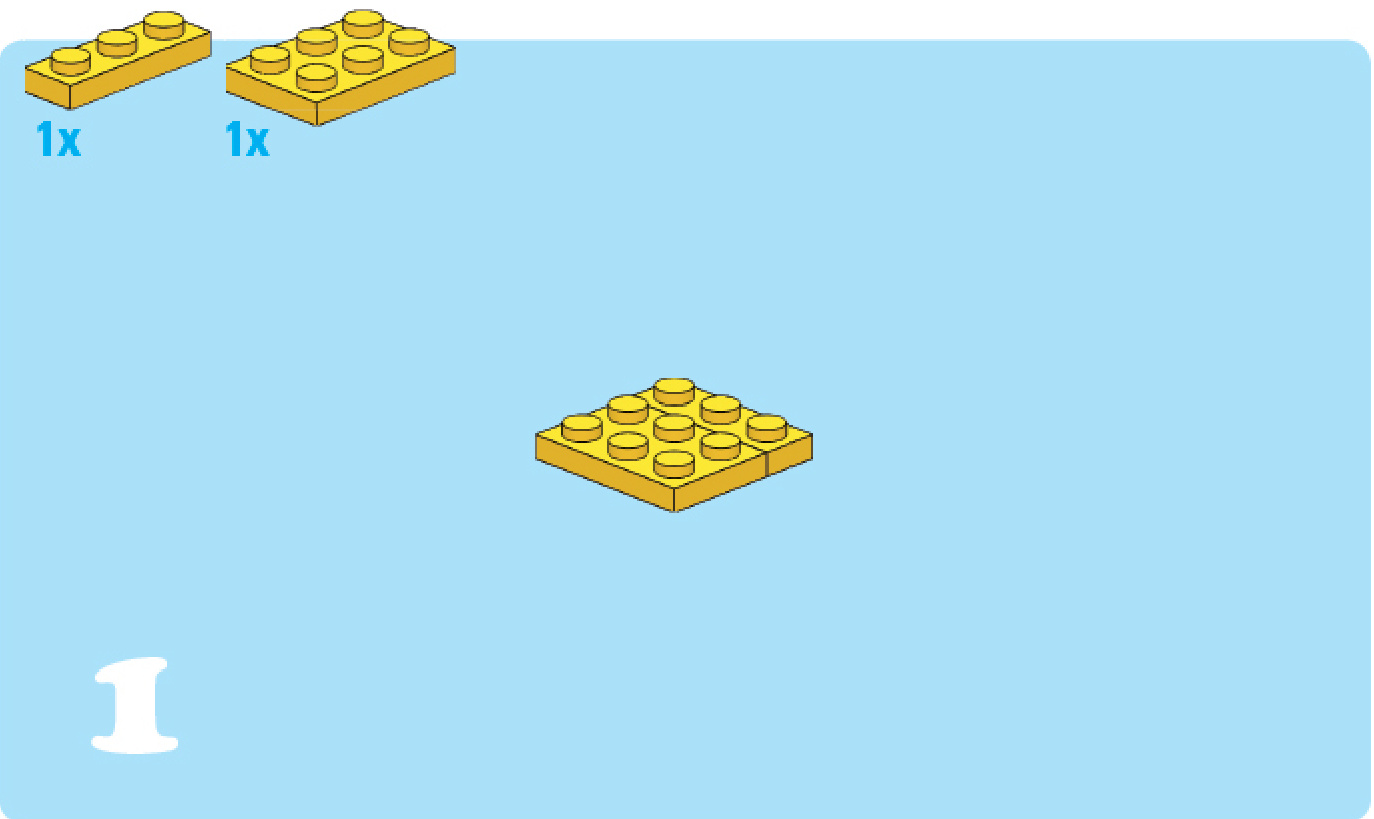

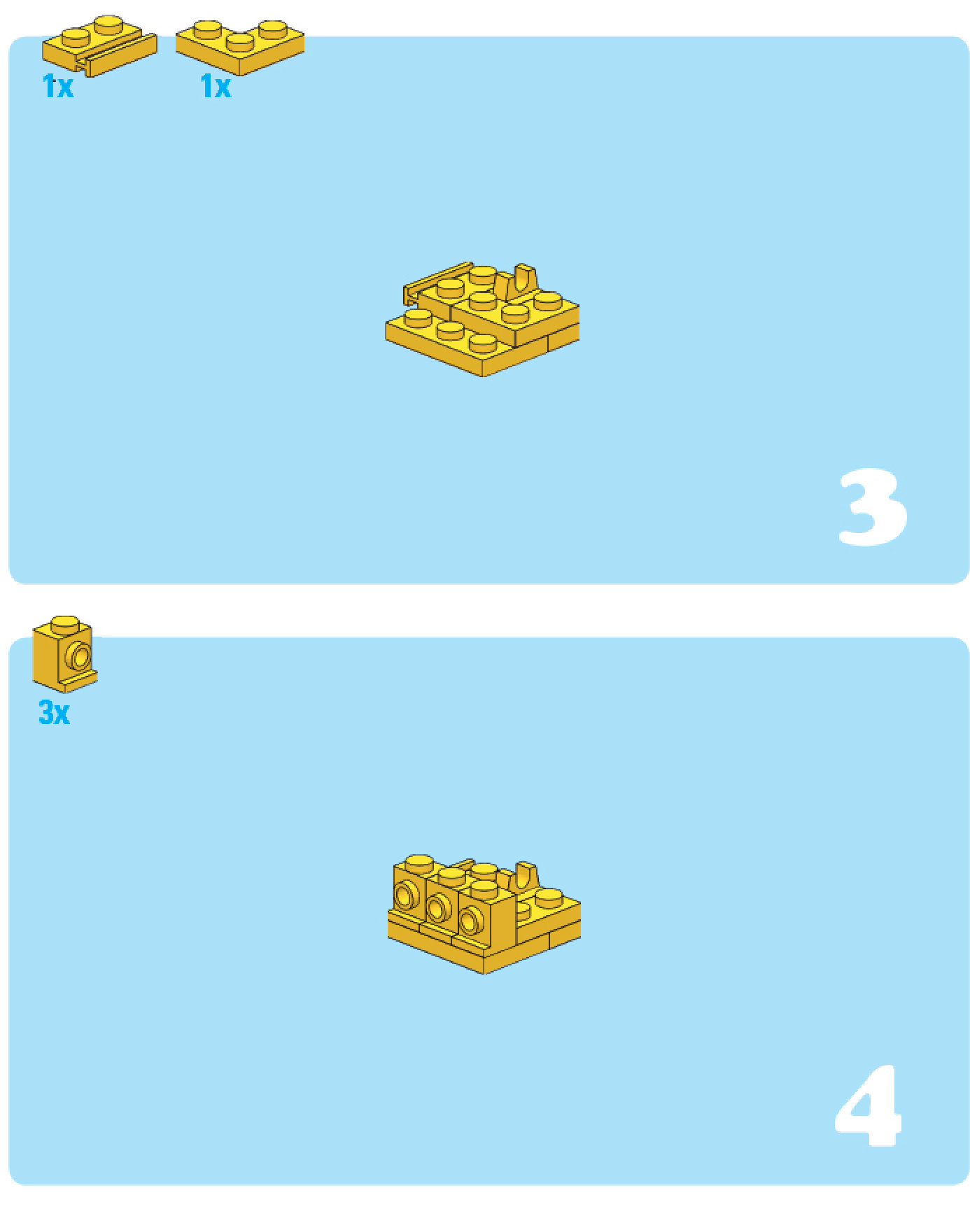
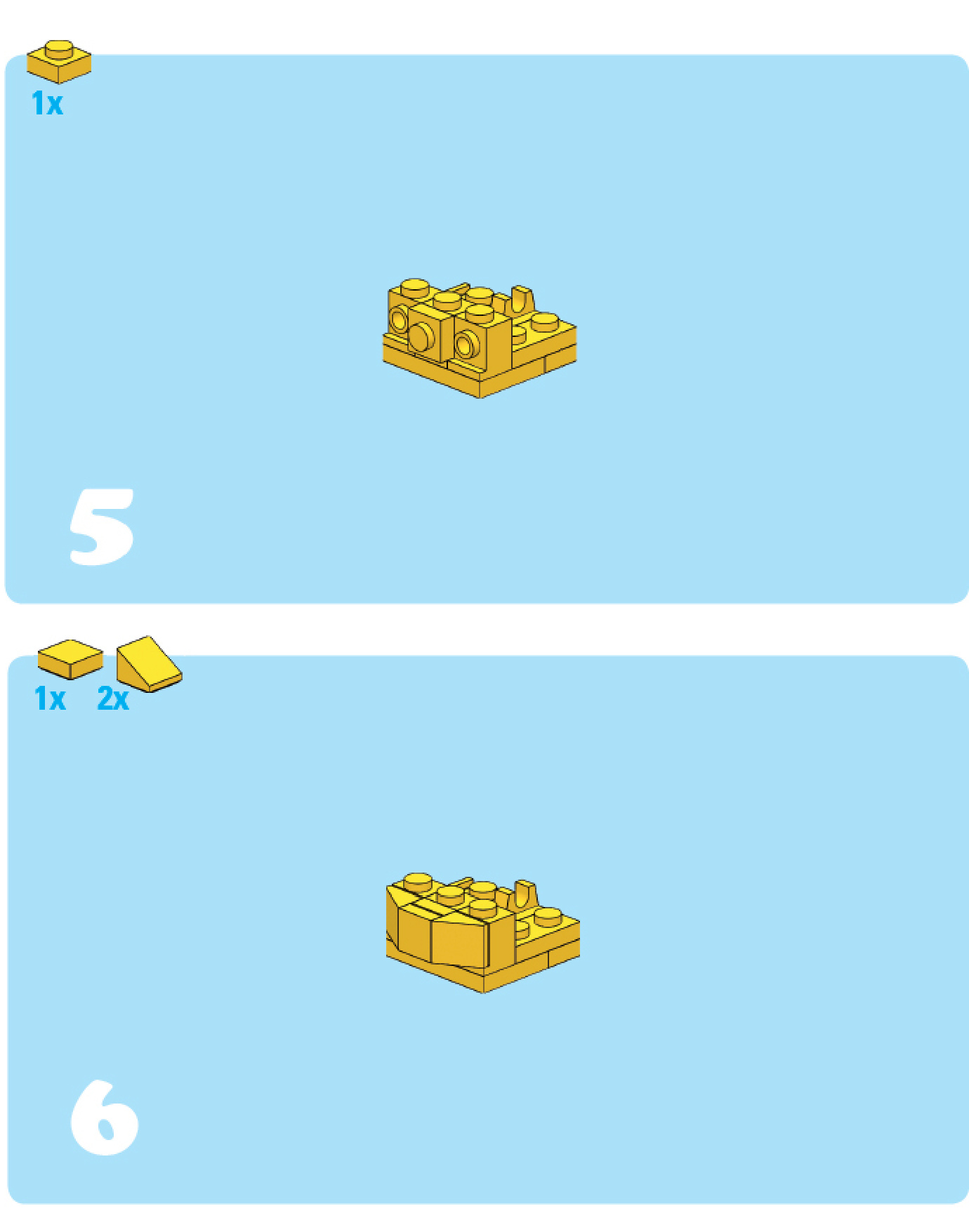
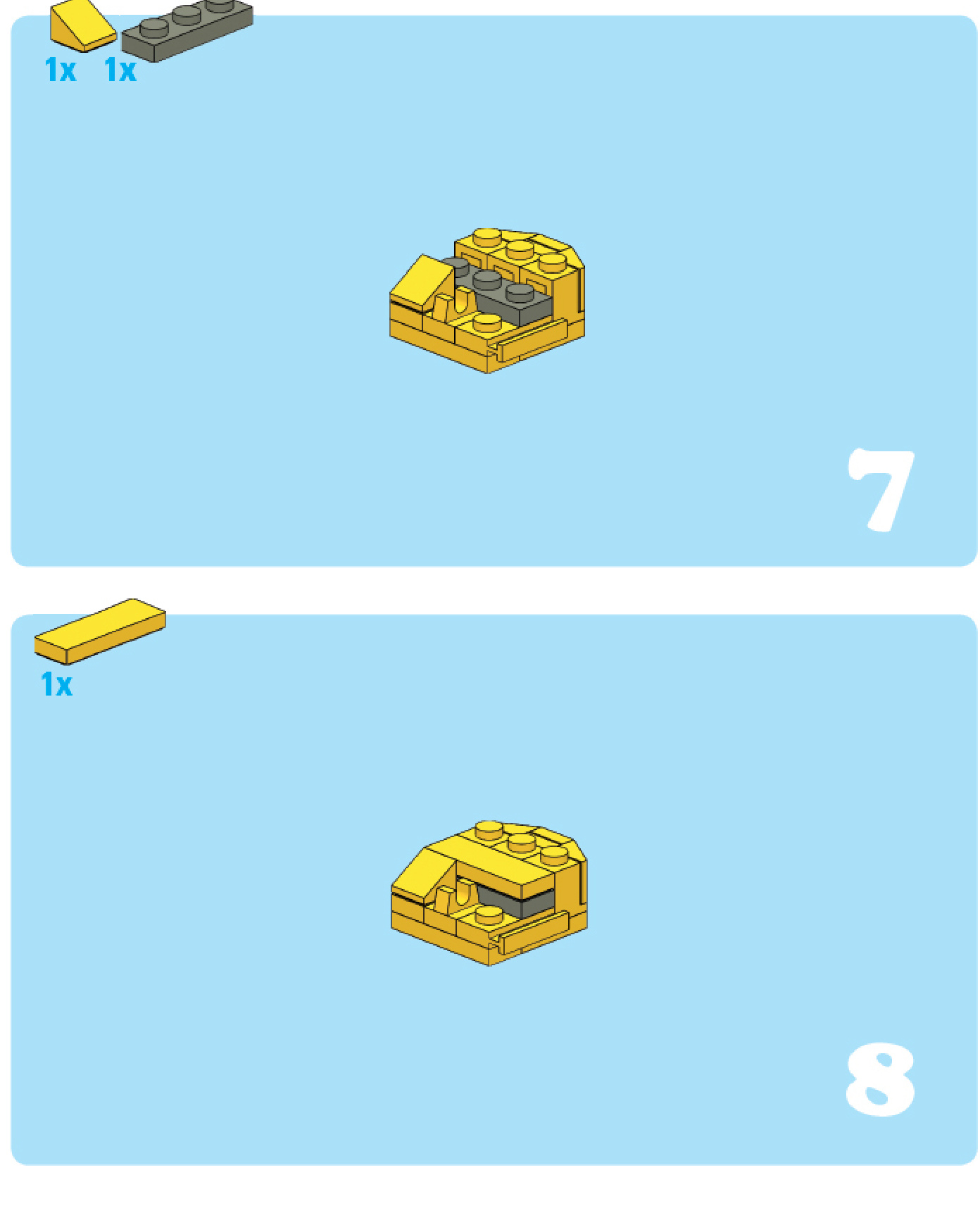
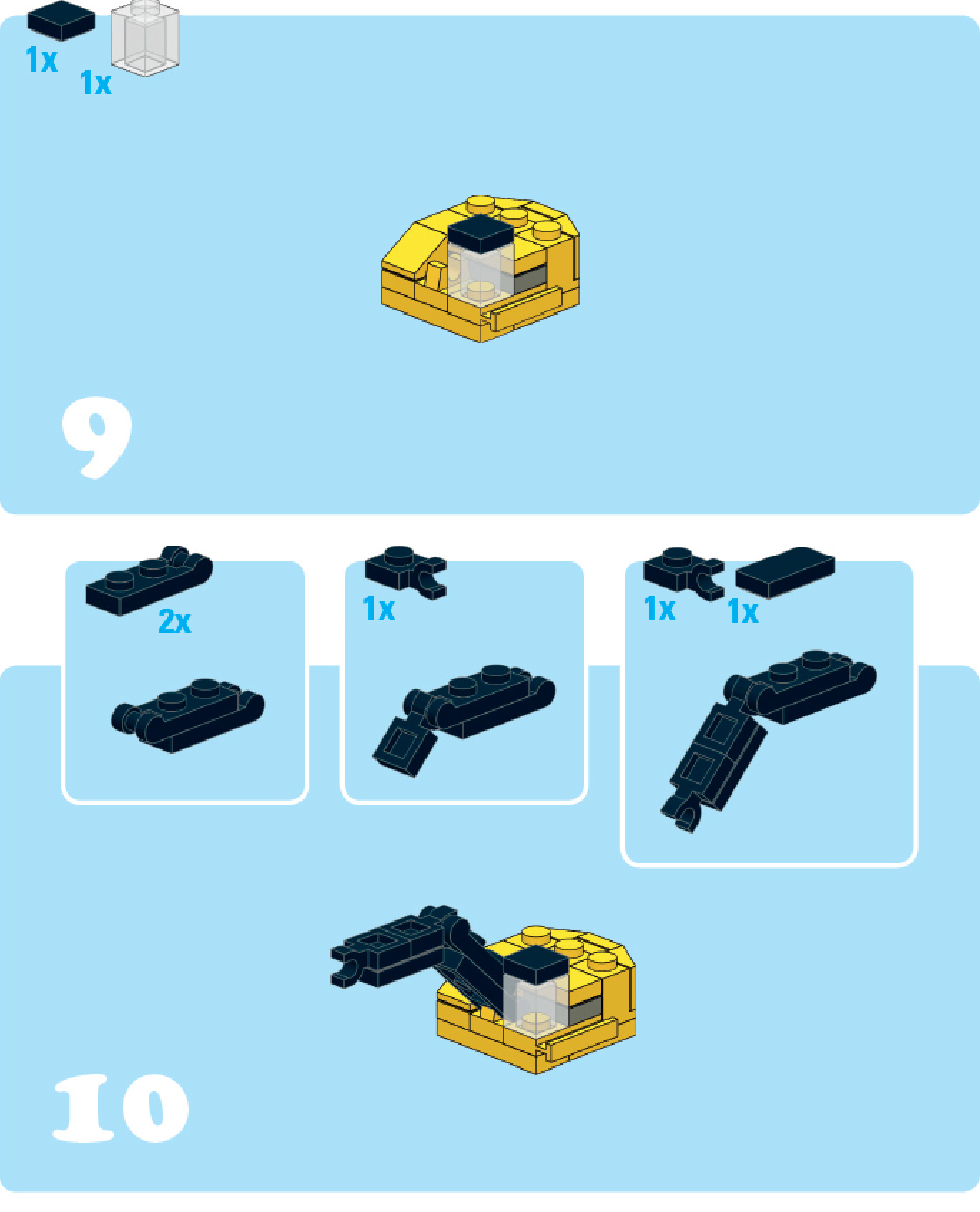
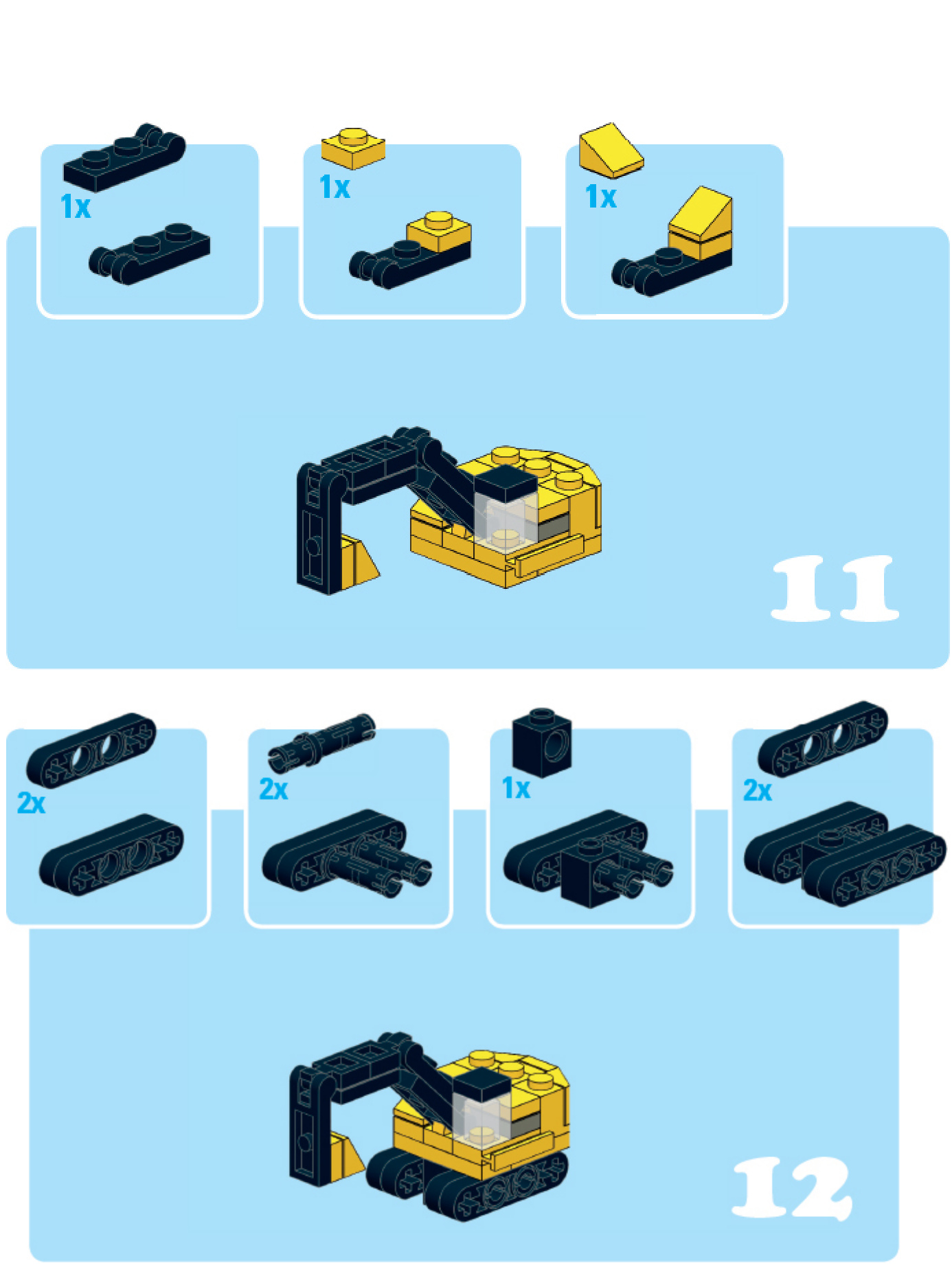
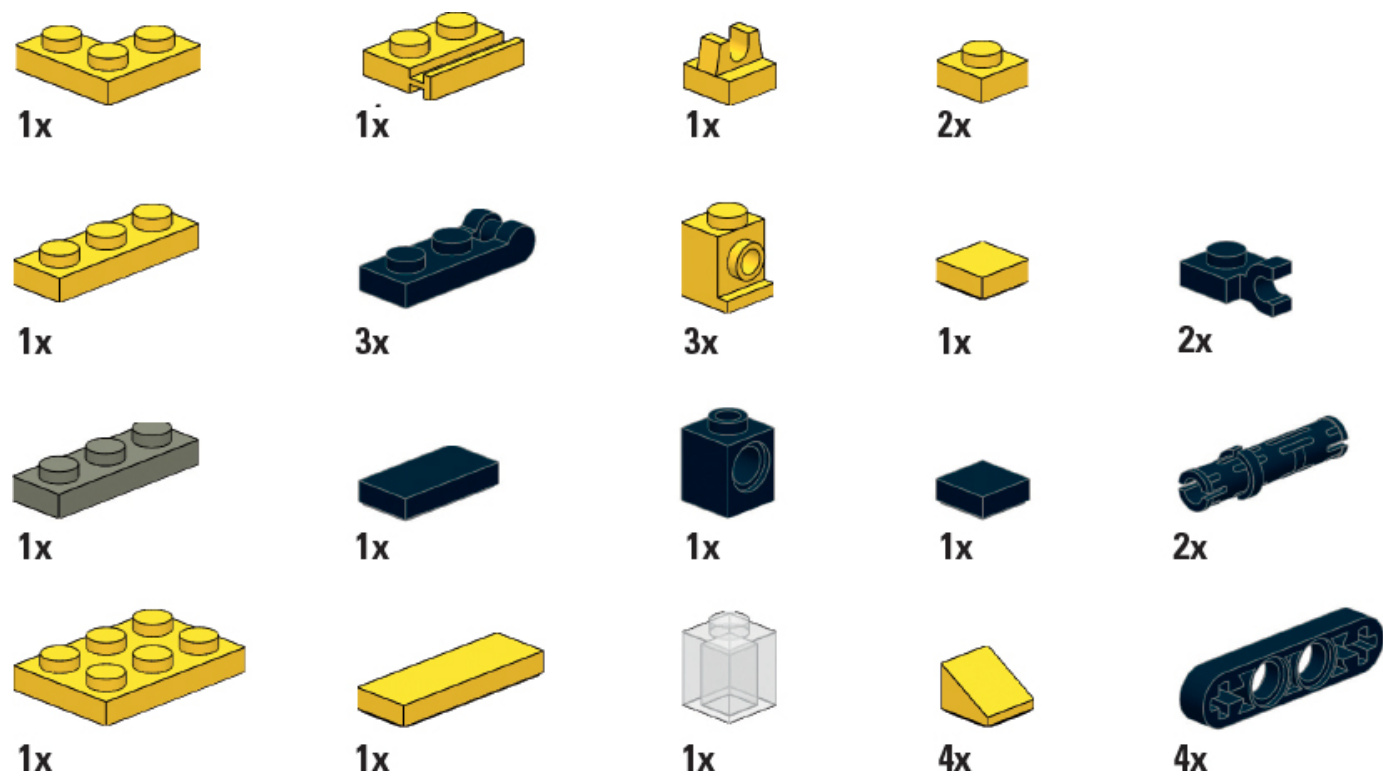
Parts List
Truck
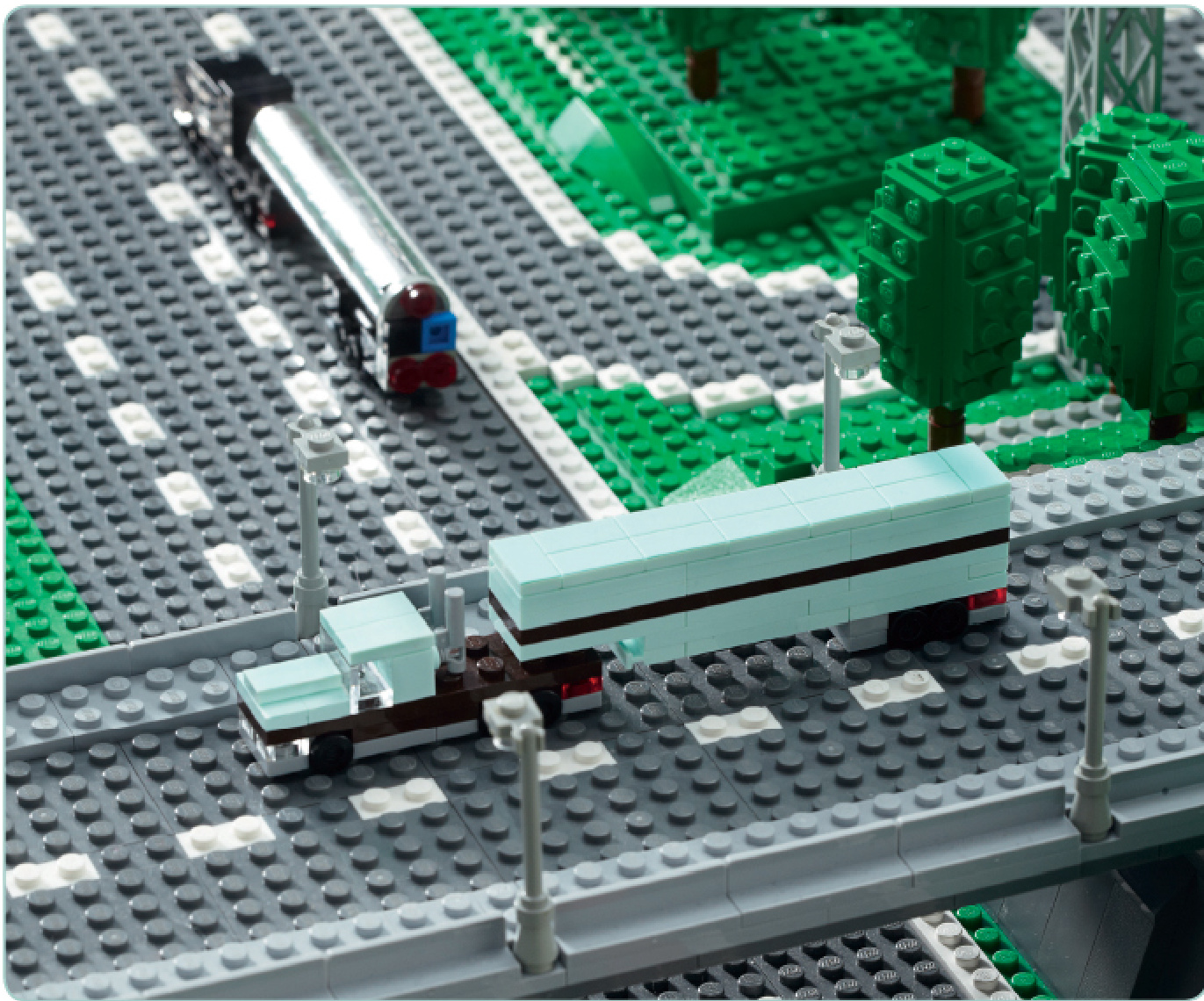
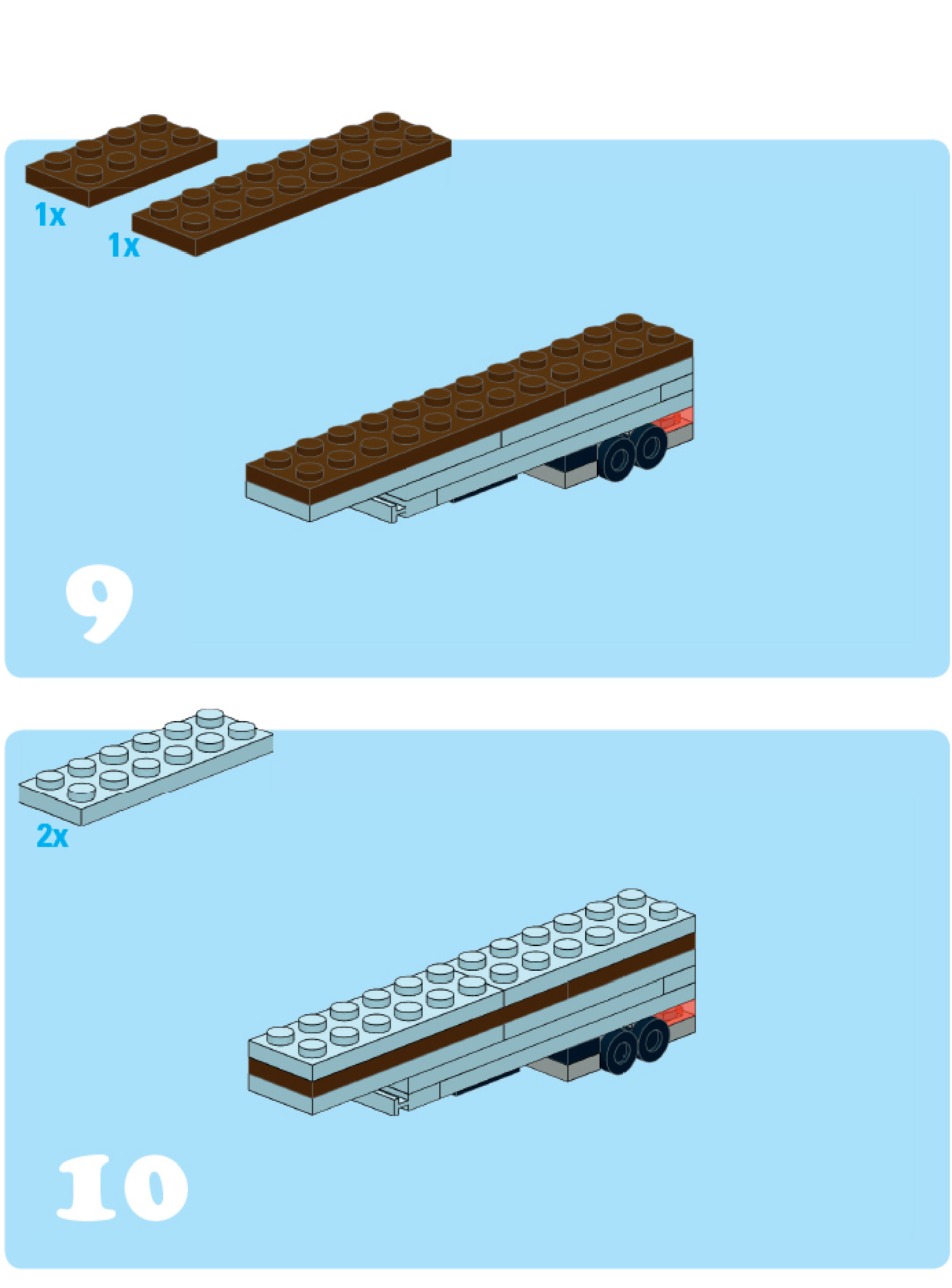
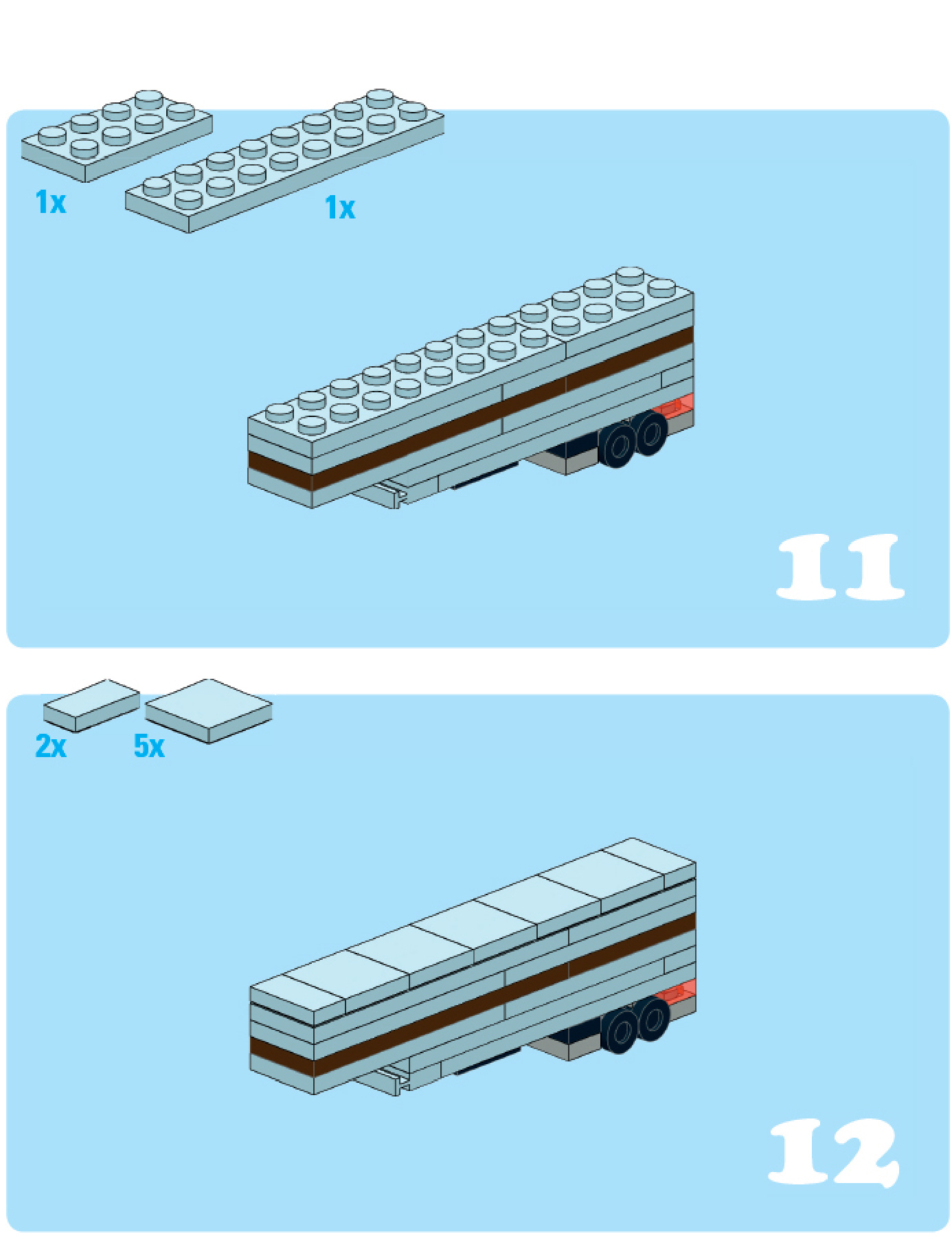
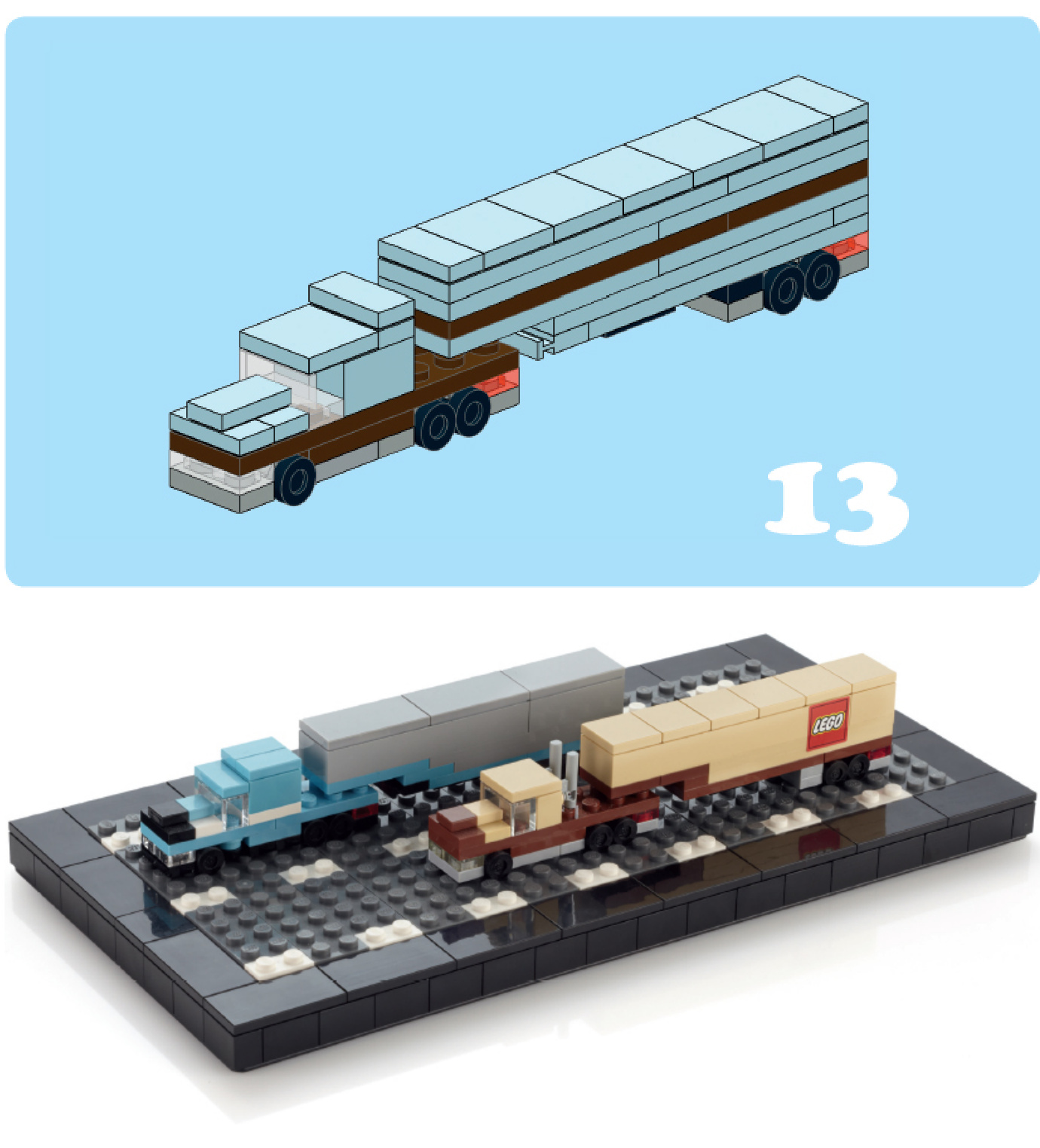
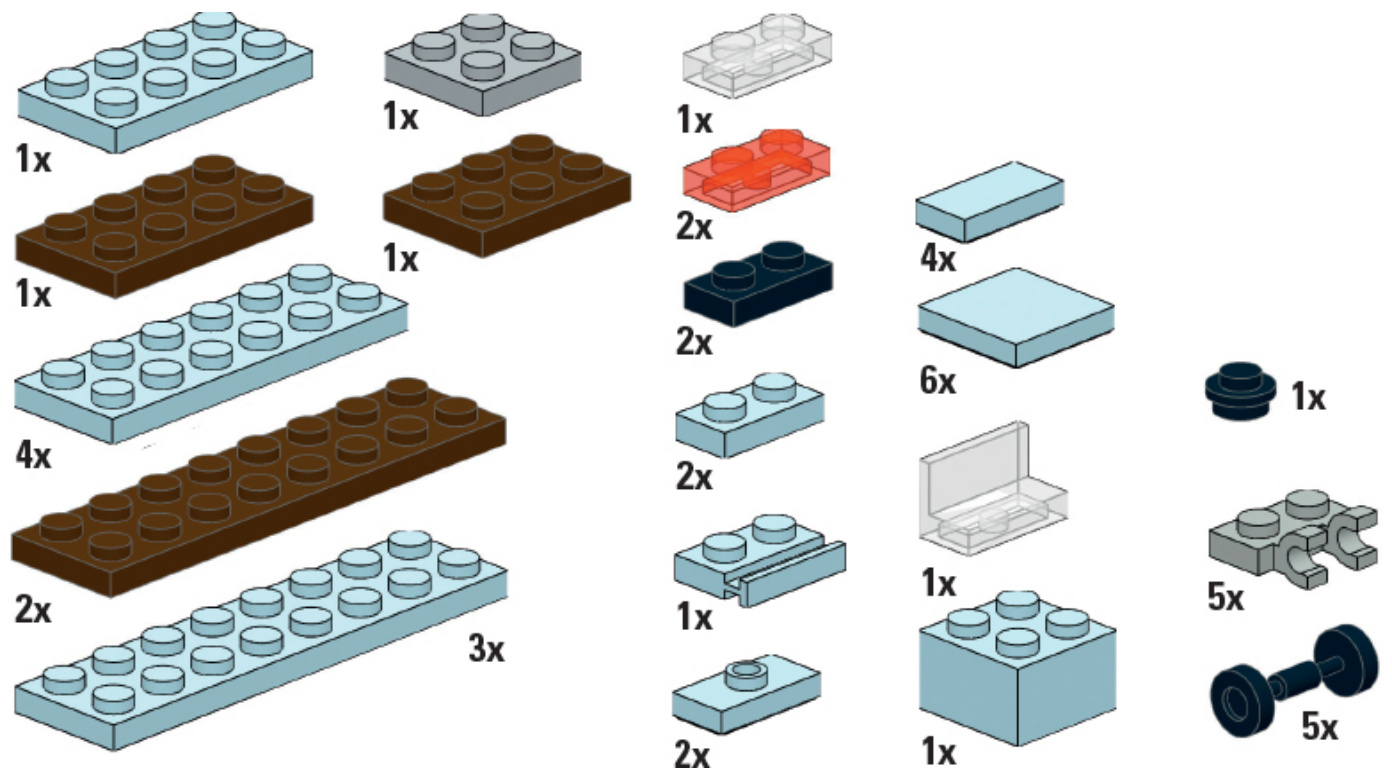
Large trucks should not be forgotten on highways. We show one possibility in the instructions, but the photo already shows a variation of the coachwork, exhaust pipes, paneling, etc. The use of different colors or different tiles for the trailer top results in totally different impressions. You can find some very different trucks in our book.
If your truck is supposed to have a connection to the street, simply attach an extra round plate on its underside.
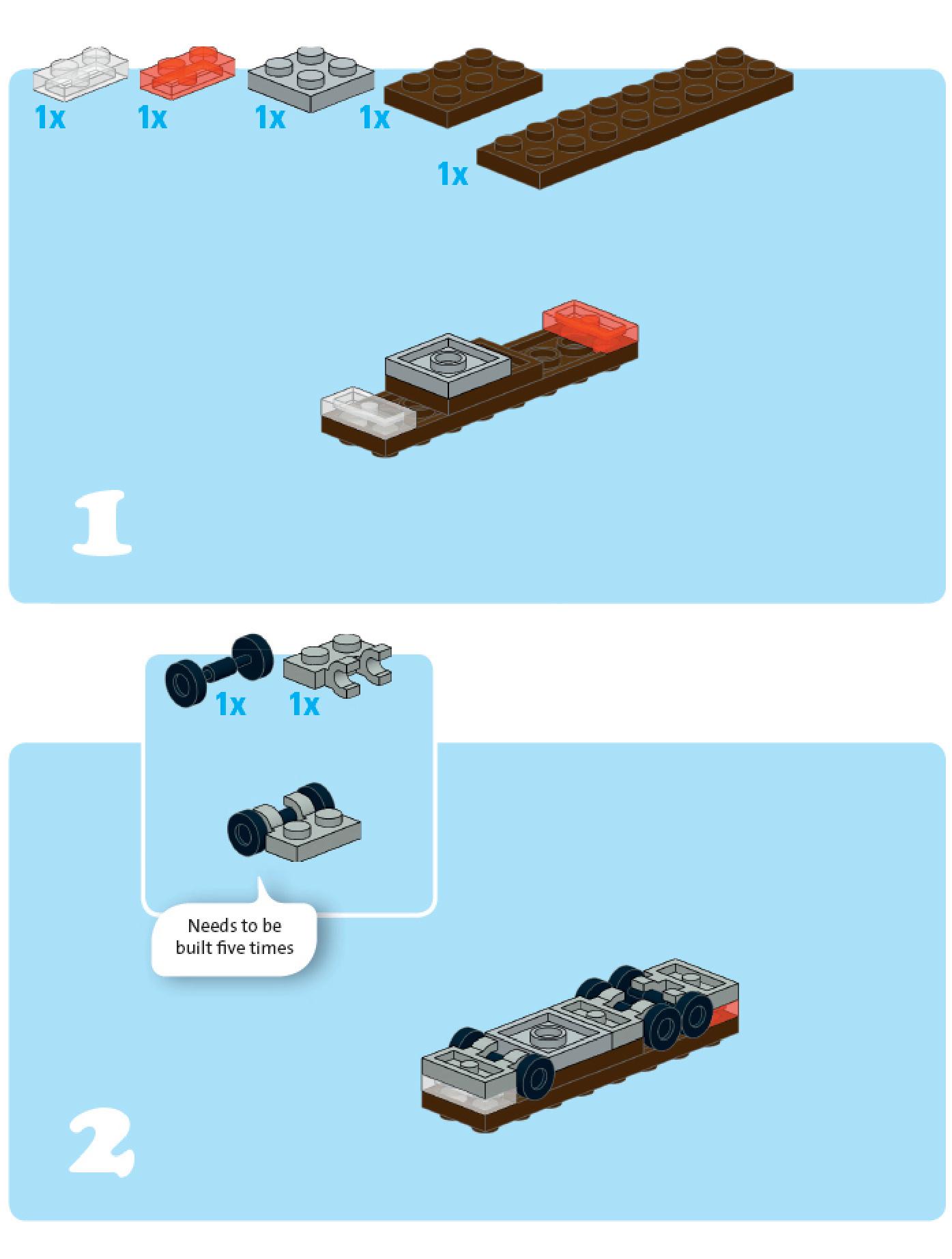
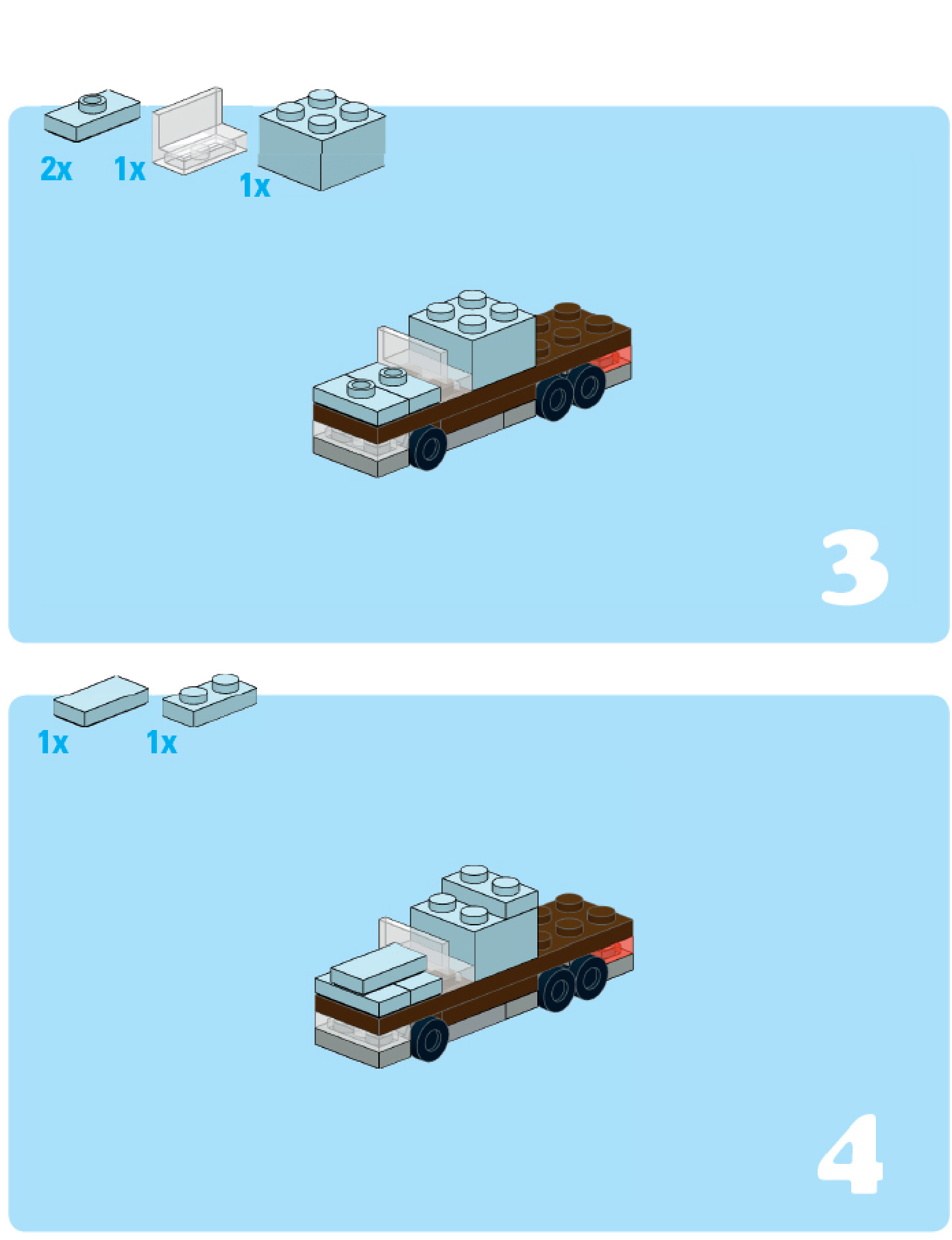
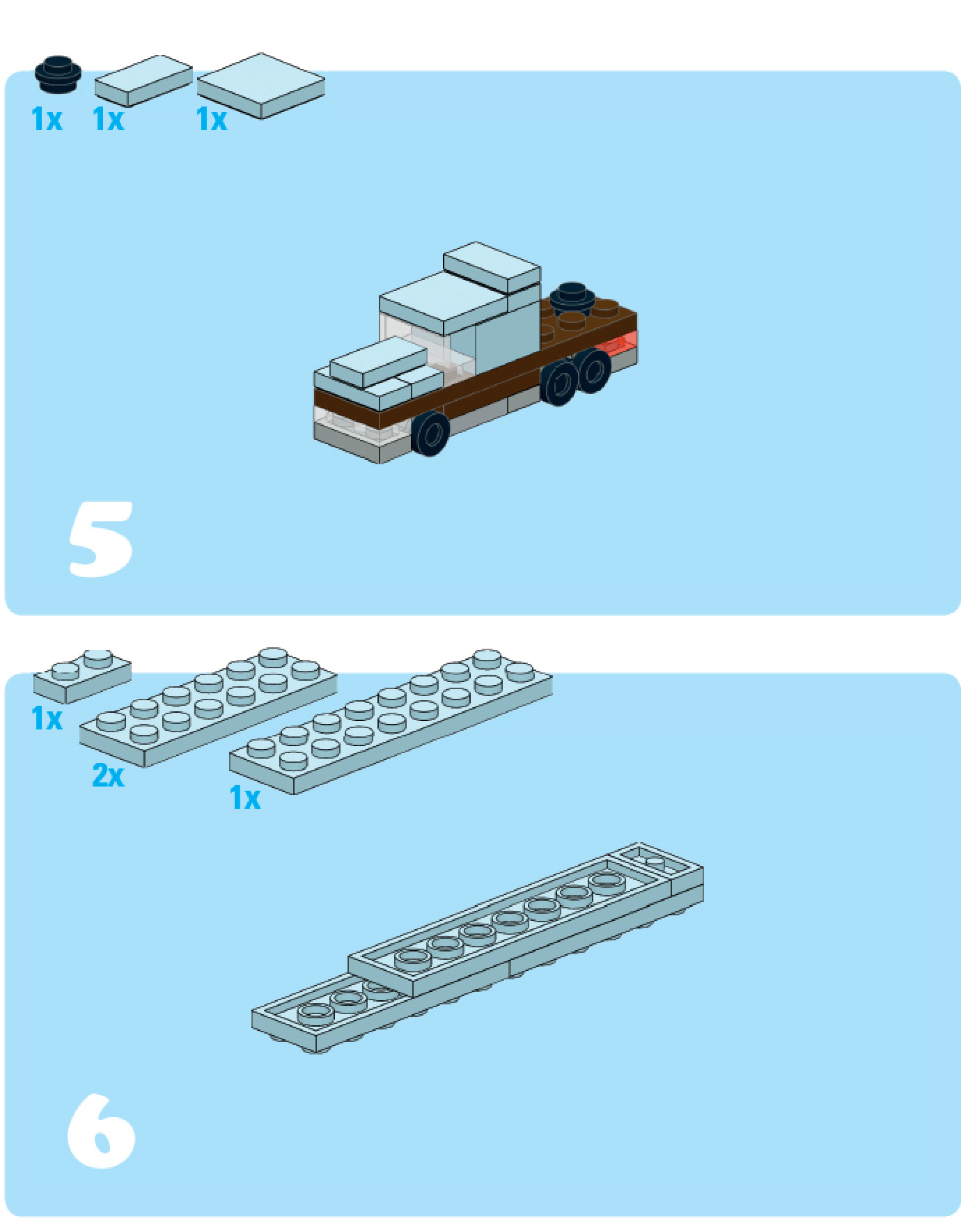
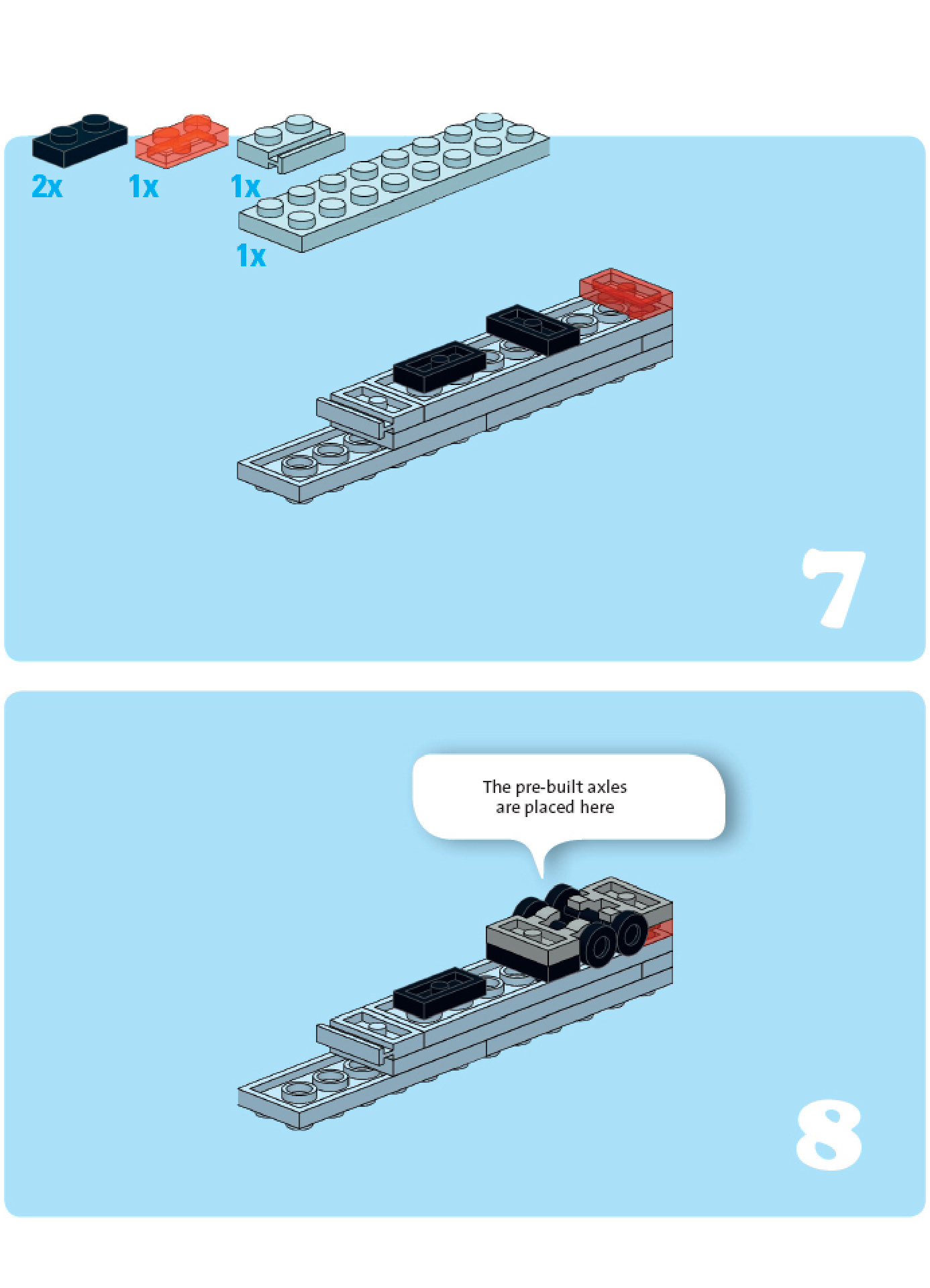
Parts List
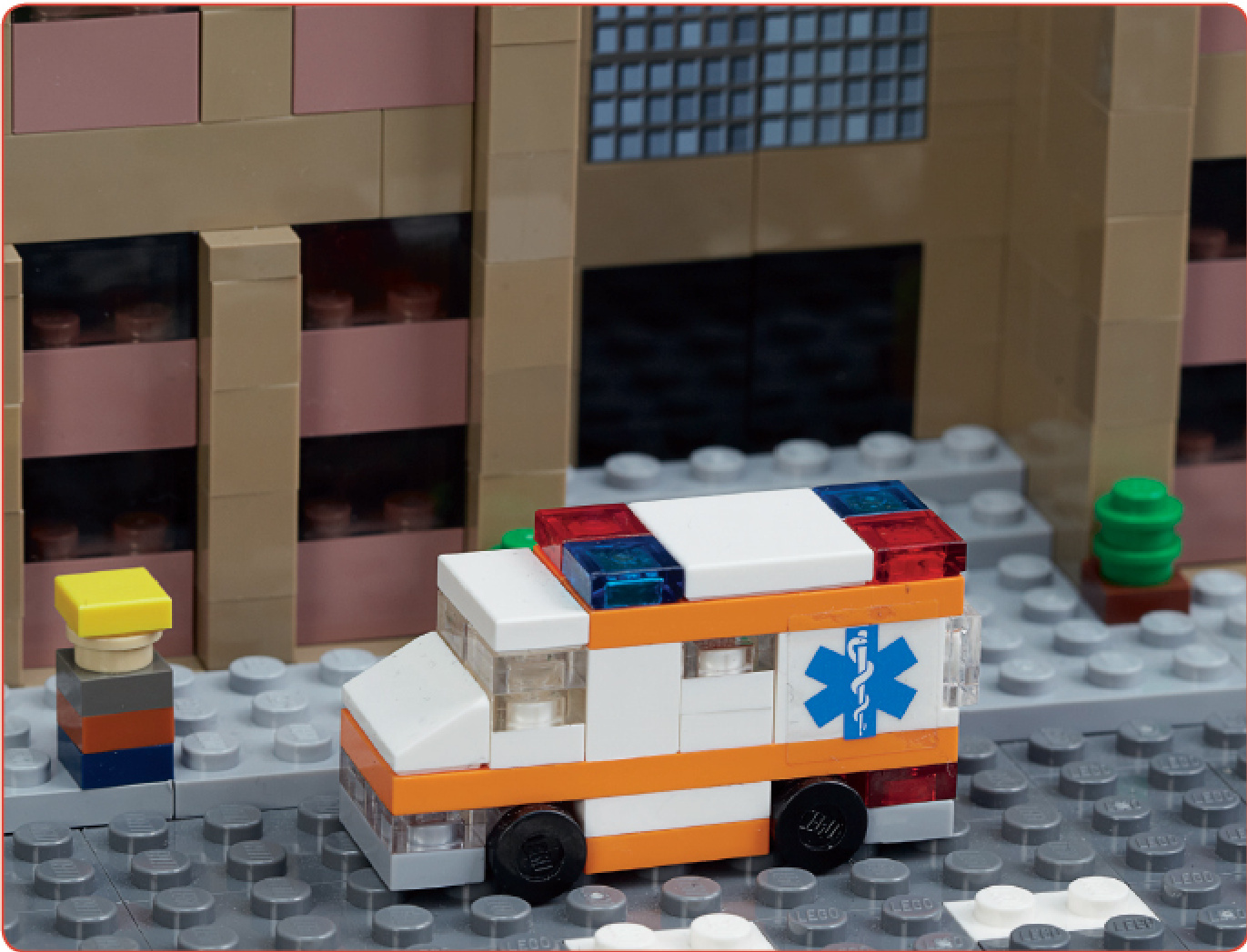
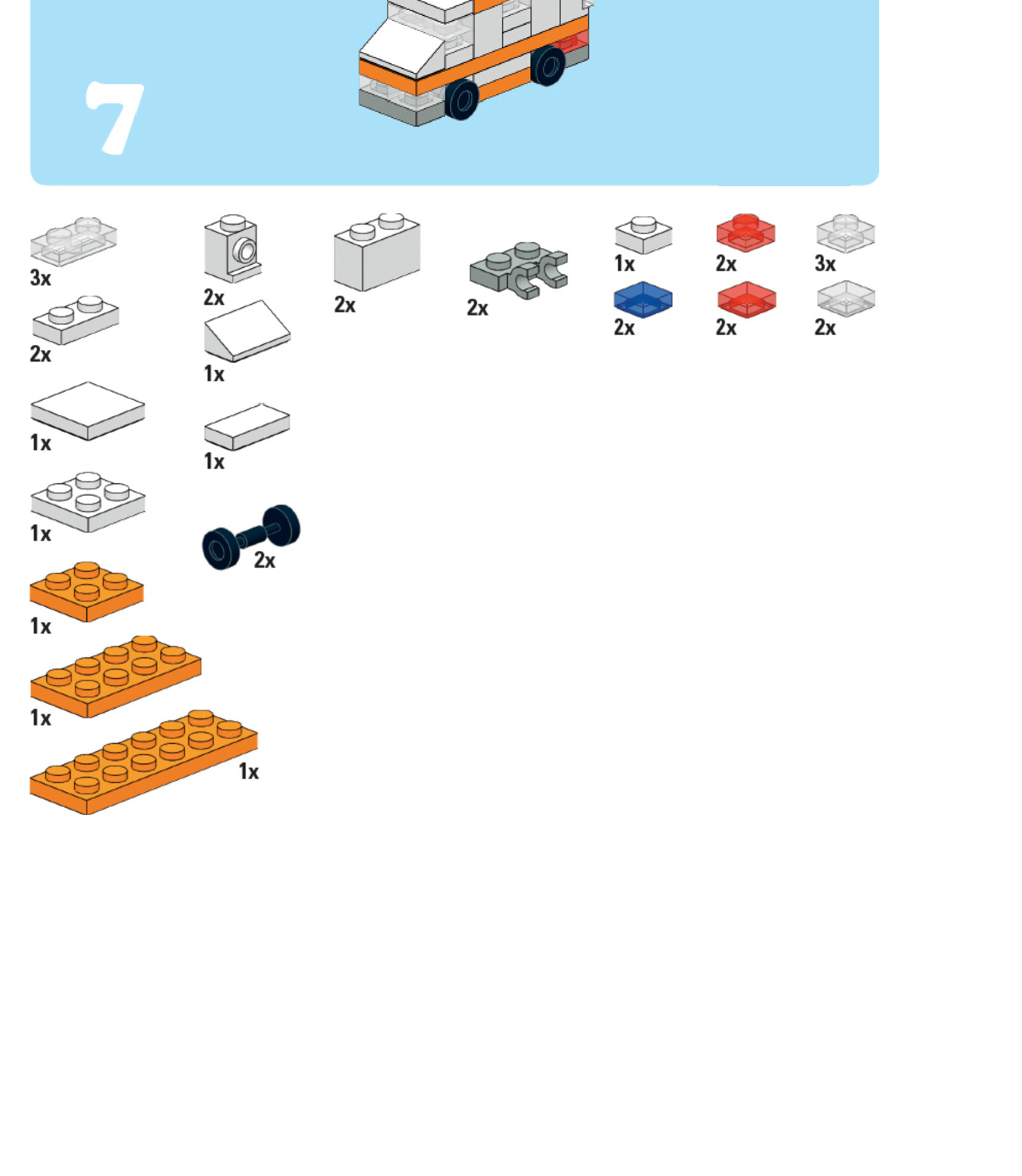
Ambulance
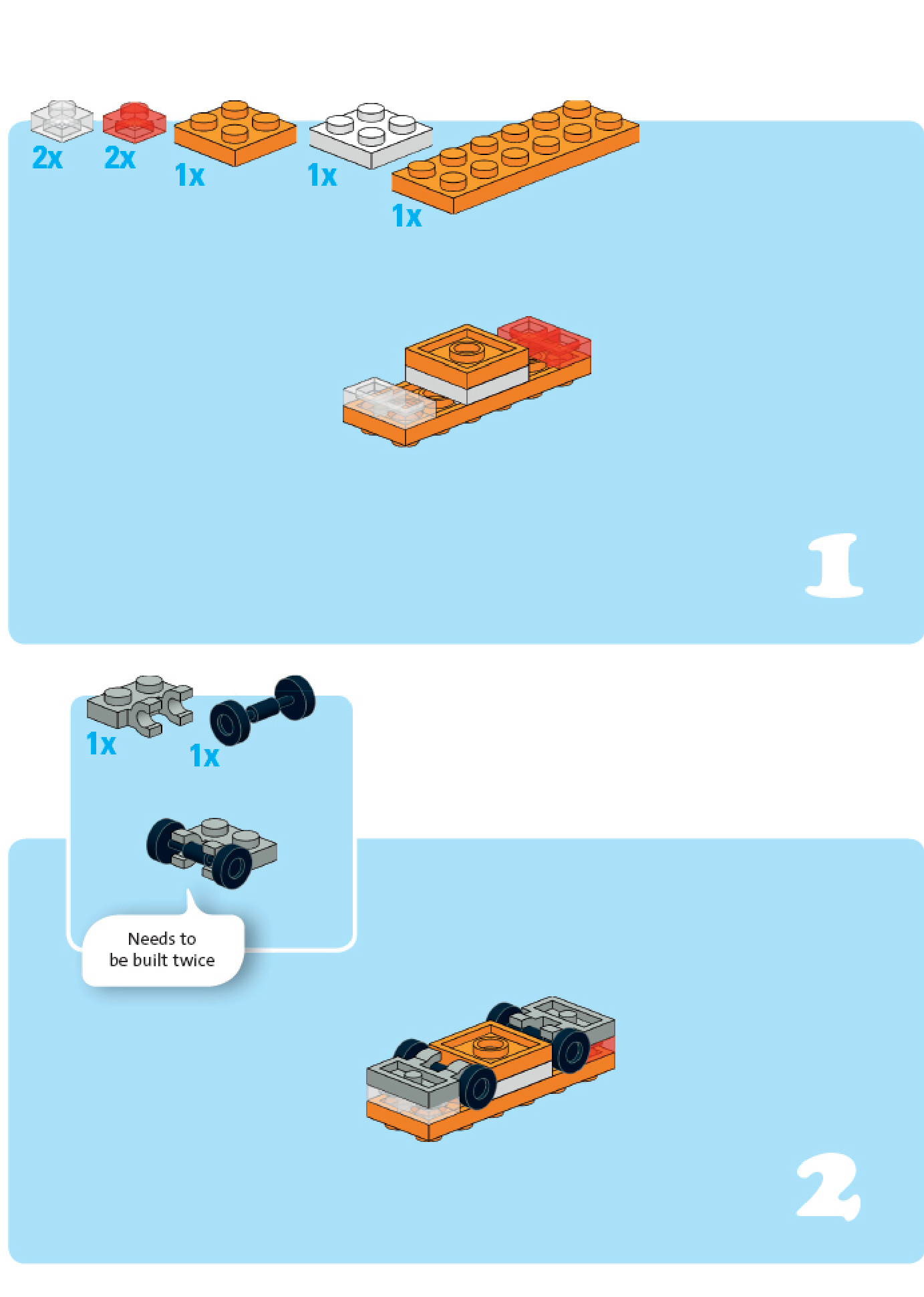
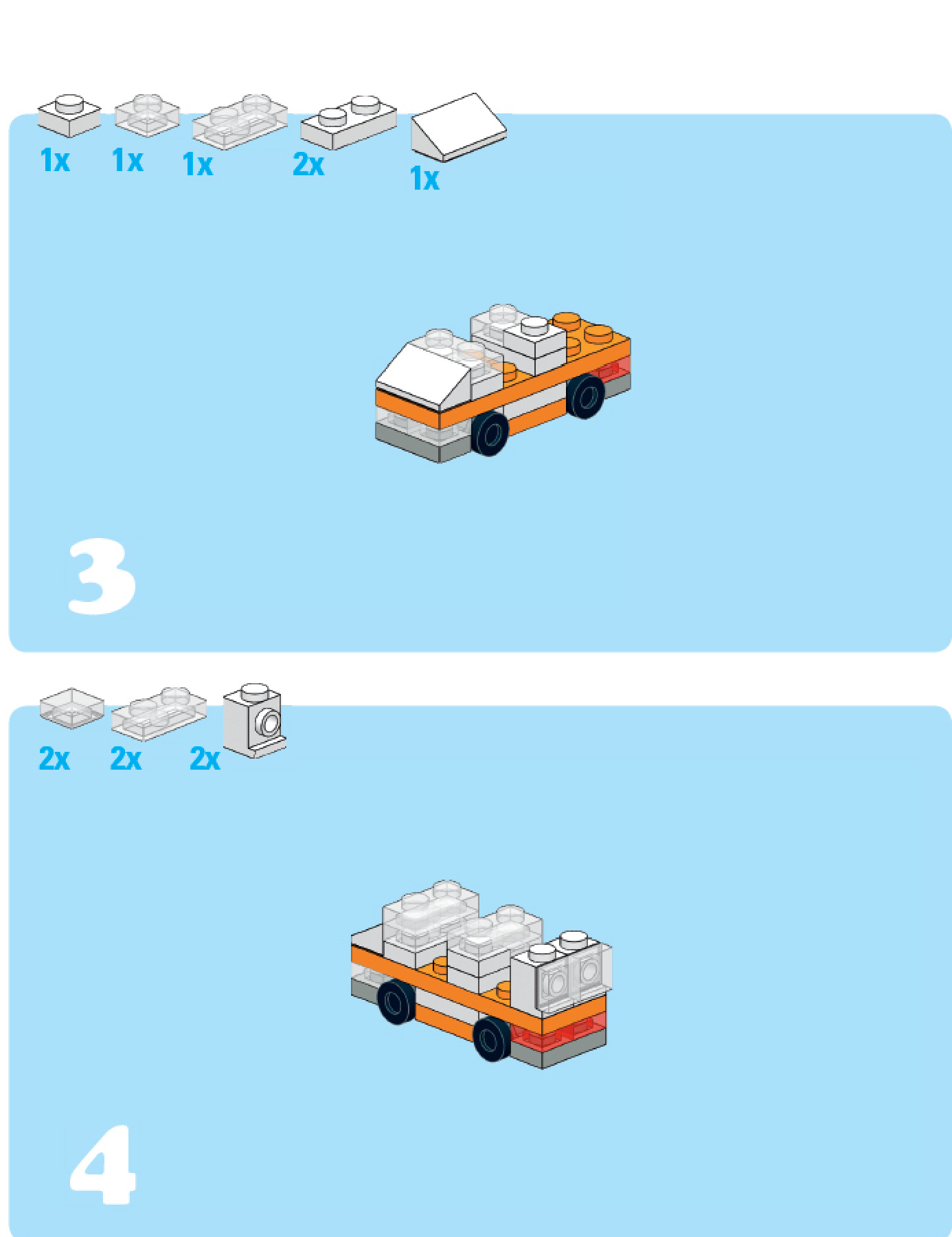
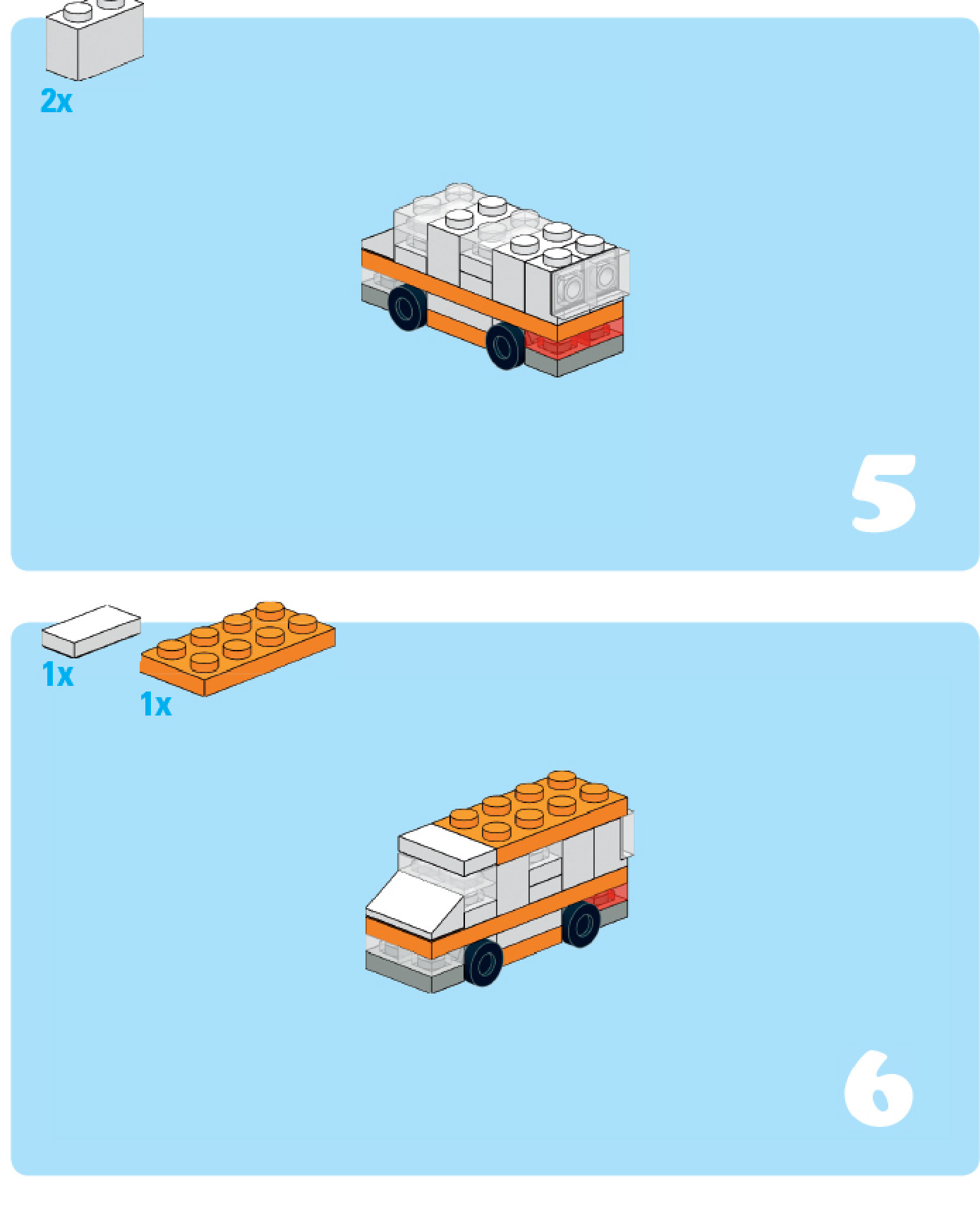
Some typical company vehicles are vans - for example ambulances, fire engines, delivery vans, mail vans, etc. We show you the construction of an ambulance; you can also find a camper and a mail van in the book.
In the construction instruction, we show the ambulance without stickers, but we think that it looks even better with a fitting sticker. A red cross or some medical symbol would also be an option.
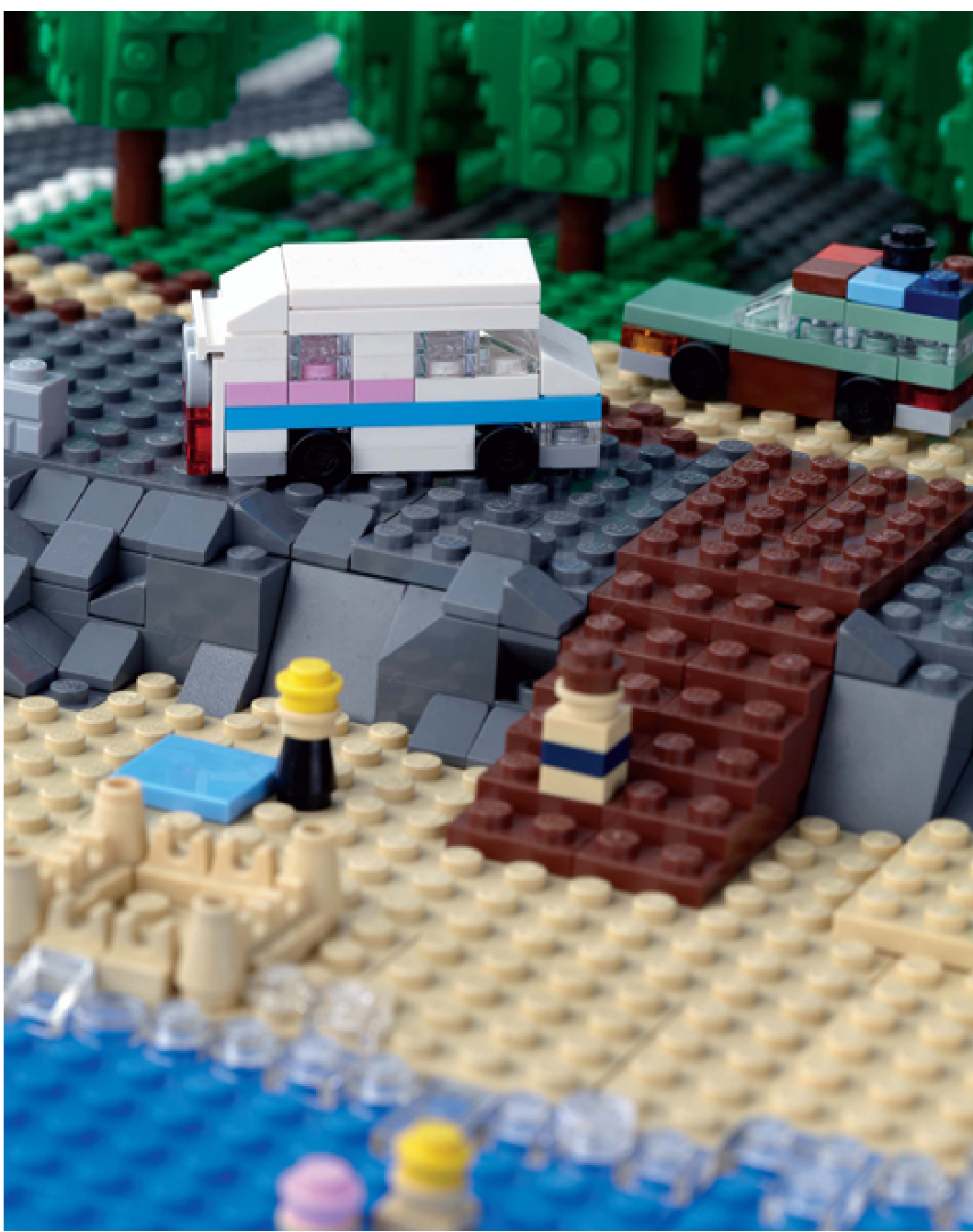
The house in the background changes its purpose, depending on which vehicle is parked in front of it - it can be a hospital, but also an office building or a hotel. We used 2x2 bricks printed on the side for the staircase window.
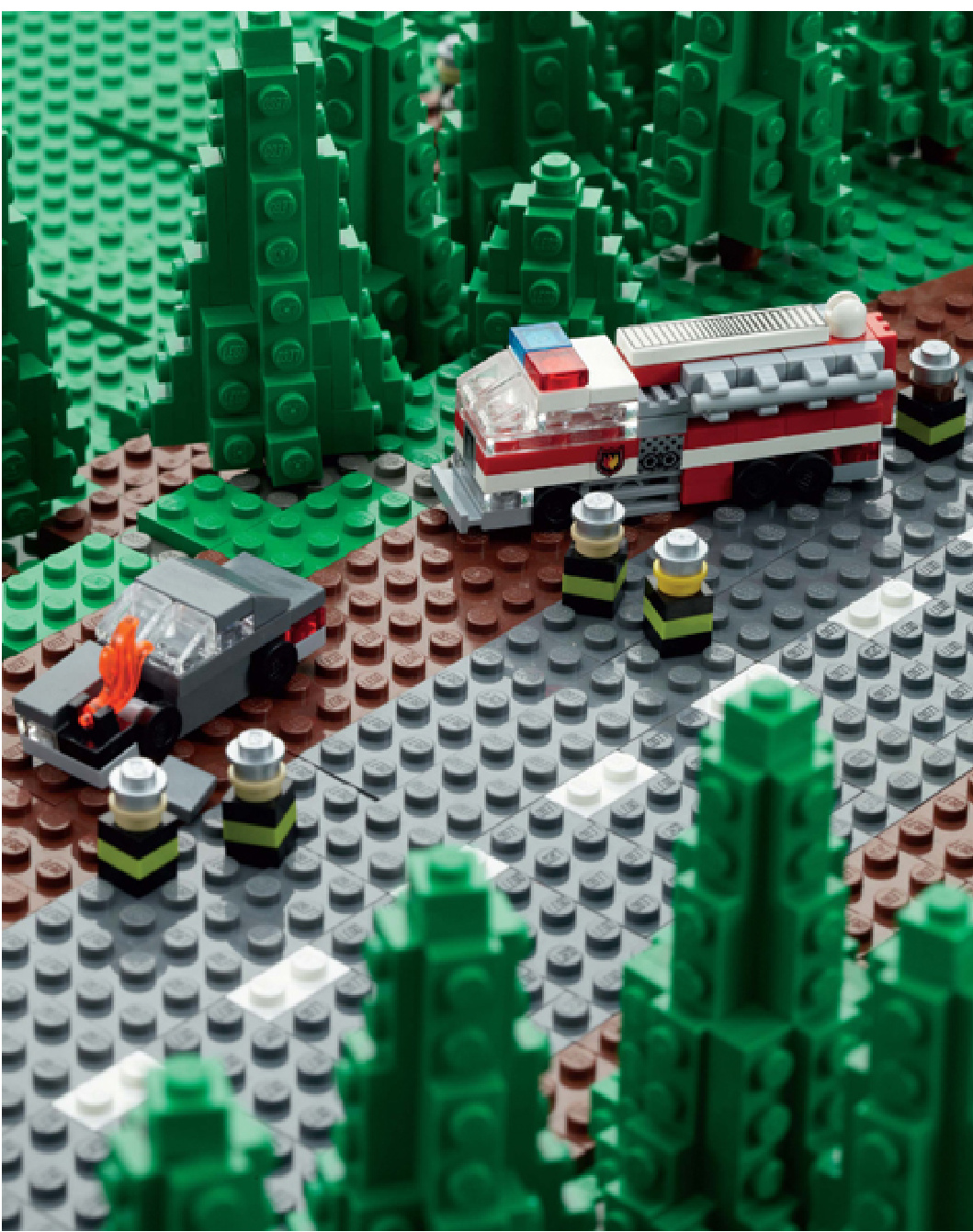
Fire Truck
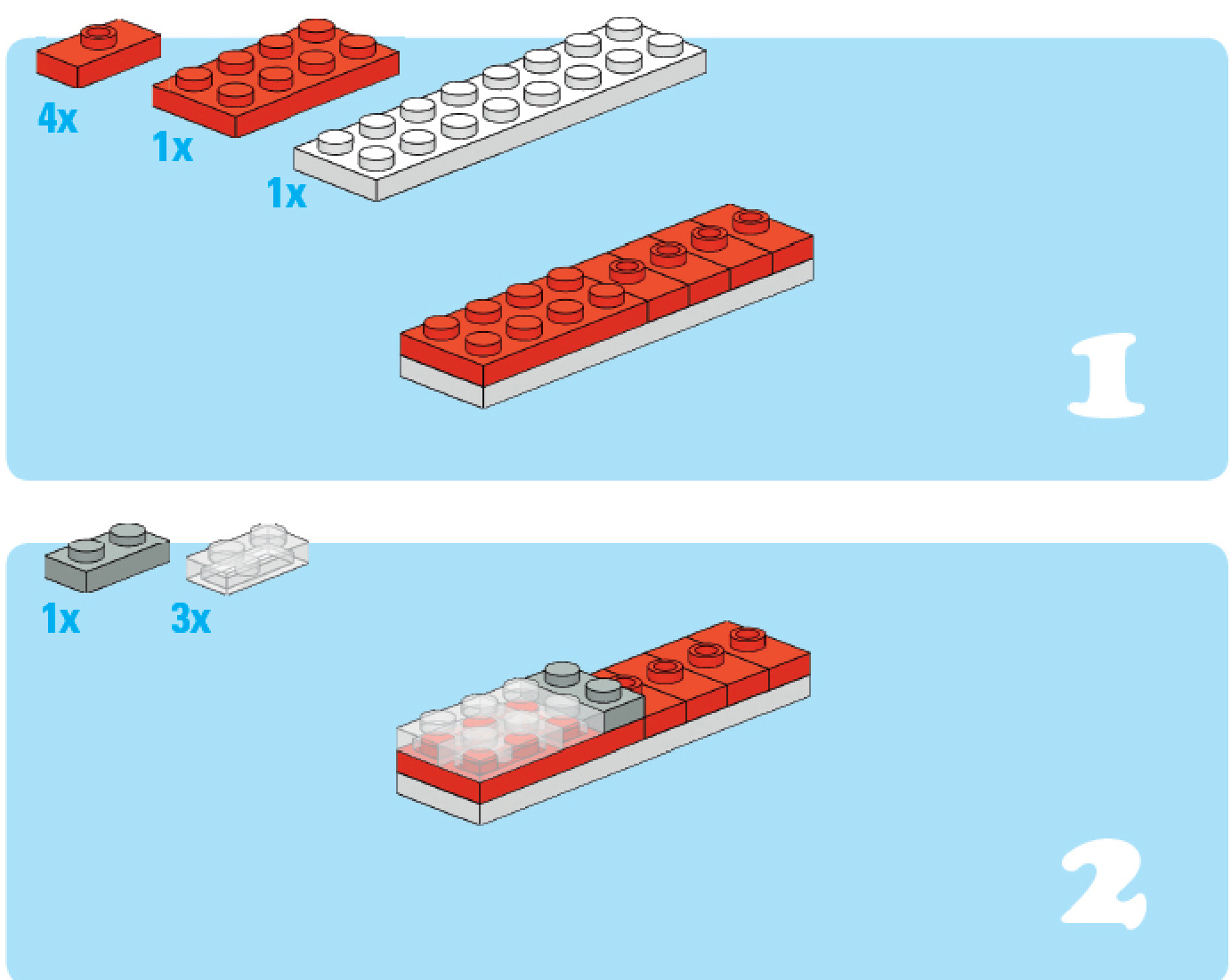
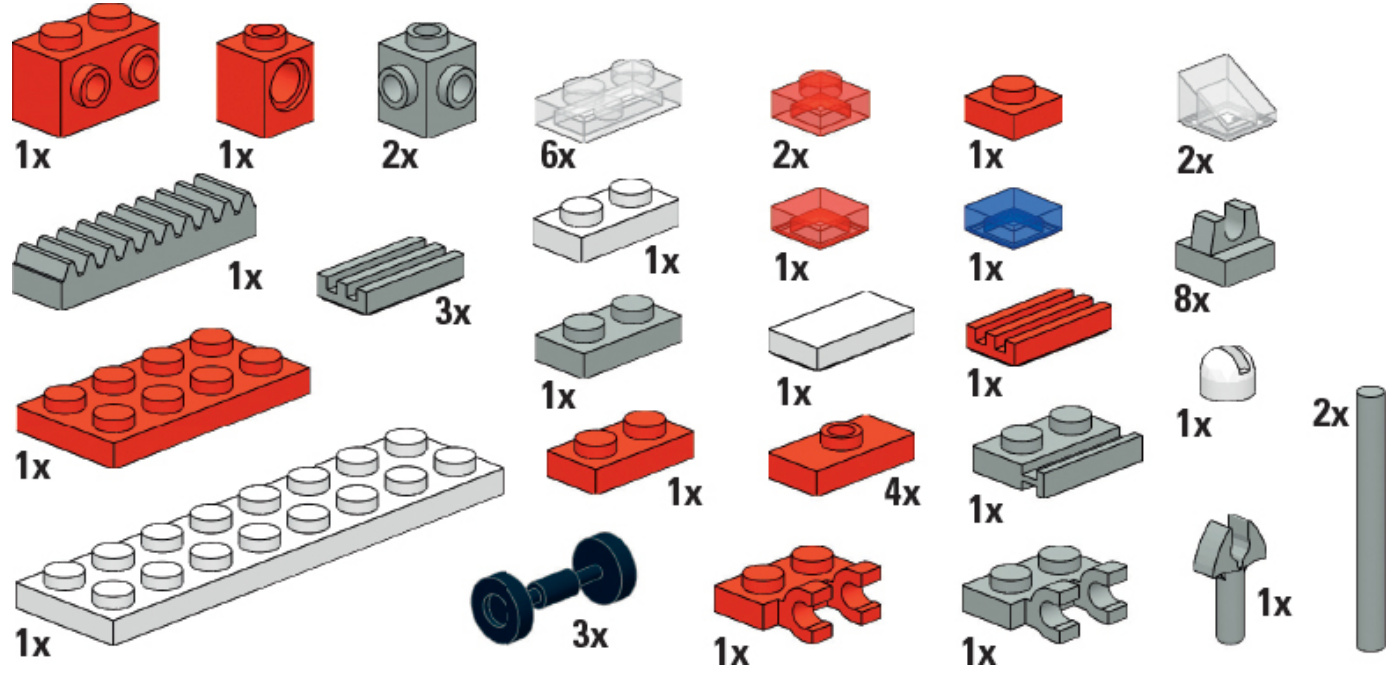
Small details beautify your models: We used a printed 1x4 tile as a ladder and a sticker decorates the driver cabin. Silver round plates are well suited to be helmets for the firefighters. We found a flame for the car accident that licks out of the engine now. Because of the design of our cars, the hood can be tilted forward.
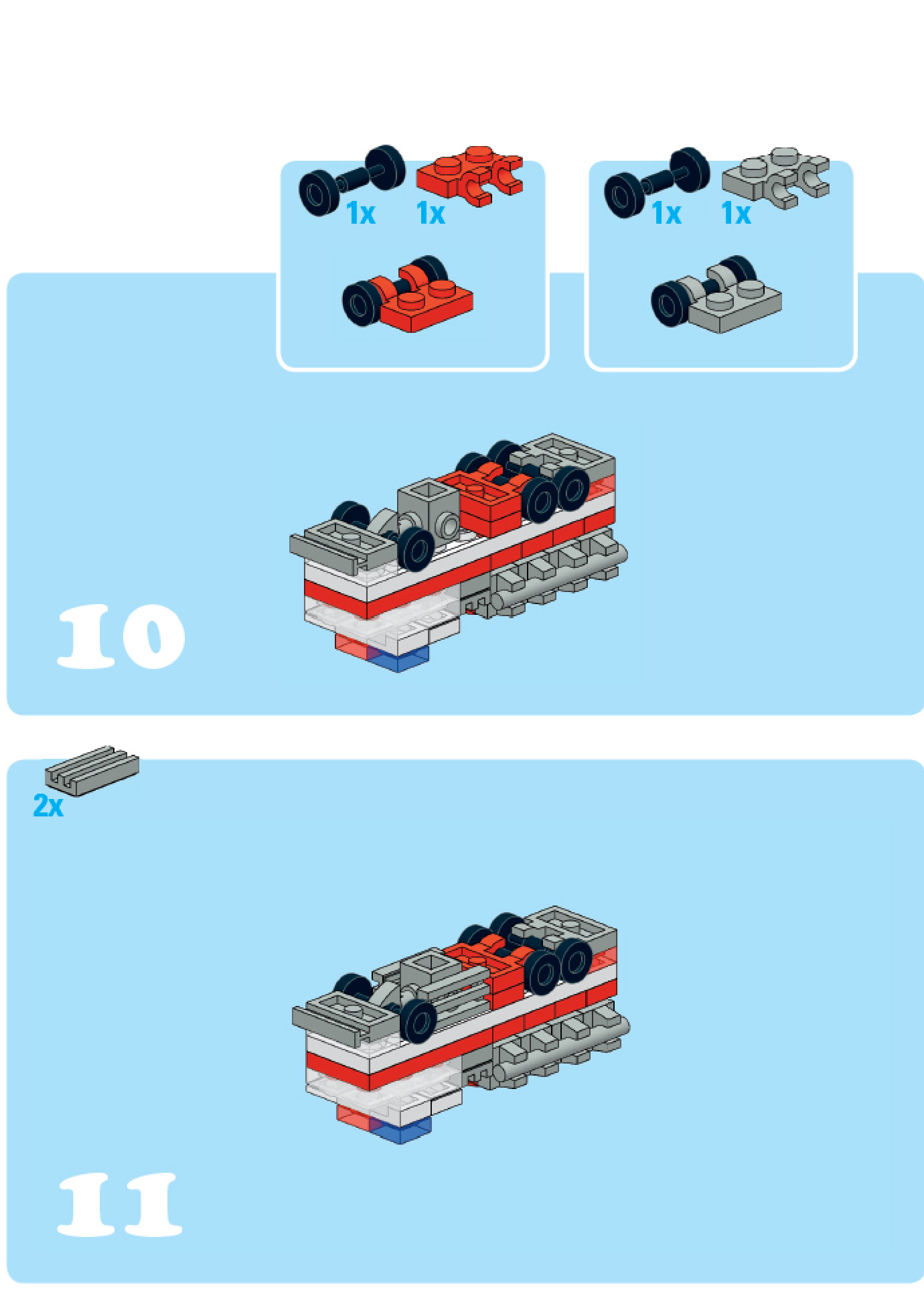
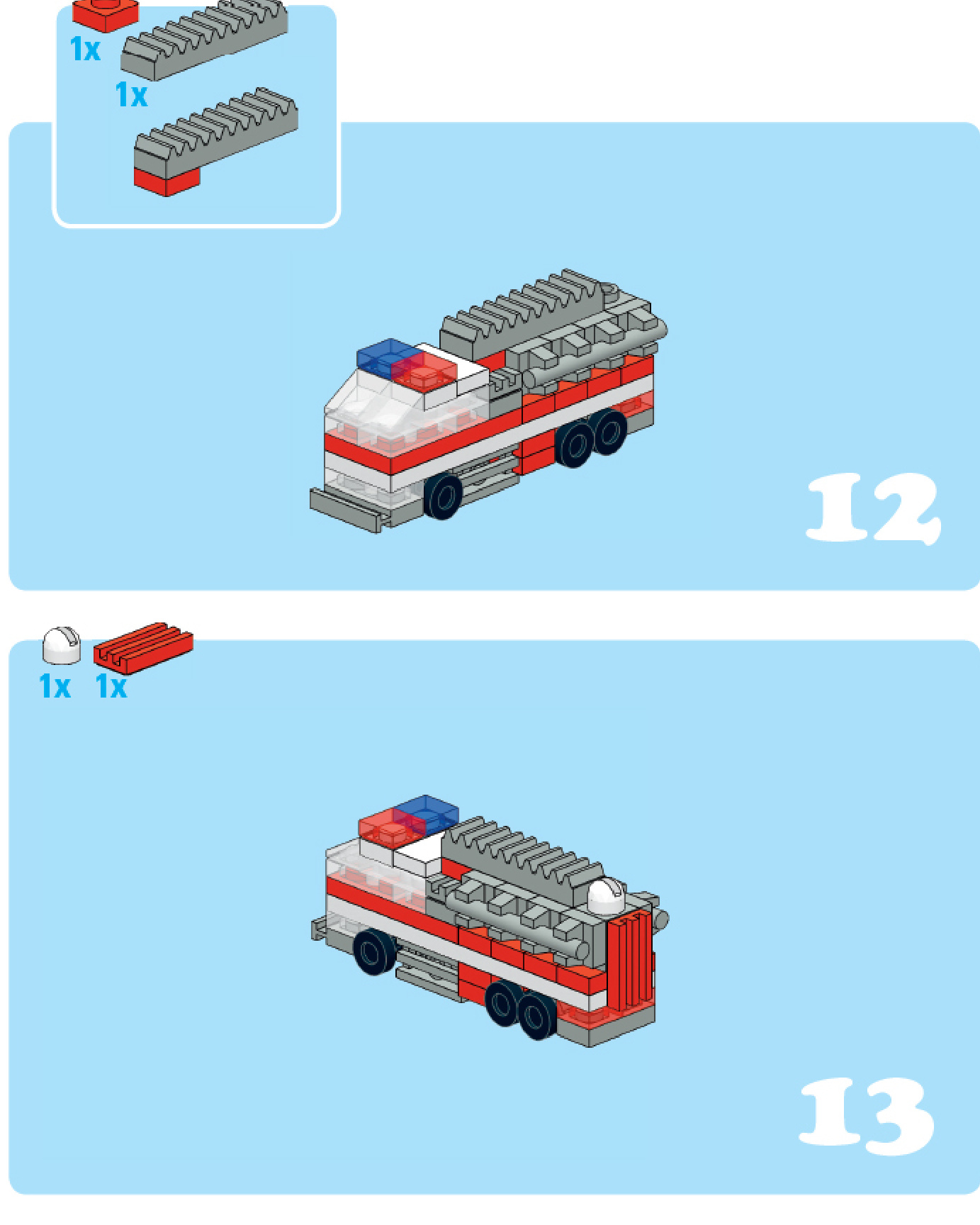
Parts List
Tractor
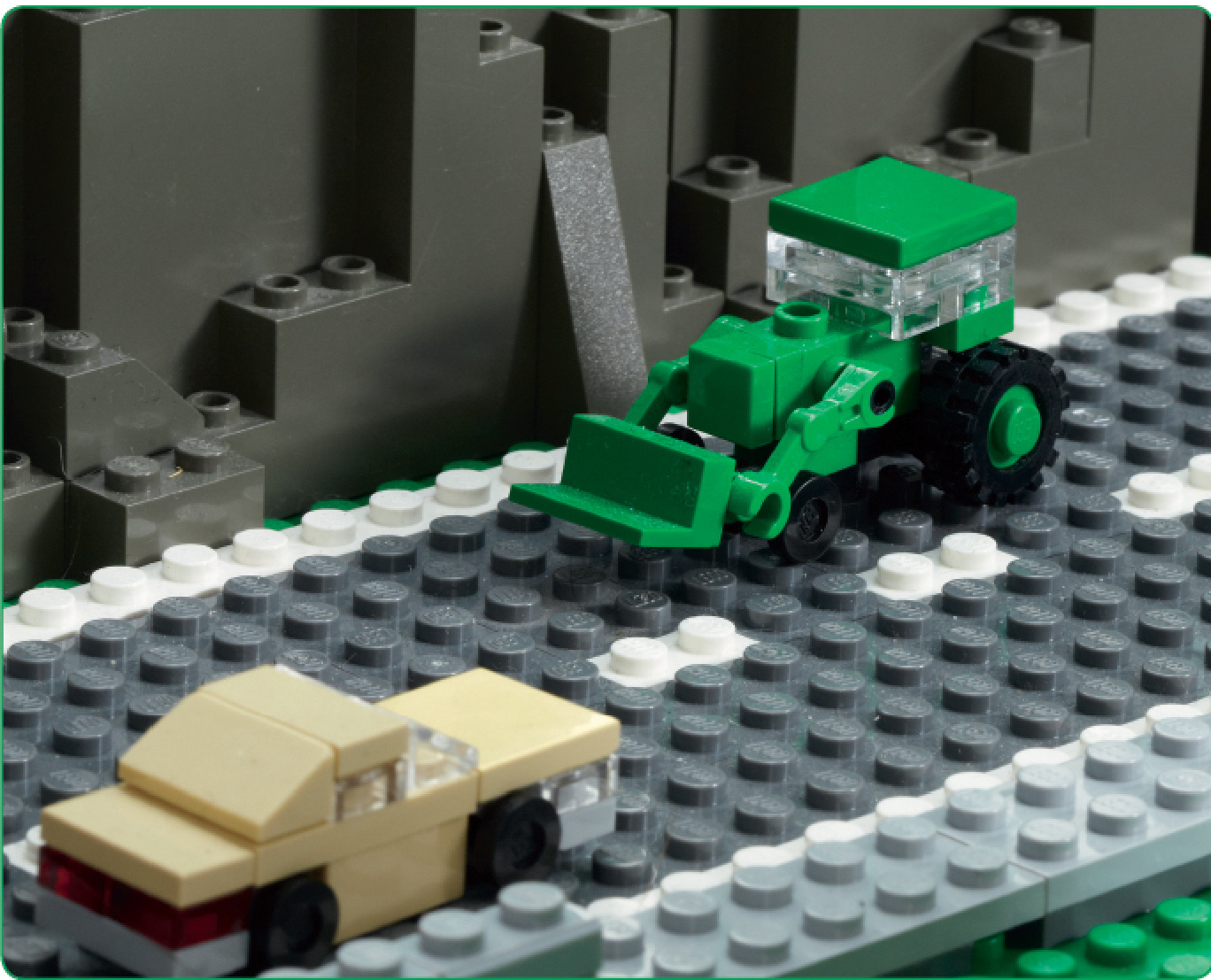
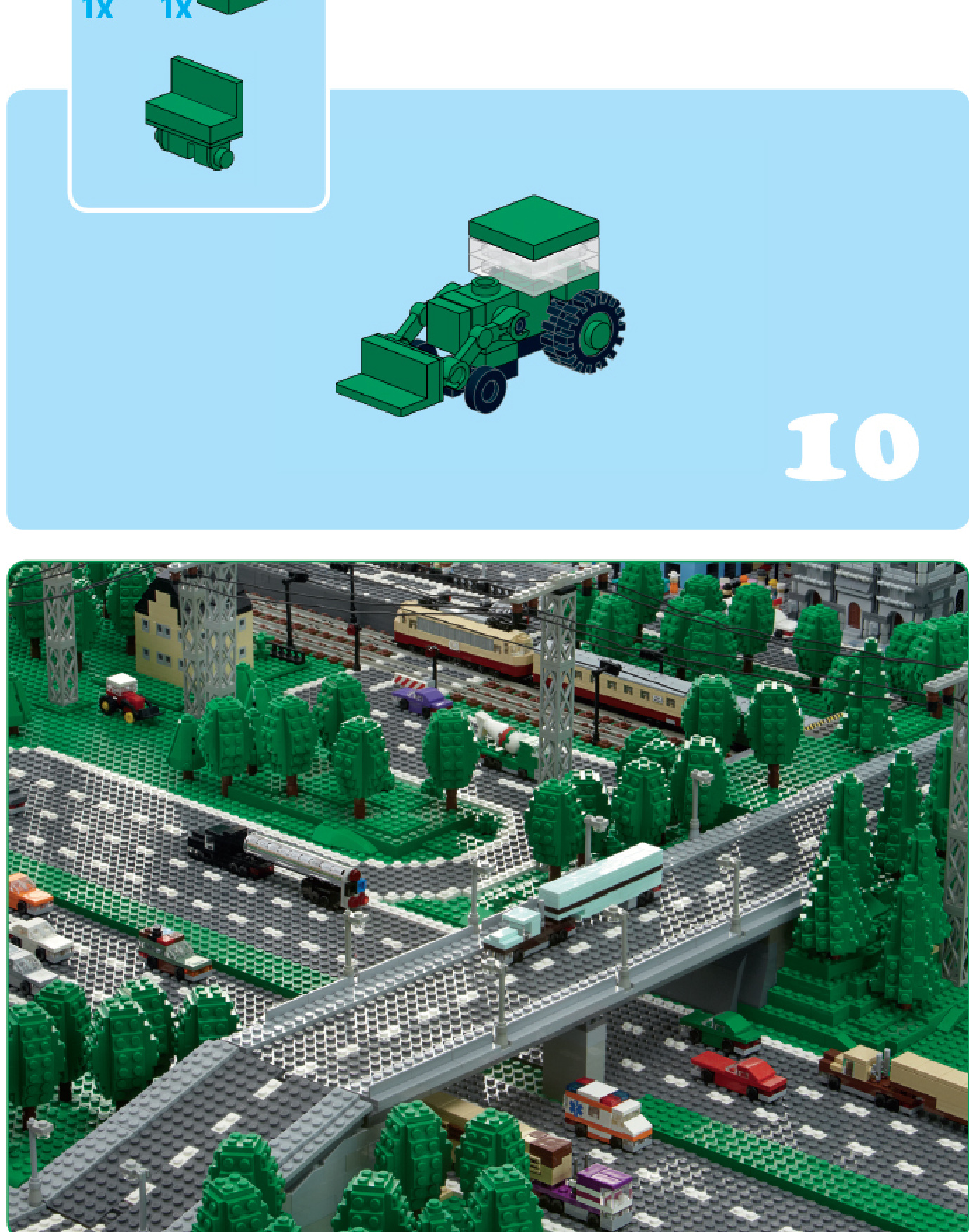
We shortened a flexible hose which usually has a lenght of 8 to 9 studs for the tractor. We need a length of not quite 3 studs. In general flexible hoses are hollow and their size can be grabbed by all l hands. We used a robot arm as the dipper arm. The shovel itself is a panel-we used the same brick as the truck bed for the pickup. You can also see that we used BURPs (Big Ugly Rock Pieces) and LURPs (Little Ugly Rock Pieces) to build an escarpment.
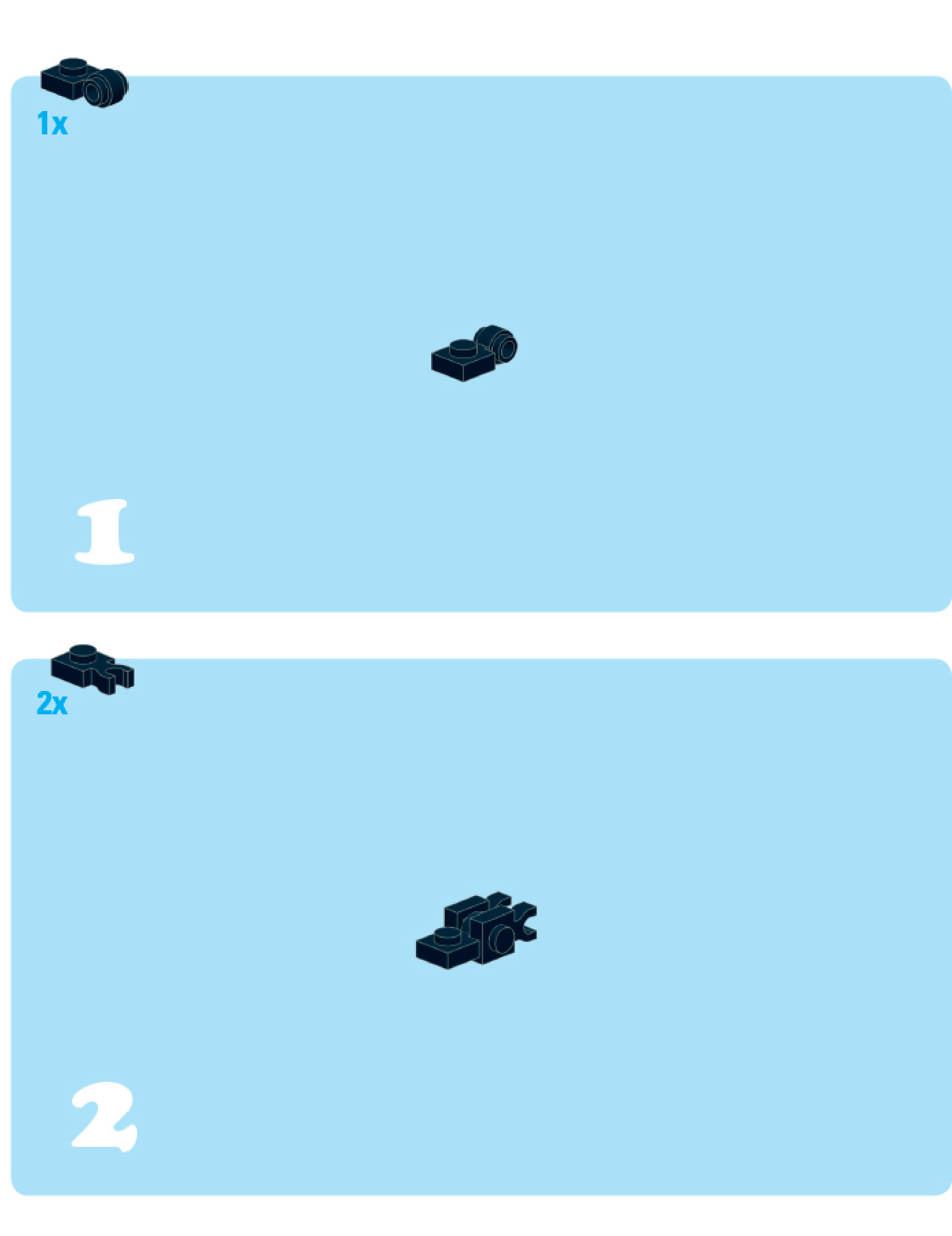
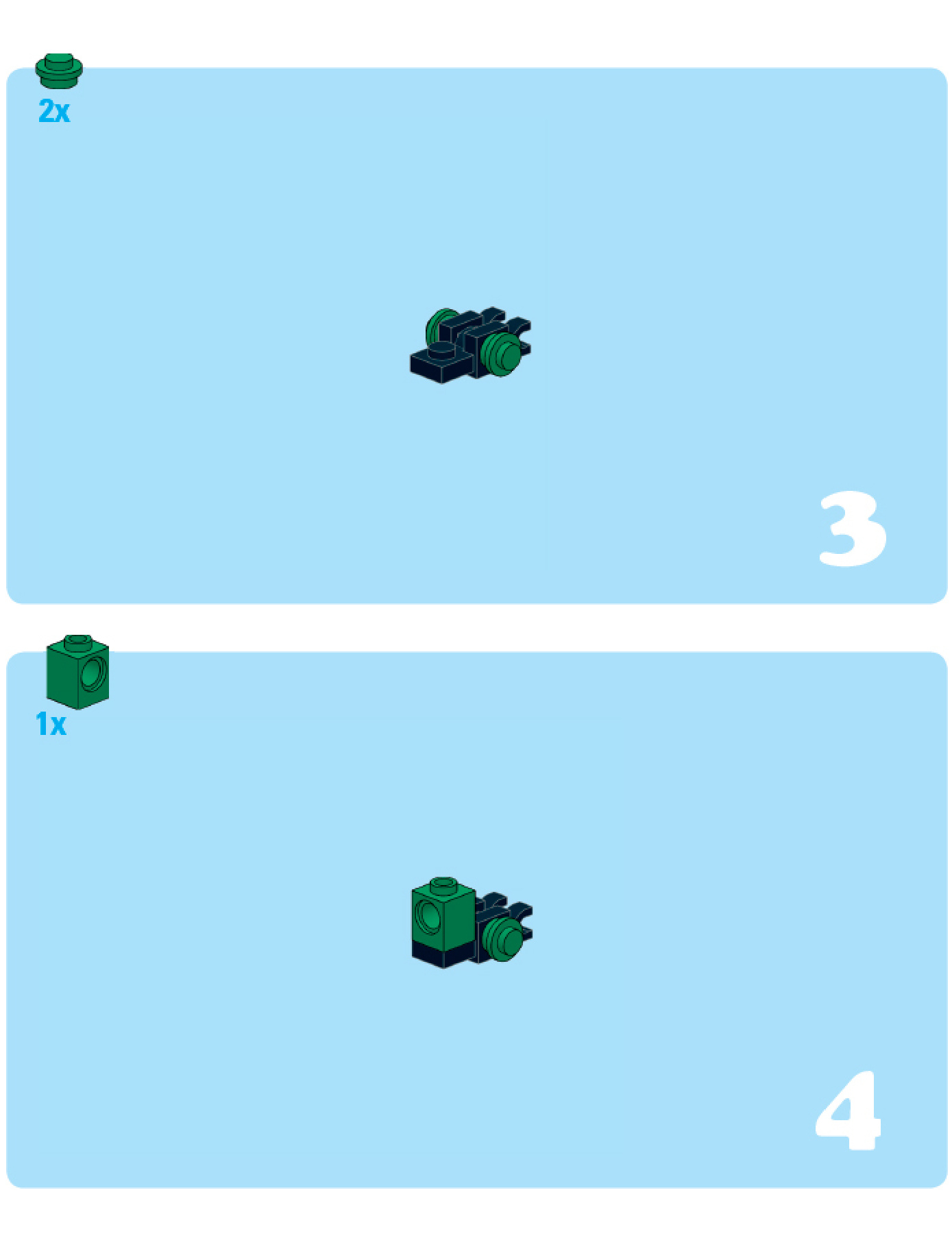
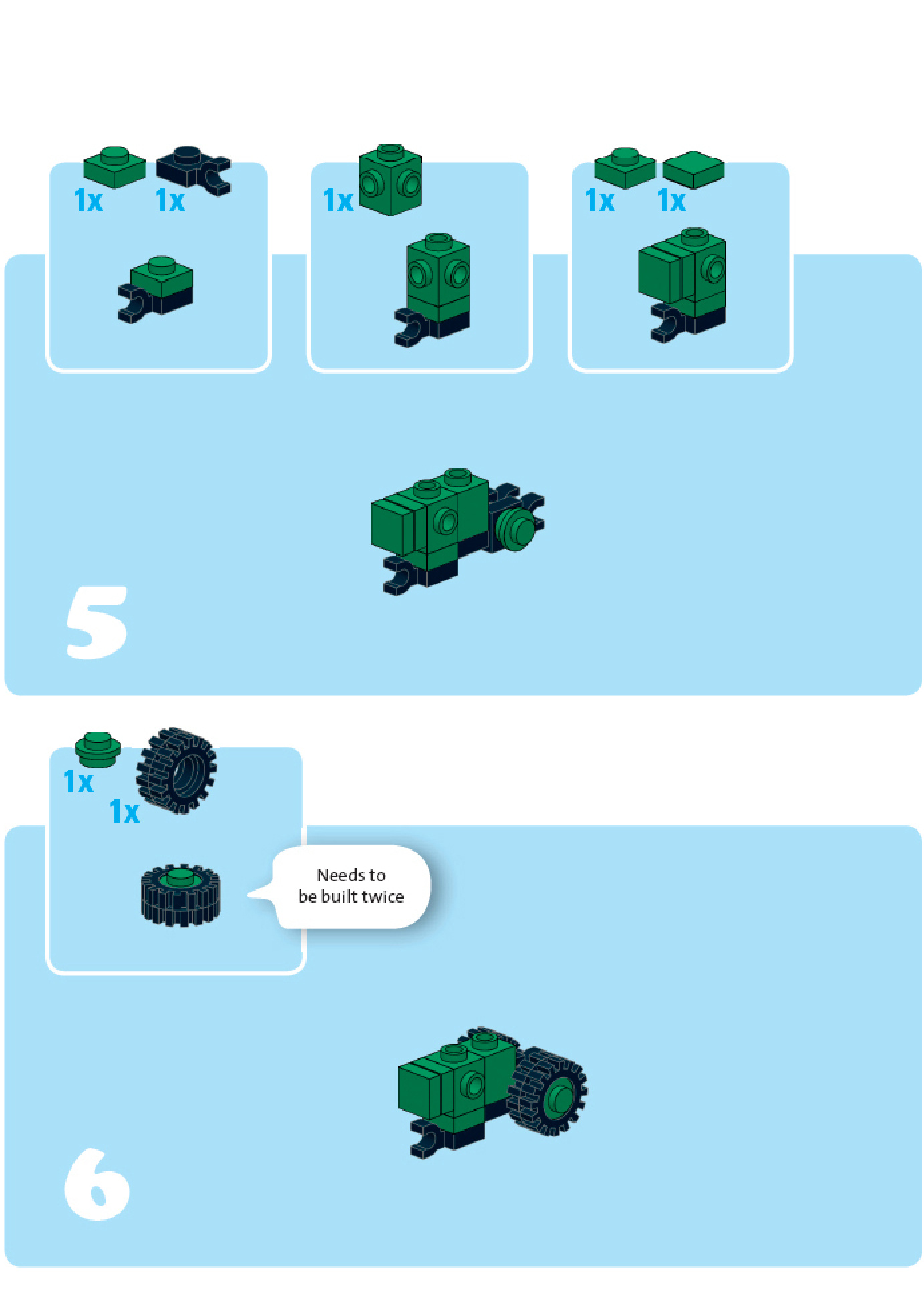
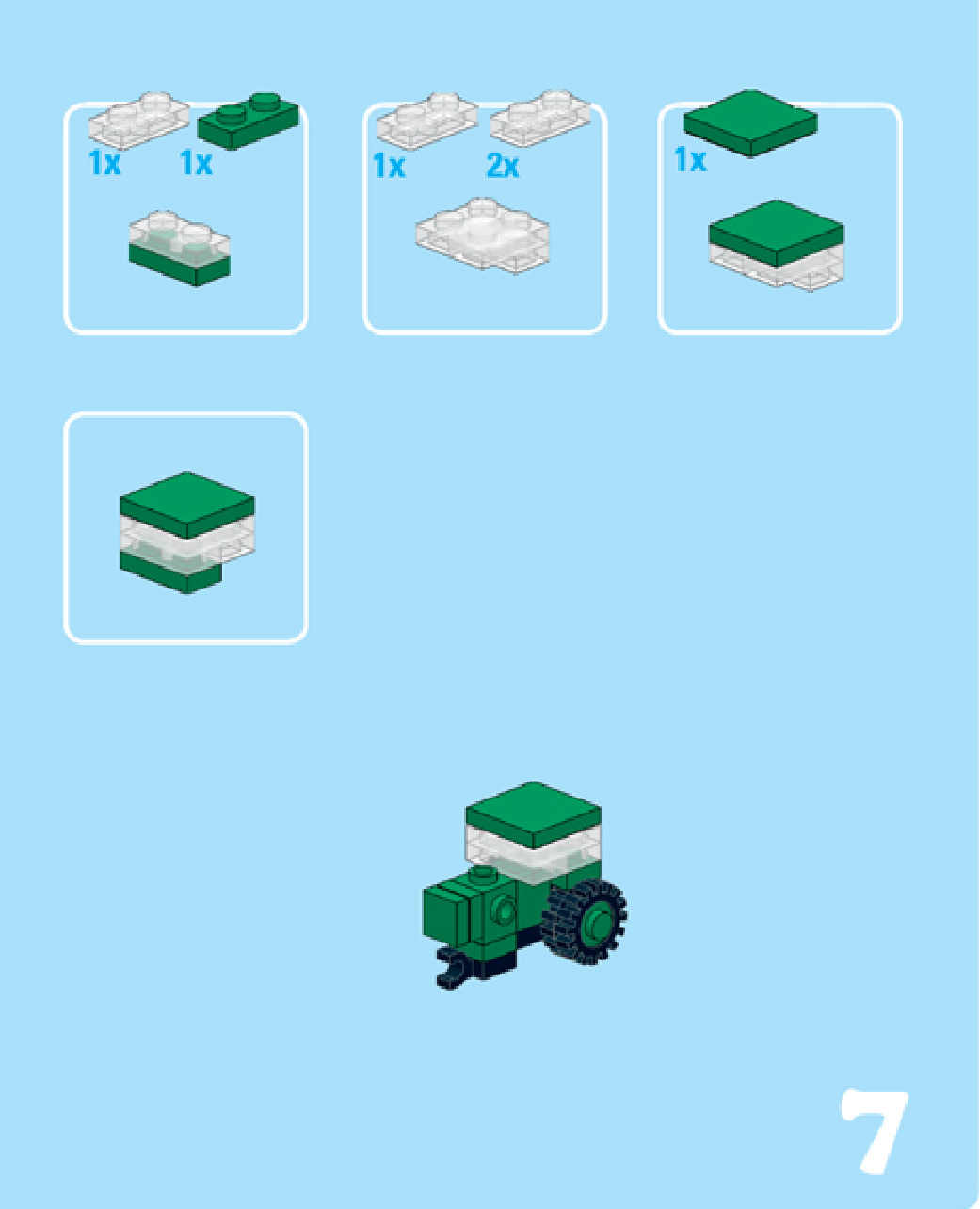
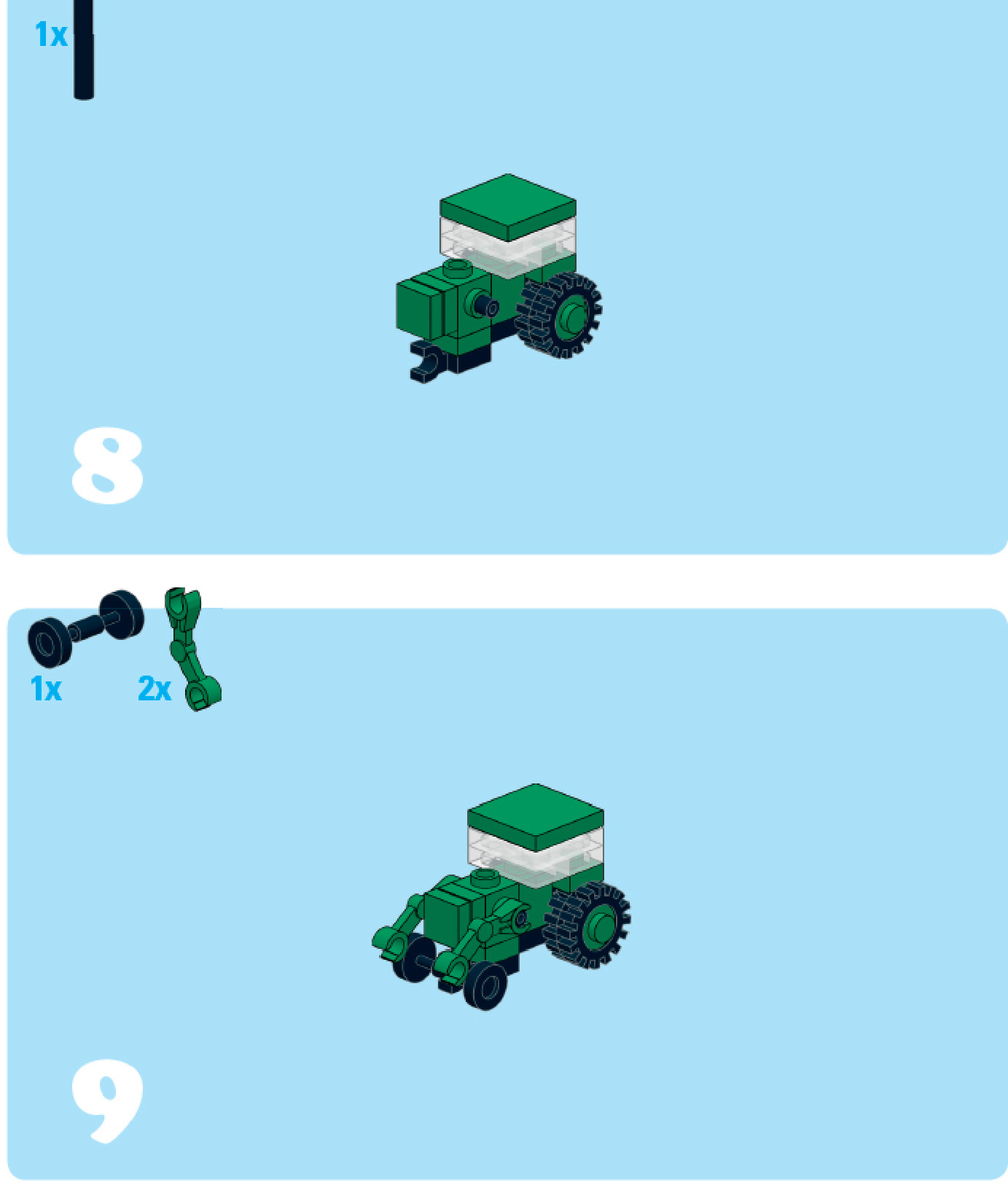
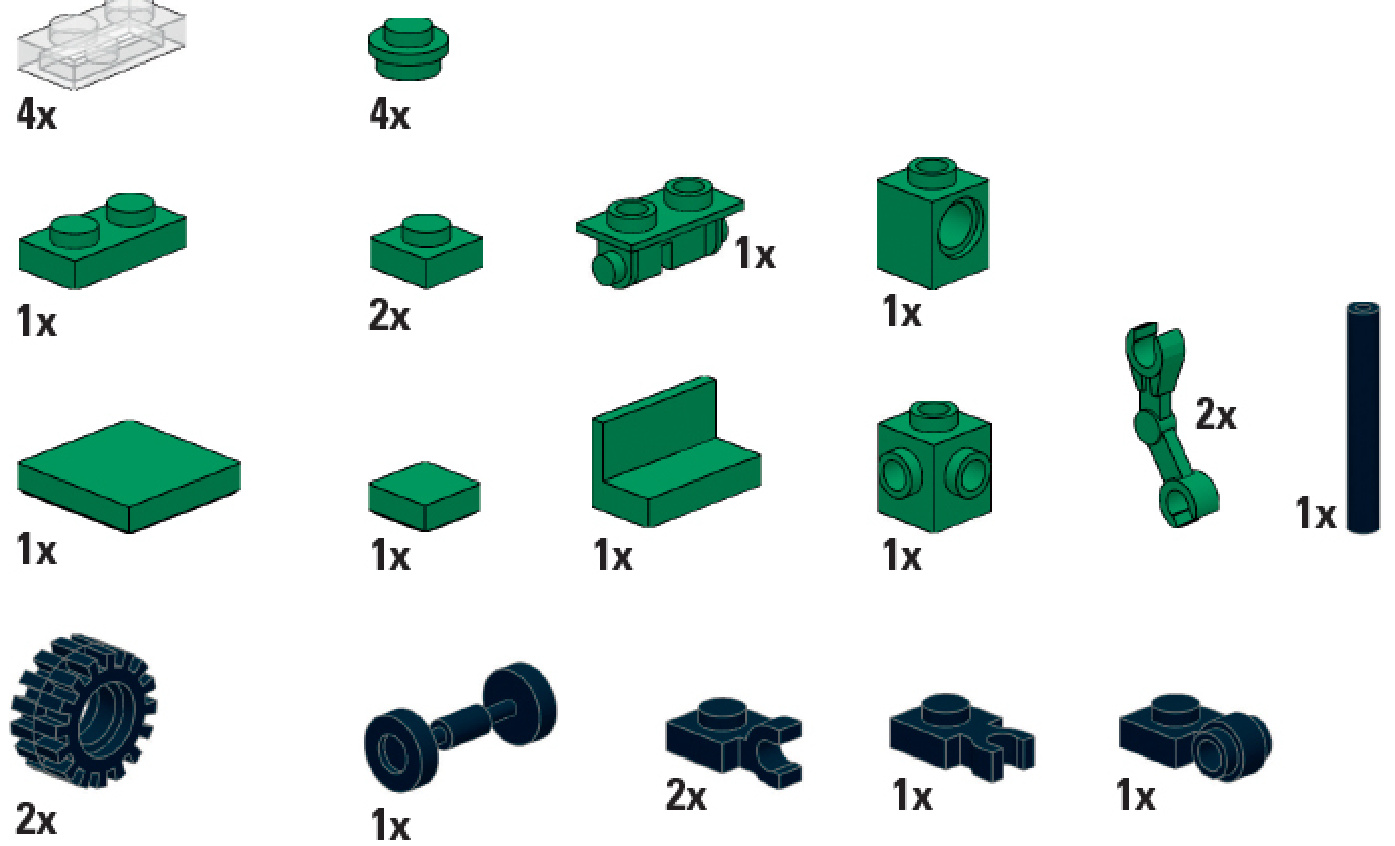
Parts List
forklift
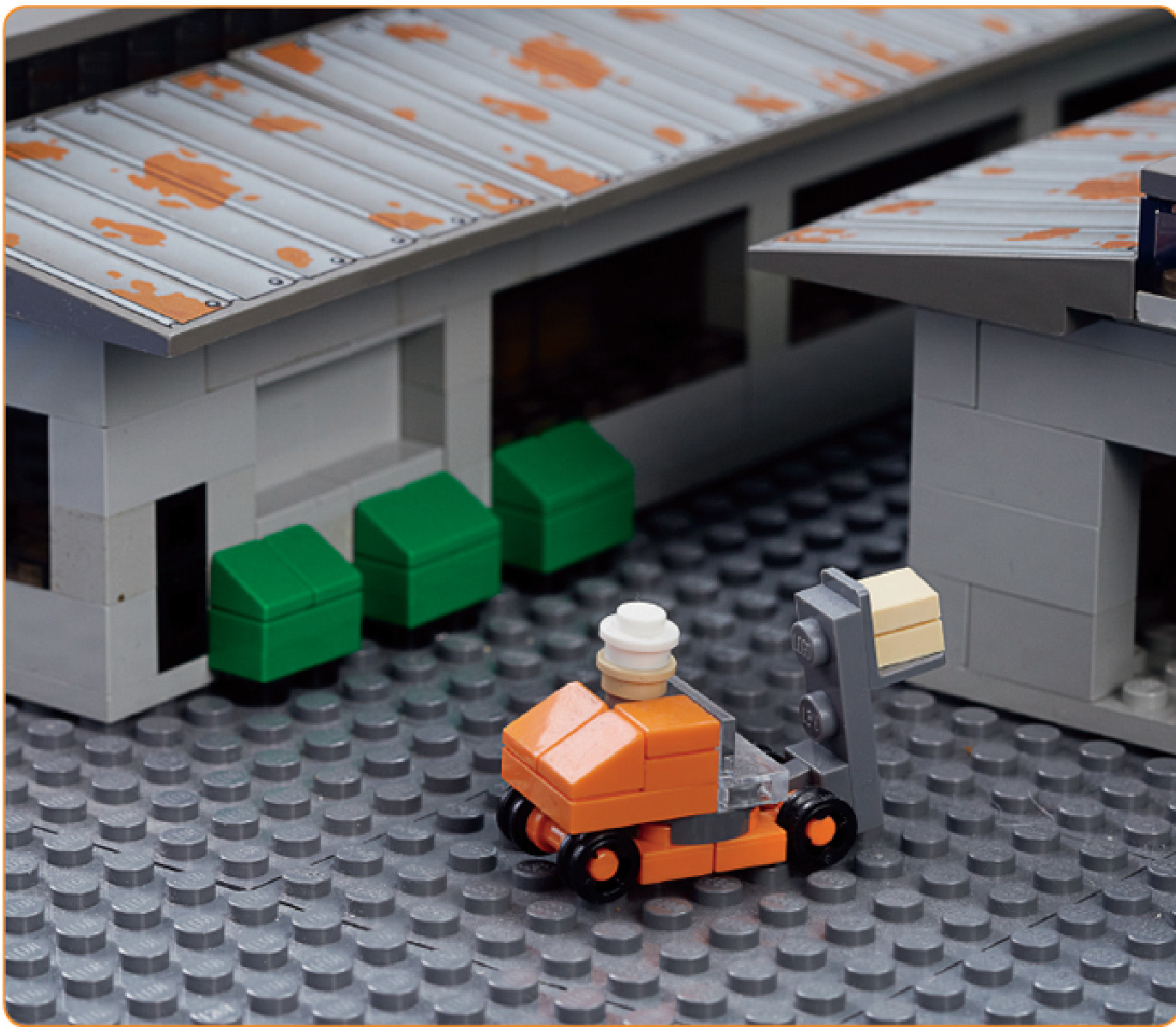
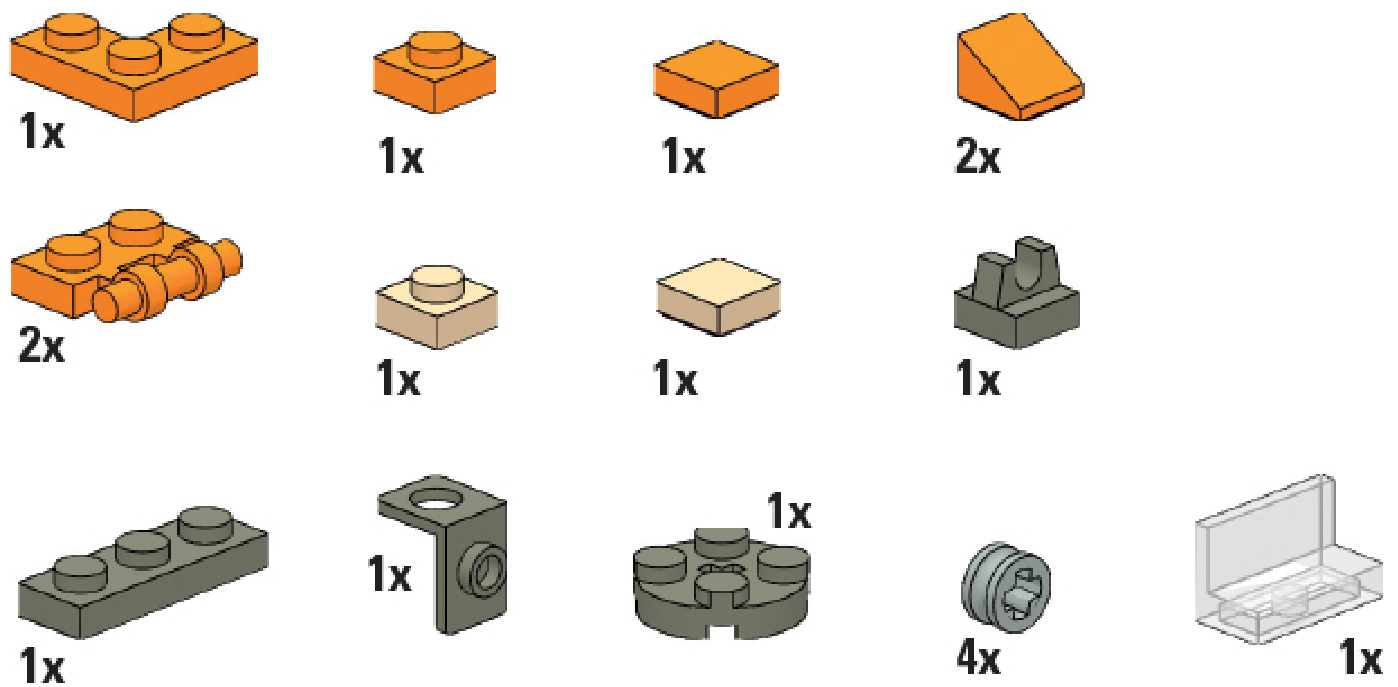
We used black tires for our forklift as a special feature, but you can of course use the gray ones which are easier to get. They are an element of Technic. However in reality, the tire color also differentiates forklifts used in warehouses from those used outside.
The garbage containers in the background are quite simple to build but they have a very striking effect. The barrack roofs are printed.
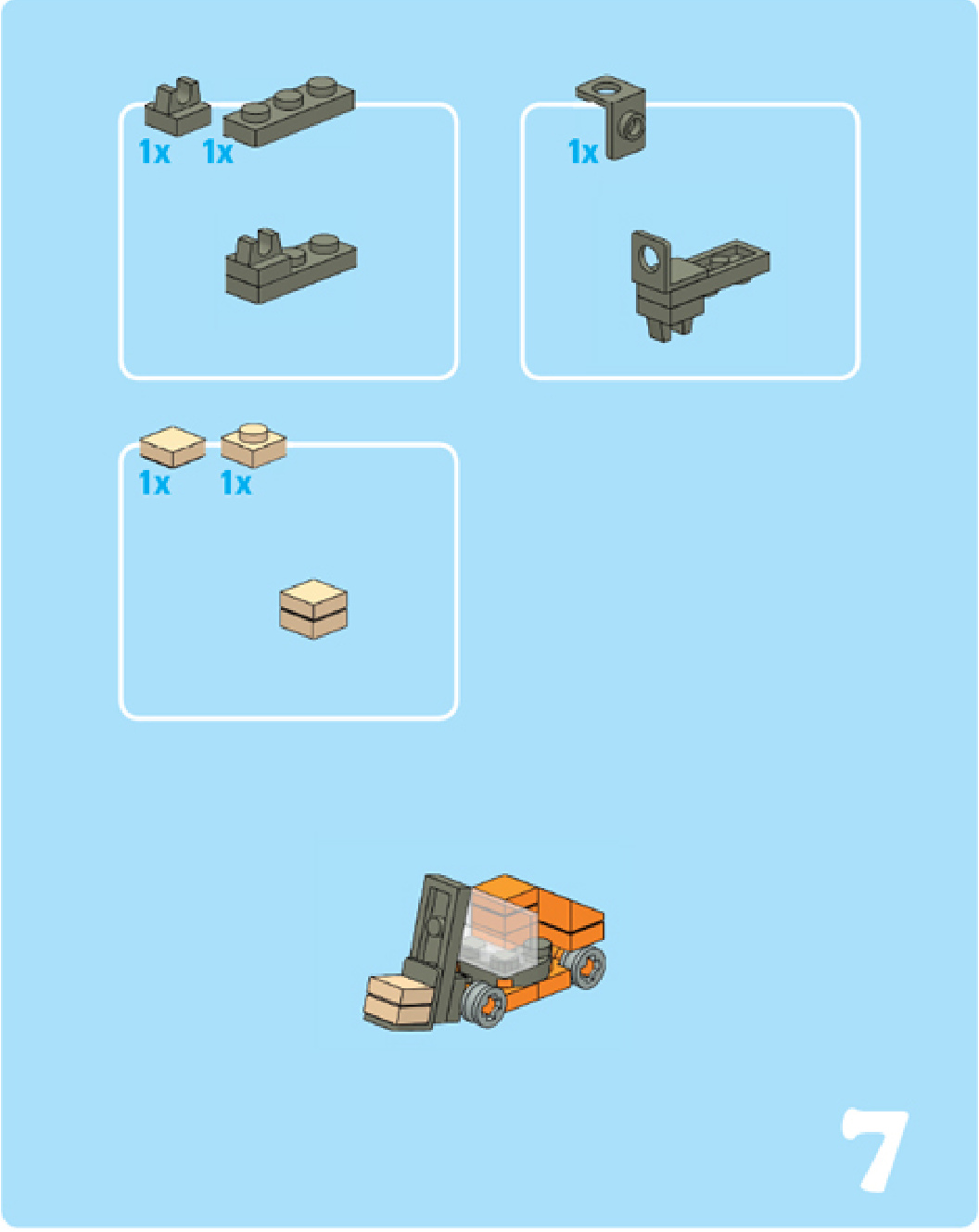
Parts List
Dumper
The dumper truck is a typical construction site vehicle; you might have found it on other pictures in the book. Its bed consists of panels, similar to that of the pickup. The driver cabin can be built in several ways, for example flatly tiled.
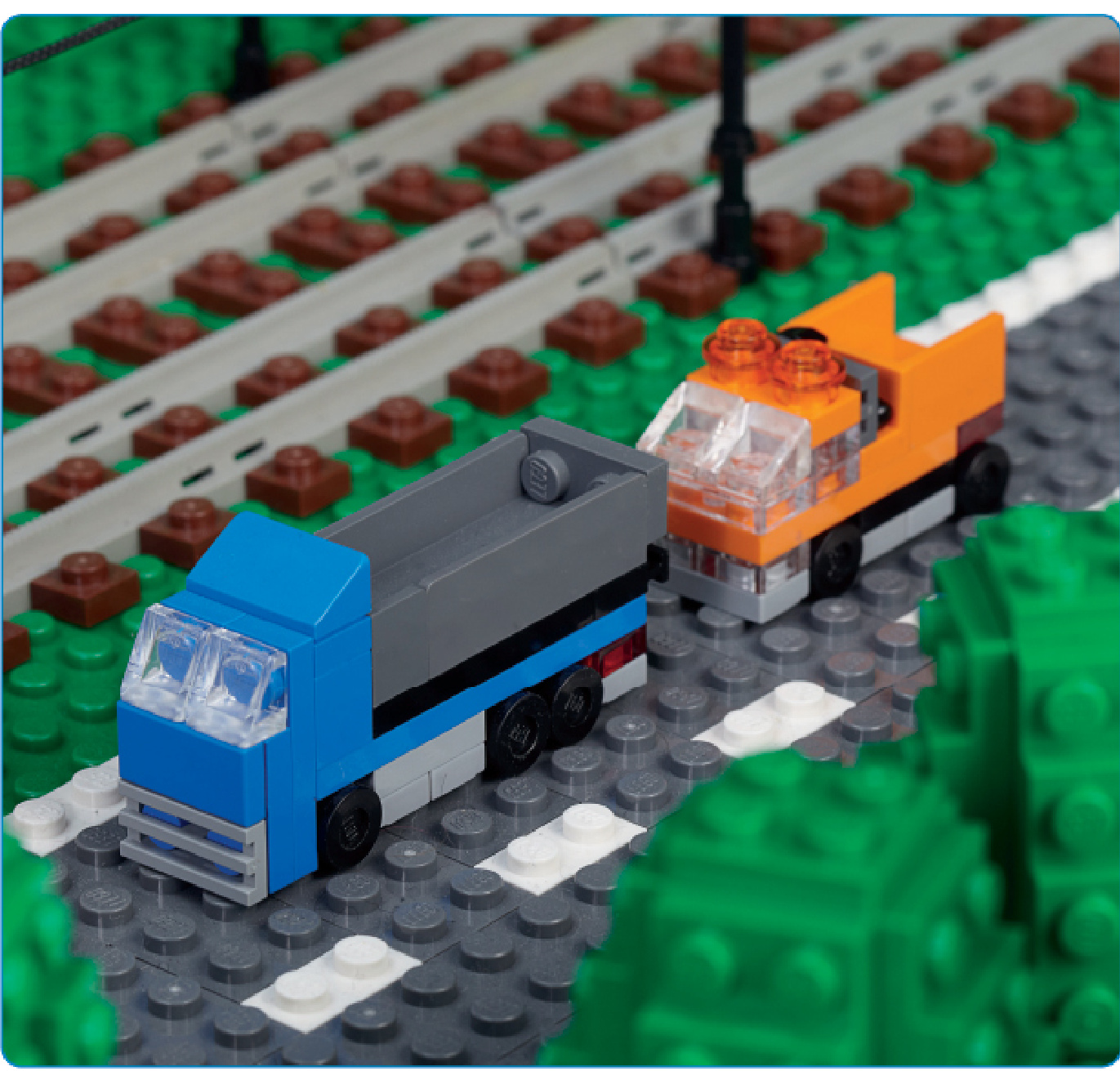
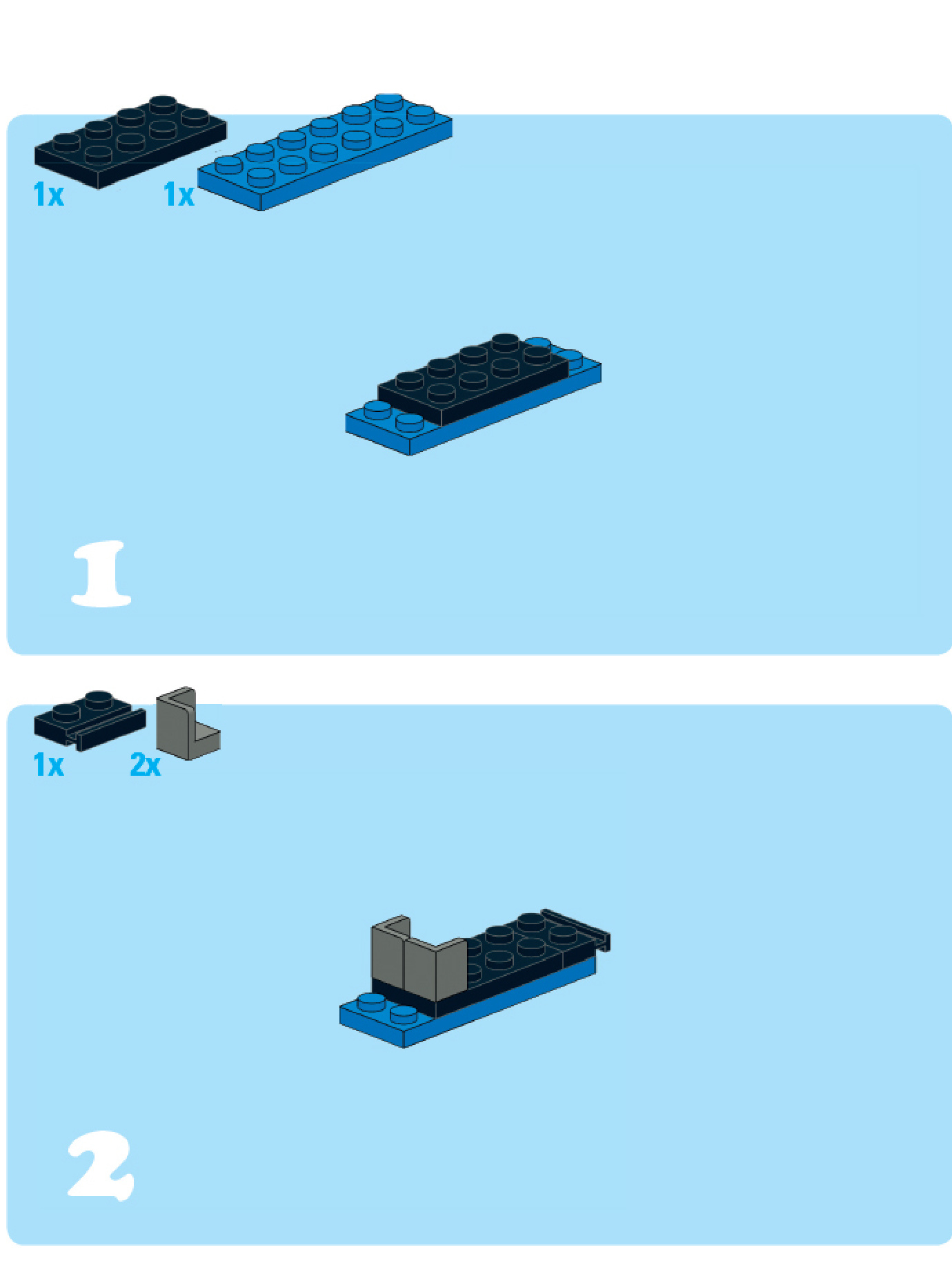
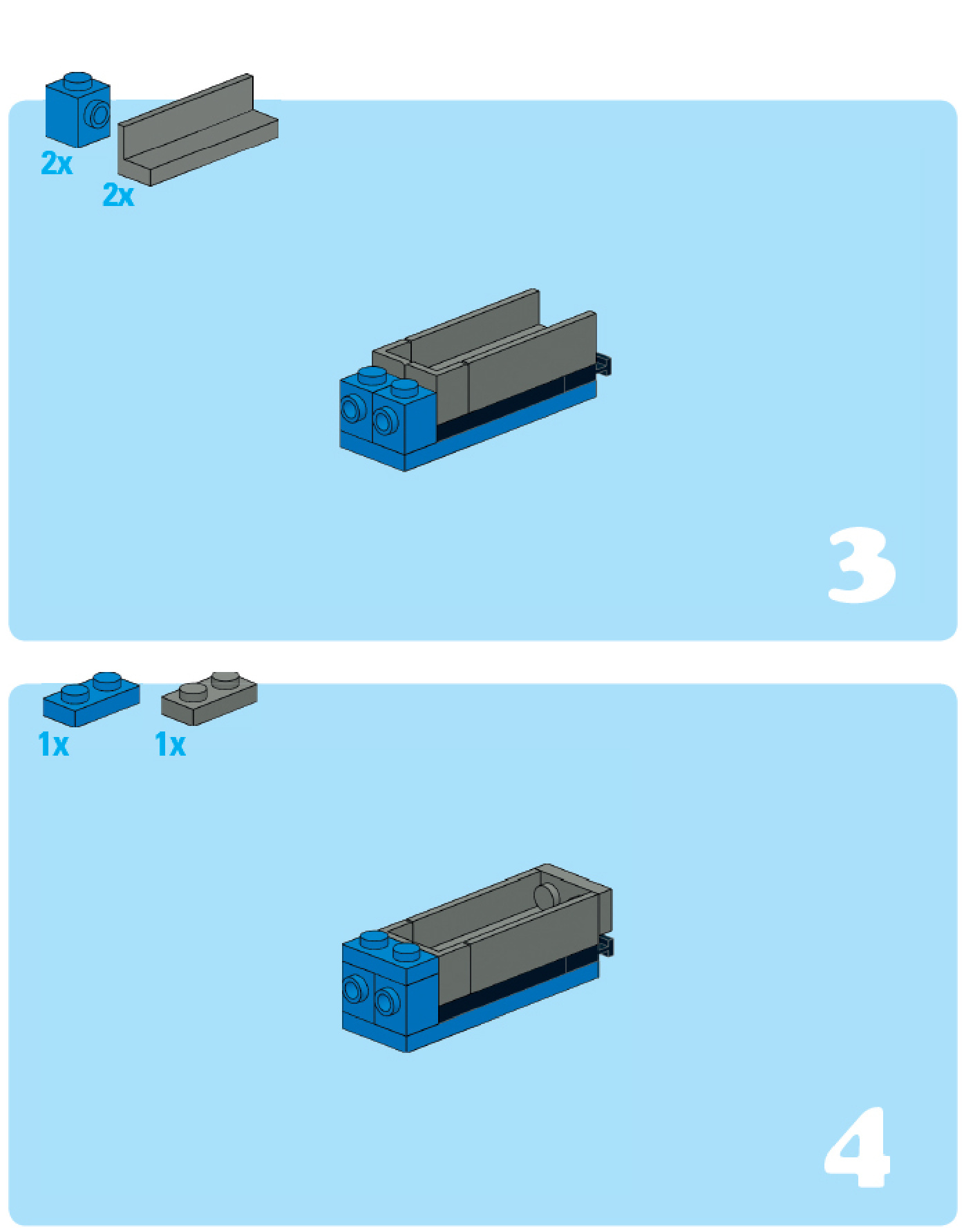
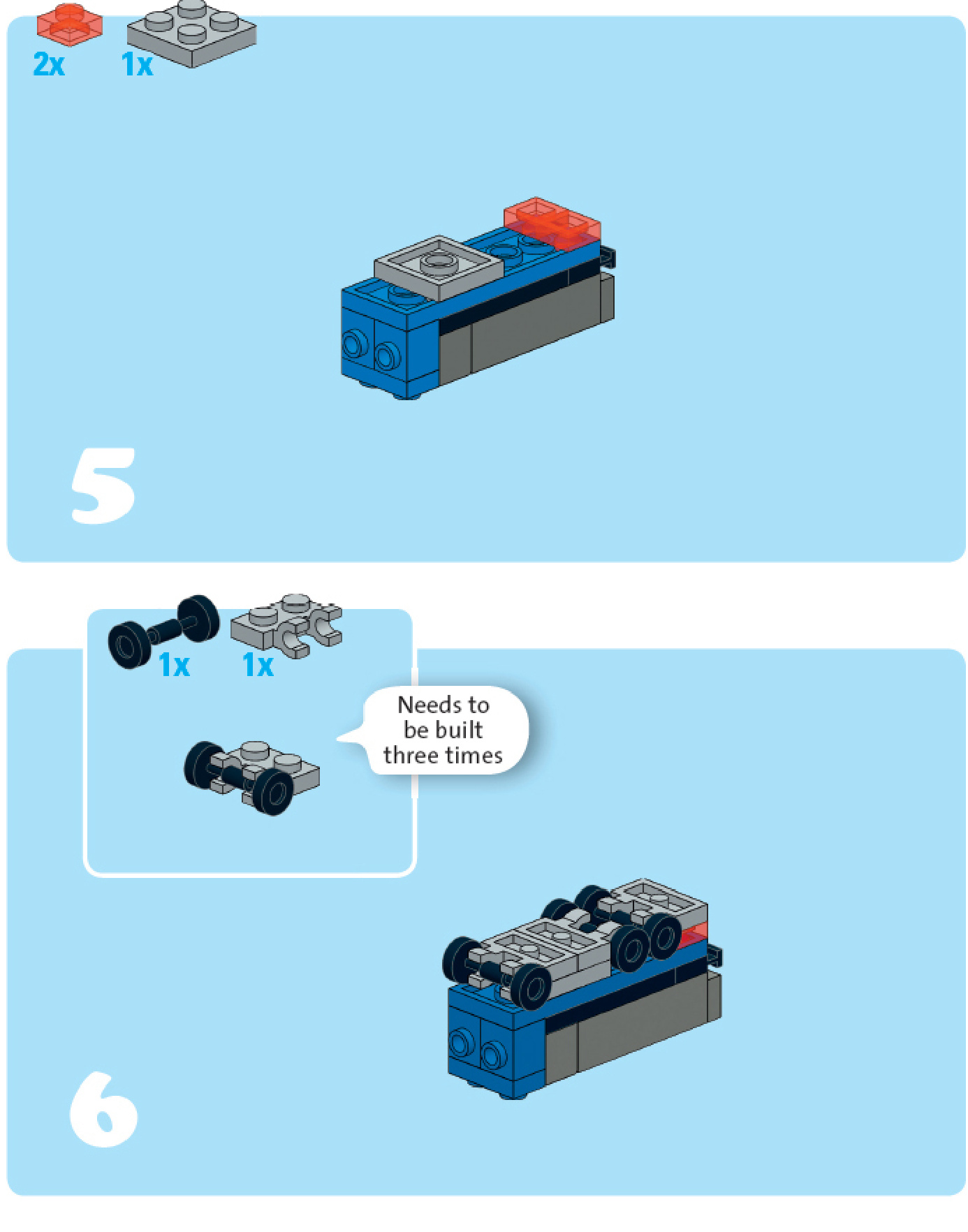
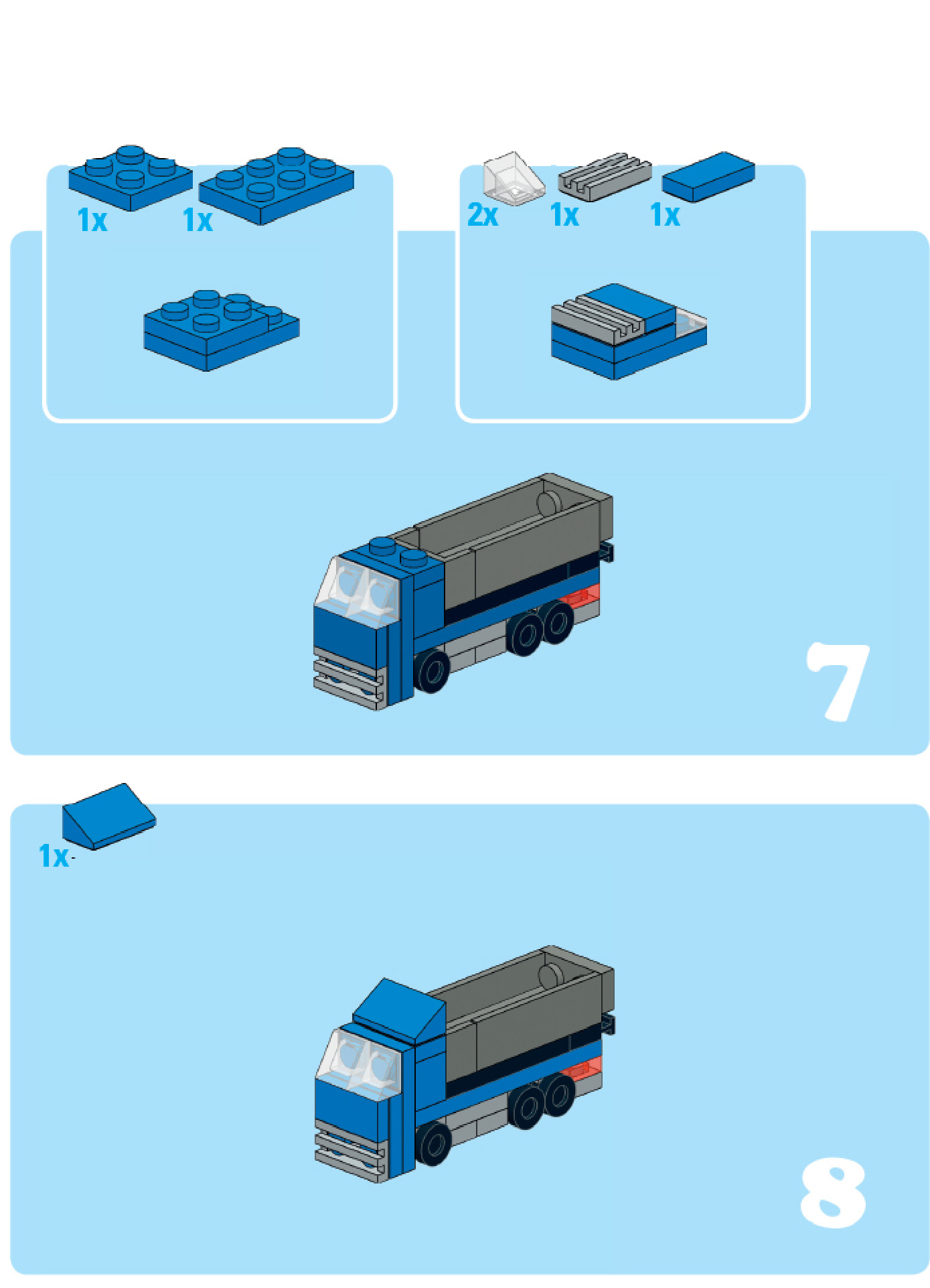
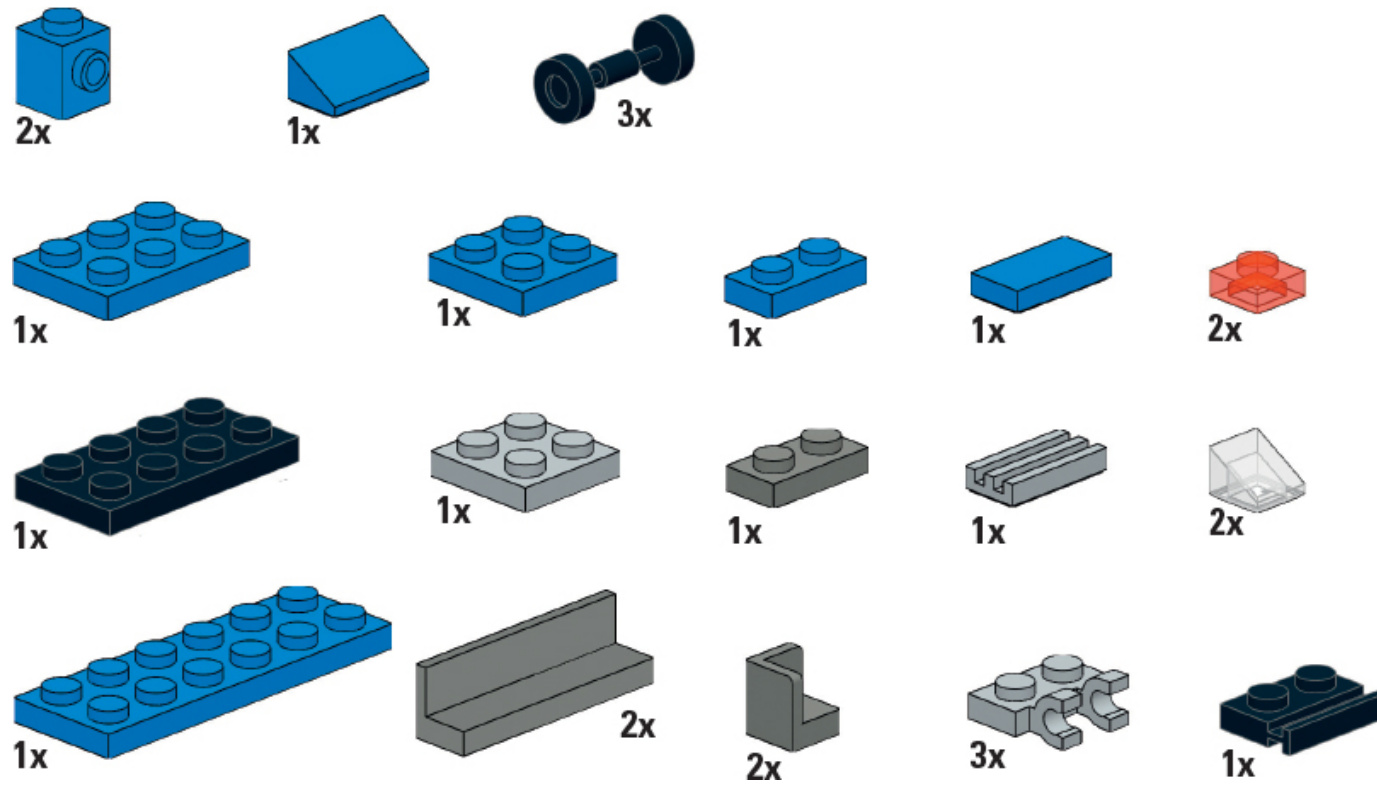
Parts List
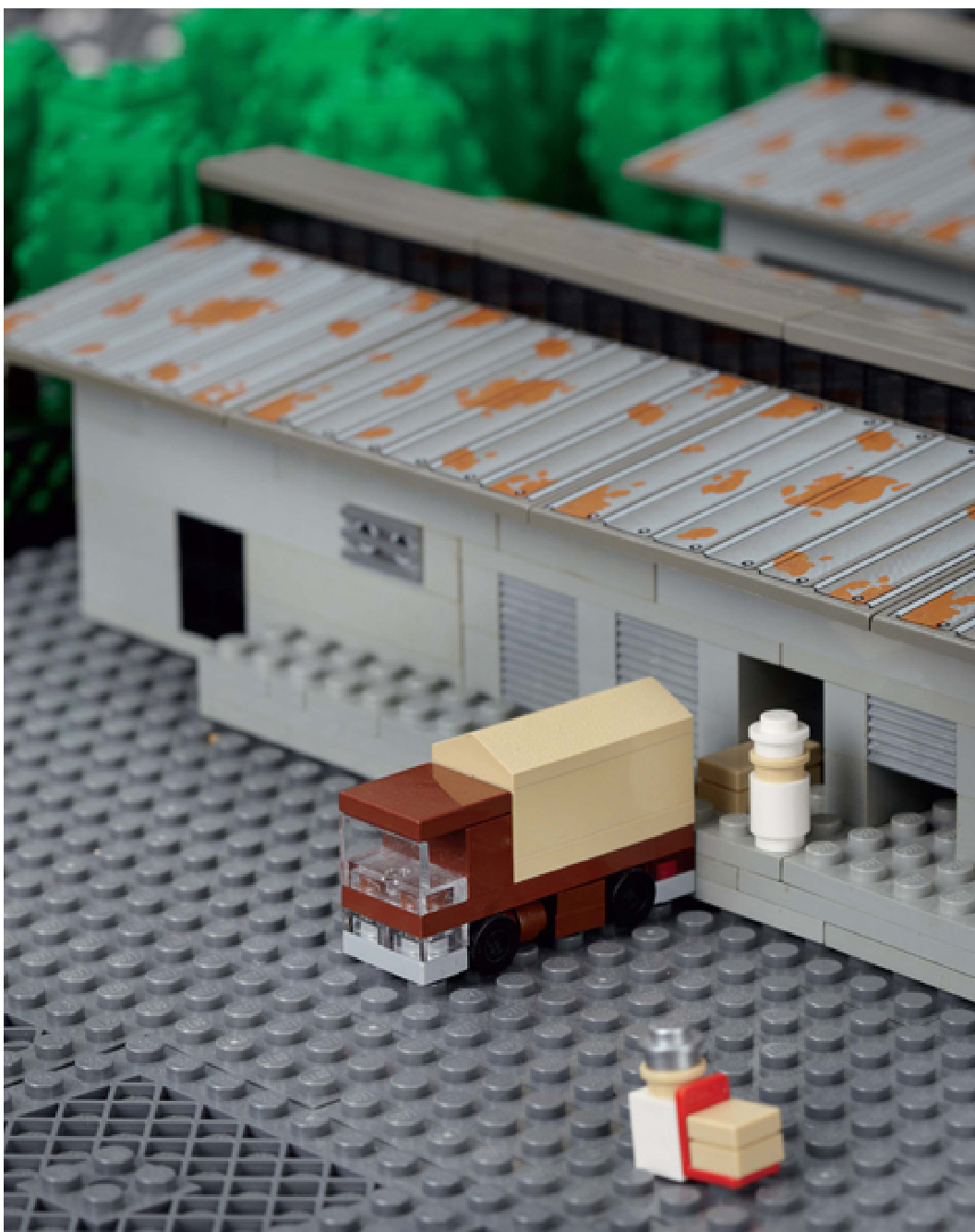
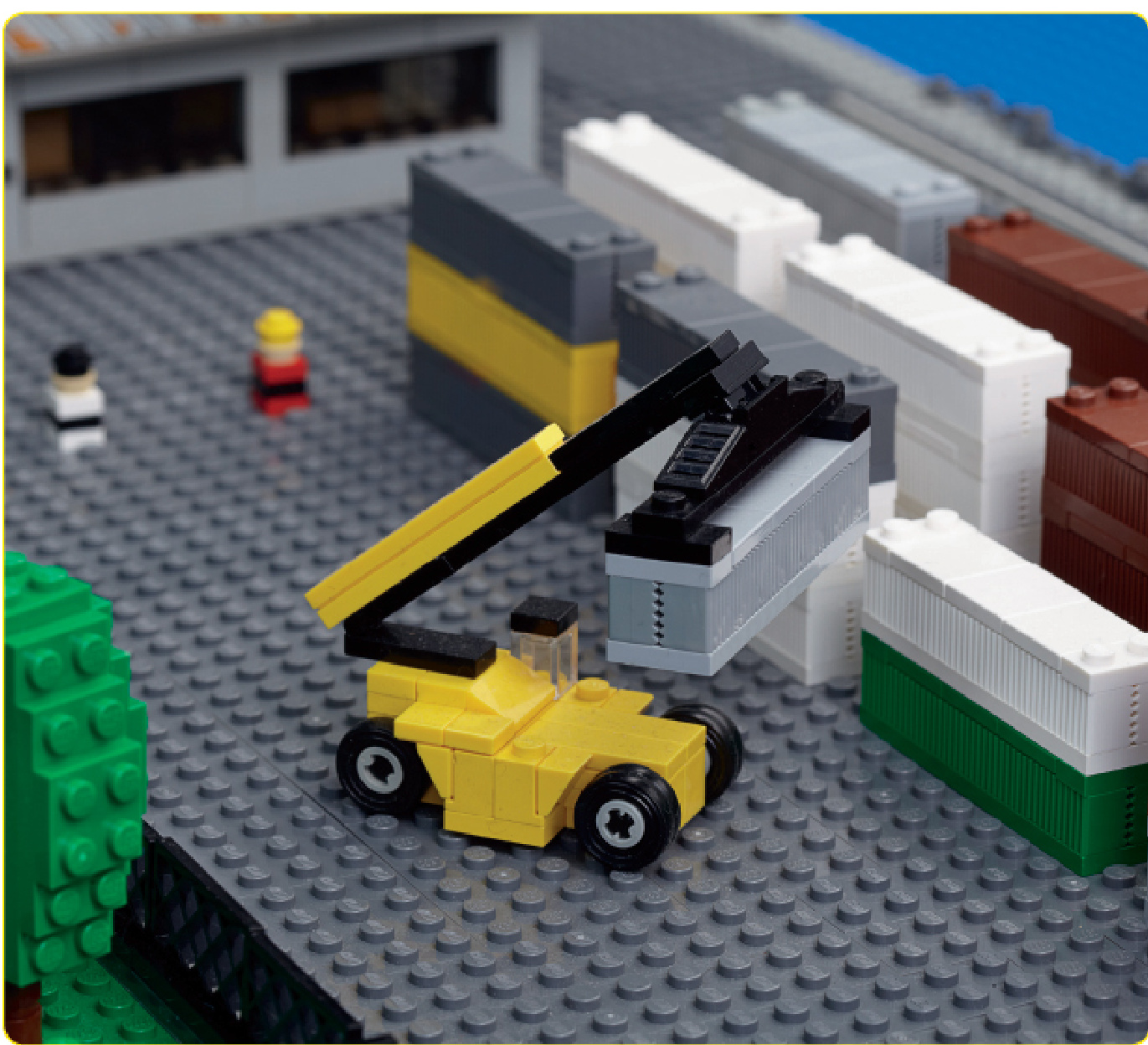
Container Carrier Truck
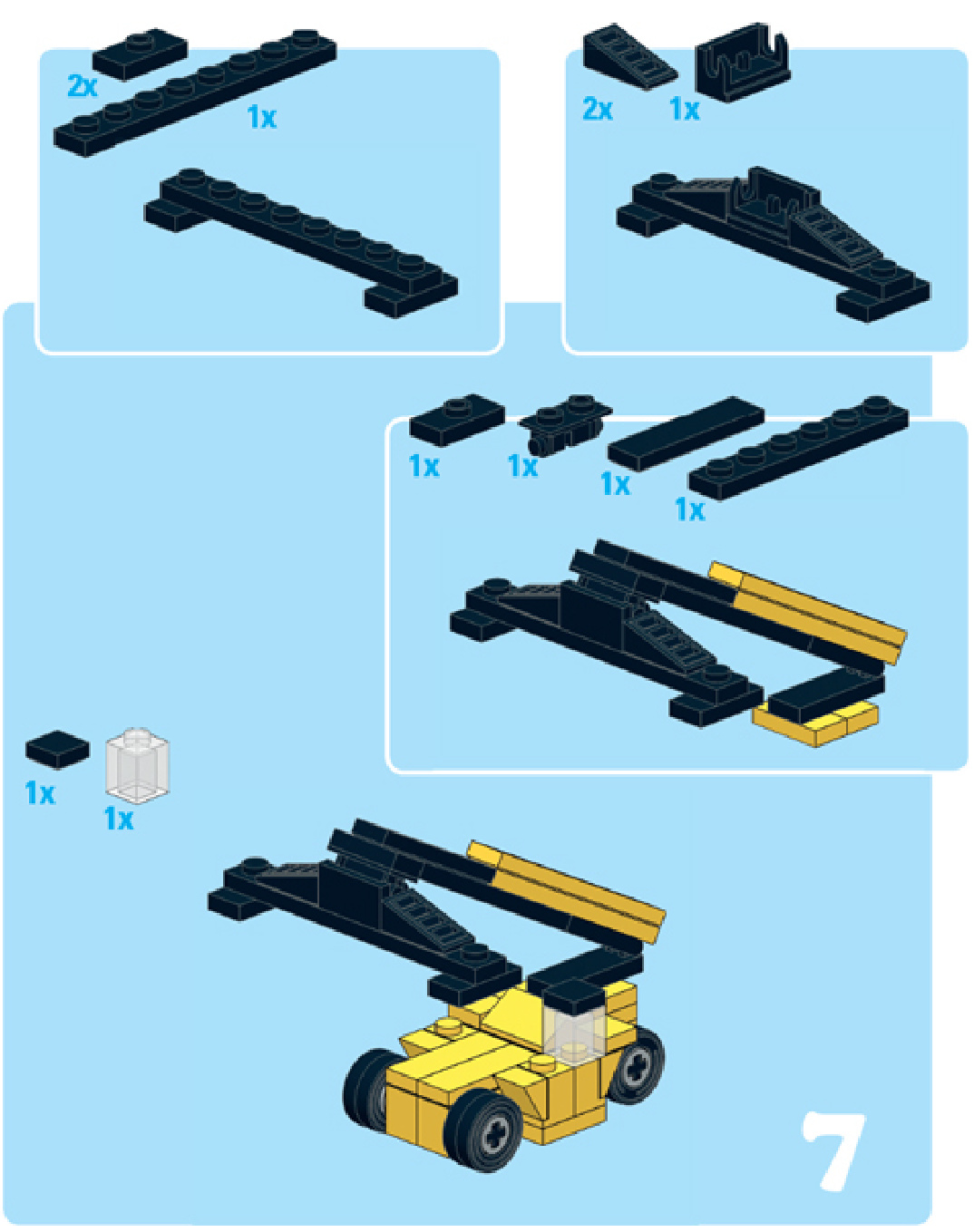
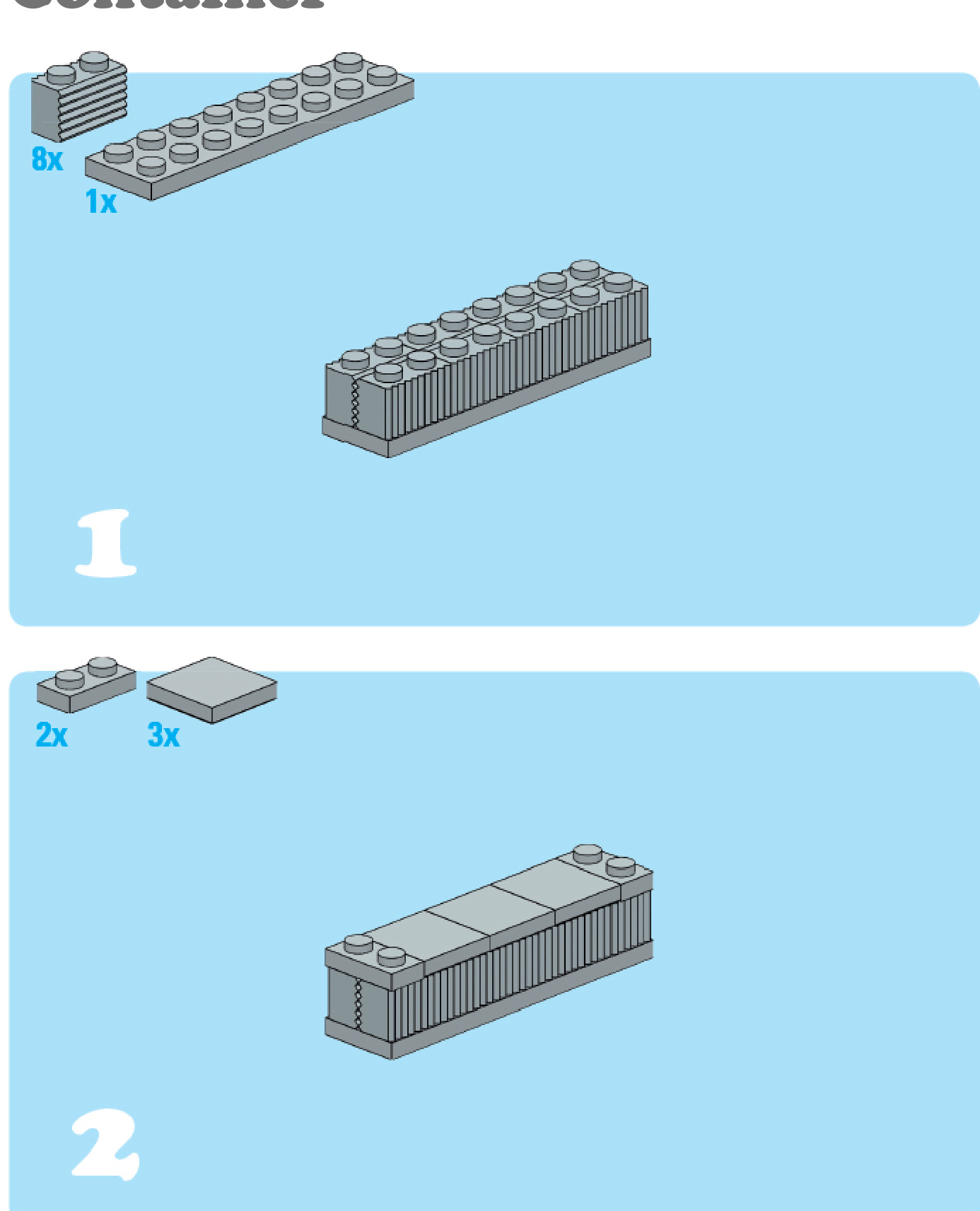
Many beautiful things such as toys are transported by ship. We show you how to build a great harbor scene with very few parts. Groove bricks are perfect for containers.
The container carrier truck gets tires whose scale is really meant to fit cars of mini figures. However the big tires actually fit quite well here.
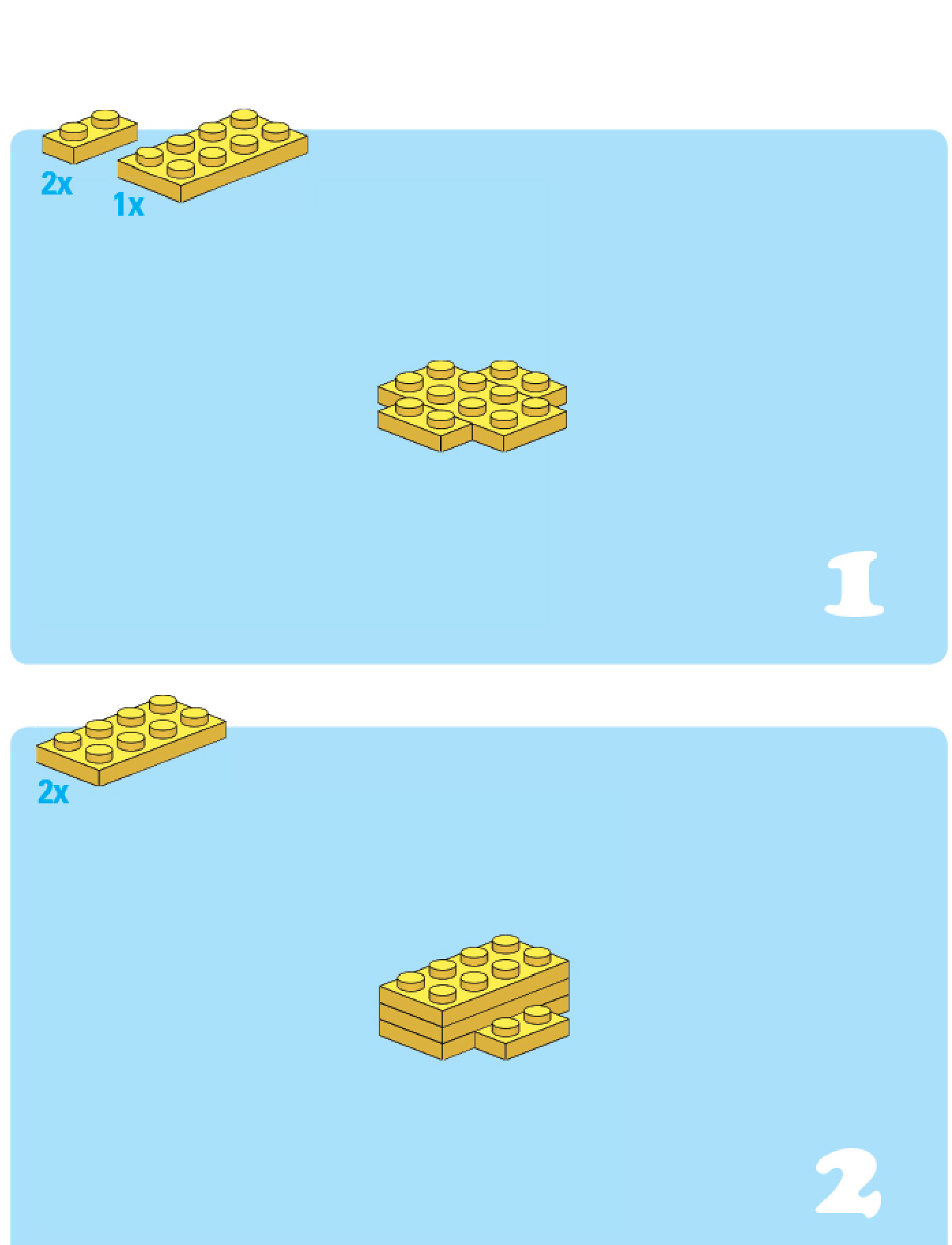
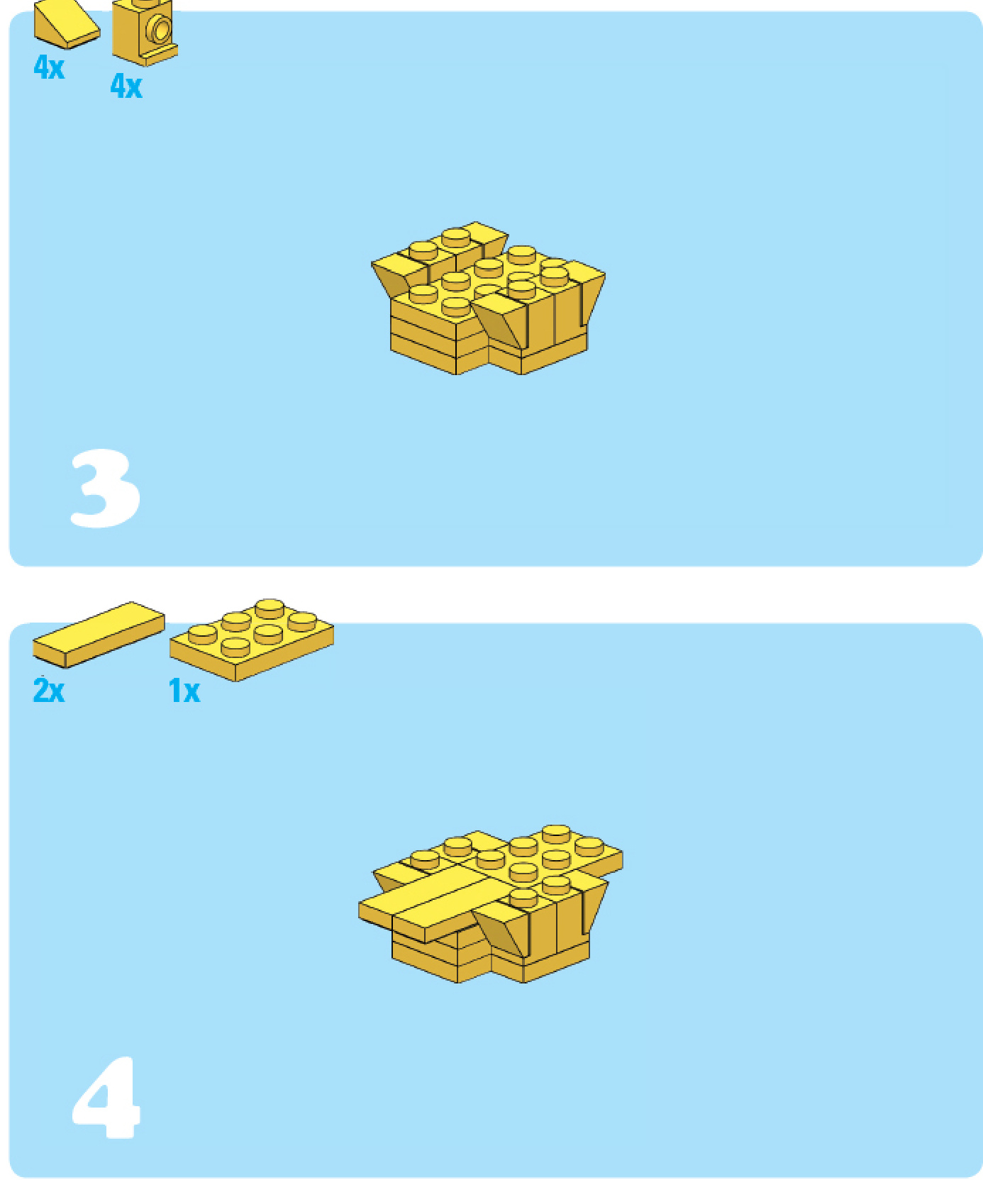
Container
Parts List
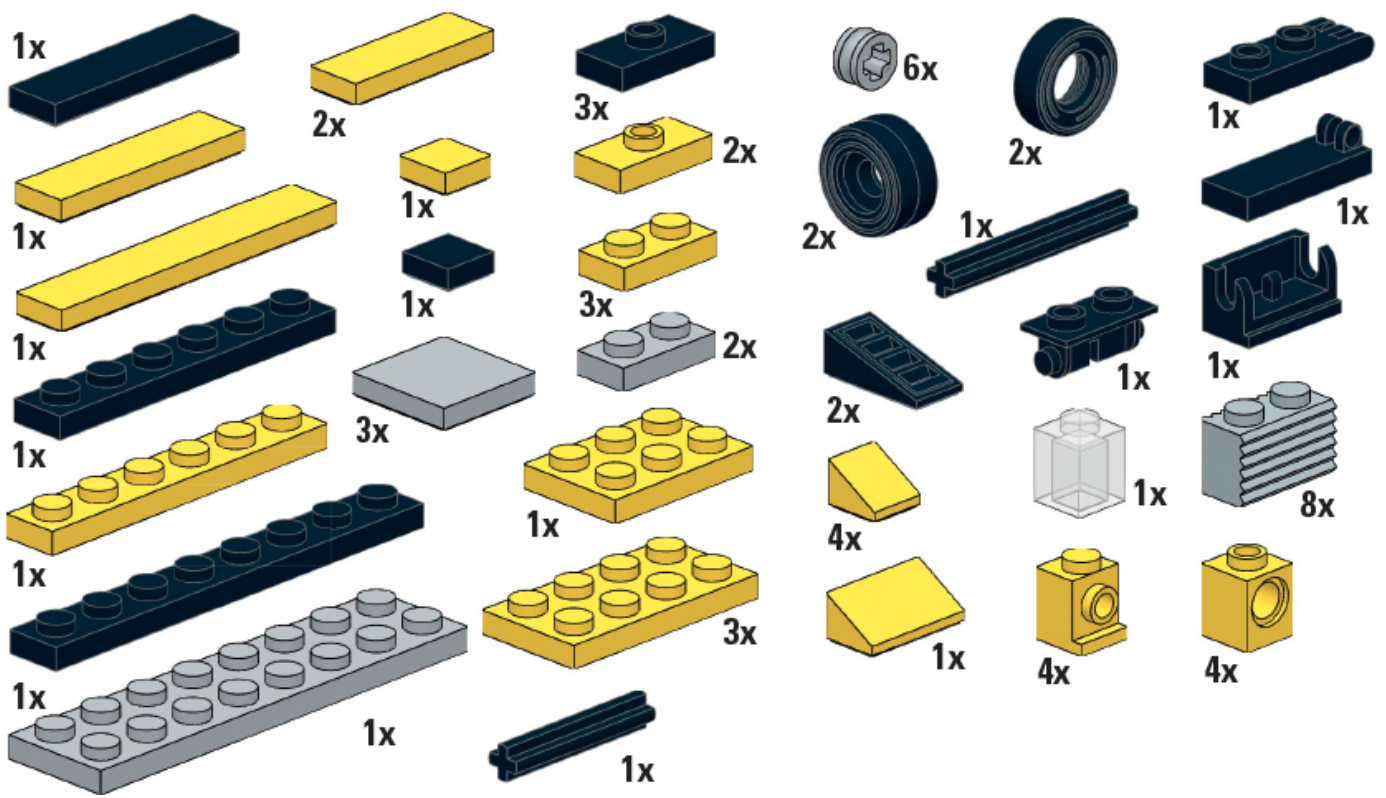

Cement Mixer
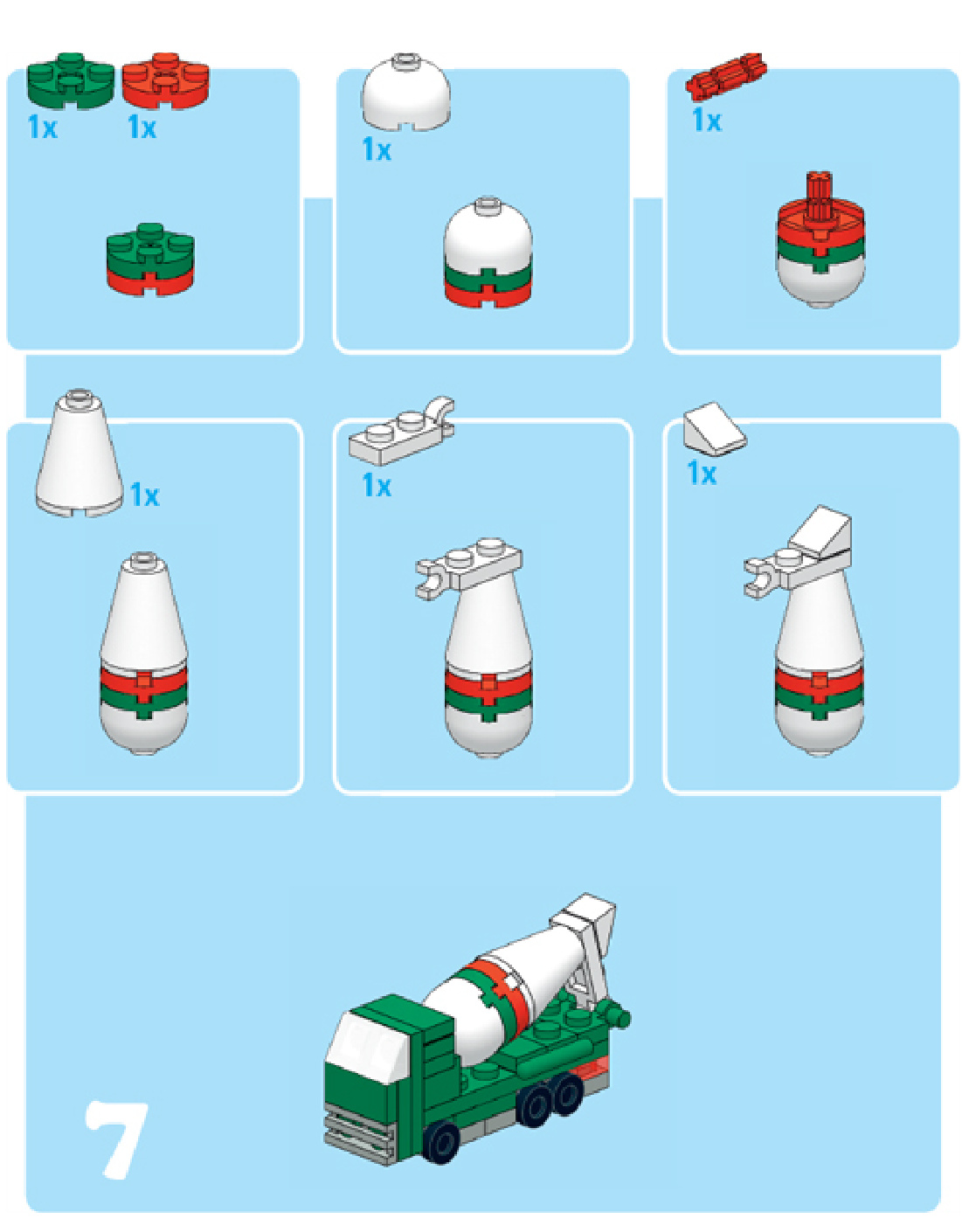
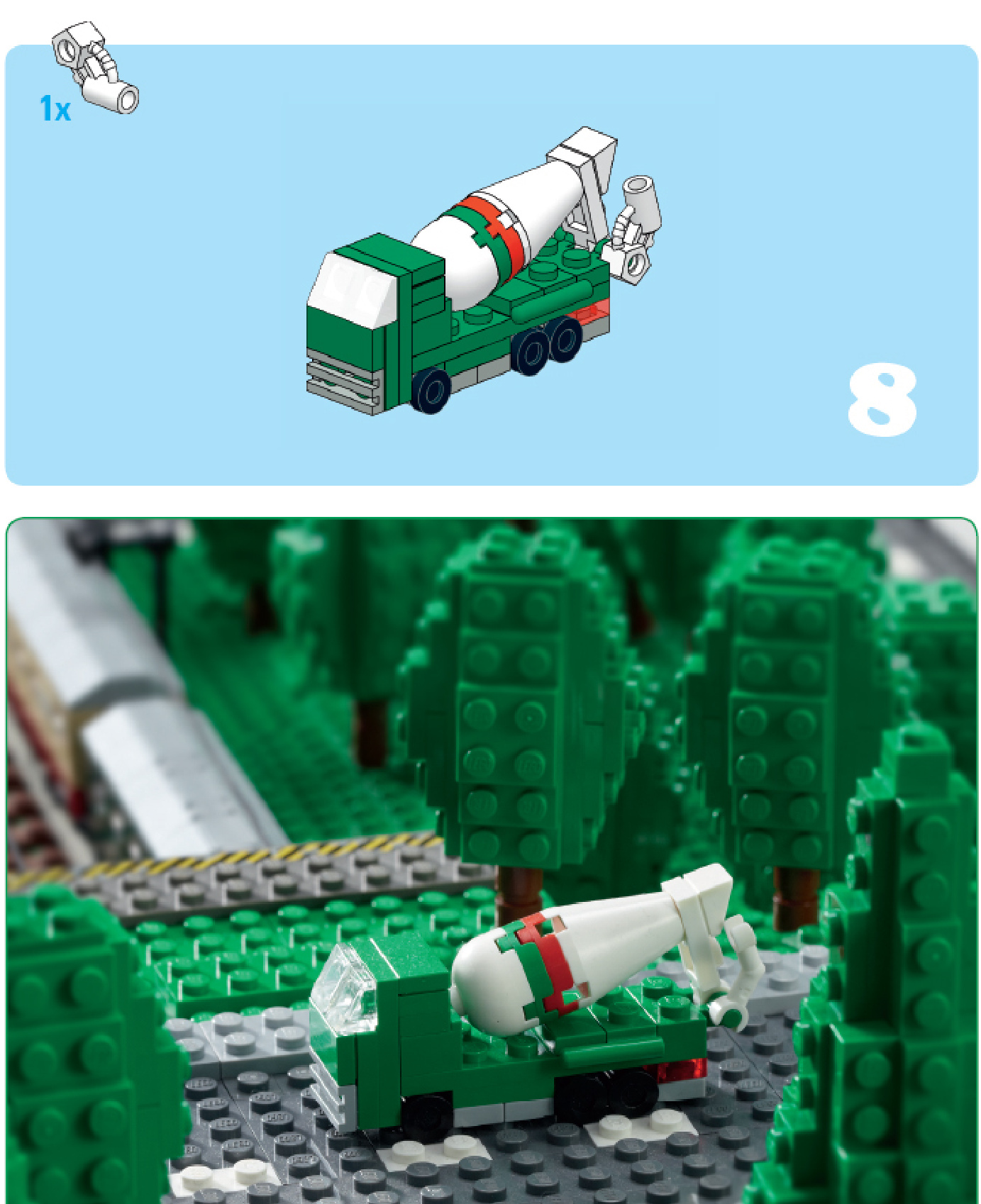
Our cement mixer nicely demonstrates another roof variation for the driver cabin. We used a robot arm for the downspout, but you could also use a skeleton arm. In fact, we were missing a component for once. The other robot arm we show in the instructions fits best here.
We added sound protection walls, emergency phones, and highway signs to the highway scene. You could also add grass verges between the traffic lanes.
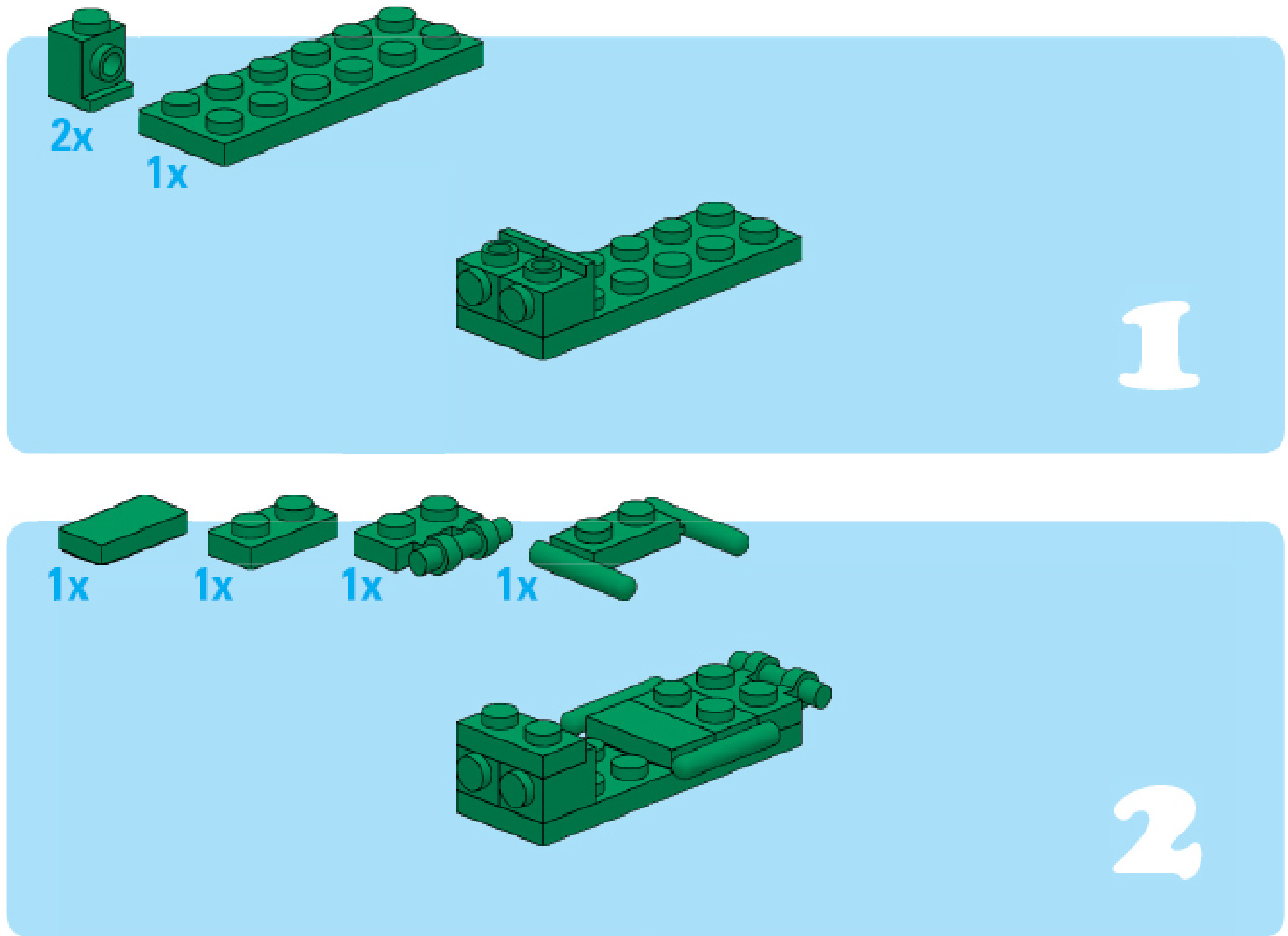
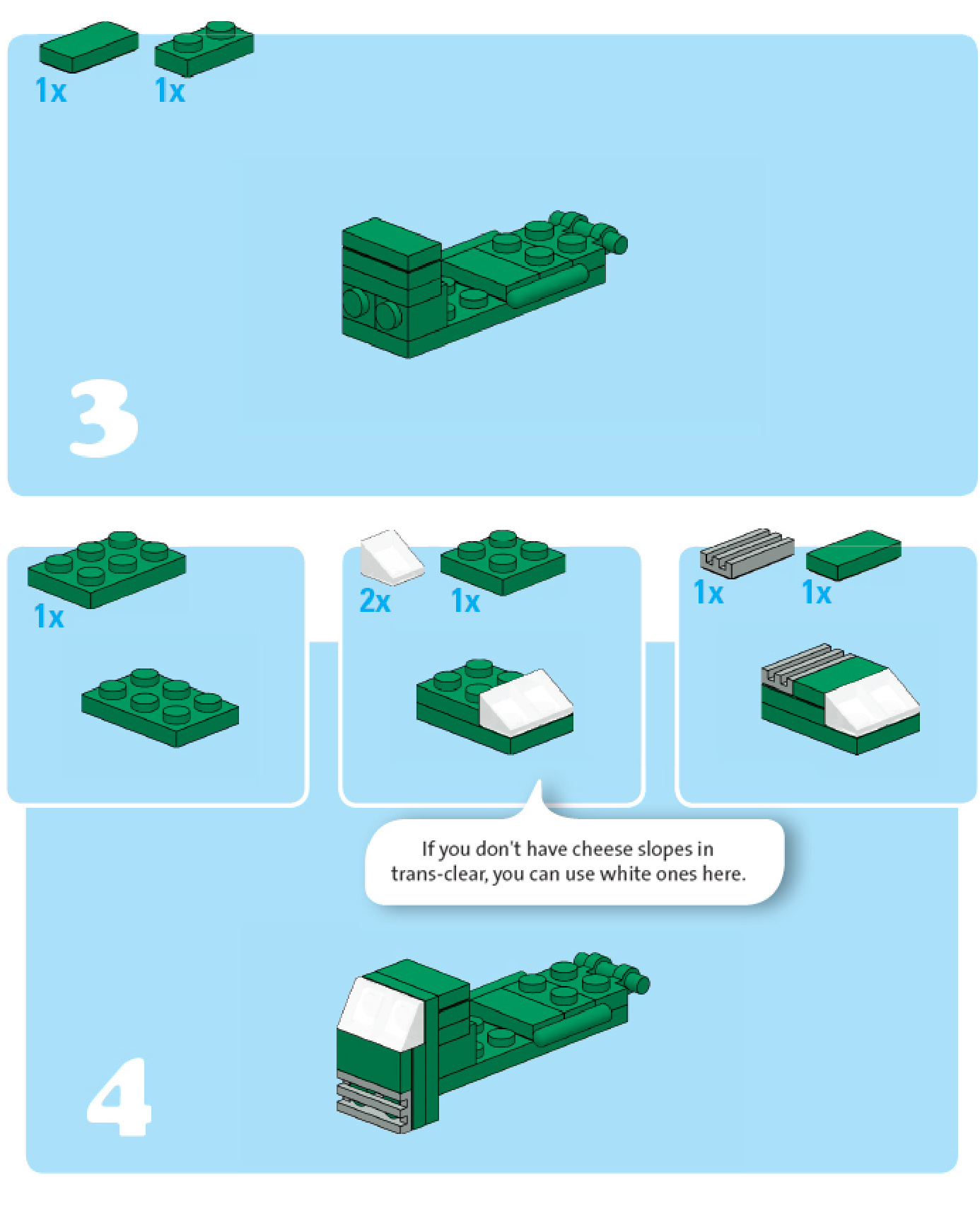
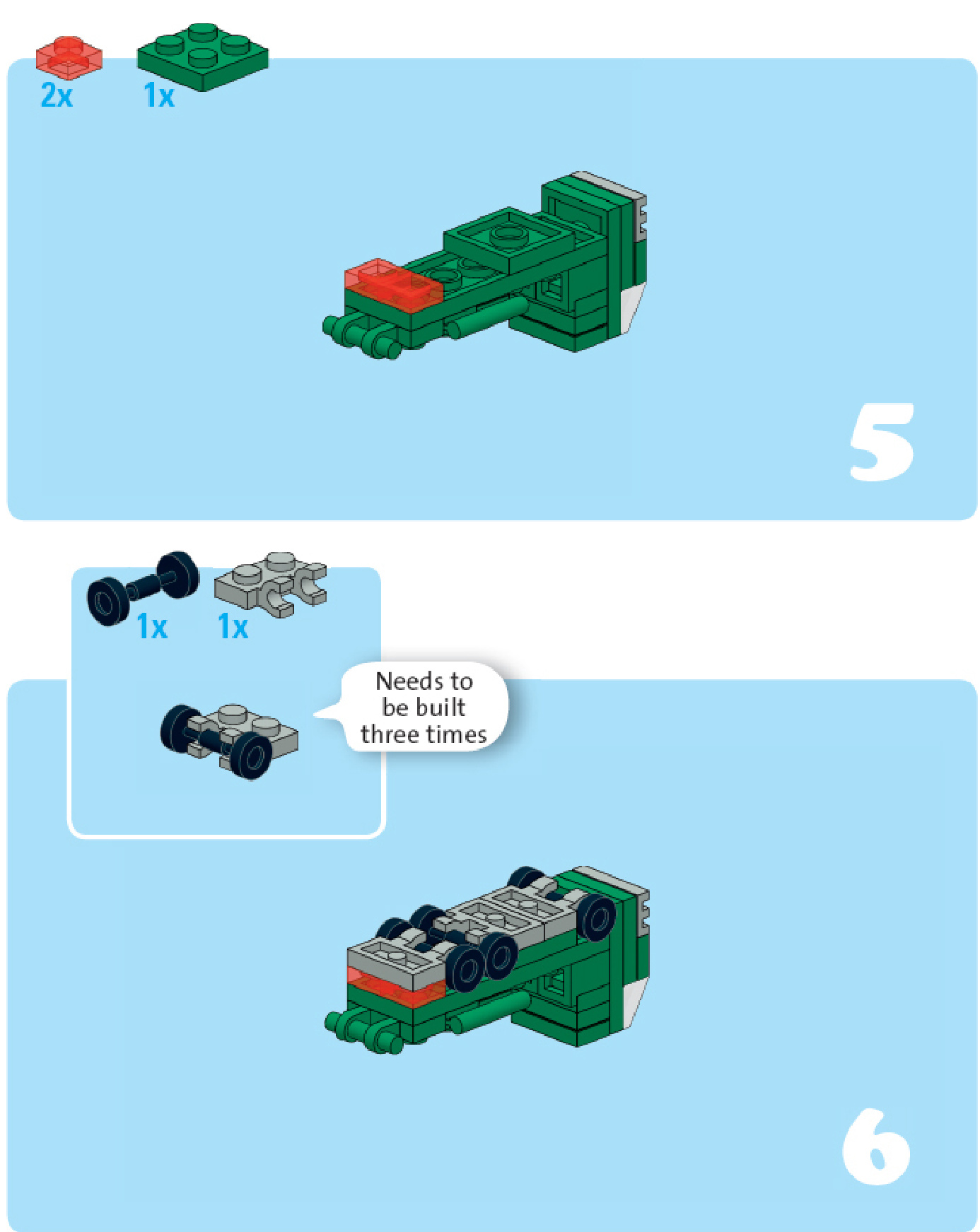
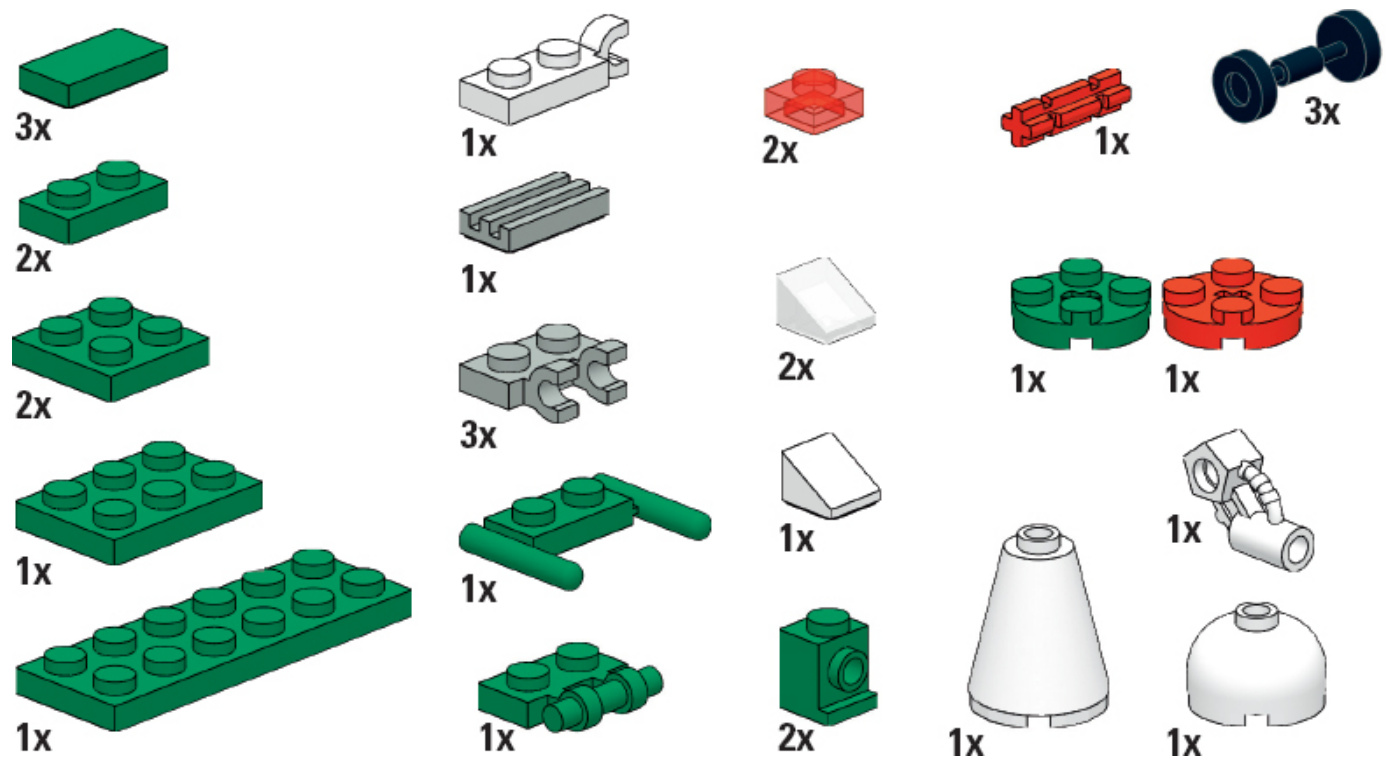
Parts List
Plane
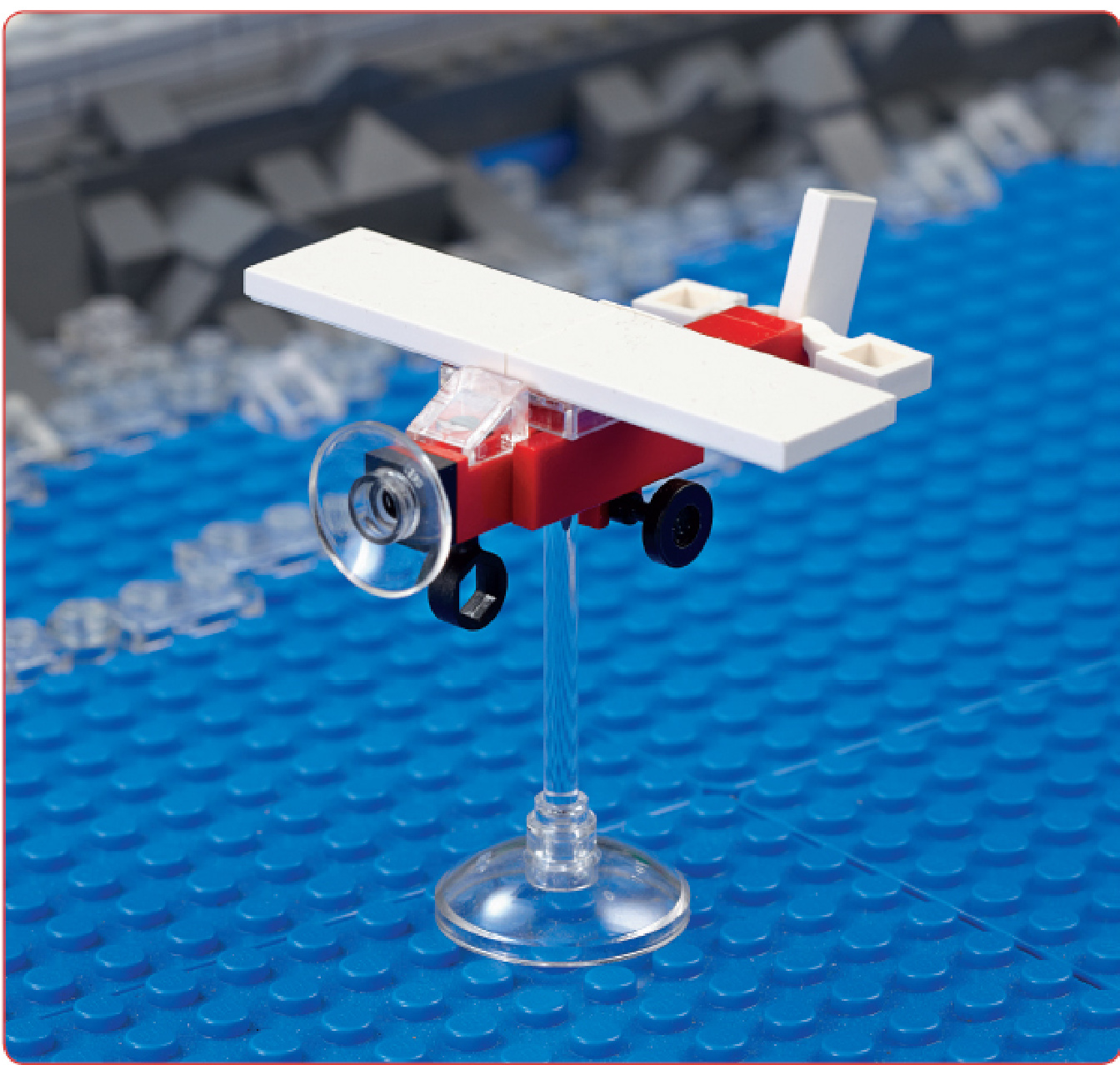
The construction of our plane is untypical here because the elevator and rudder are clamped in the back. However you cannot do it any other way in this scale. We are using a radar dish as the turning rotor. The front tire is a wrench. The new 2x4 tiles are very well suited for the wings.
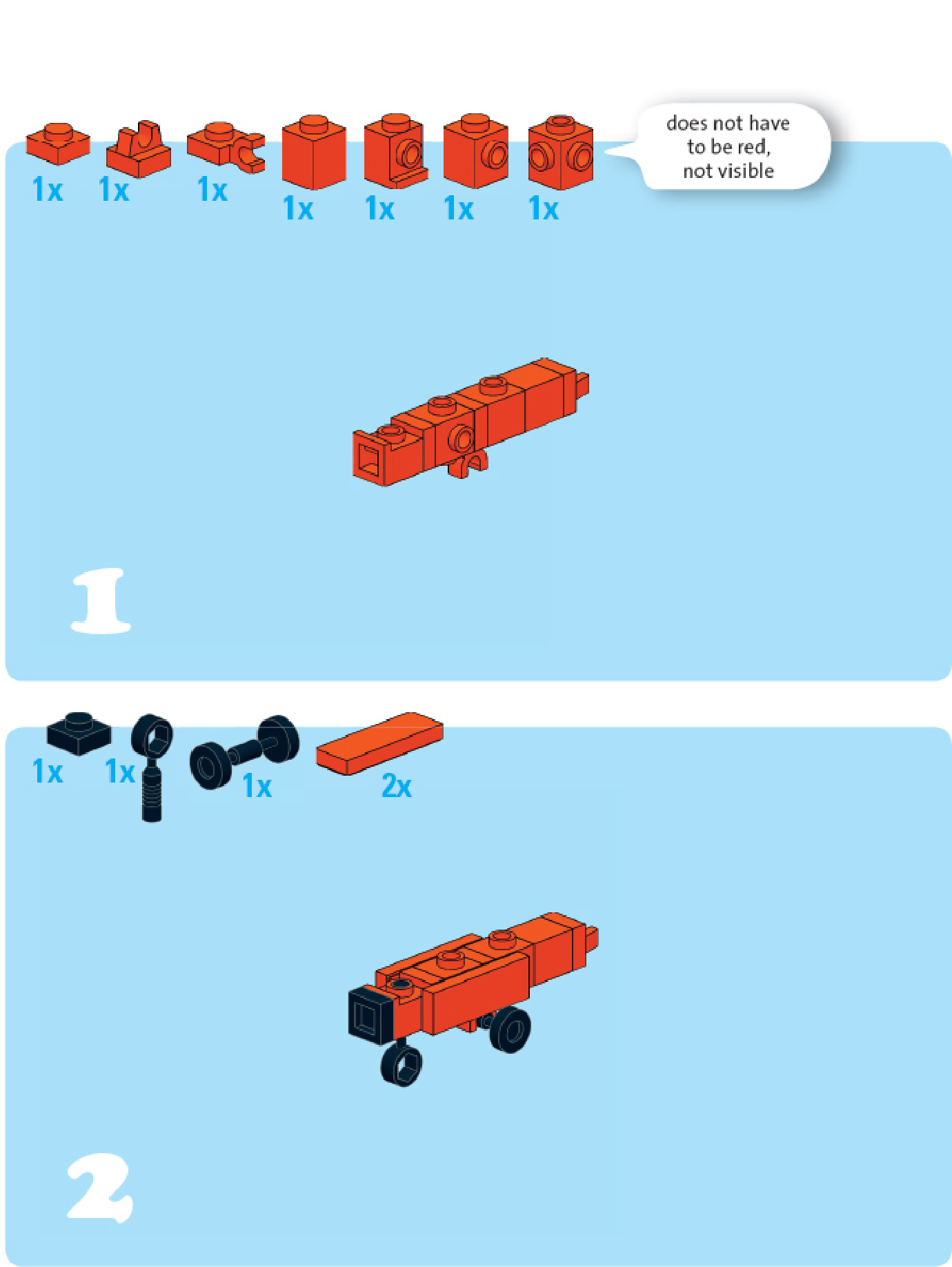
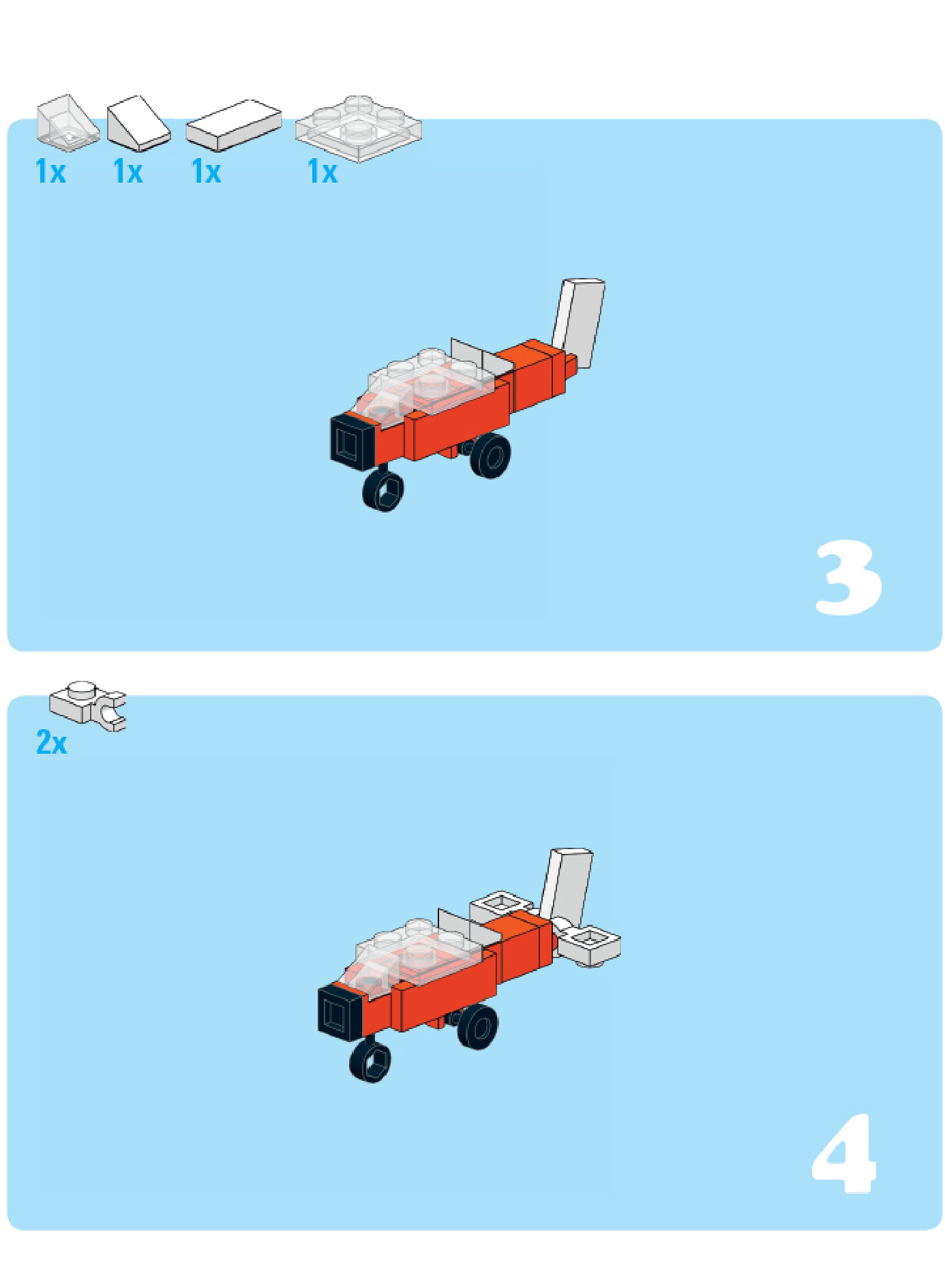
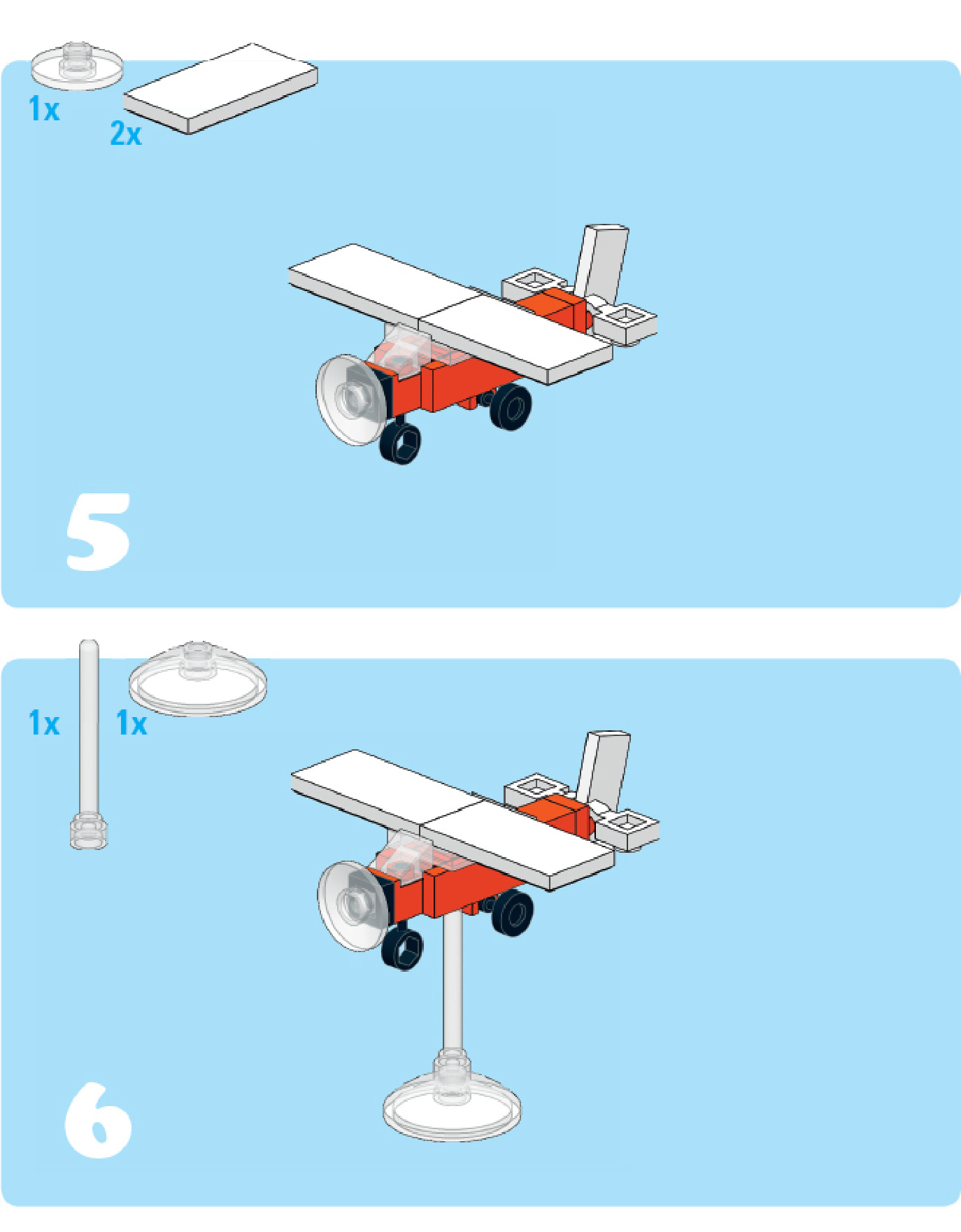
Parts List
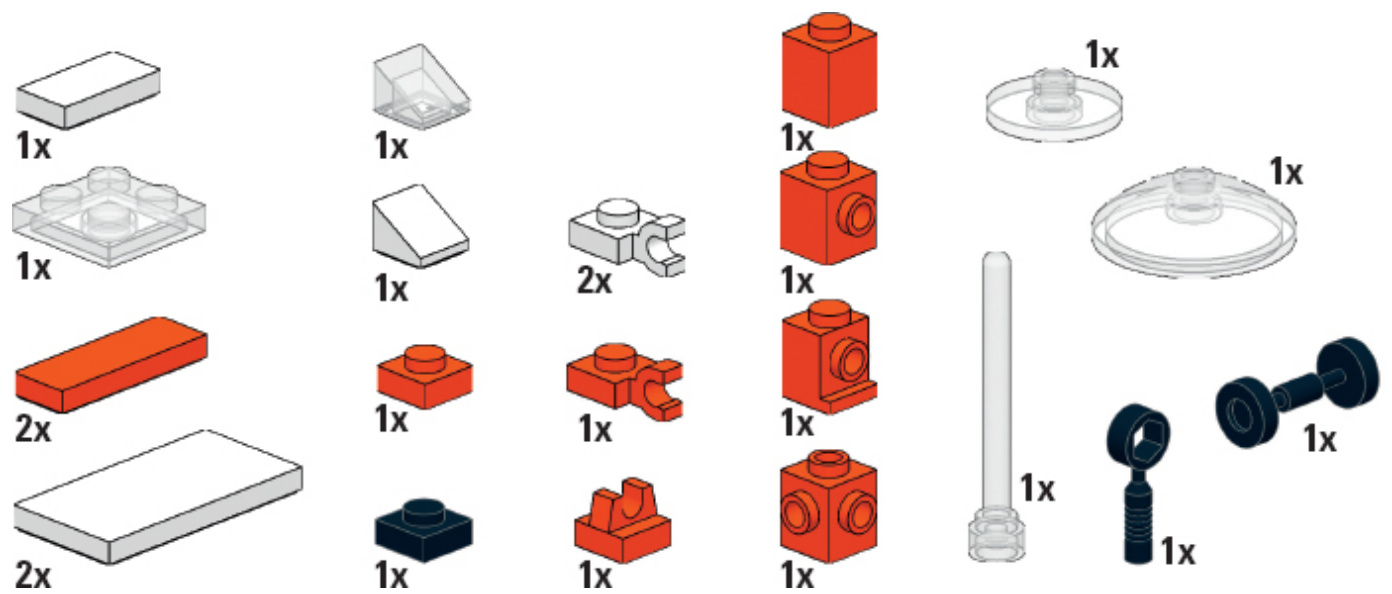
| Quantity | Color | Element | ElementName |
| 1 | Trans_Clear | 3957 | Antenna 4H |
| 1 | Red | 3005 | Brick1x1 |
| 1 | Red | 4070 | Brick 1x 1 with Headlight |
| 1 | Red | 87087 | Brick 1x 1 with Stud on 1 Side |
| 1 | Red | 4733 | Brick 1 x 1 with Studs on Four Sides |
| 1 | Trans_Clear | 4740 | Dish 2x 2 lnverted |
| 1 | Trans_Clear | 43898 | Dish 3x 3 lnverted |
| 1 | Black | 6246d | MinifigTool BoxWrench |
| 1 | Black | 3024 | Plate1x1 |
| 1 | Red | 3024 | Plate1x1 |
| 1 | Red | 6019 | Plate 1x 1 with Clip Horizontal |
| 2 | White | 6019 | Plate 1x 1 with Clip Horizontal |
| 1 | Trans_Clear | 3022 | Plate2x2 |
| 1 | White | 50746 | Slope Brick 31 1x 1x 2/3 |
| 1 | Trans_Clear | 50746 | SlopeBrick 31 1x 1x 2/3 |
| 1 | Red | 2555 | Tile 1x 1 with Clip |
| 1 | White | 3069b | Tile1x 2 with Groove |
| 2 | Red | 63864 | Tile1x 3withGroove |
| 2 | White | 87079 | Tile2x4withGroove |
| 1 | Black | 2496 | WheelTrolley |
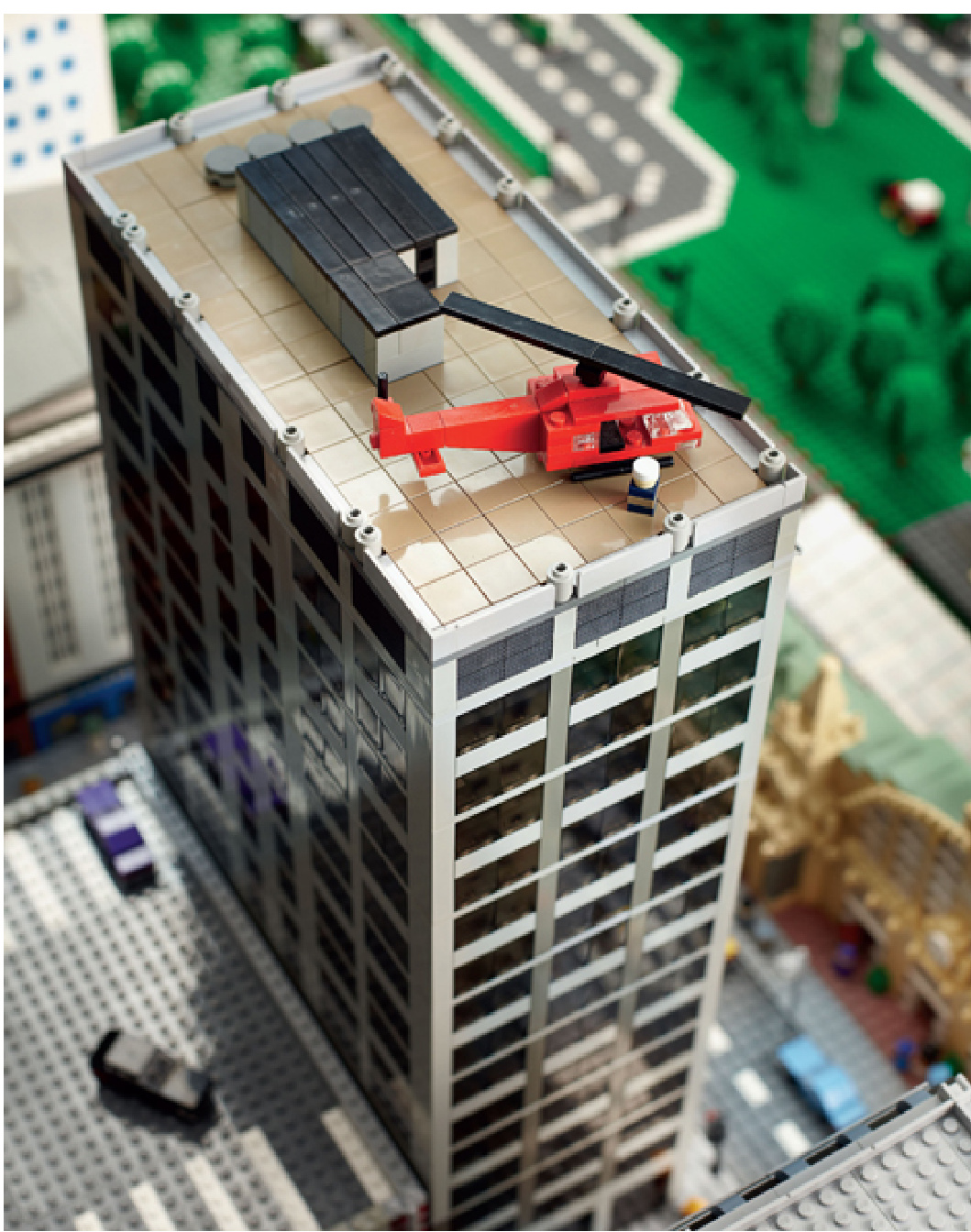
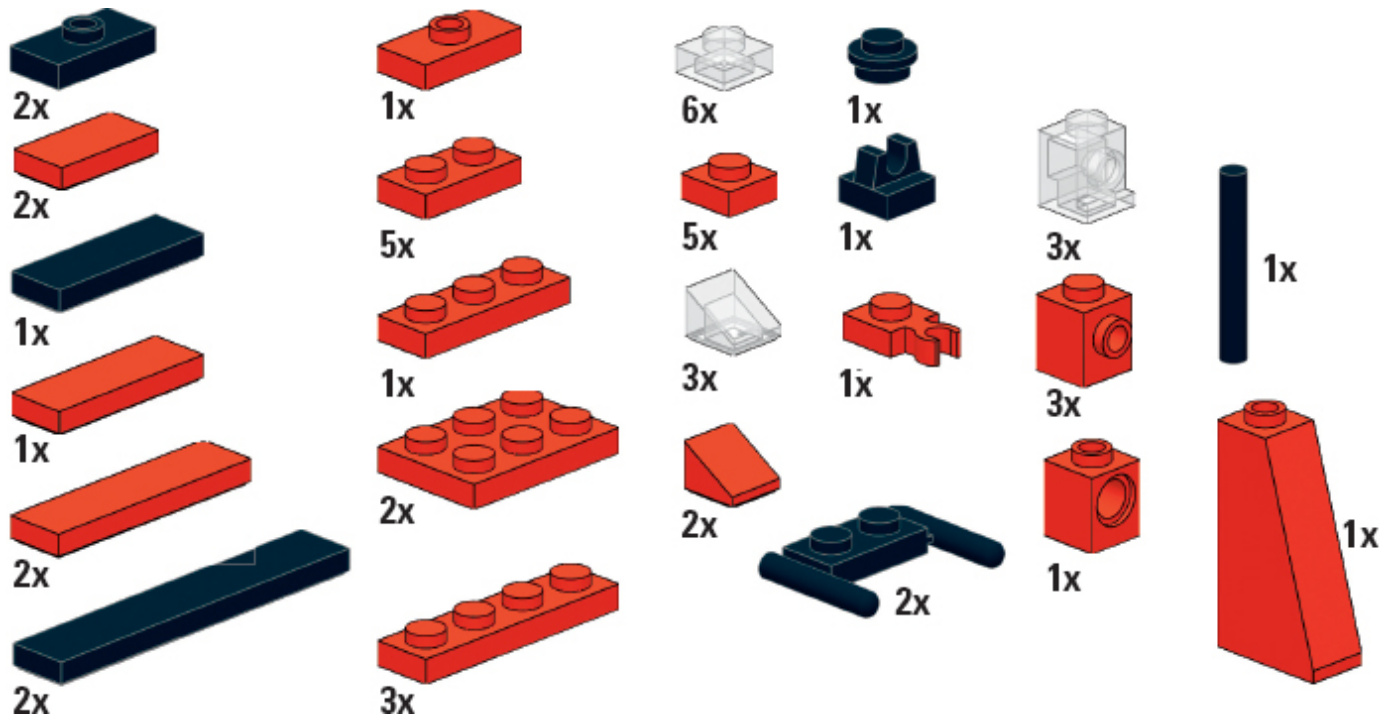
After we built the professional helicopter model featured in the back of this book, we wanted to build a helicopter in the Midi scale as well.
We used the rare transparent lamp bricks for the windshield, but they could be substituted by other elements of course, for example roof bricks. Their advantage is that they have a depression which makes their curvature stand out a bit in the front.
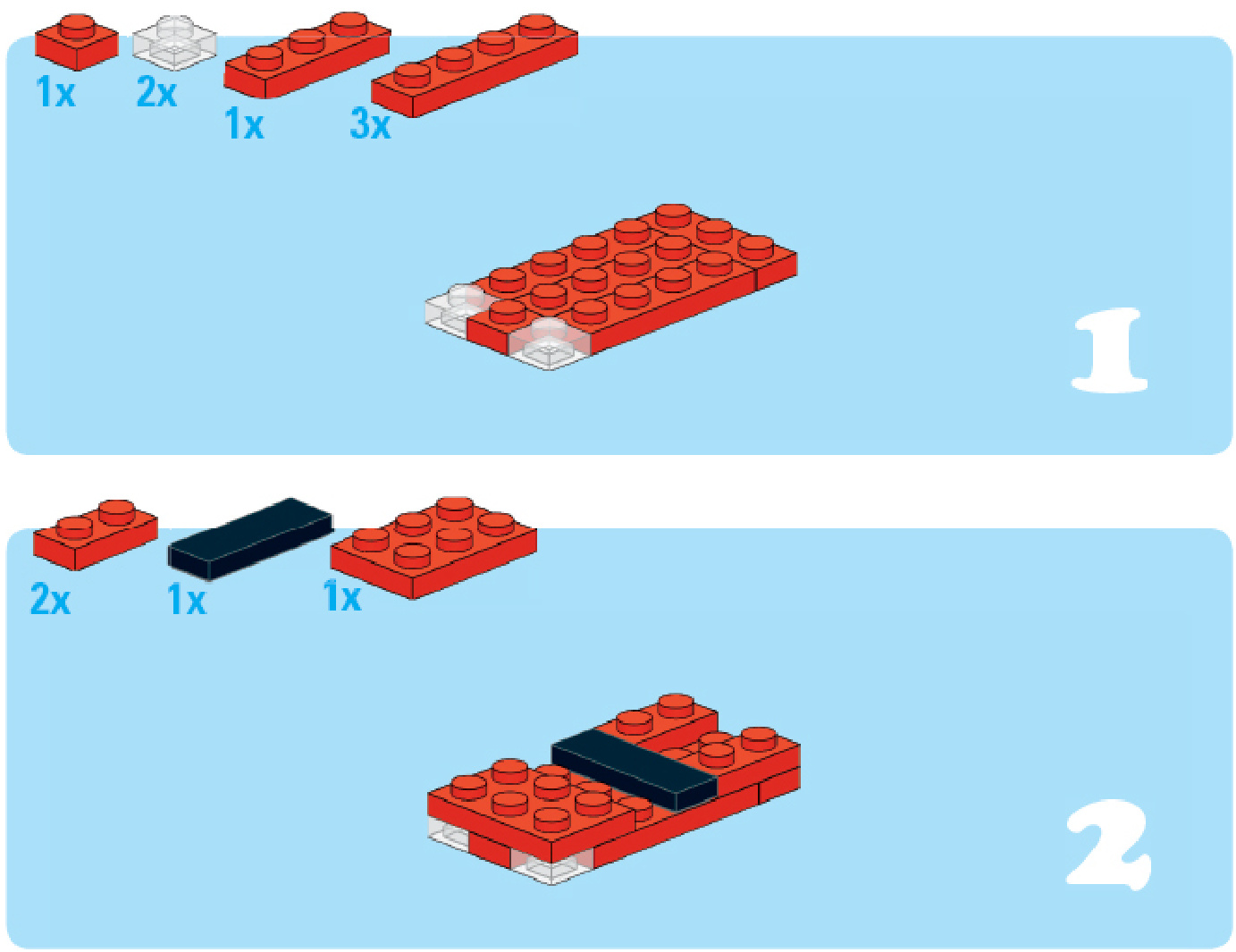
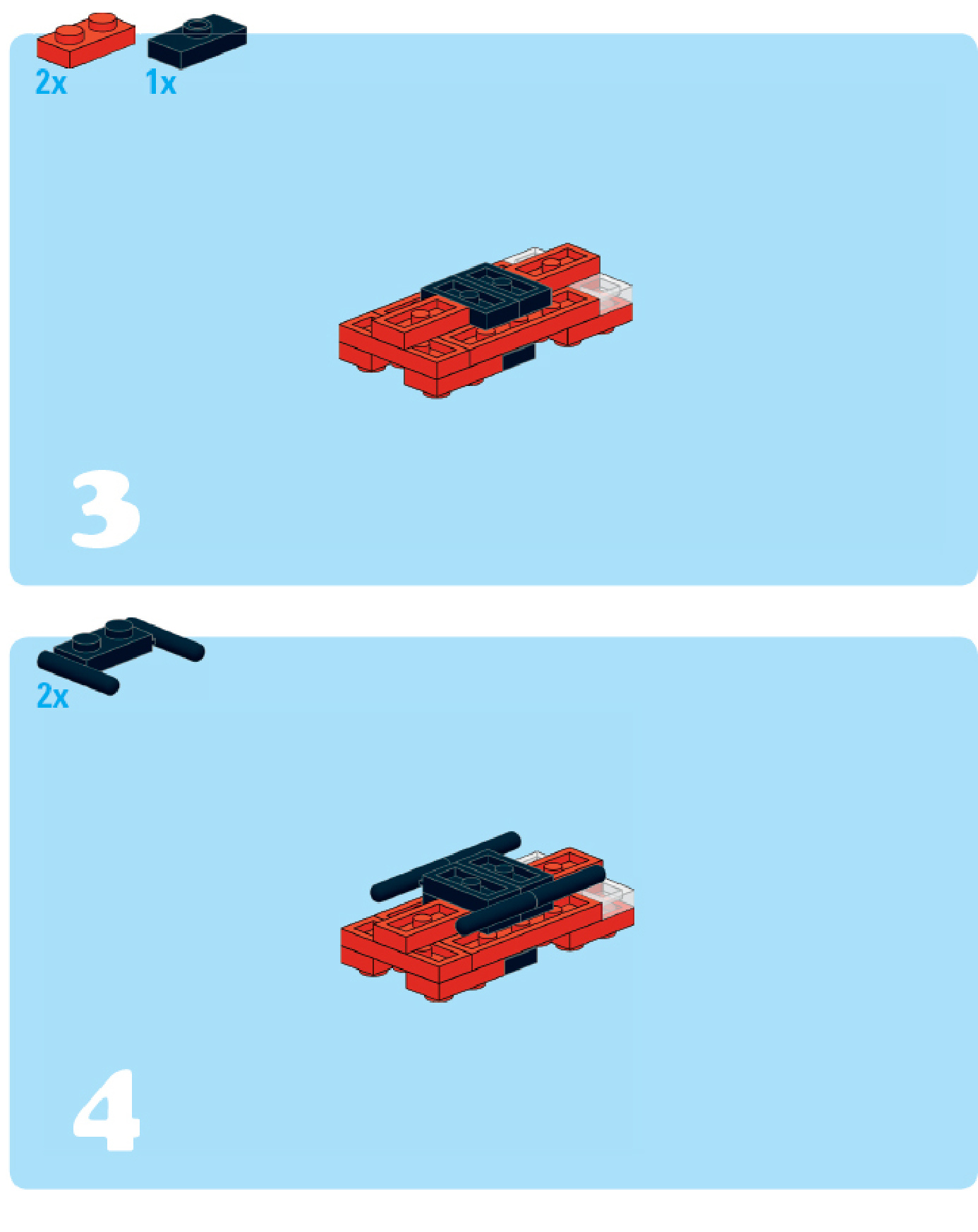
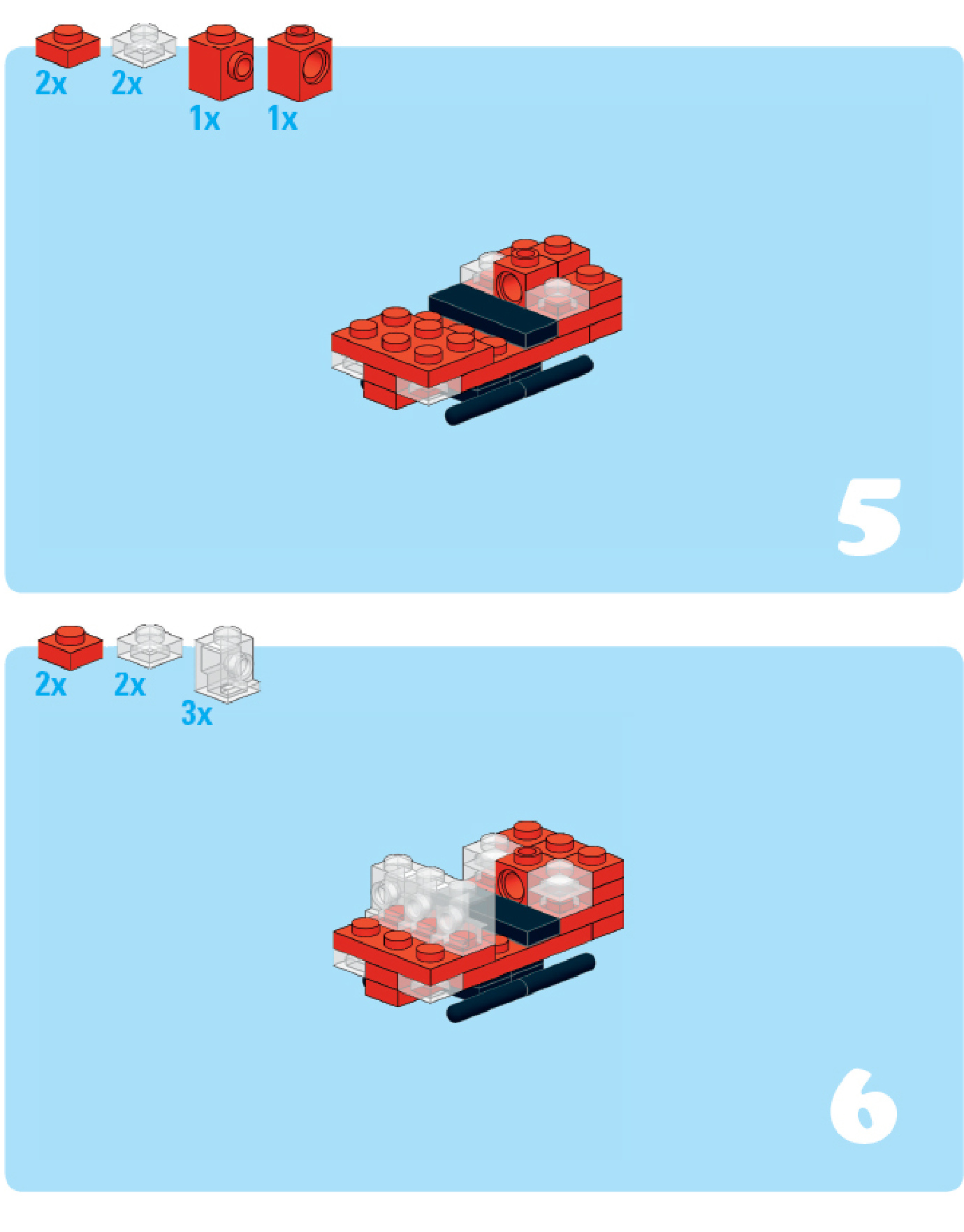
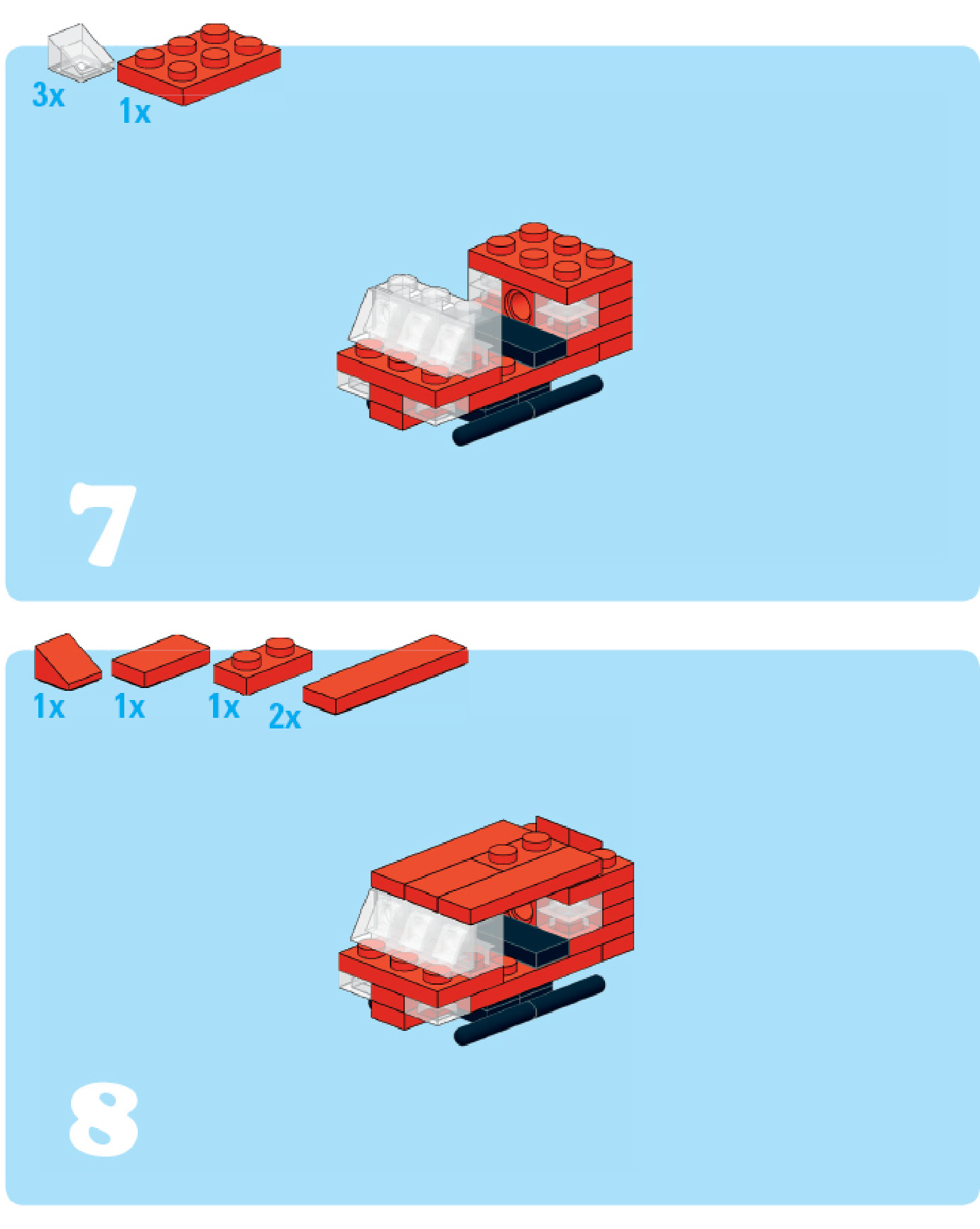
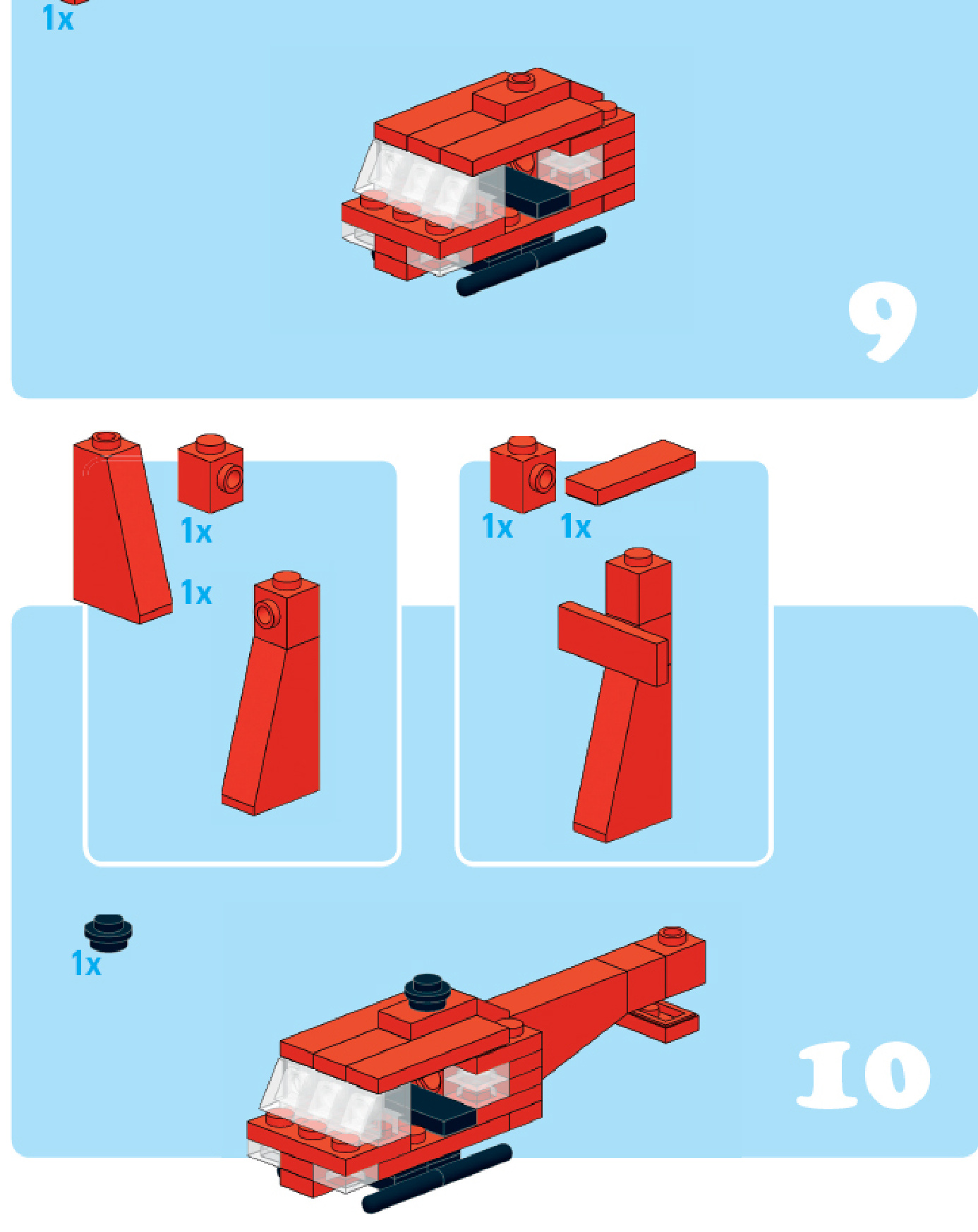
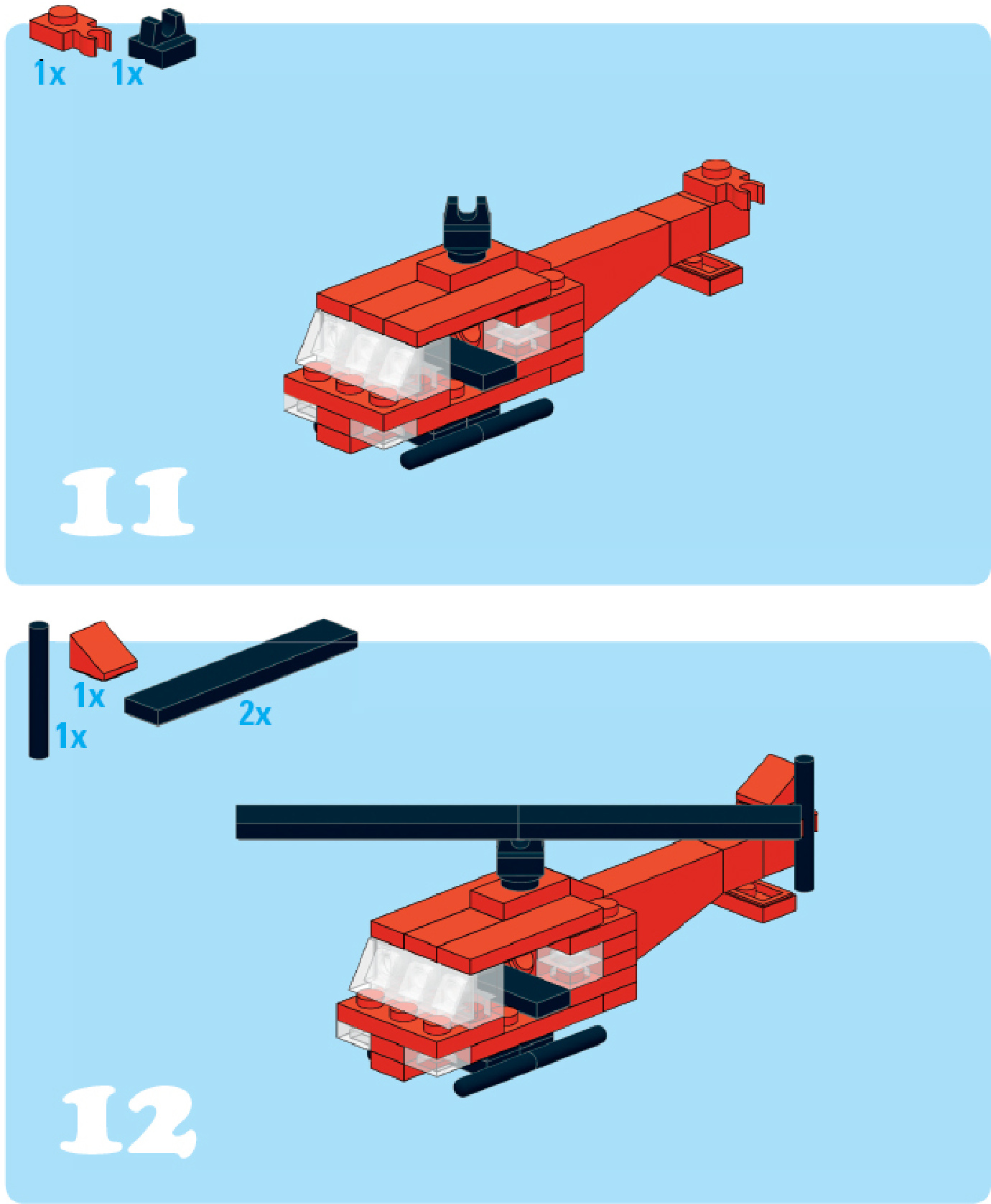
Parts List
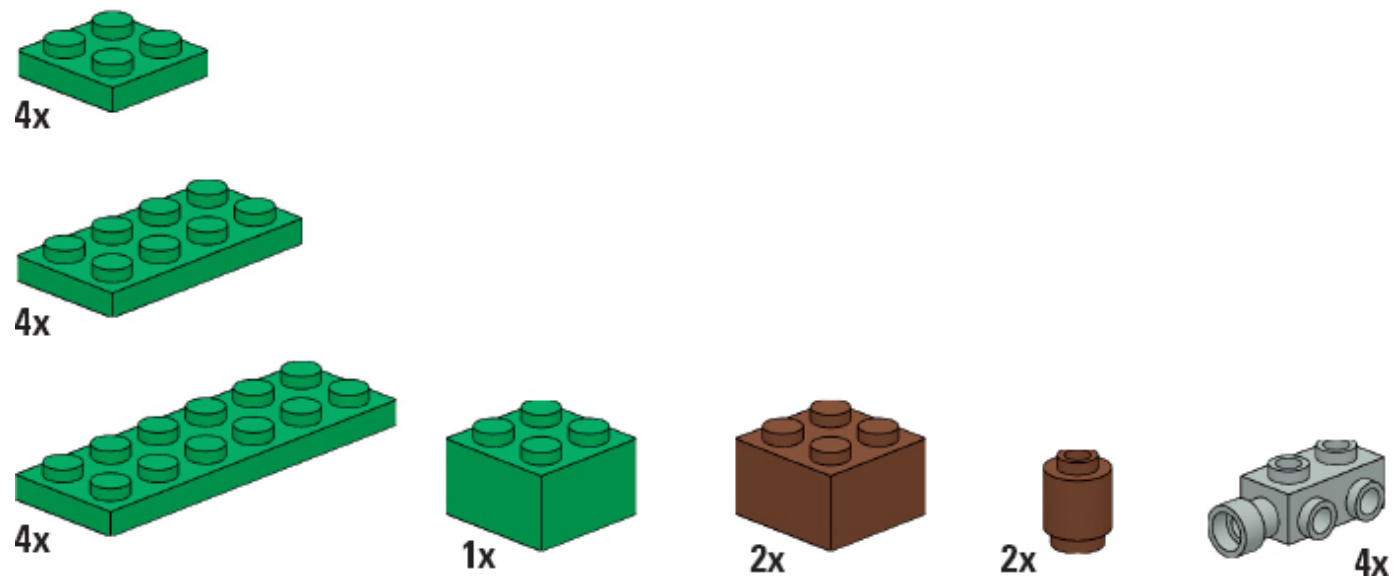
broadleaf tree
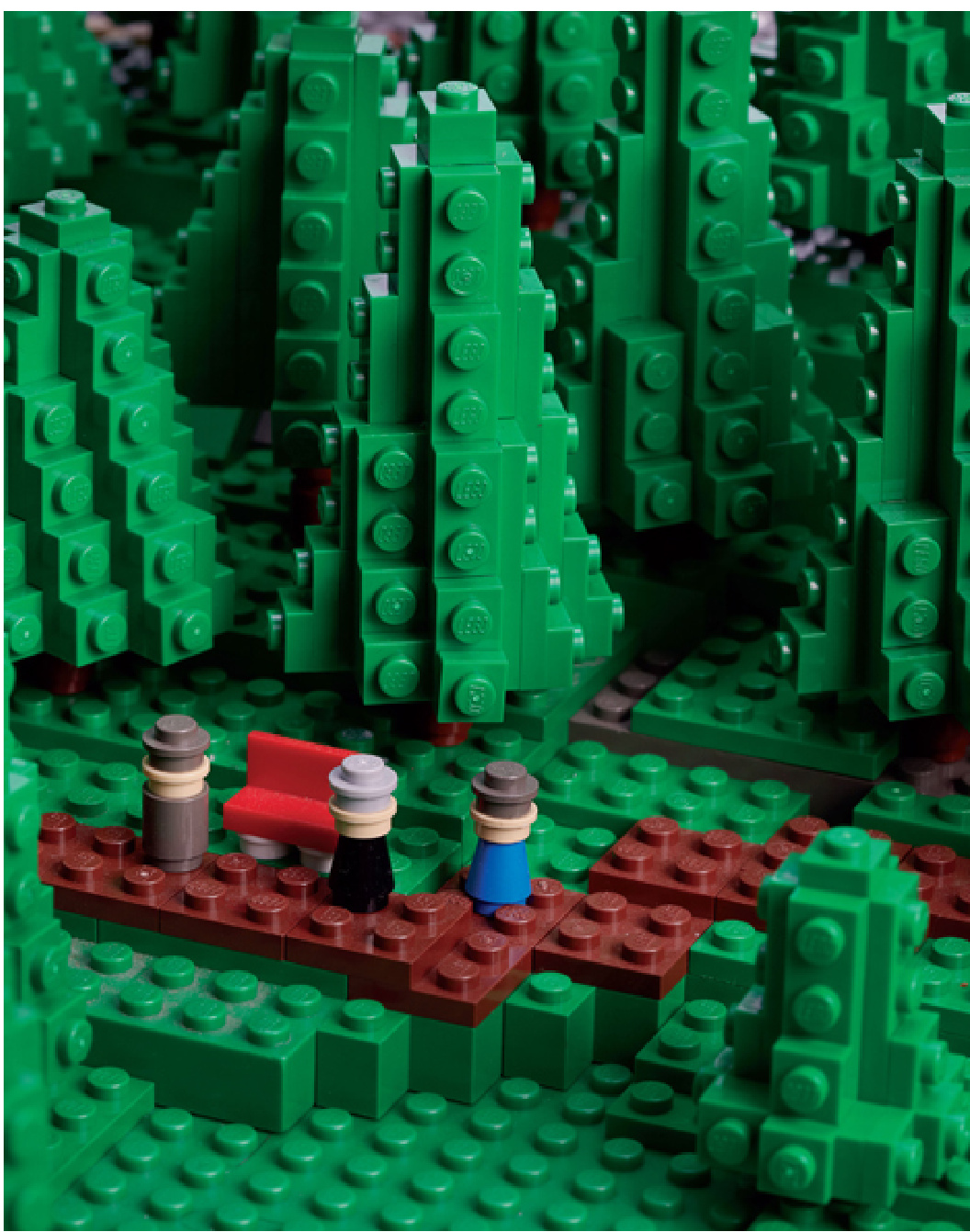
Trees need your imagination! We show you the construction for a big fir and a broadleaf tree. But not all trees look the same, there are big ones and small ones, bushy ones and slim ones, some are just stumps. Be creative! The three older ladies are happy about a park bench in the shade of the trees - the already familiar panel in red, by the way …
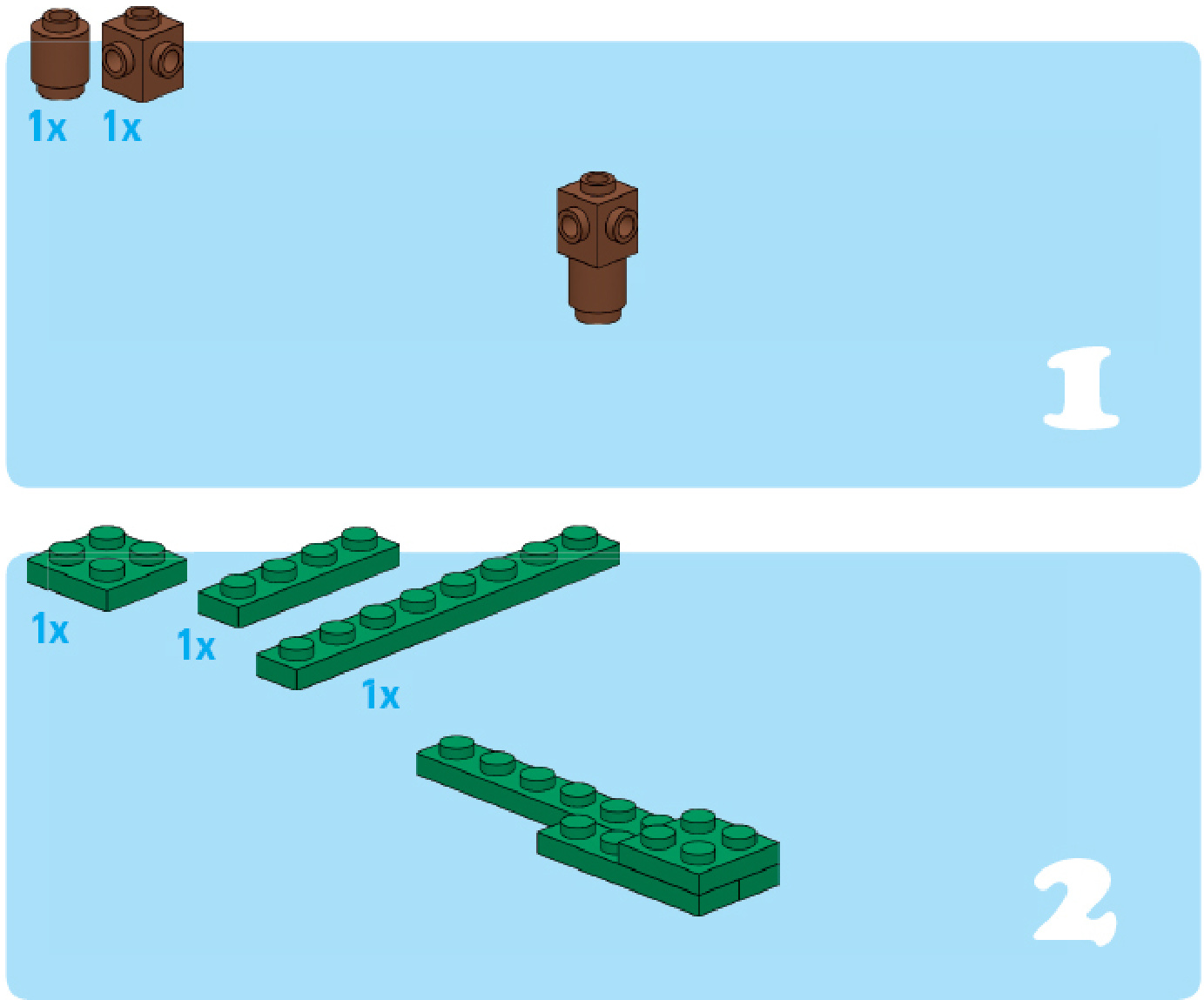
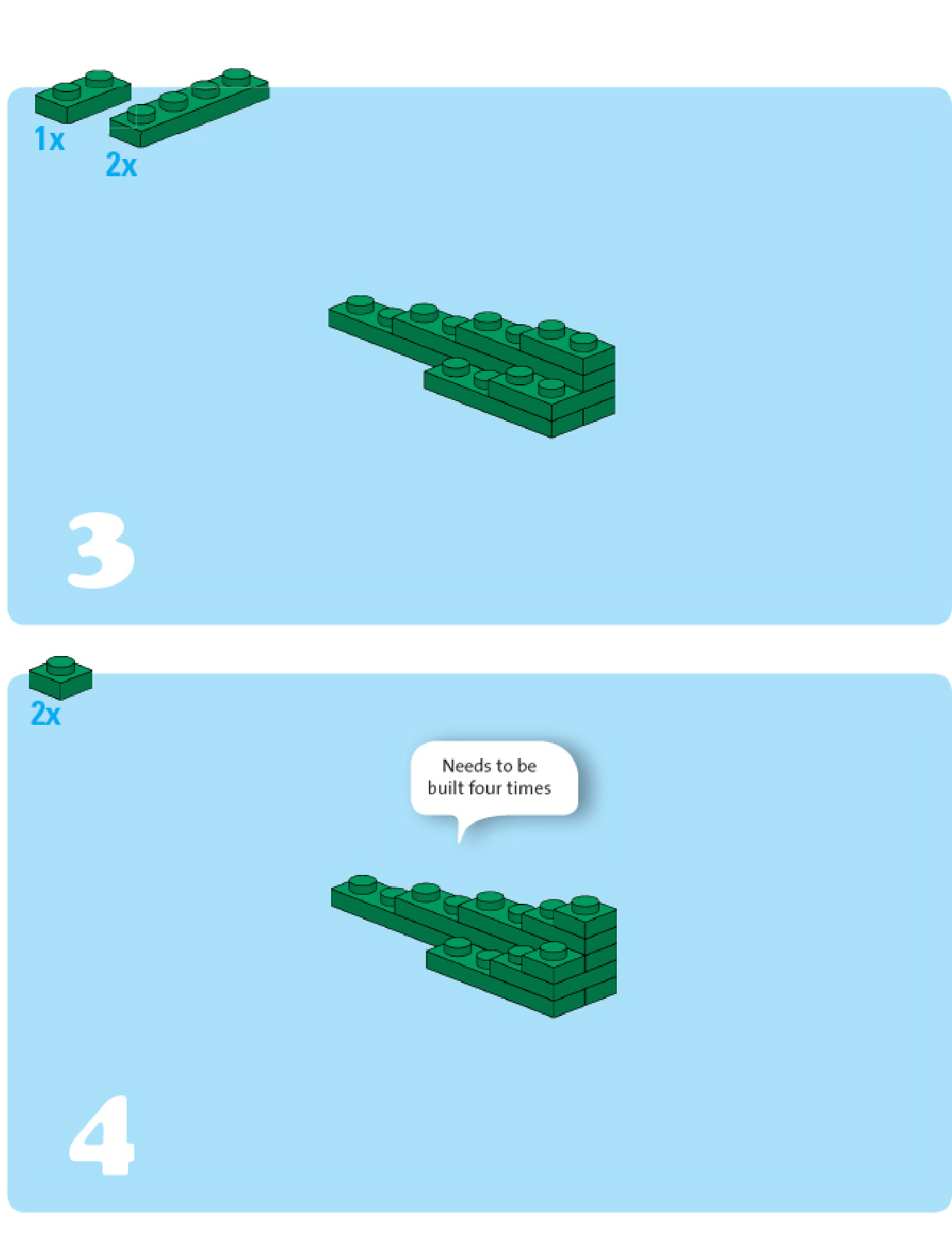
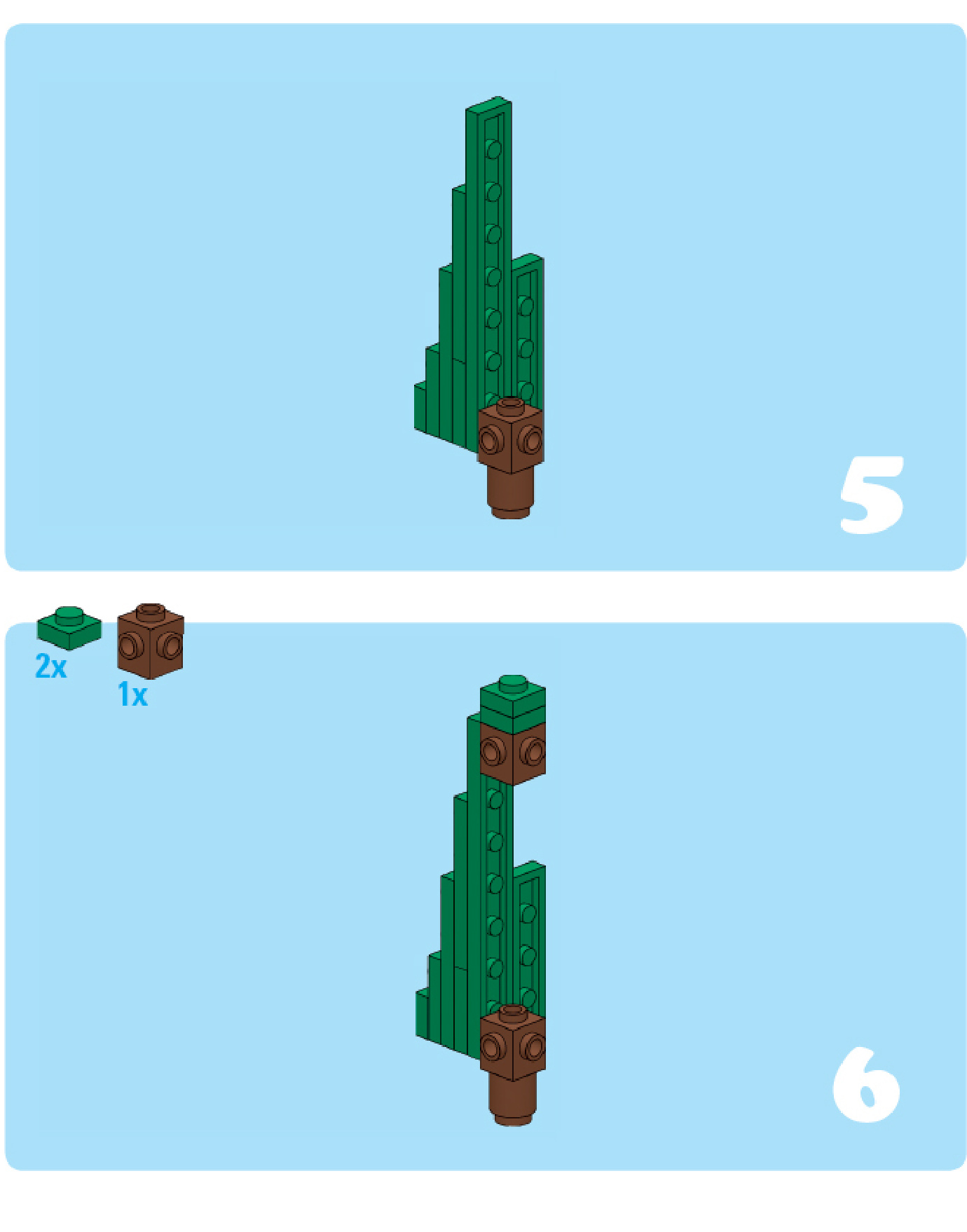
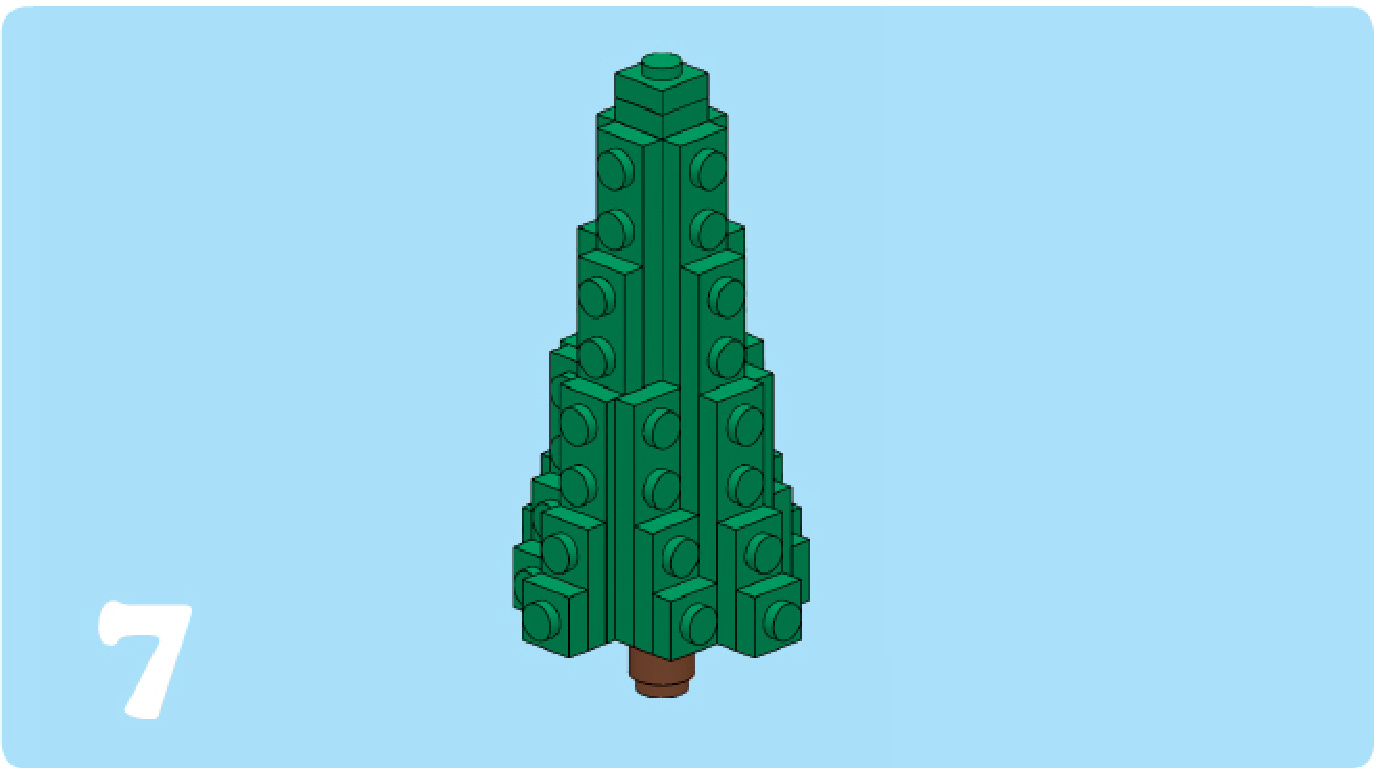
Parts List
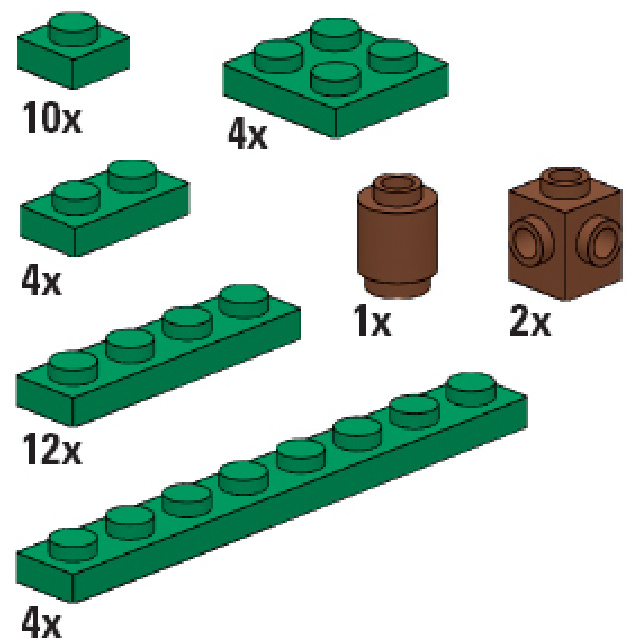
Broadleaf Tree
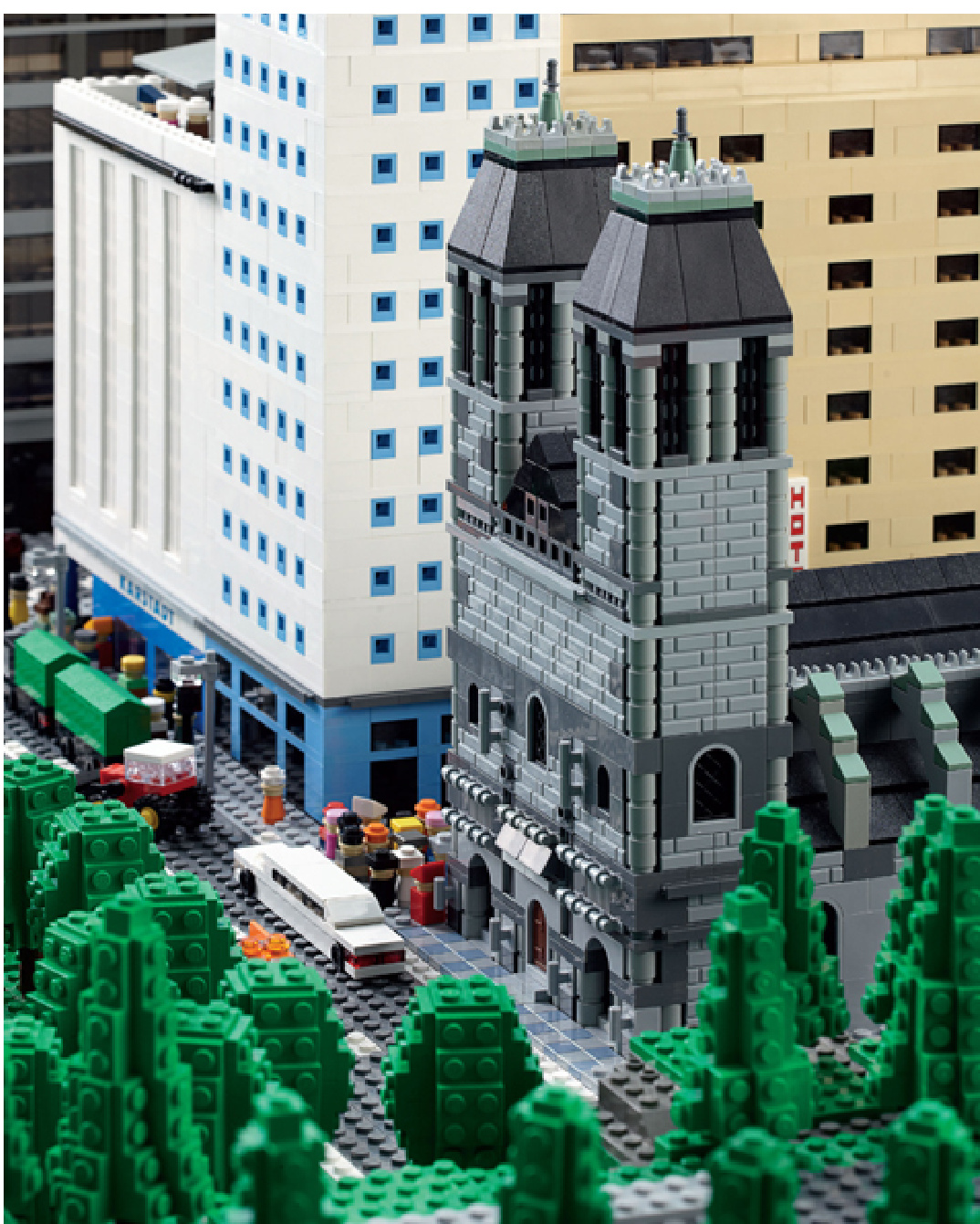
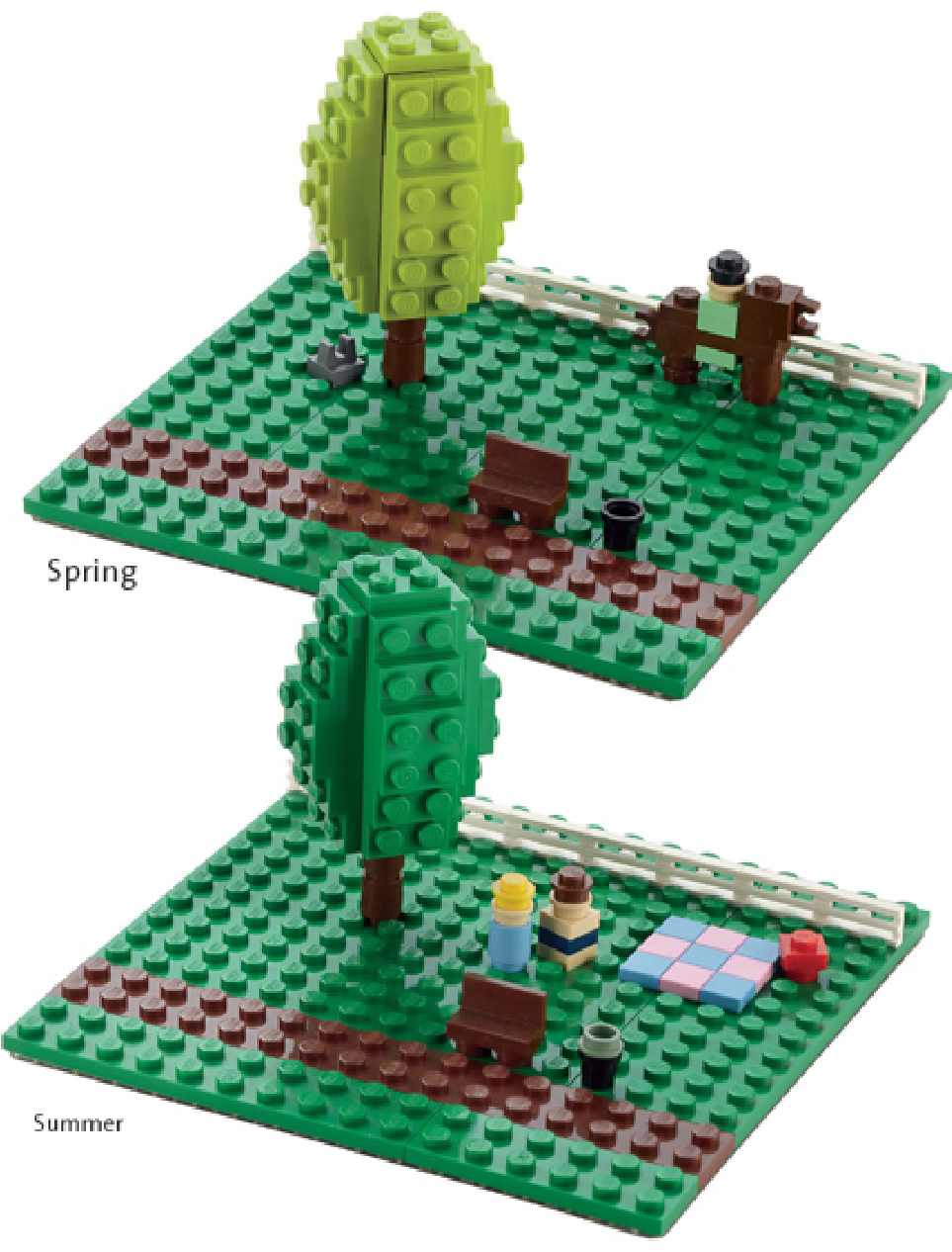
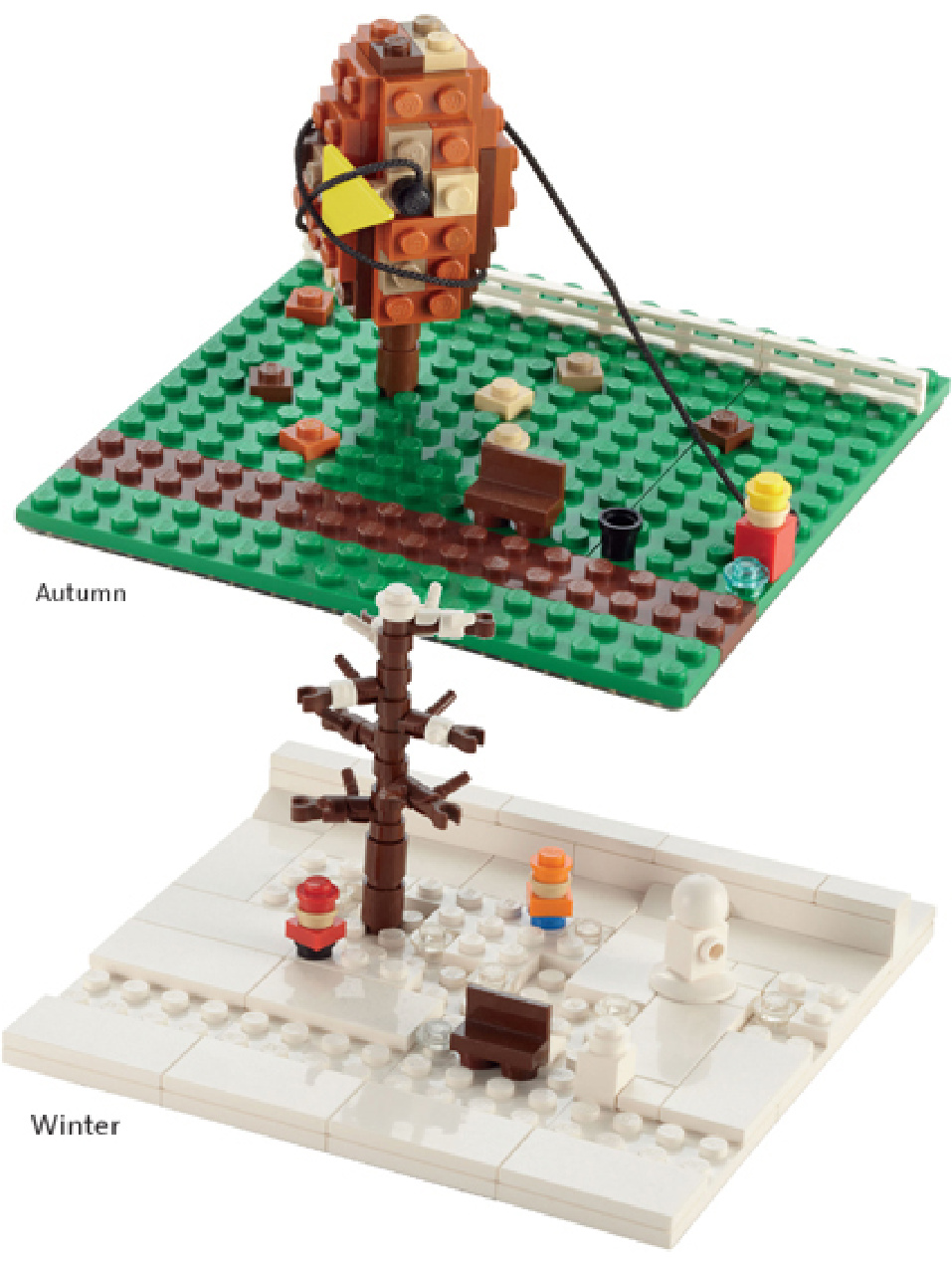
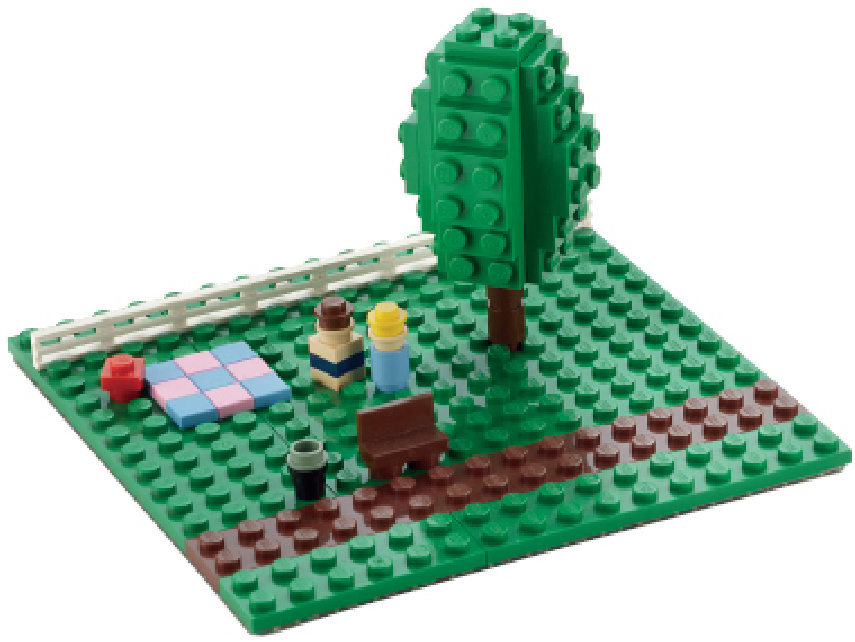
Broadleaf trees can appear very different depending on their color and the landscape around them. A bright green clearly indicates a tree in spring, while brown and red shades symbolize autumn - have a look on page 140/141.
By the way: Have you ever built a snowman from LEGO??
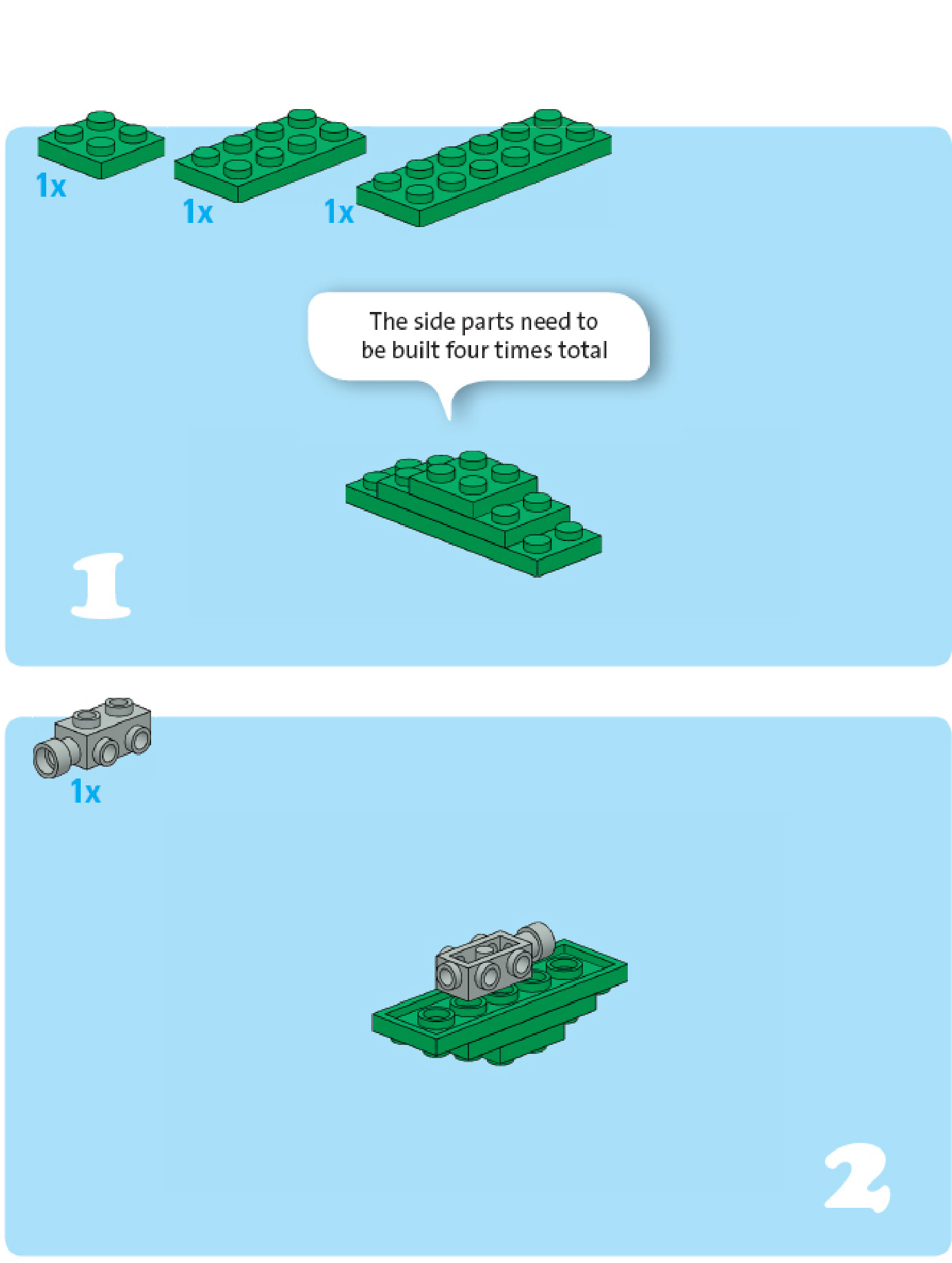
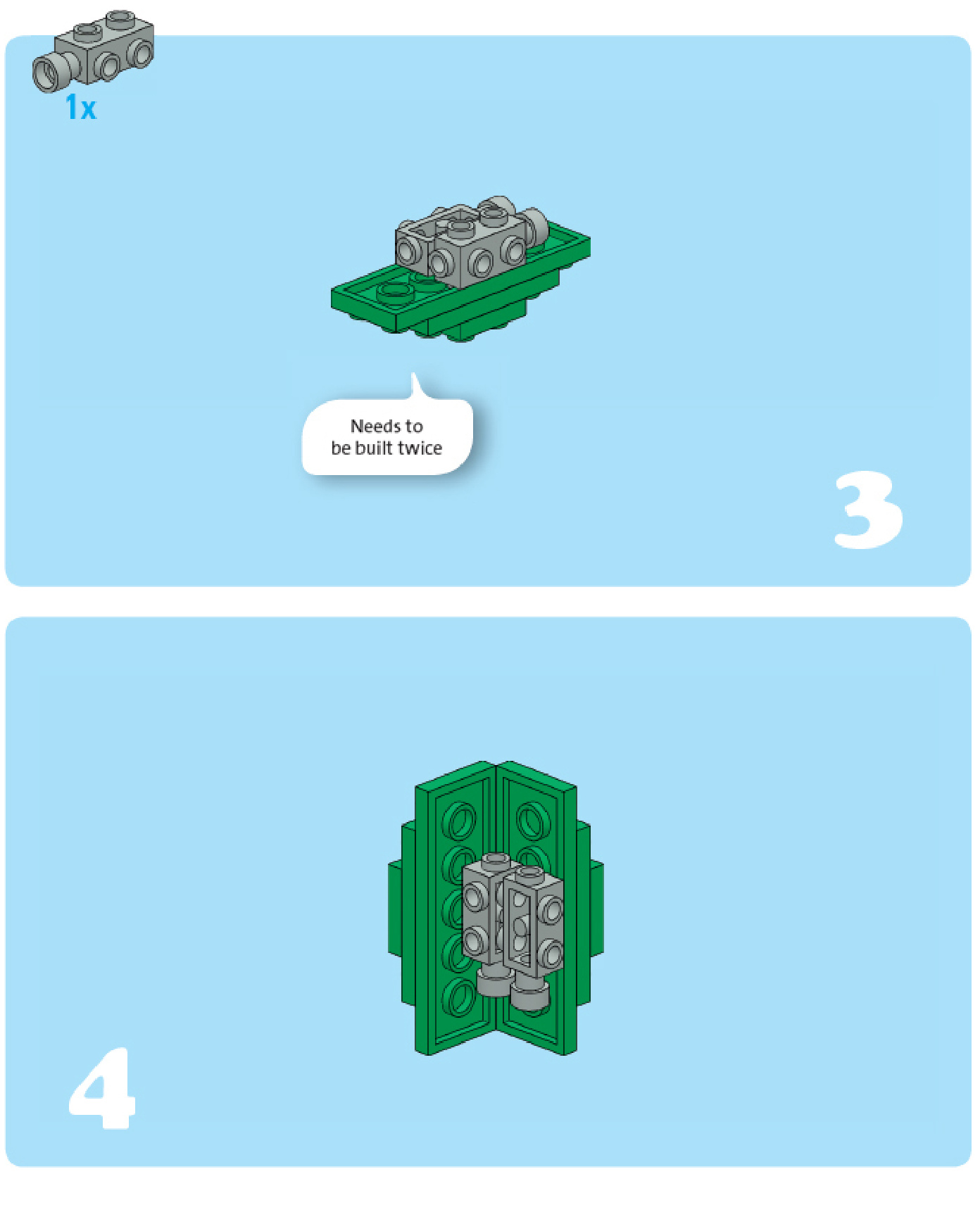
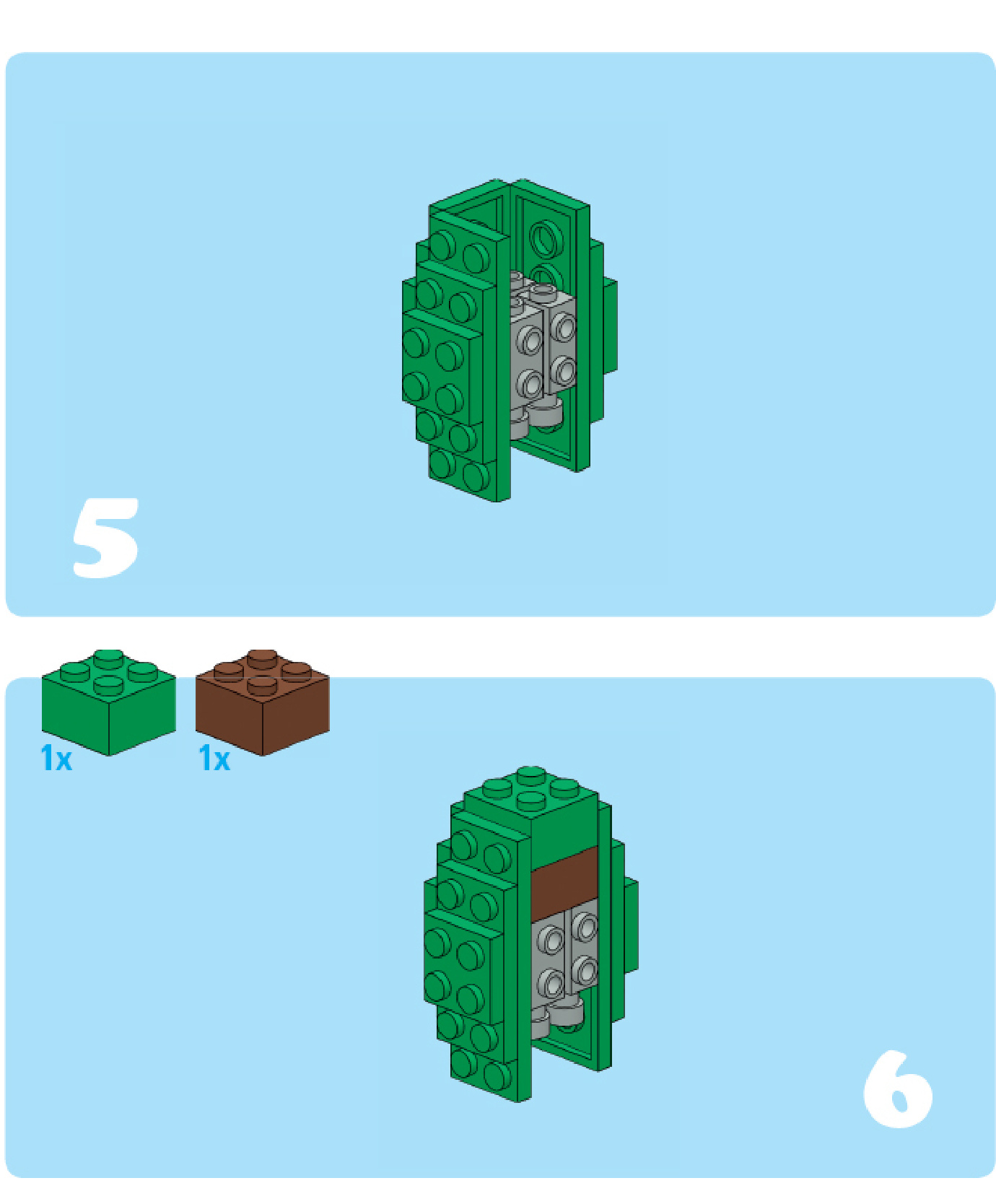
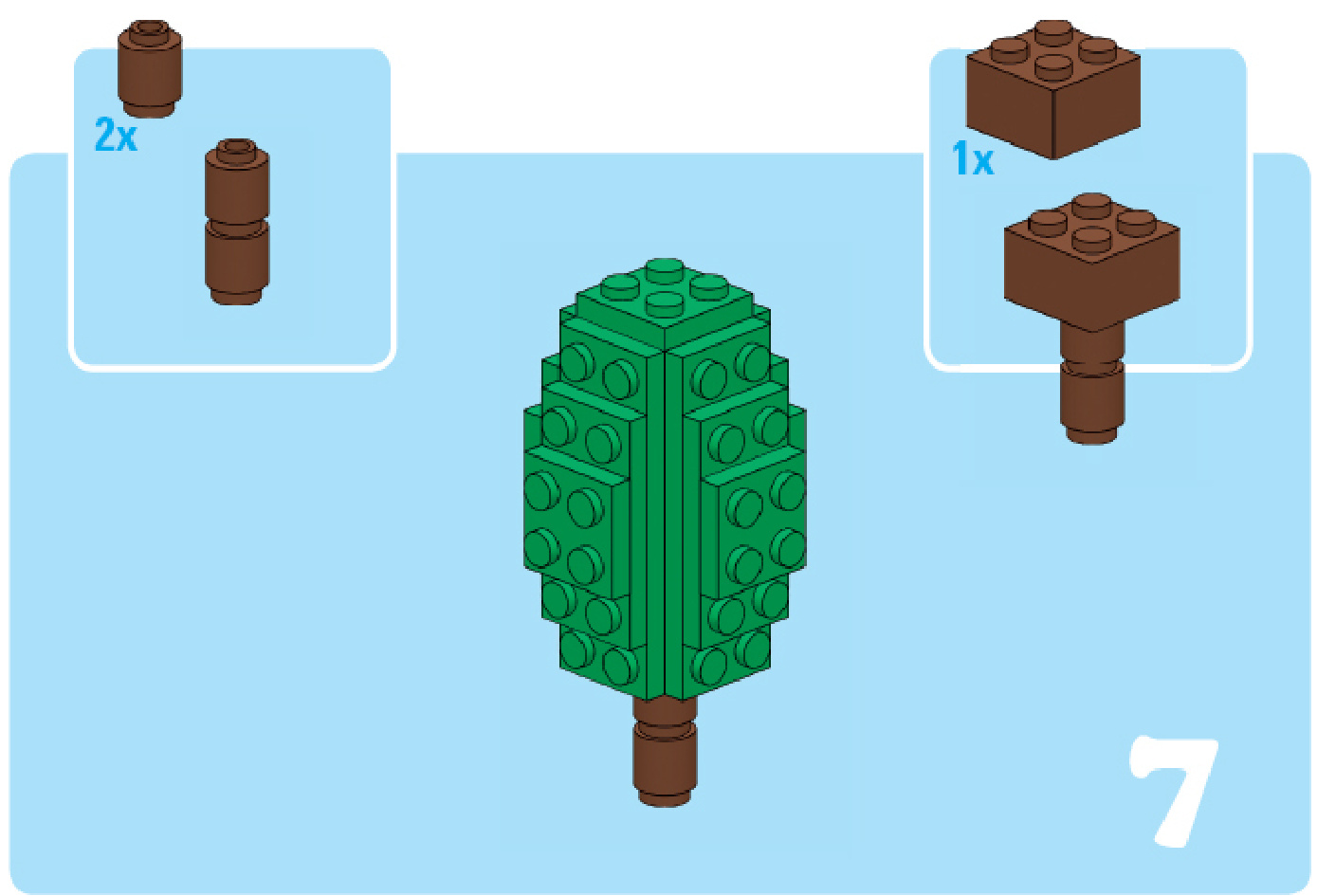
Parts List
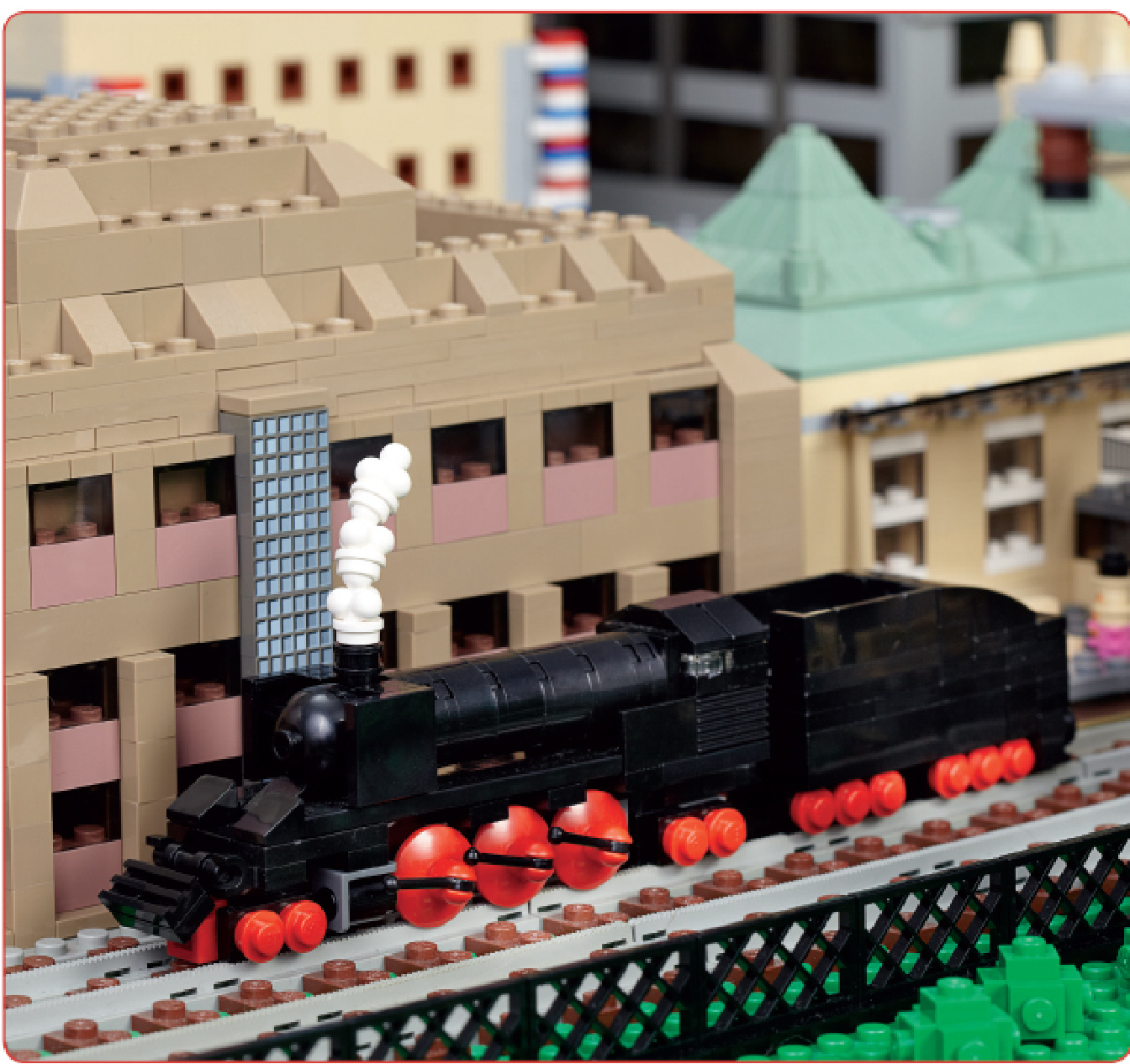
Steam Train
It was quite a challenge to build a steam train in this scale. But it had to be there, of course! Three stacked ice bricks are the steam here - basically there is no better way to build steam.
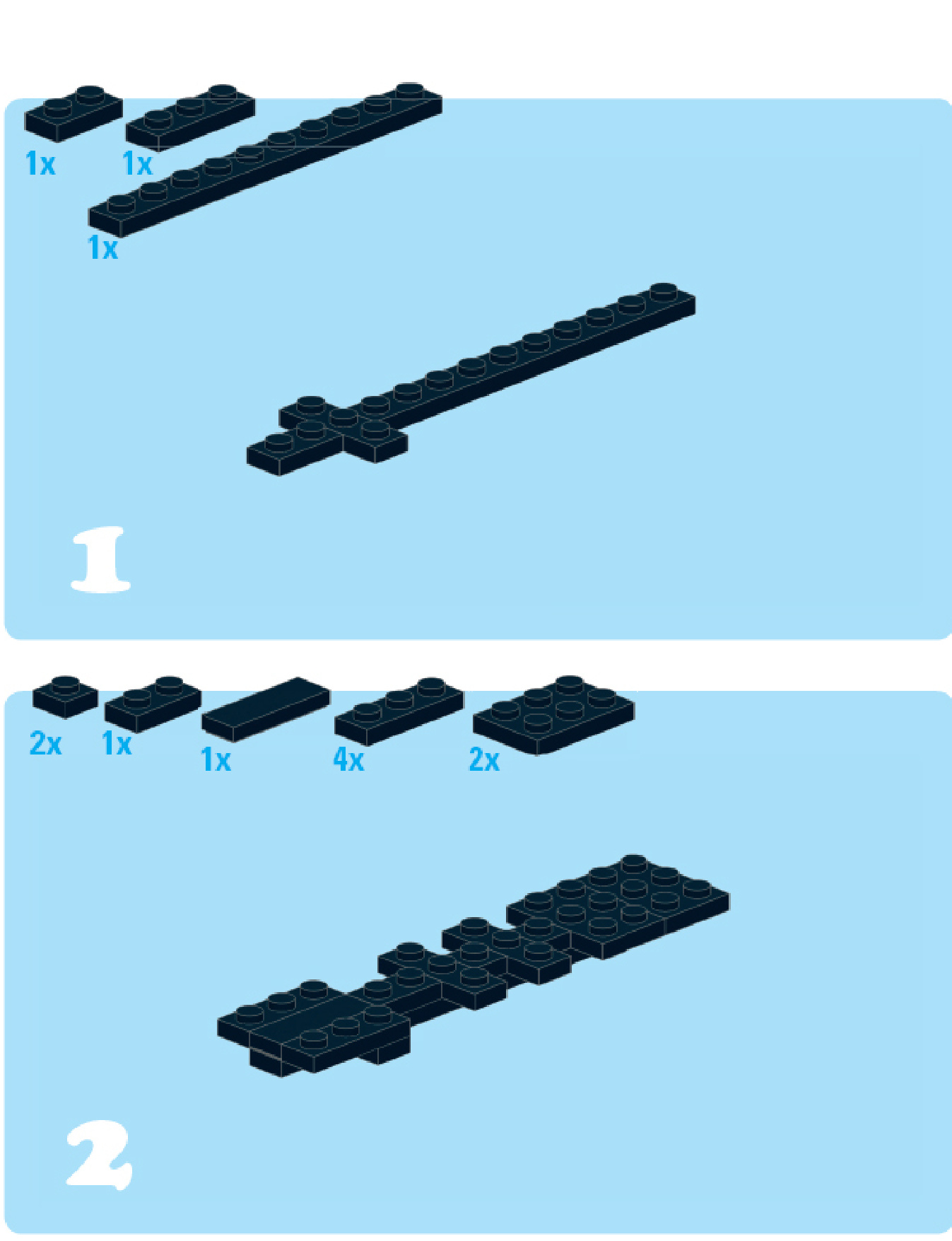
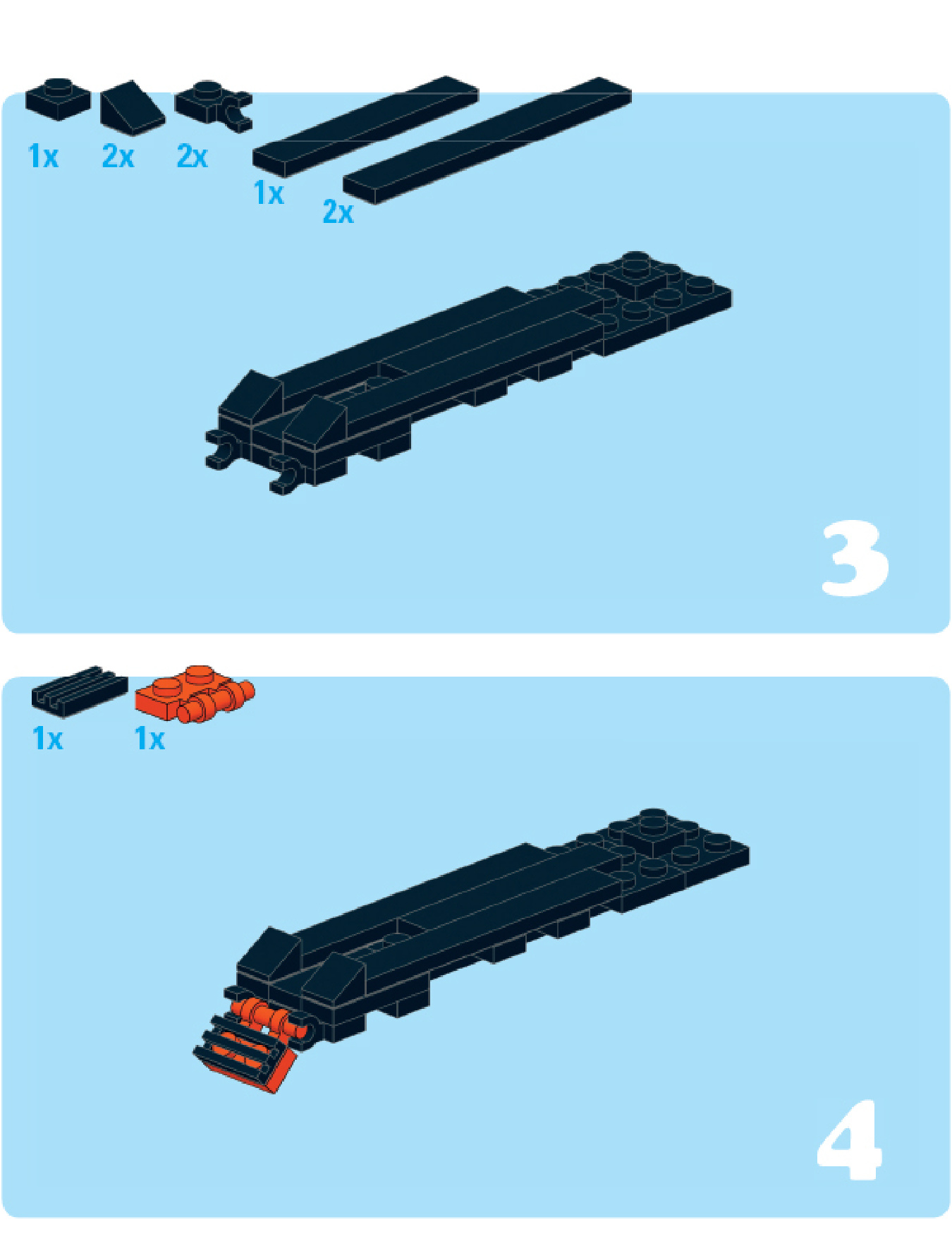
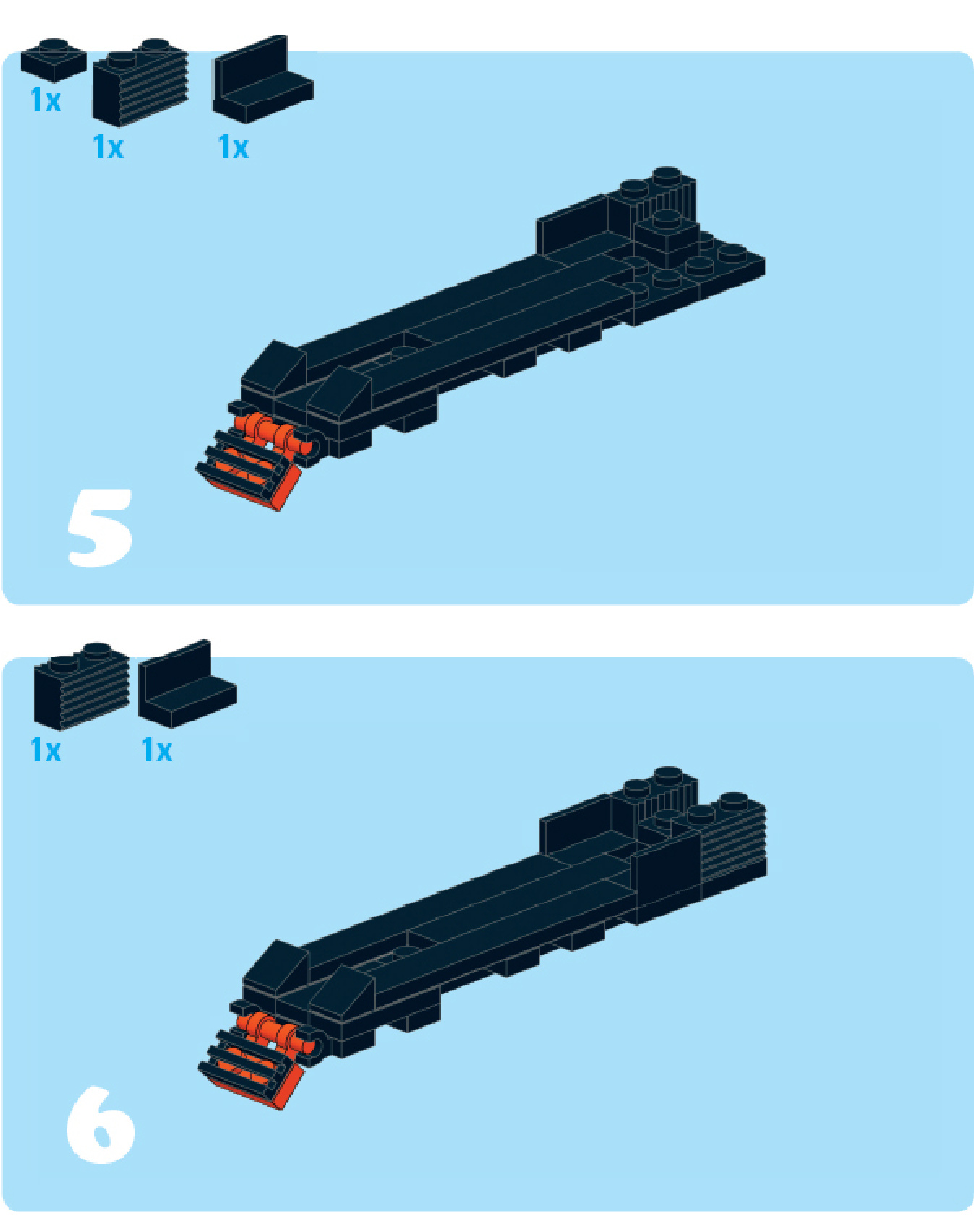
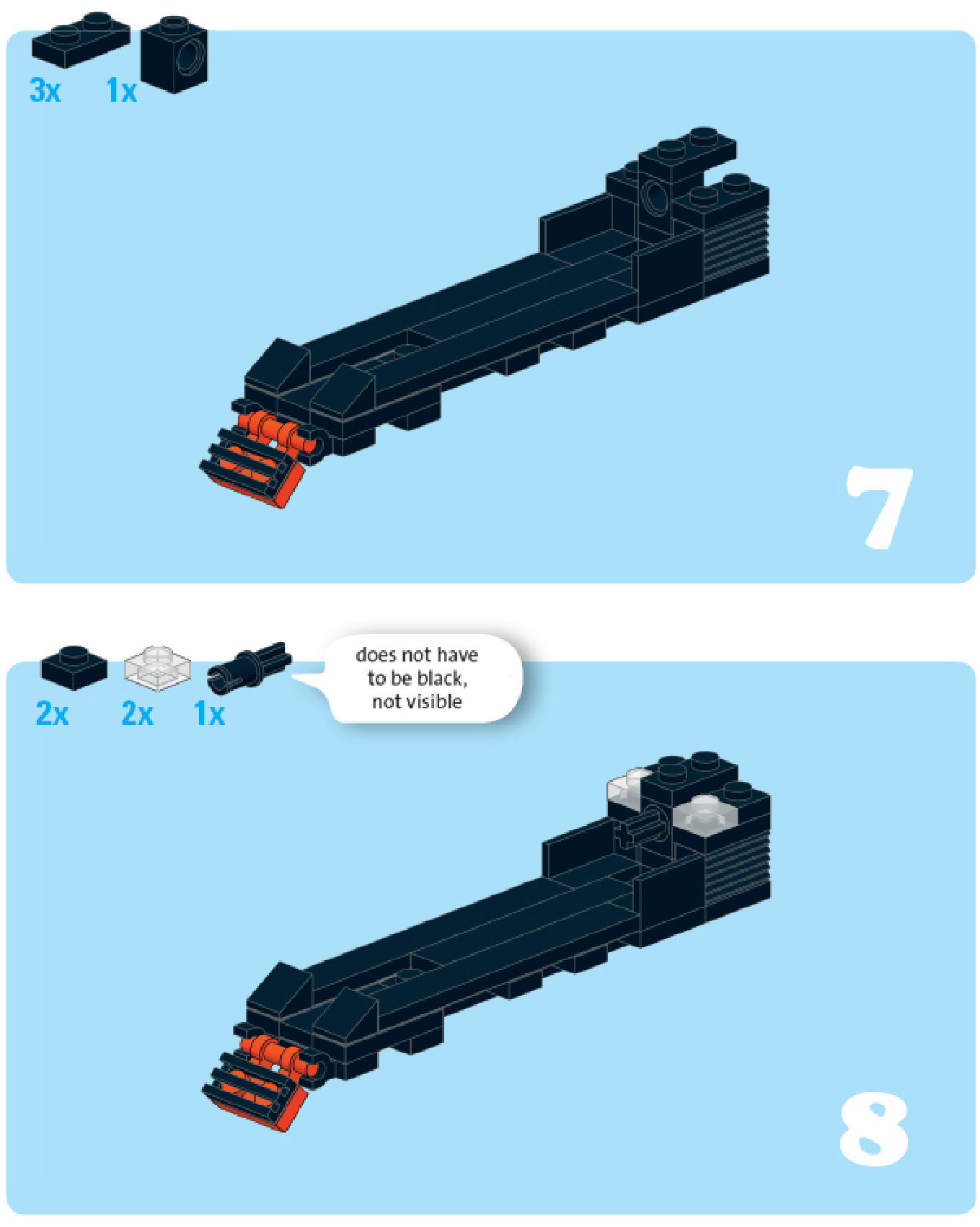
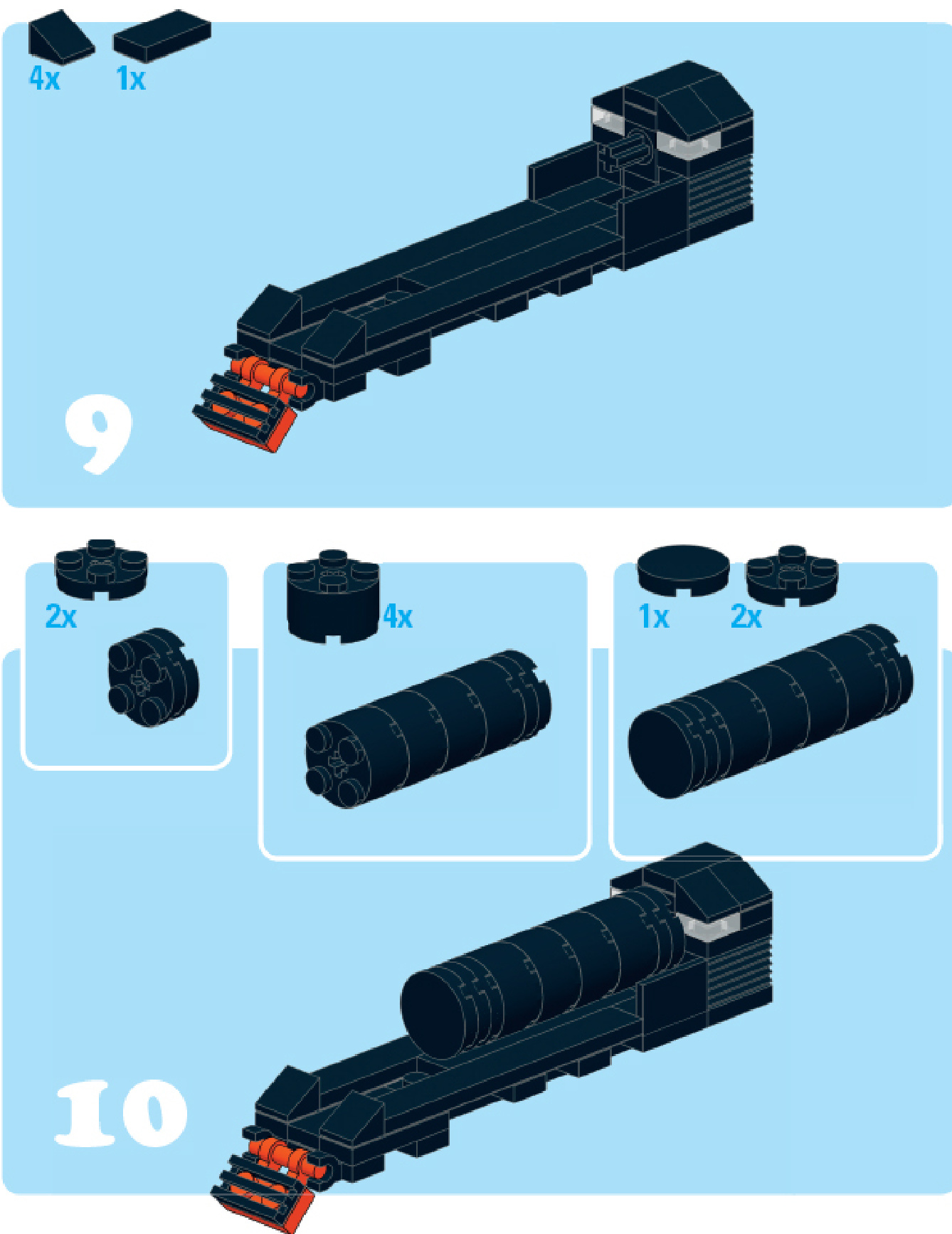
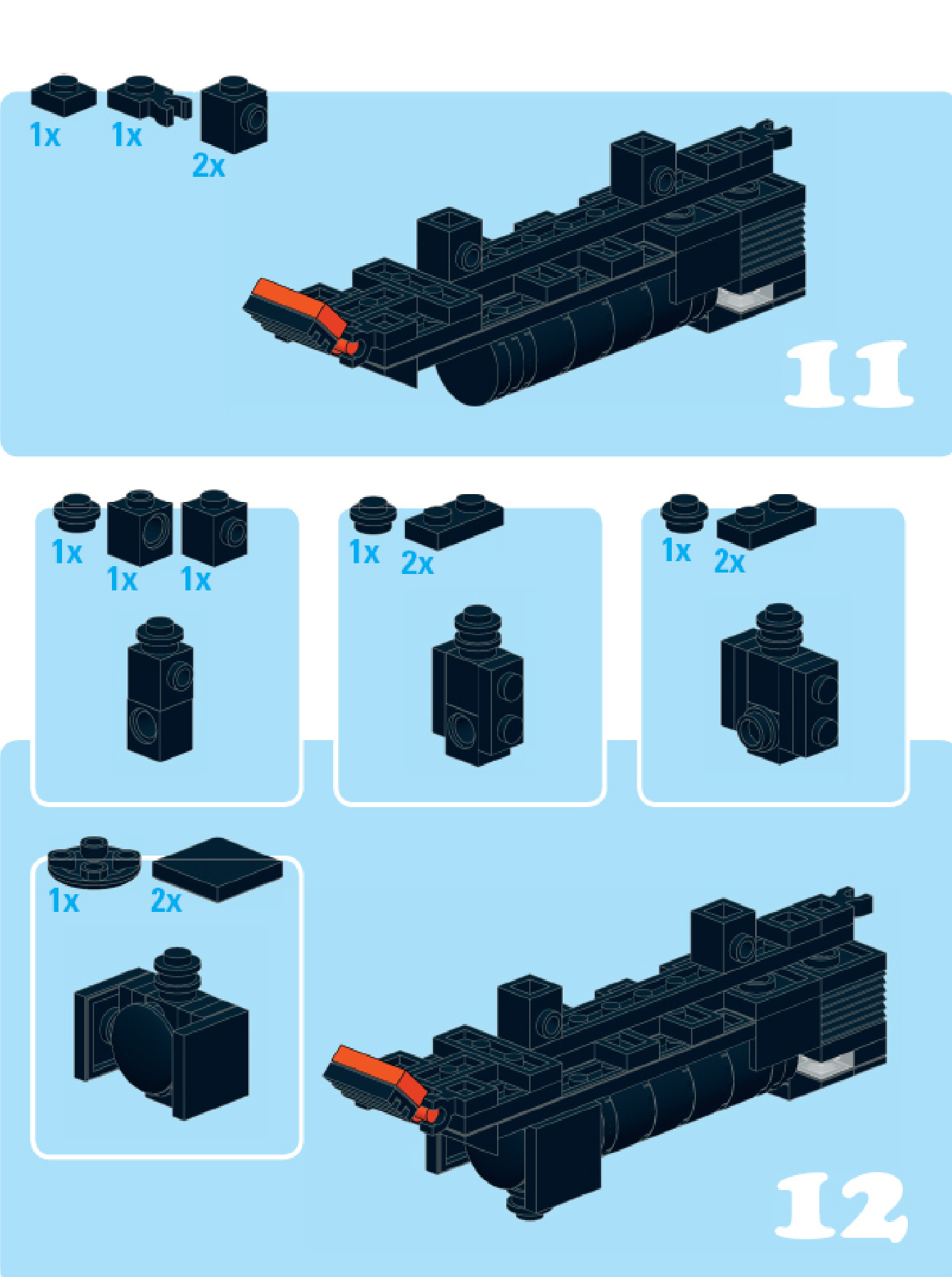
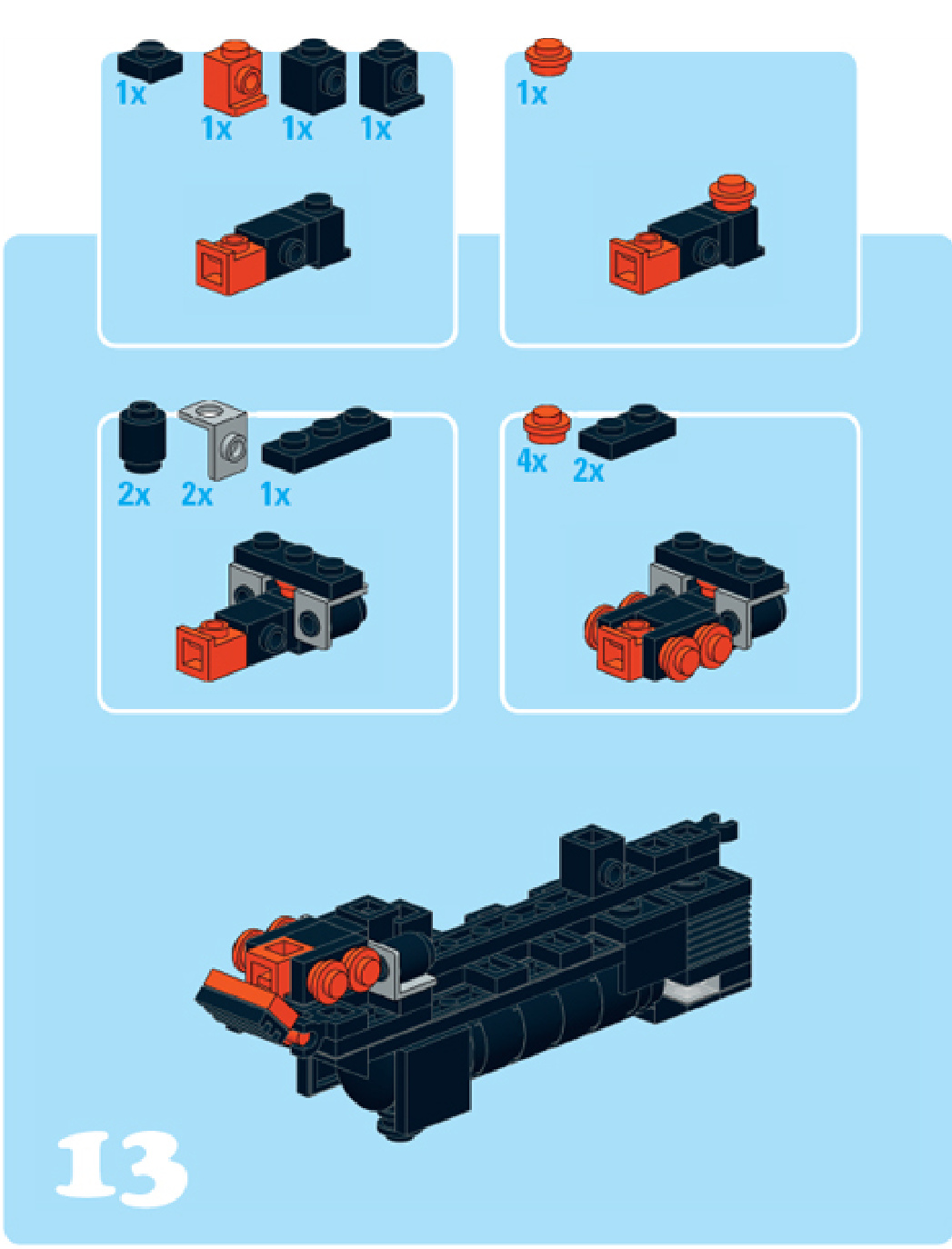
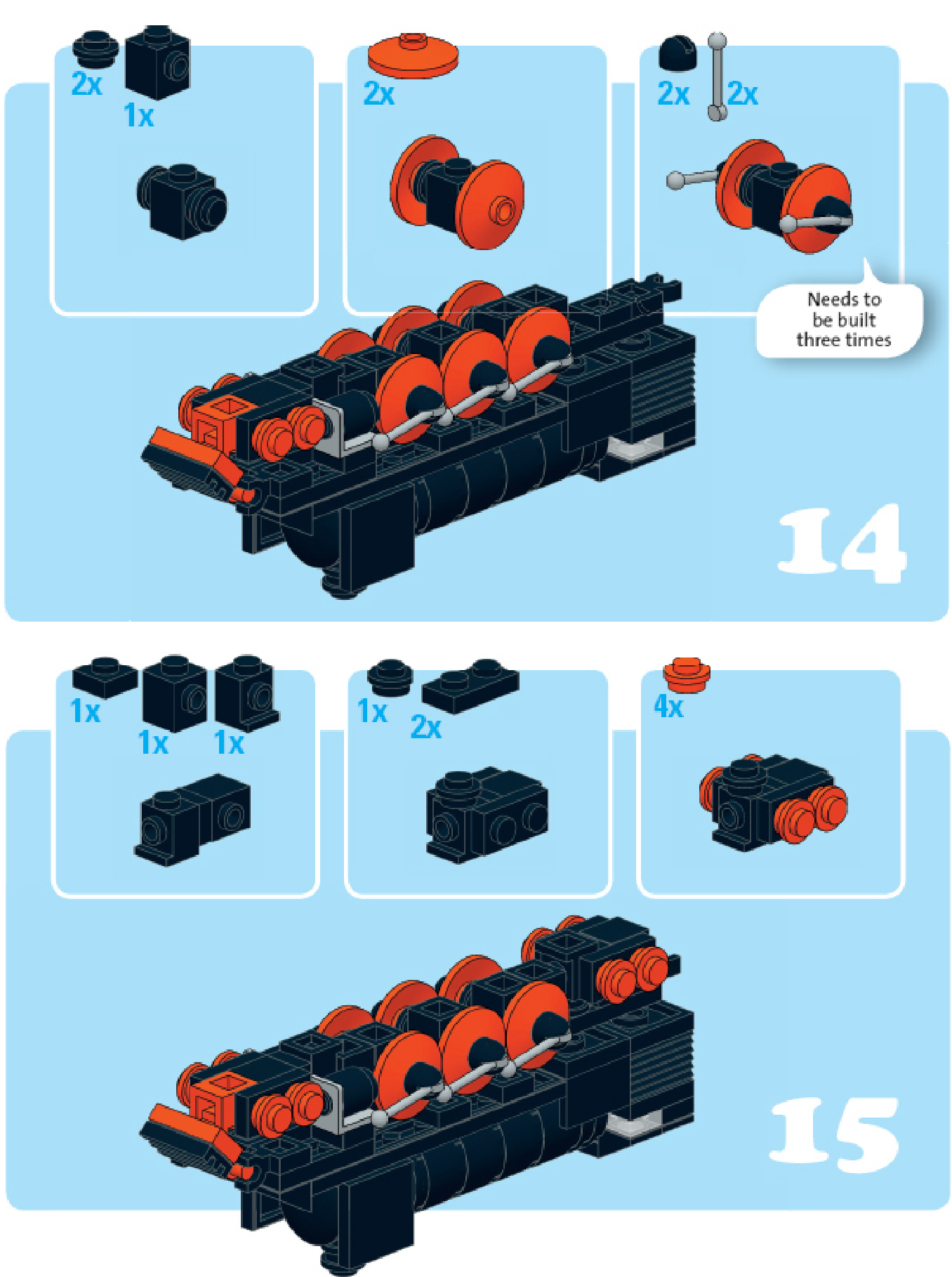
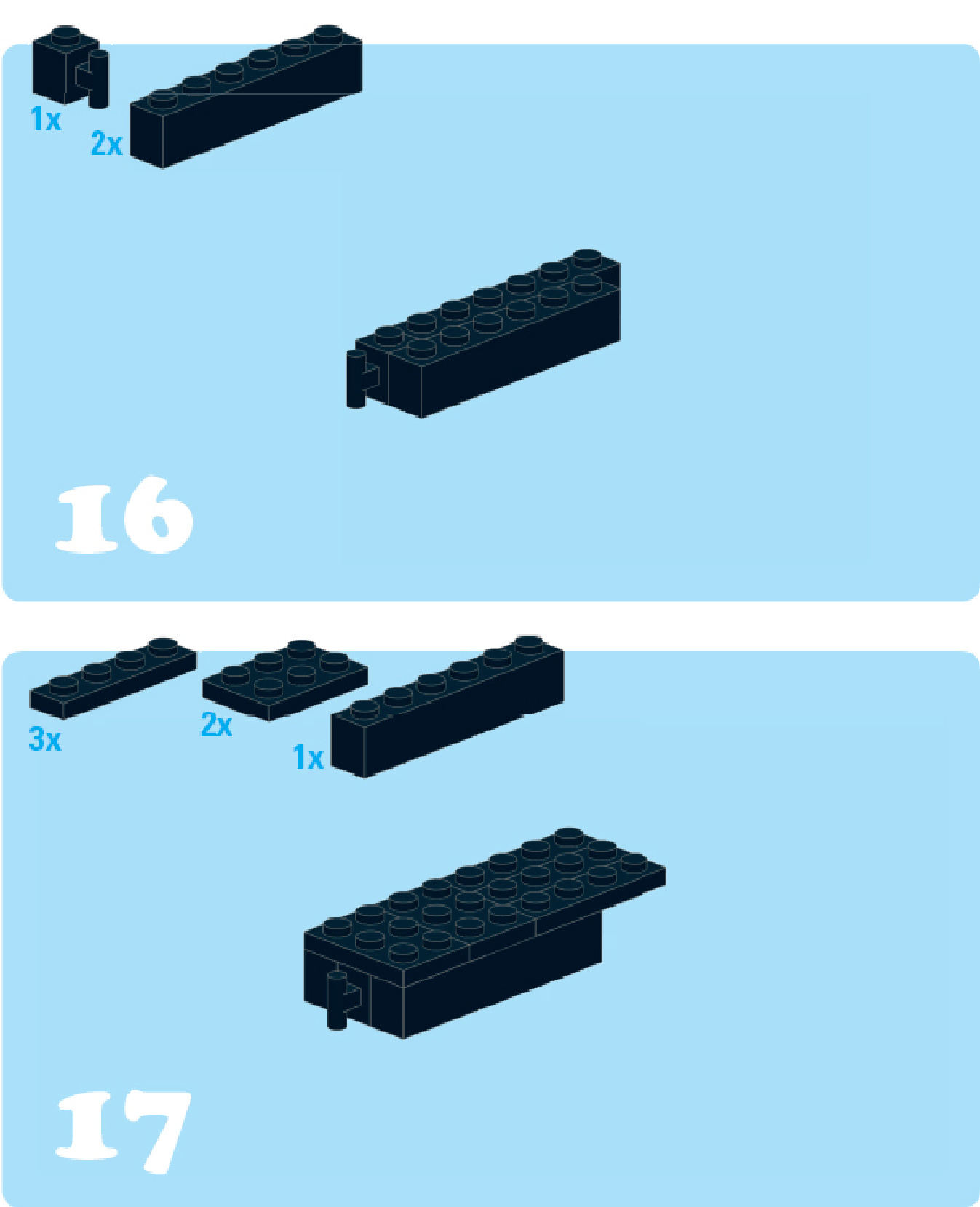
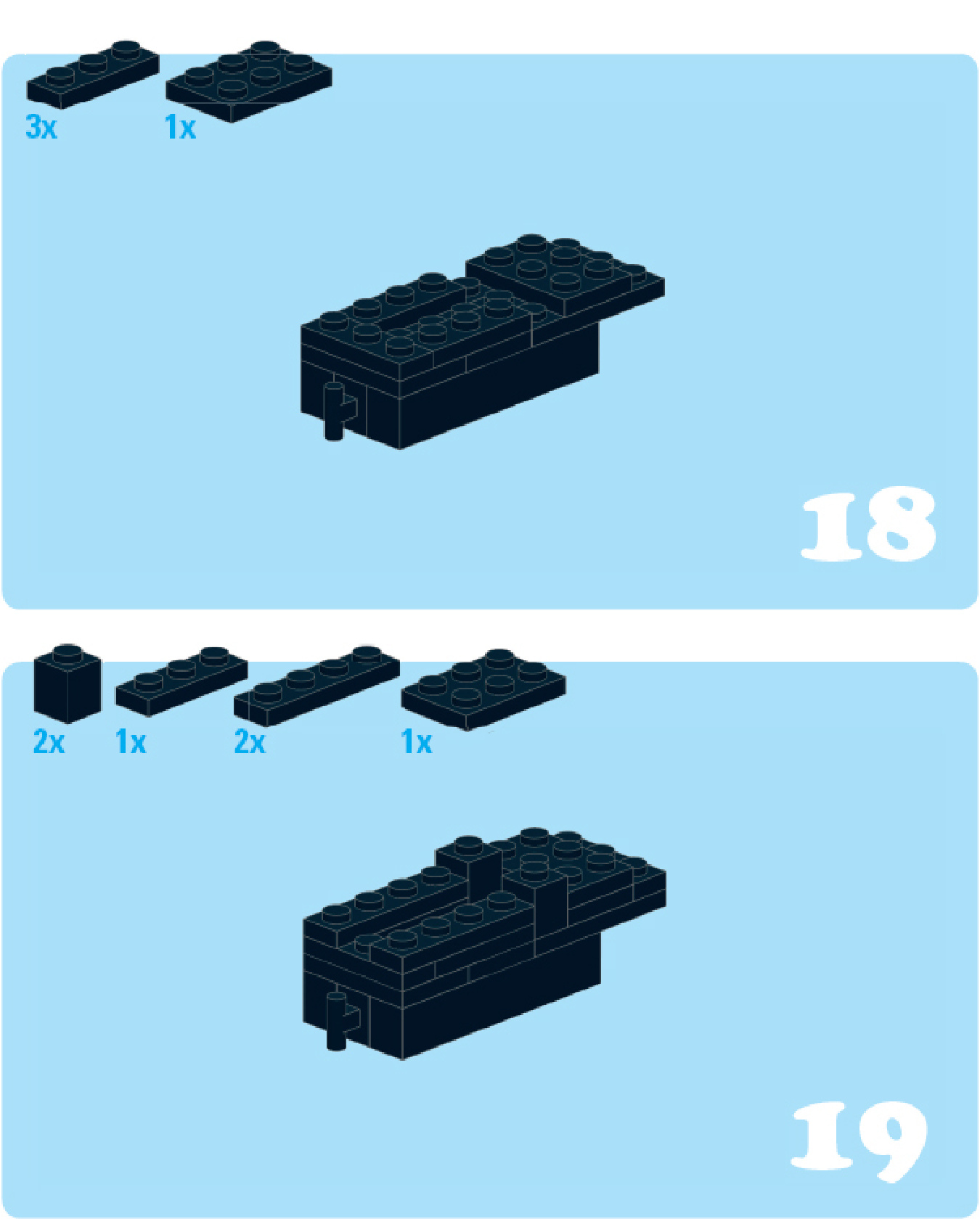
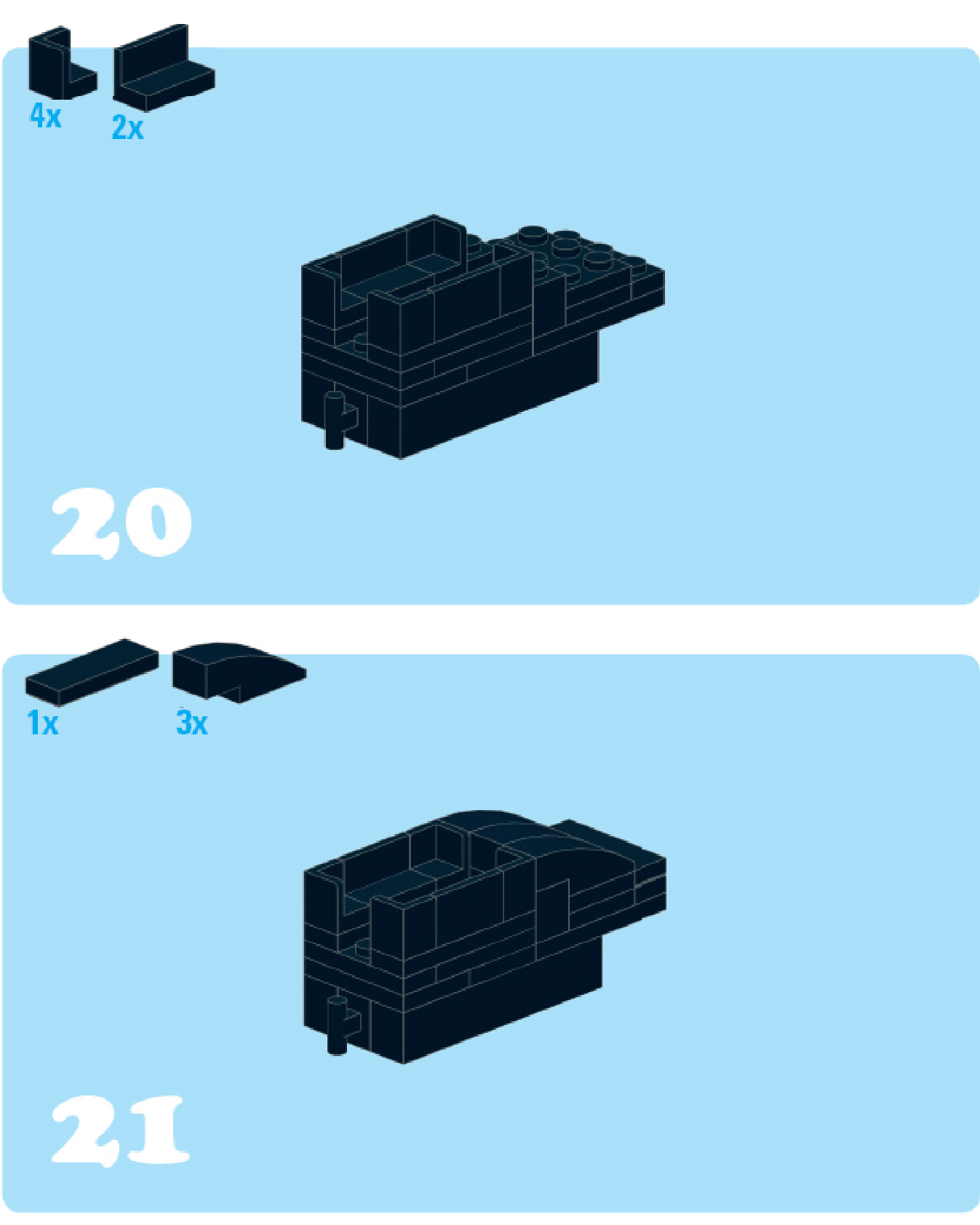
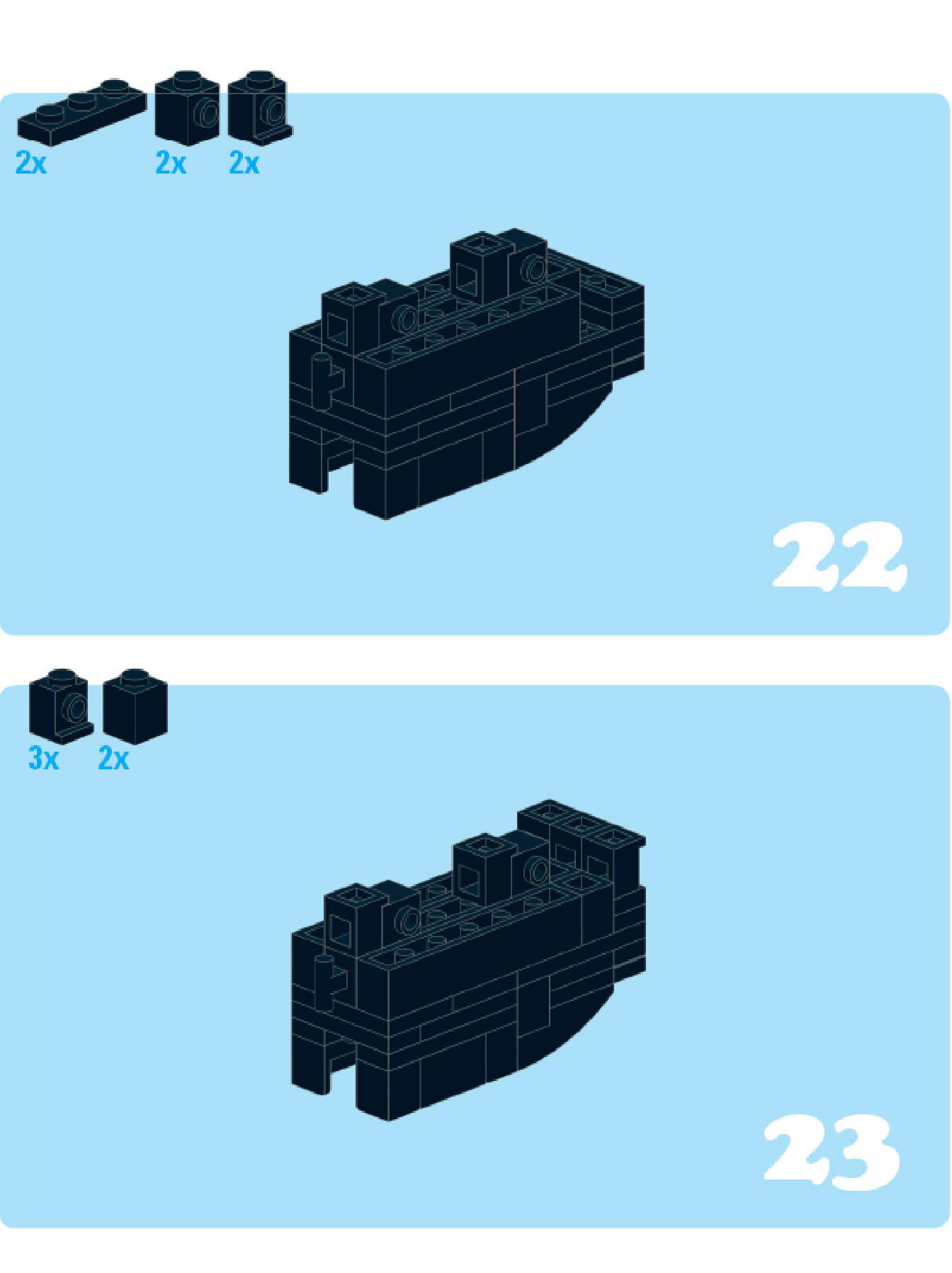
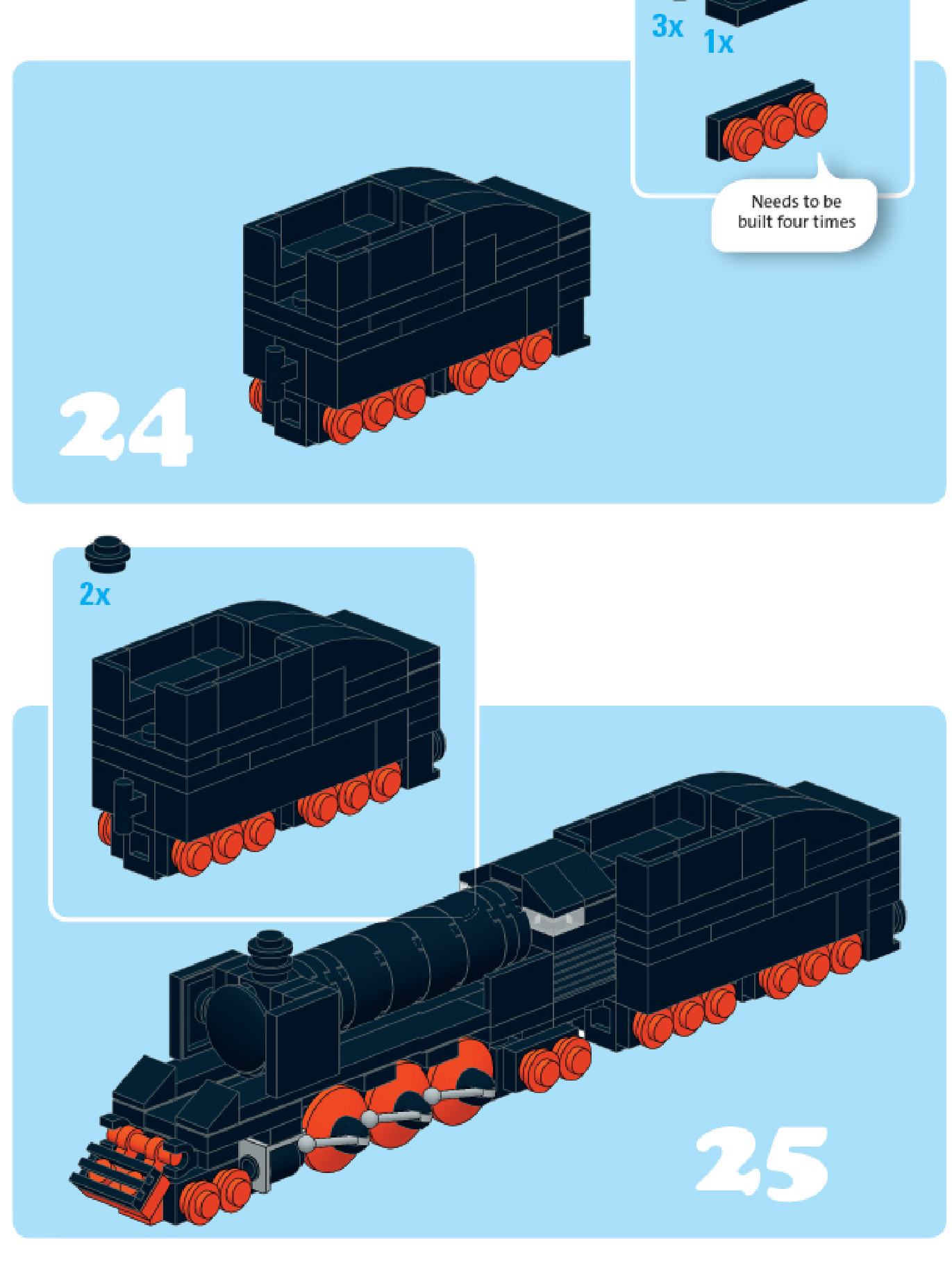
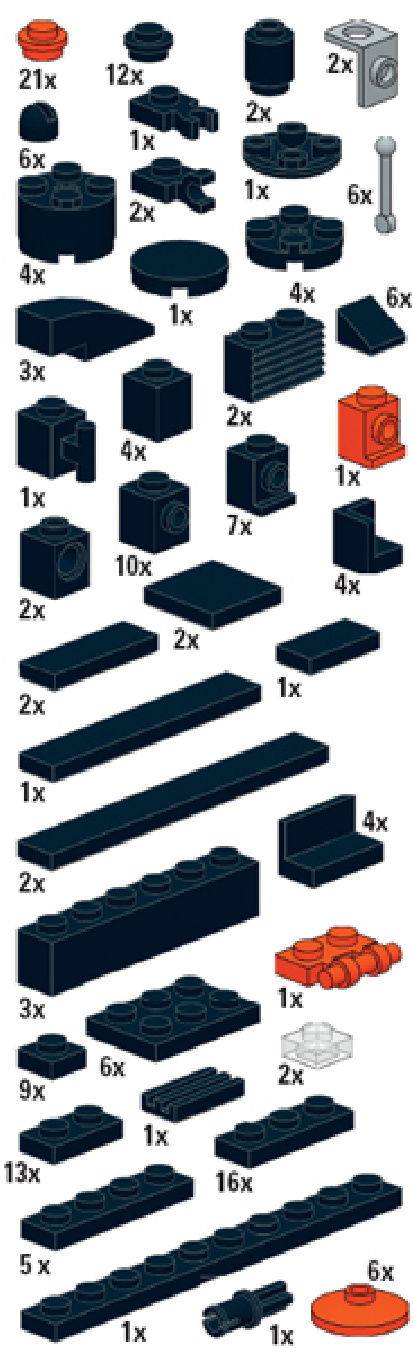
Parts List
Electric-Locomotive and Wagon
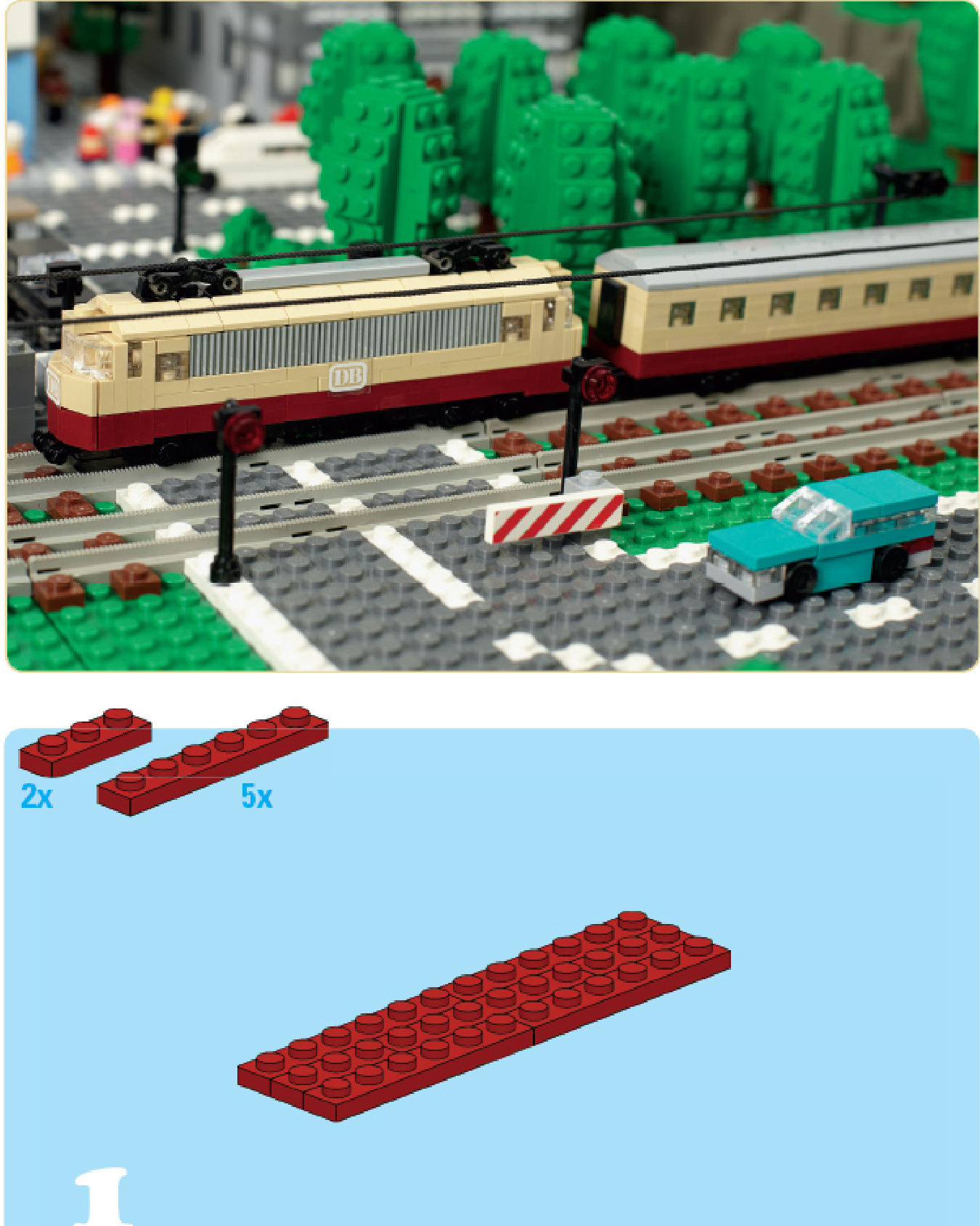
Every rail fan will recognize this typical electric locomotive immediately. Here too, groove bricks, cut flexible hoses, robot arms, and cheese slopes are used - they all develop into increasingly popular elements. Amazing how much detail you can build in this scale! Naturally, the cords of the power cables are original parts as well. The tracks that are meant for a larger scale fit here as well.
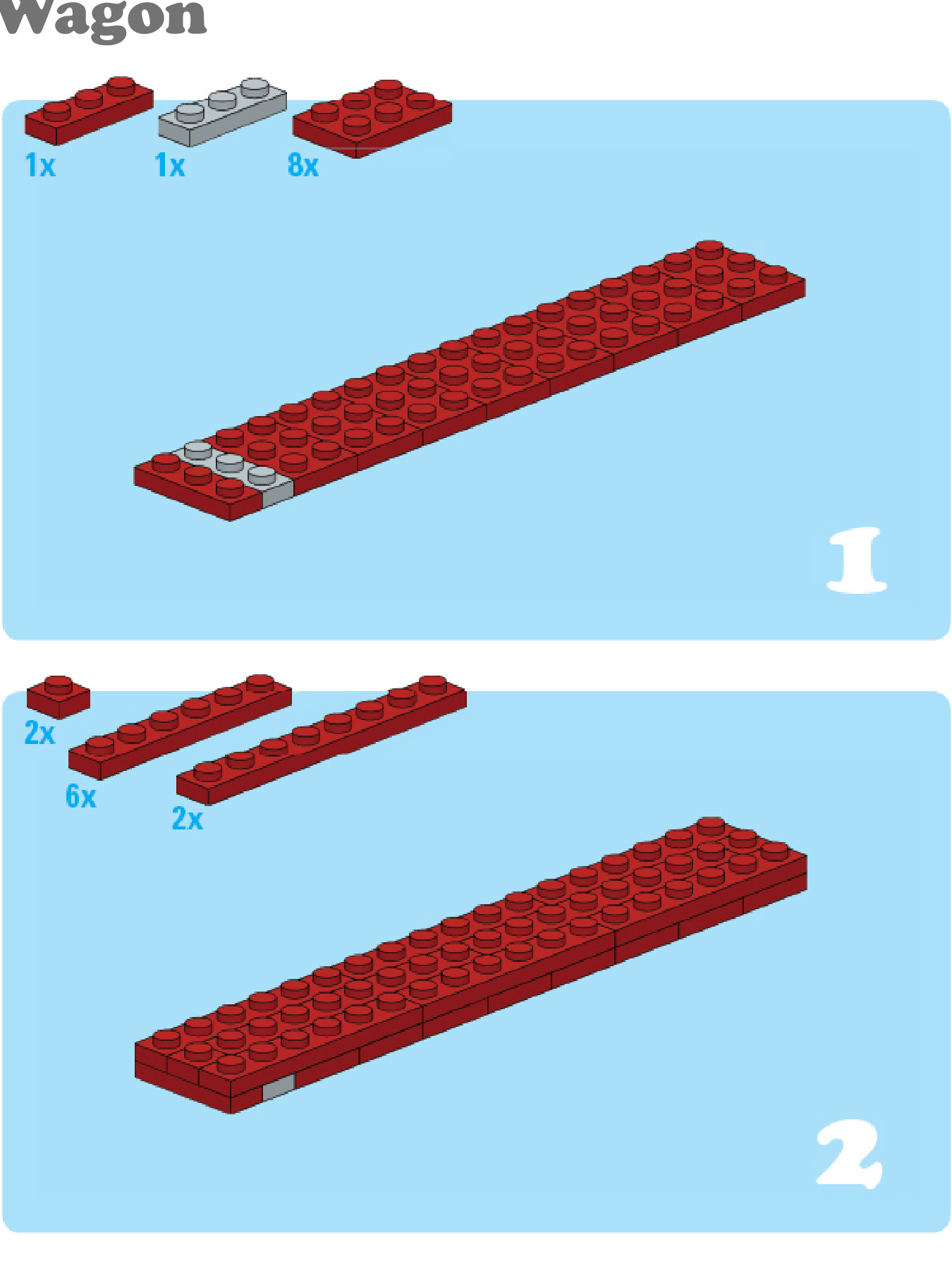
The details make this wagon special. We have added a sticker that lists the destinations. Those who really study the construction guide can even see where the toilet is. Building this wagon in dark green is a special challenge, because the color is rare. Experiment with the colors!
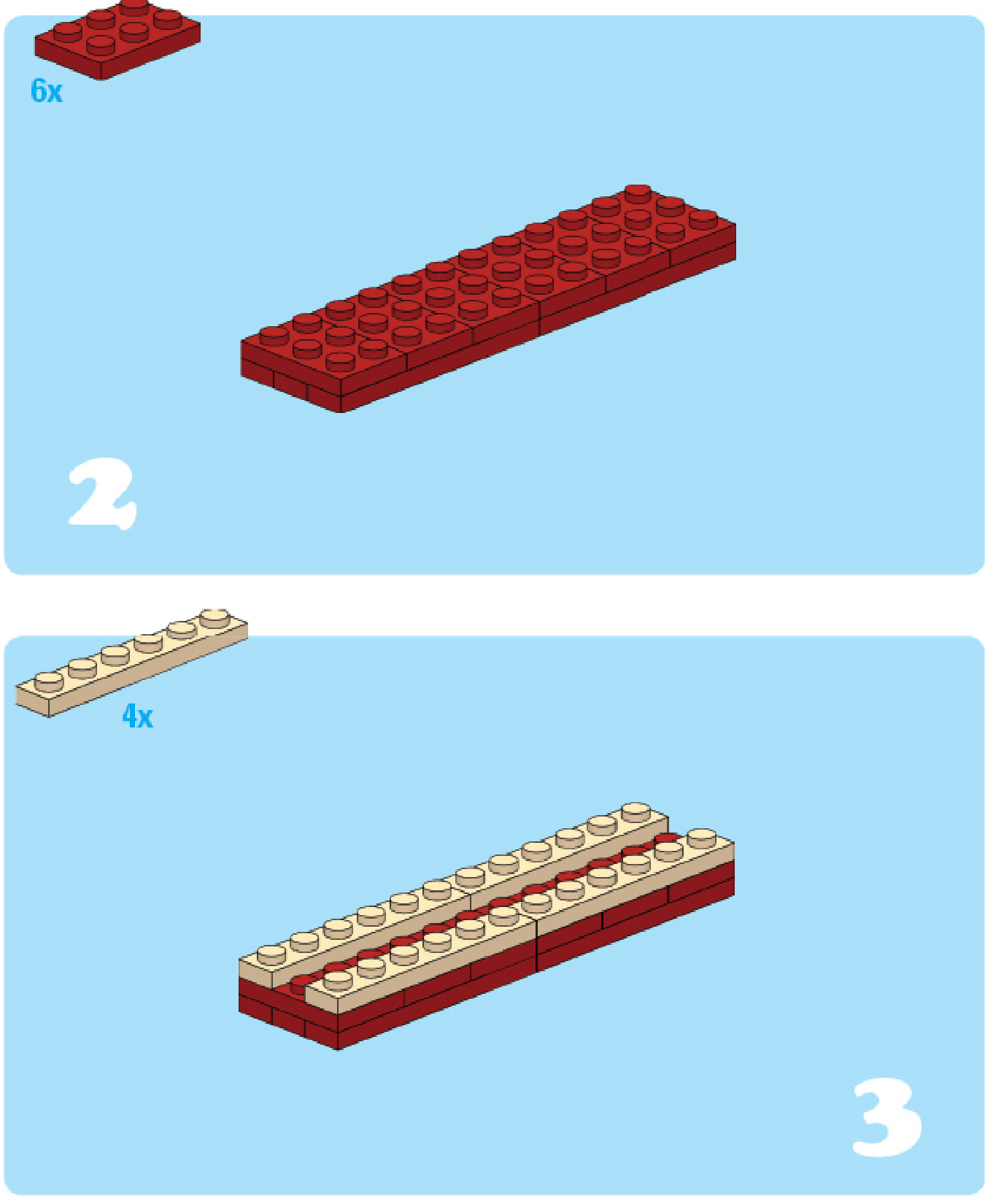
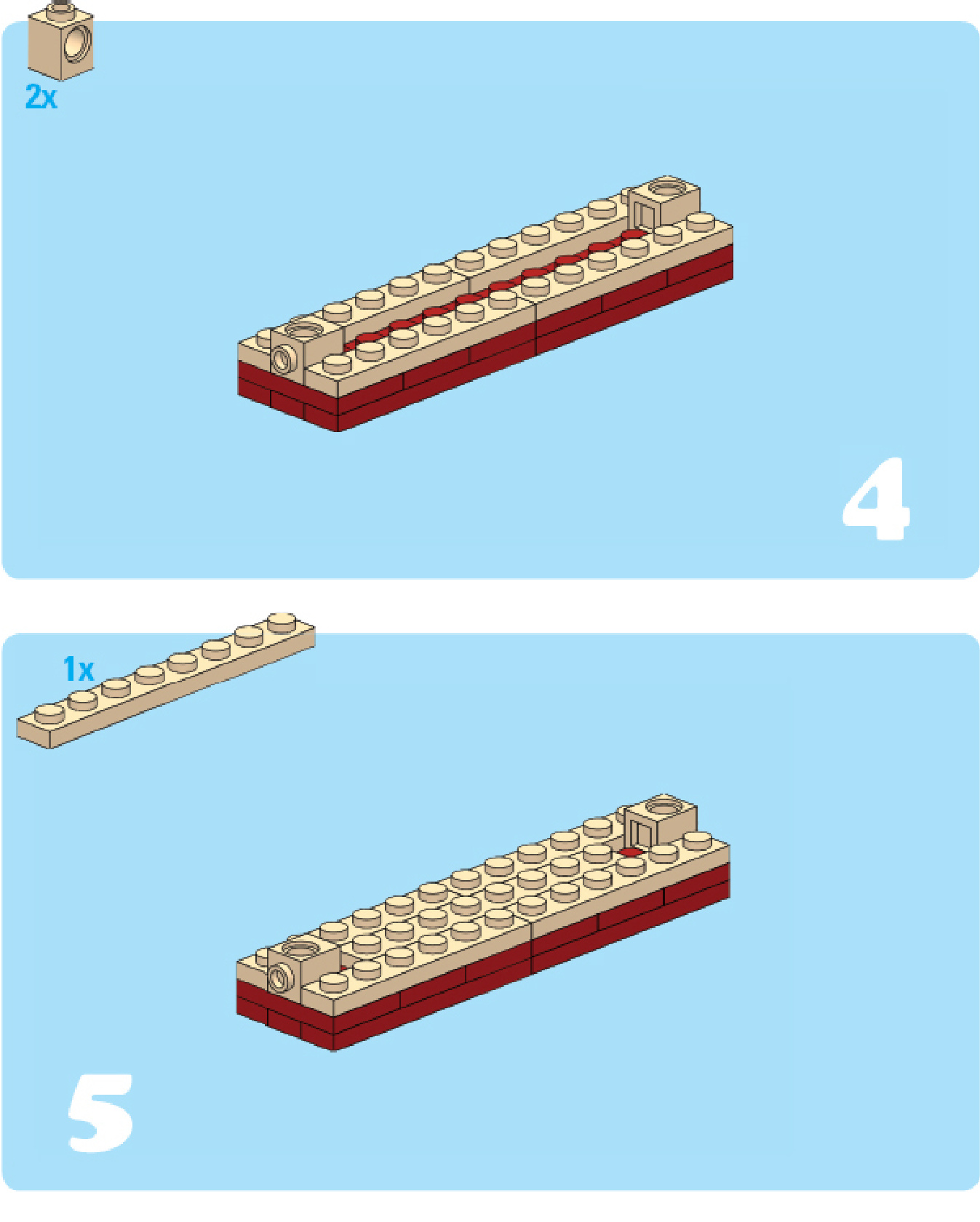
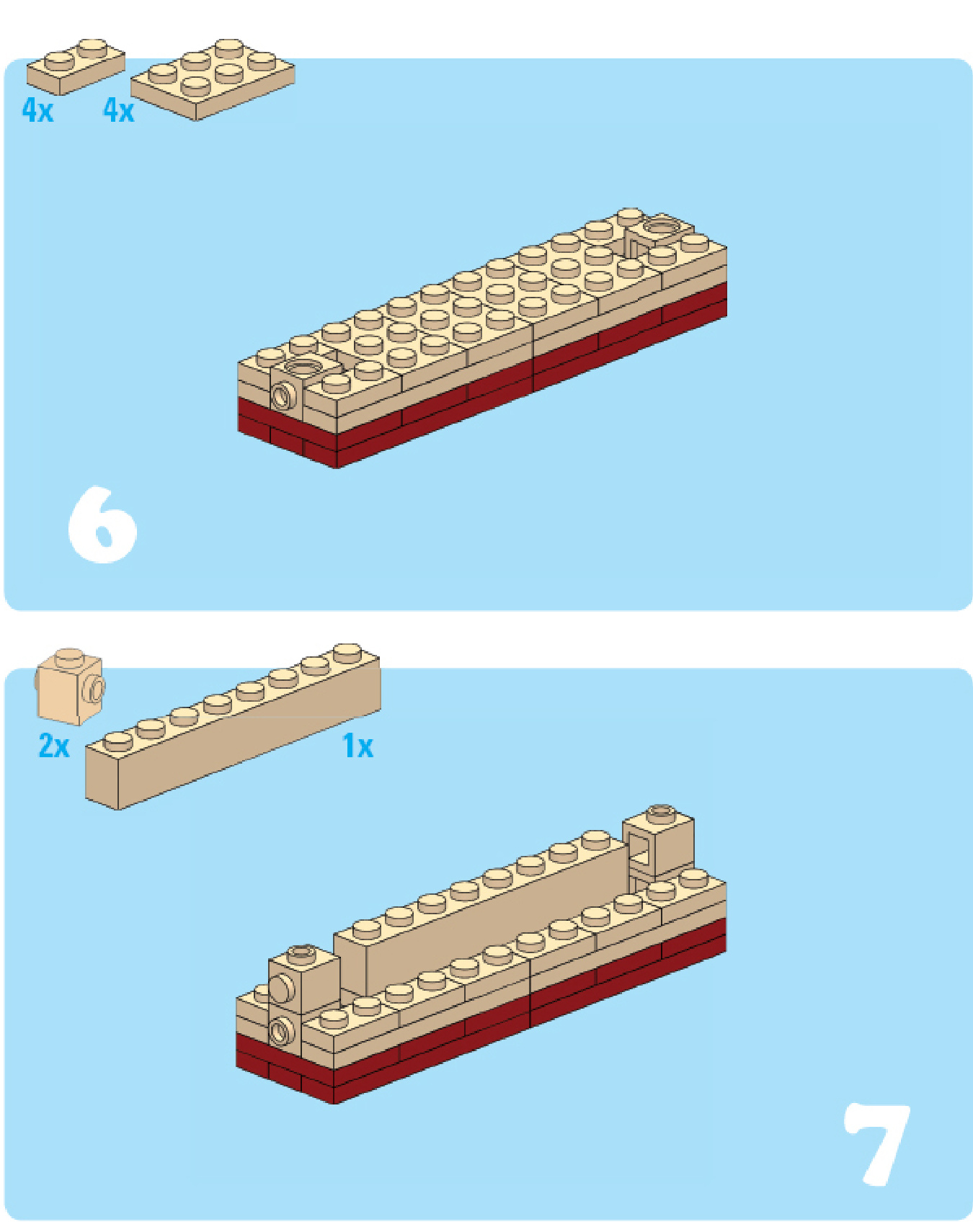
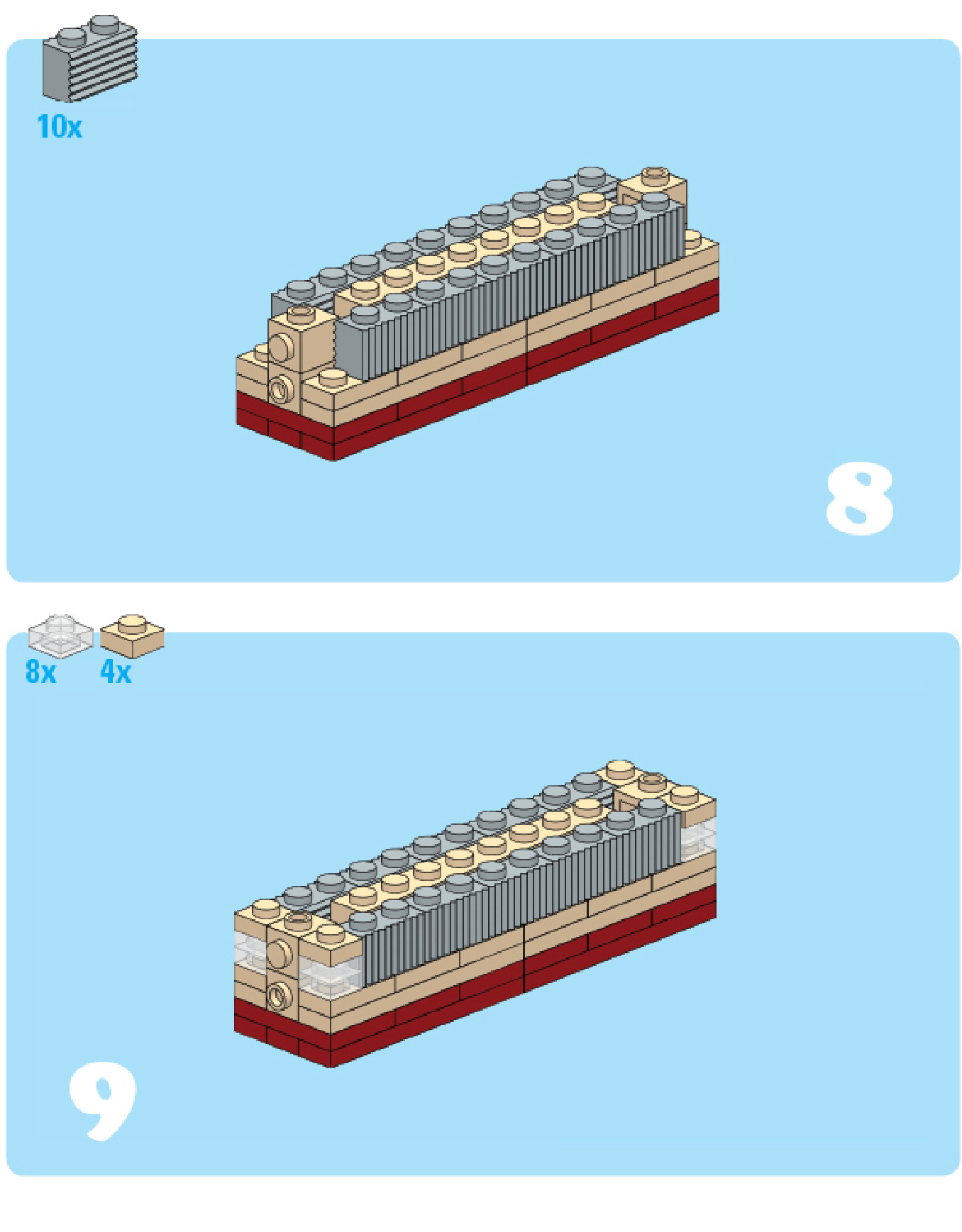
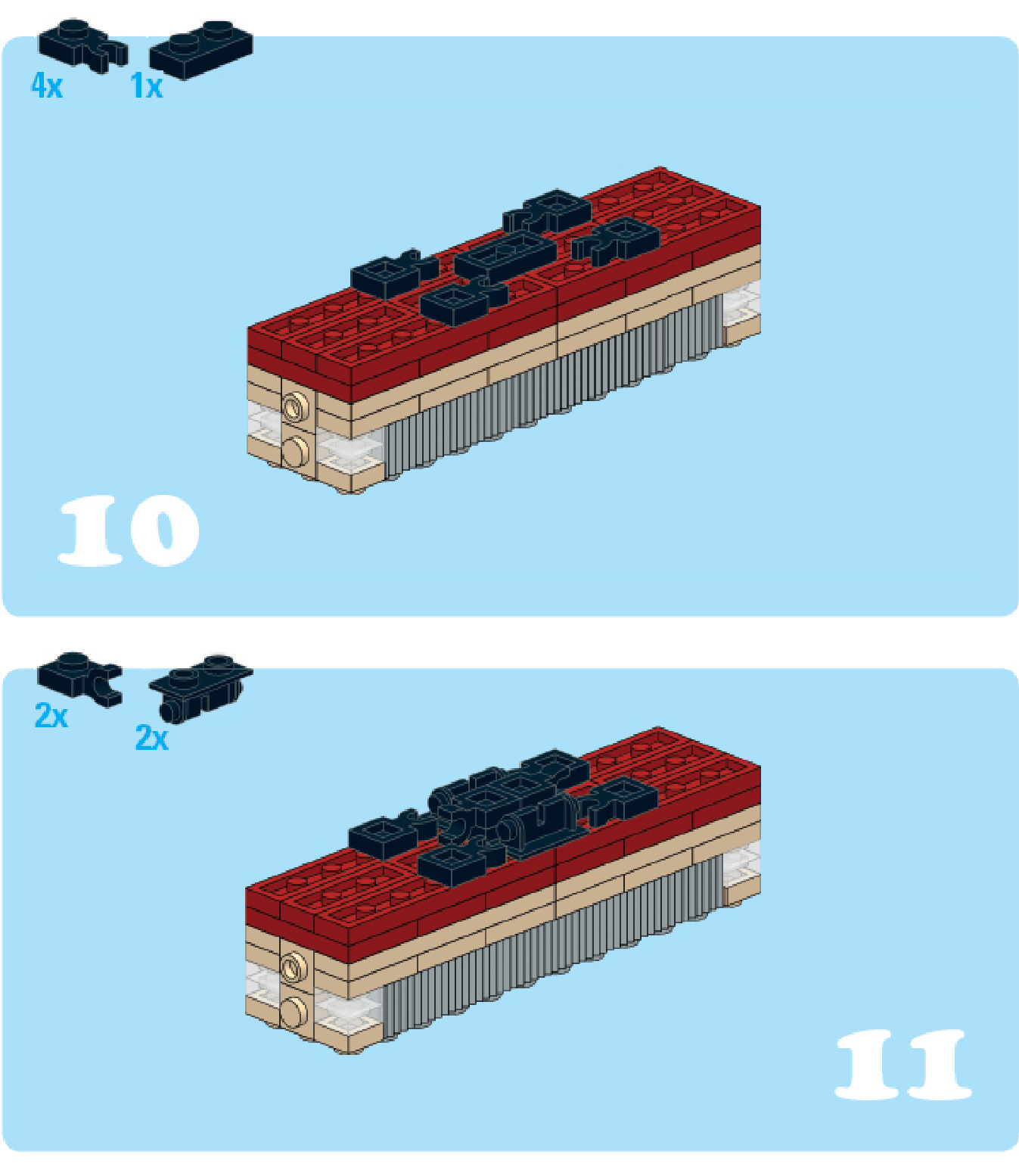
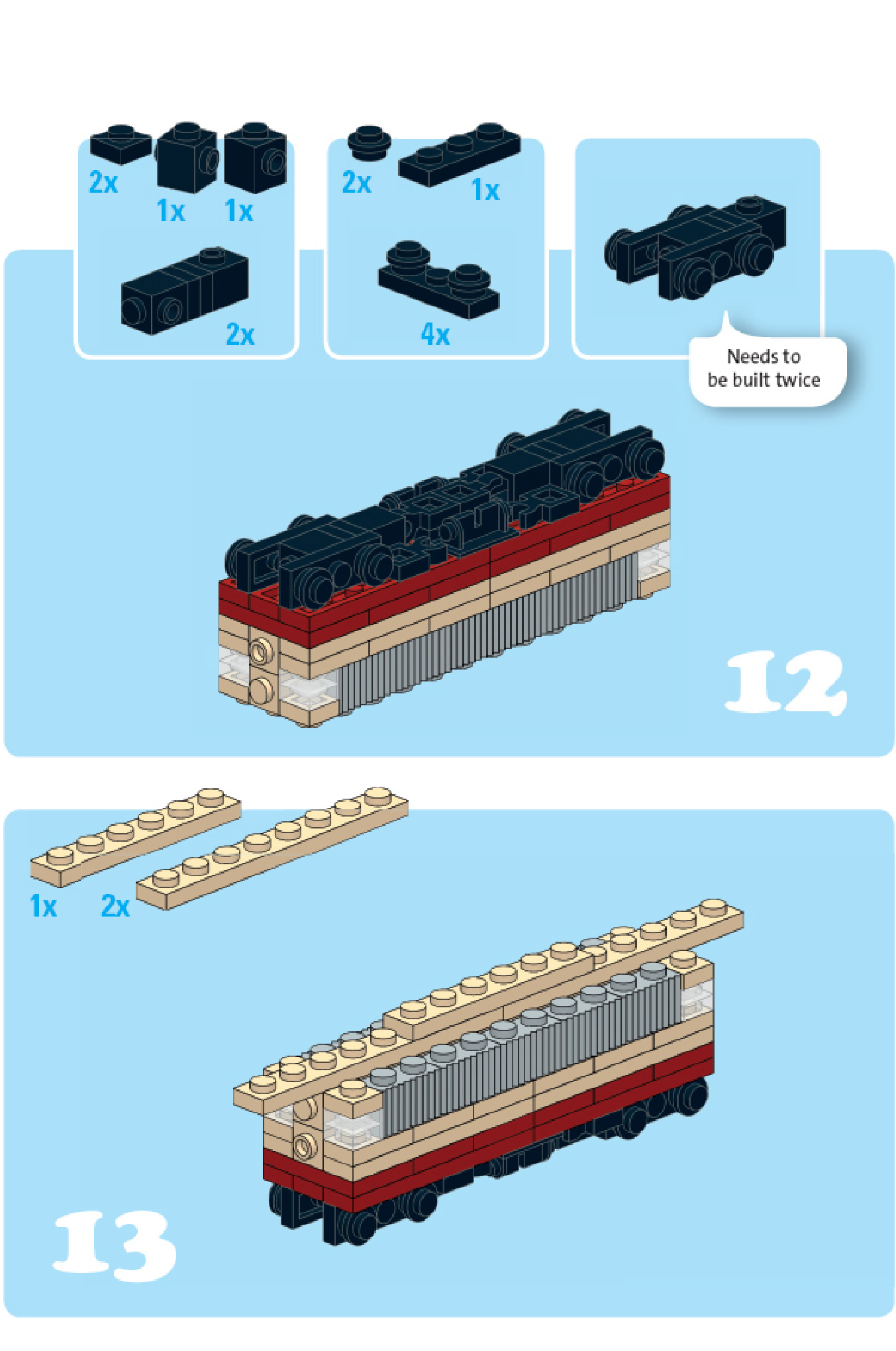
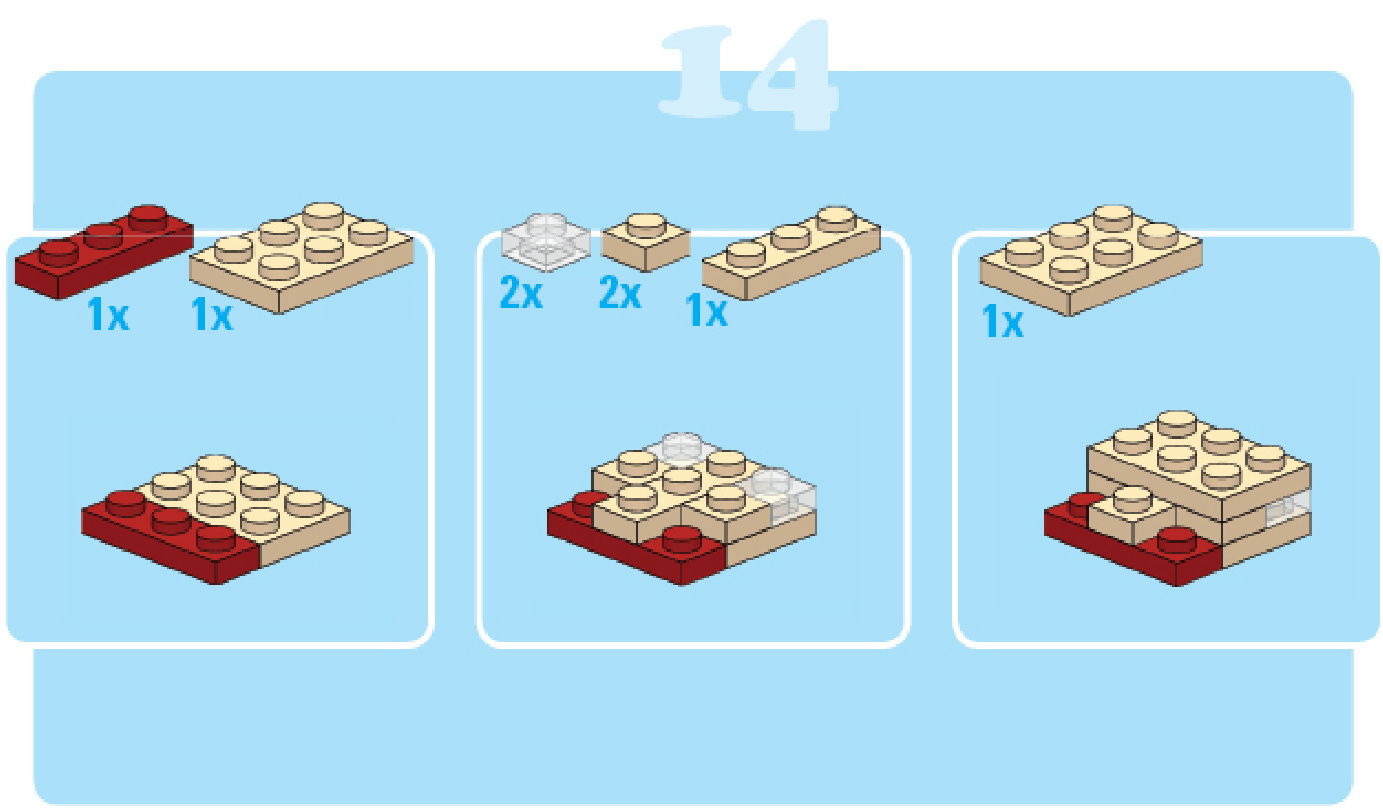
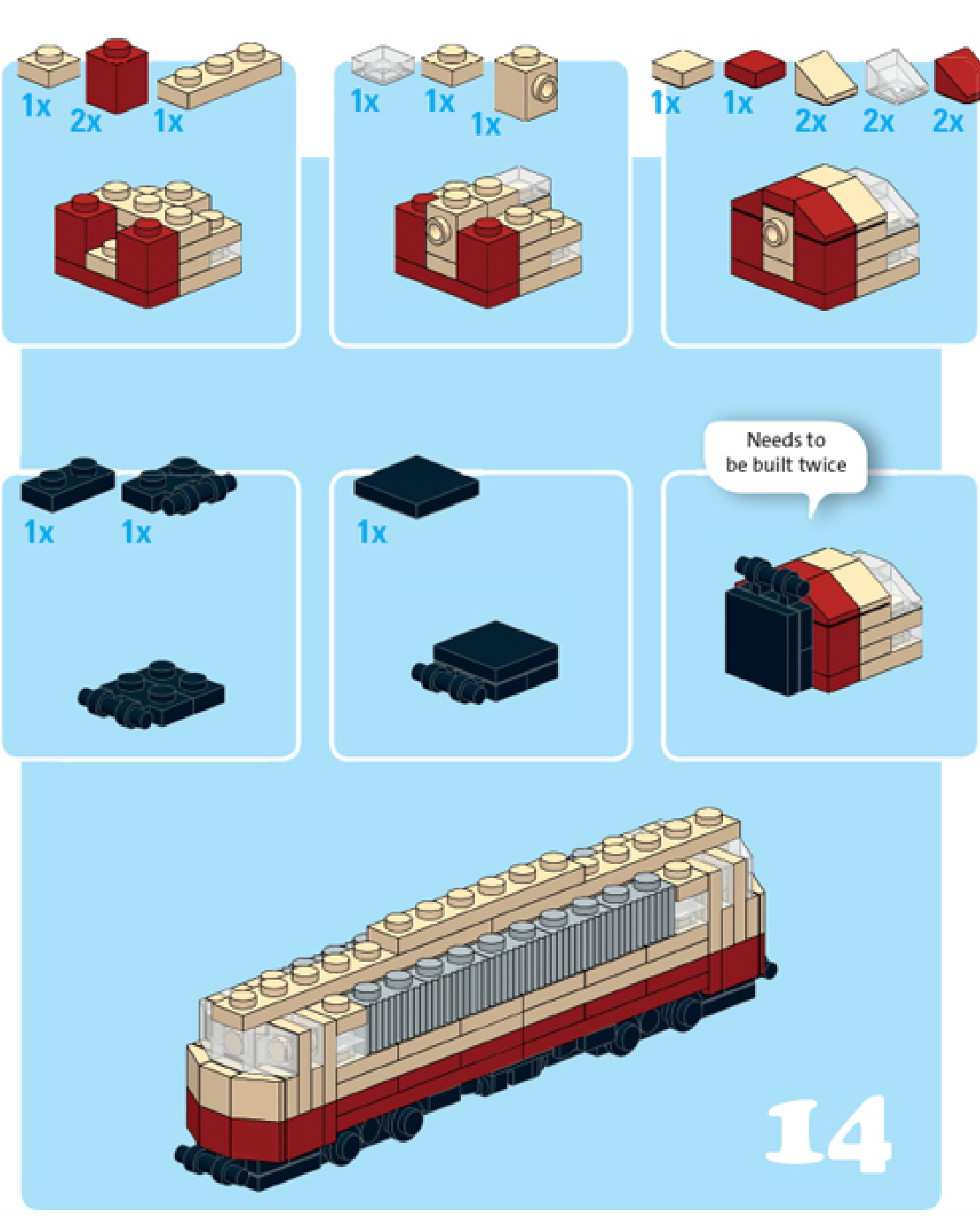
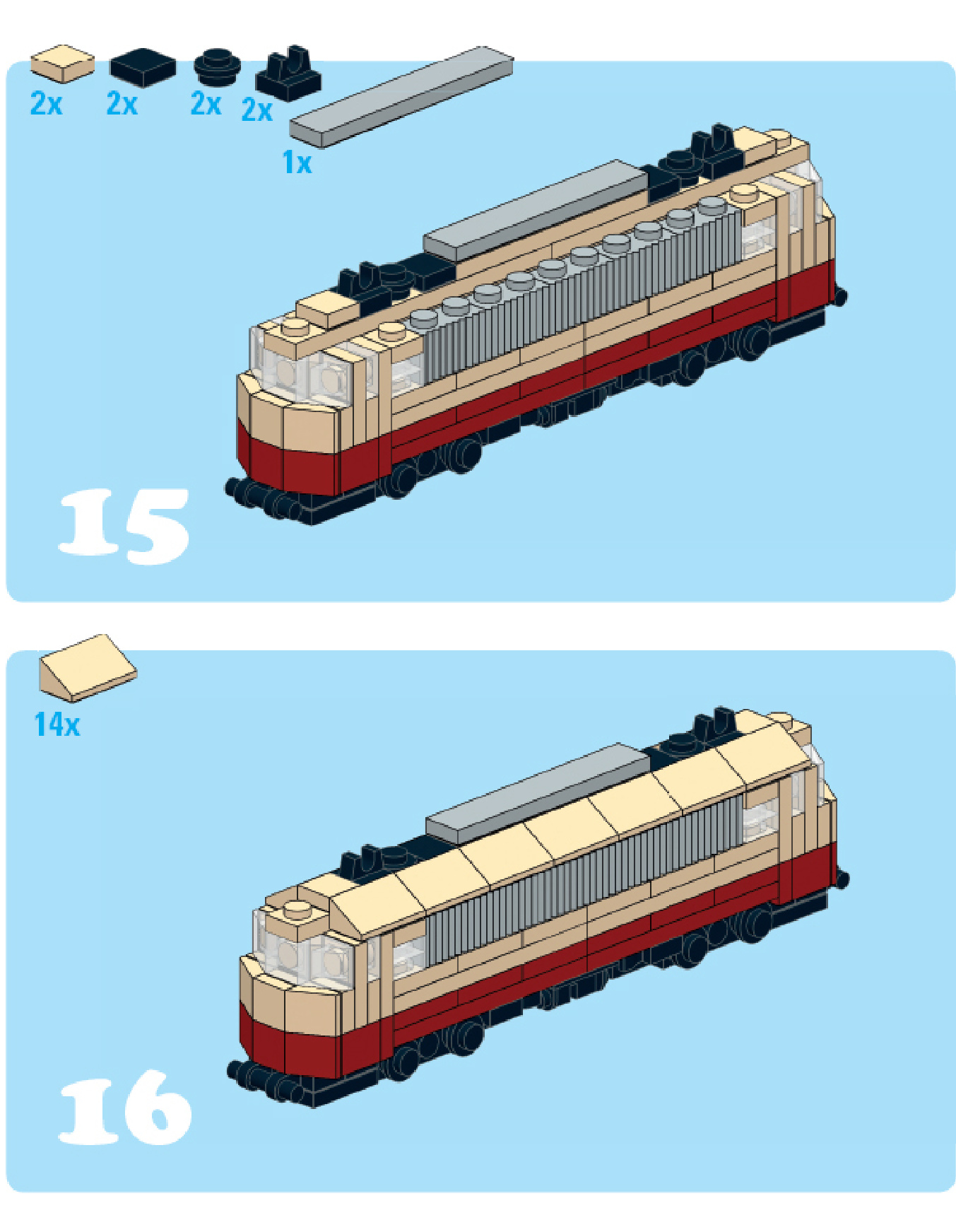
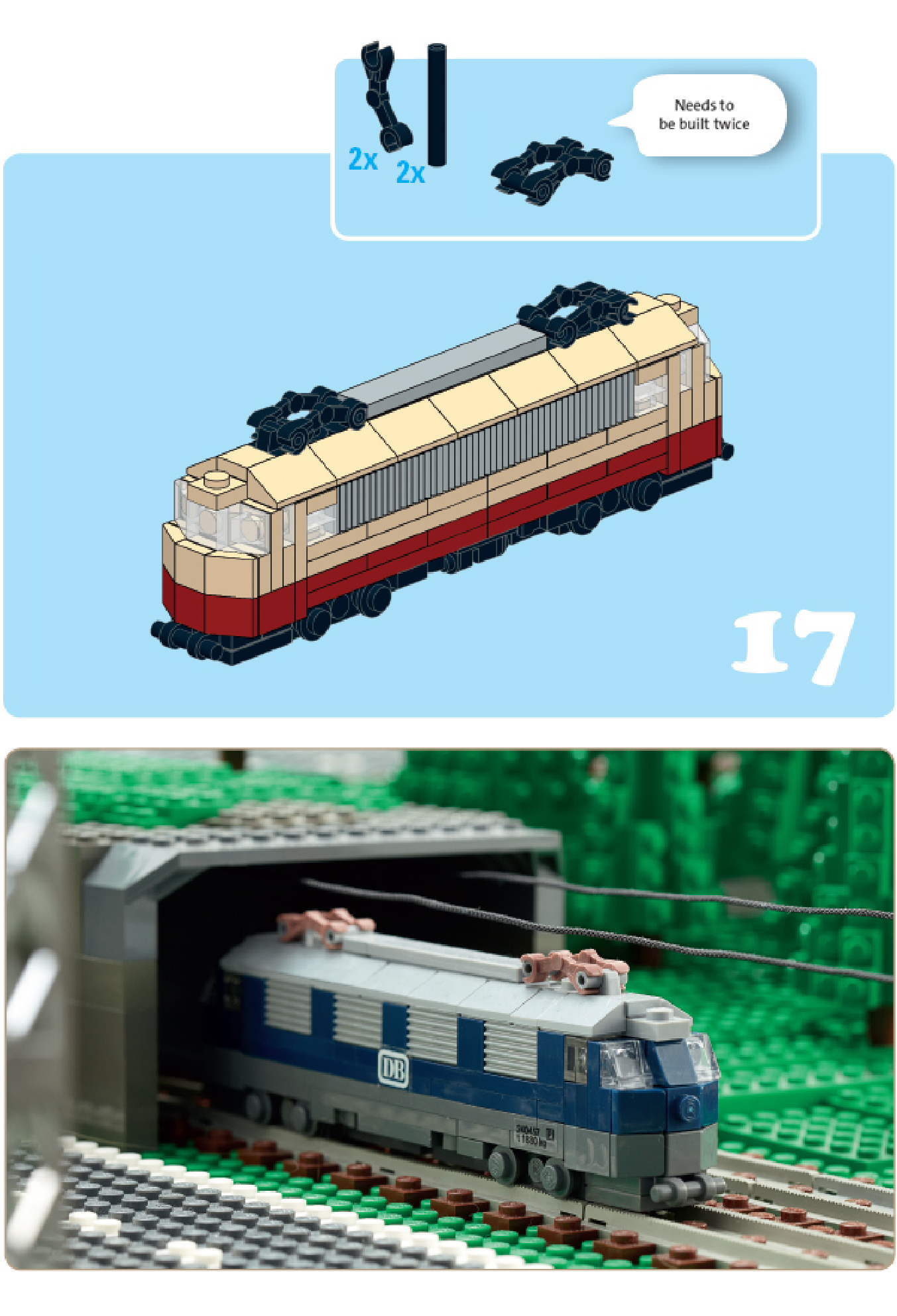
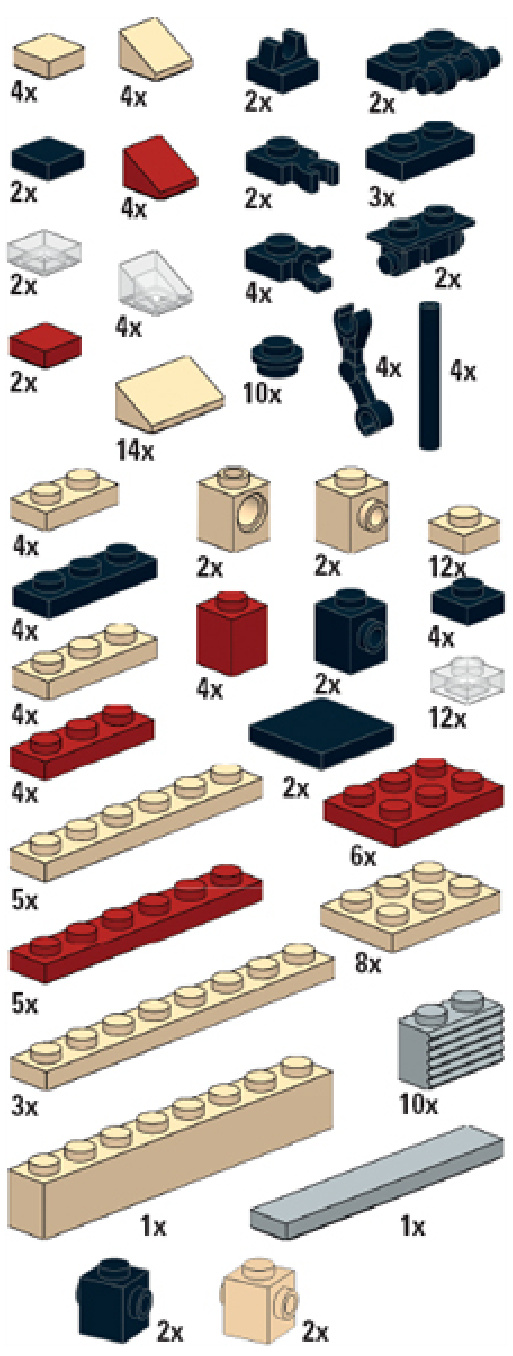
Parts List
Wagon
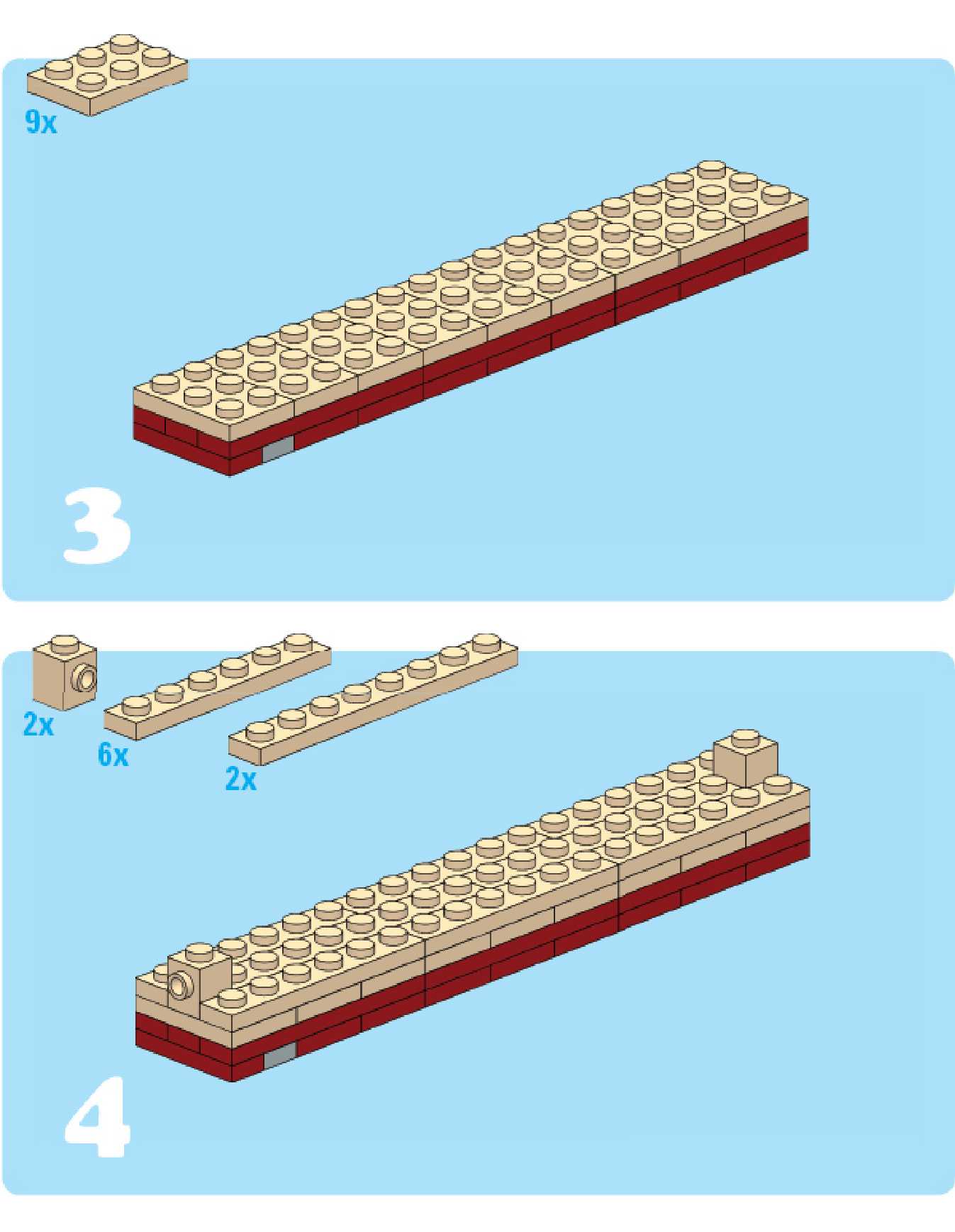
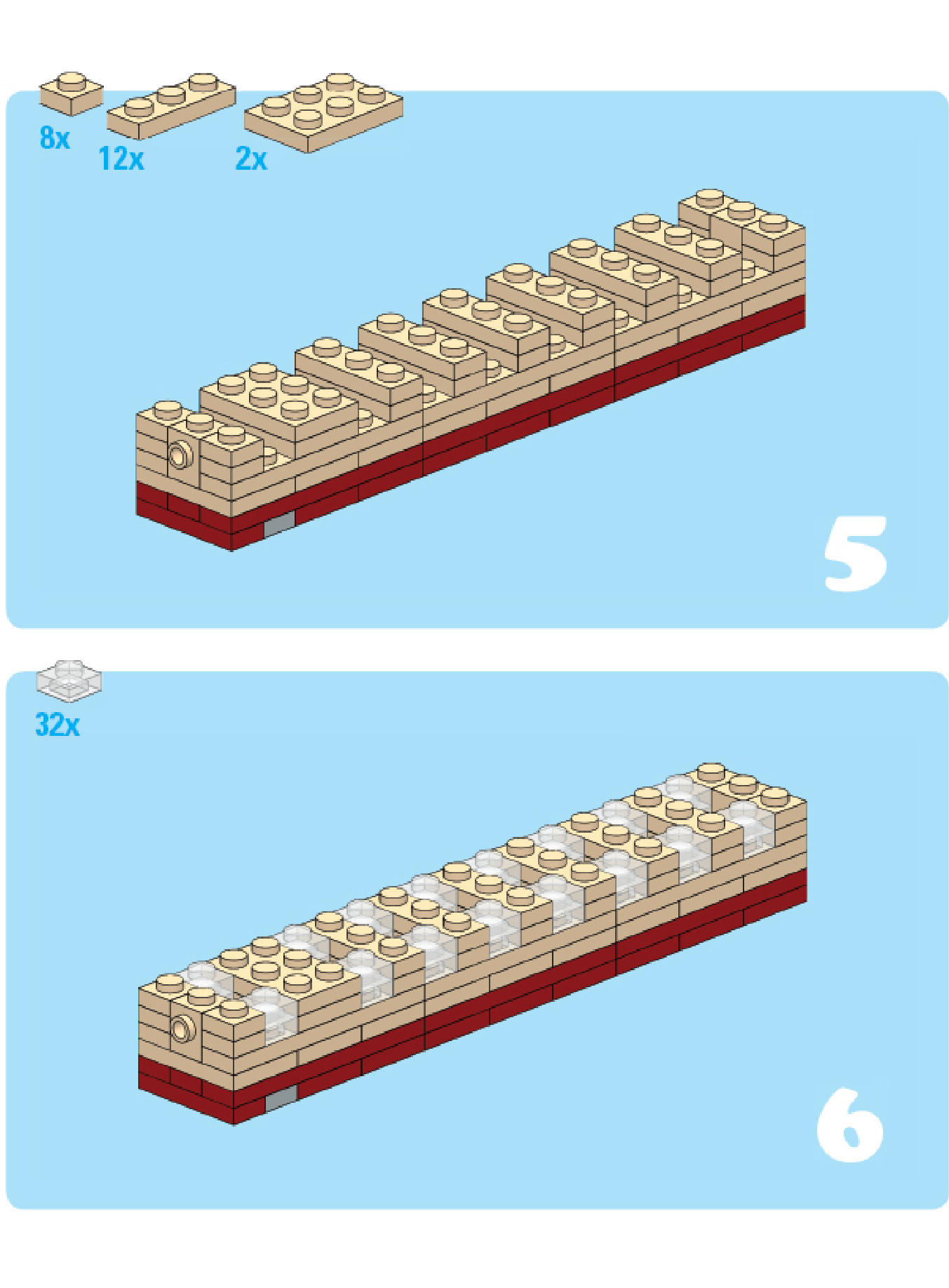
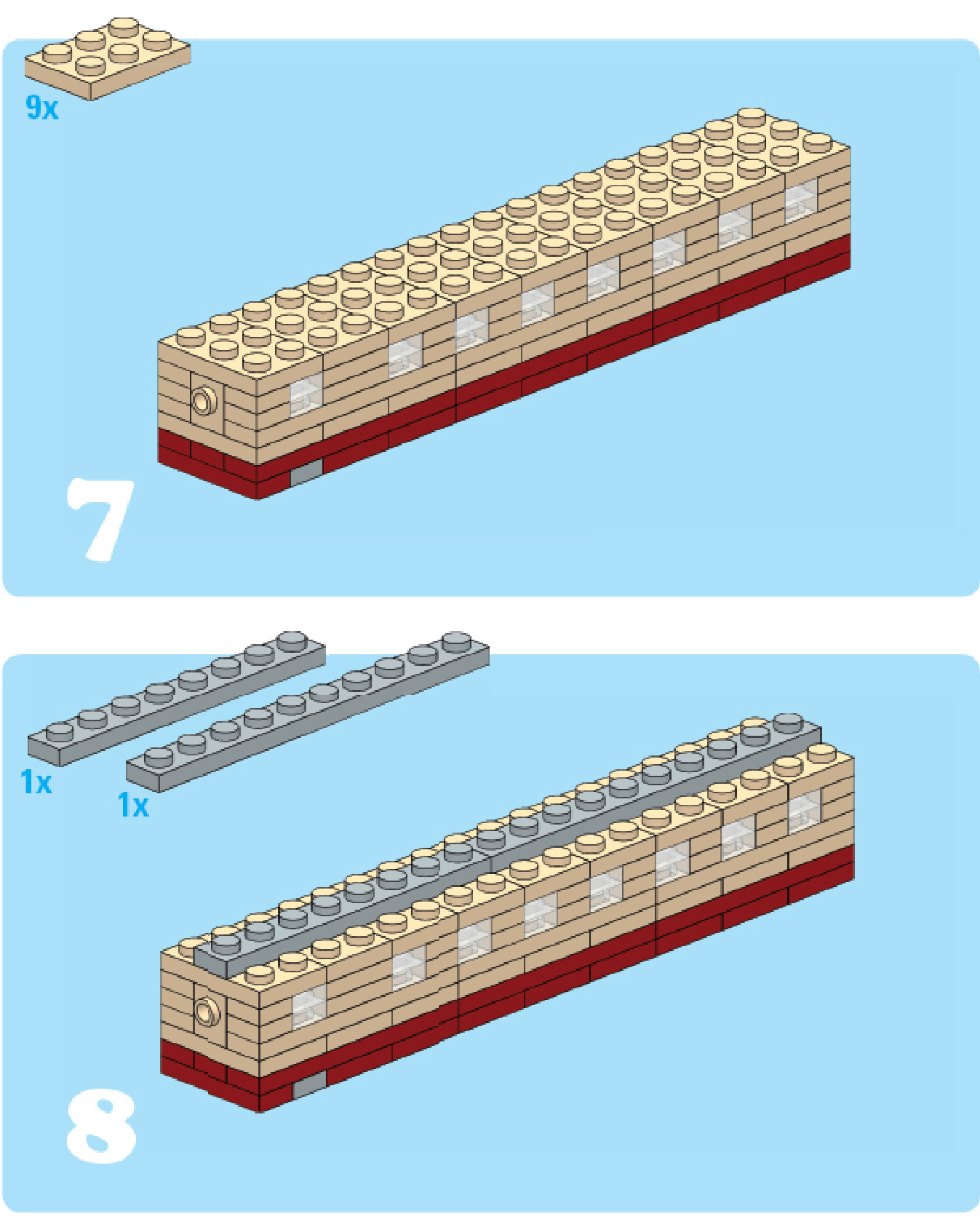
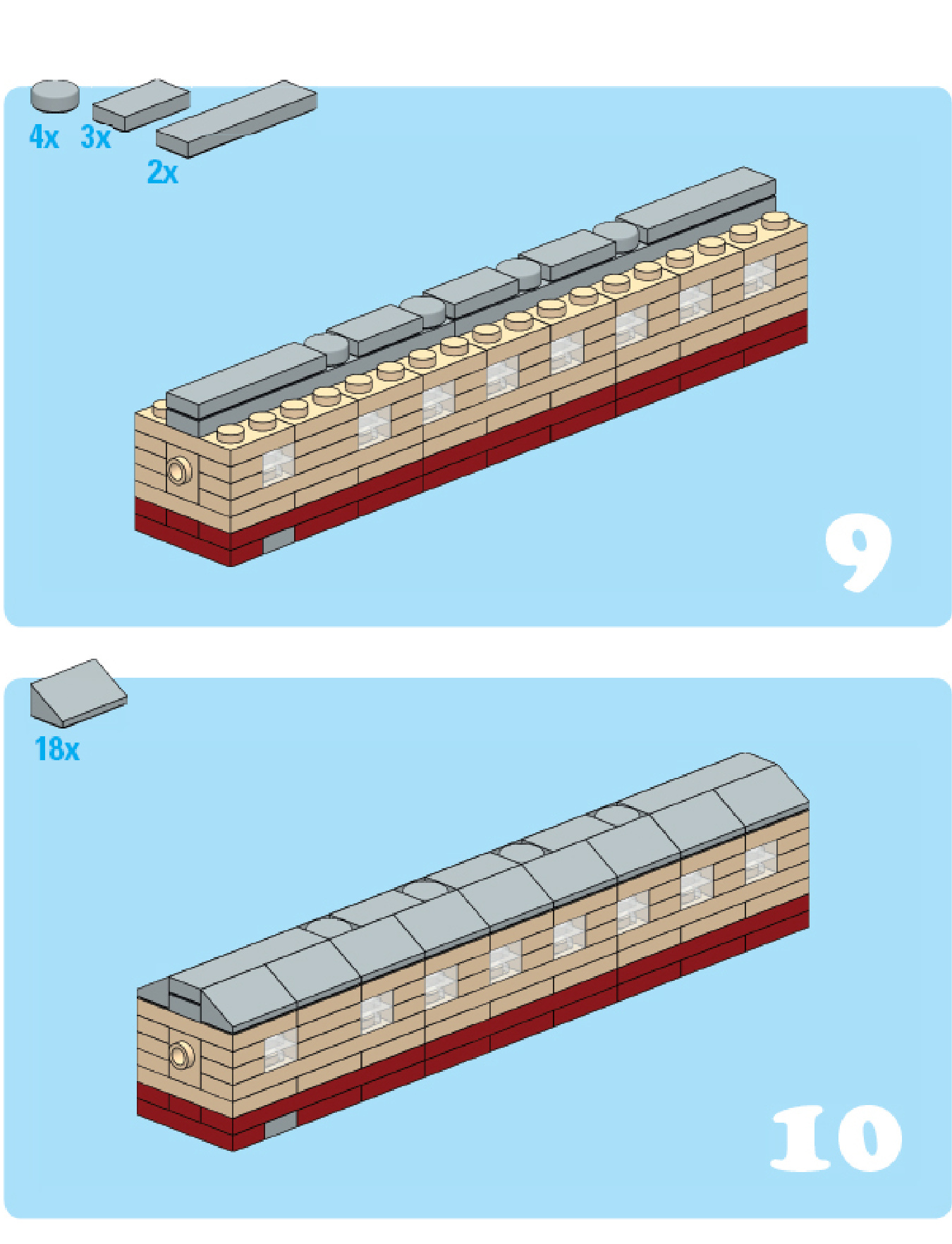
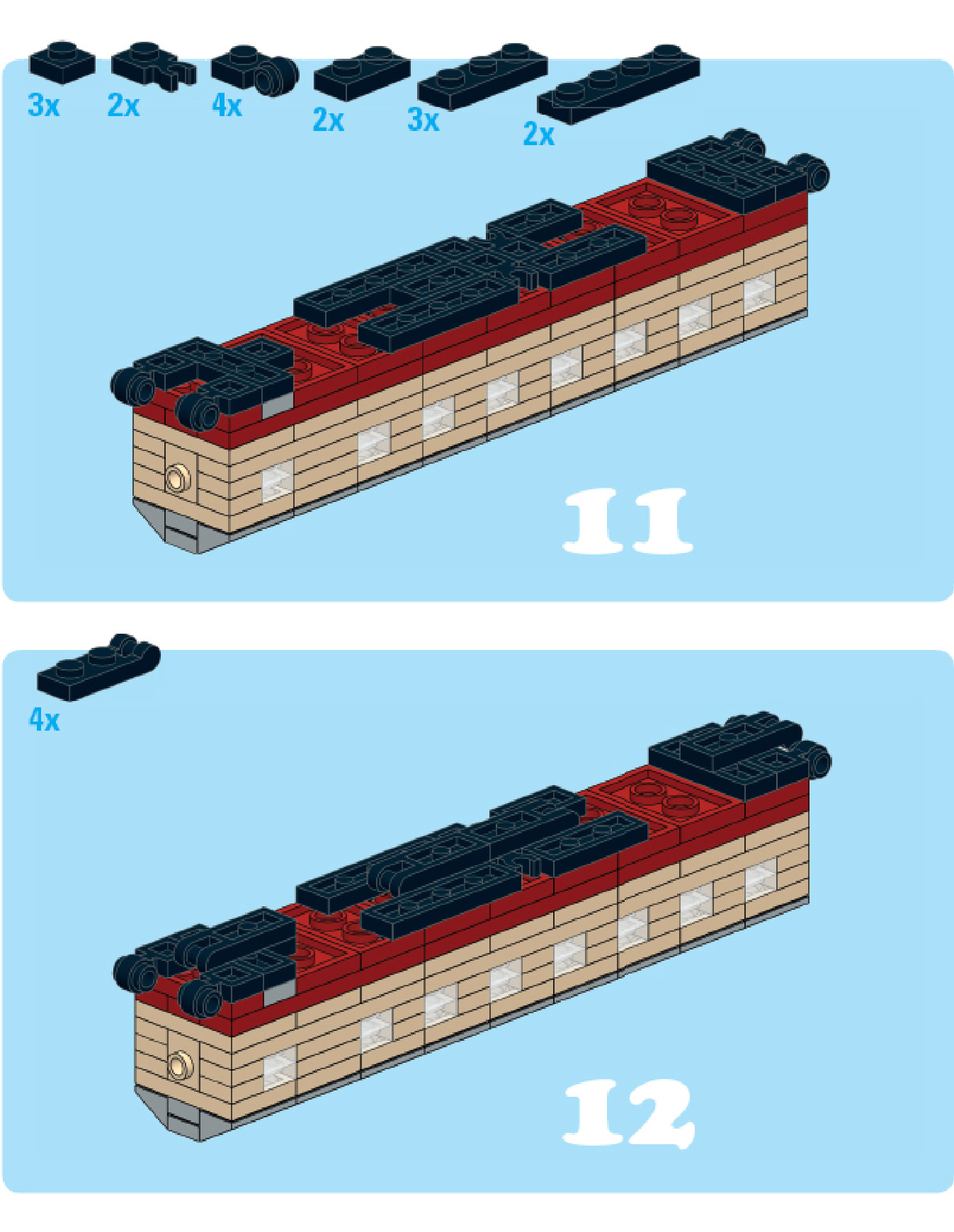
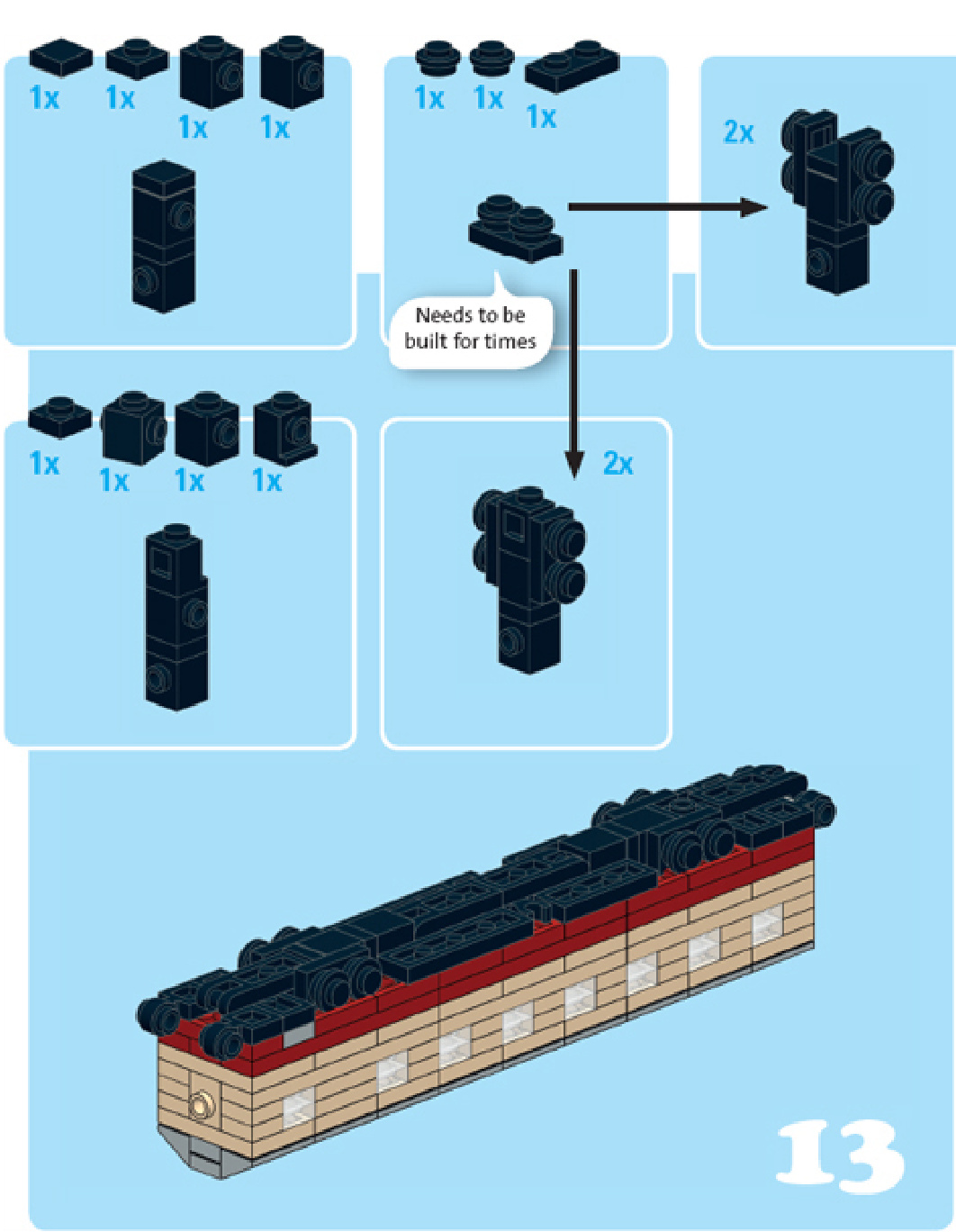
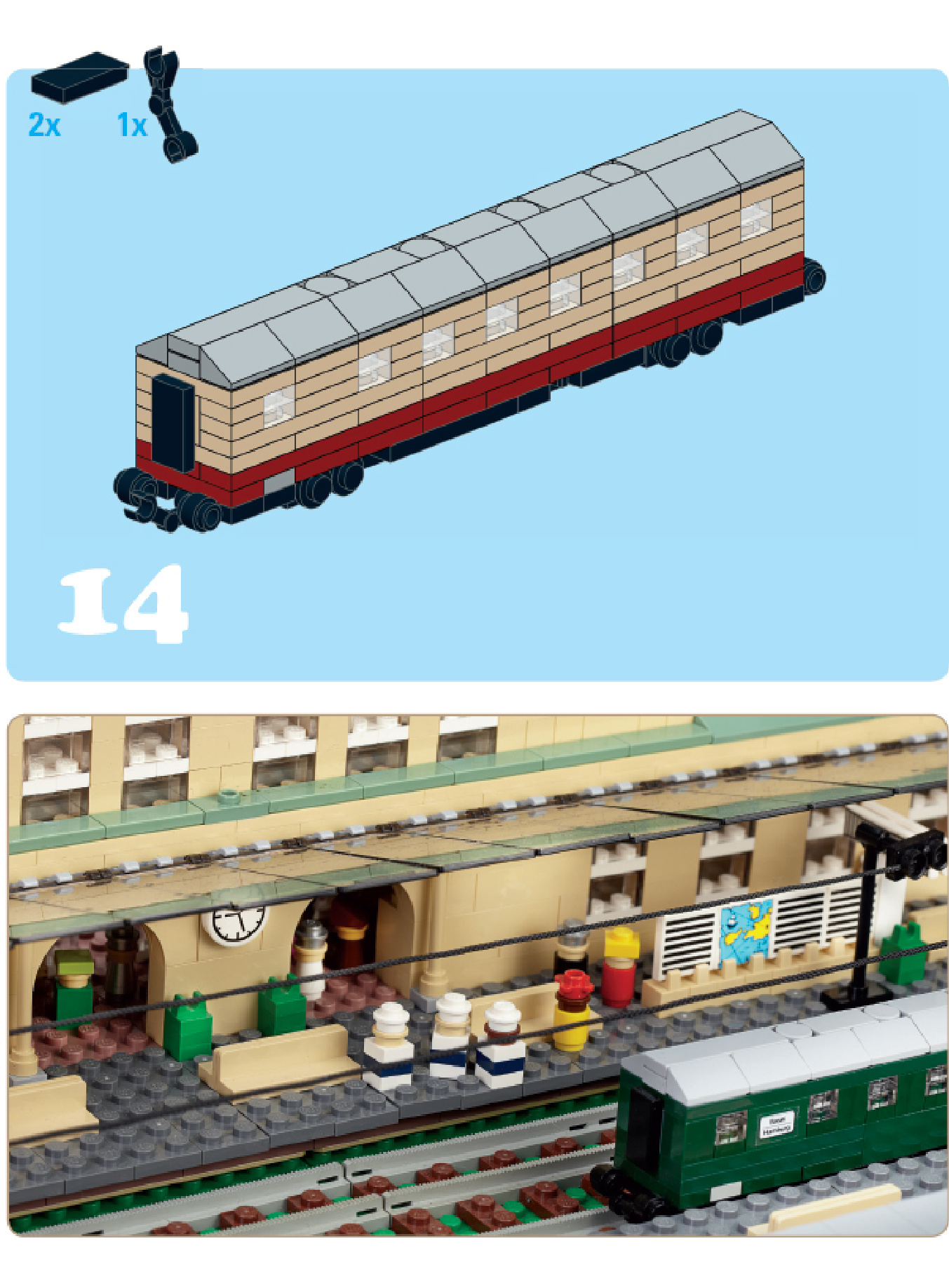
Parts List
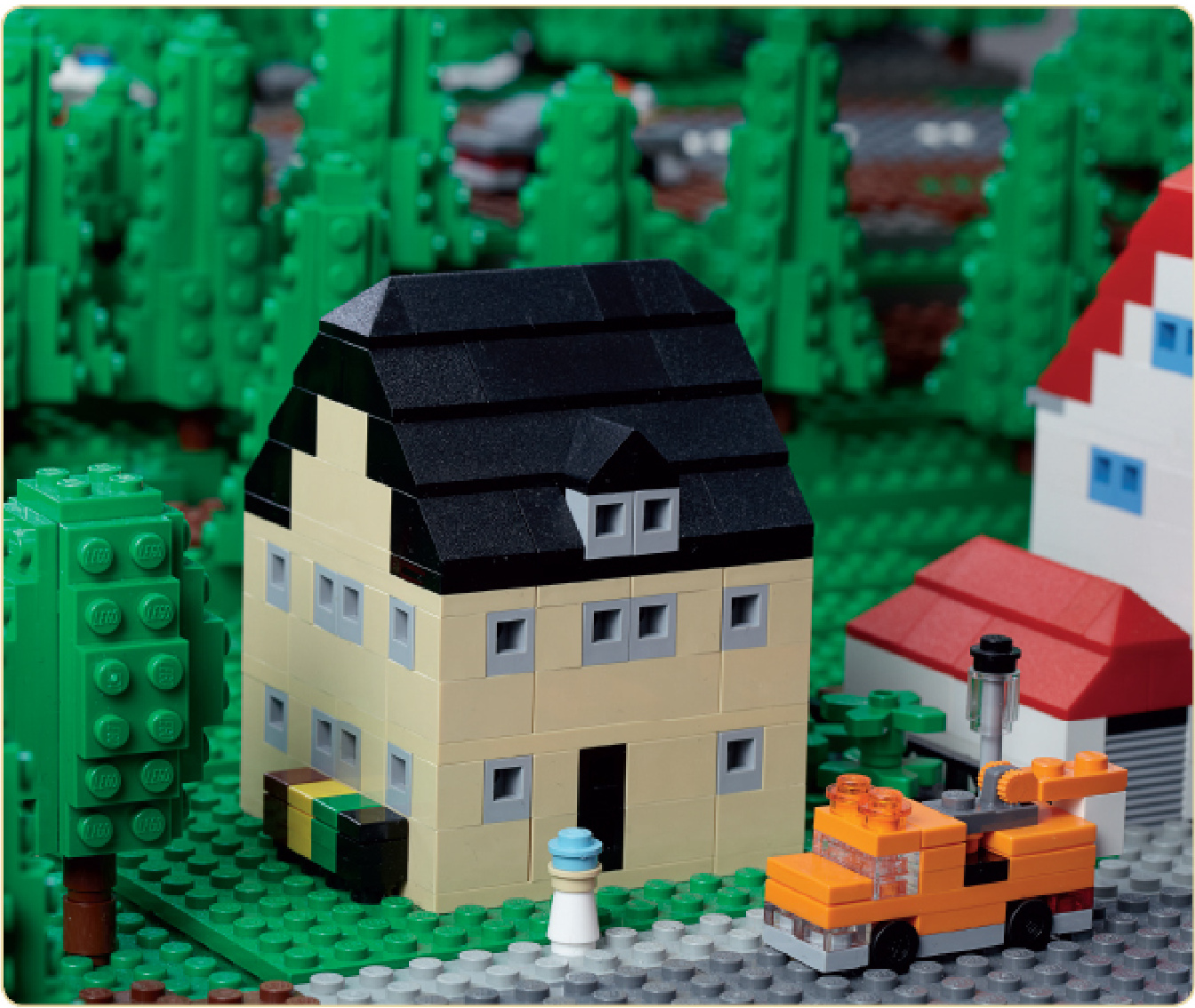
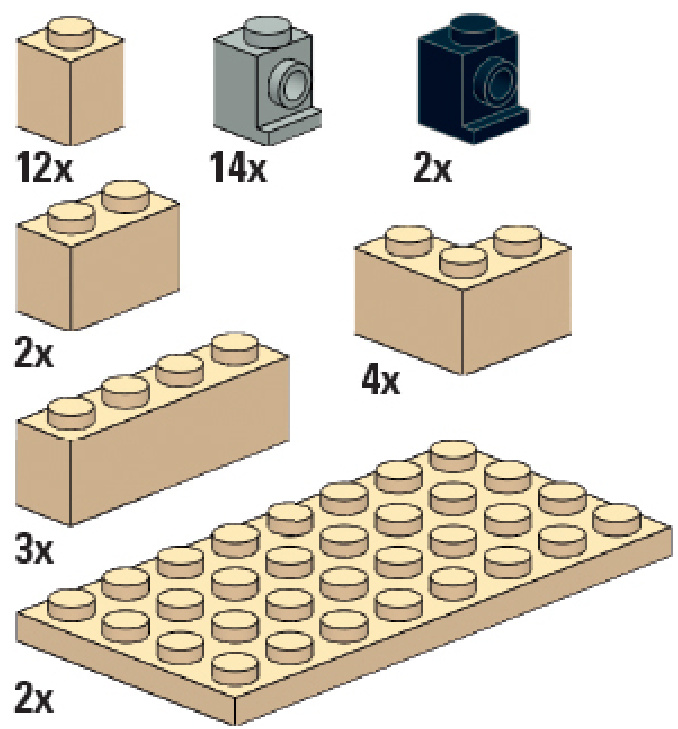
House
We want to show you several options with this house. First of all, we build a ground floor with a door. Then you can decide if your house will have a floor with windows or one with balconies. Of course, you can build houses with more floors and alternate between floors with balconies and those with windows. We also show you two alternatives for the design of the roof: a saddle roof and a hipped roof.
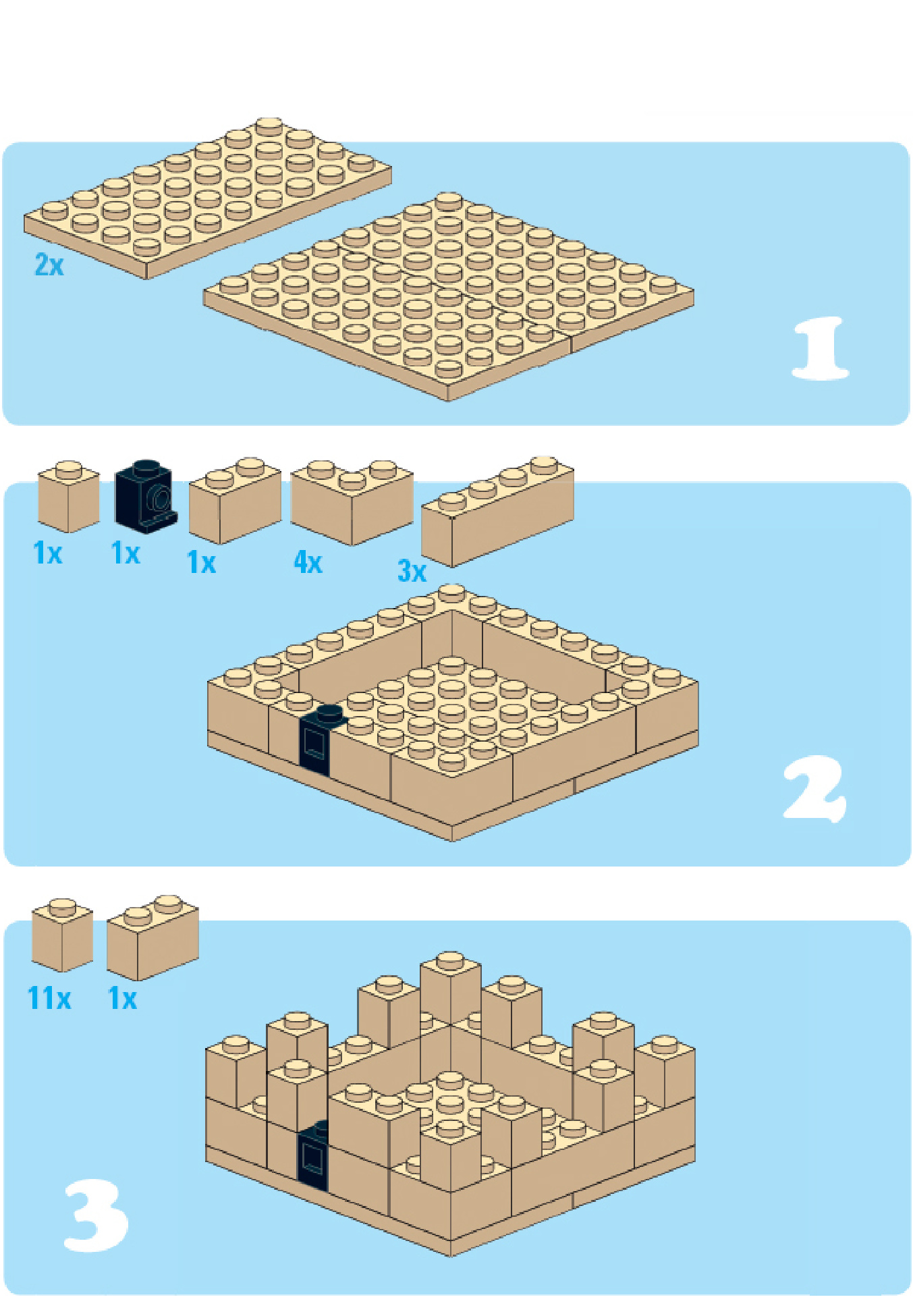
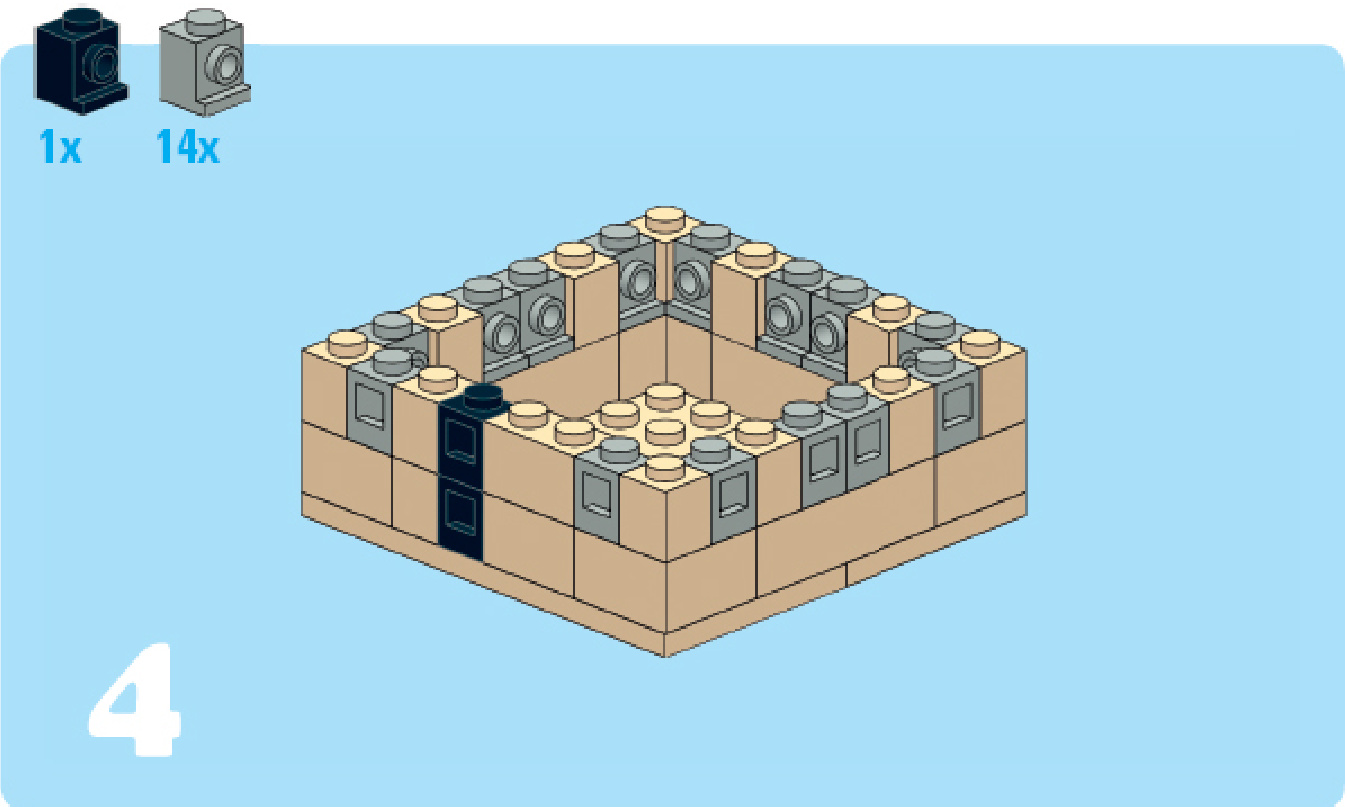
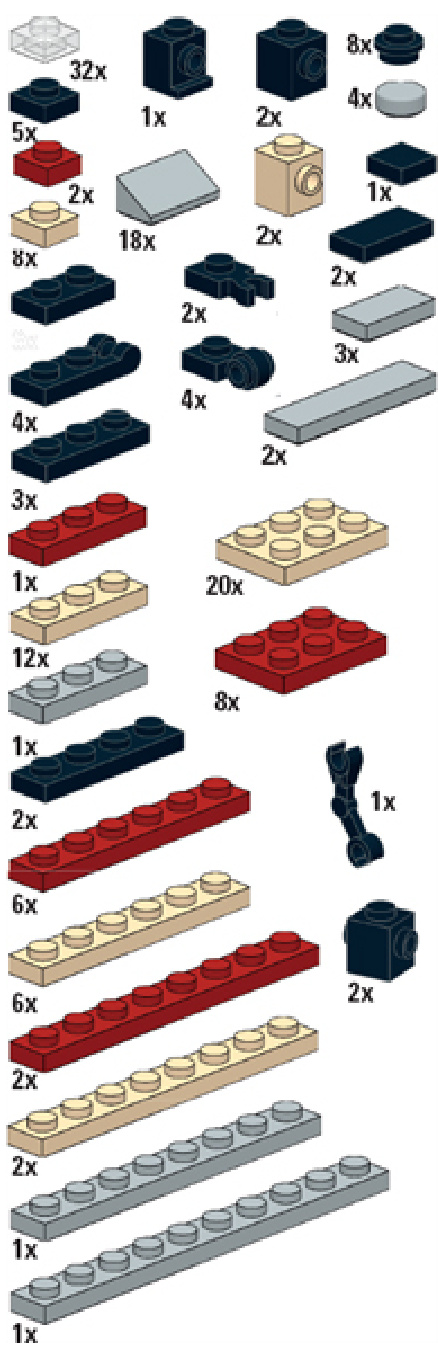
Parts List
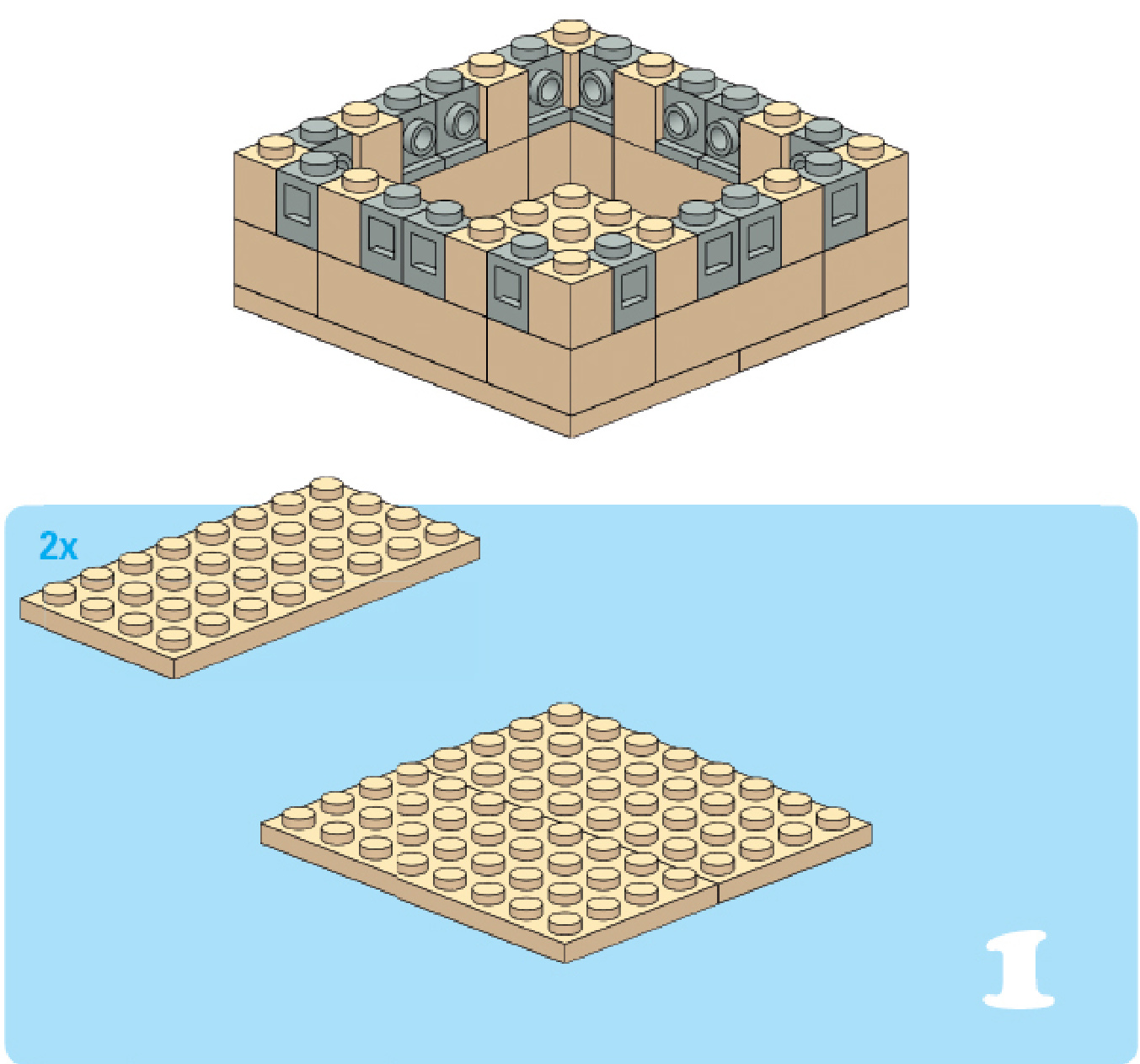
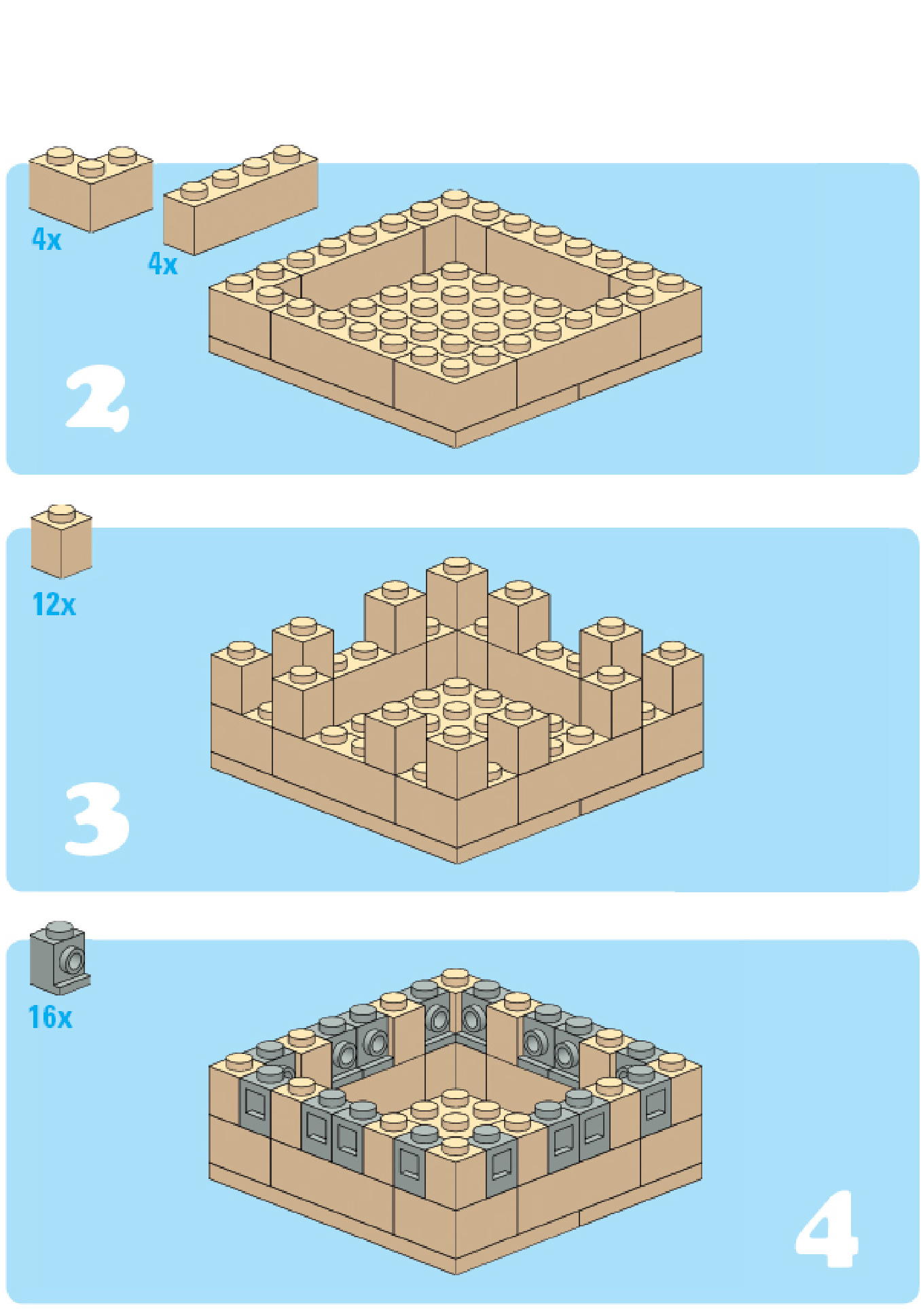
Floor with Windows
The floor with windows is a small variation of the ground floor. Since we do not need a door here, obviously, we close the first stone layer and insert a second window.
The back of the SNOT stones make very pretty small window frames. Try out other stones, the overall impression of the house changes significantly.
Parts List

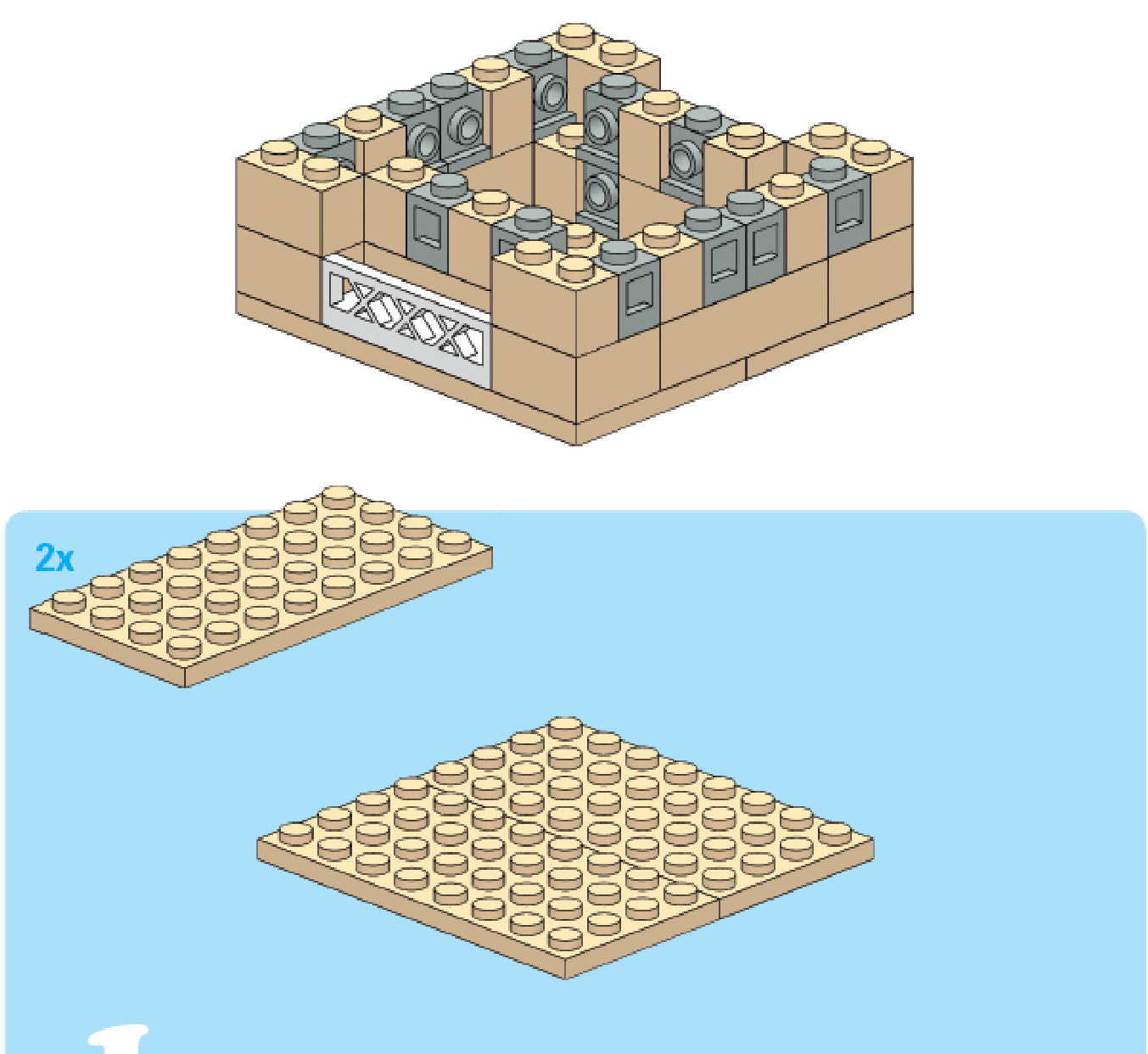
Floor with Balconies
The house facade makes a totally different impression with the set-back wall and the attached balcony.
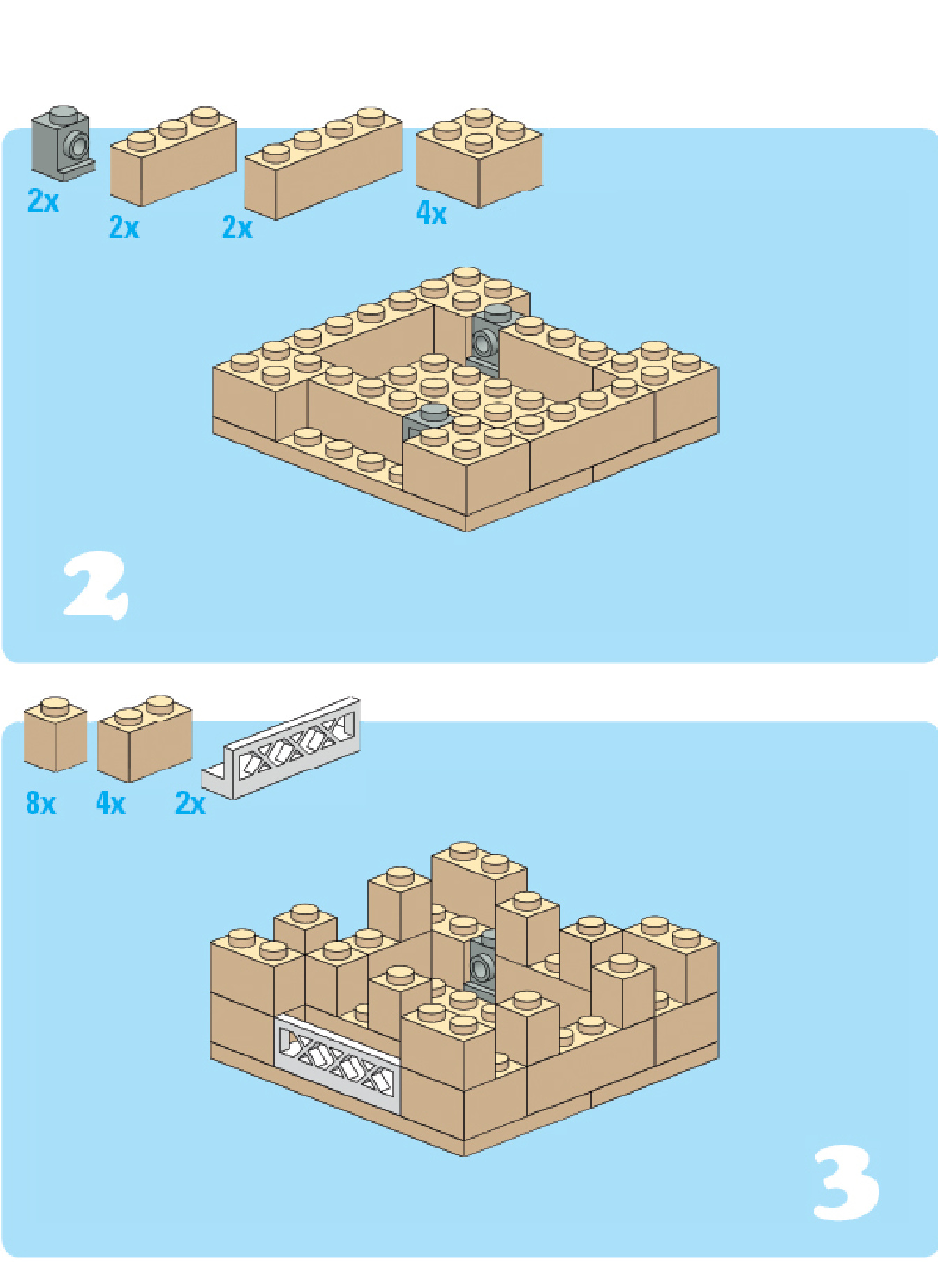
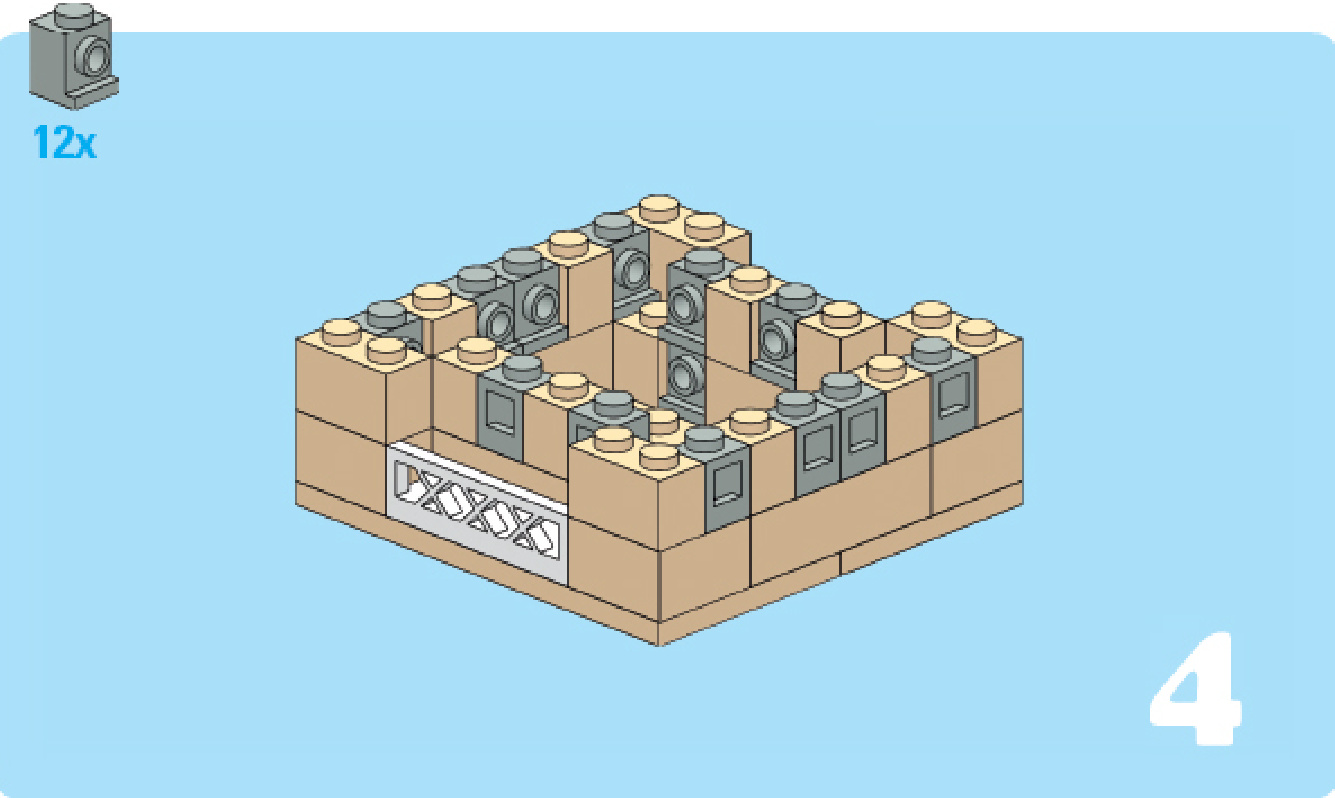
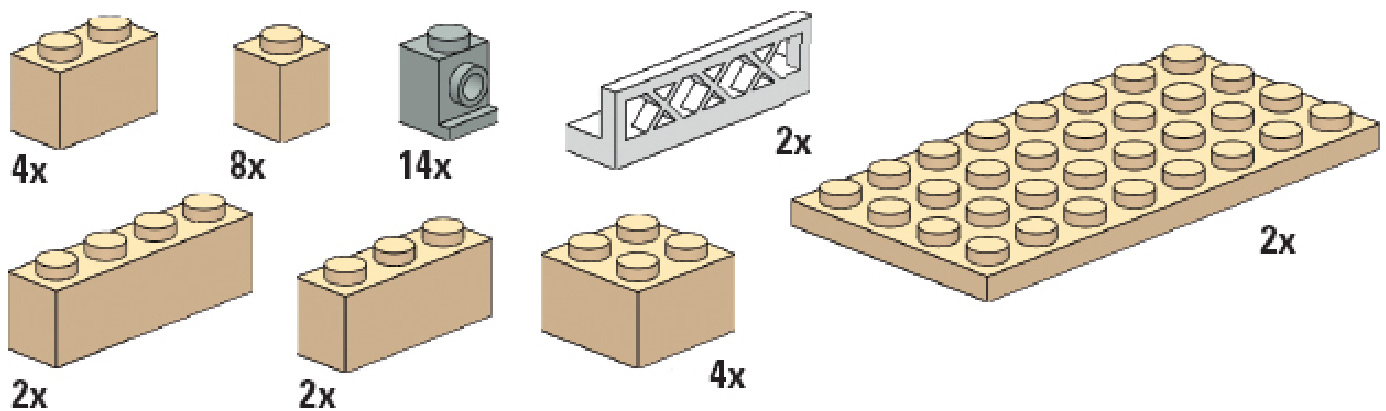
Don’t forget to build in a door into the lower stone layer so that the balcony can be accessed. The grid panel is great as a balcony railing.
Parts List
Saddle Roof
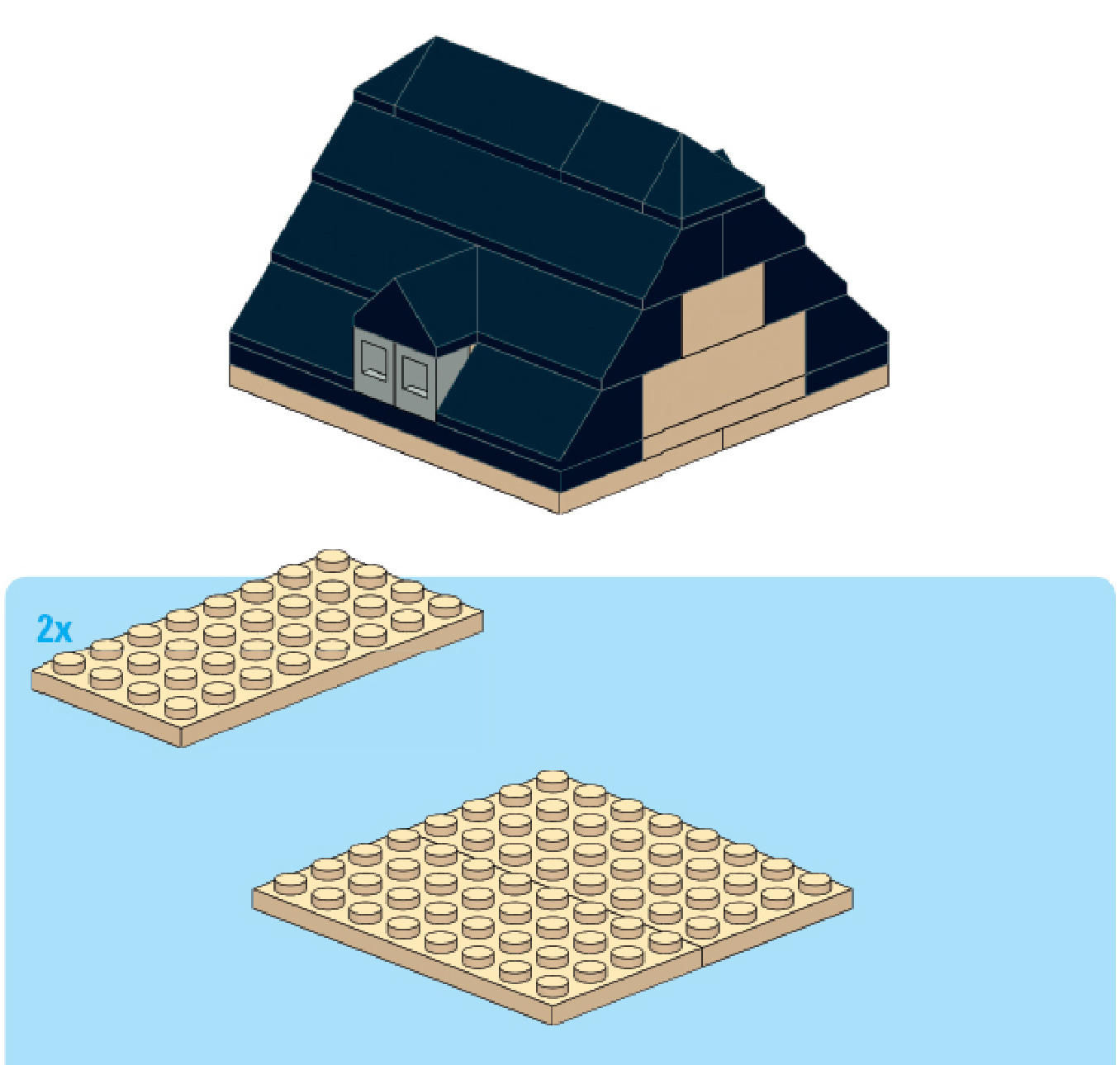
Although built on a square base, the house makes a rectangular impression with the saddle roof. You can, of course, put on the roof turned by 9o degrees or install a small skylight in the front.
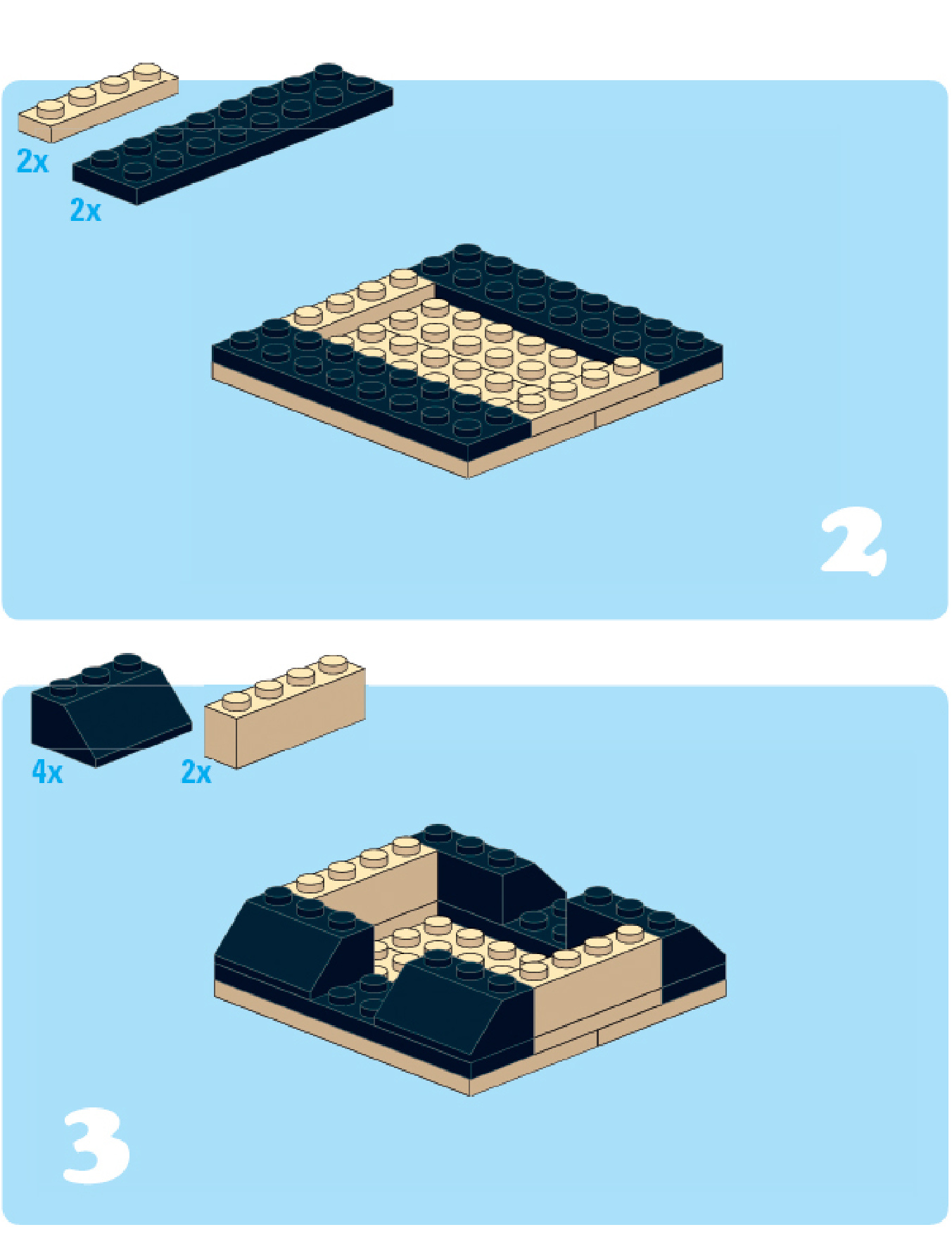
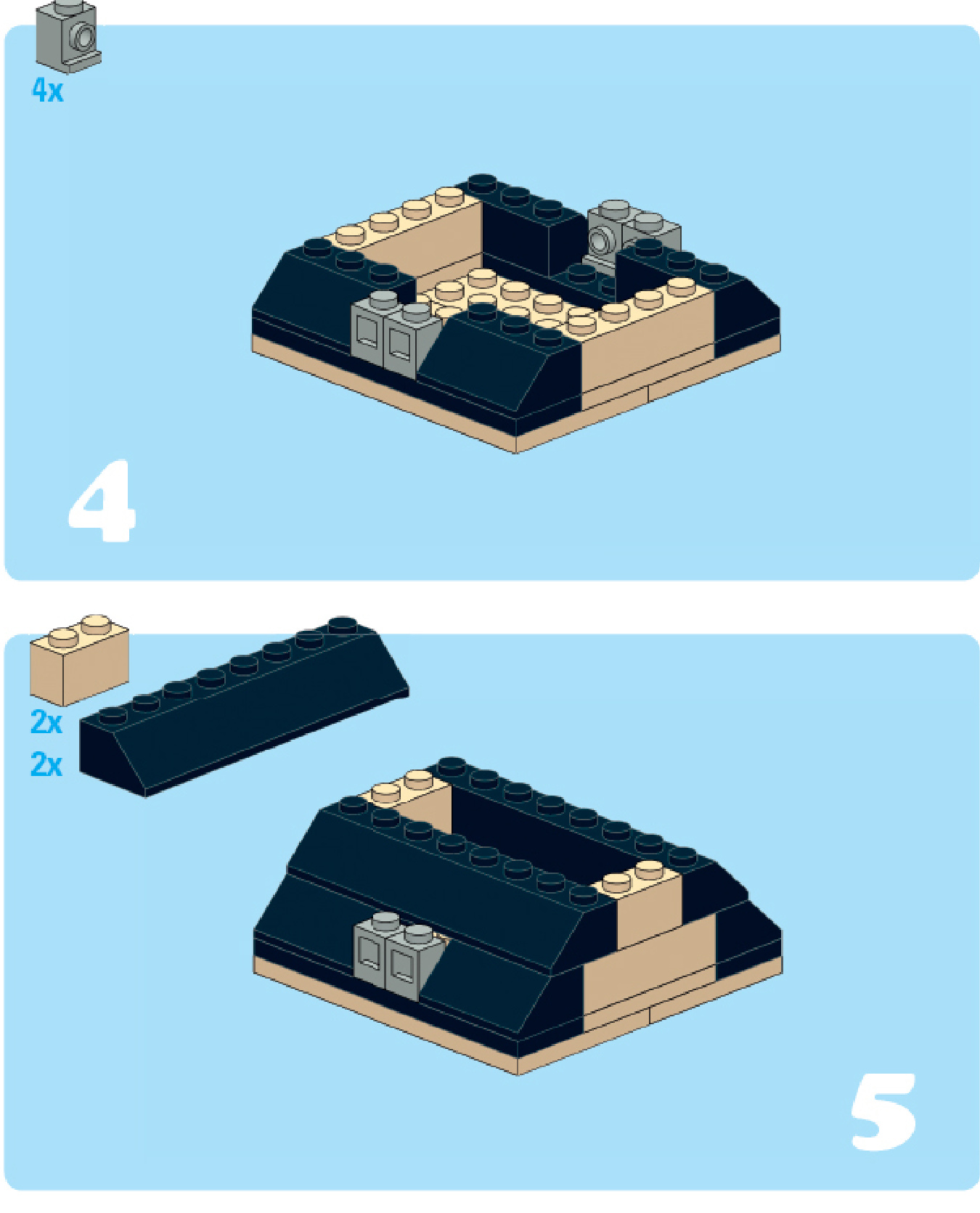
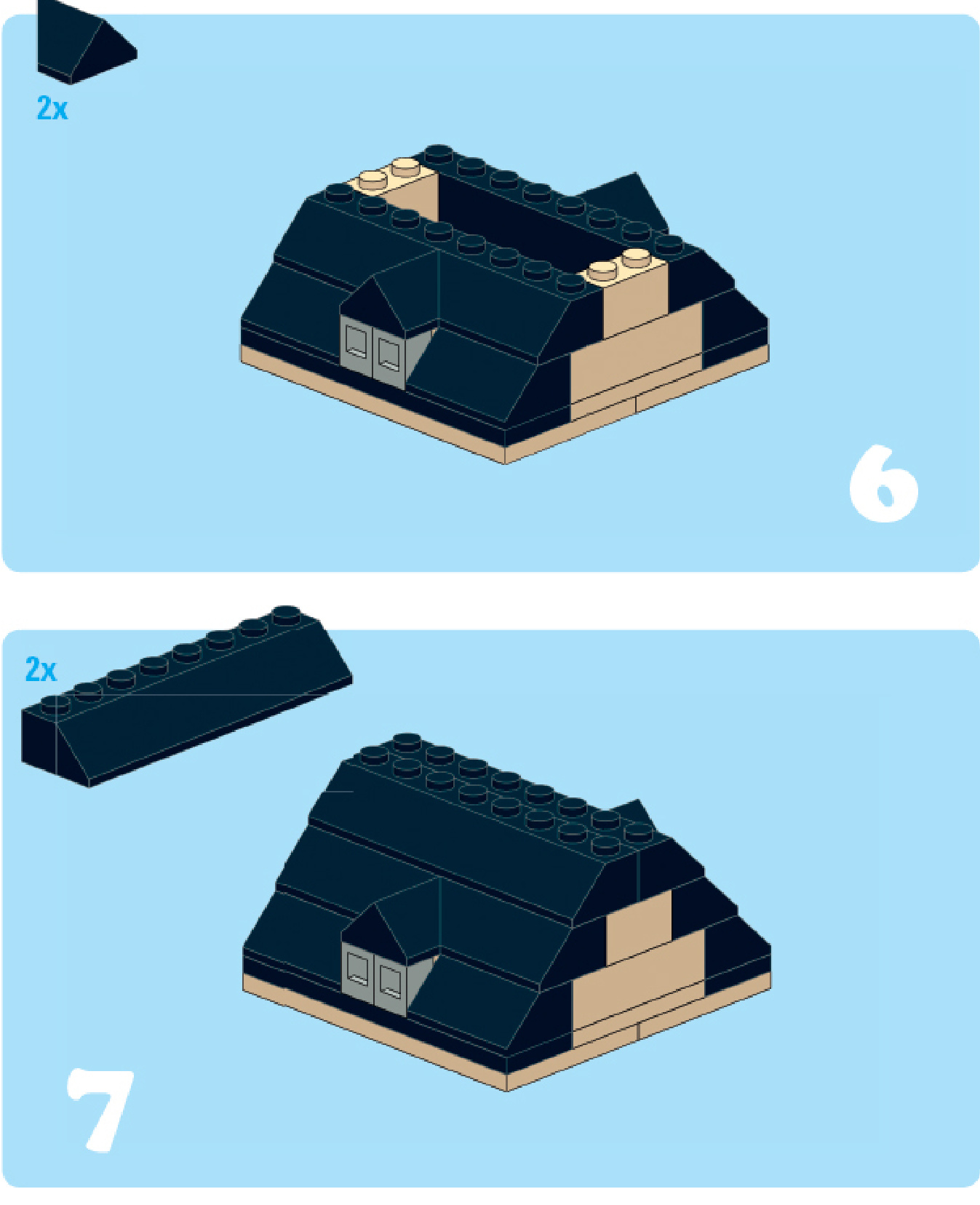
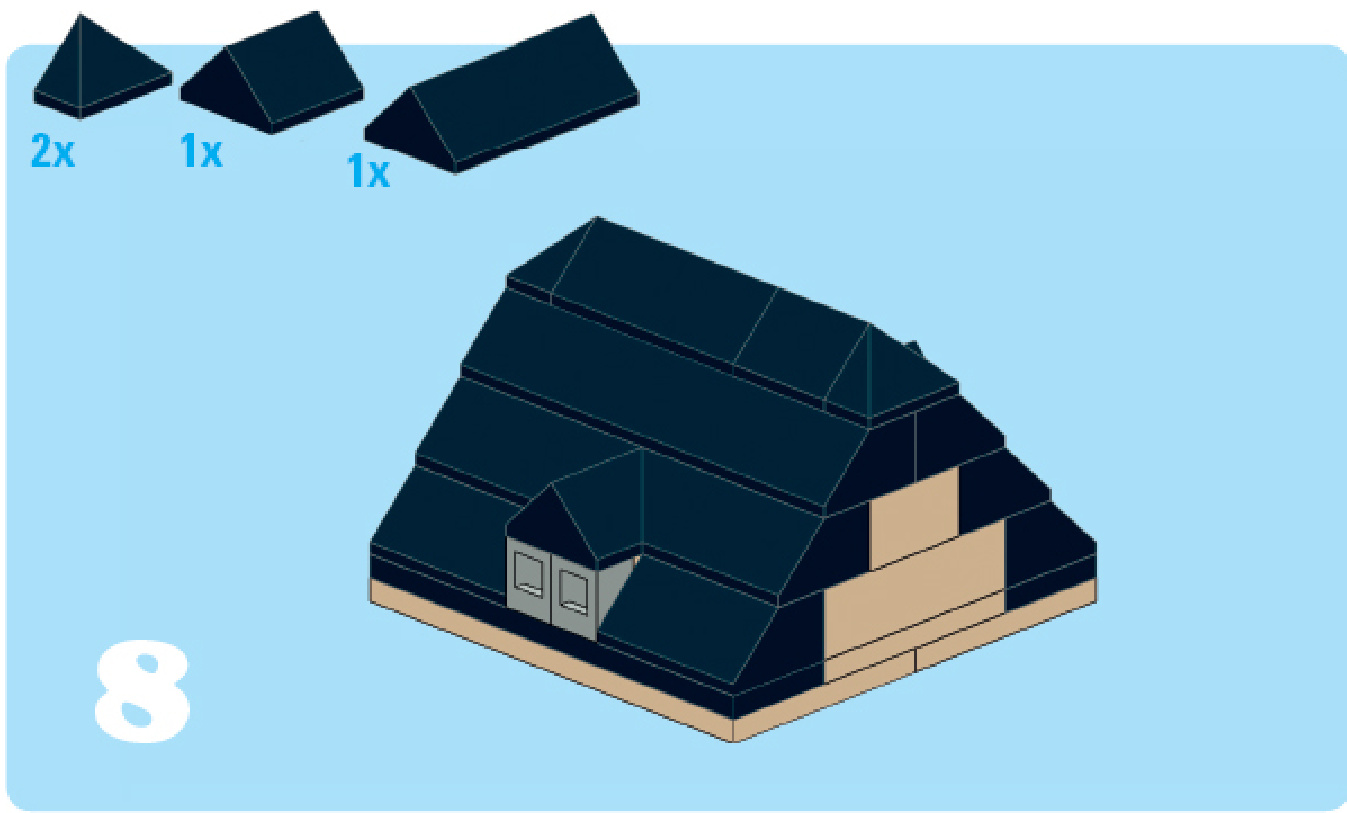
Parts List
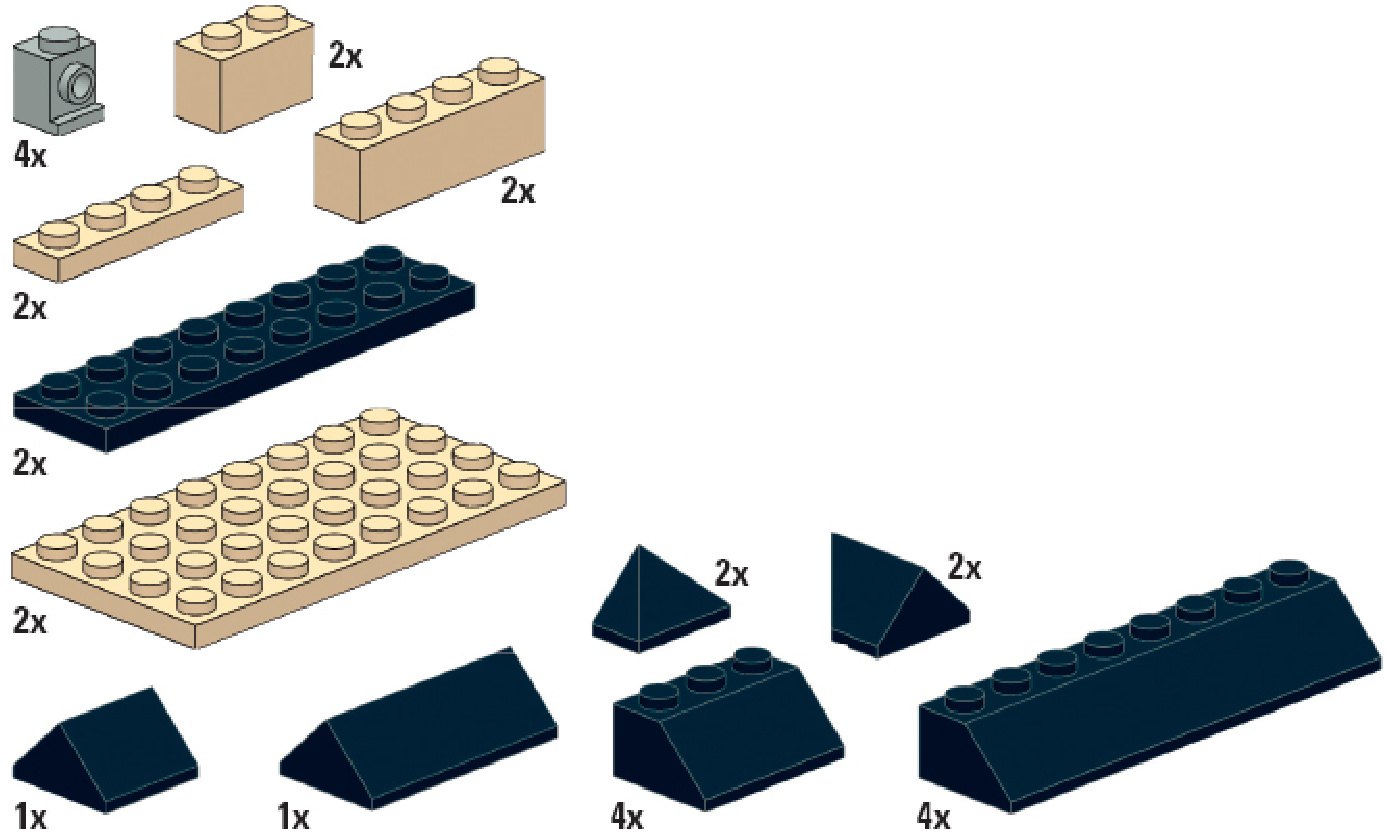
Hip Roof
The entire house seems different with the hip roof and four dormers. With the four sloped sides and the identical design of the house it really does seem square.
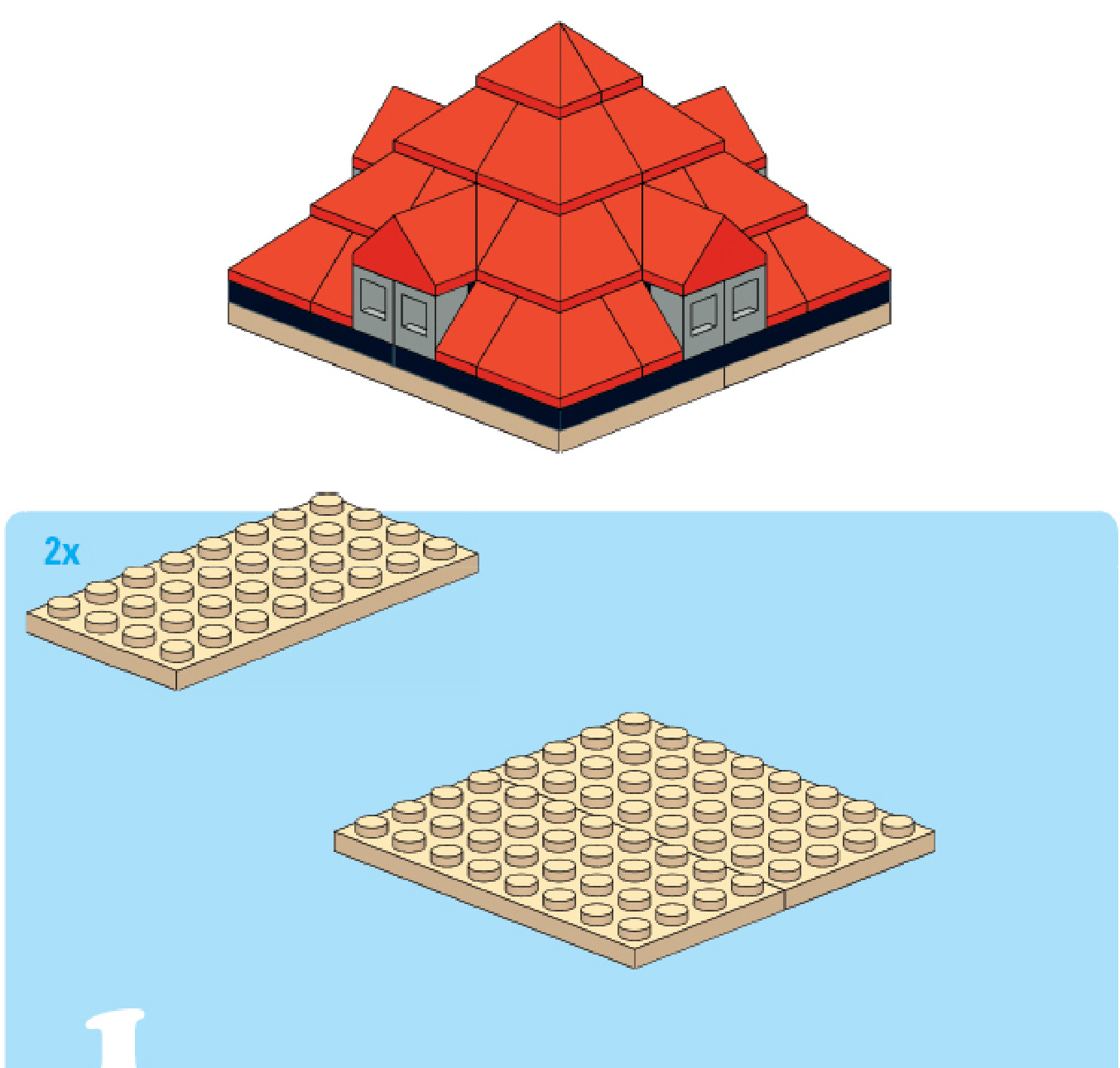
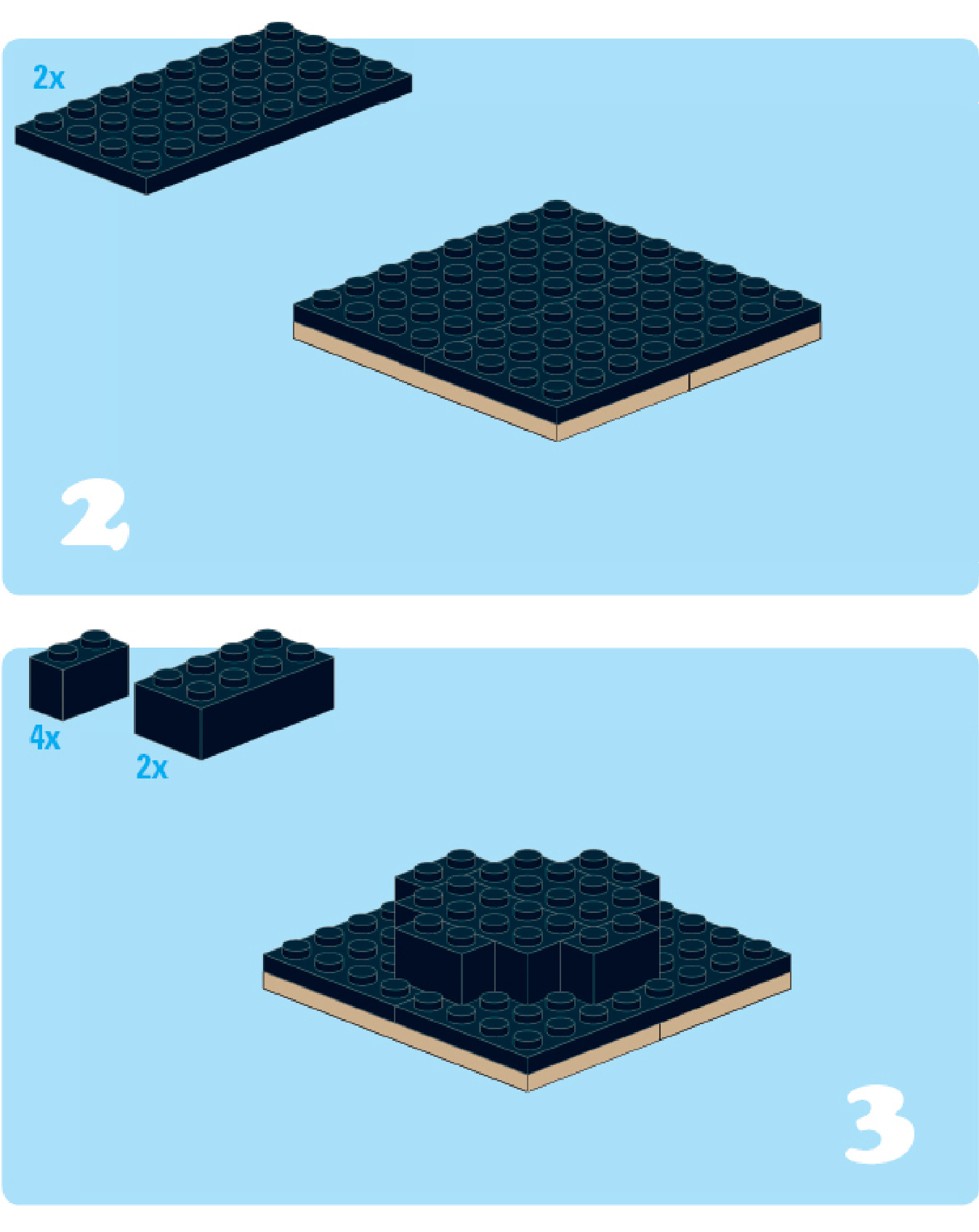
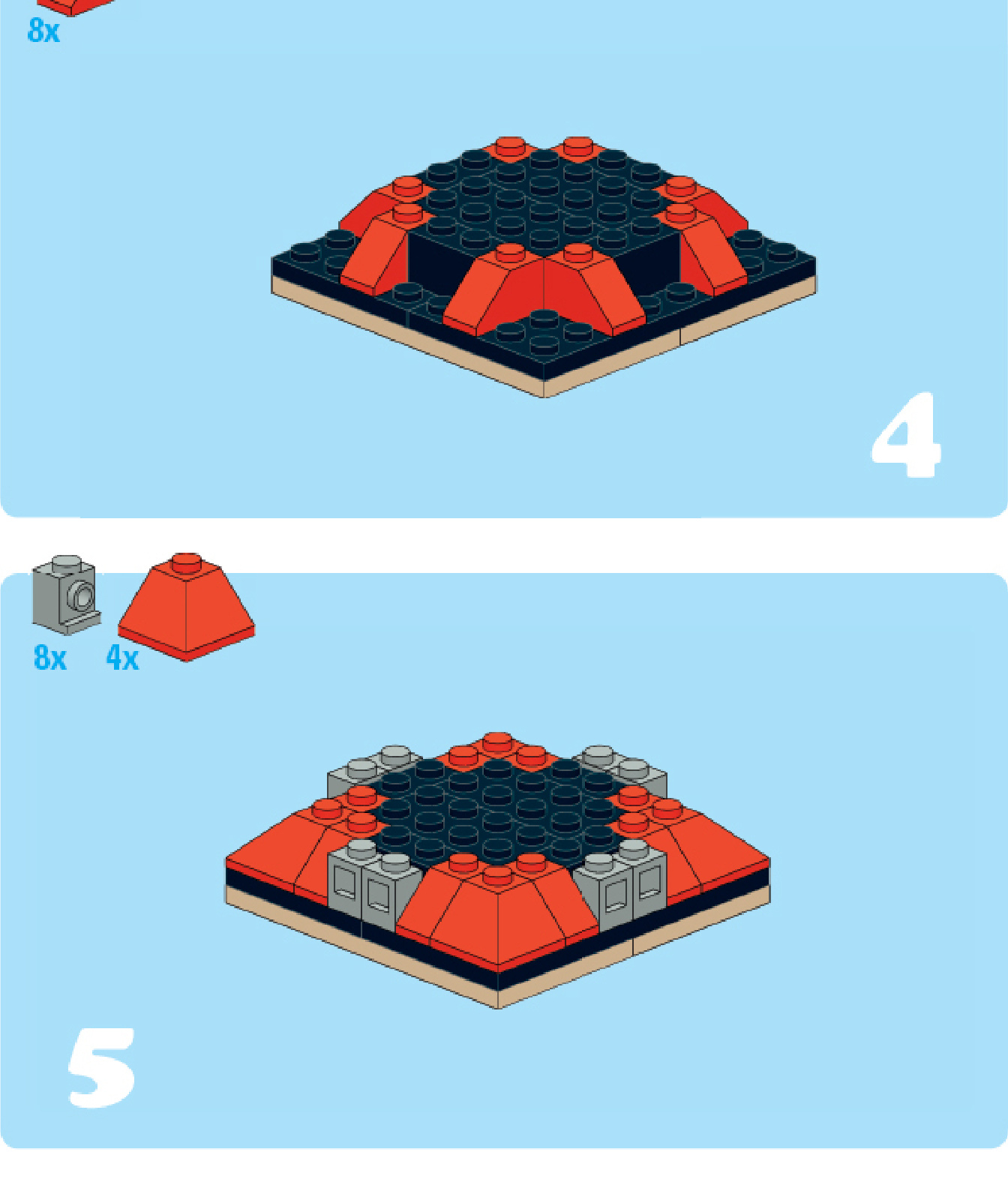
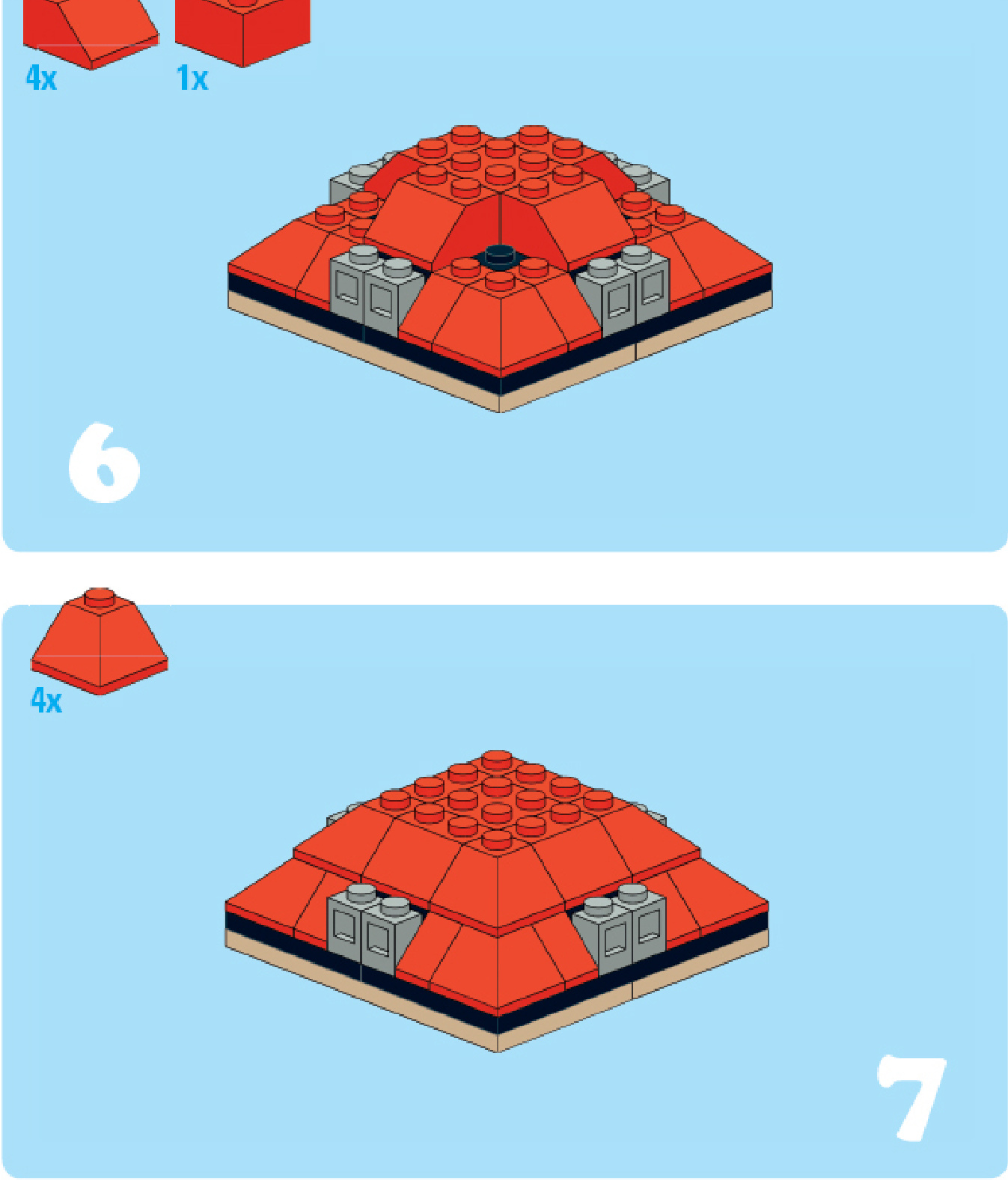
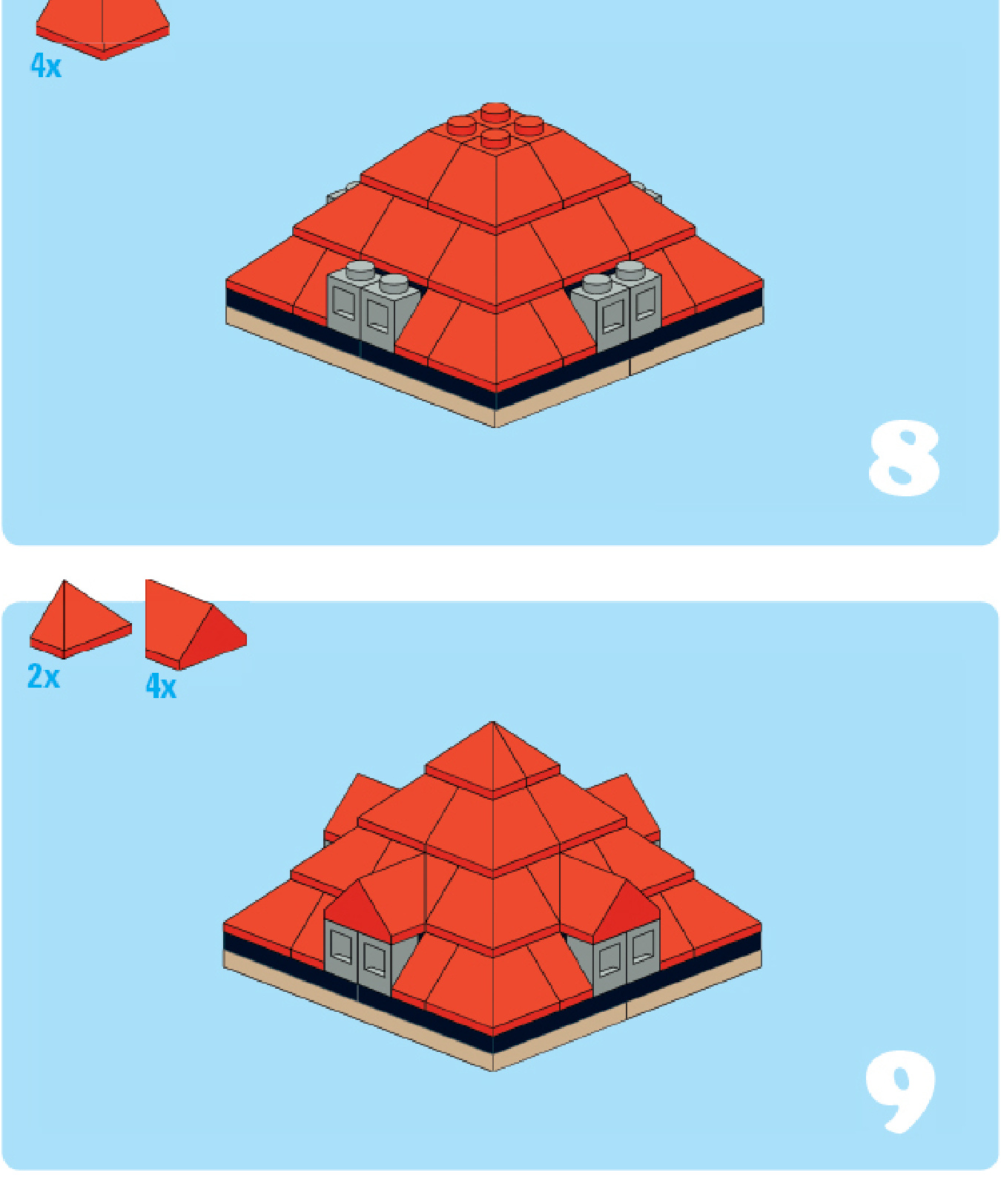
Parts List
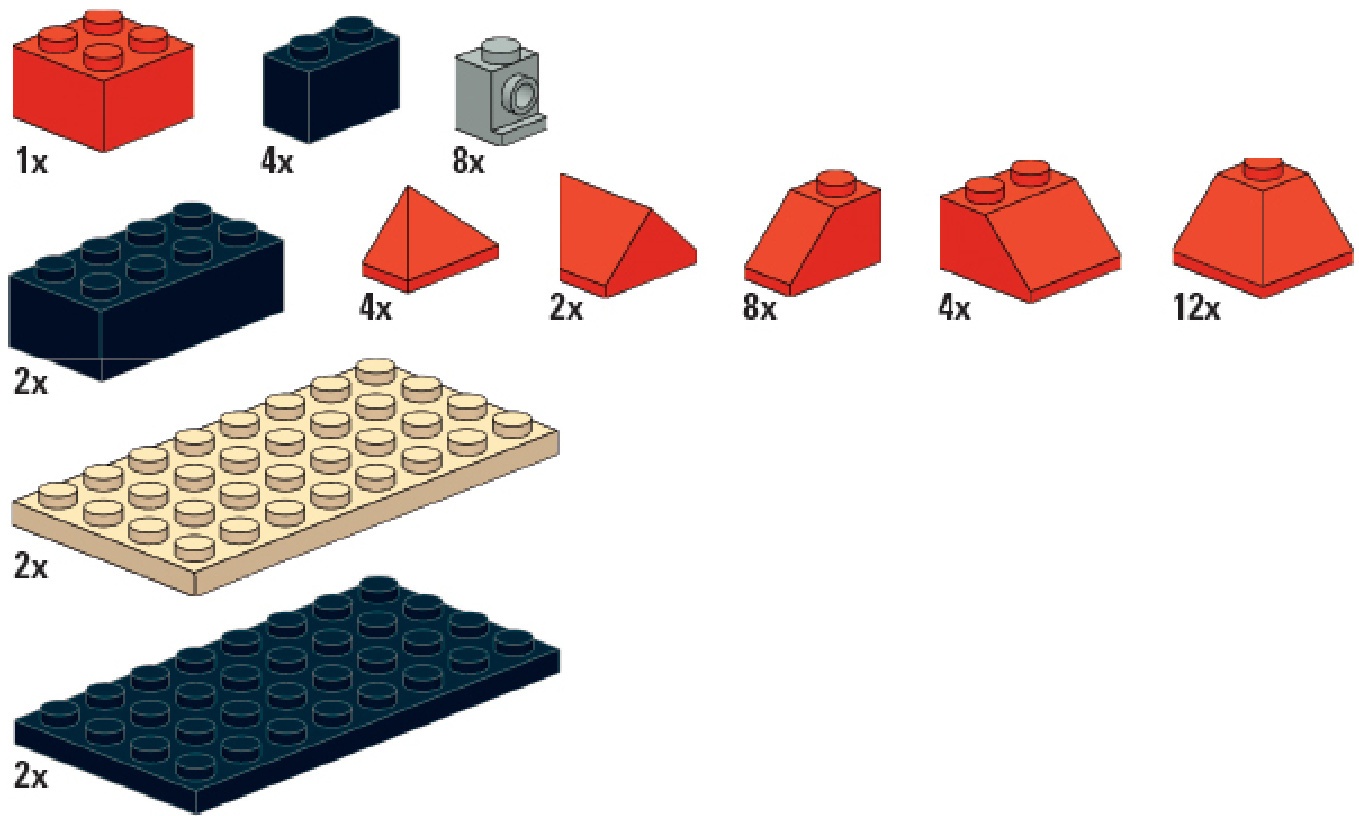
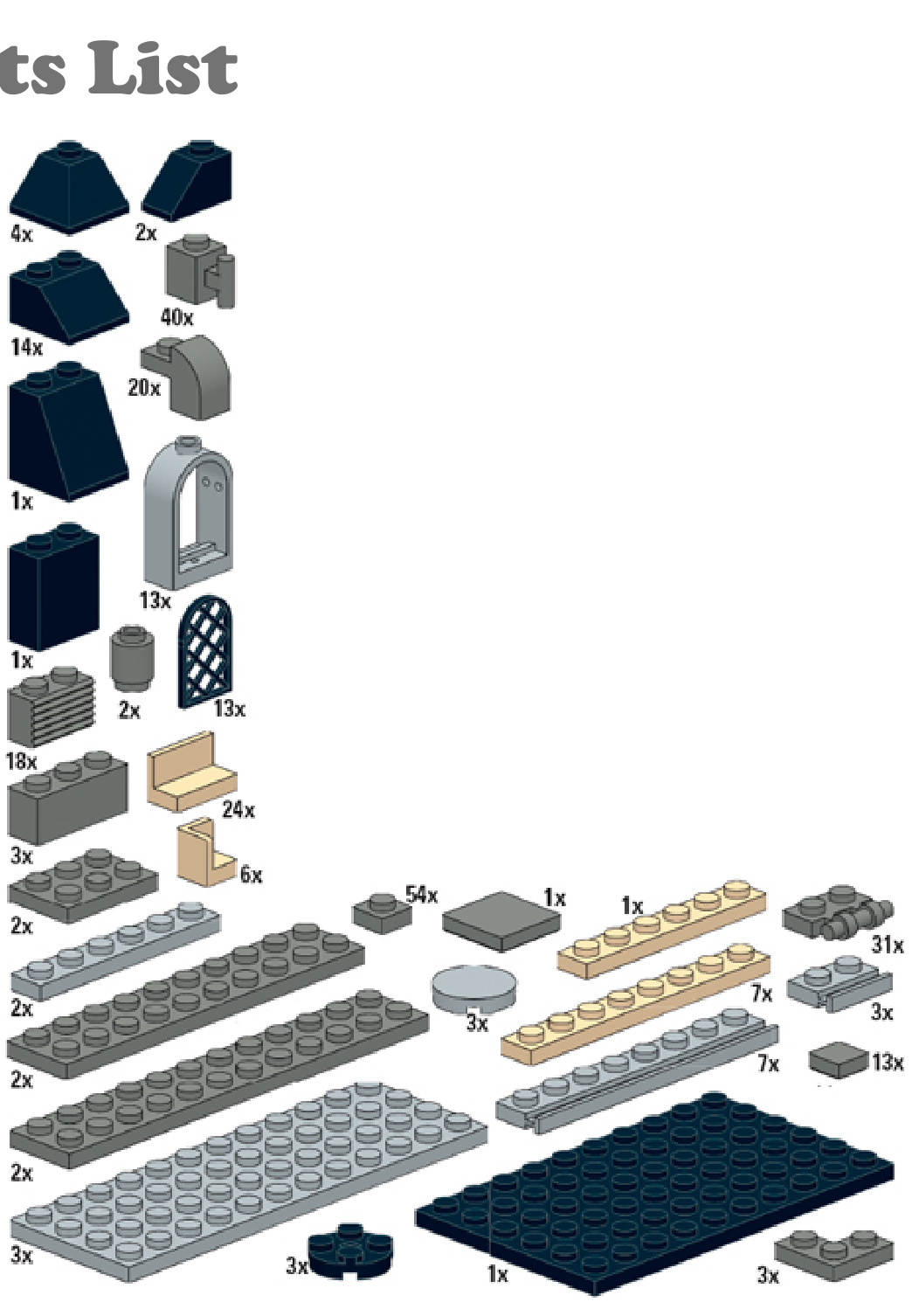
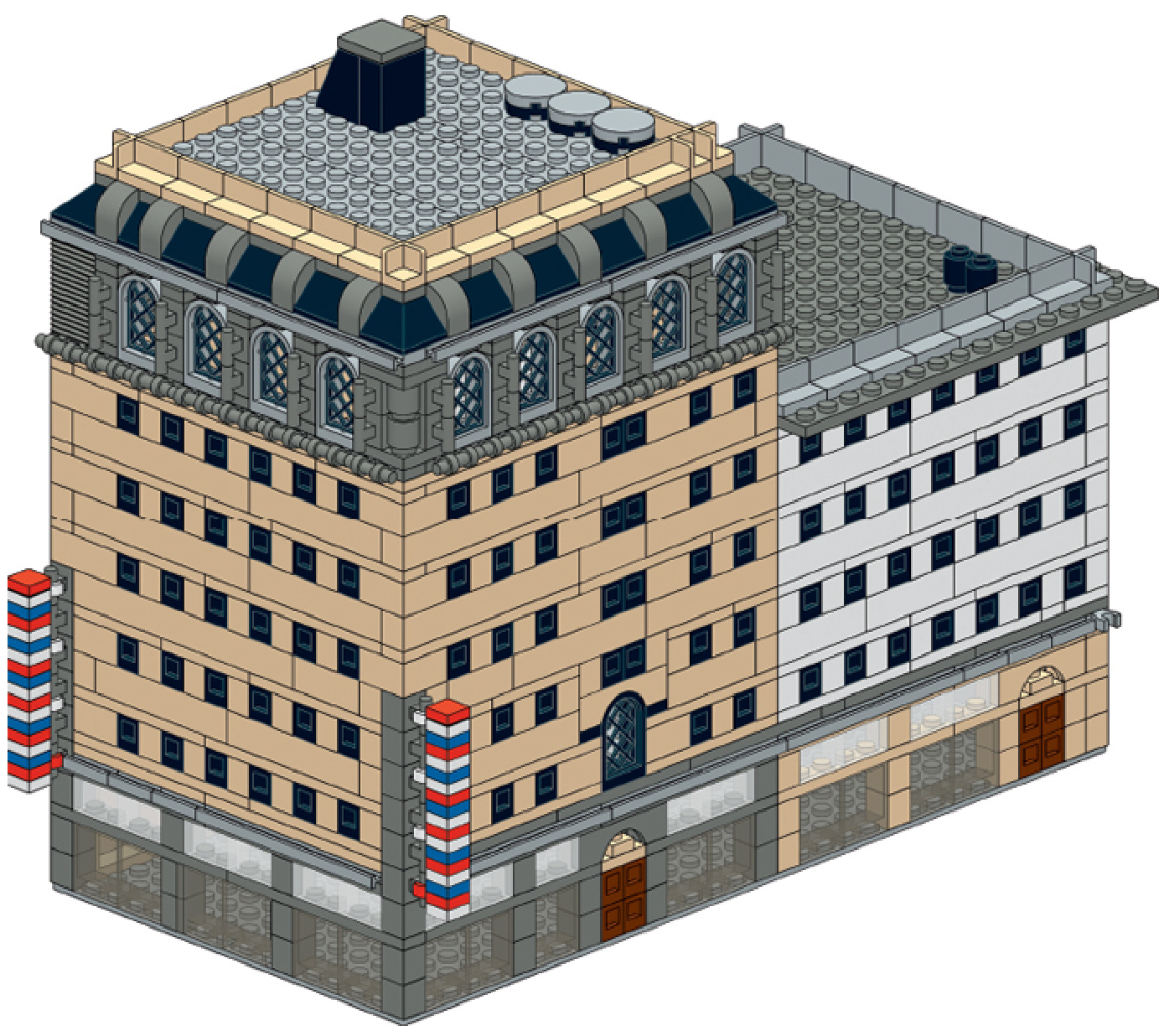
Department Store
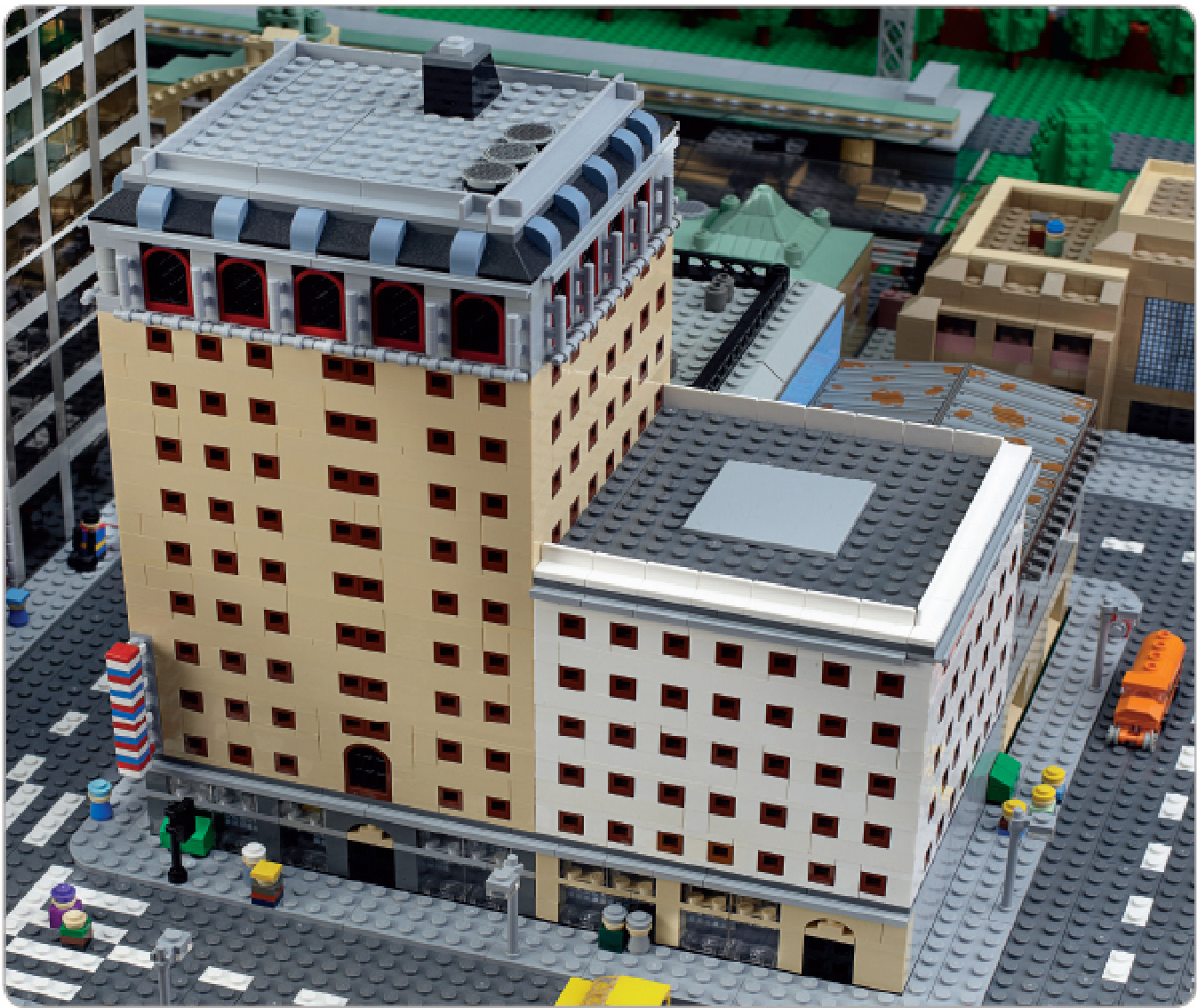
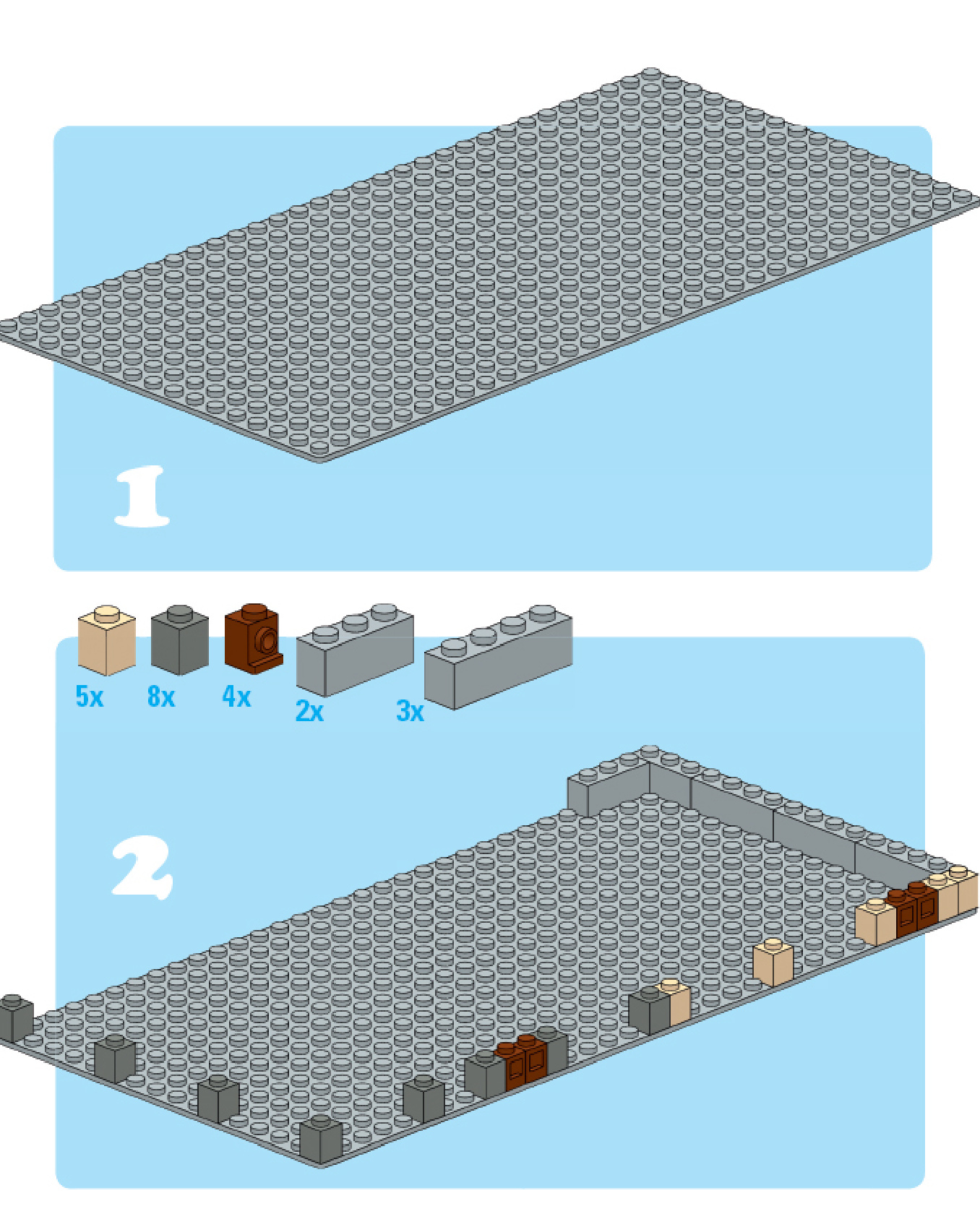
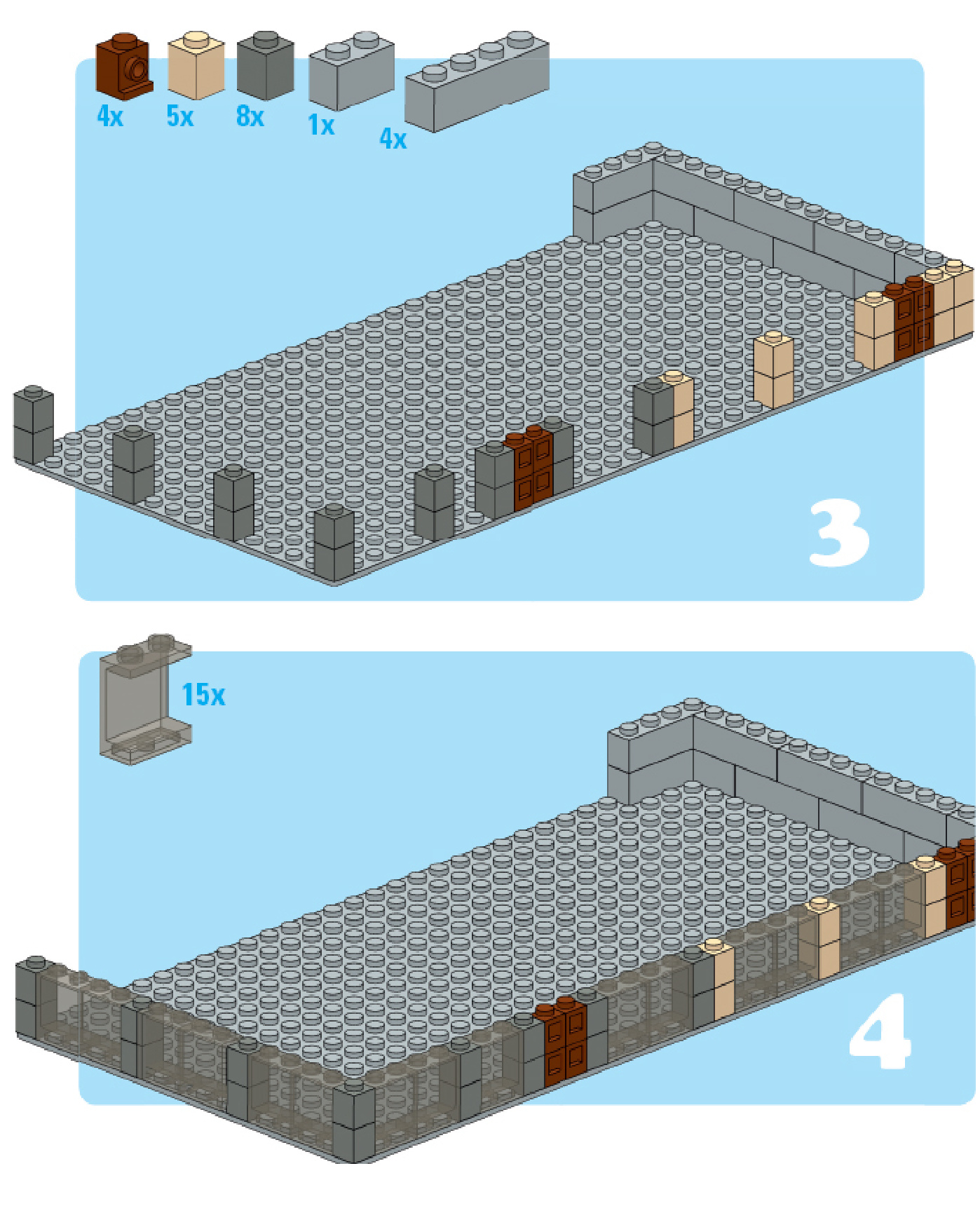
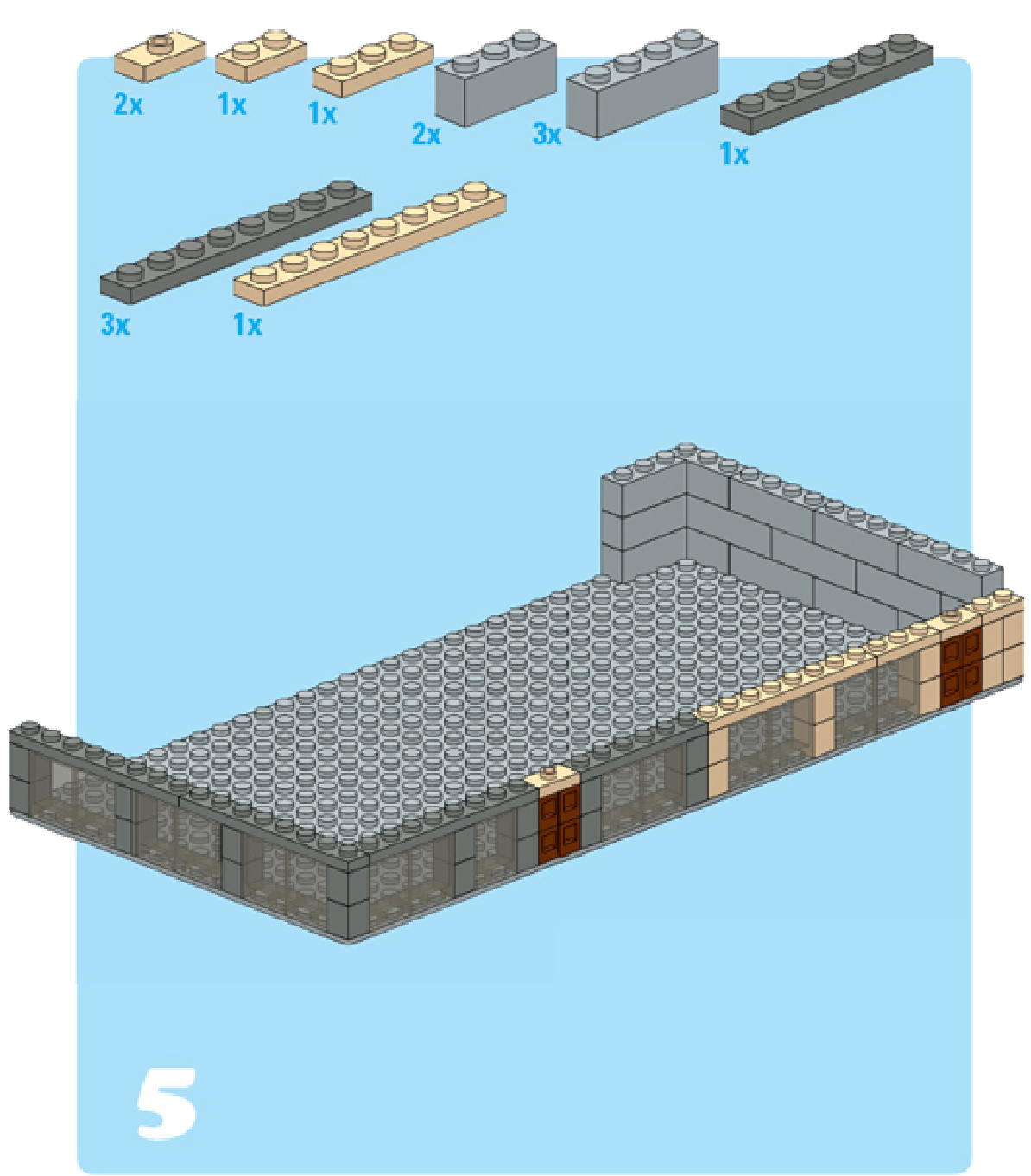
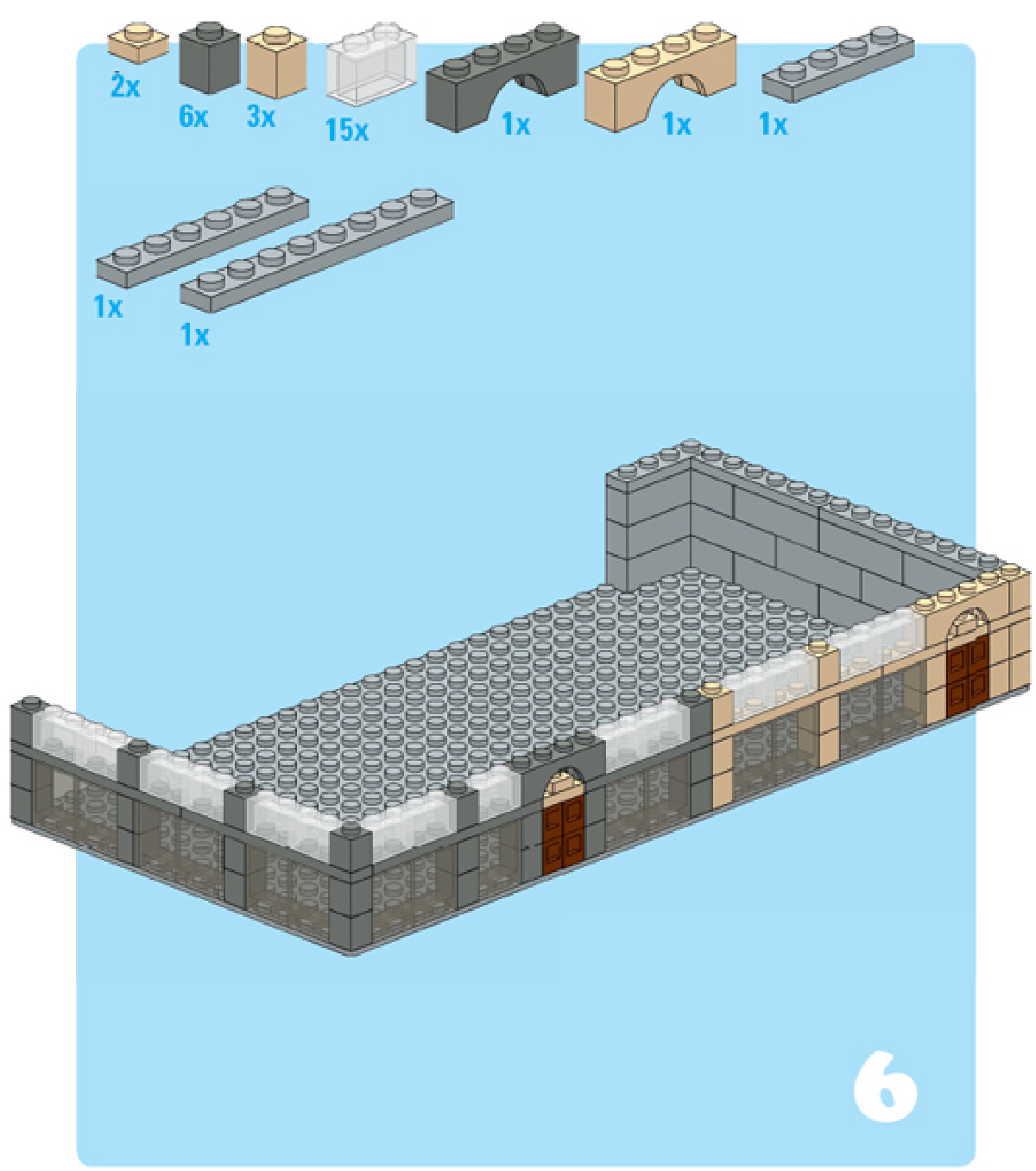
Our department store is really a construction guideline for two buildings that share a facade. This results in many details, different roof constructions, and an interesting difference in height. You could, of course, construct only one of them. You will find a solution for the respective missing wall.
You can decide on the colors, the number of built floors, etc. just as you like and as your available bricks let you.
We used the backside of lamp bricks for the windows by the way.
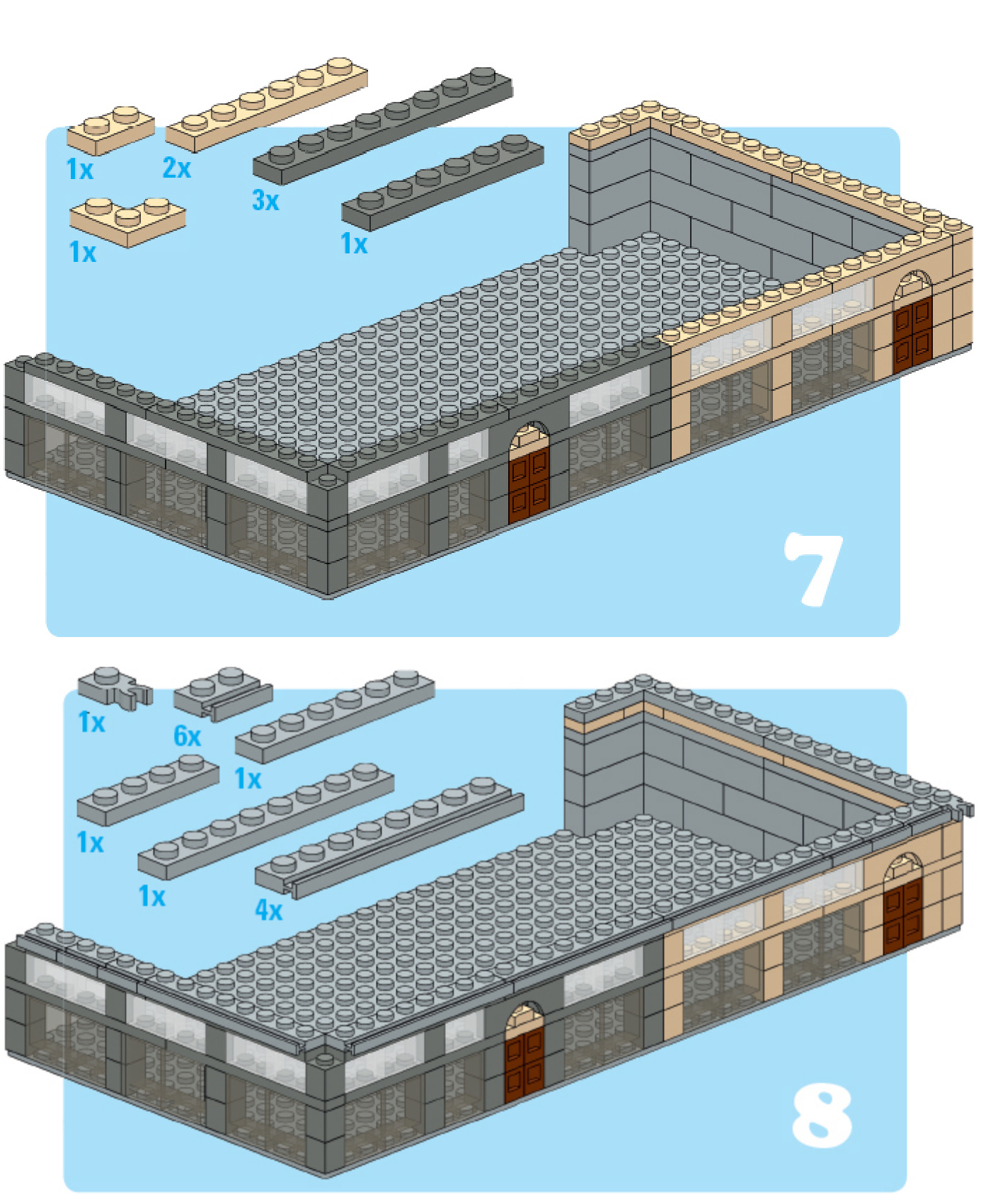
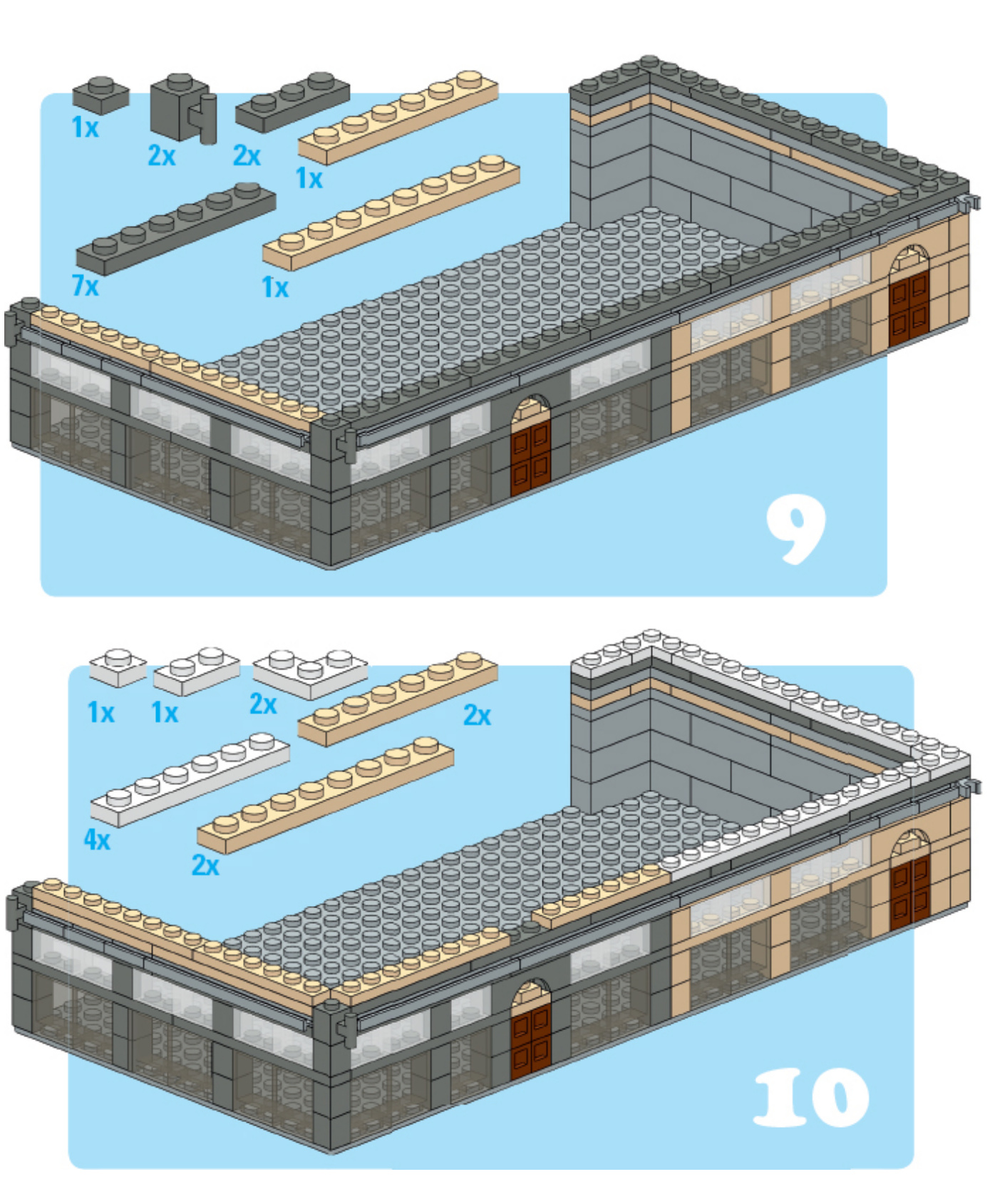
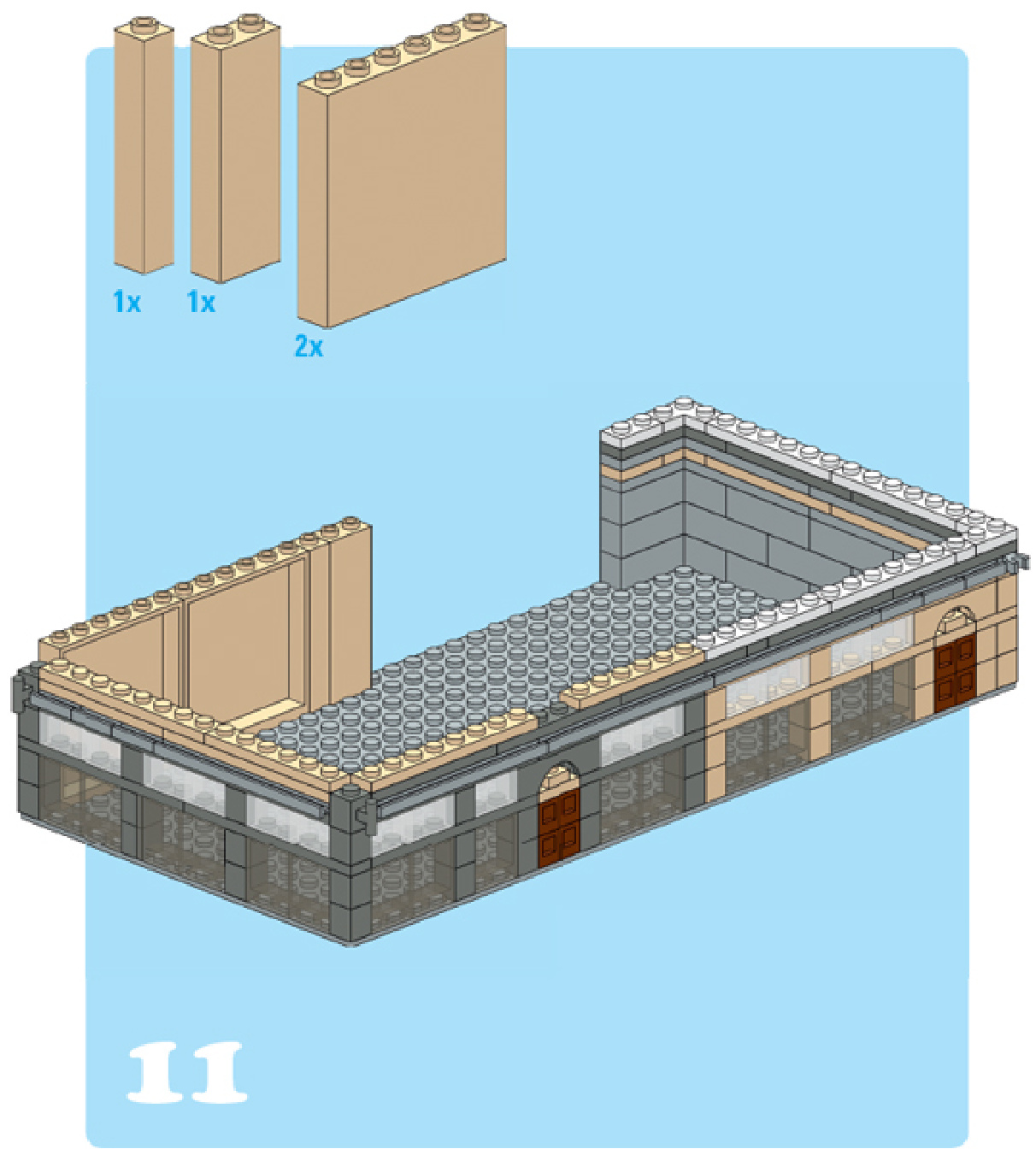
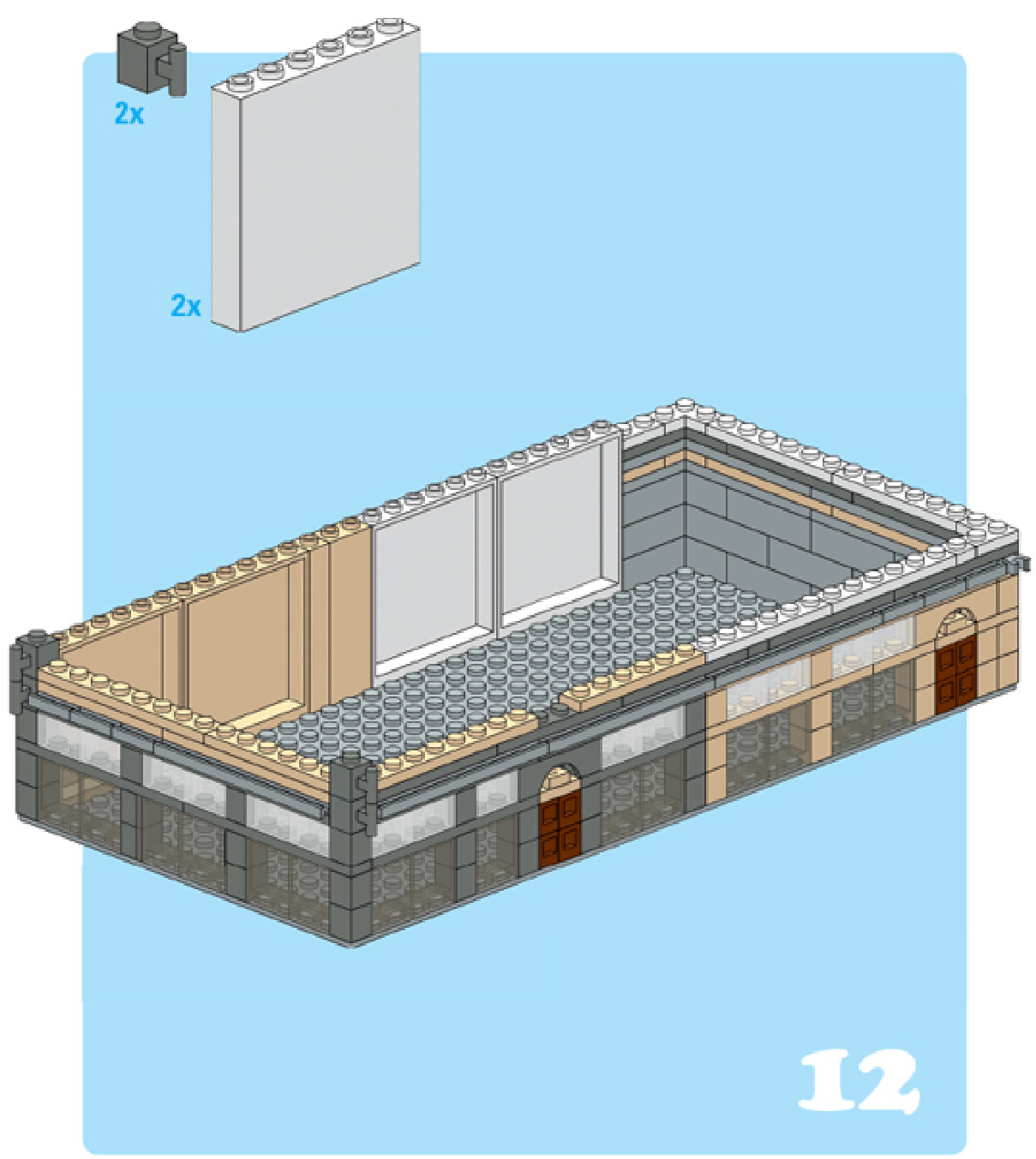
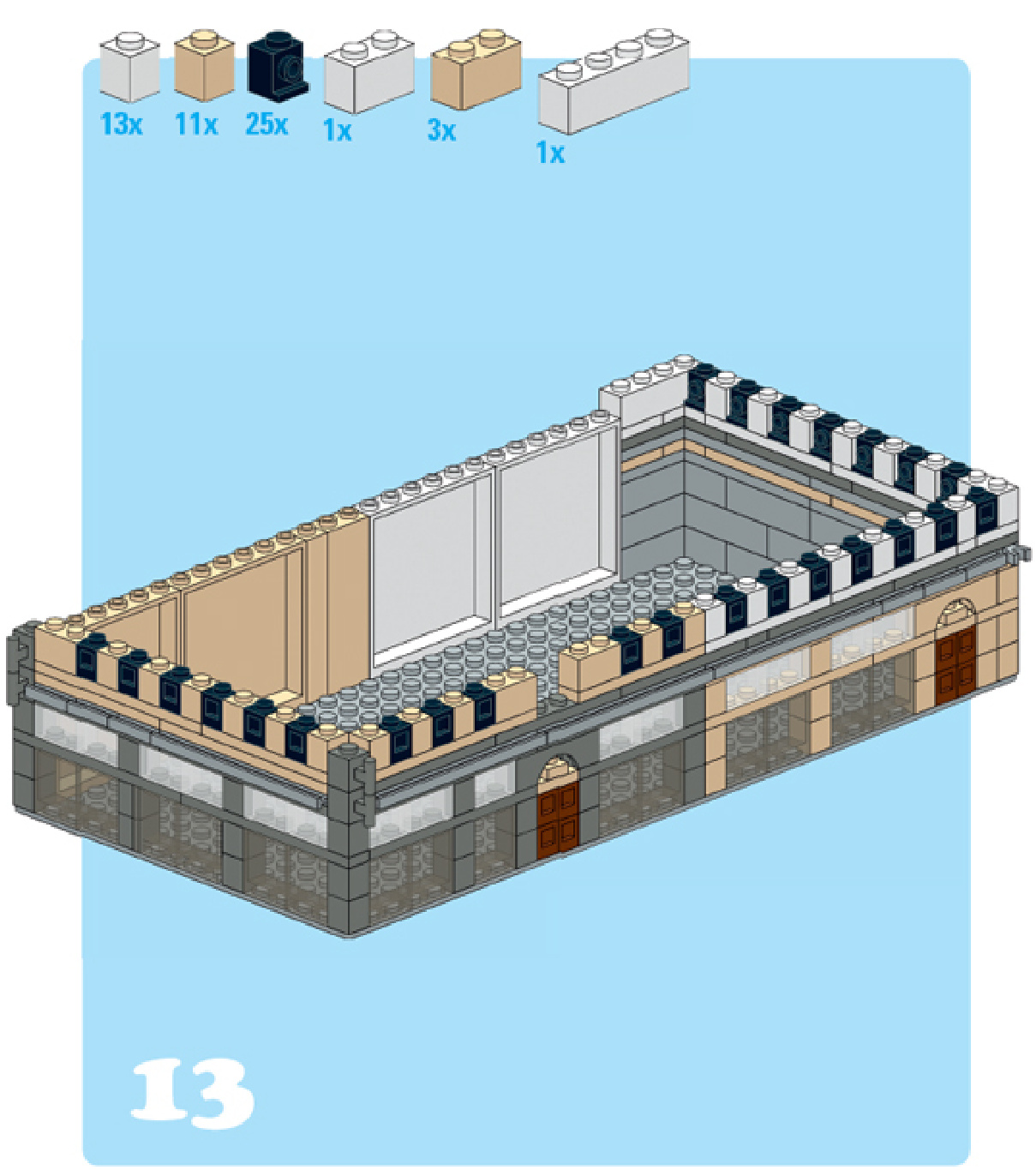
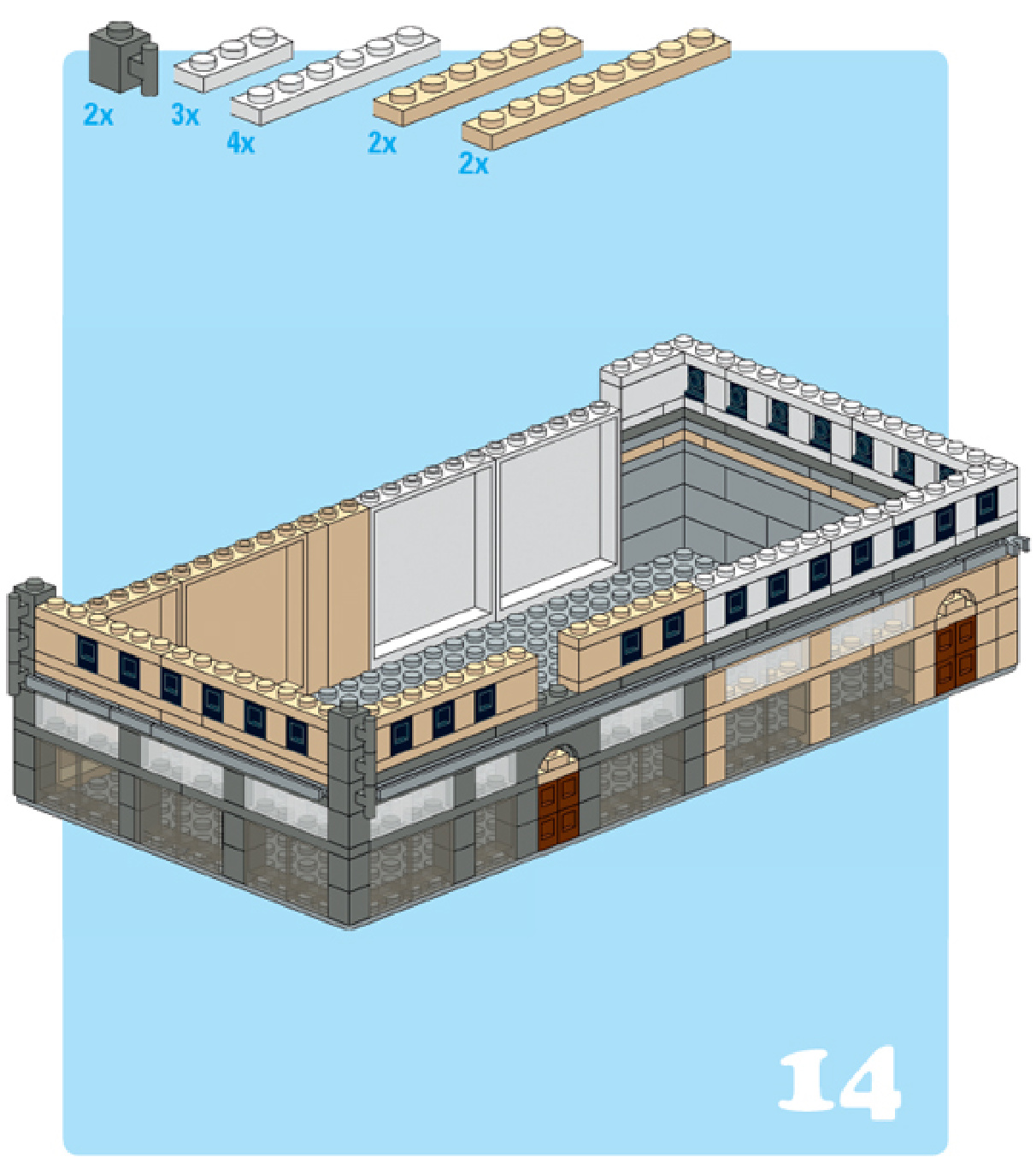
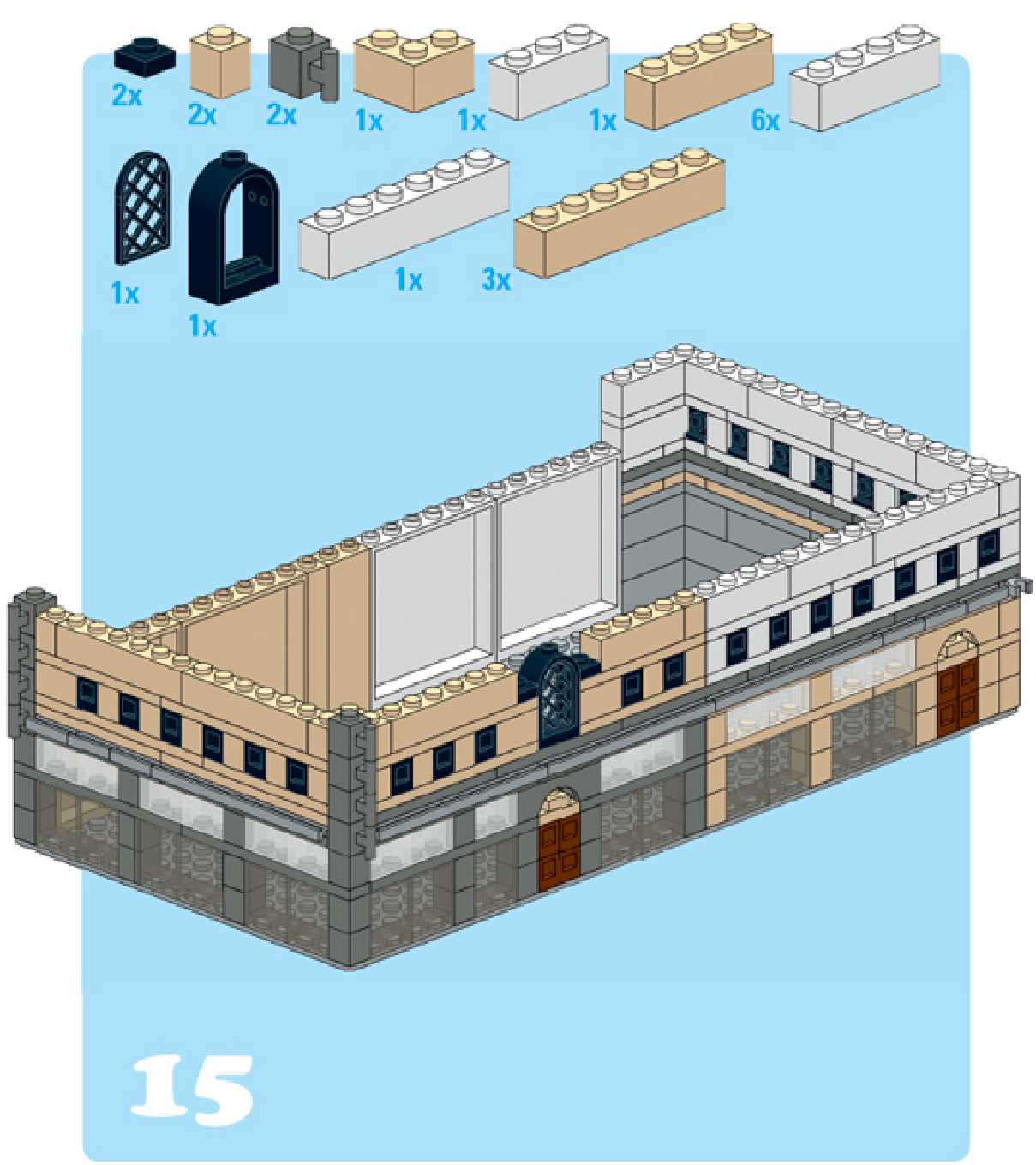
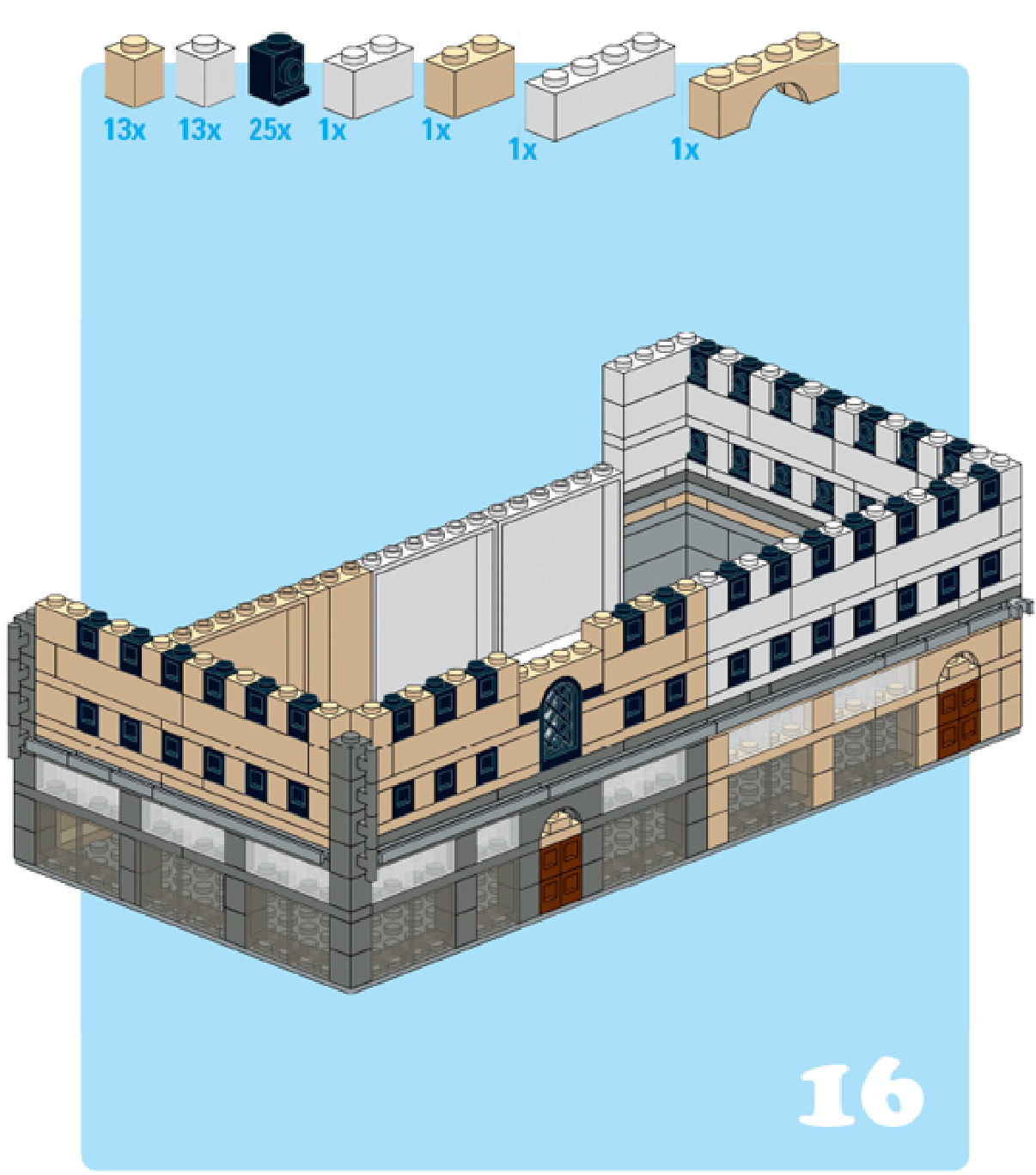
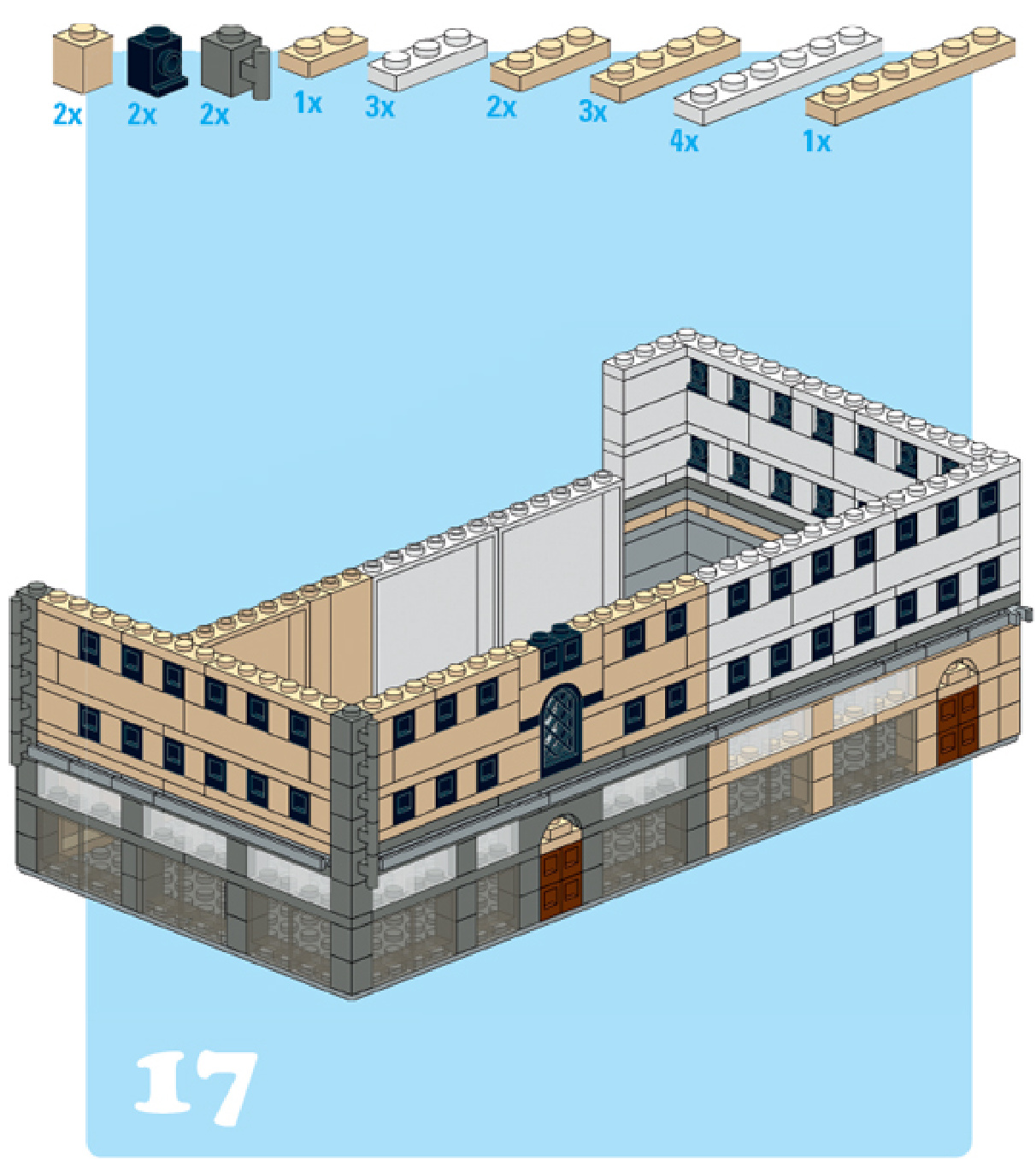
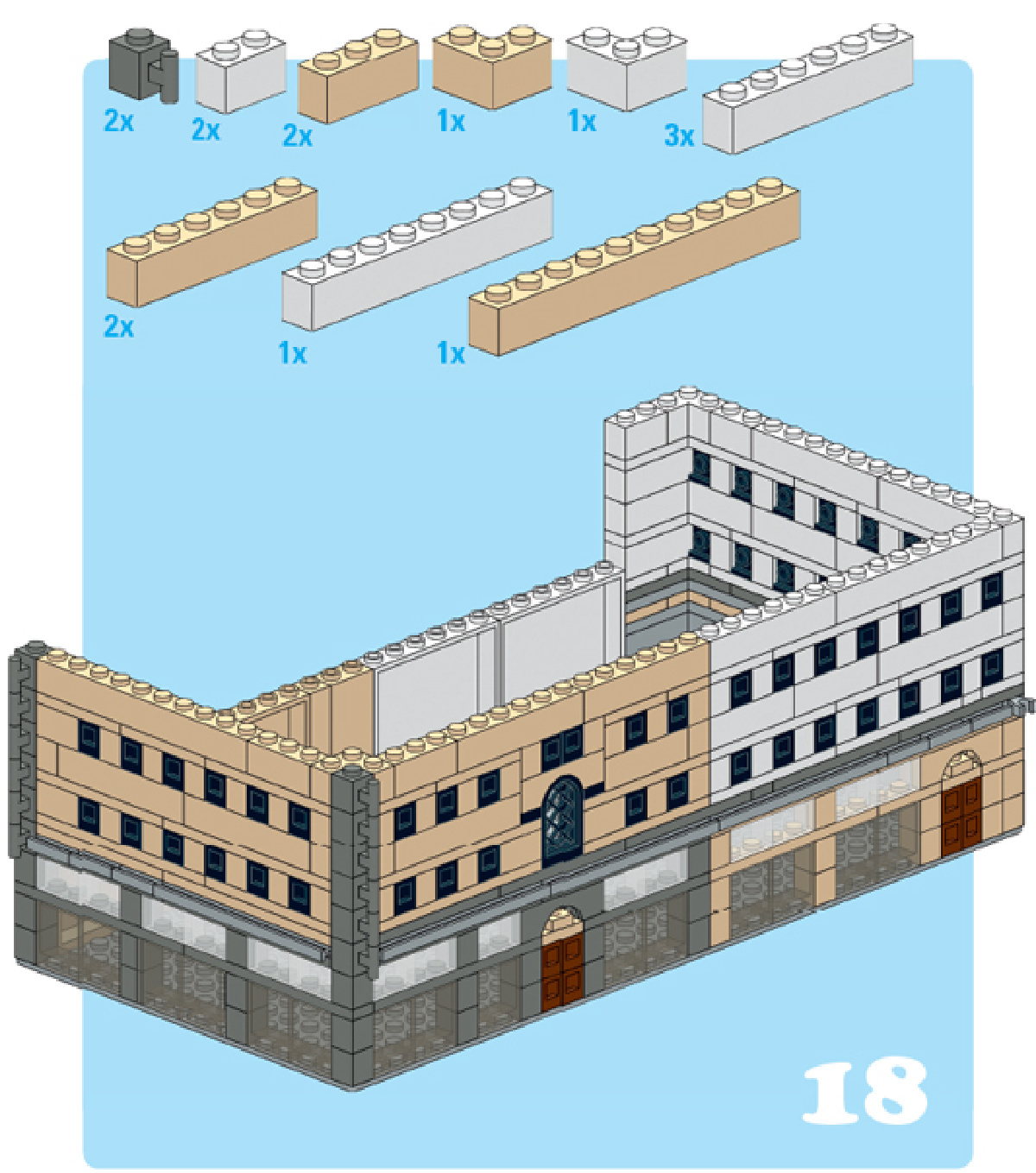
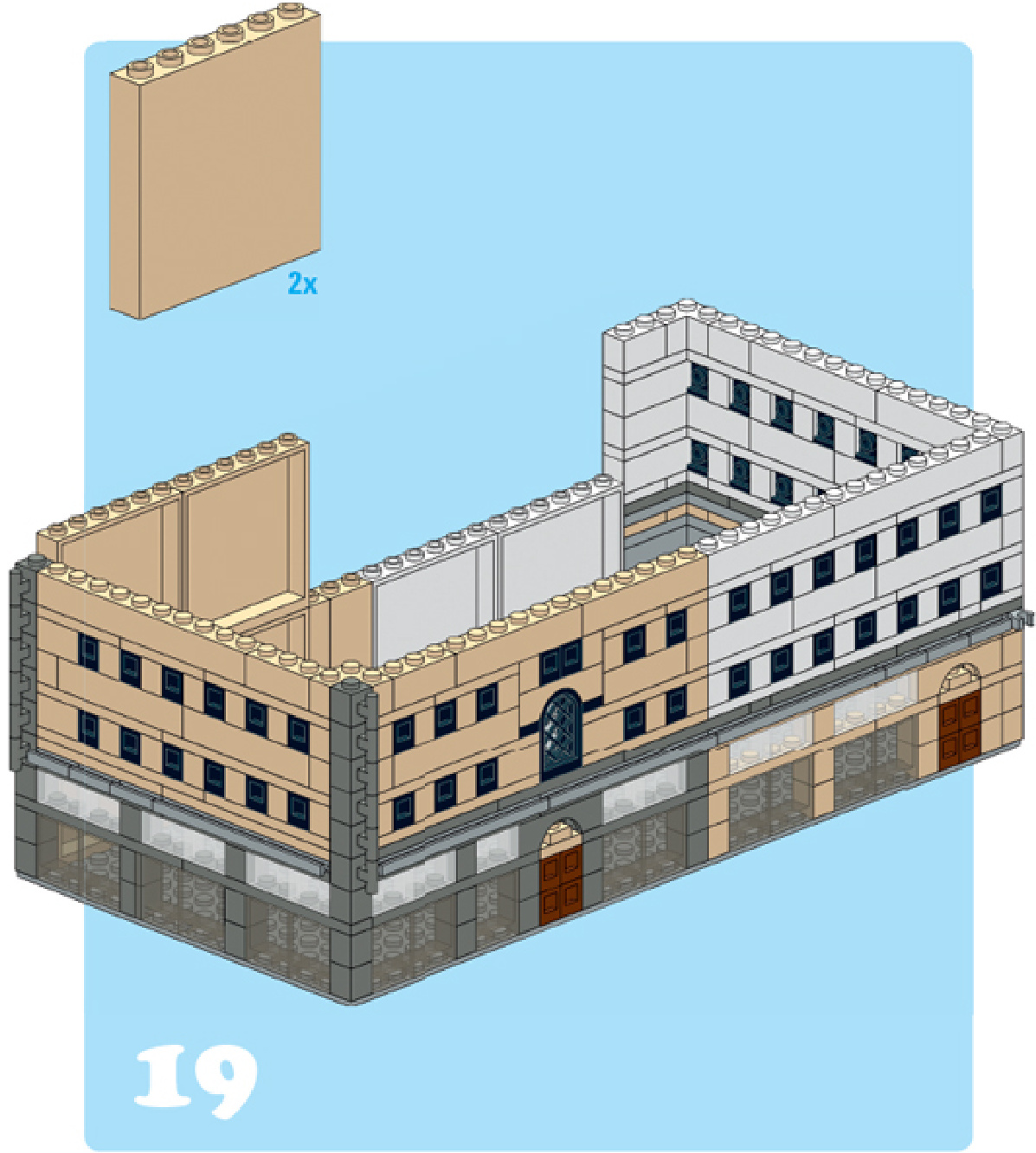
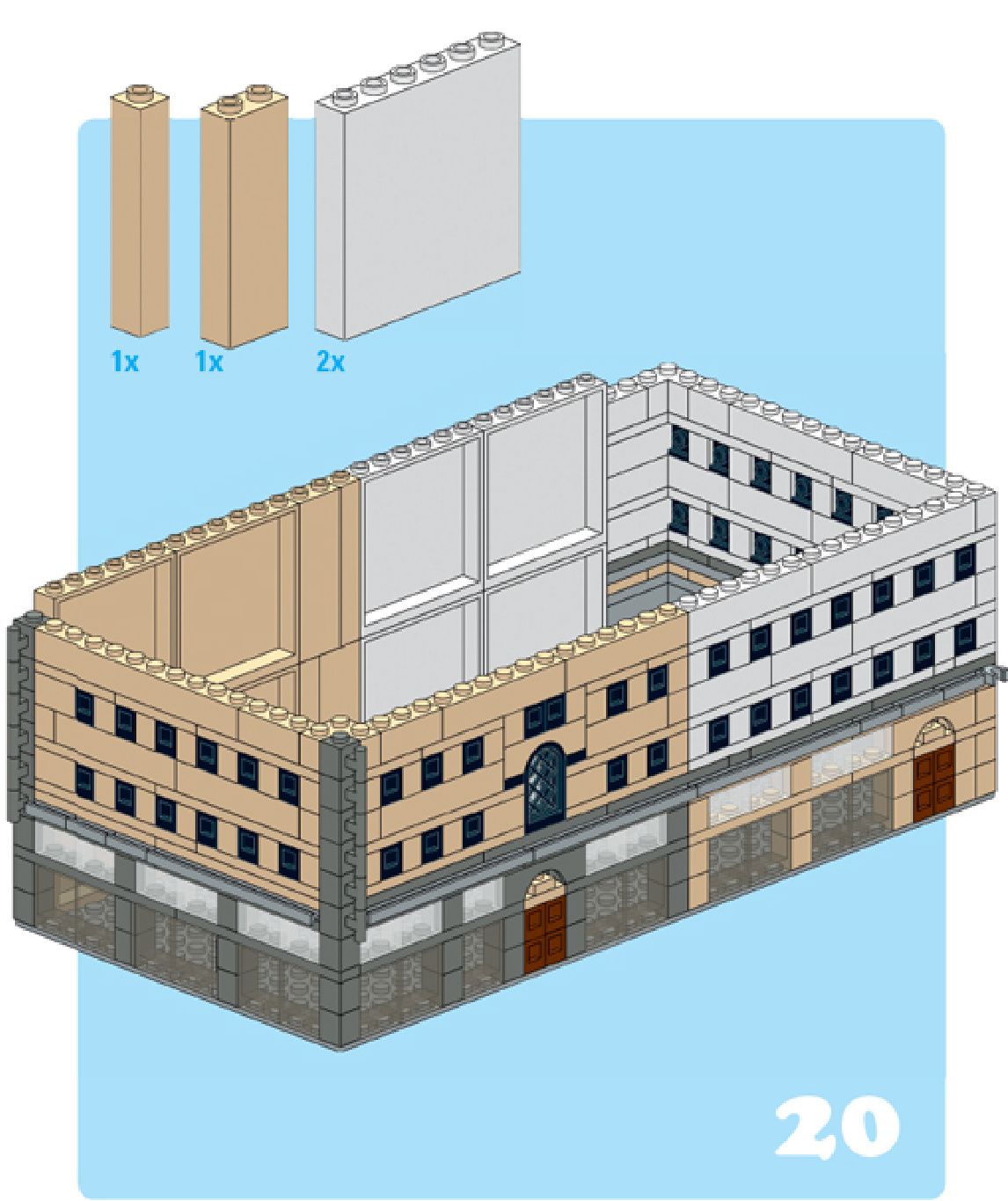
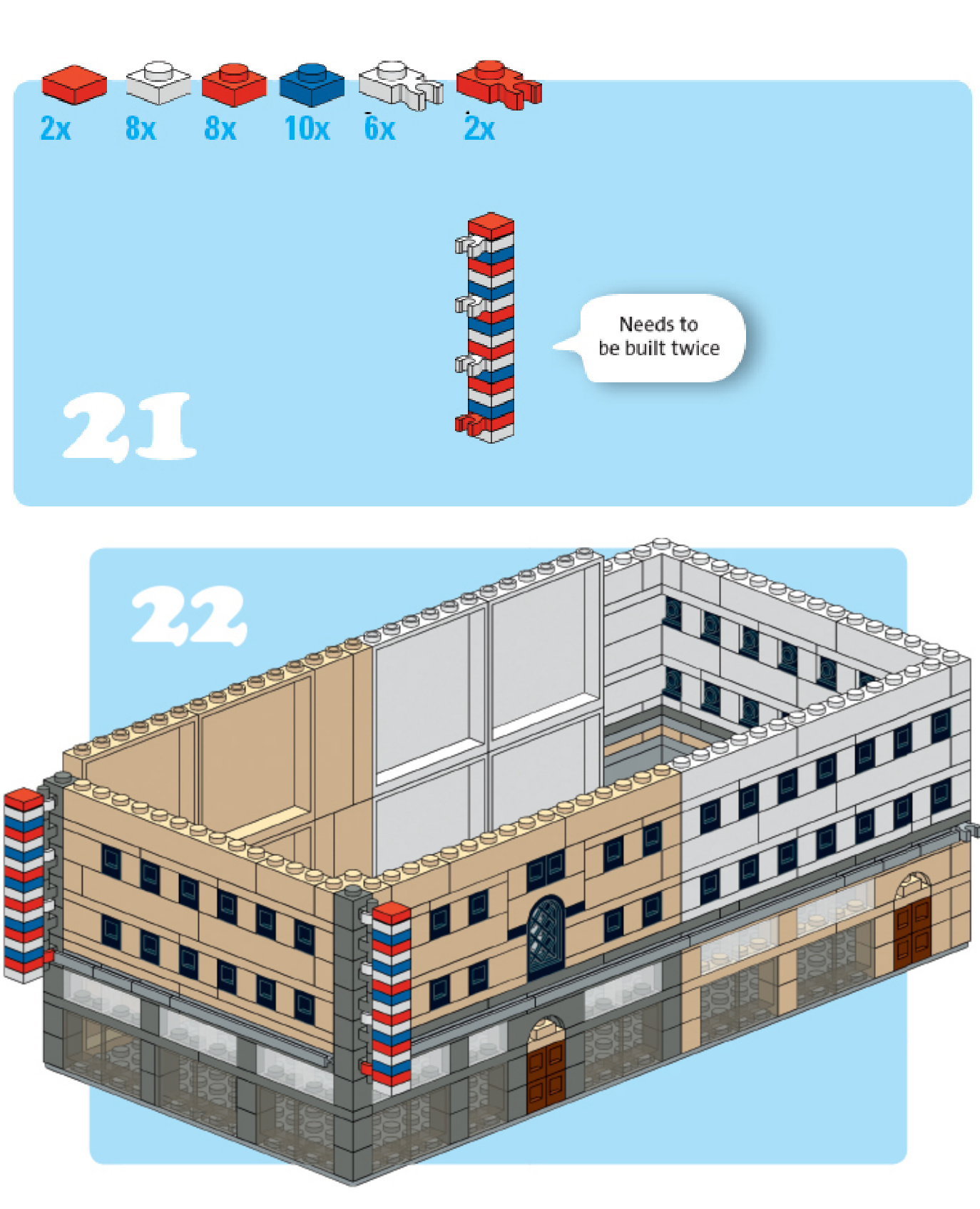
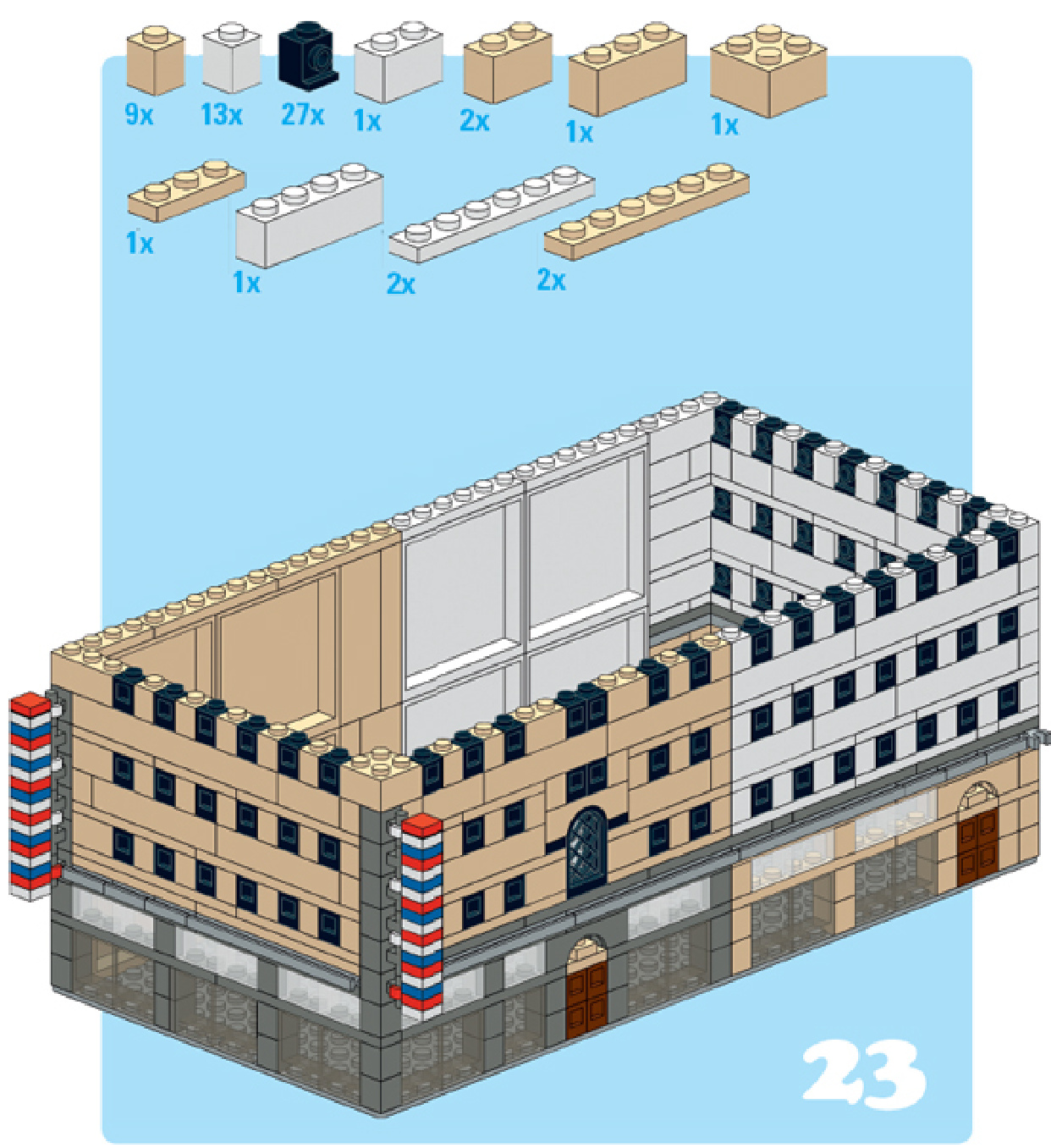
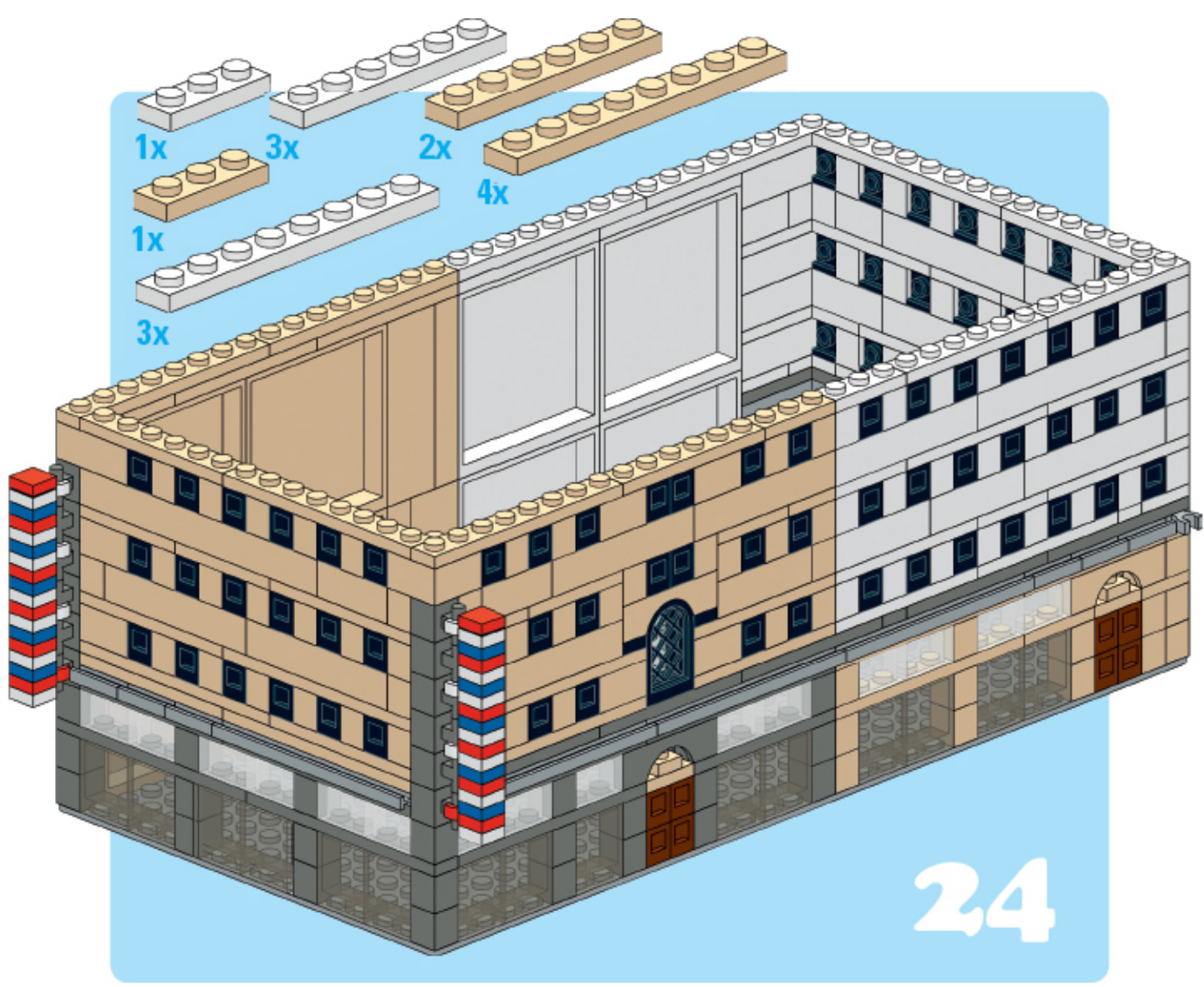
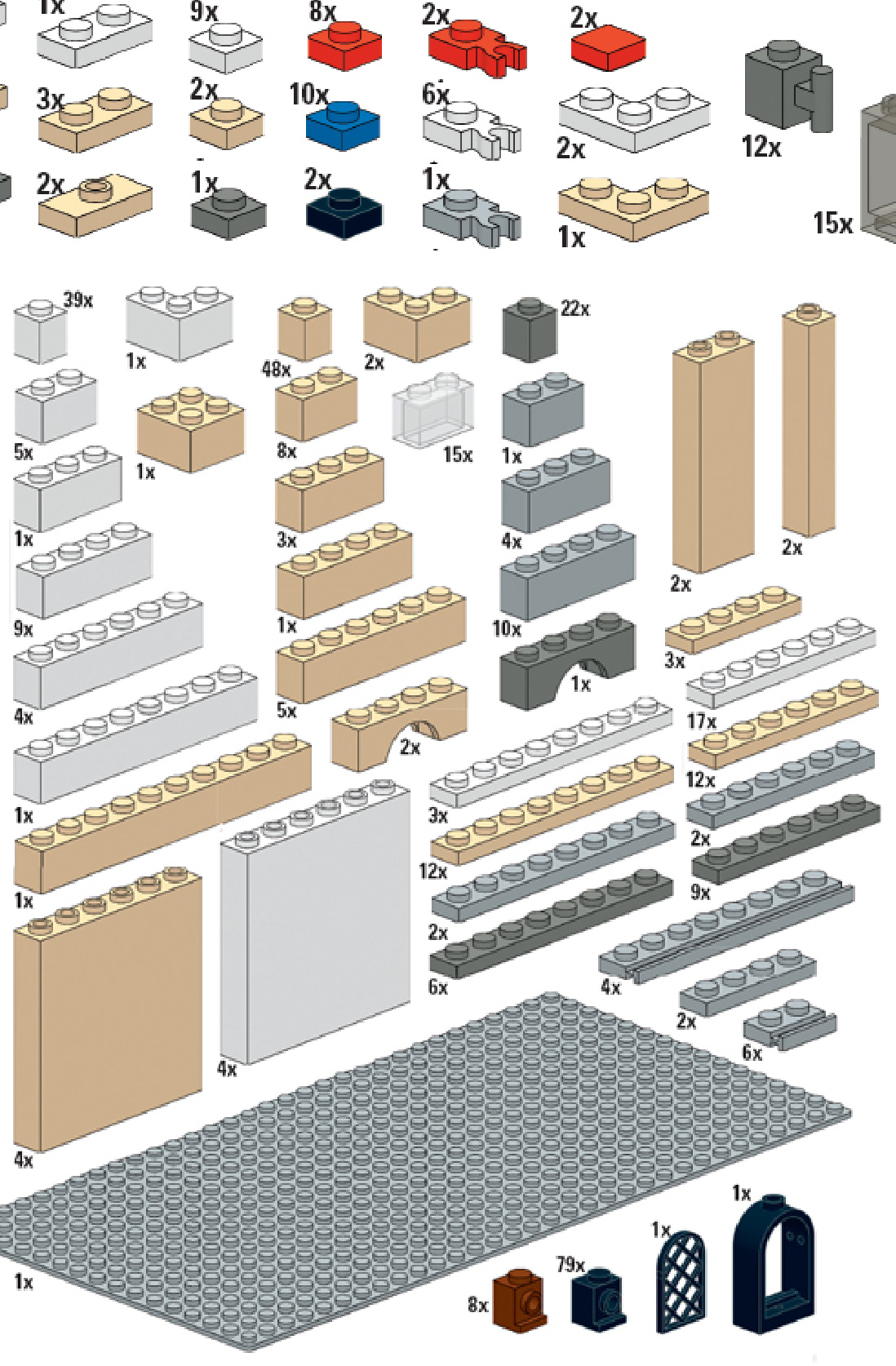
Parts List
Double Floor
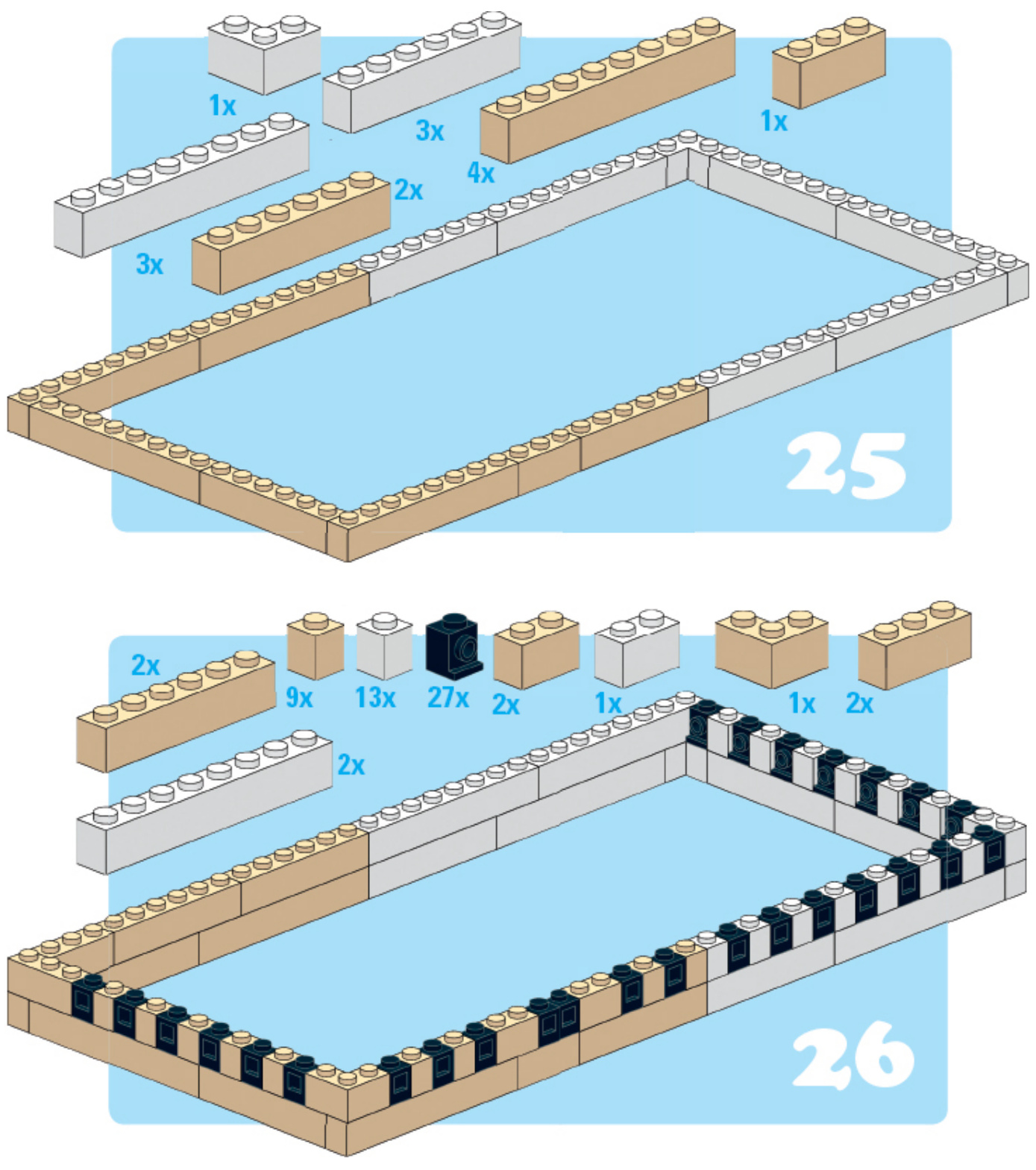
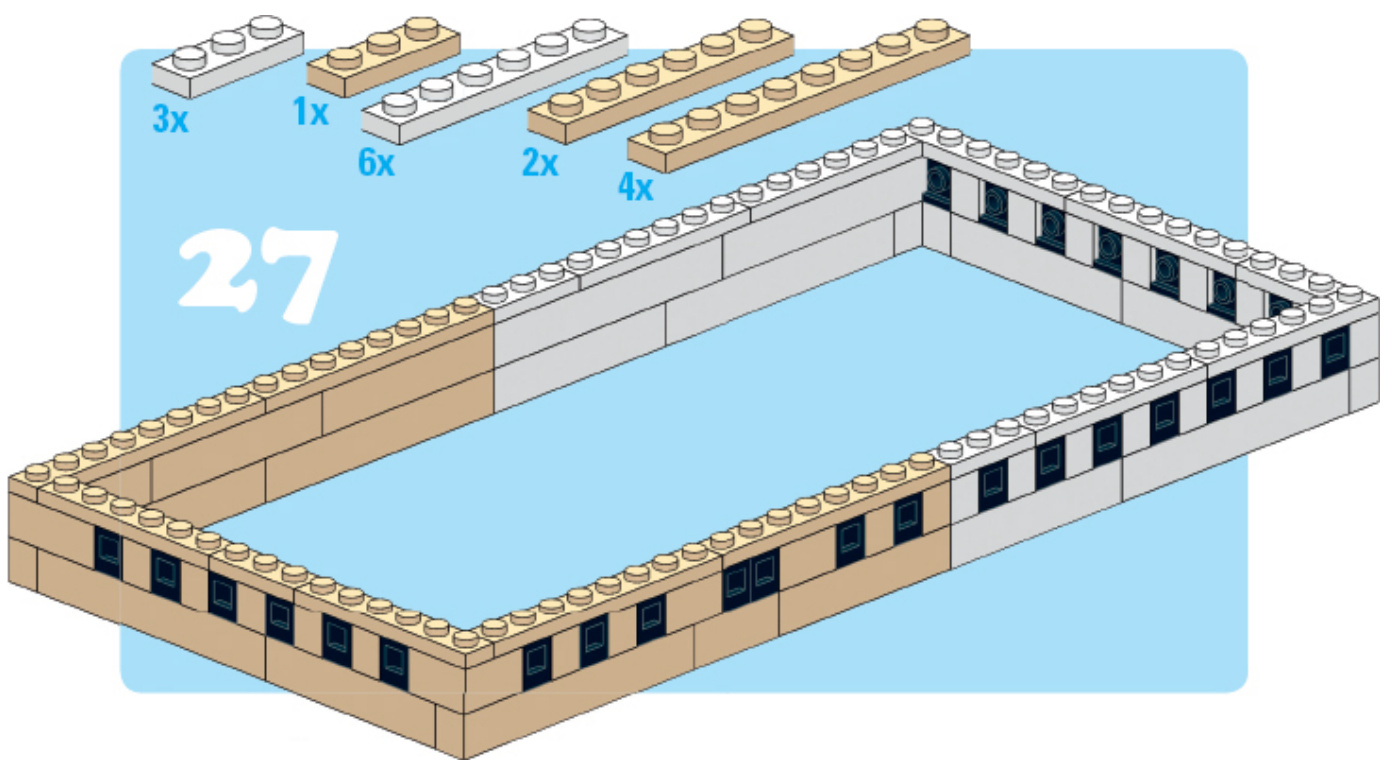
Parts List
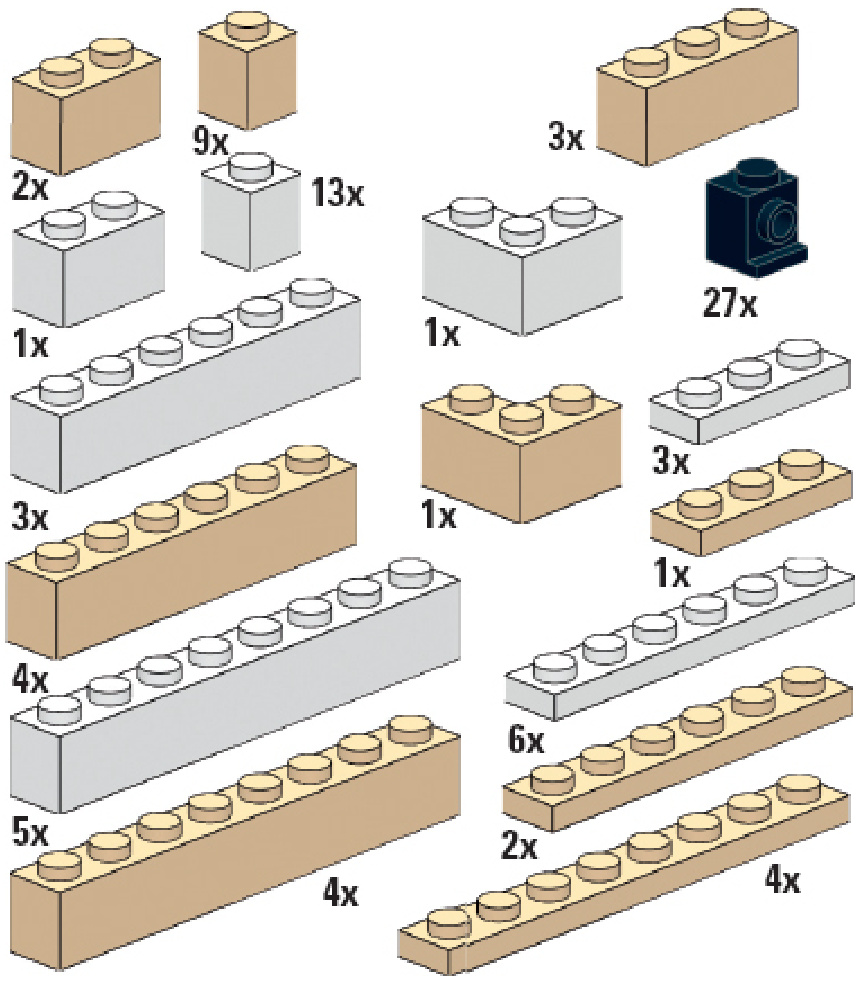
Window Floor
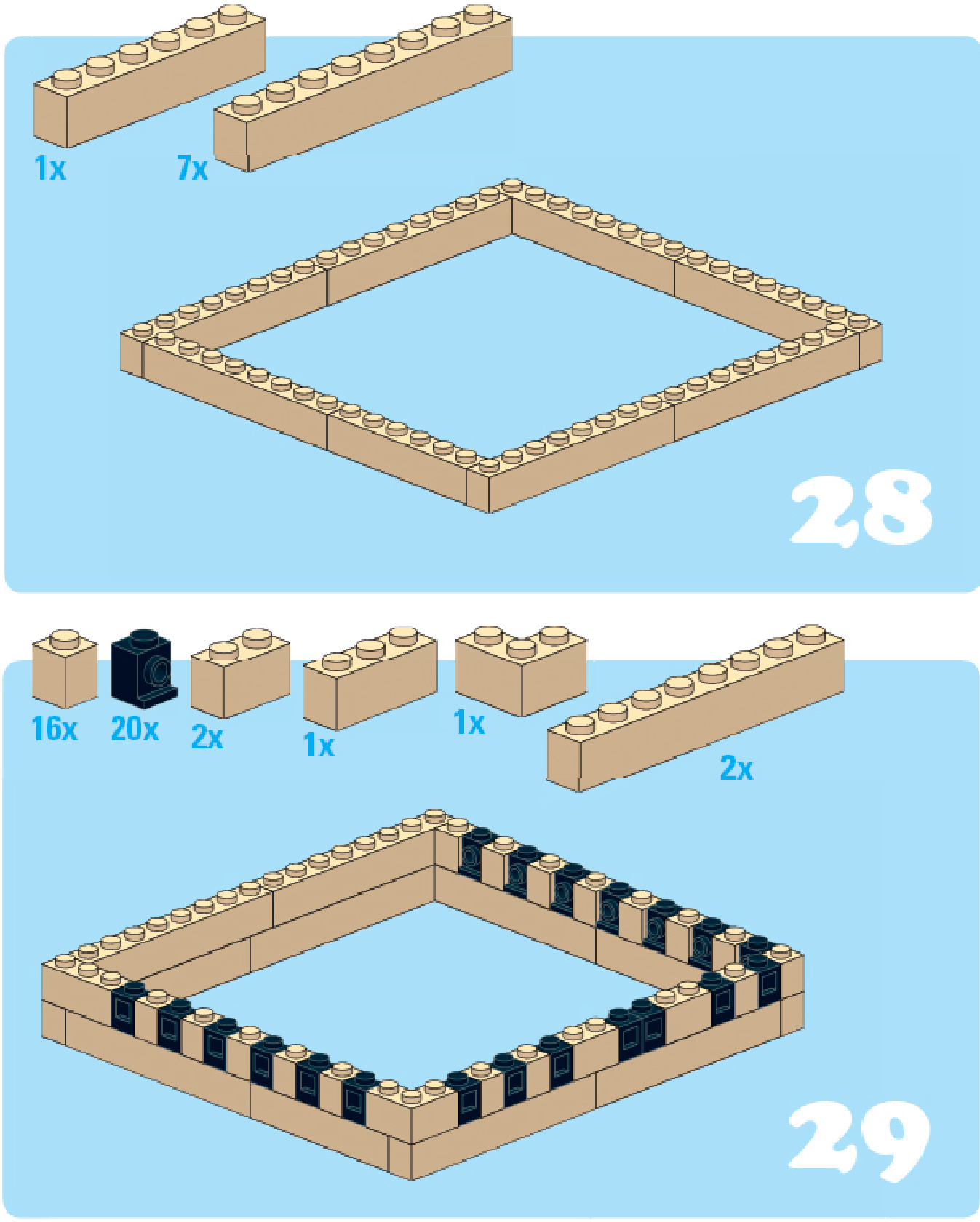
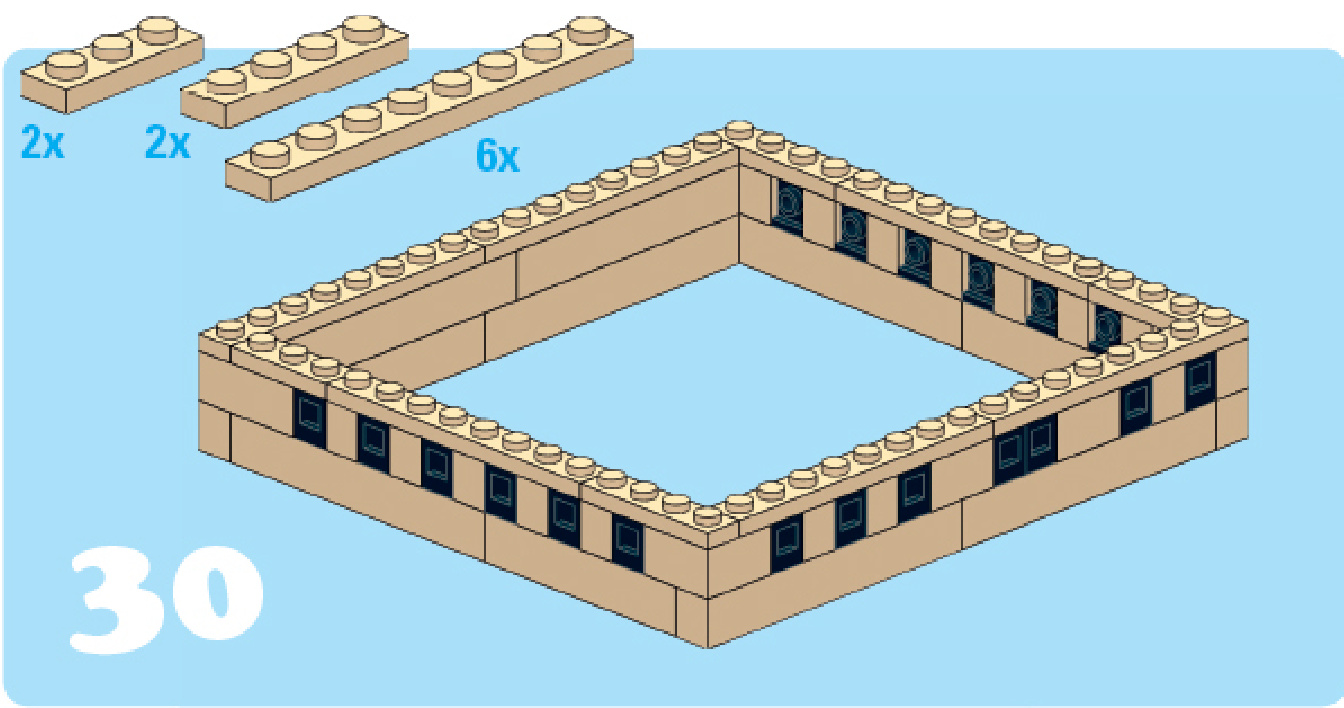
Parts List
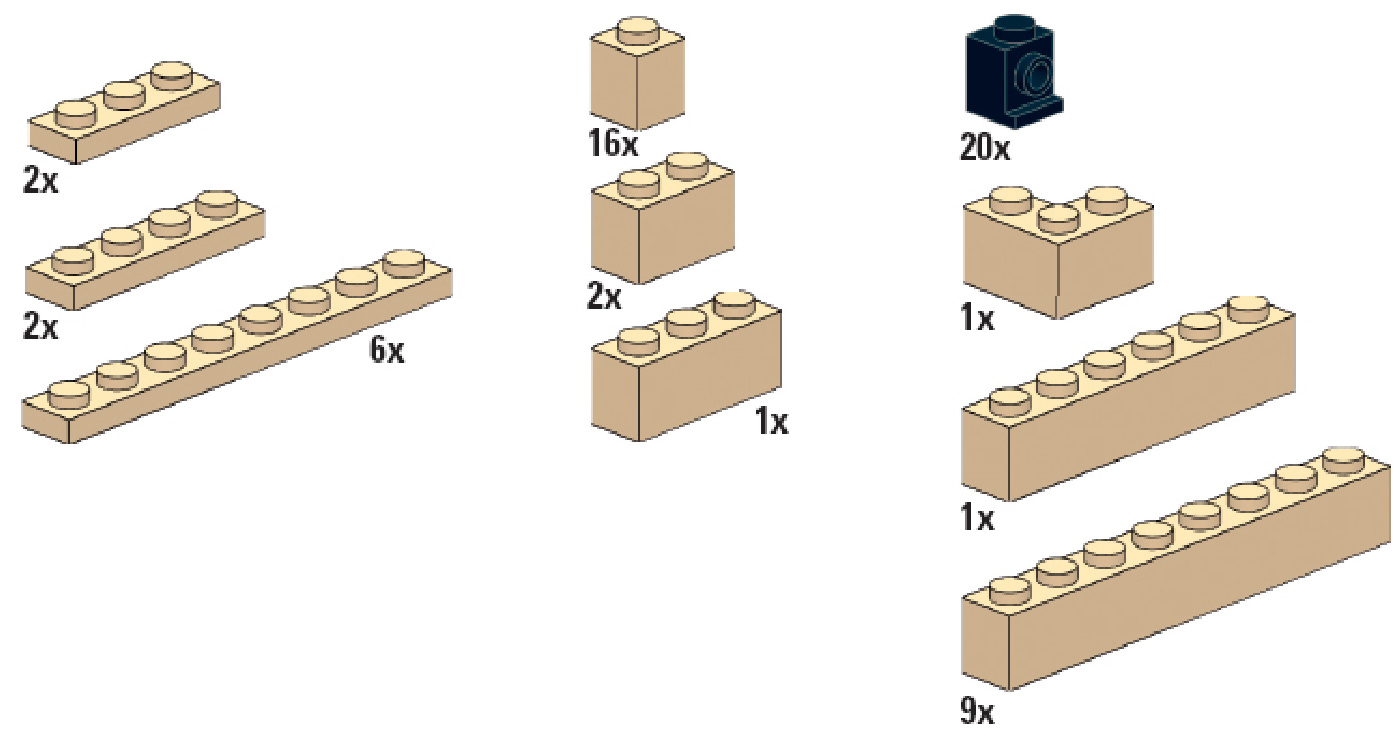
Flat Roof
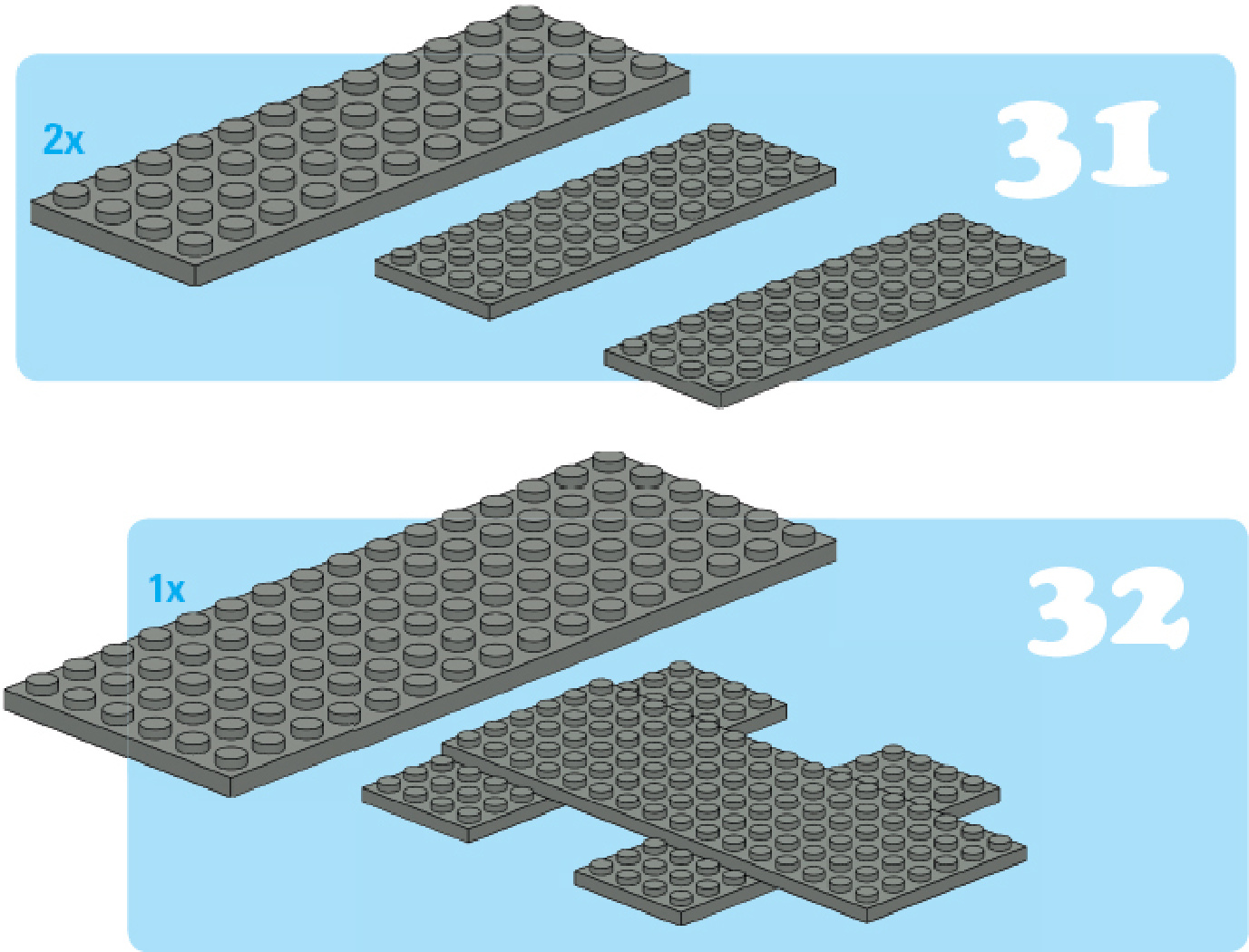
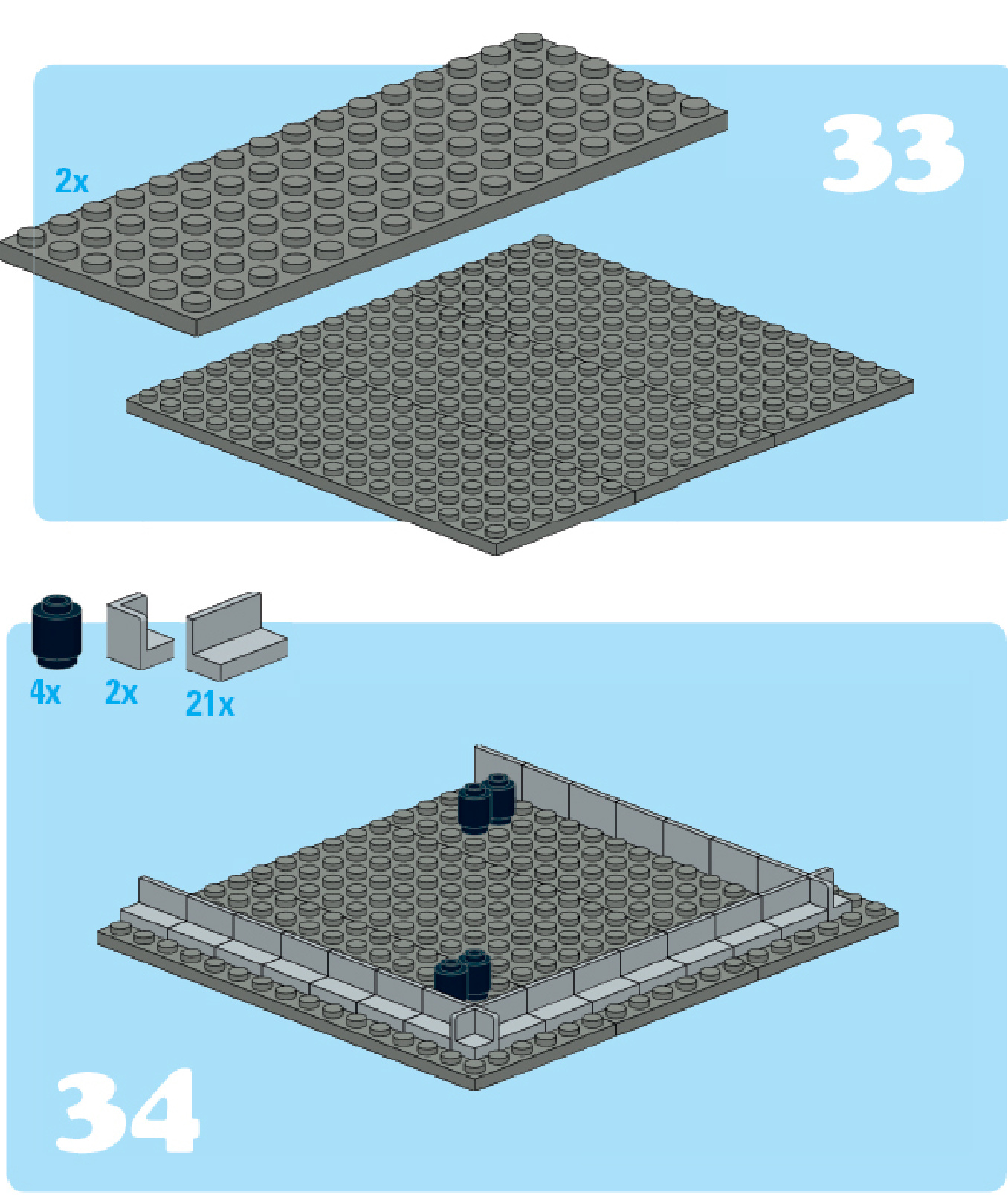
Parts List
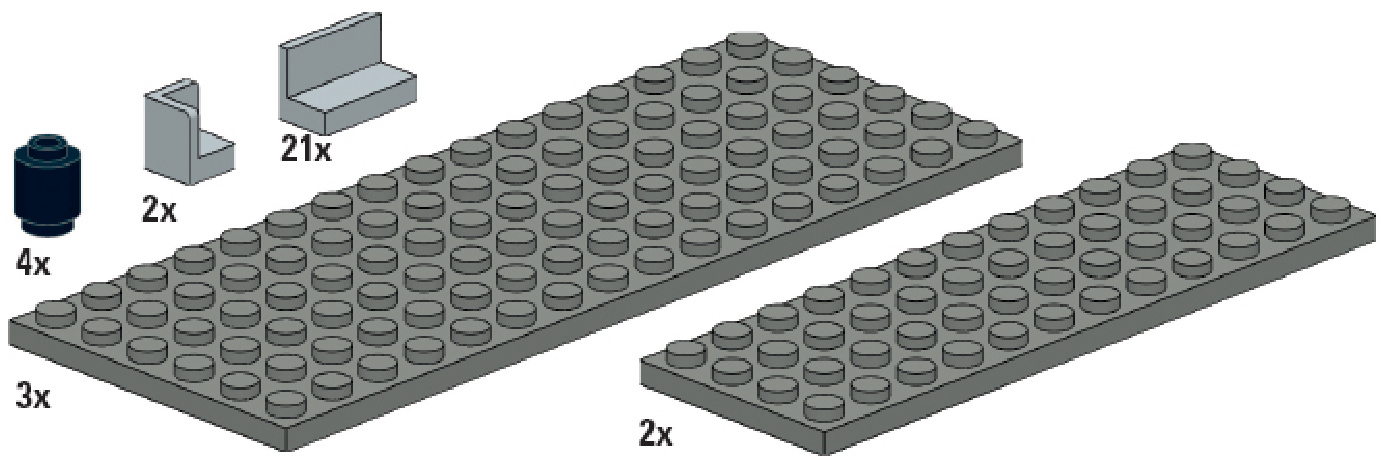
Roof
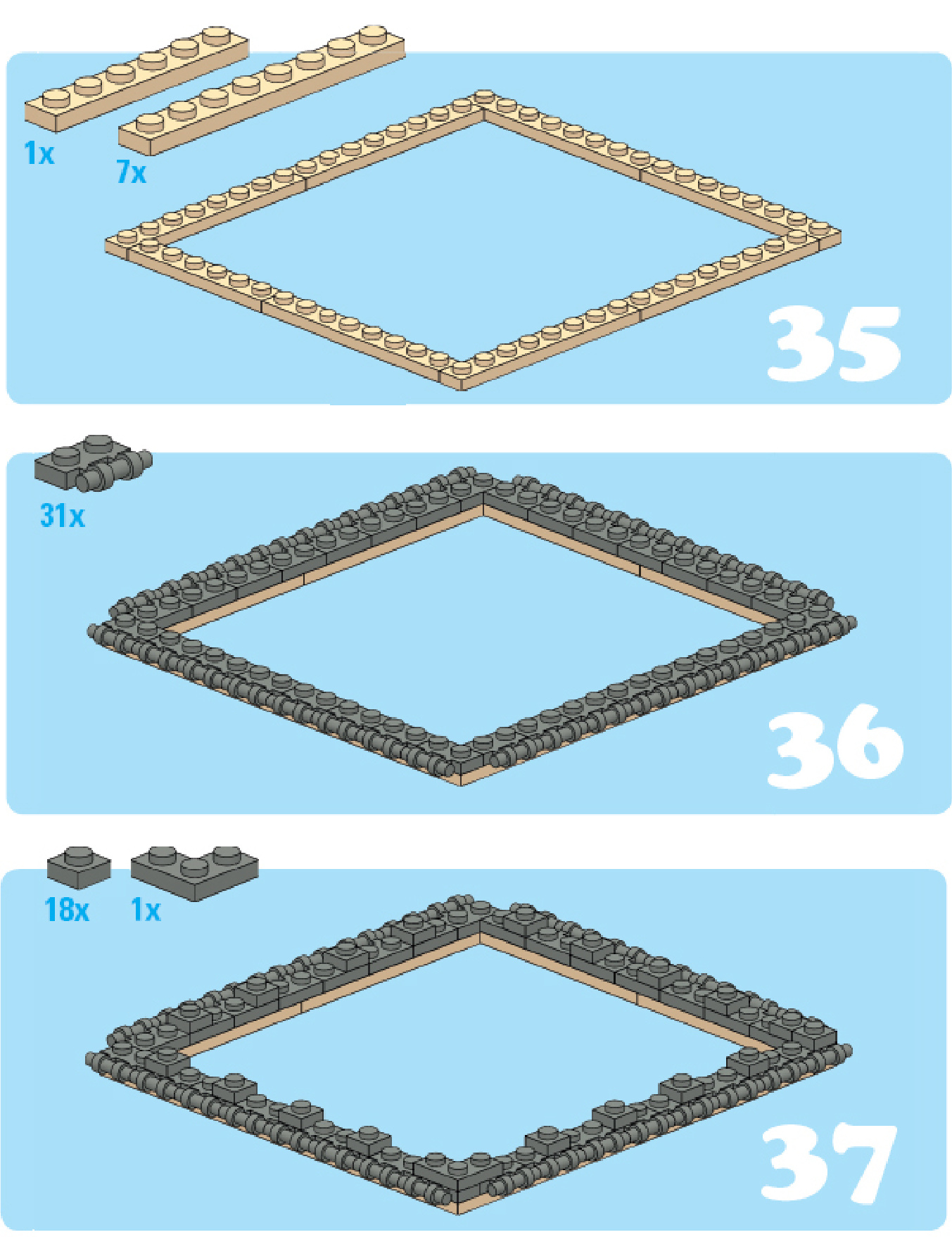
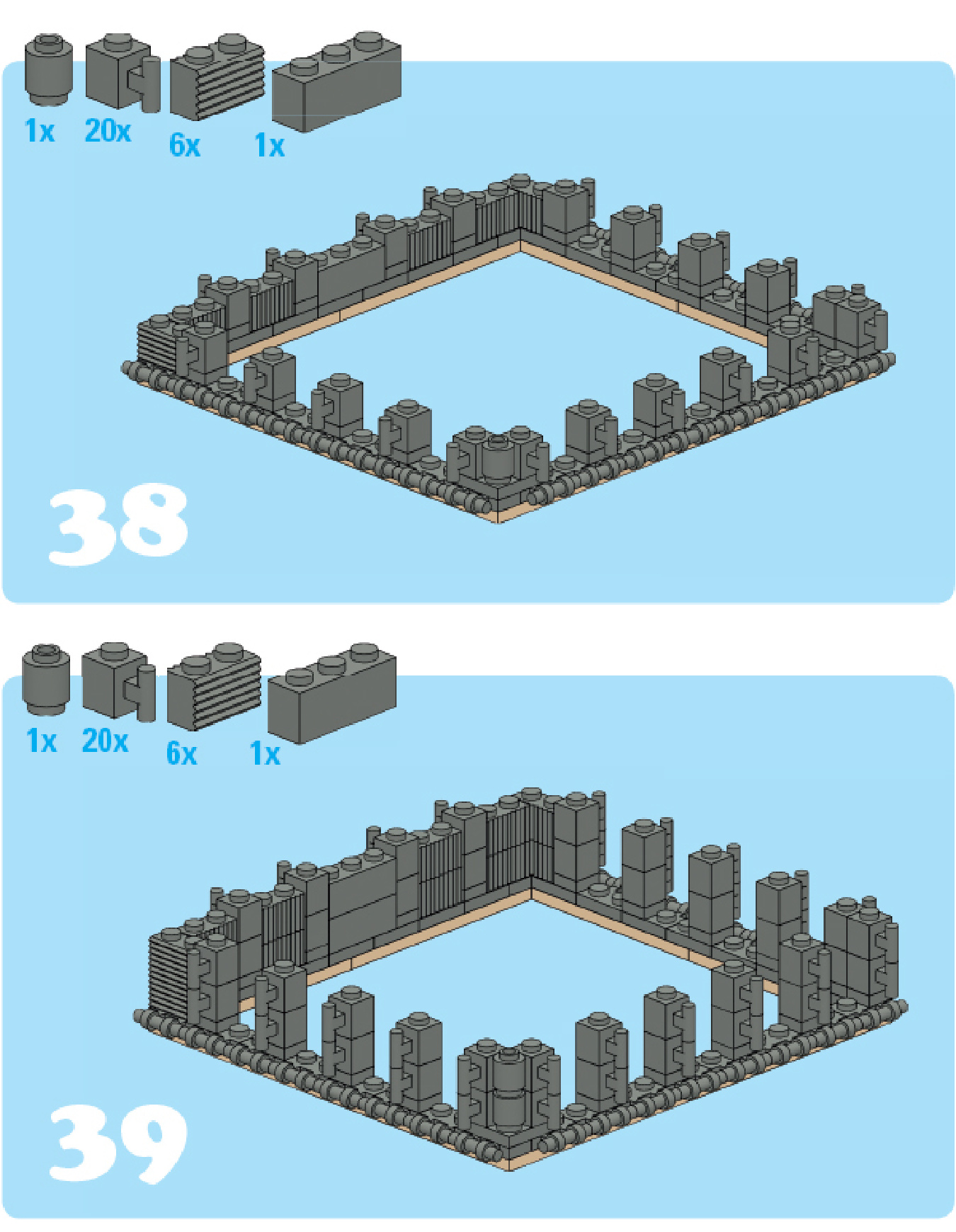
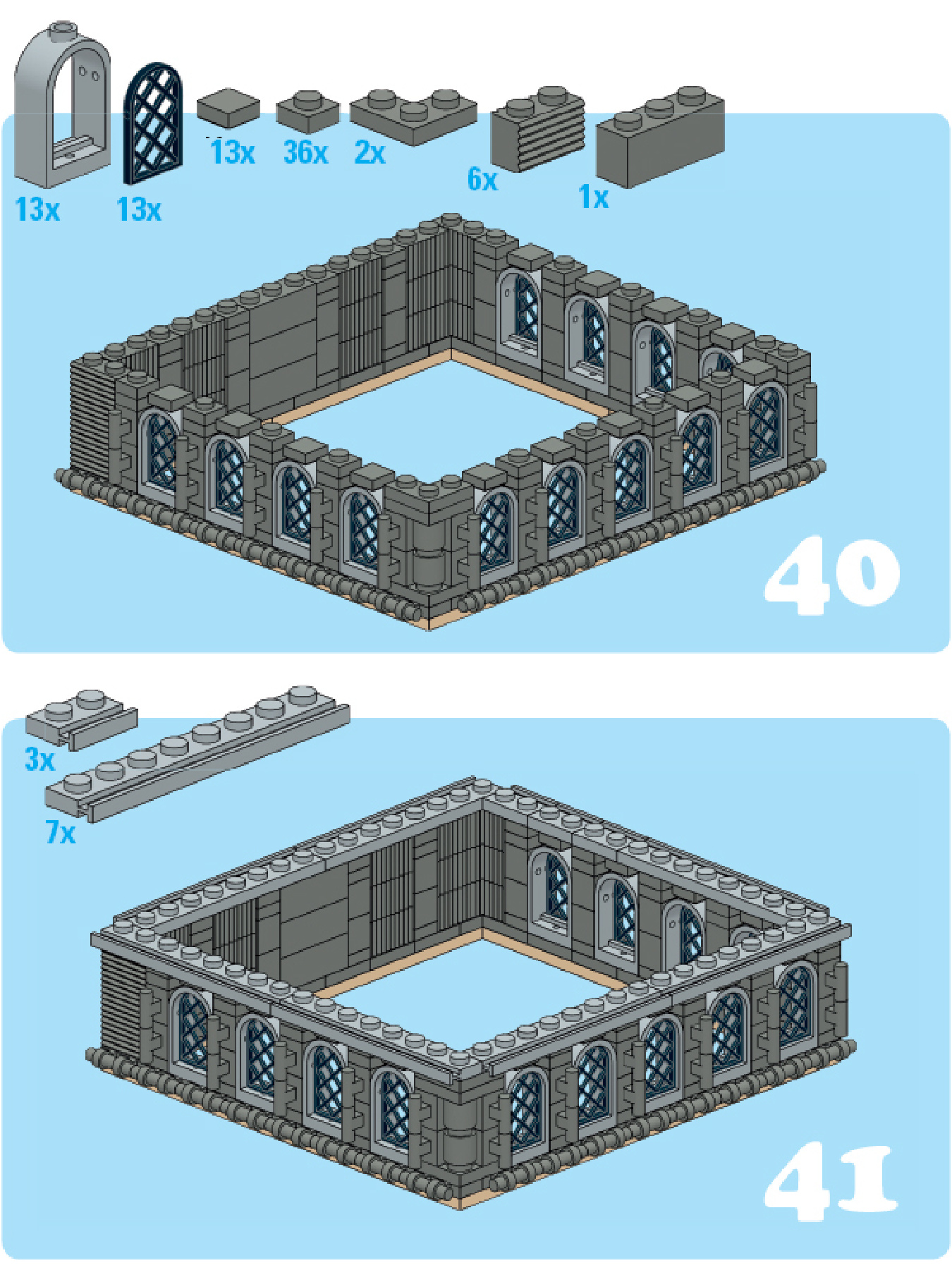
Parts List
Professional Models
 In order to meet our own requirements in professional models and build detailed and realistic models, we have decided on the minifig scale because the larger scale allows for a much more detailed design. However some of these professional models are what’s called showcase models. Thus, the tires don’t necessarily turn, etc.
While usually intends to get by with a minimum amount of material when designing models, there is a development among fans to build actually existing models with as much realistic detail as possible, without paying attention to the number of bricks needed. Just as with the models of the Midi City though, many roads lead to Rome in these examples
If an instruction suggests a 1x8 brick for example, two 1x4 bricks might also work. Or you might decide to give your vehicle different roofs, rotors or tires and then use totally different bricks and connections. Be creative!
On the pages in this book, you’ll also find numerous other models or variations on the instructions, which we could not include anymore. We wish you lots of fun discovering; most likely, you’ll find a way to build them yourself or design your own creations.

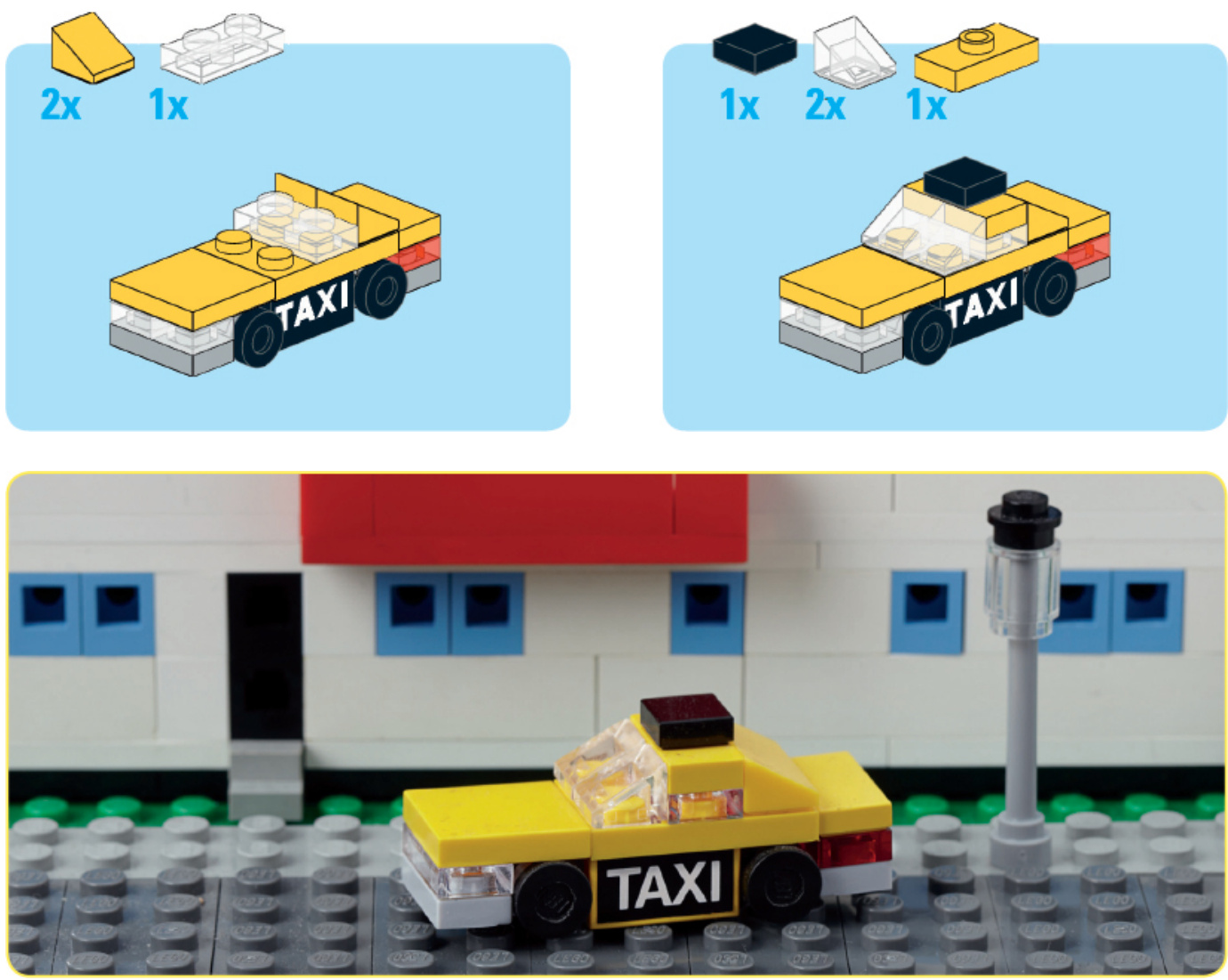
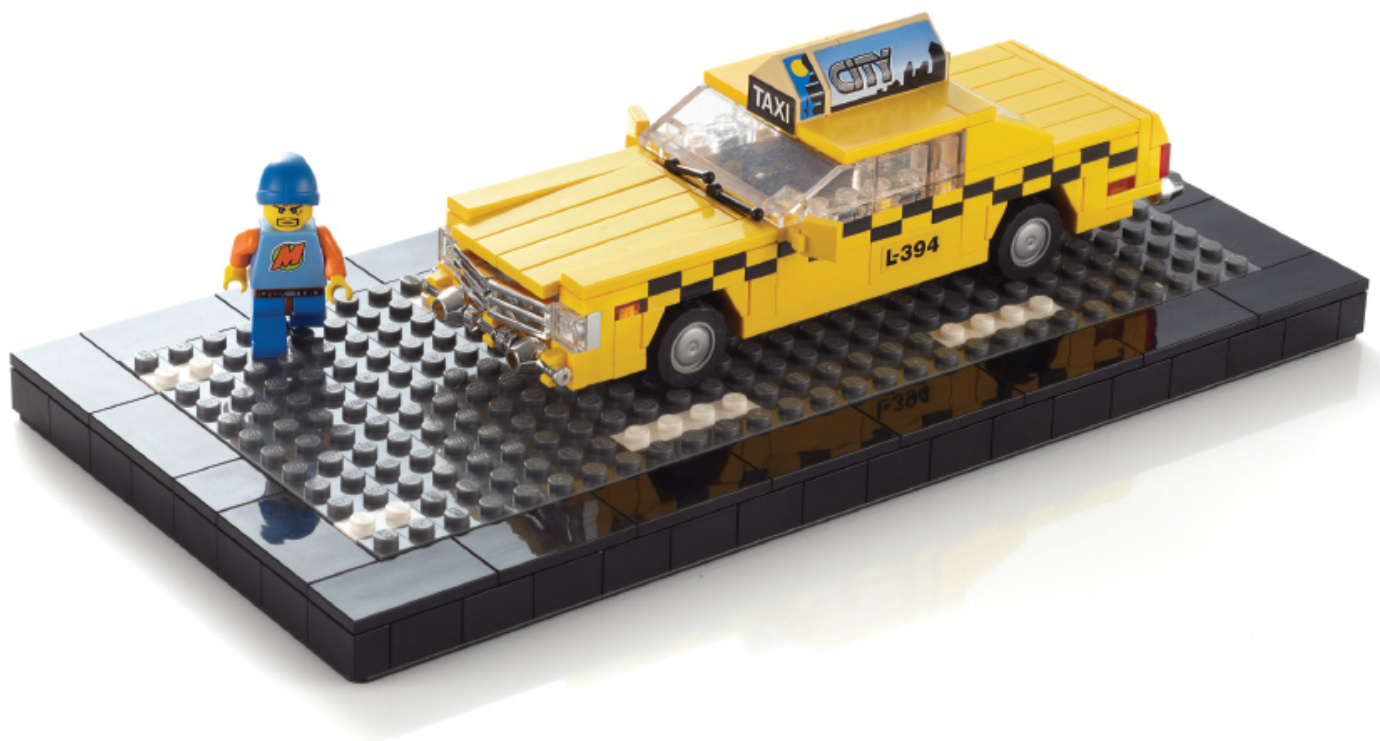
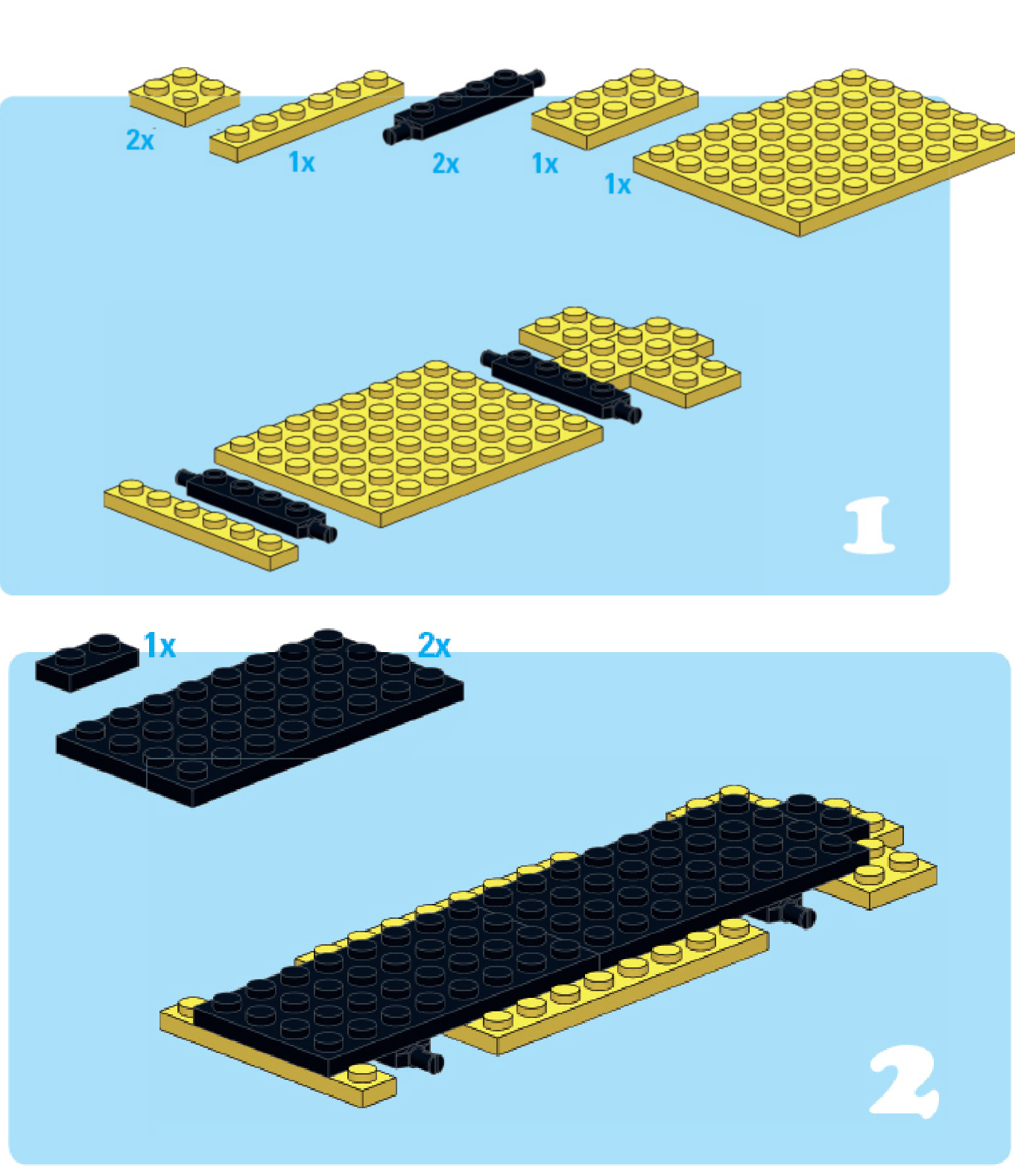
We developed this cab with misterzumbi when we were building environment arrangements for our model of the Empire State Building. Misterzumbi had created a grandiose cab from the 50s. It was our incentive to construct a modern version. So, we looked at pictures of a typical current New York street scene and noticed that modern cabs drive around alongside older models from the 8os.
The design of the hood was a special challenge, because it was supposed to not correspond with the typical LEGO? standard, as well as fenders, roofs, etc. that stood out optically. The cars series was very helpful because suddenly it contained several new types of rims.
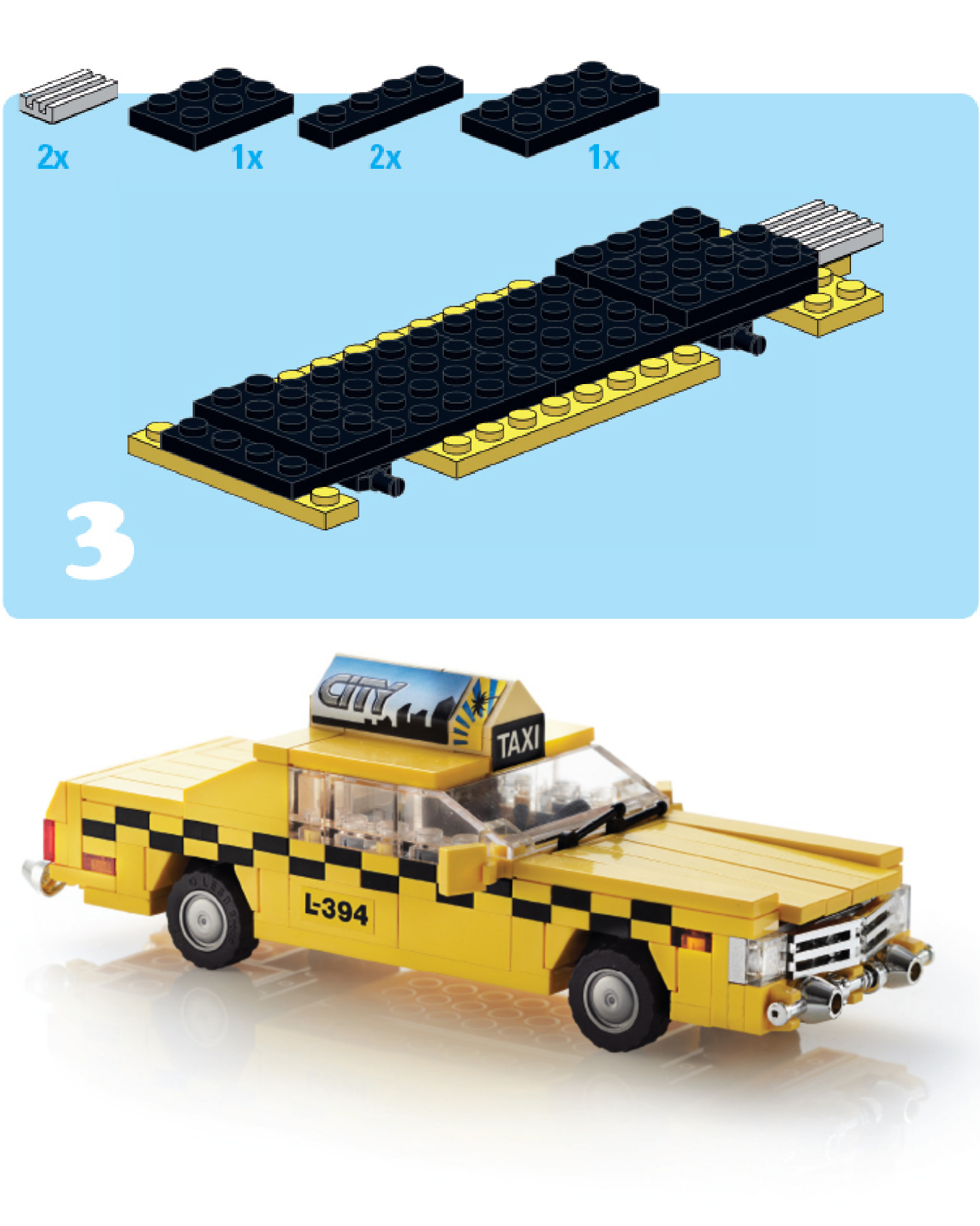
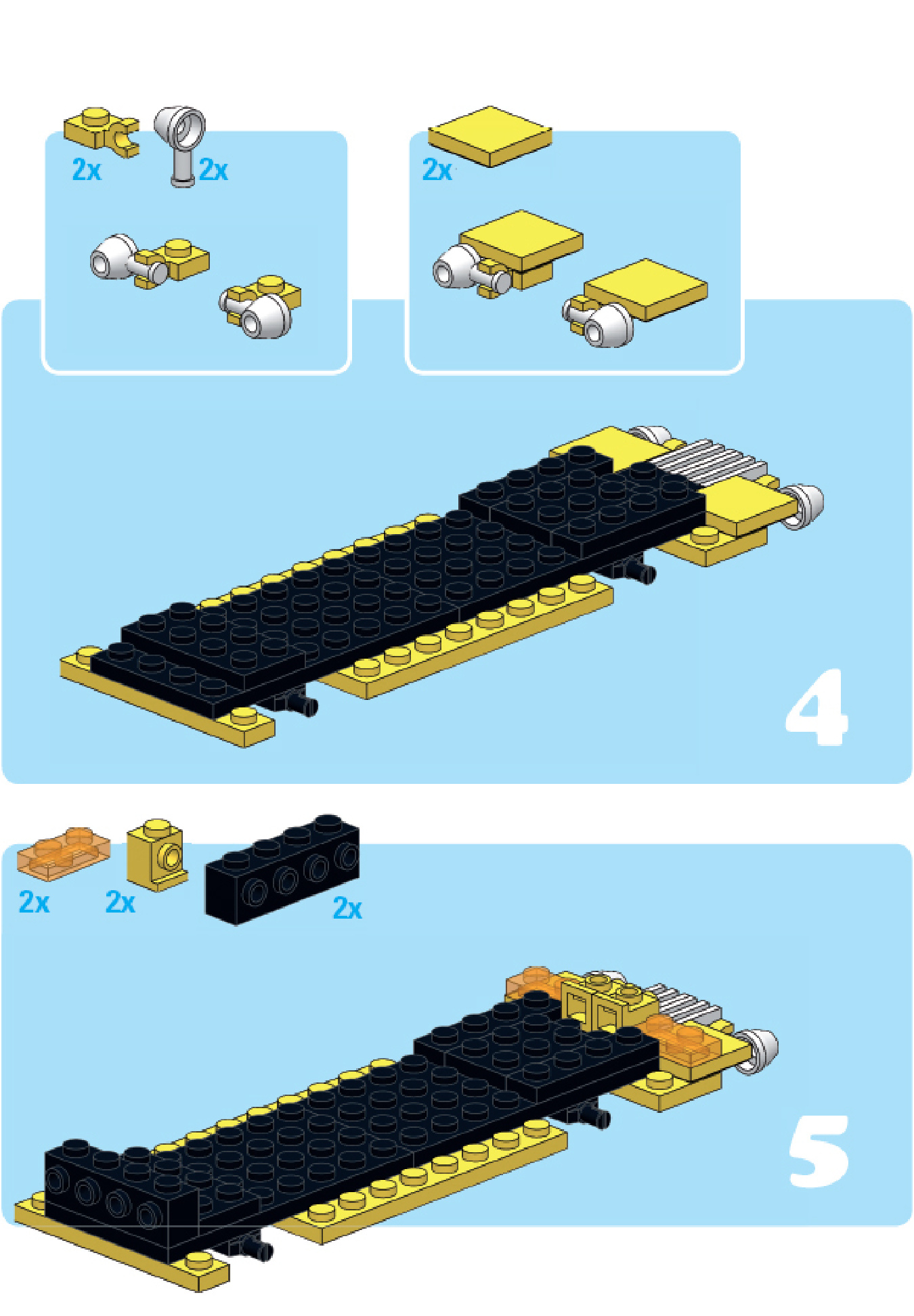
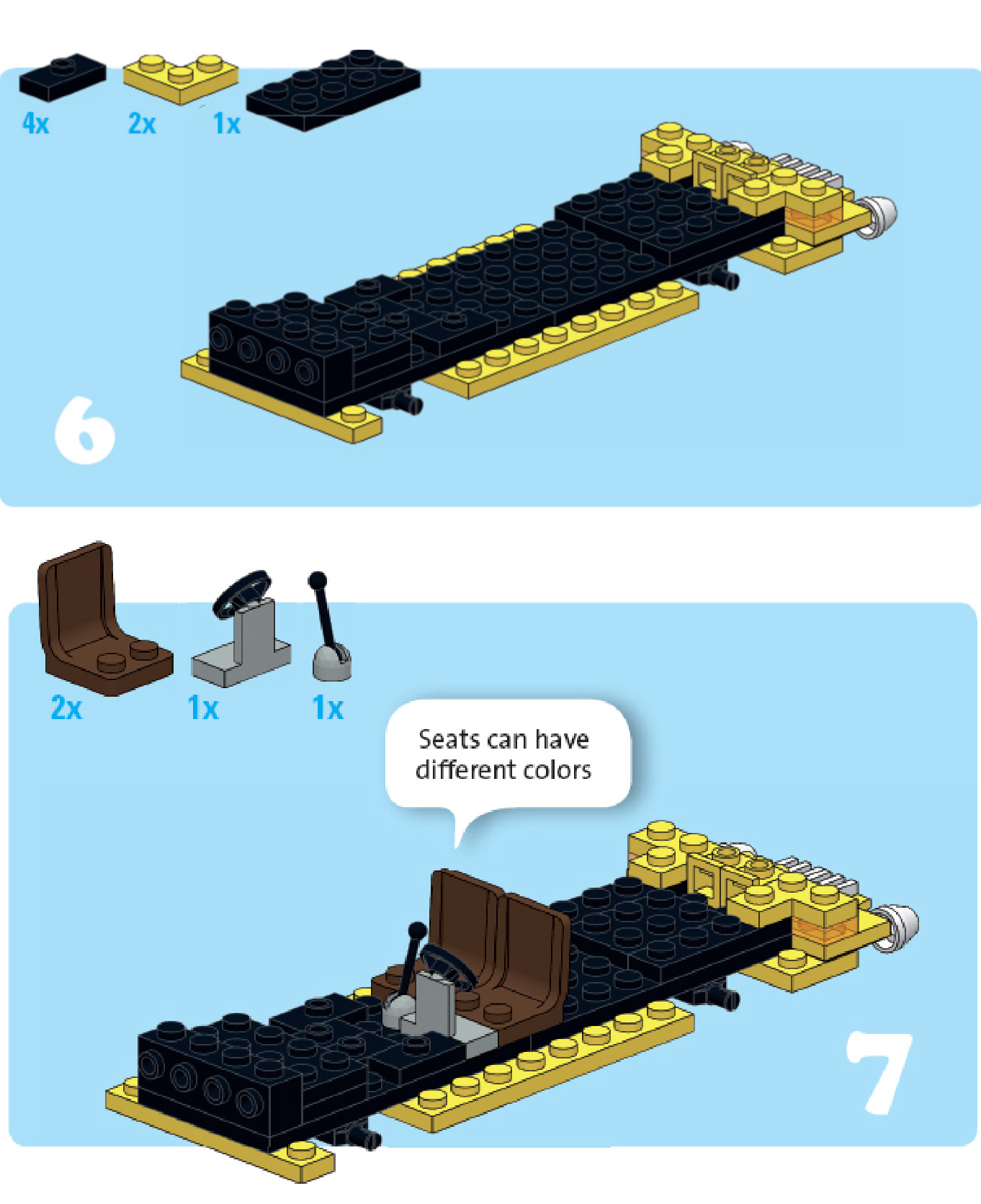
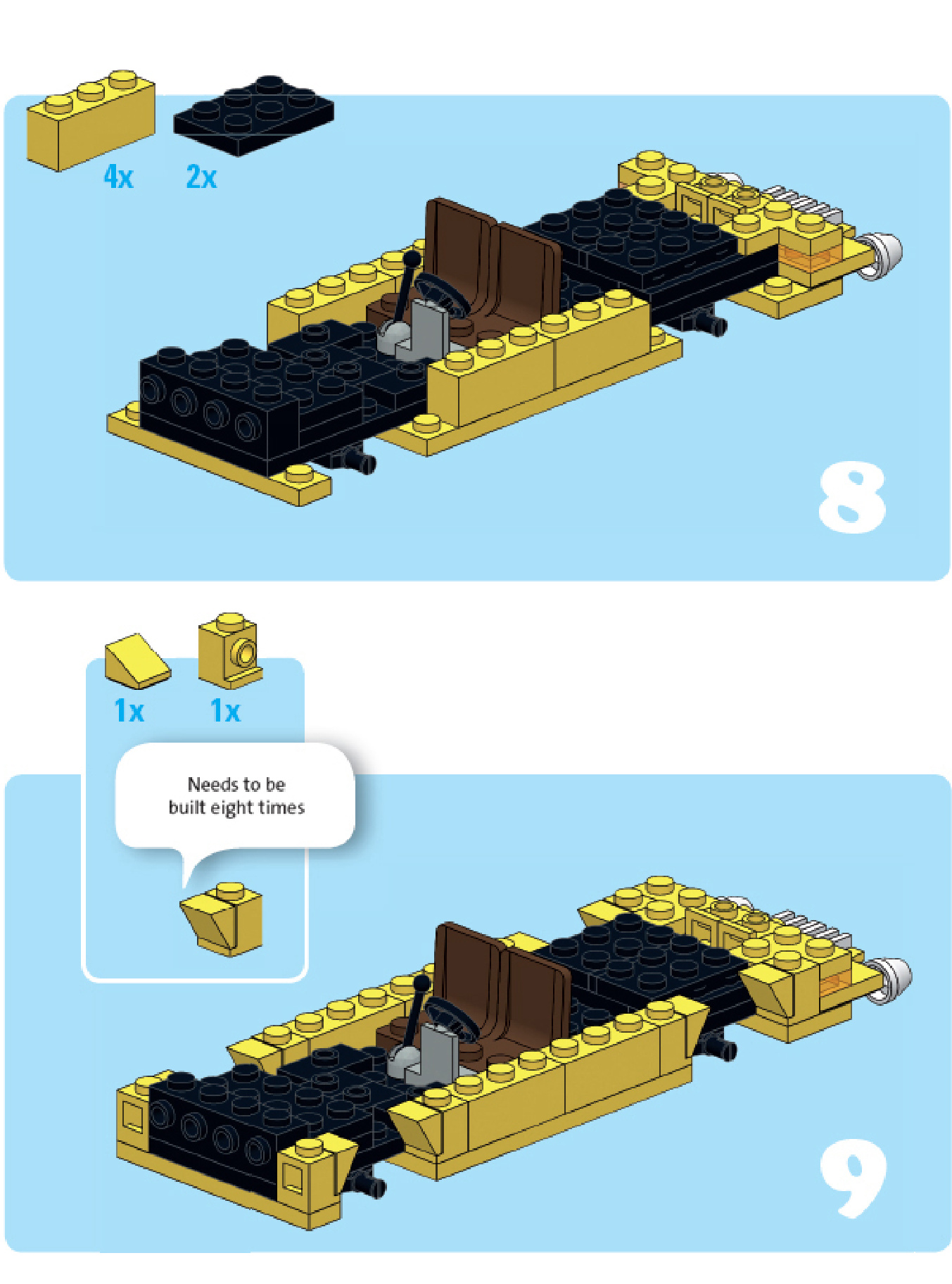
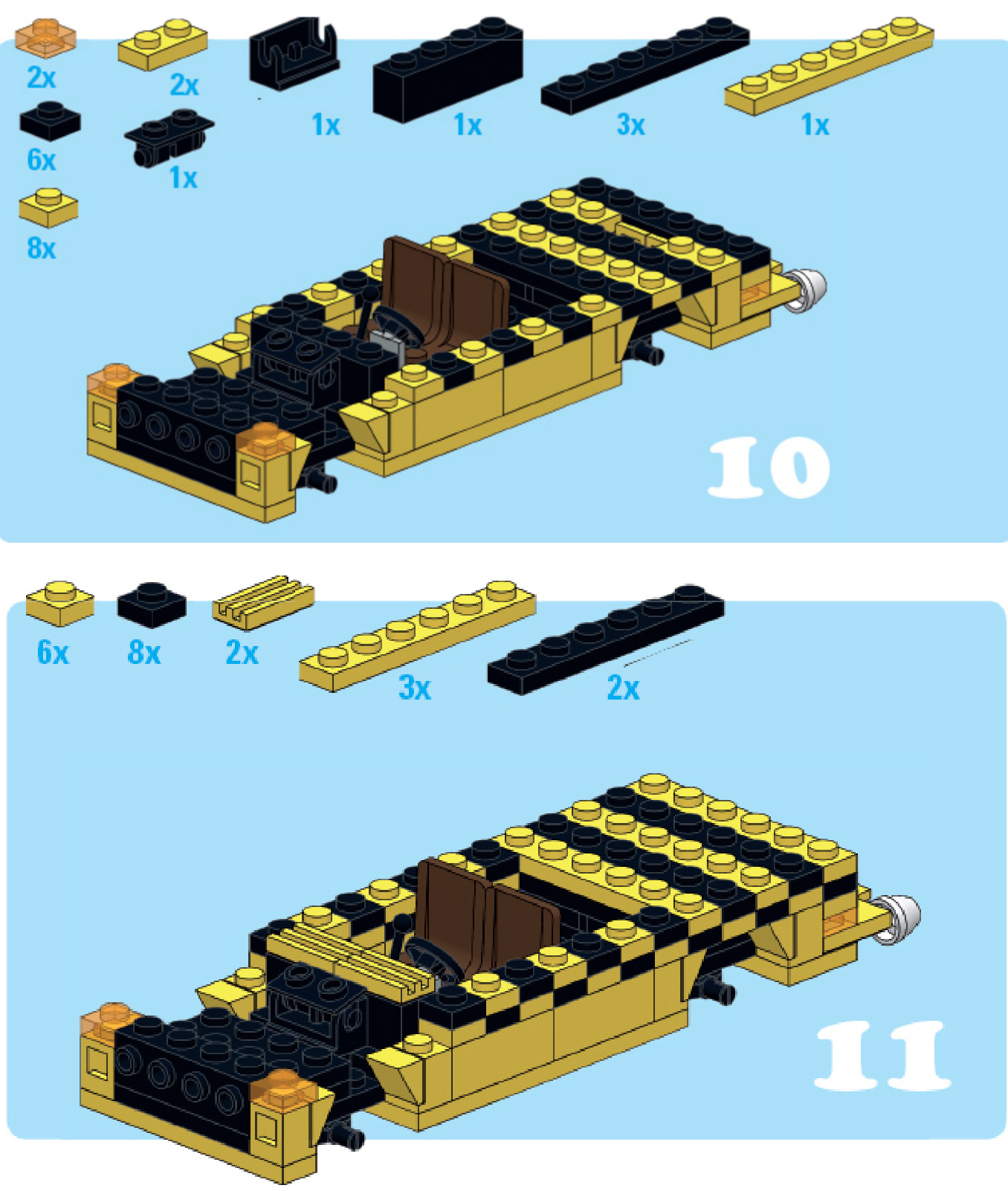
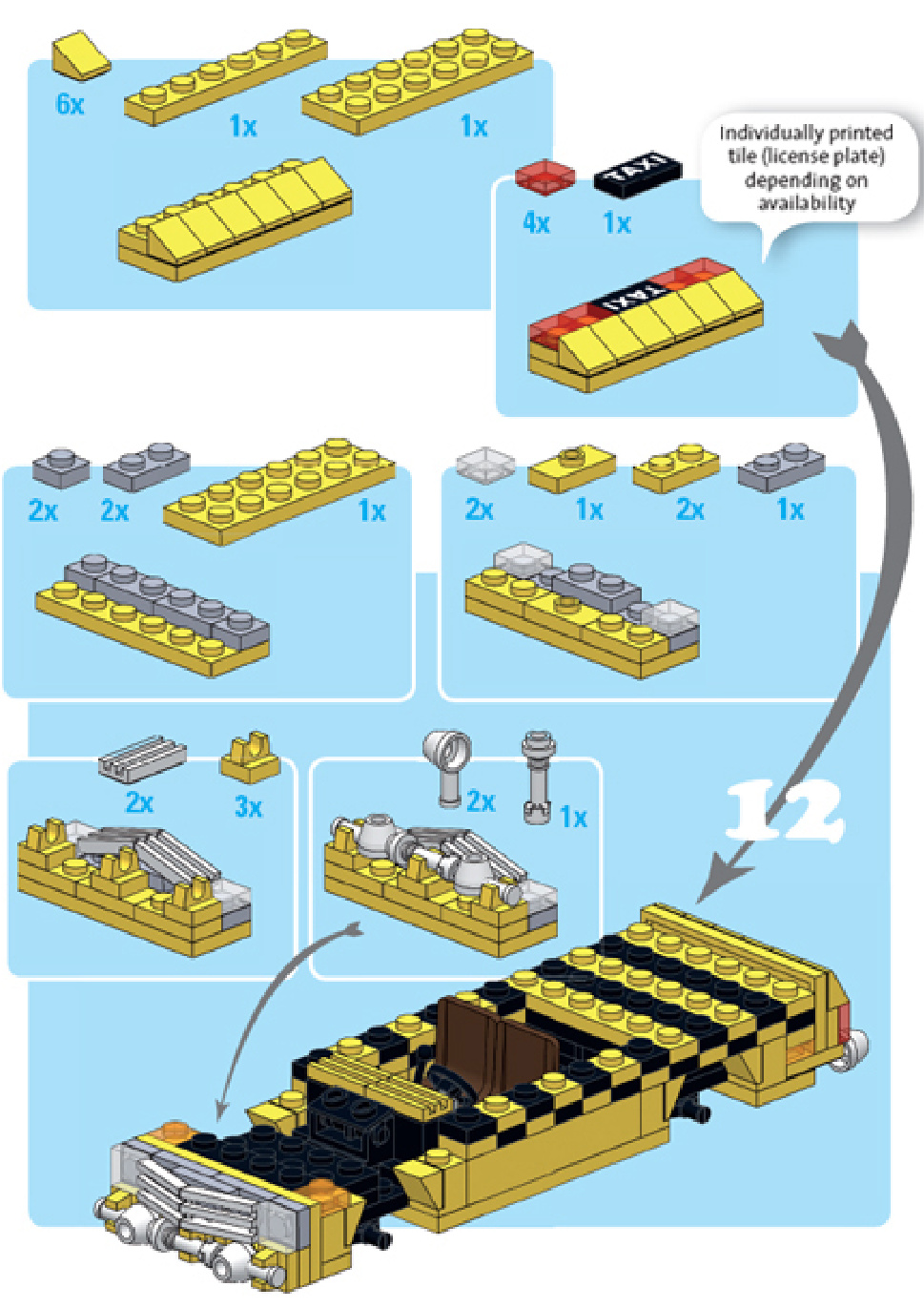
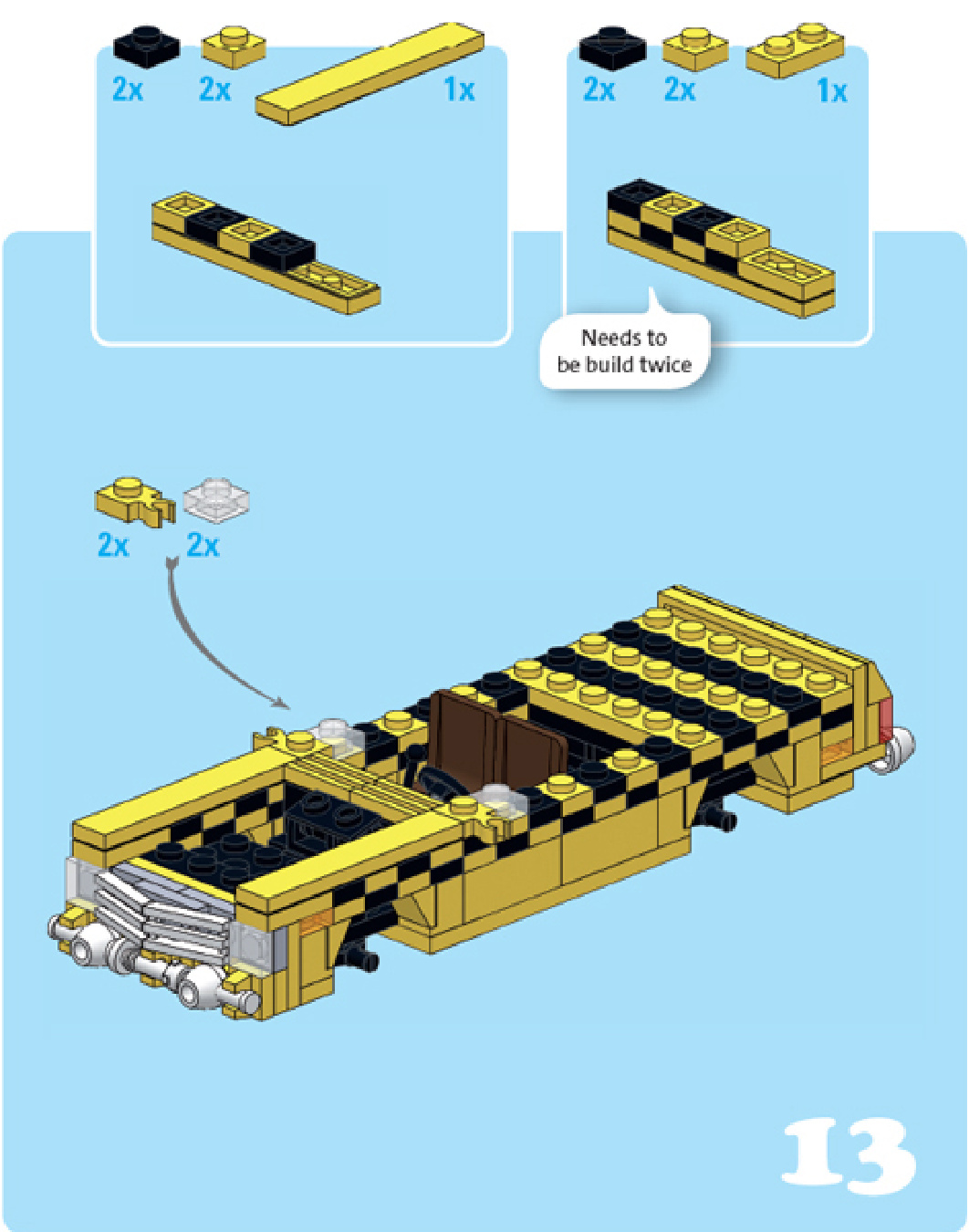
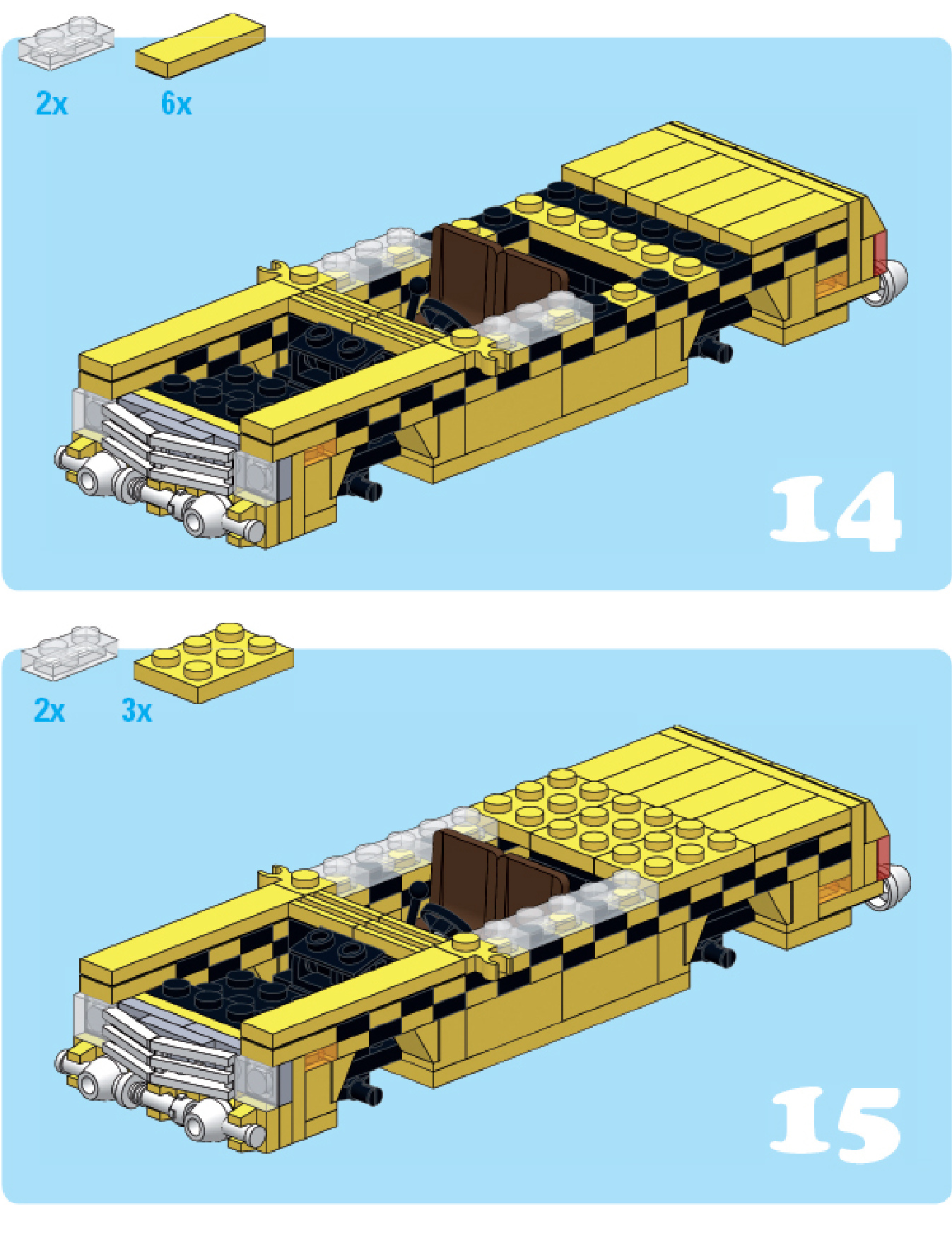
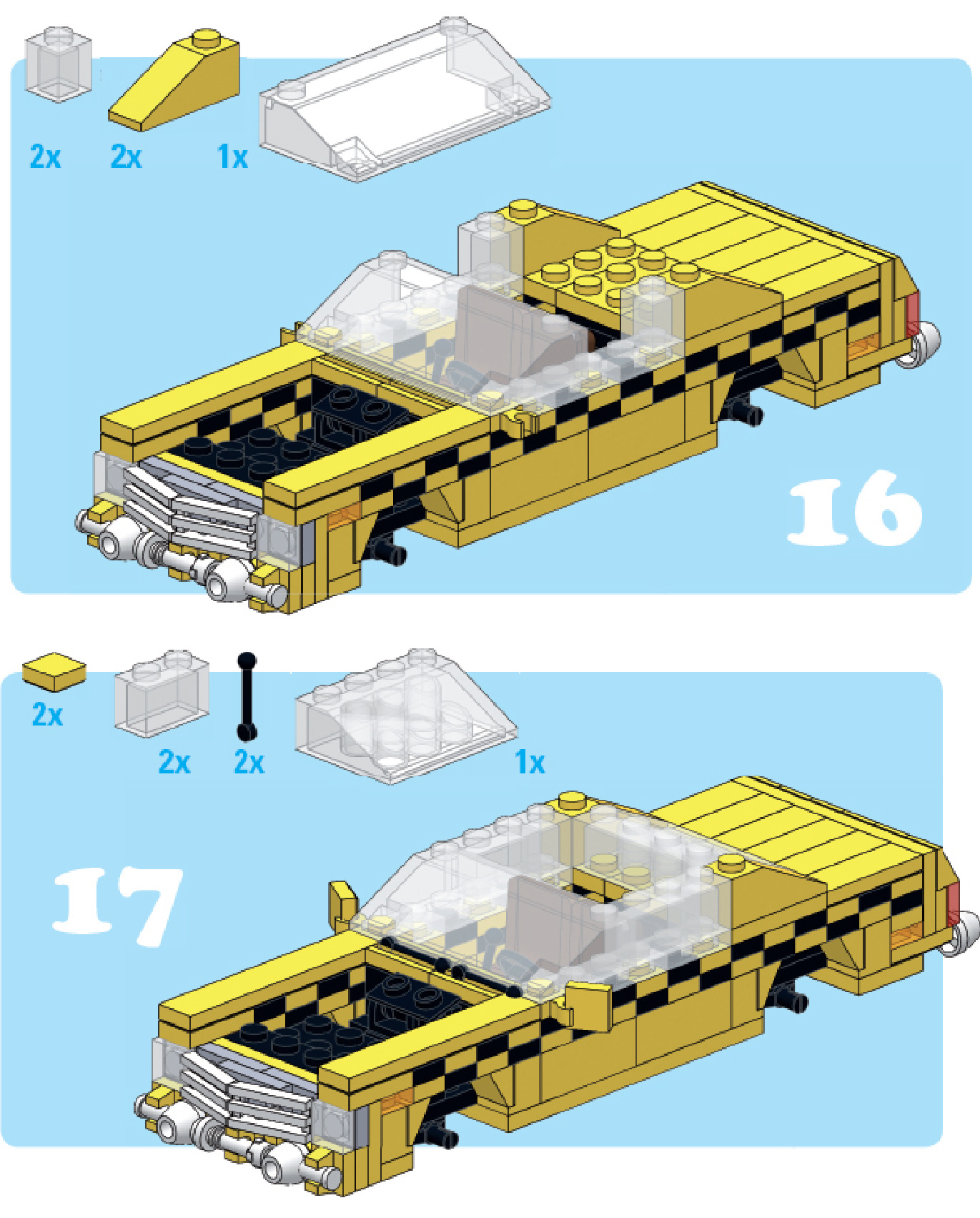
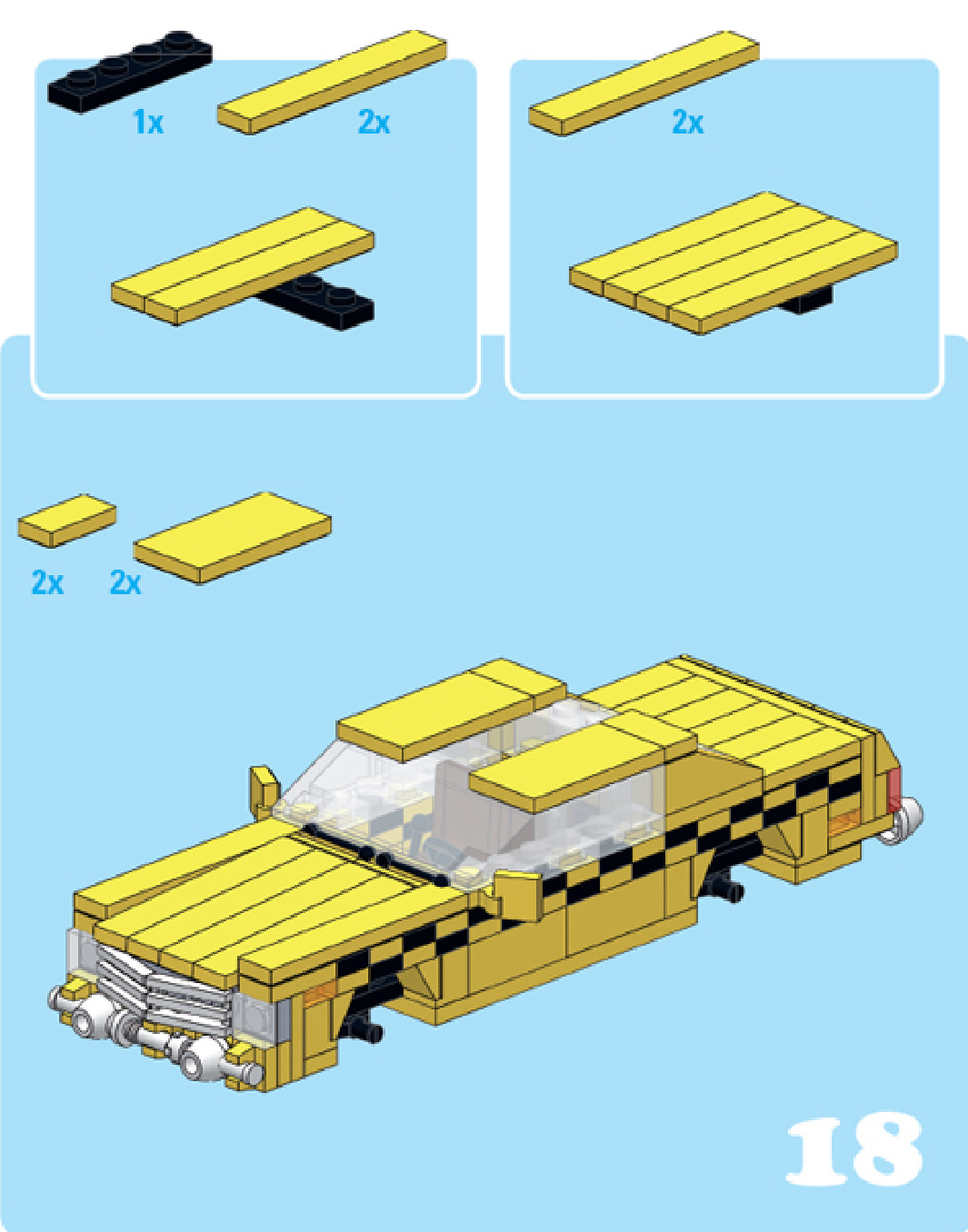
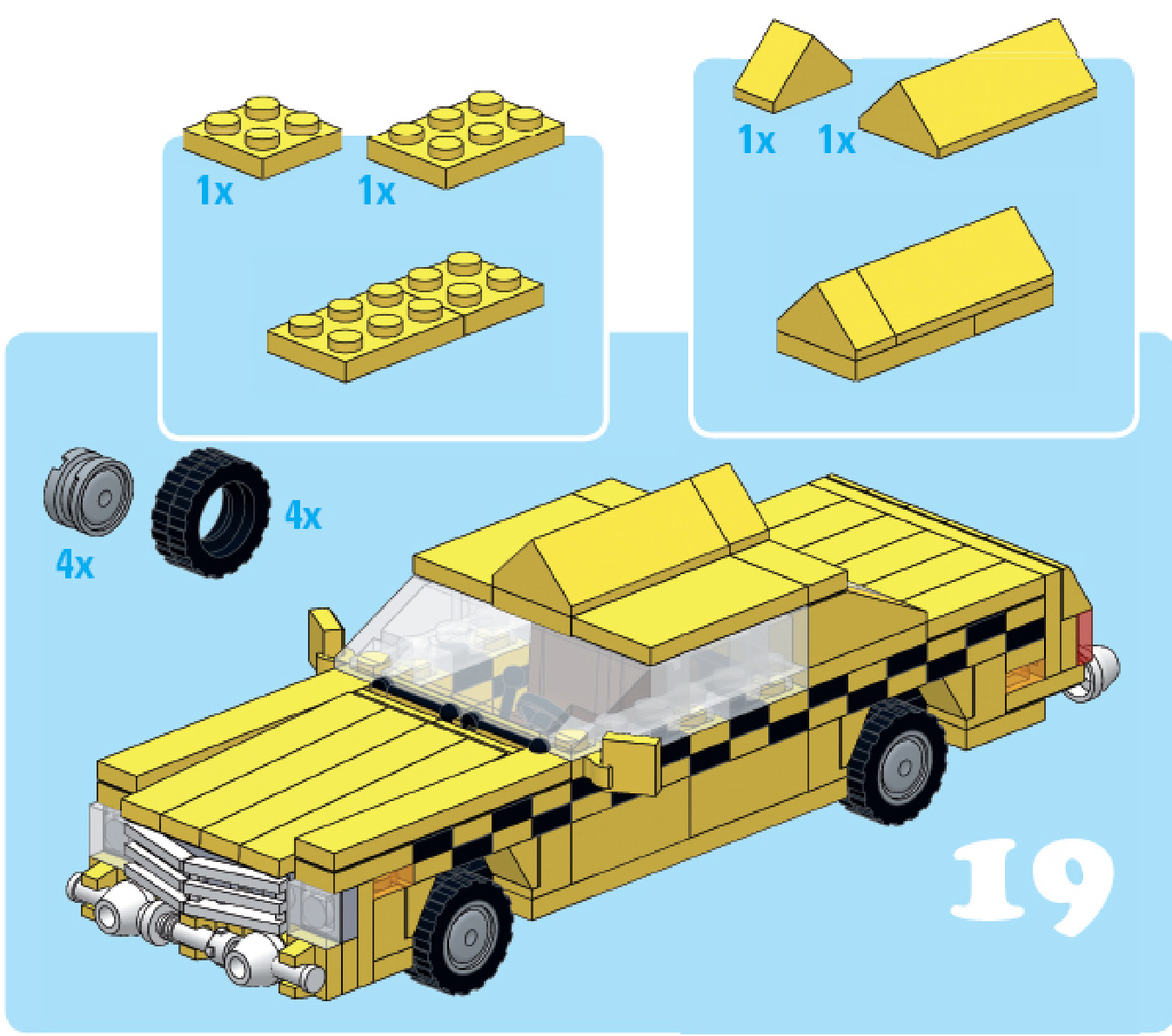
Parts List
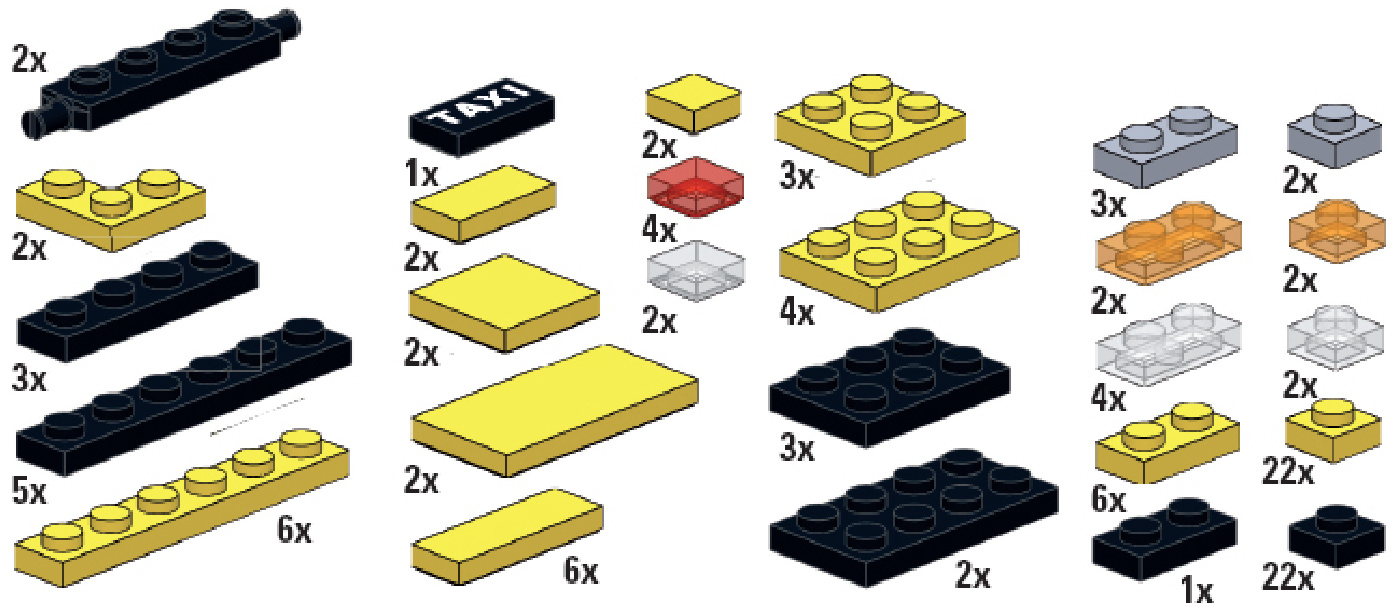
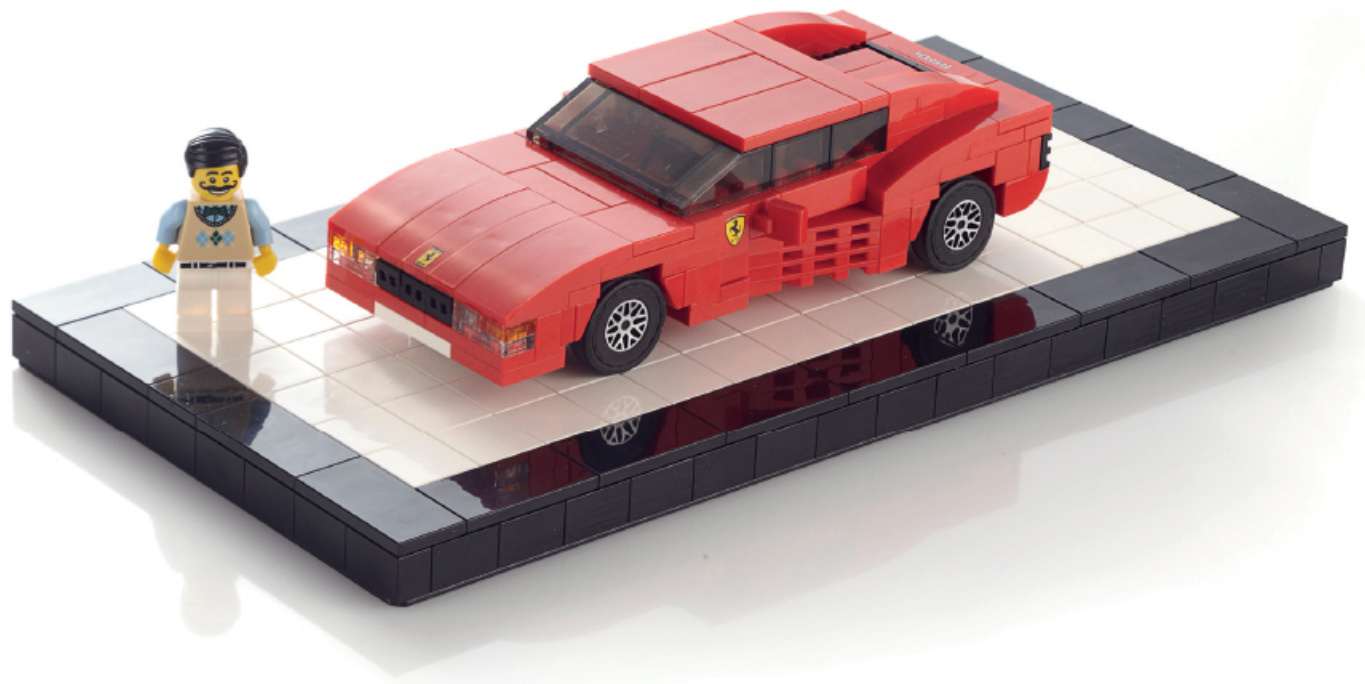
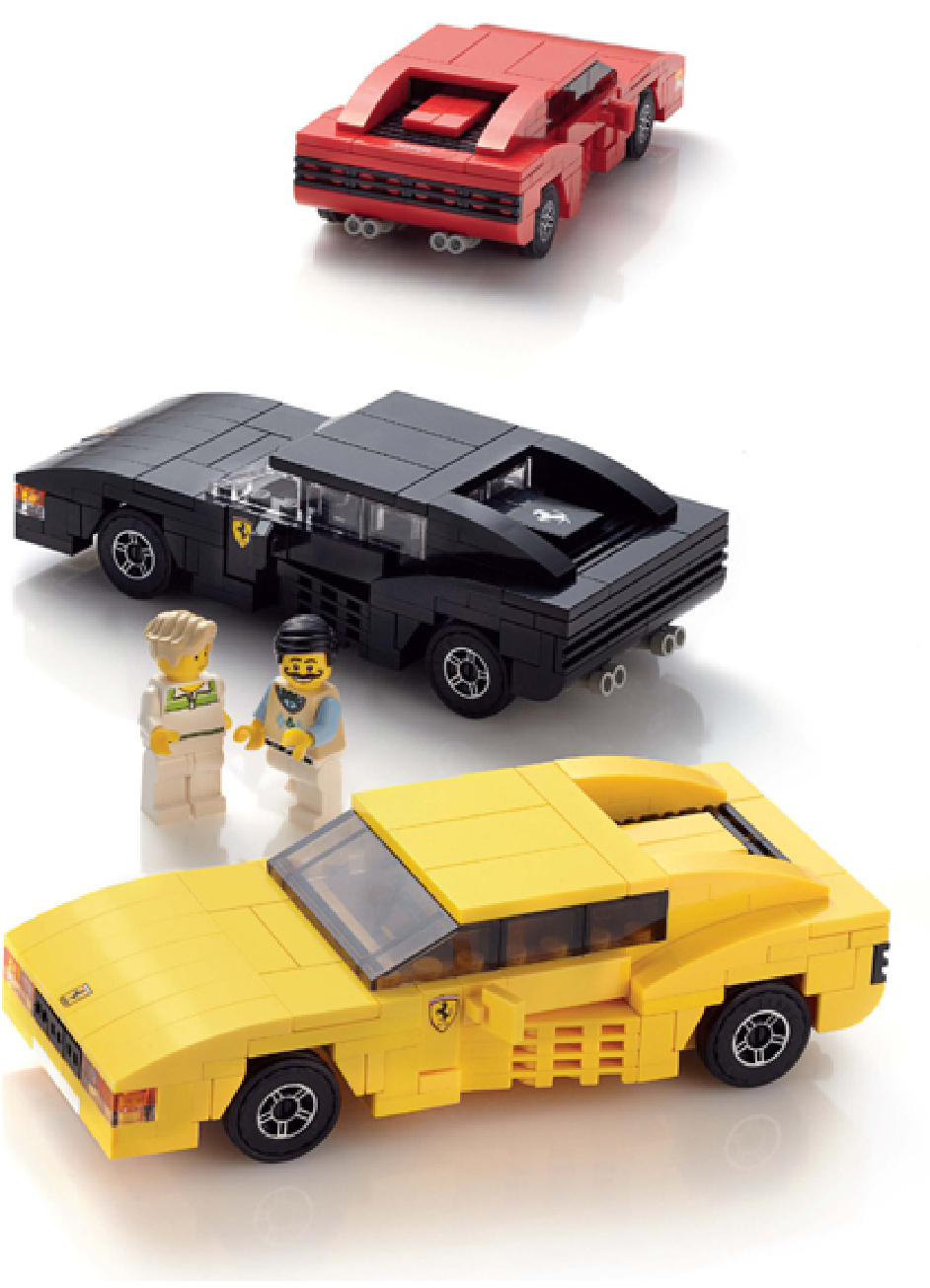
Ferrari Testarossa
 We developed this sports car by special request from our publisher. lnitially we built two variants: a Testarossa and a classic model. We then decided on the modern version for the construction instruction - obviously in Ferrari or rather LEGO? red.
We also noticed Ferraris in some movies in a wide variety of colors and wanted to show them as alternatives as well. Take a look at page 277!
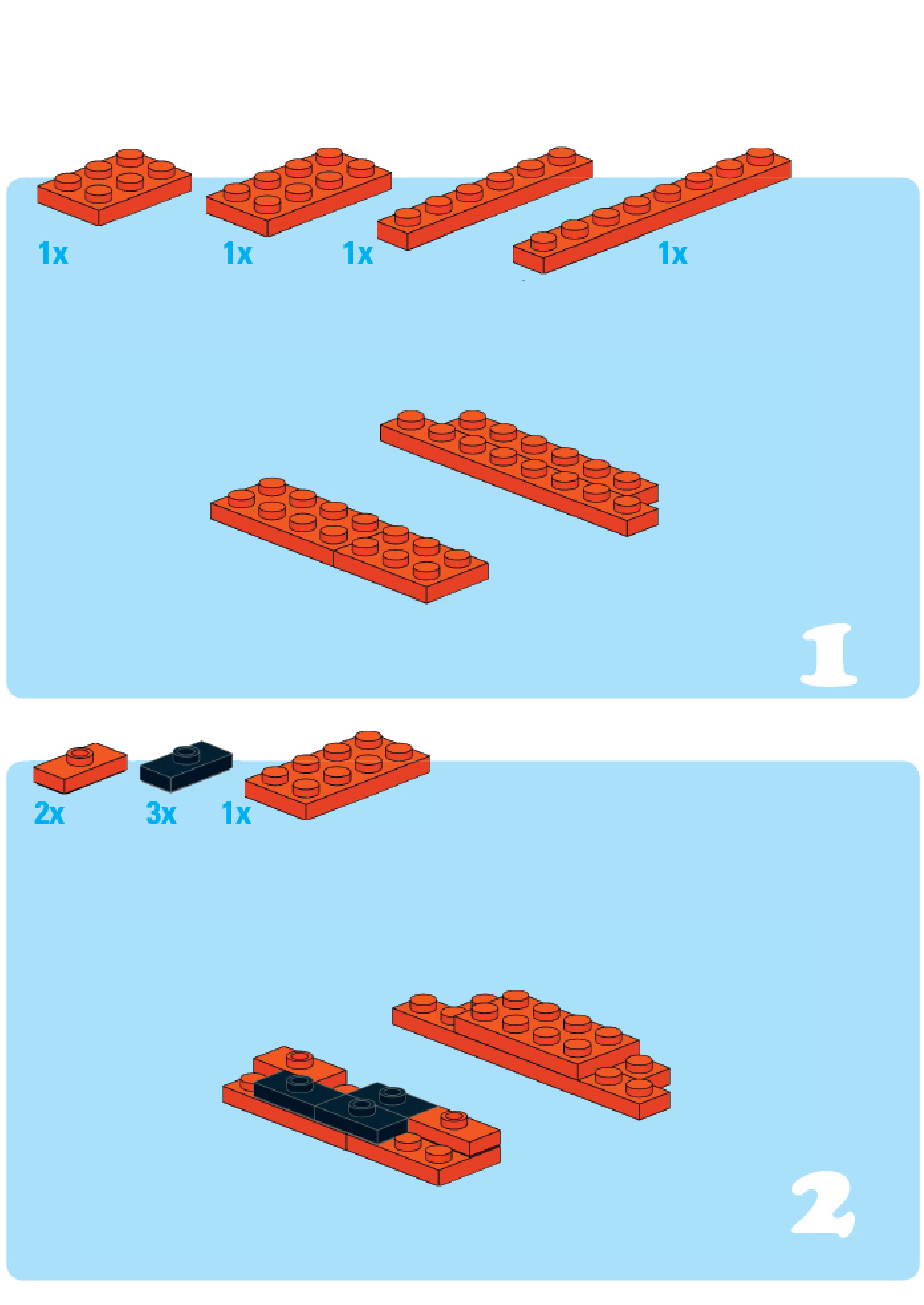
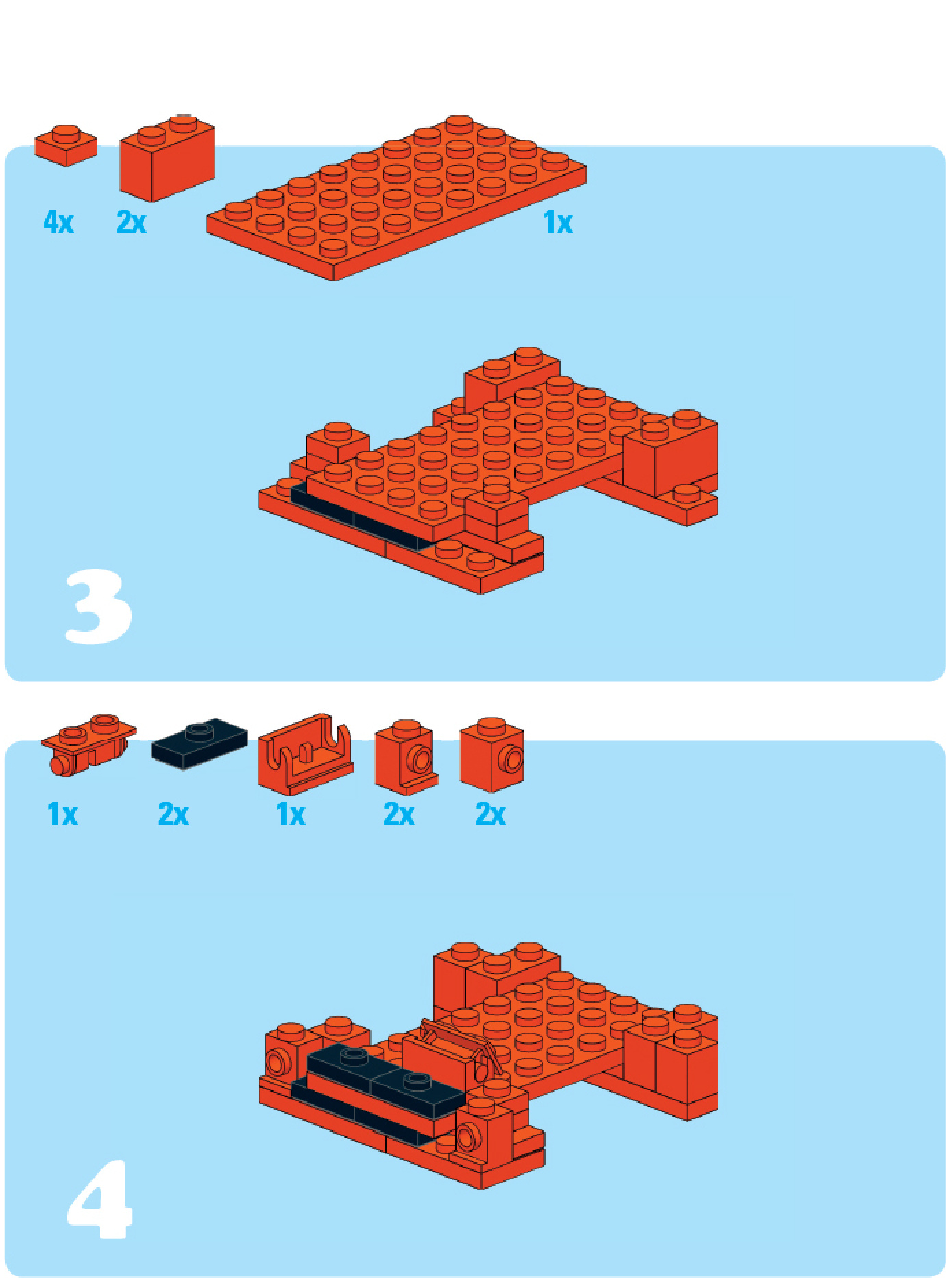
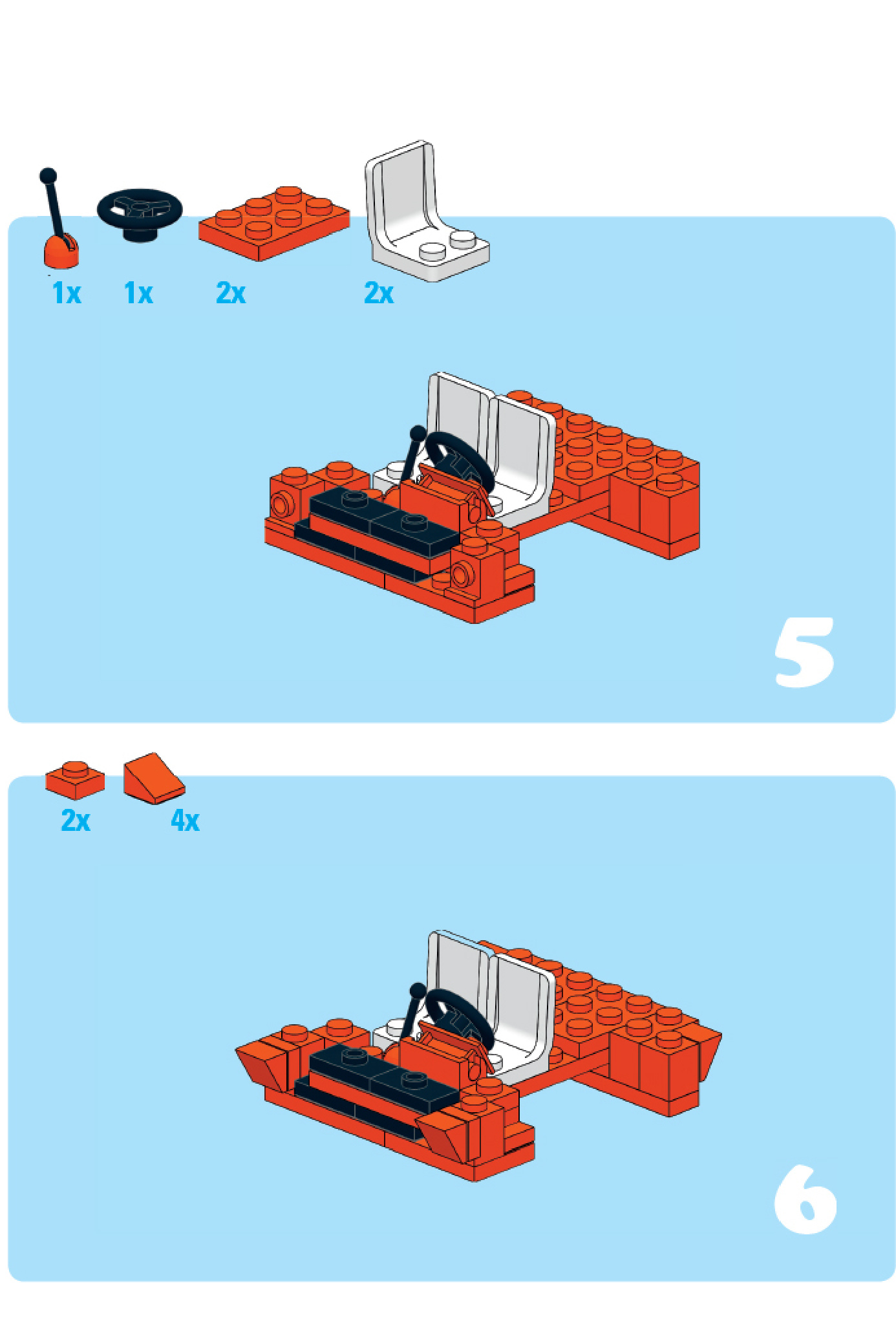
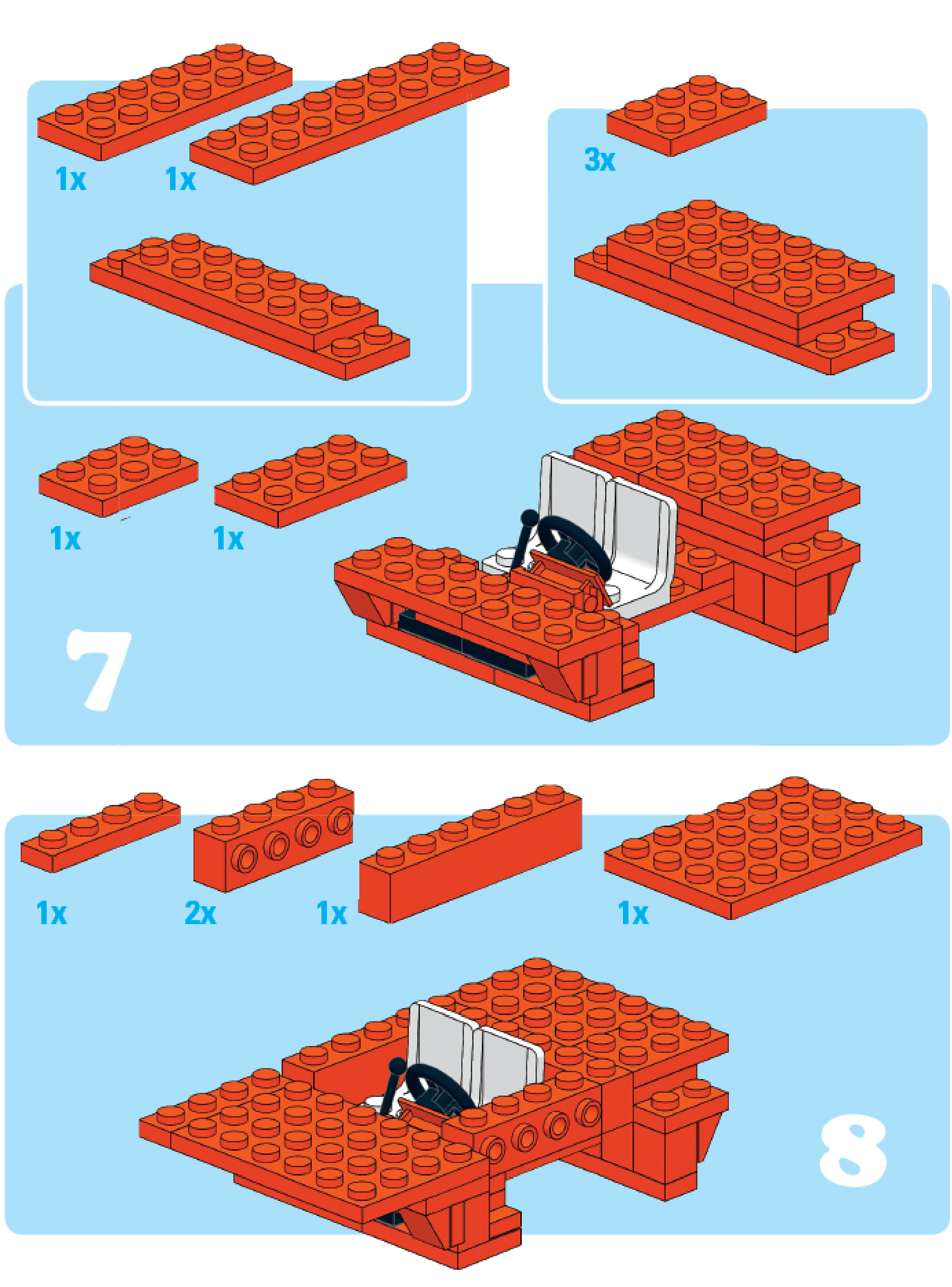
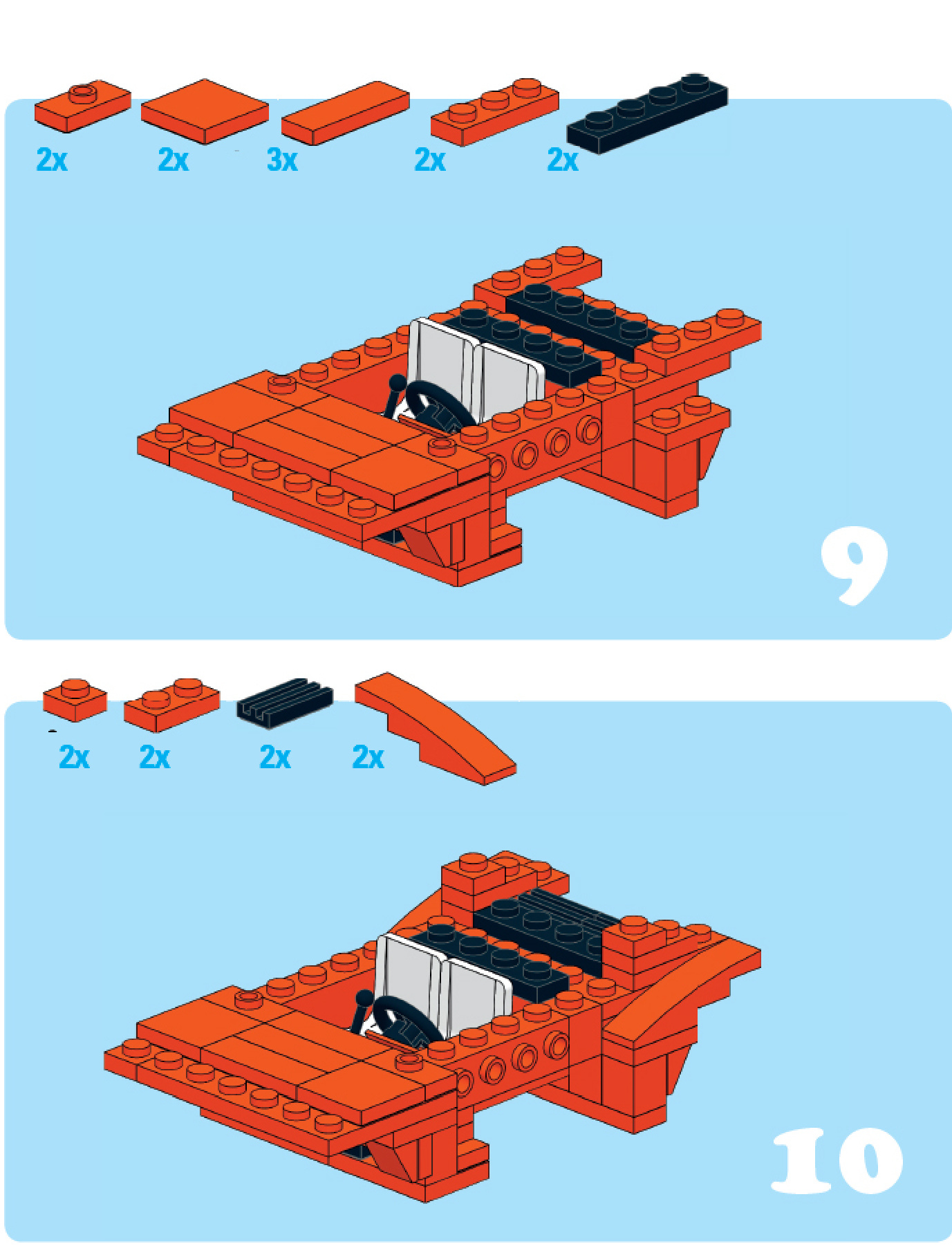
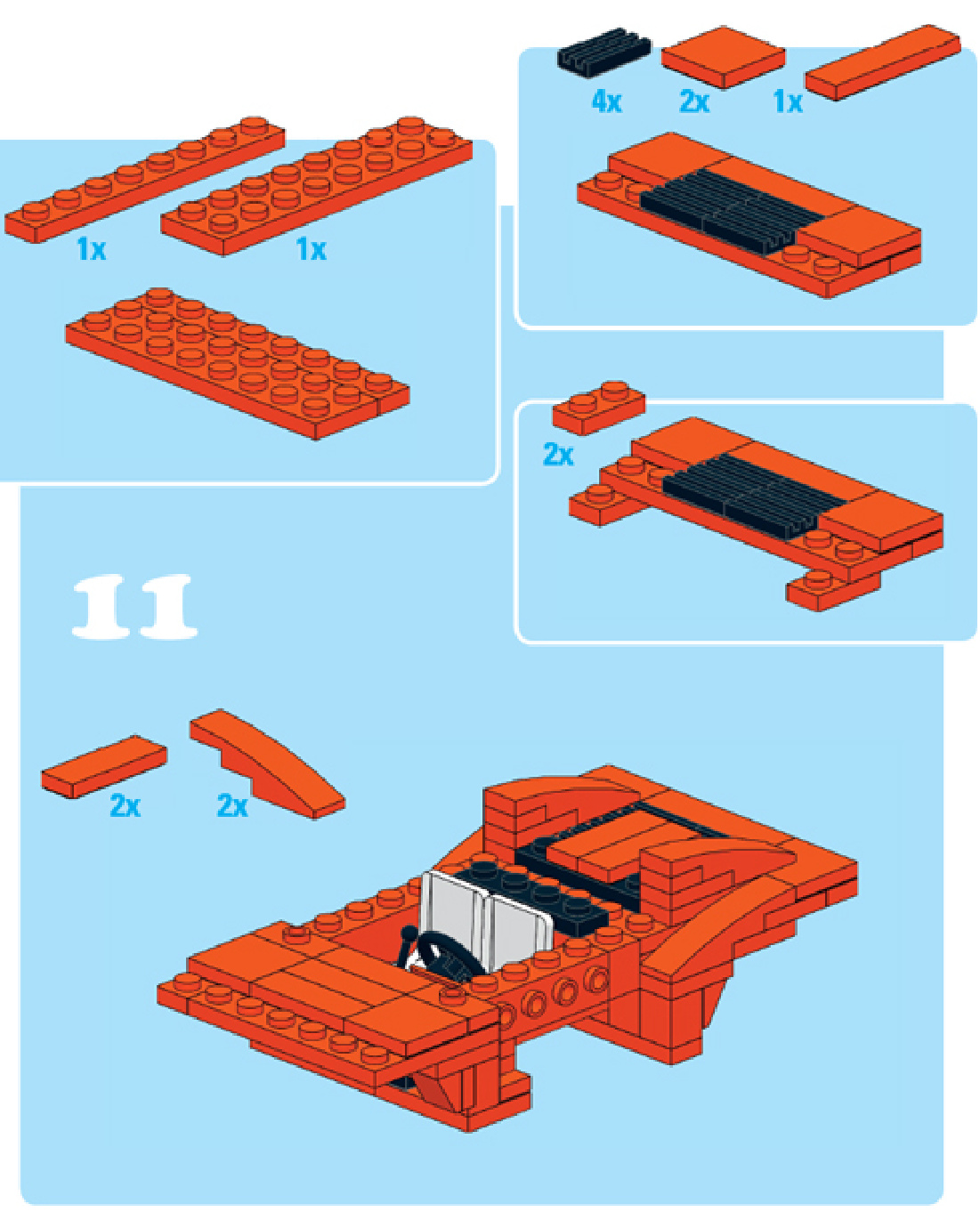
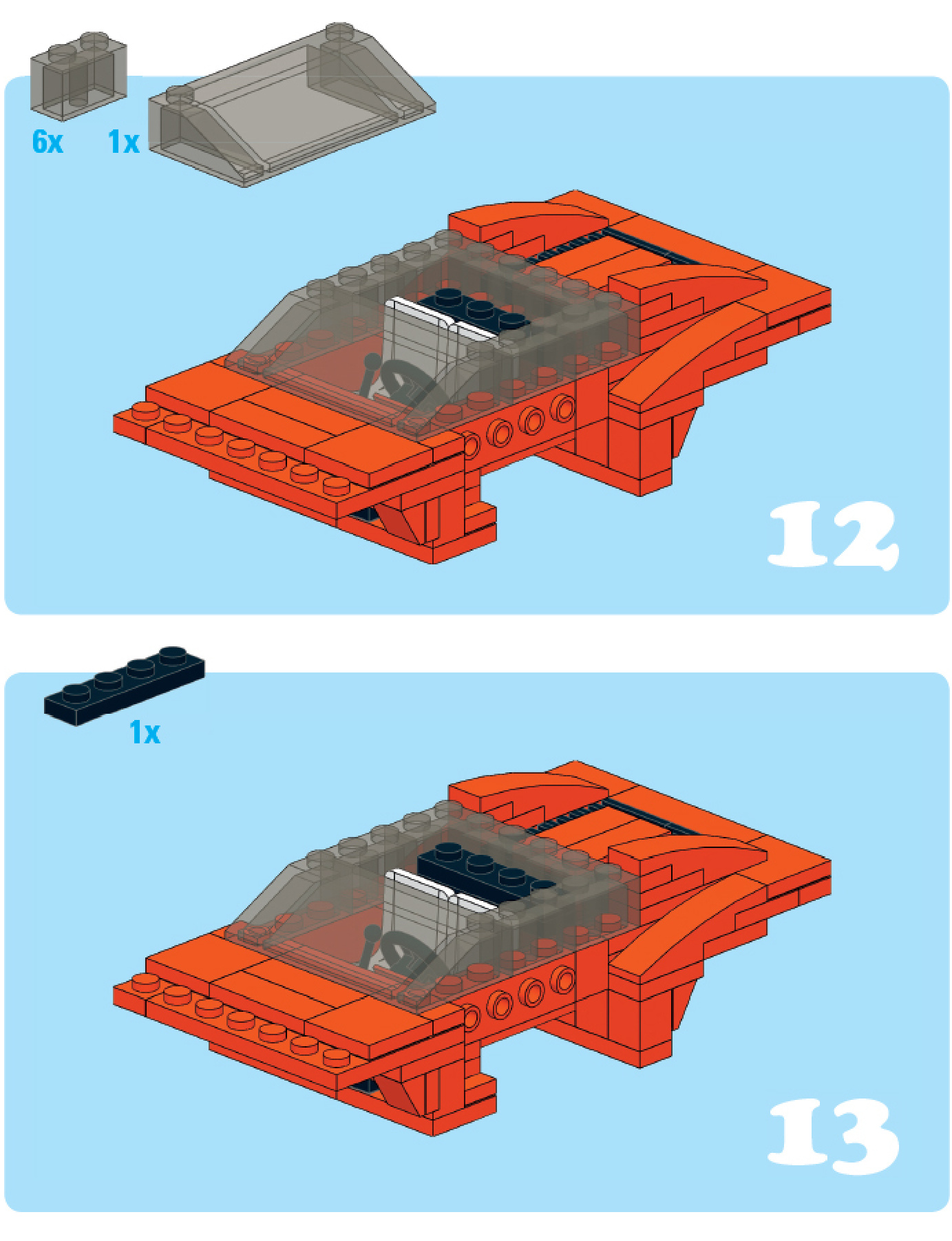
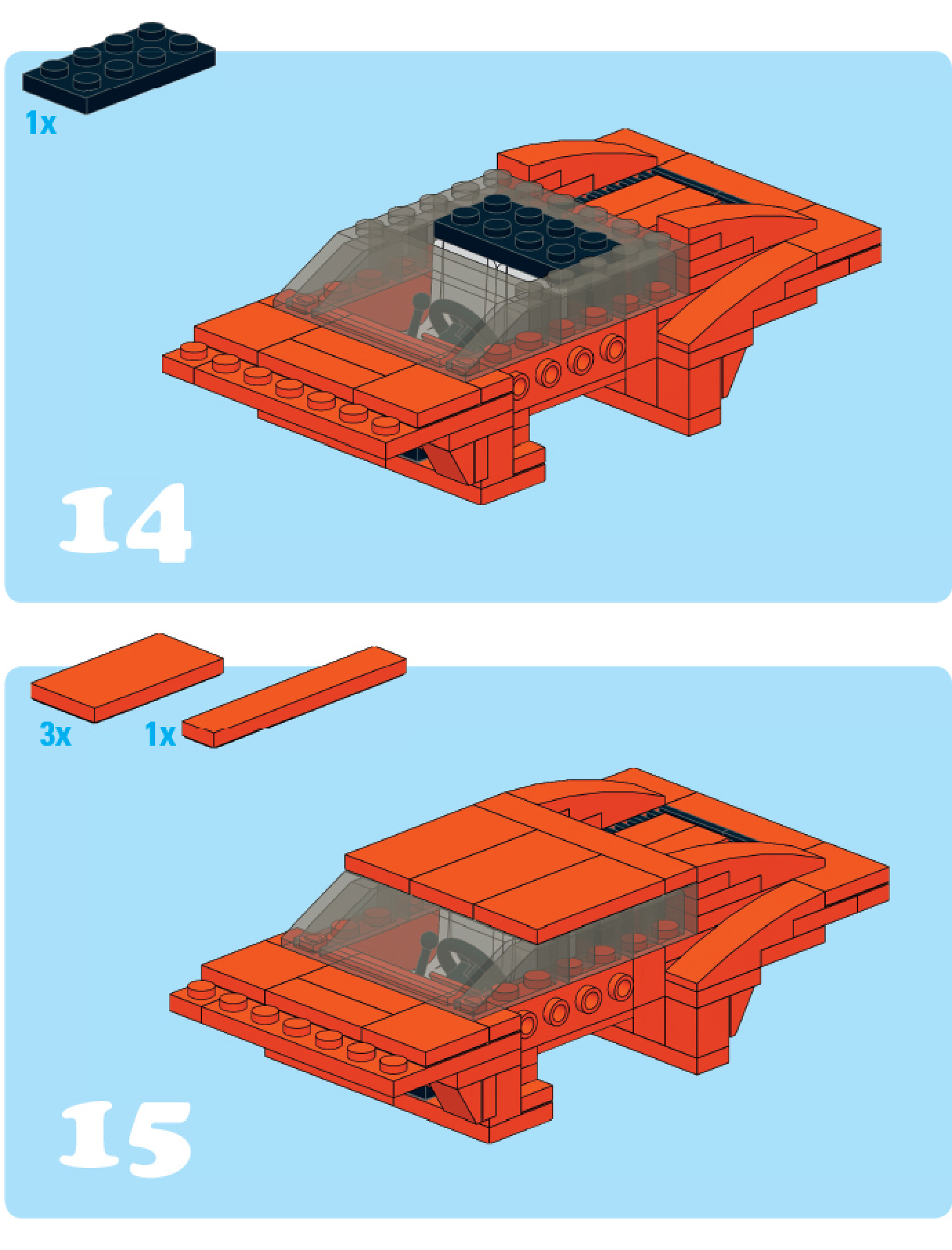
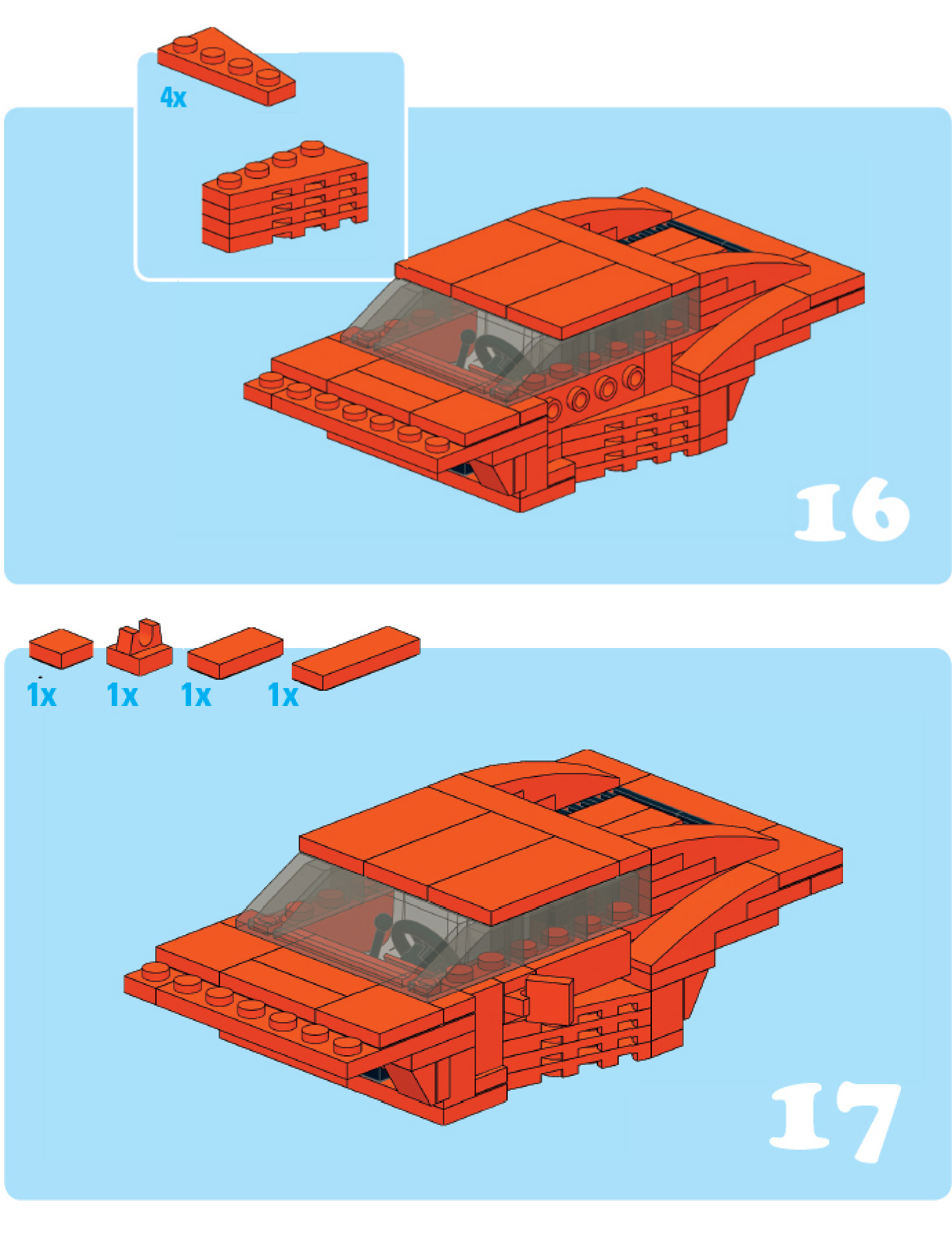
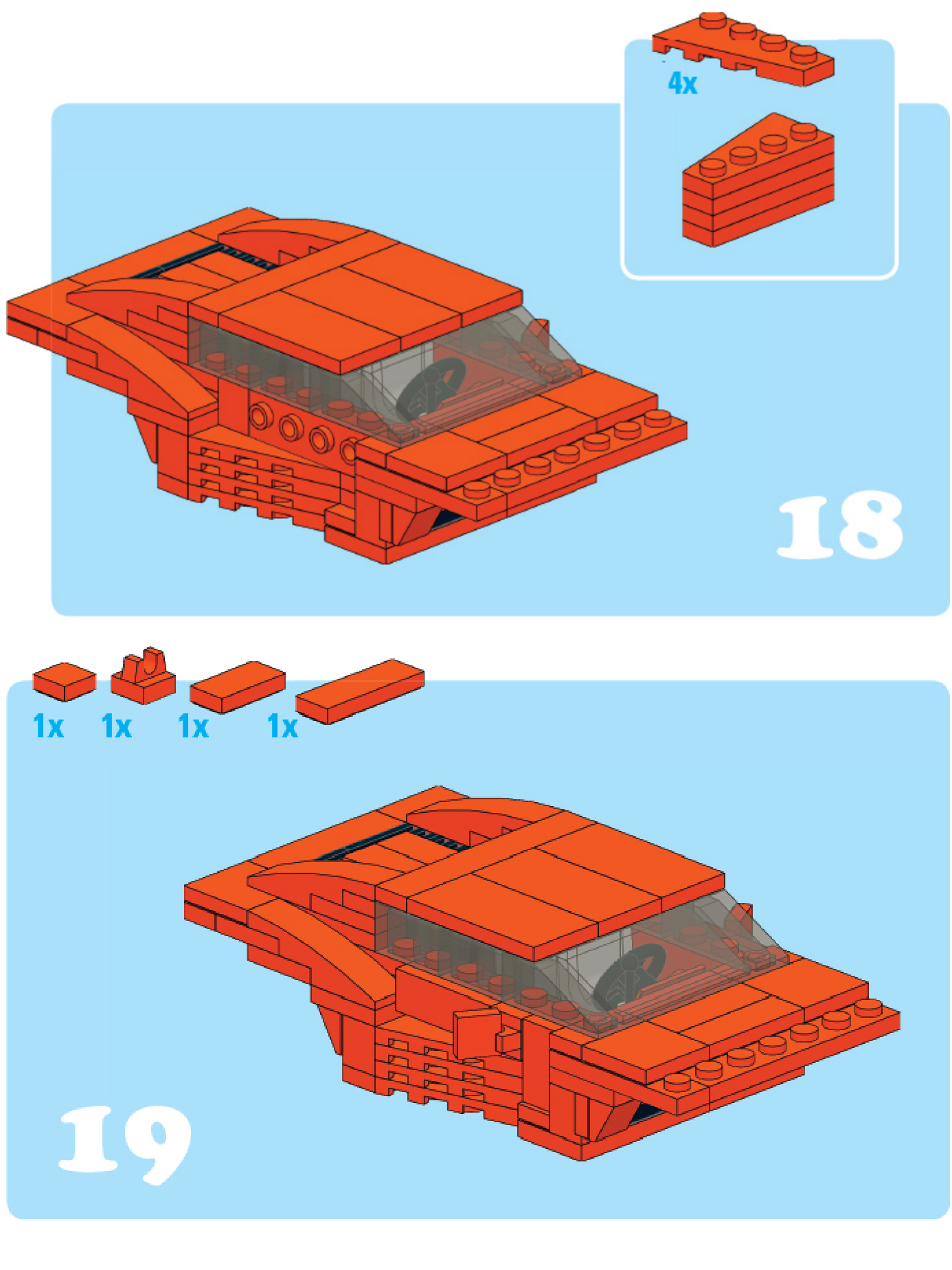
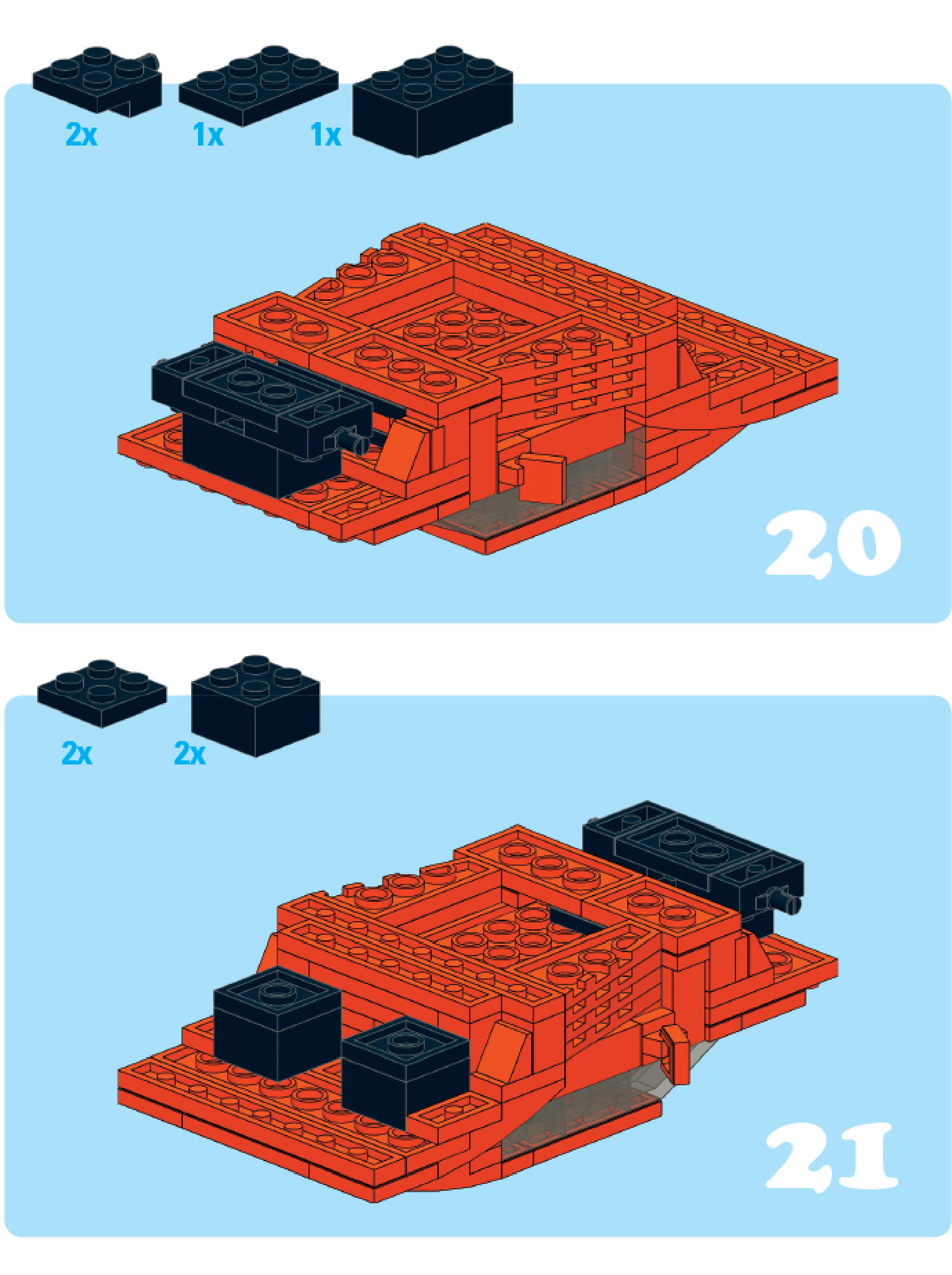
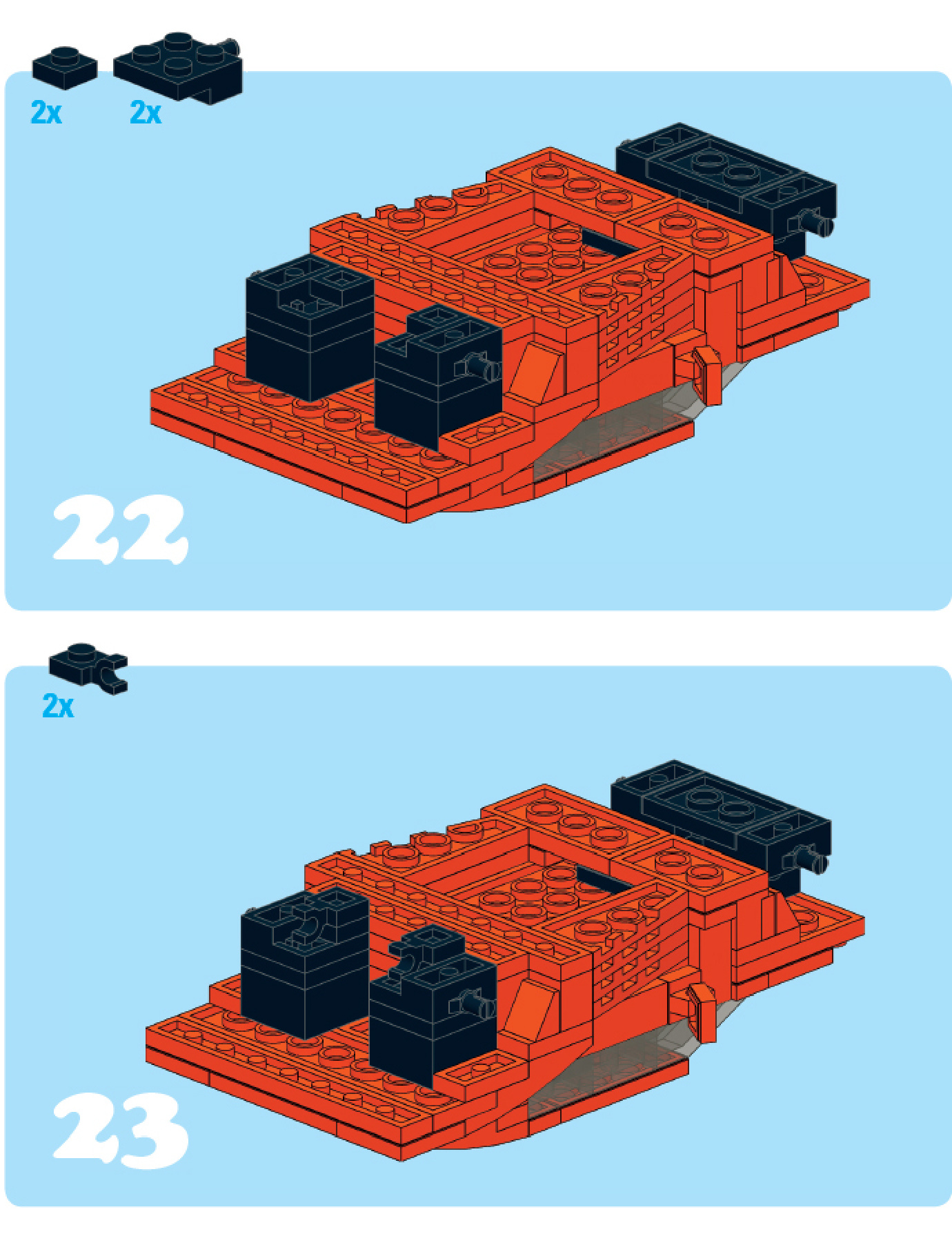
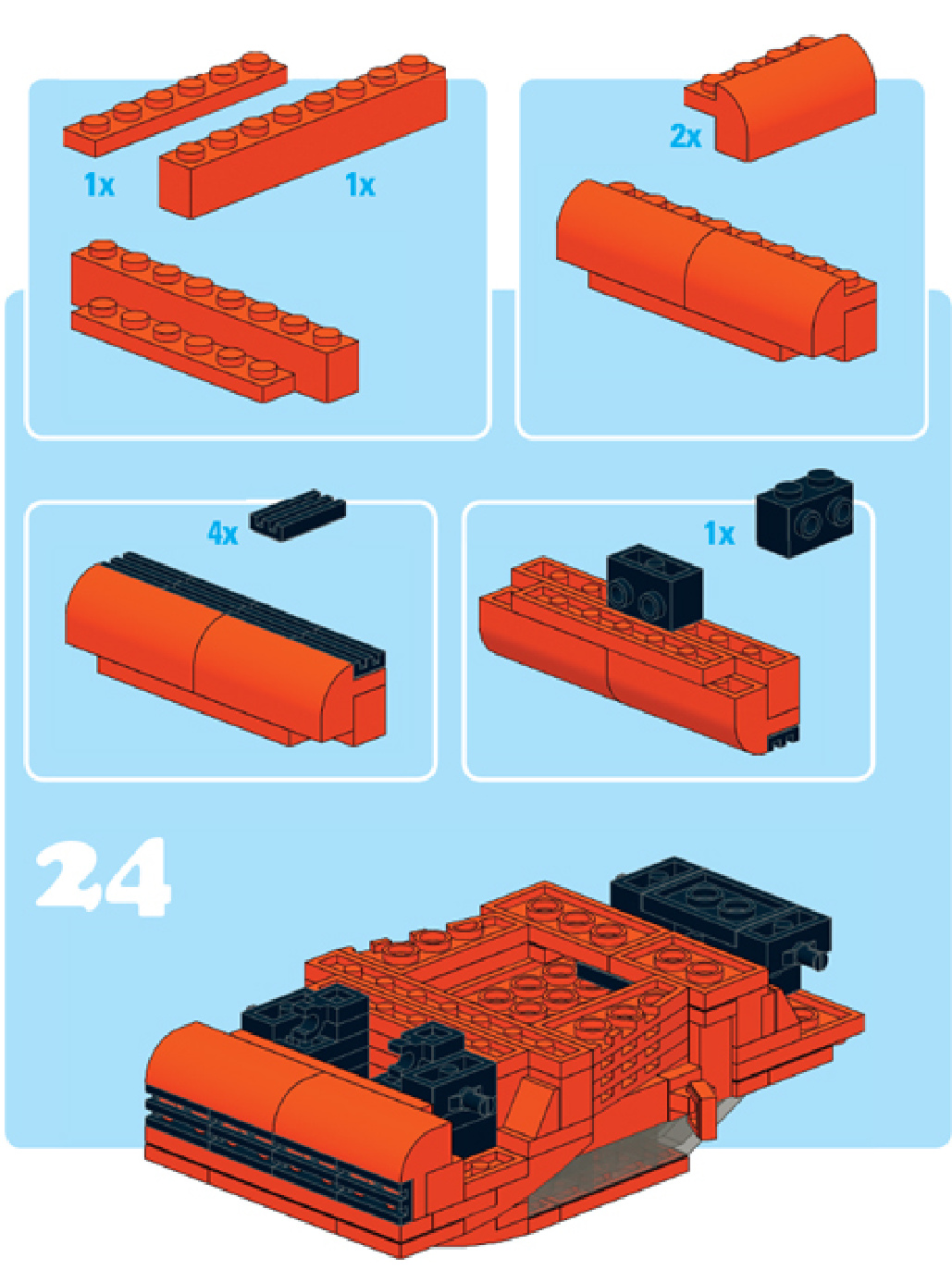
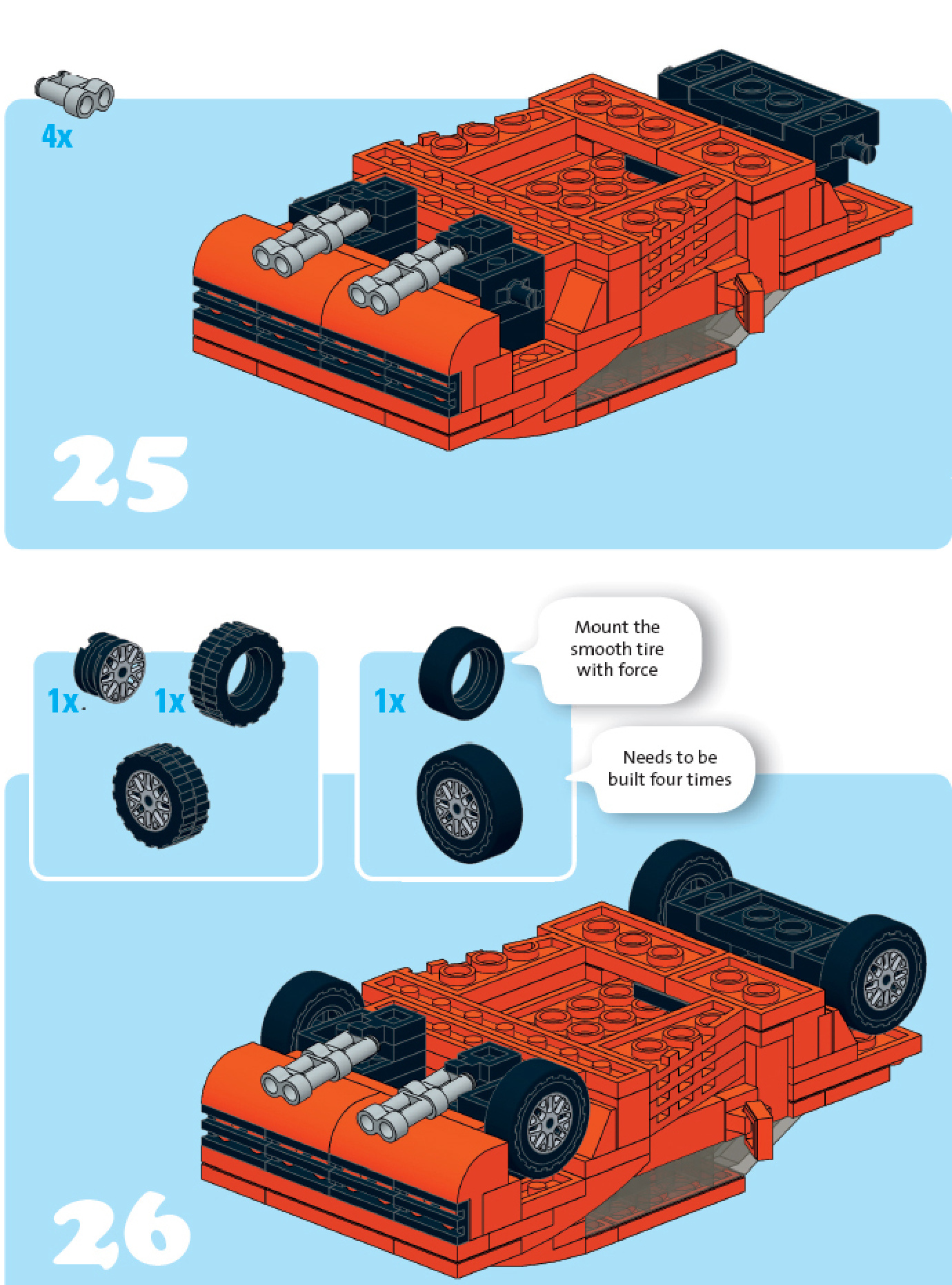
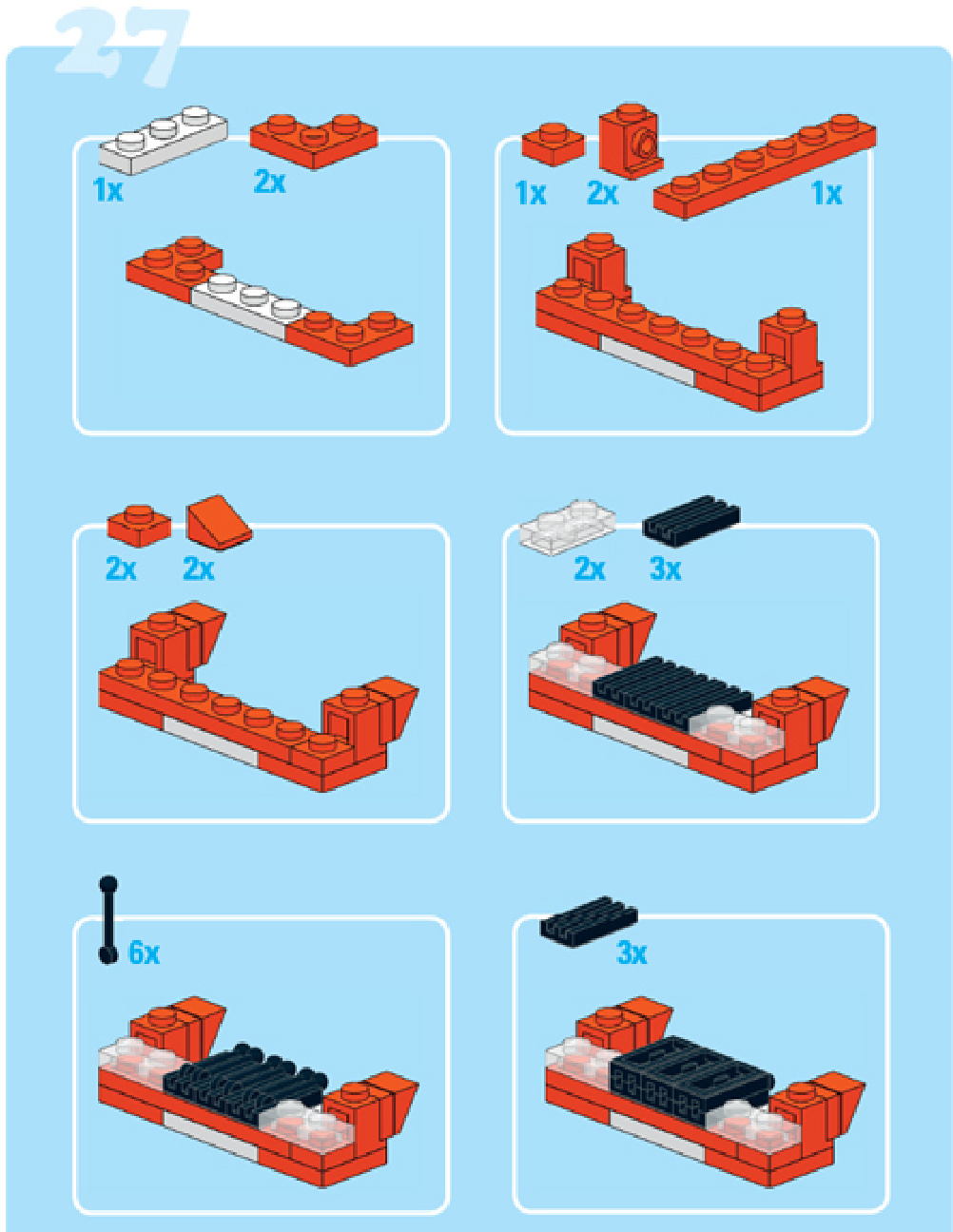
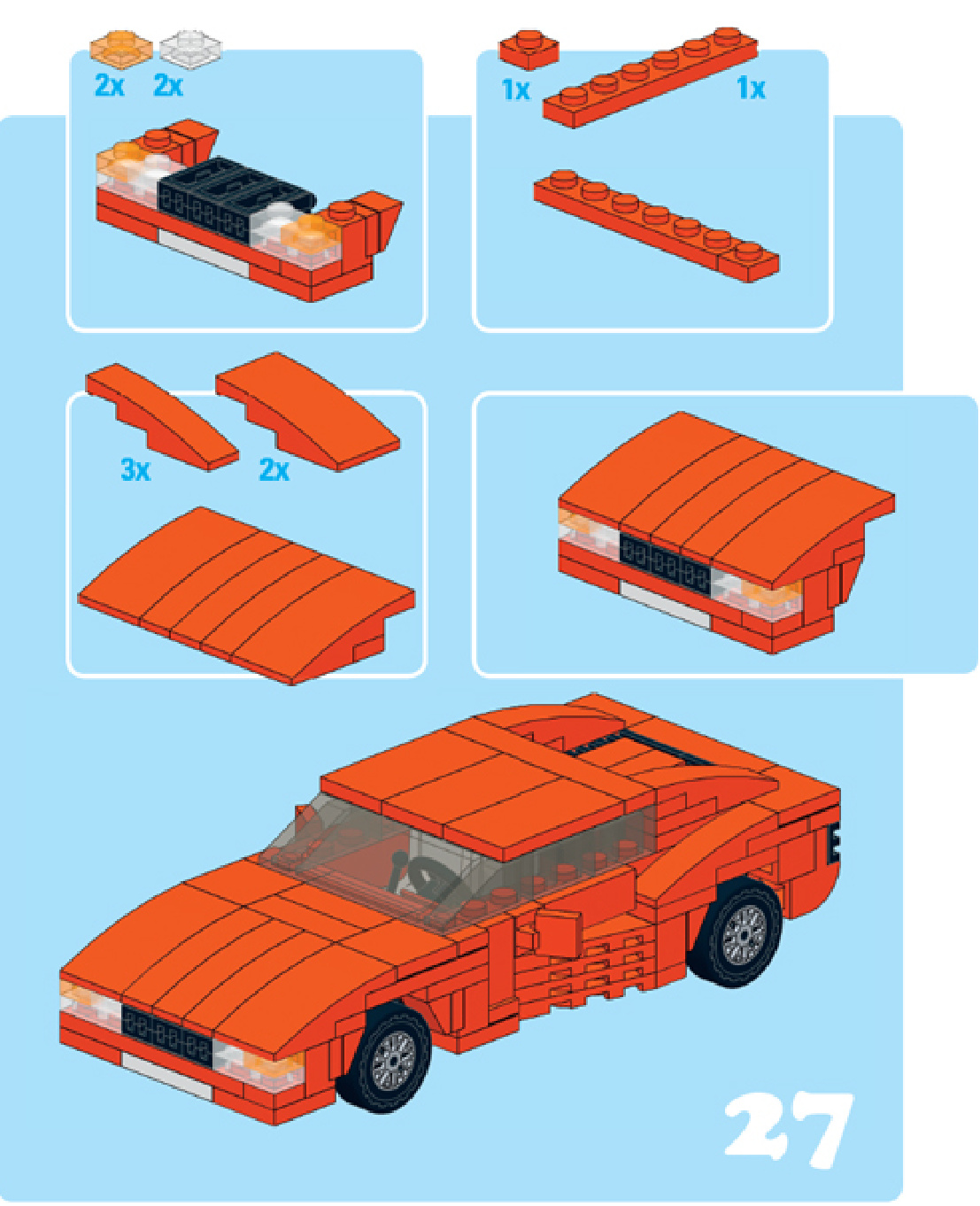
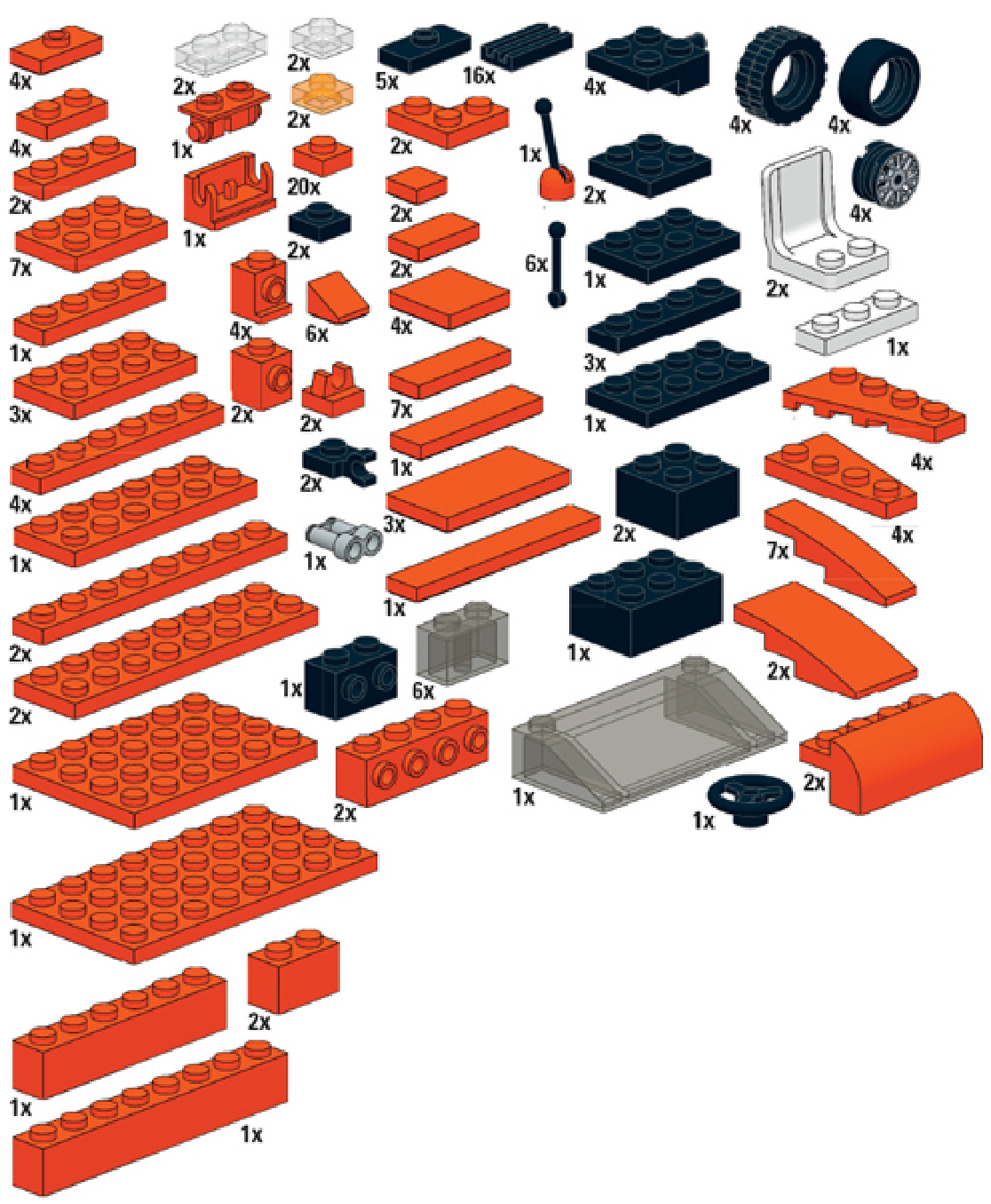
Parts List
Convertible
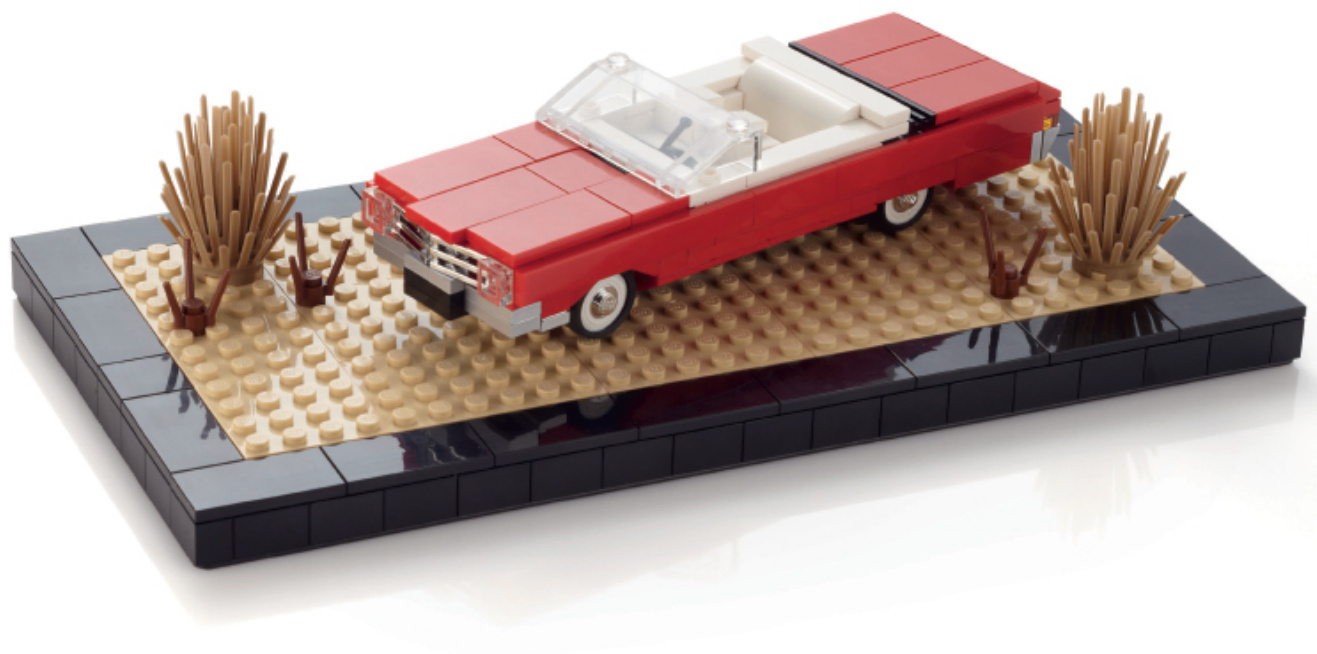
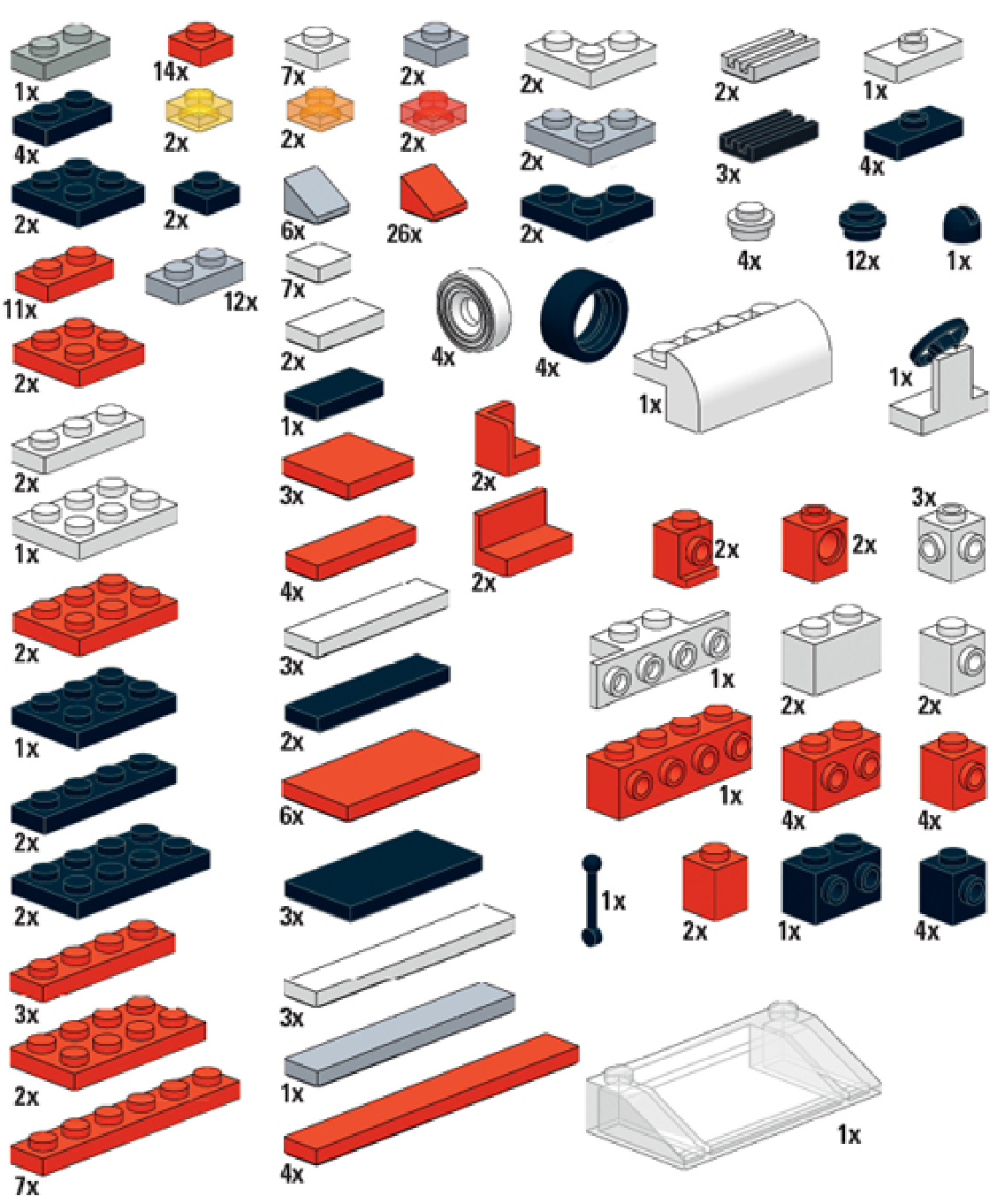
 Red with a white interior is best for this model, because it is easiest to collect all the necessary parts in these most senior colors - for example, the 2x4 tiles. The new dark gray and dark red also work quite well with the available parts. With other colors and parts, you might need different solutions; you might also prefer a different hood design or fenders - or a totally different convertible. You can find another variation at the end of this chapter as well.
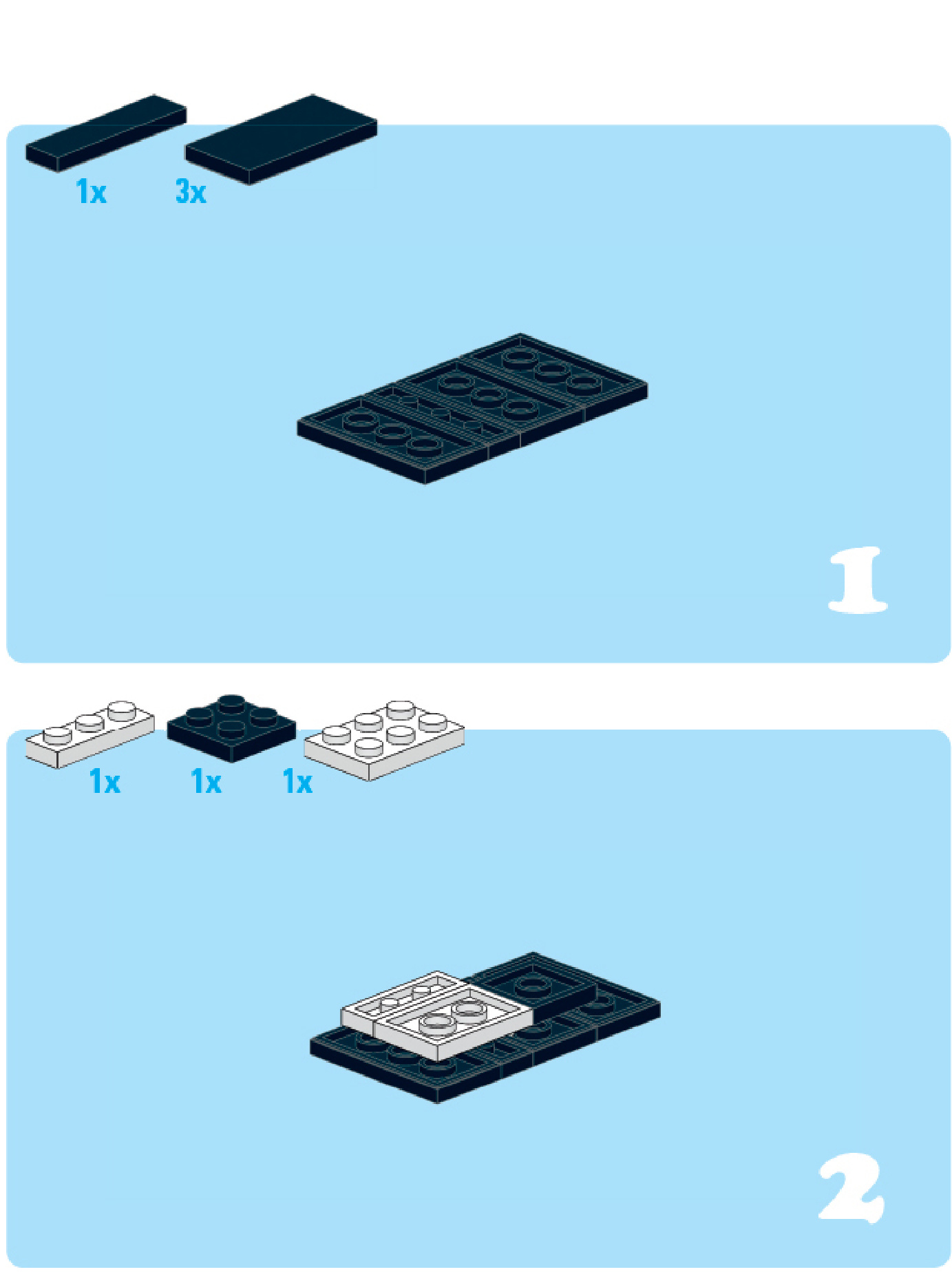
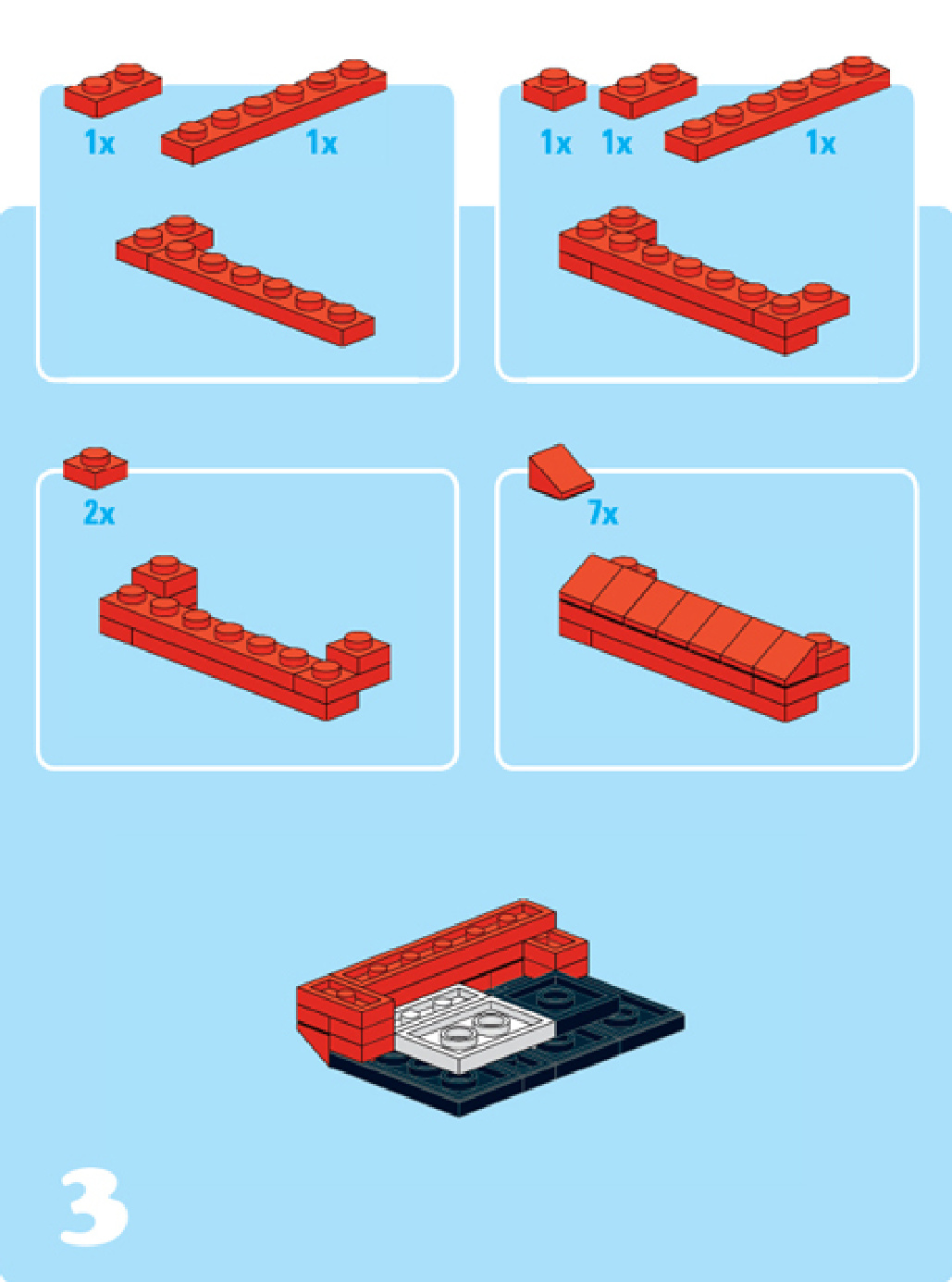
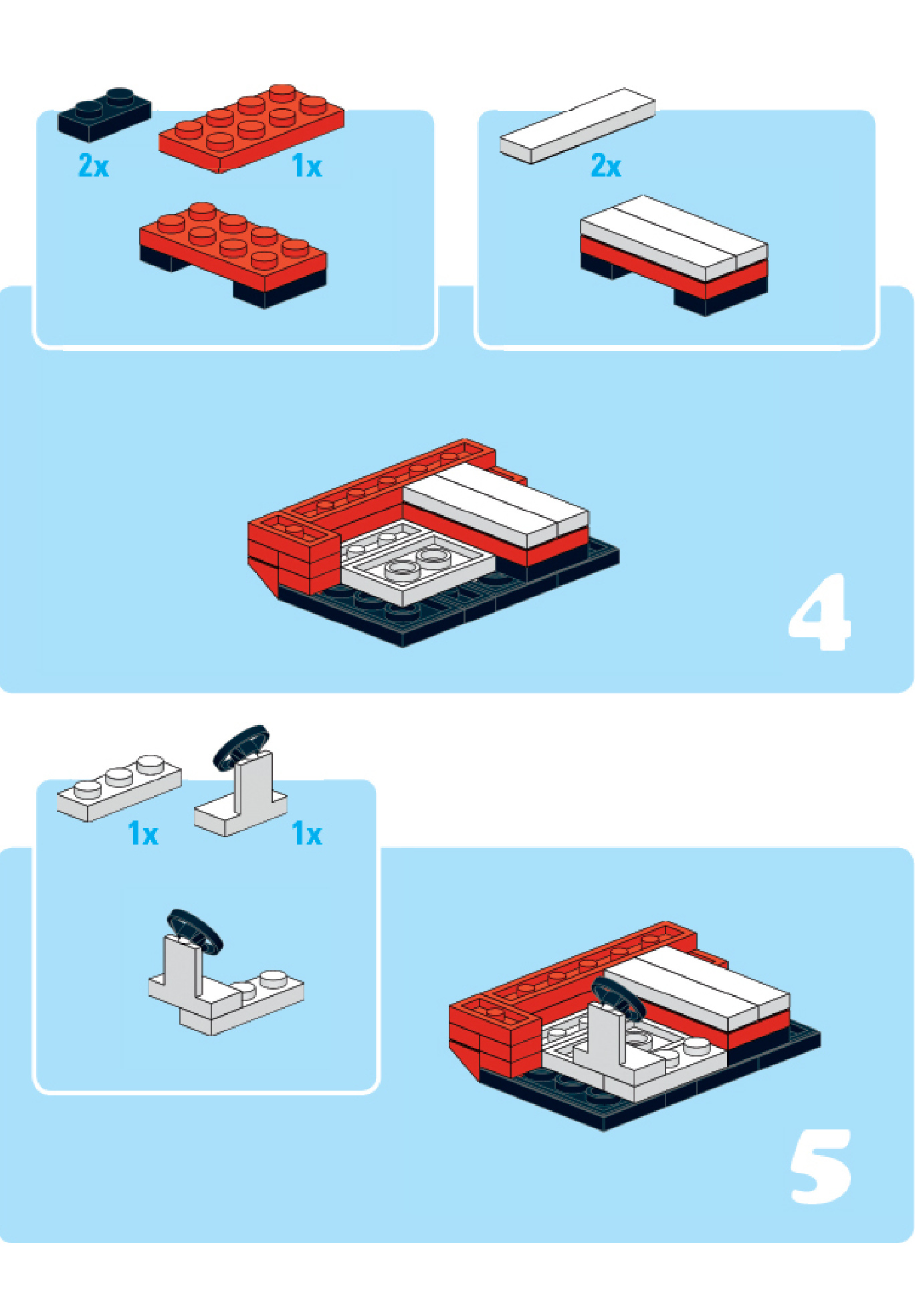
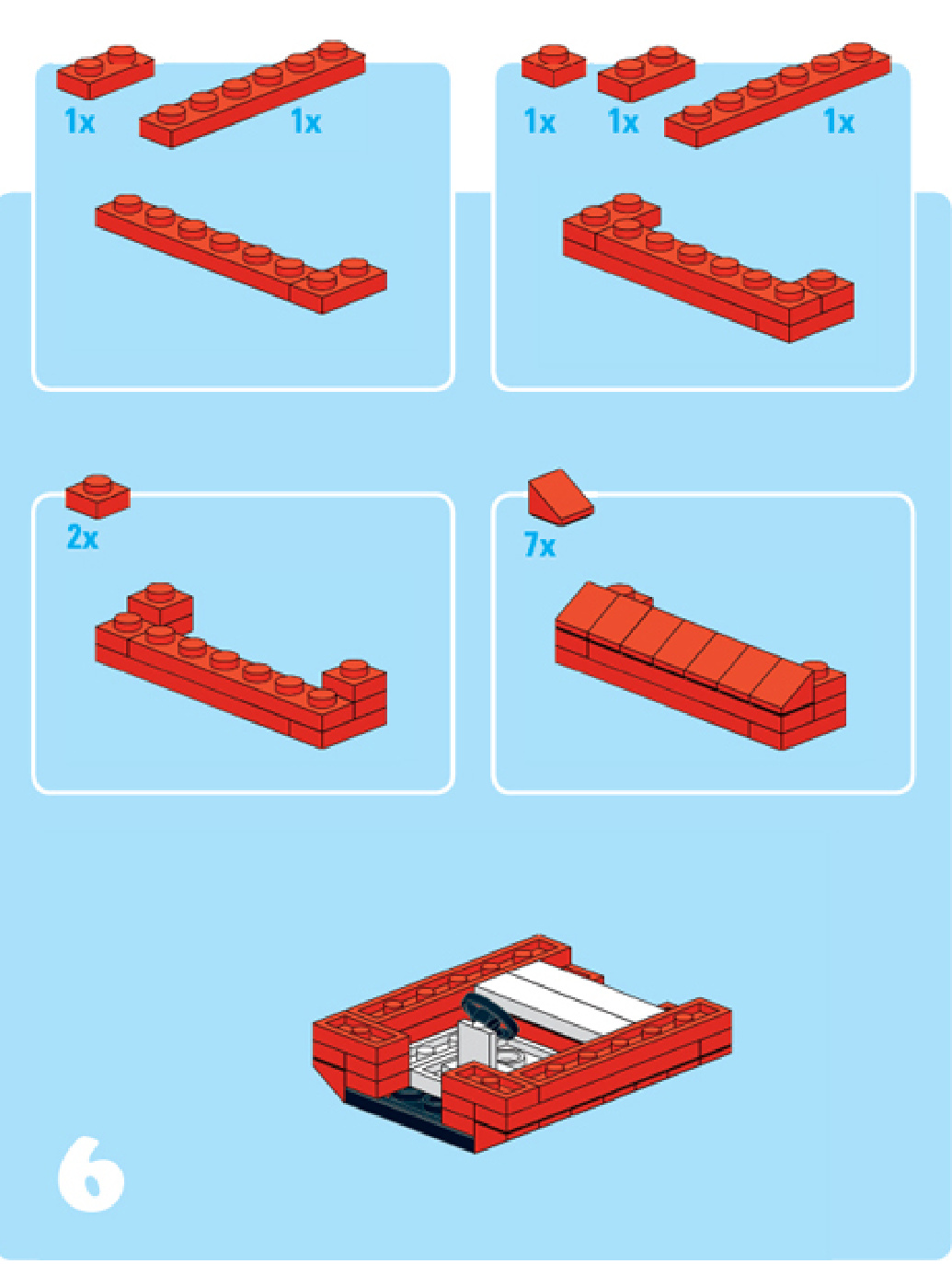
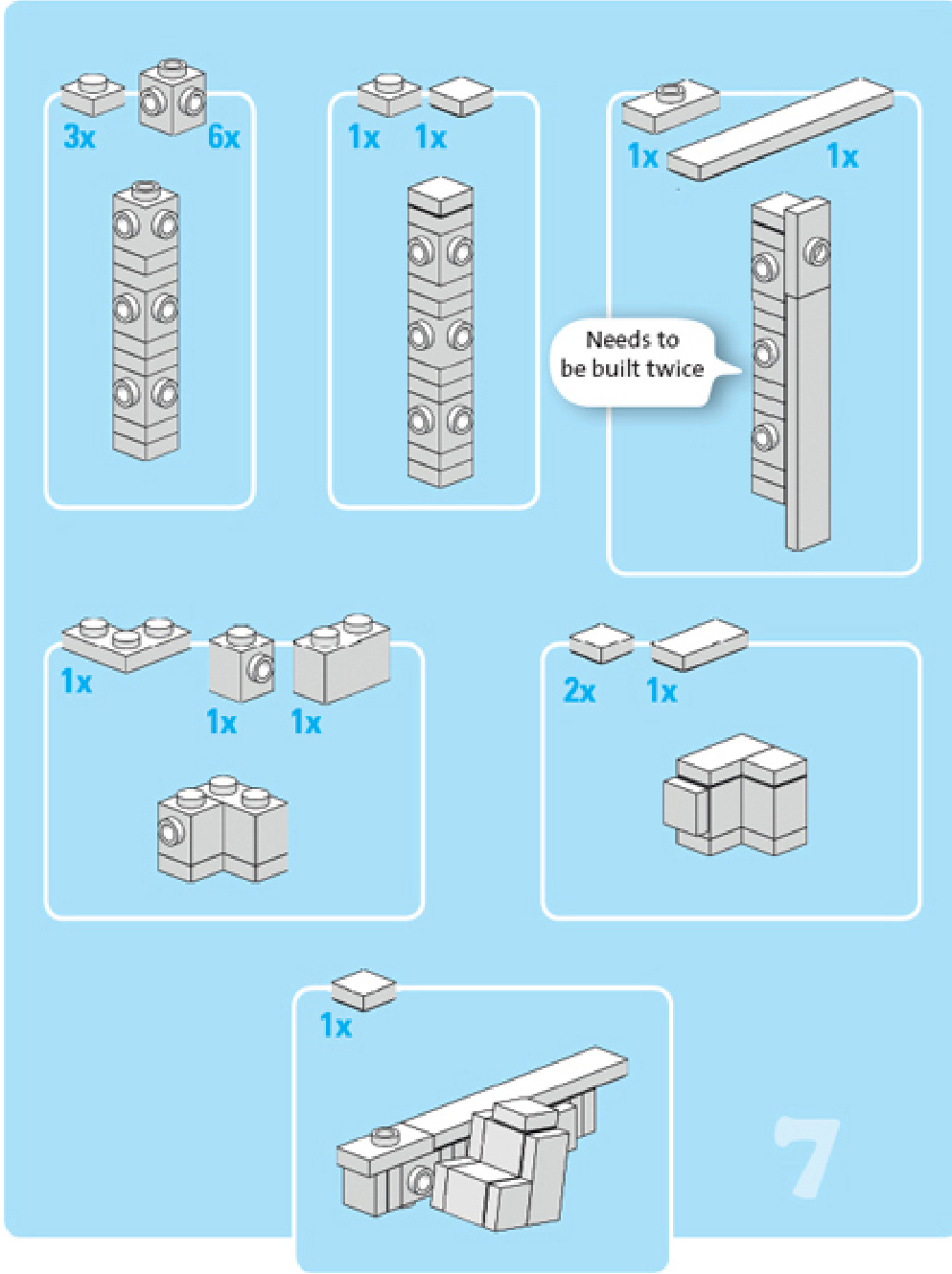
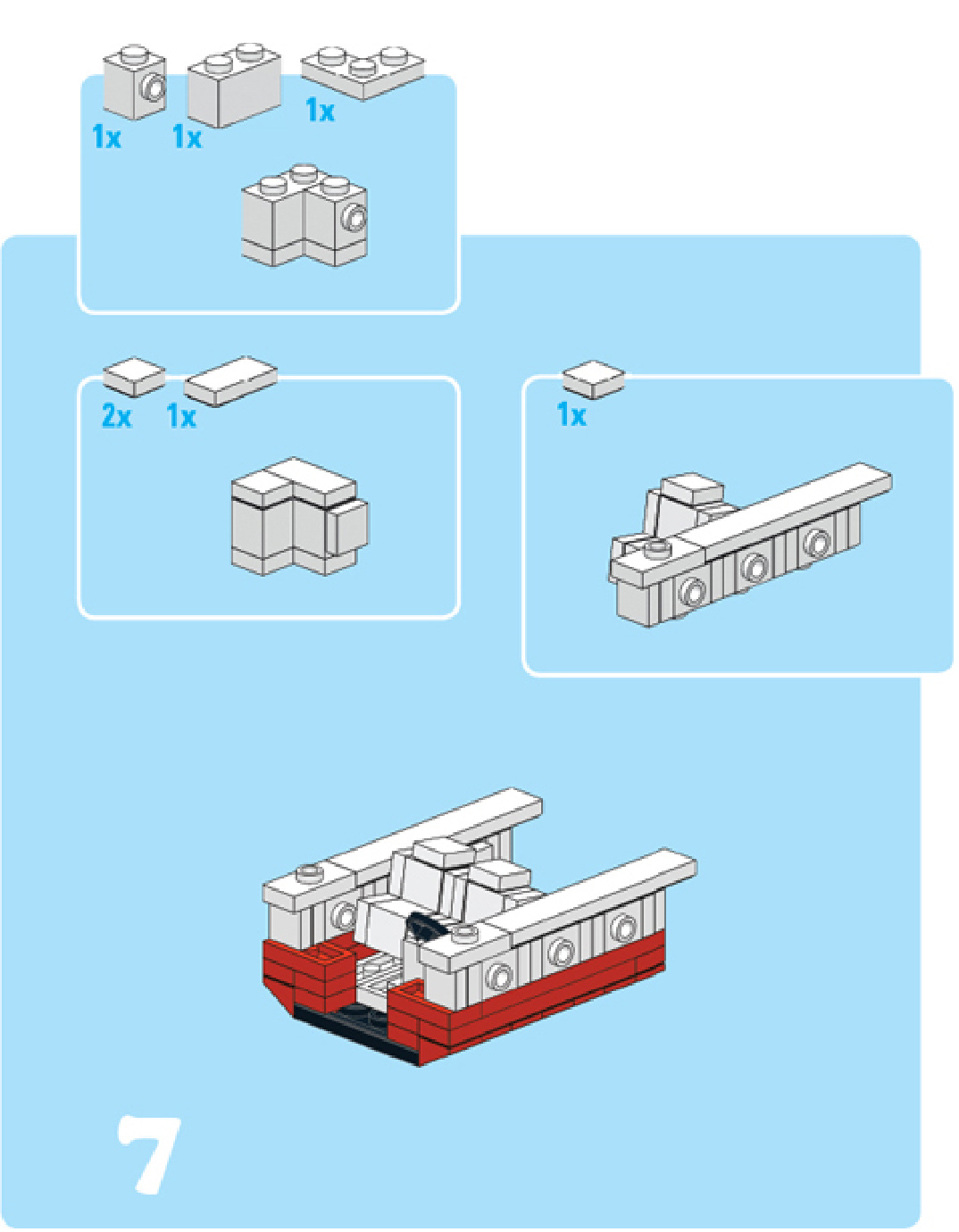
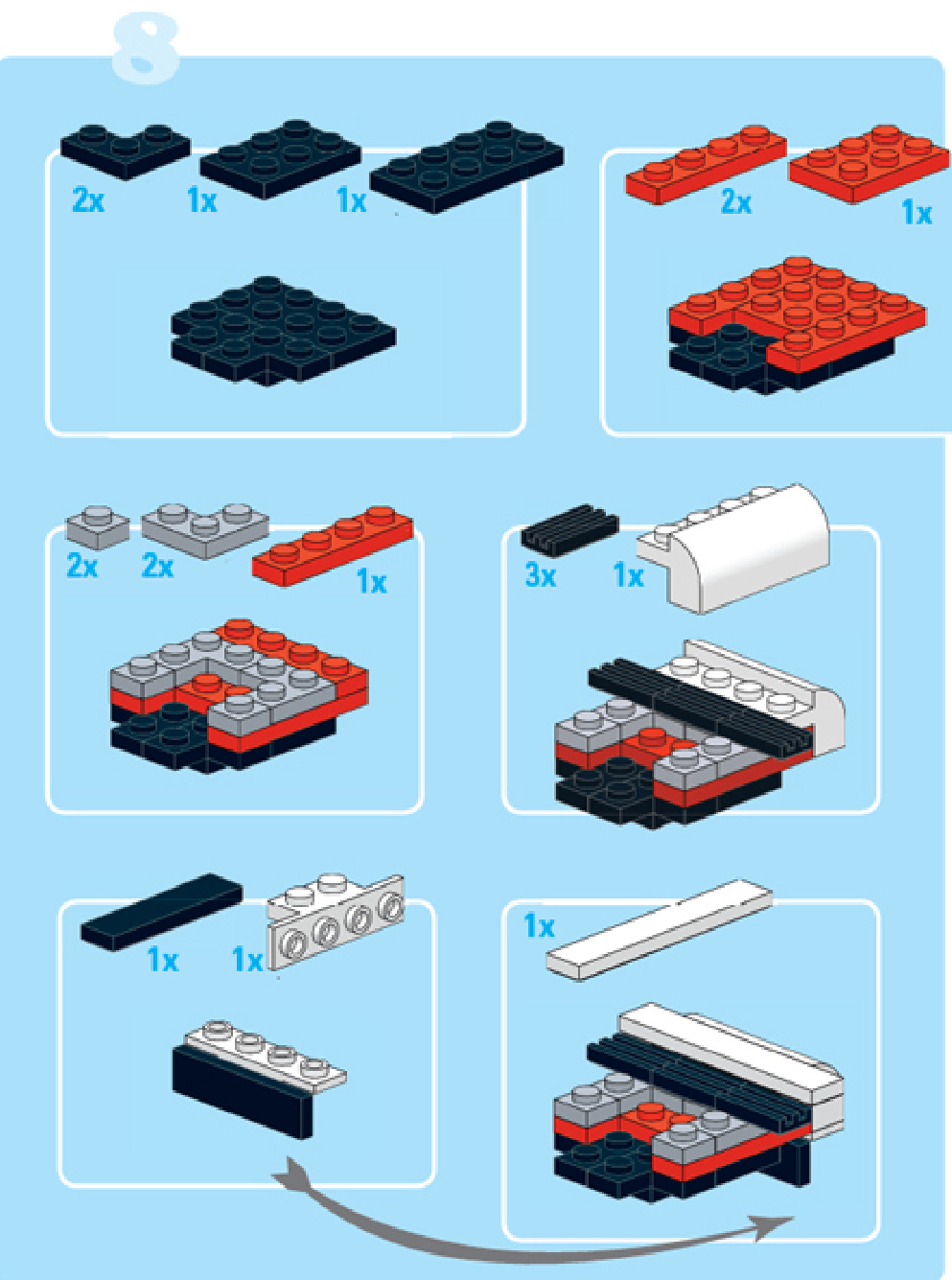
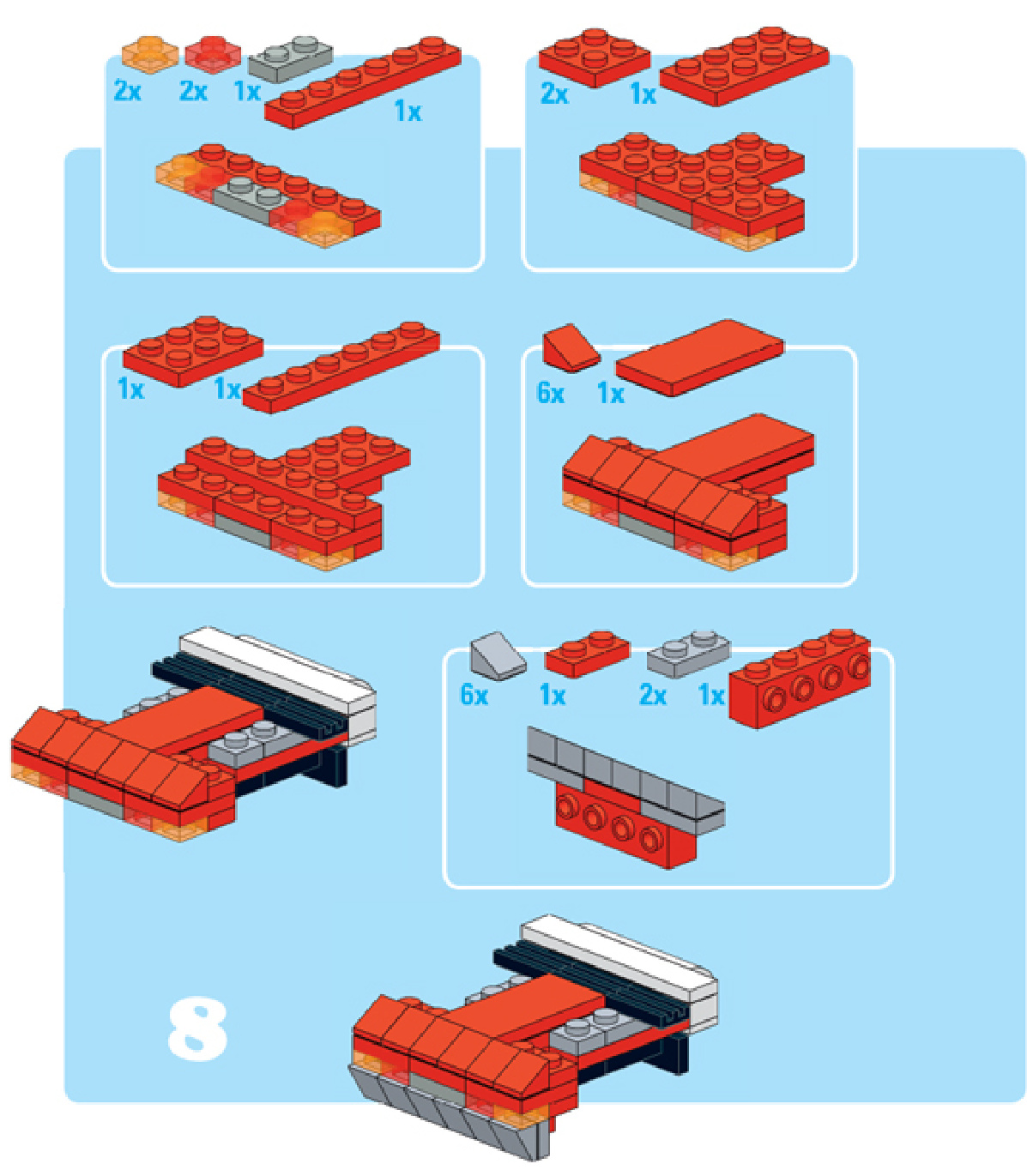
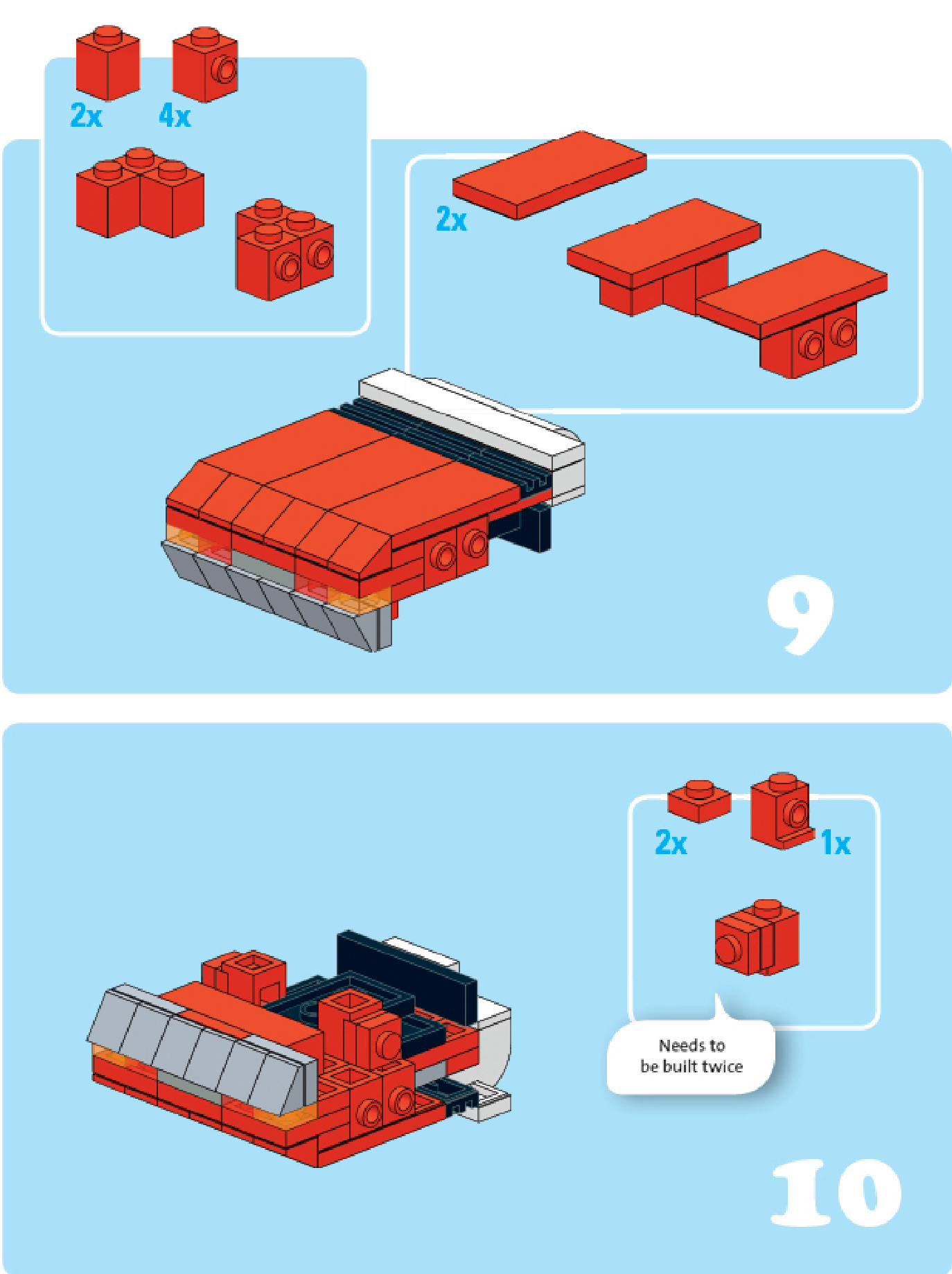
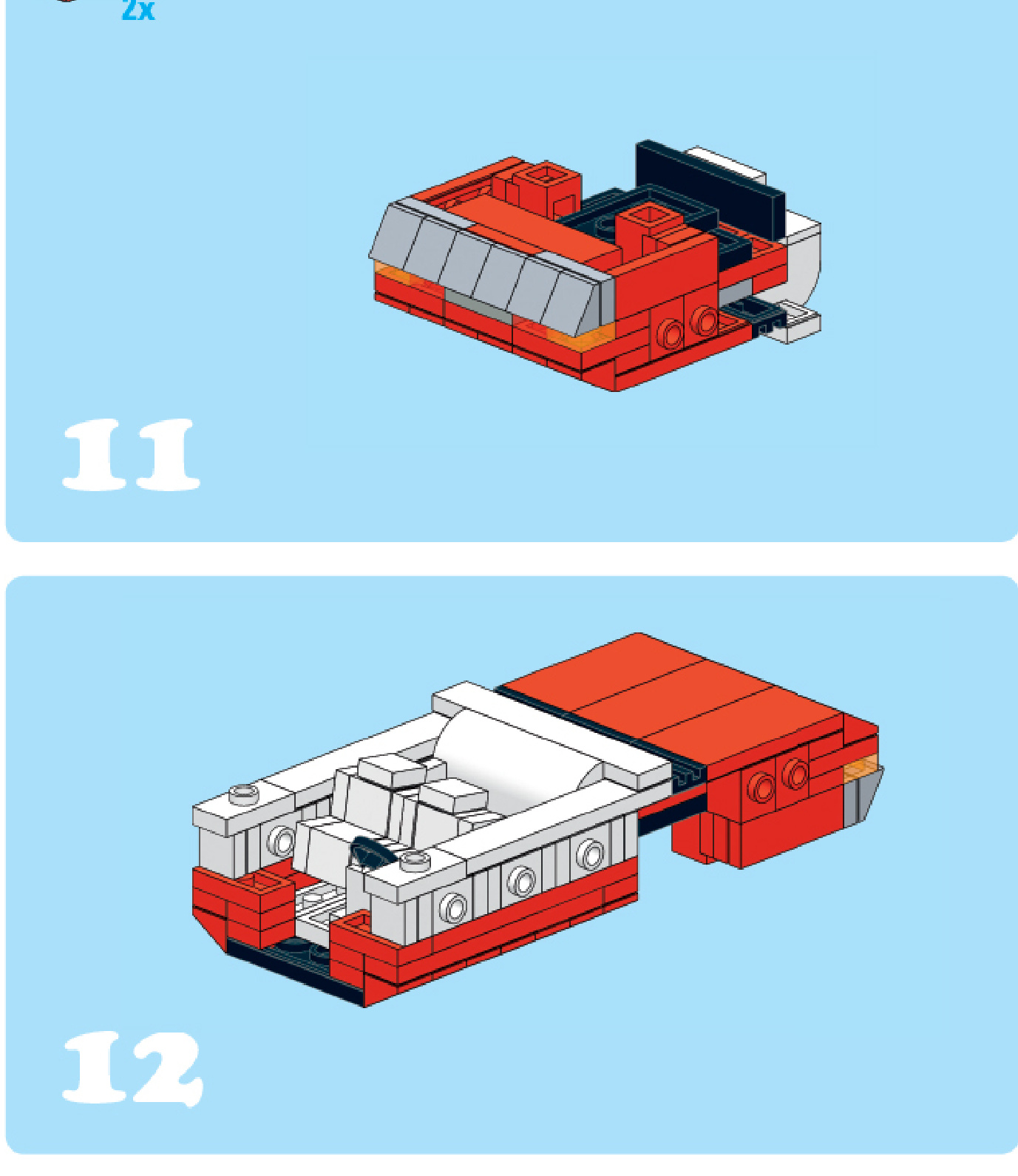
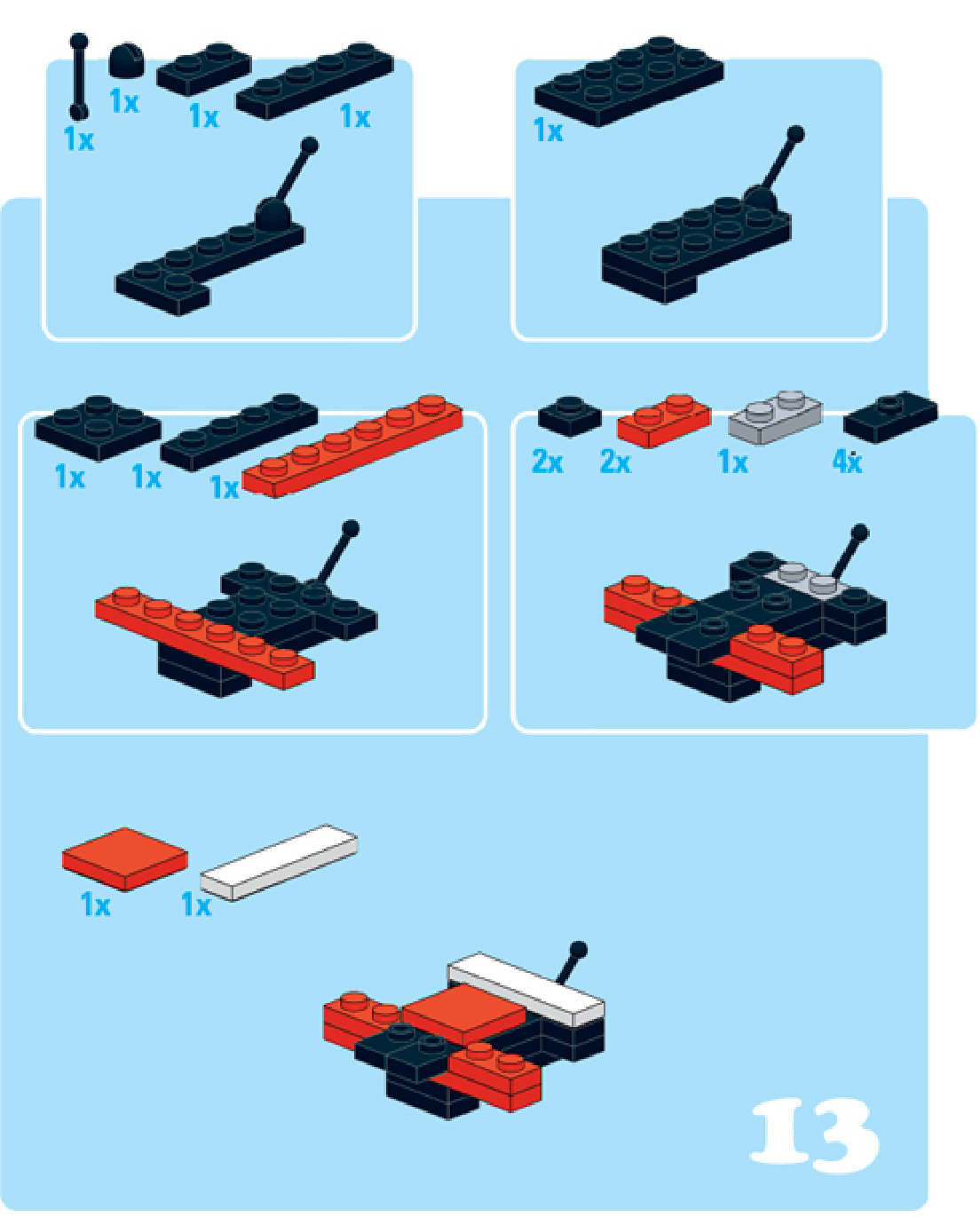
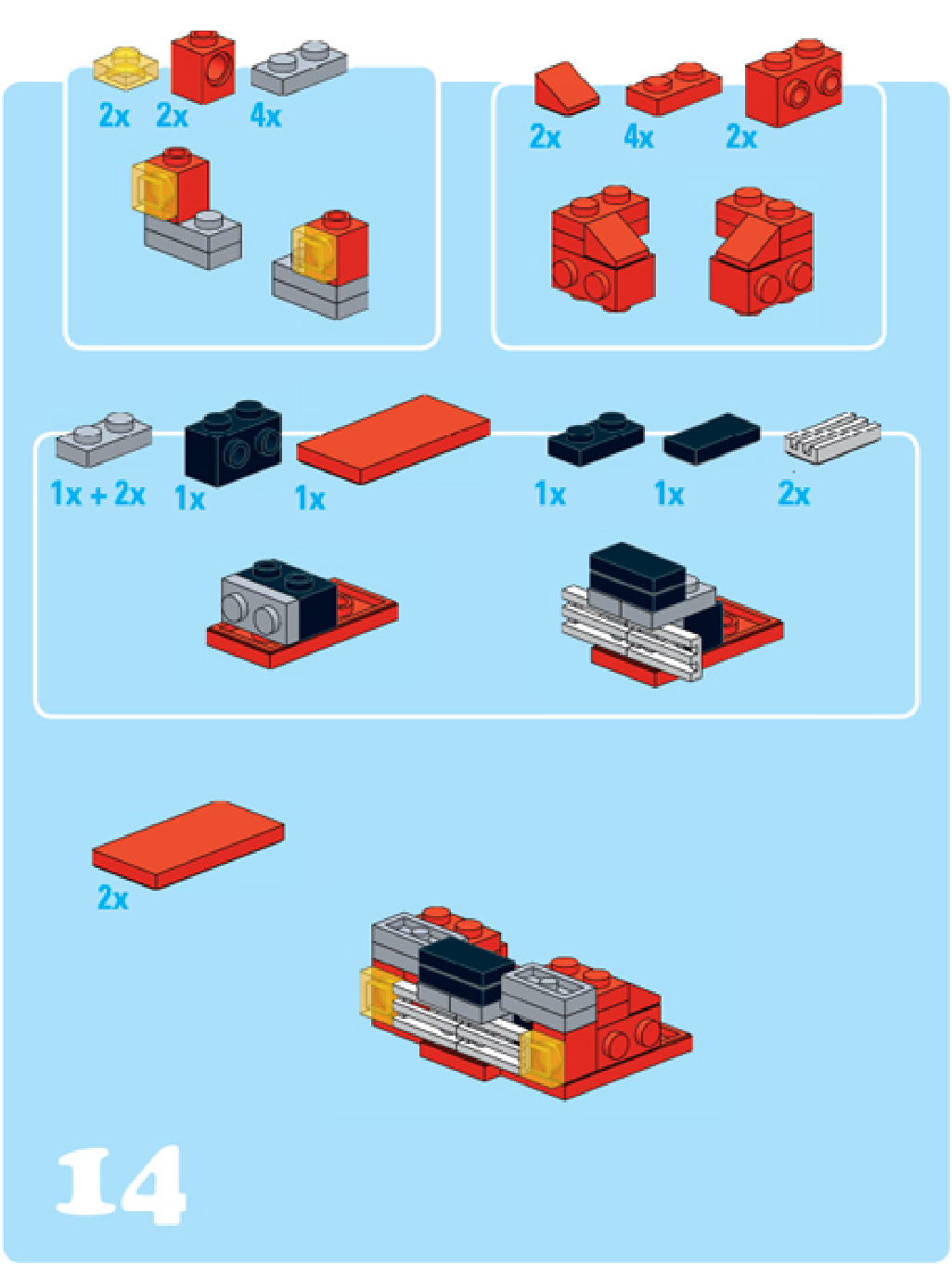
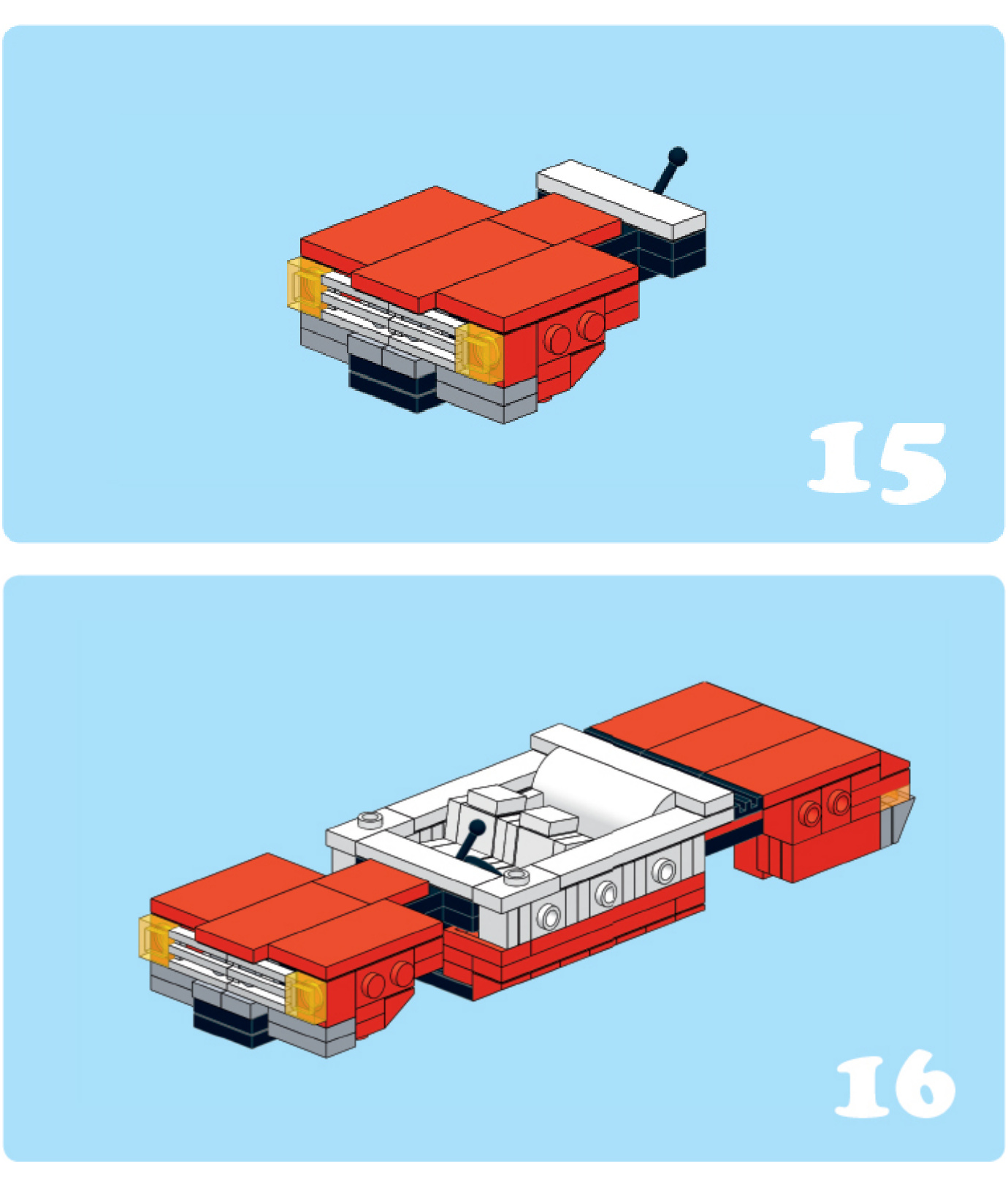
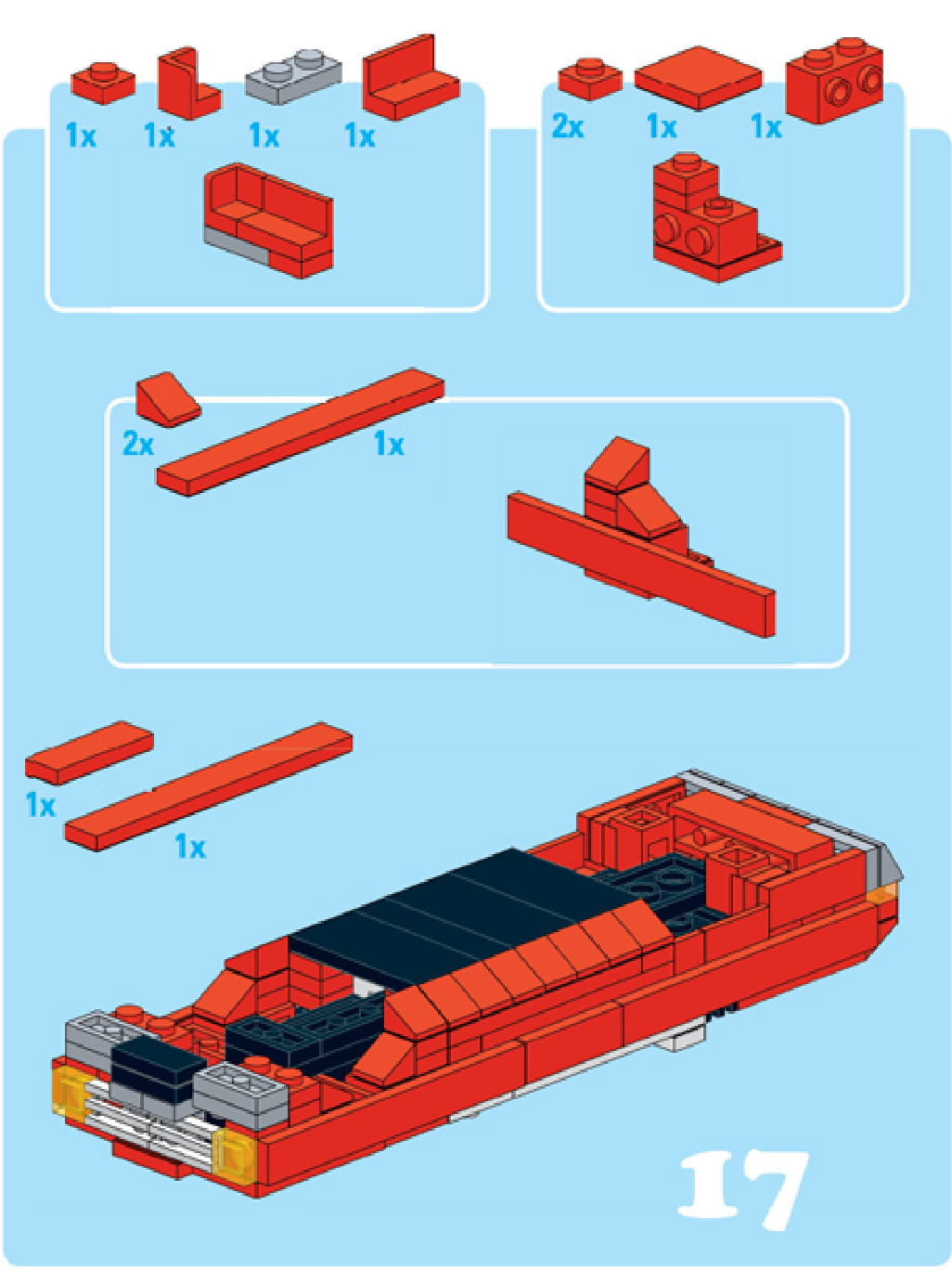
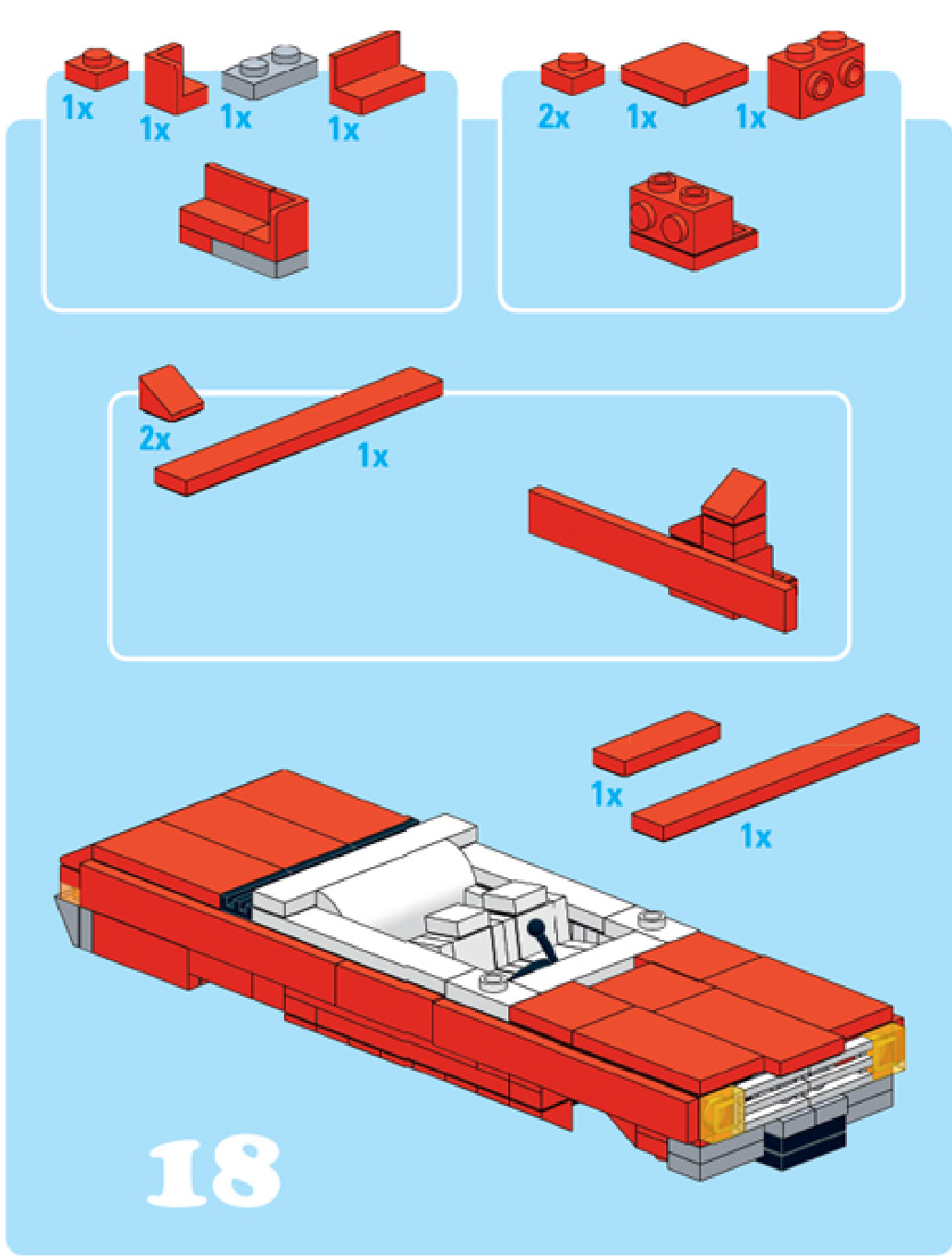
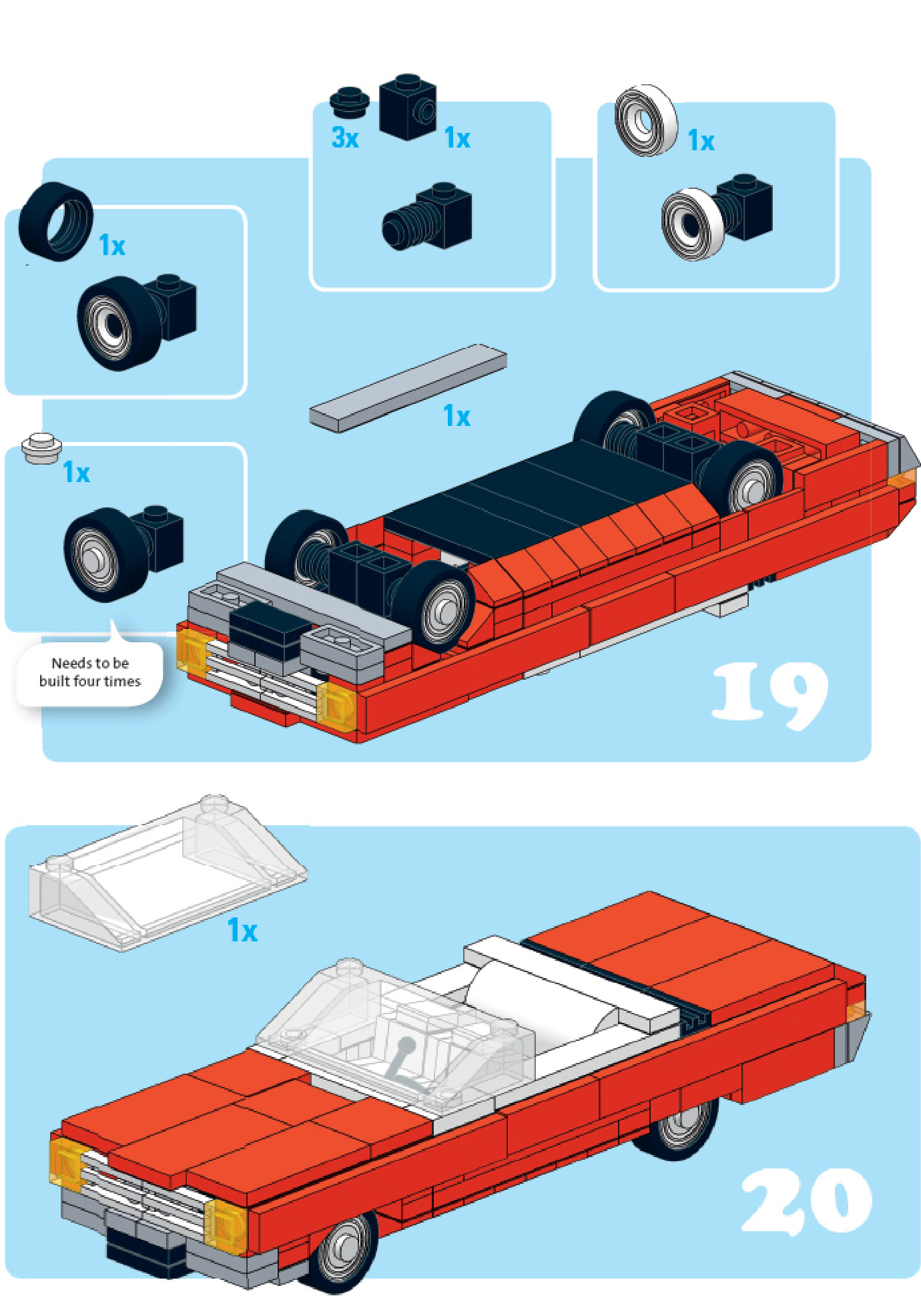
Parts List
Truck
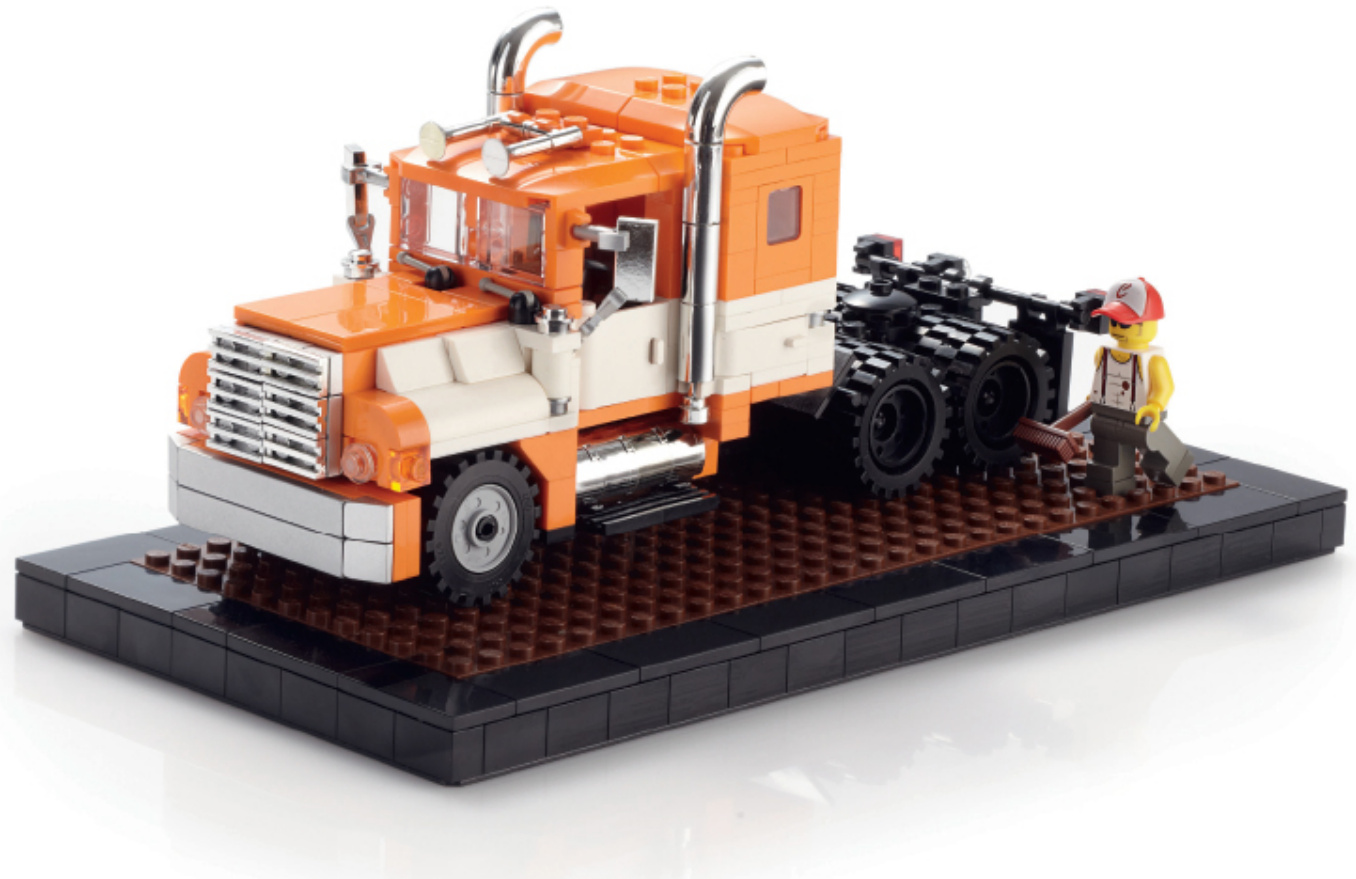
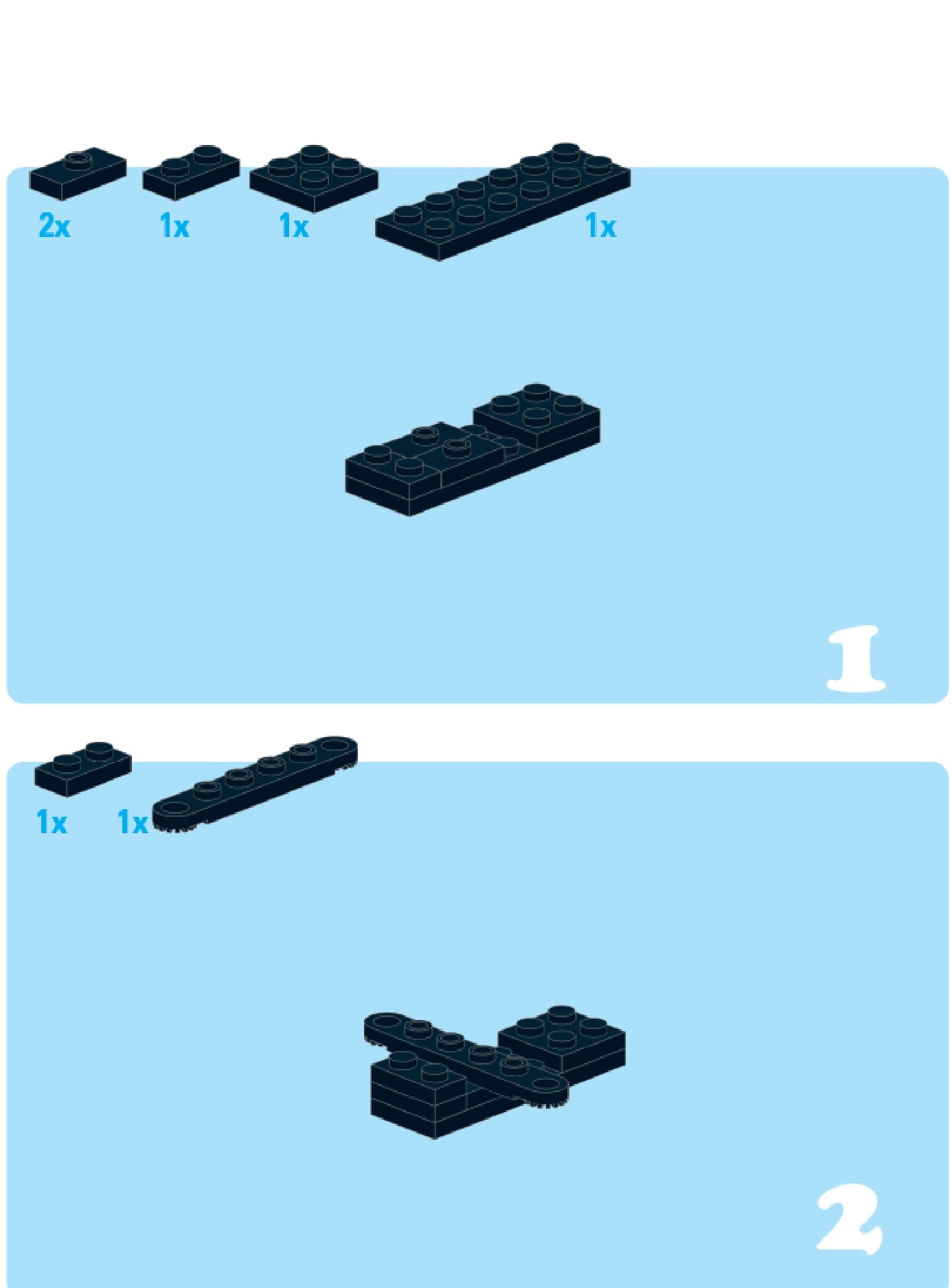
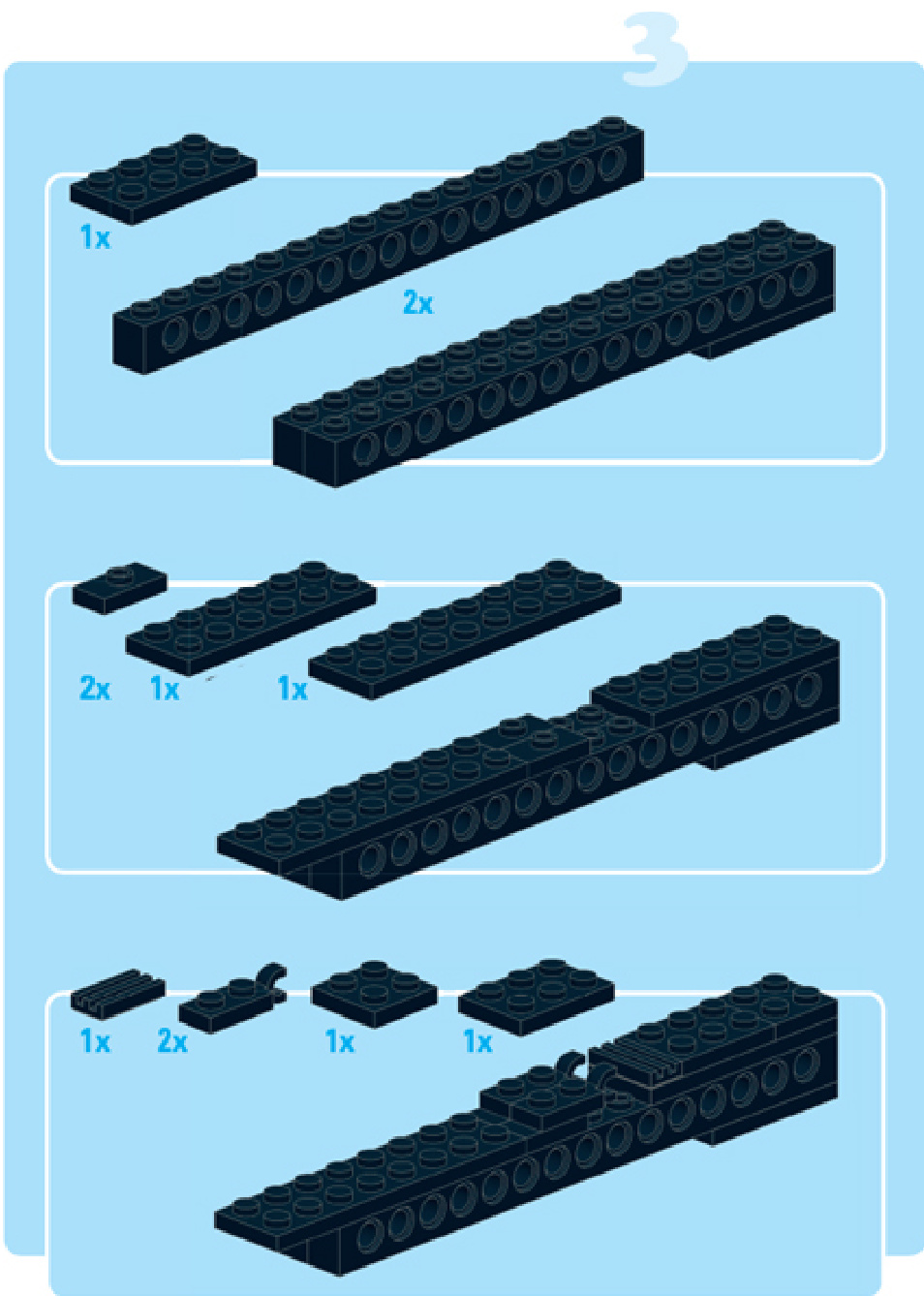
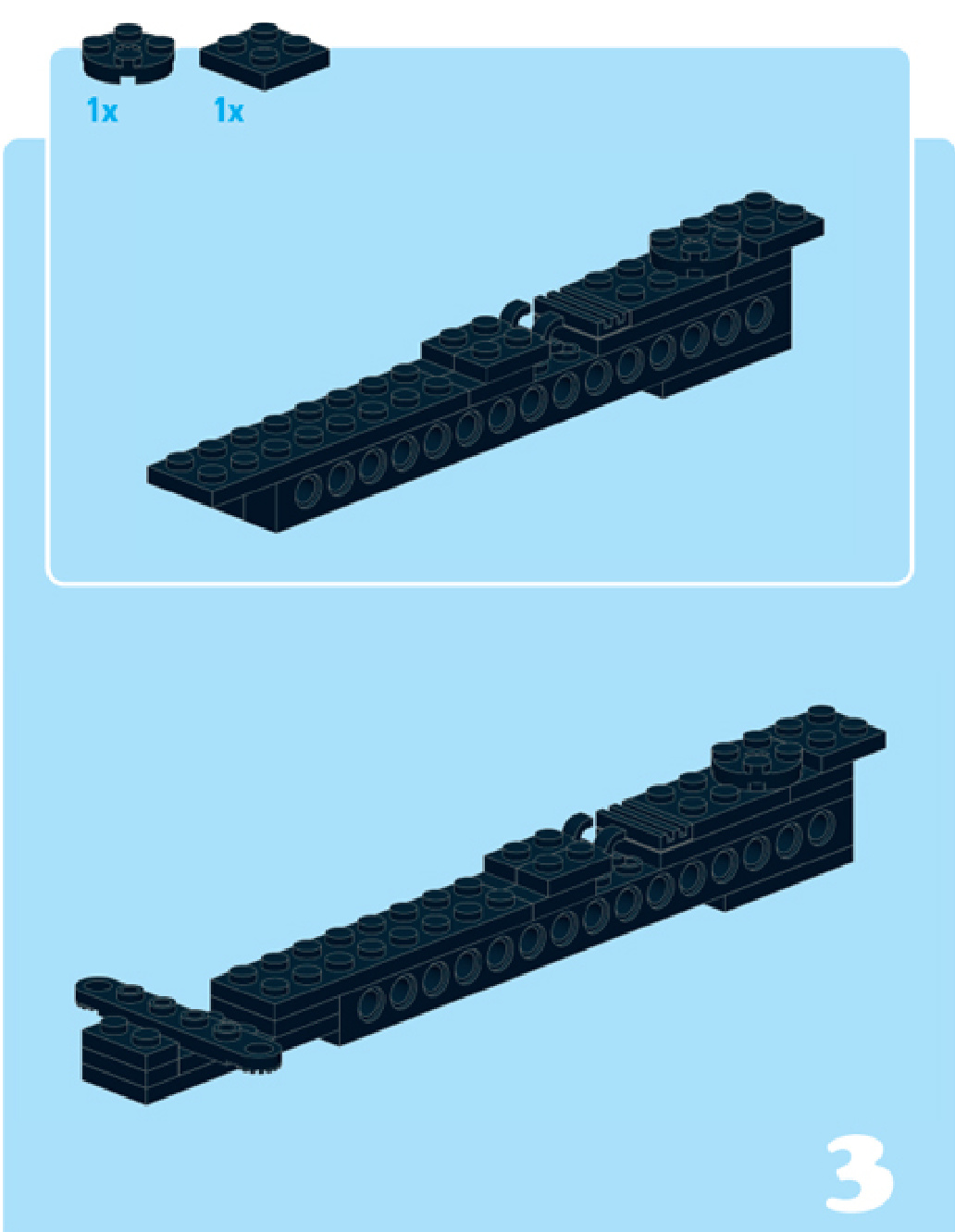
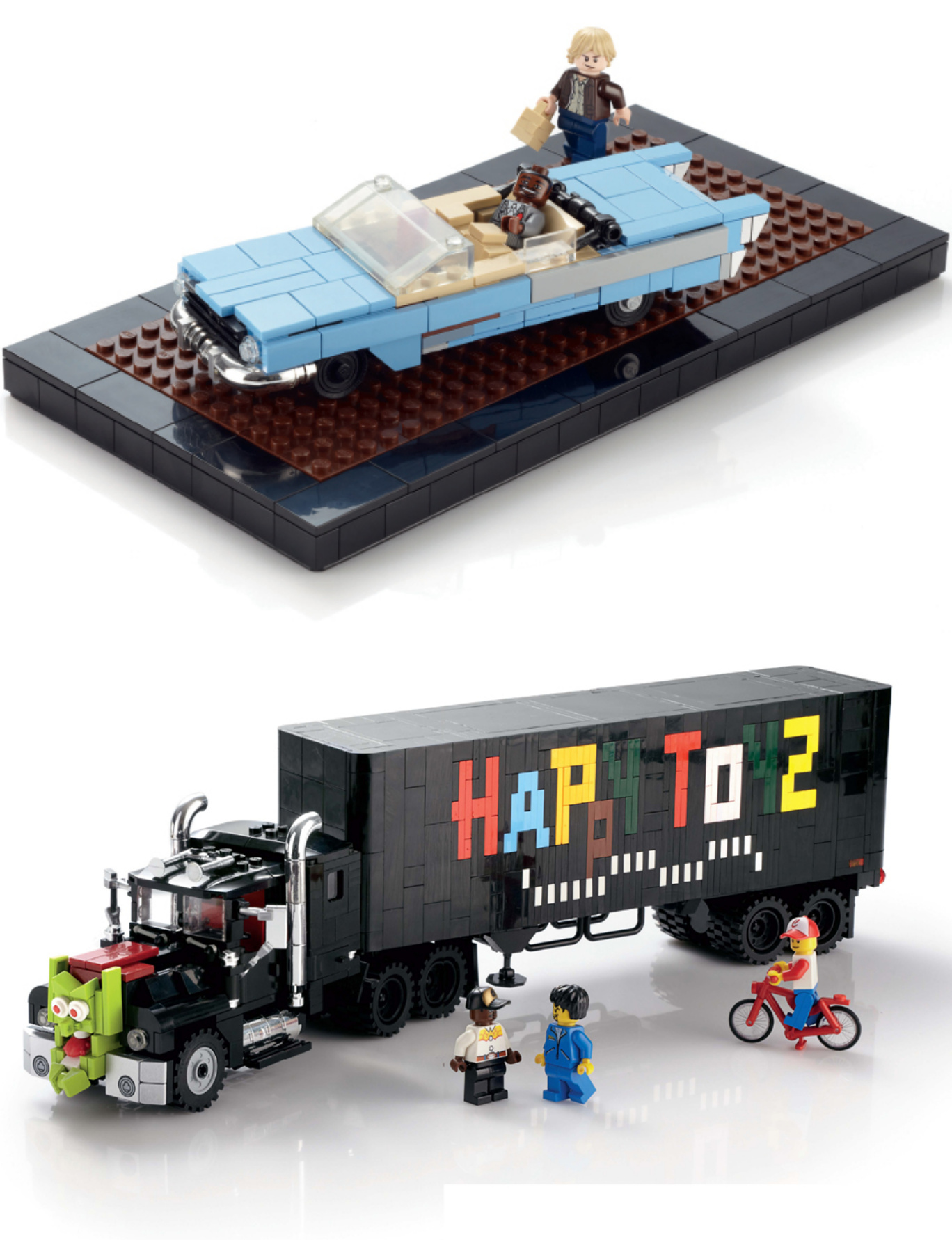 We were inspired by misterzumbi’s truck and also wanted to build one, but obviously a different model, in a different color and with its own approach. We definitely wanted to use chrome tanks with footboards and decided on robot arms for the mounting. The silver rearview mirrors are original elements, but as chrome gold is in its early stages, you can only get them via sources in the submarket. There are a lot of professionally chrome-plated parts in circulation indeed, but it is our aspiration to use solely original parts. By the way - we used a Scala beetle as the goblin tongue for the truck variation on the previous page of this chapter.
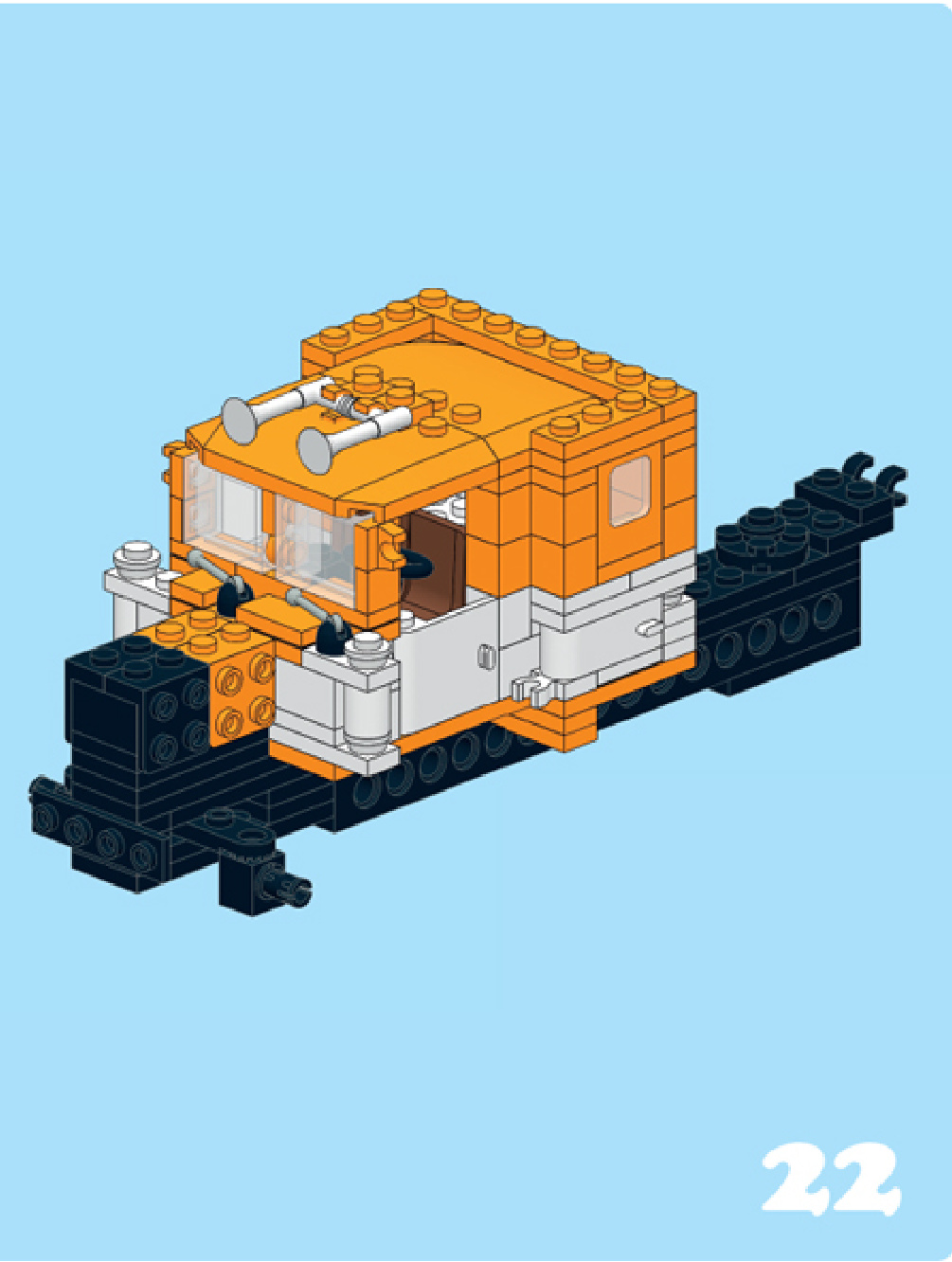
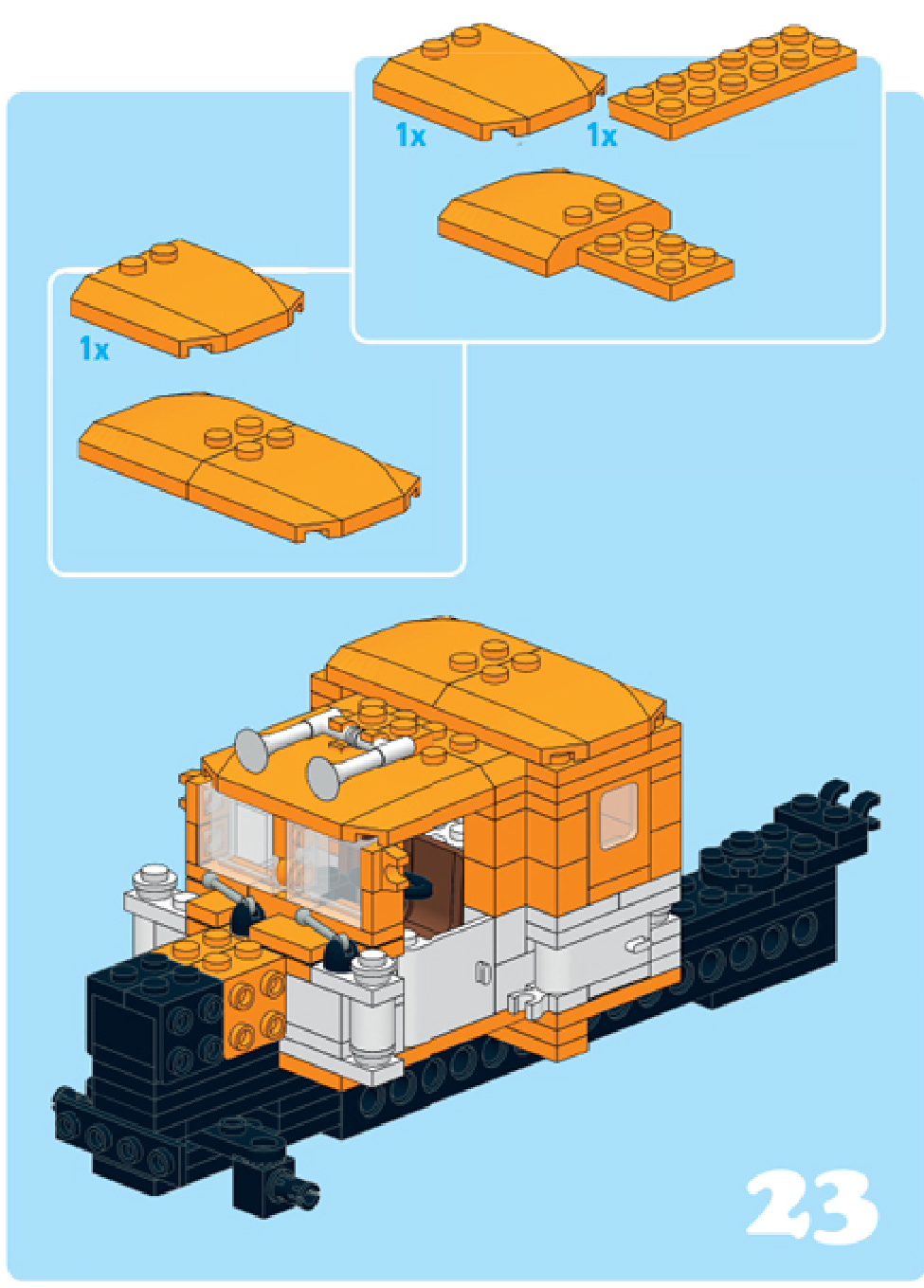
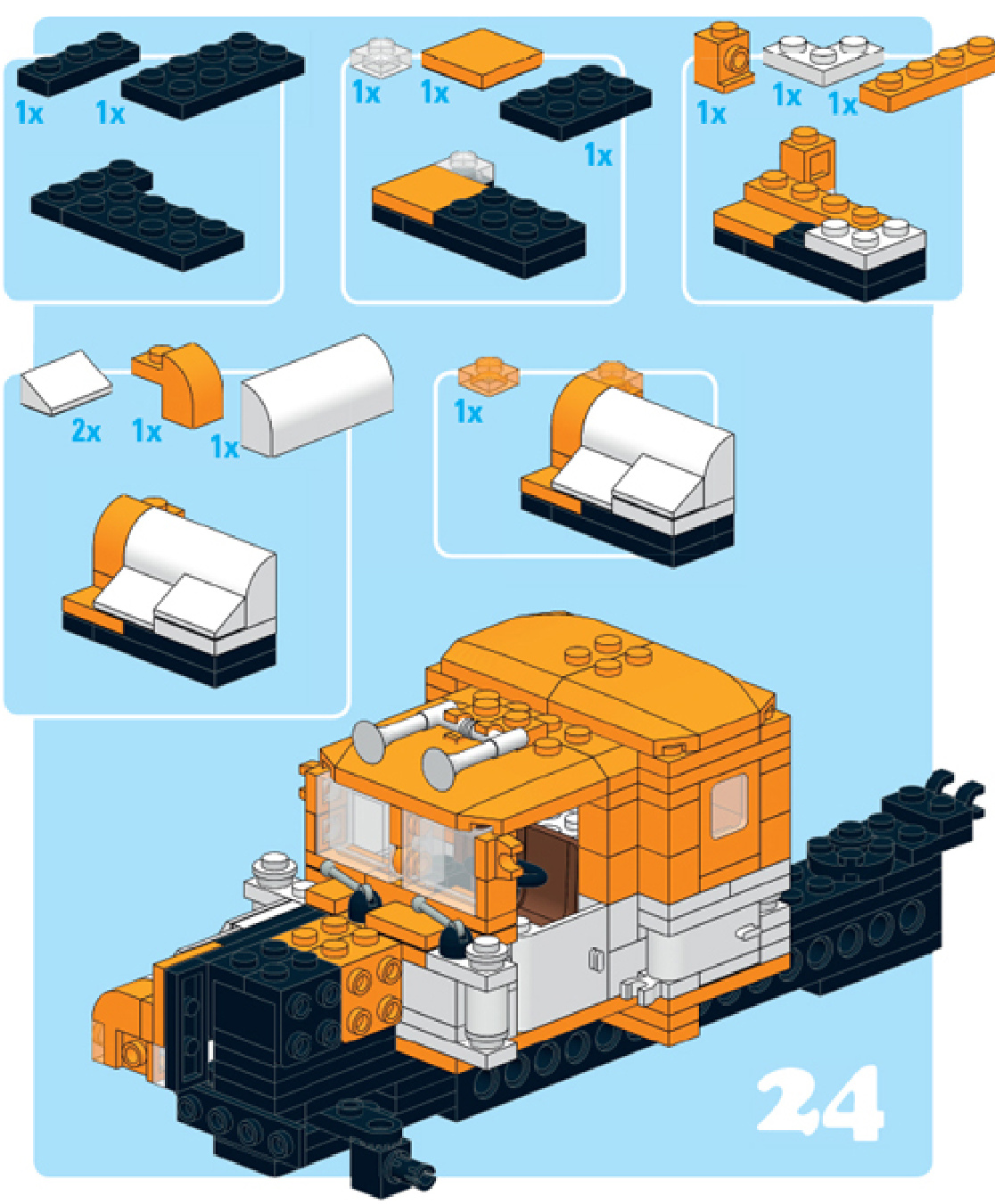
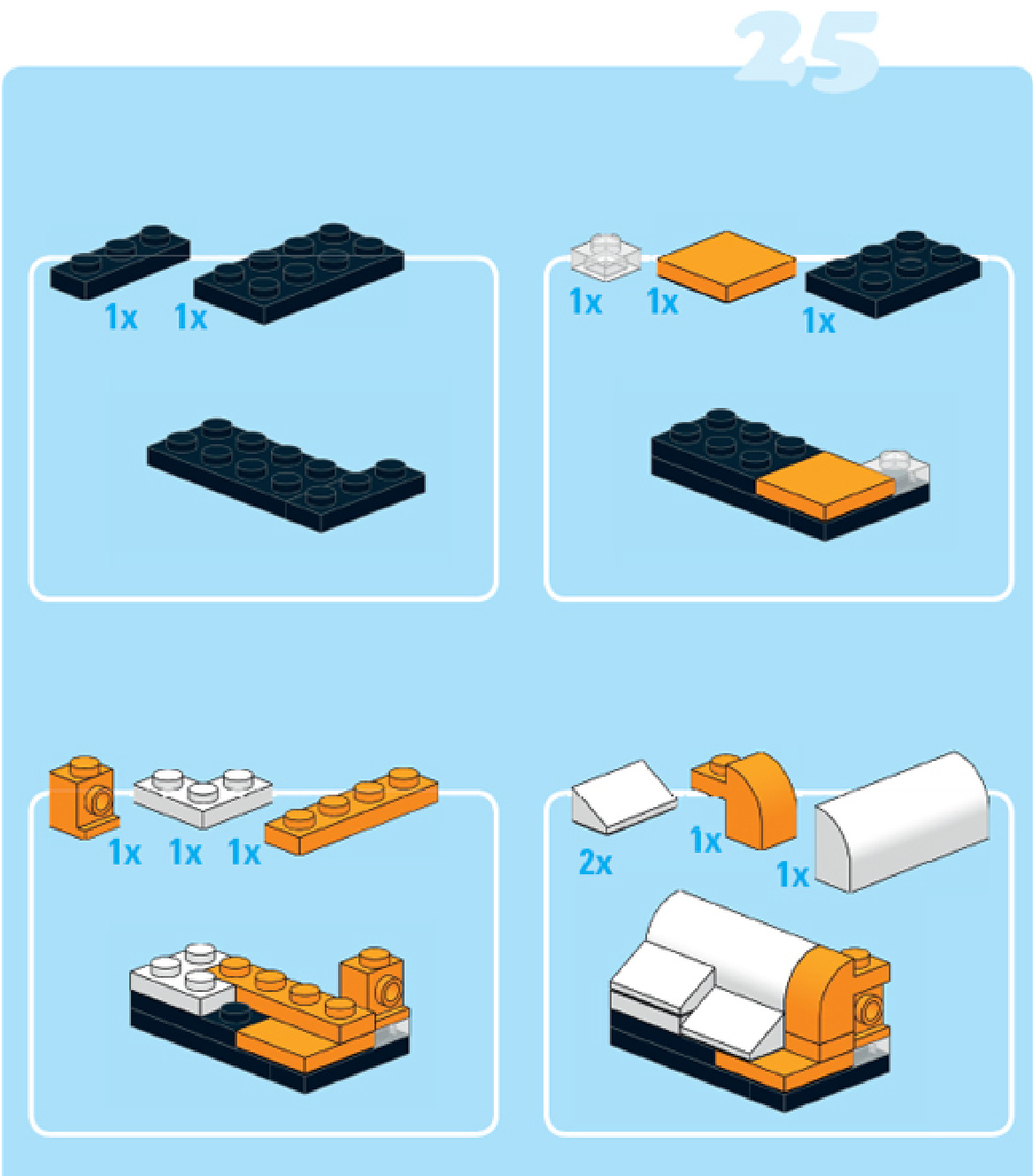
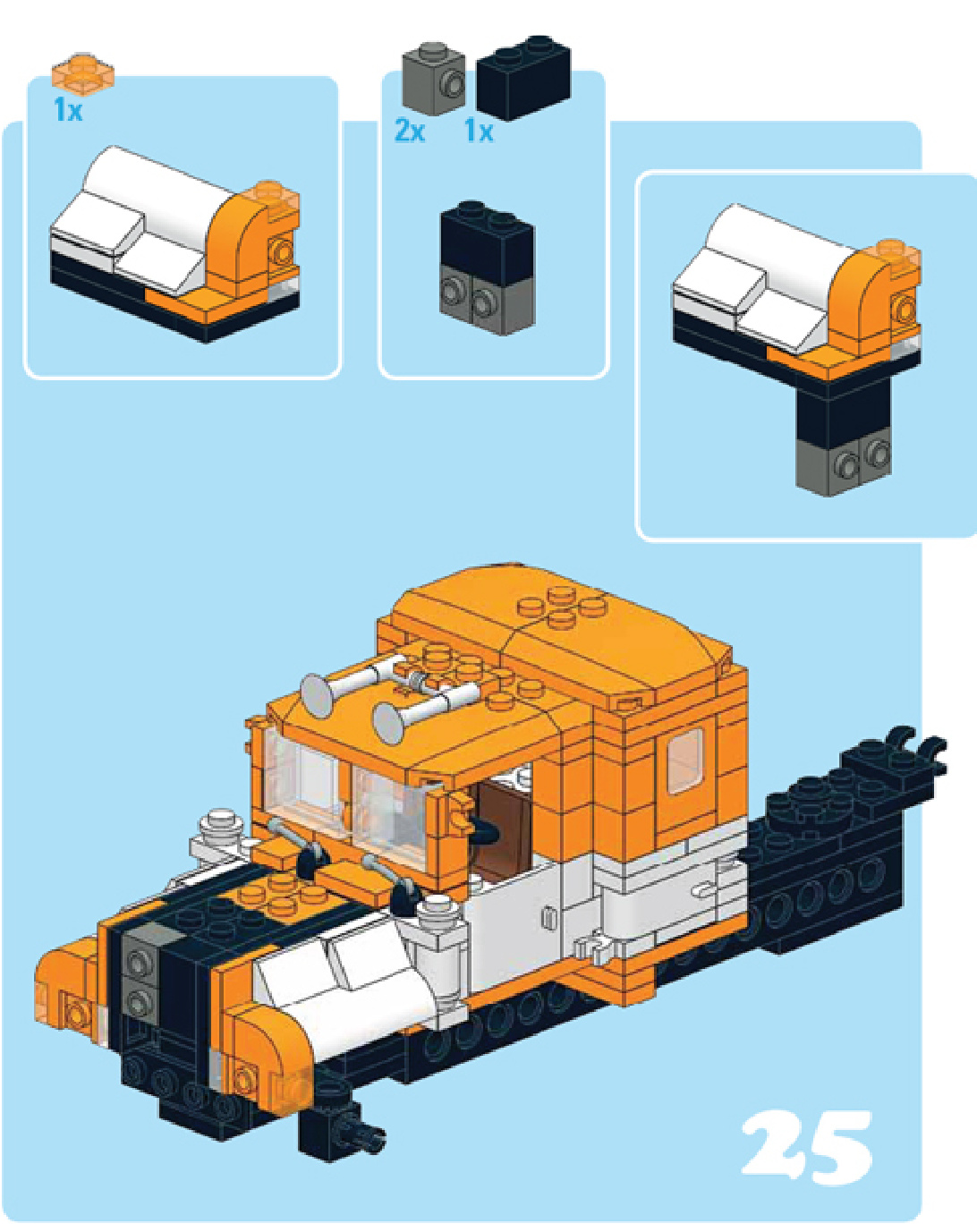
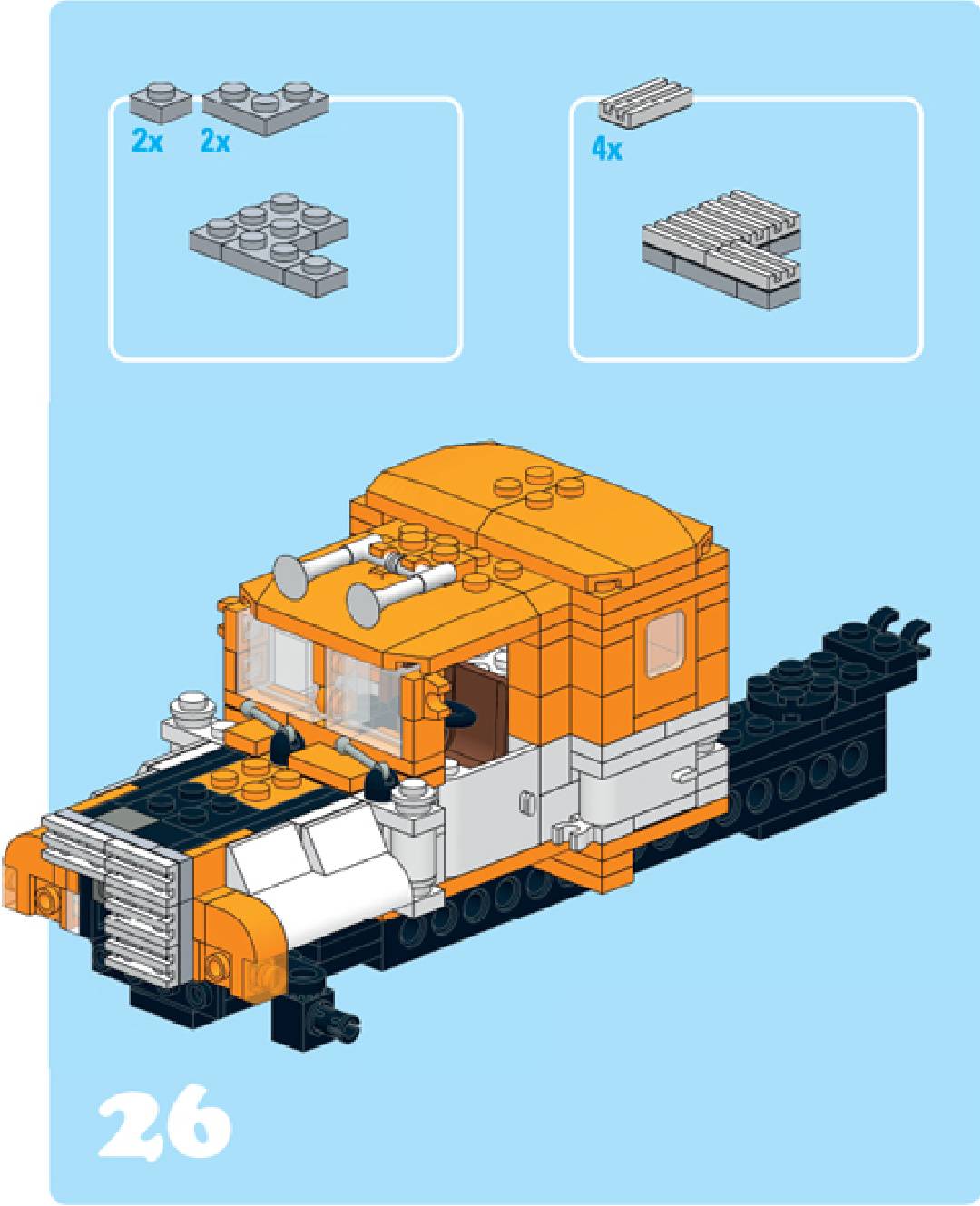
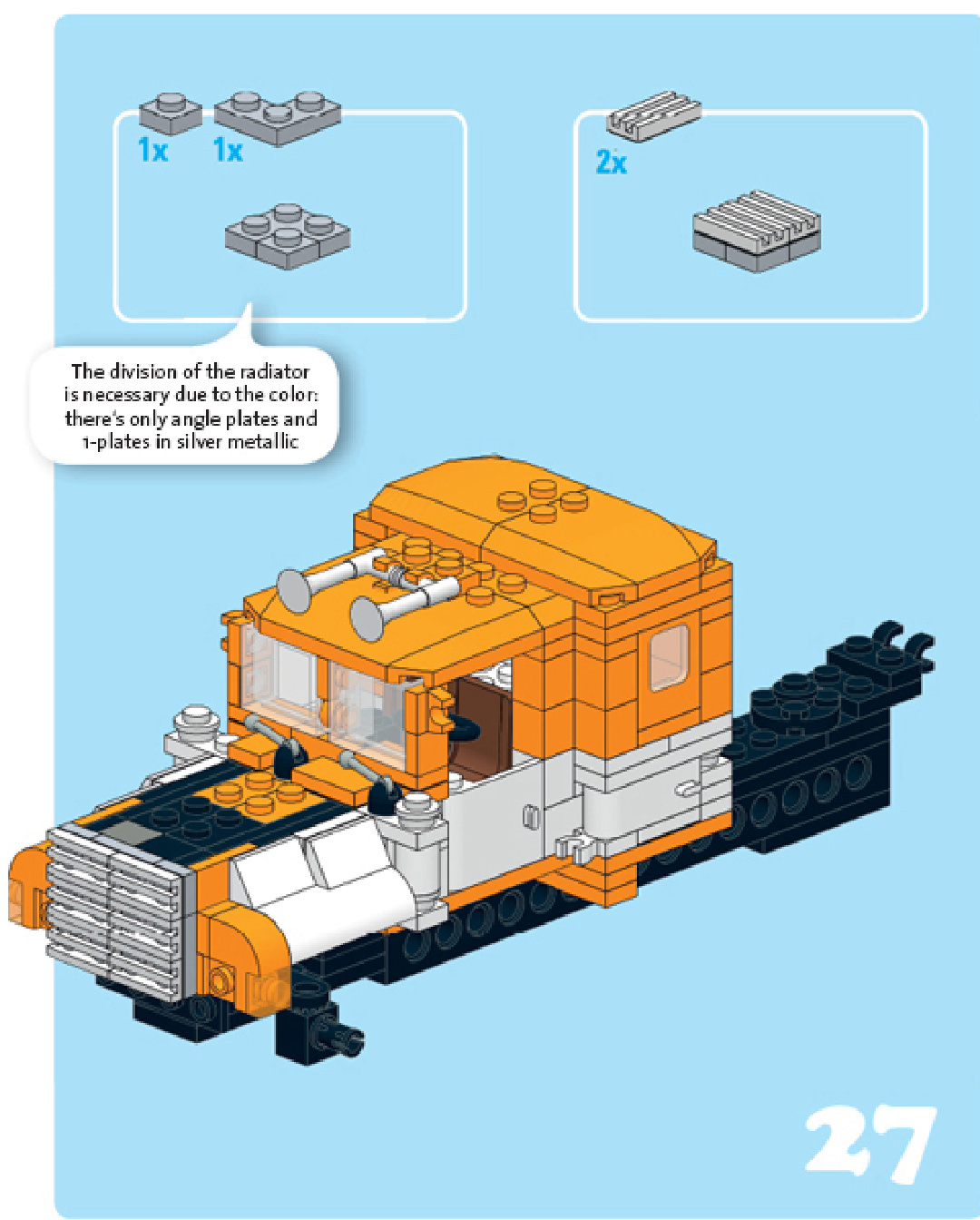
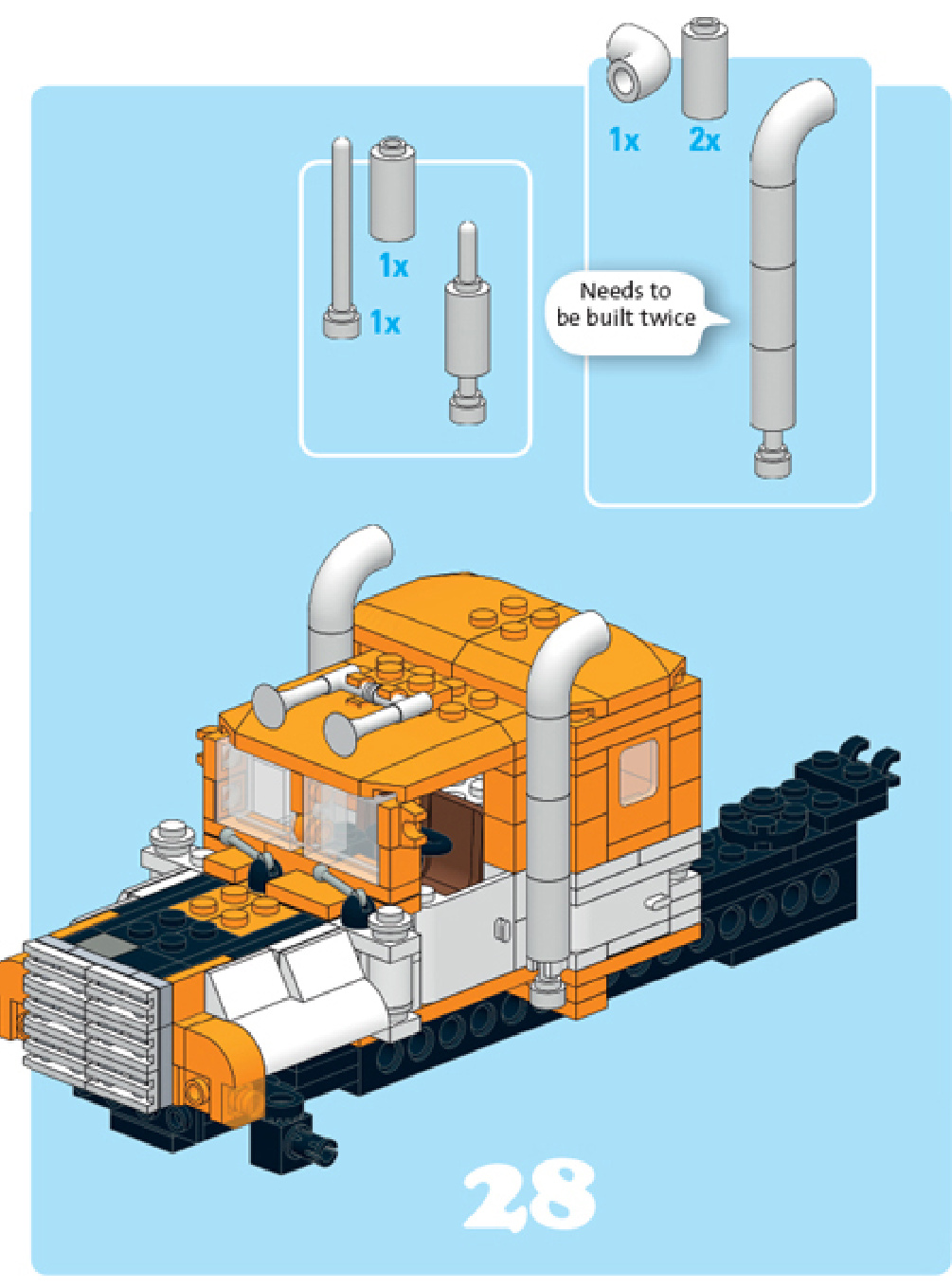
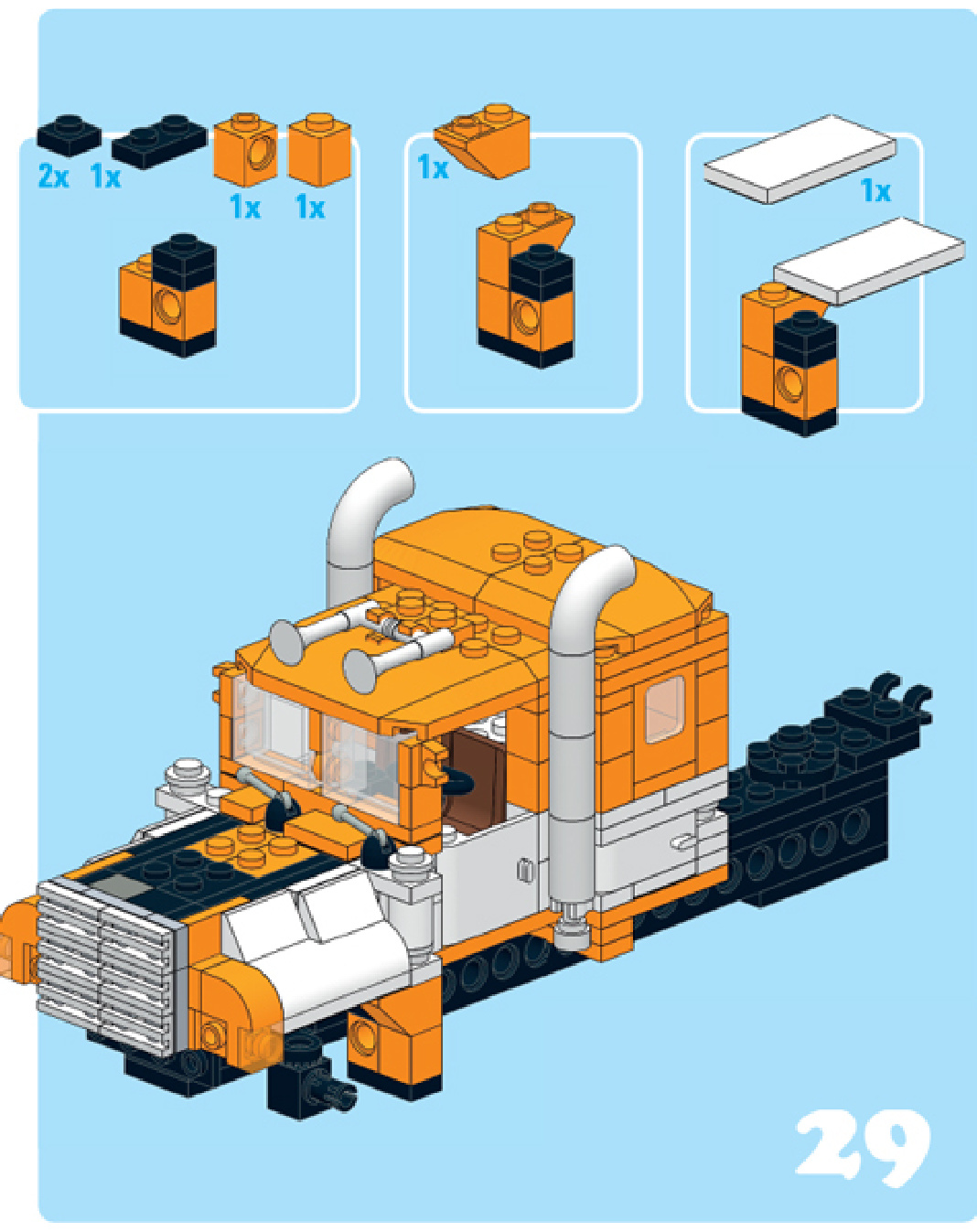
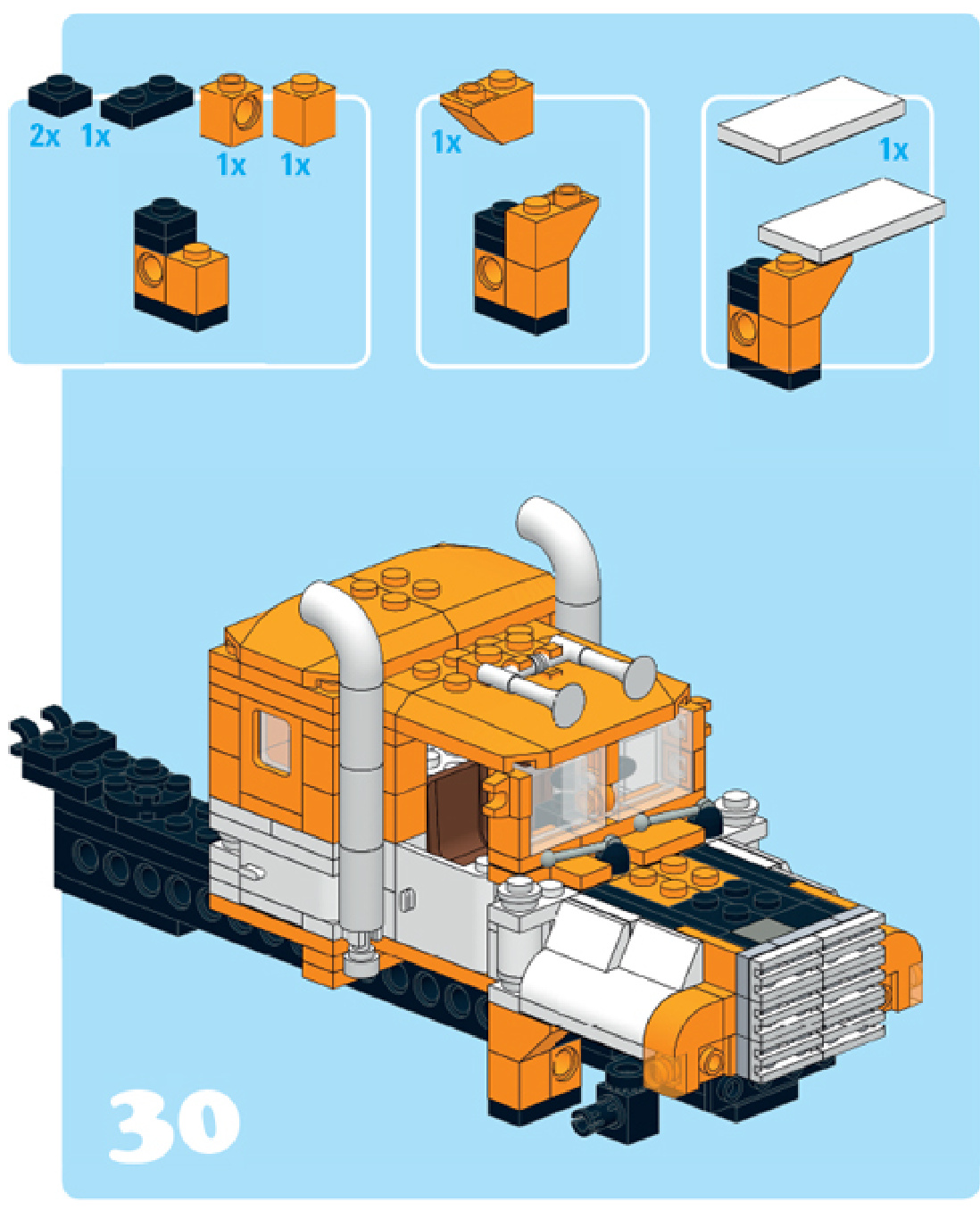
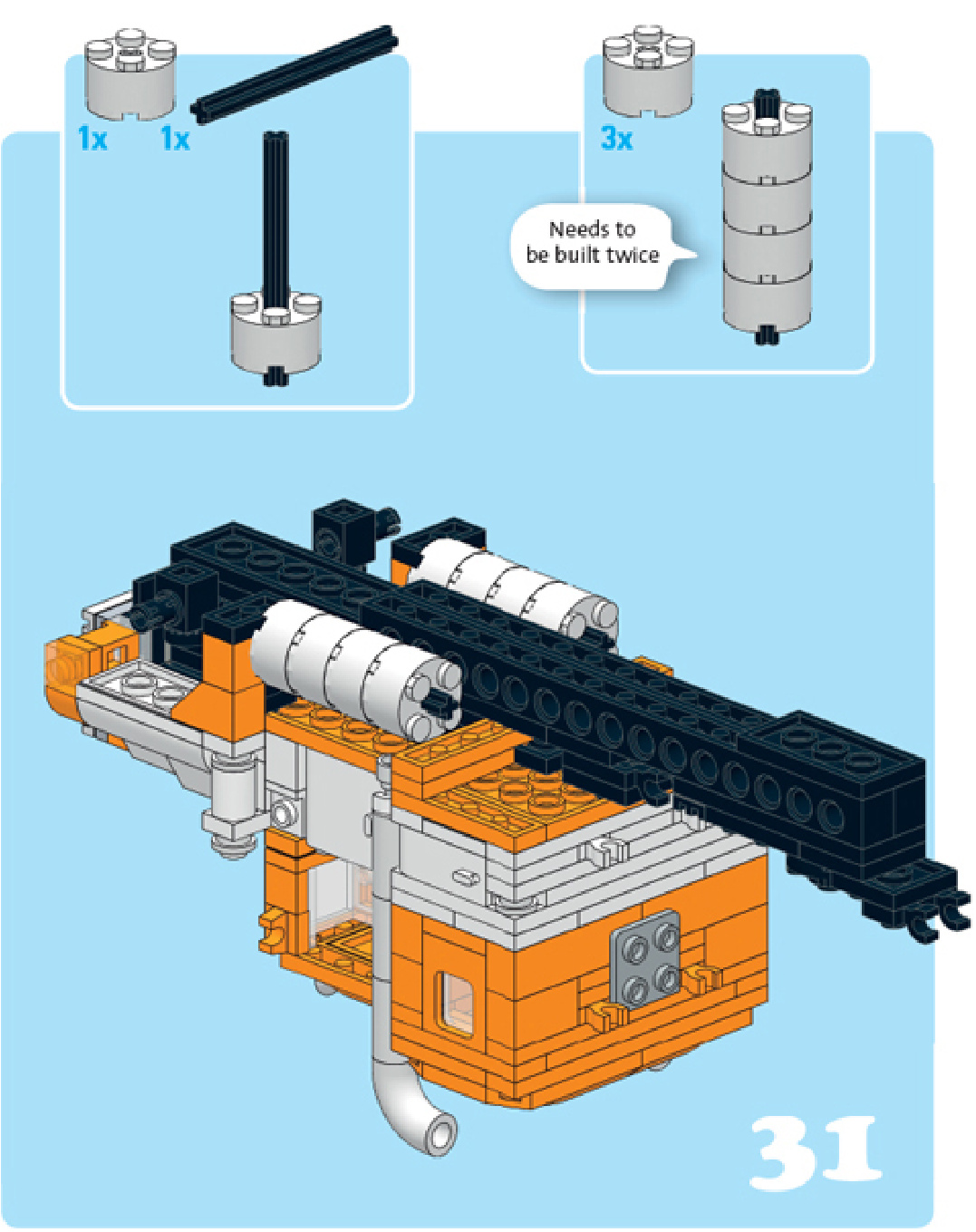
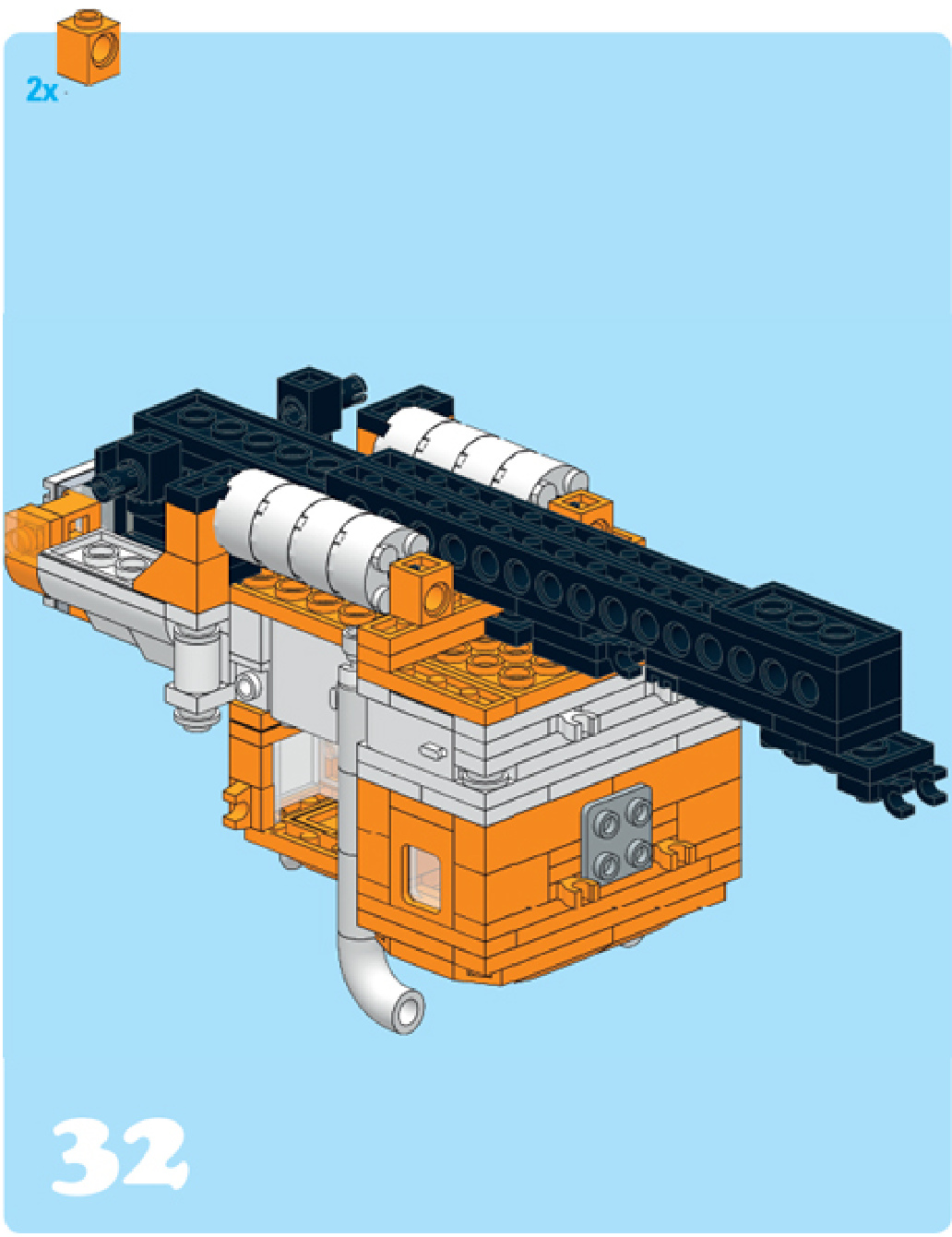
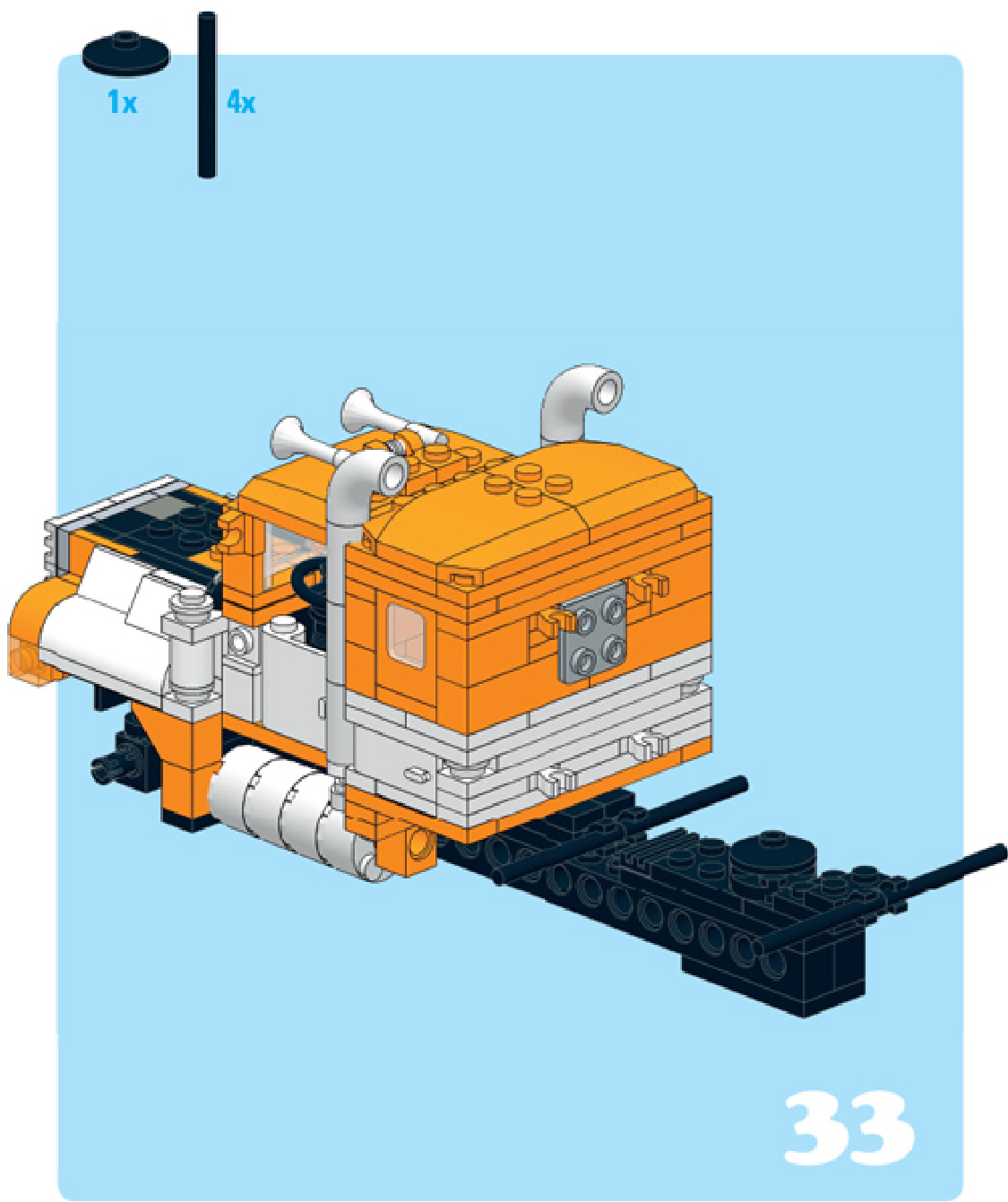
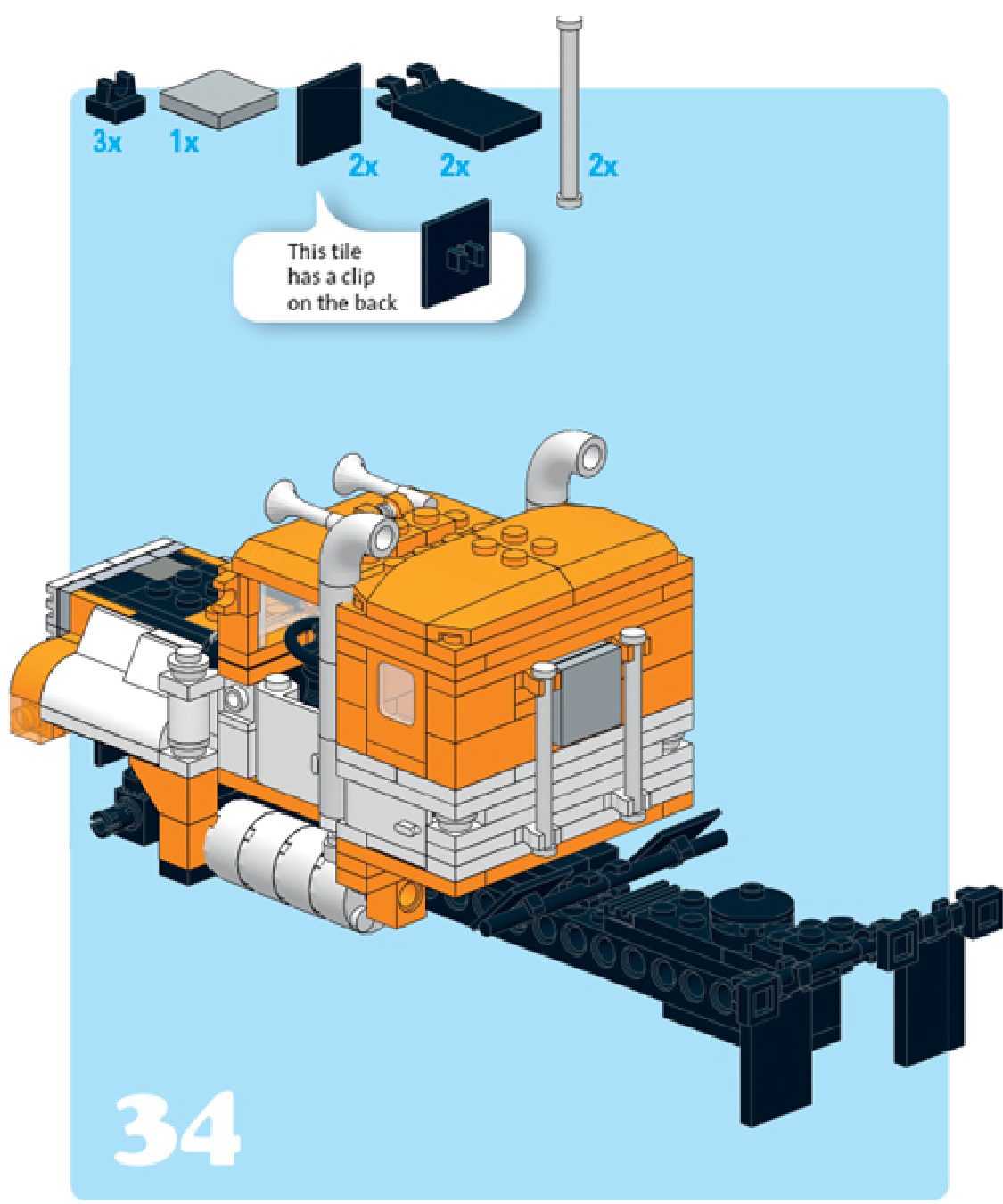
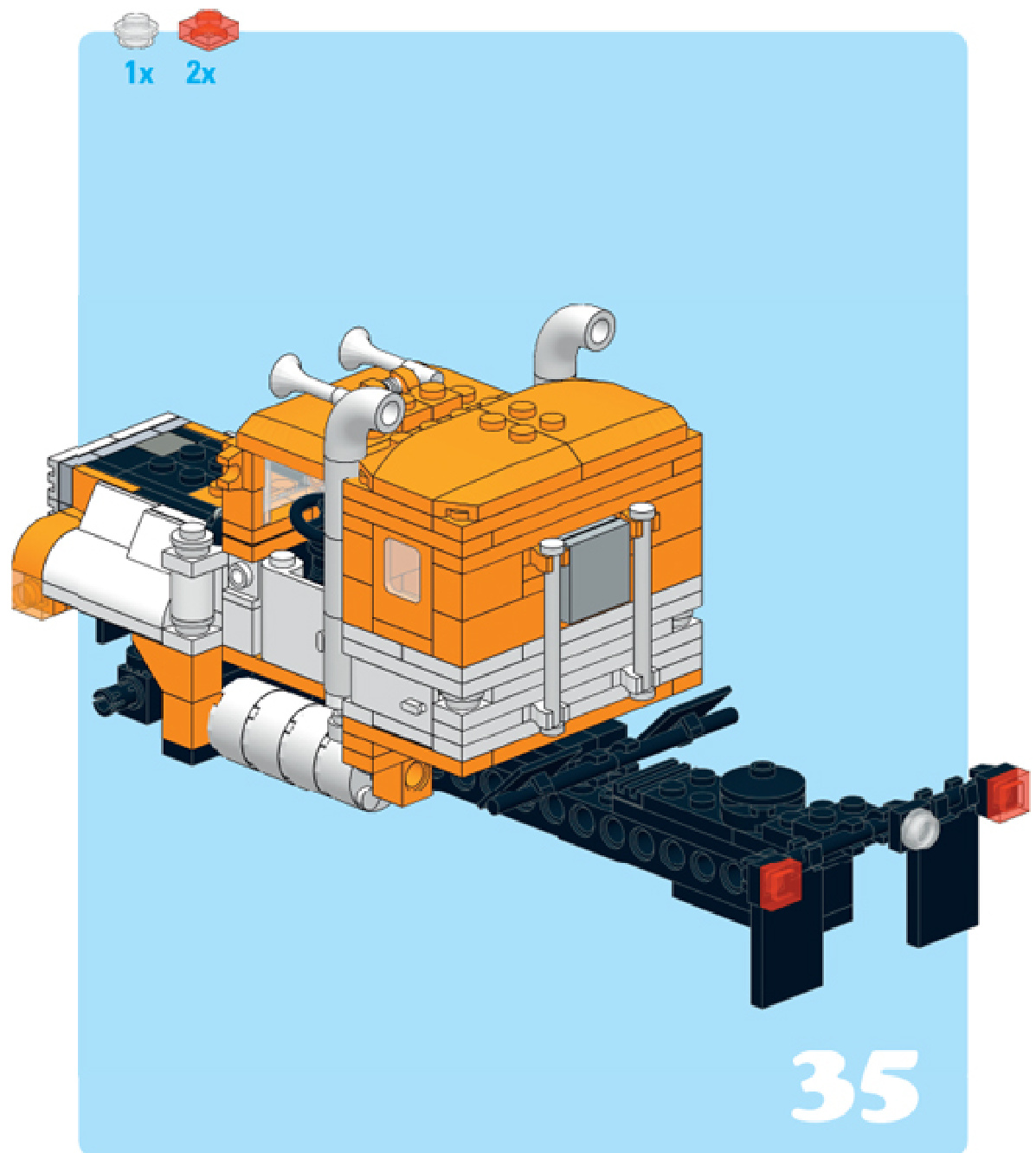
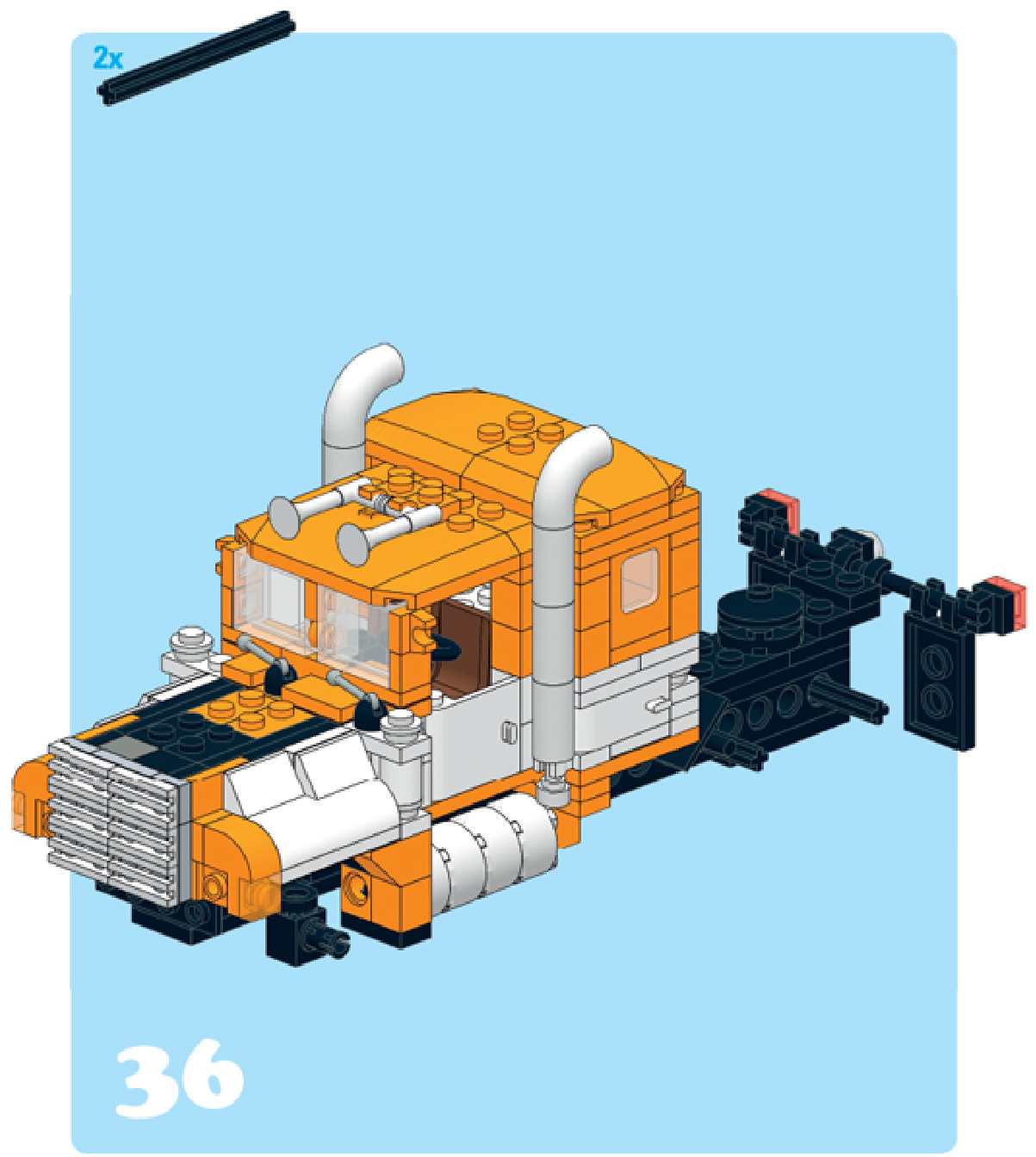
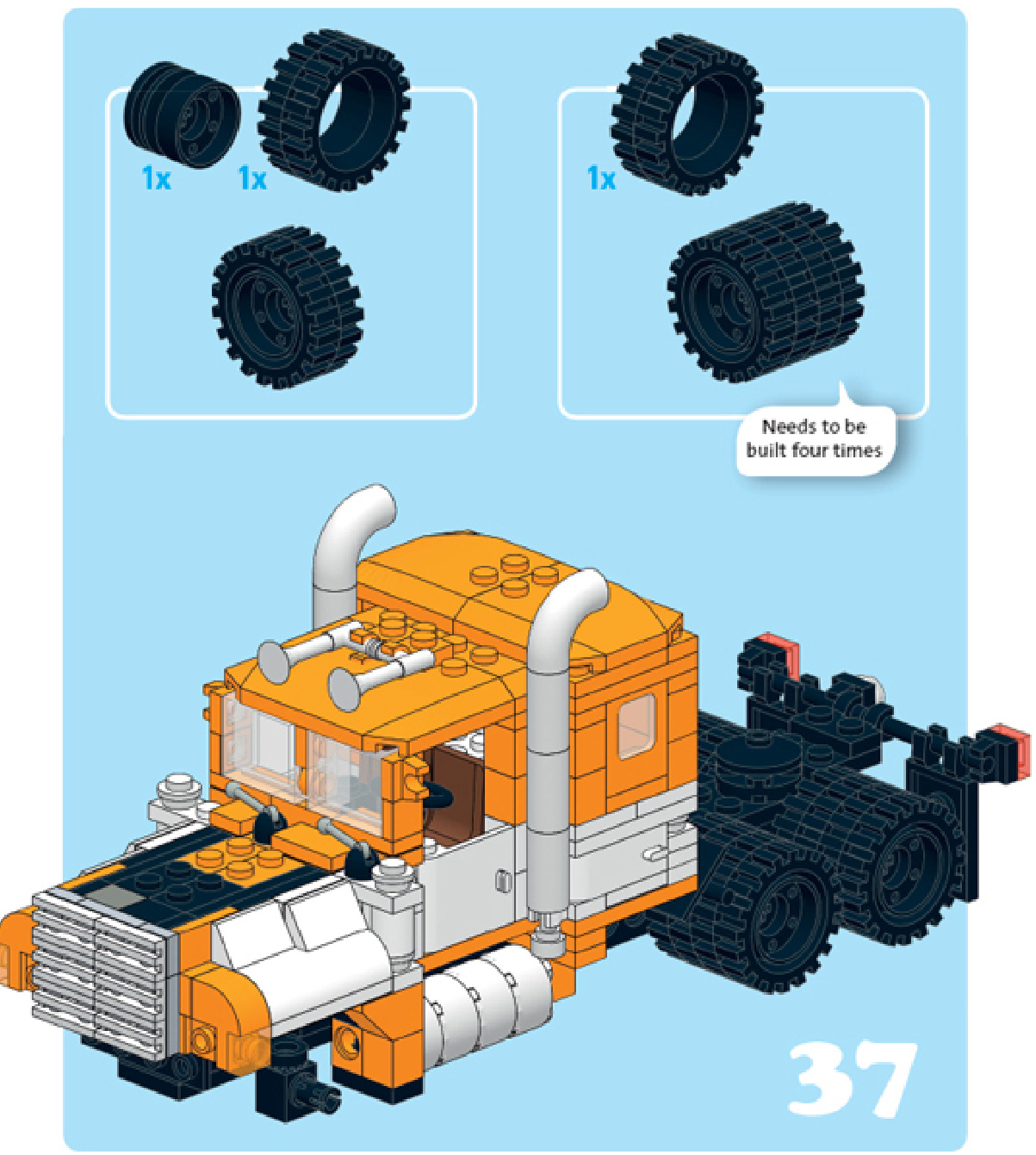
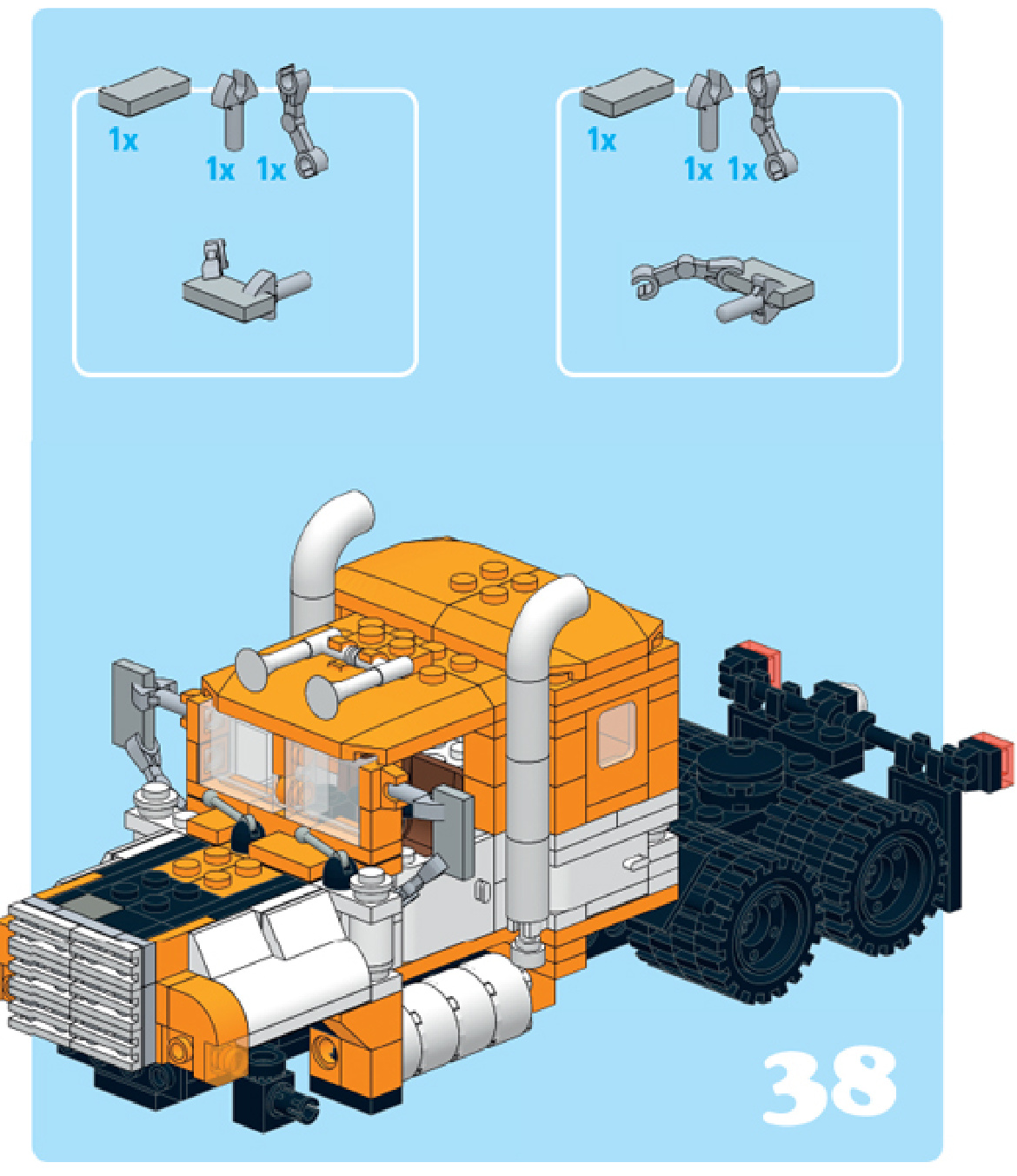
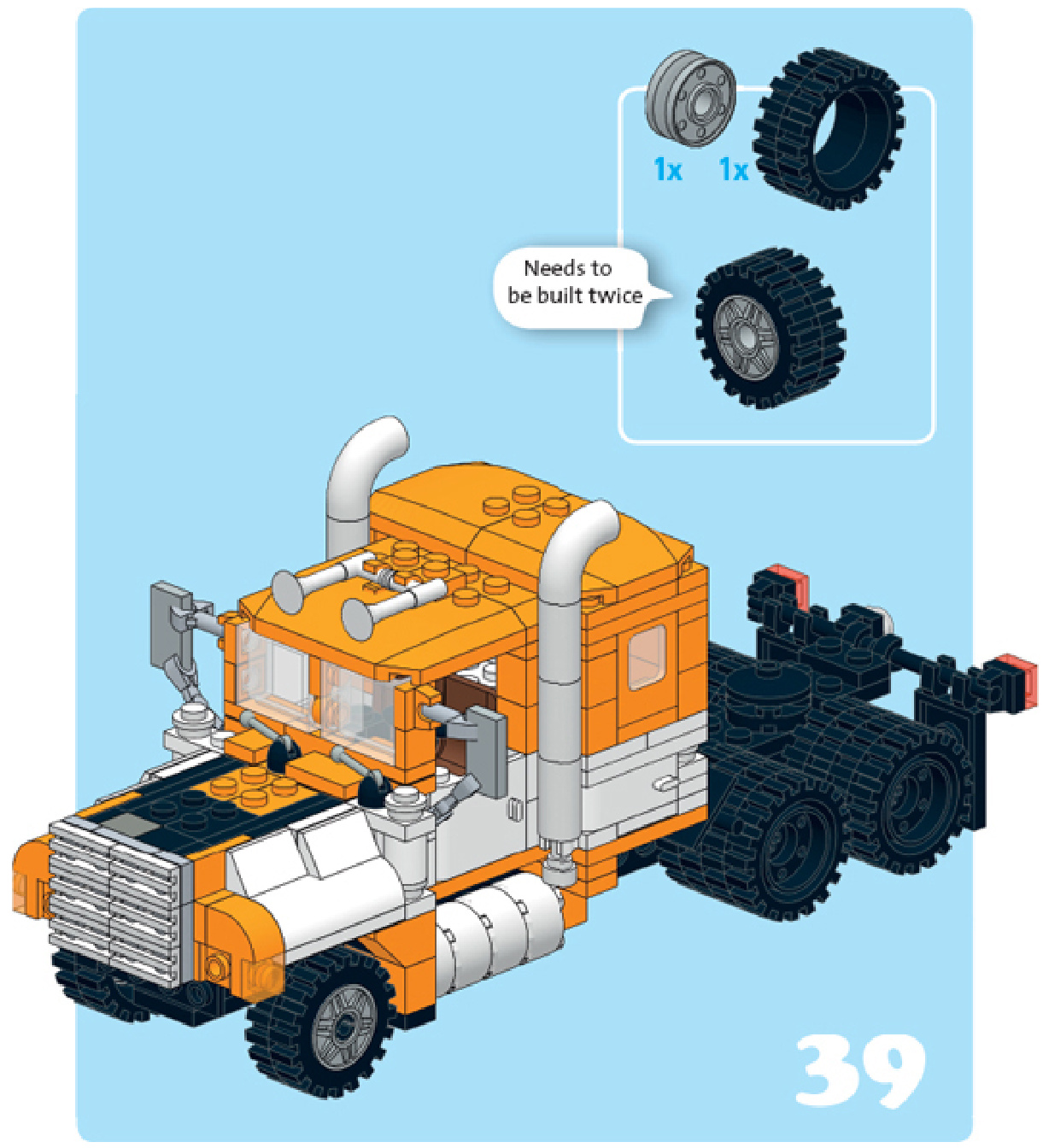
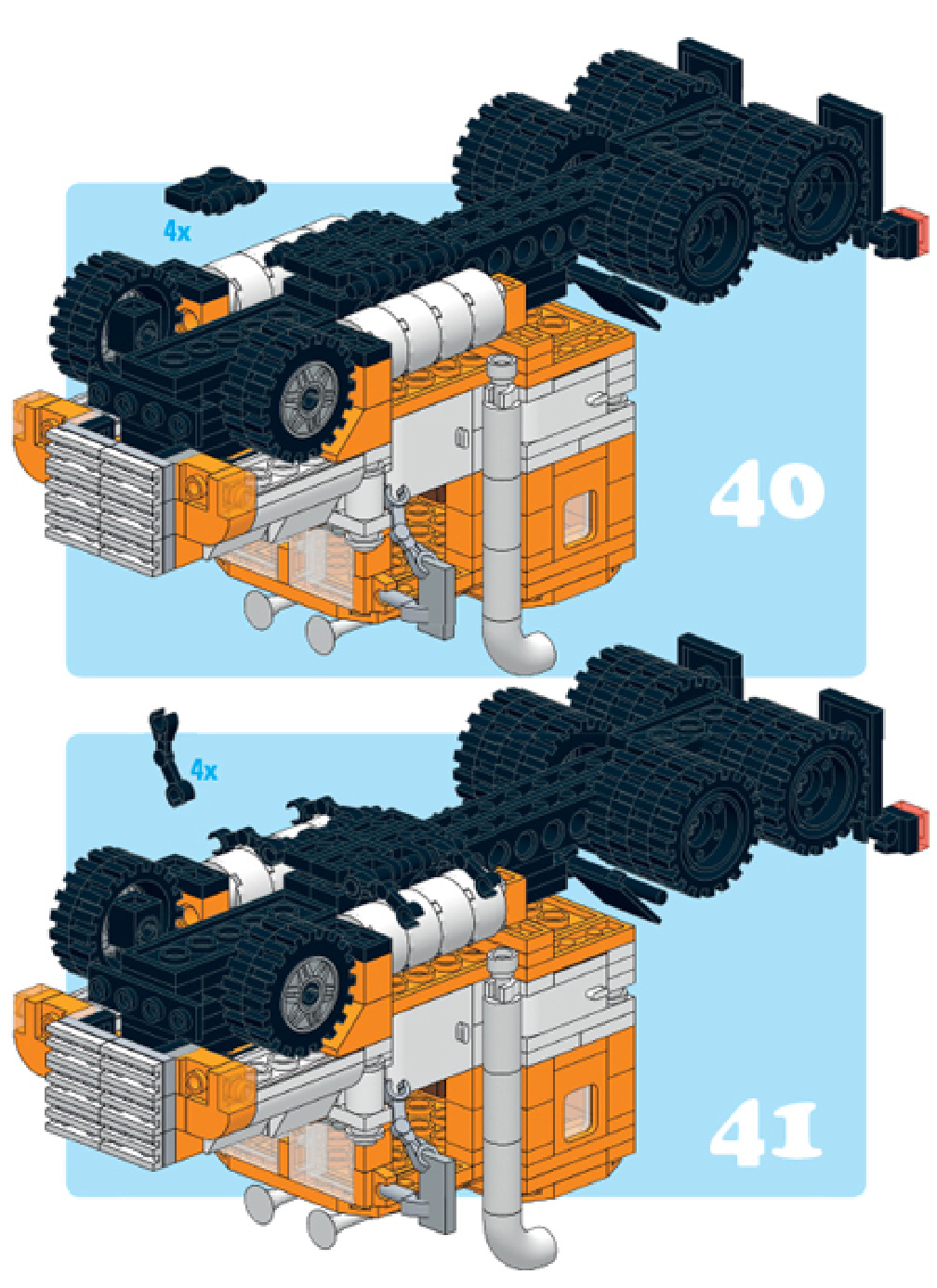
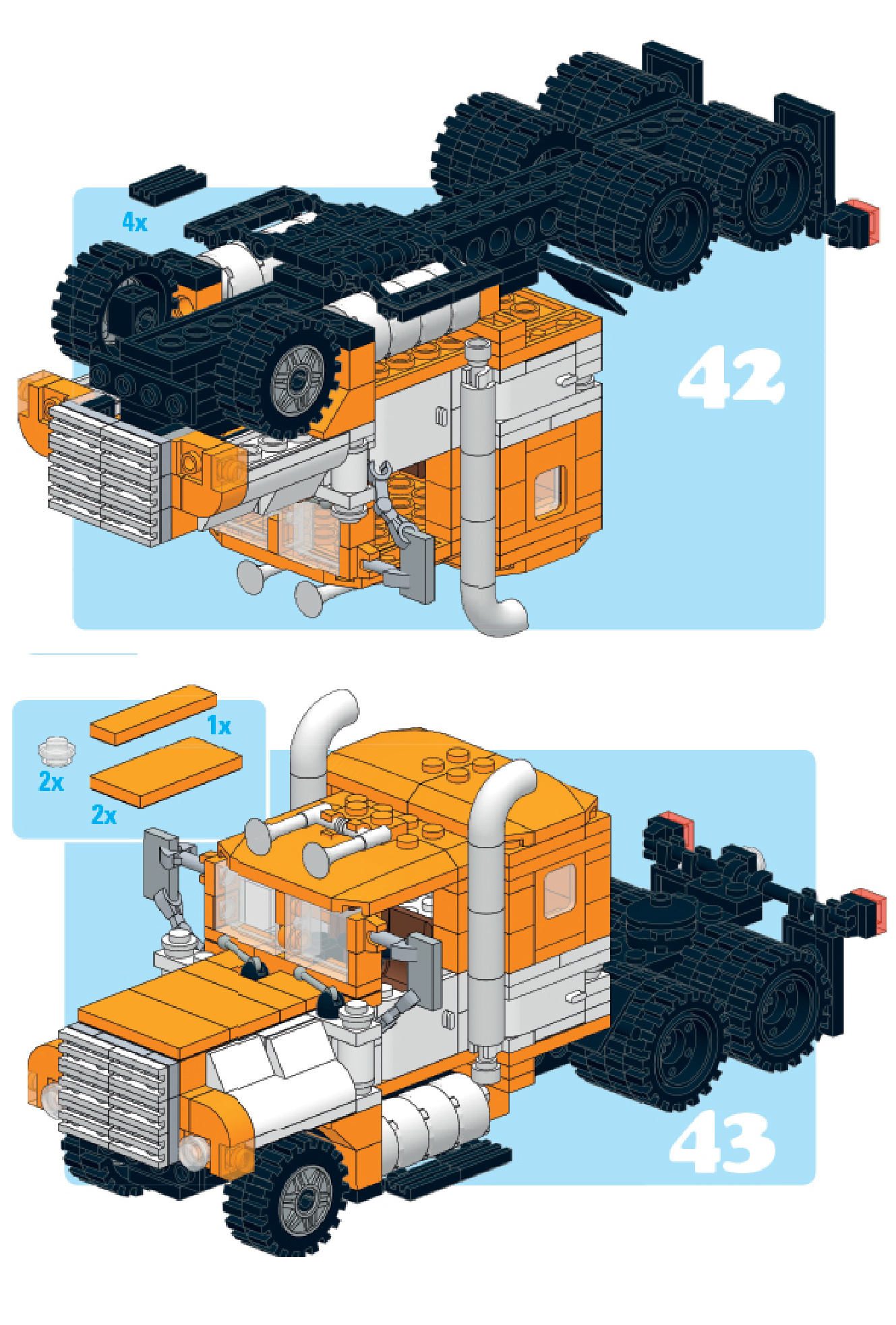
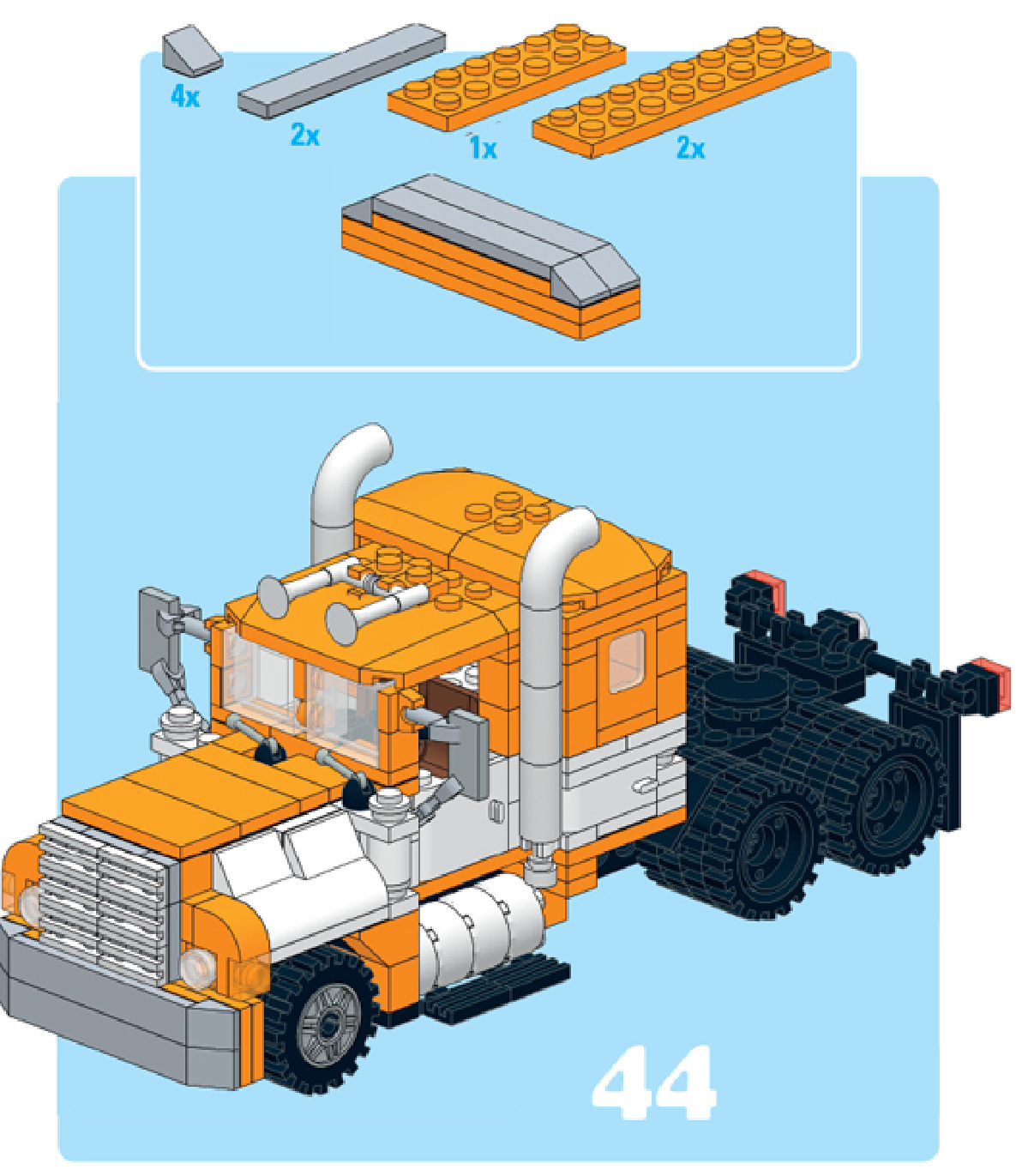
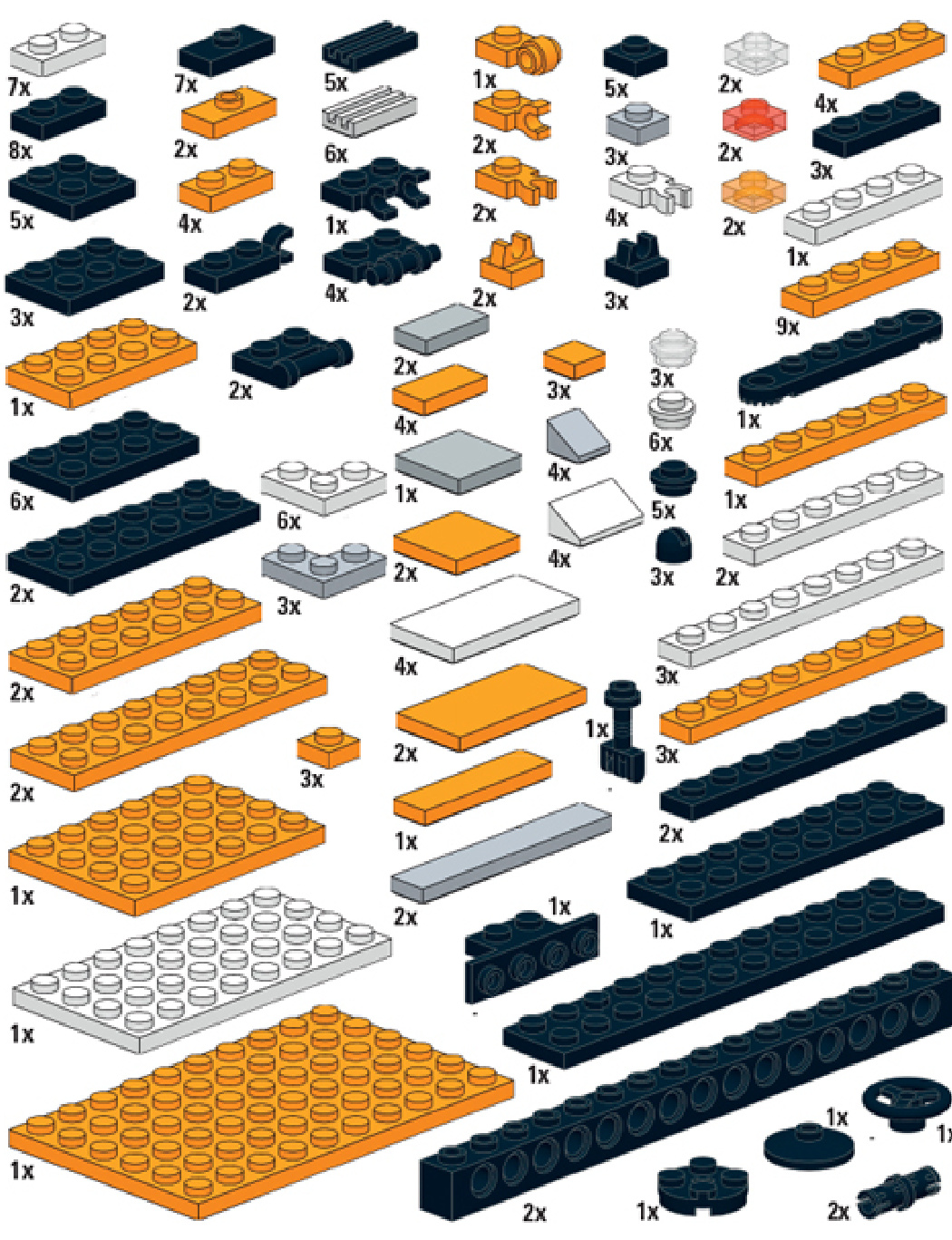
Parts List
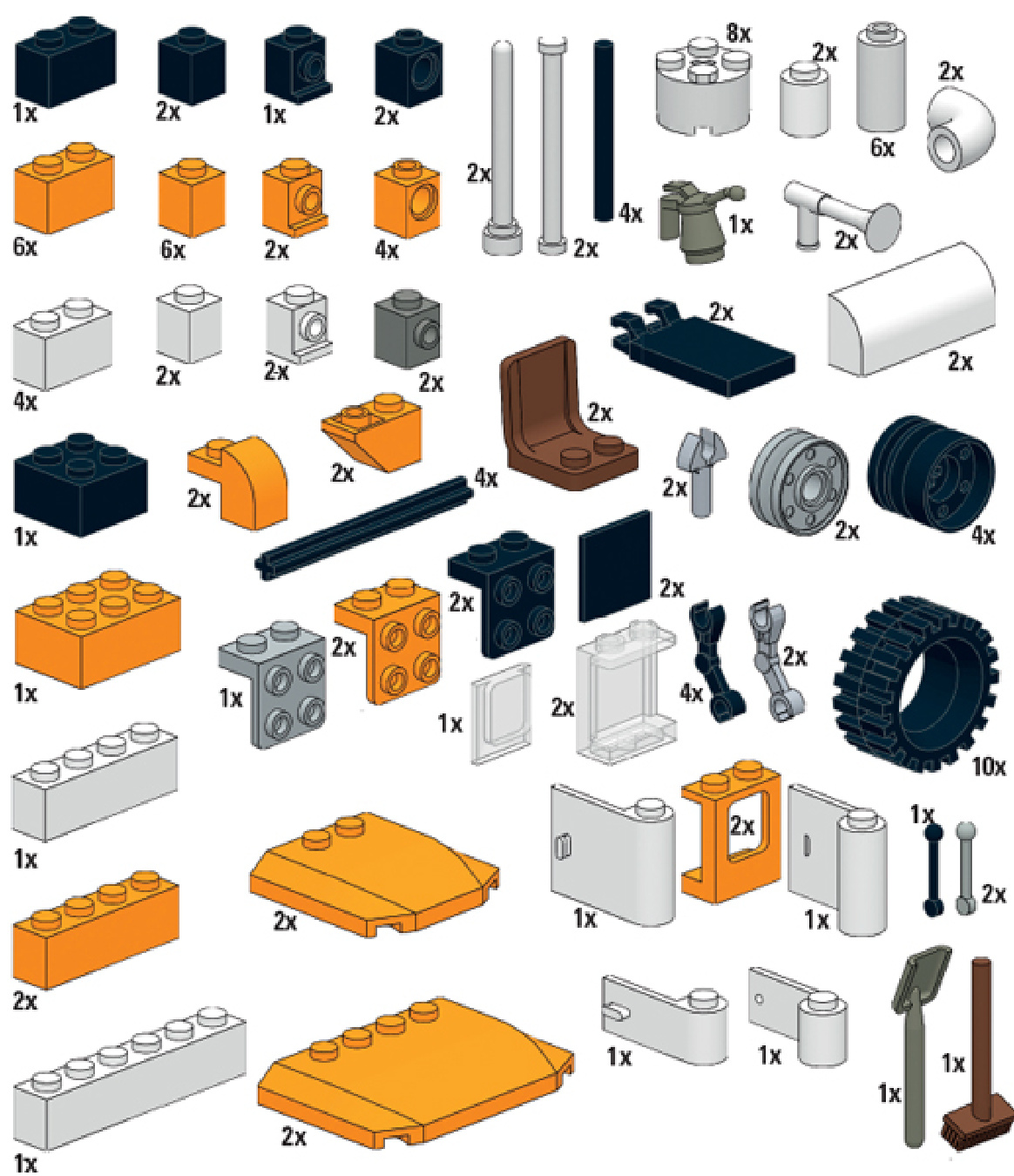
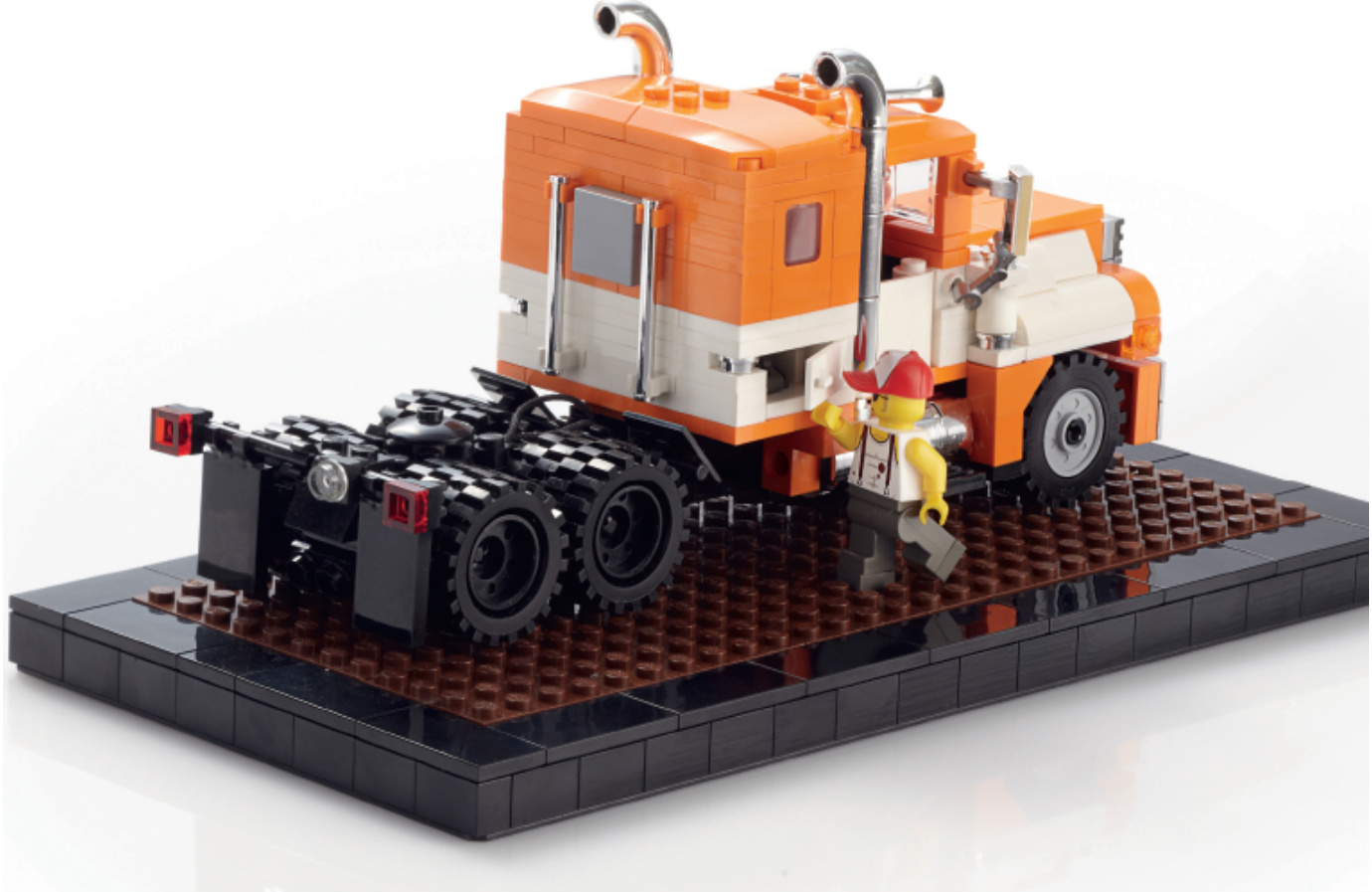
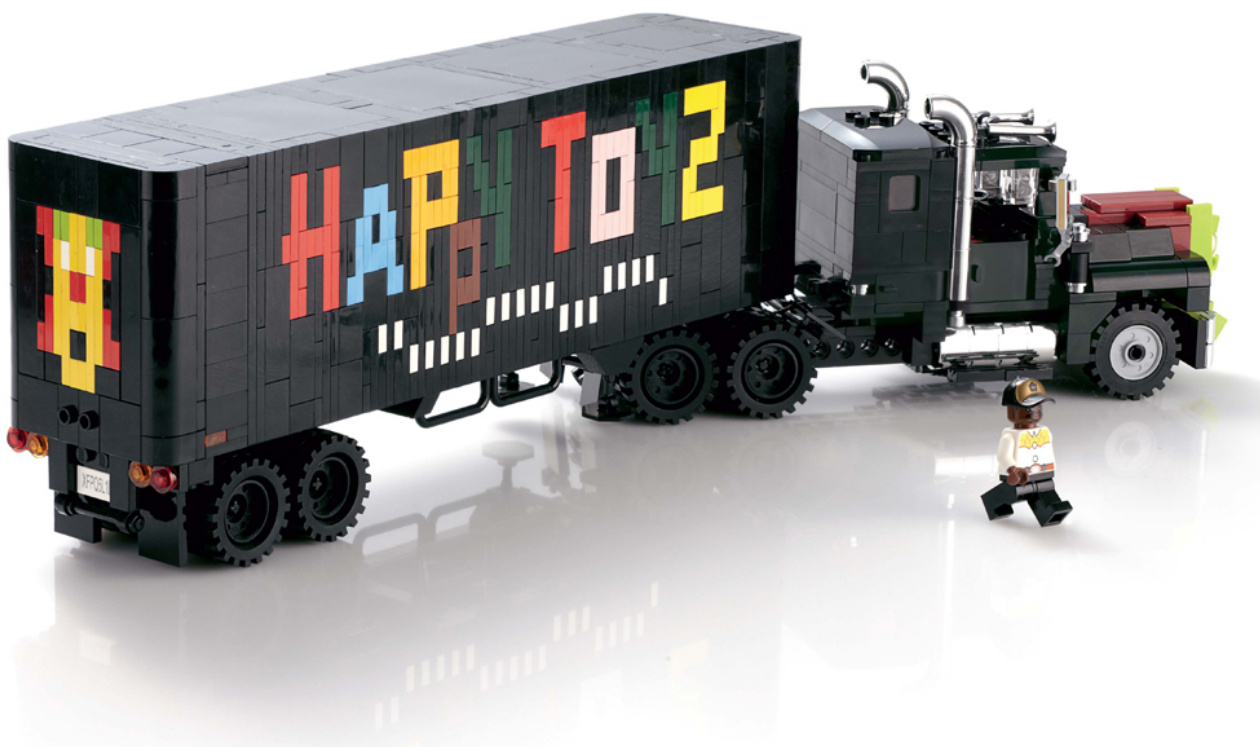
helicopter
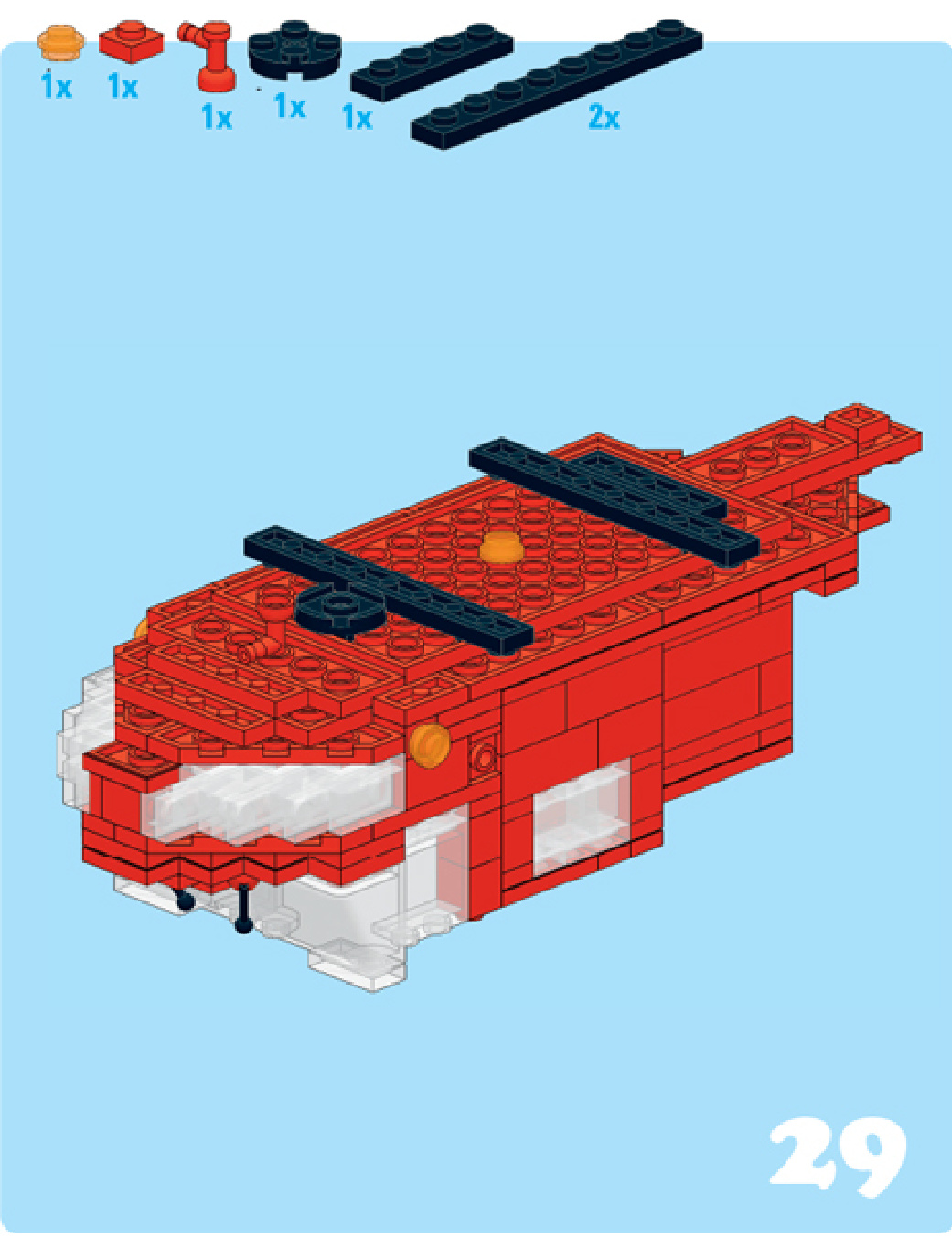
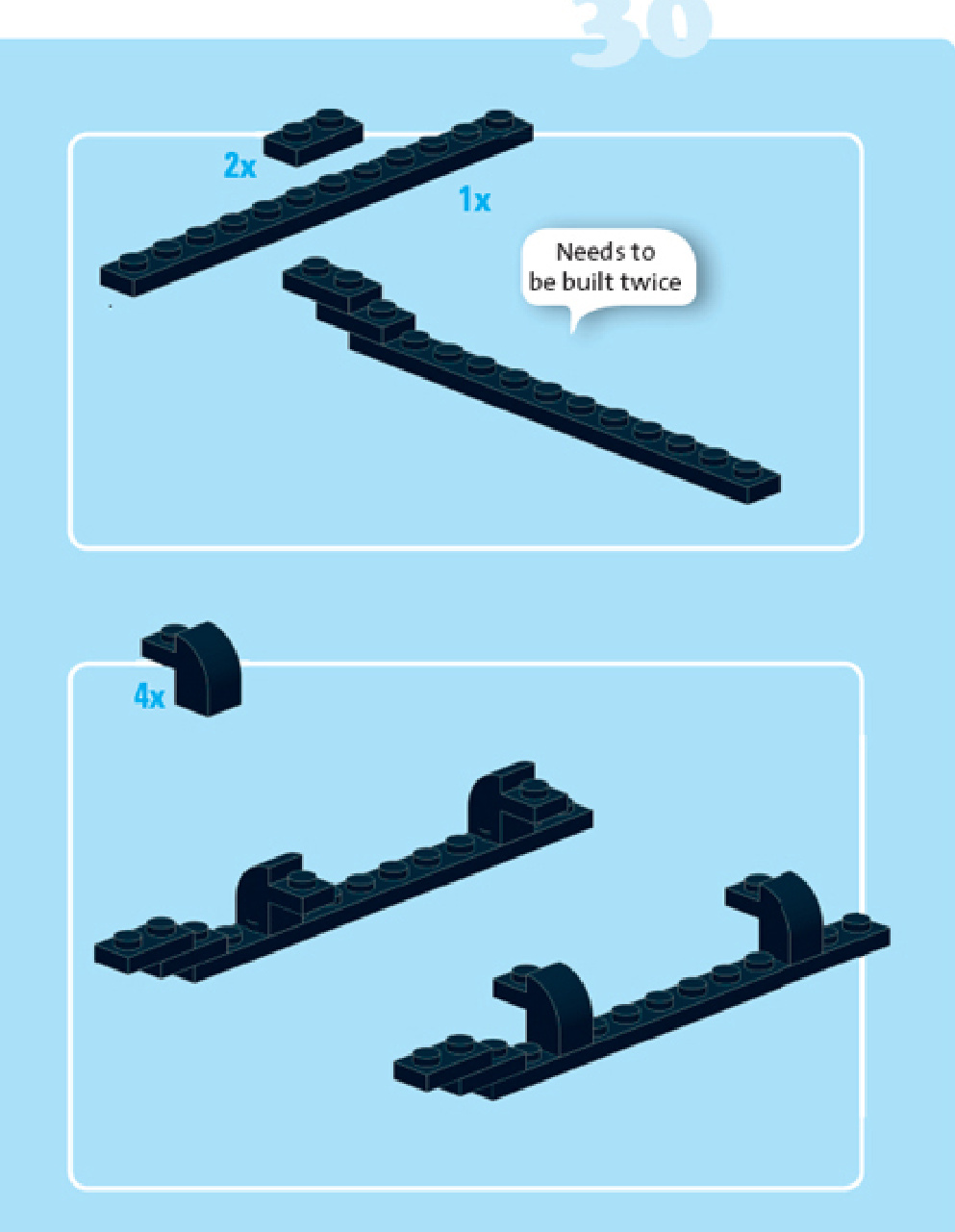
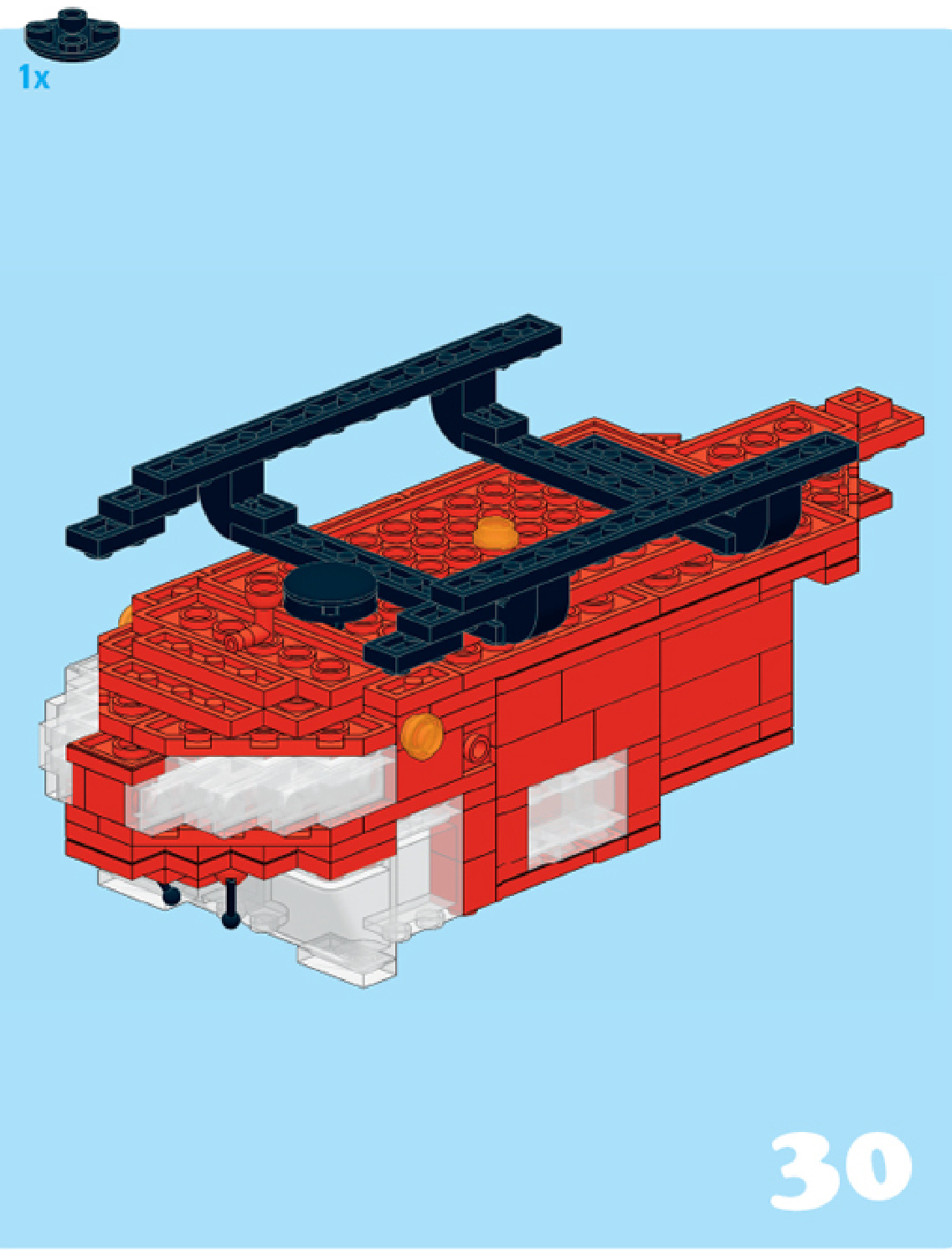
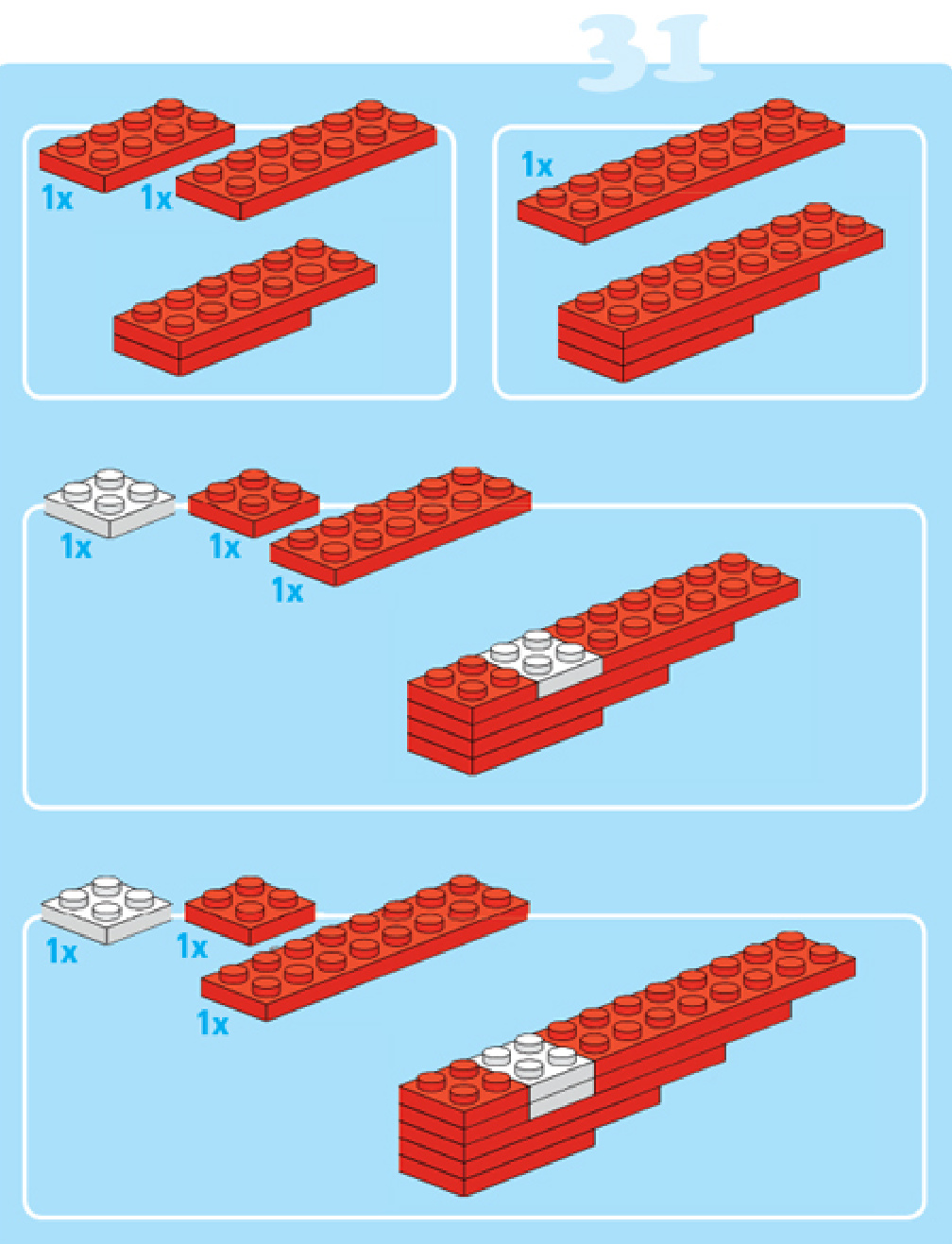
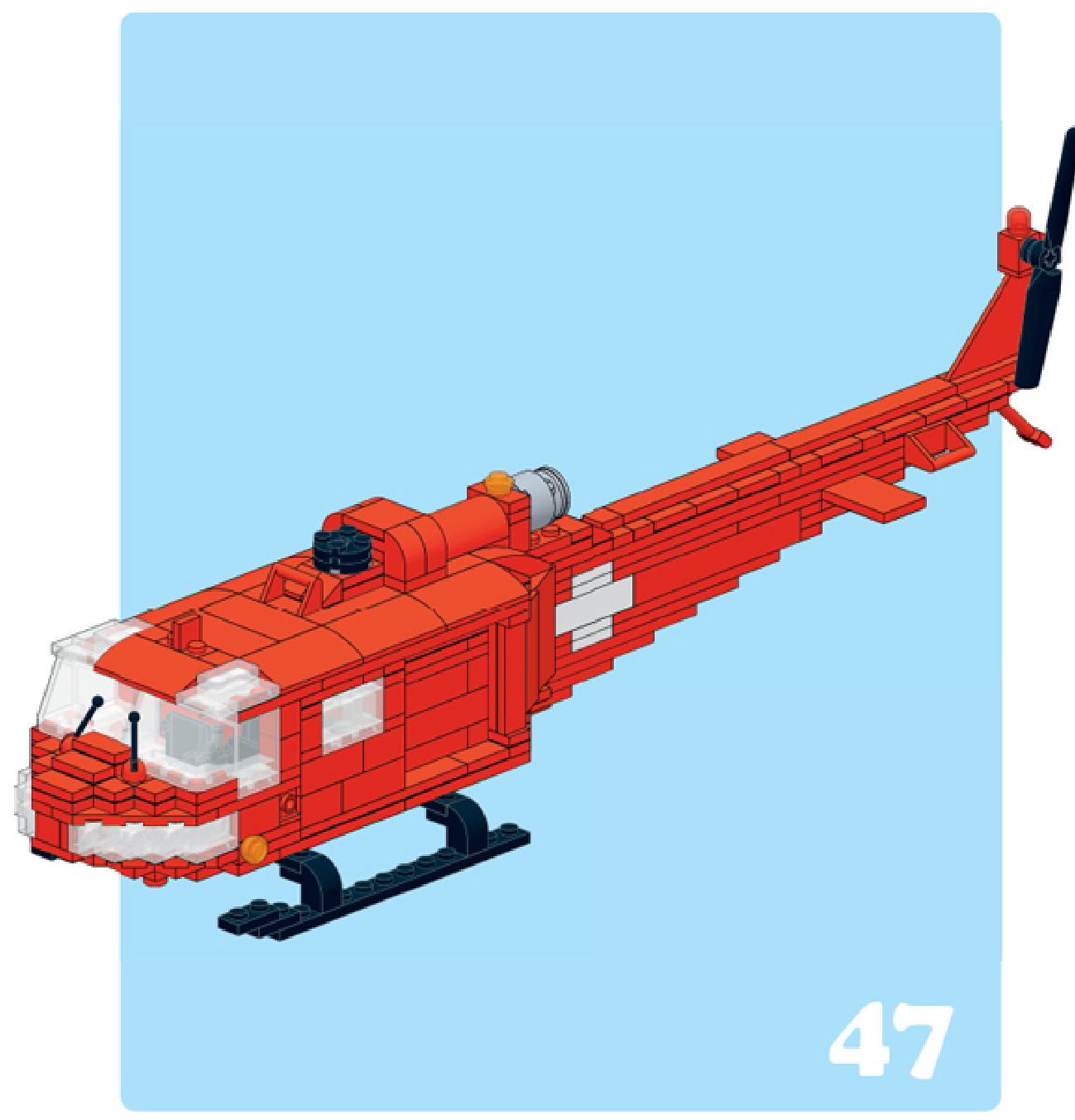
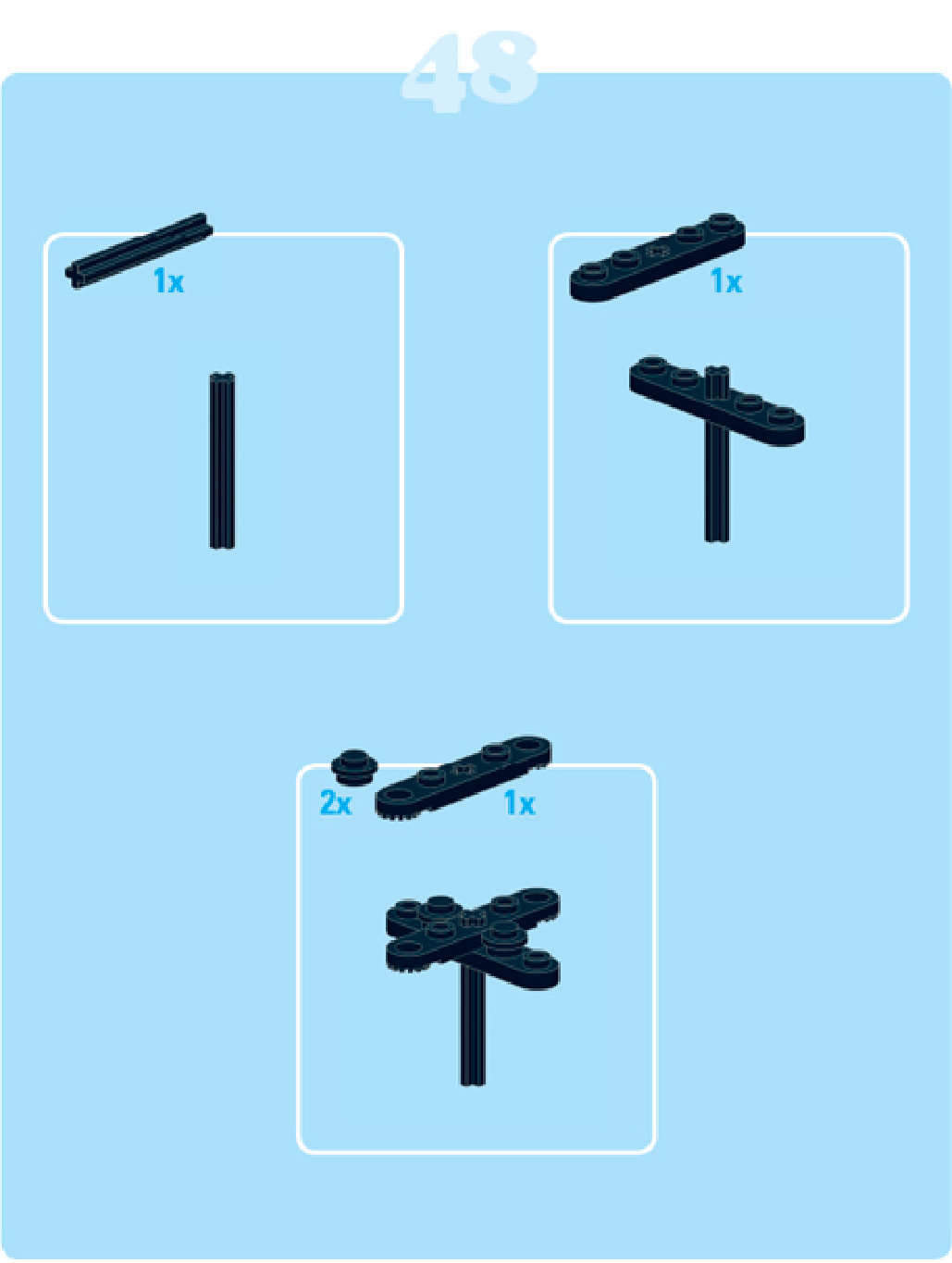
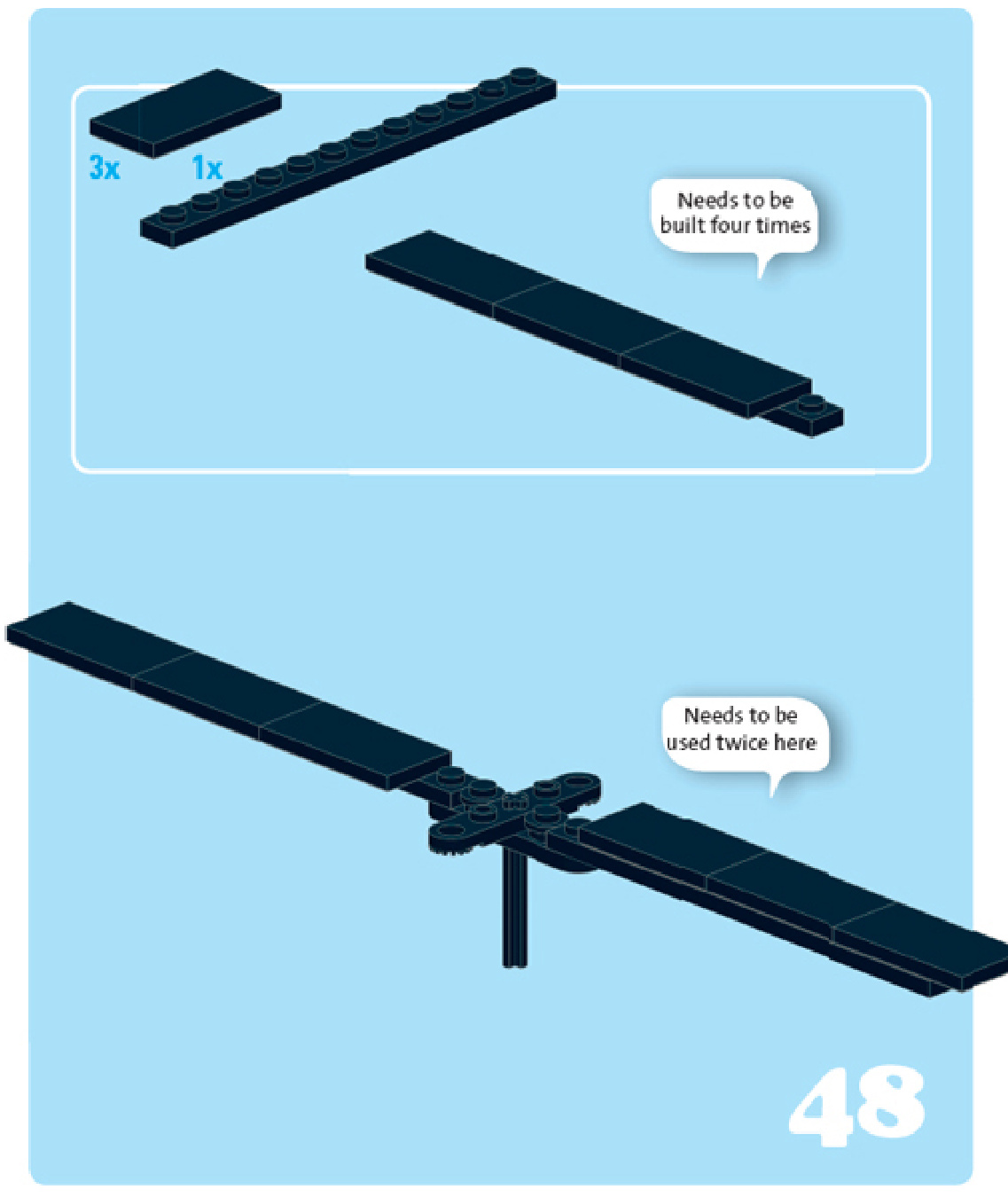
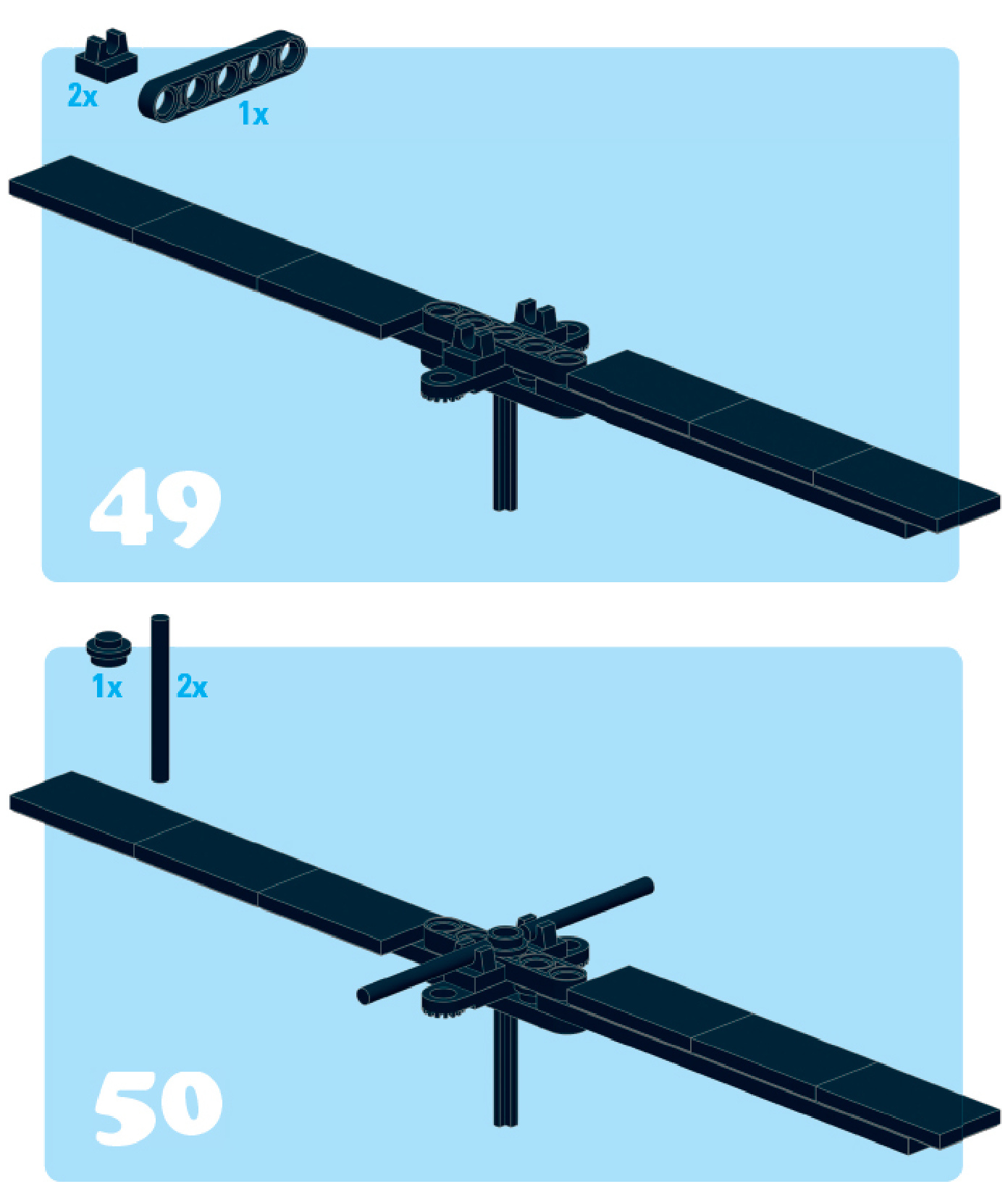
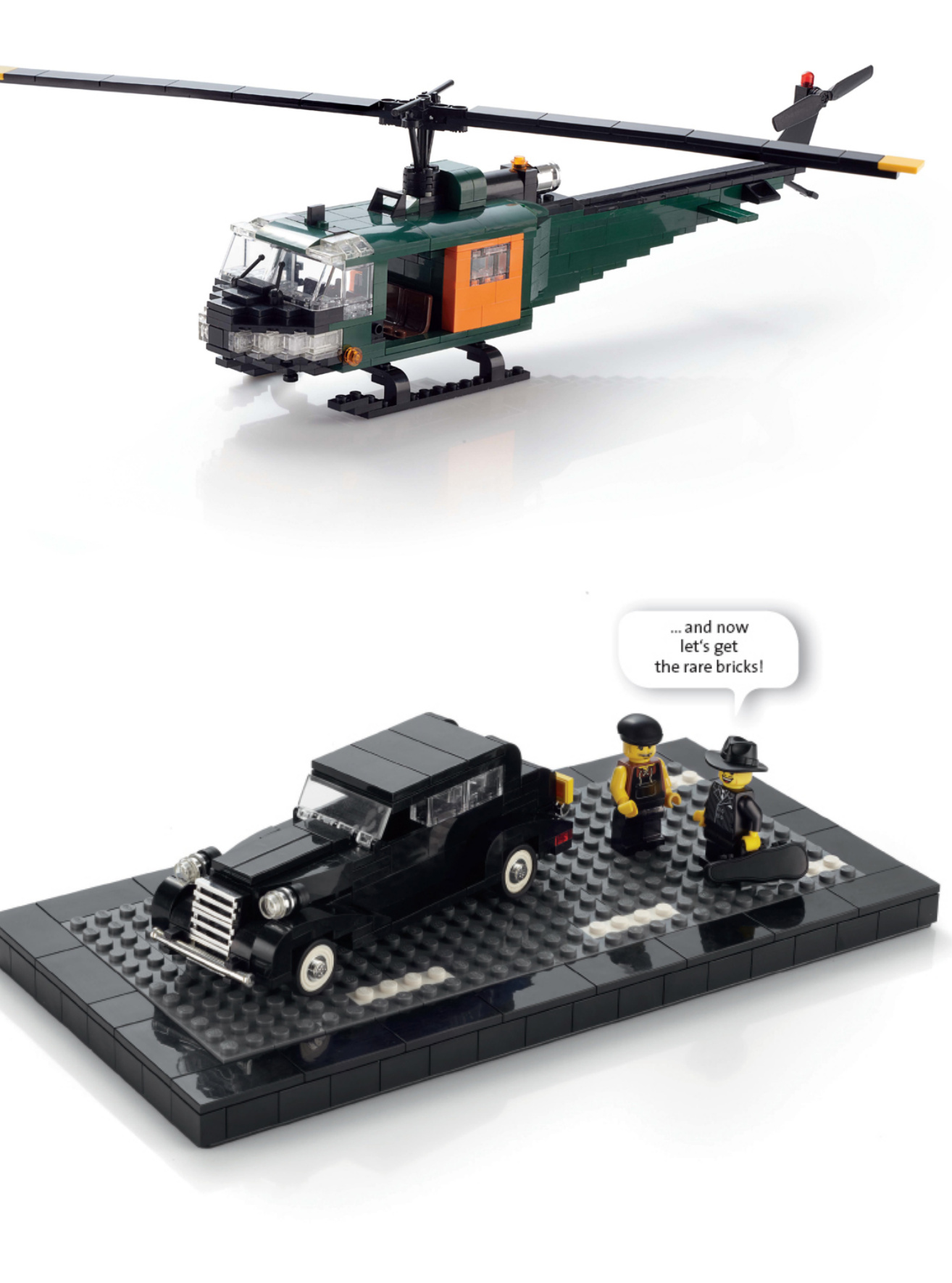
The helicopter was, just like the truck, a desired model for a long time. We used a few rarer parts for it. As red is one of the most common colors, it is also a good choice for this model. Our alternative model in dark green is a lot more difficult to equip. Details such as colorful rotor blade ends, stickers or signs on the tail really change this model’s effect. The red model is slightly older than the green version - you can still see the 2x2 tiles on the rotor blades. We used the new 2X4 tiles on the green model, which make the rotor more stable.

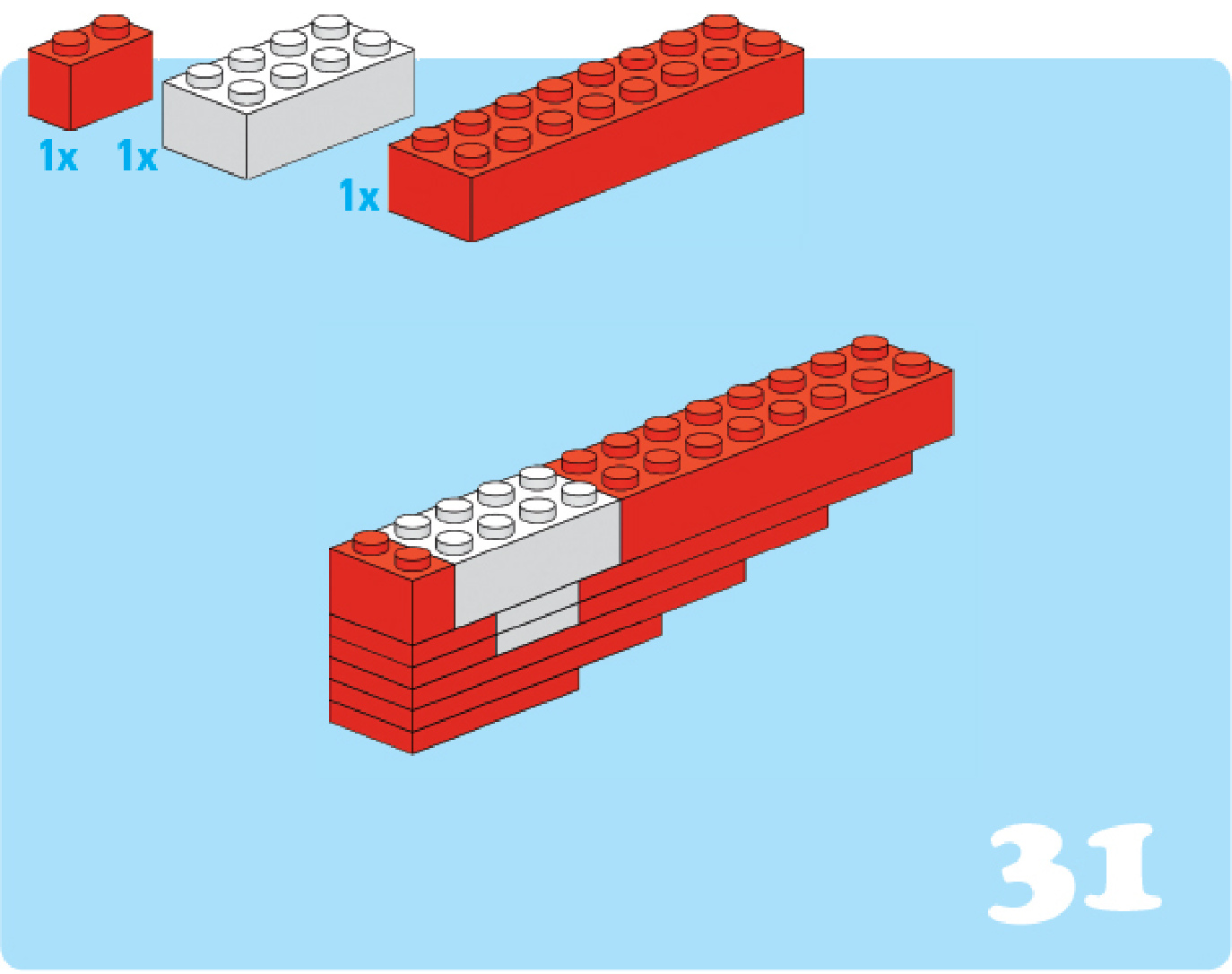
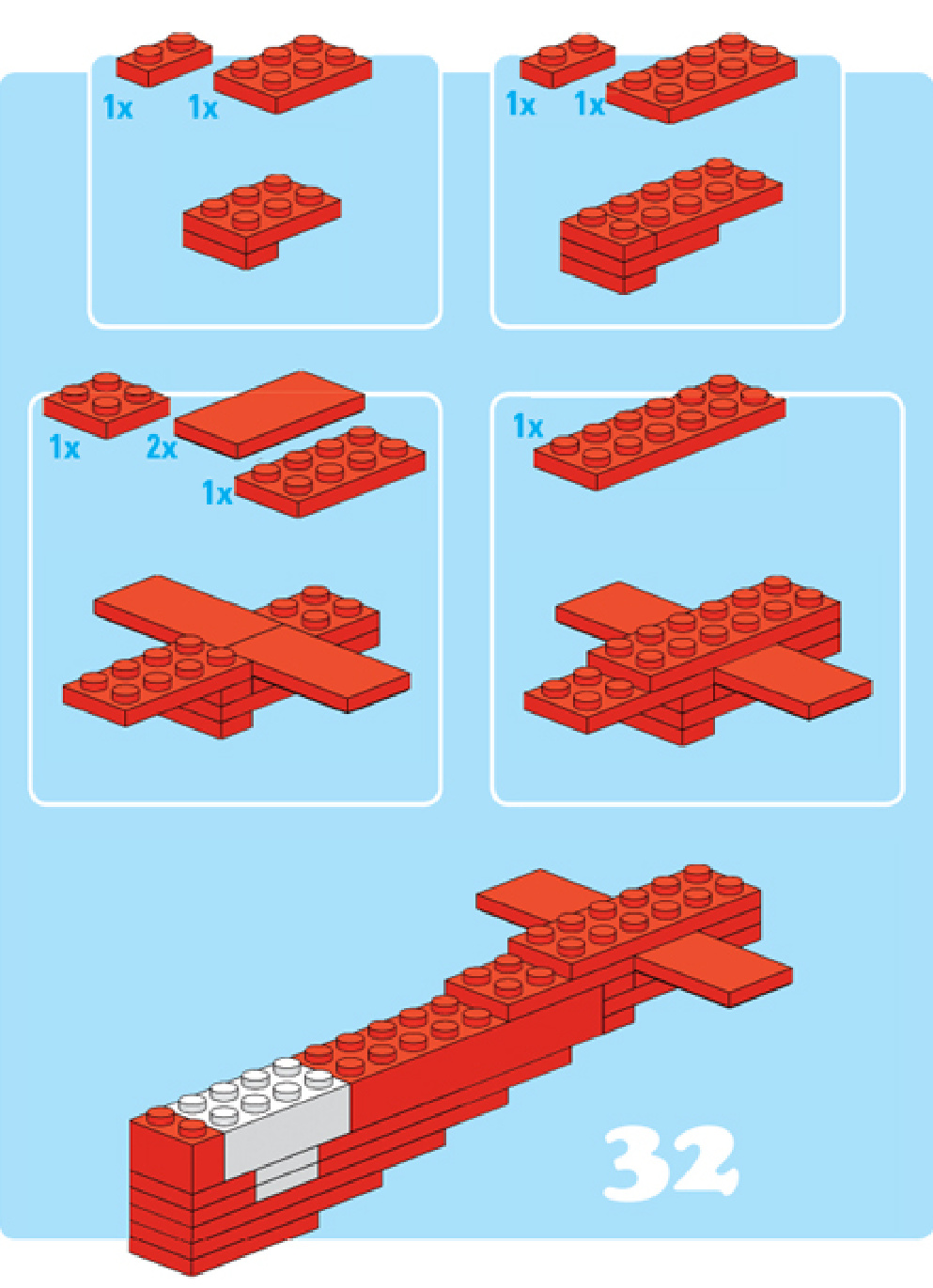
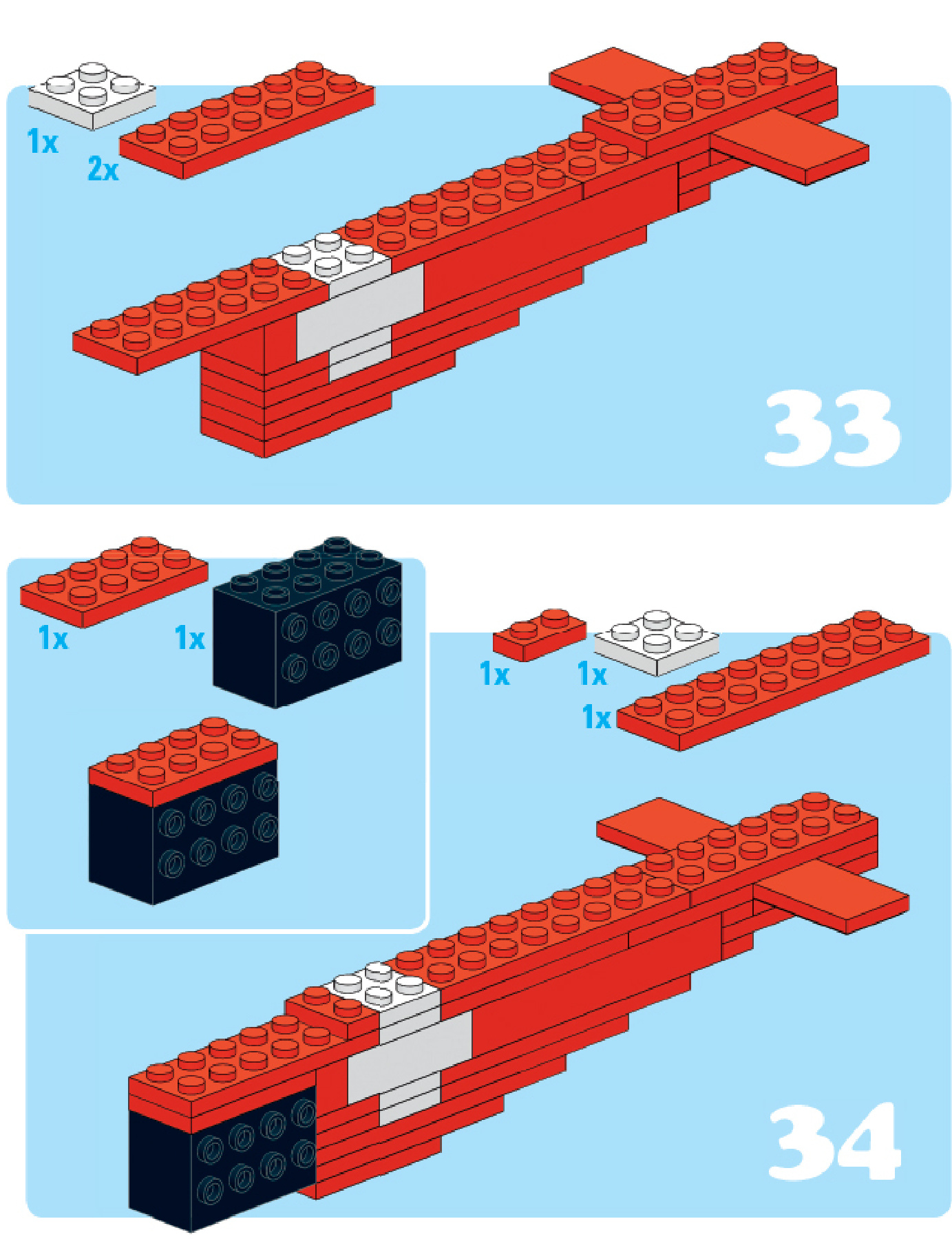
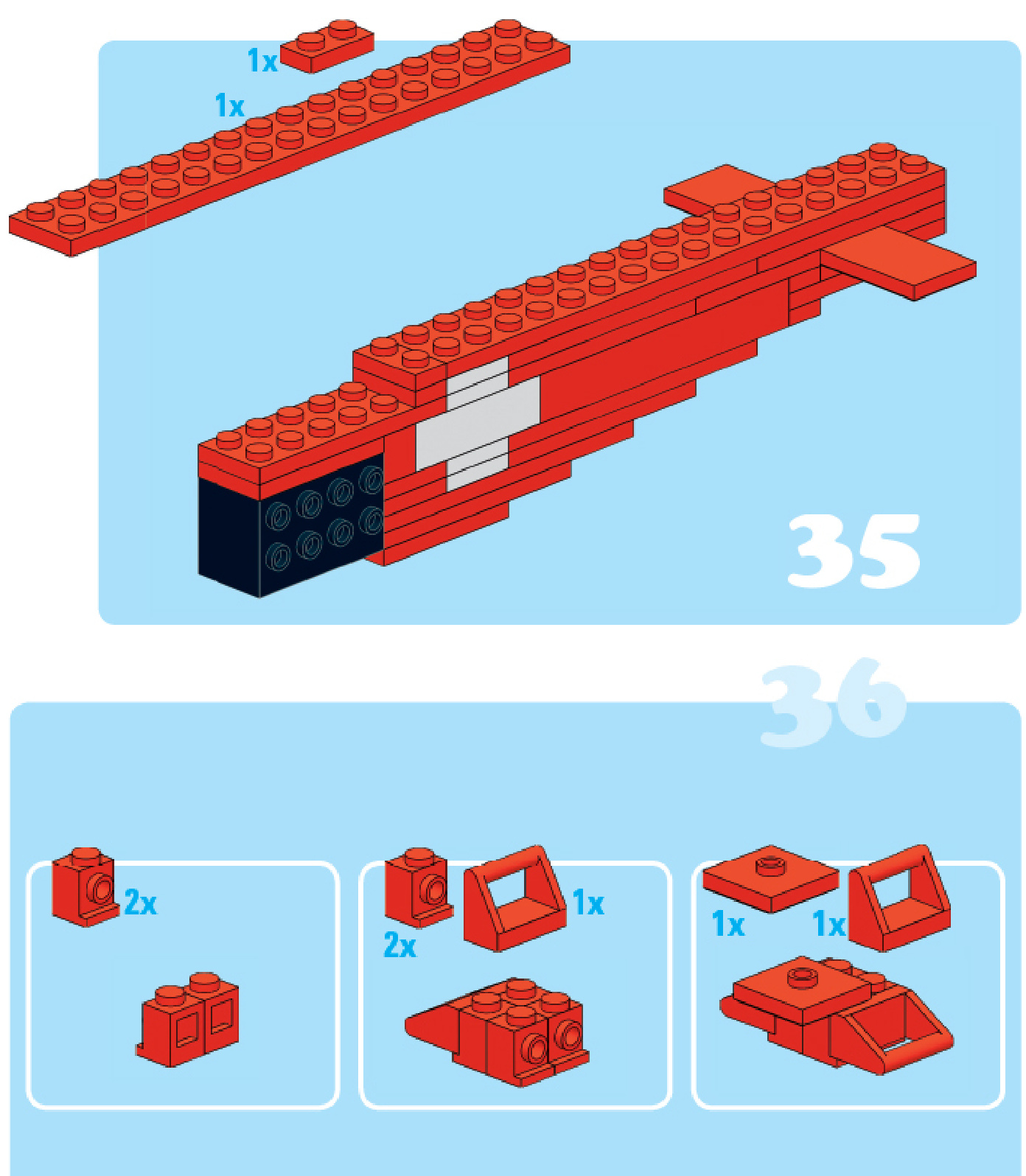
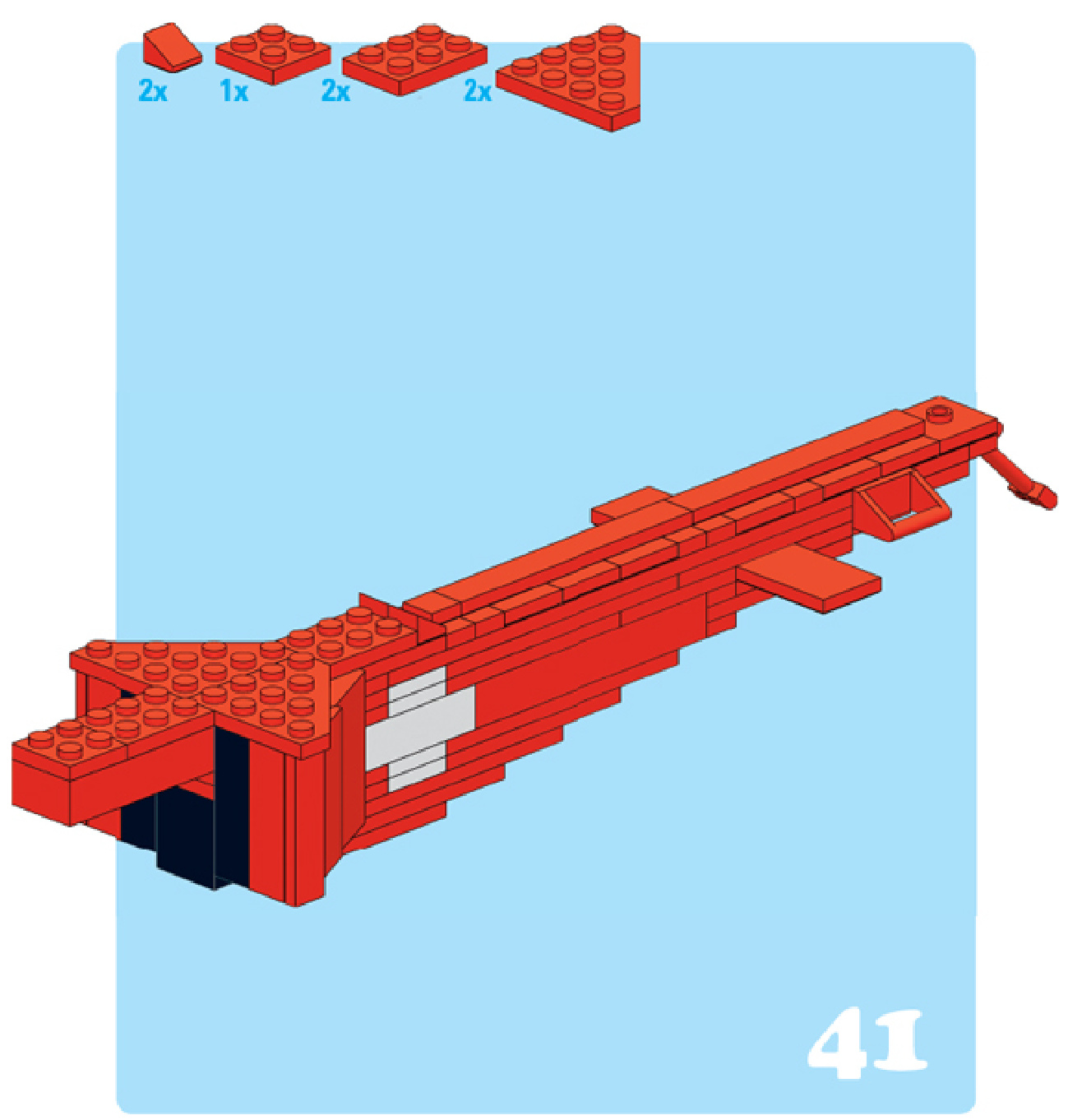
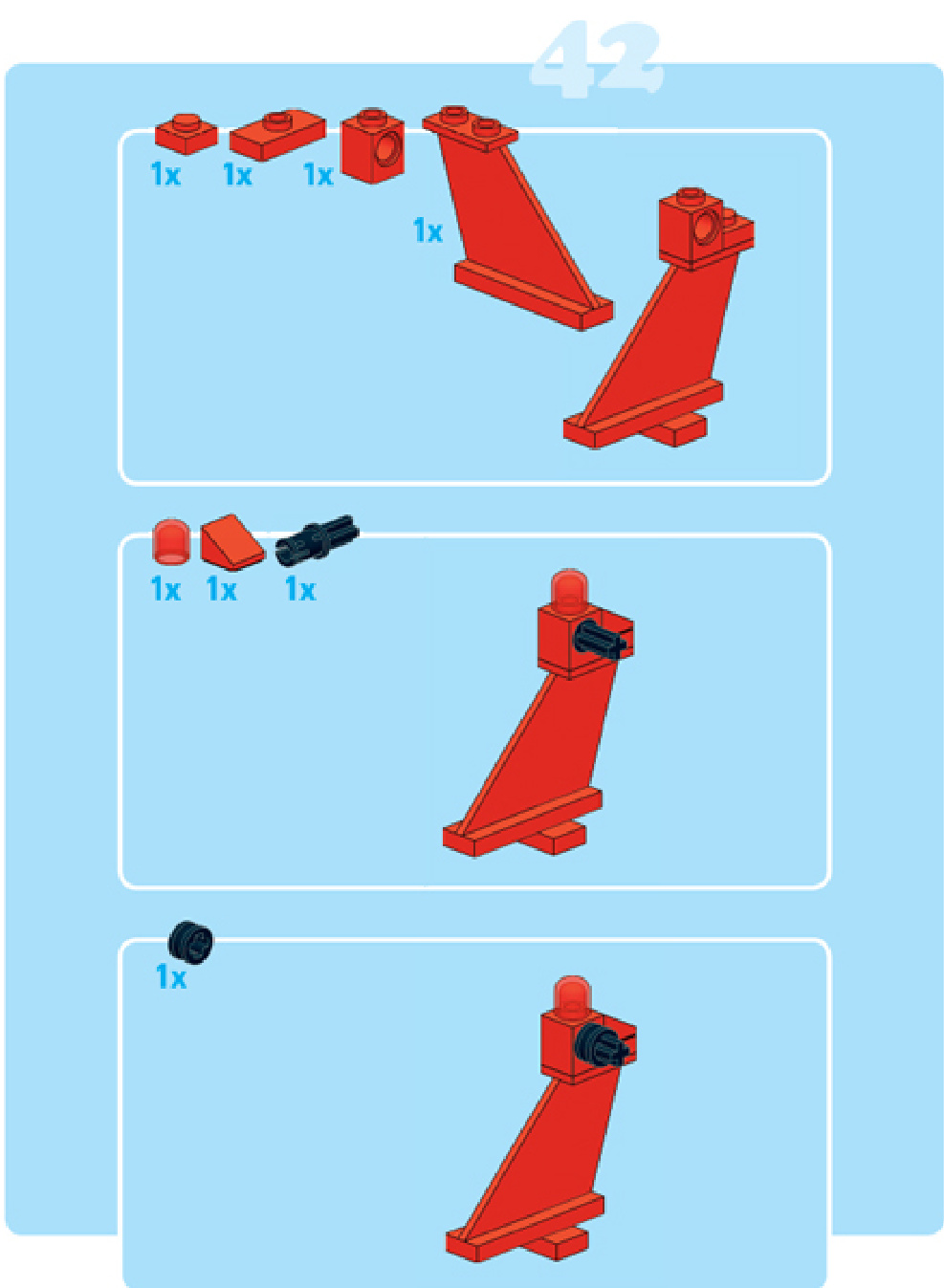
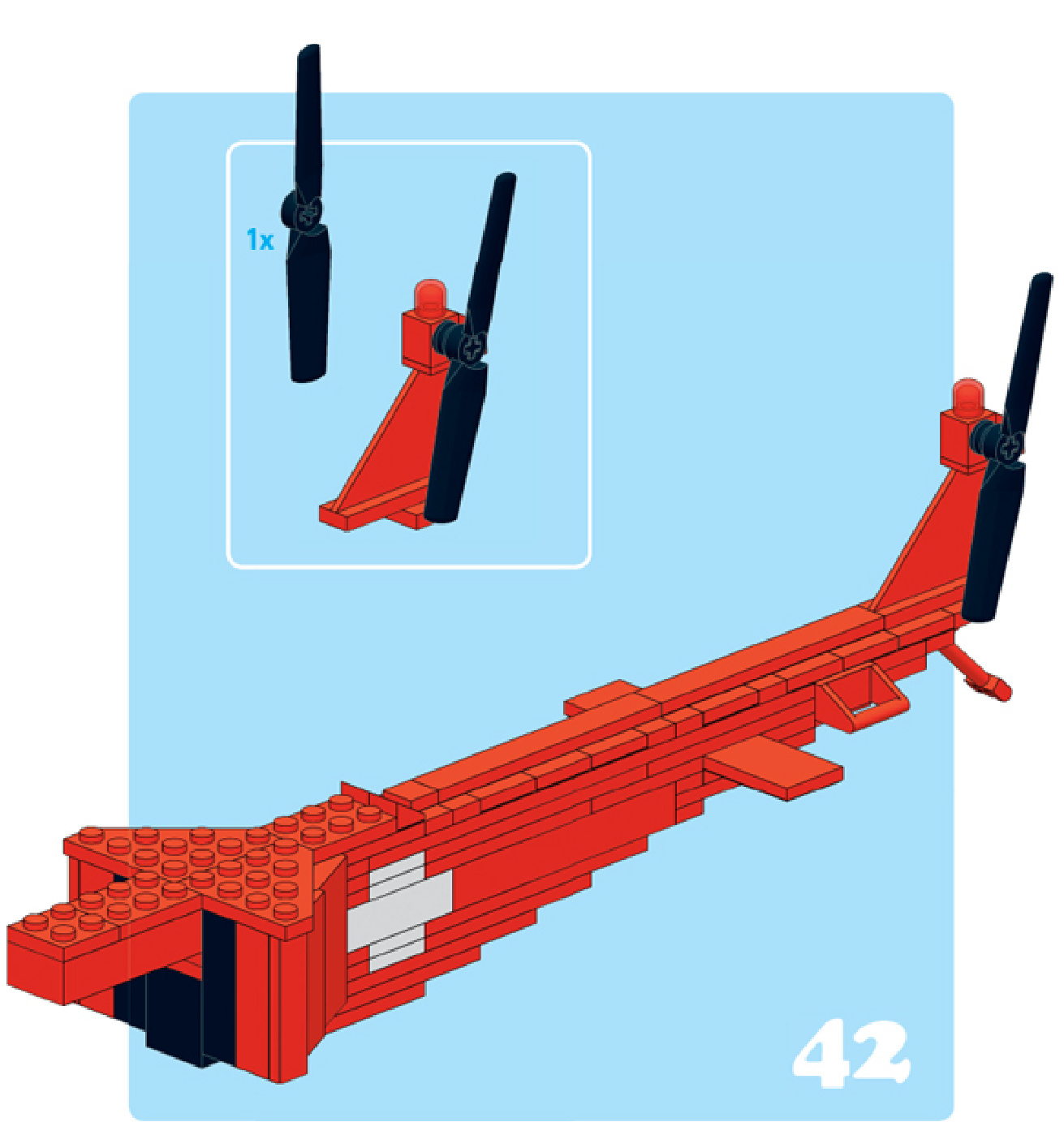
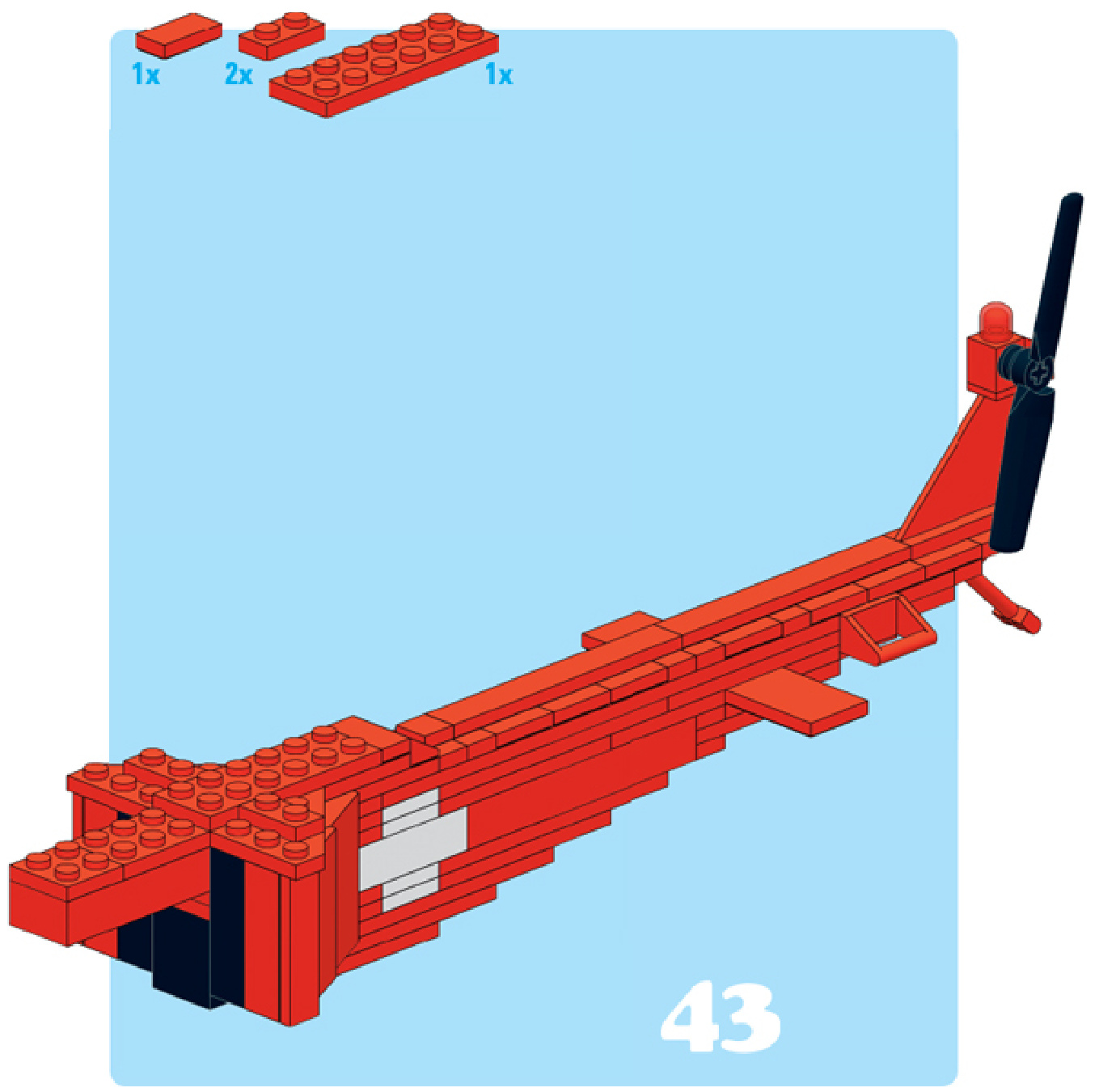
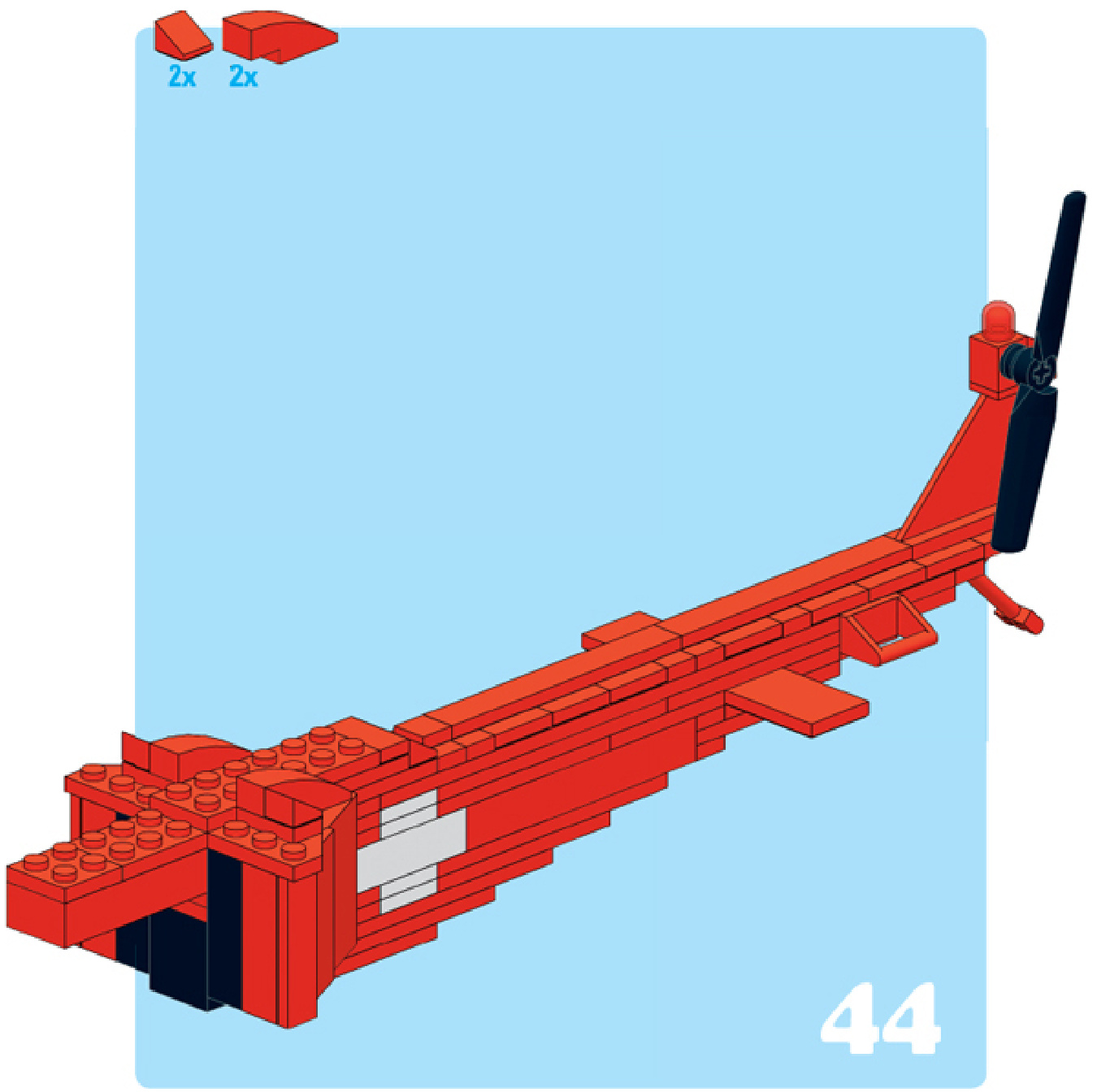
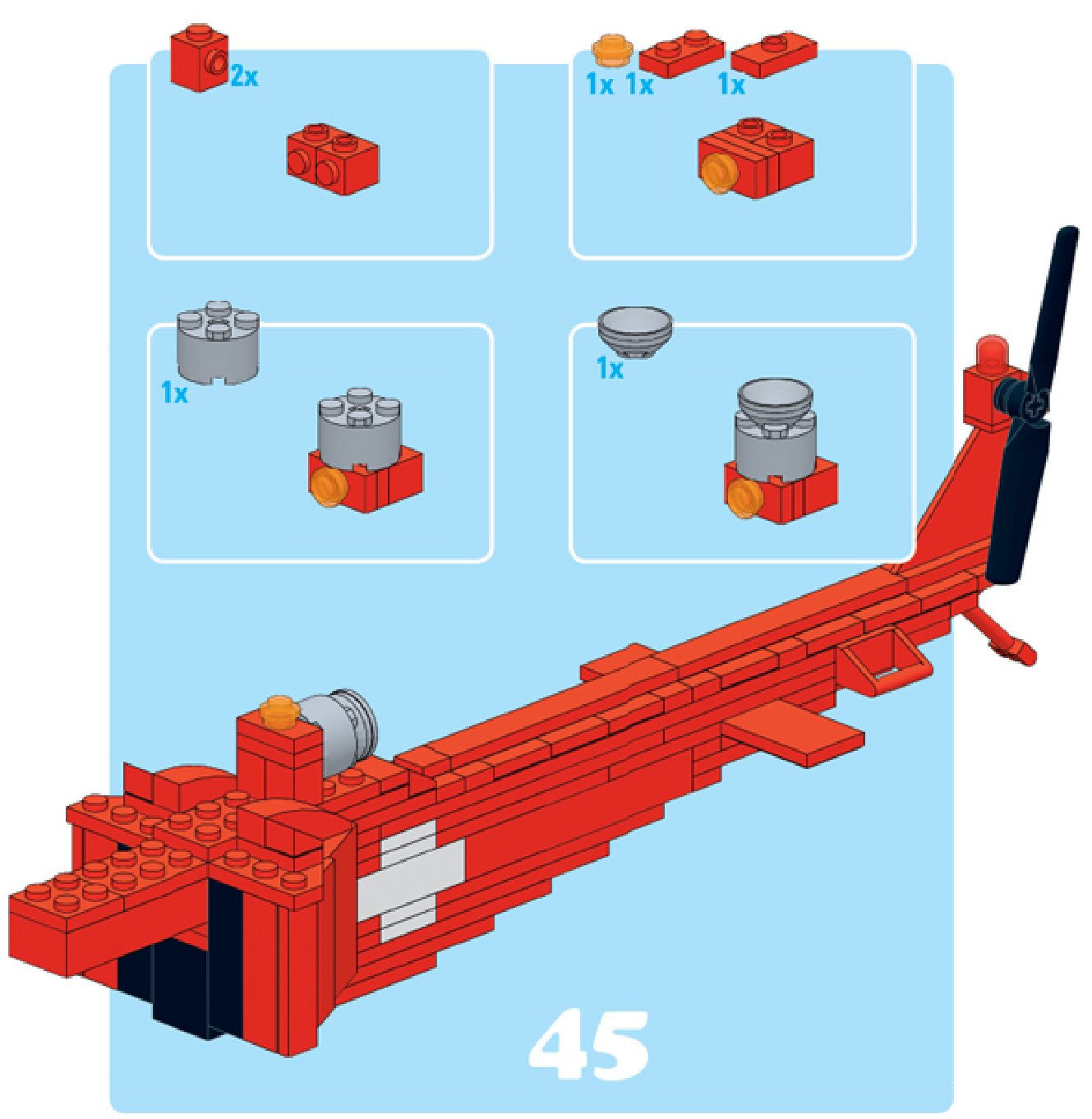
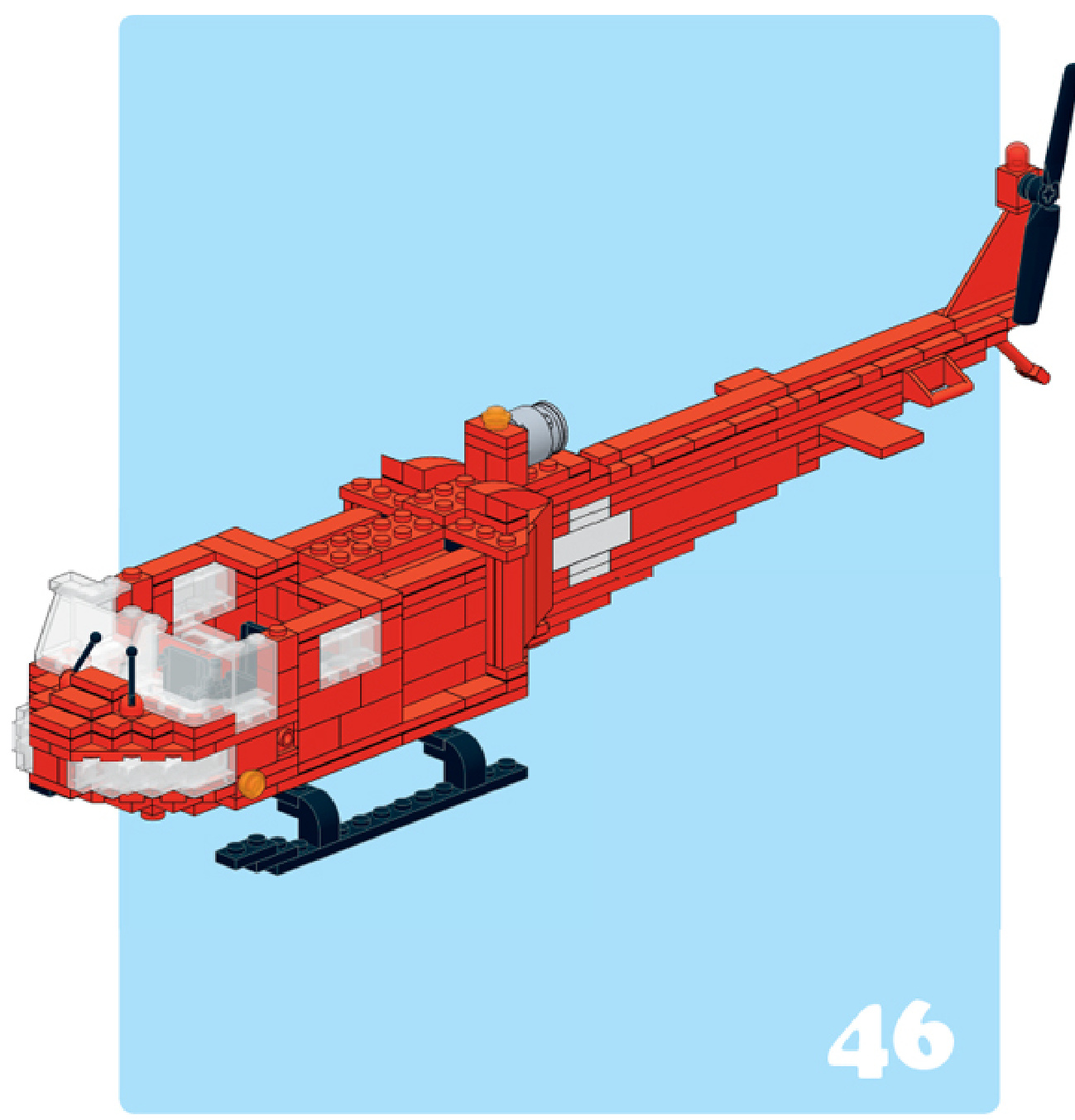
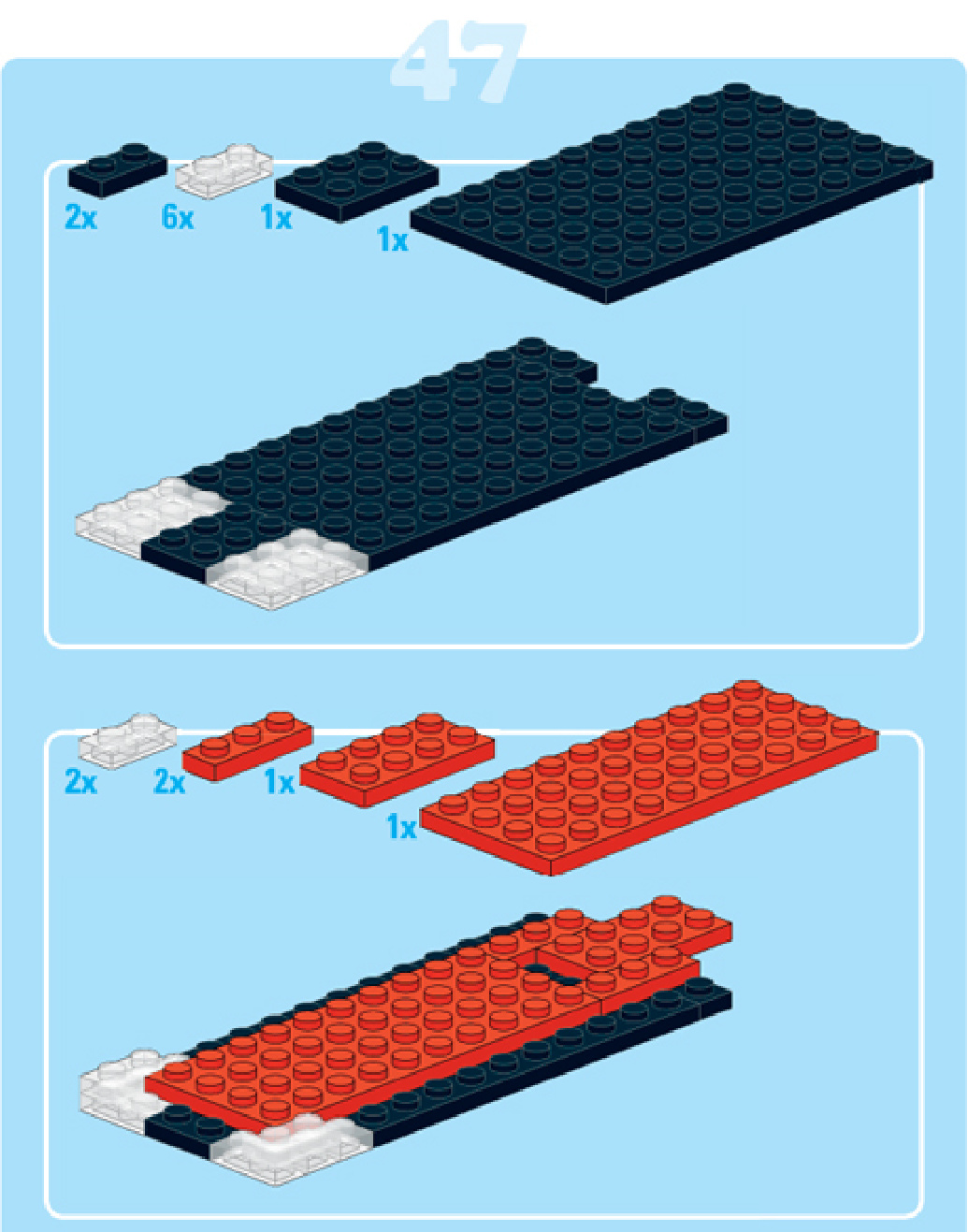
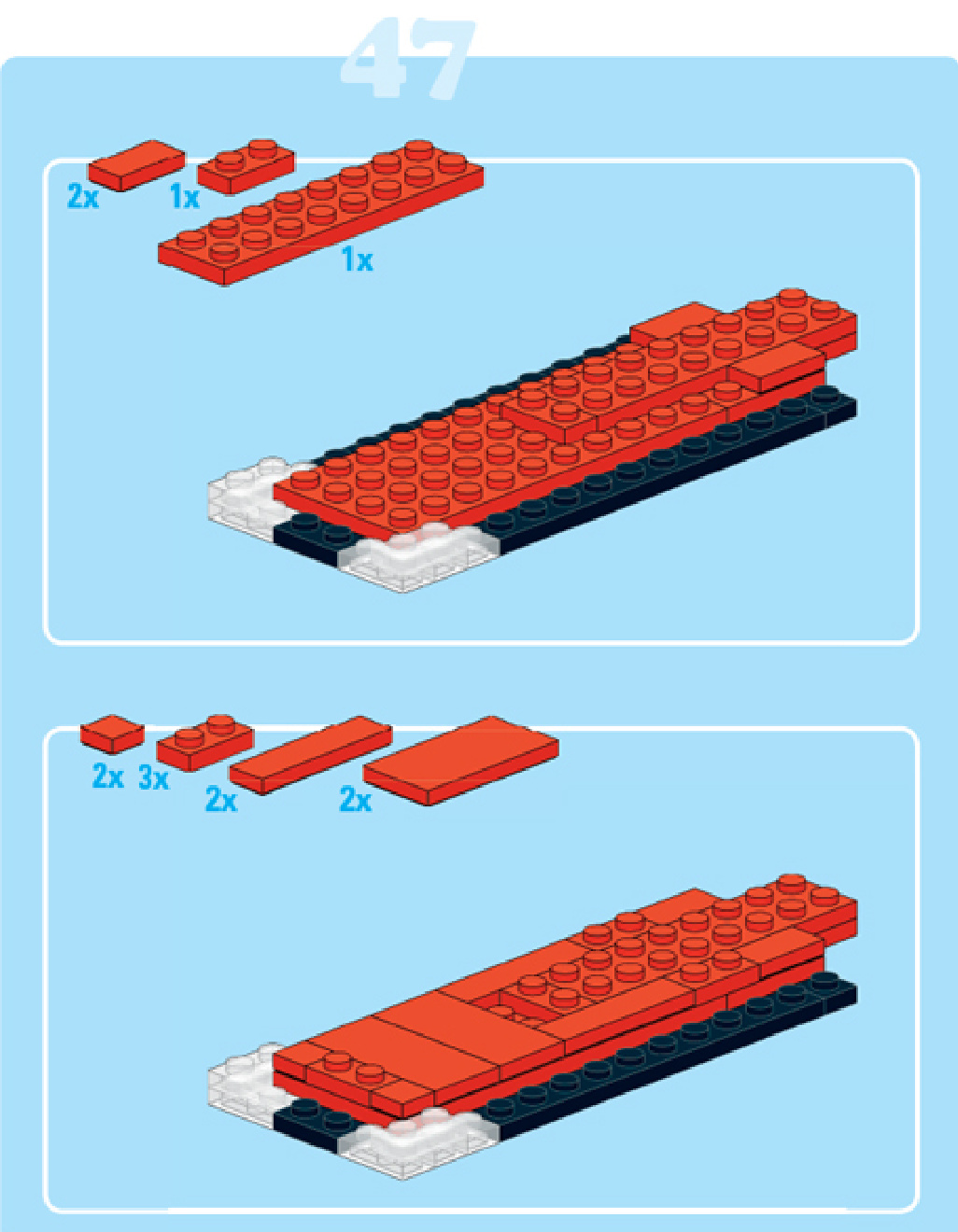
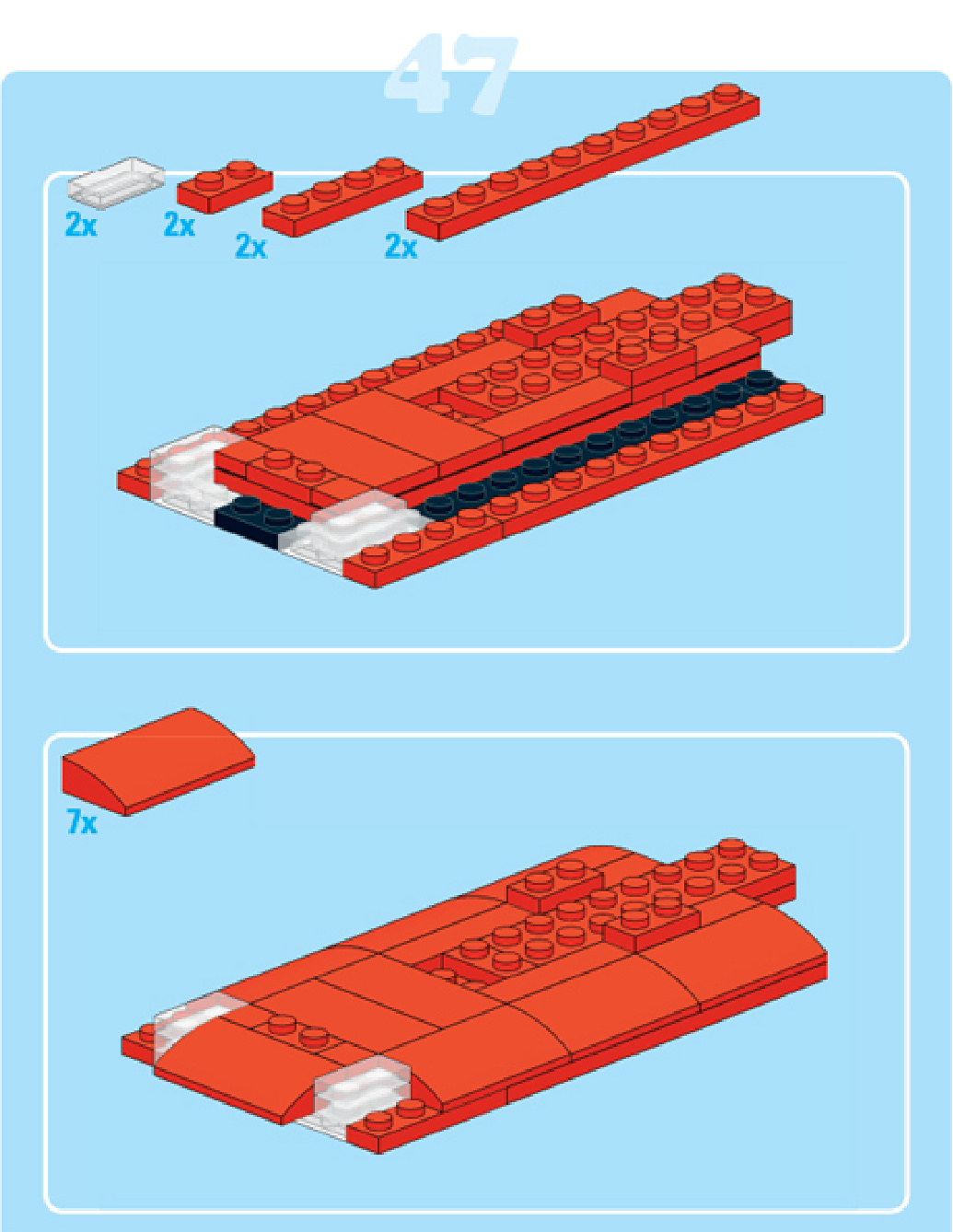
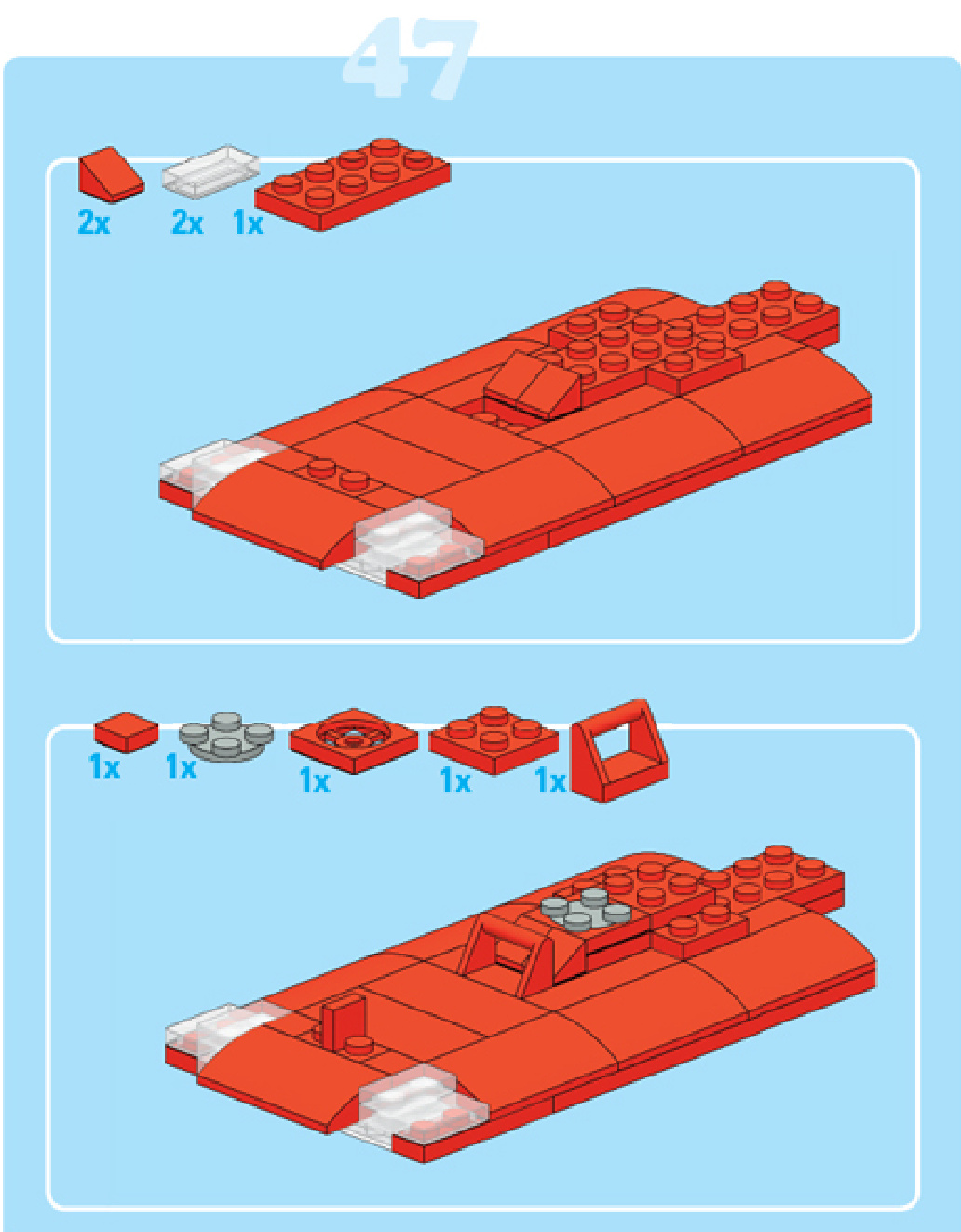
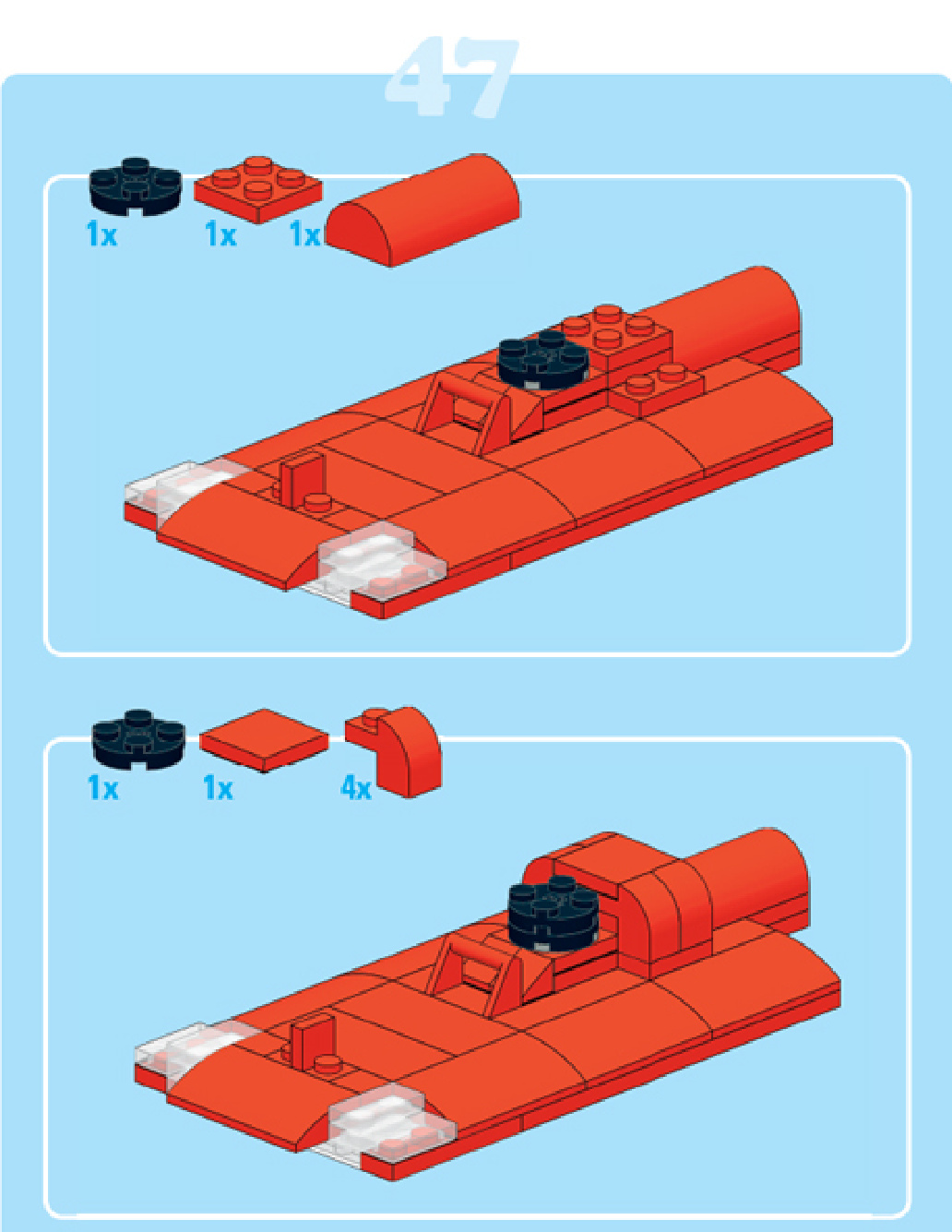
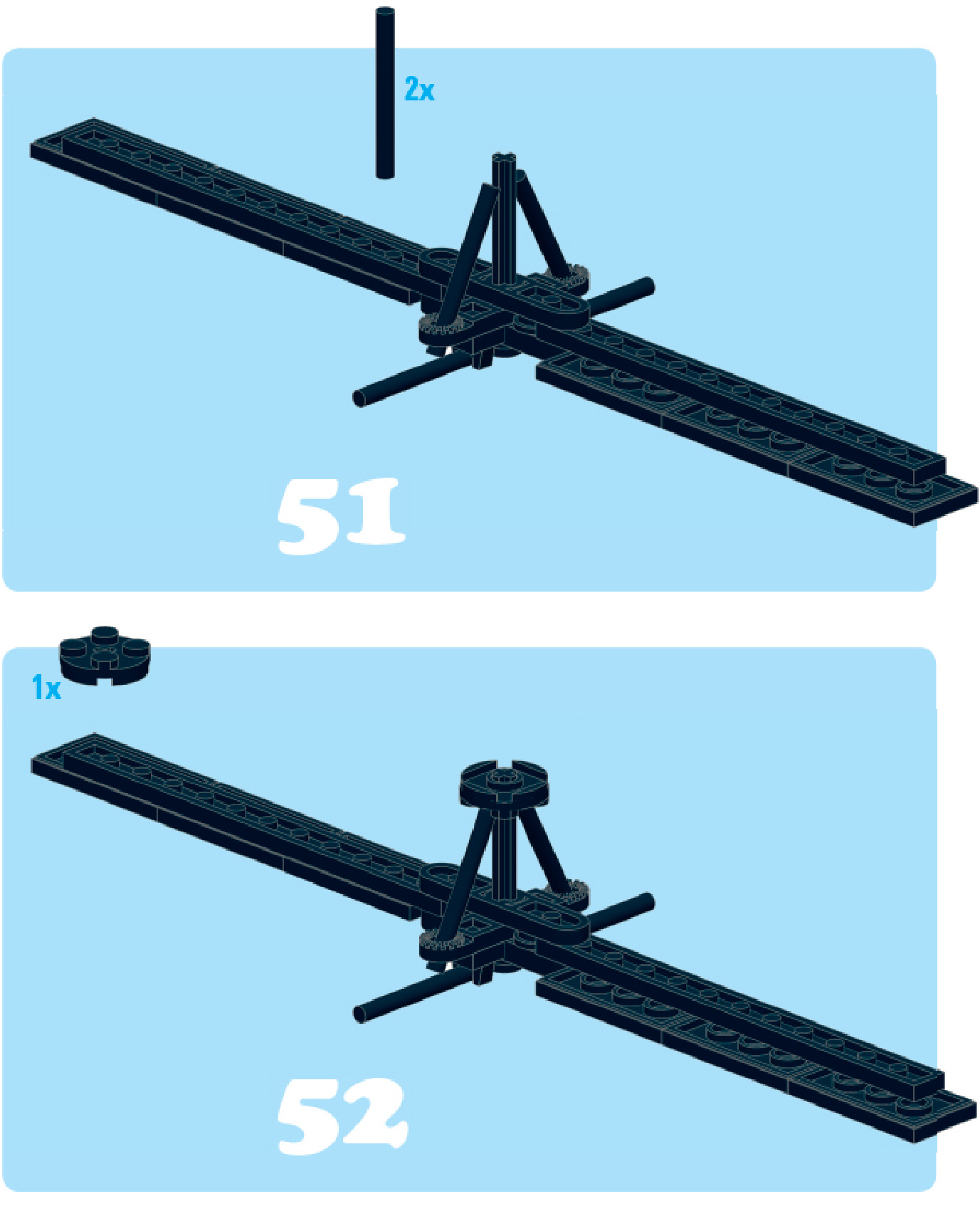
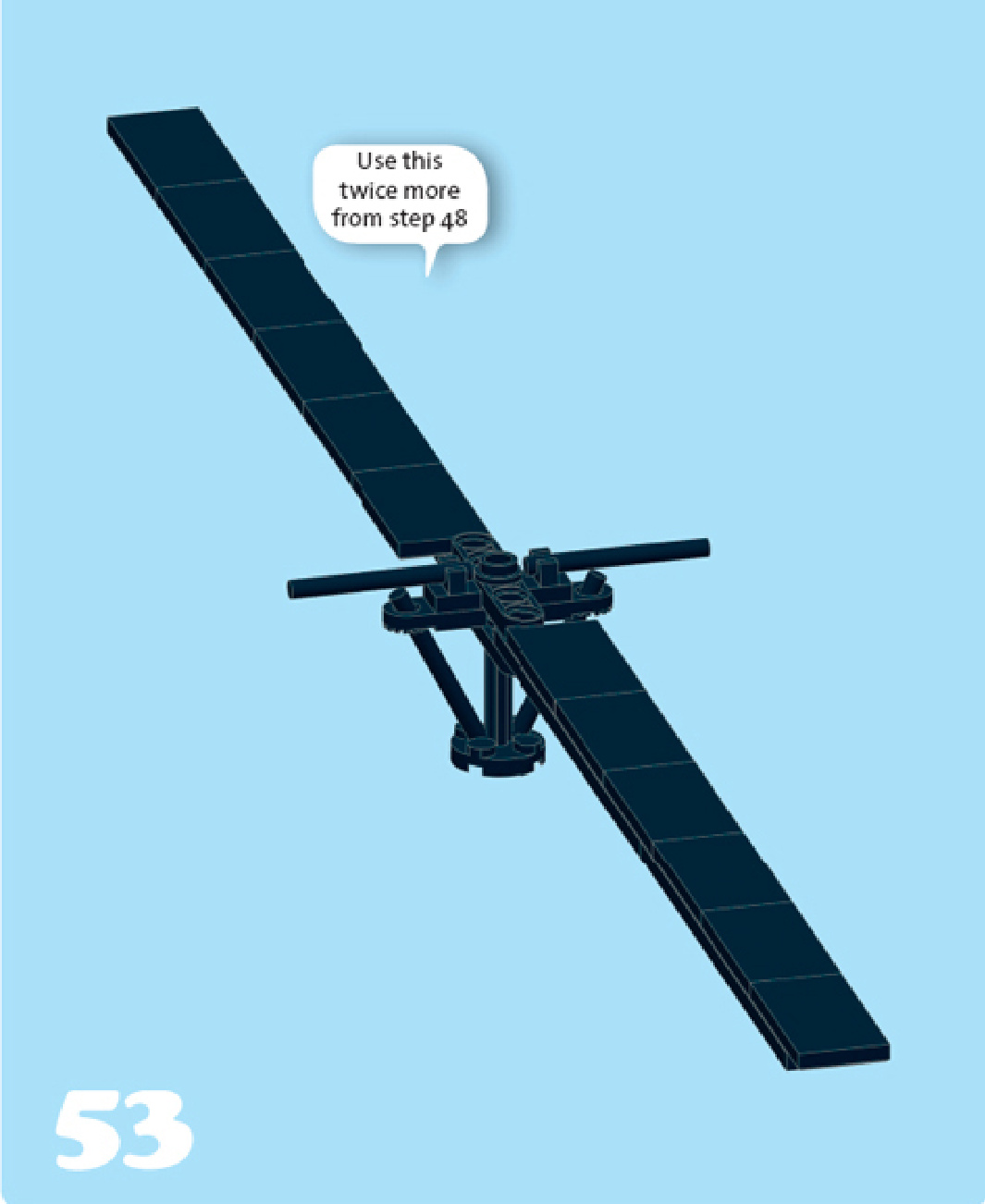

Parts List
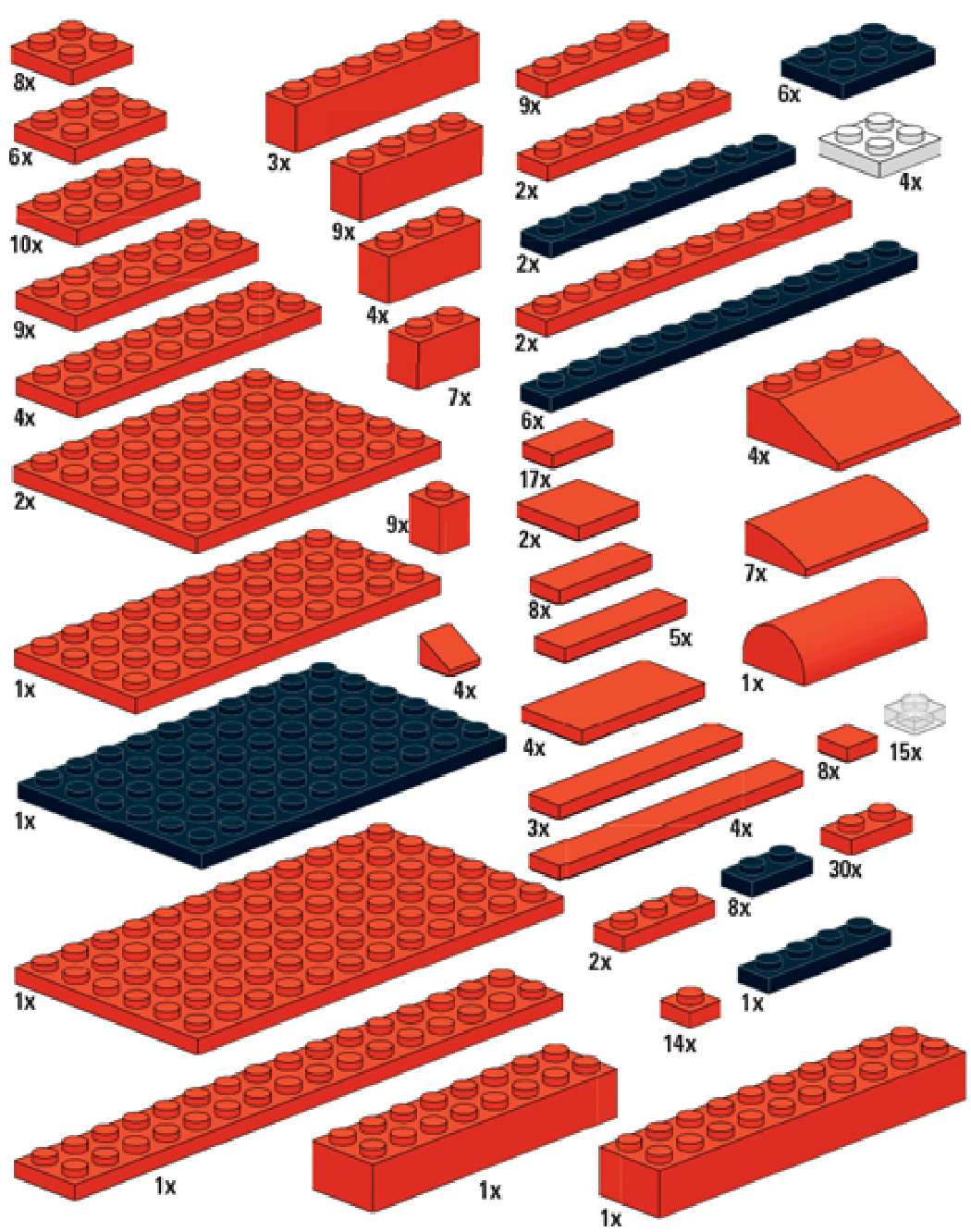
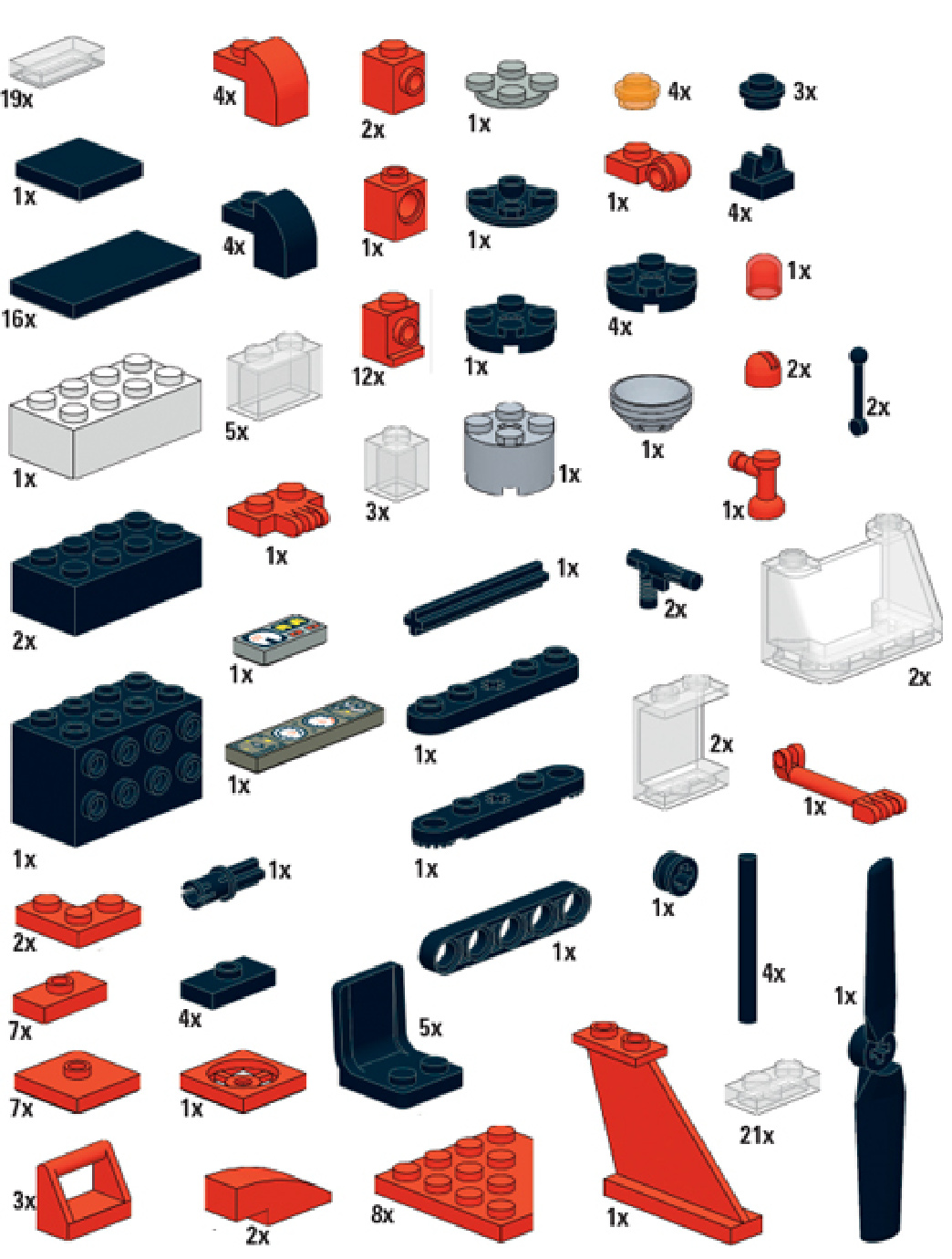
Almost every kid’s room has a LEGO brick collection these days. Quite a few adults are also addicted to the colorful bricks and love it when their offspring animate them to build something. However once the bricks end up in a box after tidying, the one thing that normally goes missing is what the two LEGO experts Joachim Klang and Oliver Albrecht share in their extensive book: ideas! They provide a wealth of suggestions for building a whole new world from the smorgasbord.
The Big Unofficial LEGO Builder’s Book comes with complete instructions how to build small models like cars, helicopters or electric locomotives from ordinary LEGO bricks, and how to develop these into an entire city complete with department store and train station—it only takes a little ambition, imagination and intuition. Those gripped by ambition can test their skills with more professional models. Simple stepby-step instruc tions complete with clearly arranged parts lists make it easy to bring an entire city from streets, houses and vehicles to life.
Big and small, young and young at heart, this book is for all fans of the fascinating bricks that have accompanied us for generations.
The LEGO® Adventure Book
Cars, Castles, Dinosaurs & More!
For years, I’ve wanted to learn to be a better builder, to do more with the LEGO bricks I have been creating with my entire life. So today, I decided to do it. I packed up my stuff and headed into the unknown. What will I build? What other LEGO builds might I encounter? It’s going to be fun finding out!
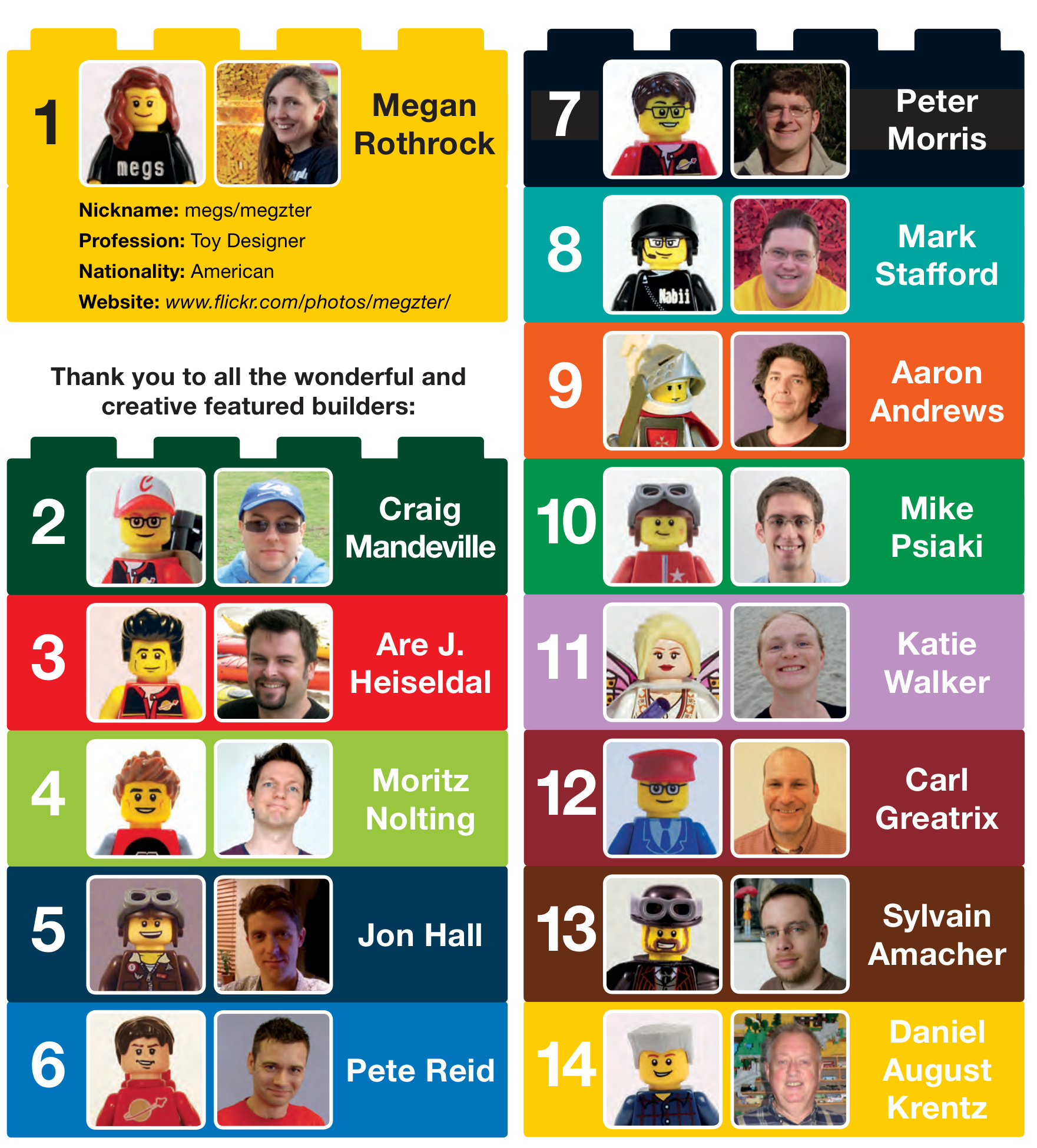
Megan Rothrock
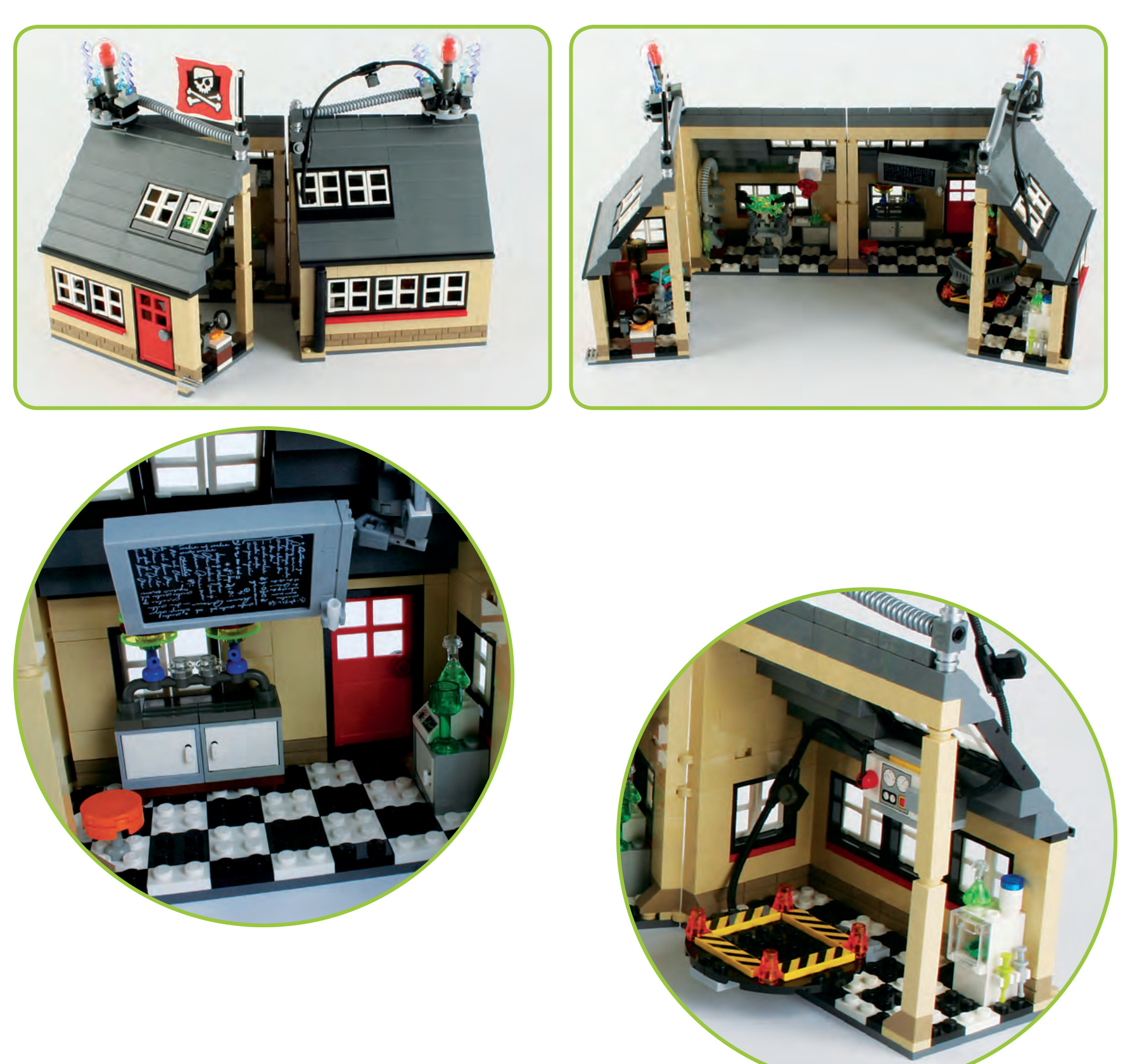
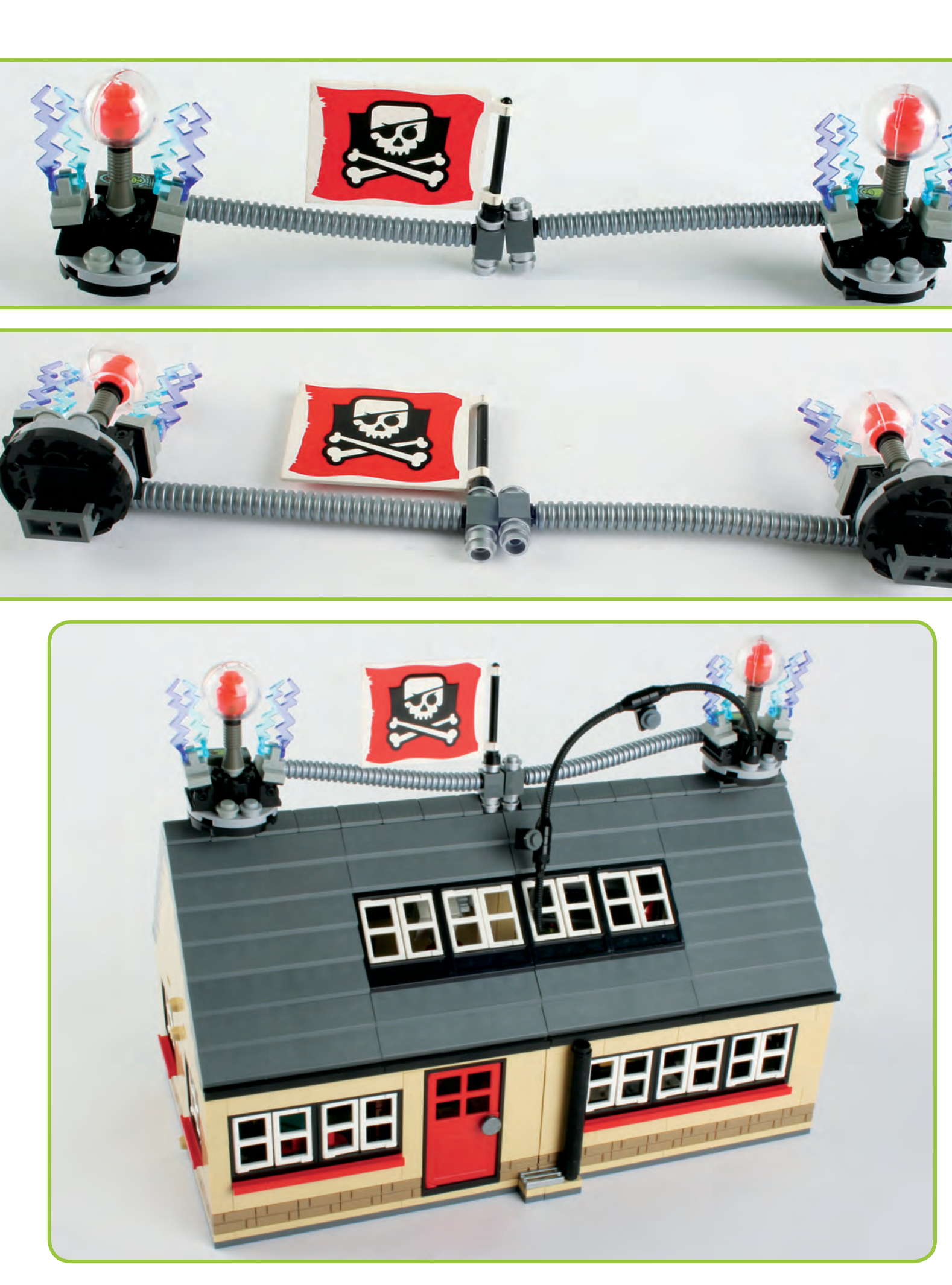
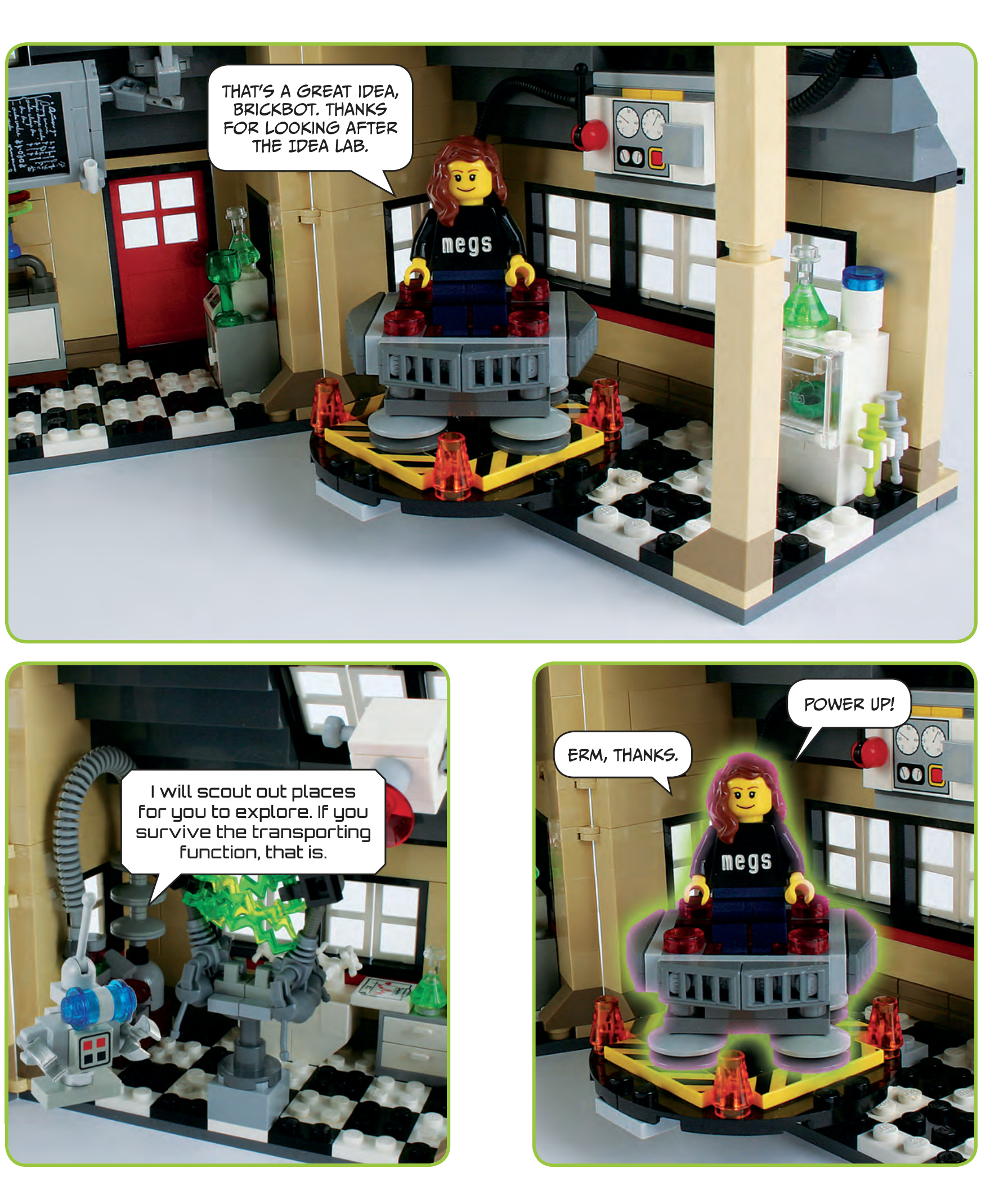
Building the Idea Lab
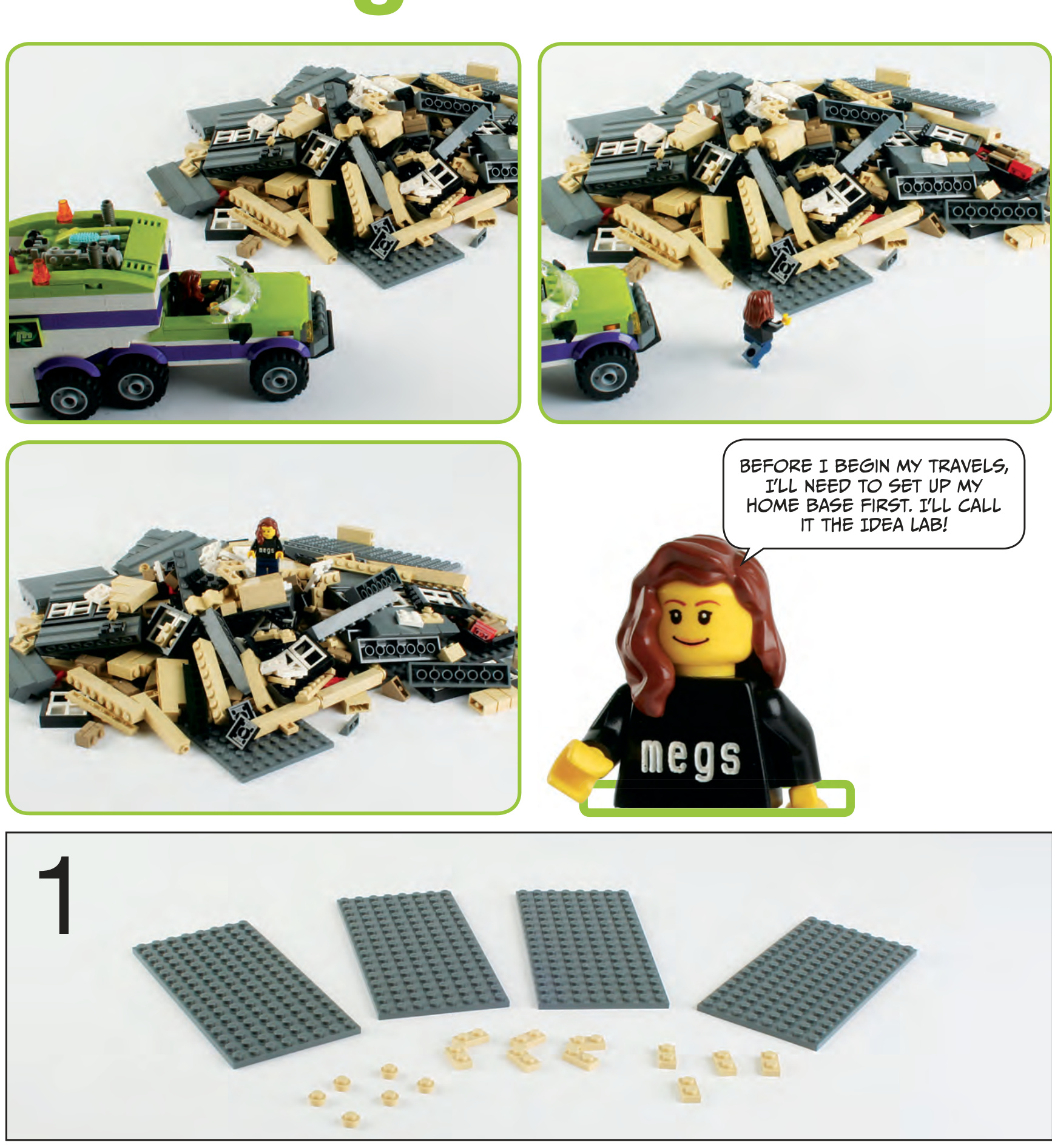
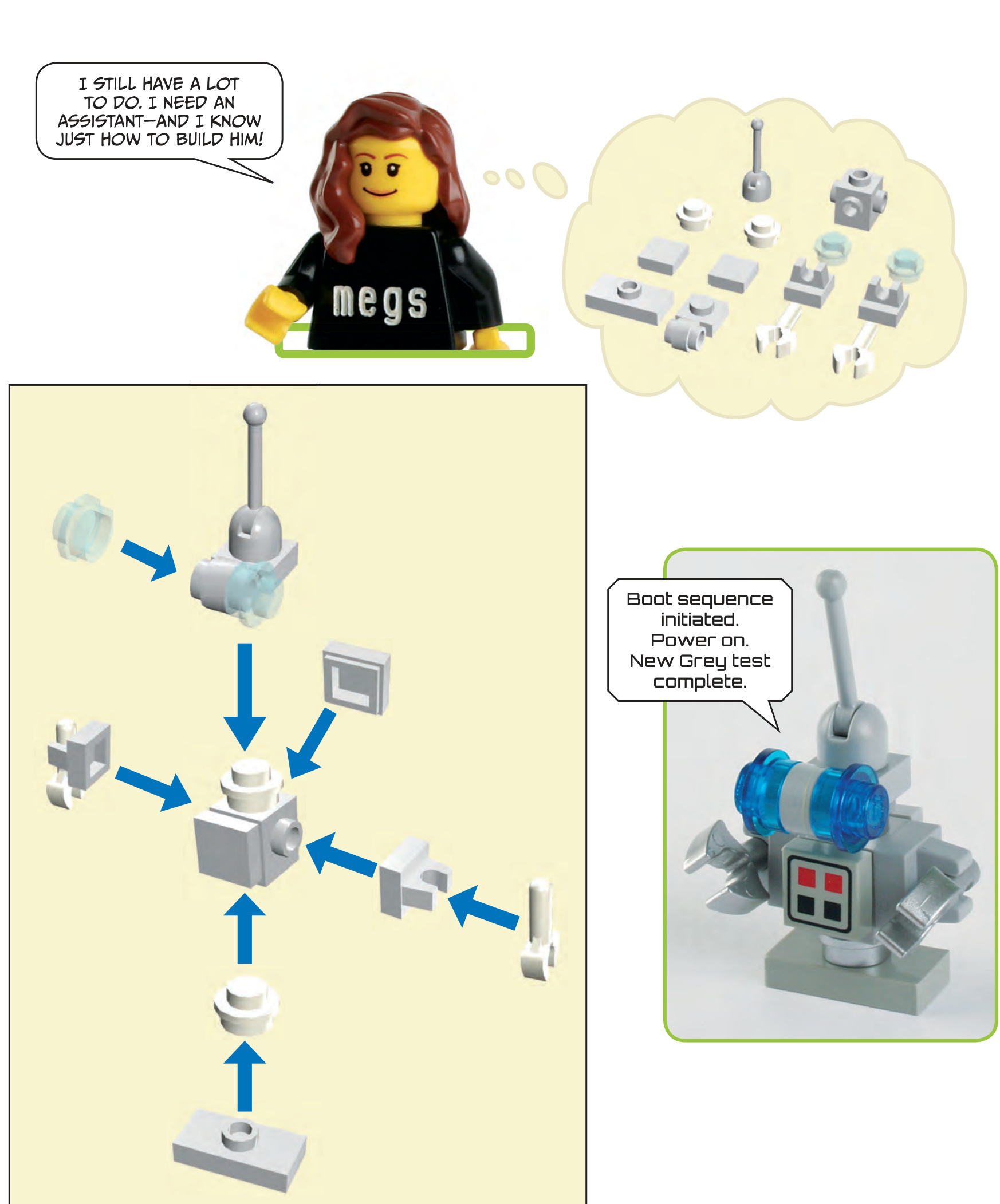
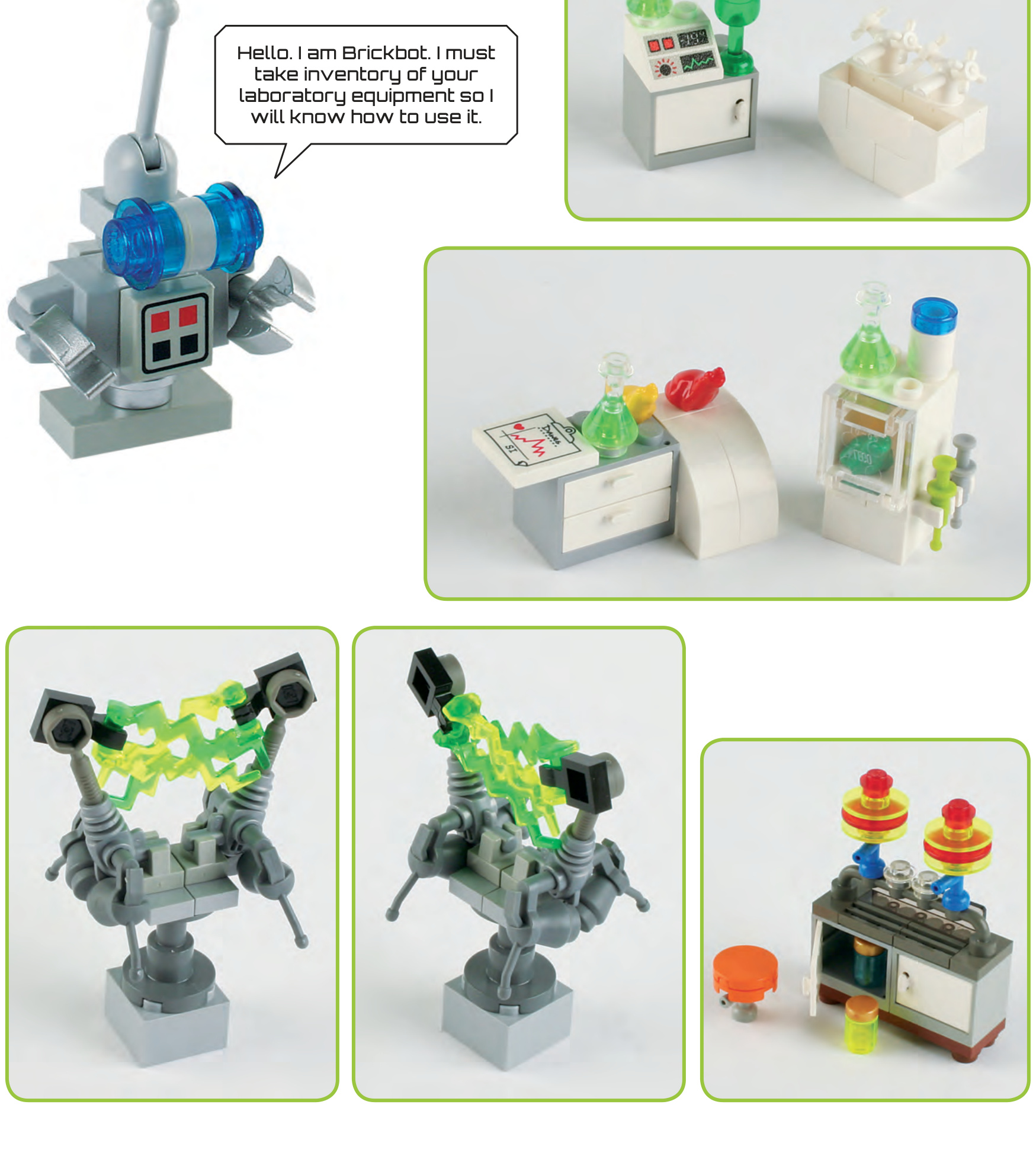
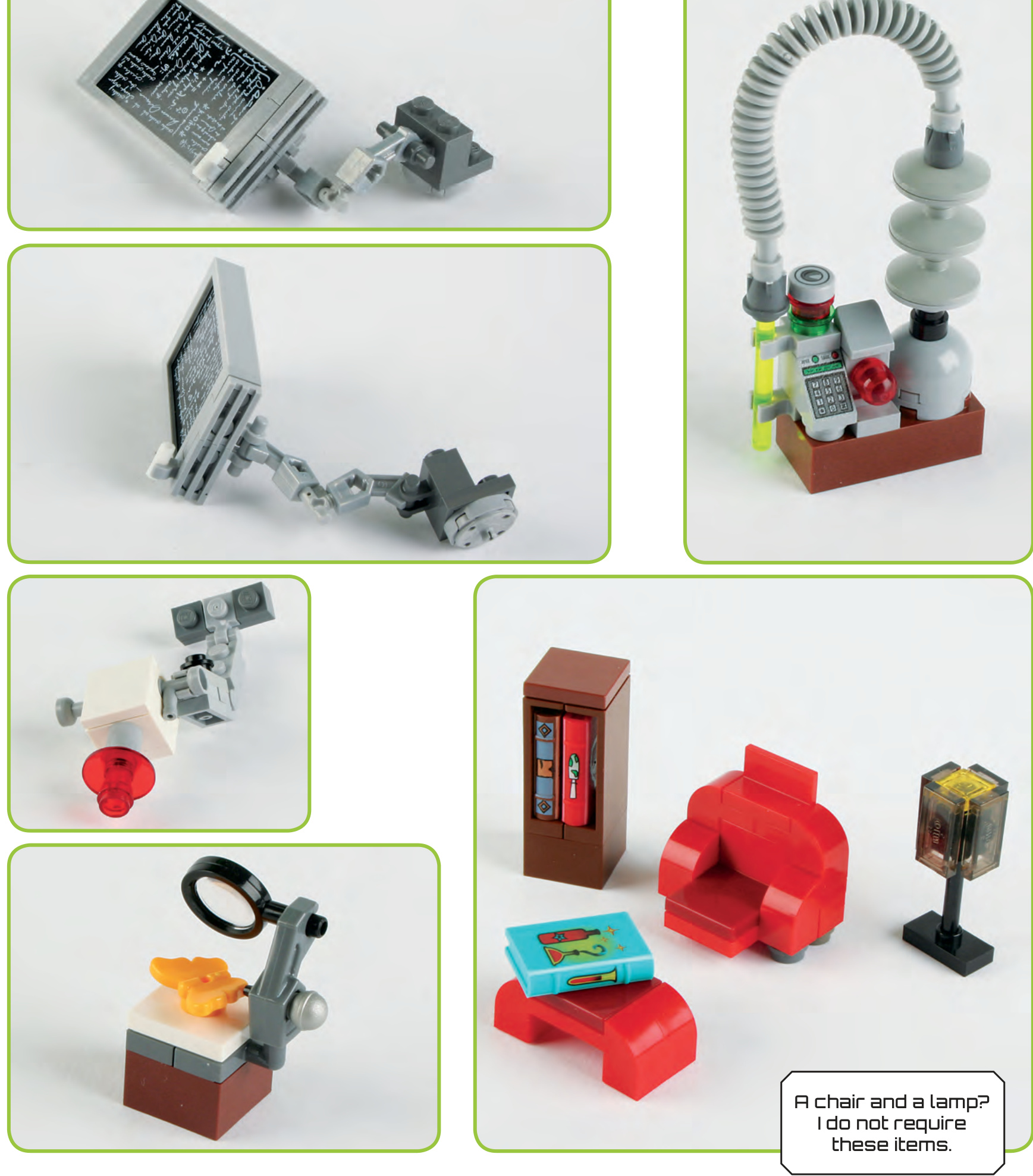

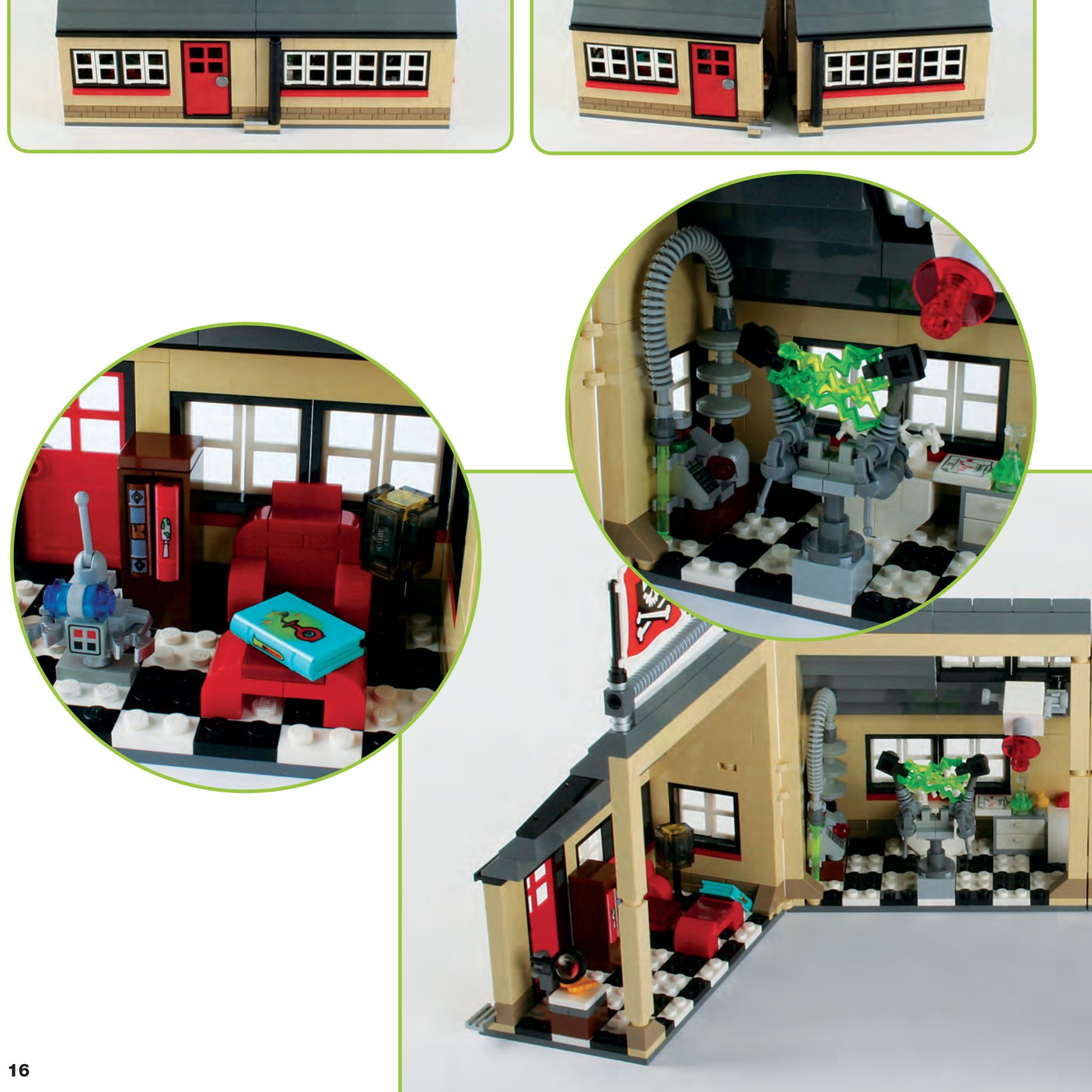
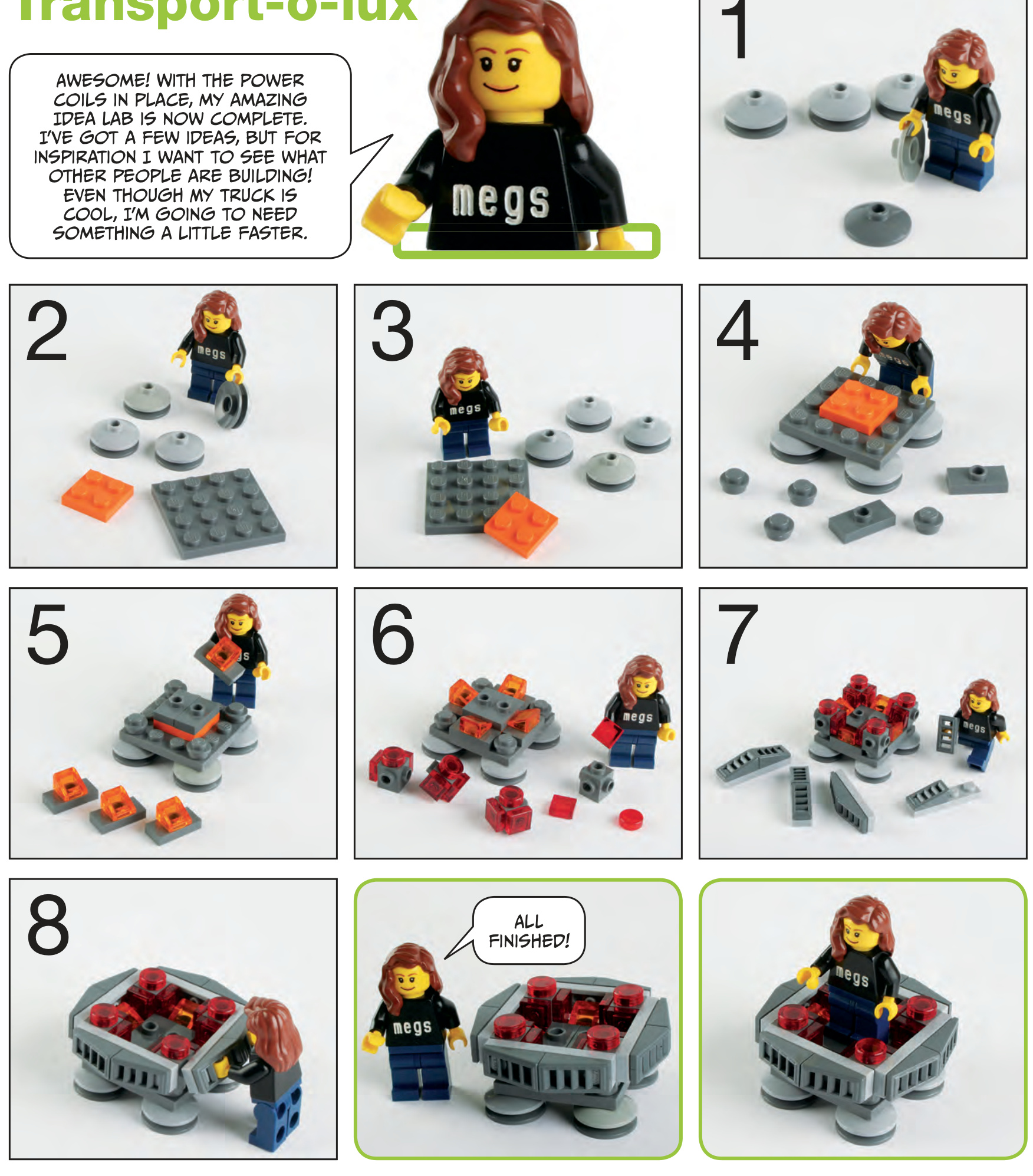
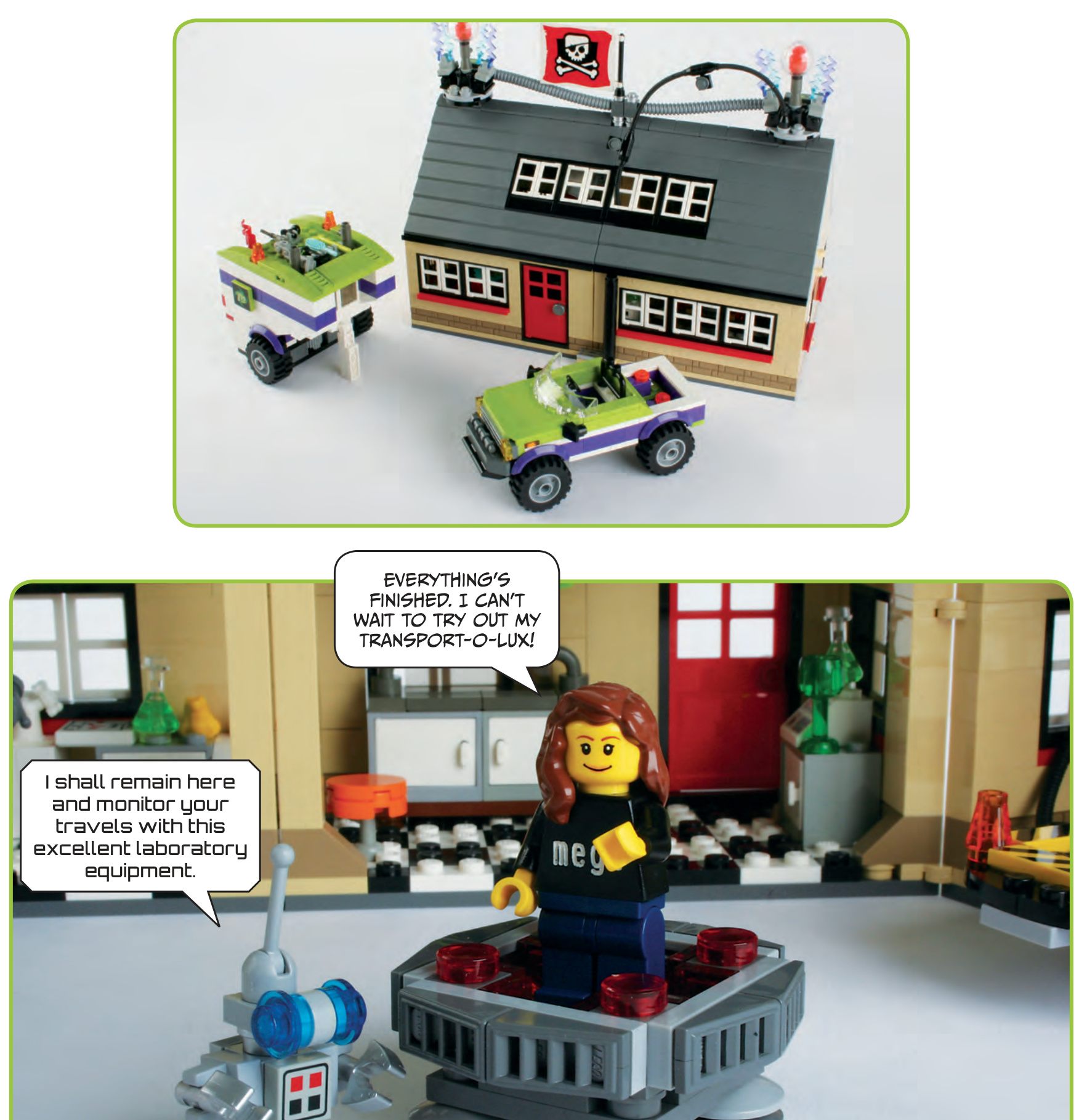
Transport-o-lux
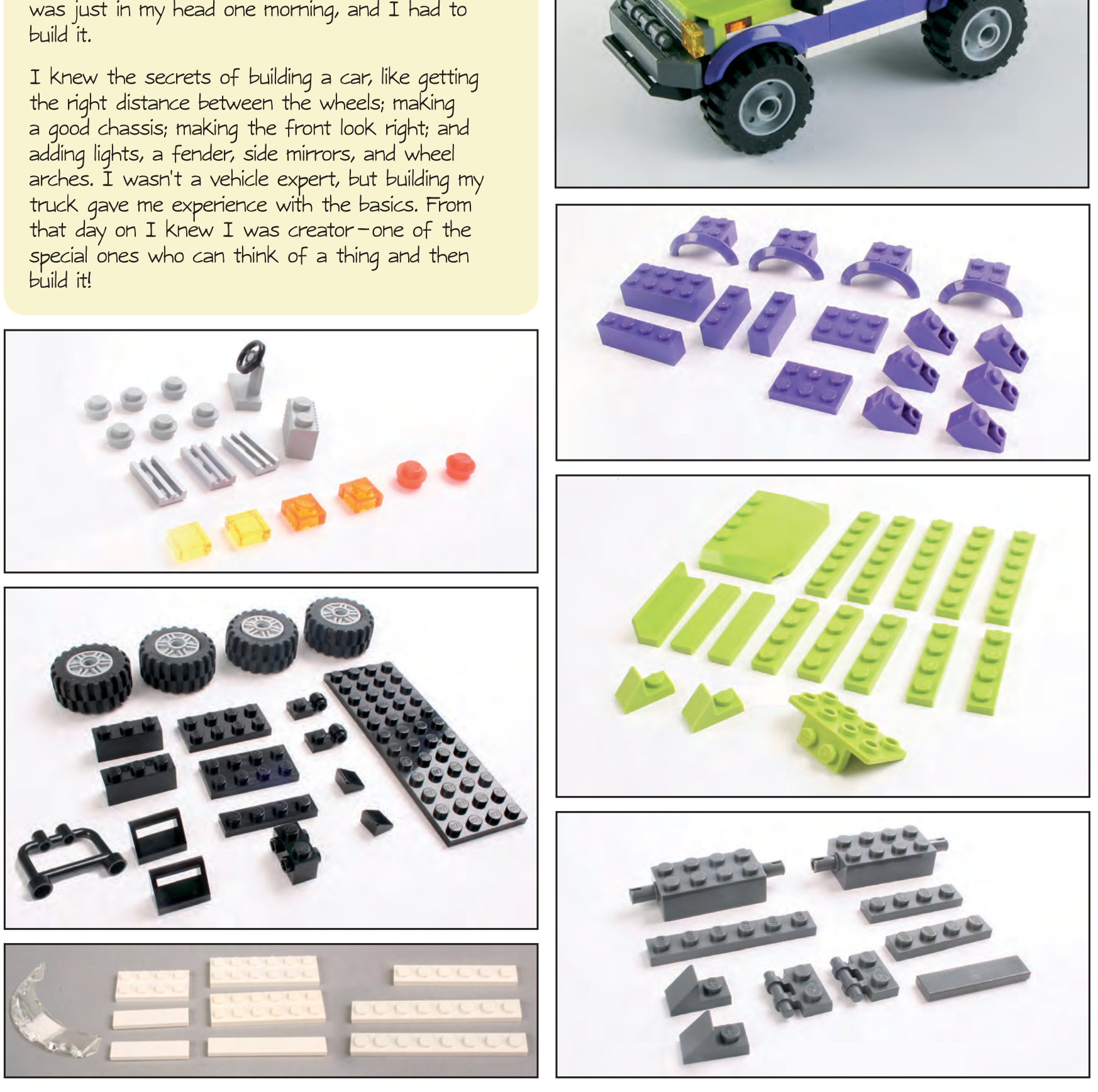
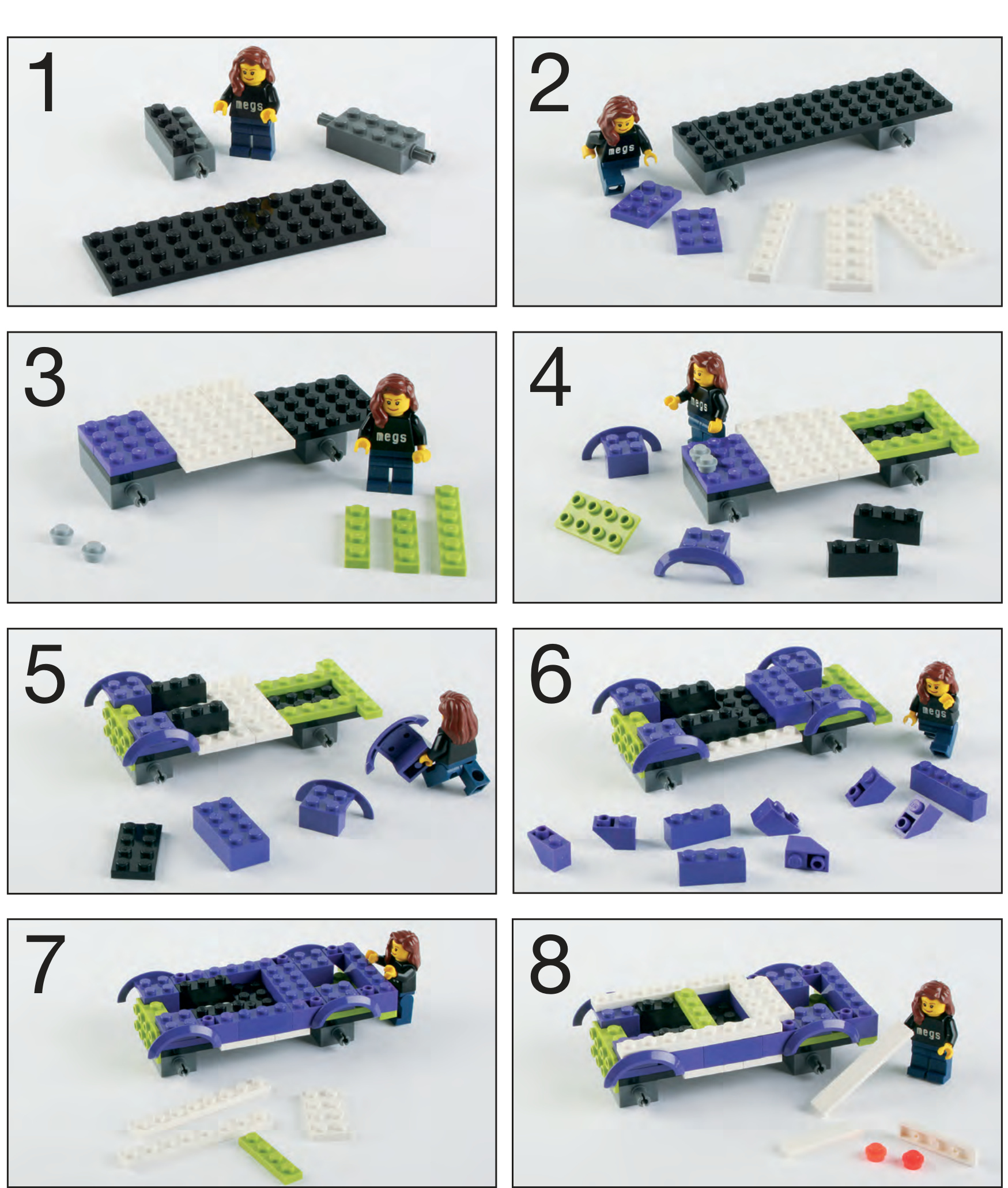
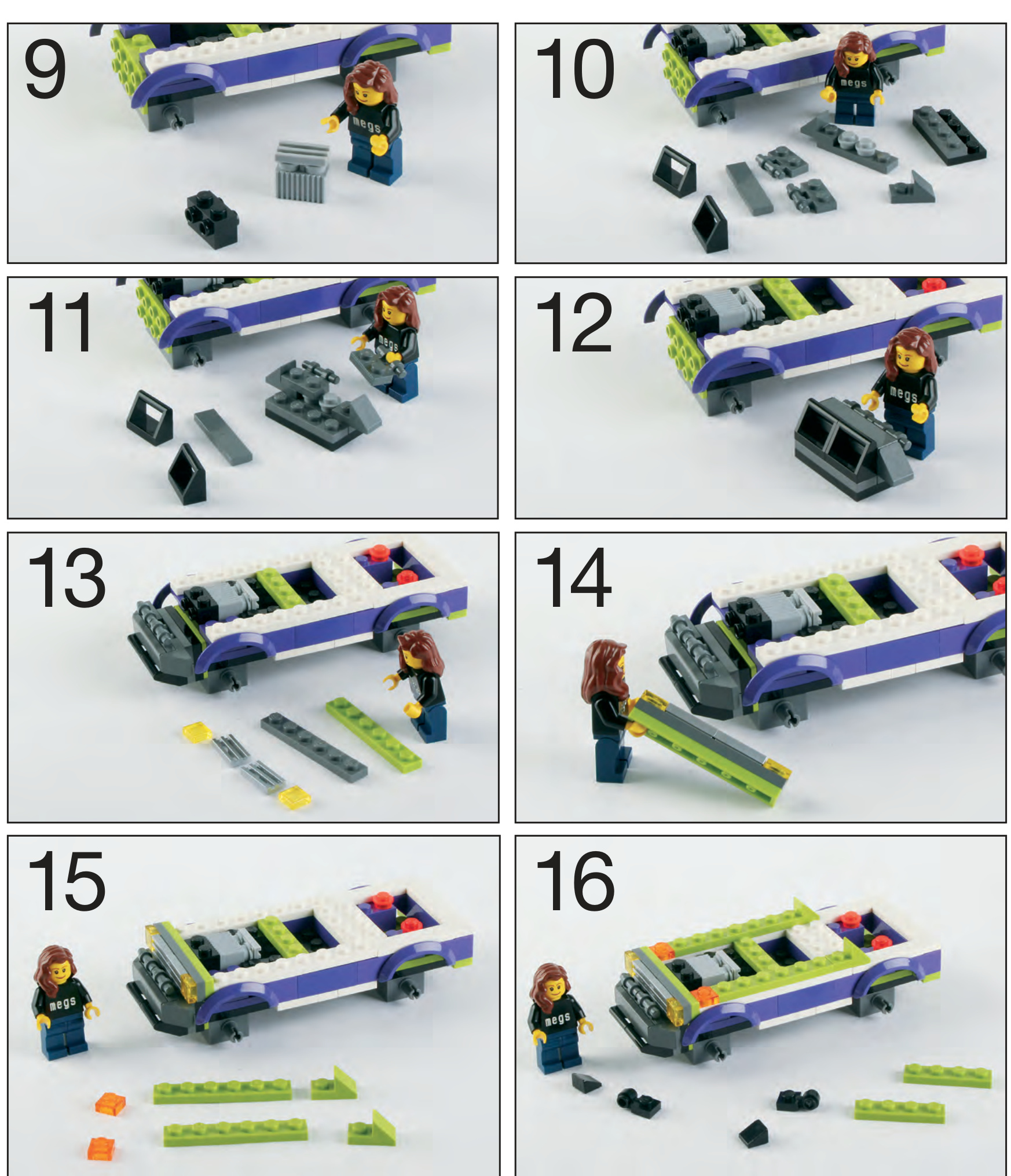
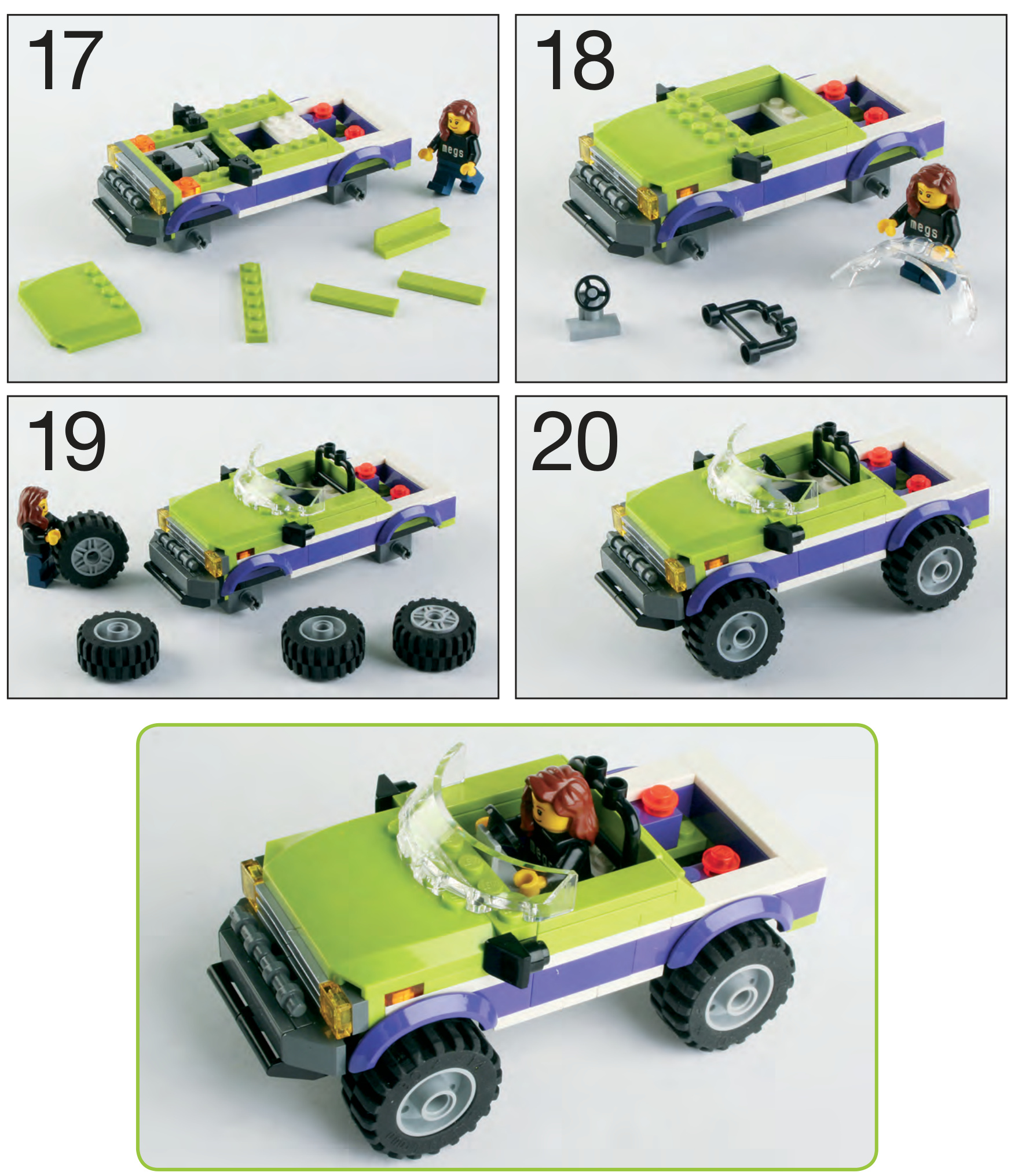
4×4 Truck
Building Journal
As I was working on the Transport-o-lux today, I remembered my first creation: my 4×4 truck. It
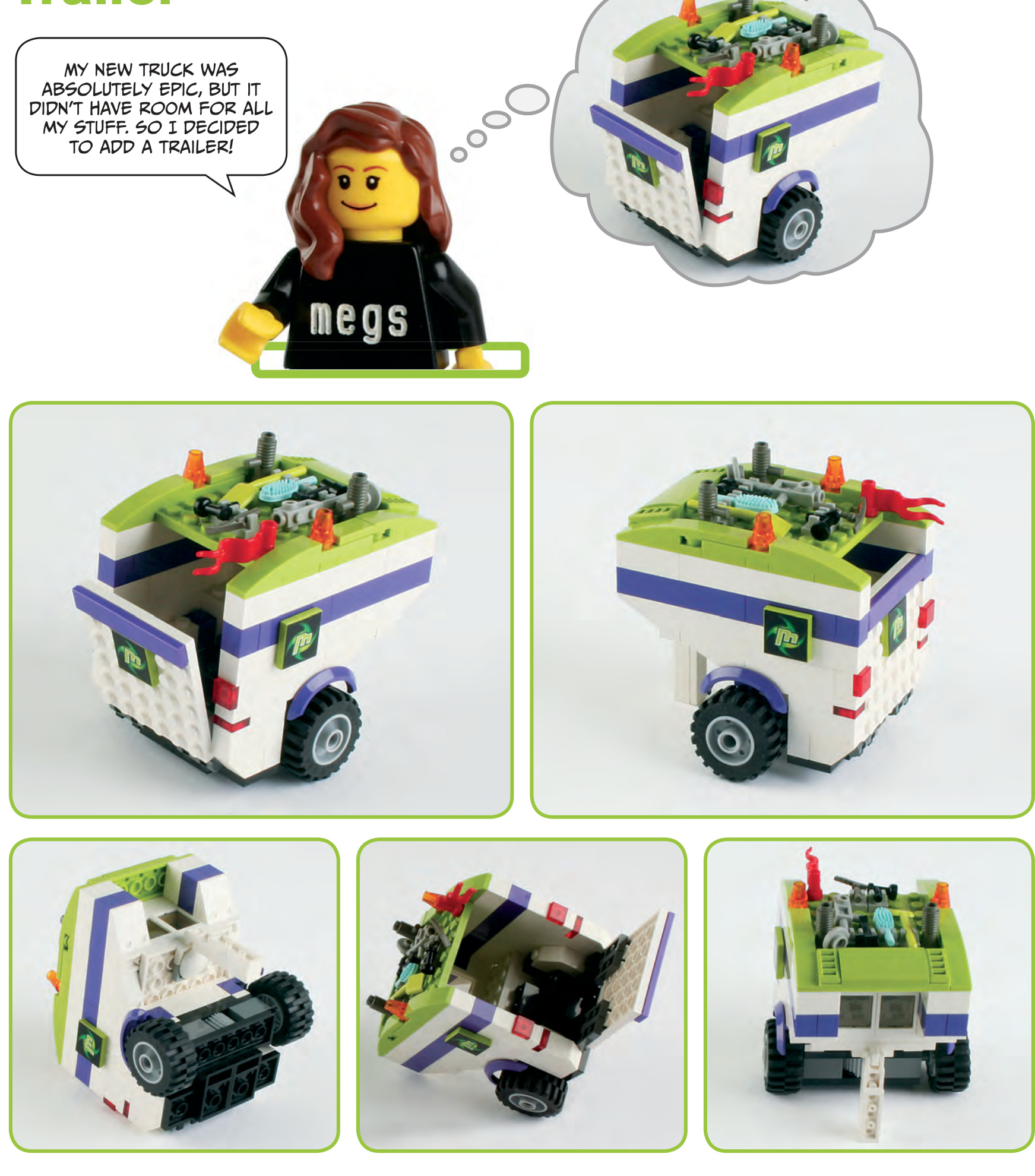
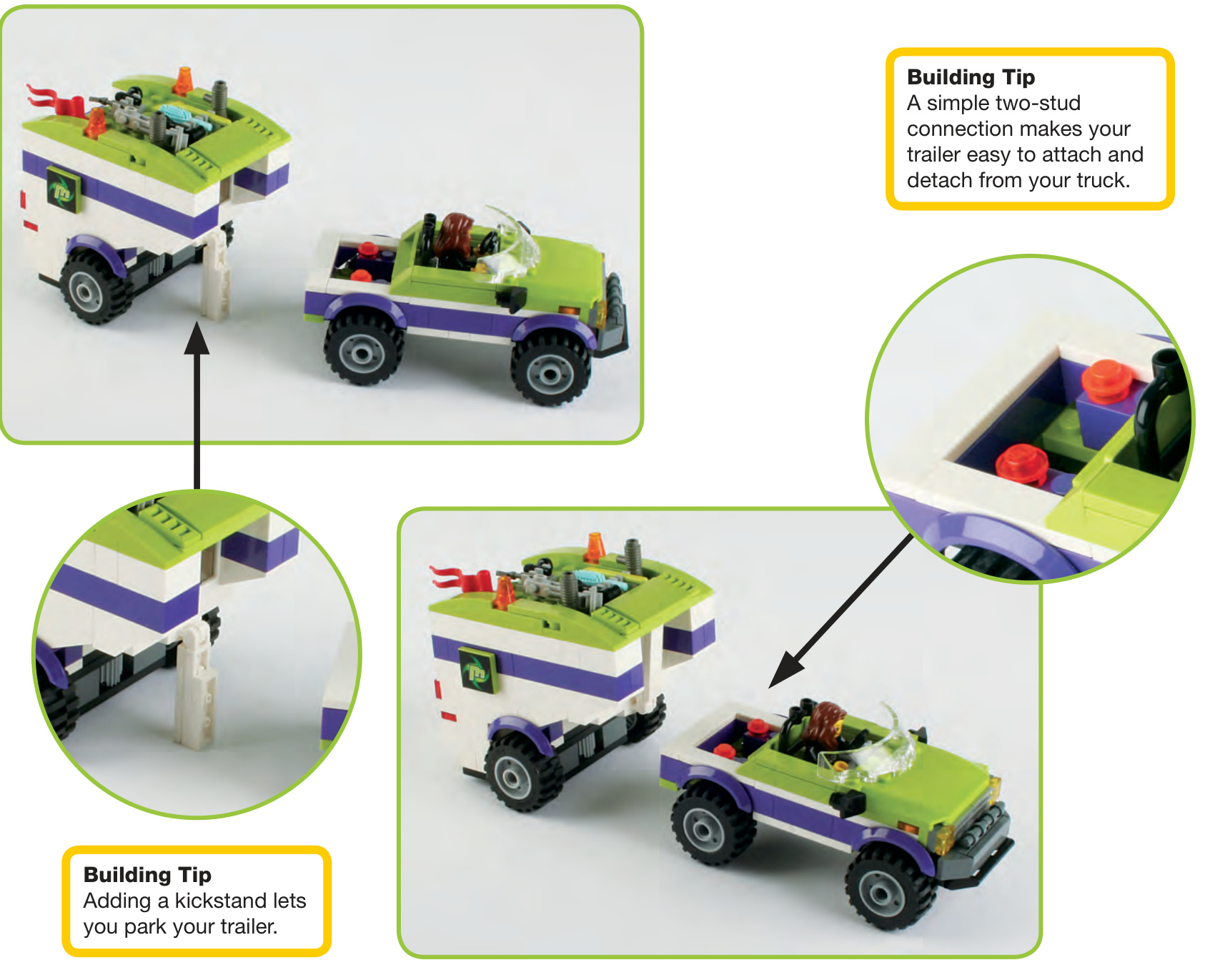
Trailer
Building Journal
I had to think about my trailer’s purpose and then add the appropriate details, just like I did with my science equipment.
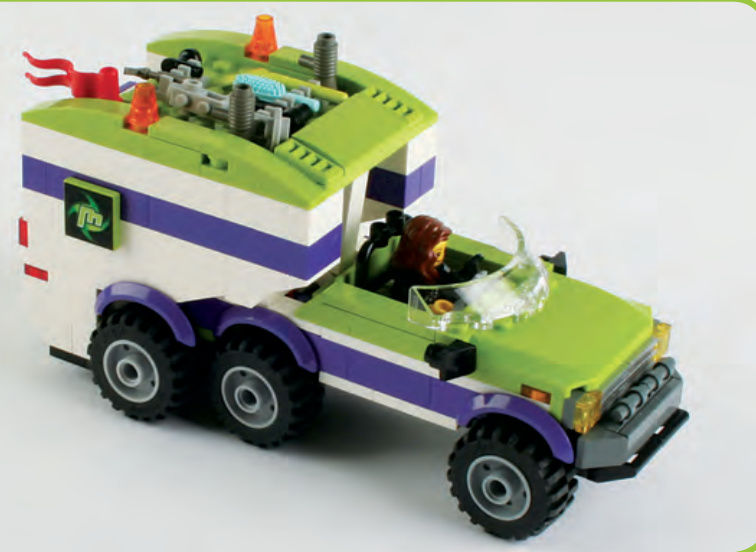
Adding a trailer can change the look and utility of a vehicle. Now my 4×4 truck can carry much more! I think I’ll call it my Idea Truck.
Now that I know which pieces I need for the Idea Truck, I can build it in other colors, too.
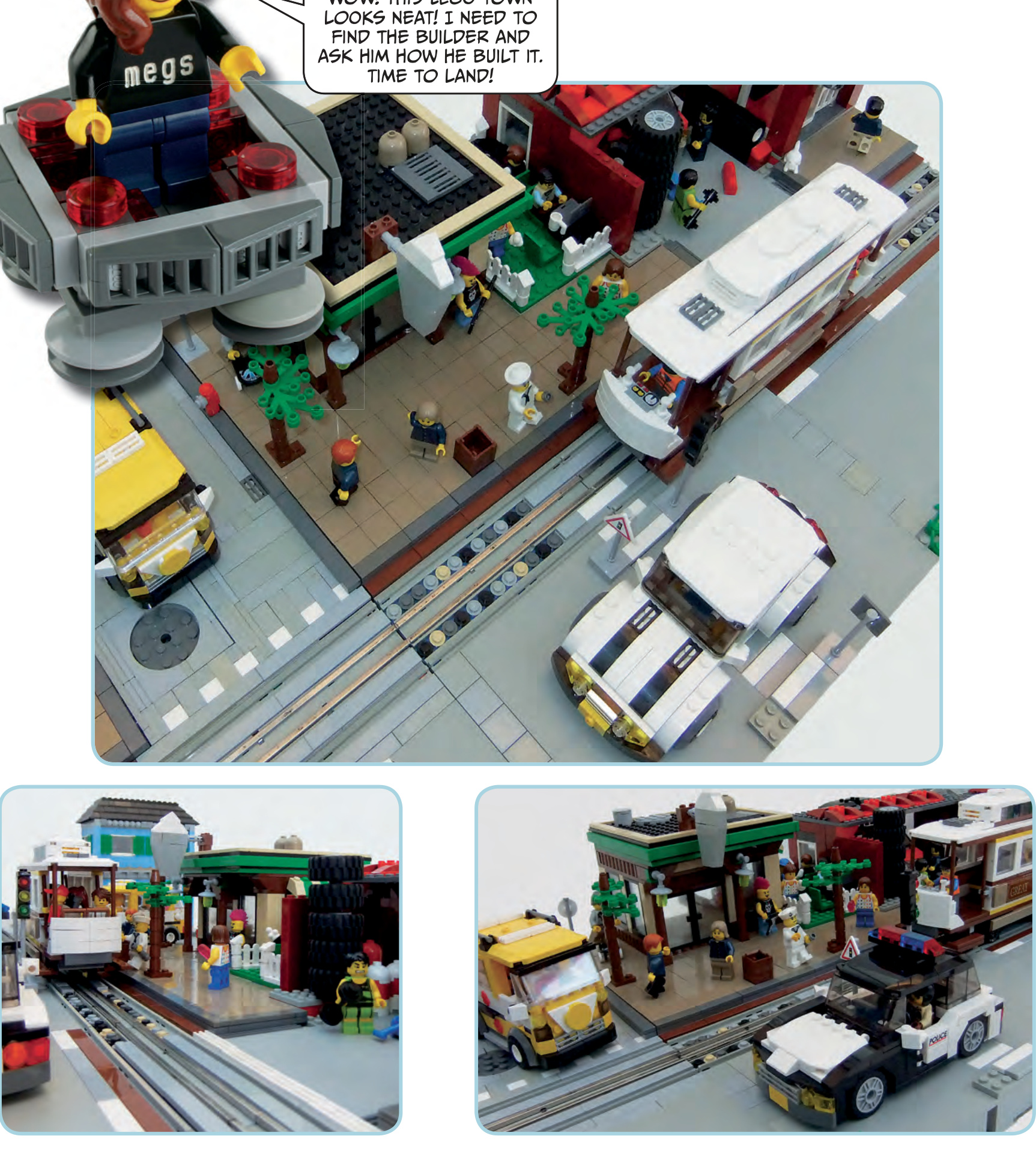
A LEGO Town
Craig Mandeville

Nickname: Solitary Dark
Profession: Aircraft Parts Manager
Nationality: British
Website: www.flickr.com/photos/36416029@N06/
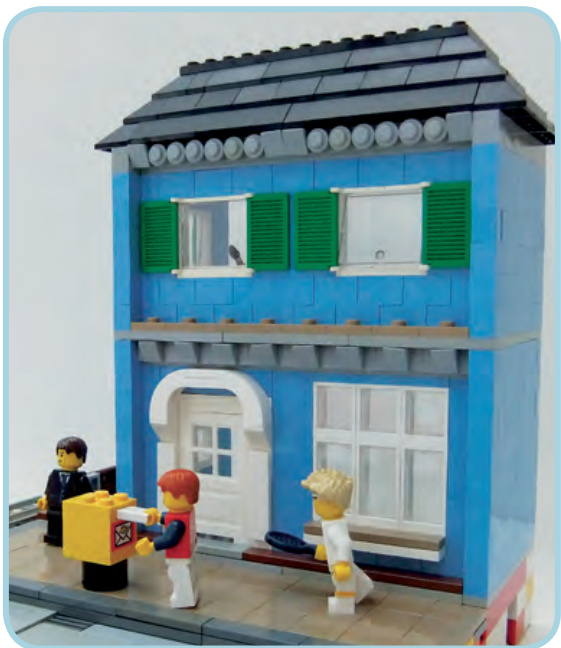
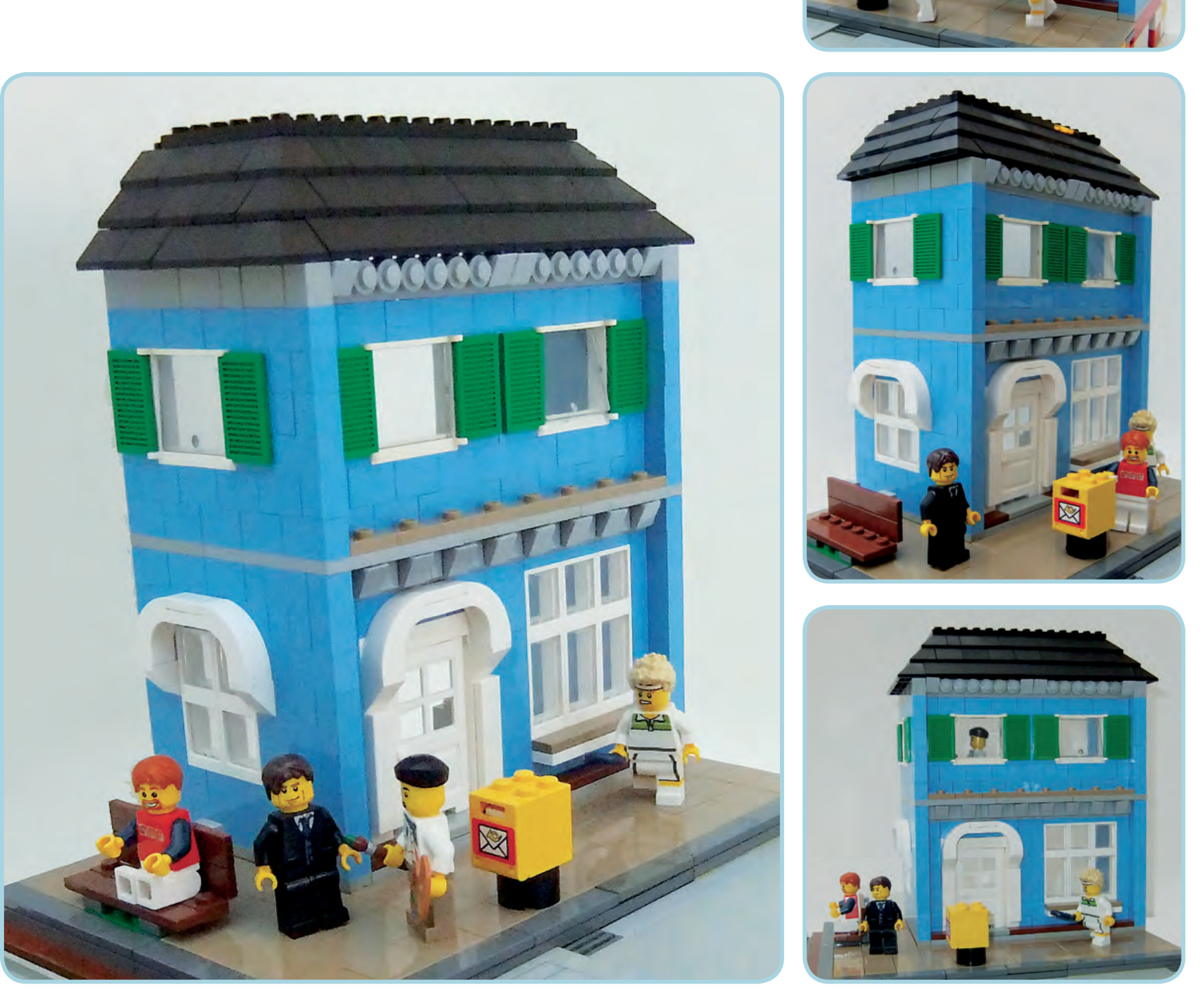
Hot Rods and Cool Rides
Are J. Heiseldal

Nickname: L@go
Profession: TV Journalist
Nationality: Norwegian
Website: www.flickr.com/photos/legolago/
Ace of Spades
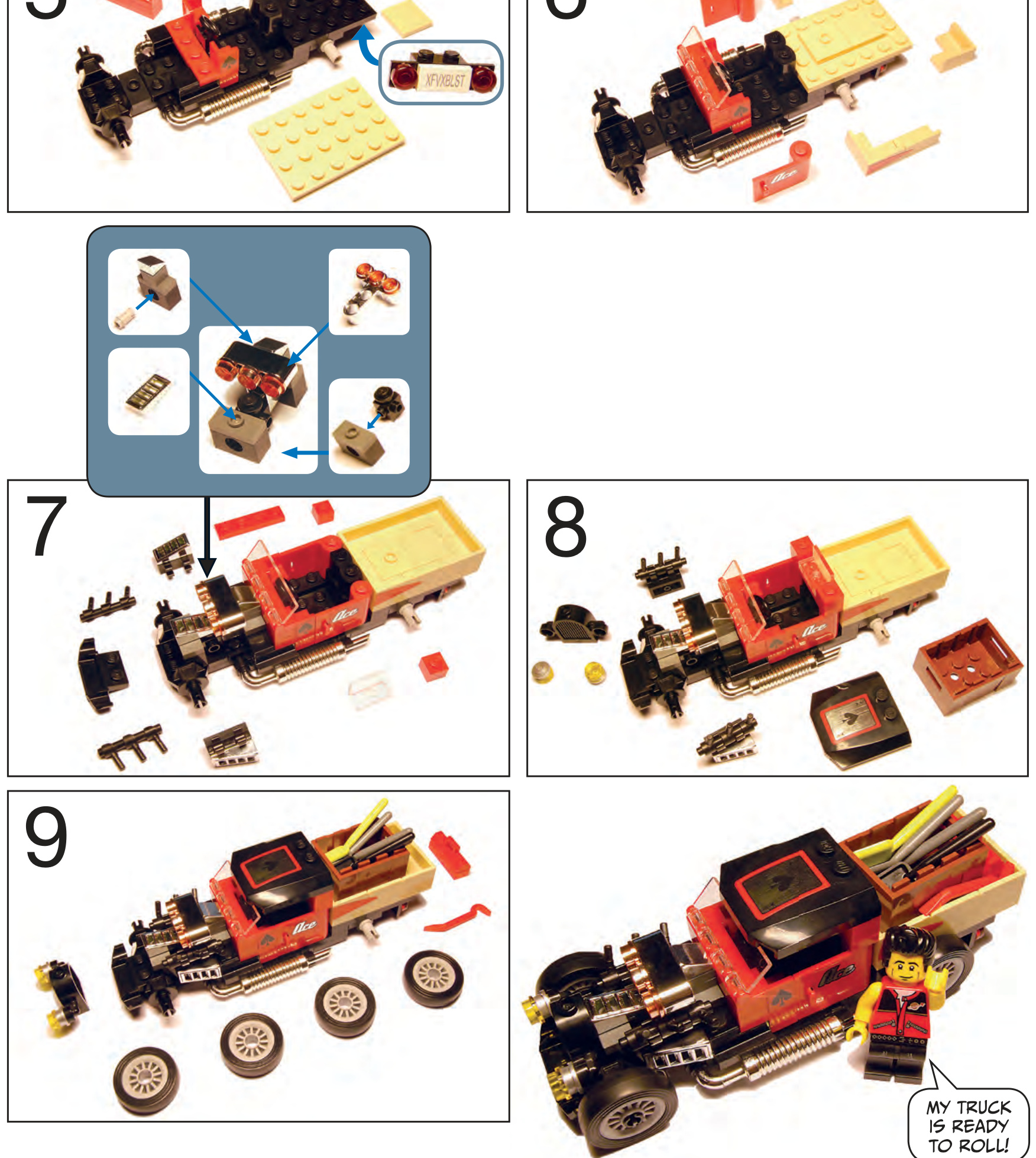

Building Tip
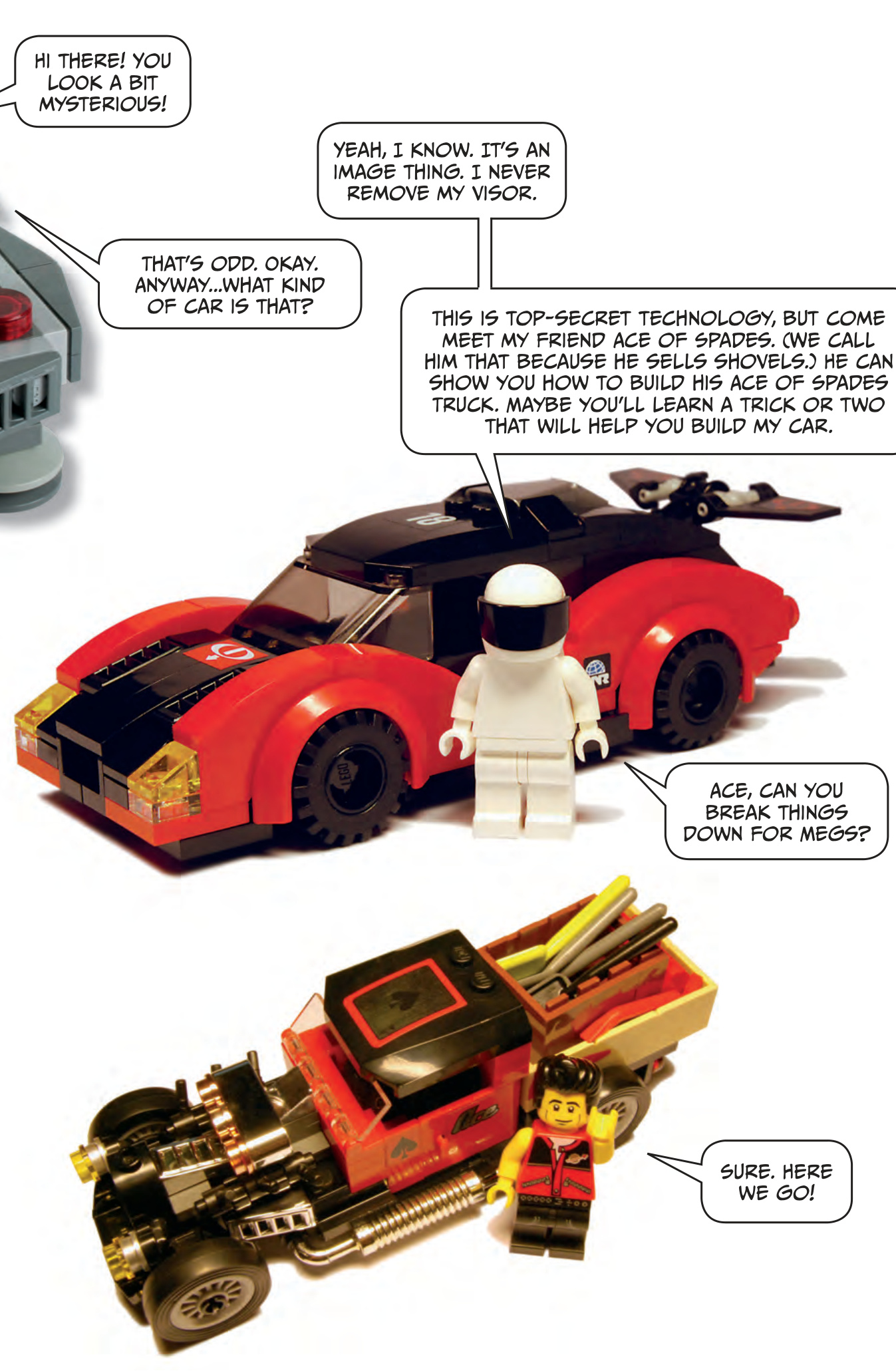
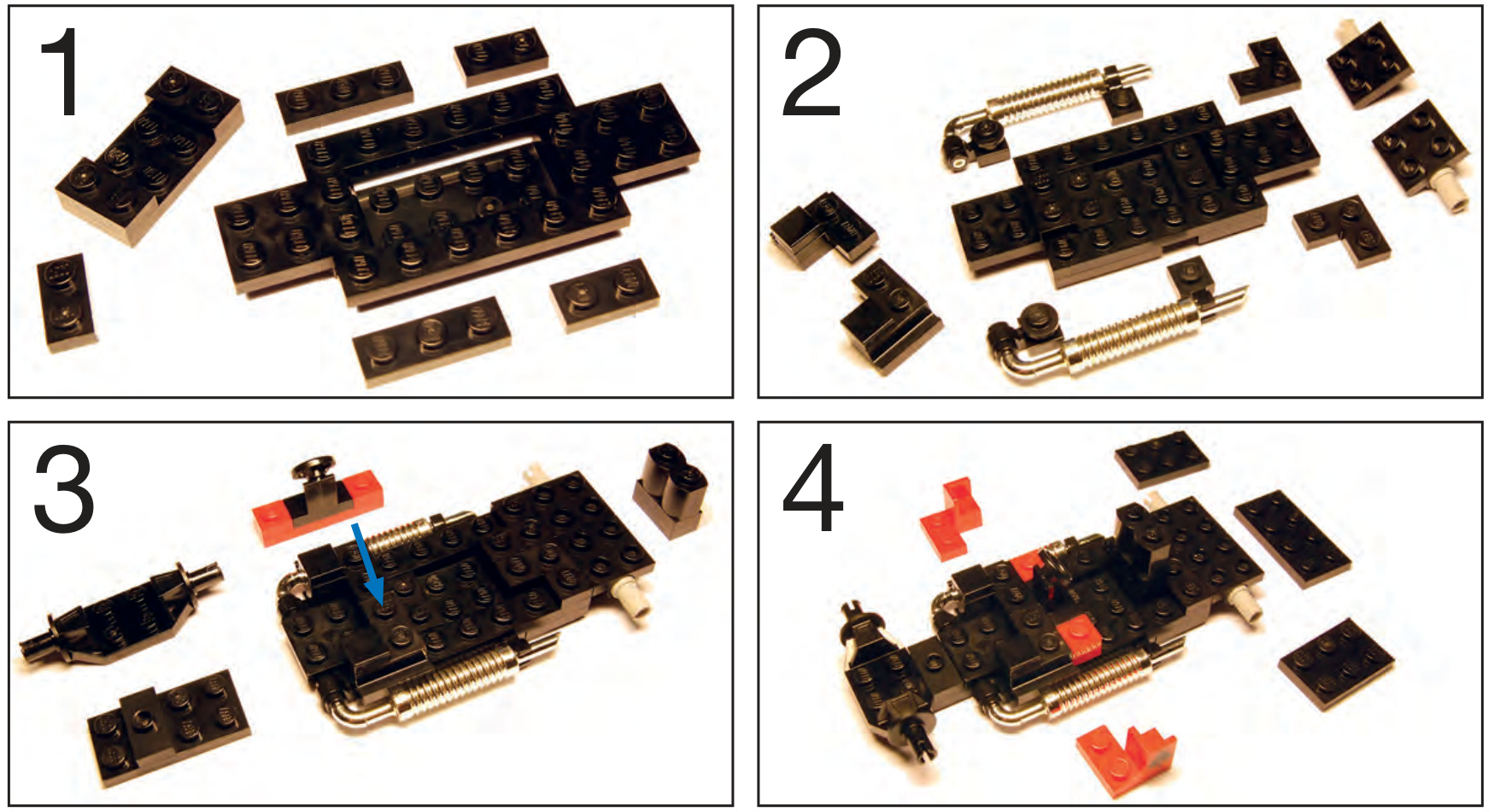
You can add more character to your vehicles by decorating them with stickers, like the ones on the Ace of Spades truck.


Building Journal
Are’s cars have lots of engine details. Before building my car, I think I’ll put aside a few small elements and see if I can build an engine block that will fit in my design. Hot rods tend to have exposed engines so you can see their craftsmanship. Sports cars cover their engines with smooth, curved hoods so they’ll go faster!

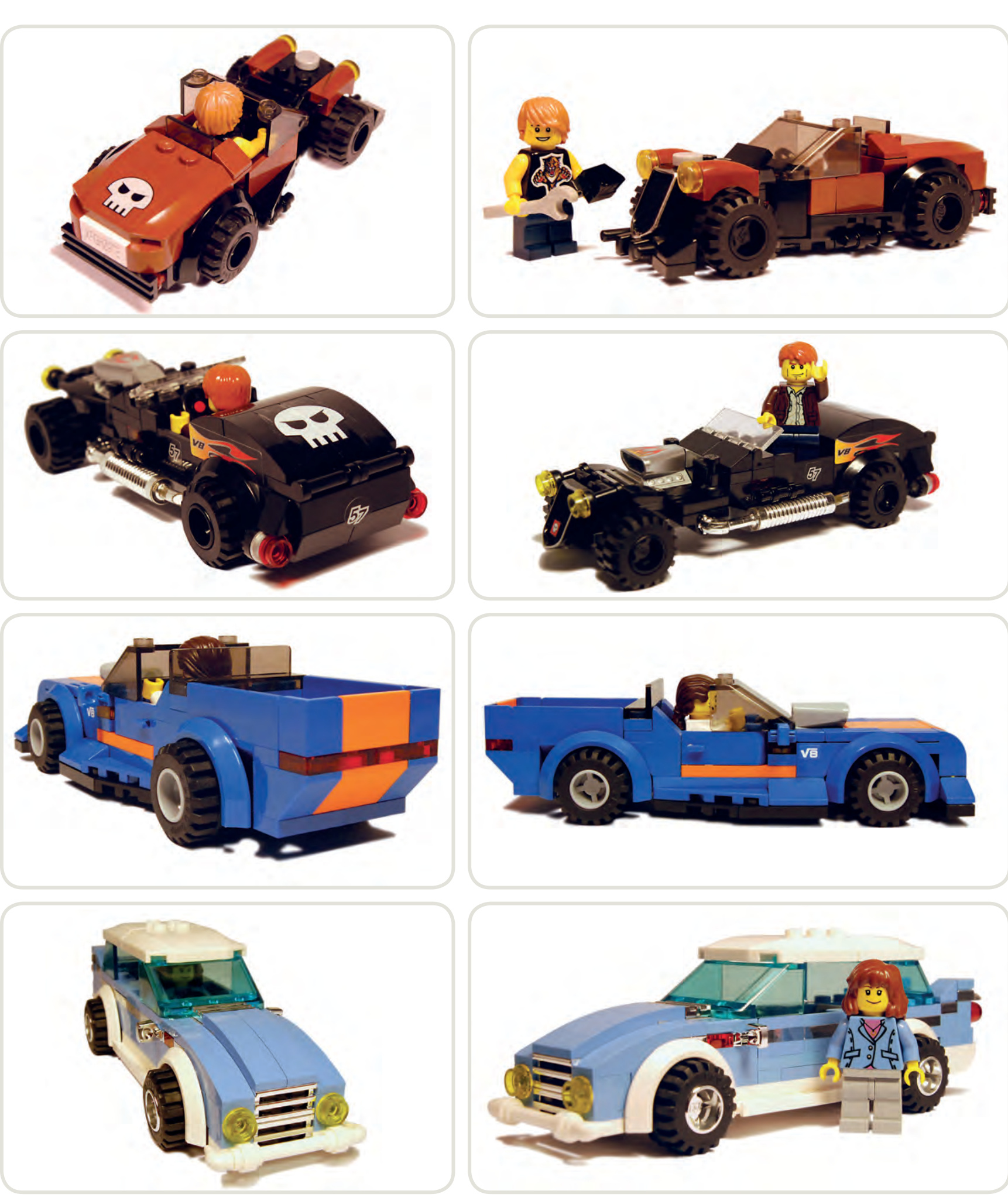

From Below!


Moritz Nolting

Nickname: nolnet
Profession: Creative Director
Nationality: German
Website: www.flickr.com/photos/nolnet/ Aww, it looks they
have everything they
need: food, water, and a nice house, too.

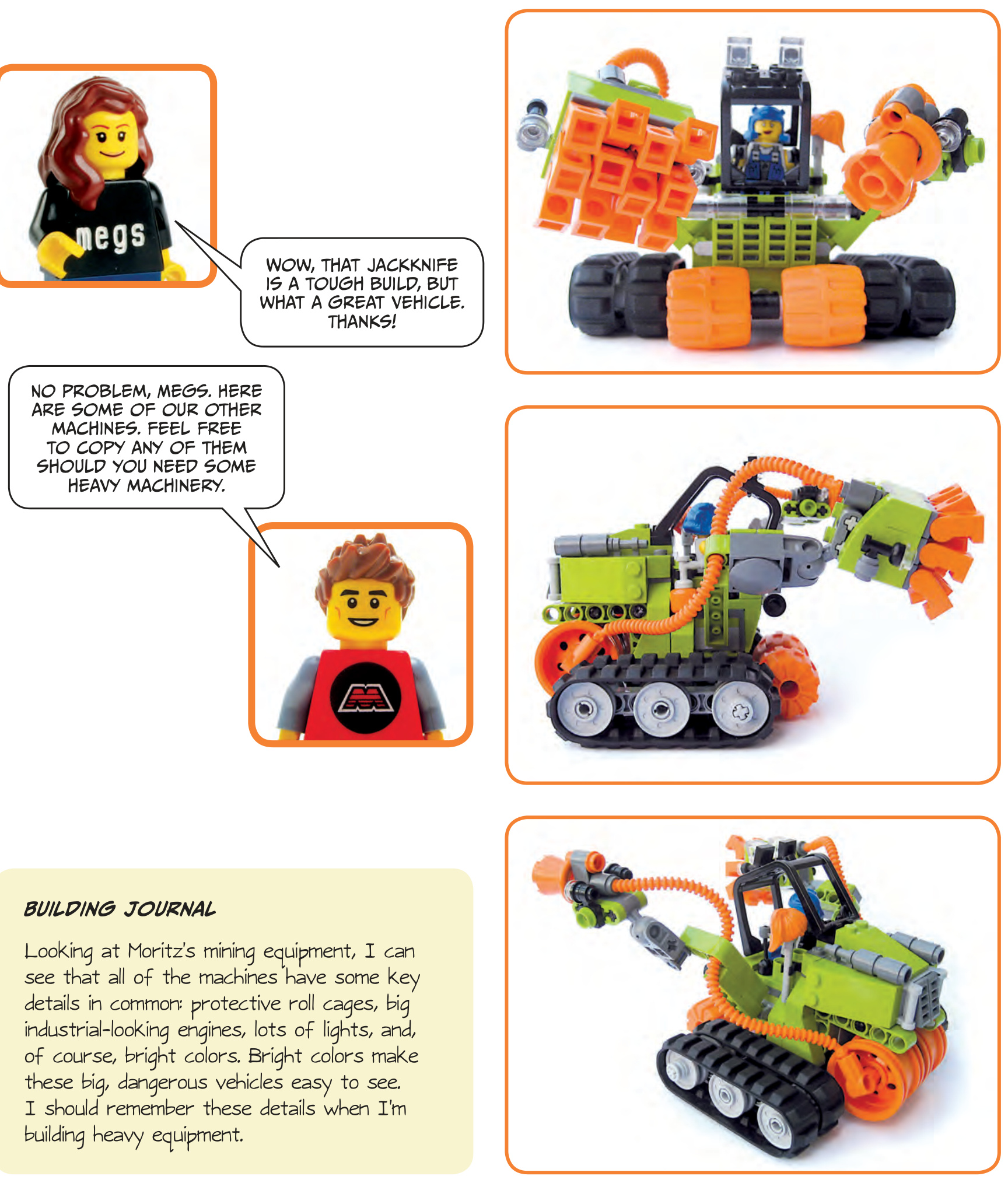


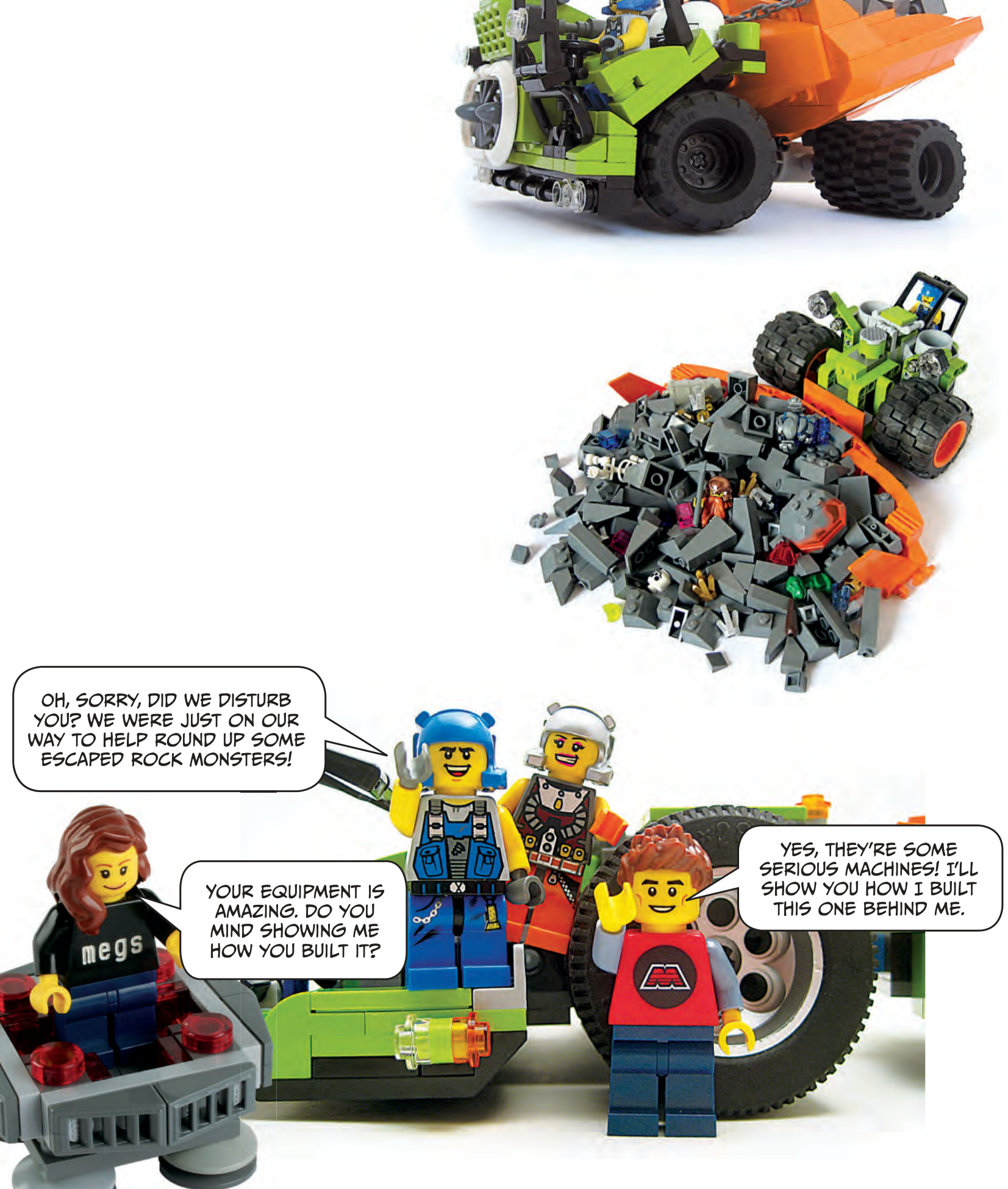
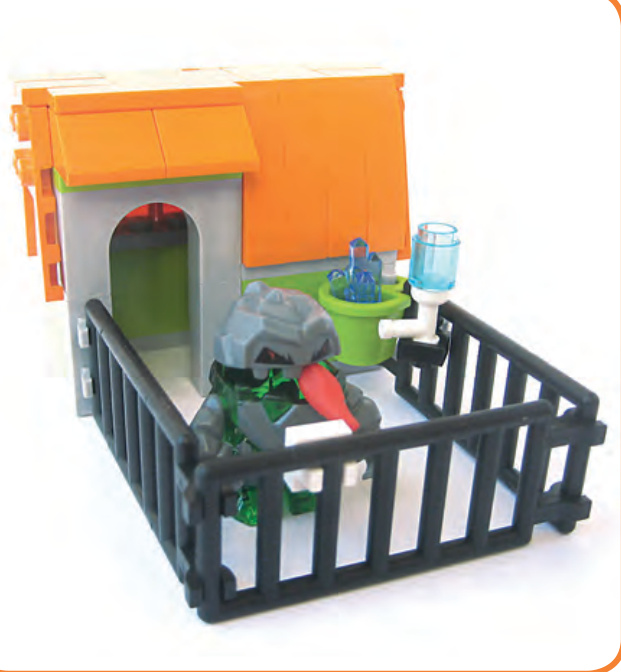
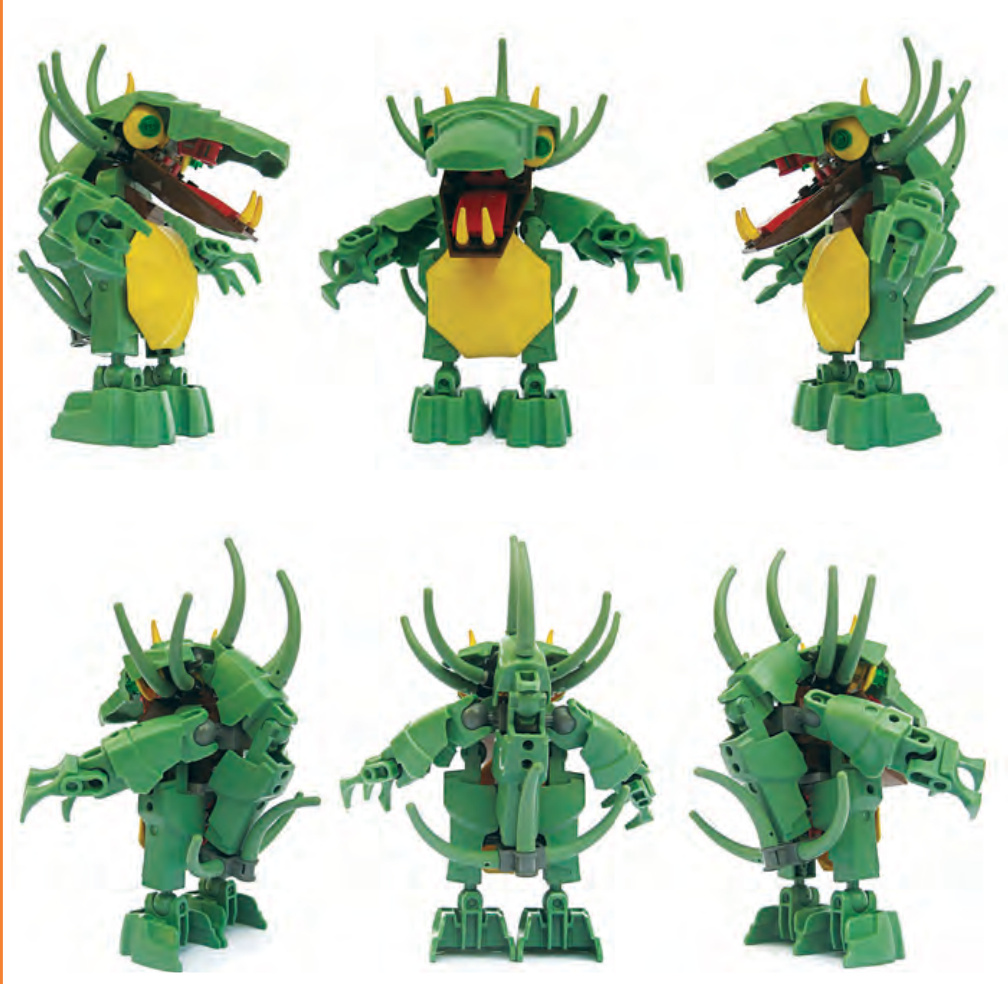
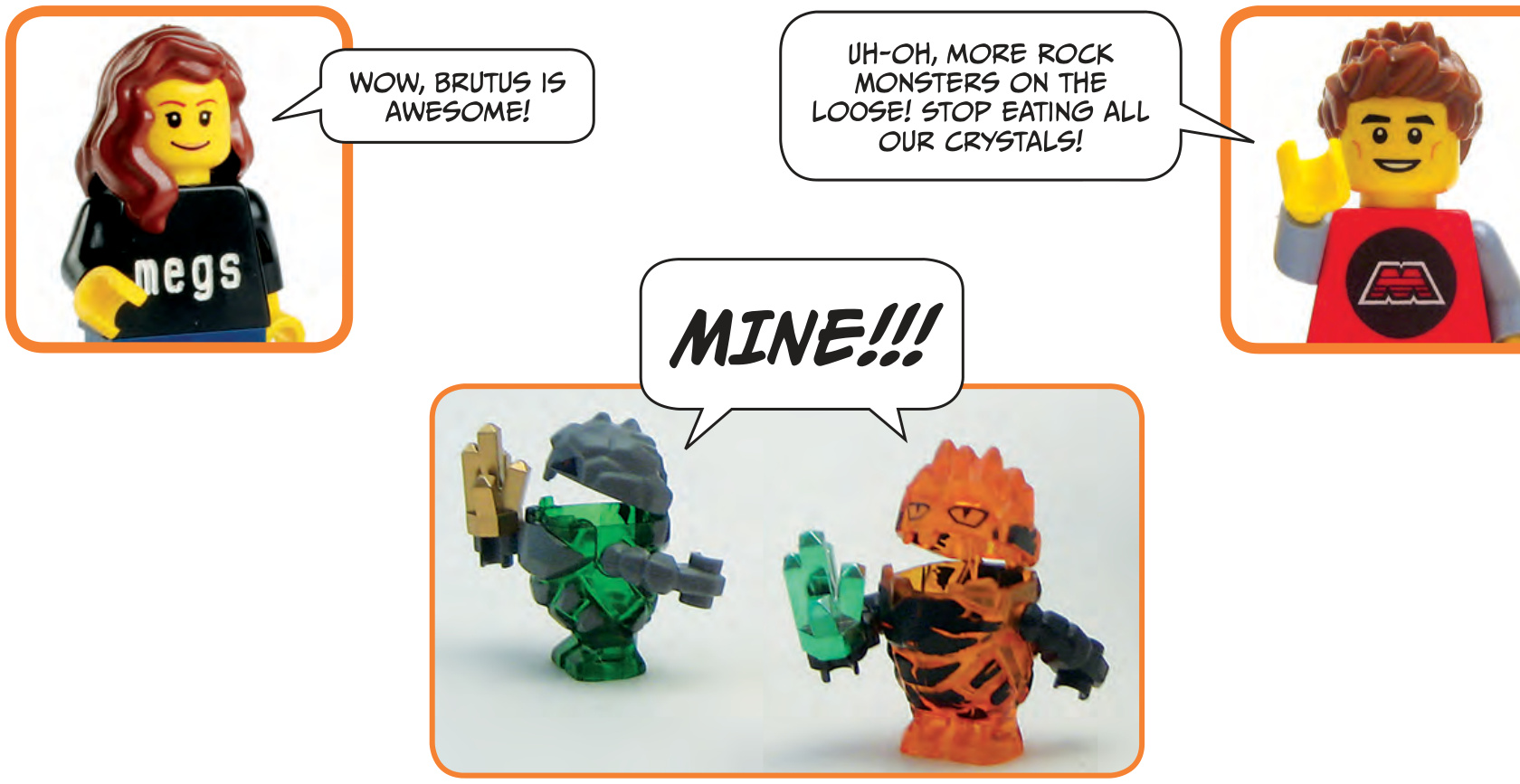
Hehe. Yes, the problem is they get in our way all the time! This green guy is Brutus. He is a Rock Dragon, and he helps us keep the wild Rock Monsters in line. As long as we give him a few crystals, Brutus is happy.

Building Journal
Moritz showed me how a few slopes and some basic LEGO bricks can make a nice little house for a pet.

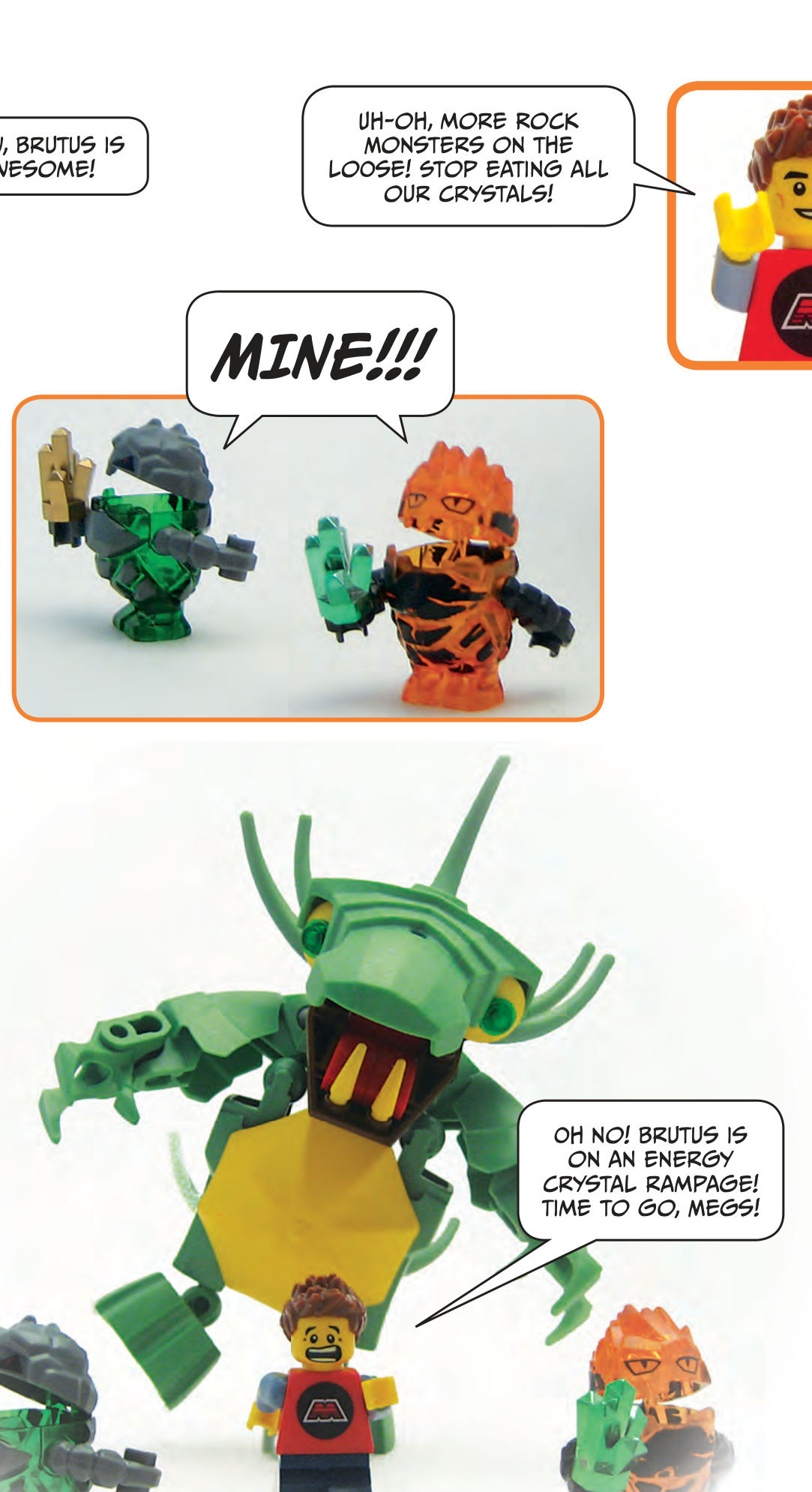

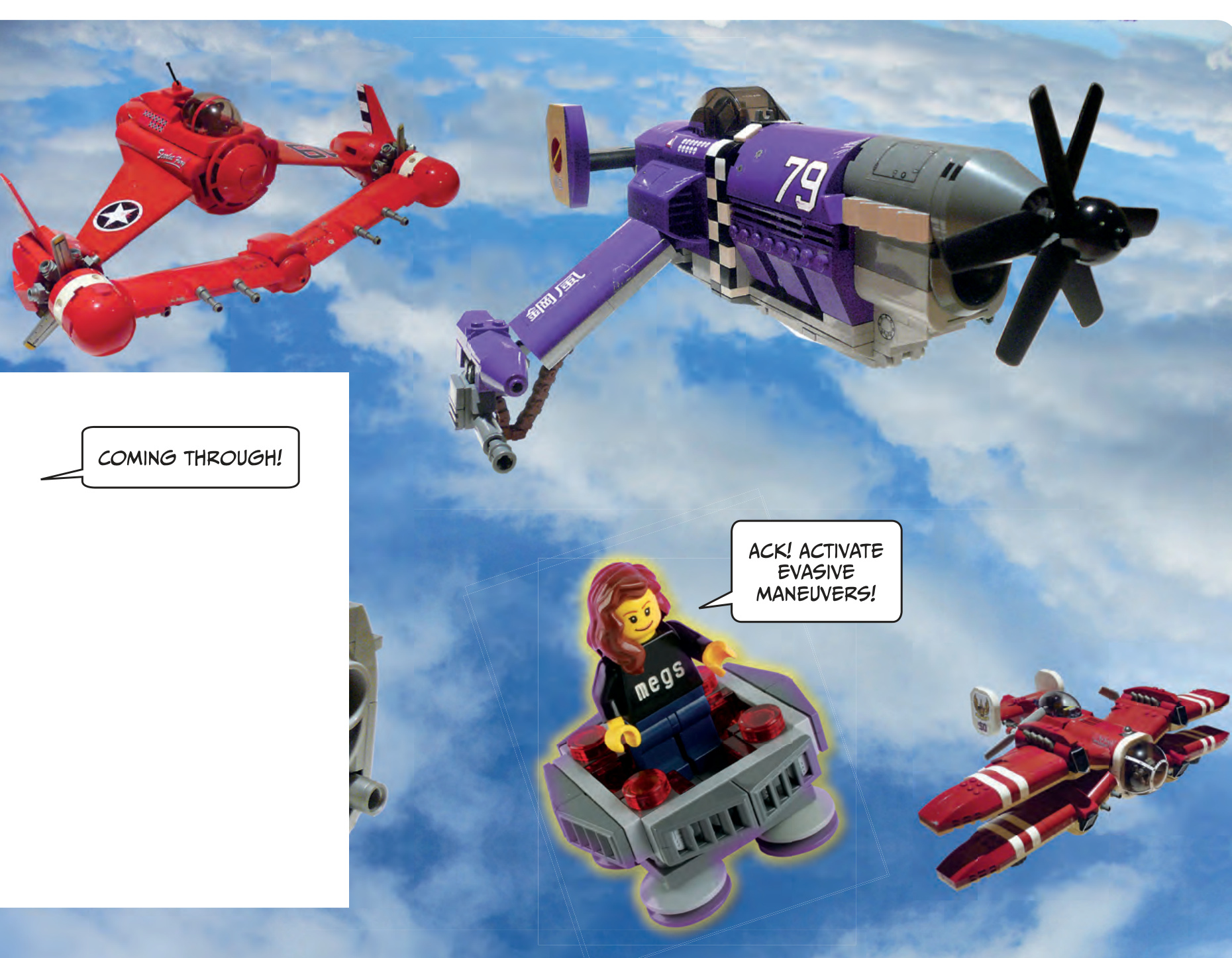

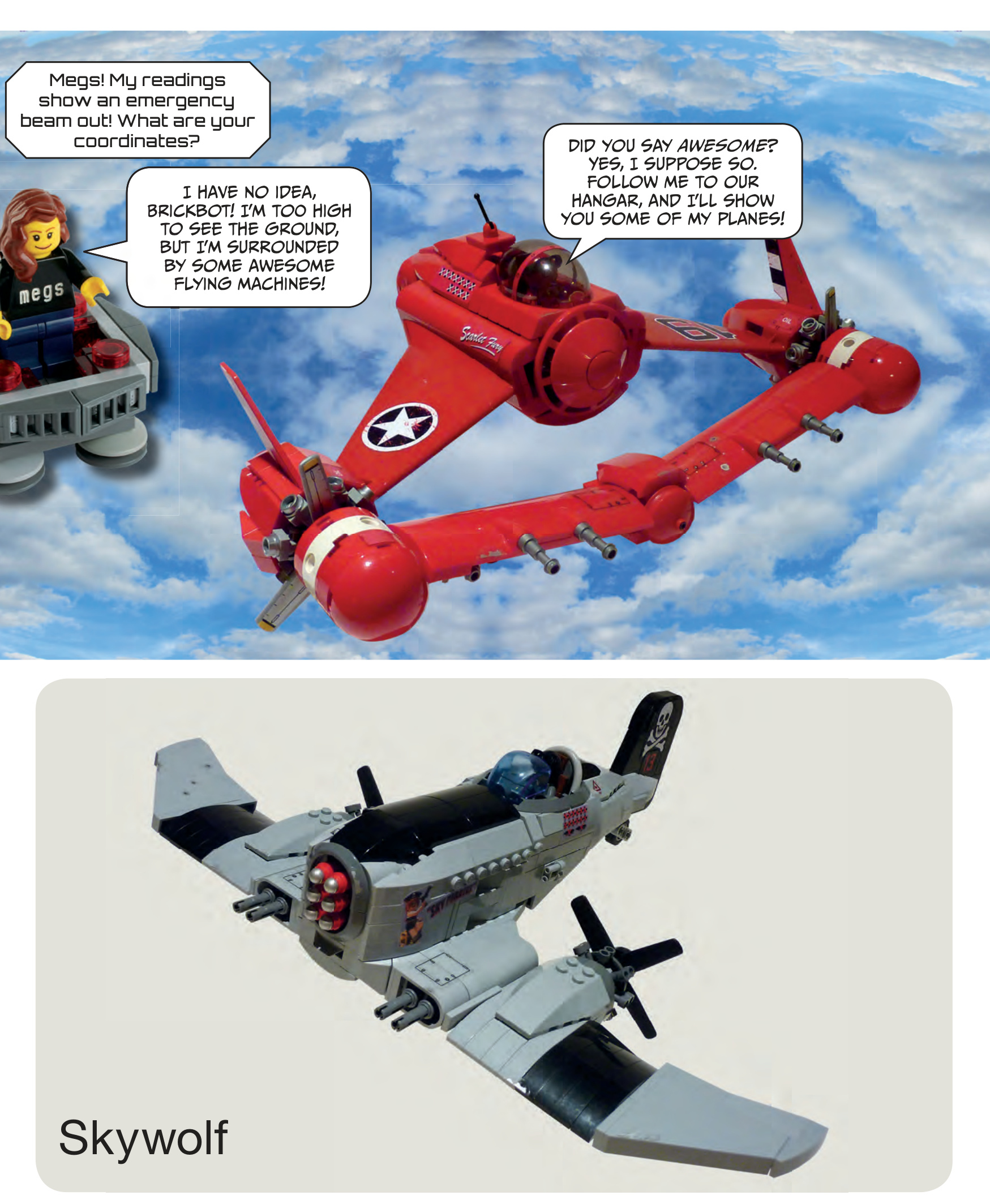
The Sky’s the Limit
Jon Hall

Nickname: jonhall18
Profession: Graphic Designer
Nationality: British
Website: www.flickr.com/photos/25163007@N07/



Phoenix
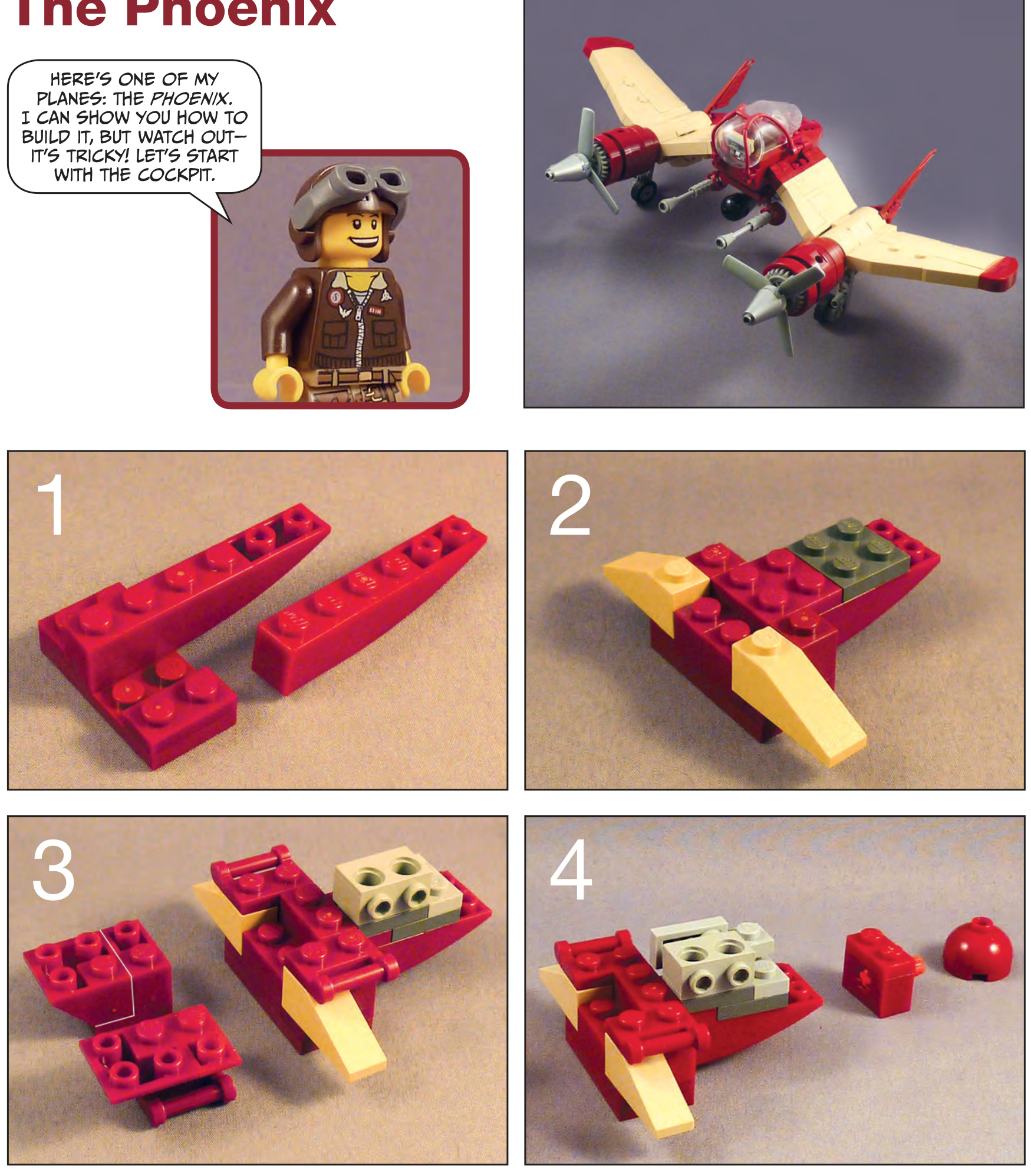
Building Journal
Jon’s planes take advantage of the many curved and circular LEGO pieces. He has a talent for using elements so they flow from one into the next as if they belong together. This is something I should look at more closely in my own building. What slopes and curves can I use to smoothly form a cohesive shape? There must be millions of combinations.

Building Journal
Jon says: ˝Vehicles with interesting paint jobs often have sections that are painted bright colors and sections that aren’t. You can re-create this effect by using differently colored bricks in different parts of your model.˝

Pete Reid

Nickname: Legoloverman
Profession: Author
Nationality: British
Website: www.flickr.com/photos/legoloverman/
Building journal
Pete told me it can take a long time to build a cool LEGO robot. I should gather my smallest pieces and consider the best combinations.

Starfighters
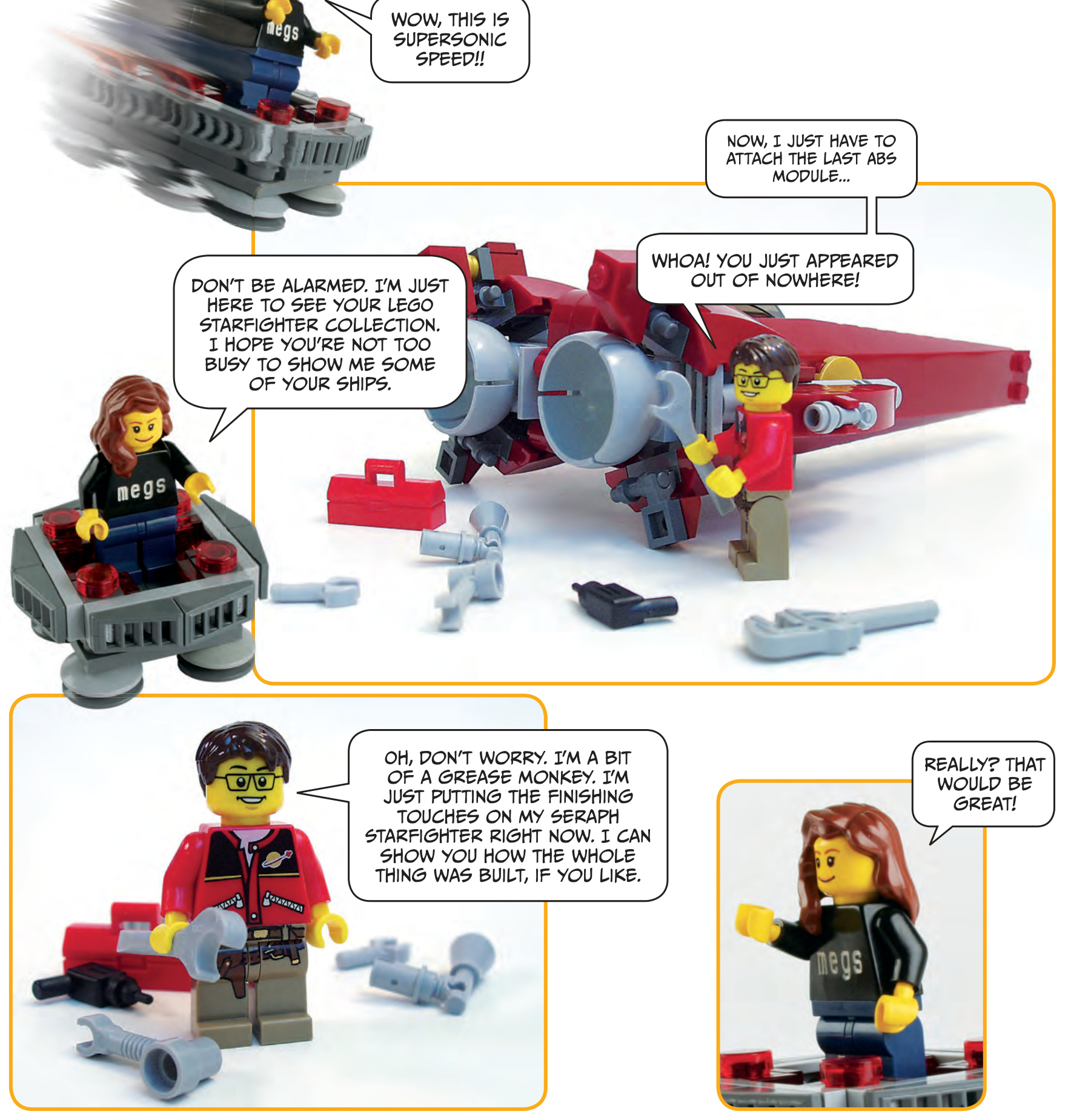

Peter Morris
Nickname: peterlmorris, aka Rival M Profession: Stay-at-Home Dad Nationality: American Website: www.flickr.com/photos/rival_m/

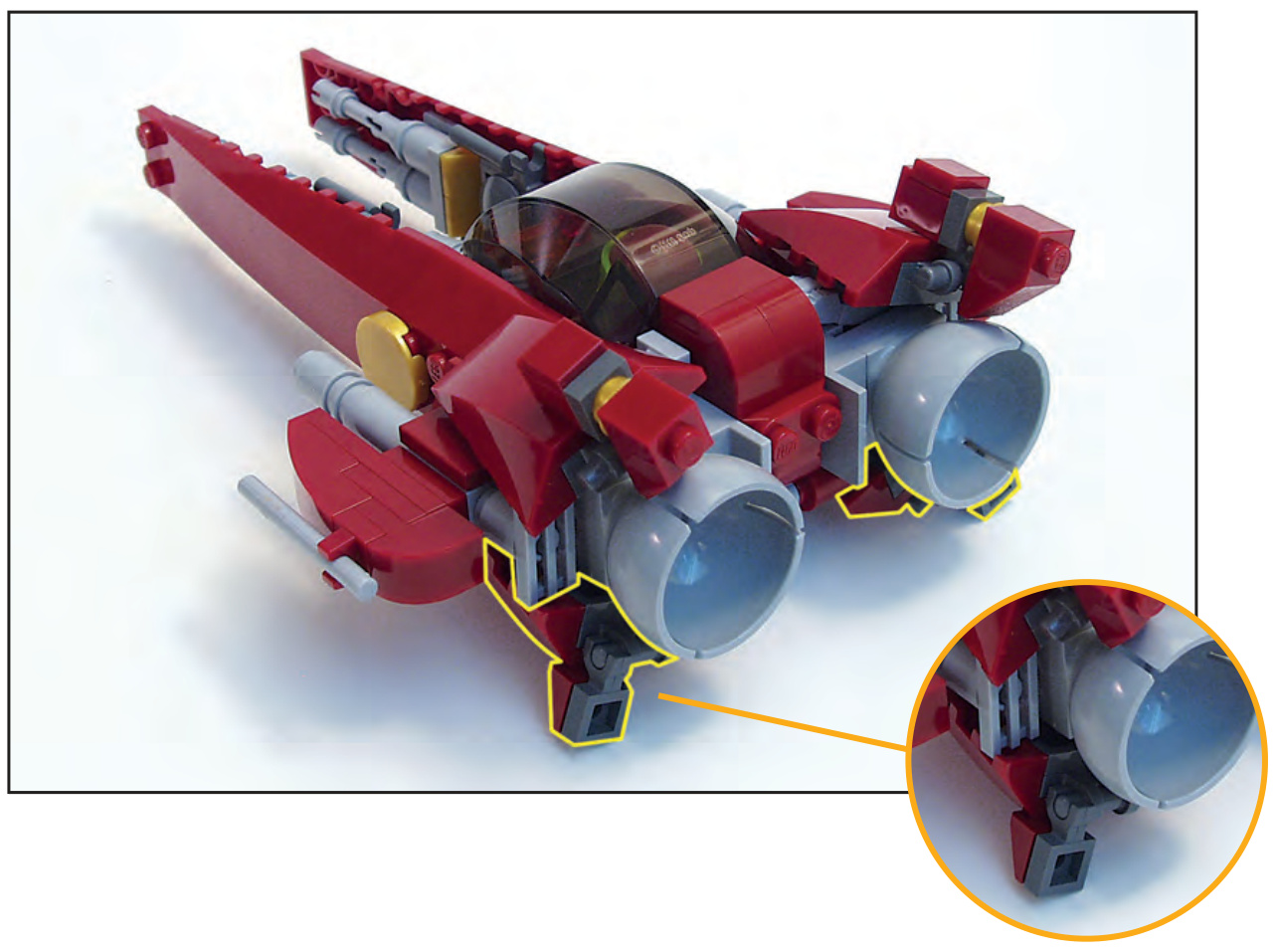
Seraph Starfighter


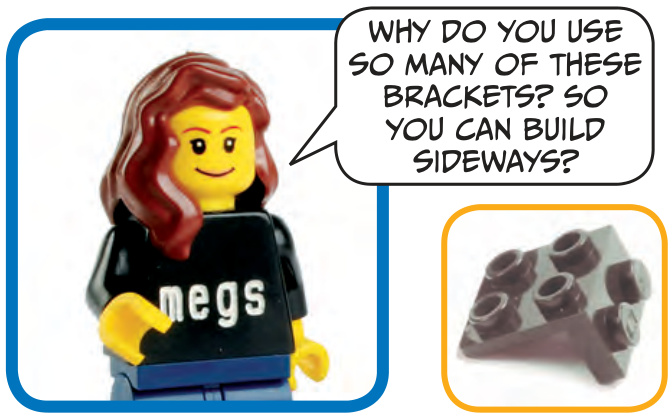
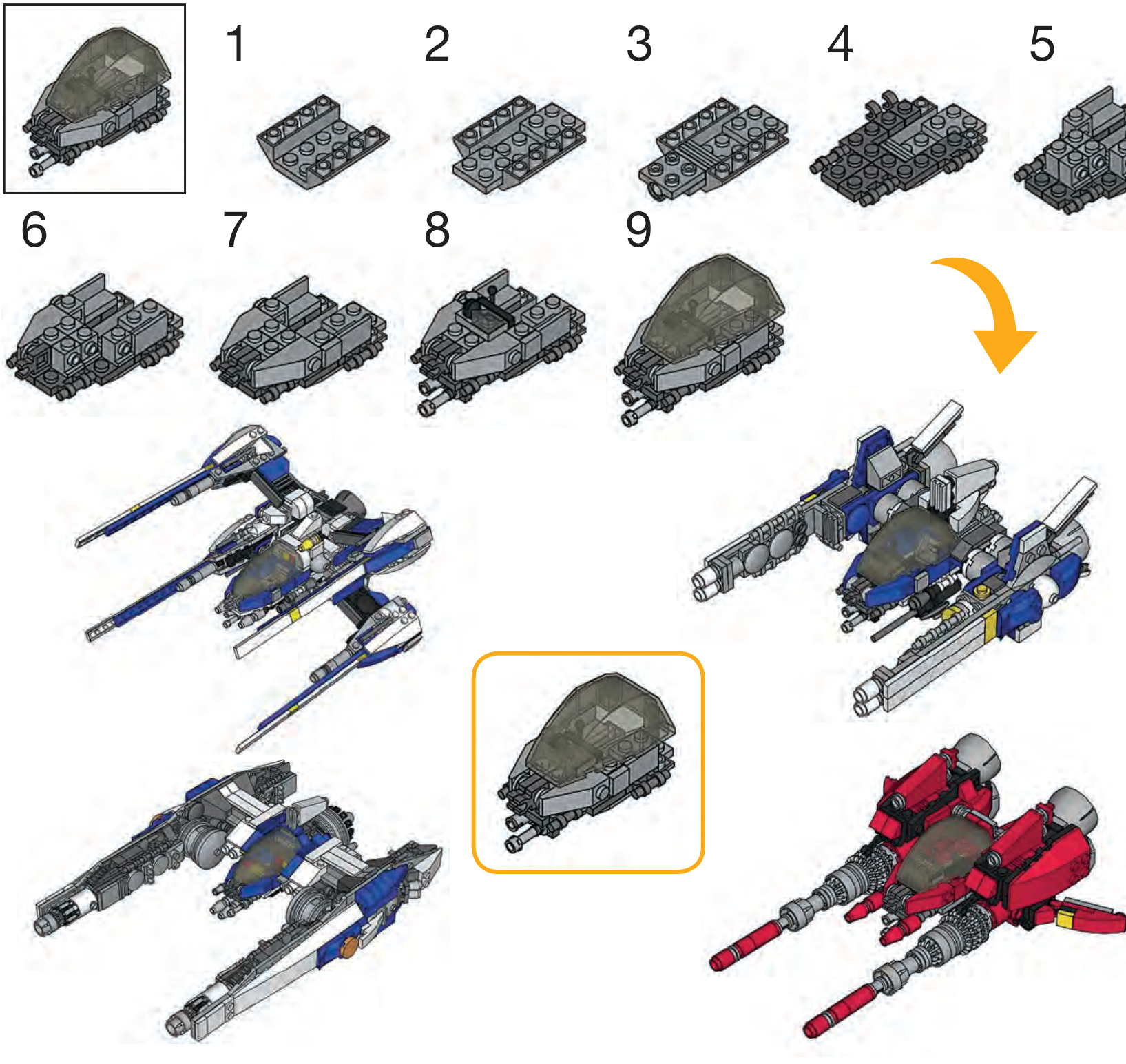
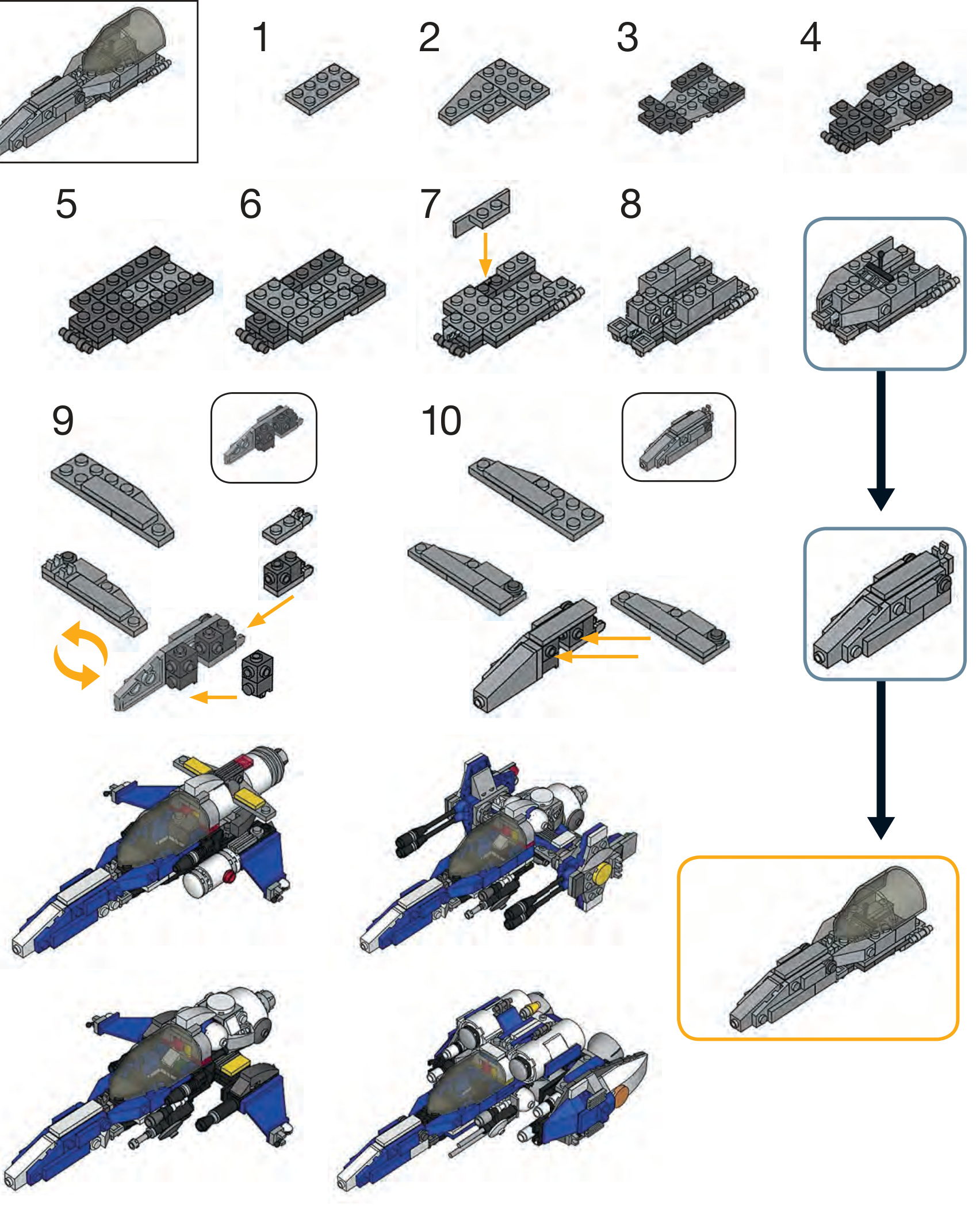
Cockpits
Yes, using them I’ve created a
simple way to build diferently
configured starfighters quickly.
I have a lot of sketches and
Ideas for ships, but if I built a
separate cockpit for each one I’d
never finish! So I have designed
a series of simple cockpit
boxes that alow for lots of
variations. Here, check out these
cockpit schematics.

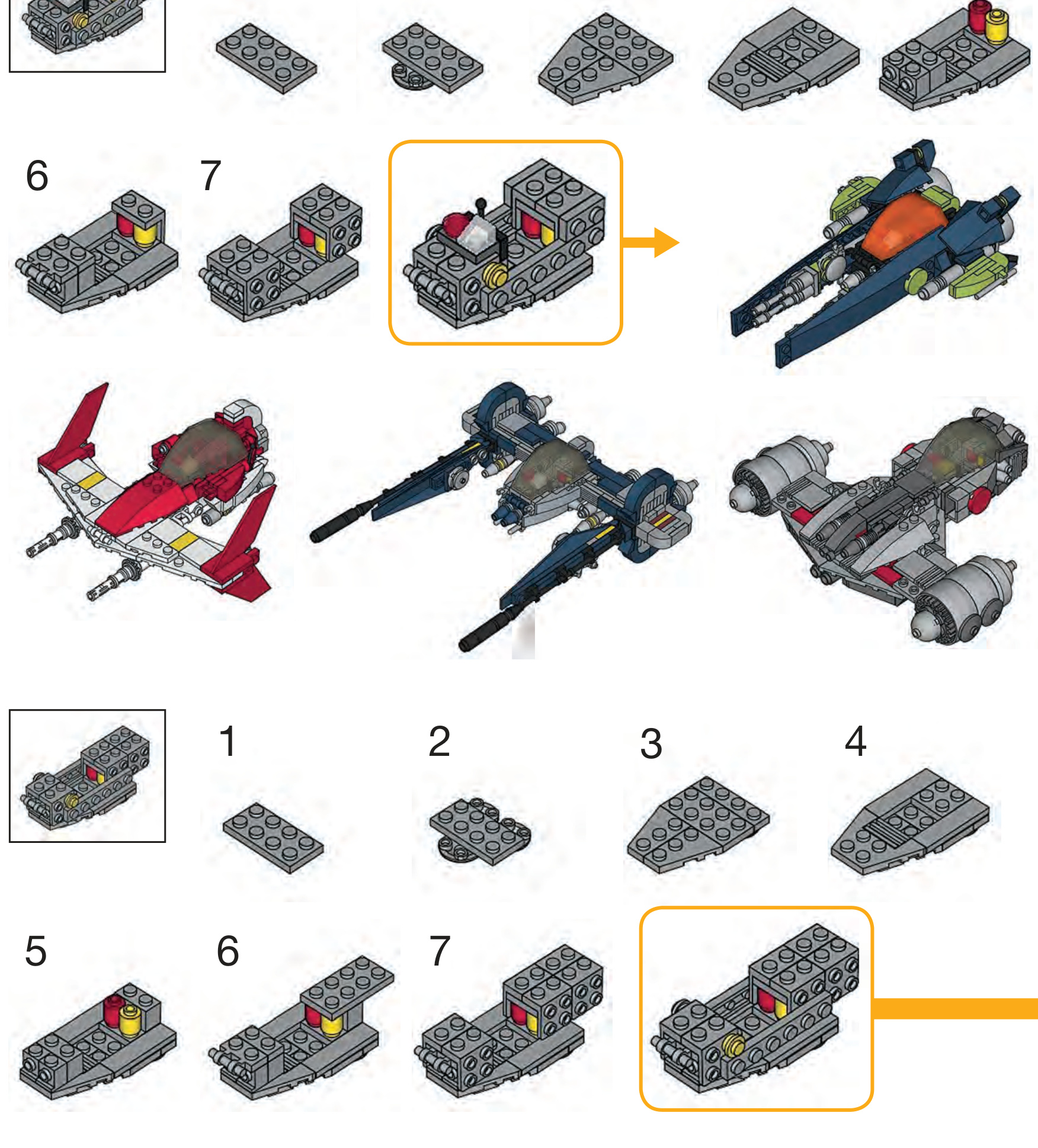
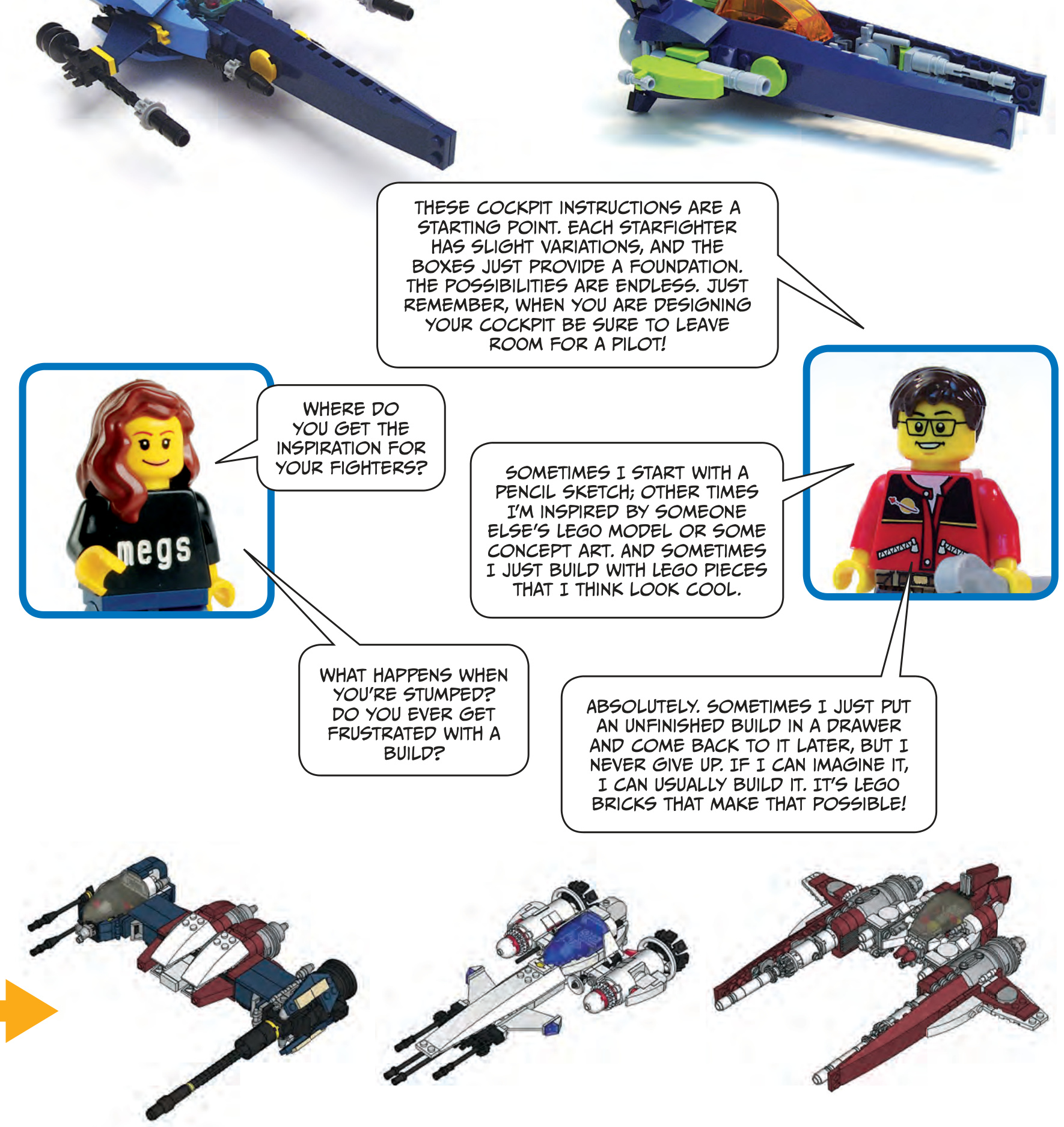
Starfighter: Inspirational Models

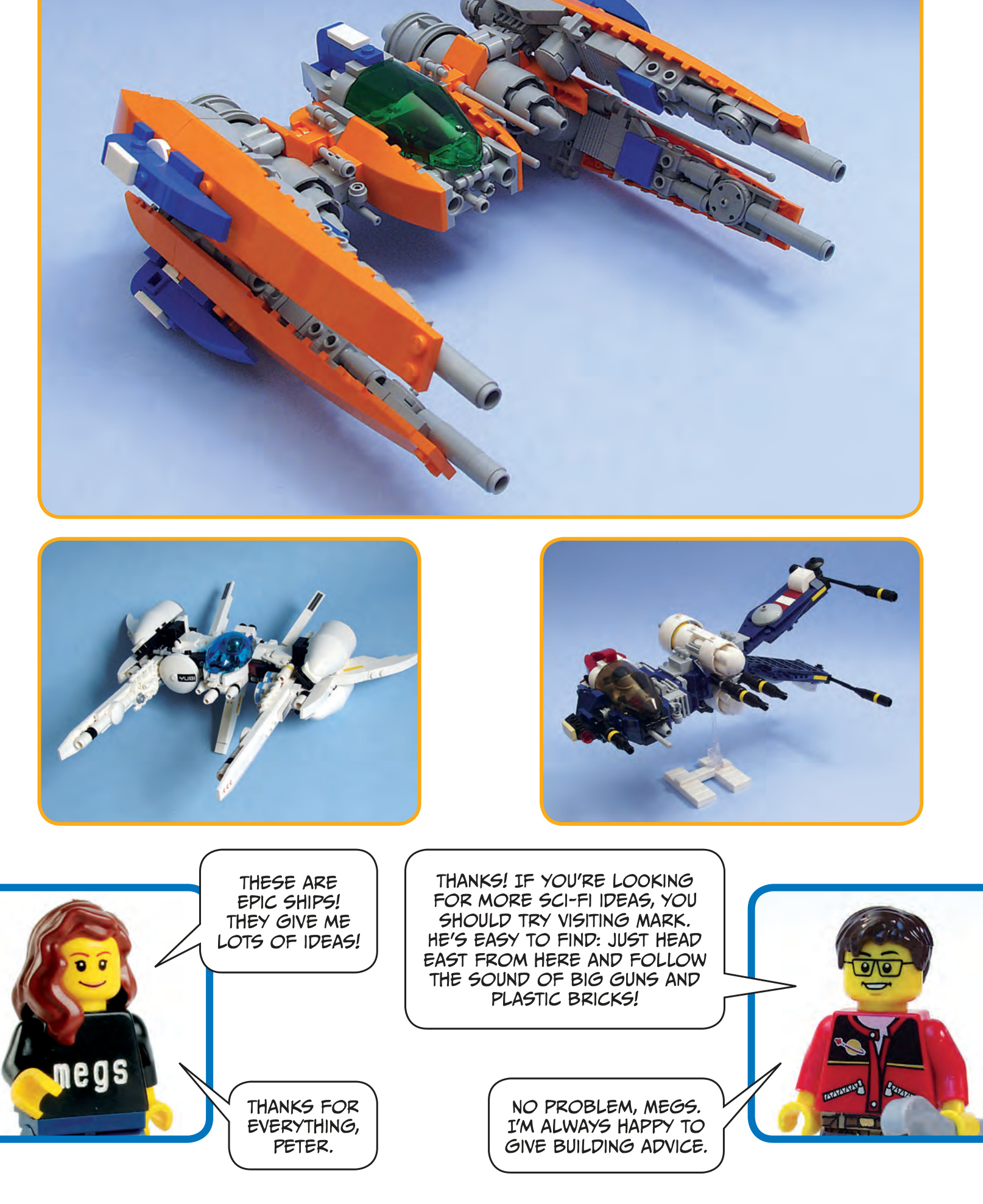
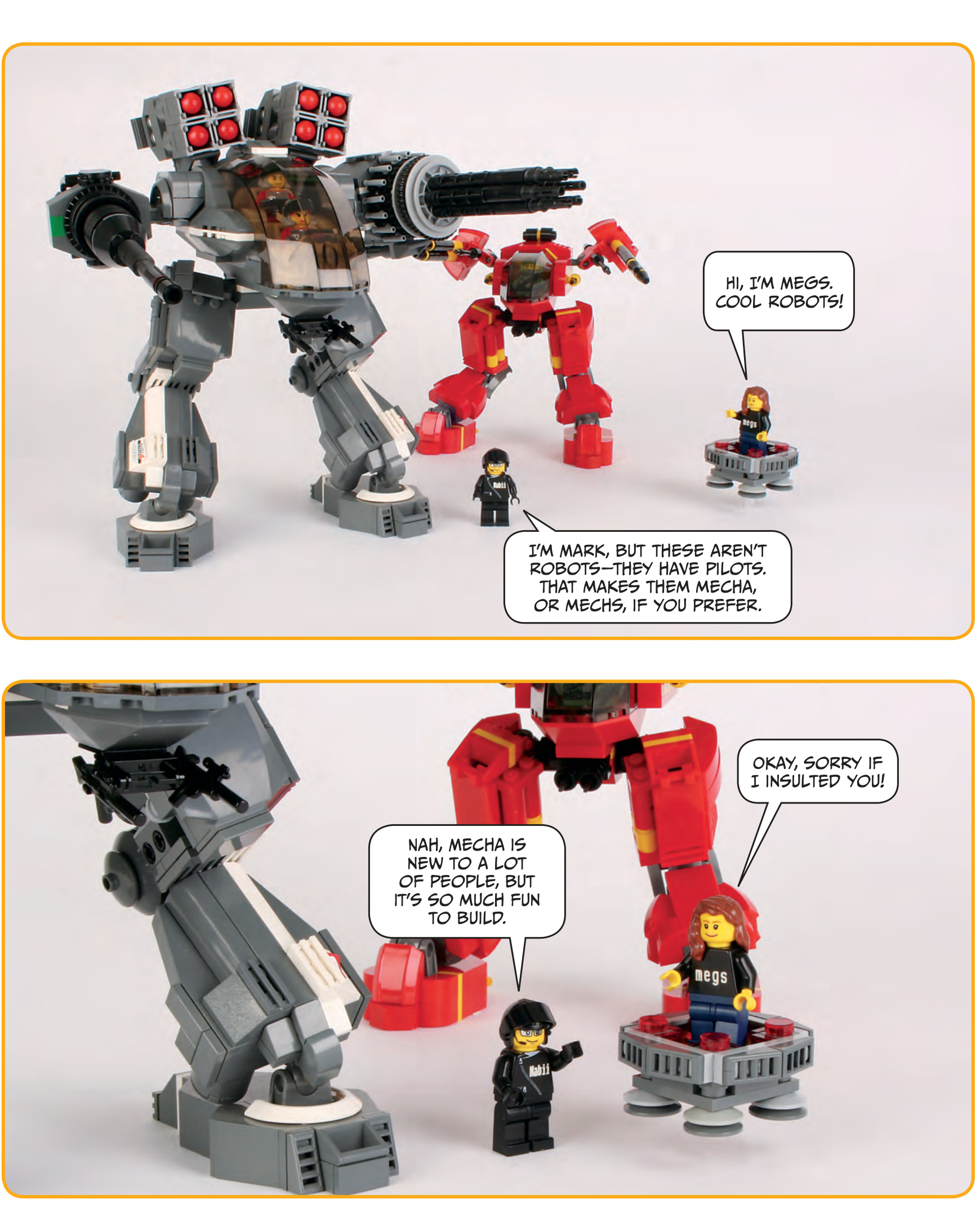
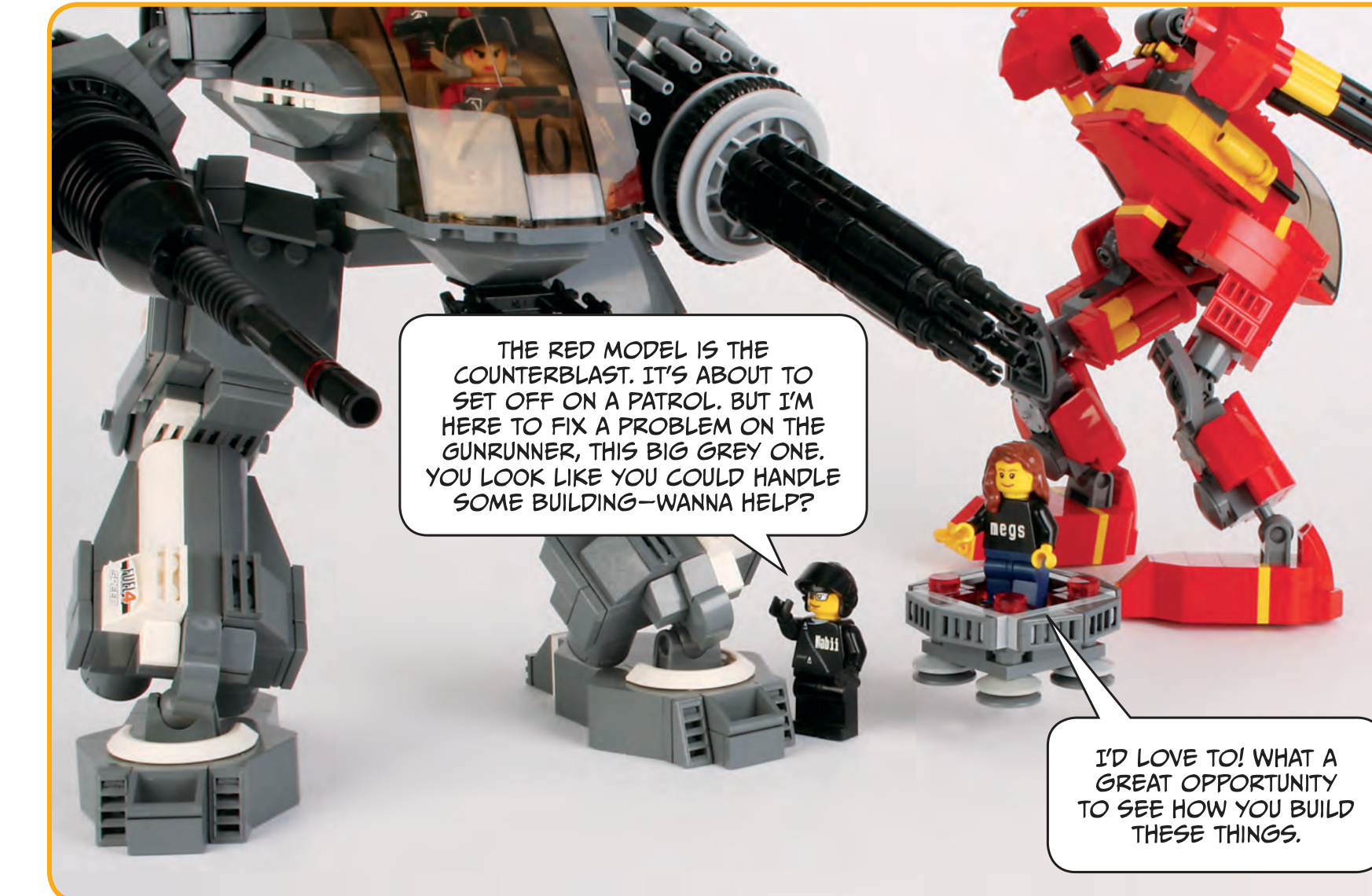
Mighty Mecha
Mark Stafford

Nickname: Nabii
Profession: Designer
Nationality: British
Website: www.flickr.com/photos/nabii
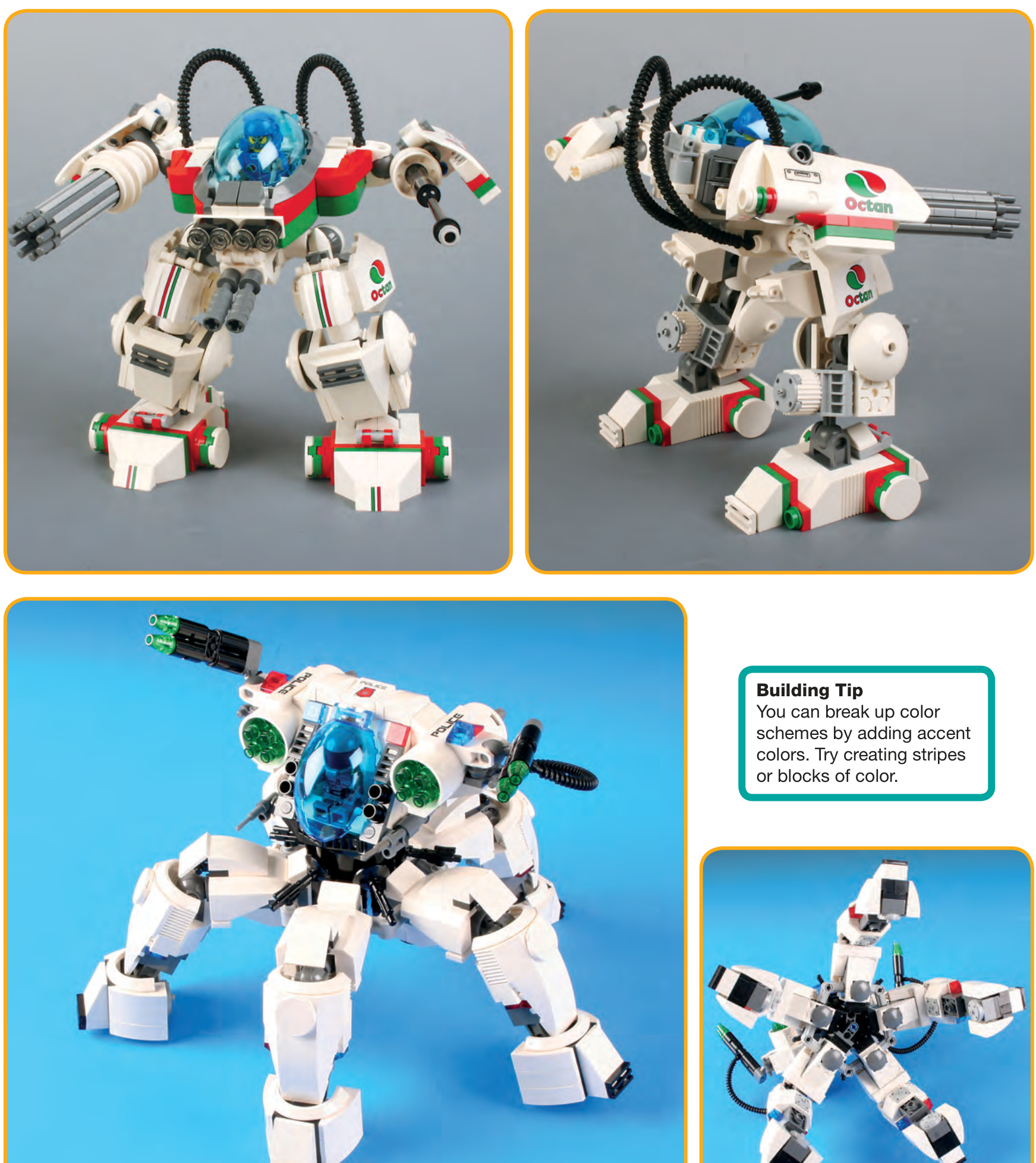
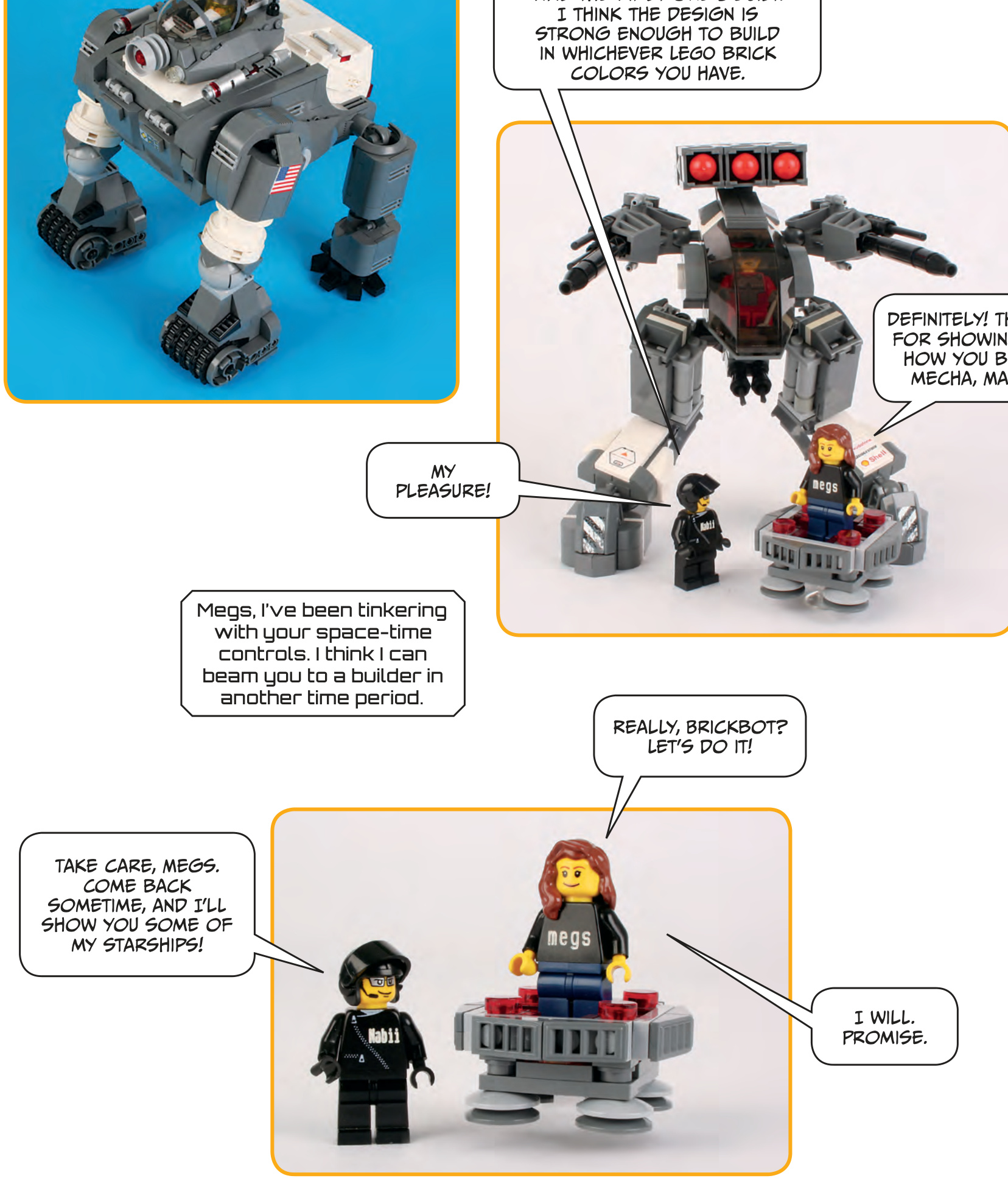
Counterblast
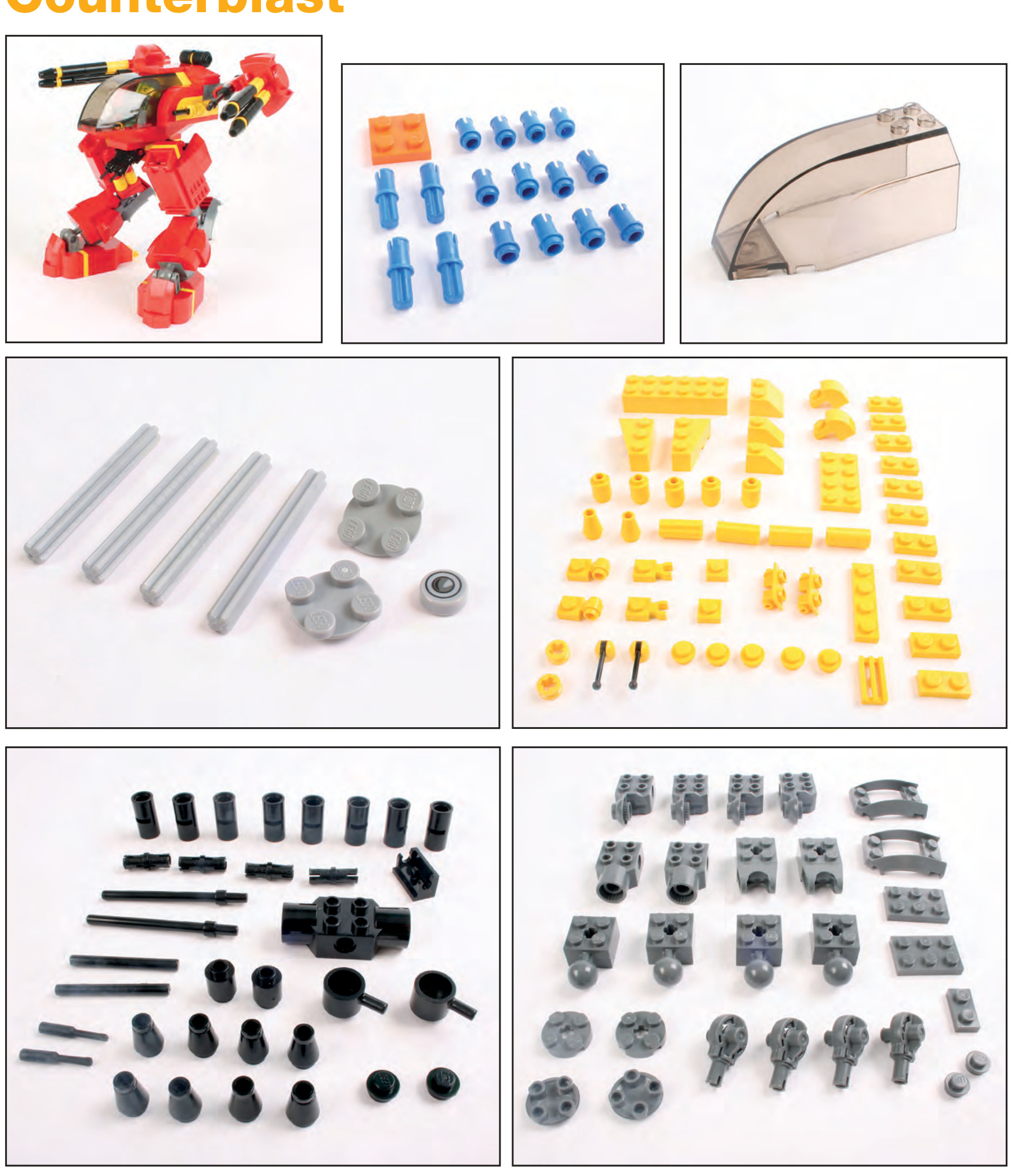
Building Tip
If you don’t have these LEGO elements in these colors, just
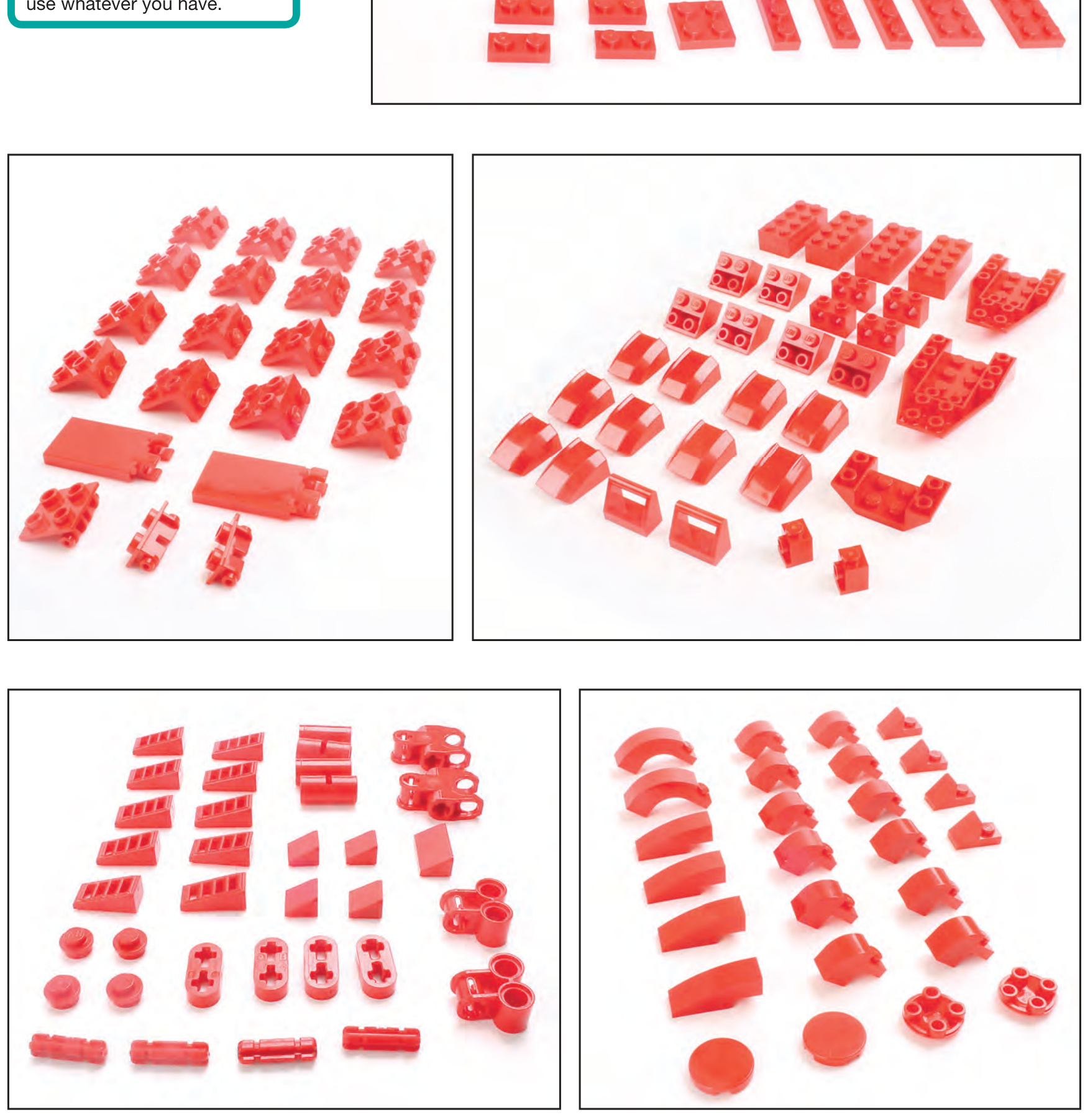
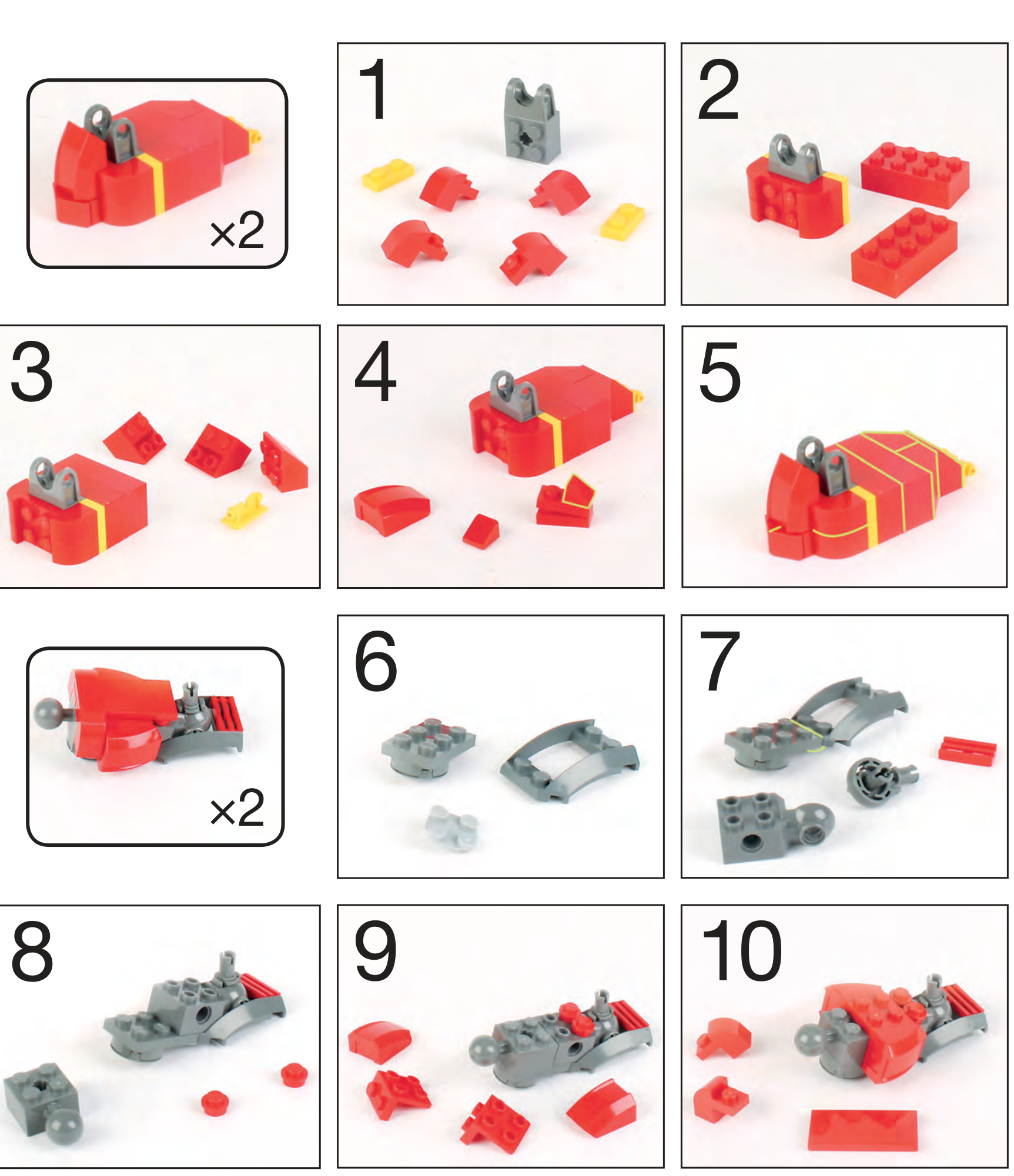
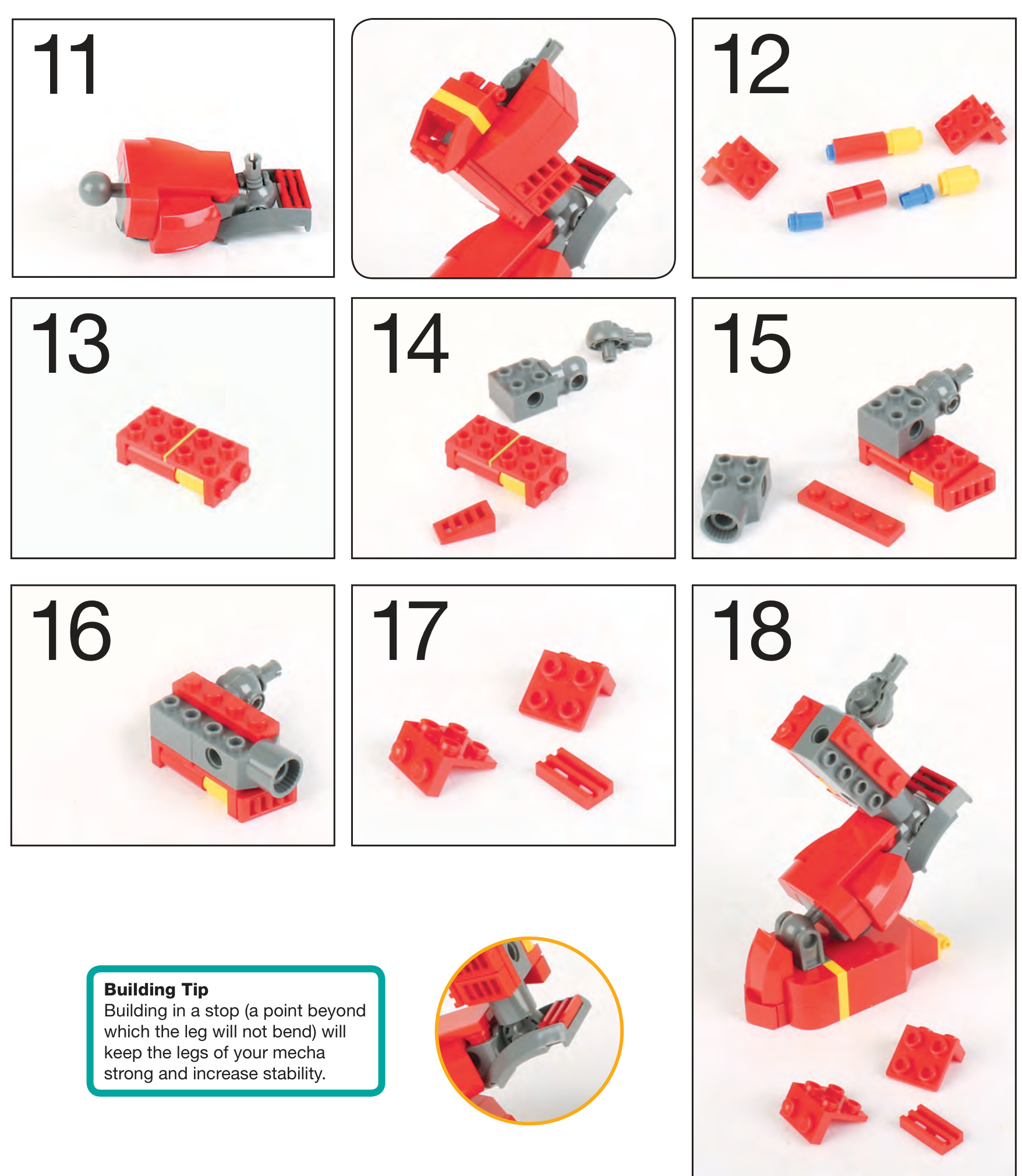
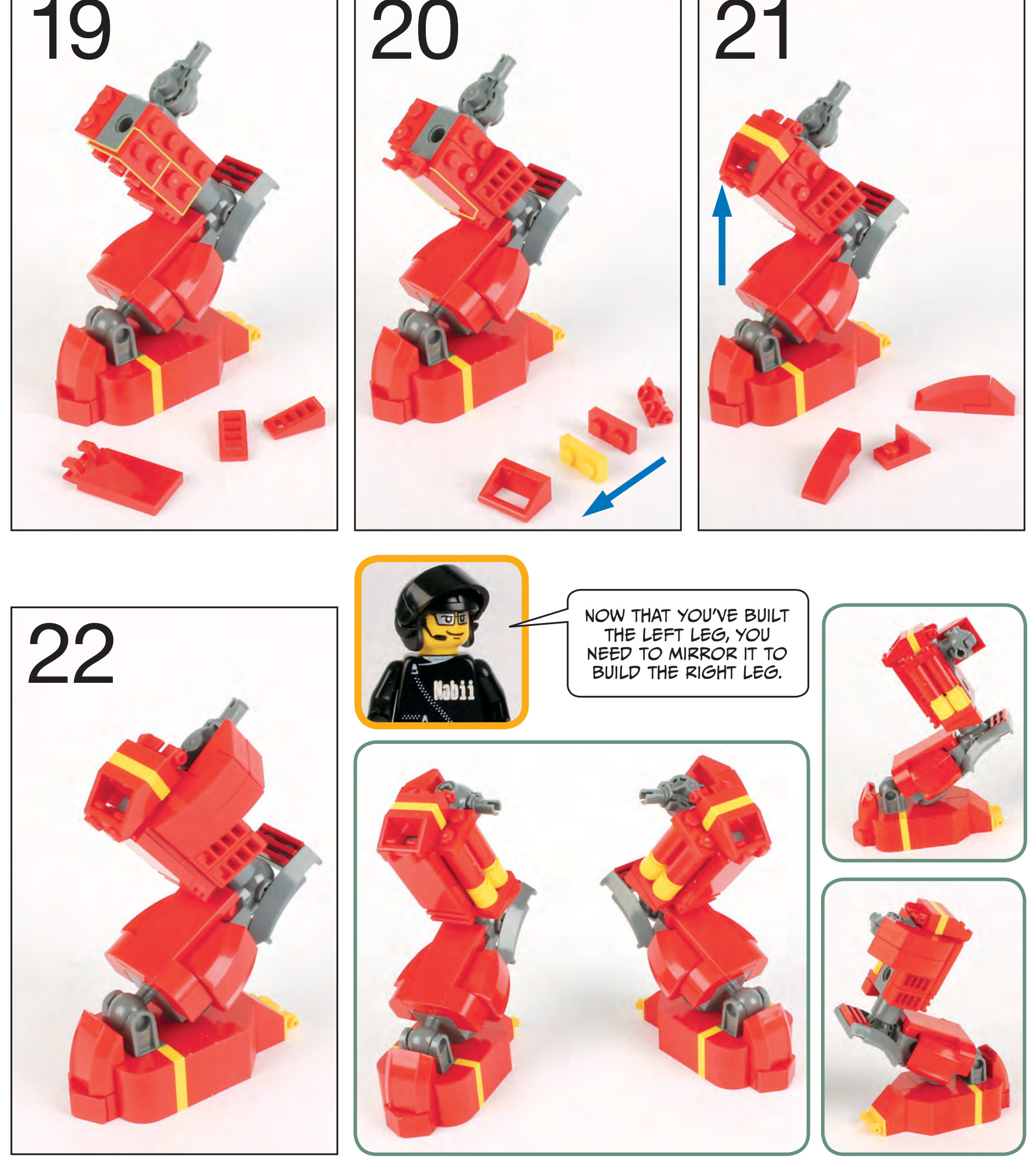

Mecha Inspiration

Building Journal
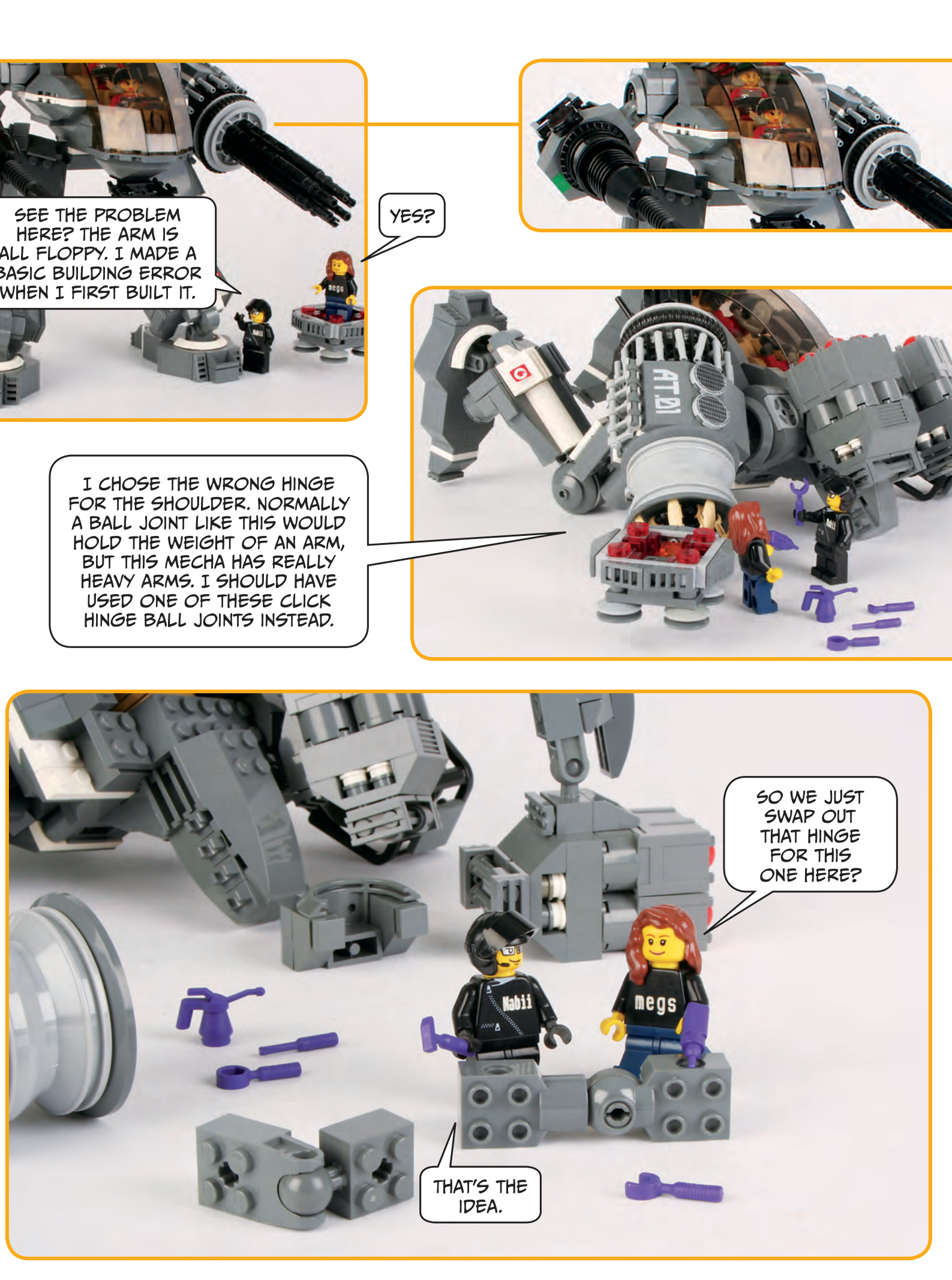
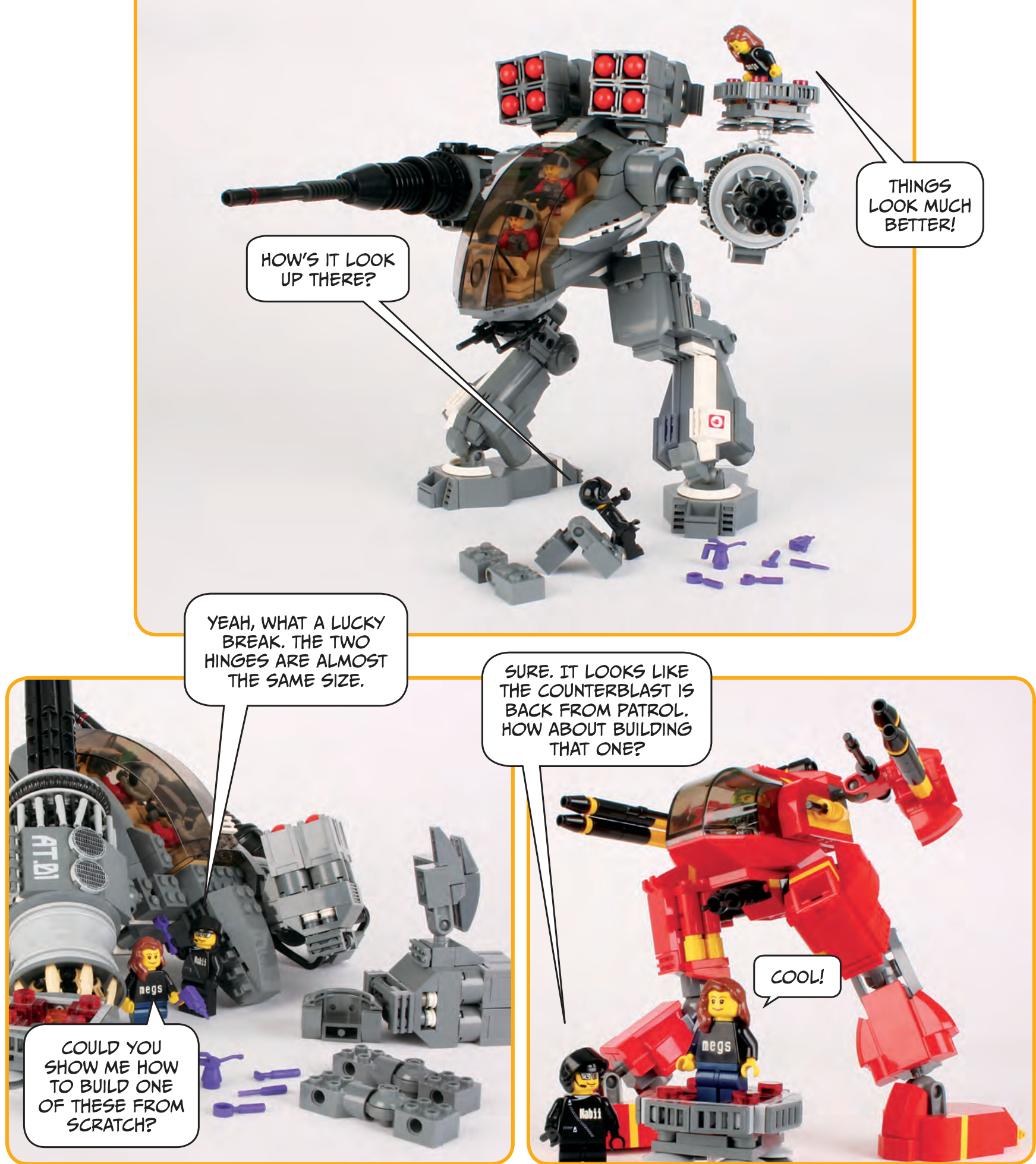
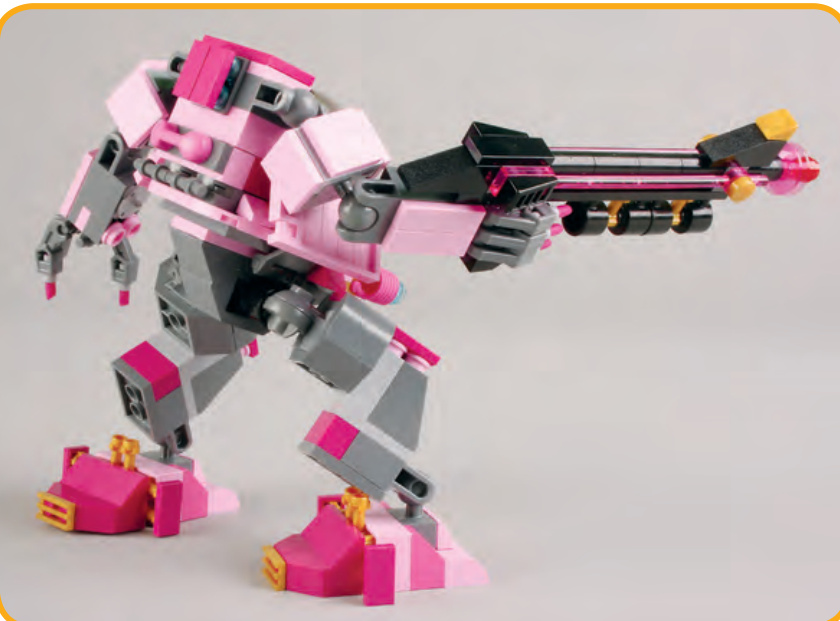
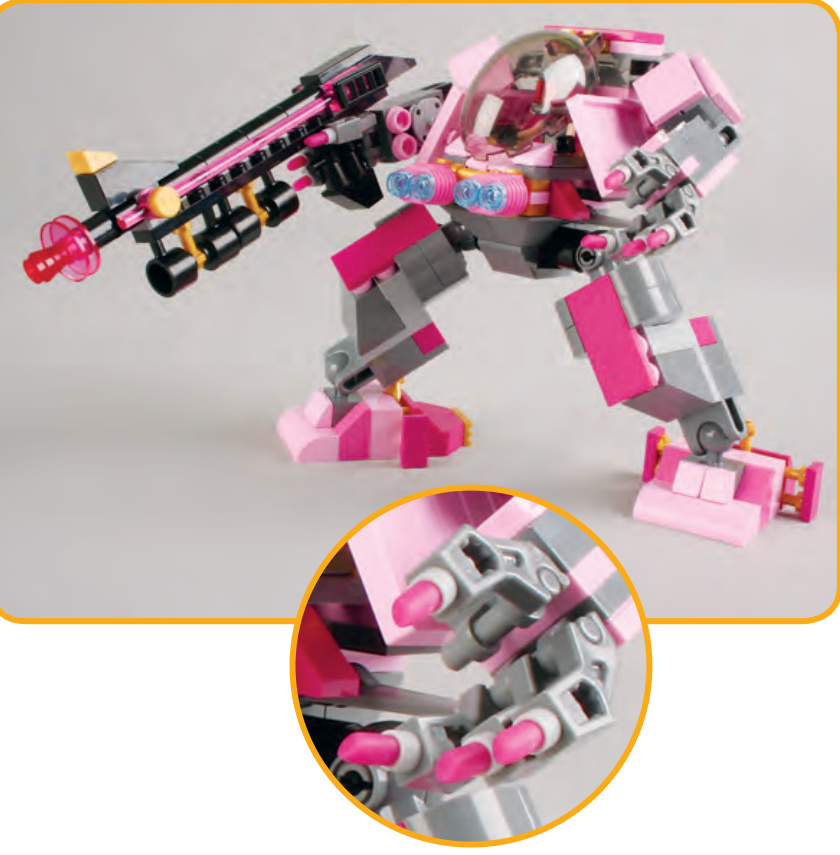
Mark explained to me the frame of a mecha is the most important thing to figure out. You need to plan your mecha’s proportions from the start. Does it have long legs or arms? Does the pilot sit in the body, or is there a head on top? Does it have two, four, or more arms and legs? Do the knees bend backwards ( like in the Counterblast), or do they work more like a human’s?
Only once you’ve built a basic frame is it time to decide on other key apsects, like whether it will be heavily armored and slow or lightly armored and fleet footed. But mecha aren’t all military. They can be walking forklifts, farming mecha, or even racing mechs. I wonder what my Transport-o-lux would look like with legs?
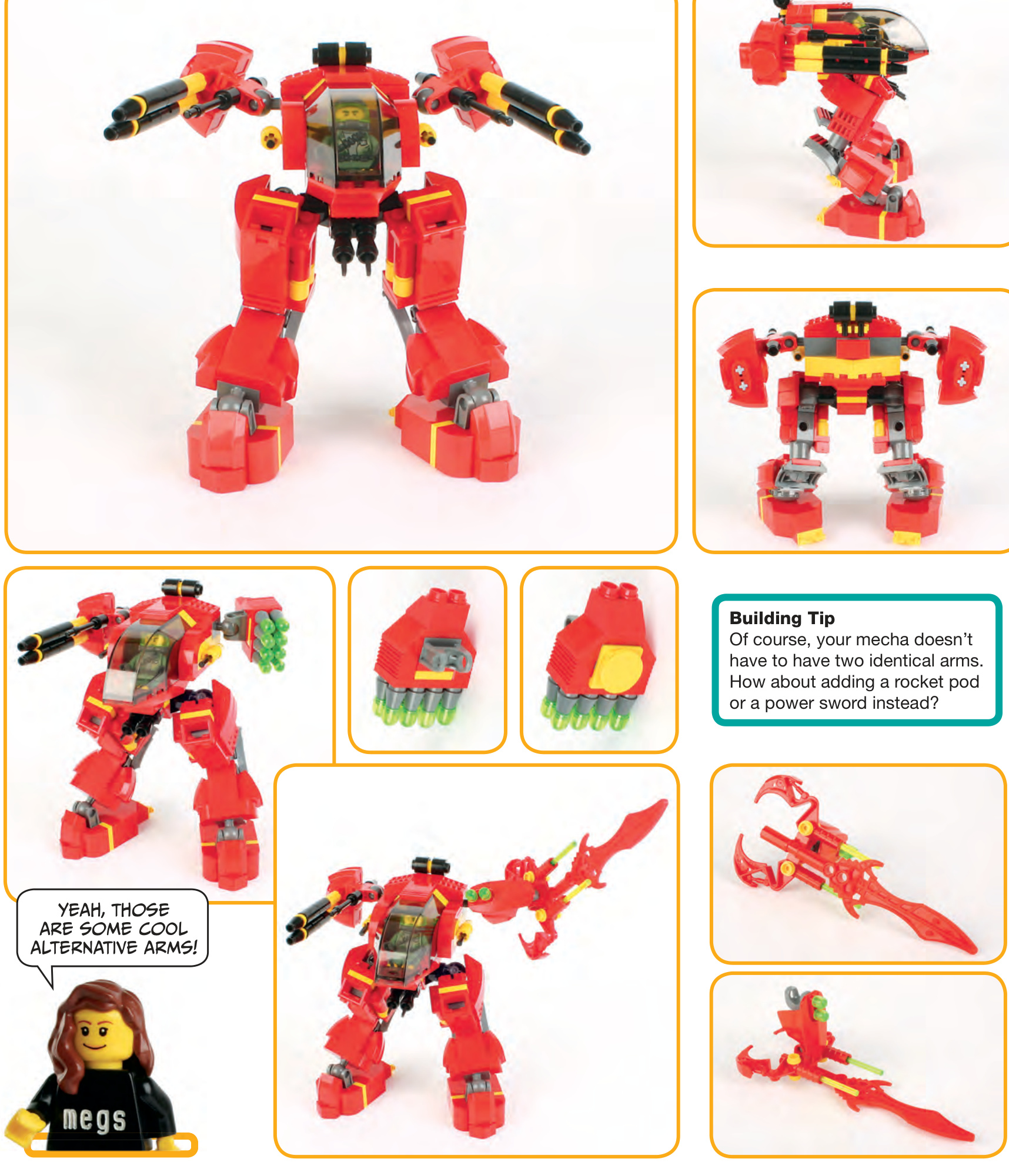
Building Tip
Try finding LEGO parts that fit with the theme of your mecha. These small details add a lot of character to your model.
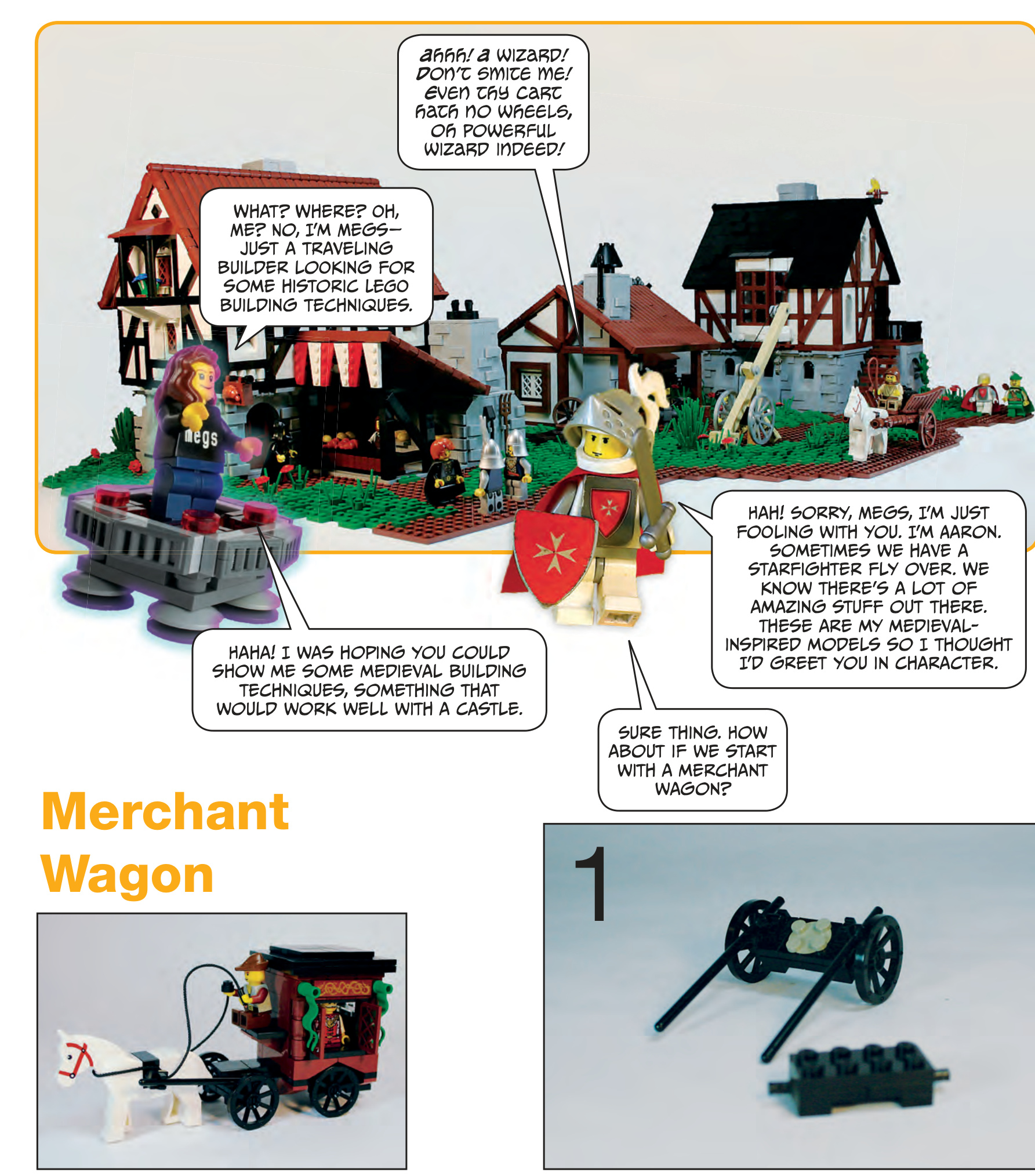
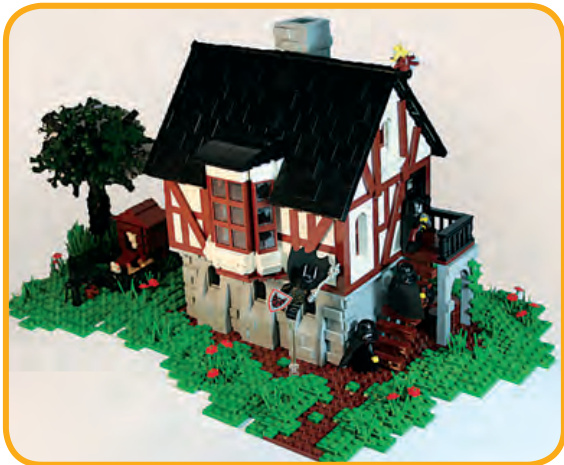
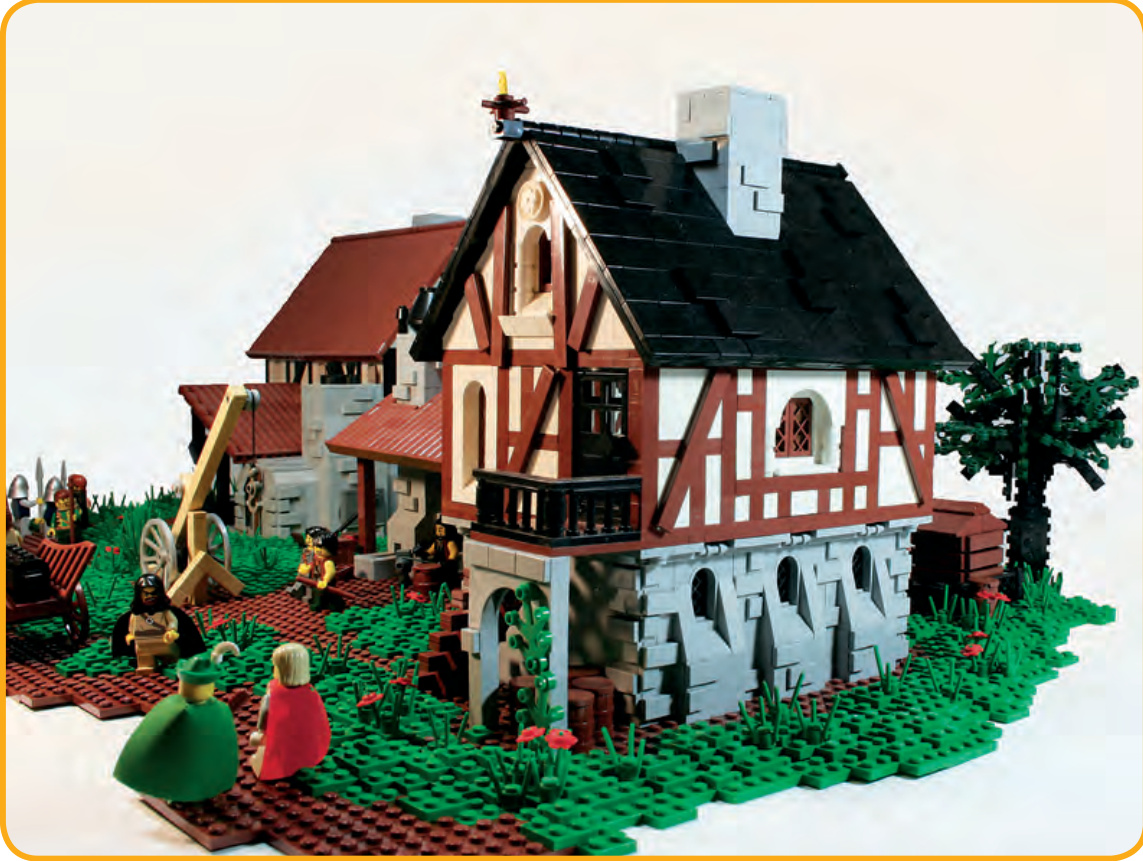
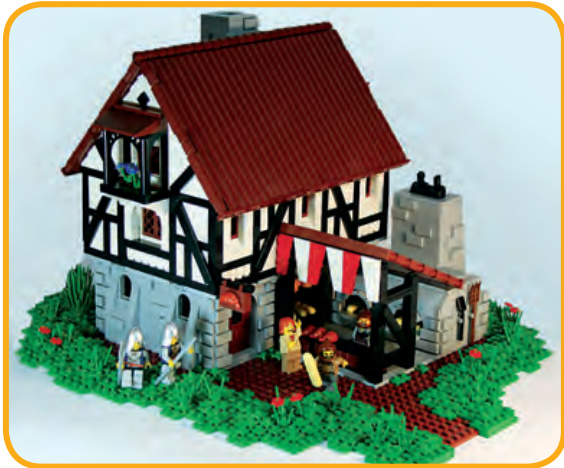
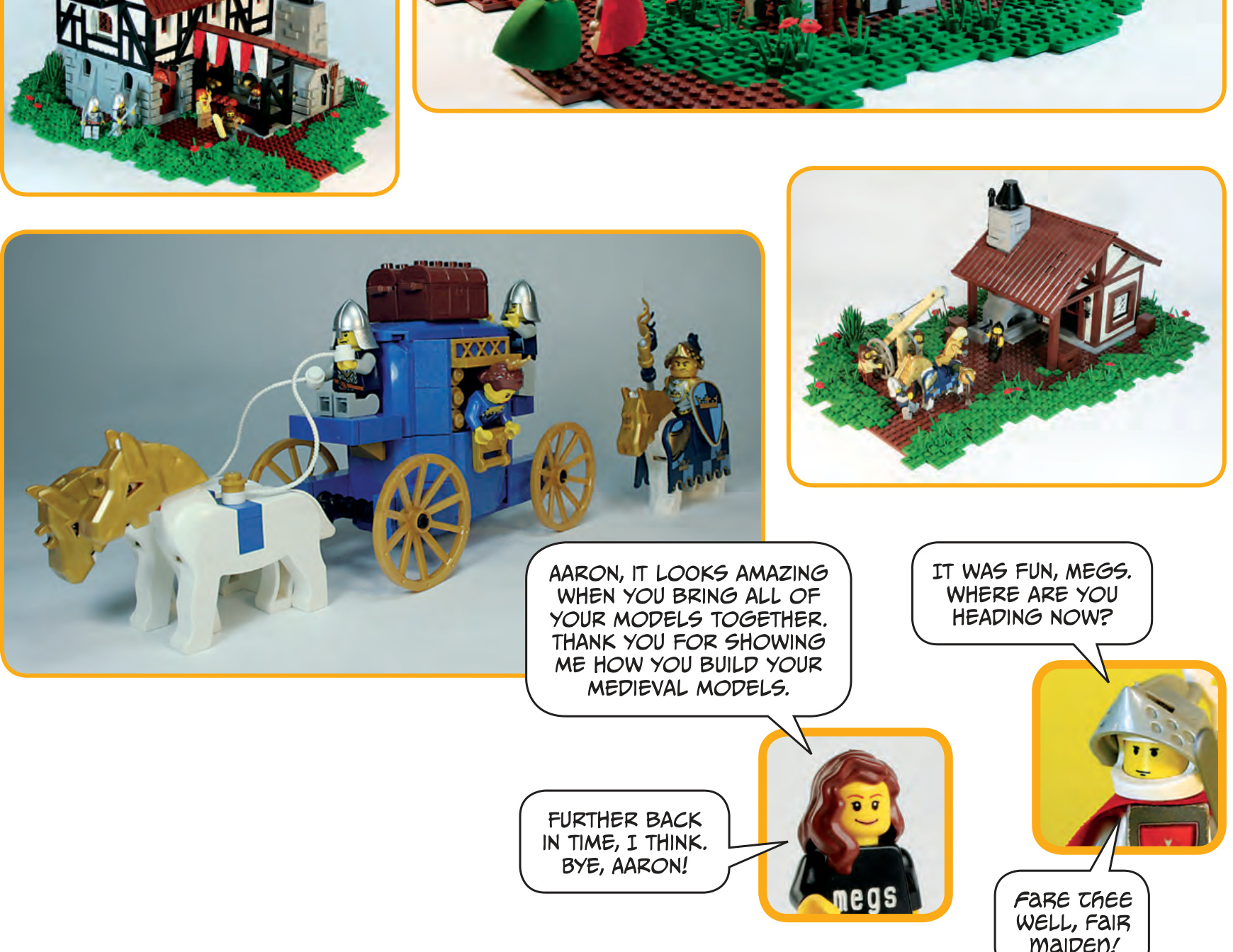
Medieval Village
Aaron Andrews
Nickname: DARKspawn

Profession: Music Teacher
Nationality: Australian
Websites: www.flickr.com/photos/darkspawn/ www.brickshelf.com/cgi-bin/gallery.cgi?m=DARKspawn
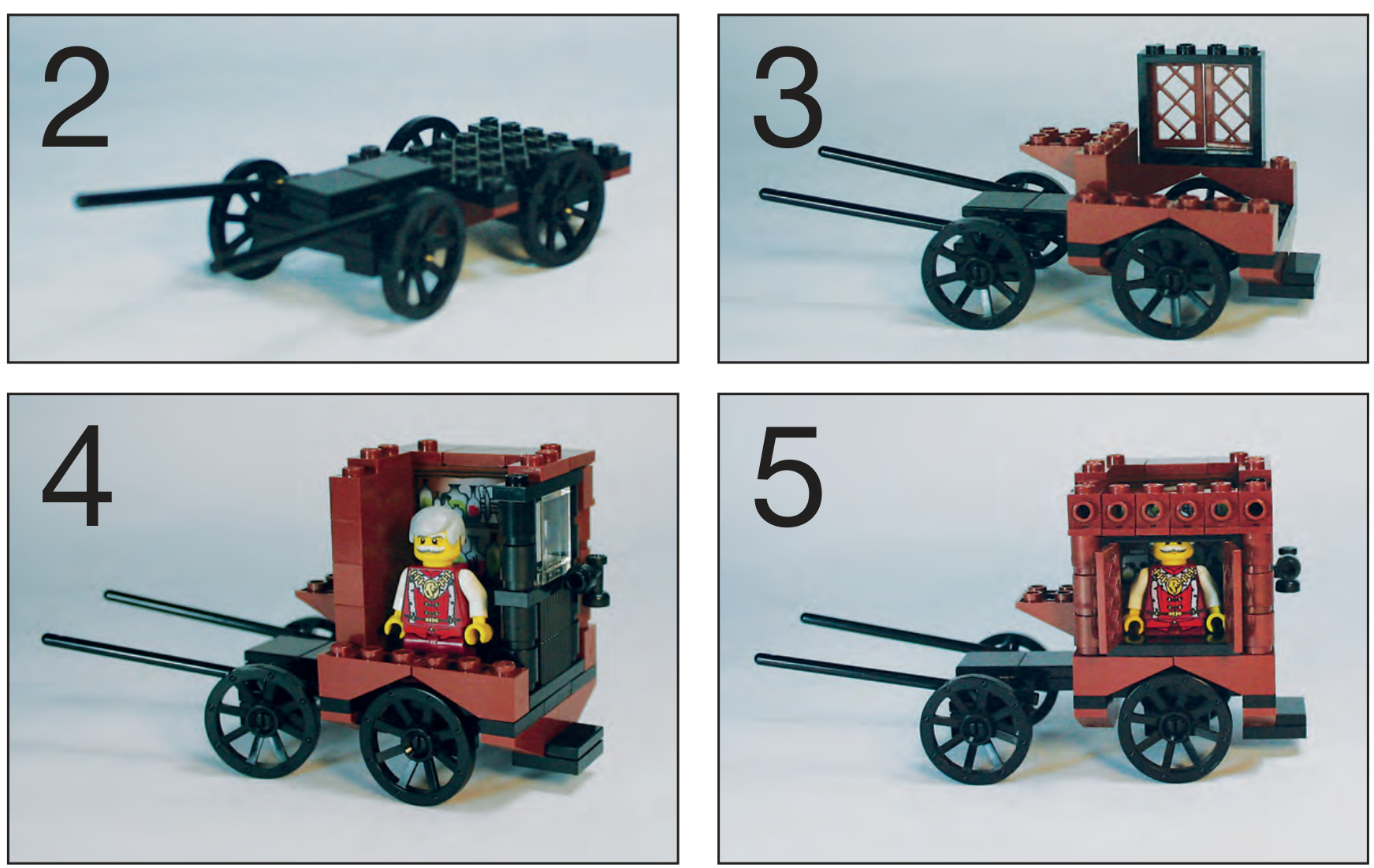
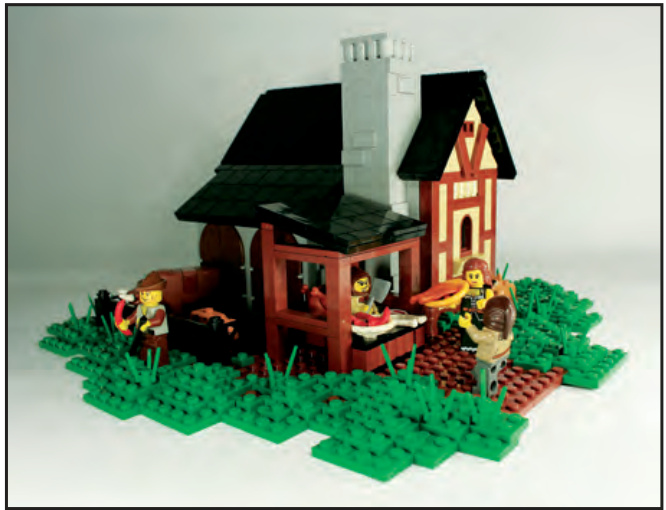
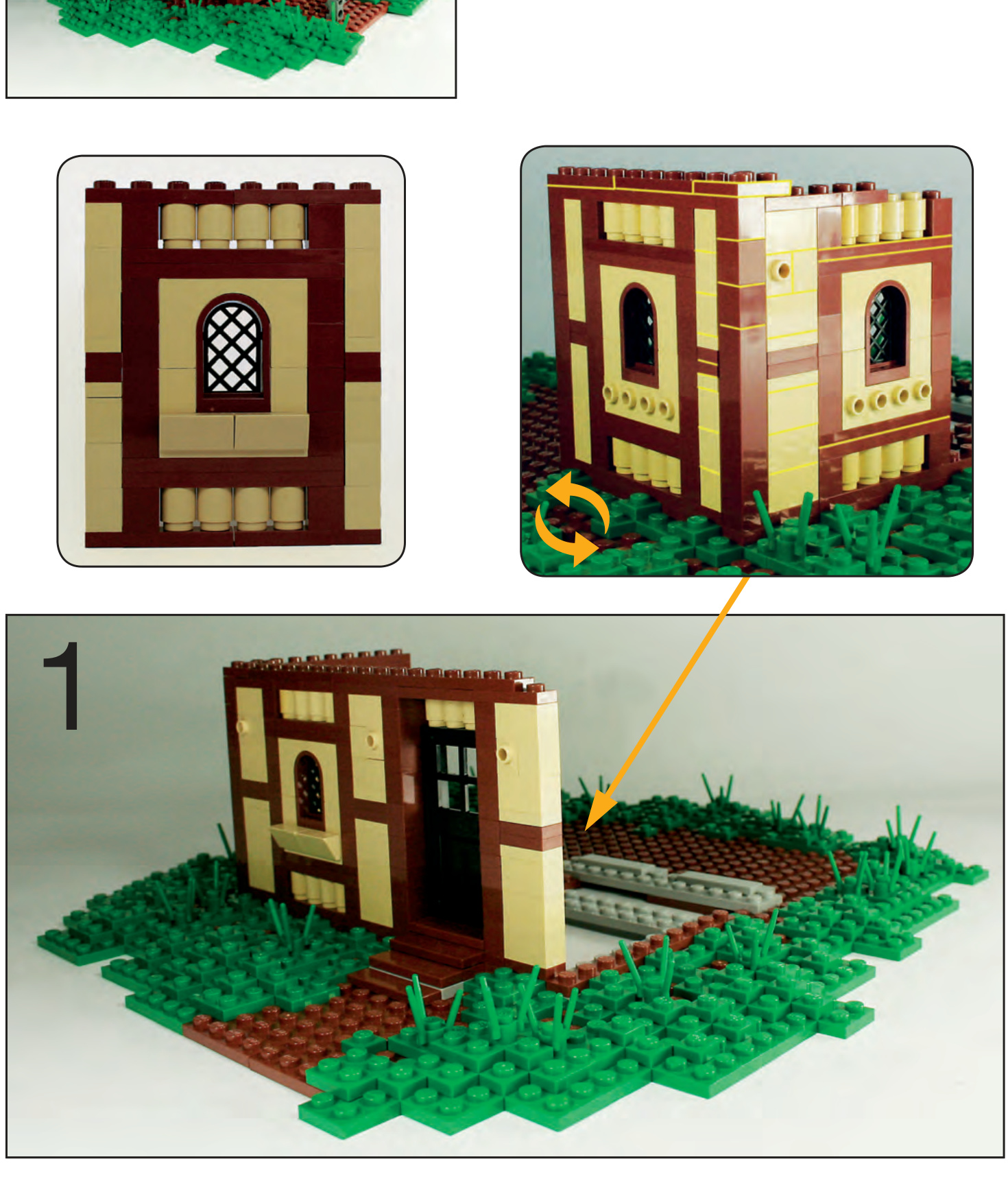
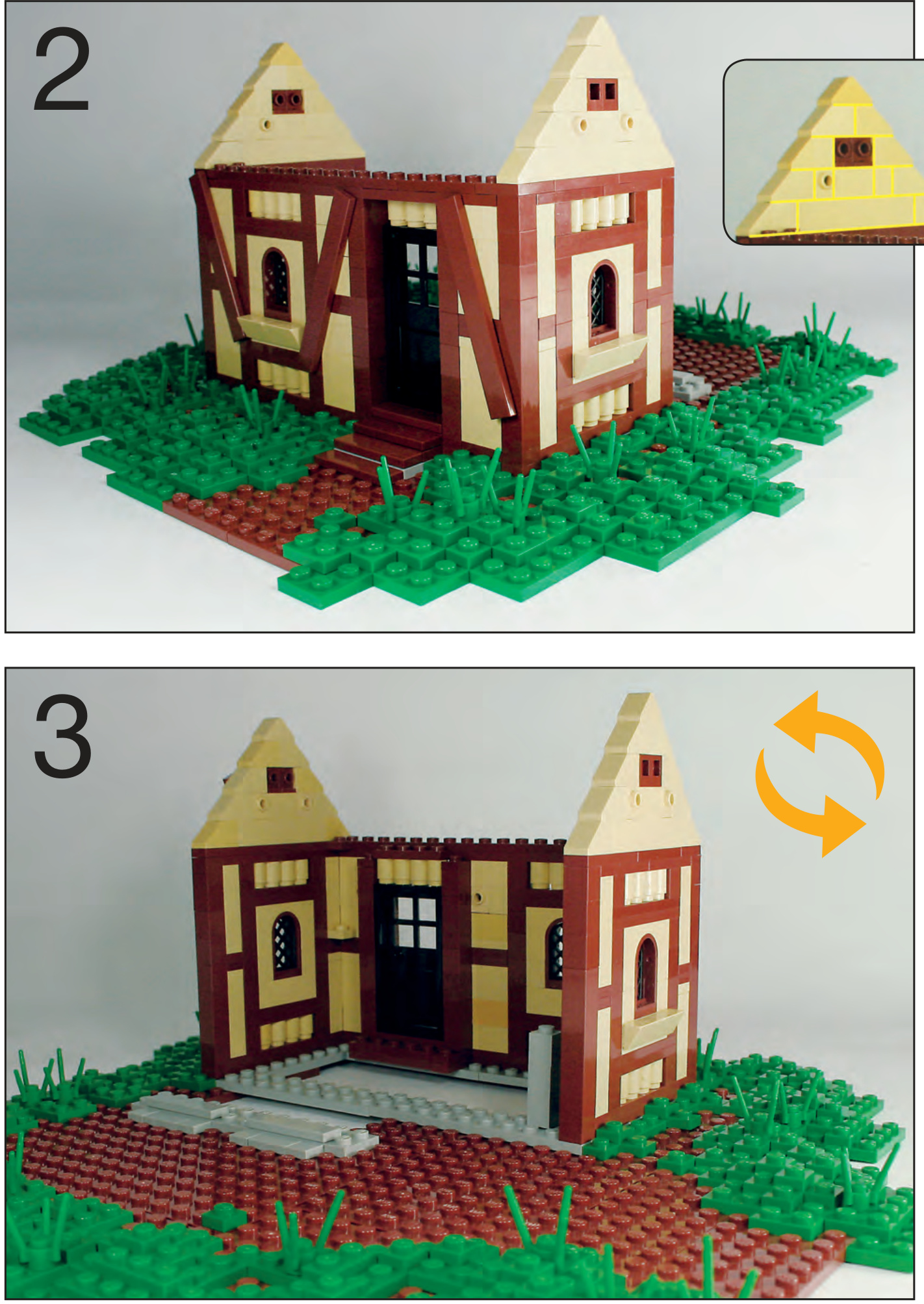
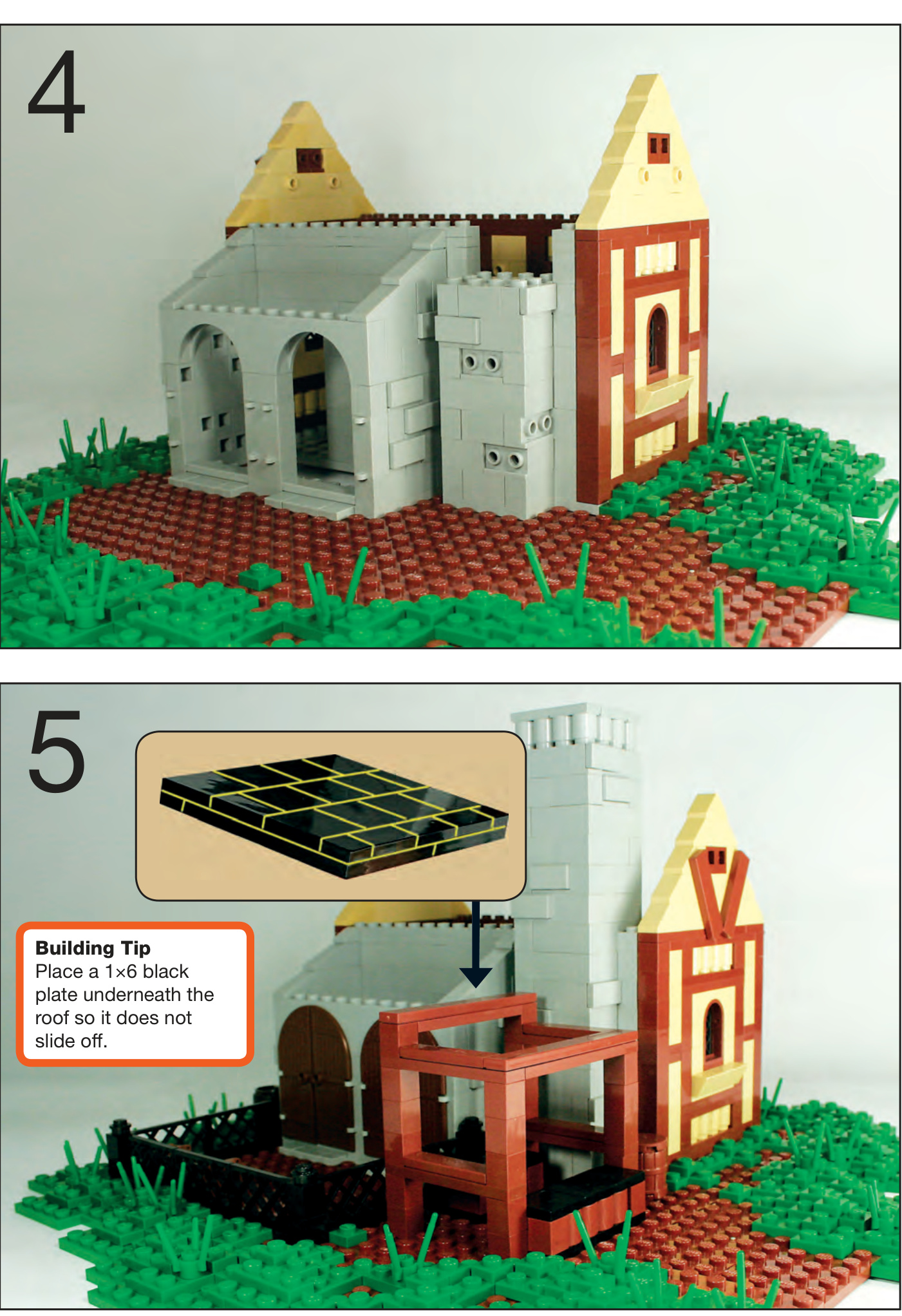
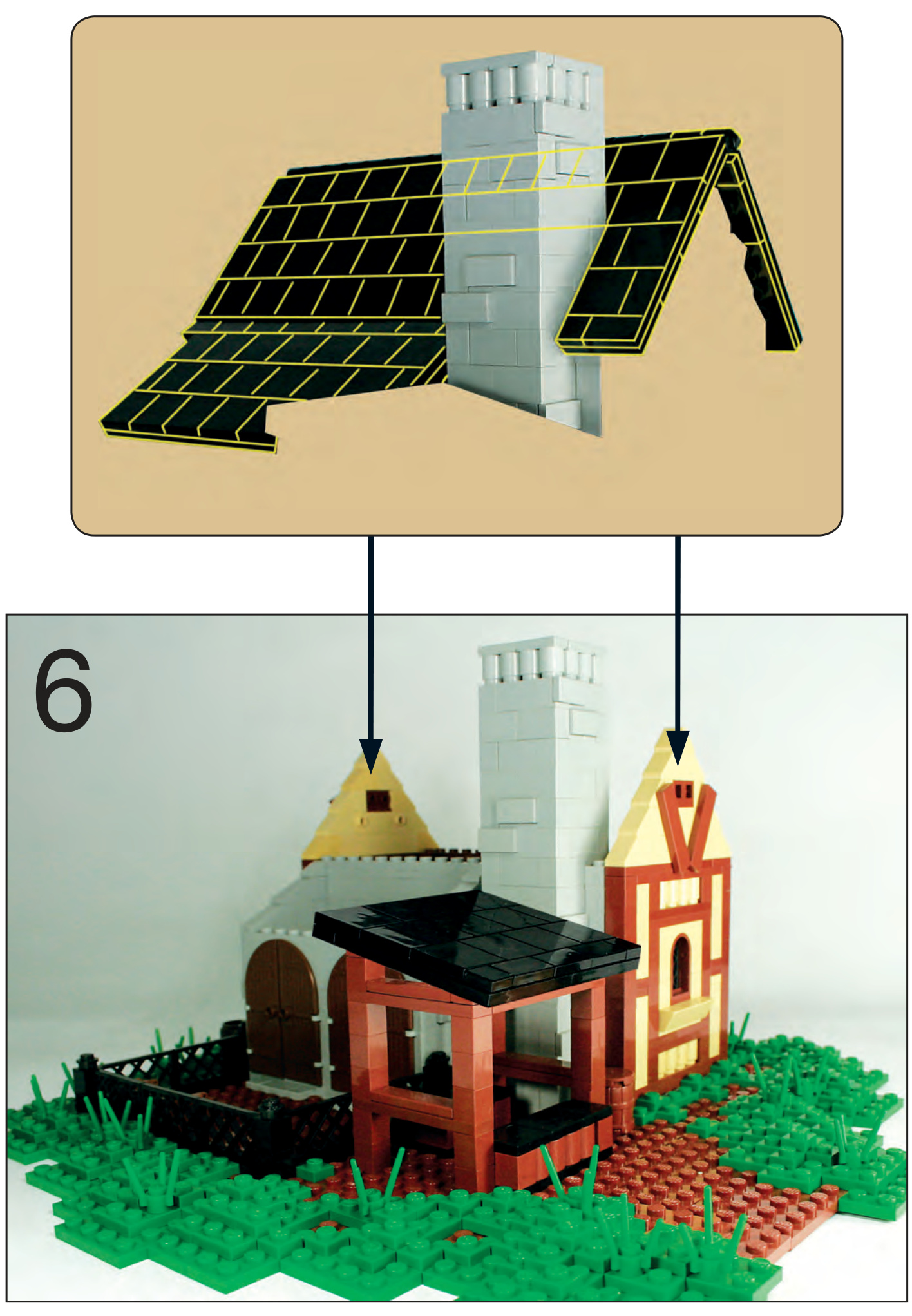
Building Journal
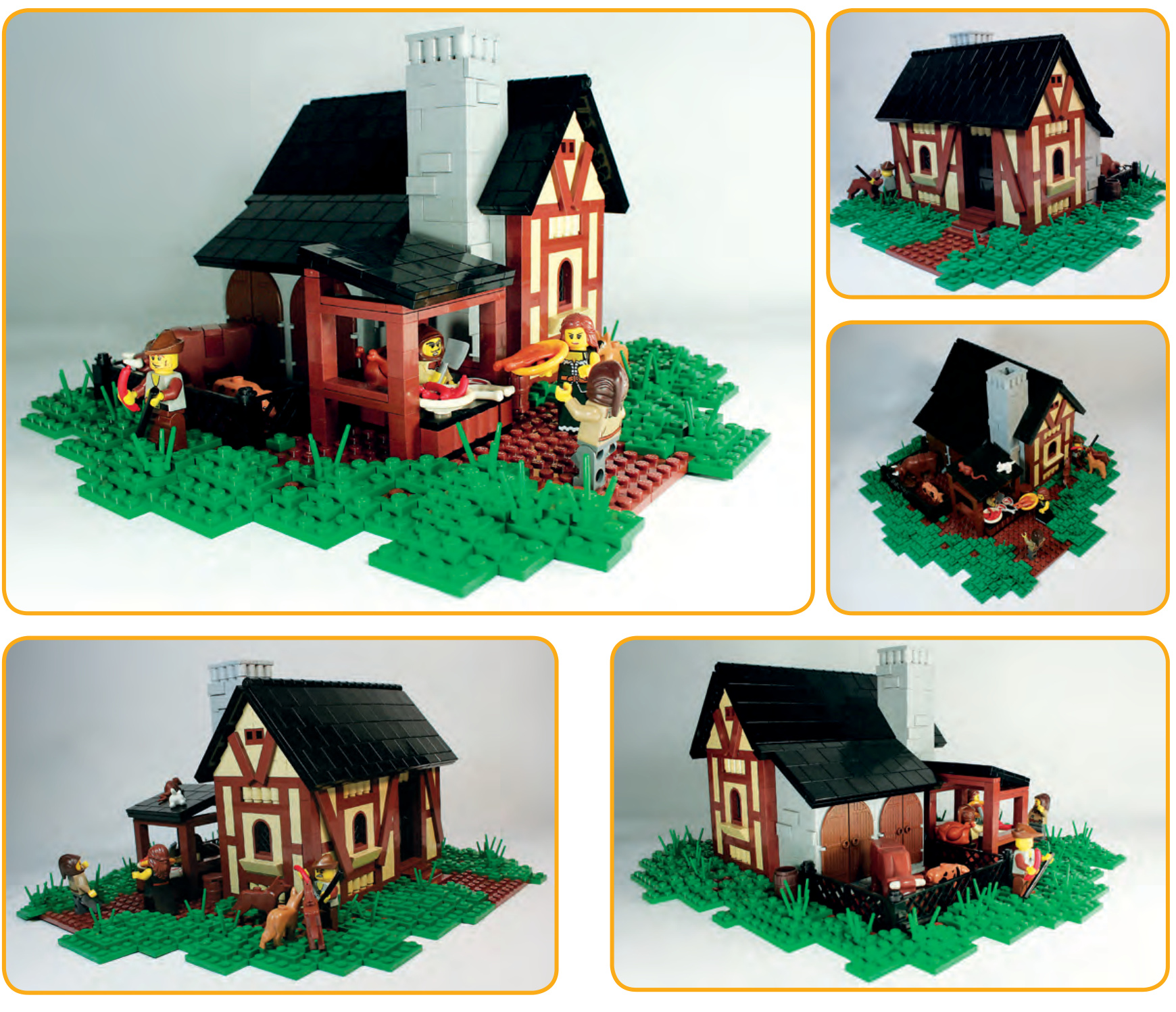
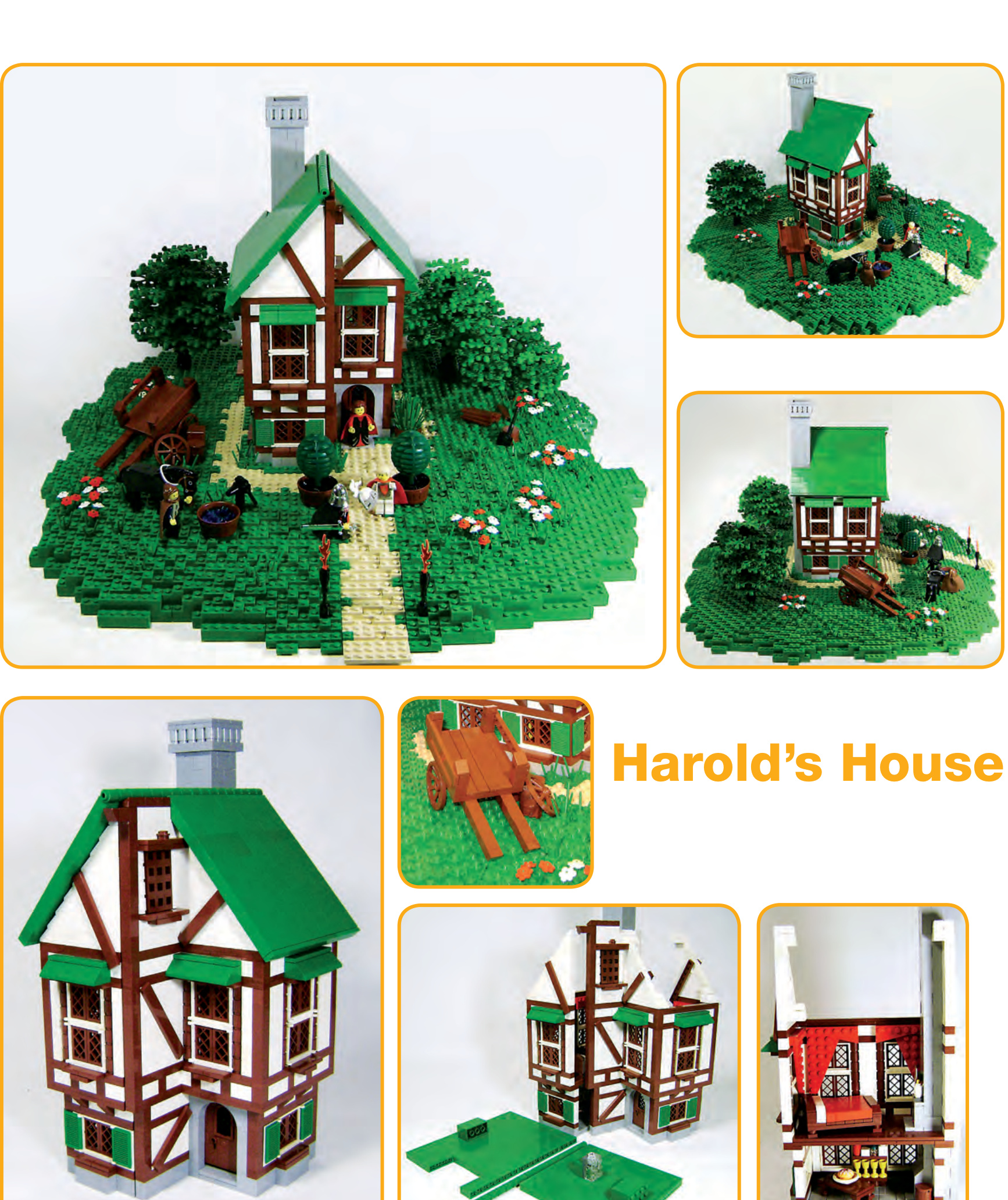
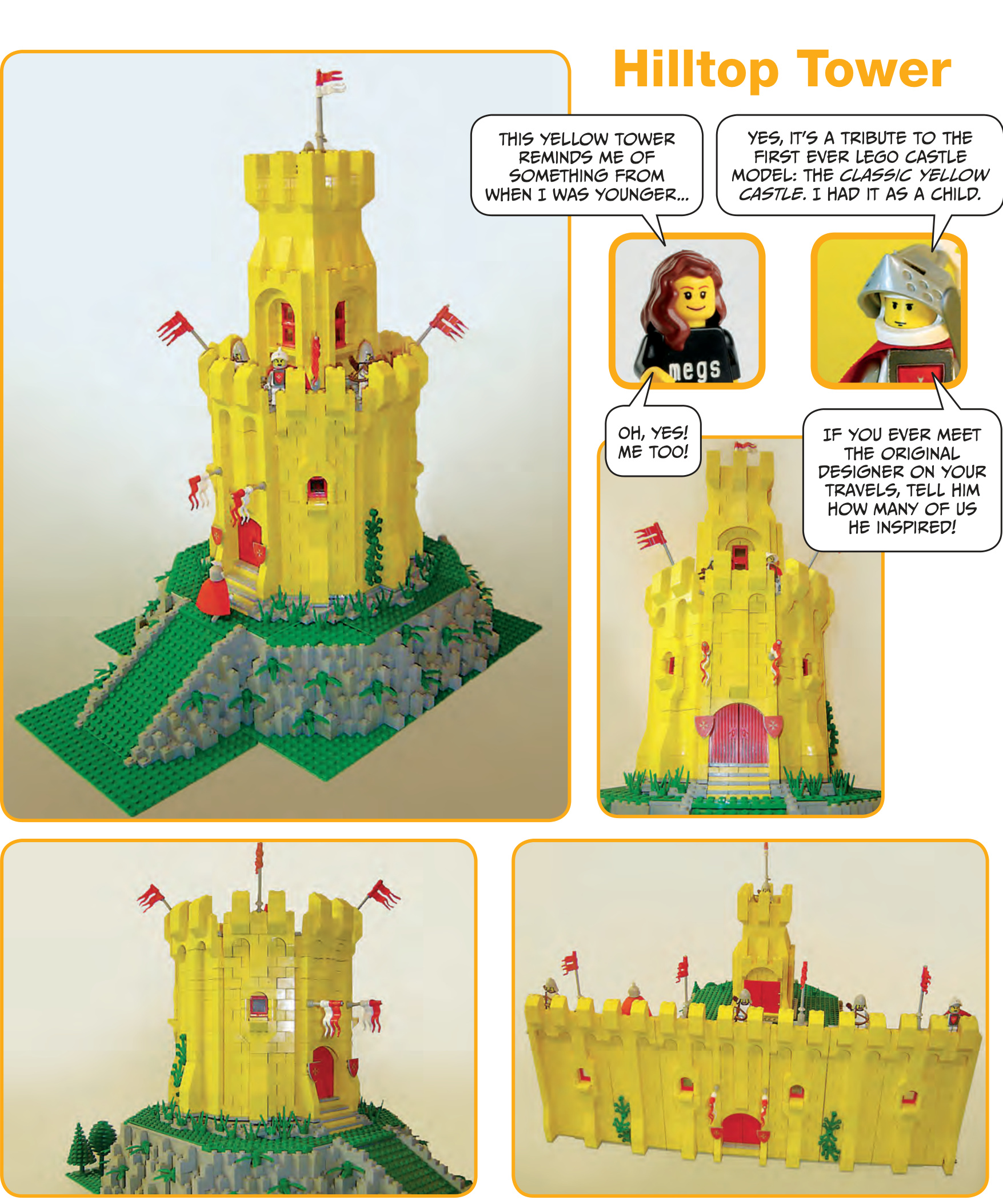
Texture is very important for adding detail to your models. There are several LEGO bricks with patterns in them, and you can use these to give your models a more realistic look. Aaron has also added interest to his stone walls by placing tiles sideways so they look like bricks sticking out of the stonework. He has also laid out the tiles on the roof to look like square slates, just like on a real old building!
Building Journal
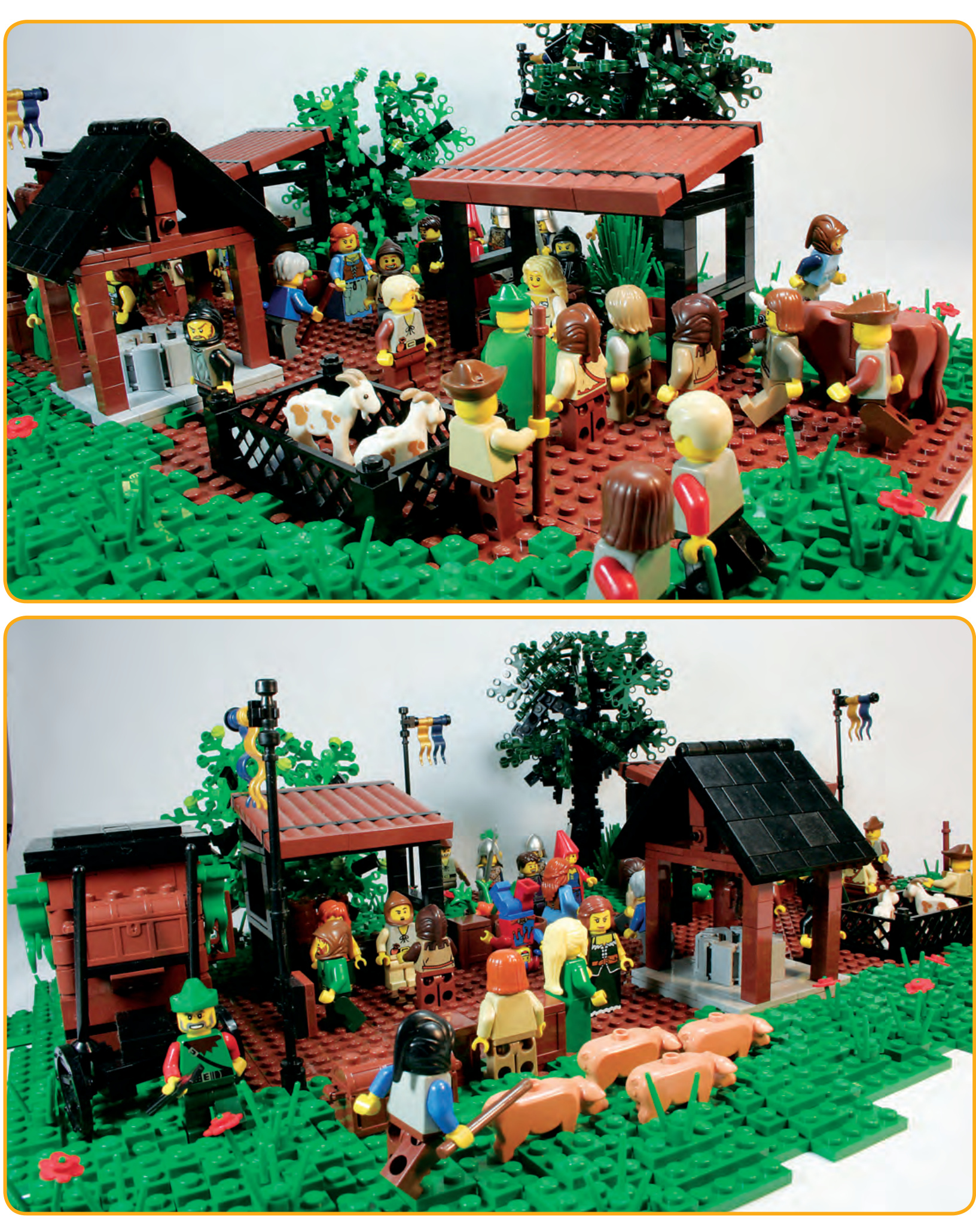
I noticed in Aaron’s medieval models that the LEGO black and brown colors both represent wood. This technique adds visual detail simply by using color. If he had used just brown or just black, his models would have been very bland. In his market model, for example, I can see how he separates the browns of the ground from the browns of the wooden beams in the town well by using light grey ˝stone˝ tiles to break things up.
Medieval Market
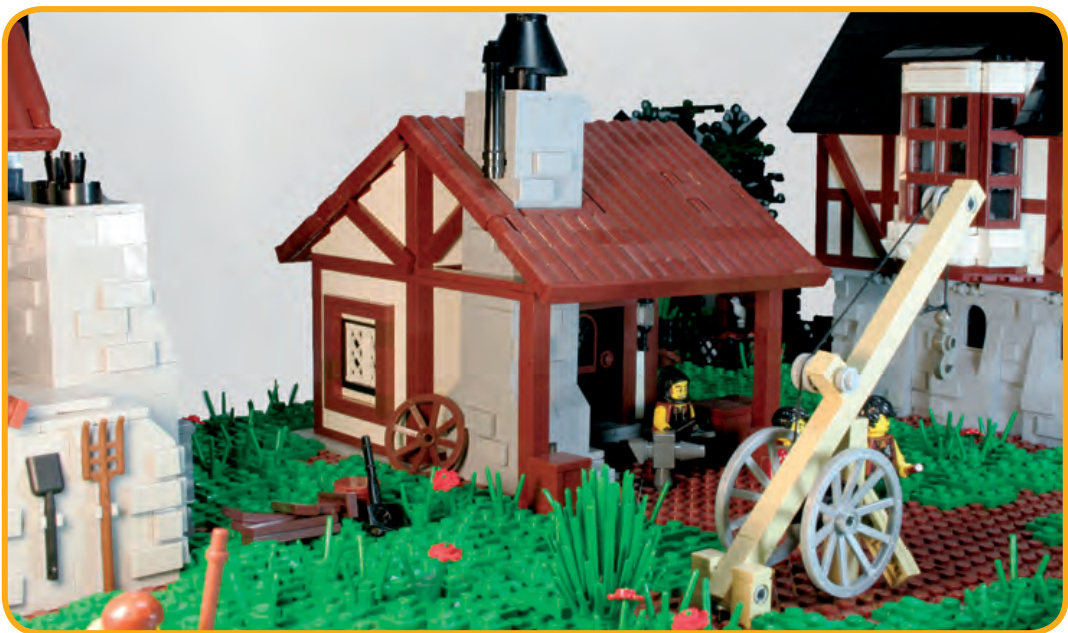
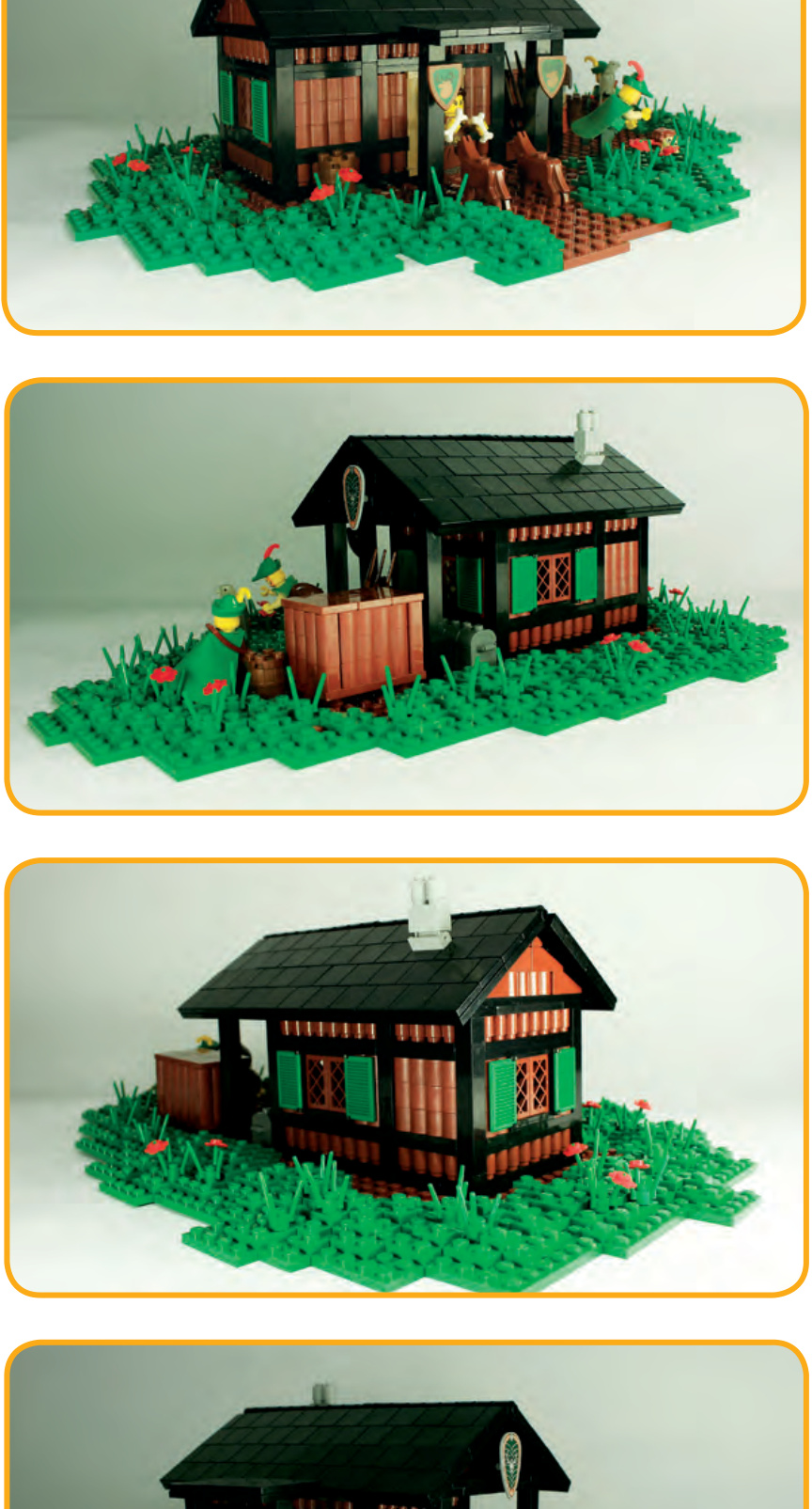
Woodsman’s Cottage
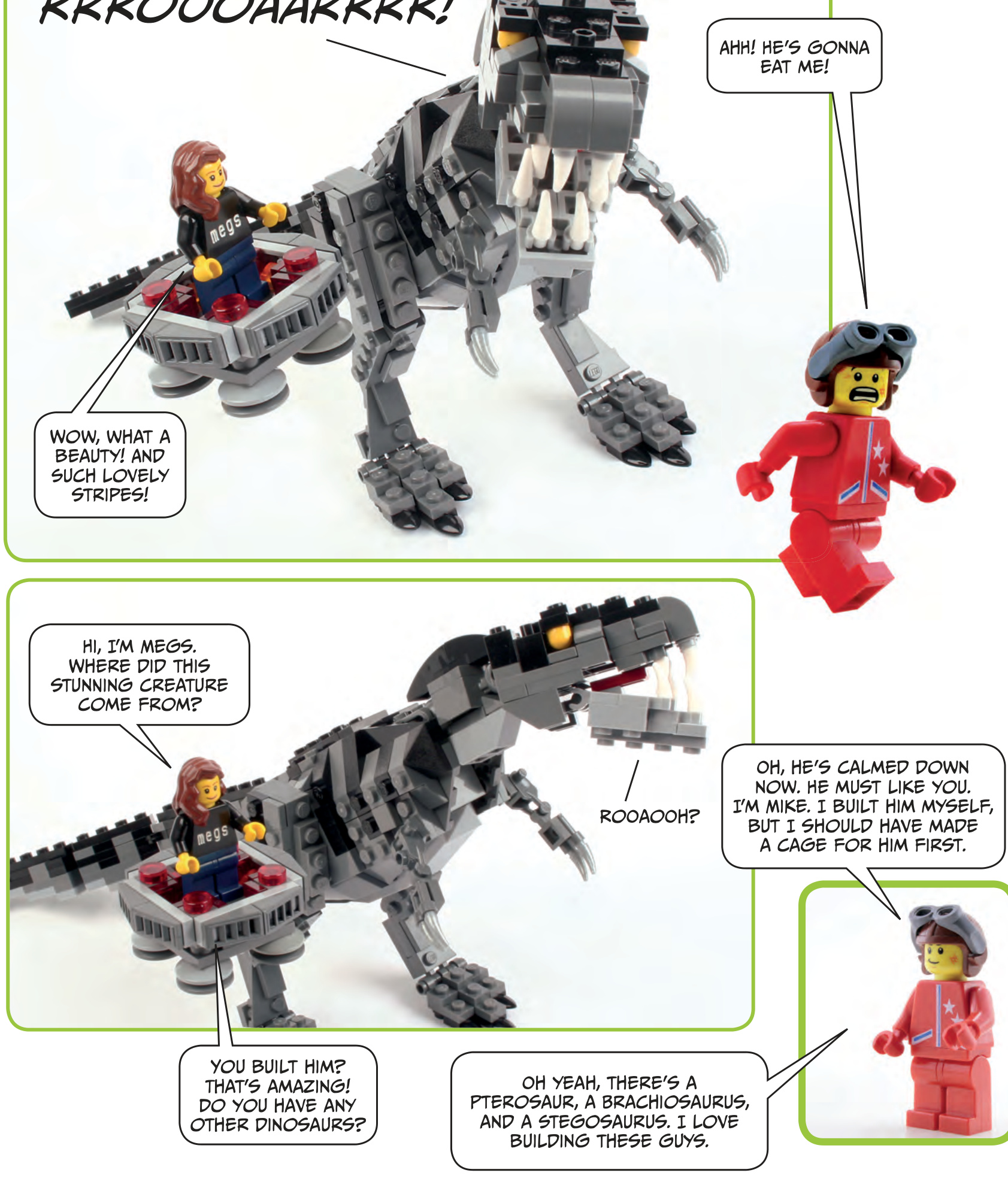
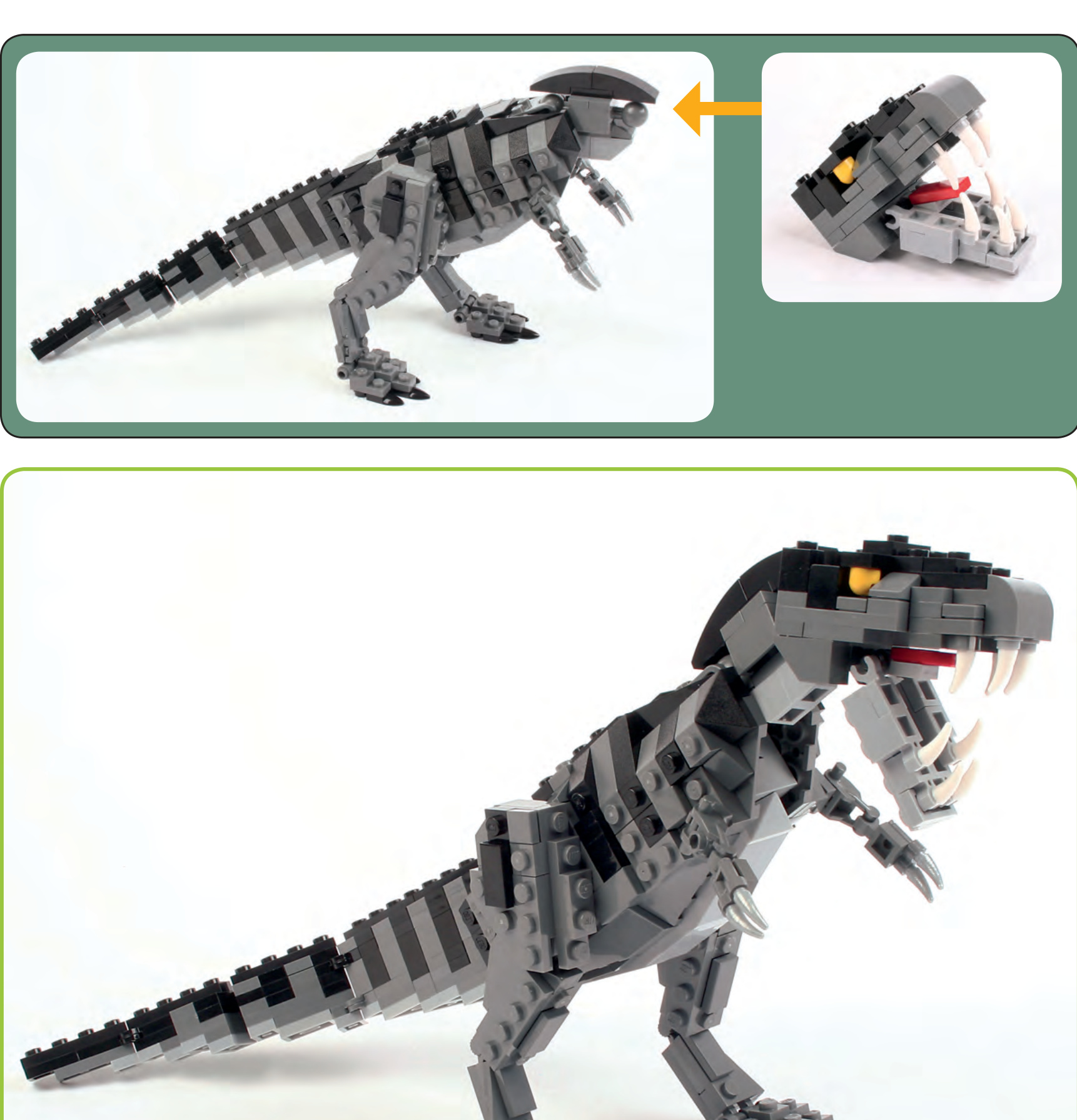
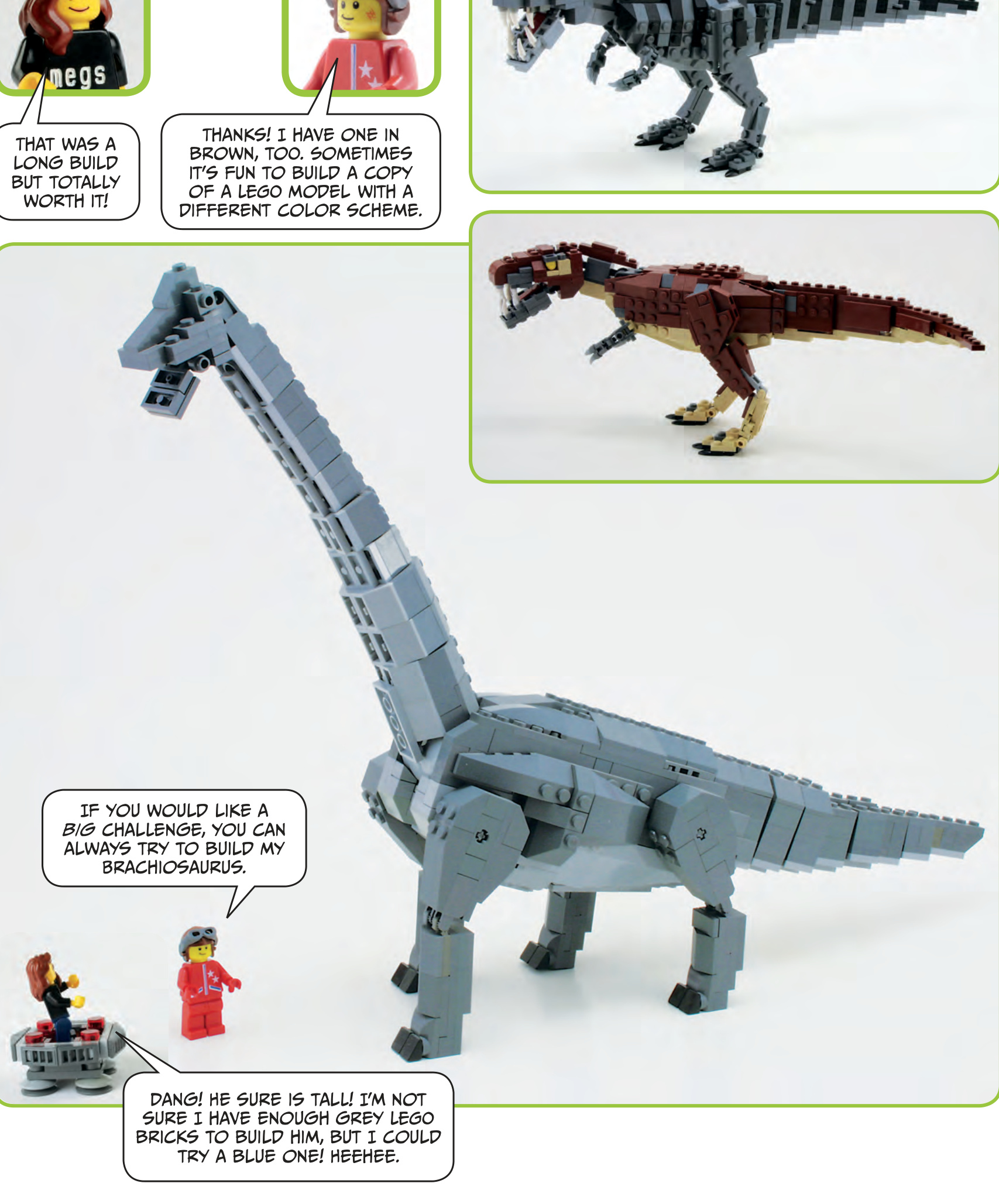
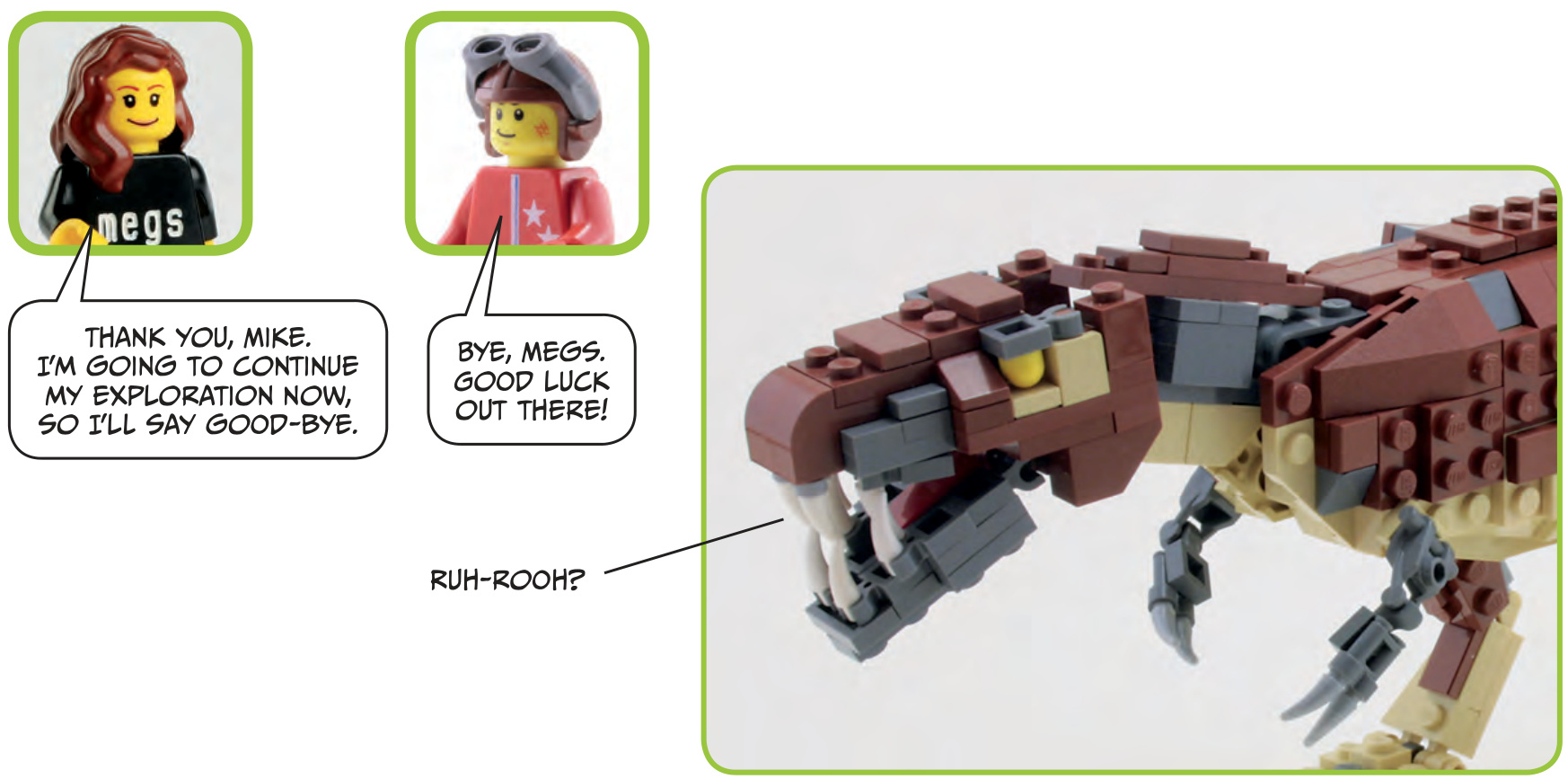
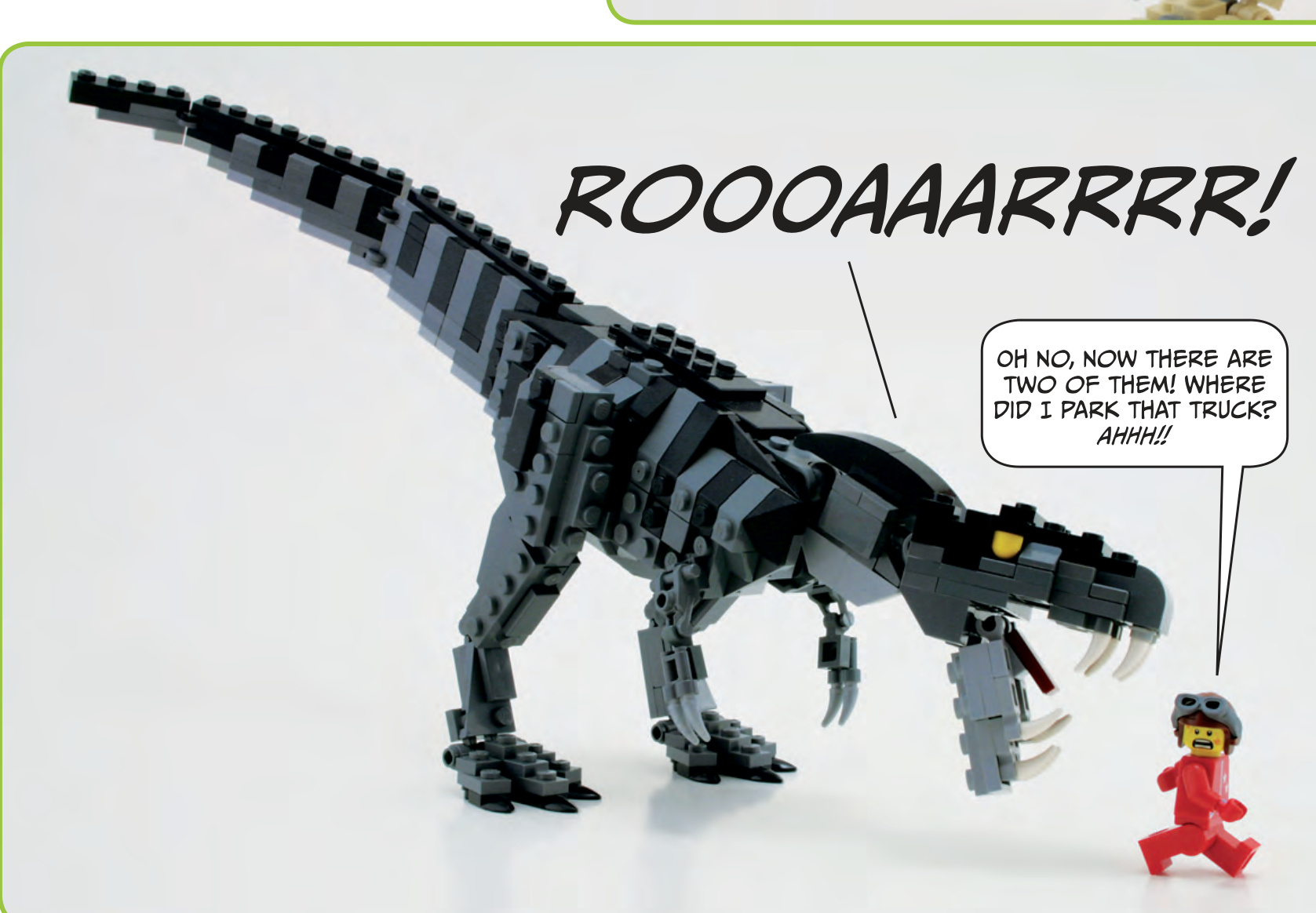
Triassic Park
Mike Psiaki

Nickname: Psiaki
Profession: Mechanical Engineer
Nationality: American
Website: www.flickr.com/photos/pmiaki

Building Tip
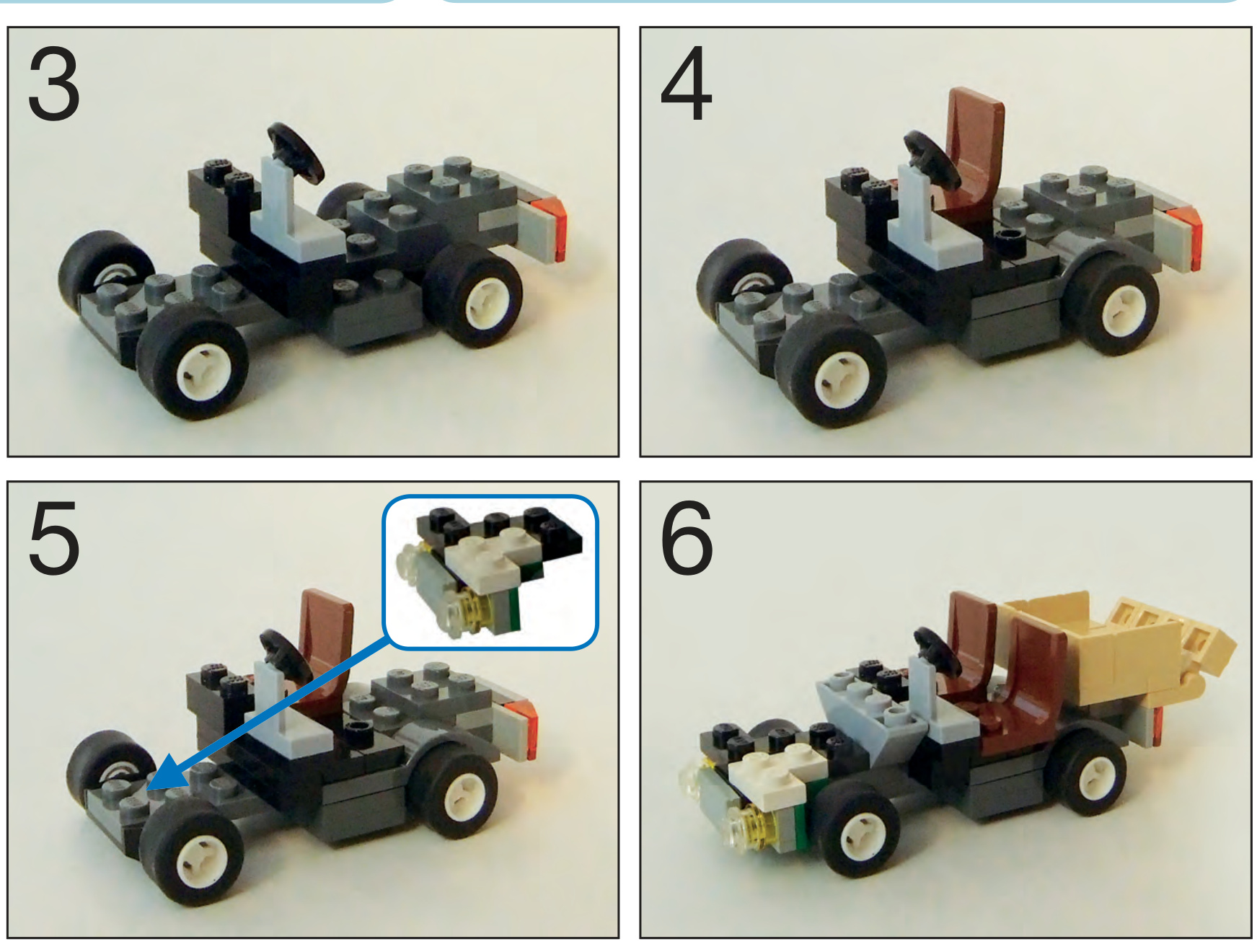
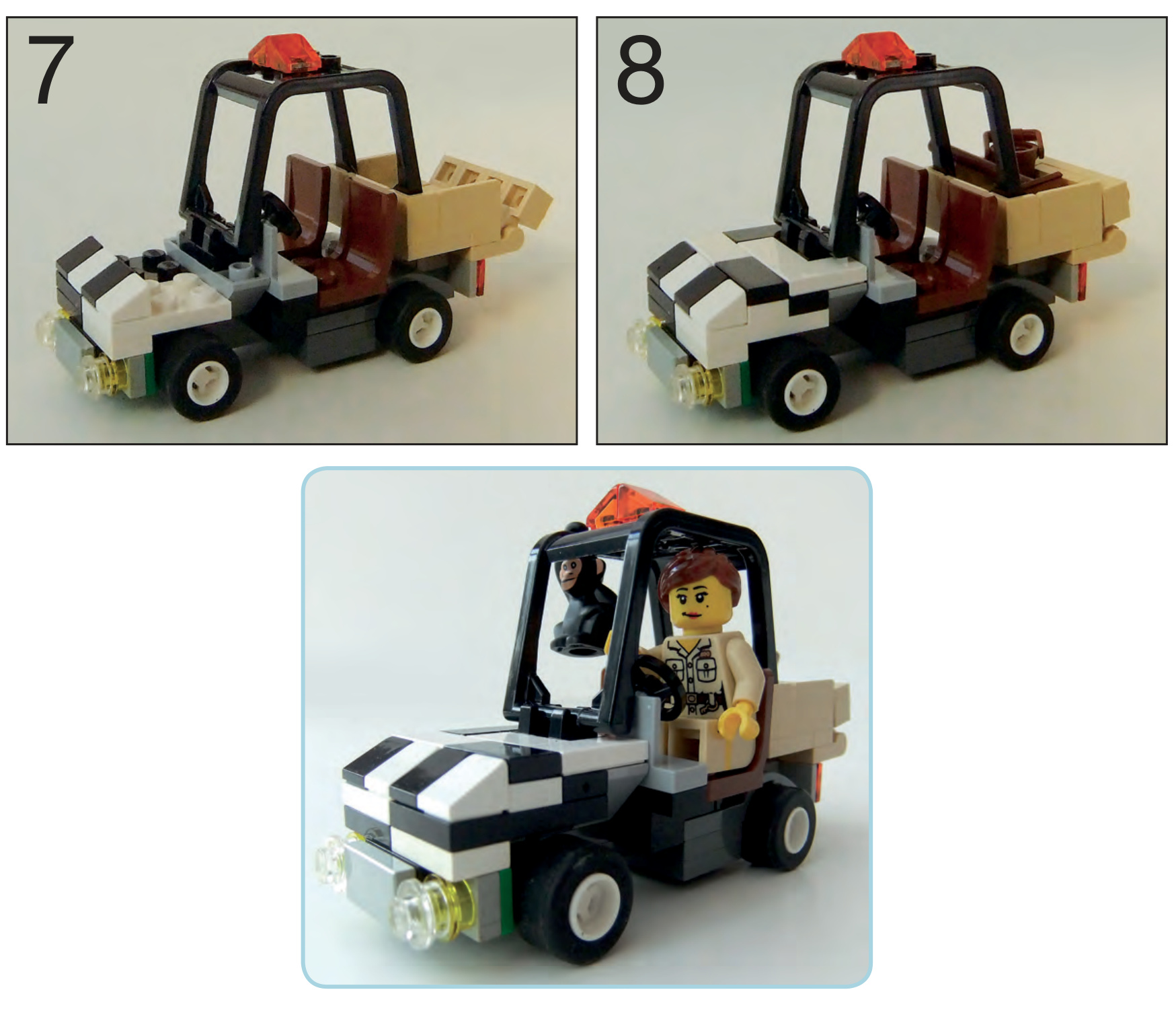
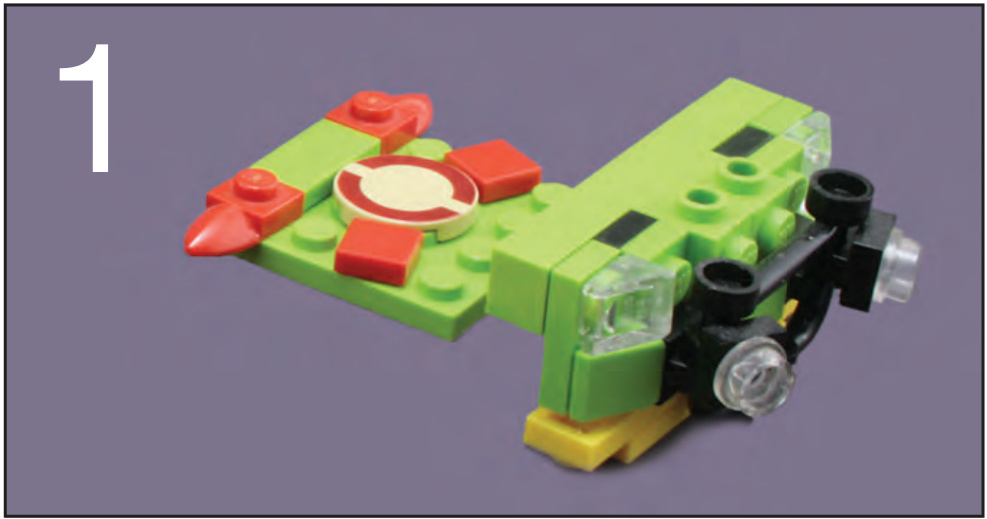
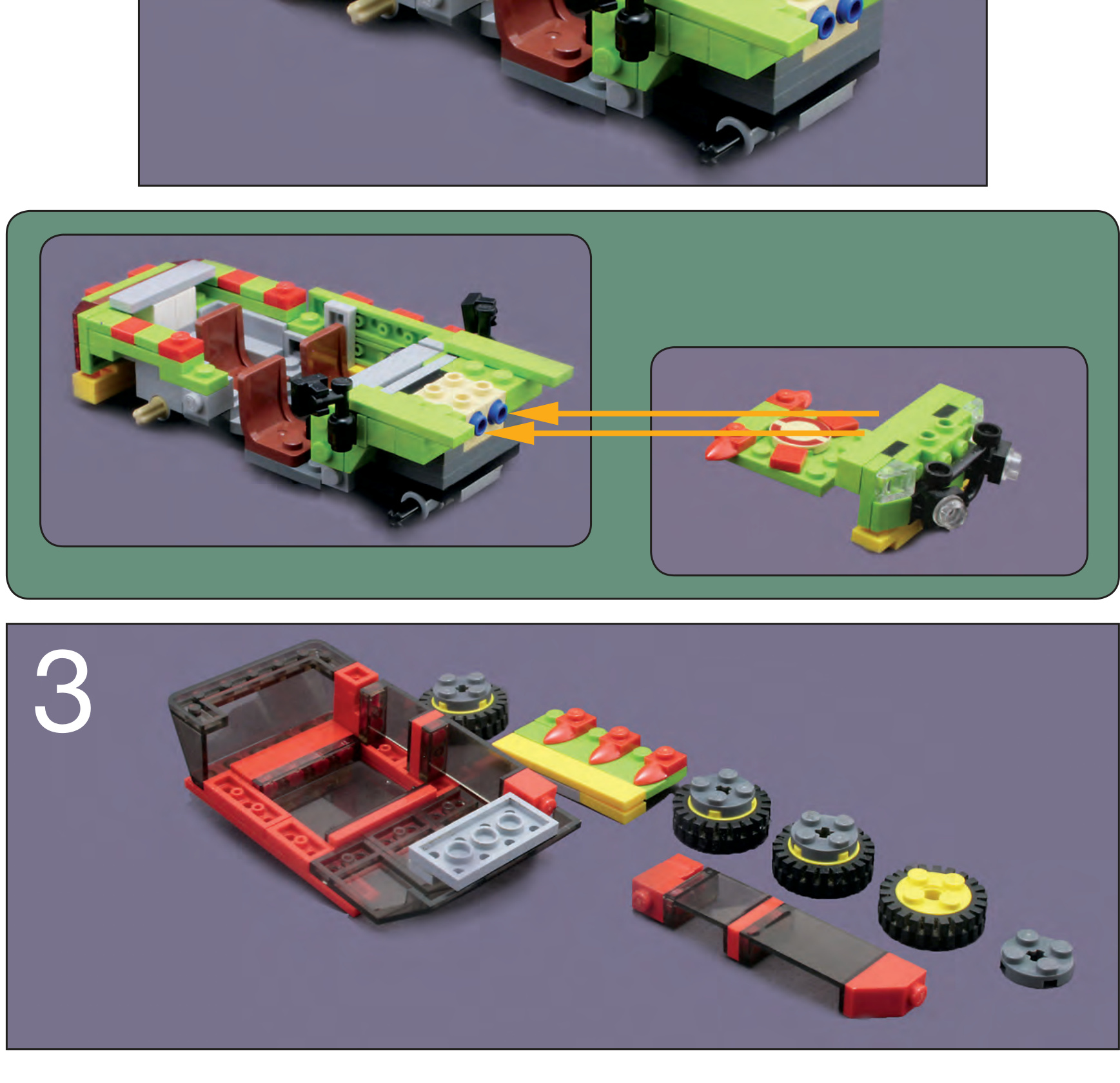
Both sides of the truck are symmetrical, so think carefully about how the model is built. Study the parts you can see to fgure out the parts you can’t see.
Safari Truck


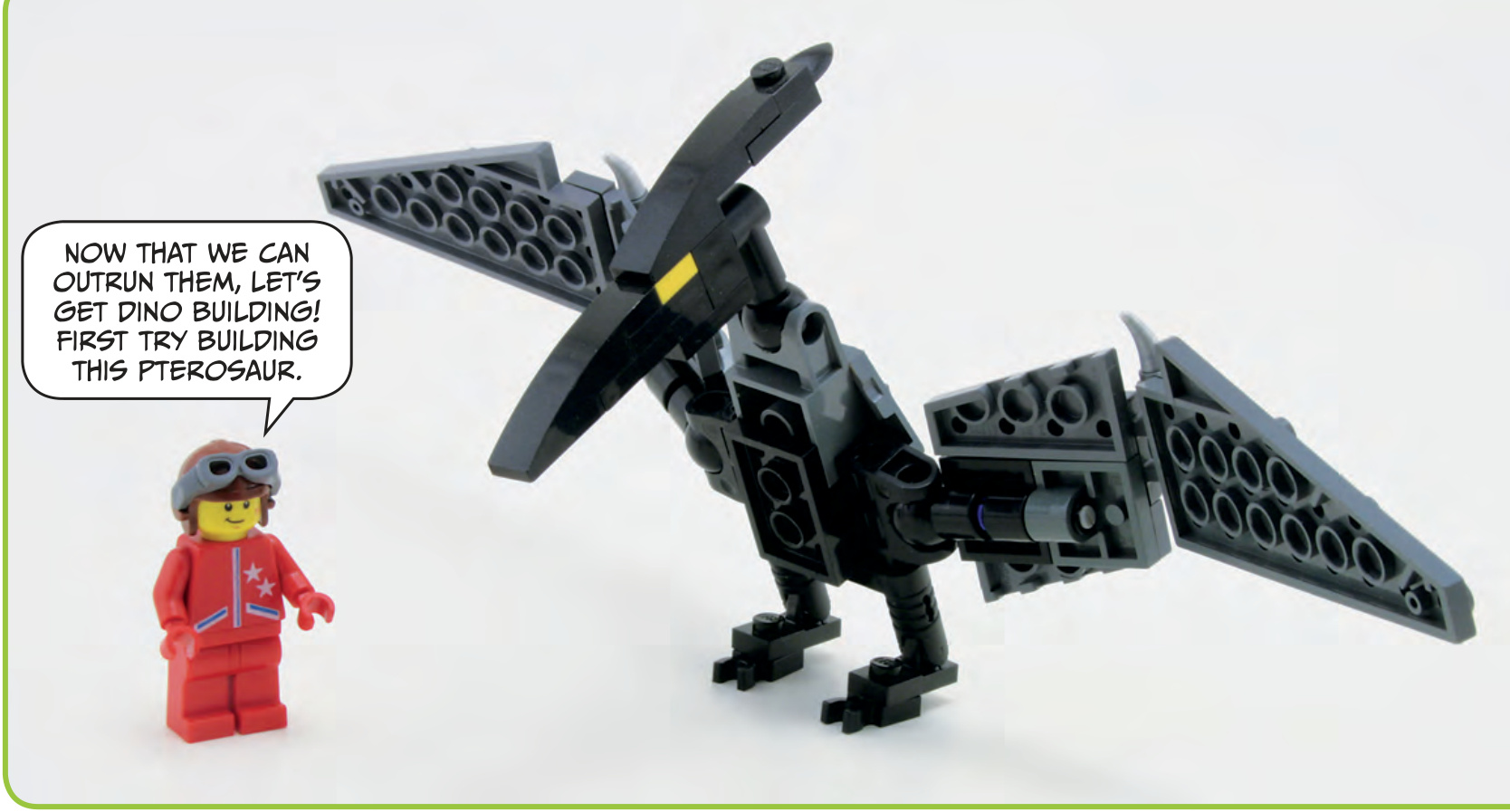
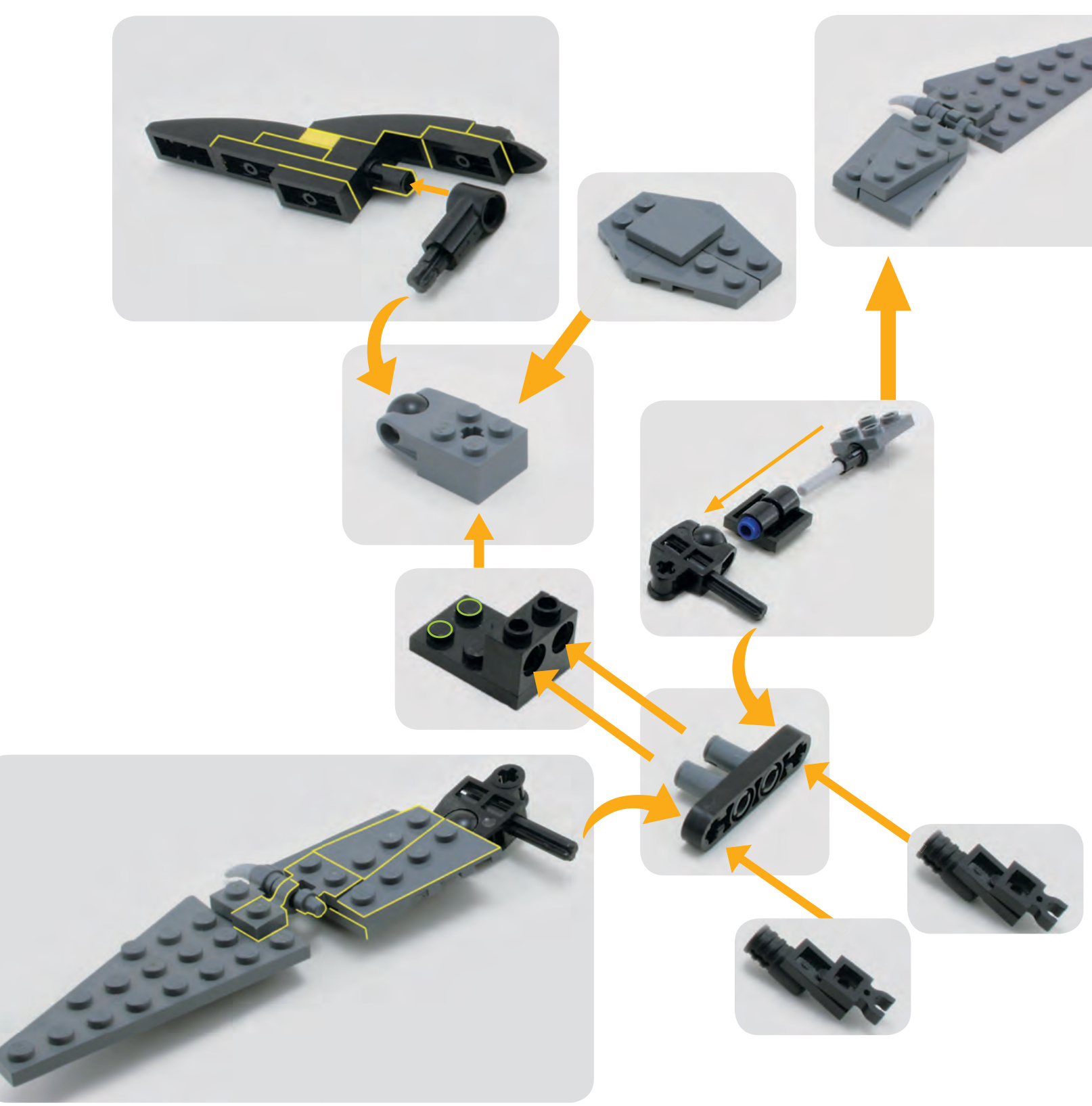
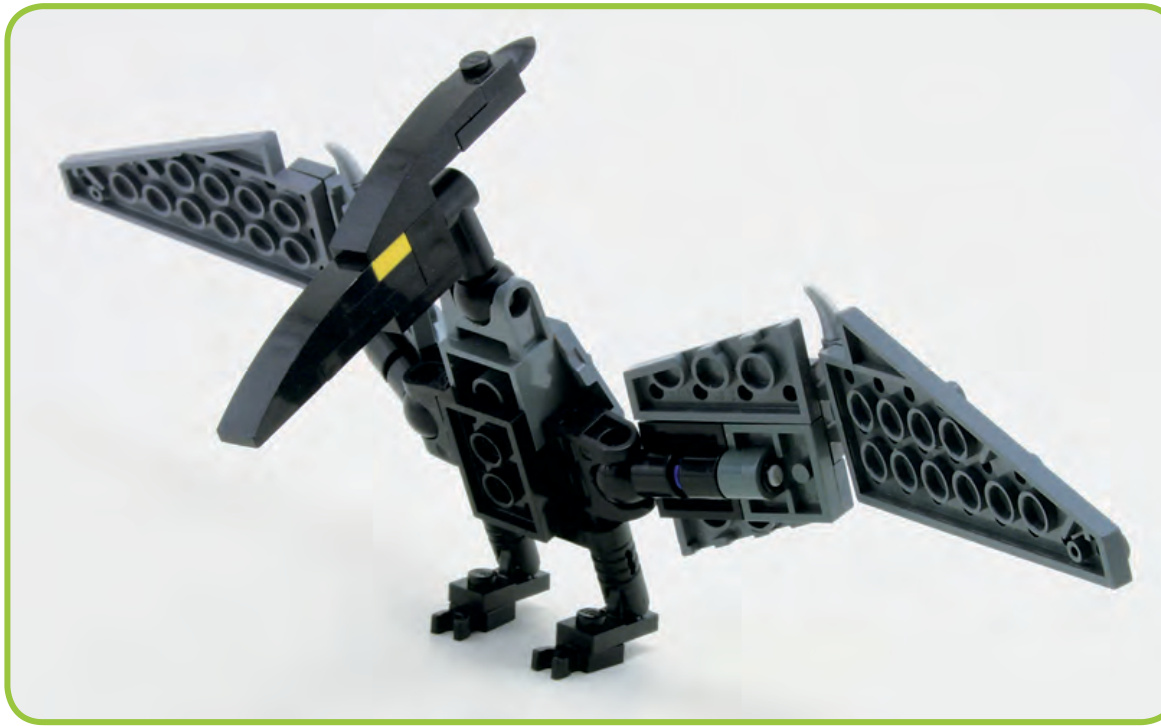
Pterosaur
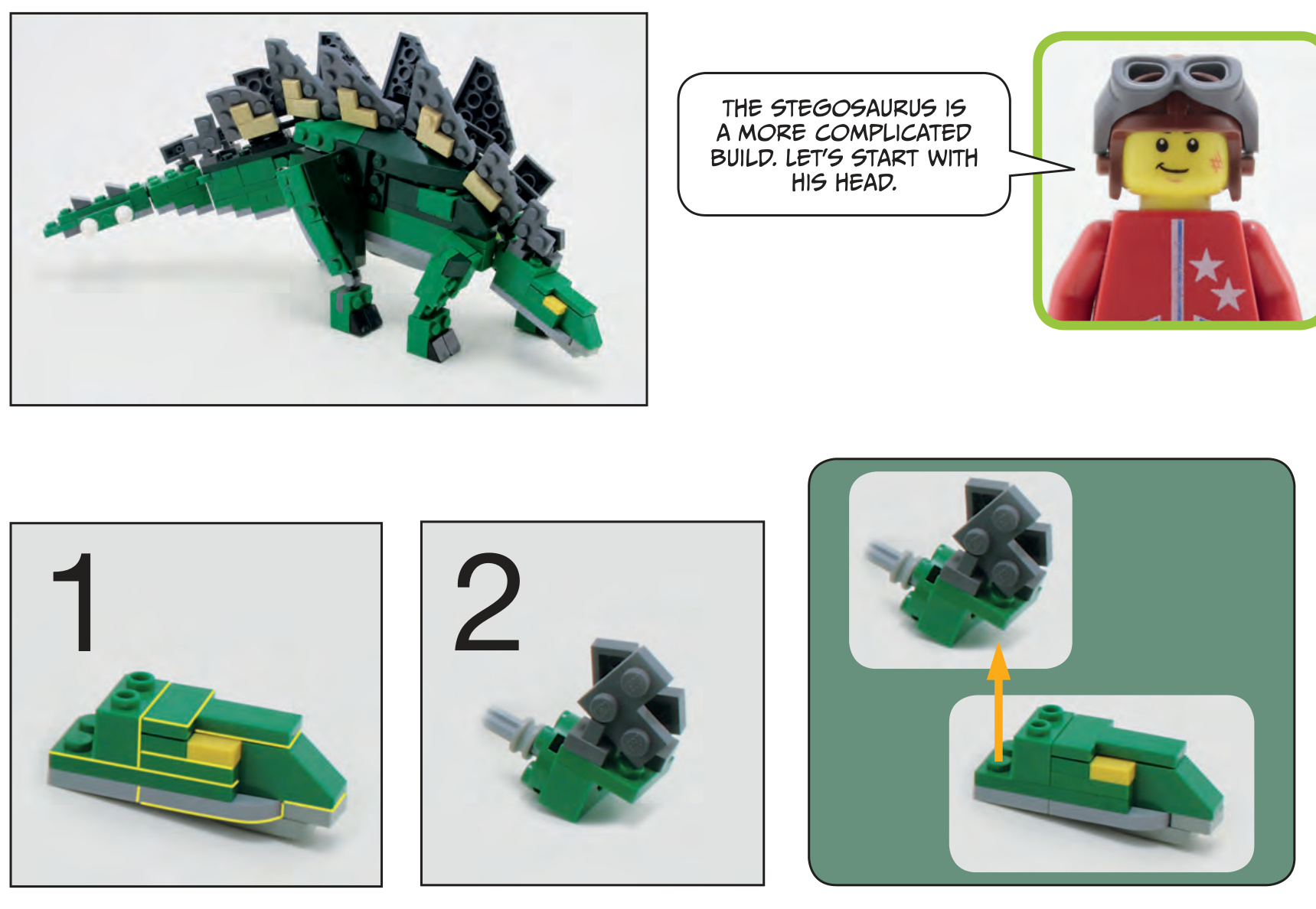
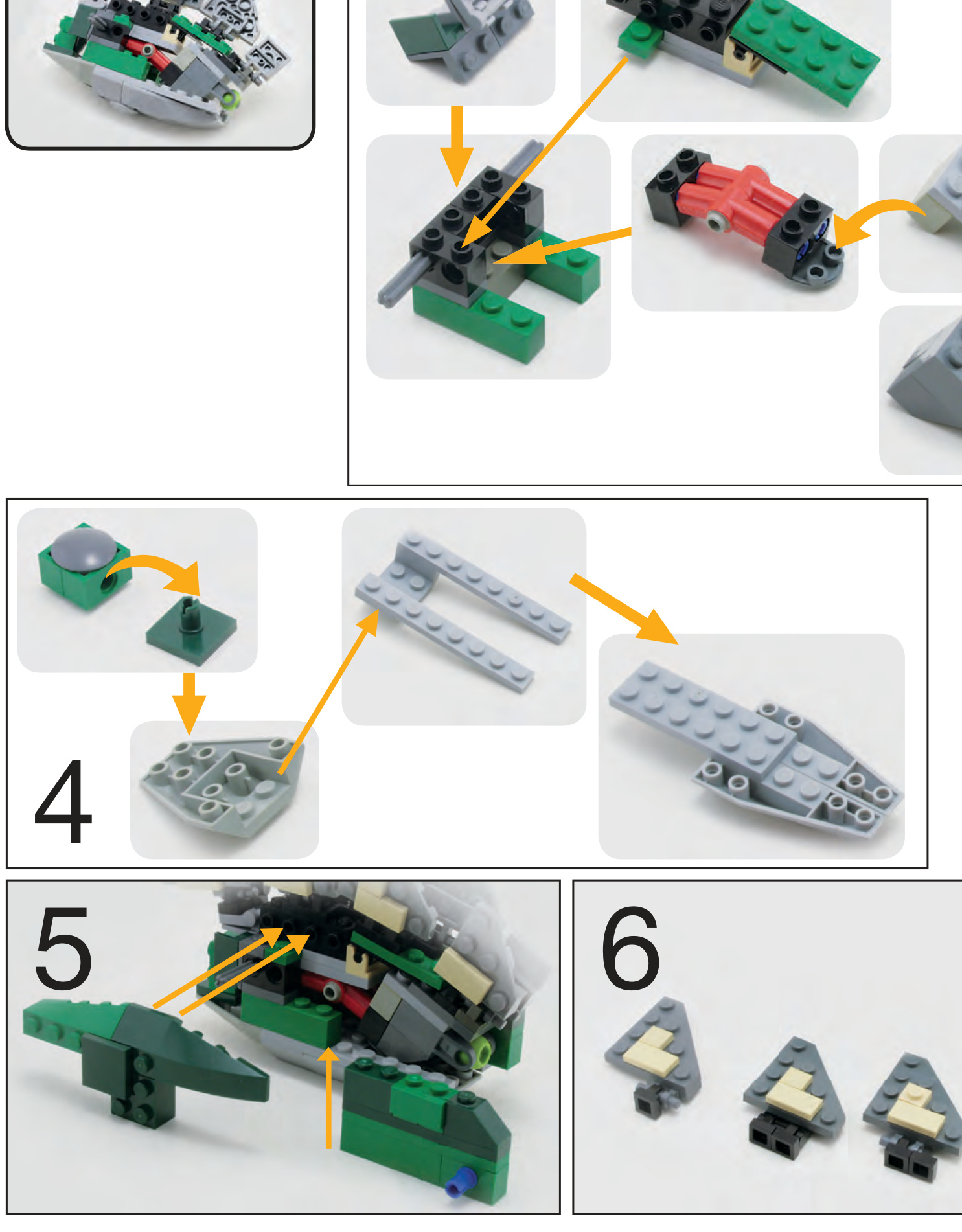
Stegosaurus
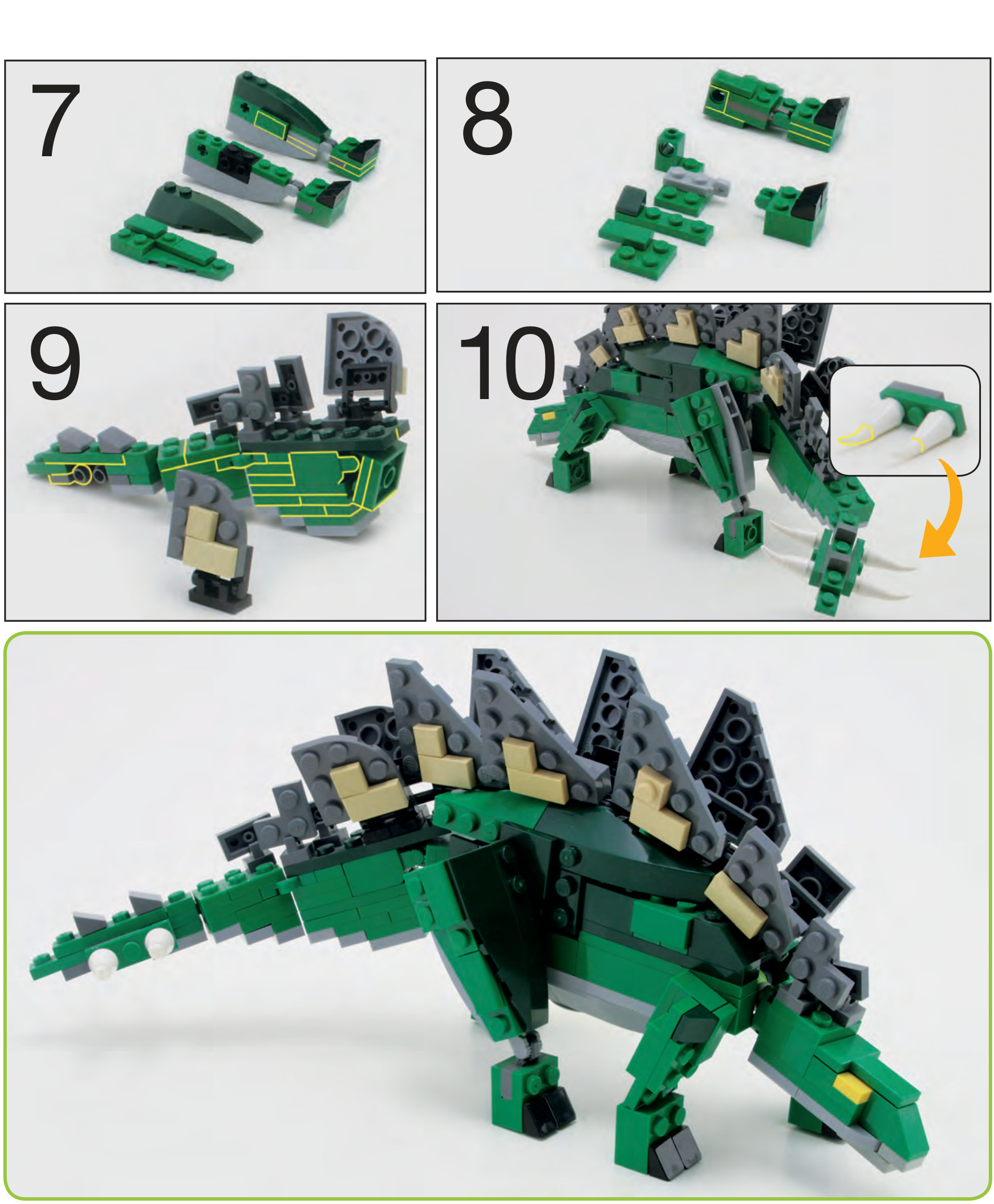
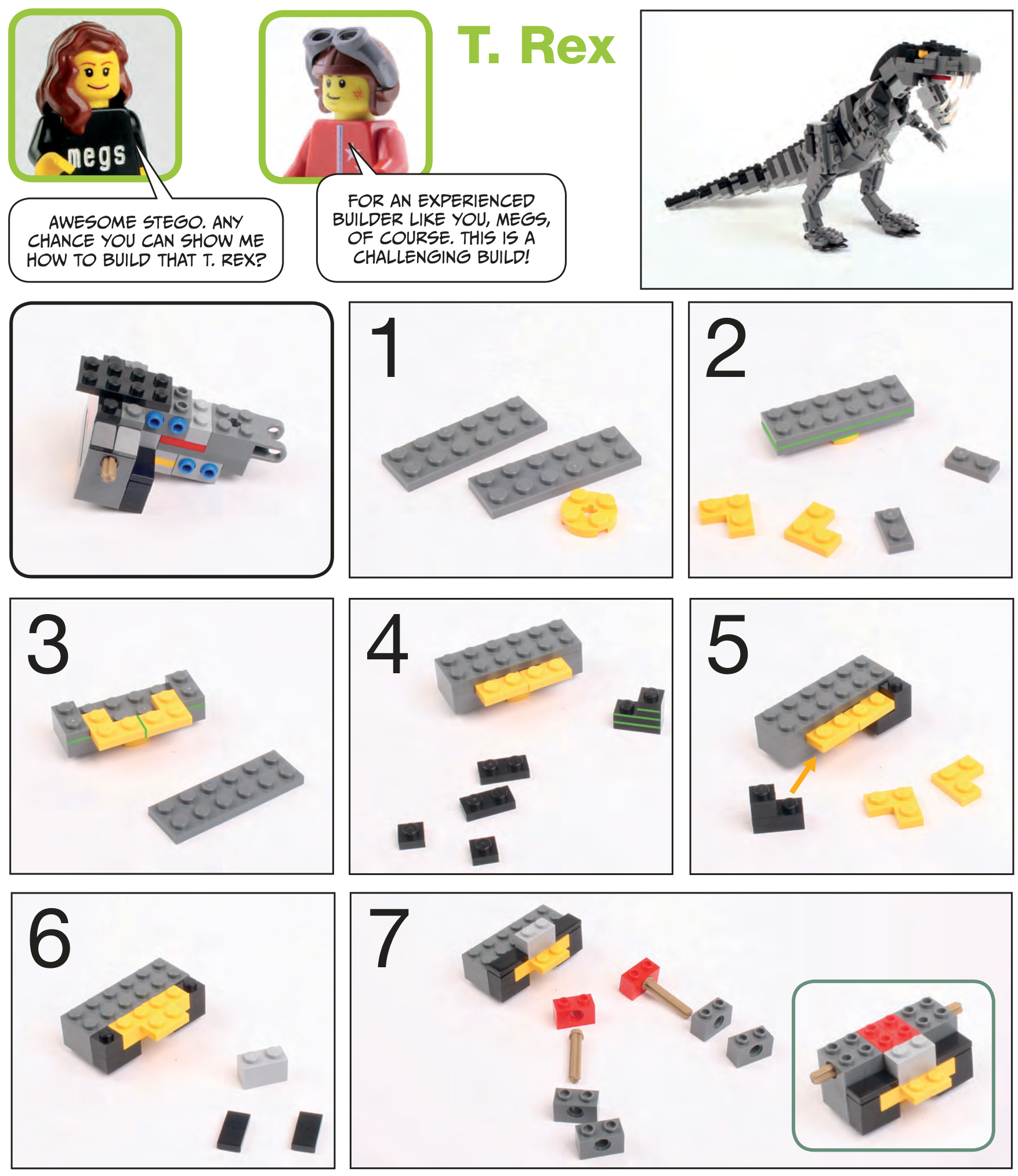
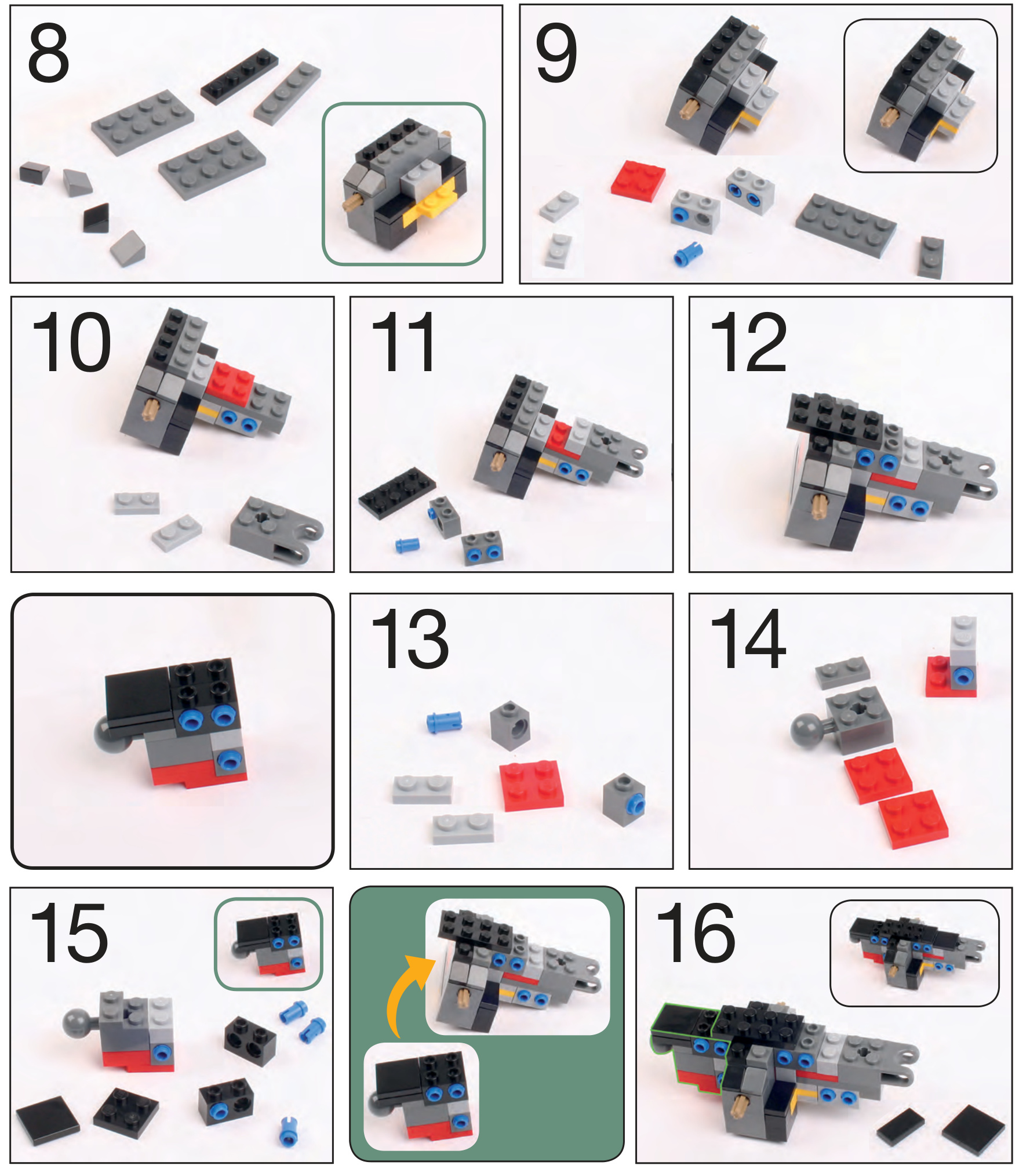
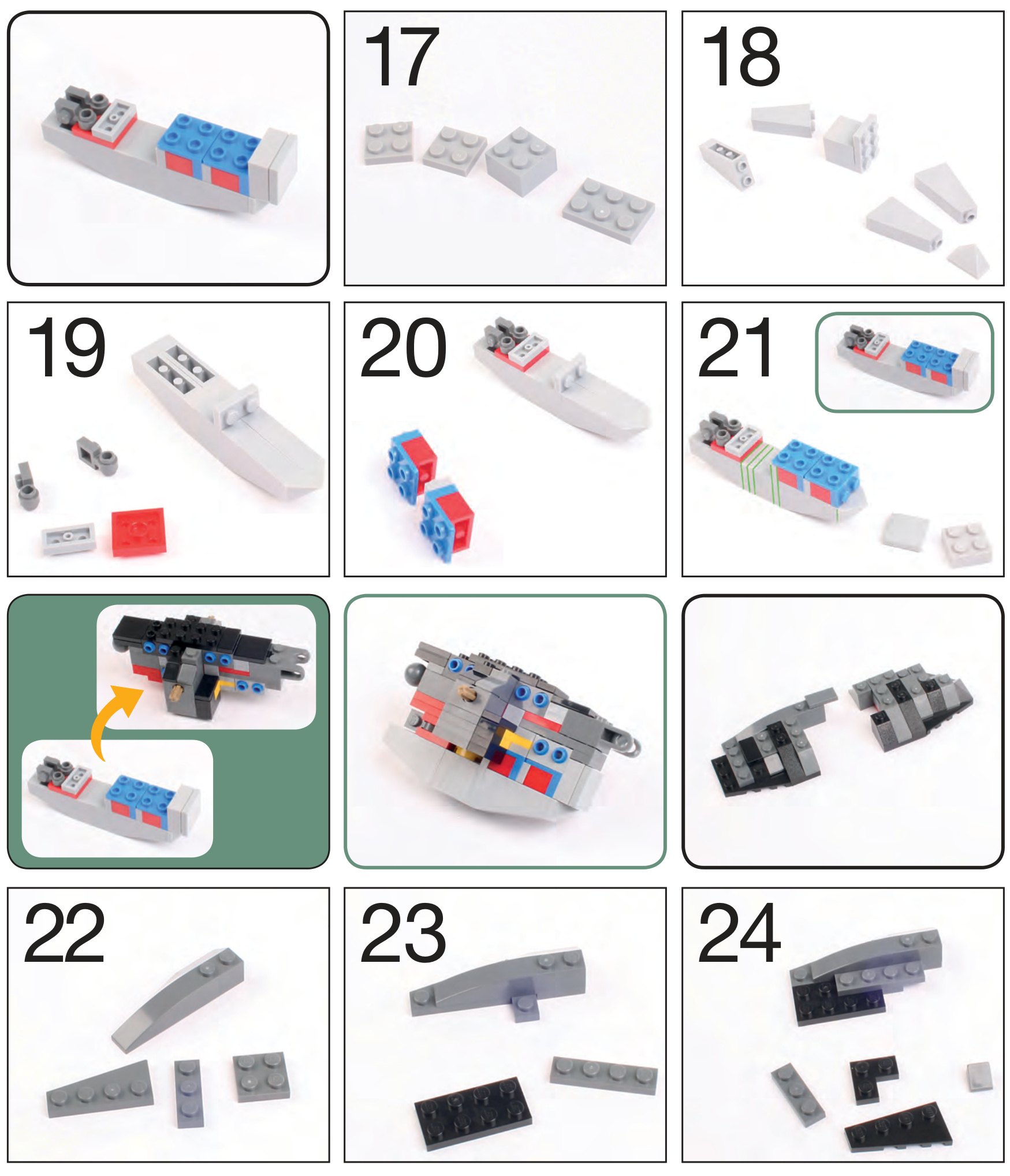


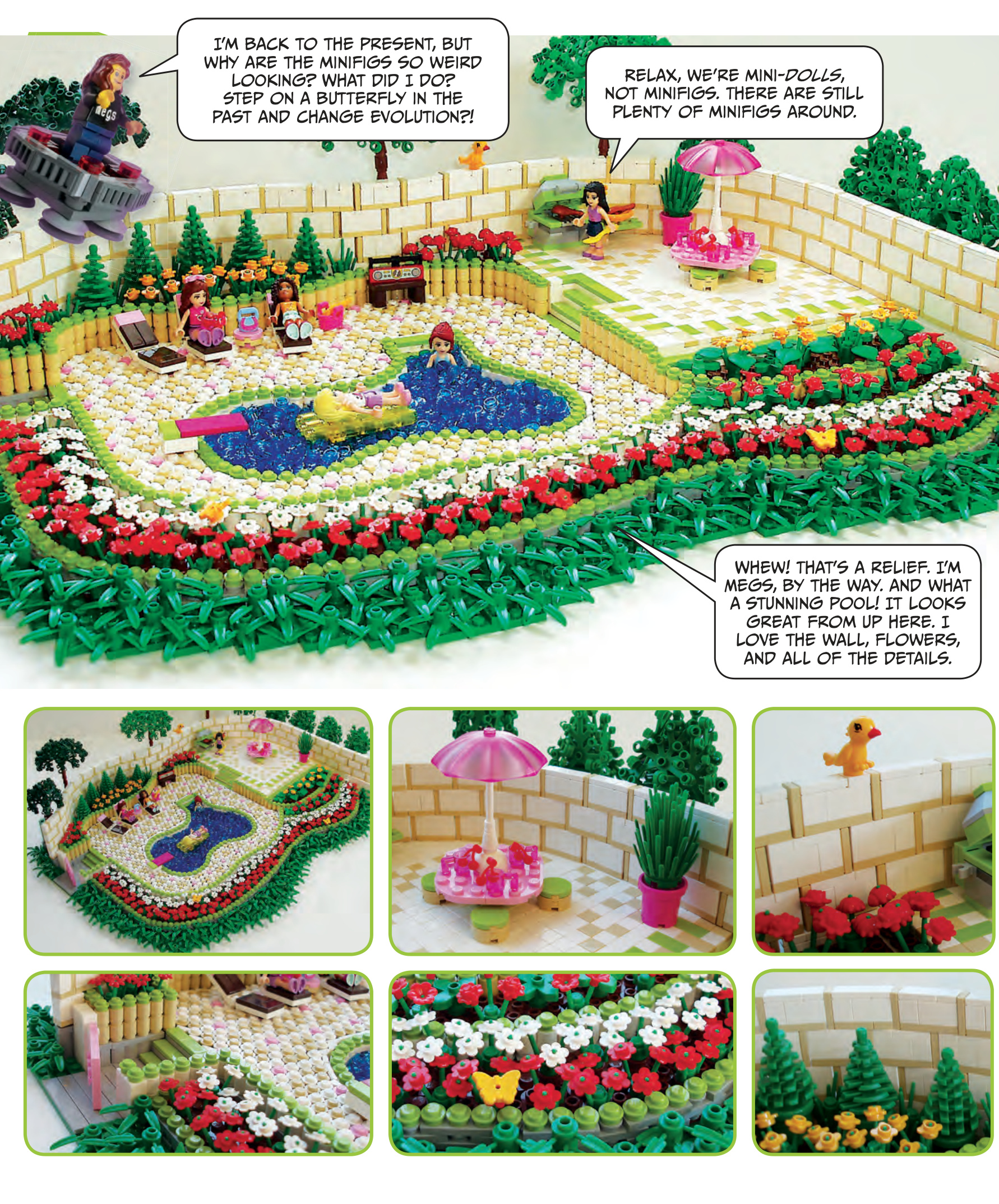
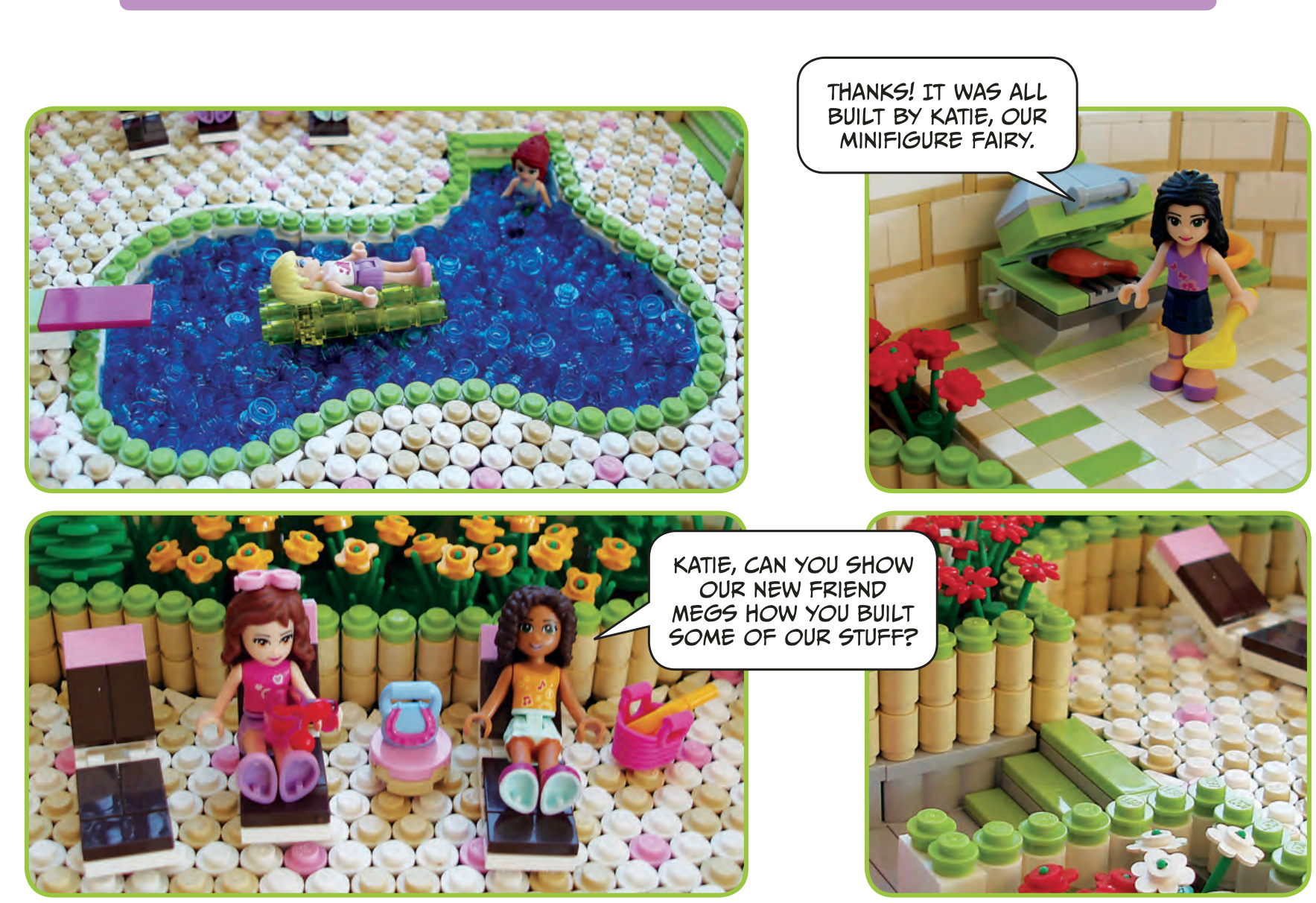
Making New Friends
Katie Walker

Nickname: Eilonwy77
Profession: Elementary School Teacher
Nationality: American
Website: www.flickr.com/eilonwy77
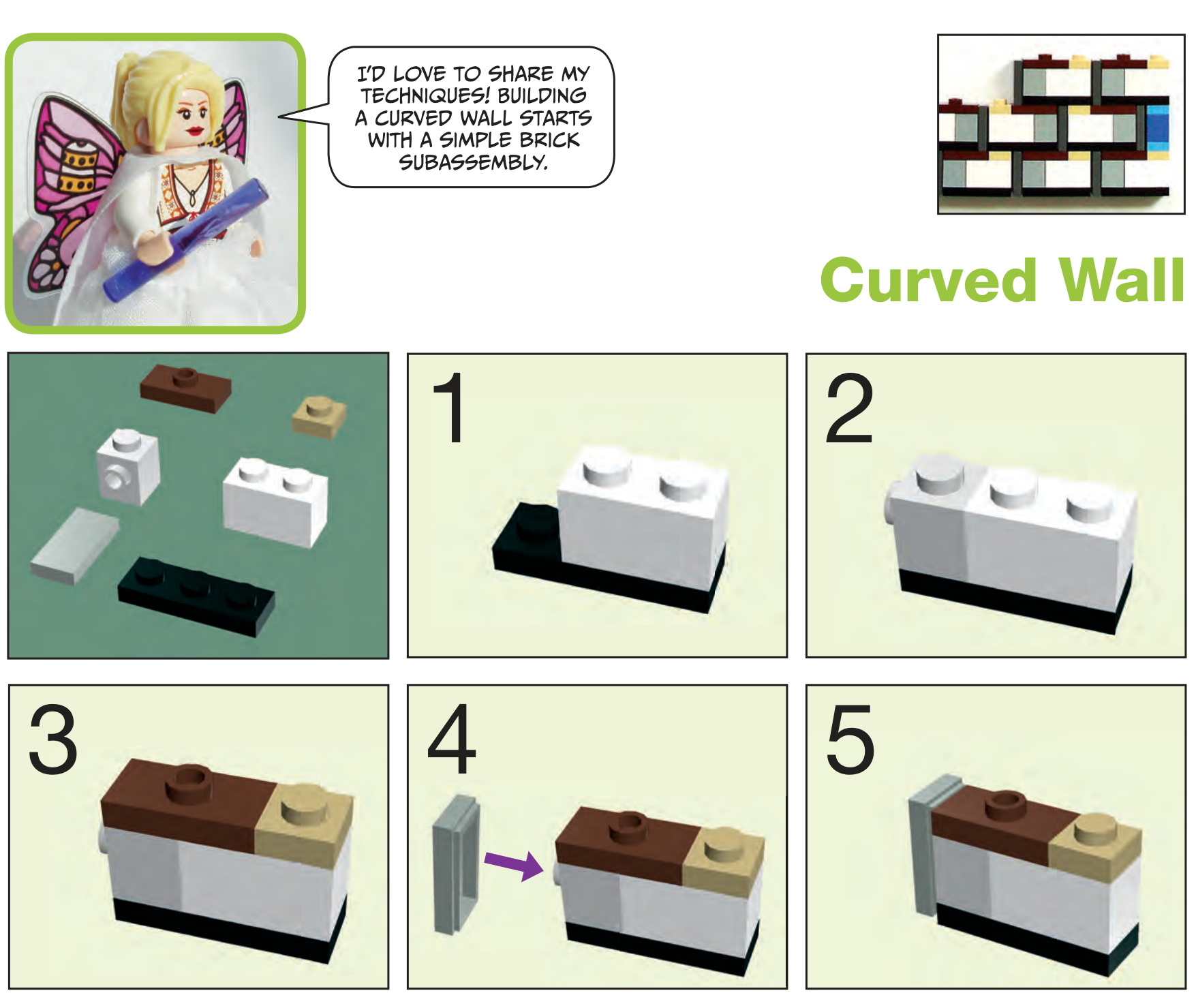
Building Tip
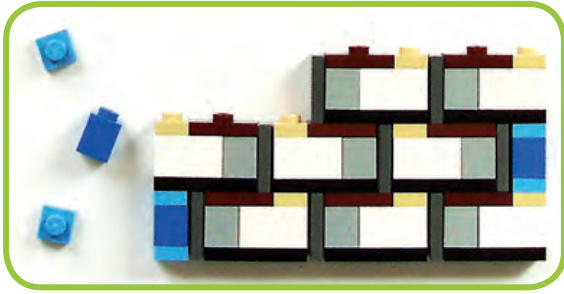
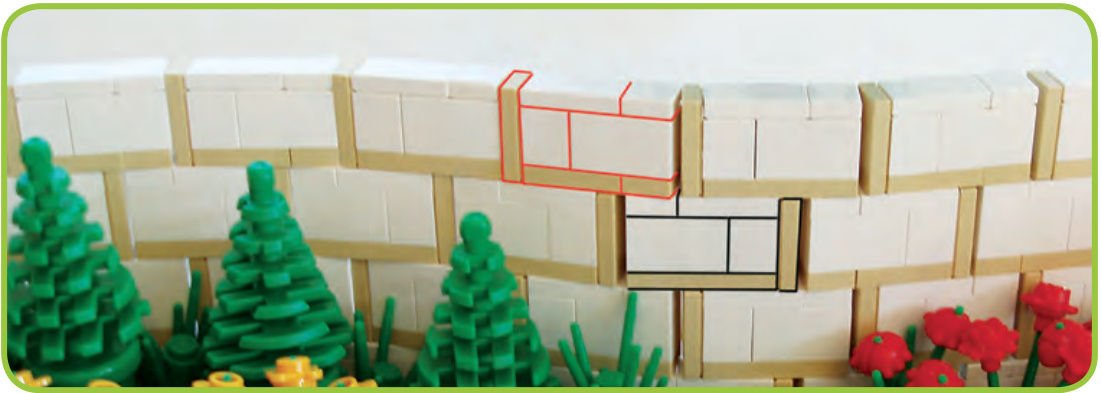
Switch directions with each layer to make your wall more stable.
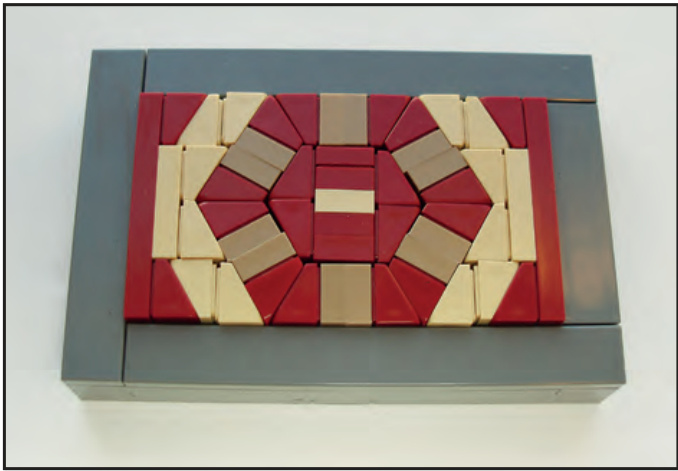
Mosaic
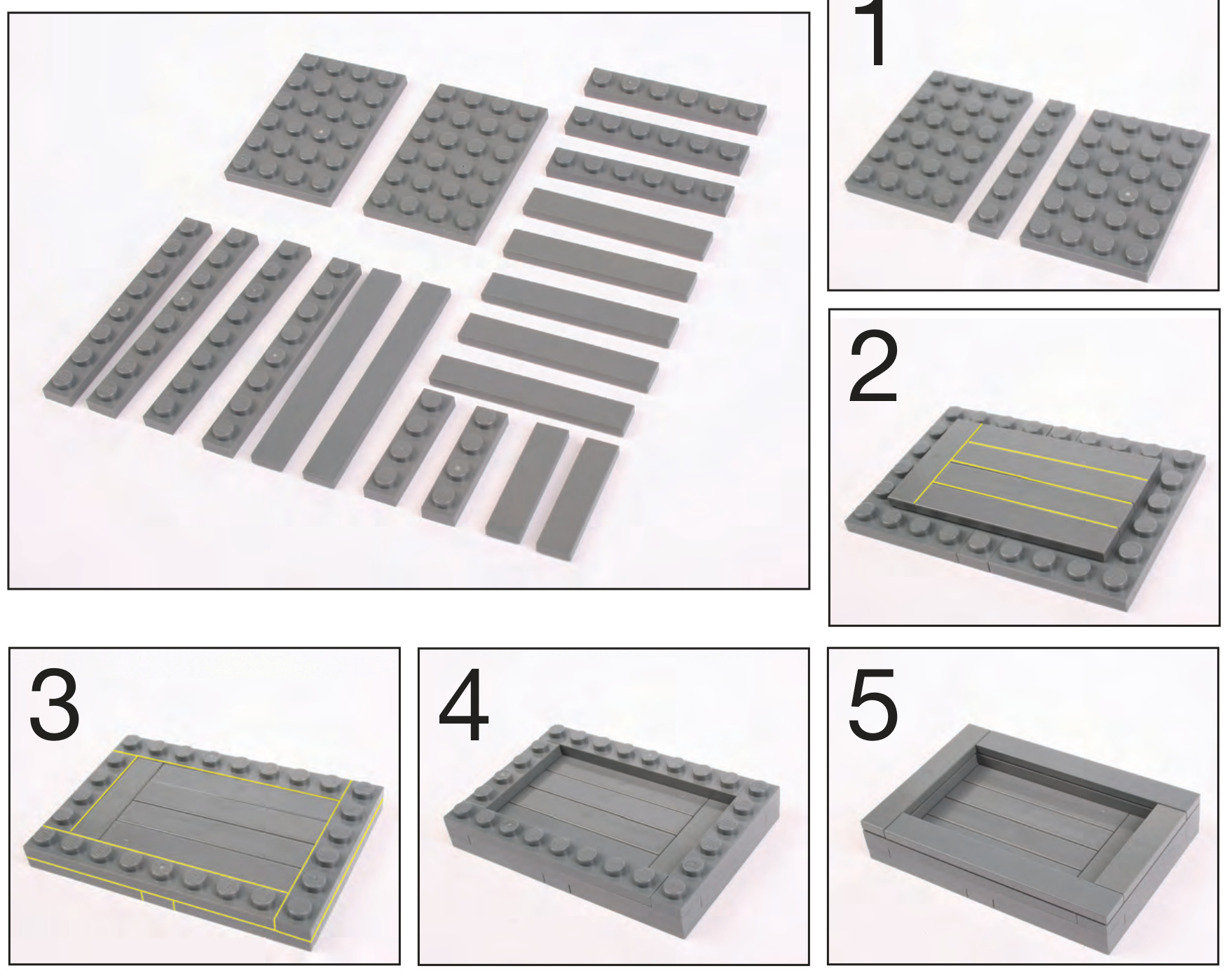
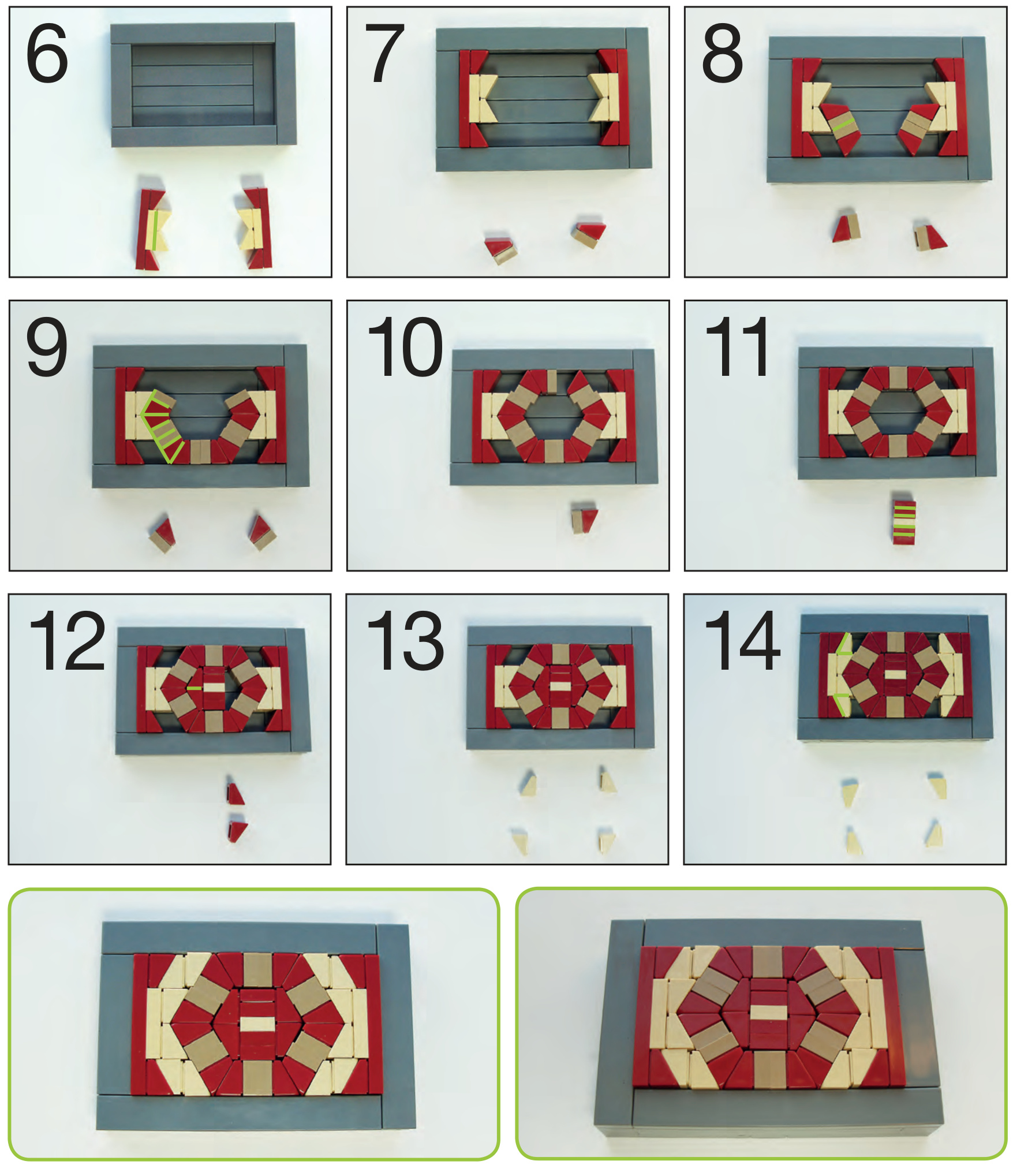
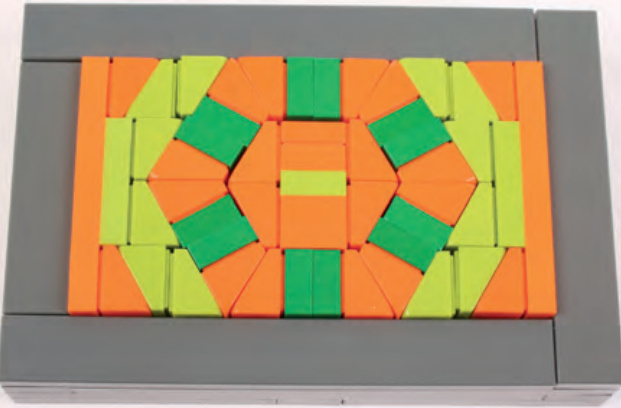
The same mosaic pattern built with different colors
Building Tip
This design is really tight, and you might think several pieces won’t fit. The last piece of the hexagon is especially difficult to squeeze in. Try squeezing the smallest part of the piece into the gap first and then push hard. When you’re finished, you might be able to hold the mosaic upside down without any of the pieces falling out.
This mosaic is designed with several pieces attached to each other, which makes them easier to place. Having fewer loose pieces also increases the tension that holds the mosaic in place and makes it less likely to fall apart.
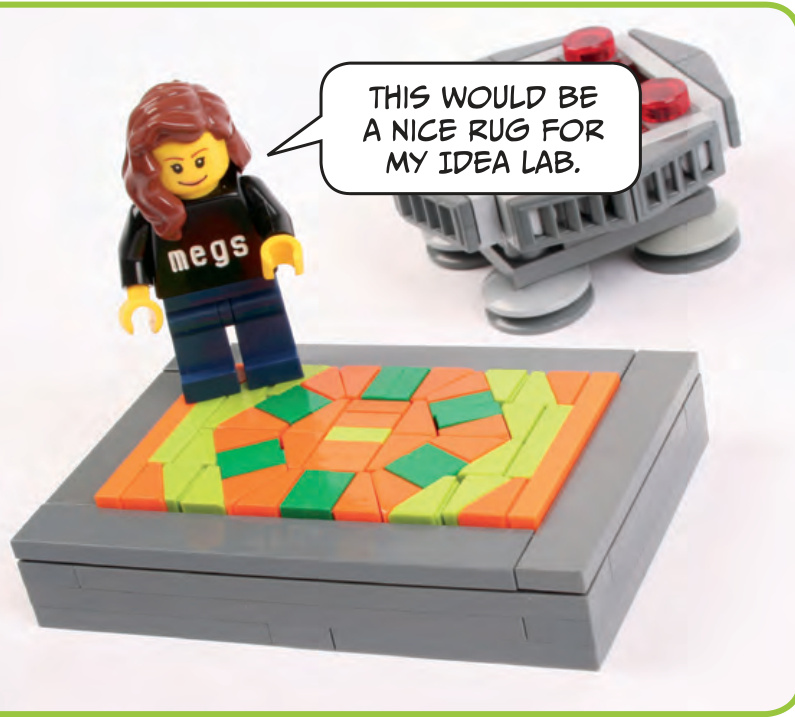
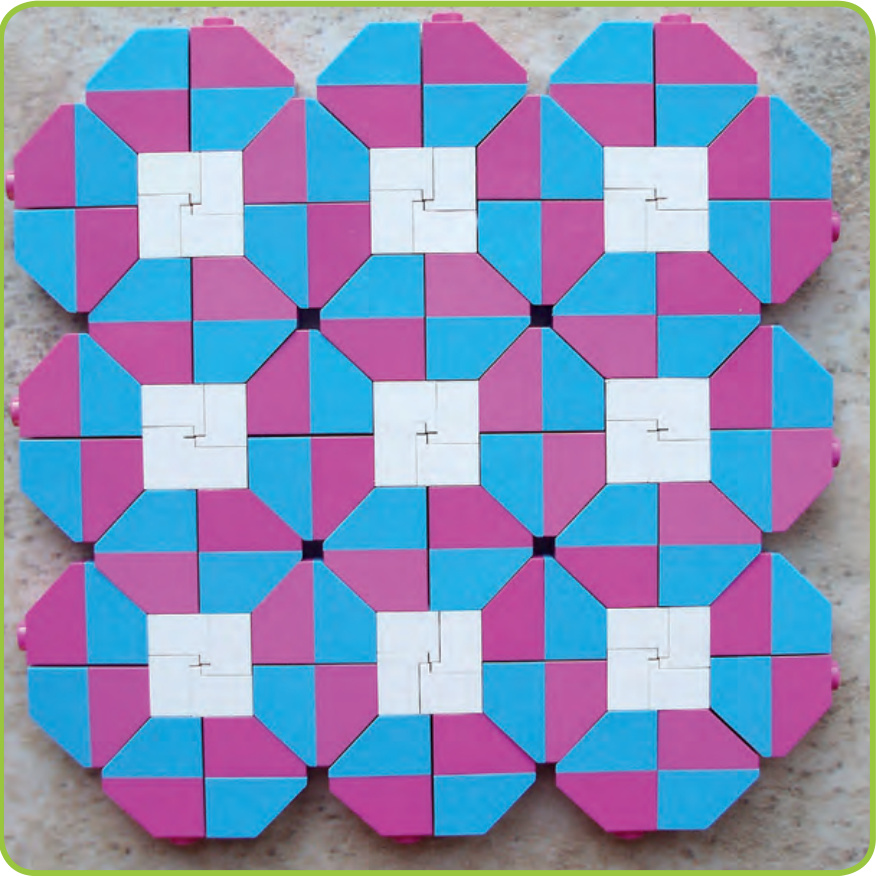
Building Journal
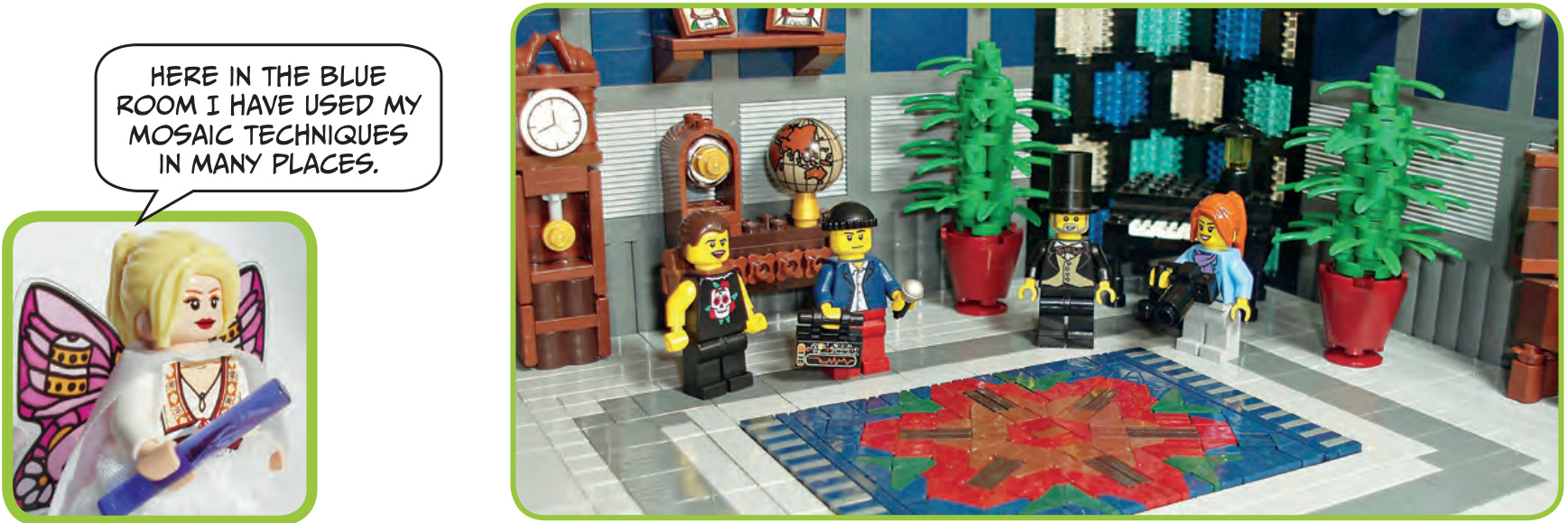
Katie told me mosaics are really finicky. Sometimes just modifying the frame slightly will completely change how a mosaic fits into place. She recommends trying different ideas, no matter how crazy they seem. Even if the original idea doesn’t work, it might lead to another one that does. I think that’s true for any design project!
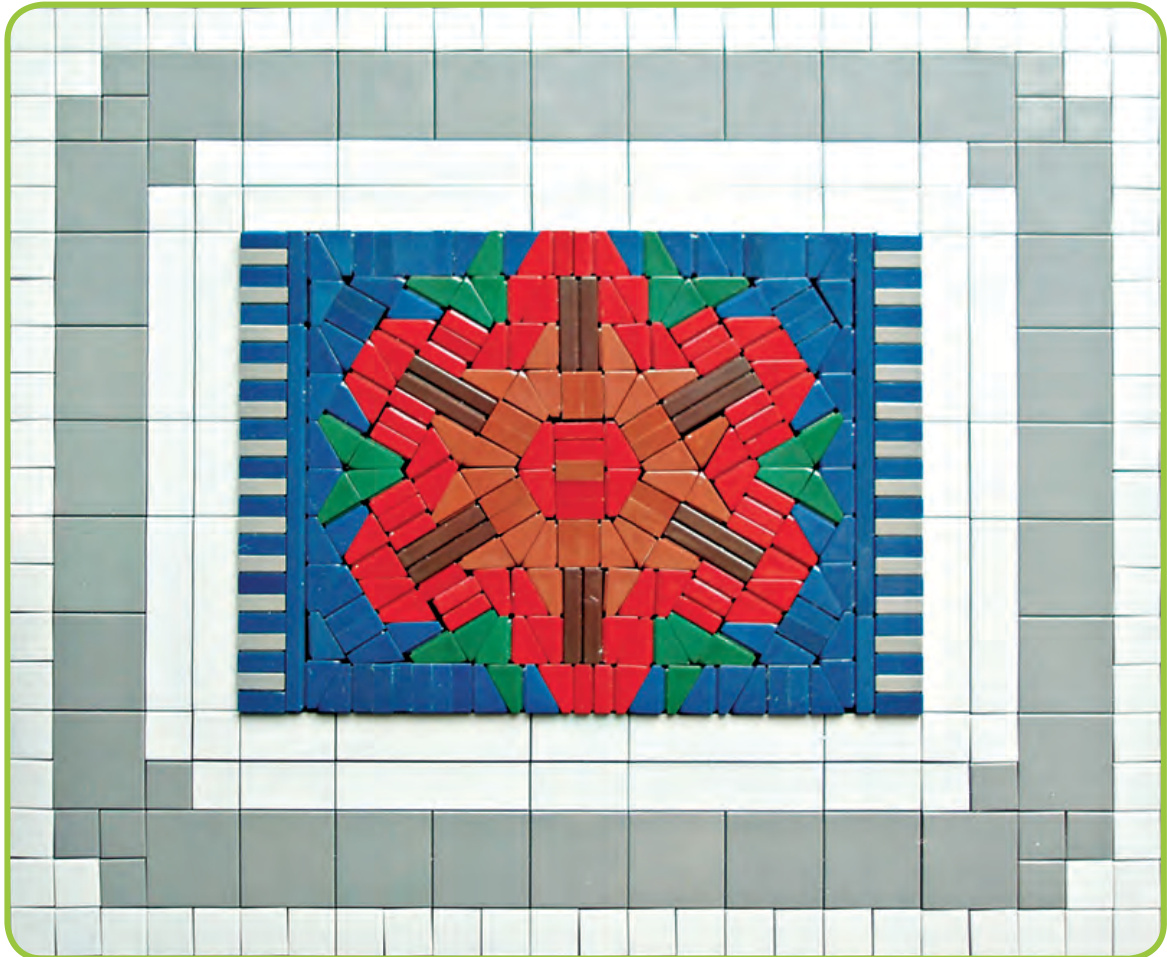
Building Tip
I sometimes use toothpicks or tweezers to push pieces into place. They’re more precise than your fingers, and if a piece tips over it’s much easier to pull it out.
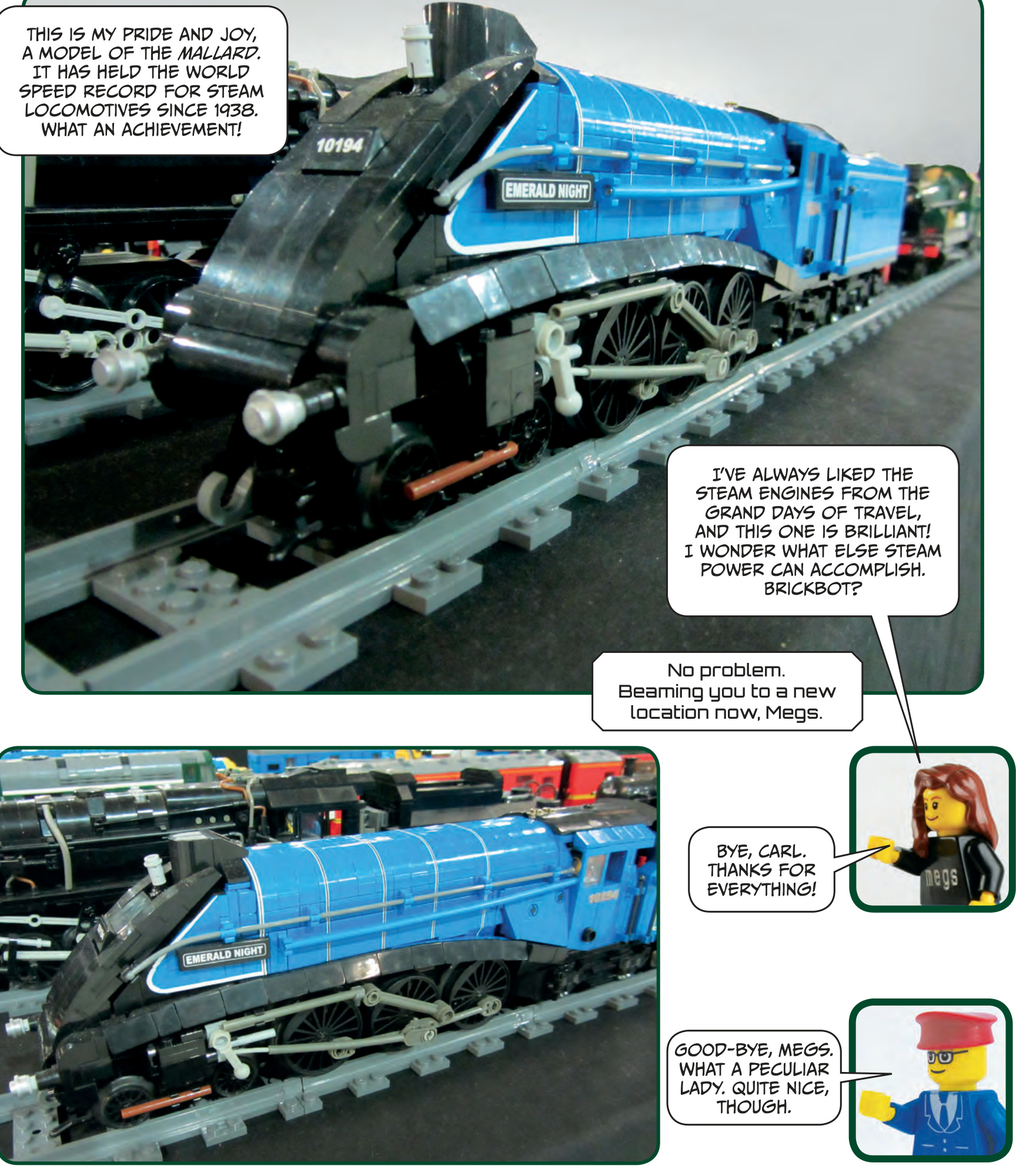
Full Steam Ahead
Carl Greatrix
Nickname: Bricktrix

Profession: LEGO Model Designer at TT Games
Nationality: British
Websites: www.flickr.com/photos/bricktrix/ www.brickshelf.com/cgi-bin/gallery.cgi?f=309654
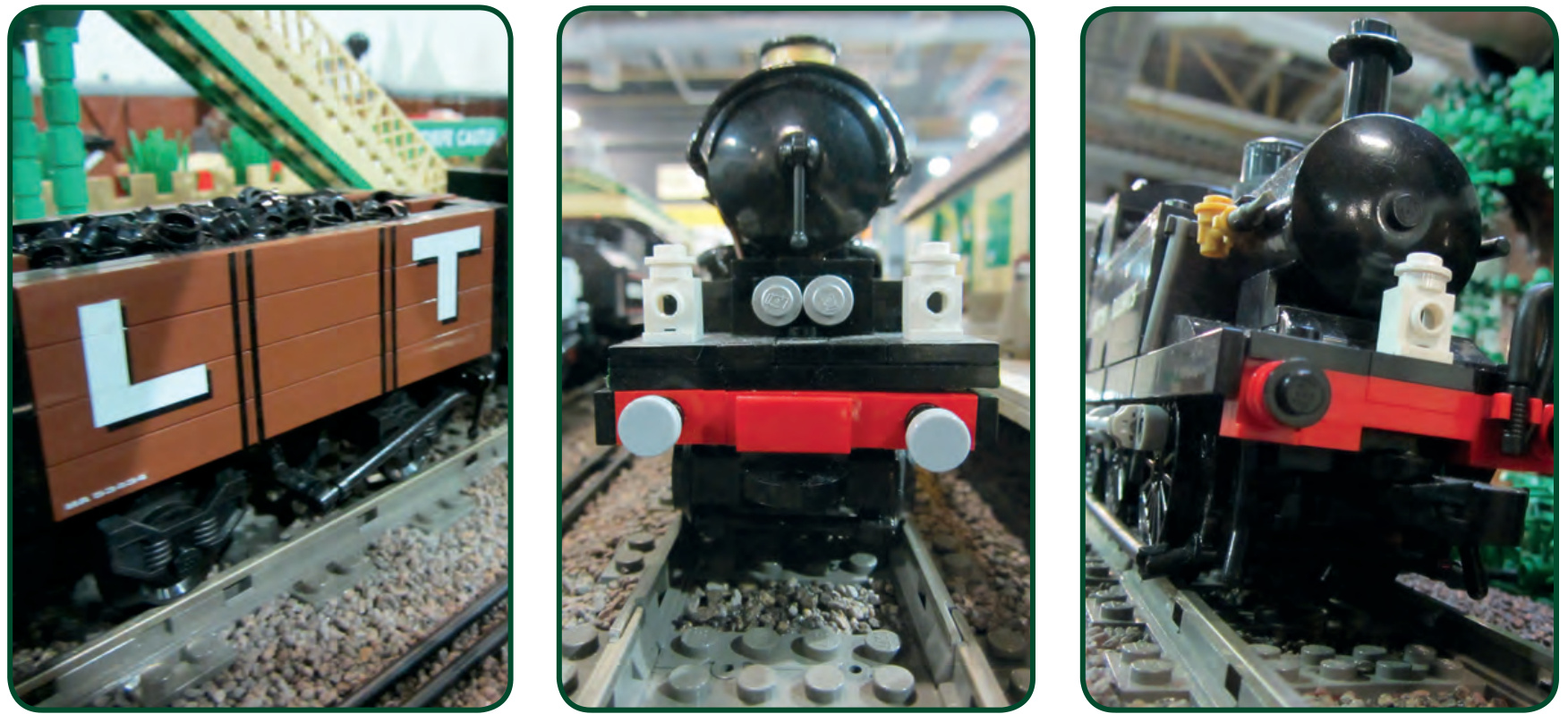
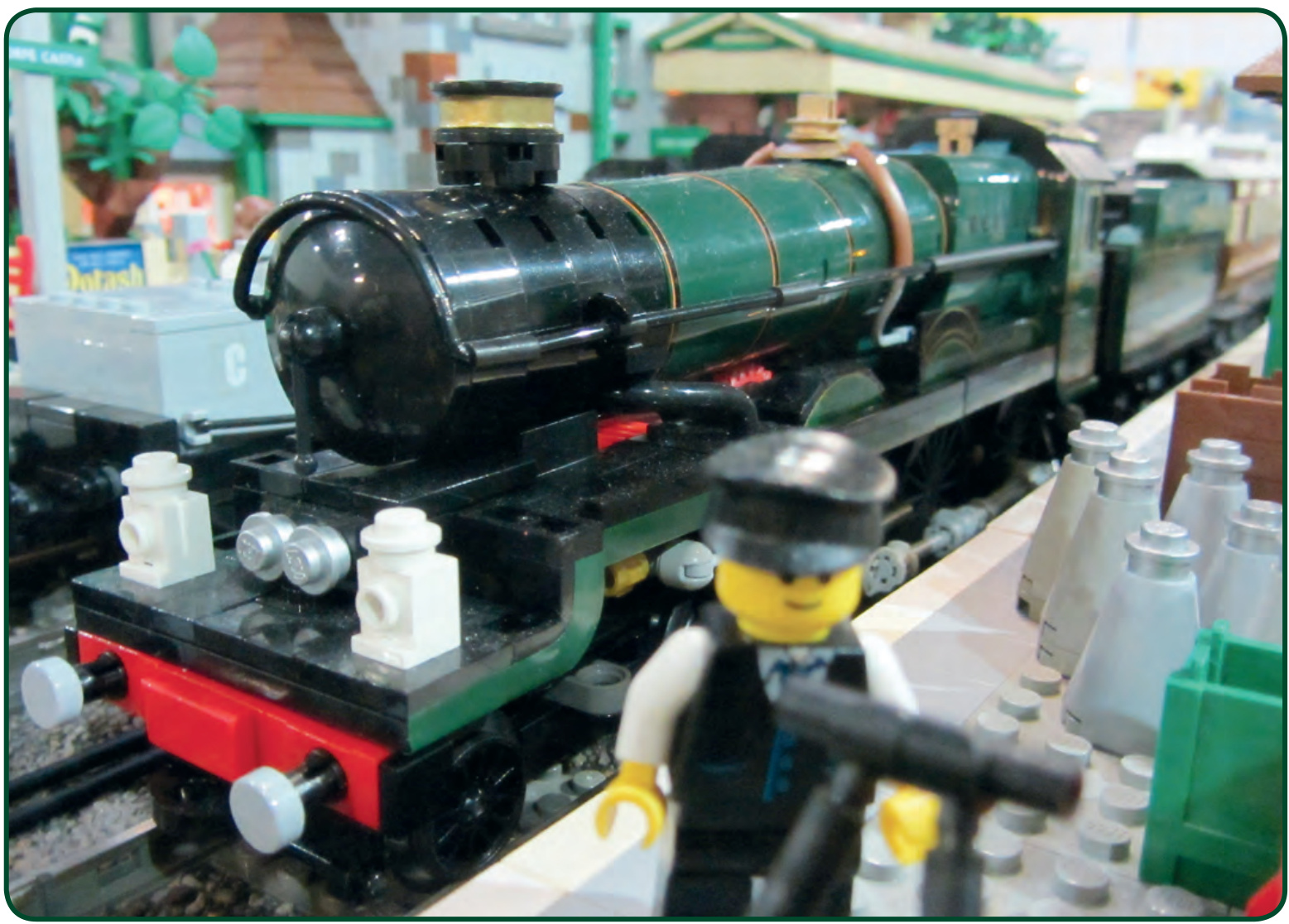
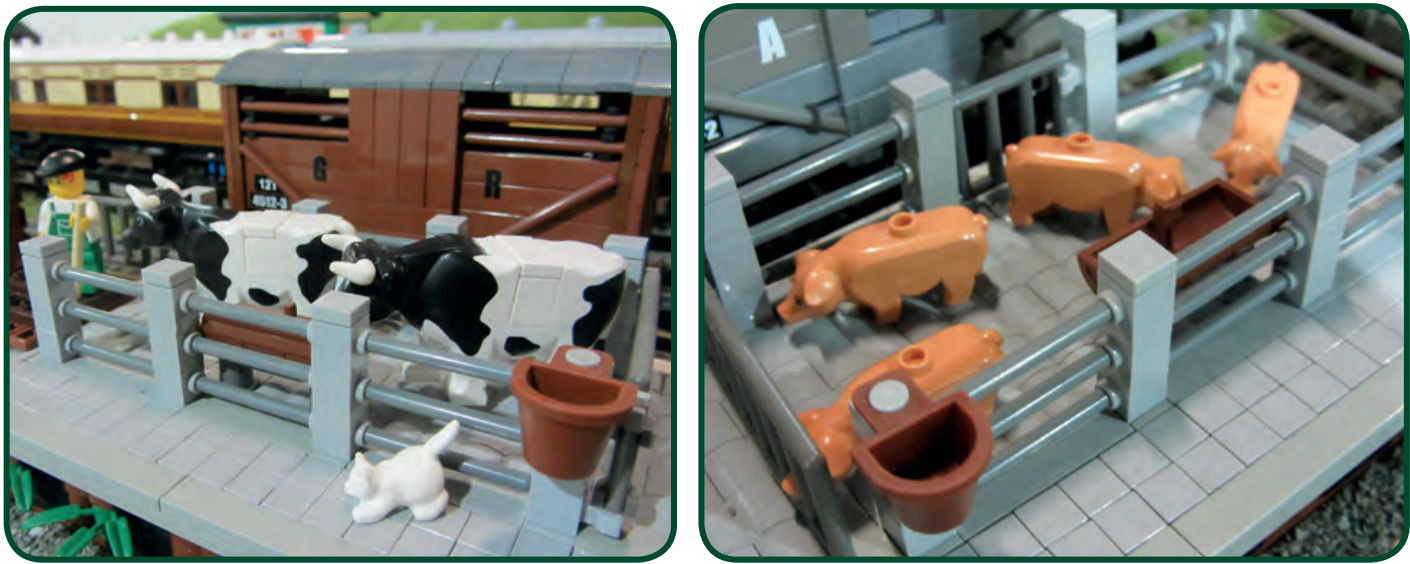
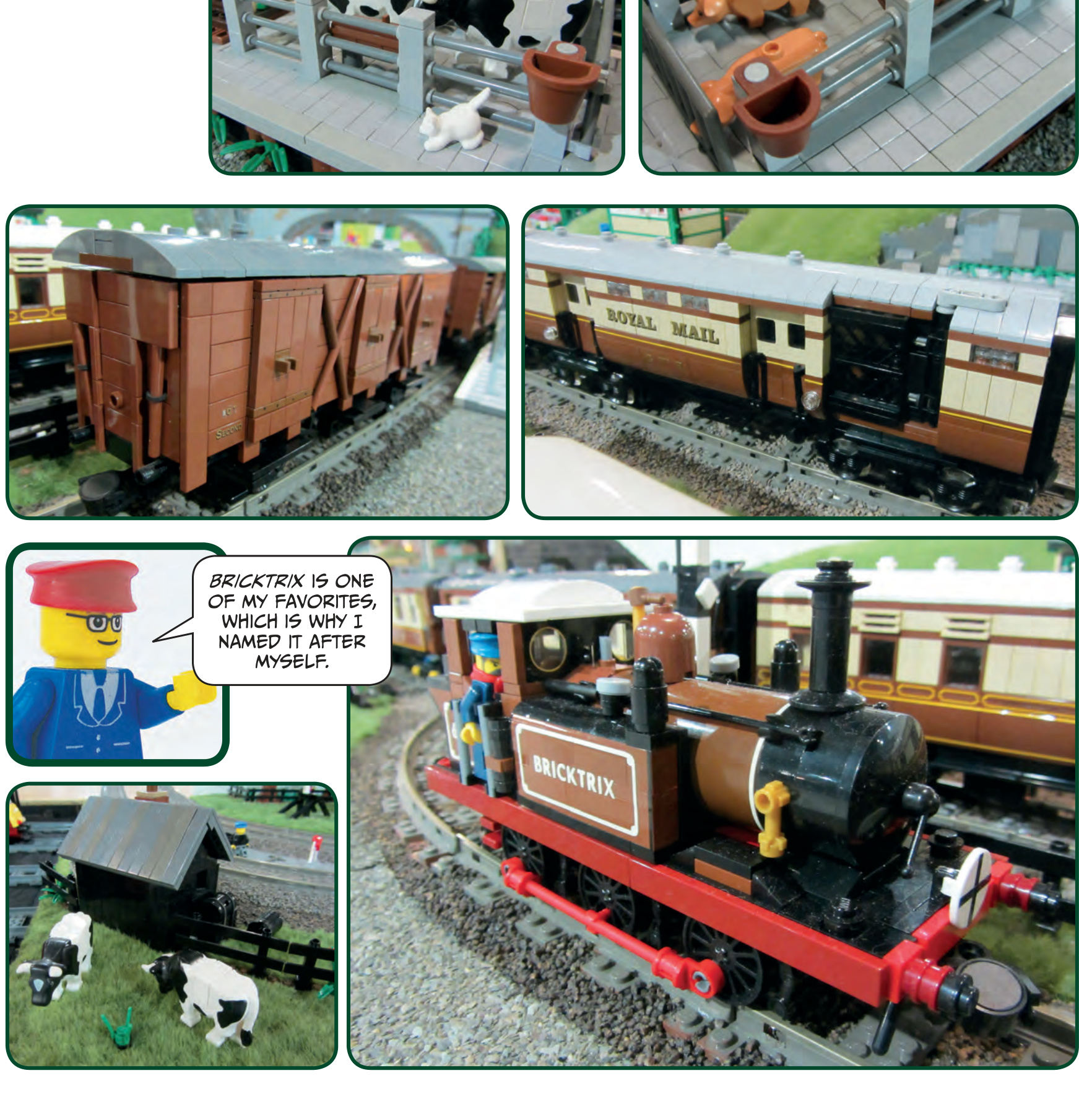
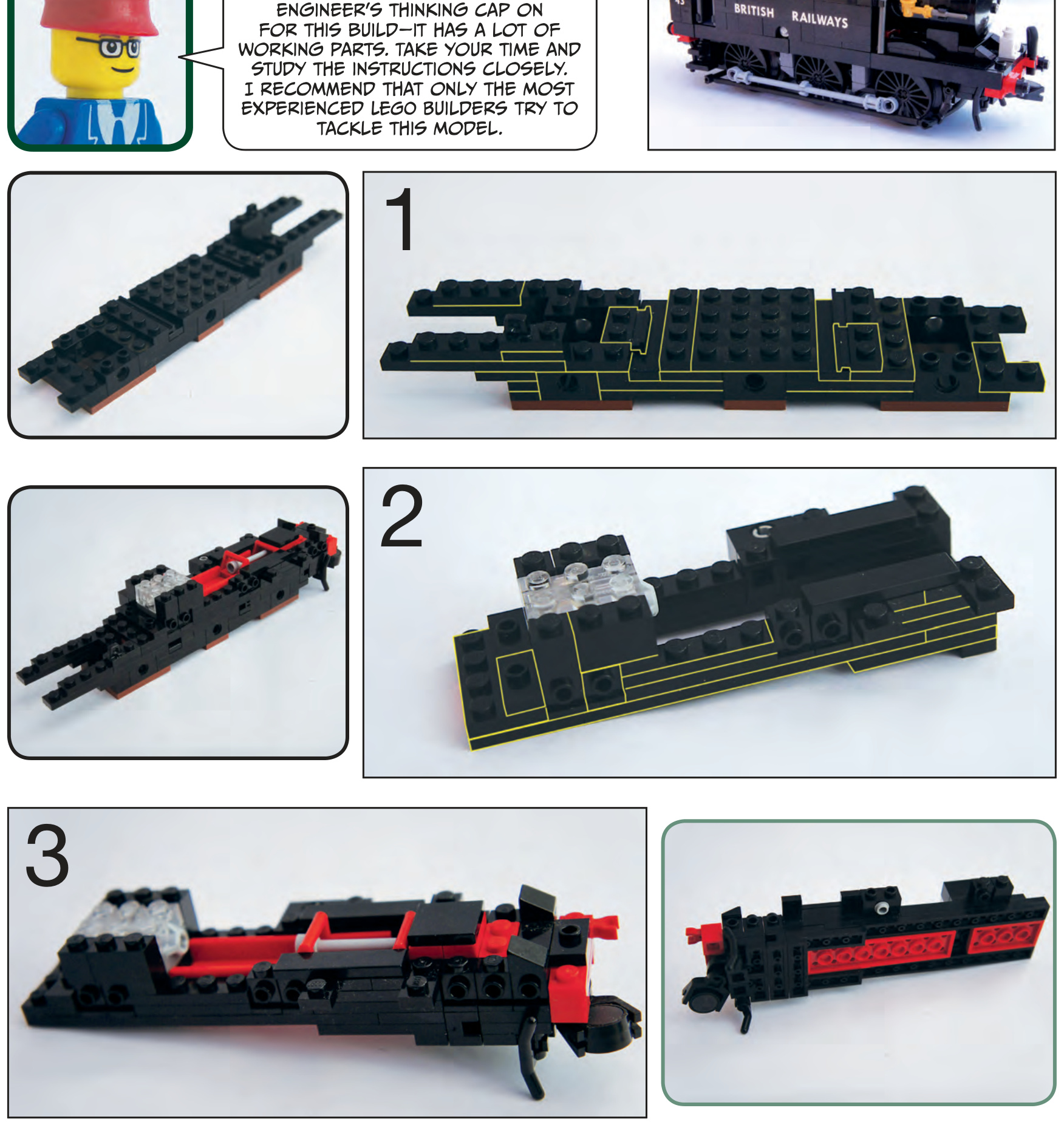
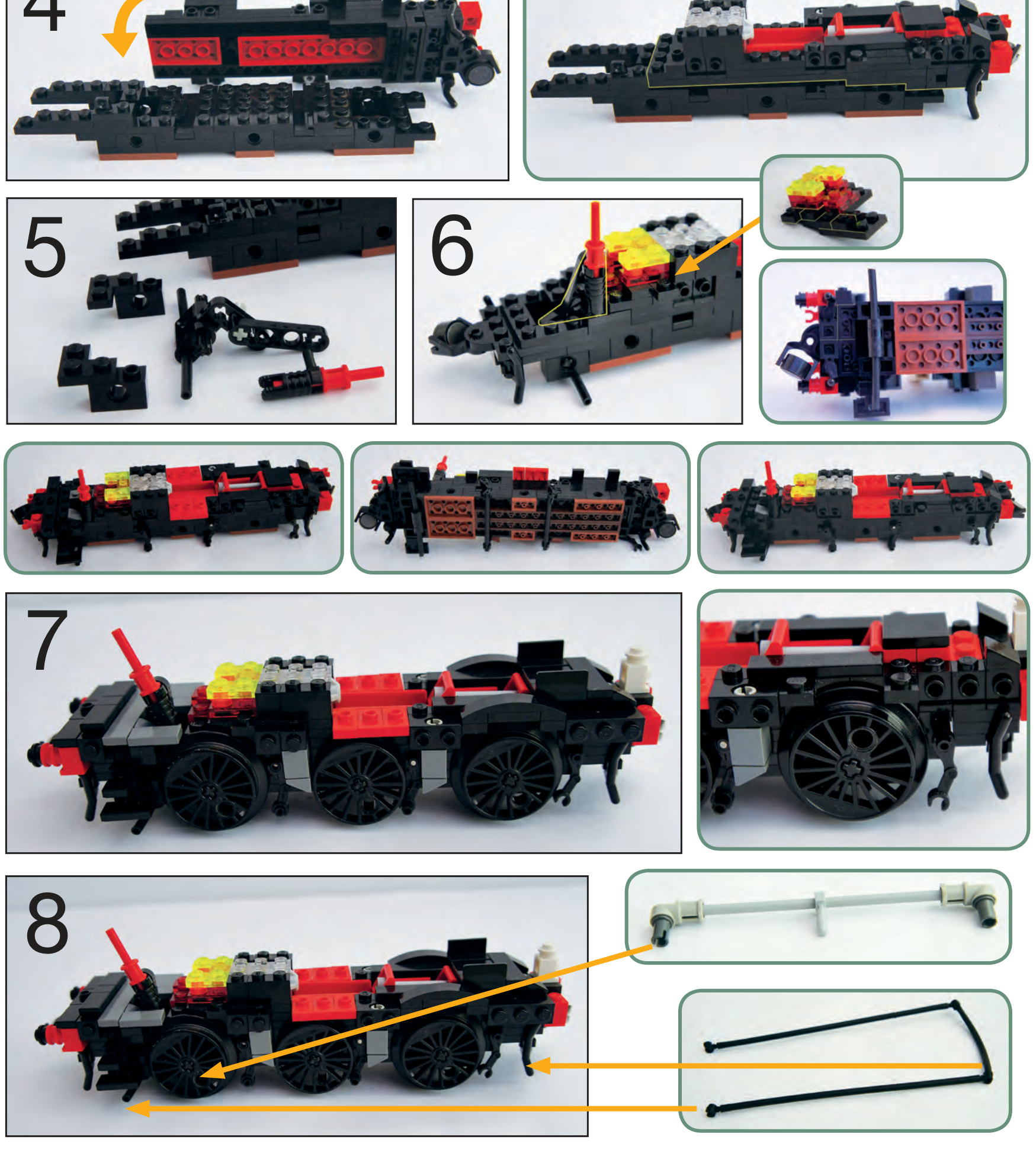
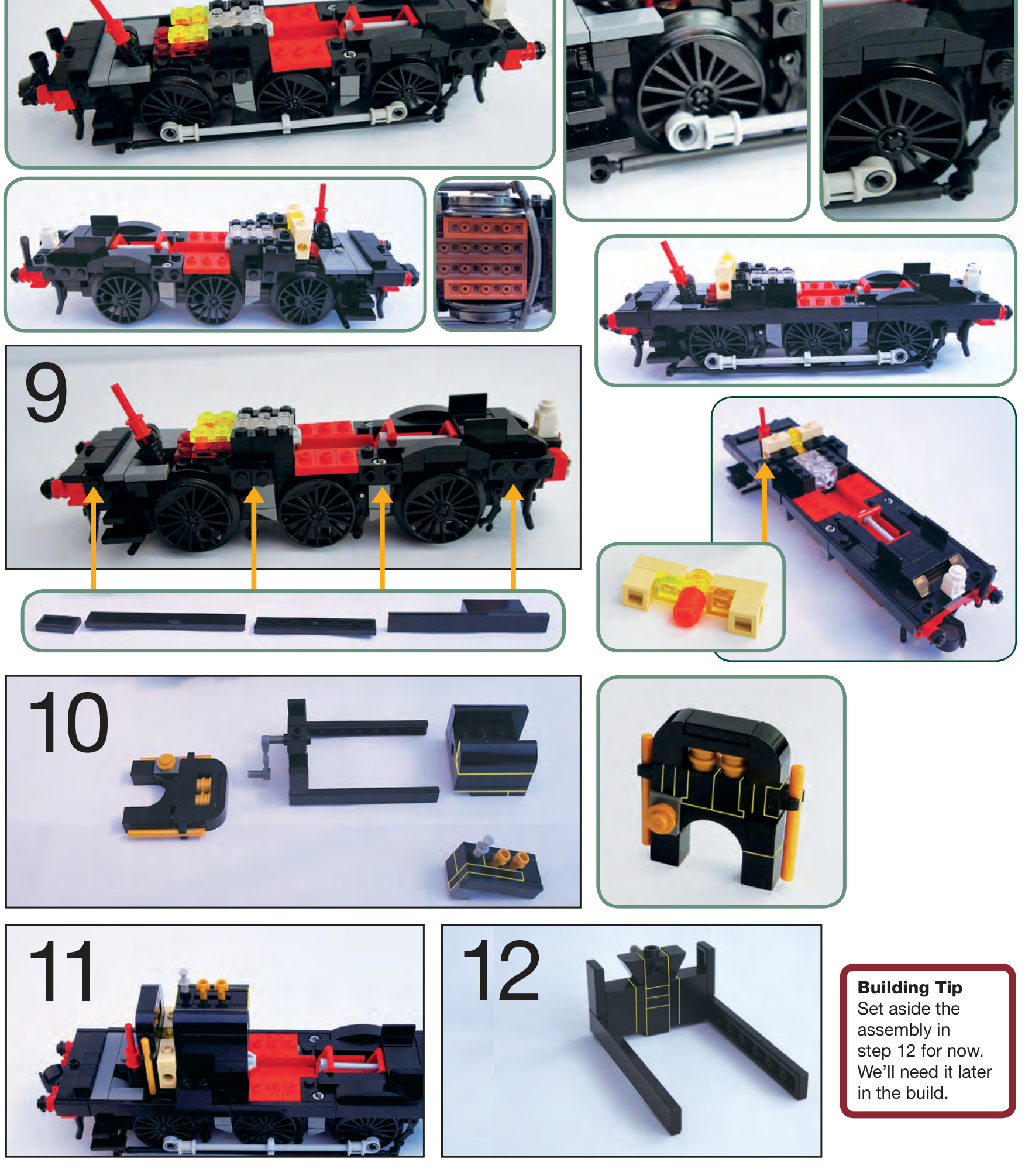
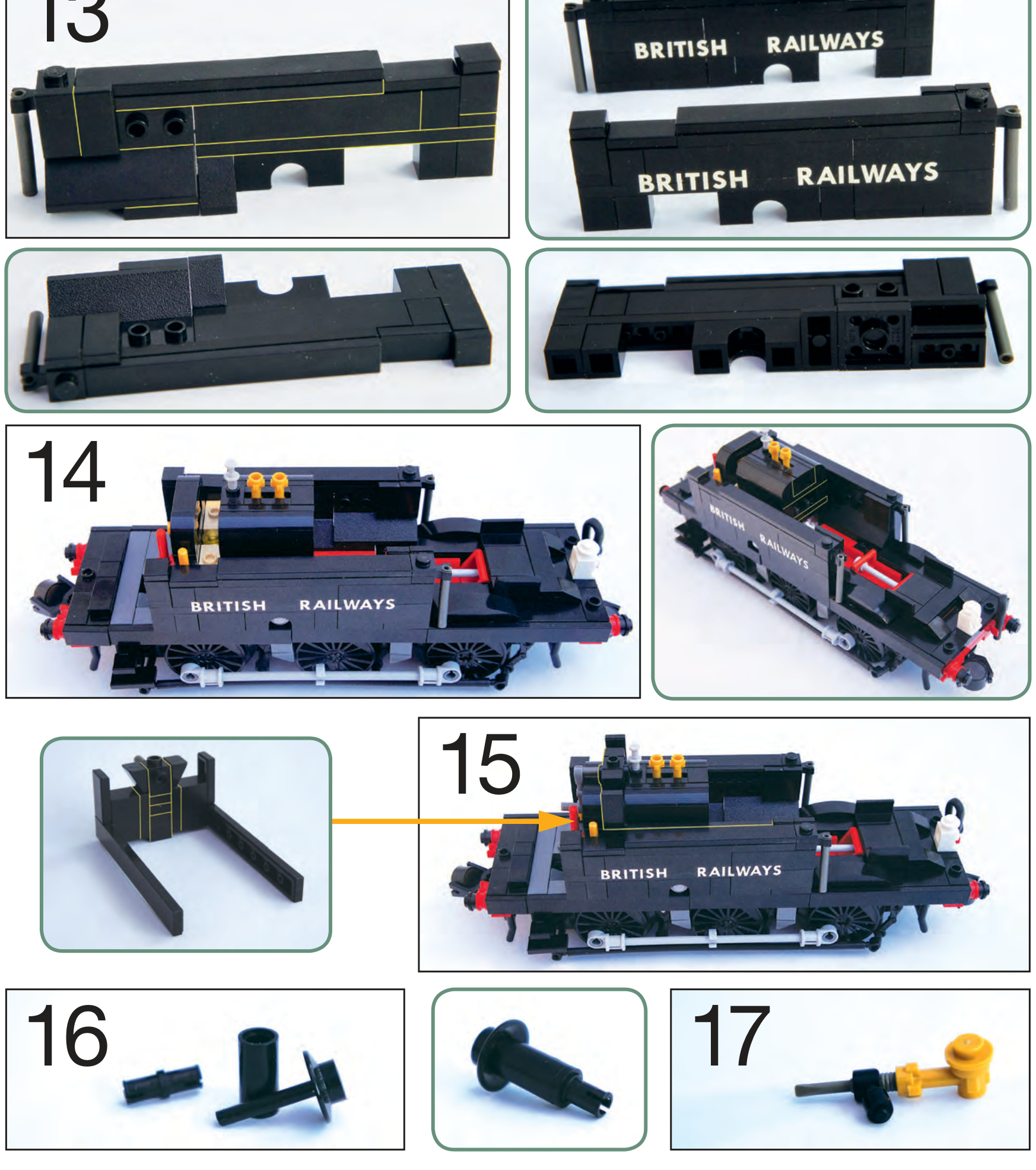
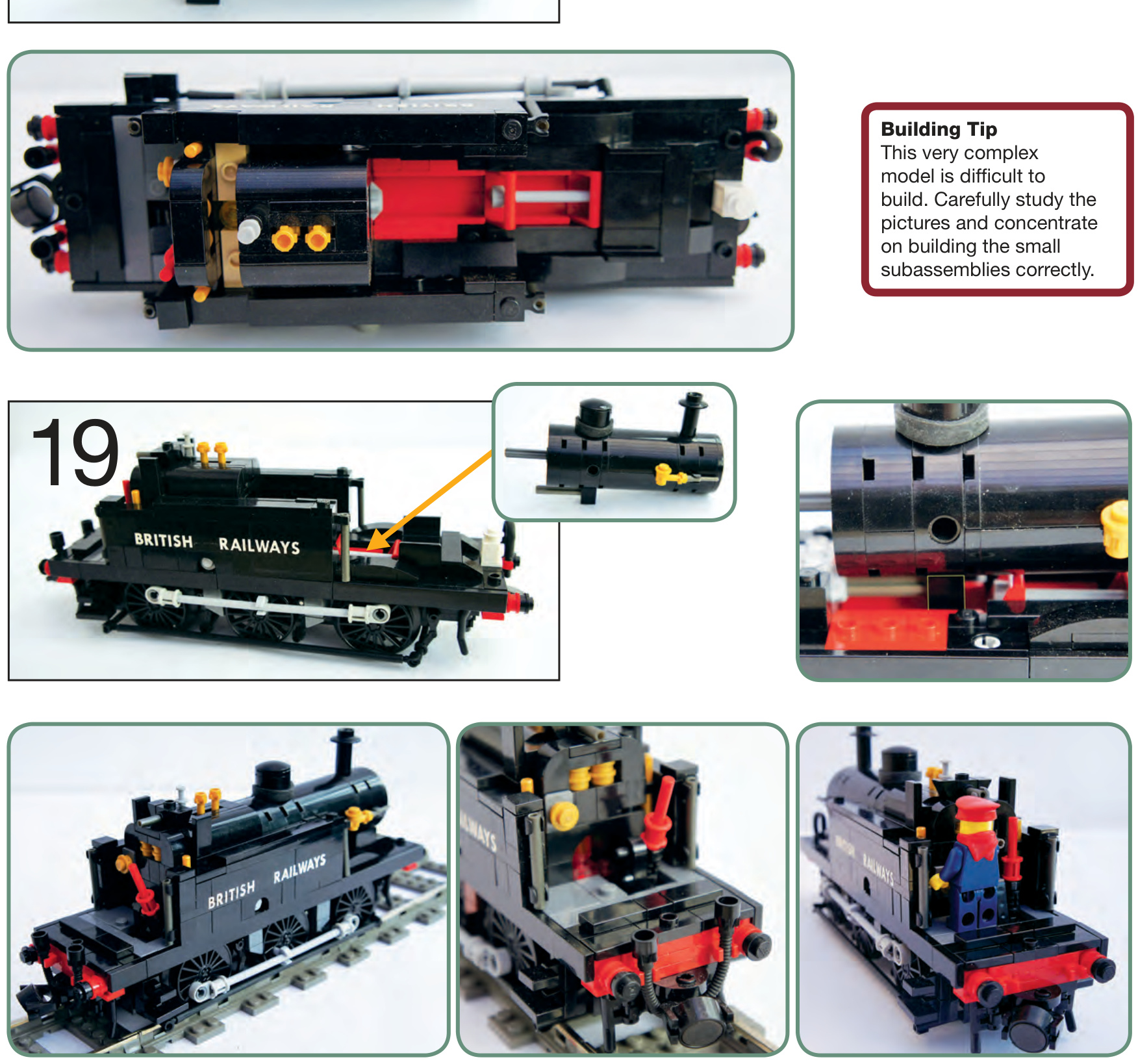
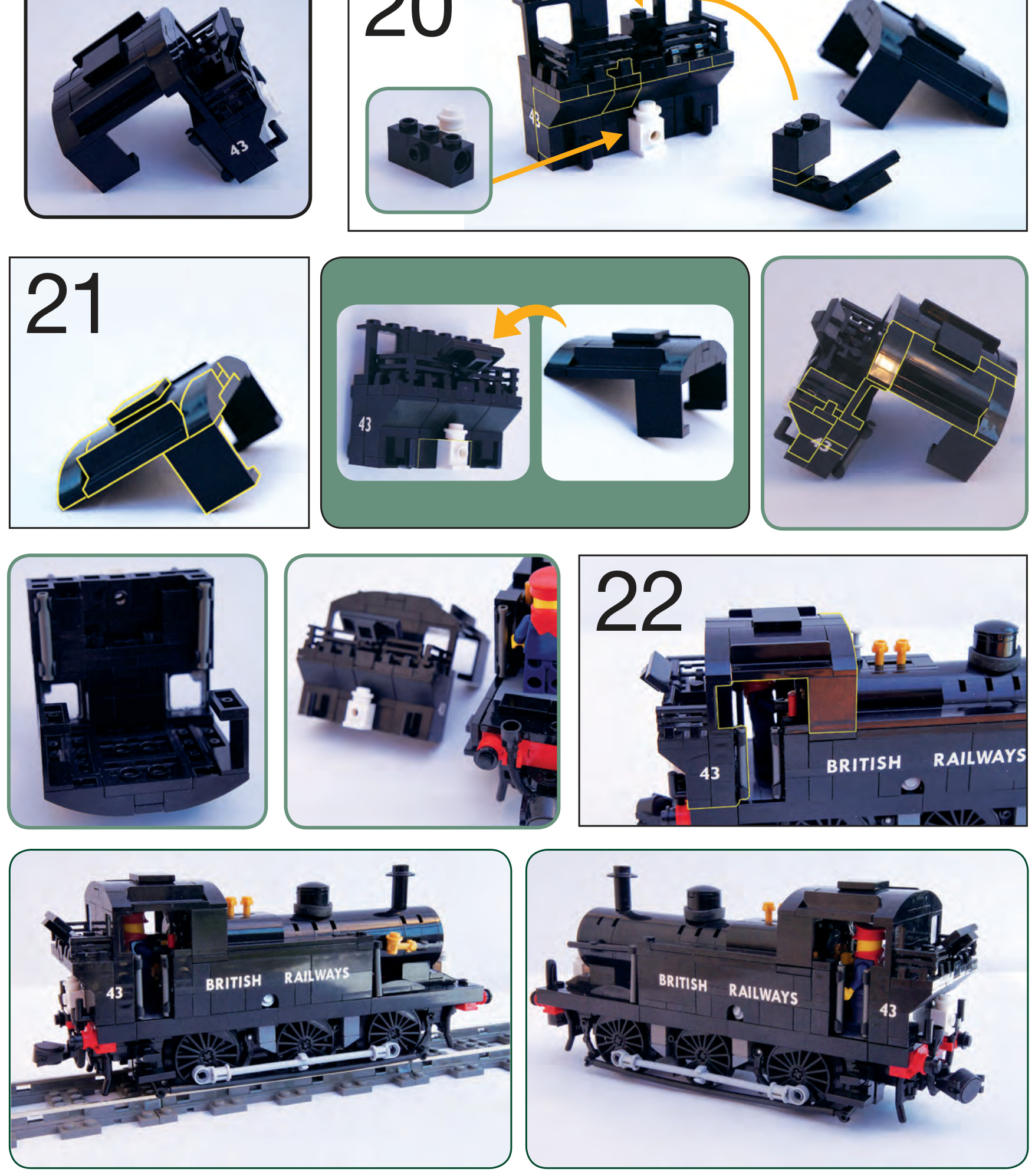
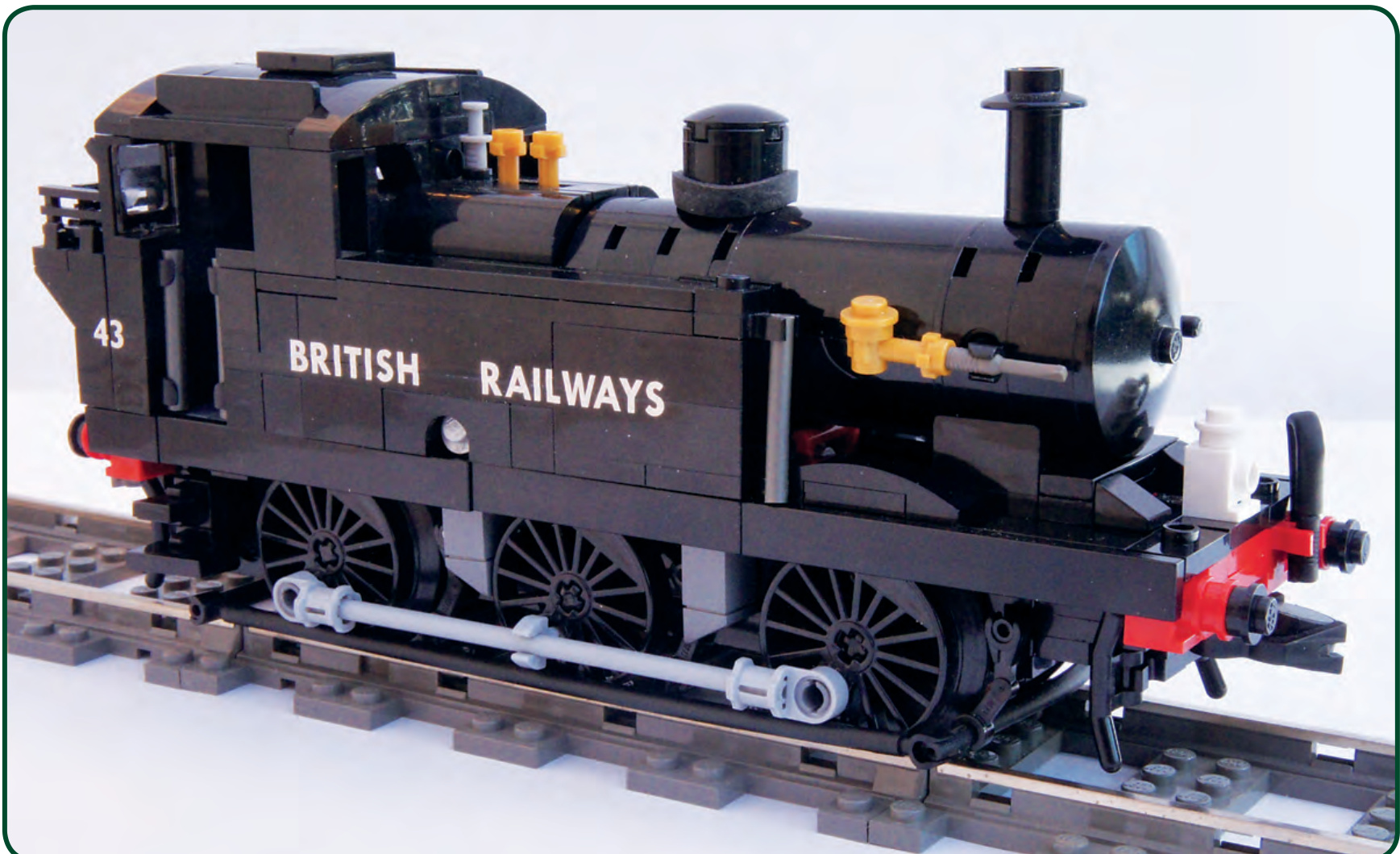
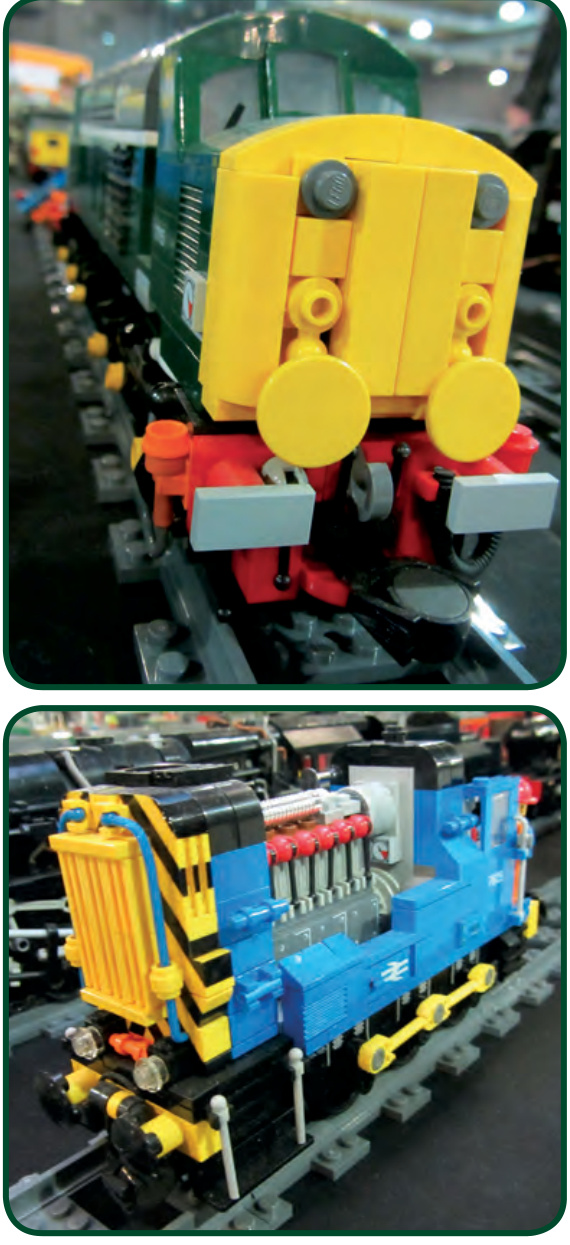
British Railways 0-6-0, Fowler Class 3F, “Jinty” Tank Engine (in operation 1924–1967)
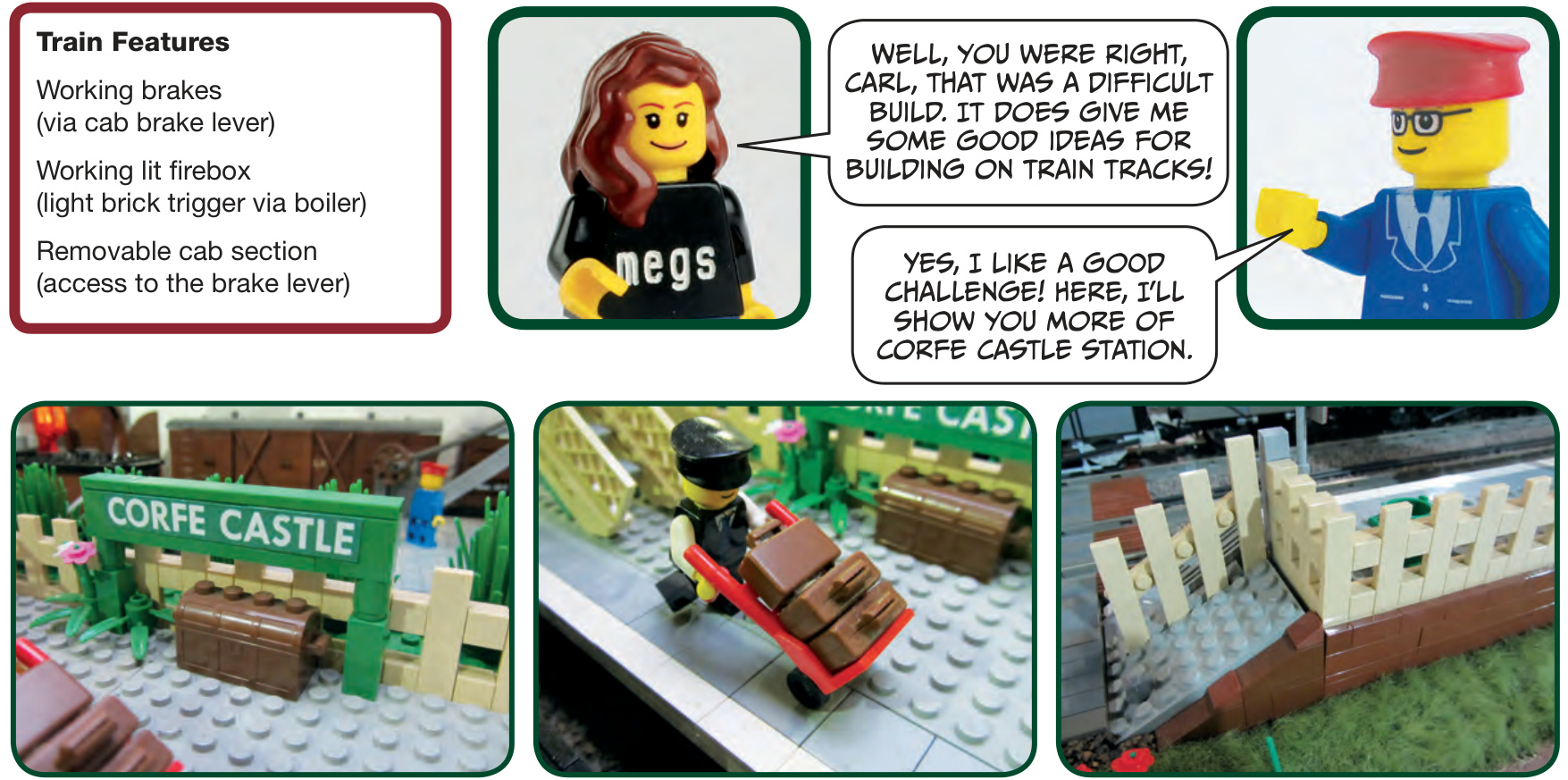
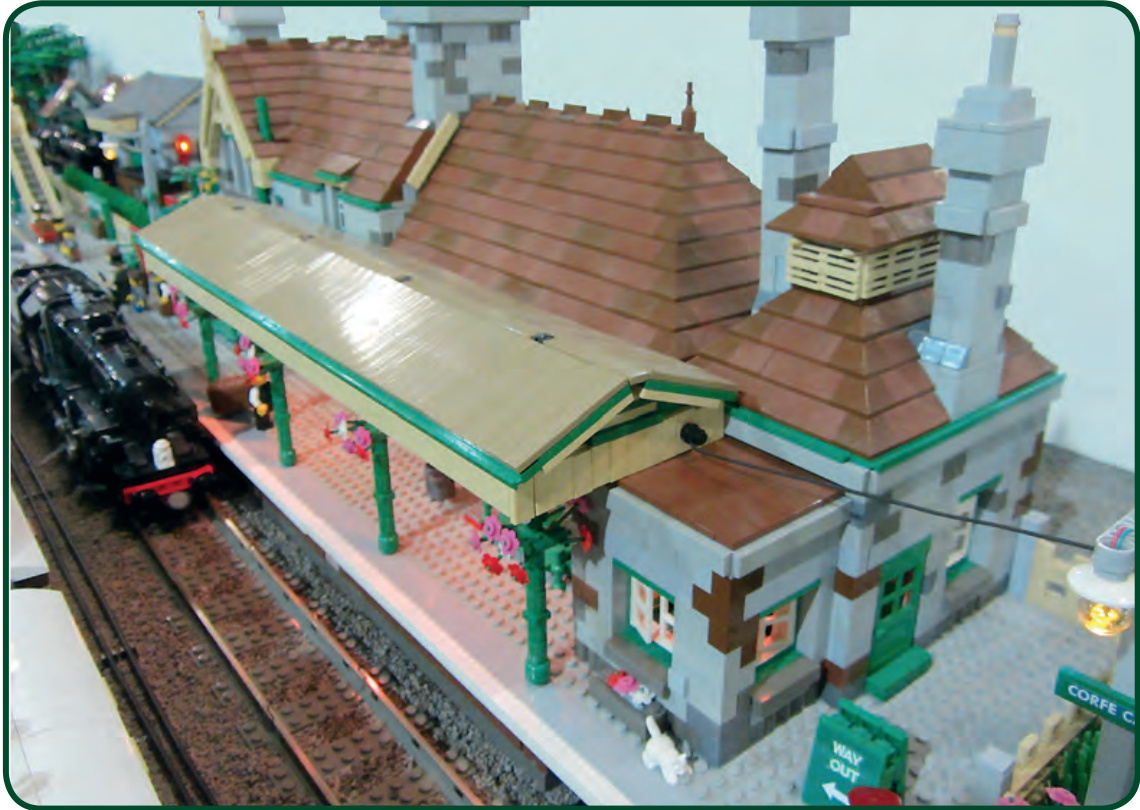
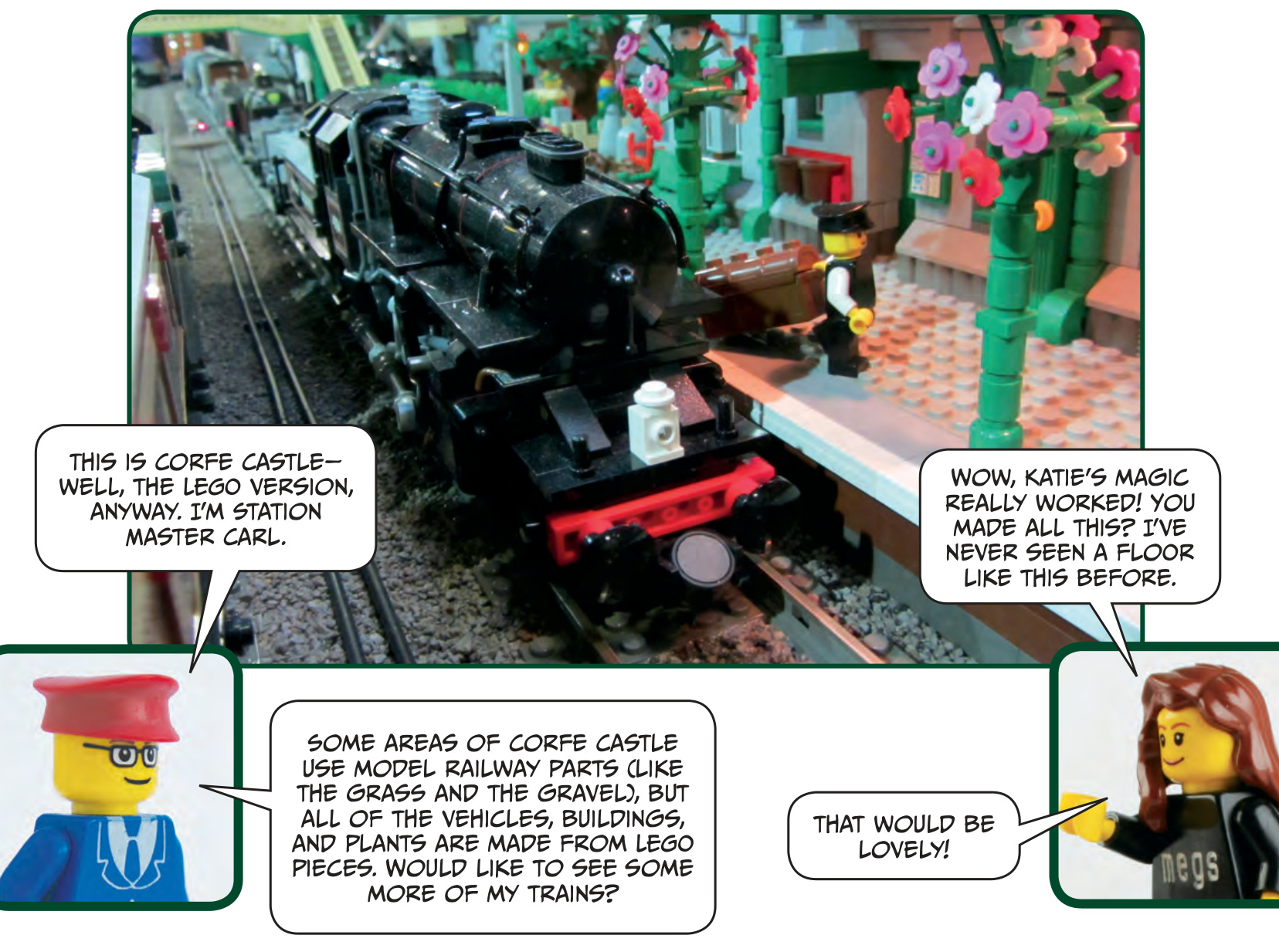
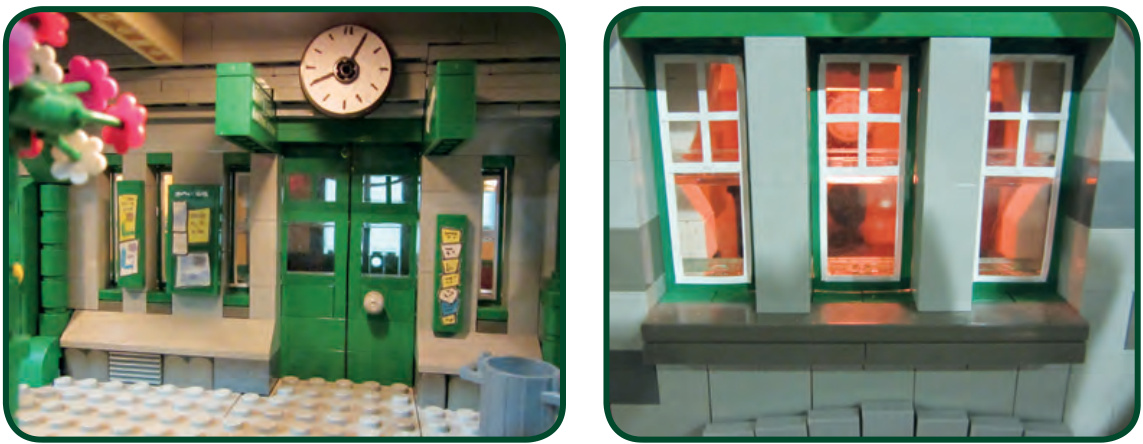
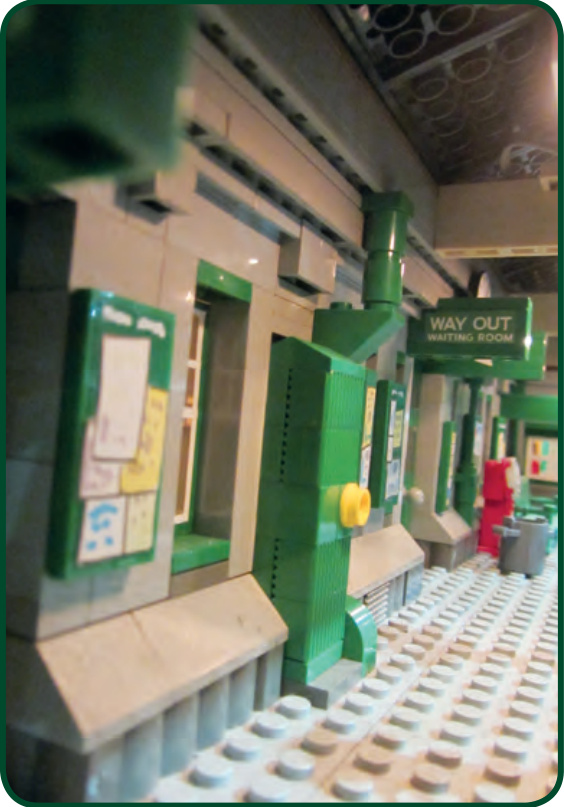
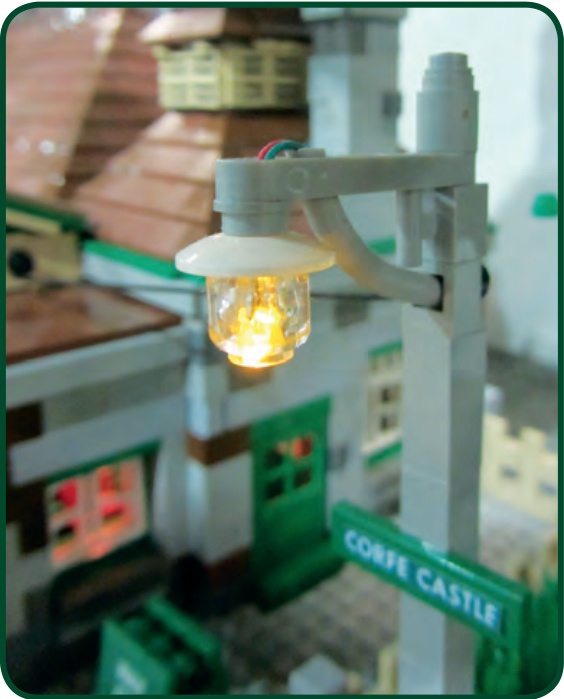
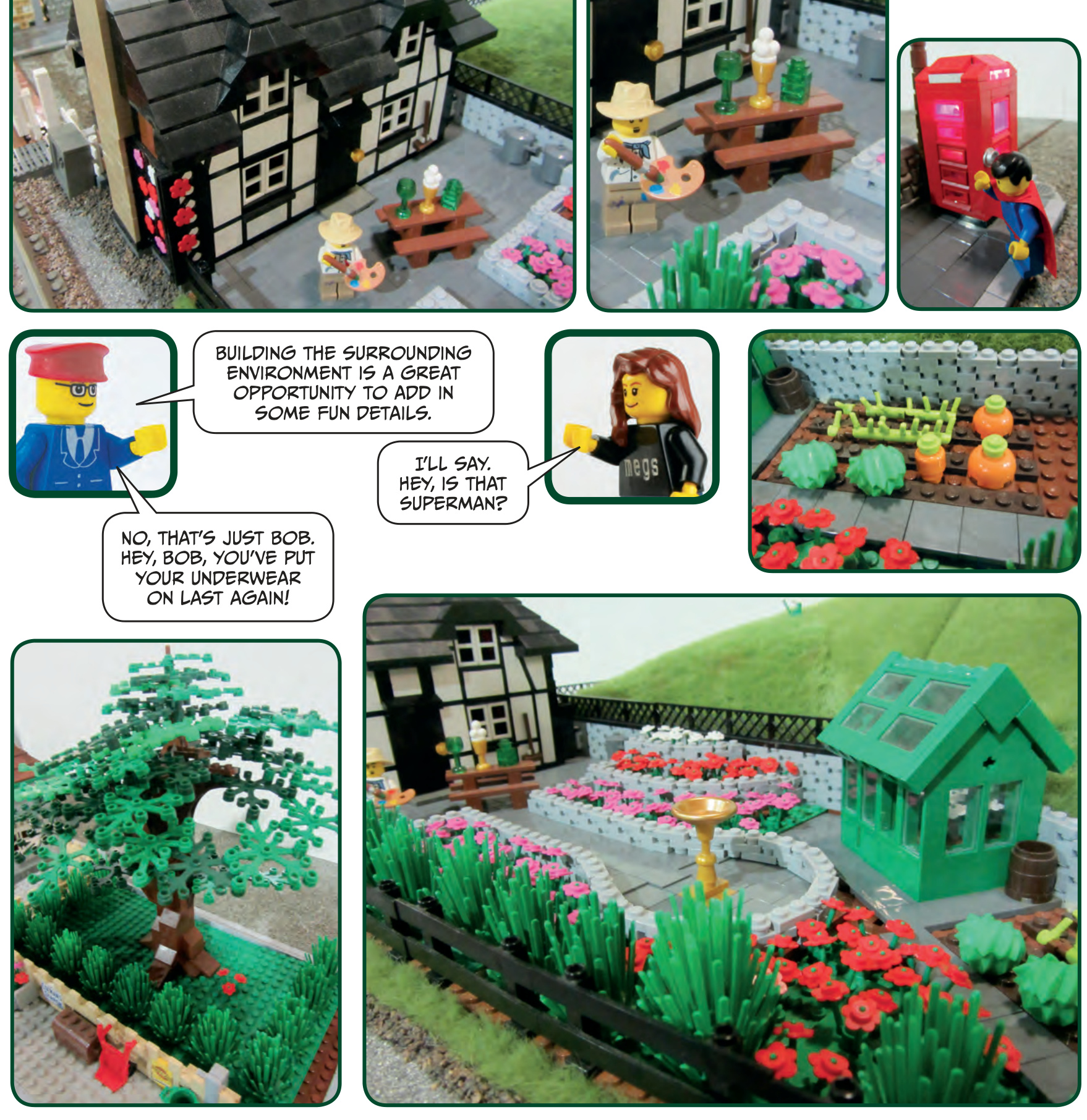
Corfe Castle Station
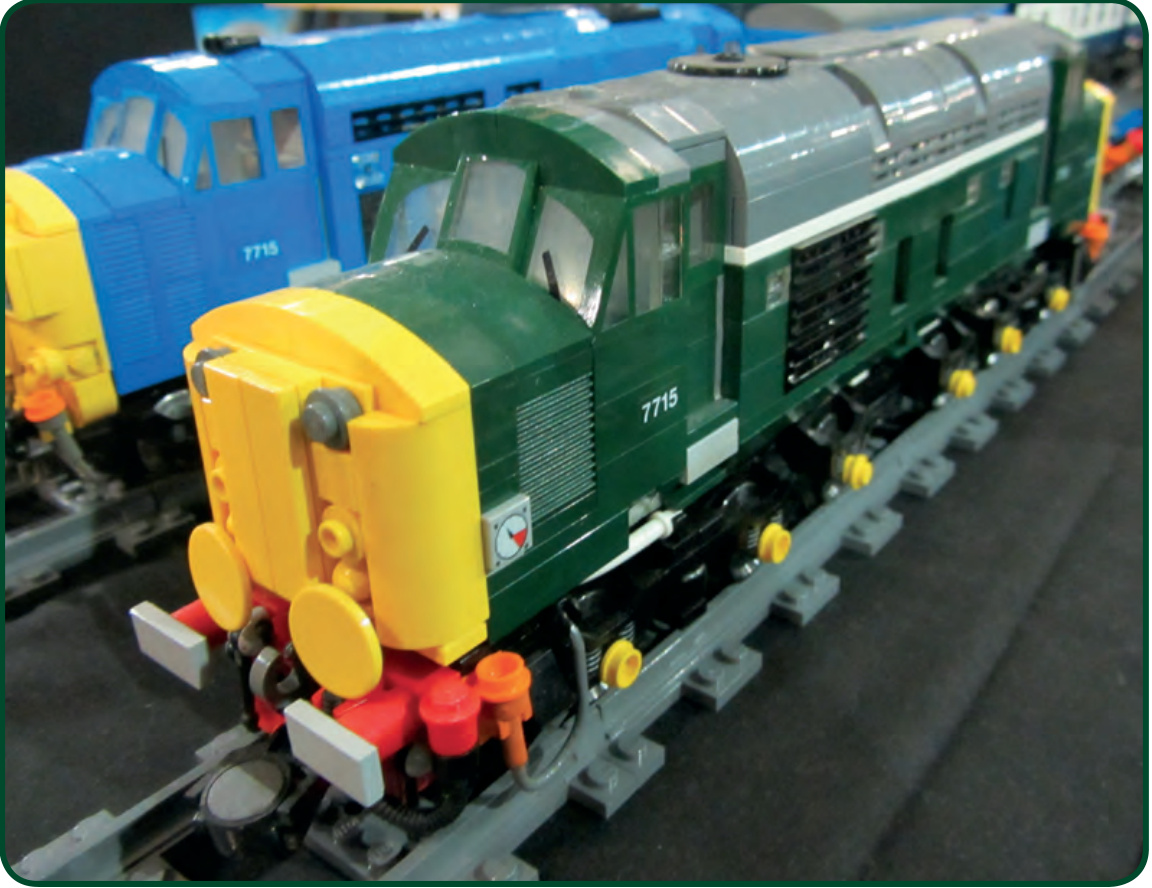
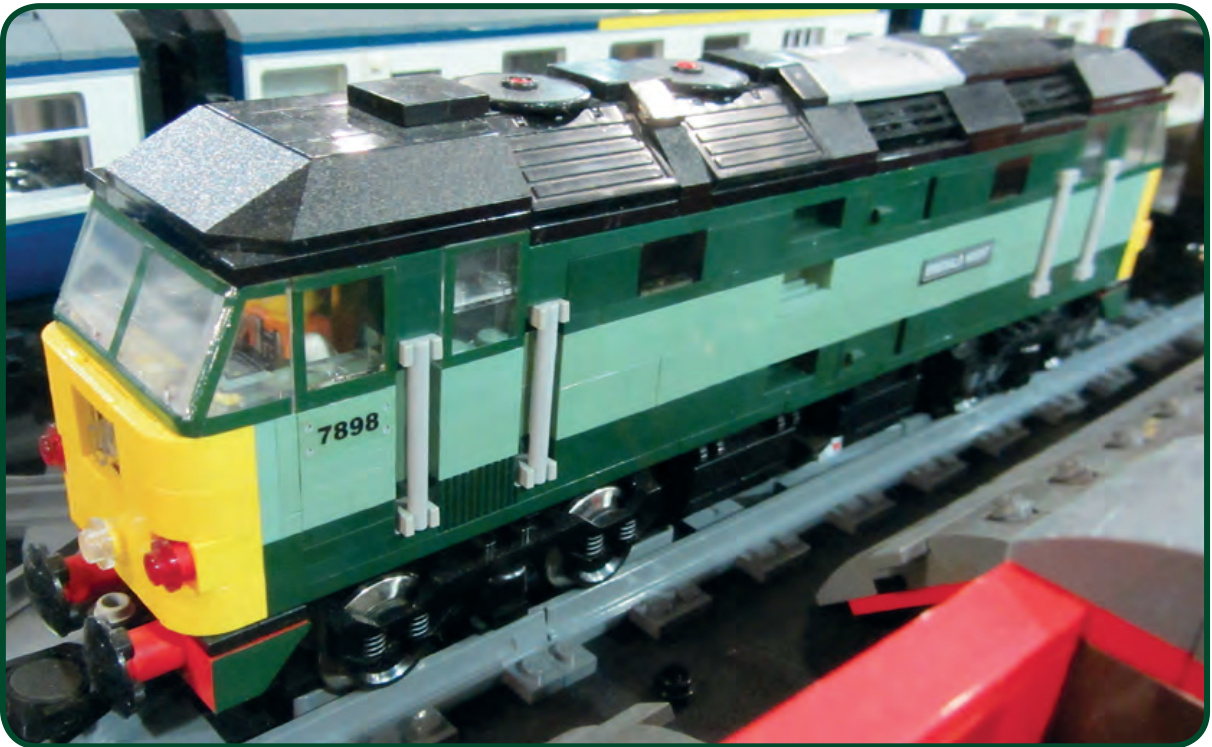
Building Journal
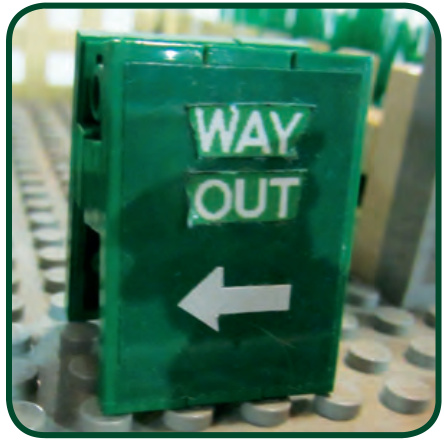
Carl uses stickers to great effect. He cuts the edges off official LEGO sticker sheets and uses them to make window frames and even stripes on some of his vehicles. He’s also used his own printed stickers to create unique and accurate LEGO models. These techniques are a great way to make models look a lot more realistic, but it takes practice to get them right.
Building Tip

Building Journal
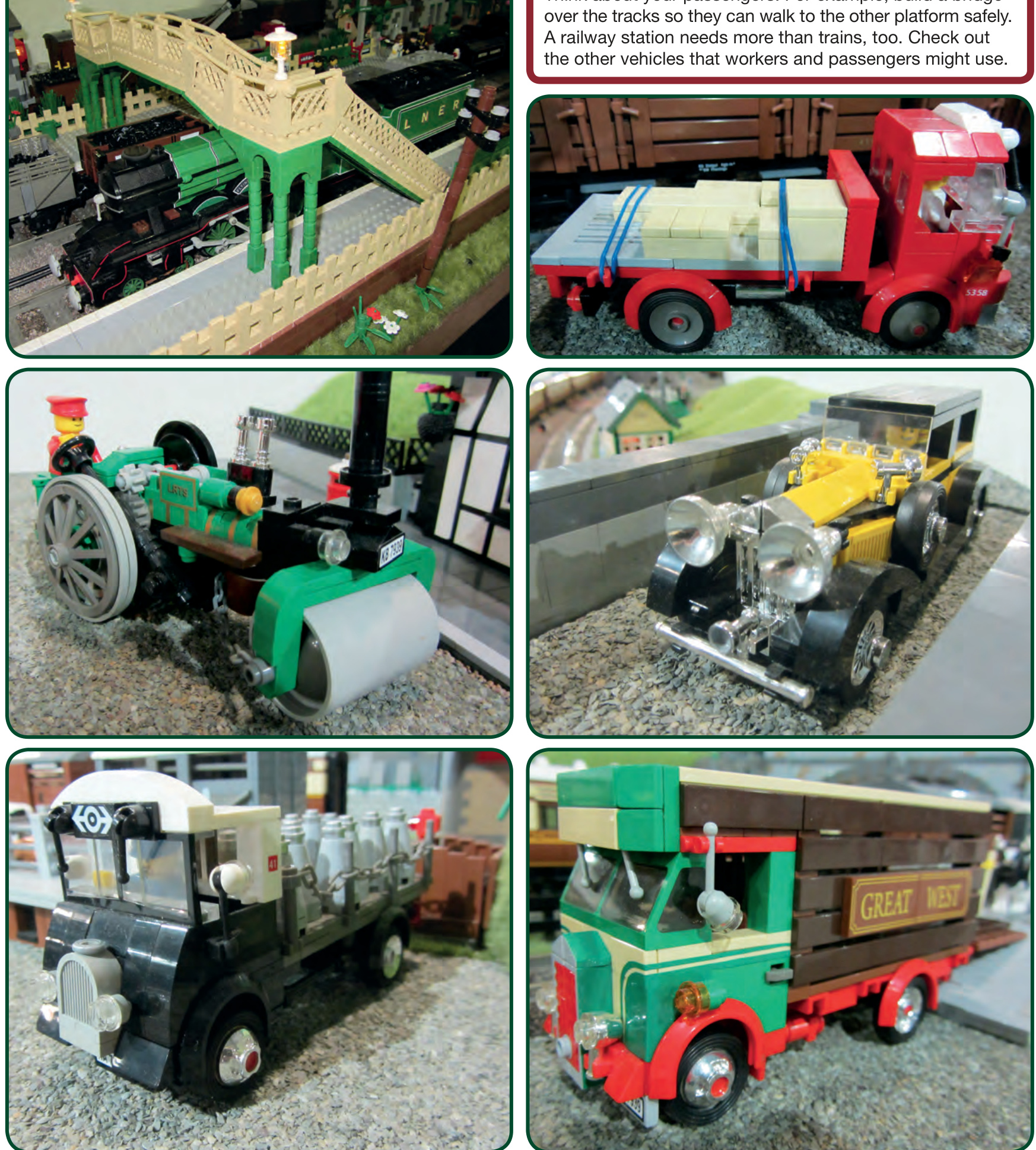
Carl’s trains gave me lots of great ideas. They have working lights, actually move, and are really powerful. When I get back to the Idea Lab, I’ll try building something that runs on rails. I’m just not sure it will be a train like his!
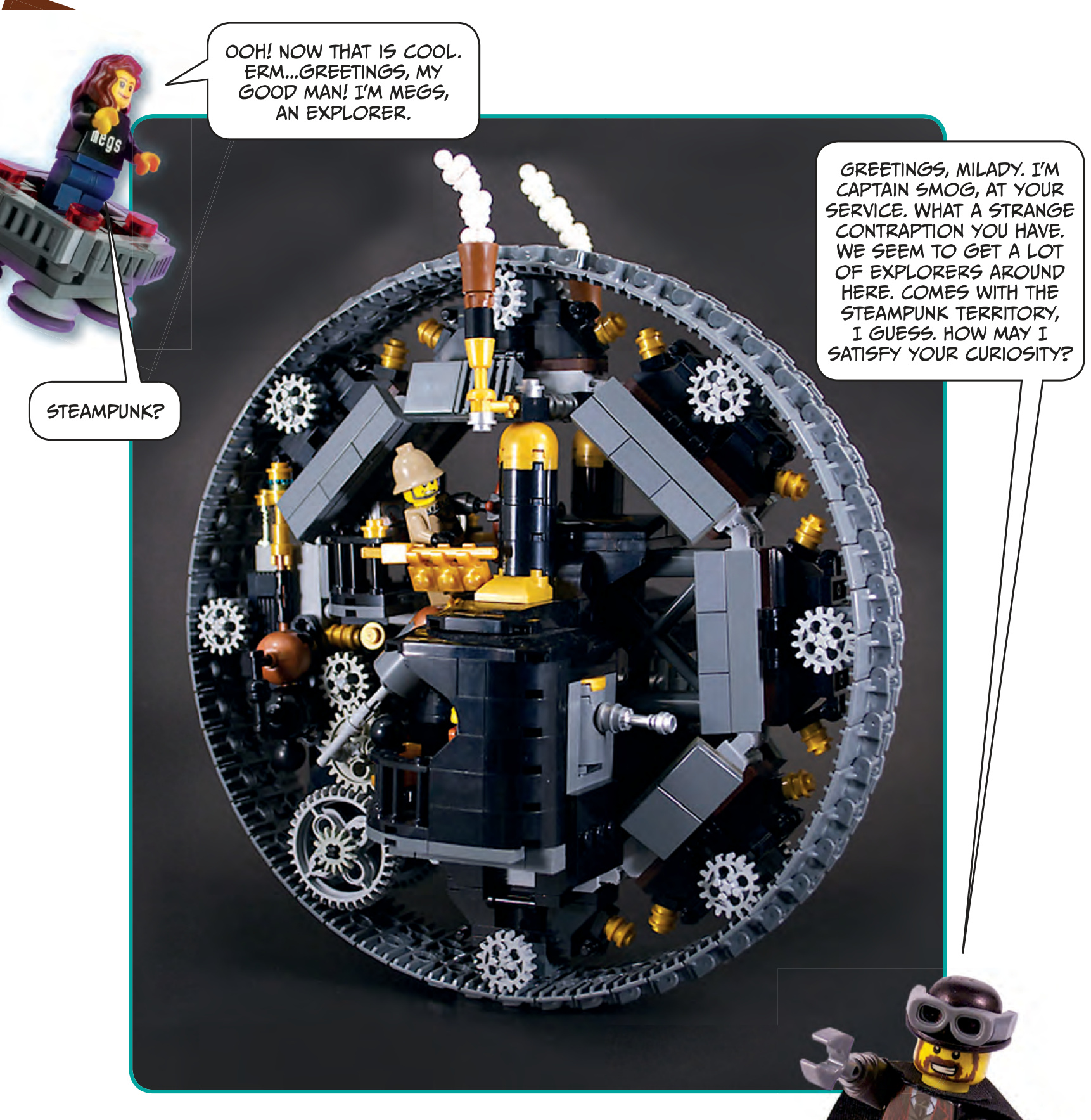
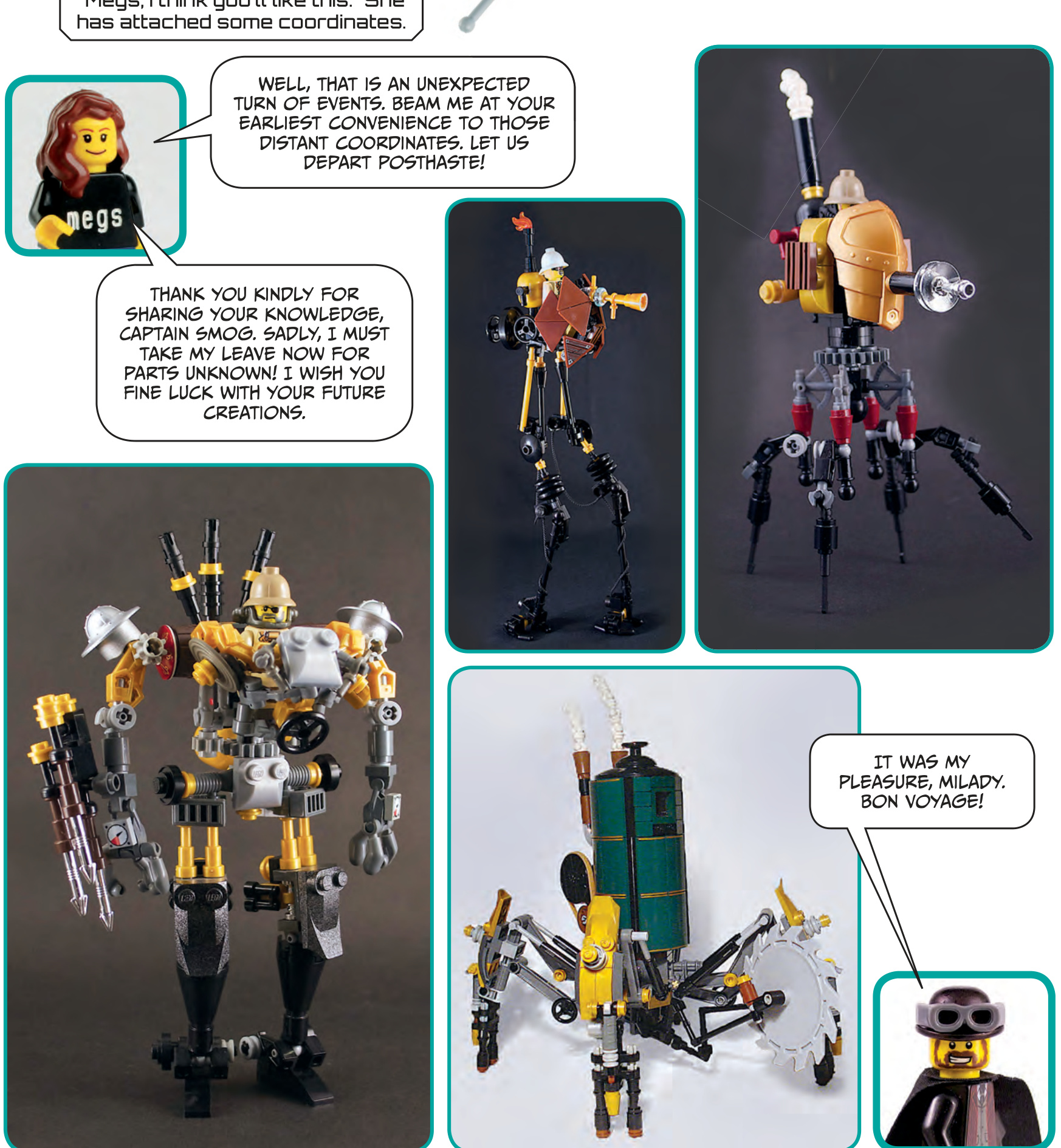
Steampunk
Sylvain Amacher

Nickname: Captain Smog
Profession: Graphic Designer
Nationality: Swiss
Website: www.flickr.com/photos/captainsmog/
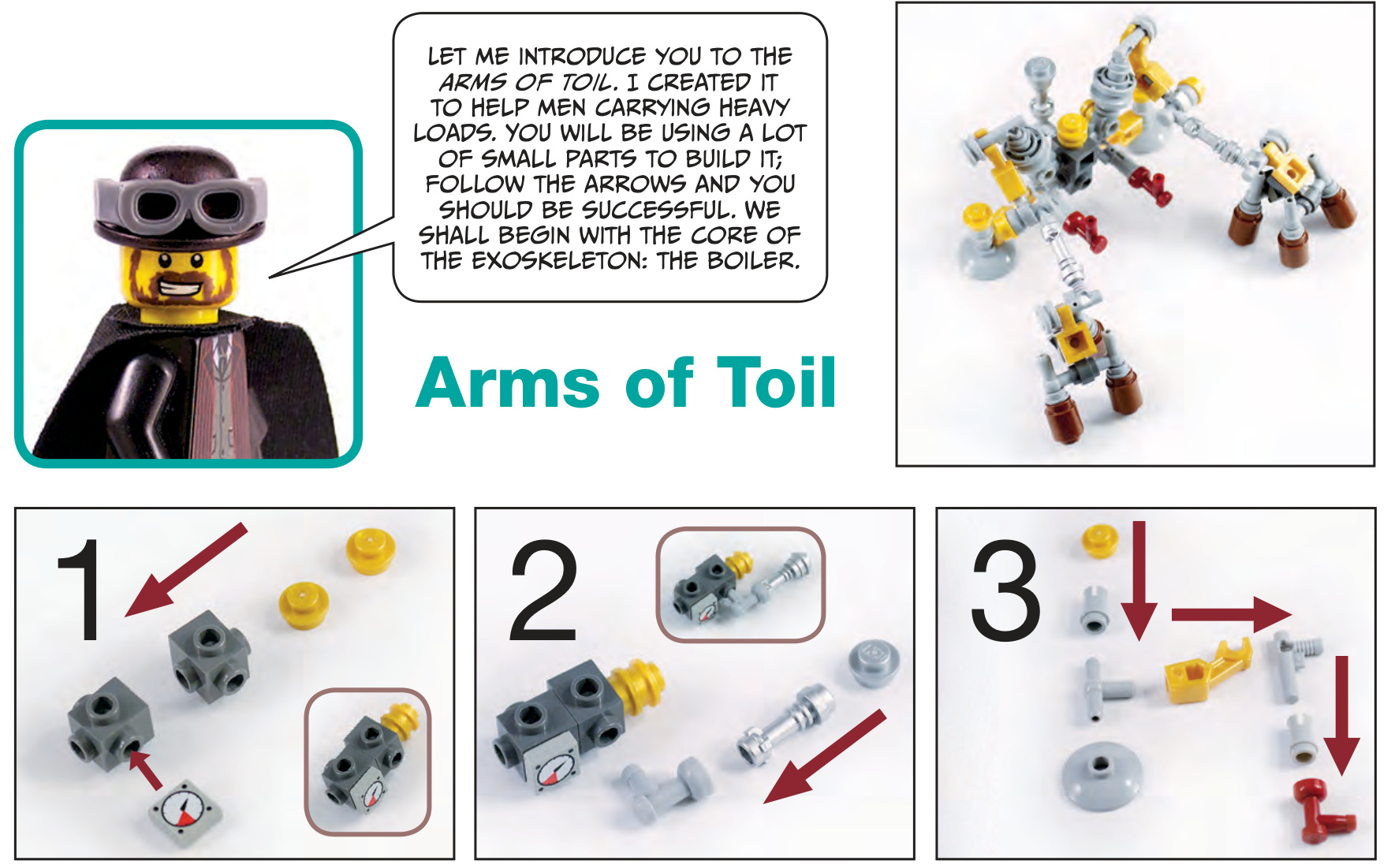
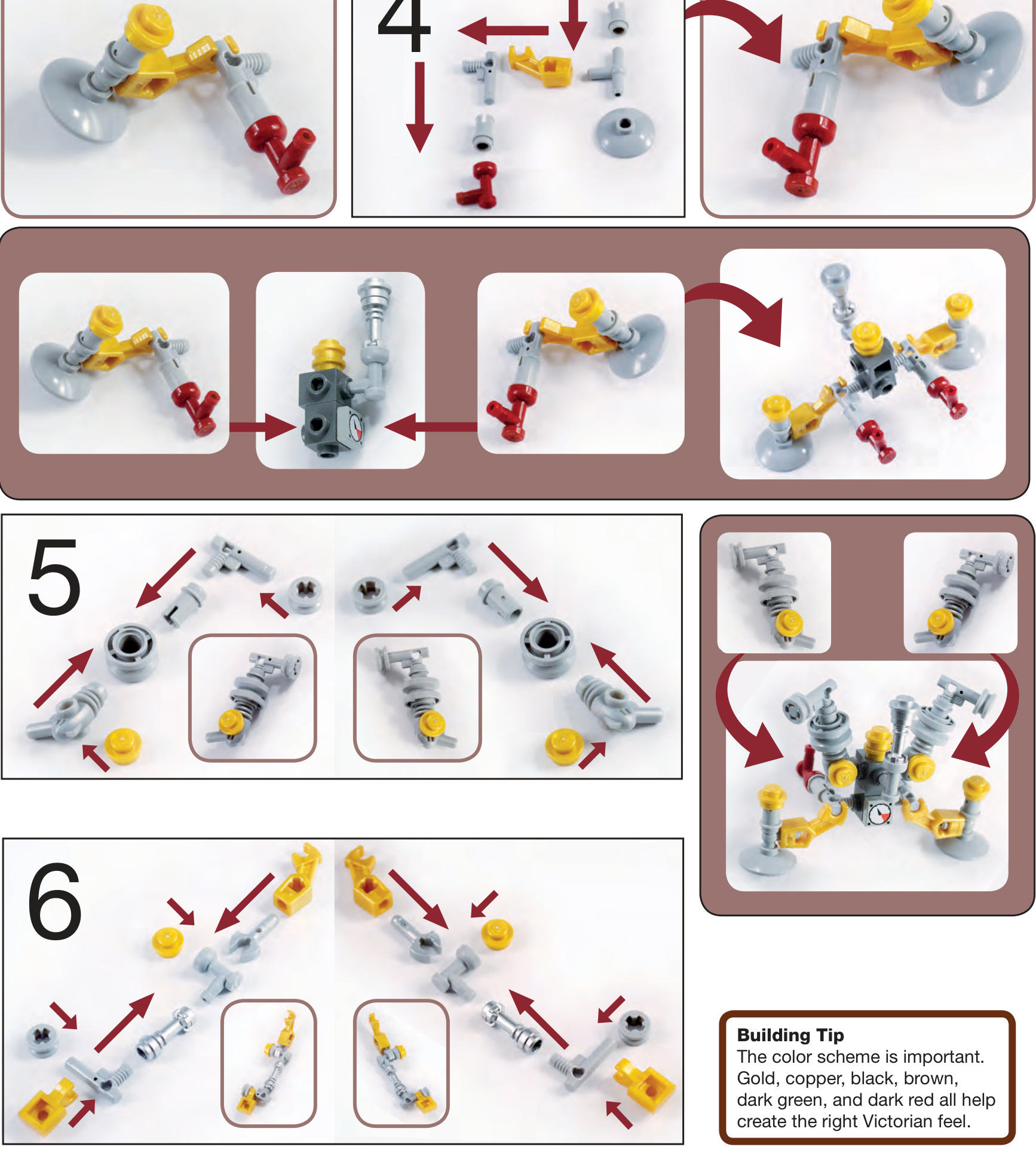
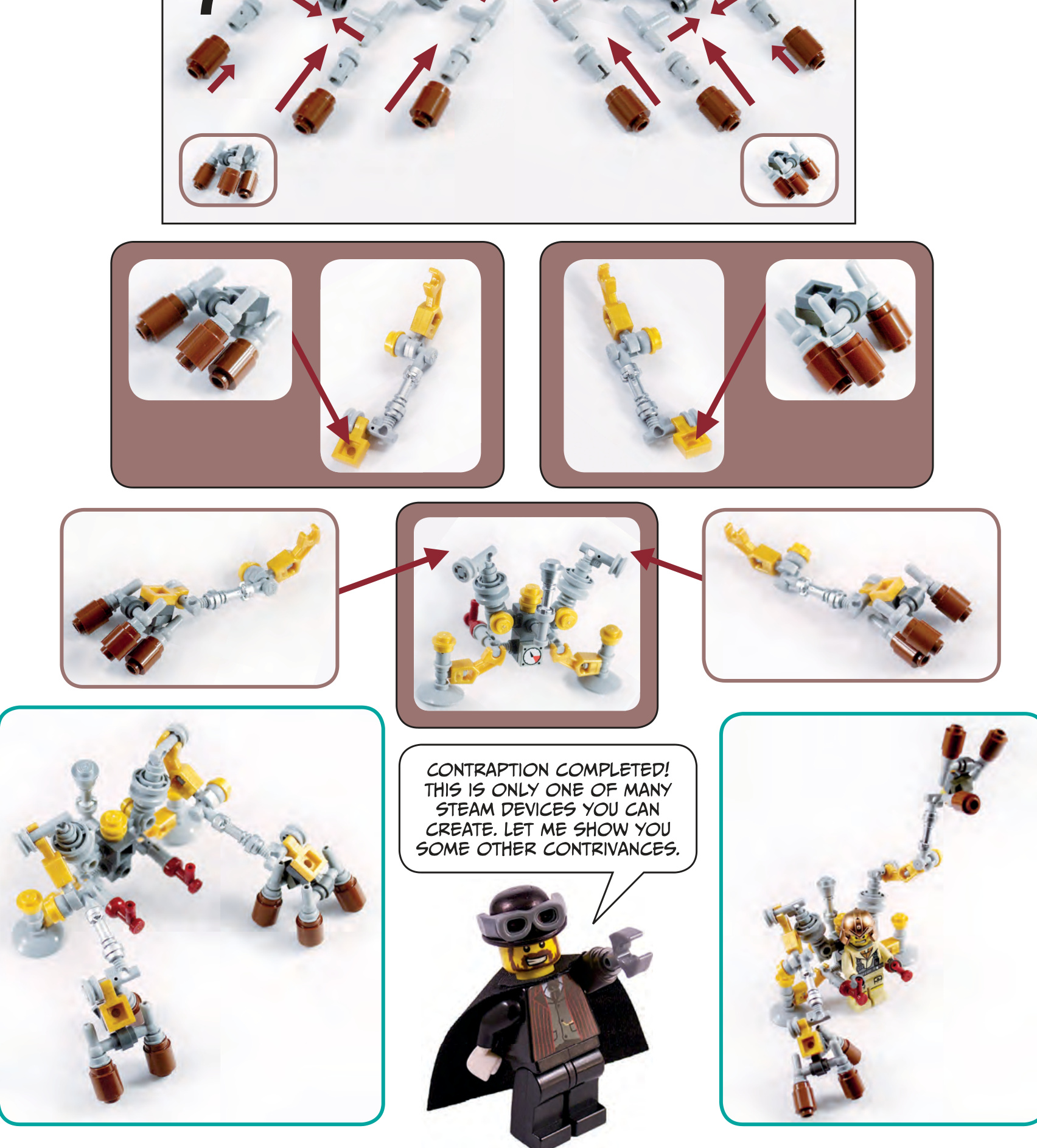

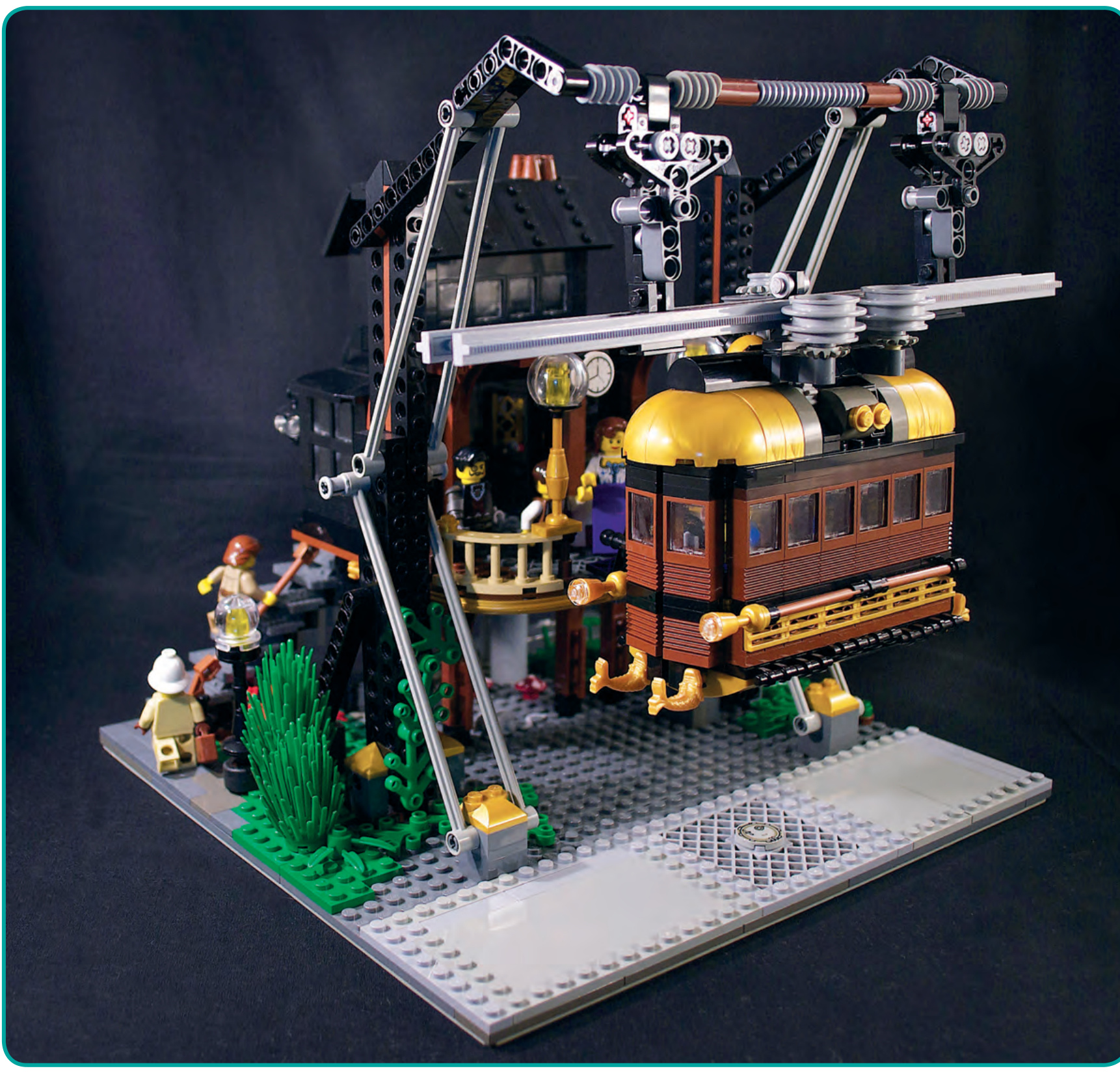
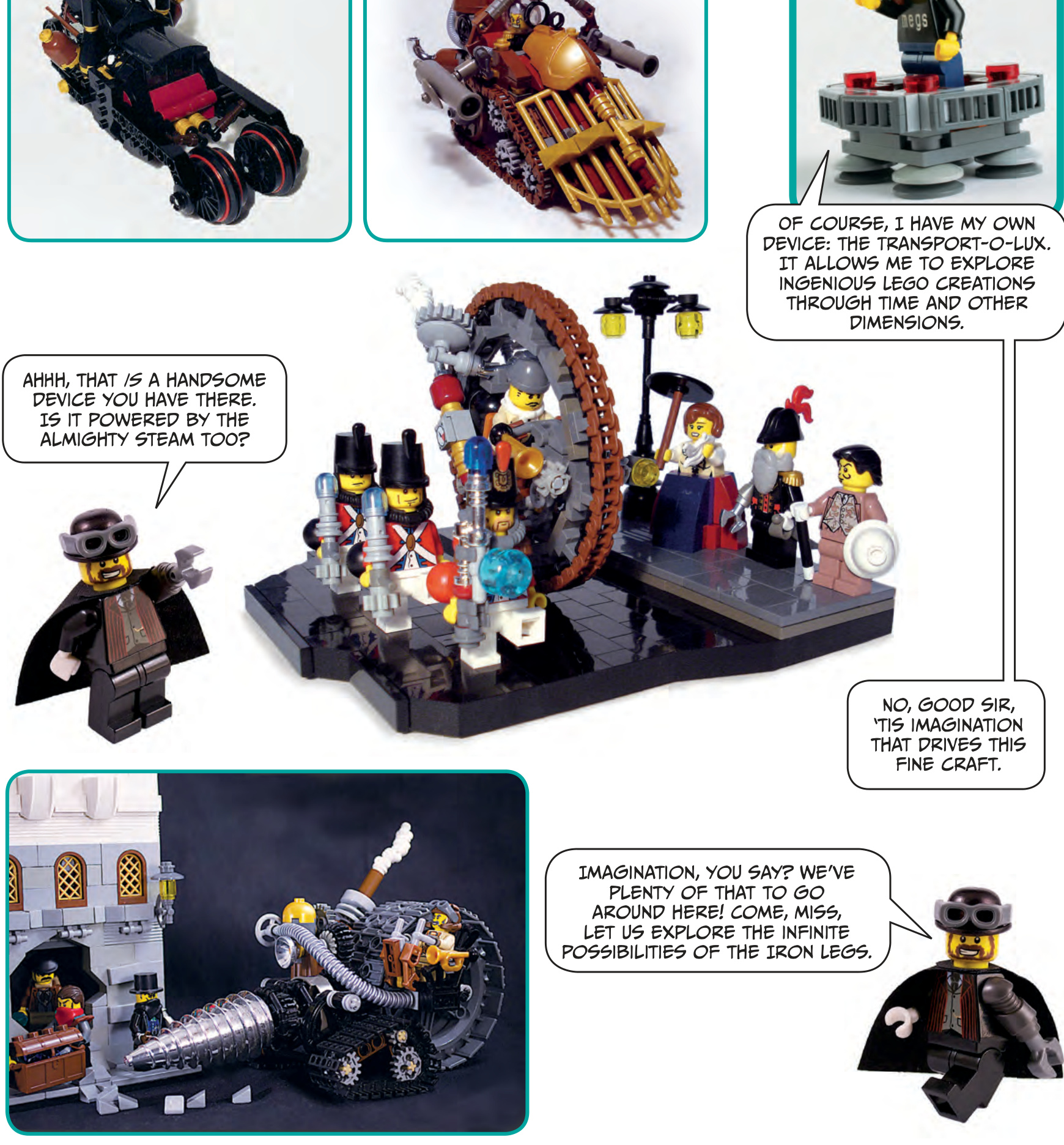
The Iron Legs
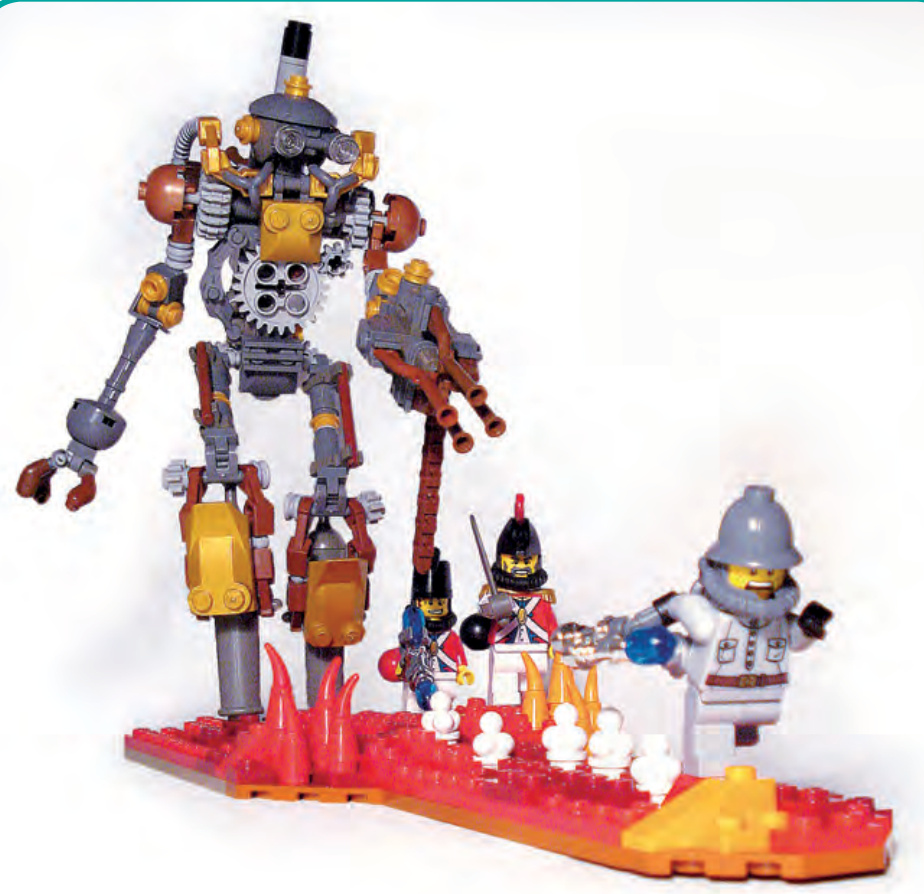
Building Journal
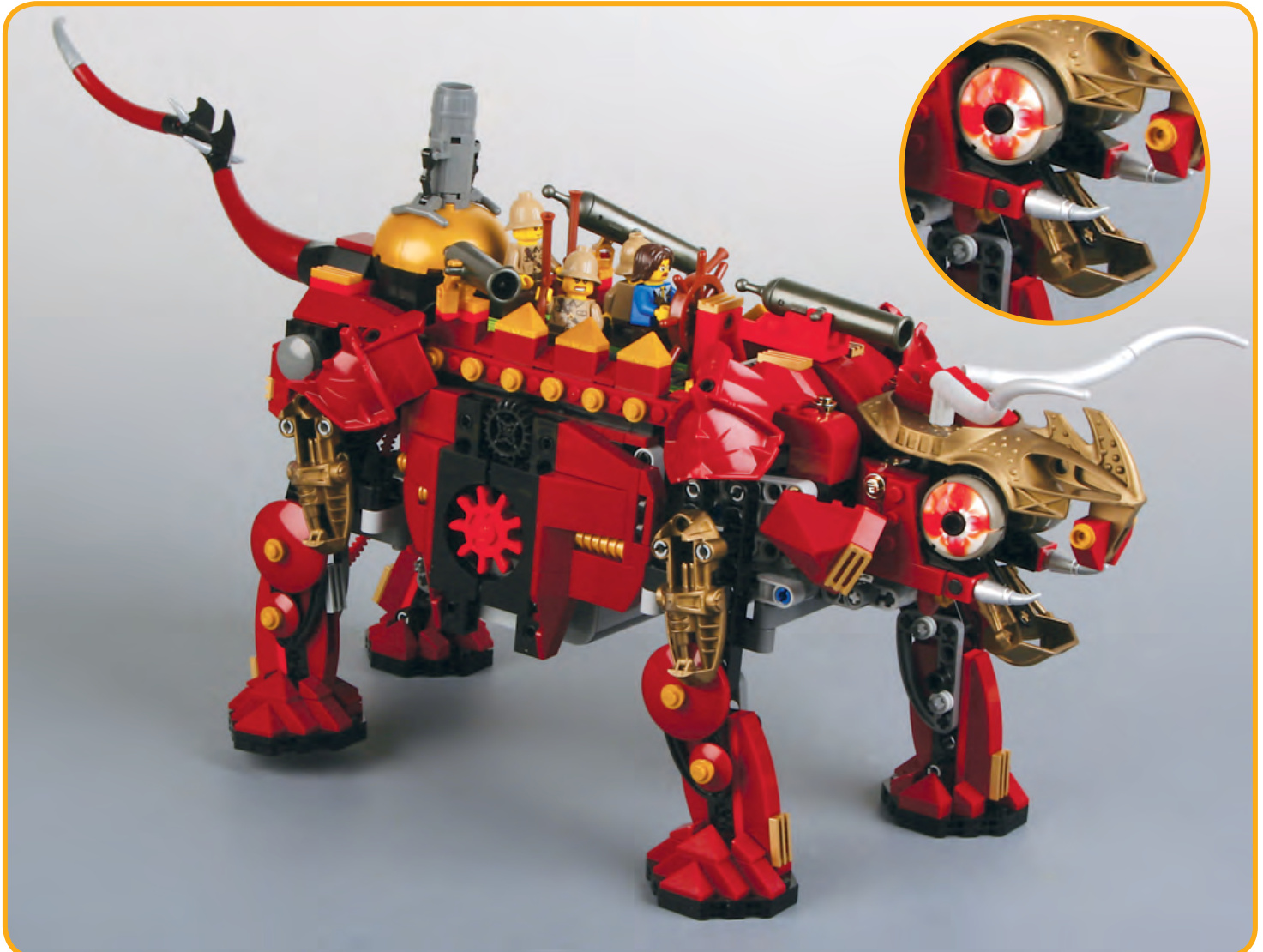
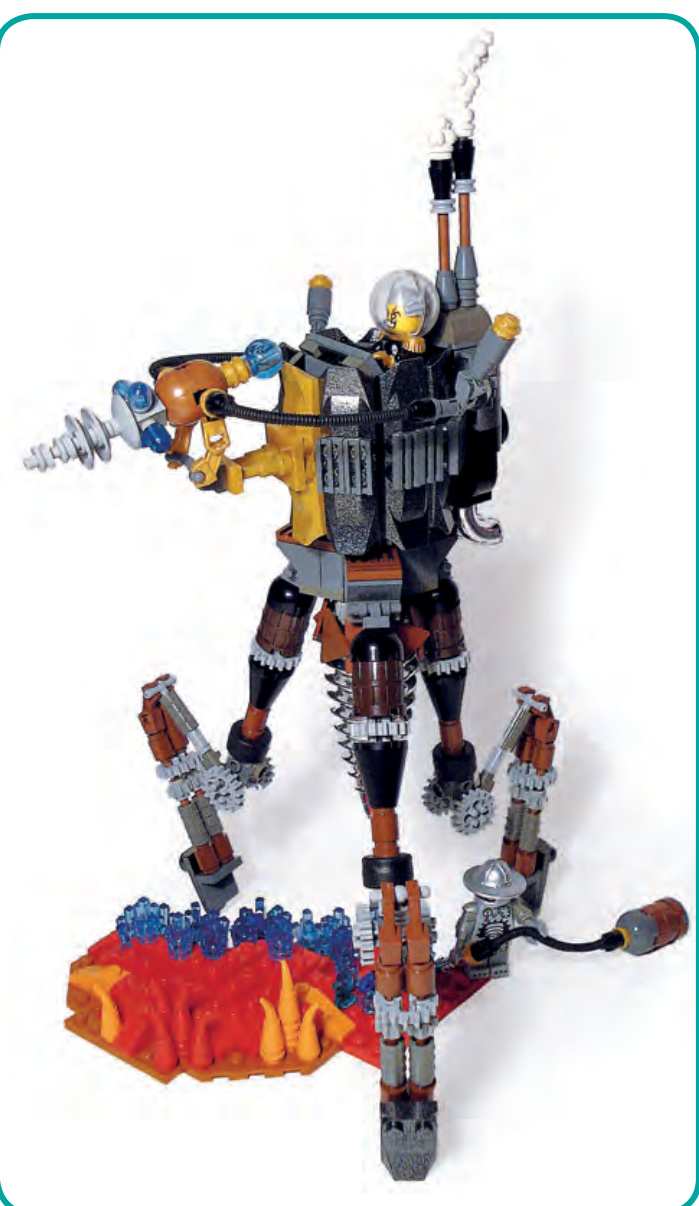
Steampunk seems like a really difficult genre to get right. It’s part steam power, part clockwork, and part science fiction. I should look at some real steampowered vehicles from the Victorian era and borrow some details from them. The metal parts are often painted bright colors to stop them from rusting, the machinery is metal cogs, and the delicate parts are made of brass. Steam engines need big boilers and have chimneys, too.

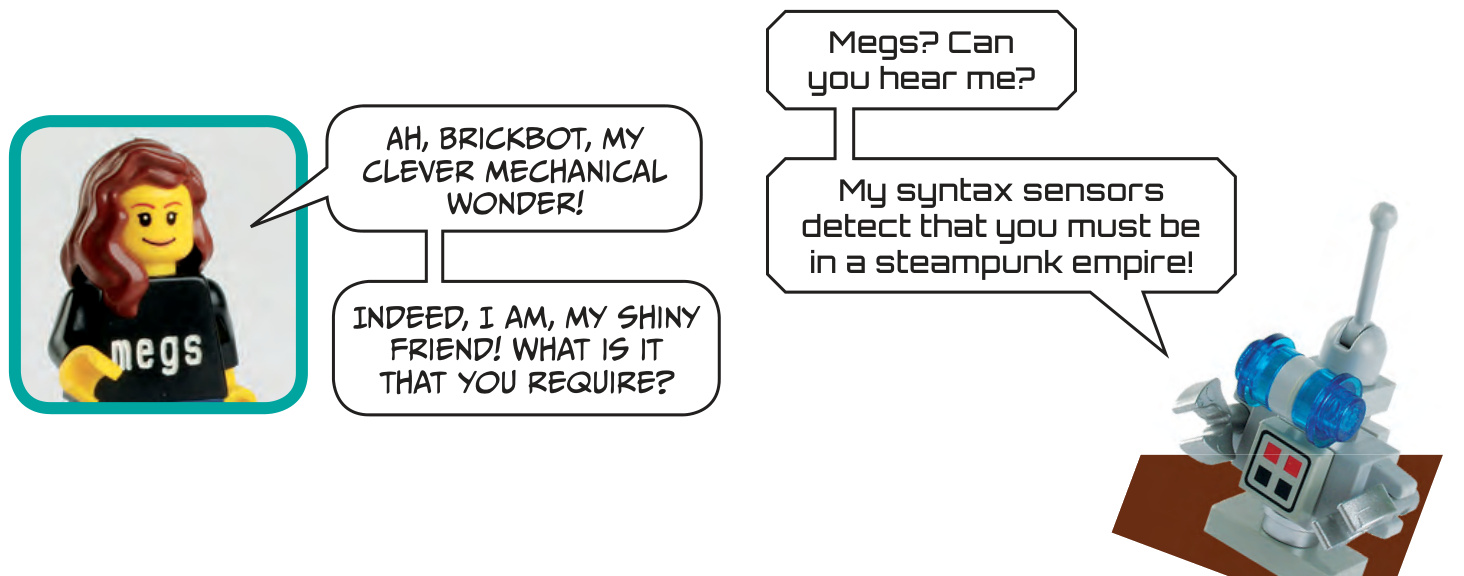
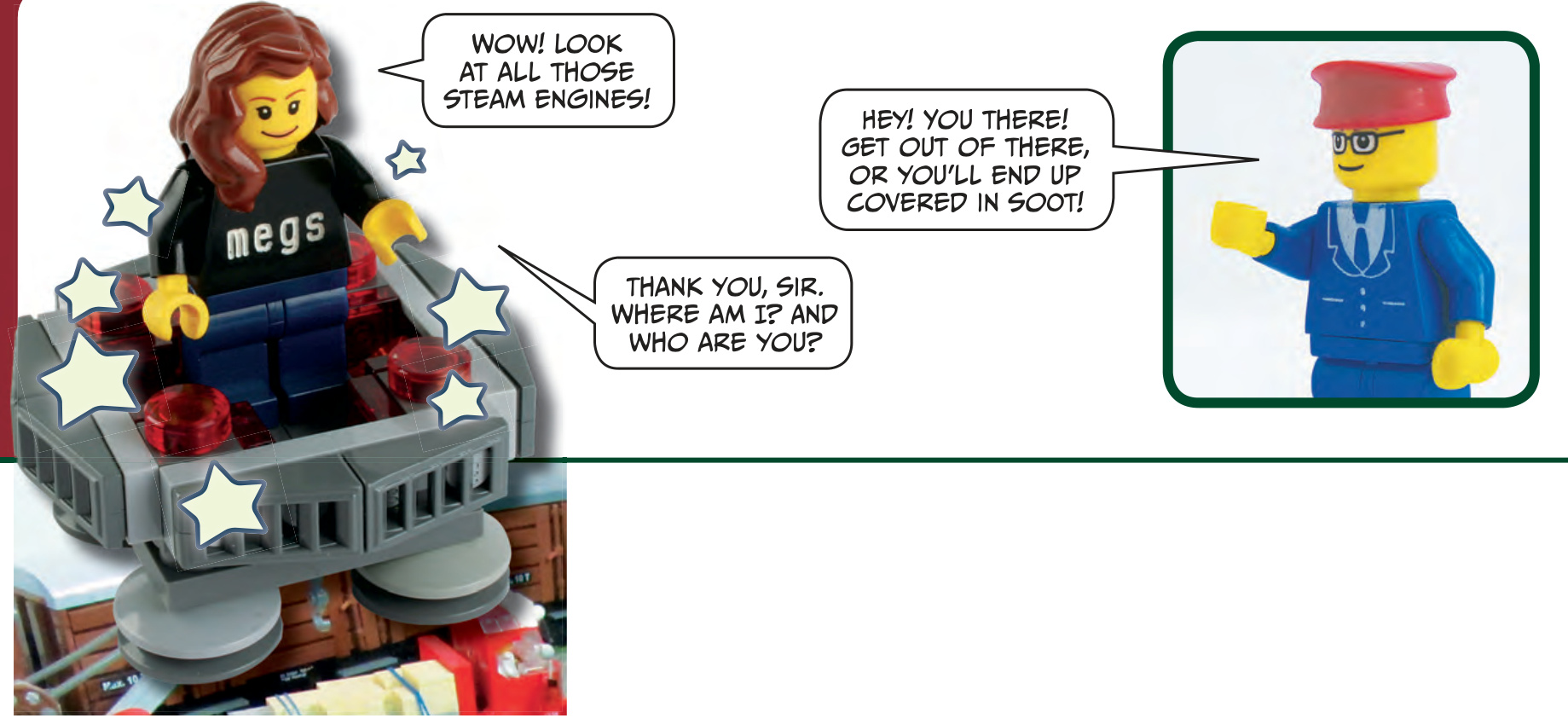
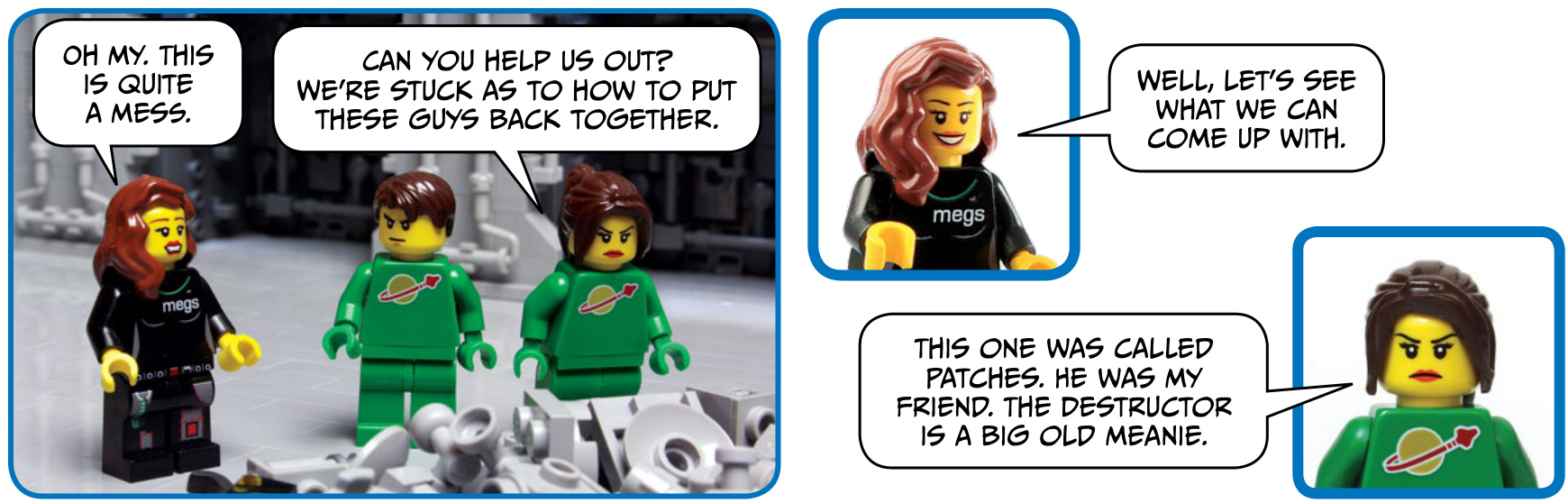
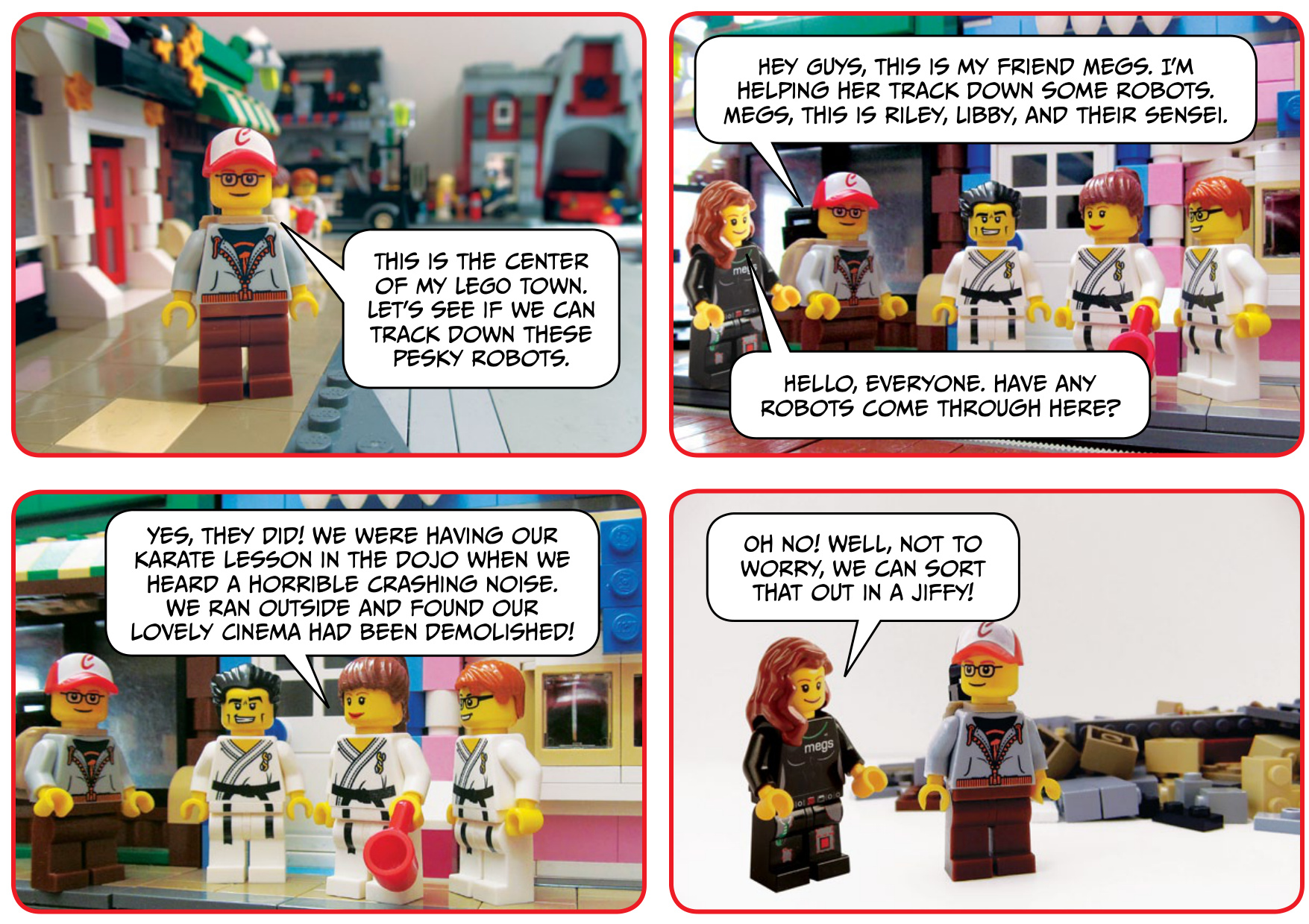
I just received a message from someone named Katie that says, “Megs, I think you’ll like this.” She
A LEGO Legend
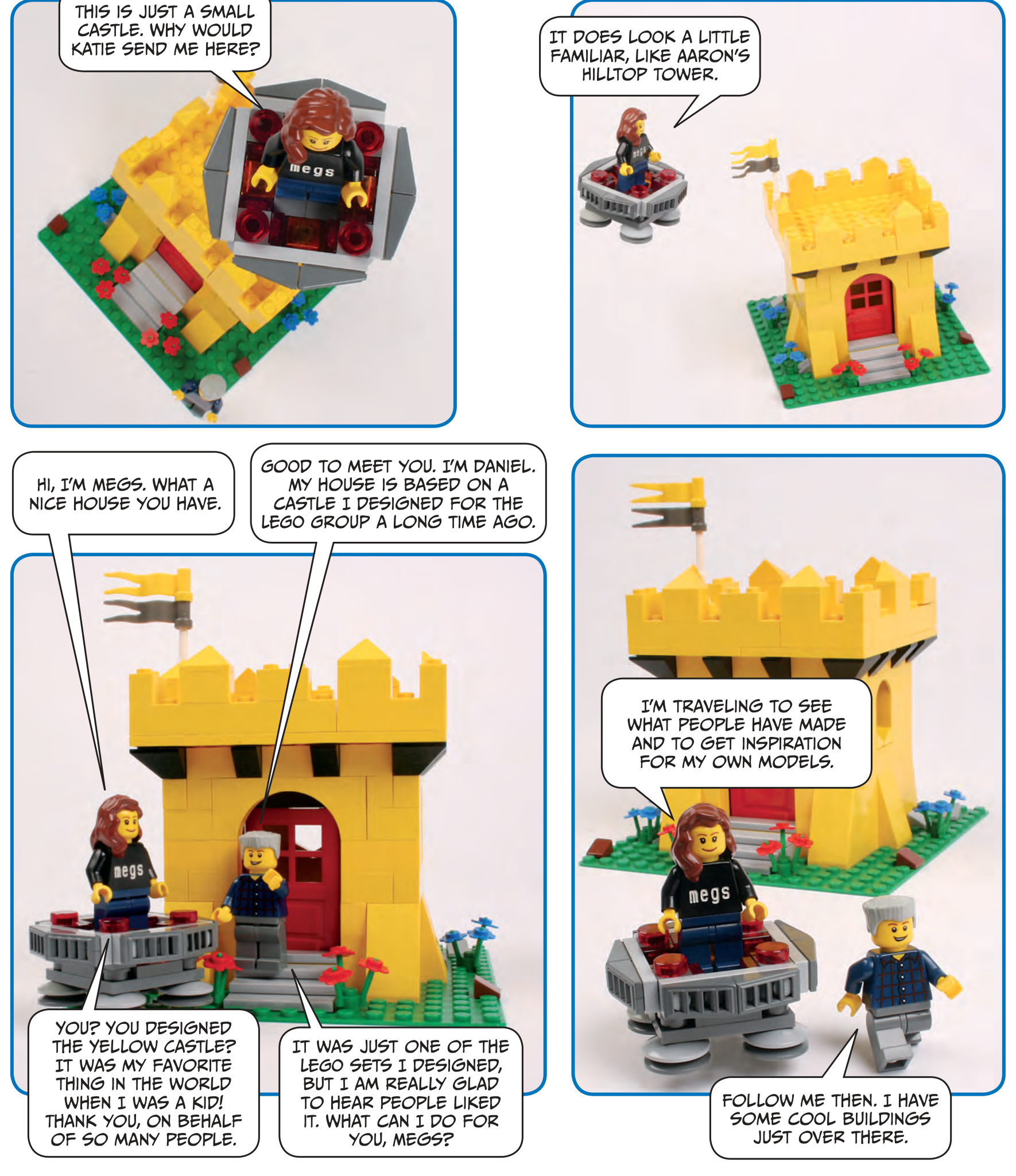
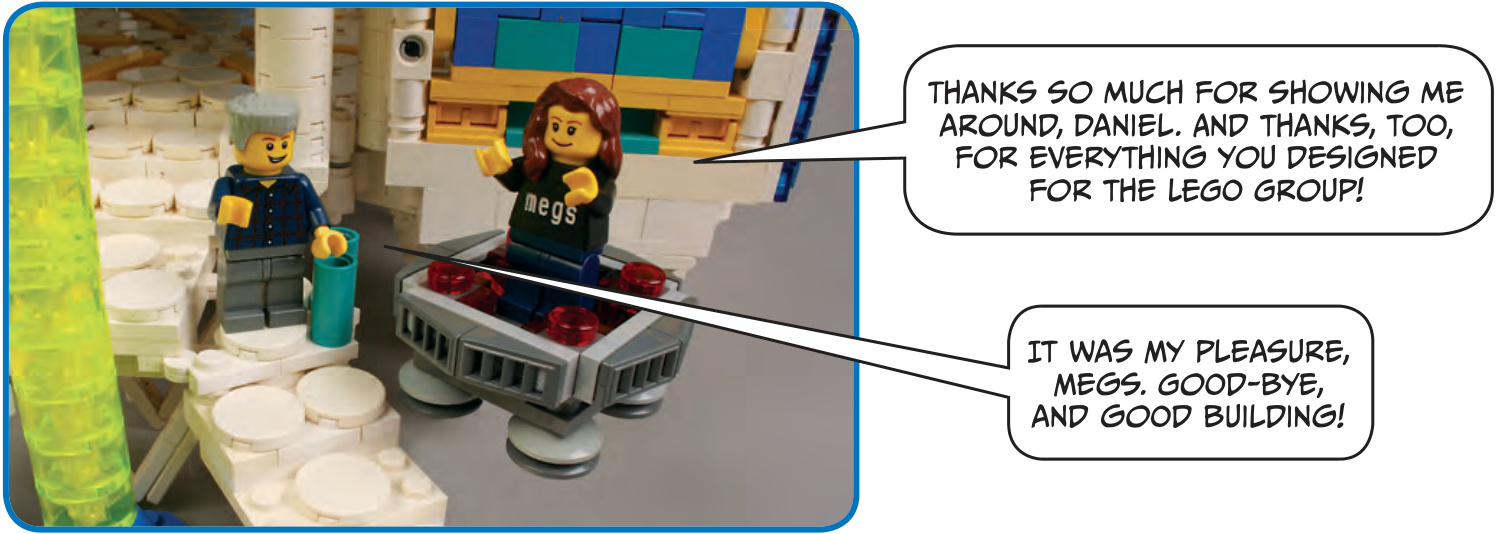
Daniel August Krentz

Profession: Retired LEGO Designer Nationality: American/Danish
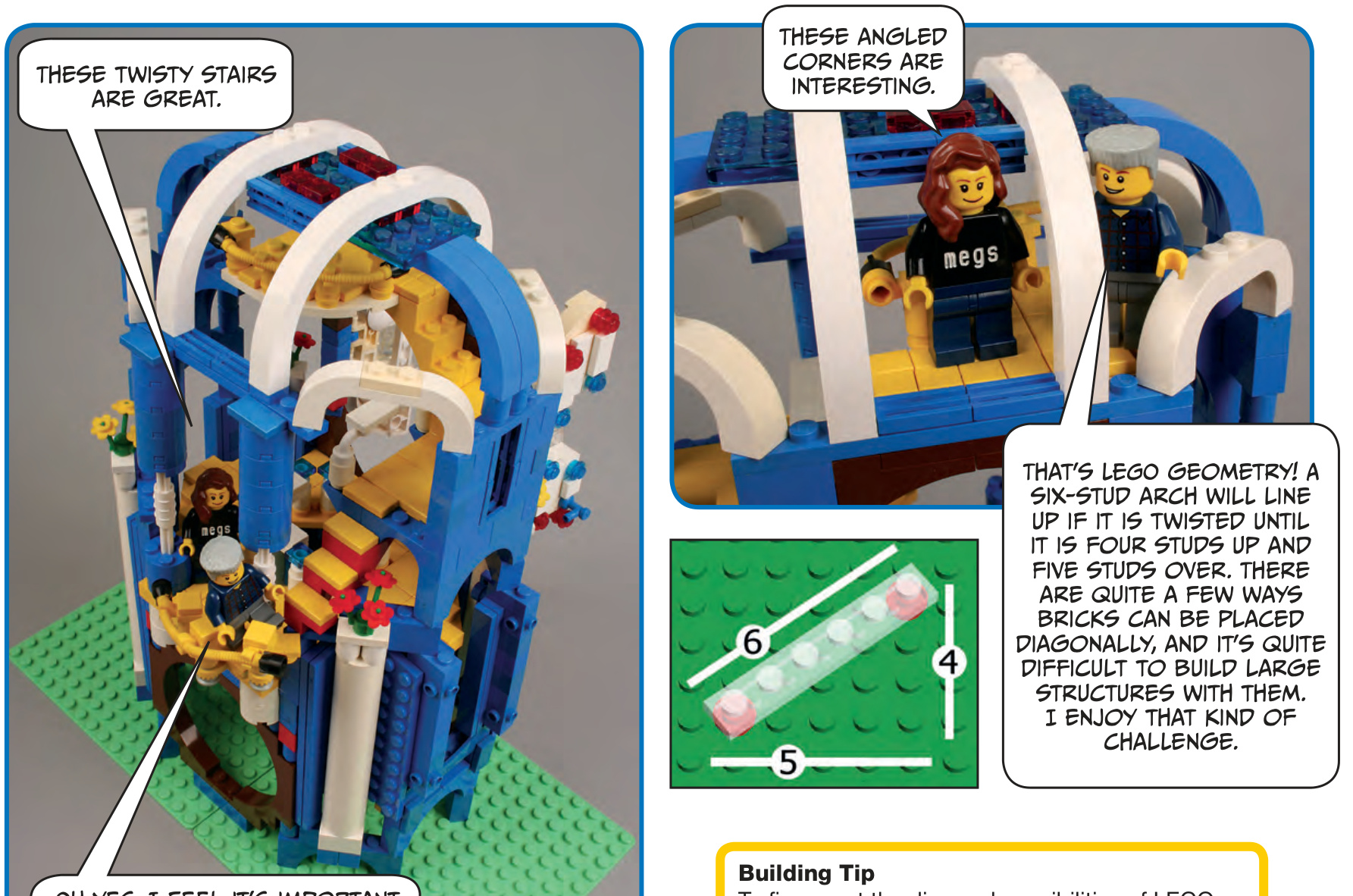
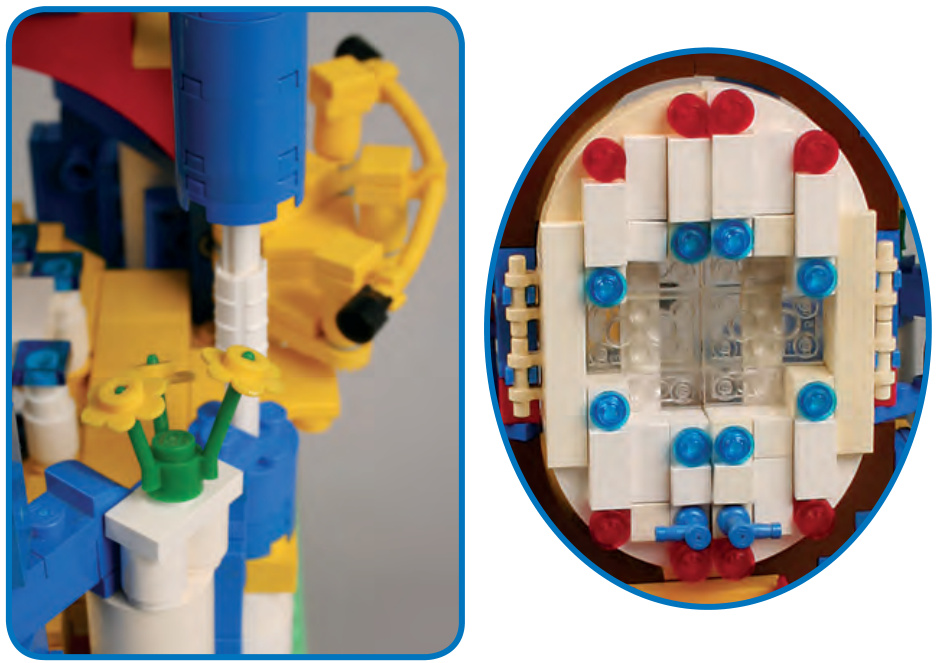
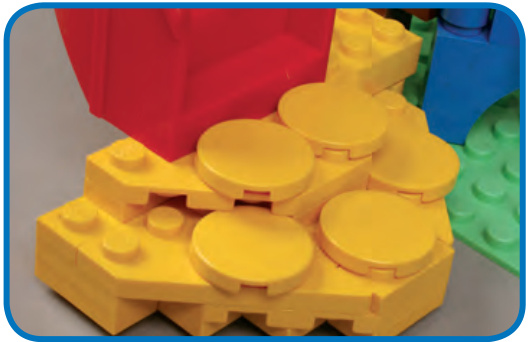
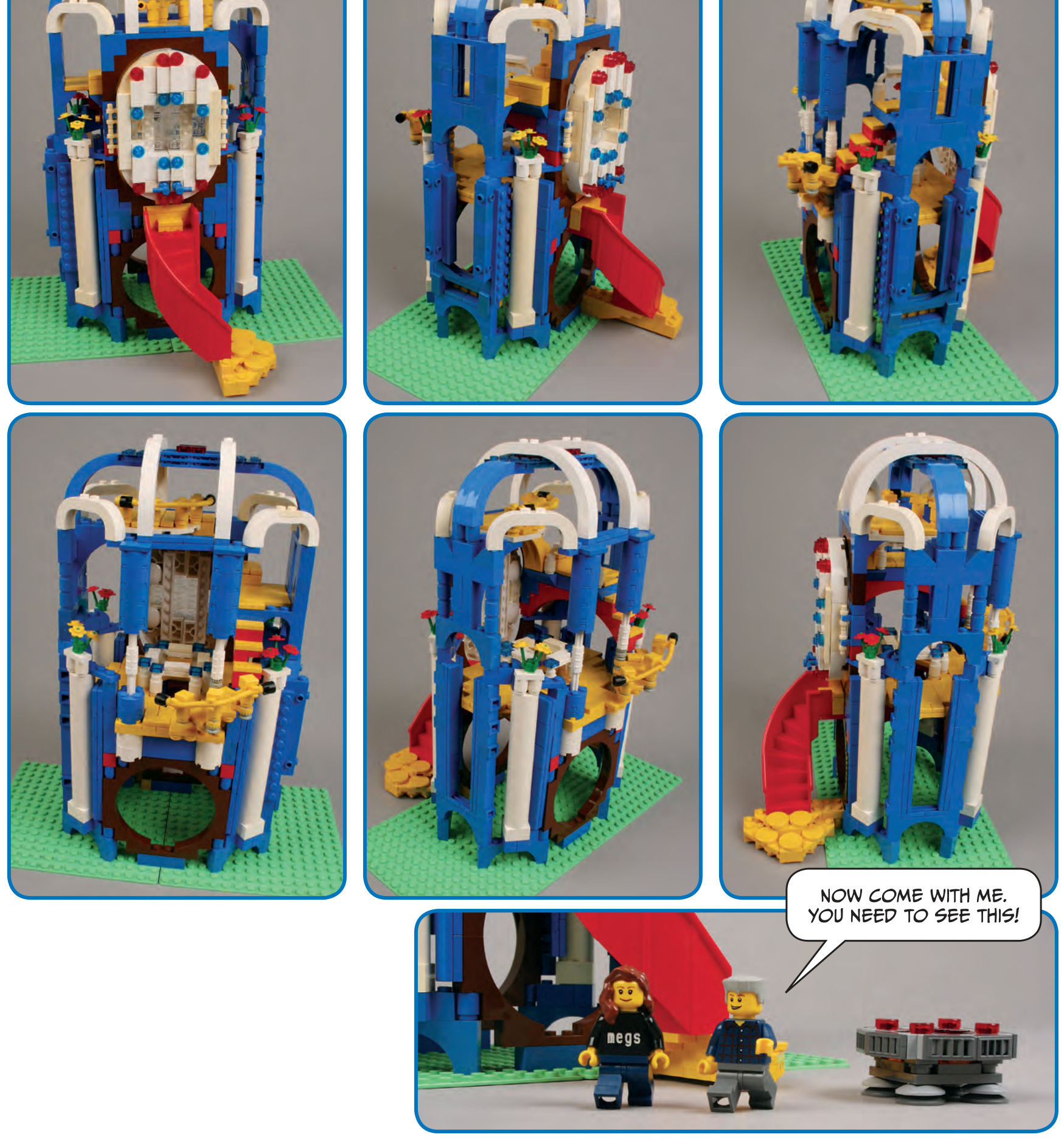
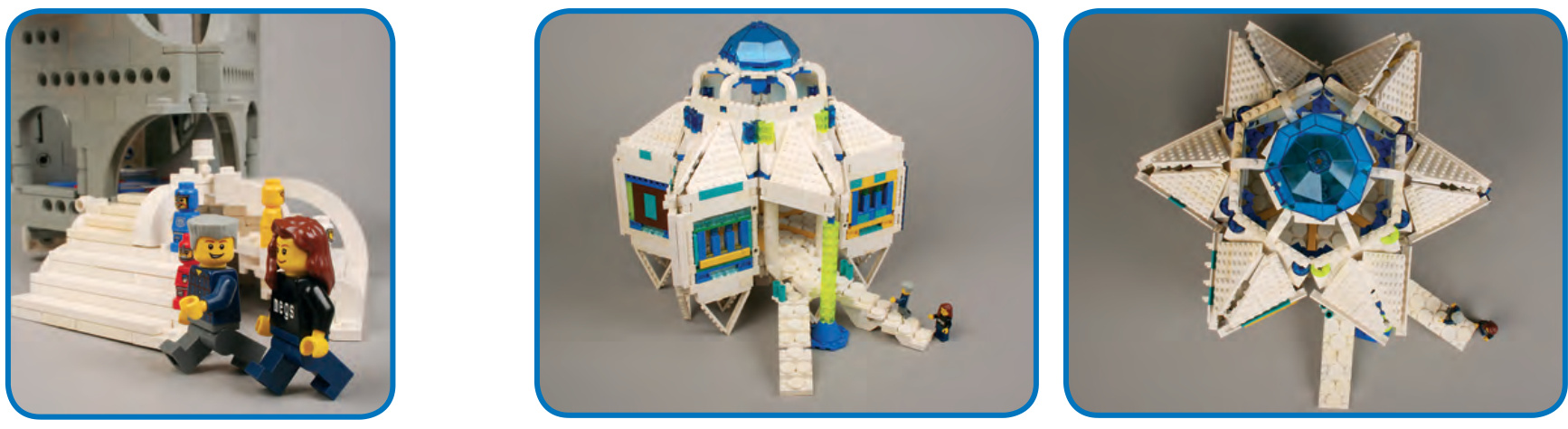
To fgure out the diagonal possibilities of LEGO bricks, take a brick (or a plate) and put any element on each end. Attach one end of the brick to a baseplate, and rotate it until it reaches a stud. Does it ft without being forced? Congratulations, you have discovered a usable building connection. To create a smooth surface between your connection points, cover the exposed studs with tiles.
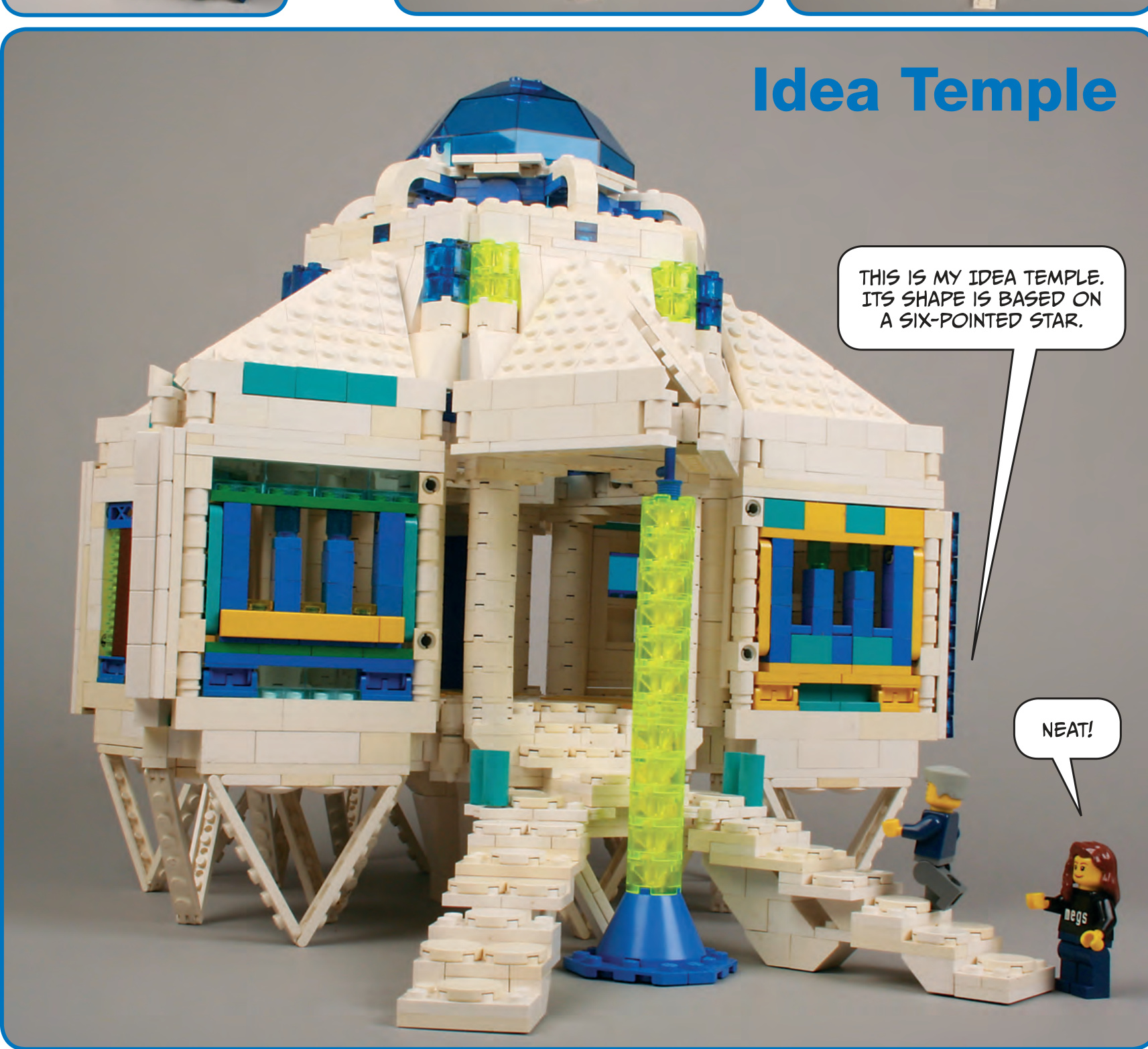
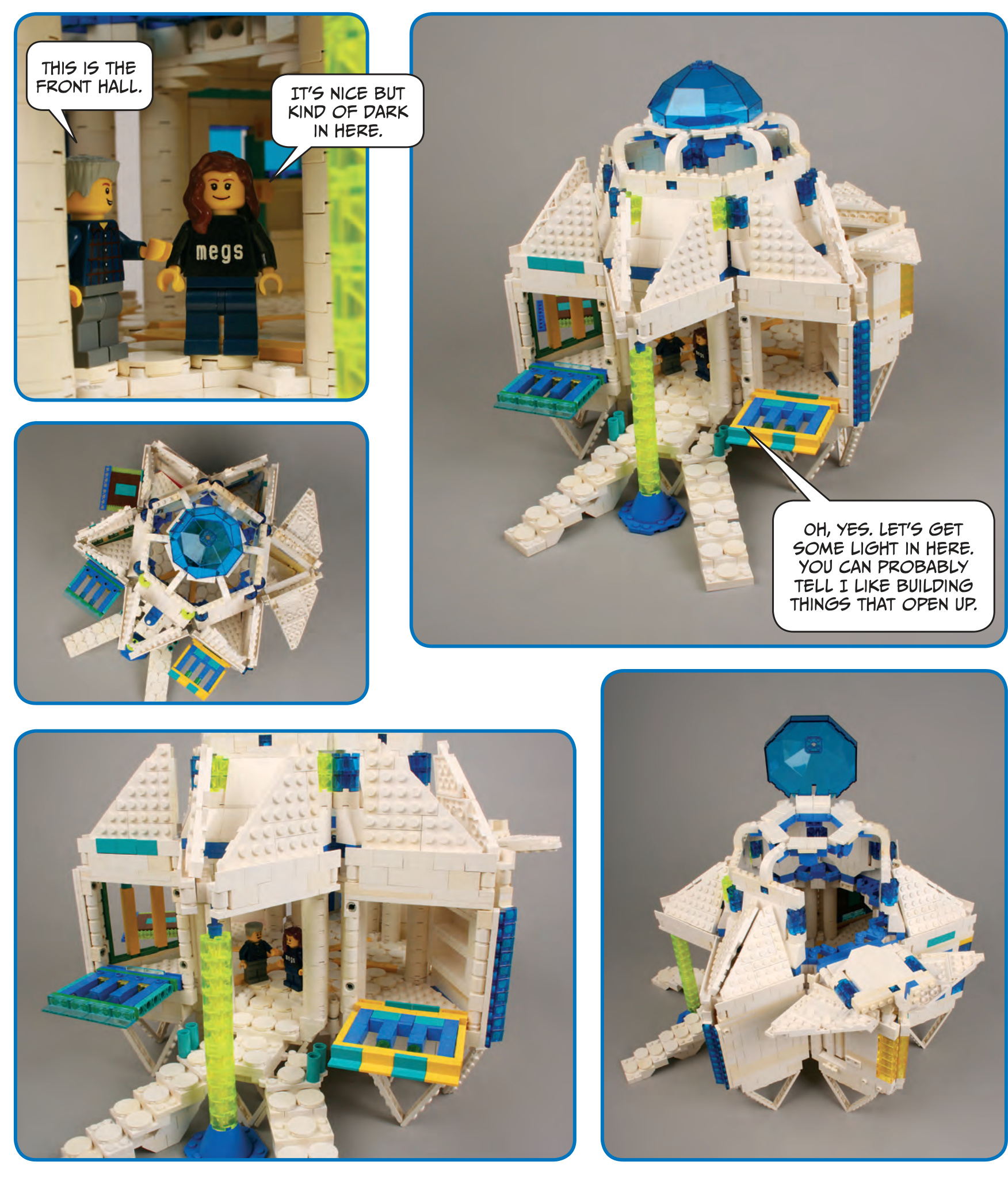
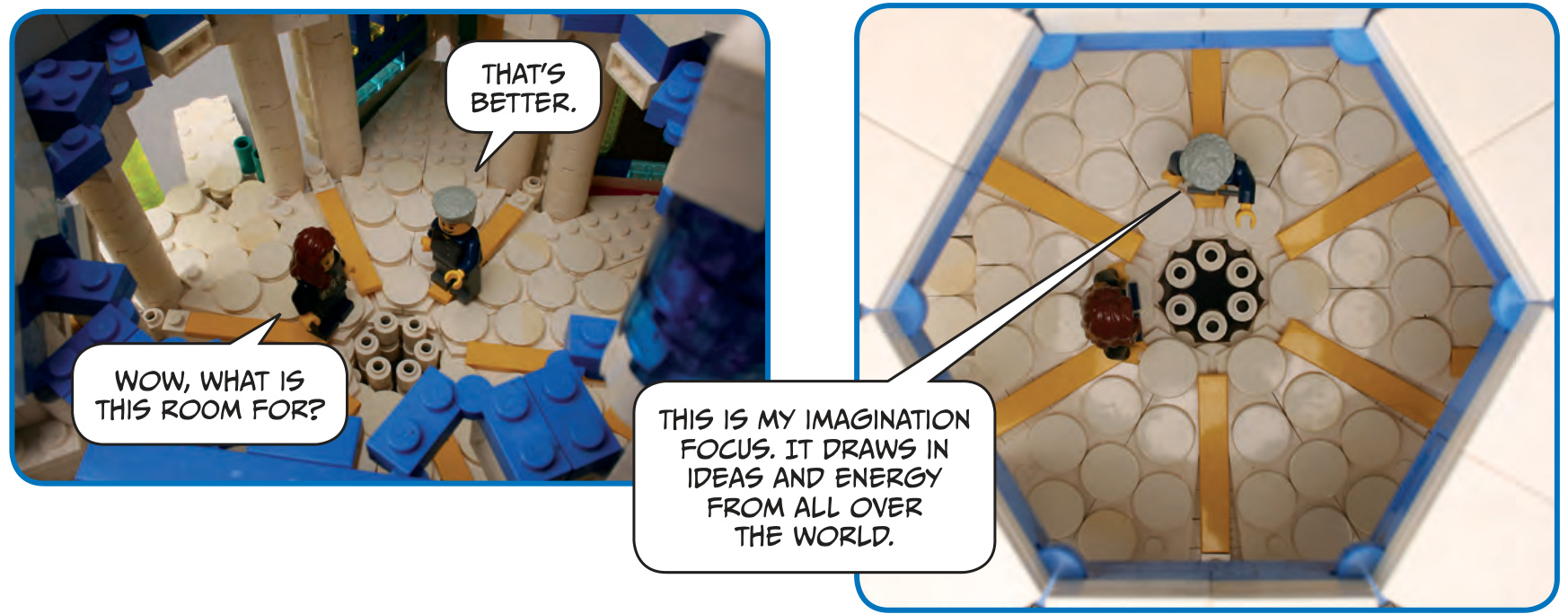
Building Journal
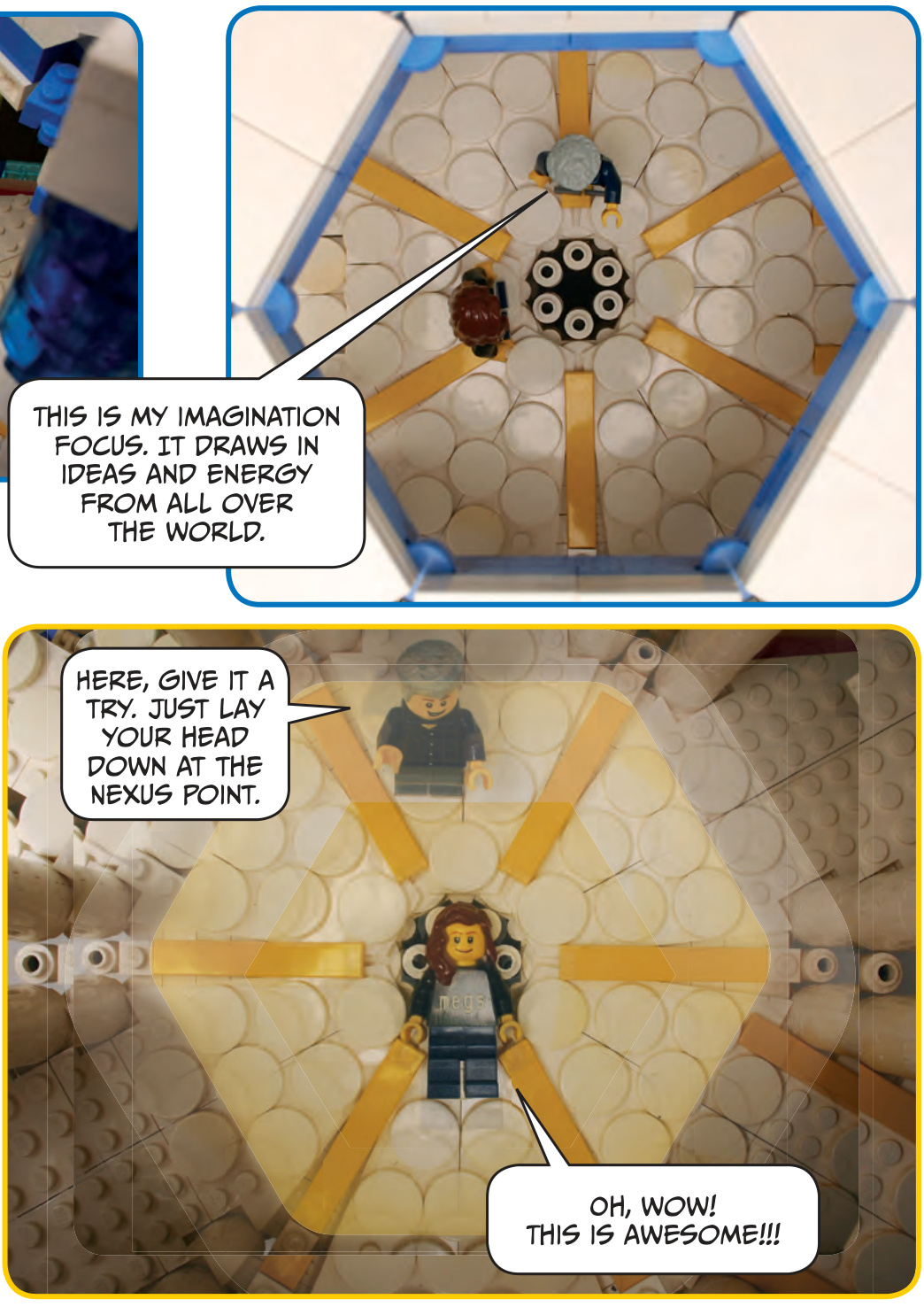
I can’t really describe what it was like in the Idea Nexus. I don’t even know how long I lay there. All of the places I had visited and all of the models I had seen suddenly merged together in my head. I felt my creativity levels boosted, and I knew I had to get back to my Idea Lab and Brickbot and start building.
THE END (for now)

WHATWILLYOUBUILD?
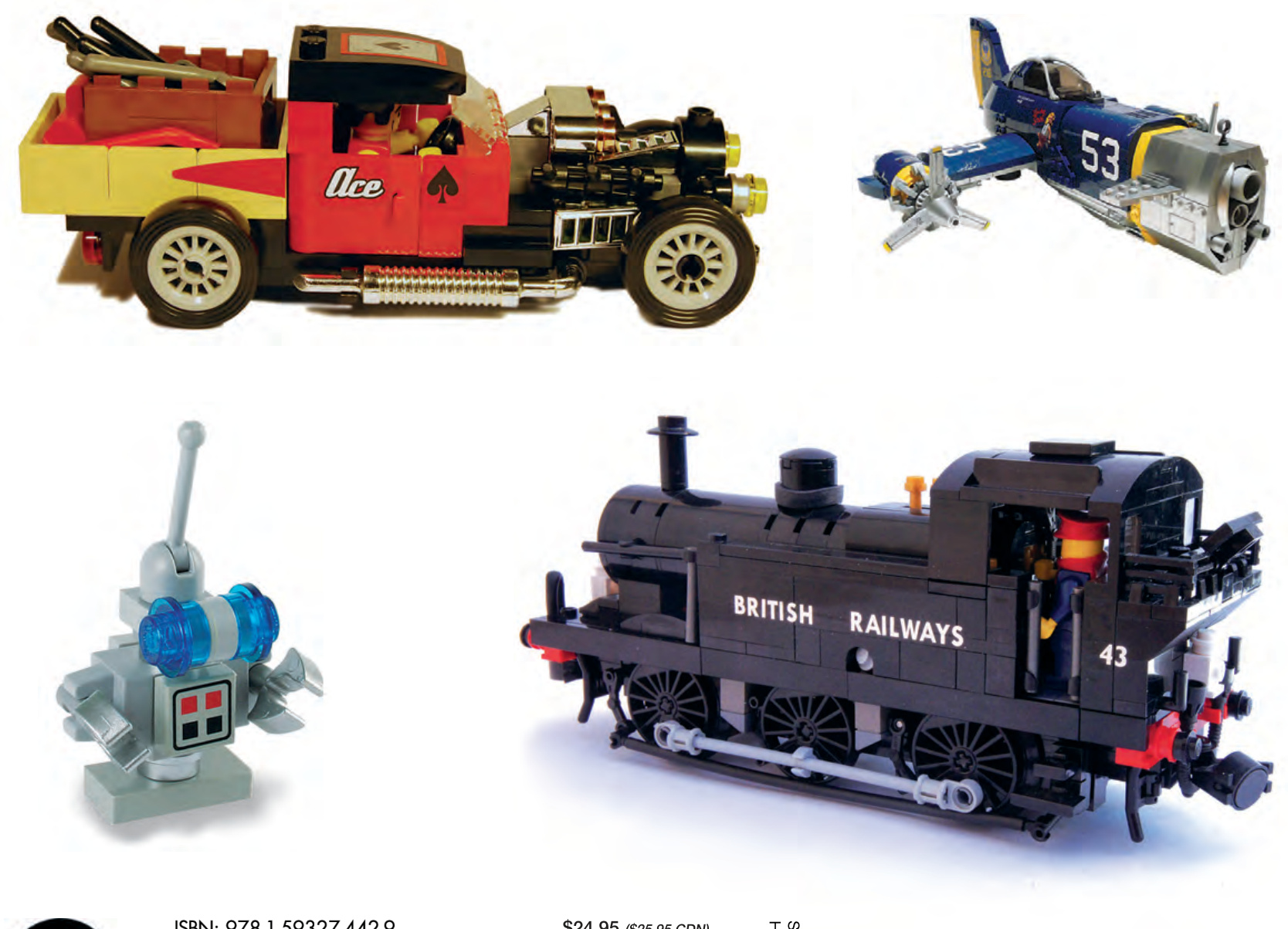
Unleash your imagination as you journey through the wide-ranging world of building with The LEGO Adventure Book. This inspiring tour is filled with bright visuals, step-by-step breakdowns of 25 models, and nearly 2oo example models from the world’s best builders. Learn to build robots, trains, medieval villages, spaceships, airplanes, and much more. Whether you’re brand-new to LEGO or have been building for years, this book is sure to spark your imagination and motivate you to keep creating!
This book is not authorized or endorsed by the LEGO Group.
The LEGO® Adventure Book Robots, Planes, Cities & More!

Megan H. Rothrock
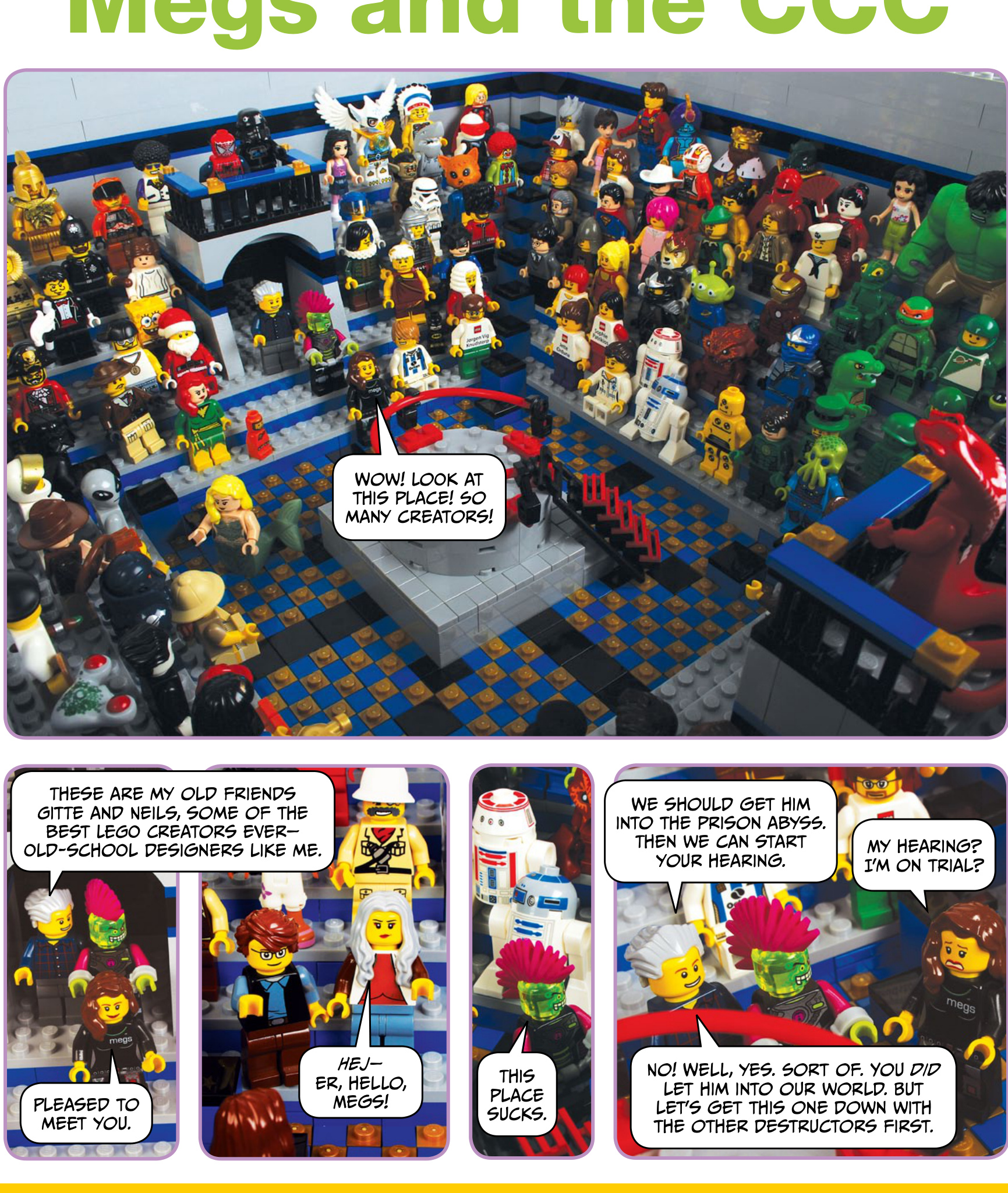
Megs and the CCC
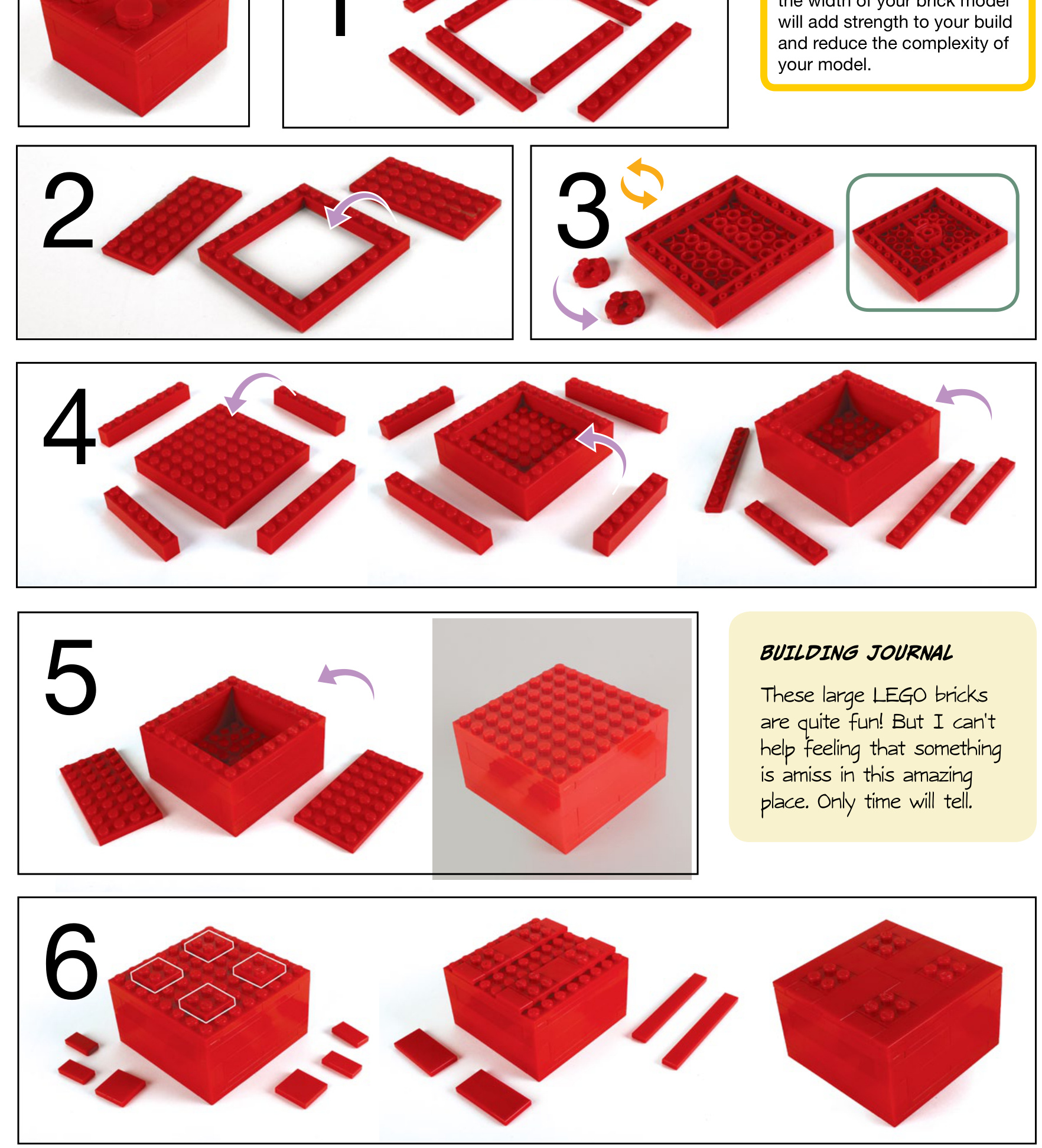
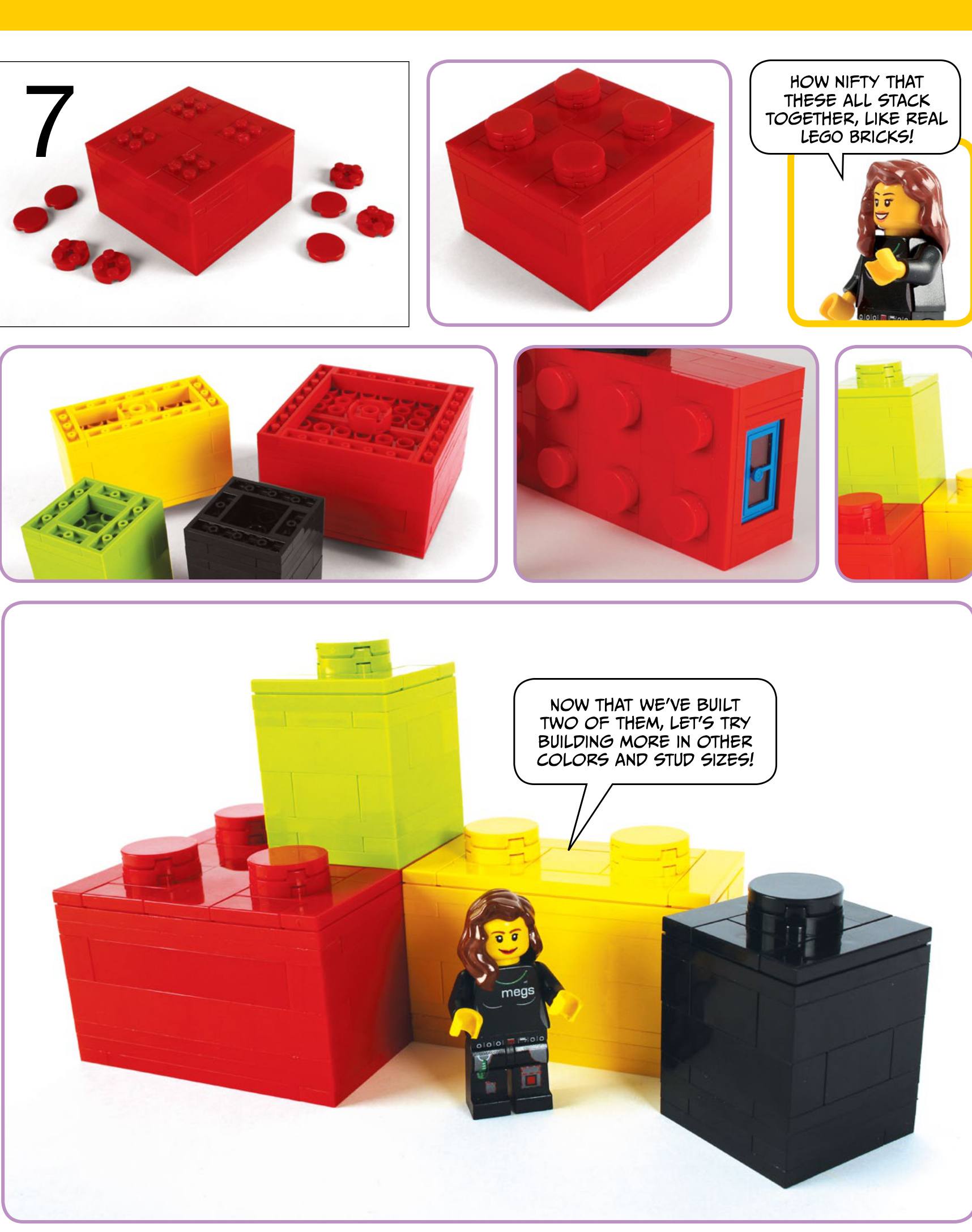
Giant LEGO Bricks
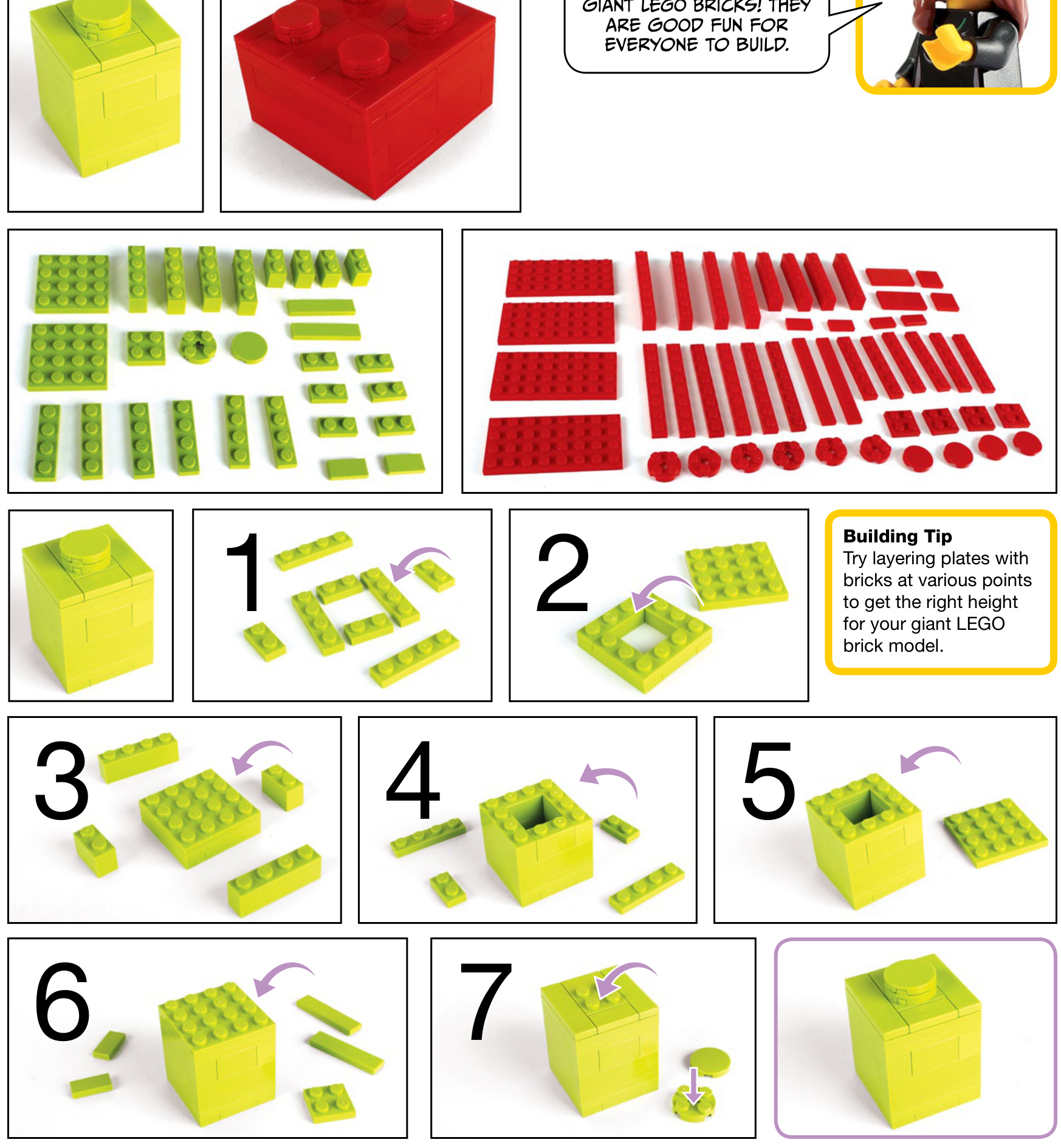
Building Tip
Using larger plates that span the width of your brick model
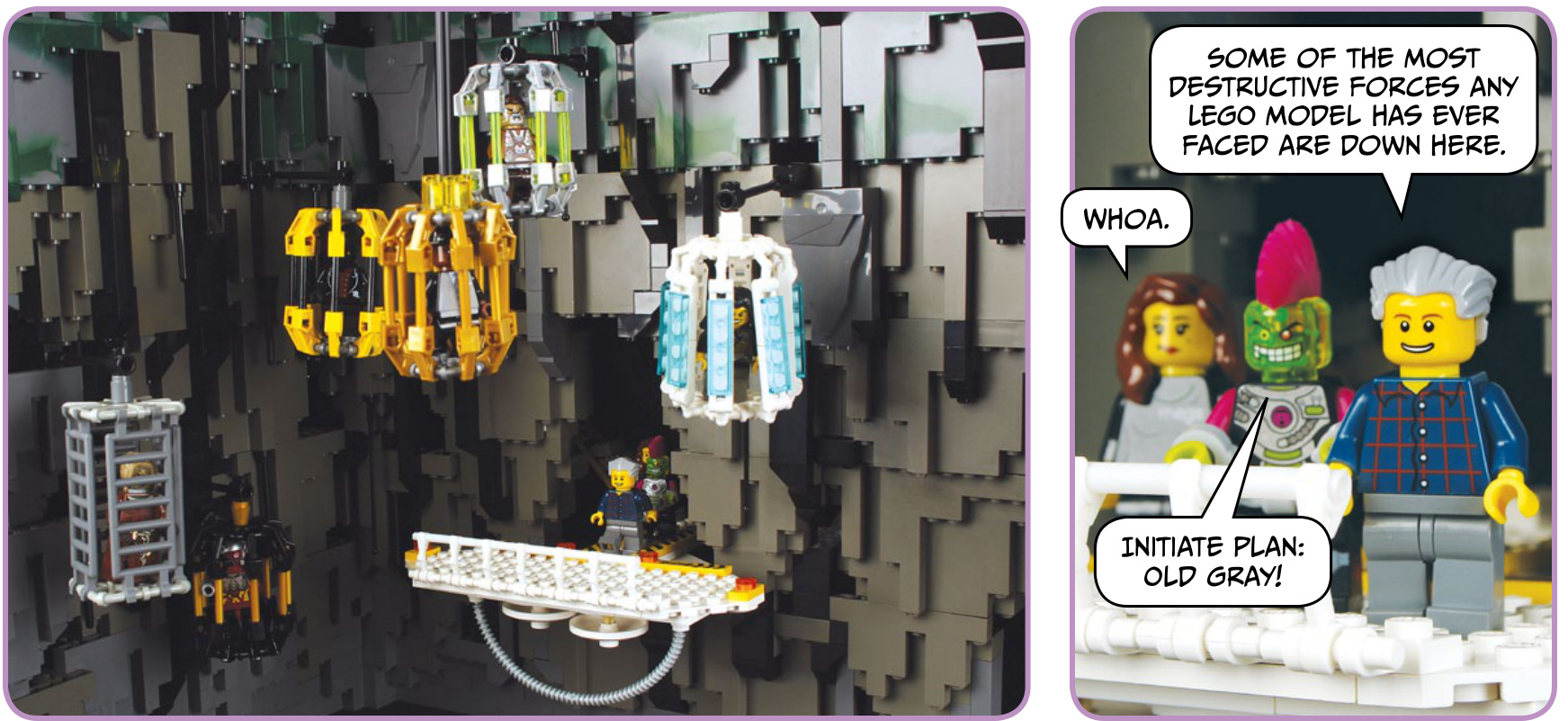
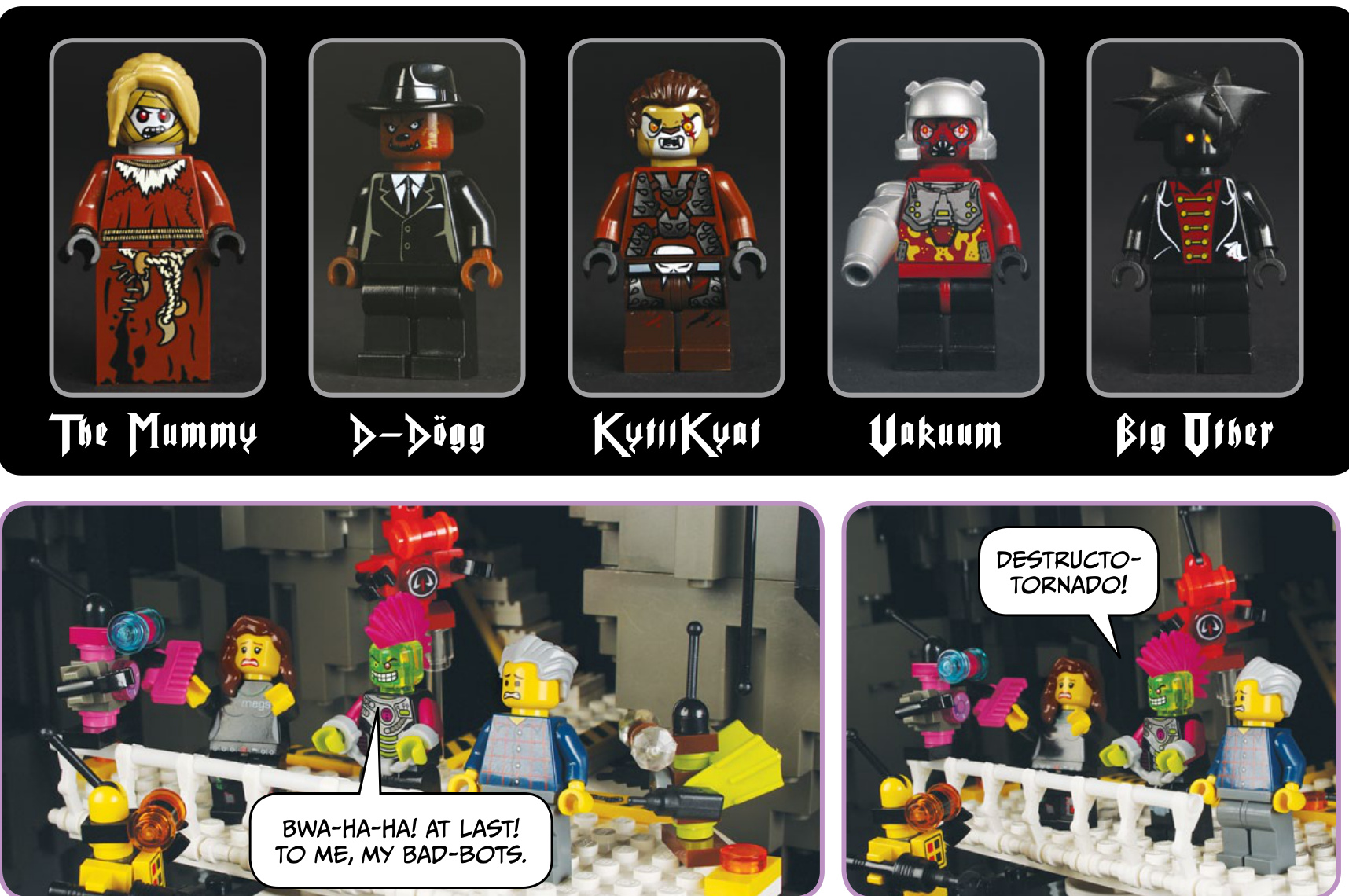
Oth er Destru ctors
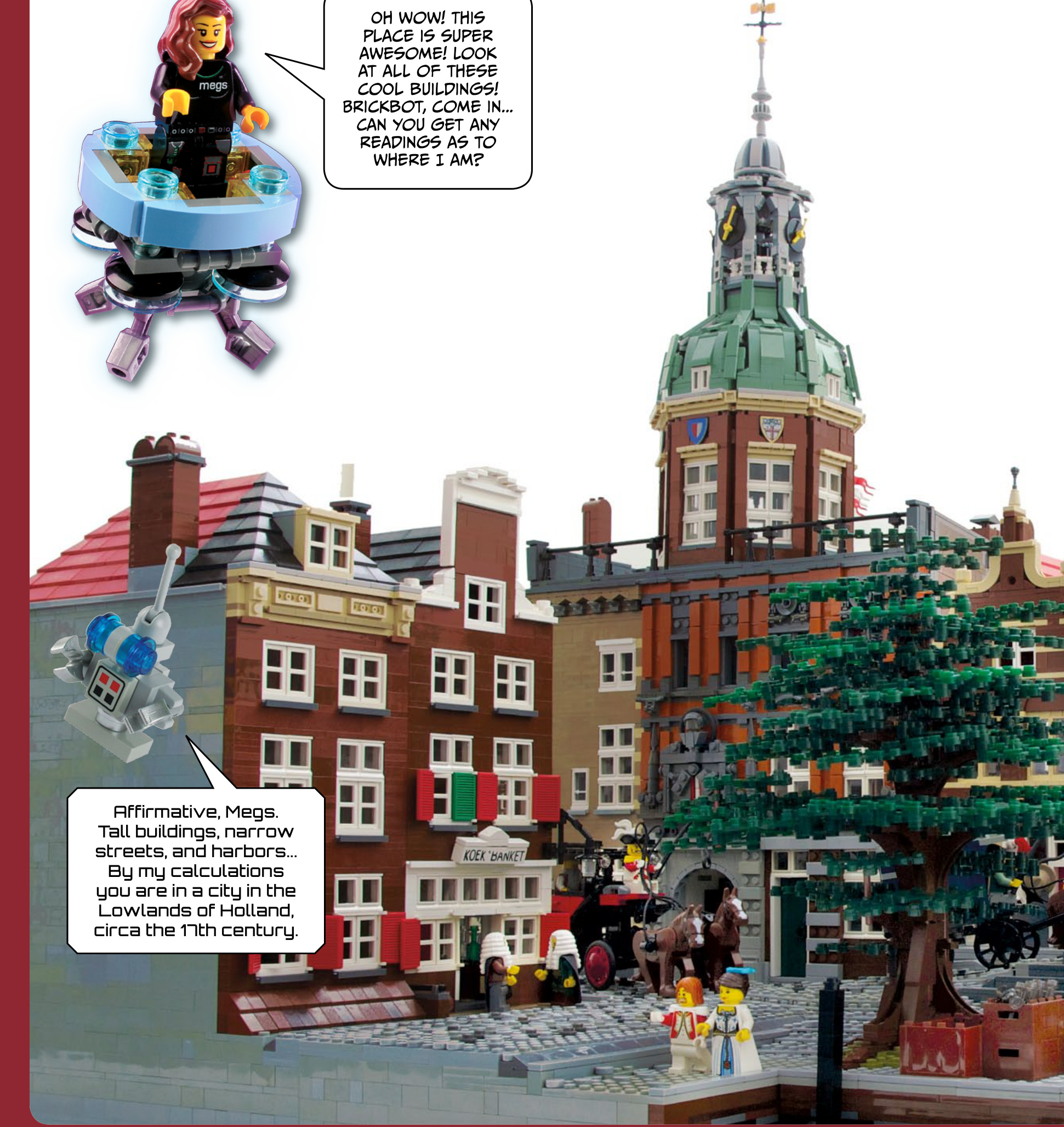
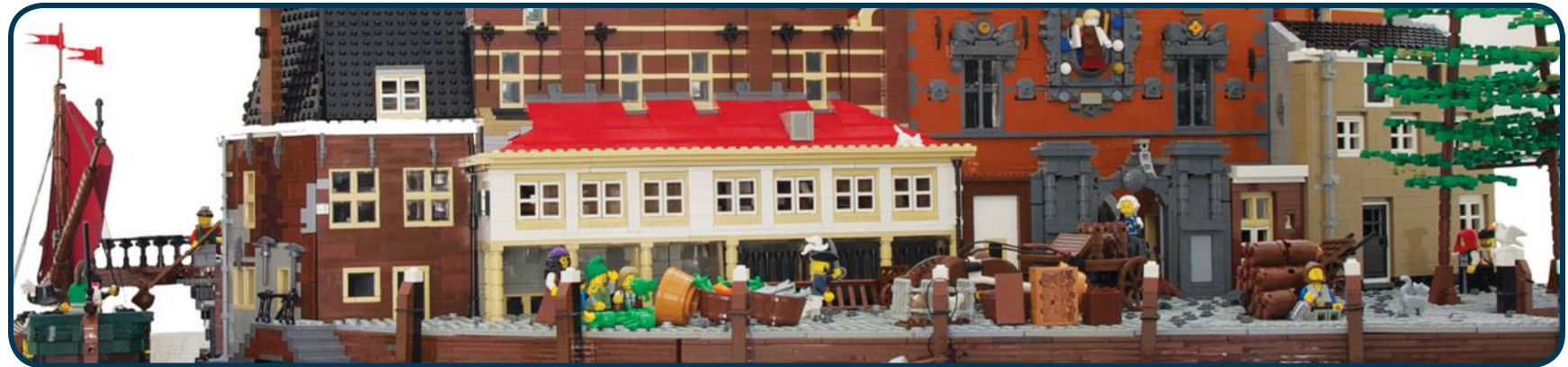
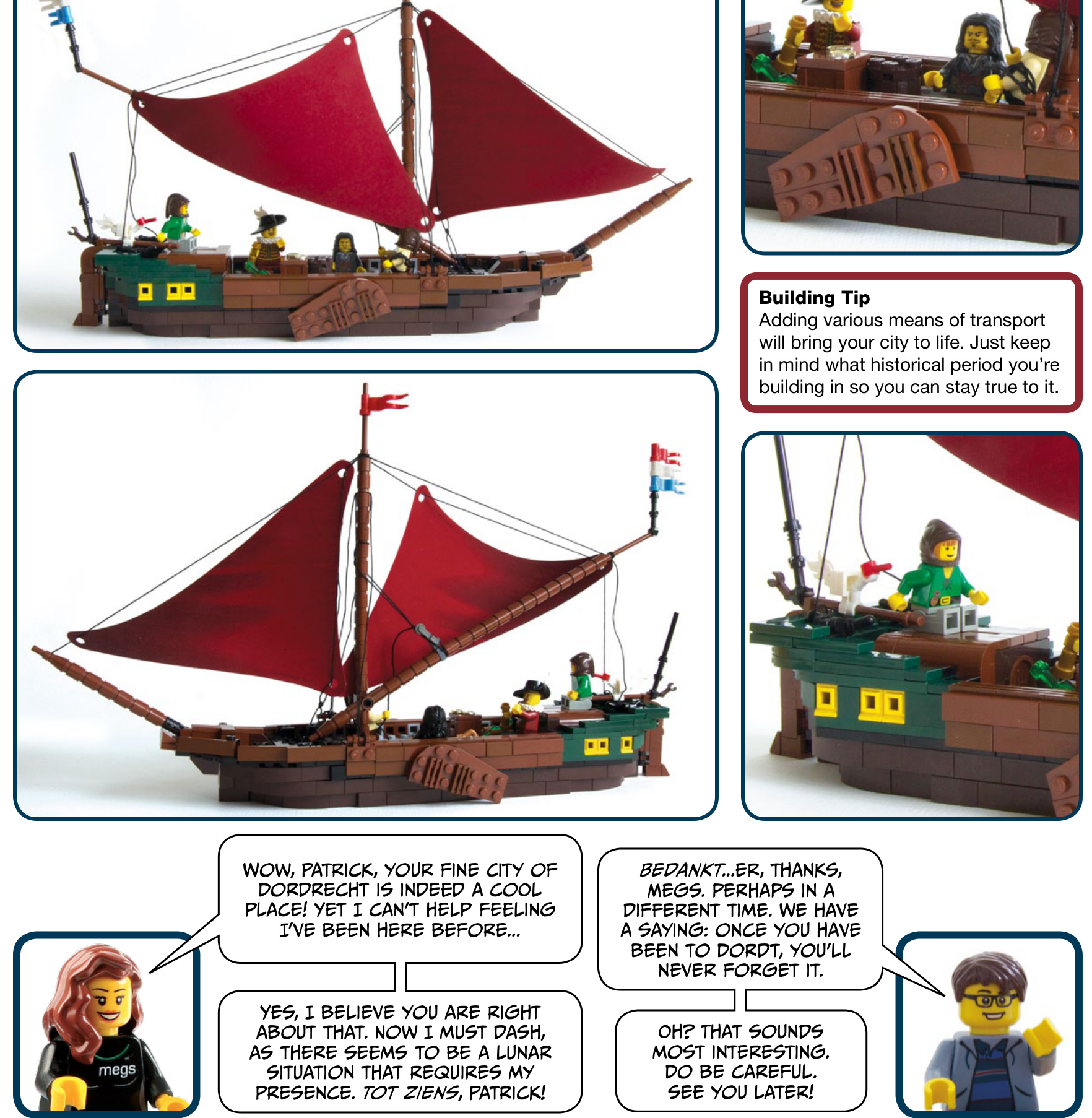
Great Times in Dordrecht

Patrick Bosman
Profession: Historic Preservation Advisor Nationality: Dutch Website: www.flickr.com/photos/patrick-bosman/
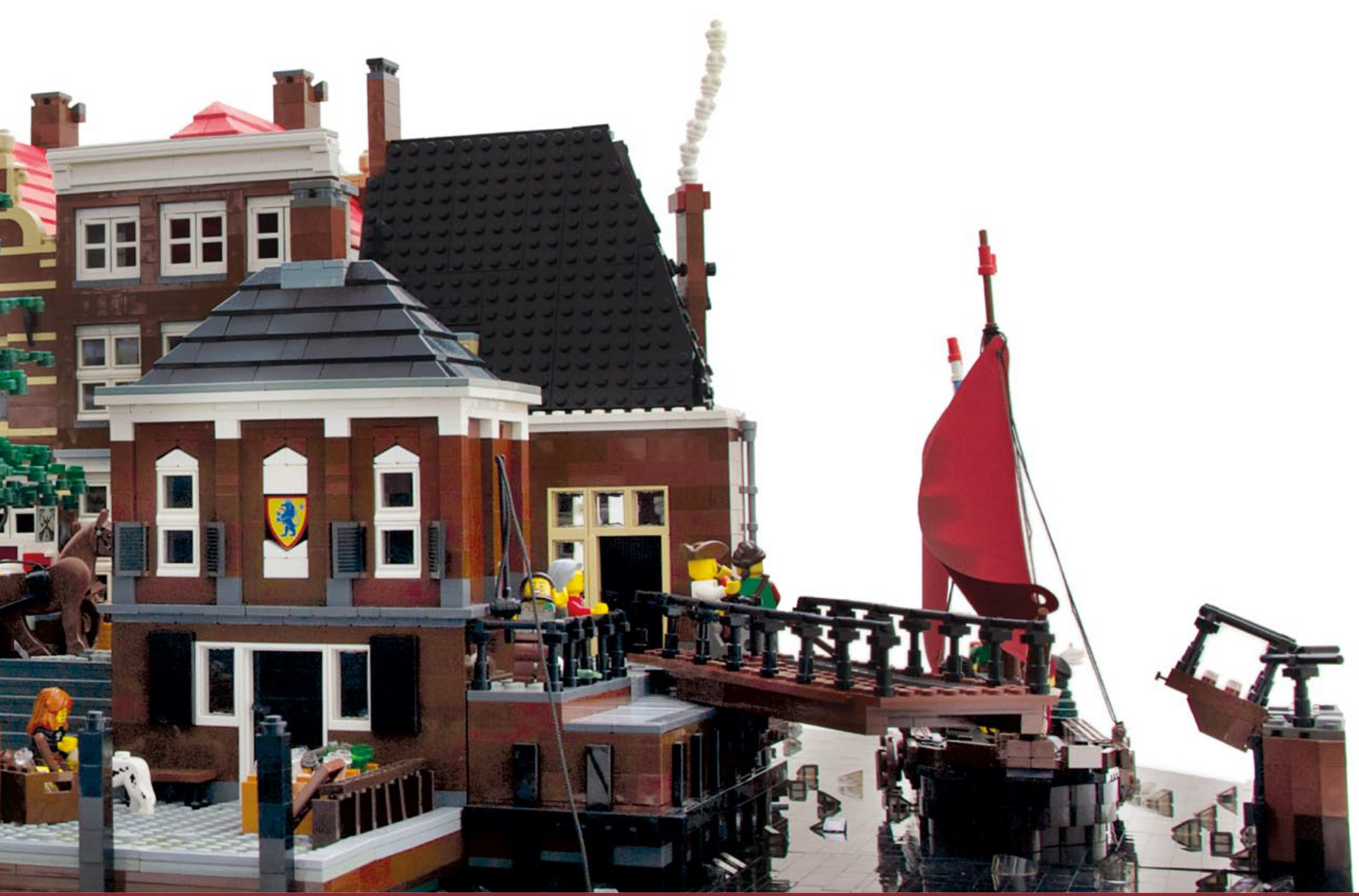
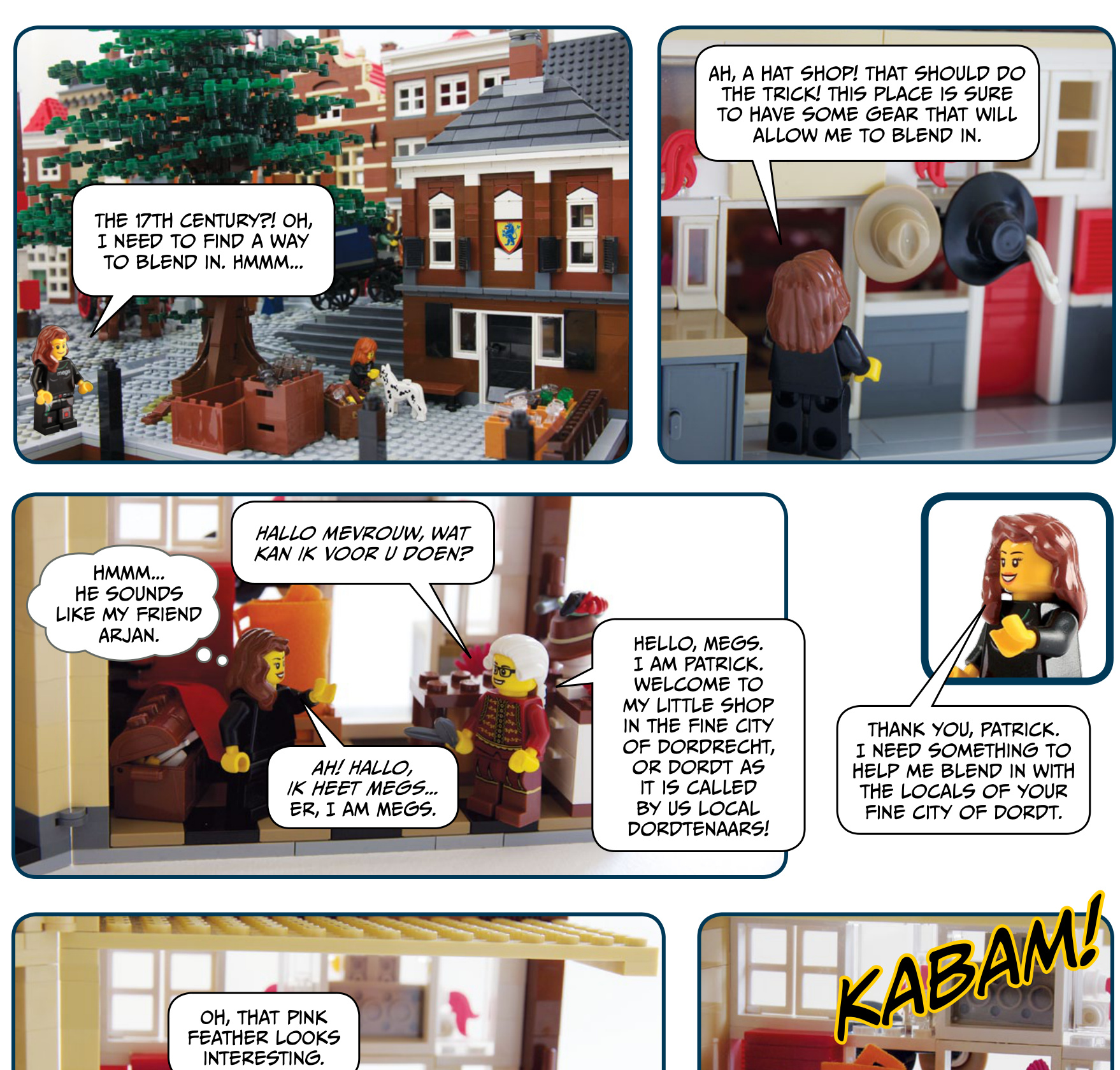
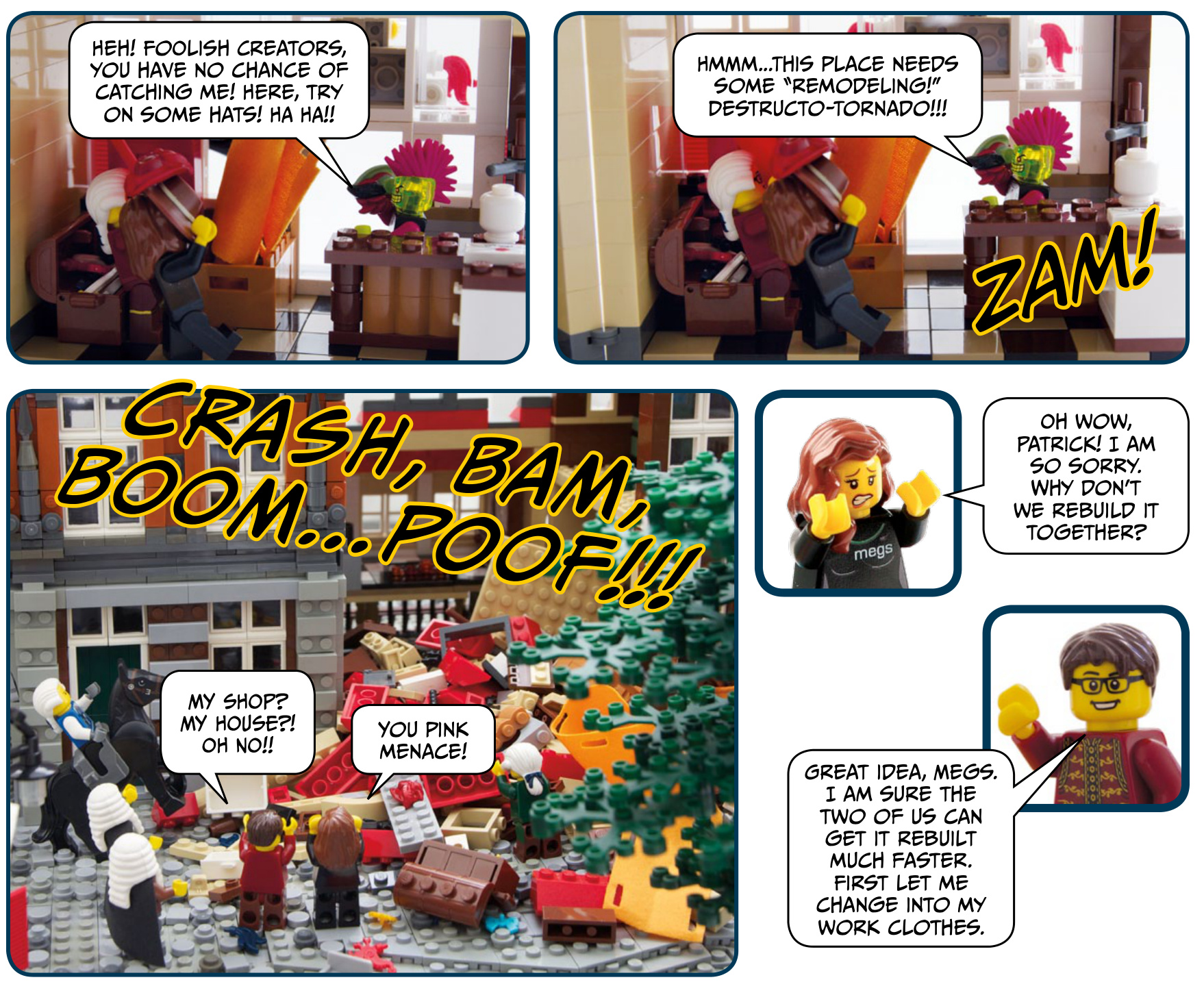
17th-Century Dutch House
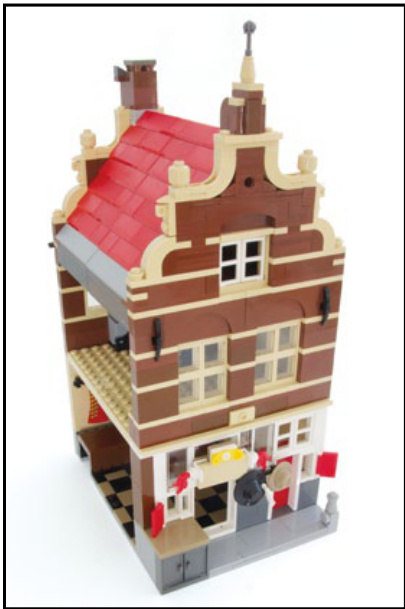
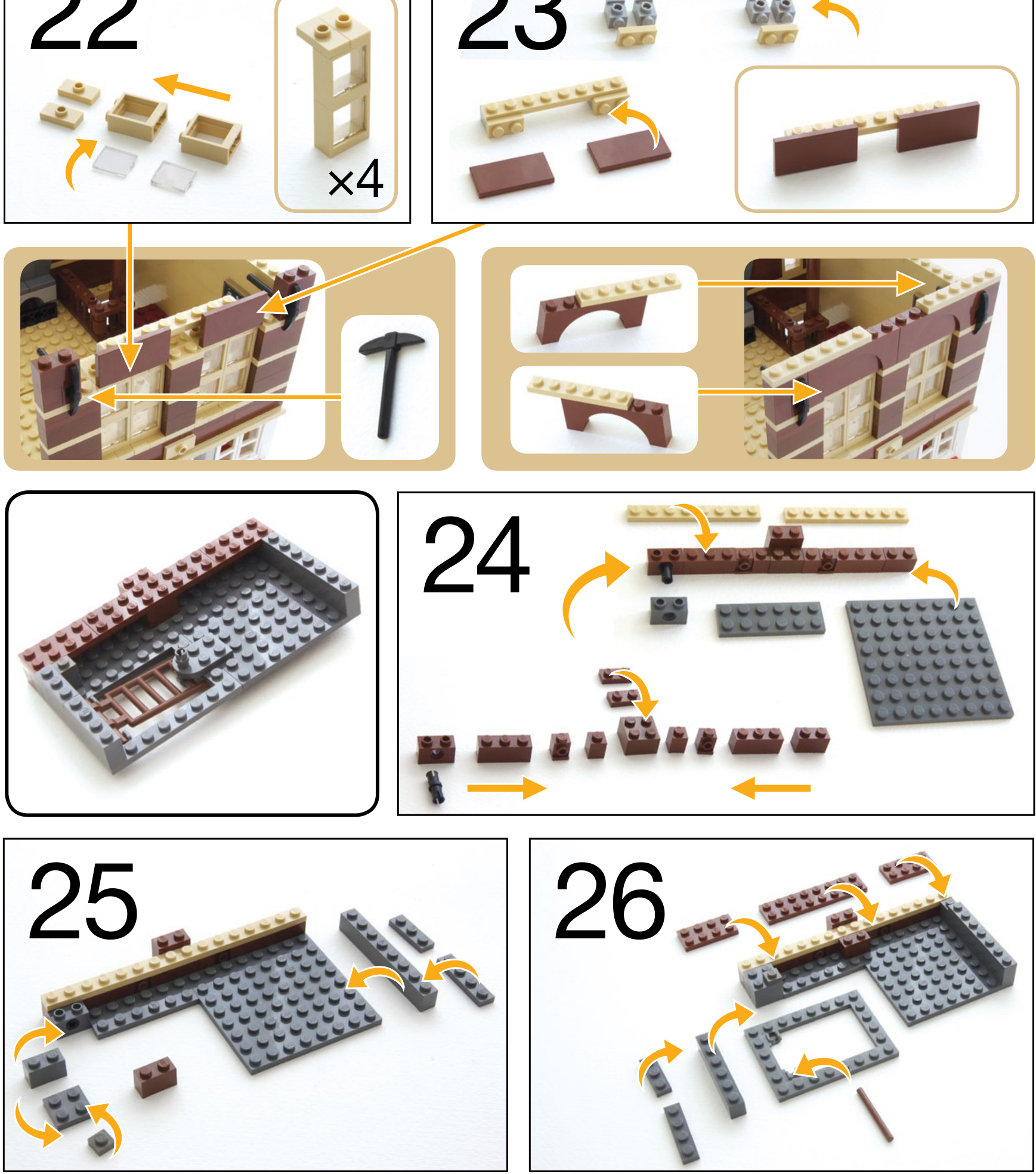
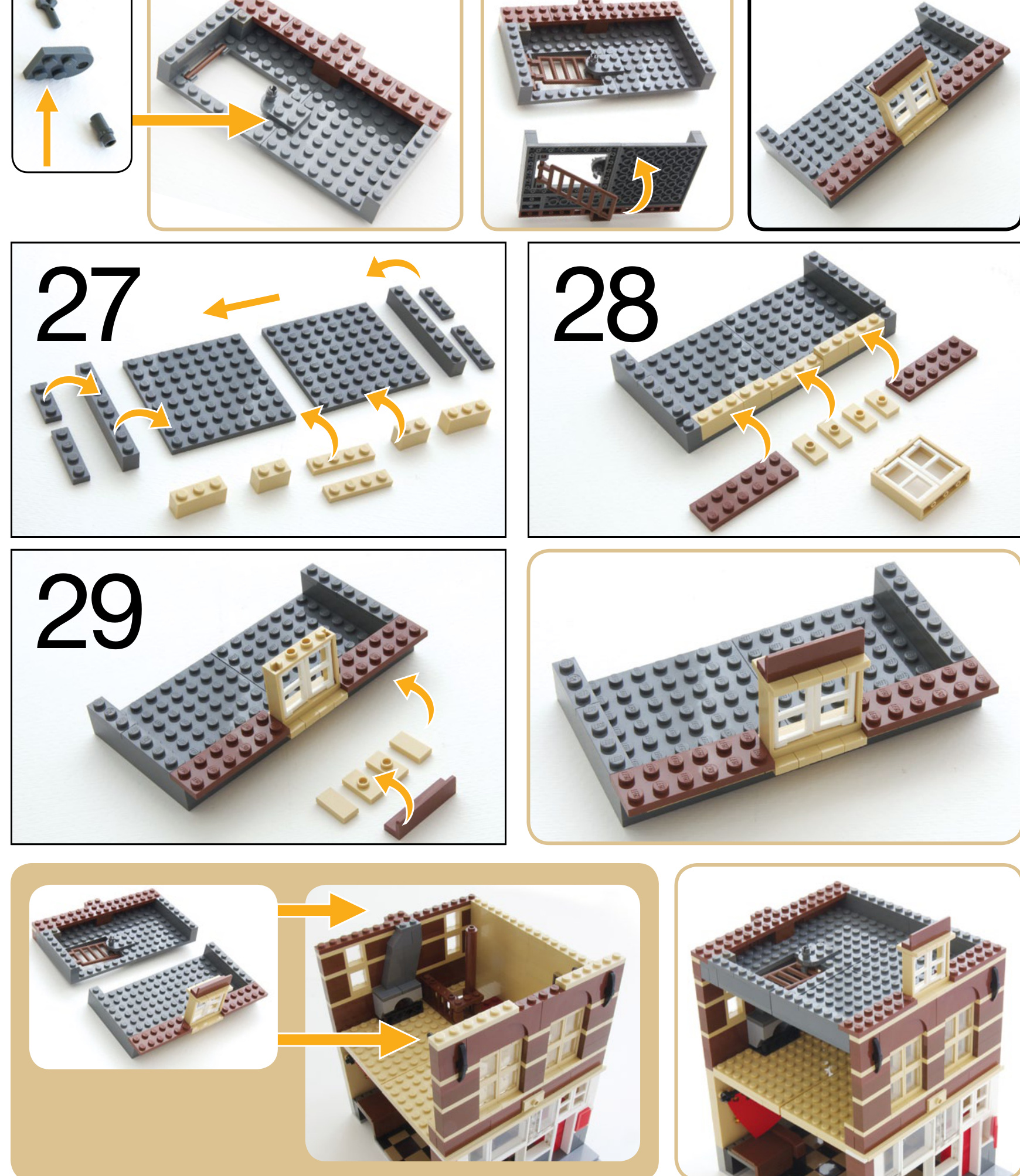
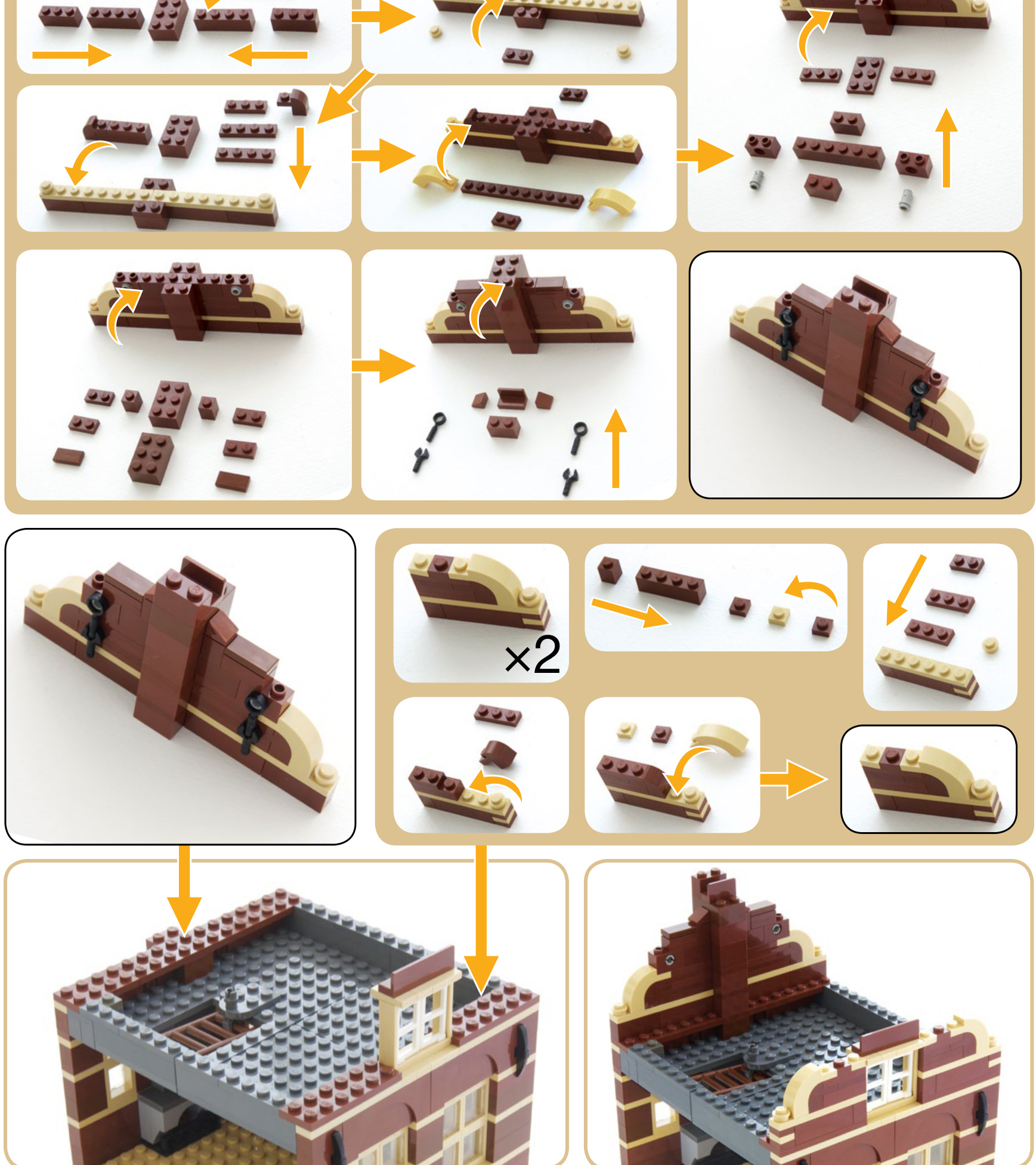
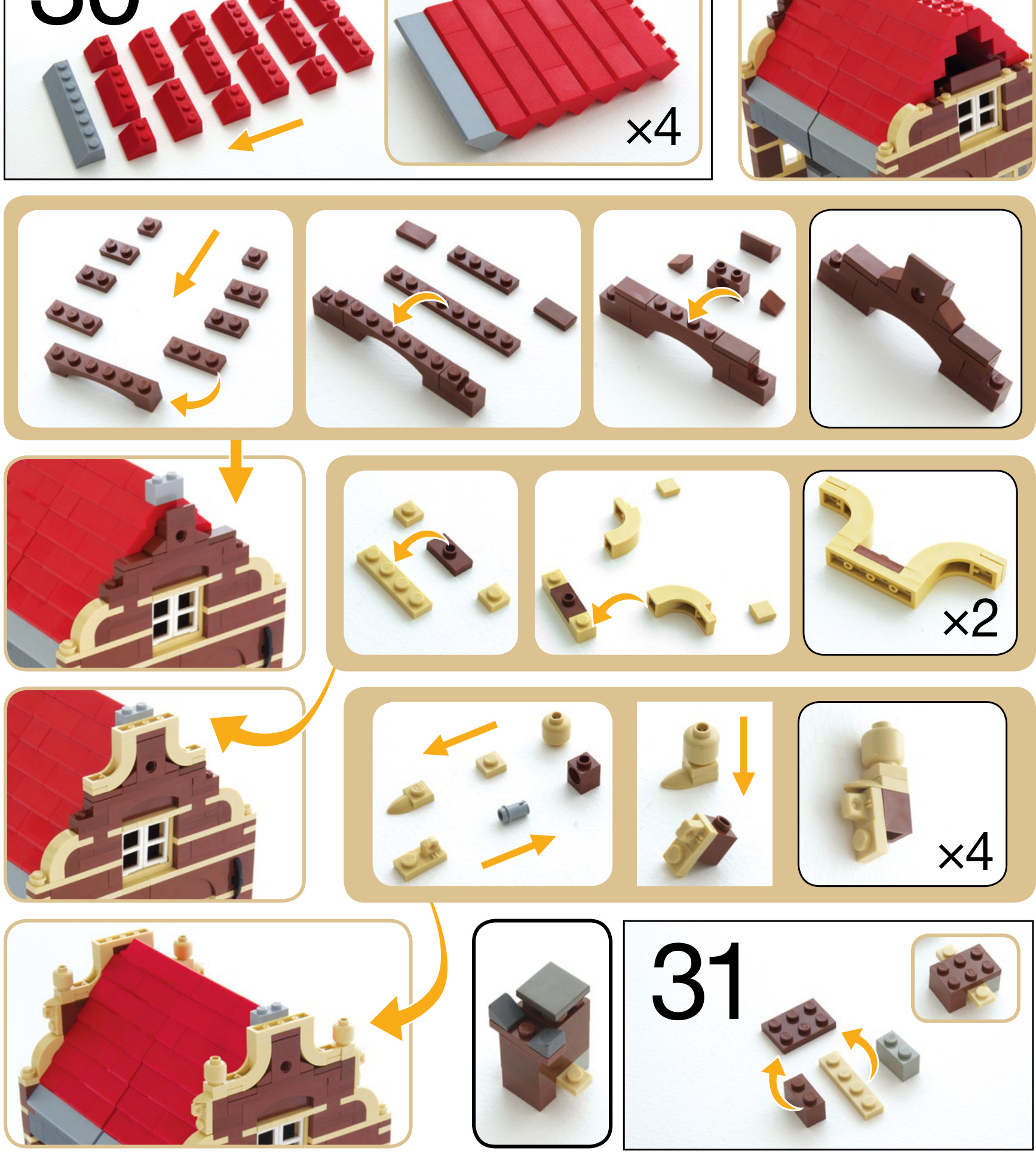
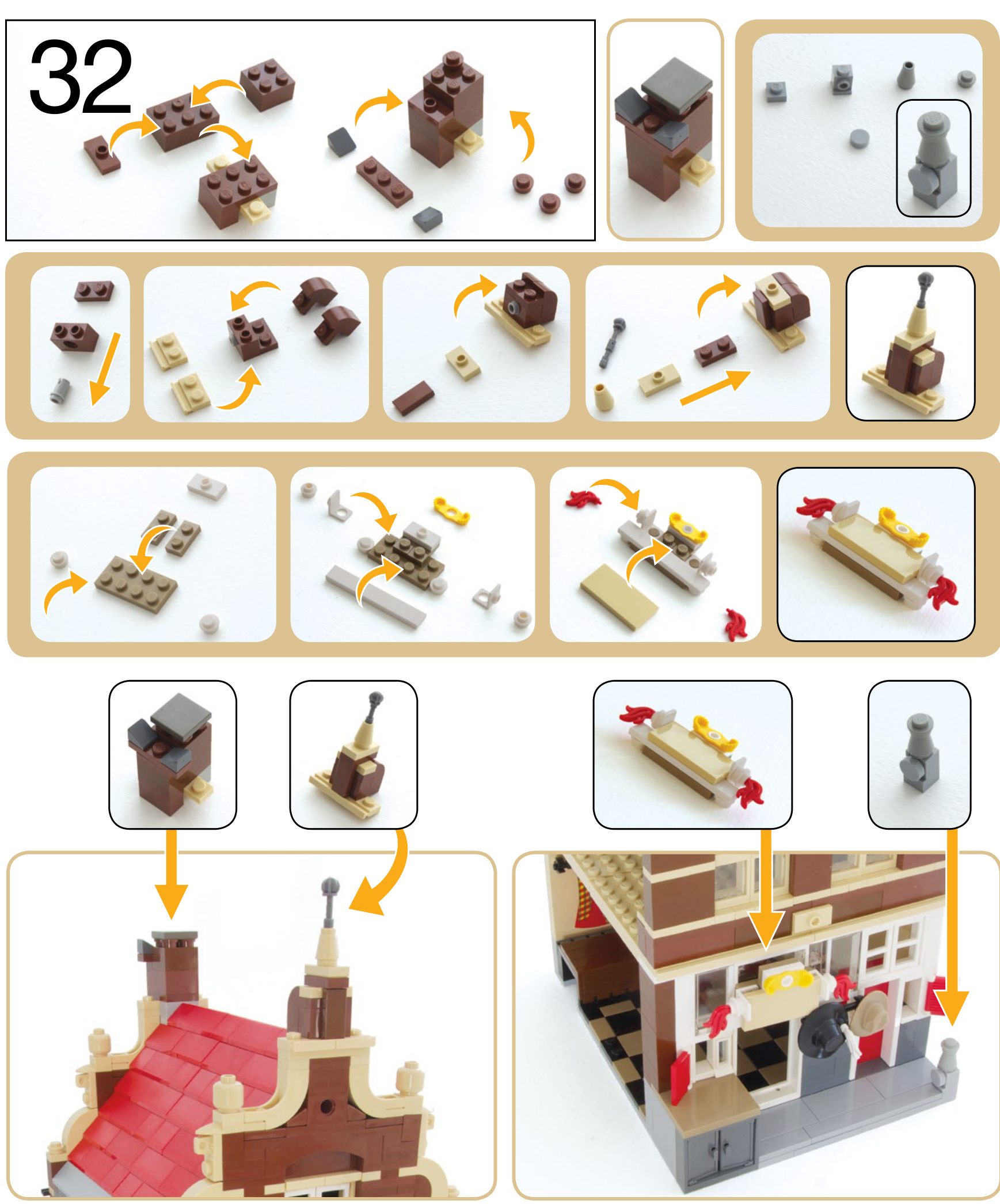
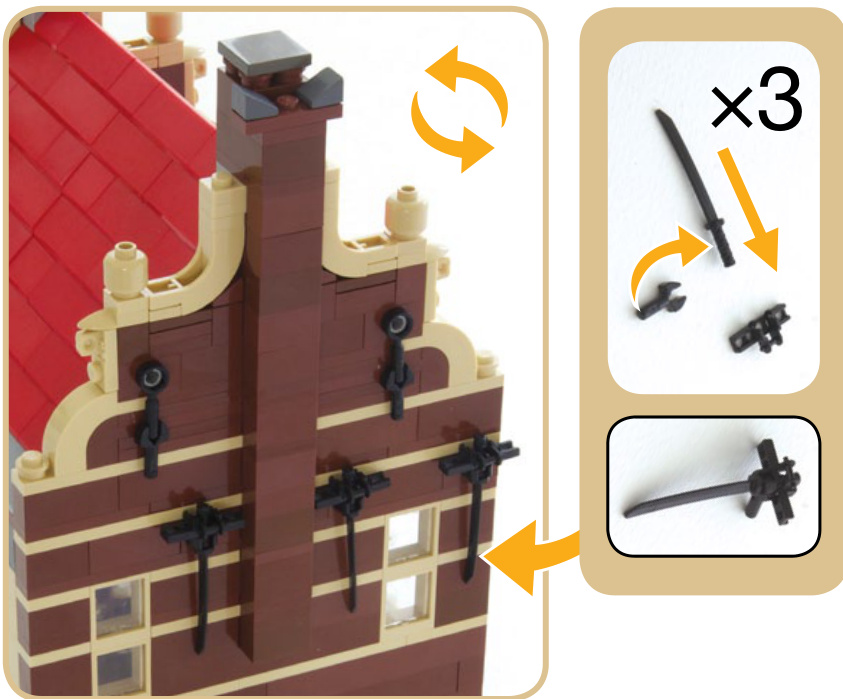
BUILDING JOURNAL
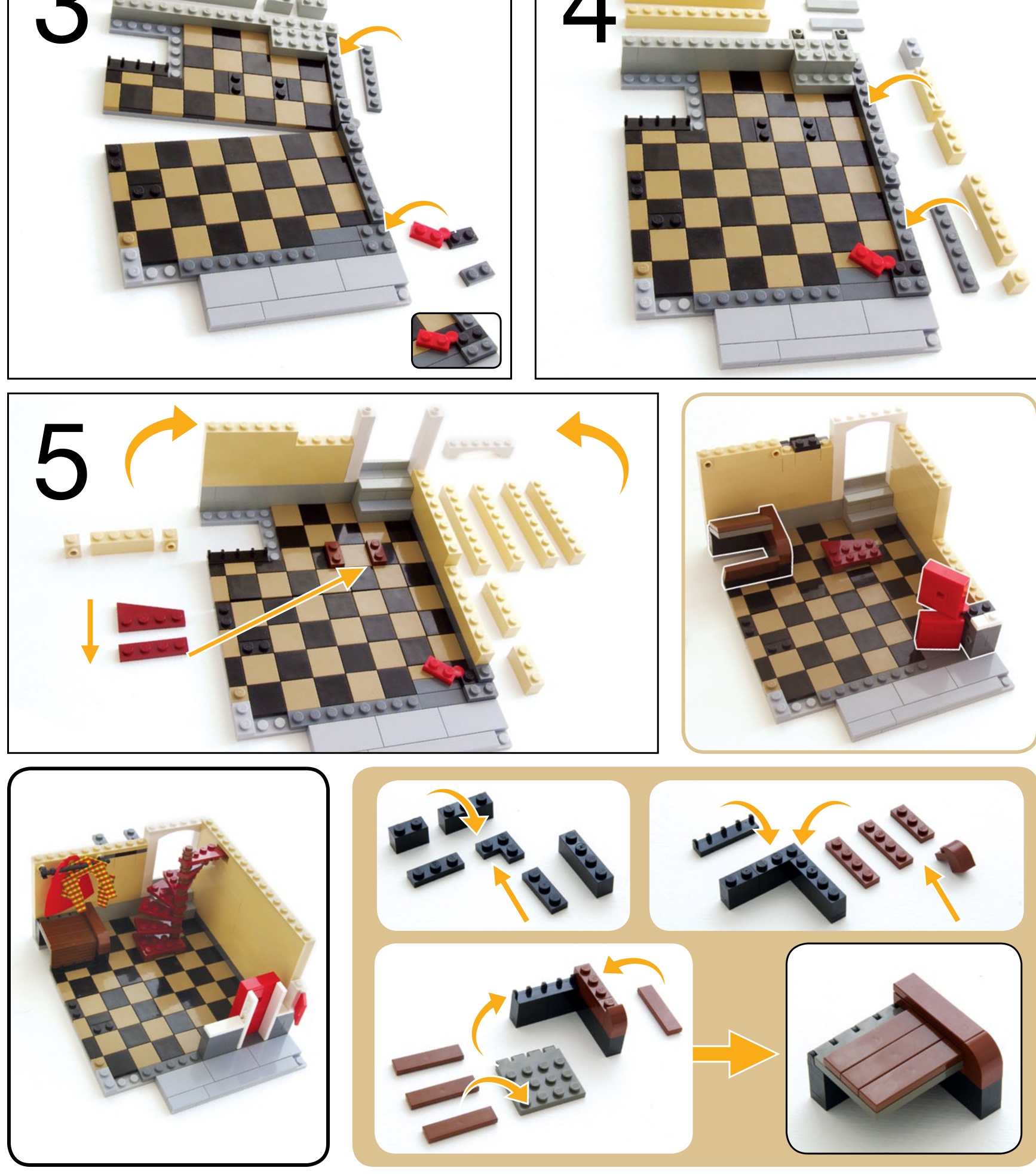
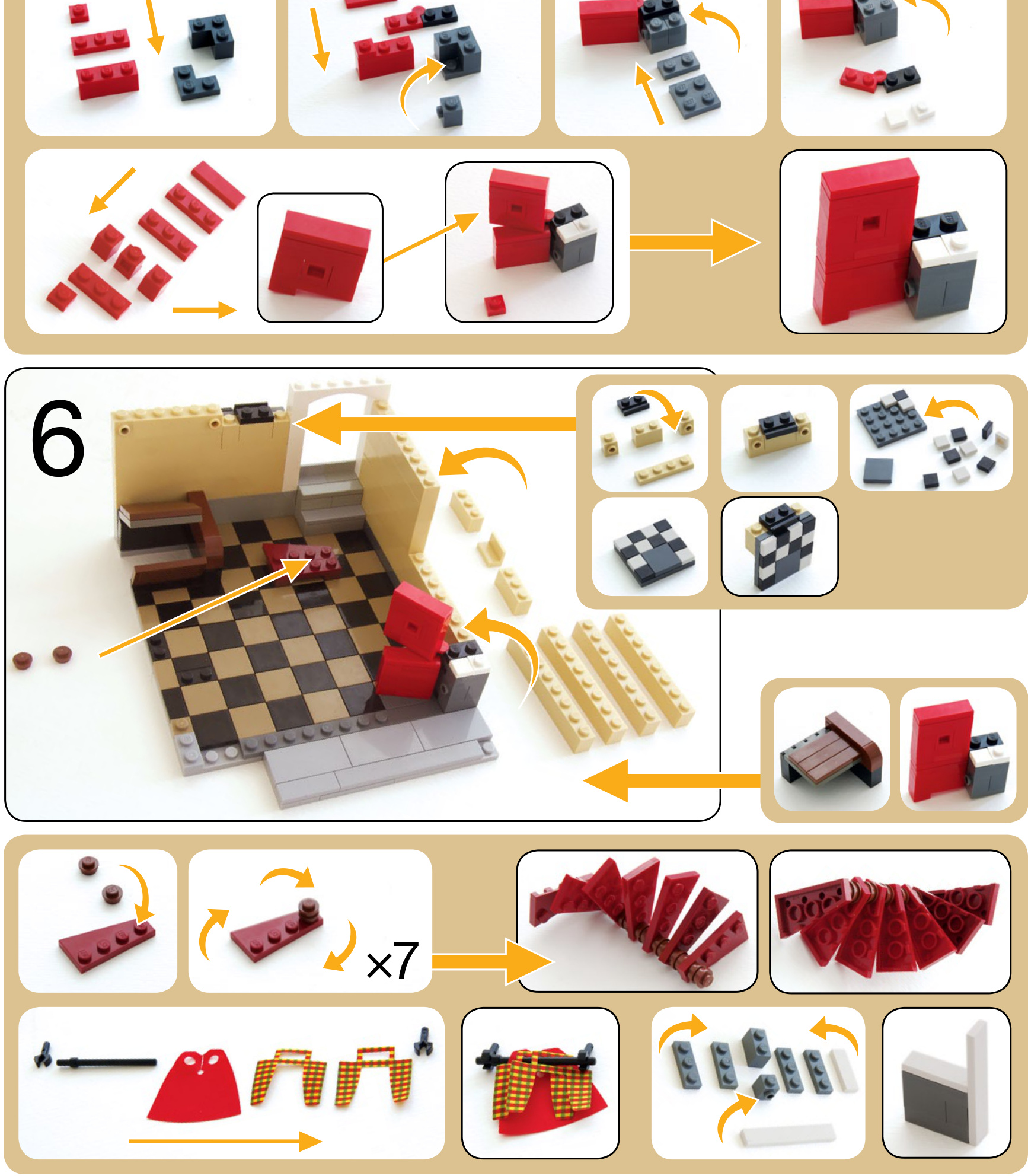
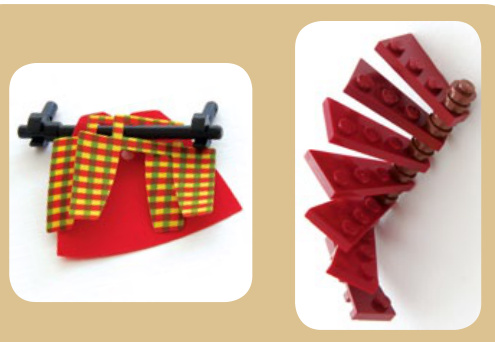
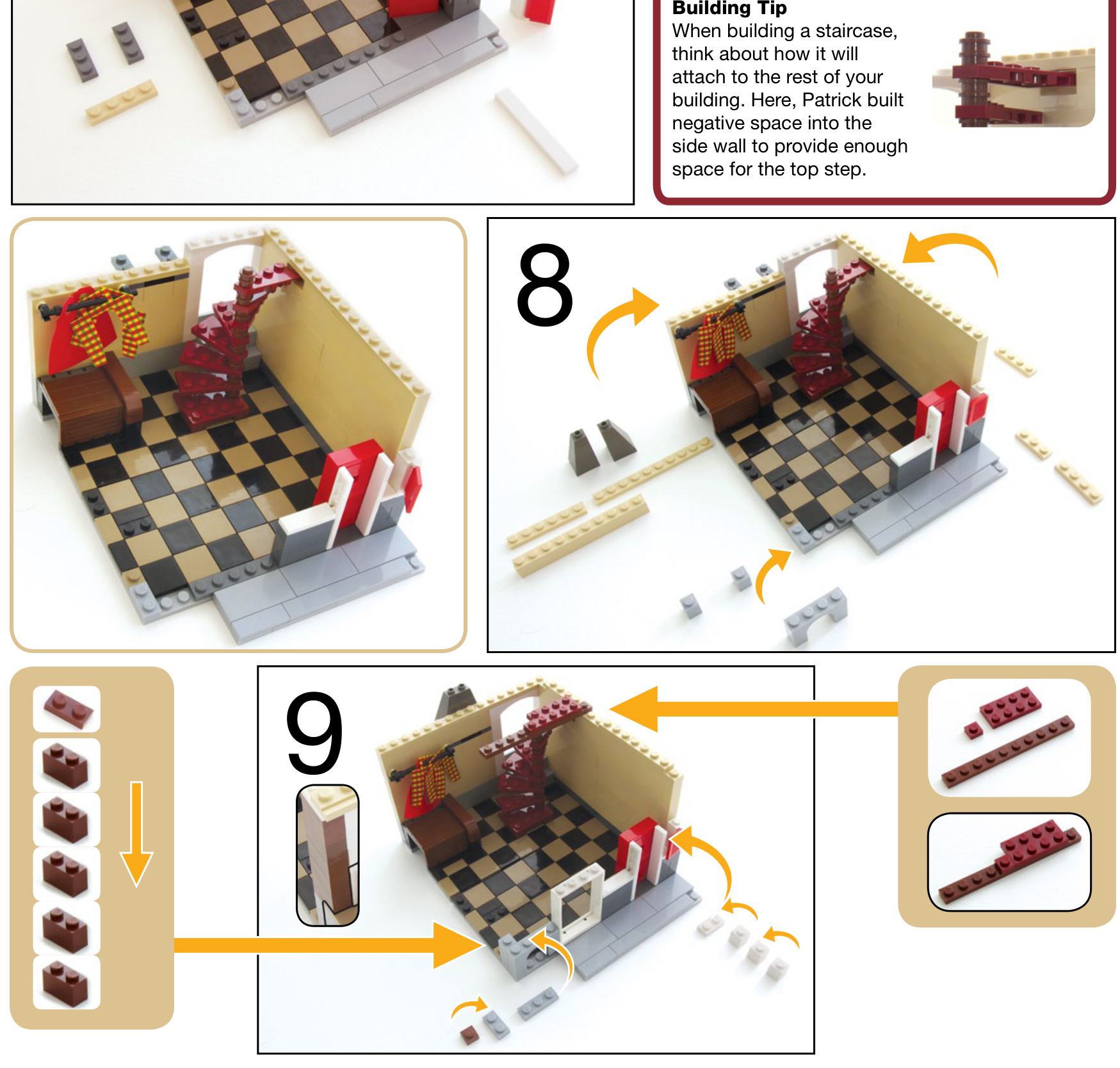
Patrick’s LEGO buildings are brilliant! He told me that he likes to base his models on real buildings. Before he builds, he does a lot of research and likes to learn about the building’s history so that he can capture its character. Using elements in unconventional ways allows for lots of detail, too. Now I’m wondering what My Idea Lab might look like with some cool Dutch spires!
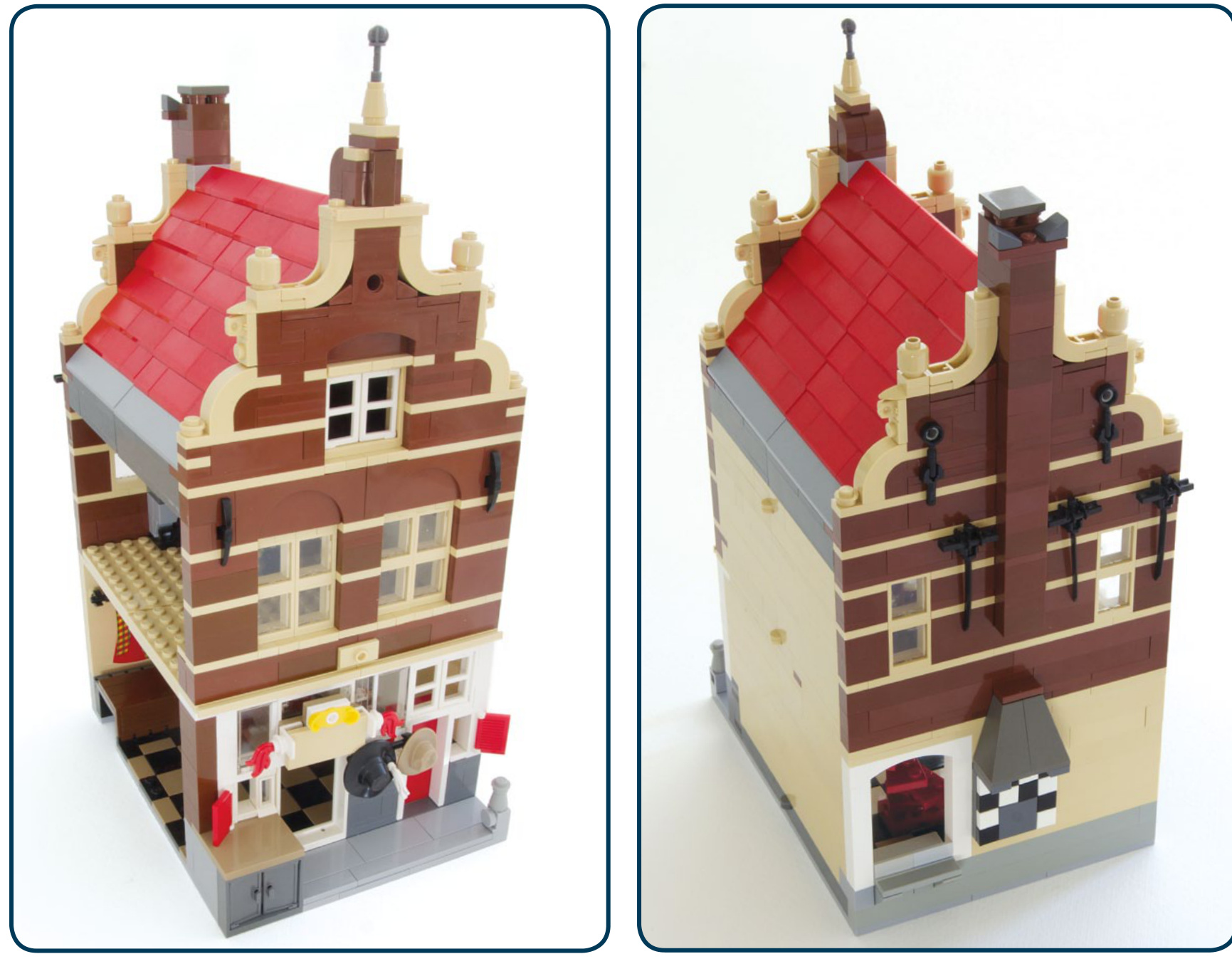
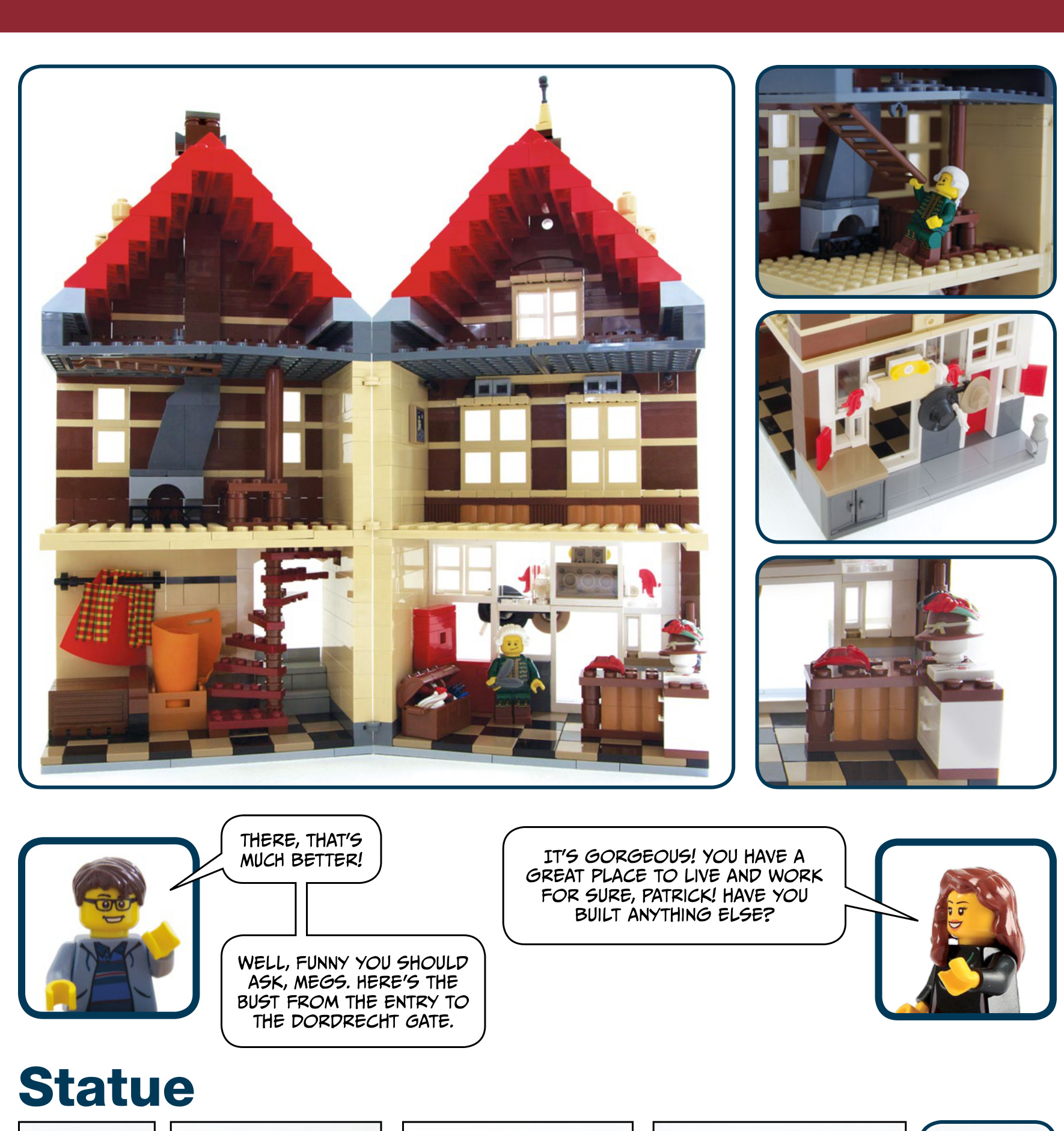

Groothoofdspoort: Dordrecht City Gate
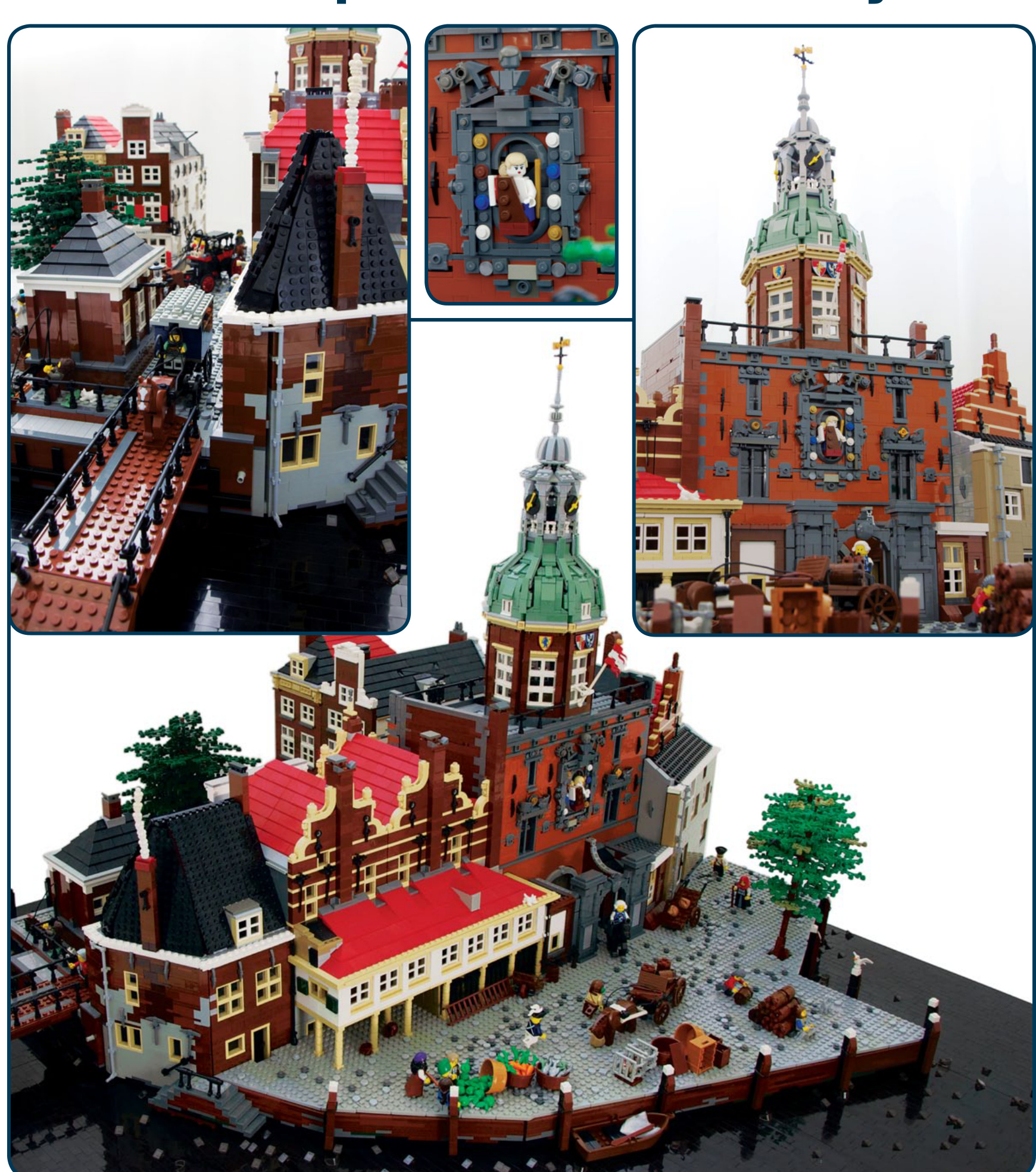
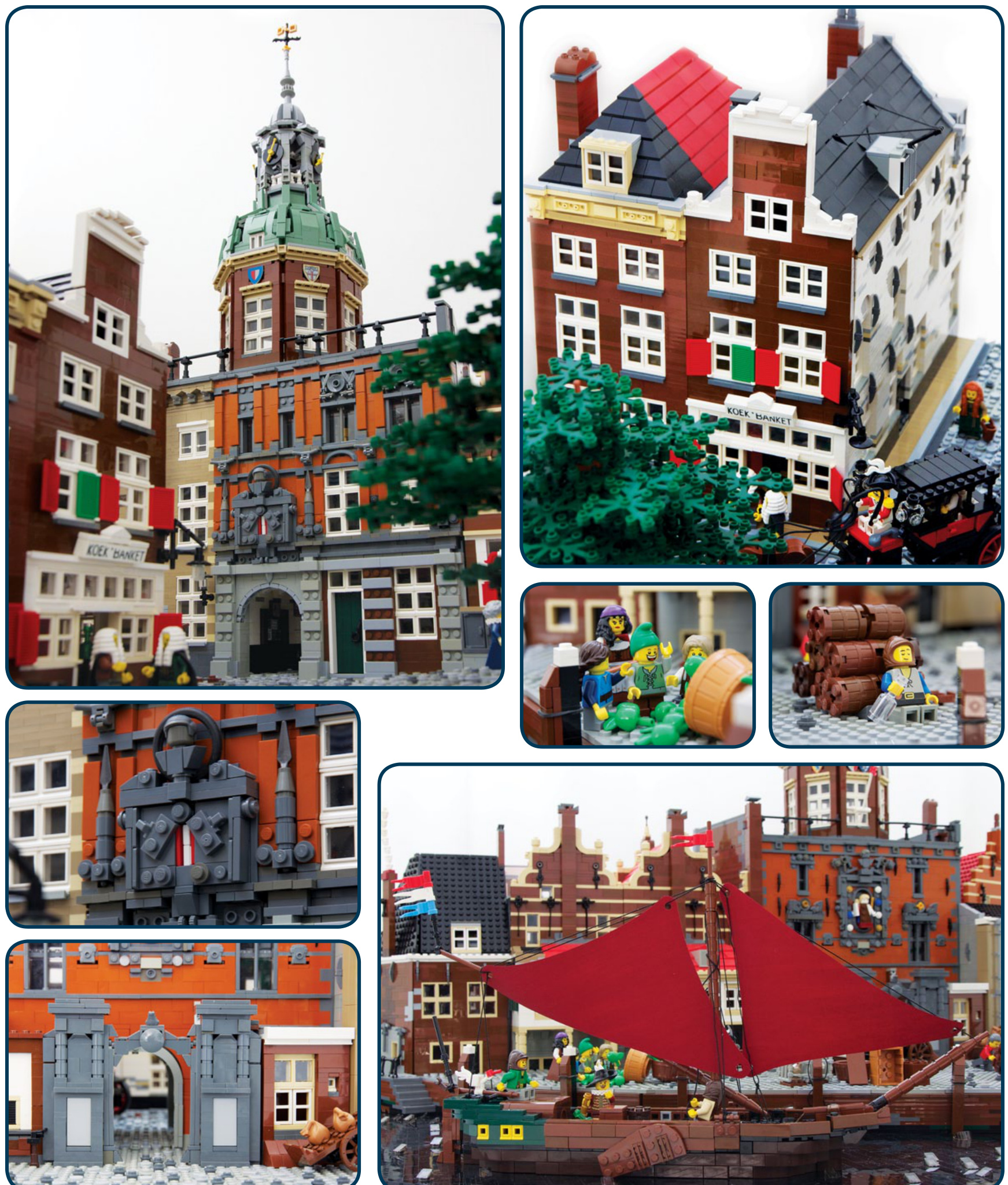
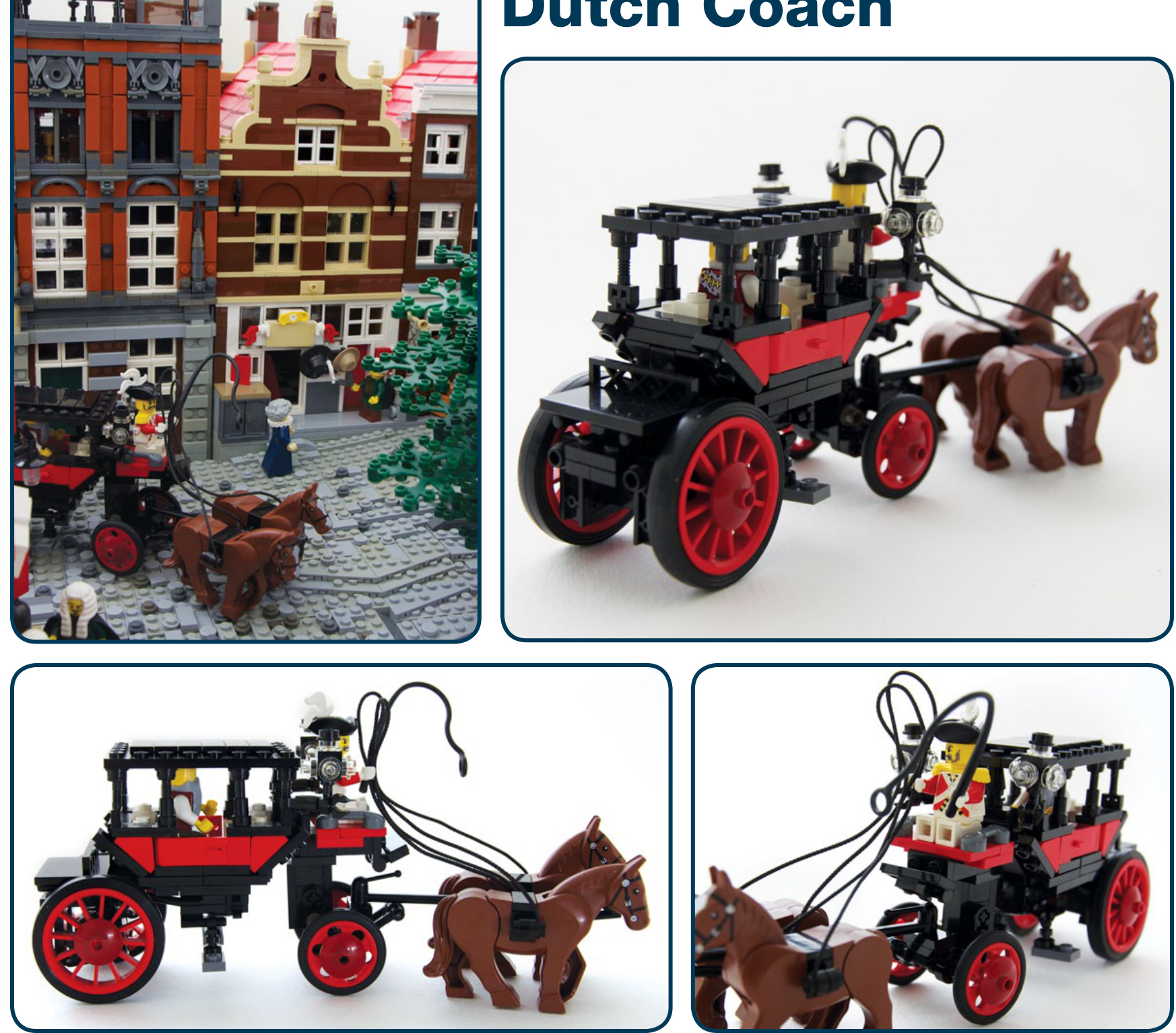
River Boat
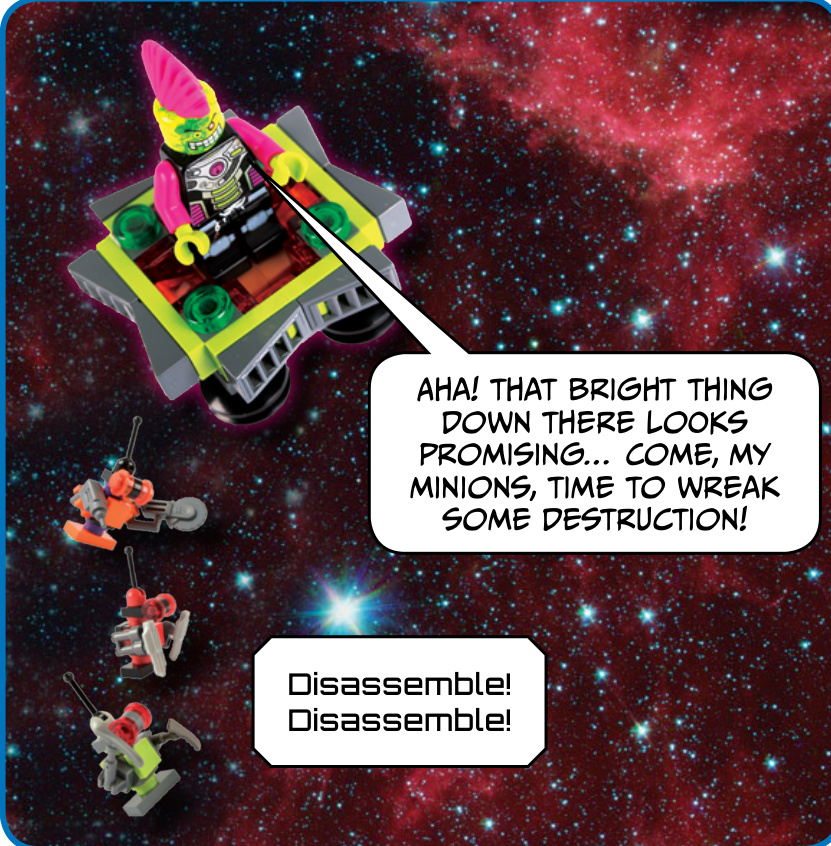
Meanwhile, somewhere in deep space…
ZAP!
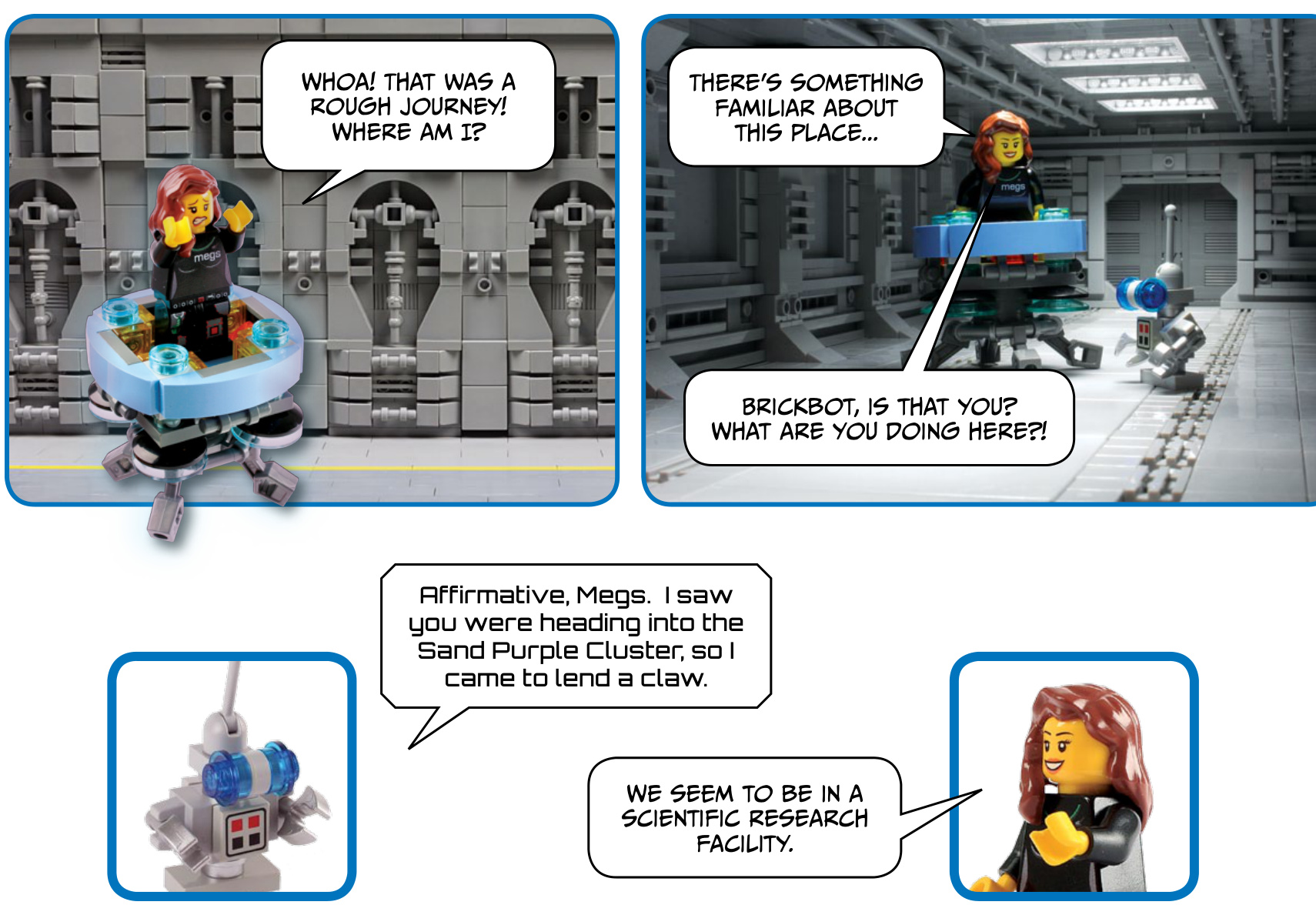
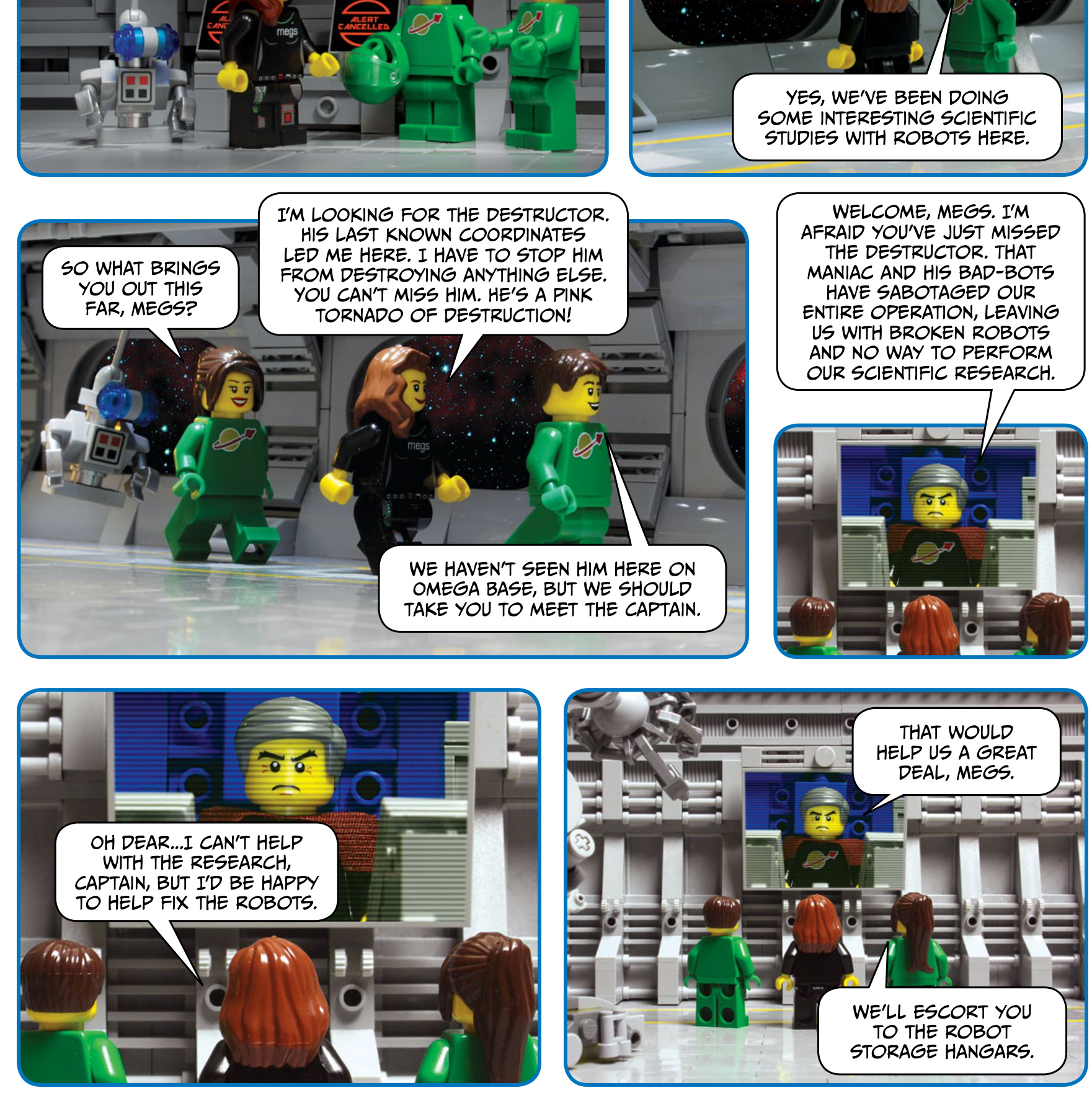
Bye-bye little LowLands buildings! Oh bloks! I’m in space?! Surely there must be a nice moon to destroy out here…

In Deep Space Peter Reid

Nickname: Legoloverman
Profession: Postman
Nationality: British
Website: www.flickr.com/photos/legoloverman/


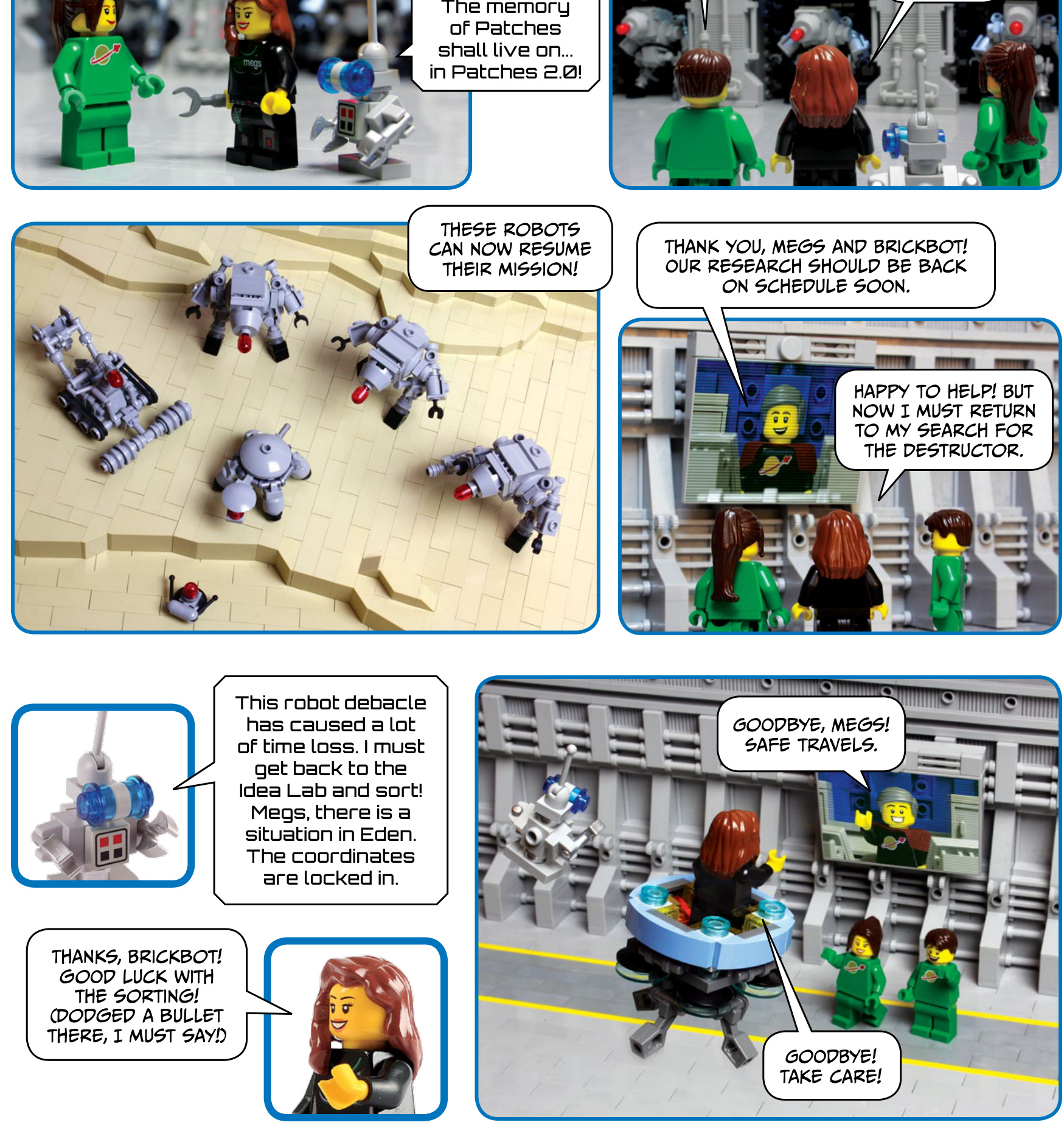
Patches 2.0
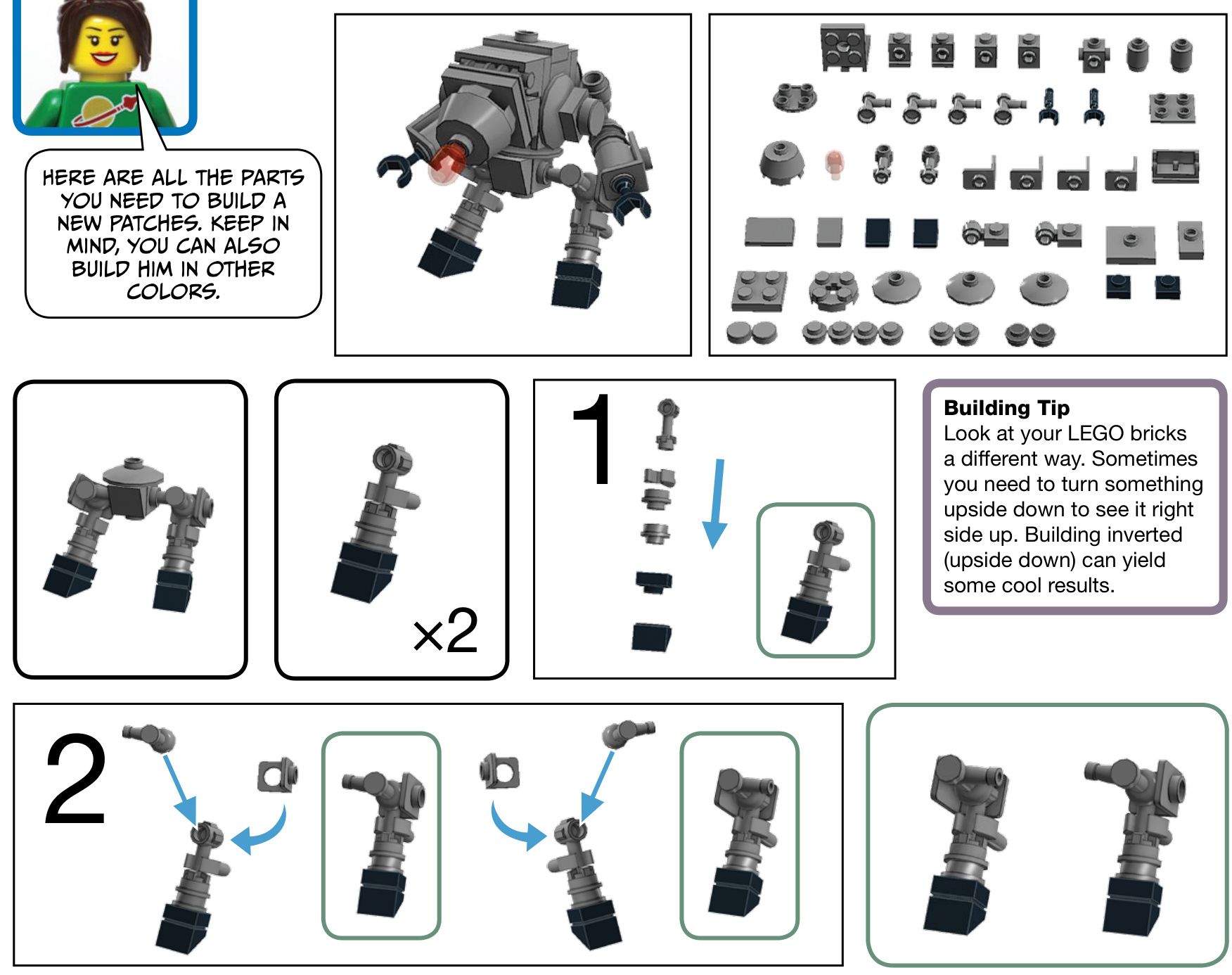
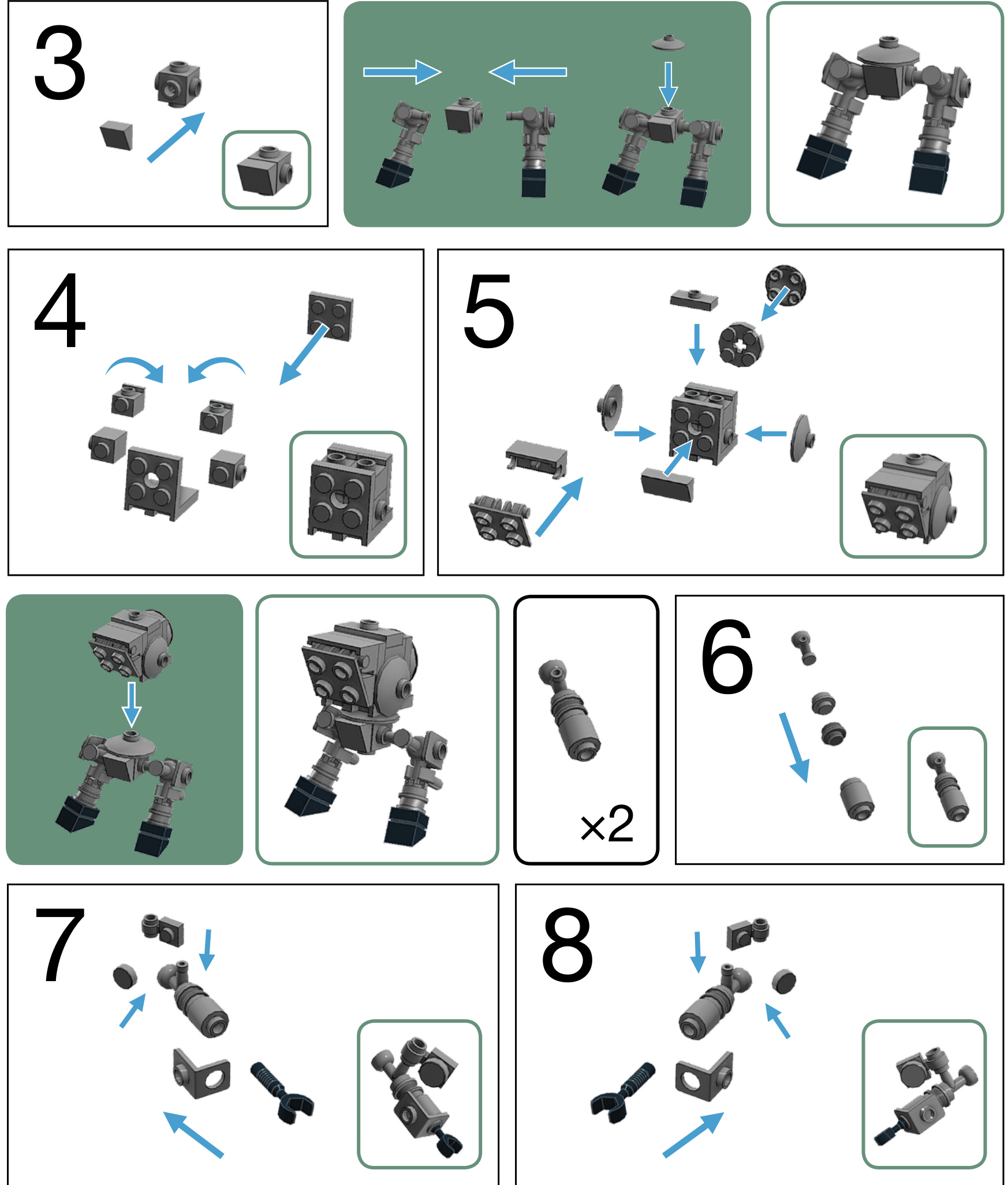
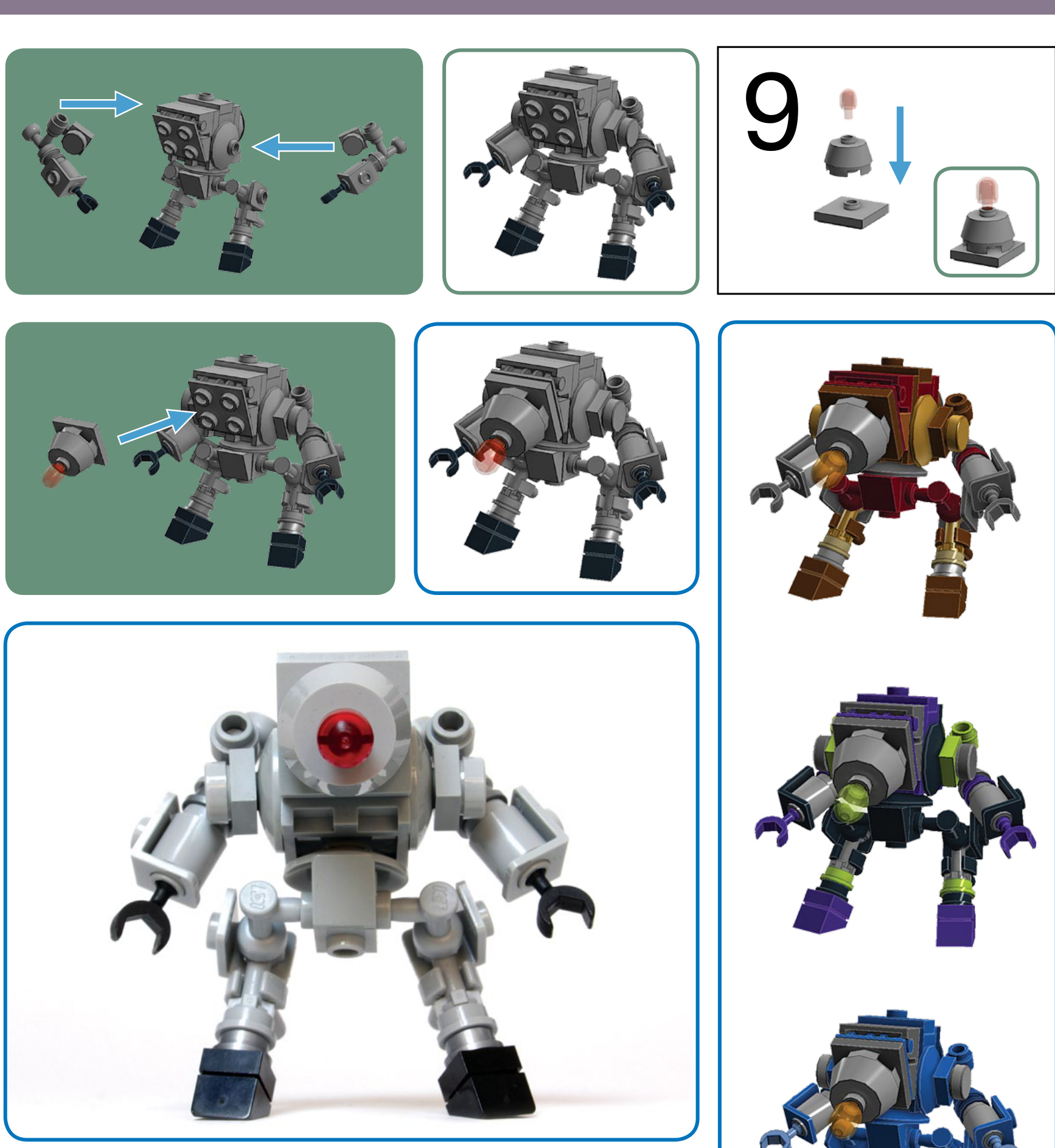

Building Tip
A few key color changes can alter the character of your robot. Using different colors is a nice way to visually communicate a robot’s job; for example, you could use blue for a medical one. Alternatively, using a unified color scheme for several robots is a nice technique in a layout.
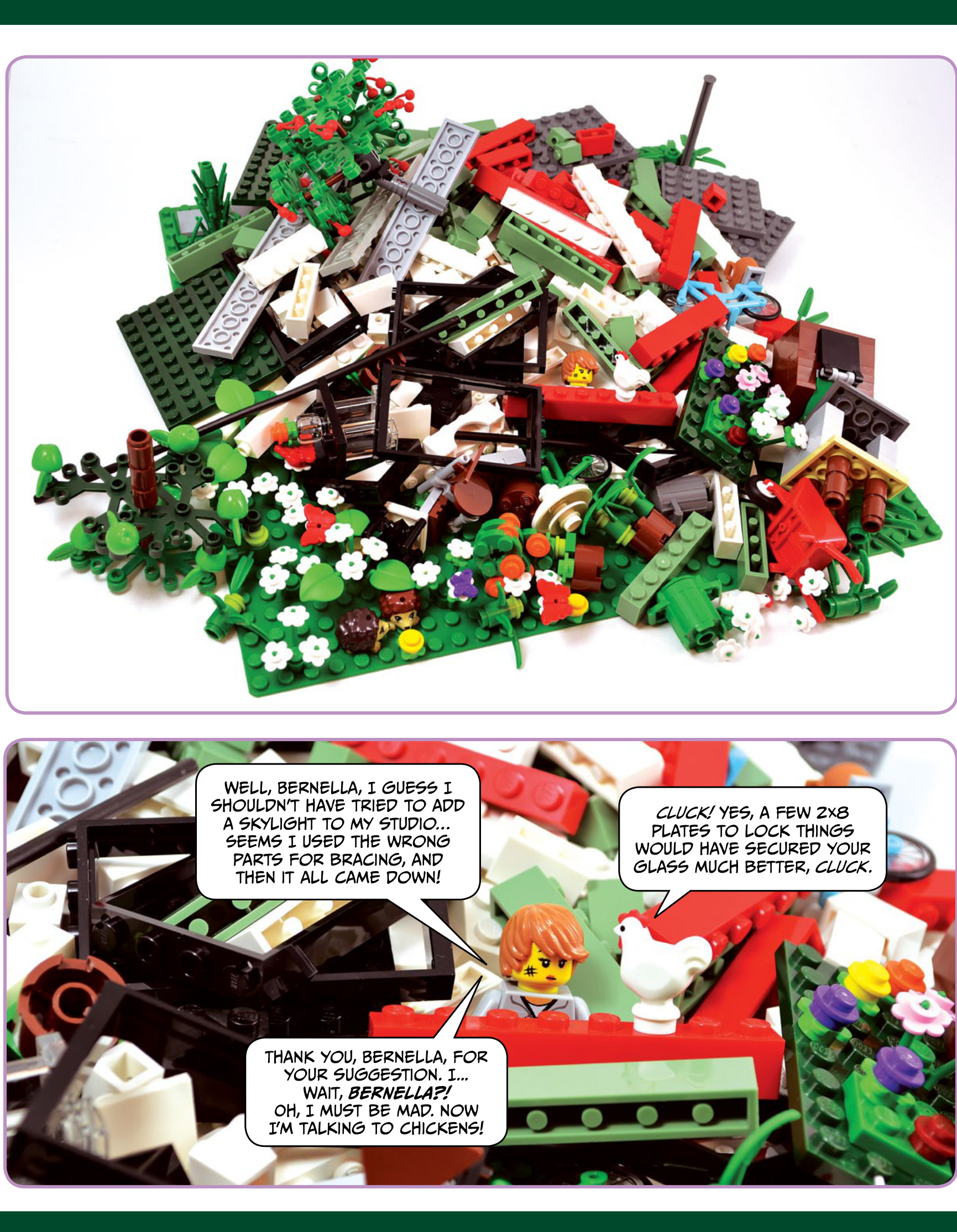
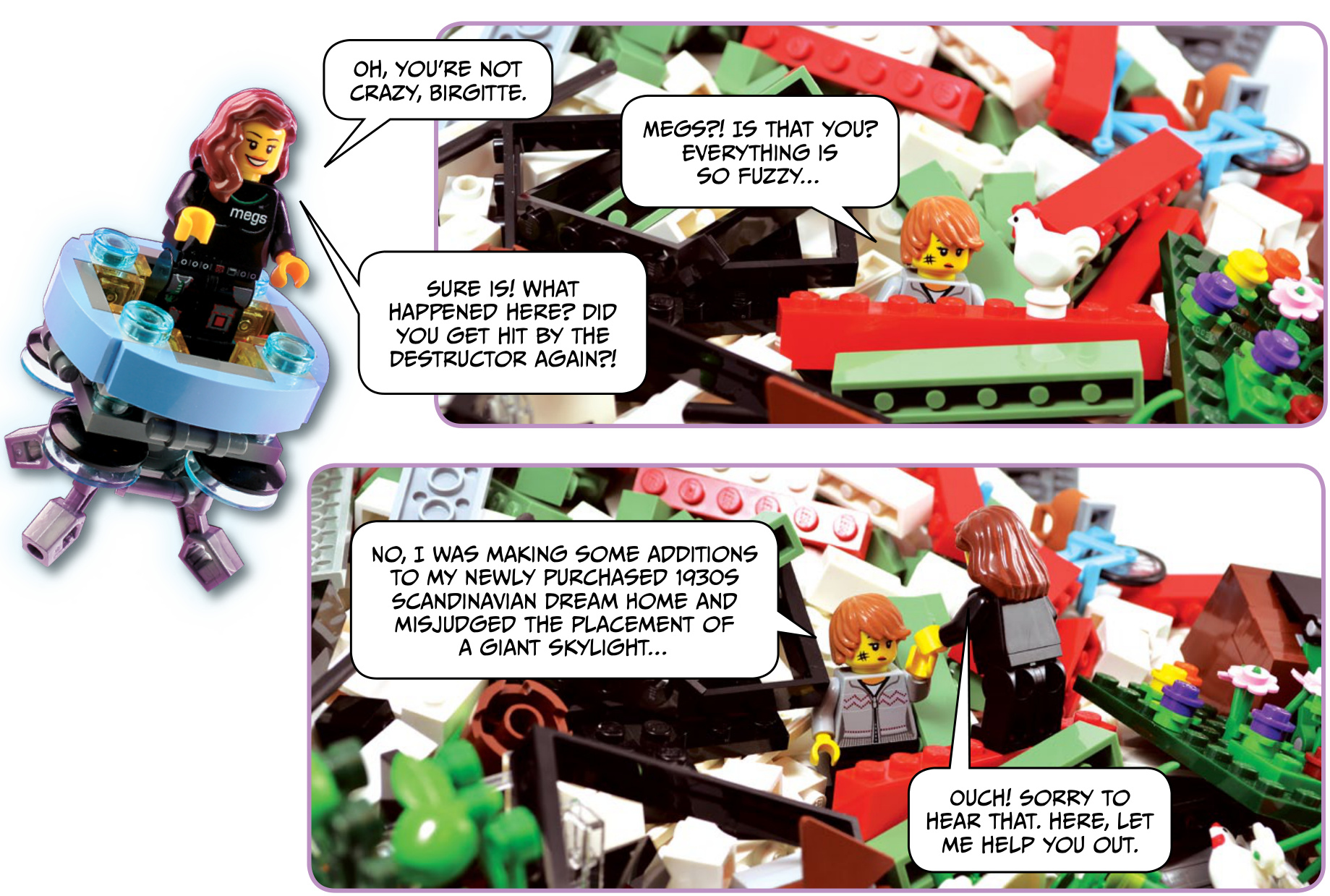
Trouble in Eden

Birgitte Jonsgard
Nickname: birgburg
Profession: Science Teacher
Nationality: Norwegian
Website: www.flickr.com/people/birgburg/
Building Tip
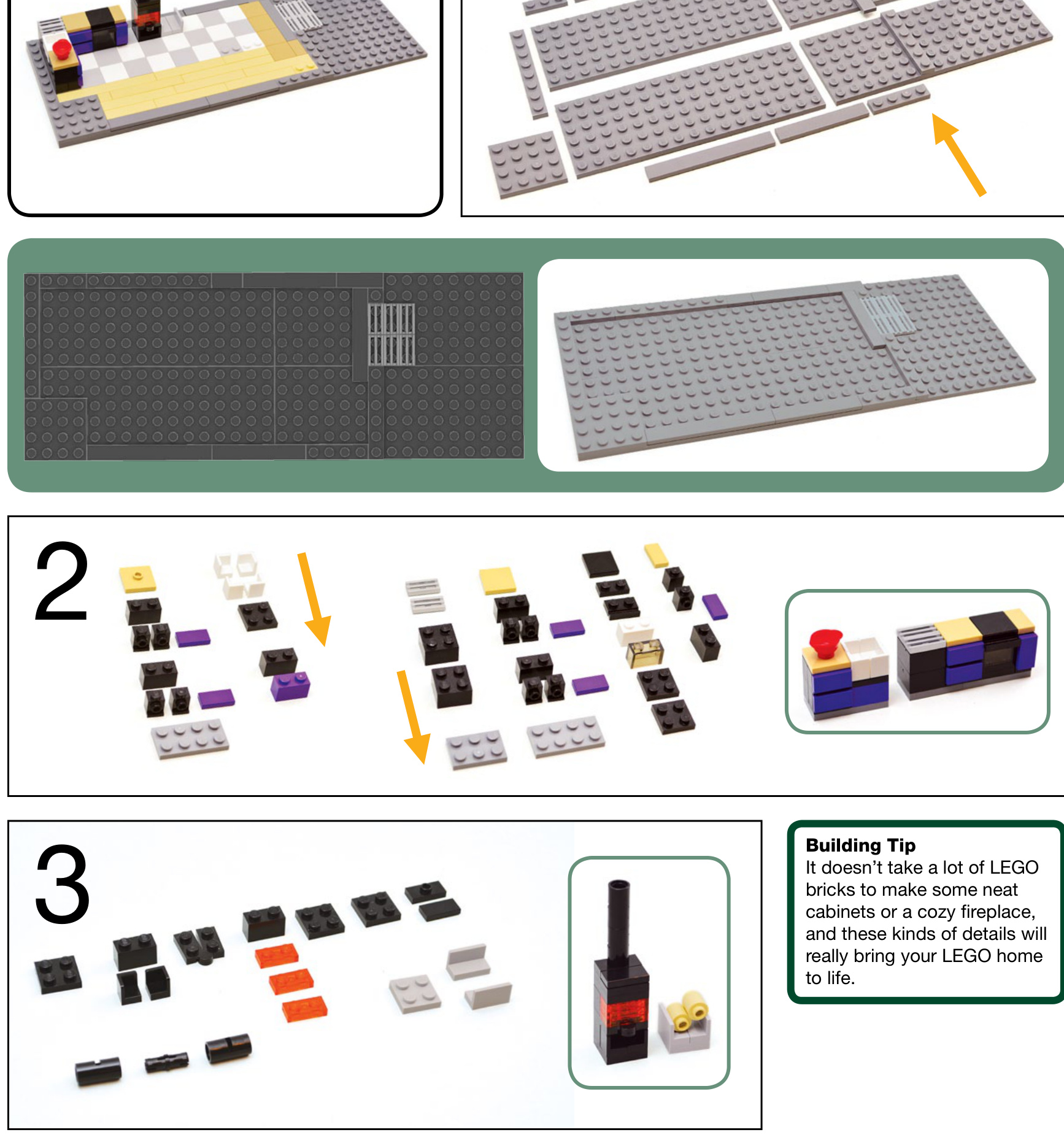
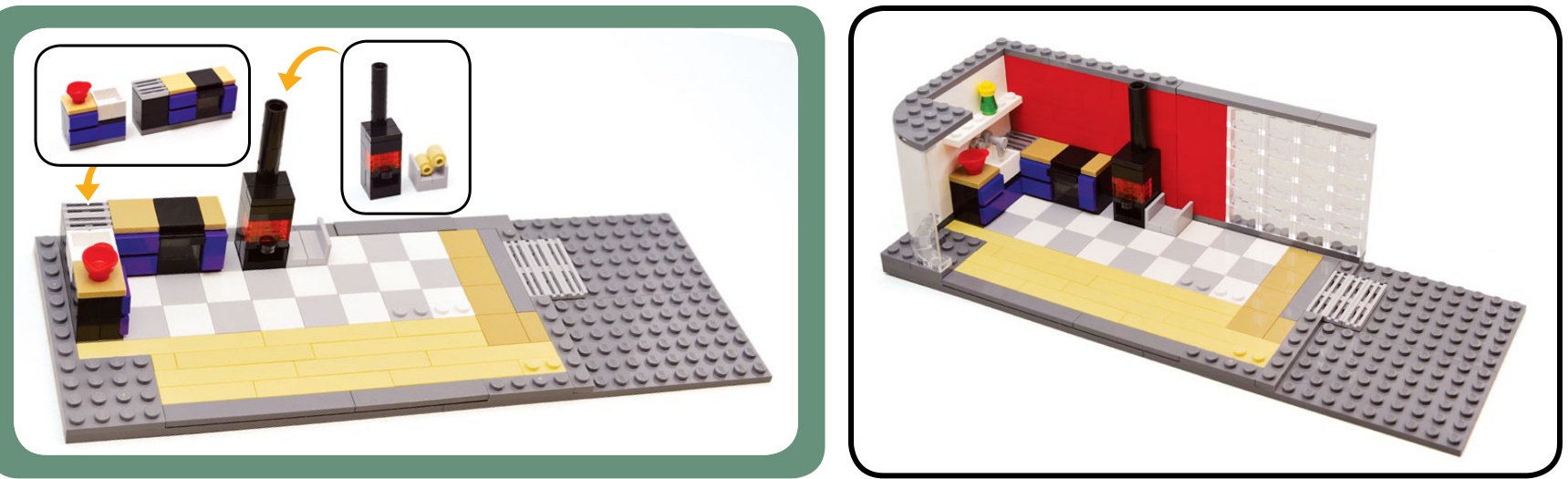
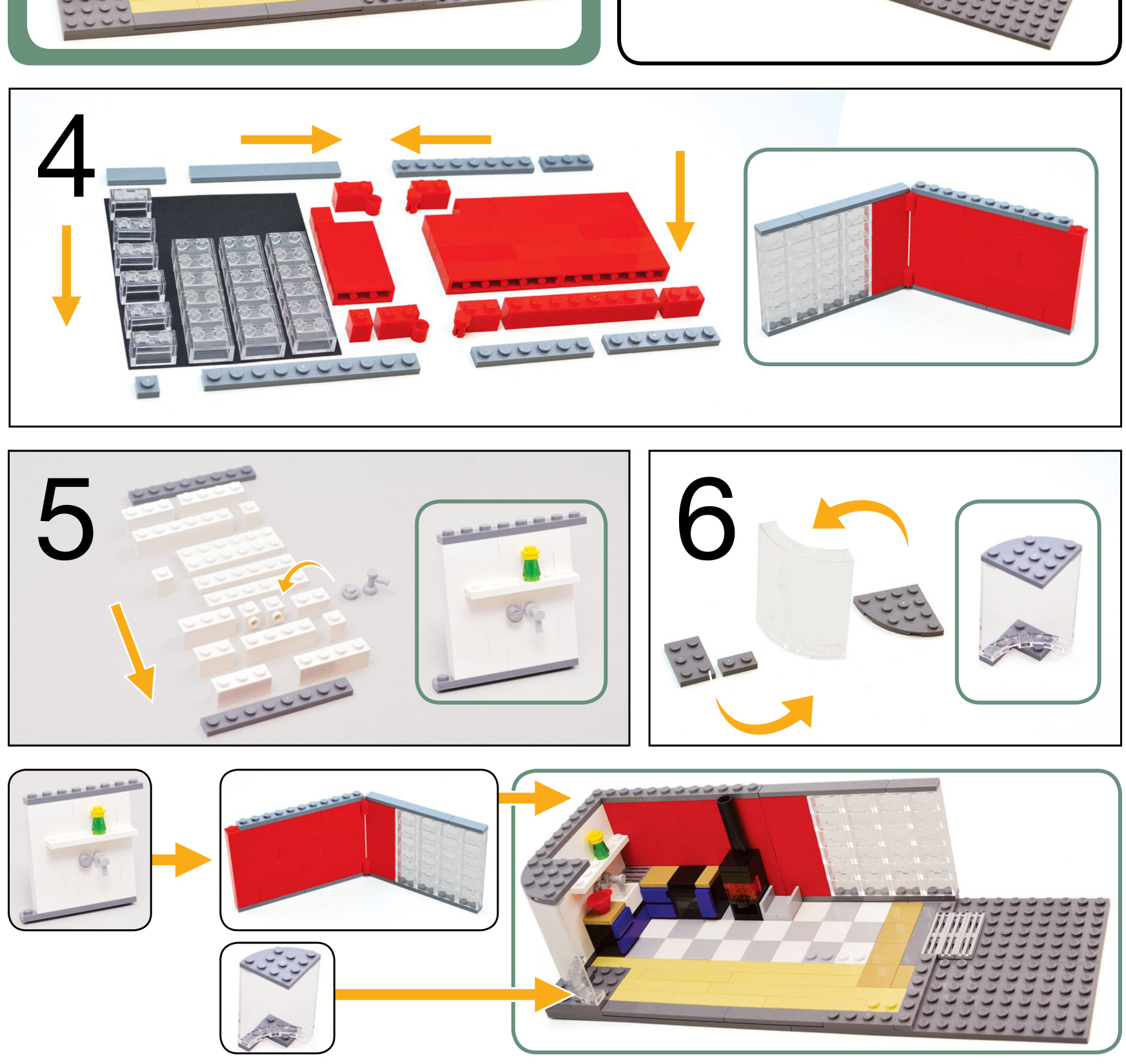
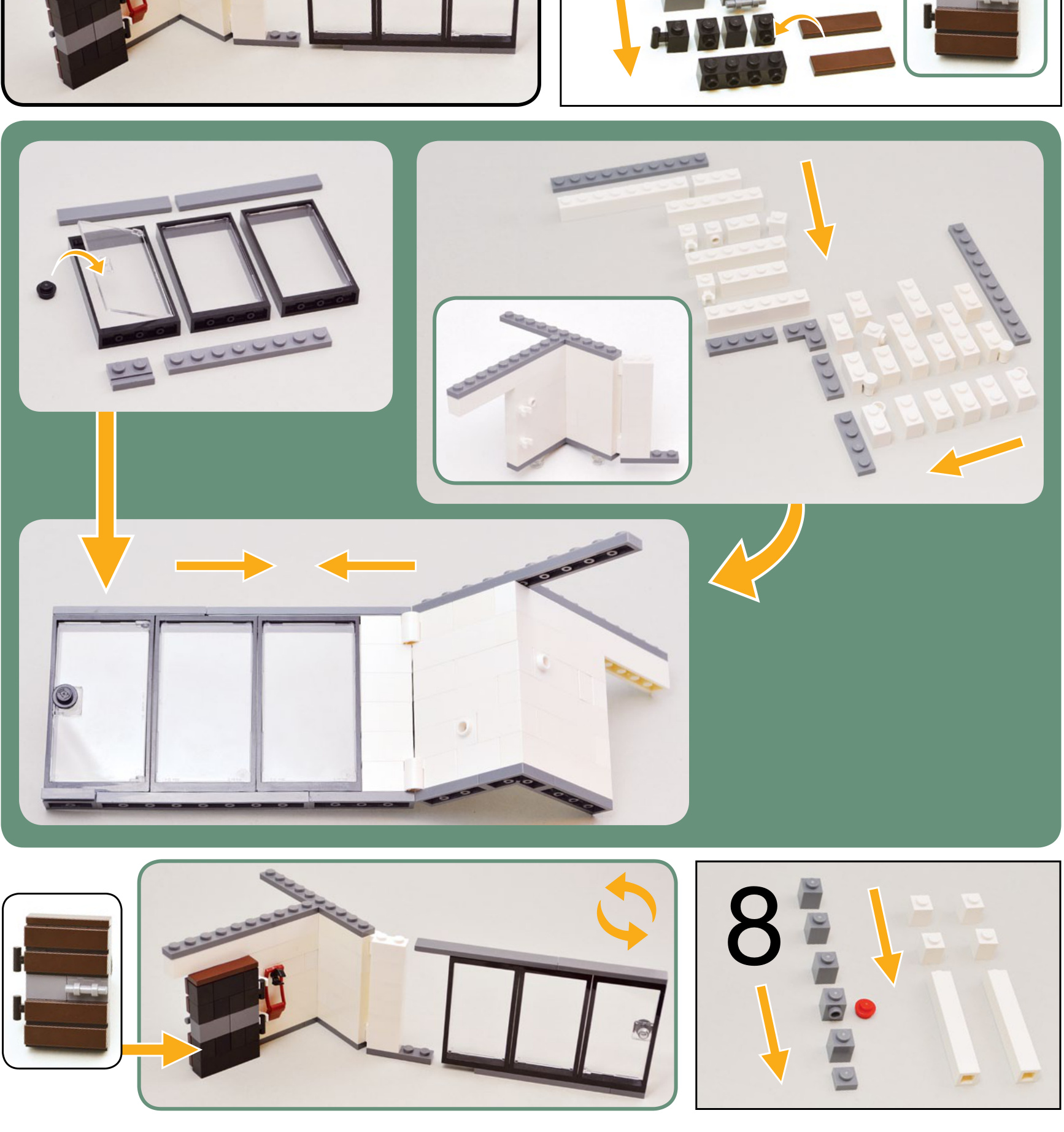
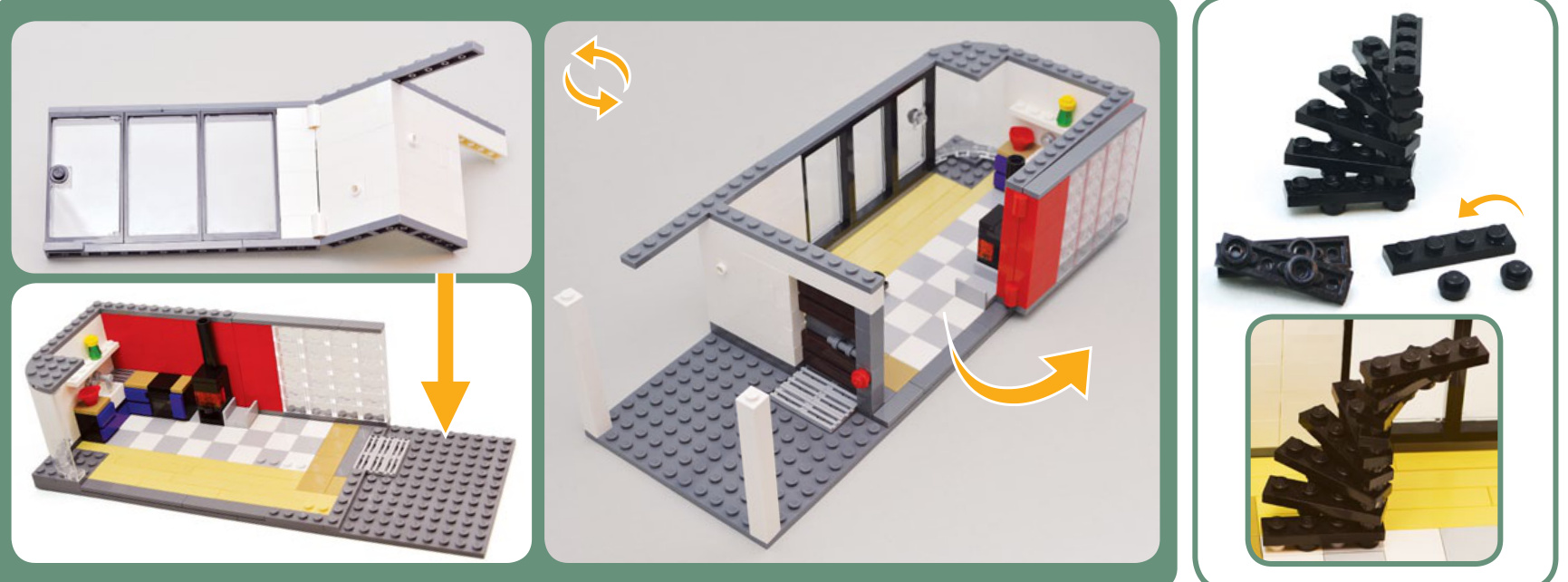
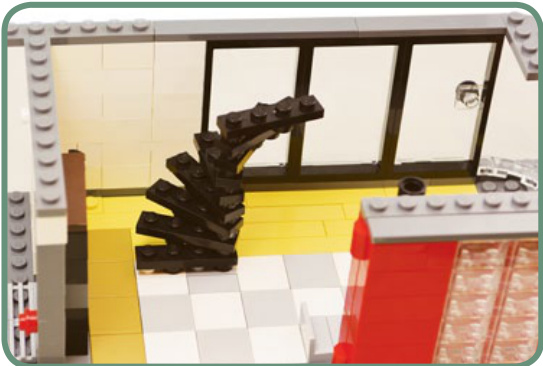
Brick-built stairs, doors, and windows give your house lots of character. Building these details into your model is often necessary if you want to build in a particular architectural style.

Building Tip
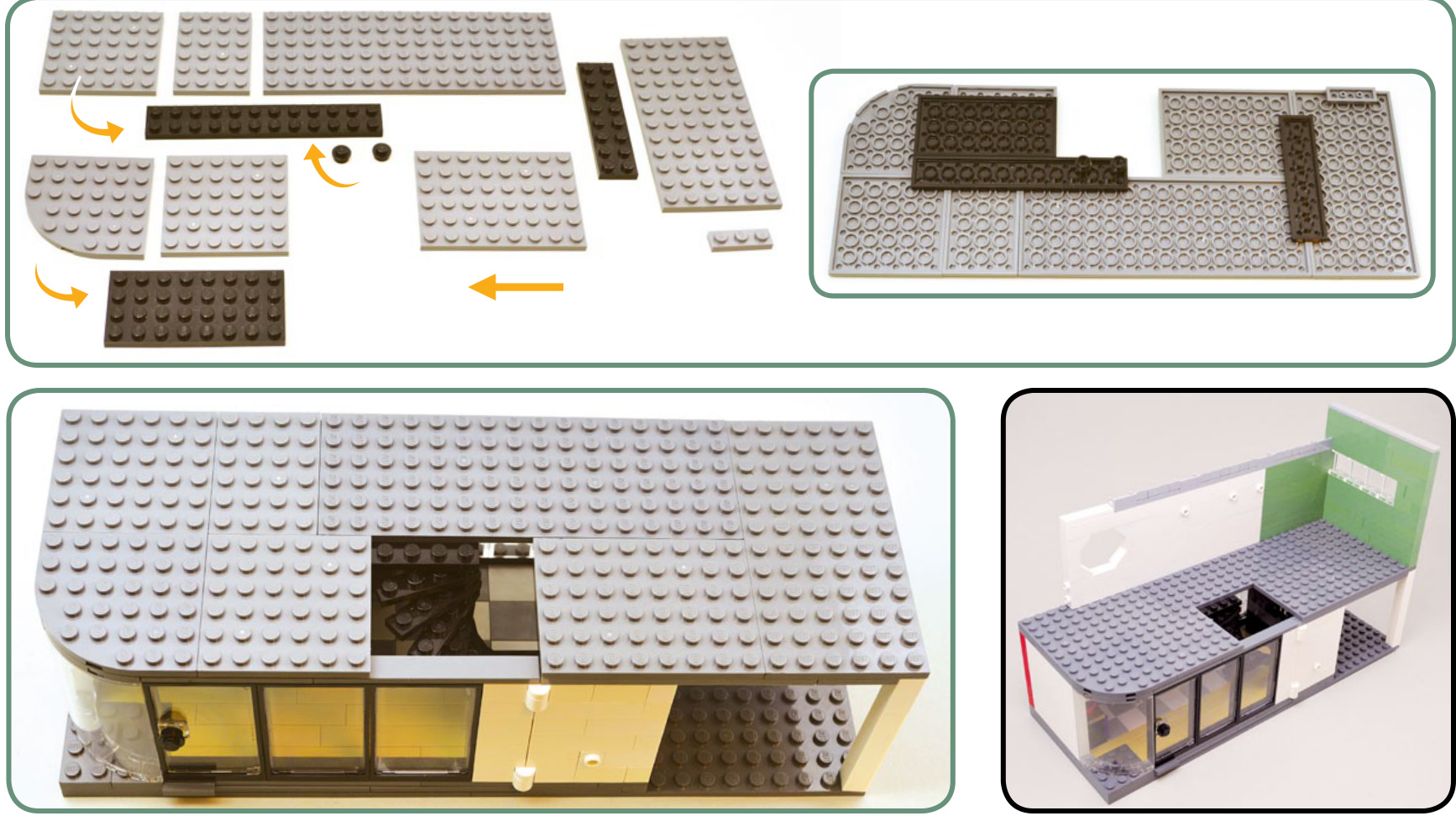
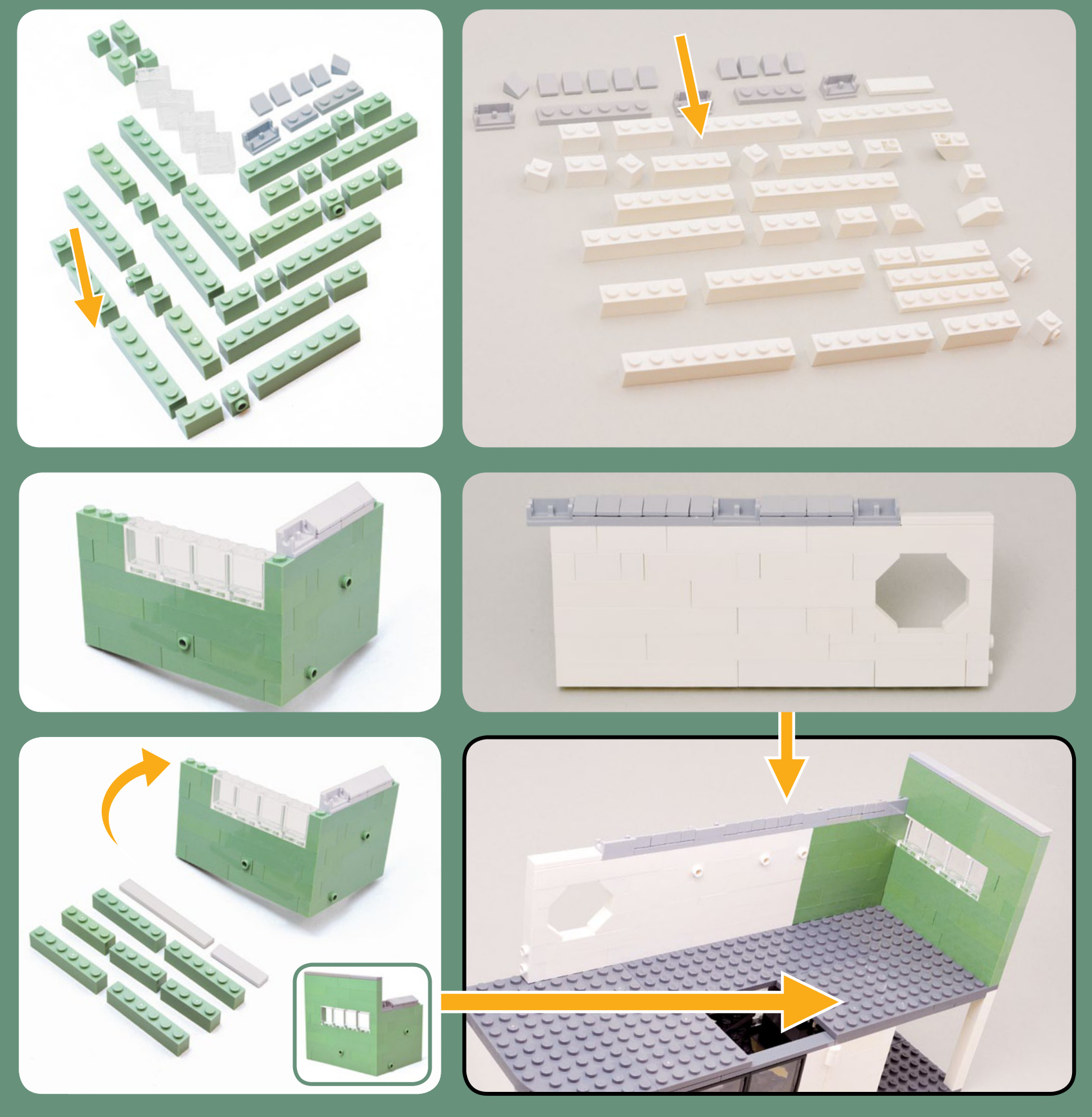
Don’t forget to think about how to access your house. Adding or wedges with a rocker plate hinge will create a roof that opens, allowing for more playability.
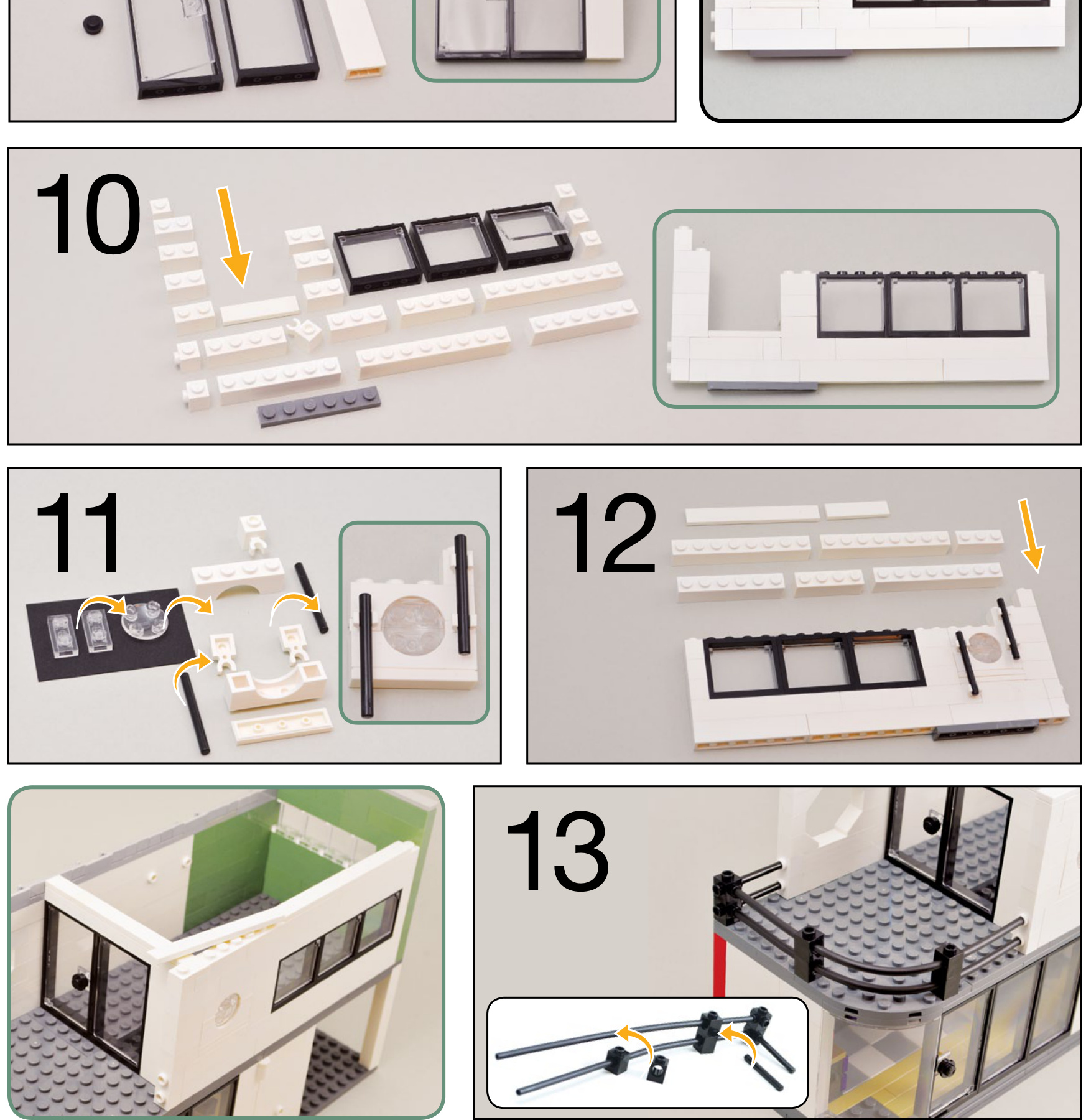
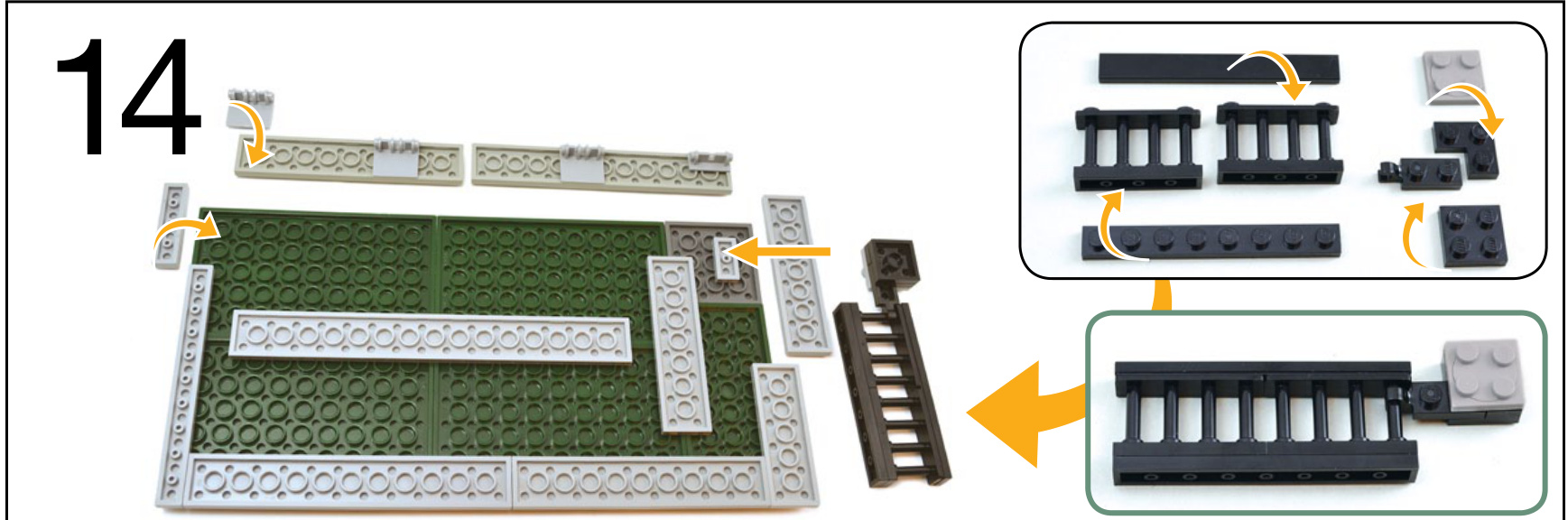
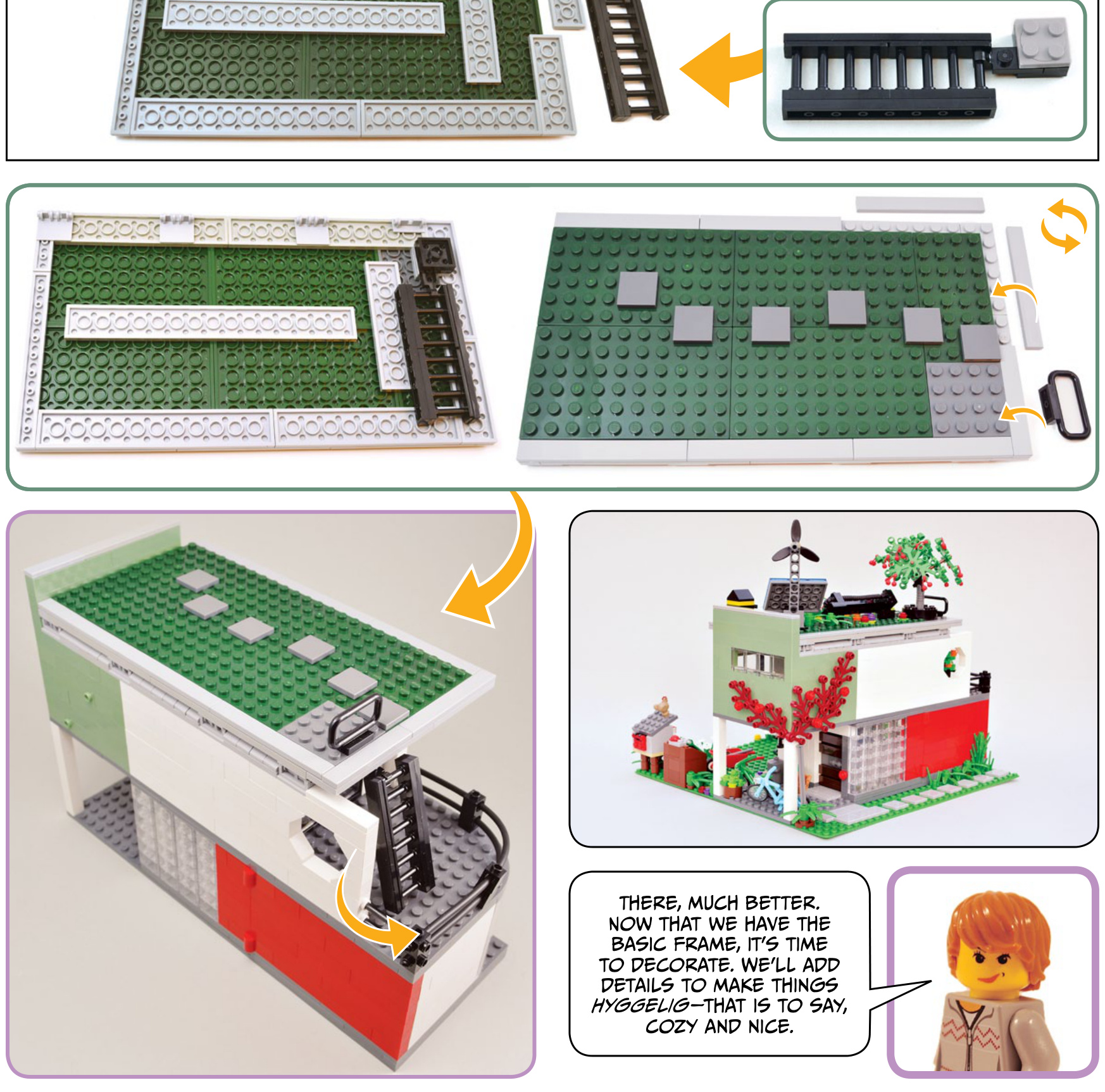
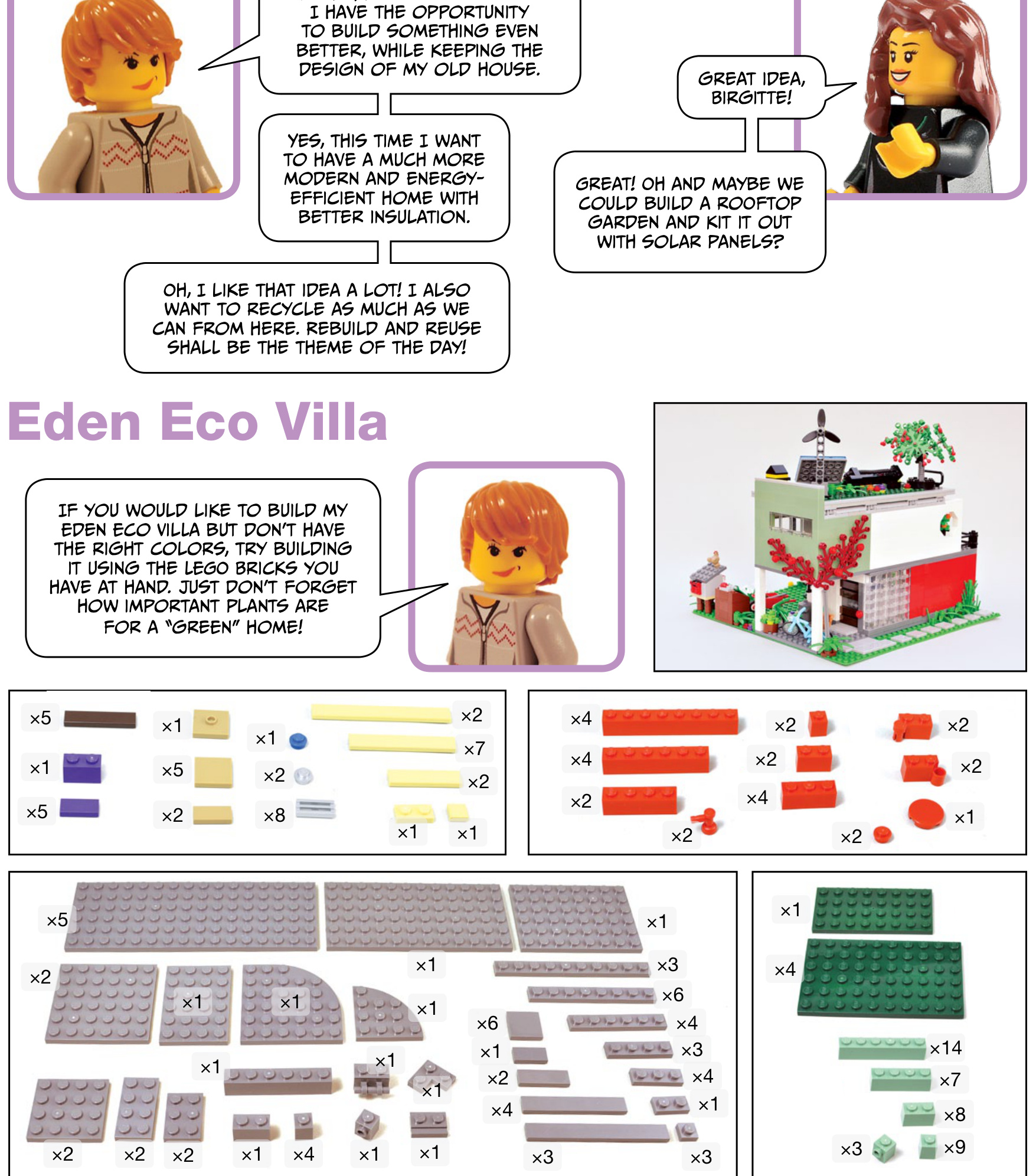
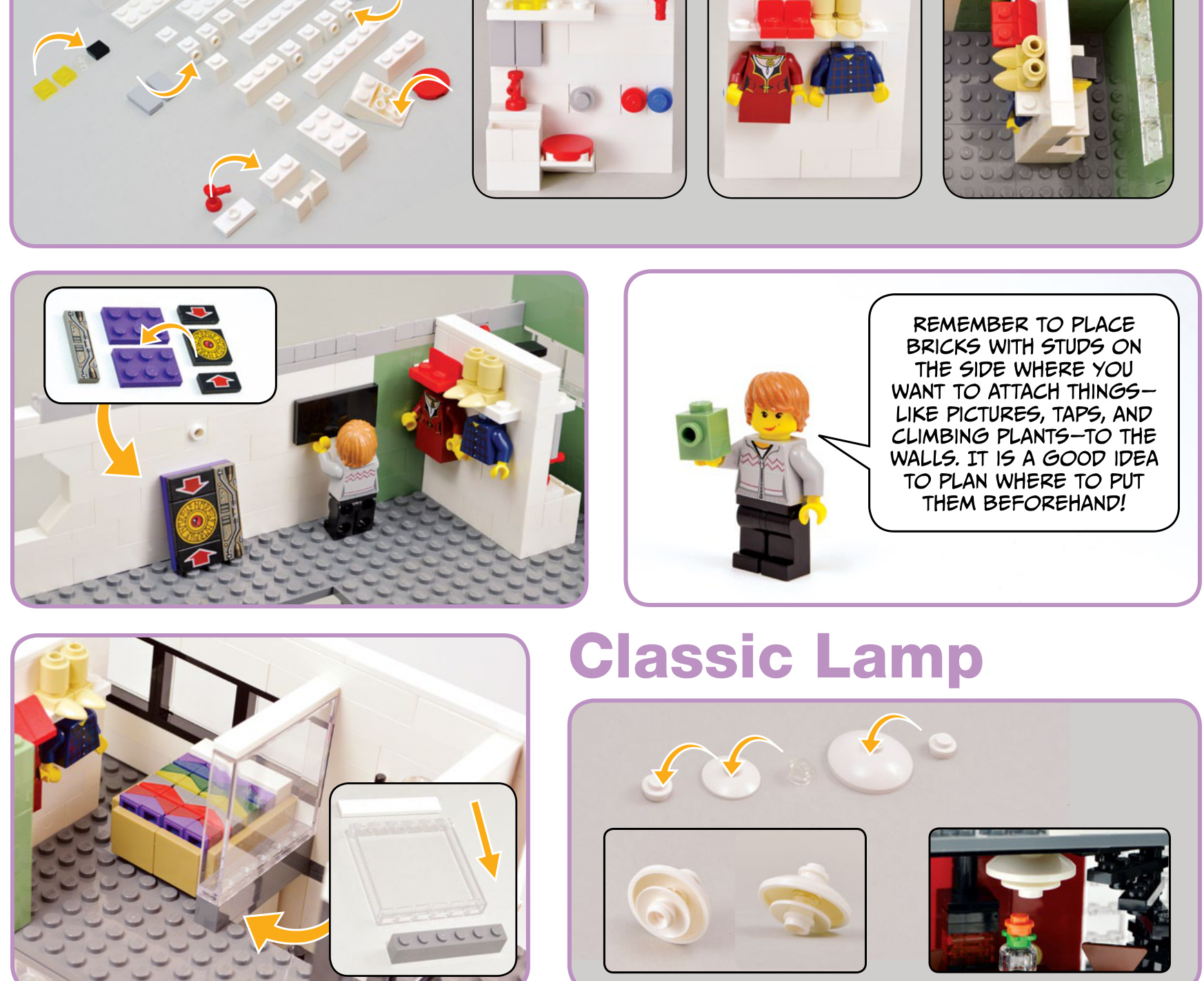
Design Details with Birgitte

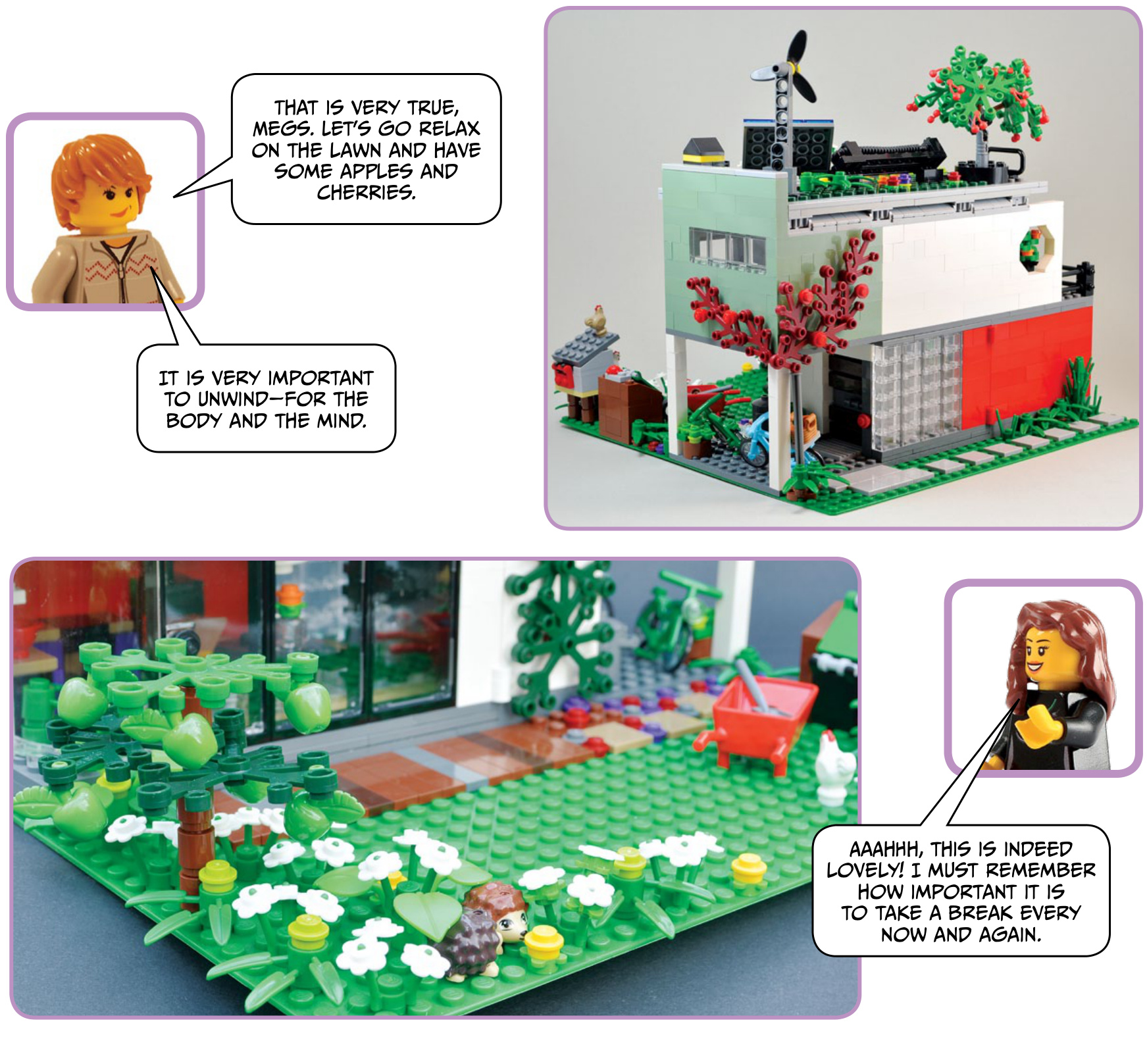
Here are some handy tips for planning your interiors. Remember you can make your living
space practical and interesting; it does not have to be boring. For instance, when designing a
room think about both sides of the wall and their
functions. Here, one side is for the Bathroom and
the other side has a wardrobe for the Bedroom.
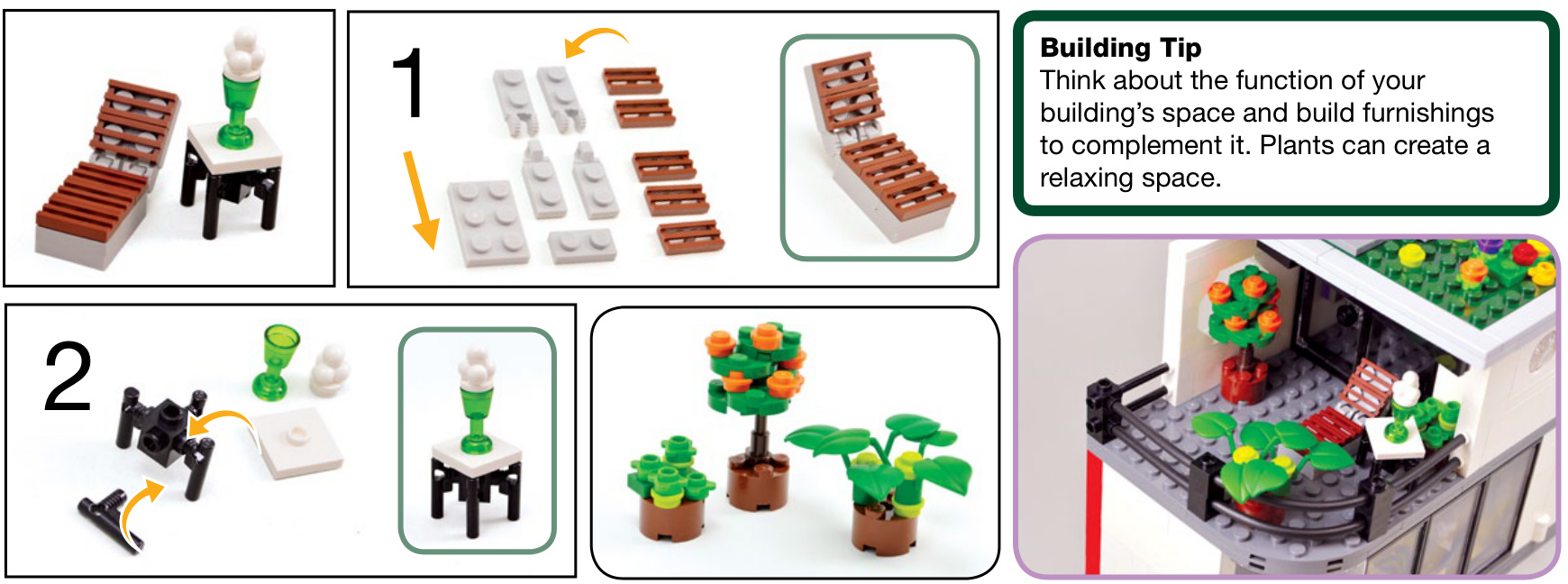
Vintage ANT7 Chairs
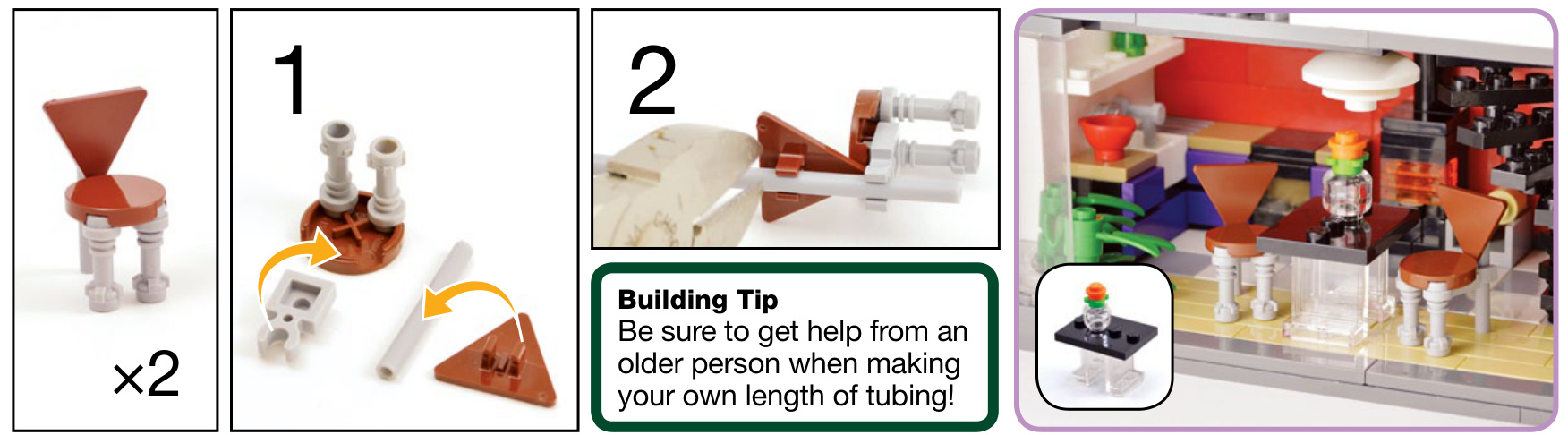
Patio Furniture

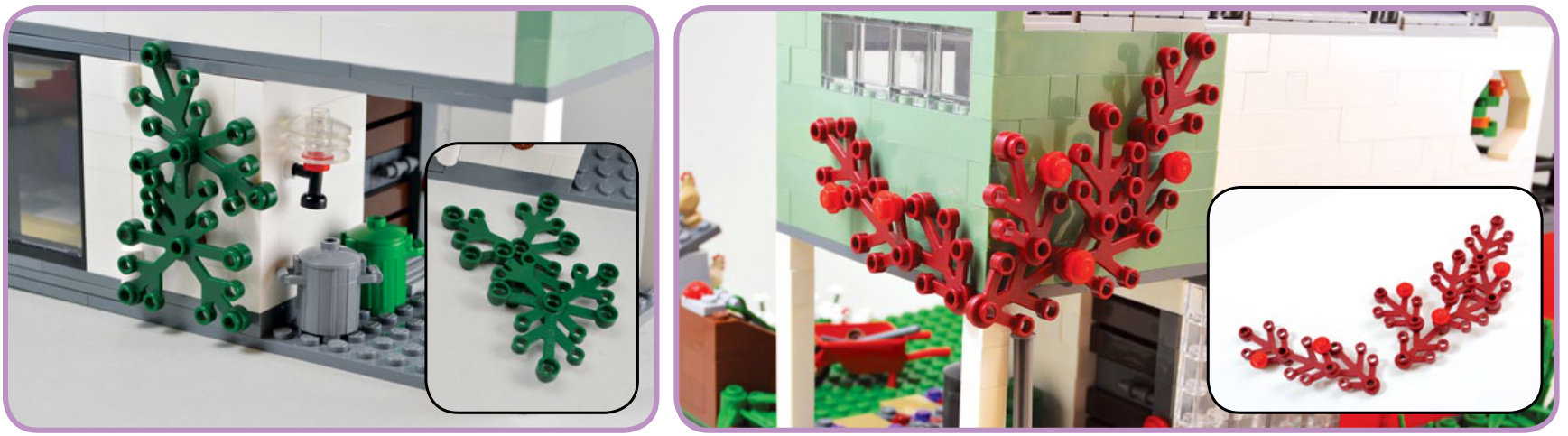
Cherry Tree
Exterior Foliage
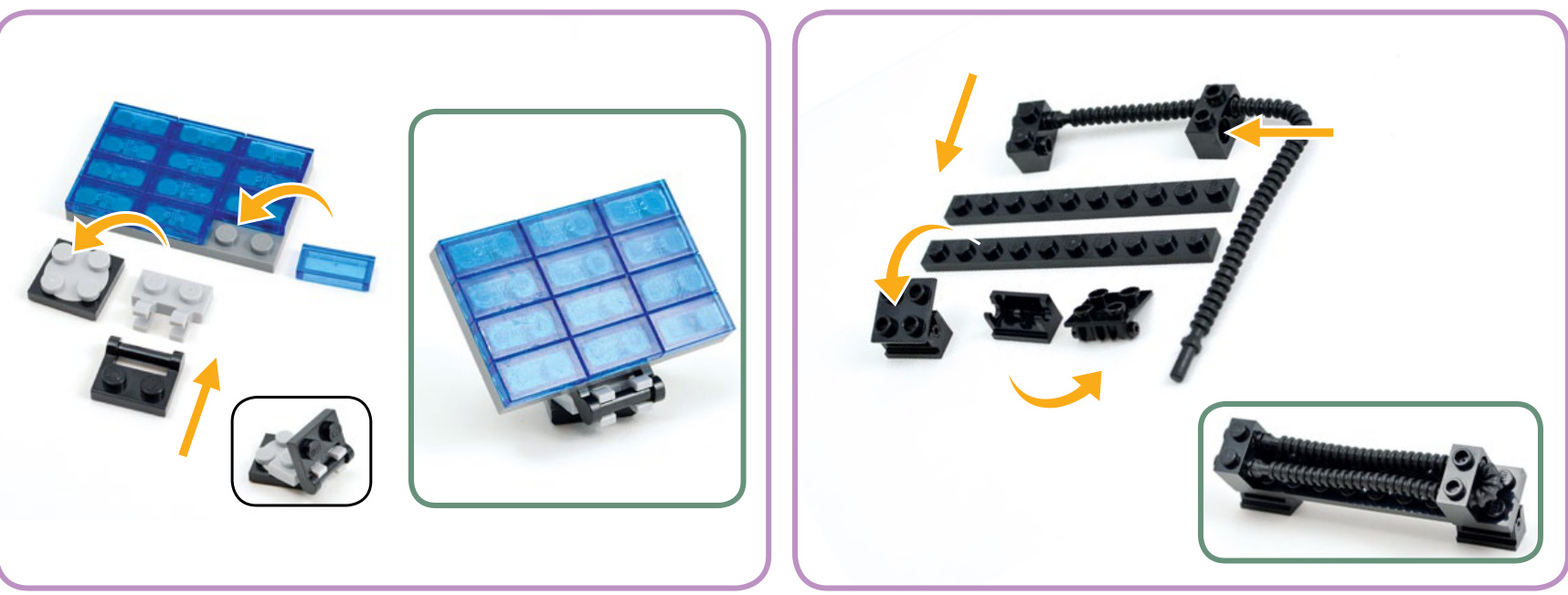
Solar Panel
Hot Water Heater
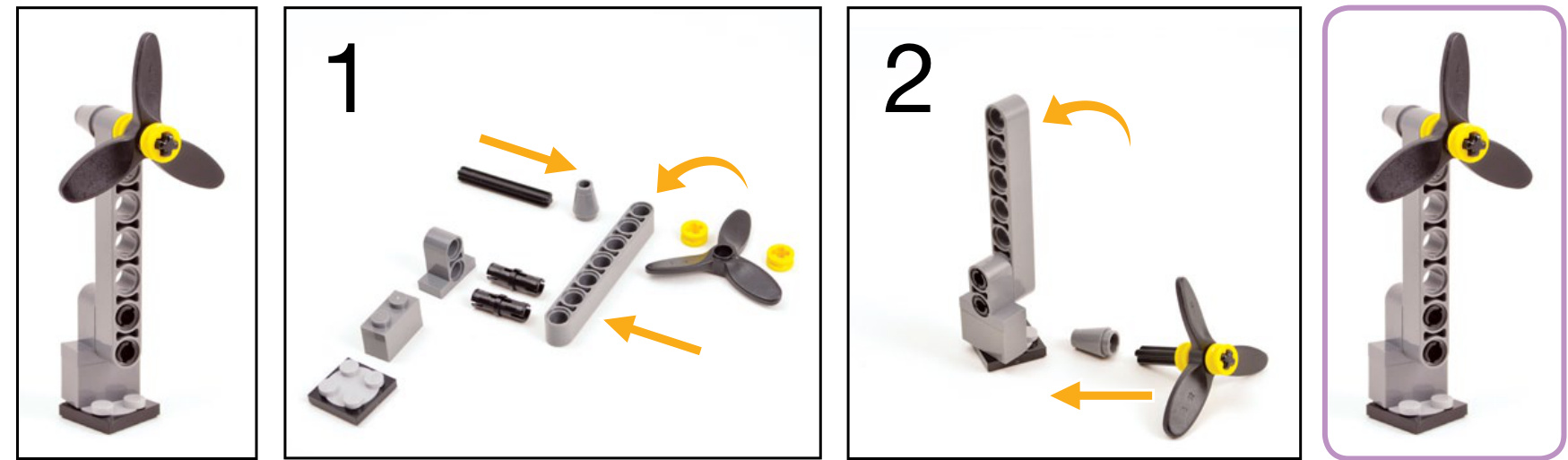
Wind Turbine
Building Journal
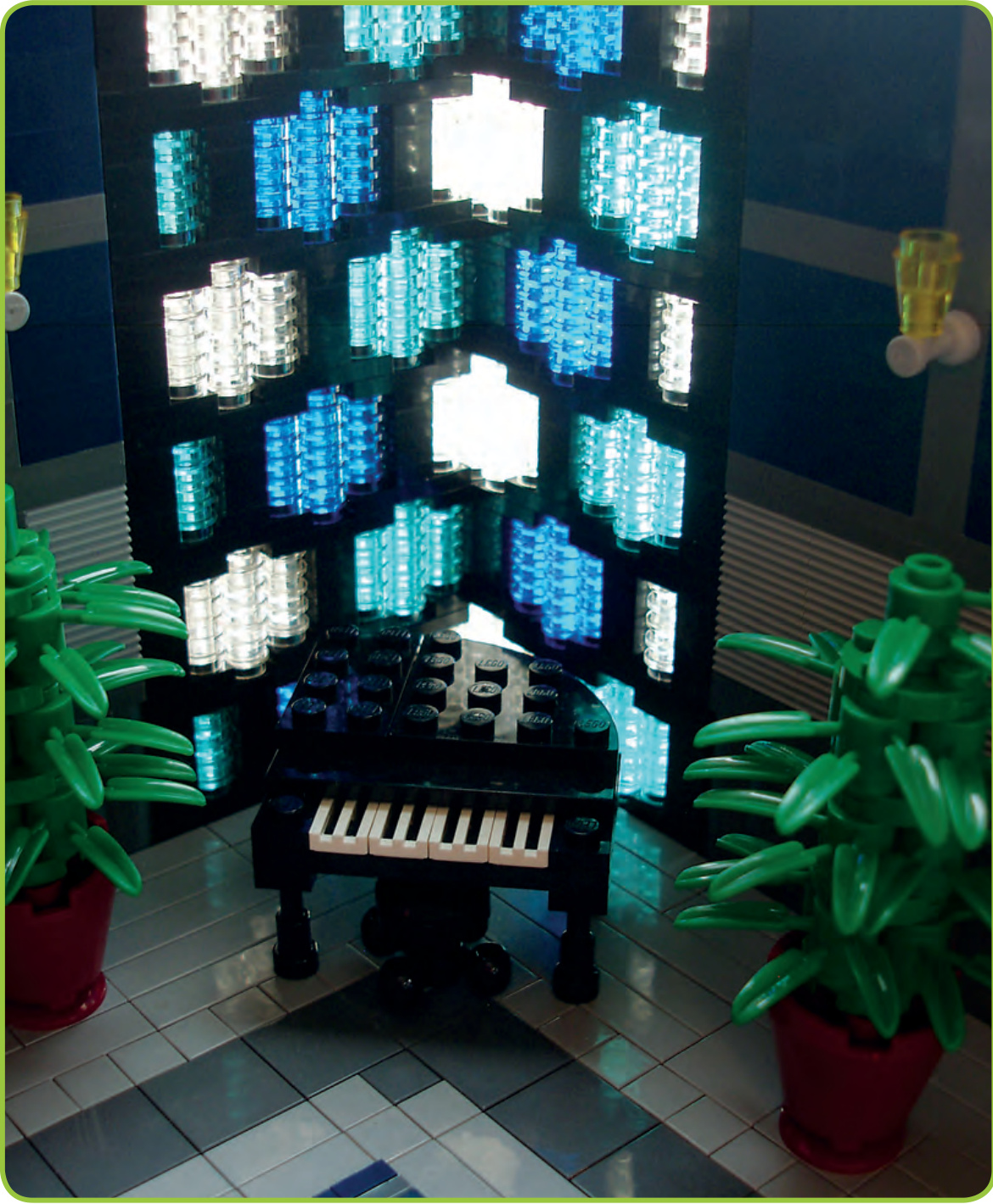
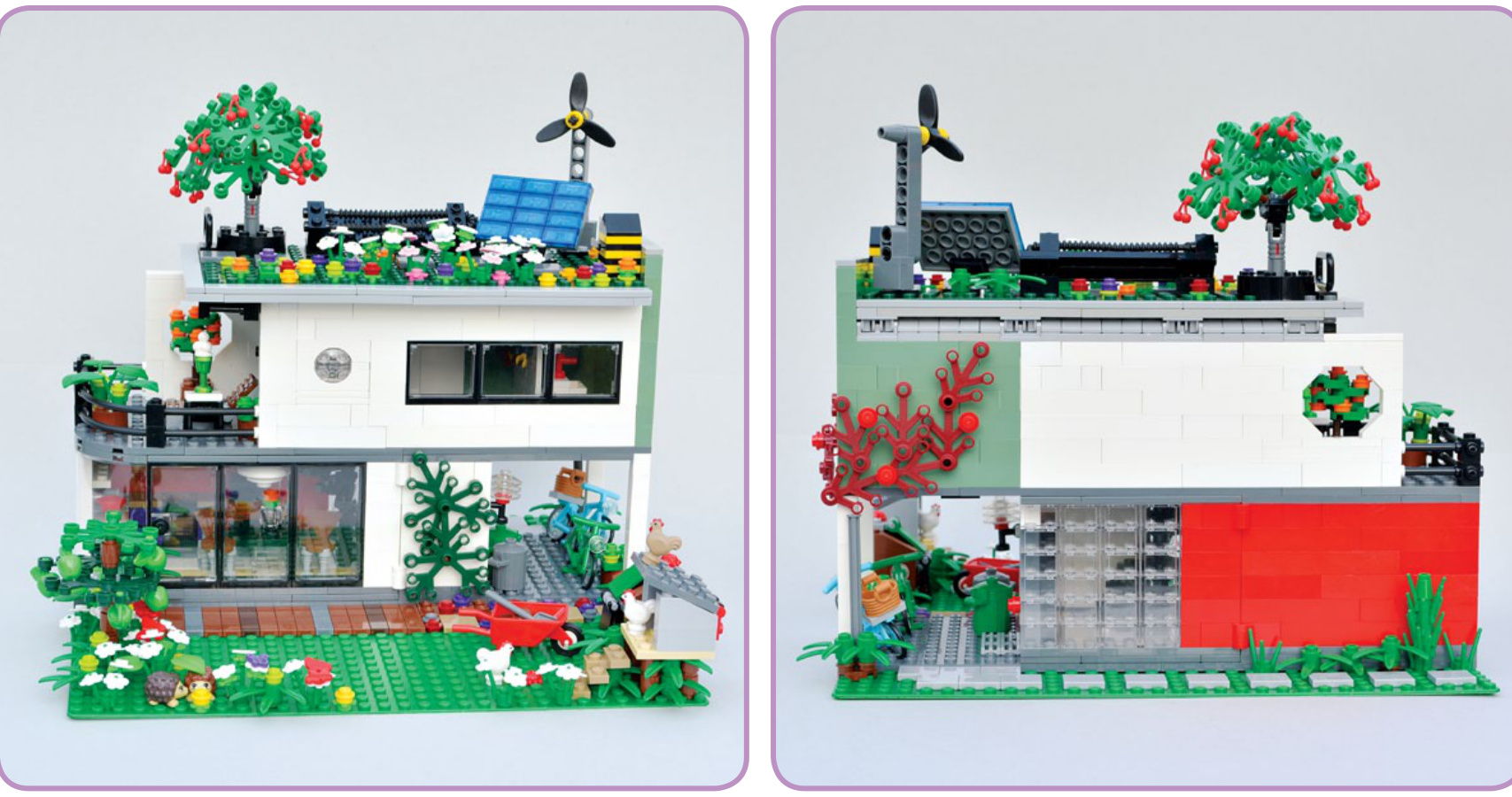
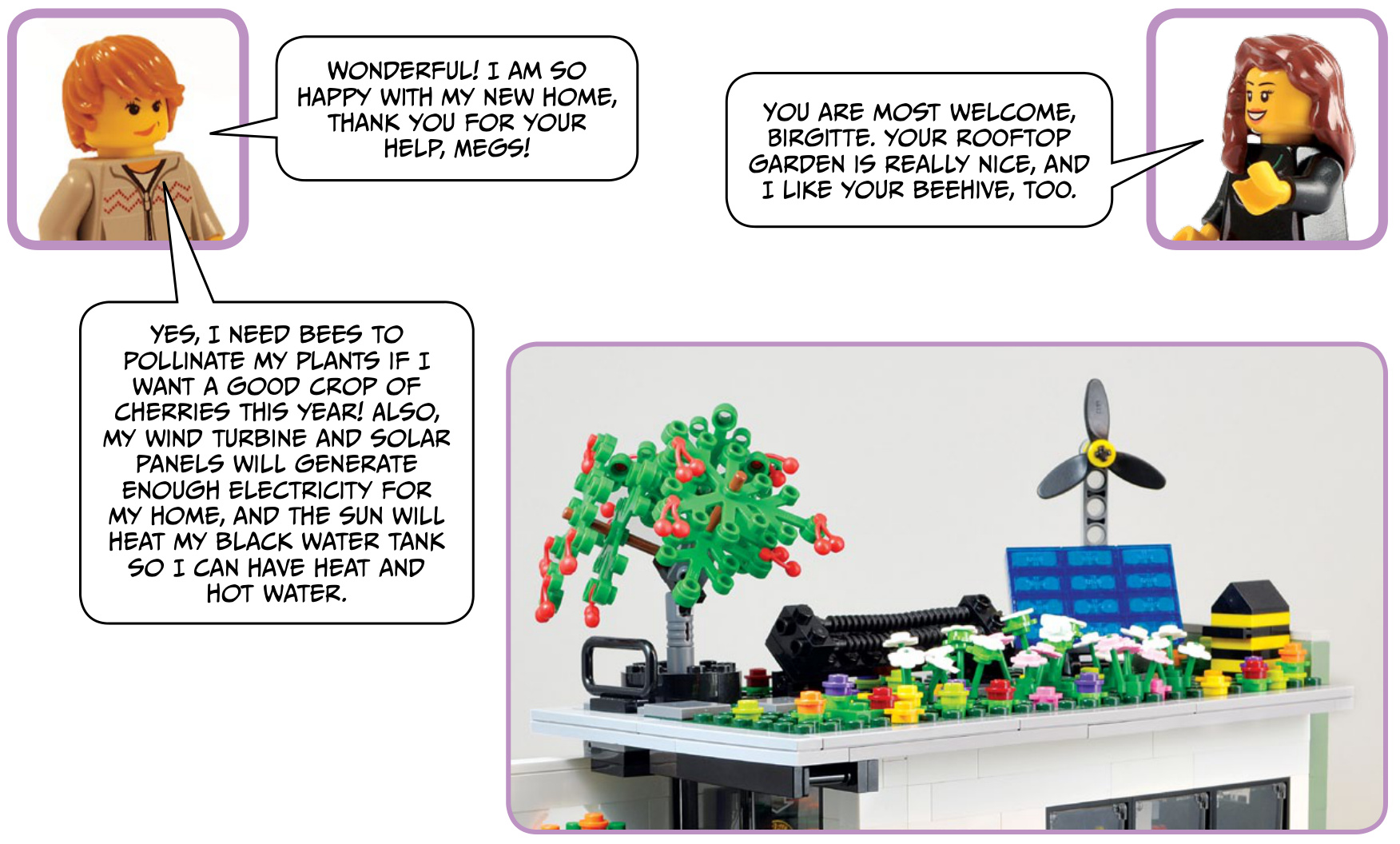
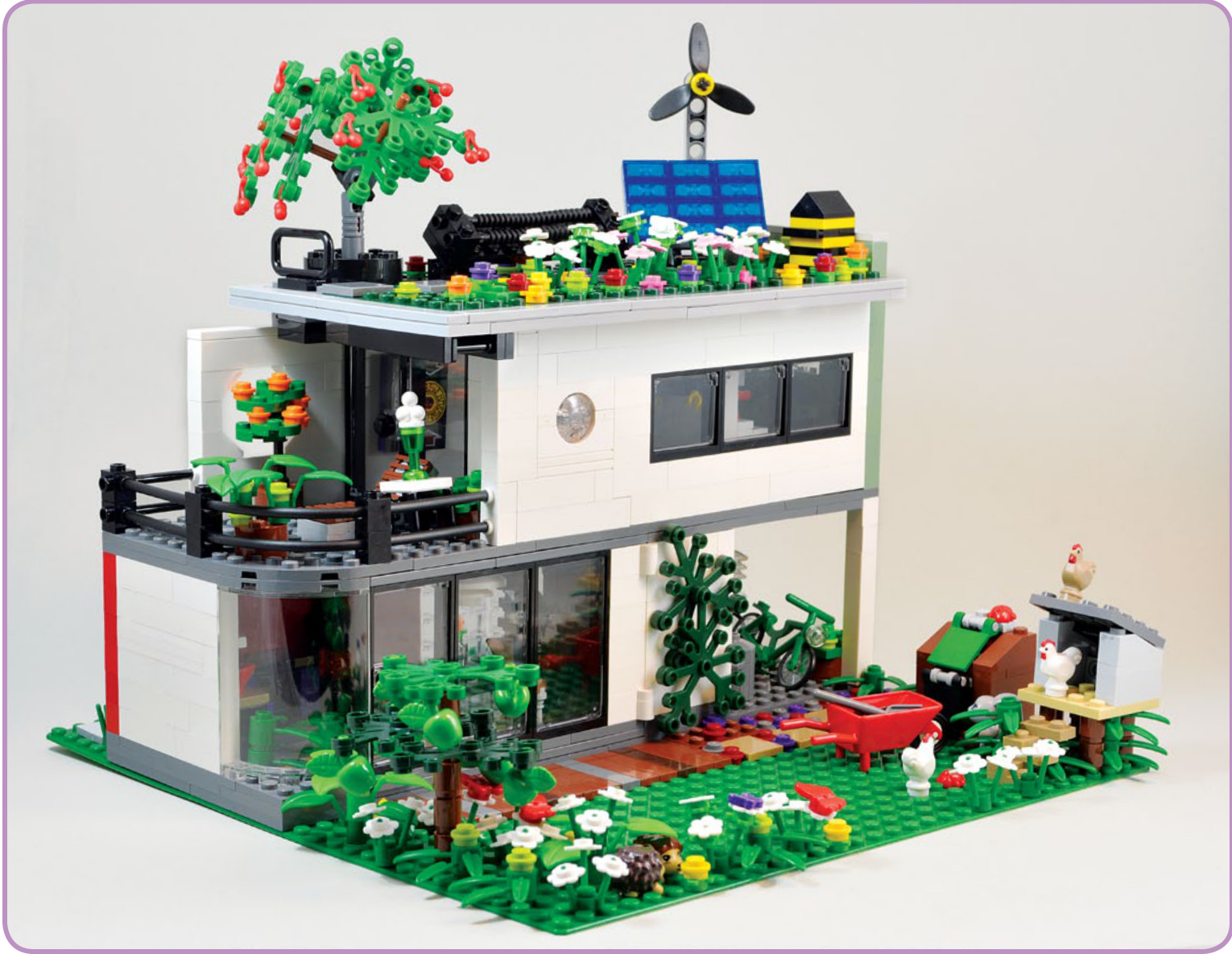
Birgitte’s Eden Eco Villa is brilliant! She has really put a lot of thought into planning a space that works for her lifestyle. Her choice of white with muted “sand” tones creates a clean look and a calm and relaxing space. At the same time, adding a splash of red to one of the walls helps to warm it up.
Building in so much detail gives a sense of realism. She told me that she pays attention to the things that surround her, like tiles, weeds, doormats, and trees. Attention to all of these details brings everything together. Her new pad is truly Zen. My Thinking Tower could use some of her touches.


A LEGO Town Revisited

Craig Mandeville
Nickname: Solitary Dark
Profession: Aircraft Parts Manager
Nationality: British
Website: www.flickr.com/photos/36416029@N06/
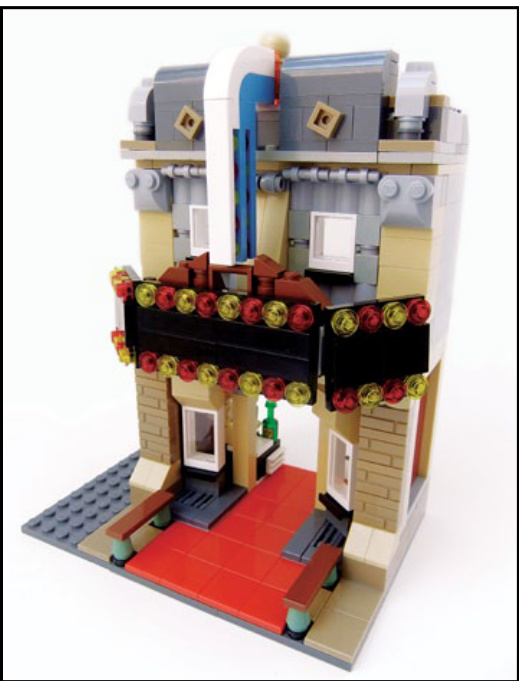
Arcata Deco Cinema

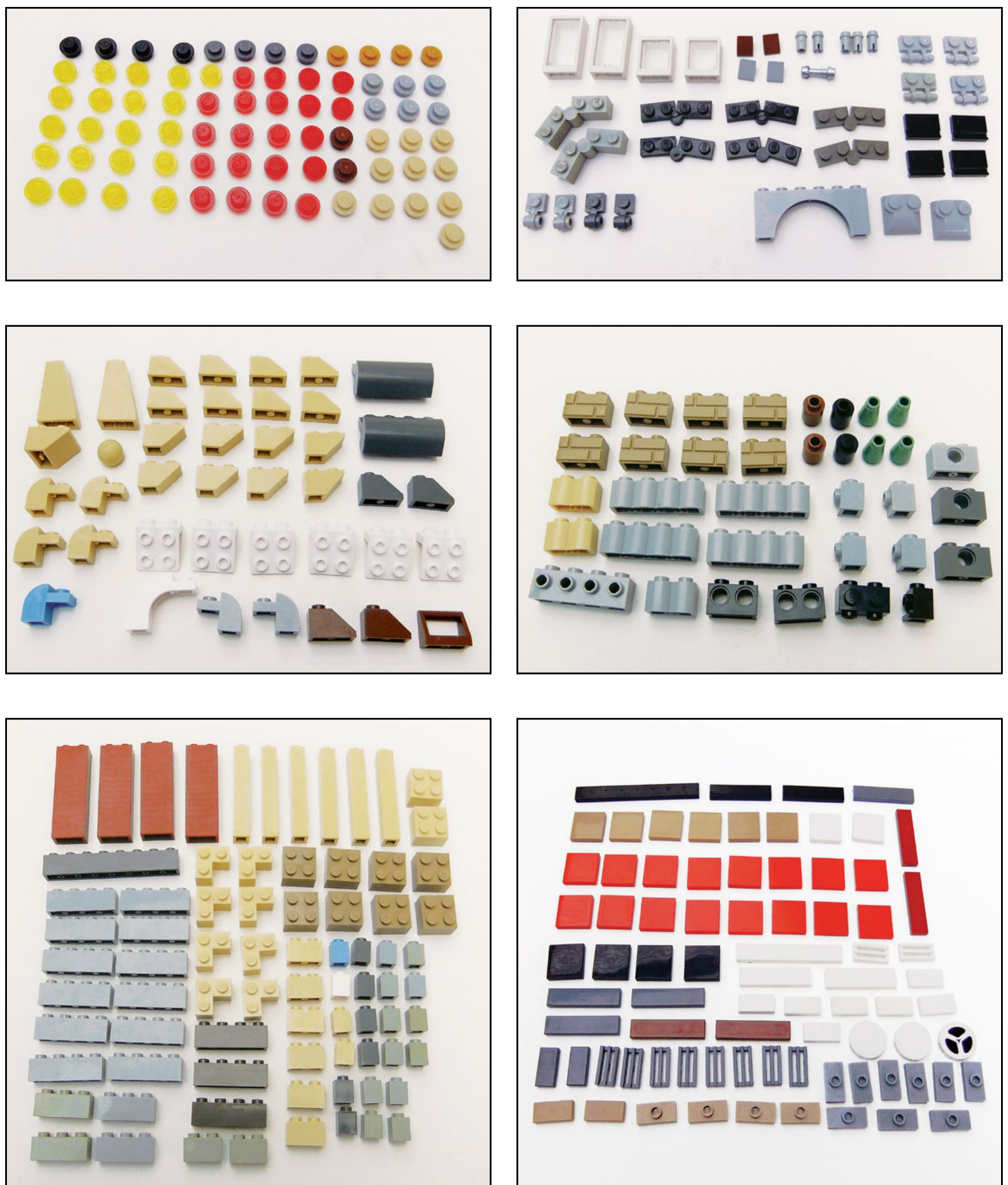
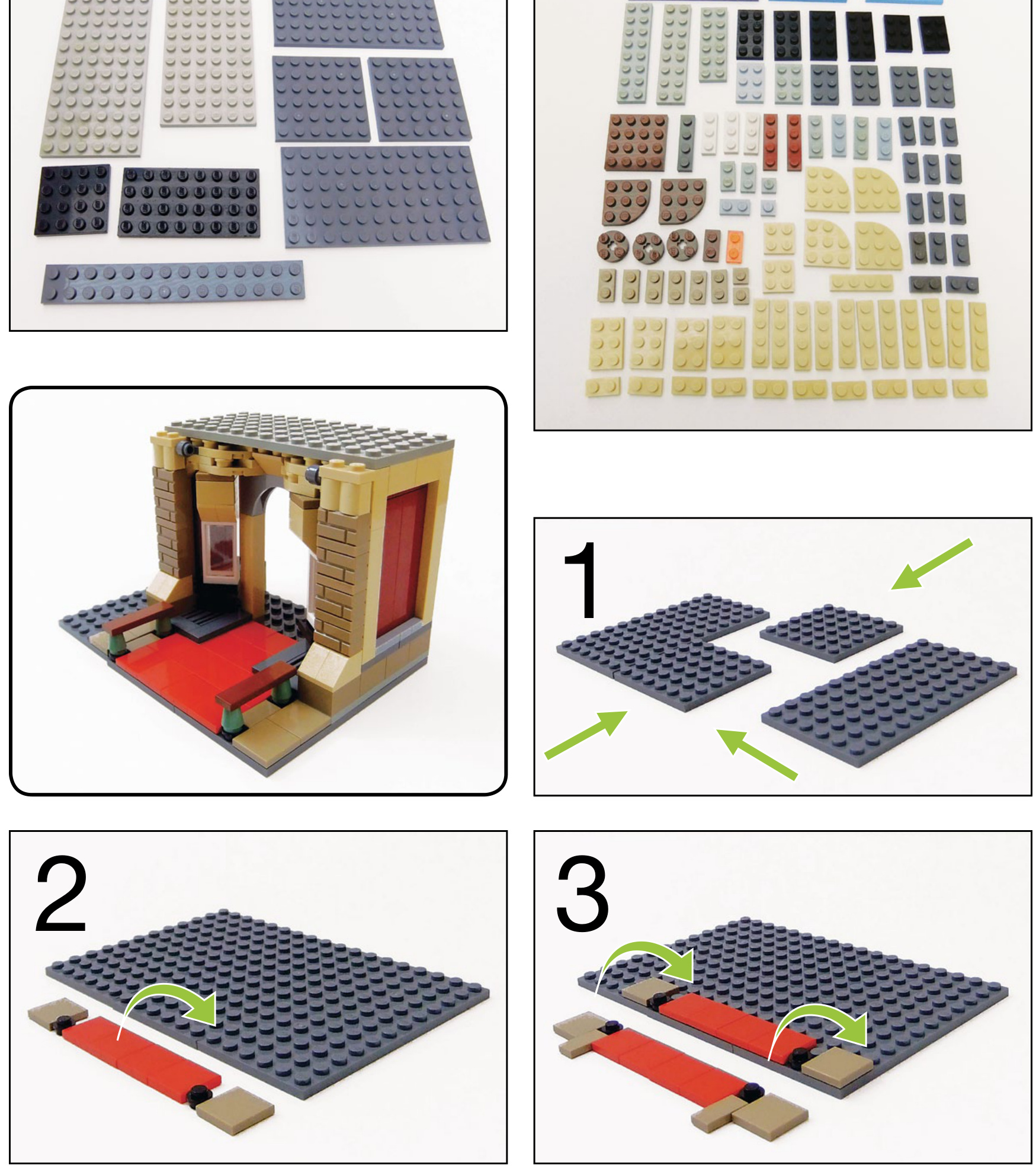
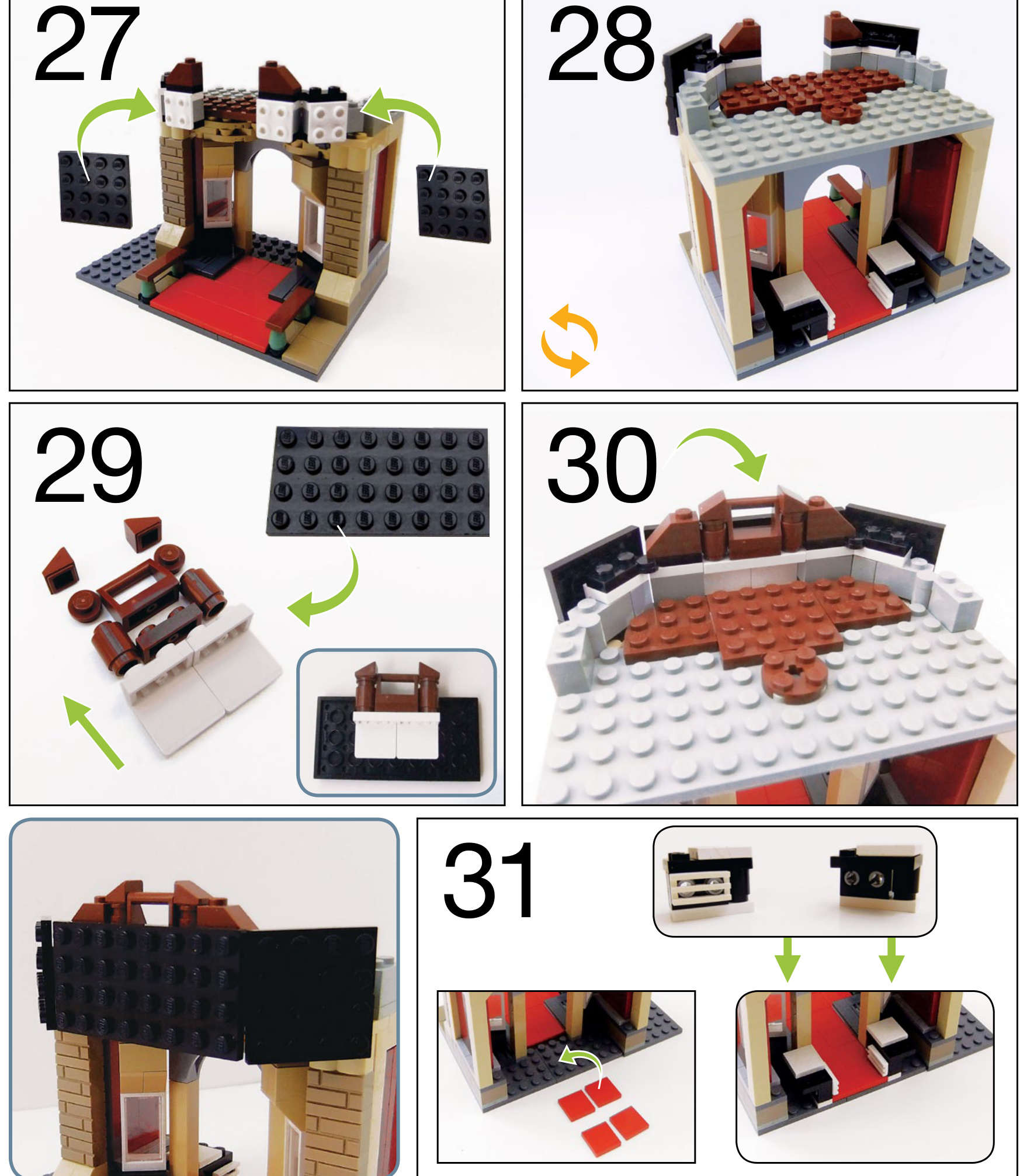
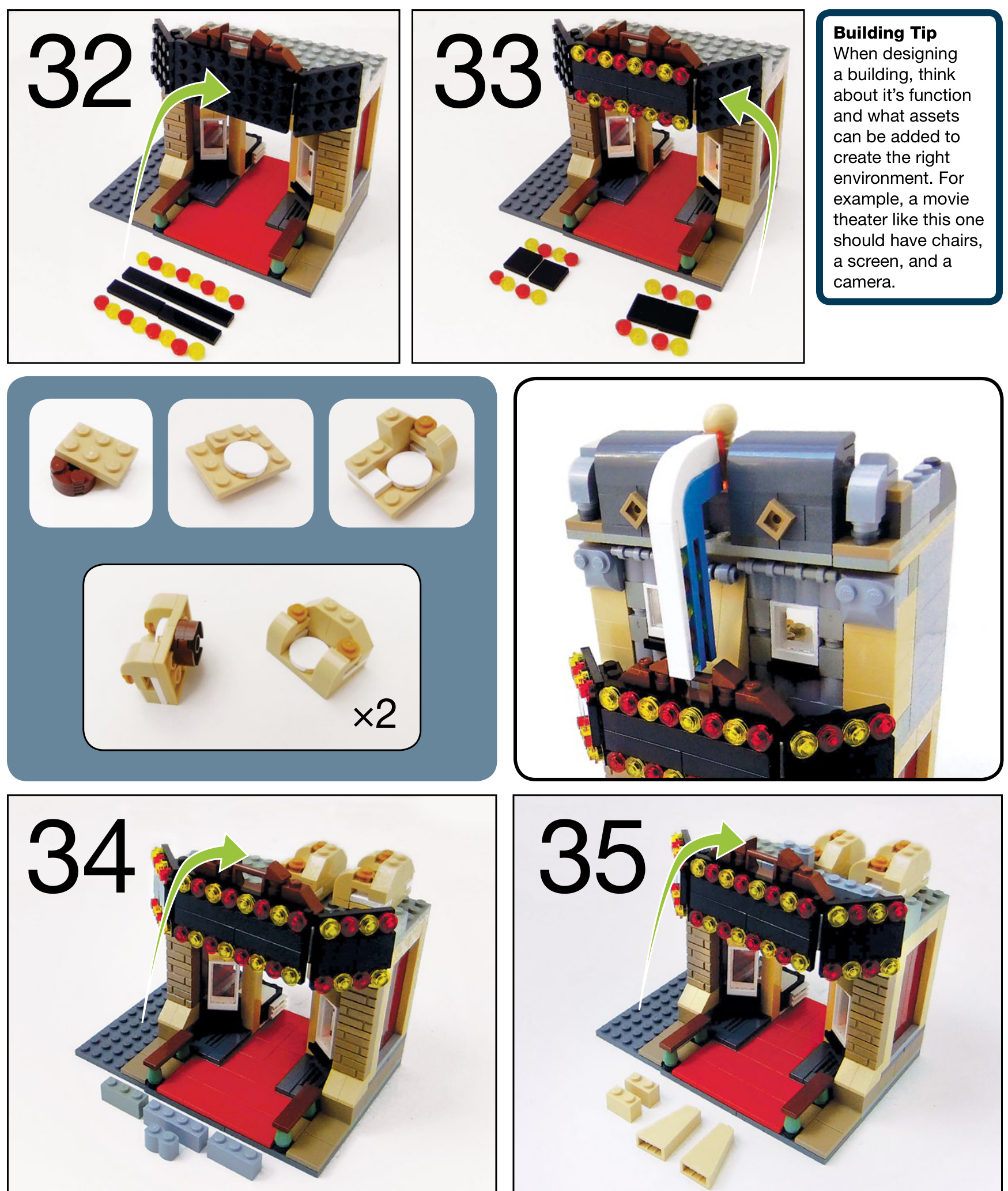
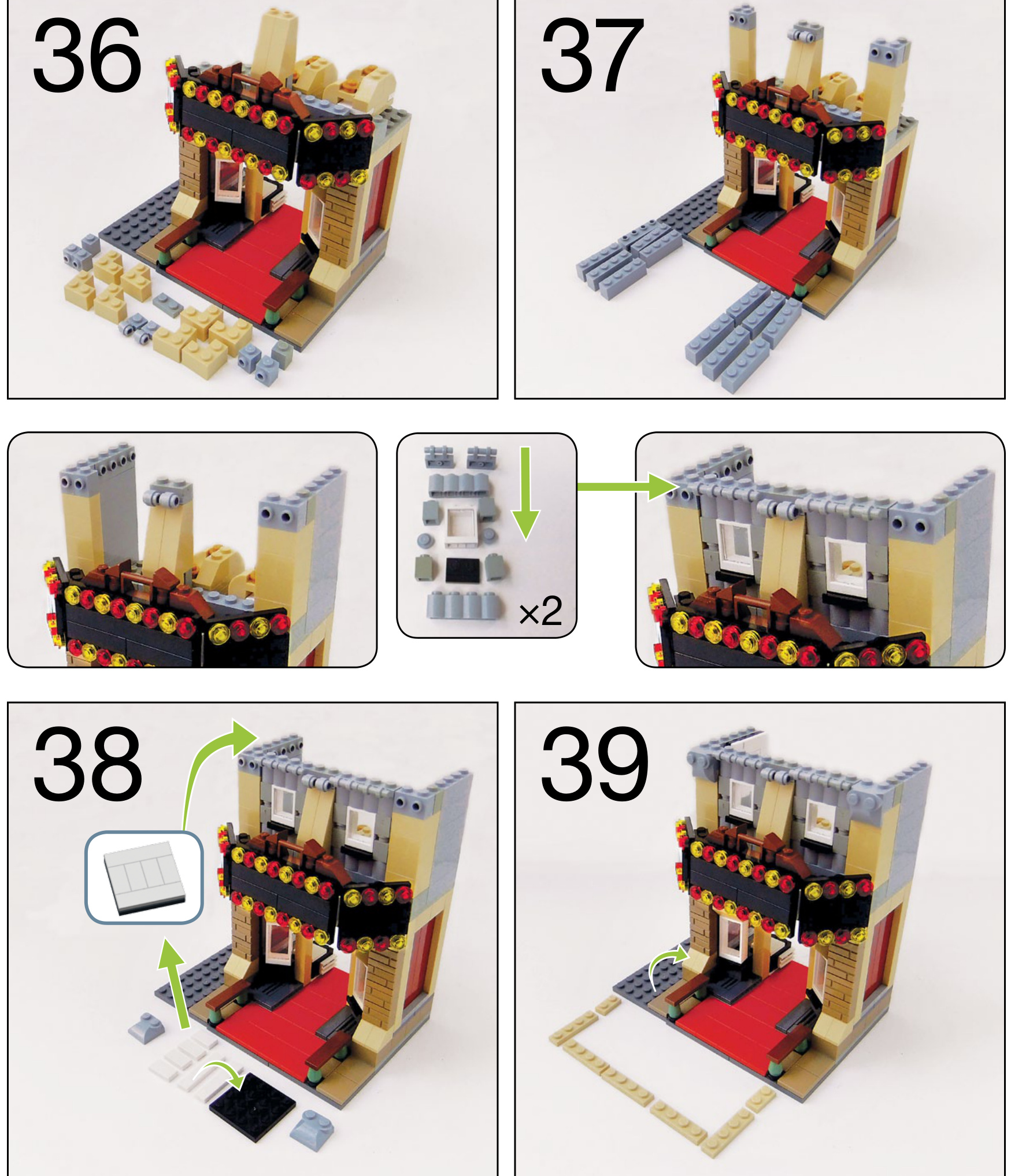
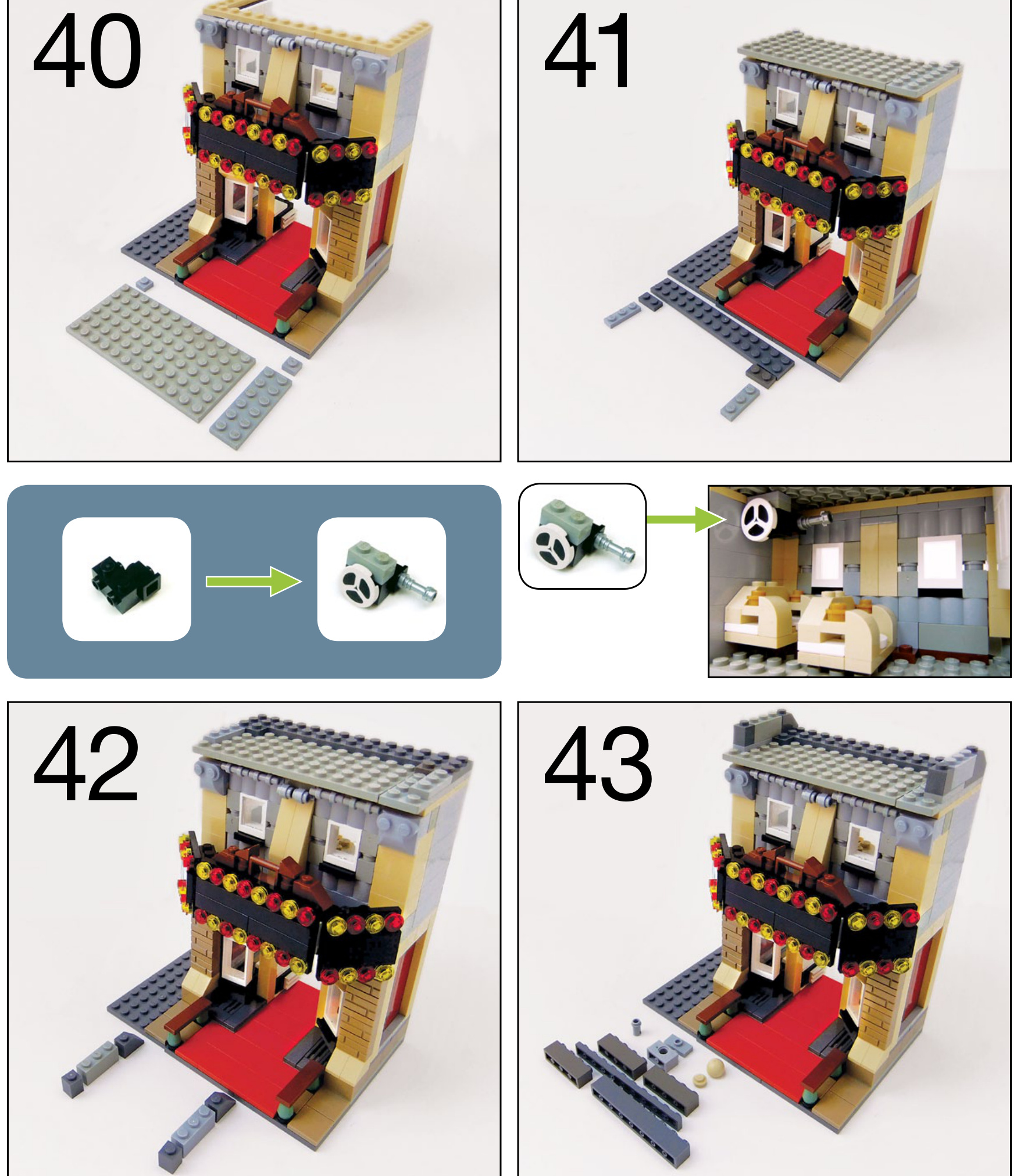
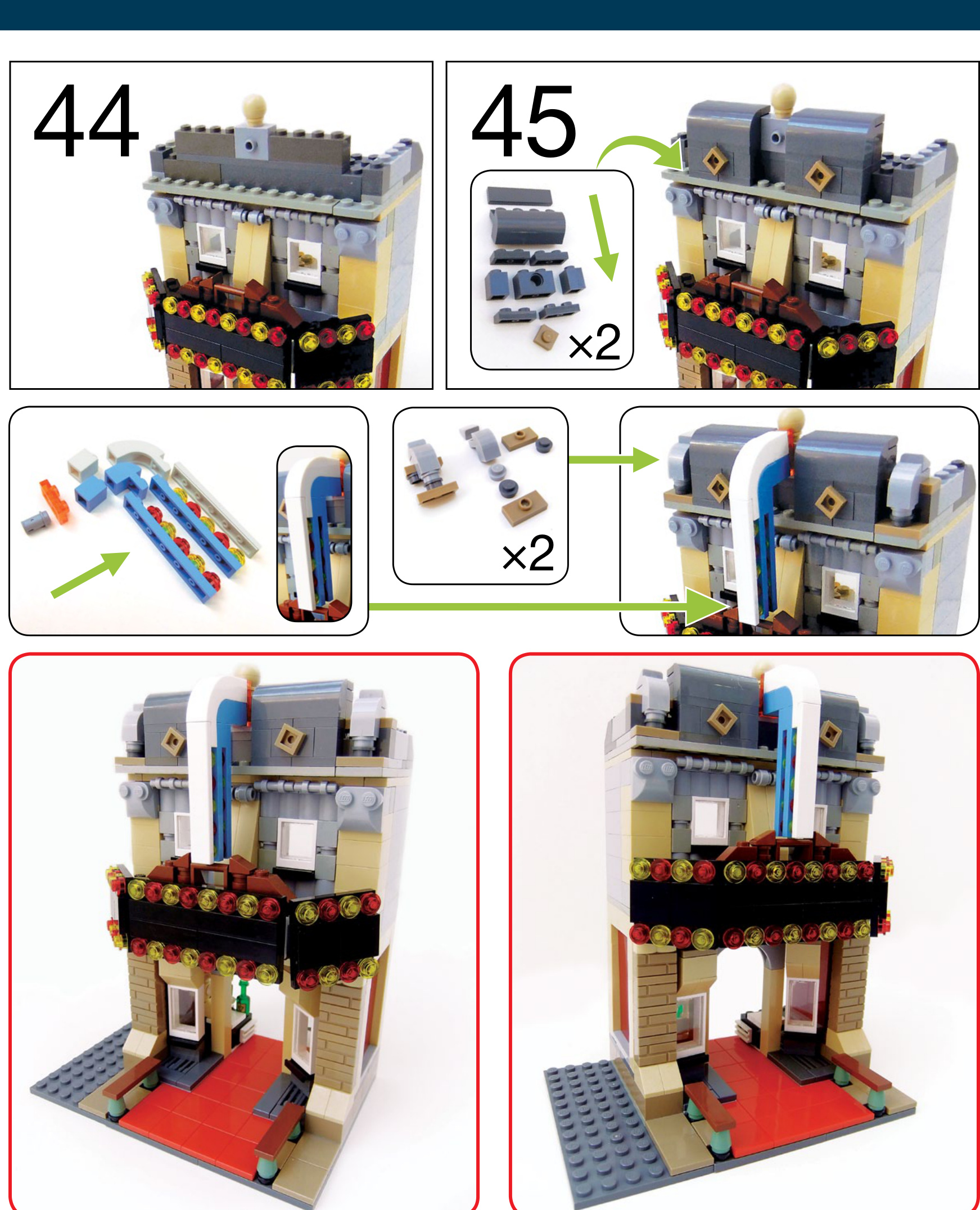
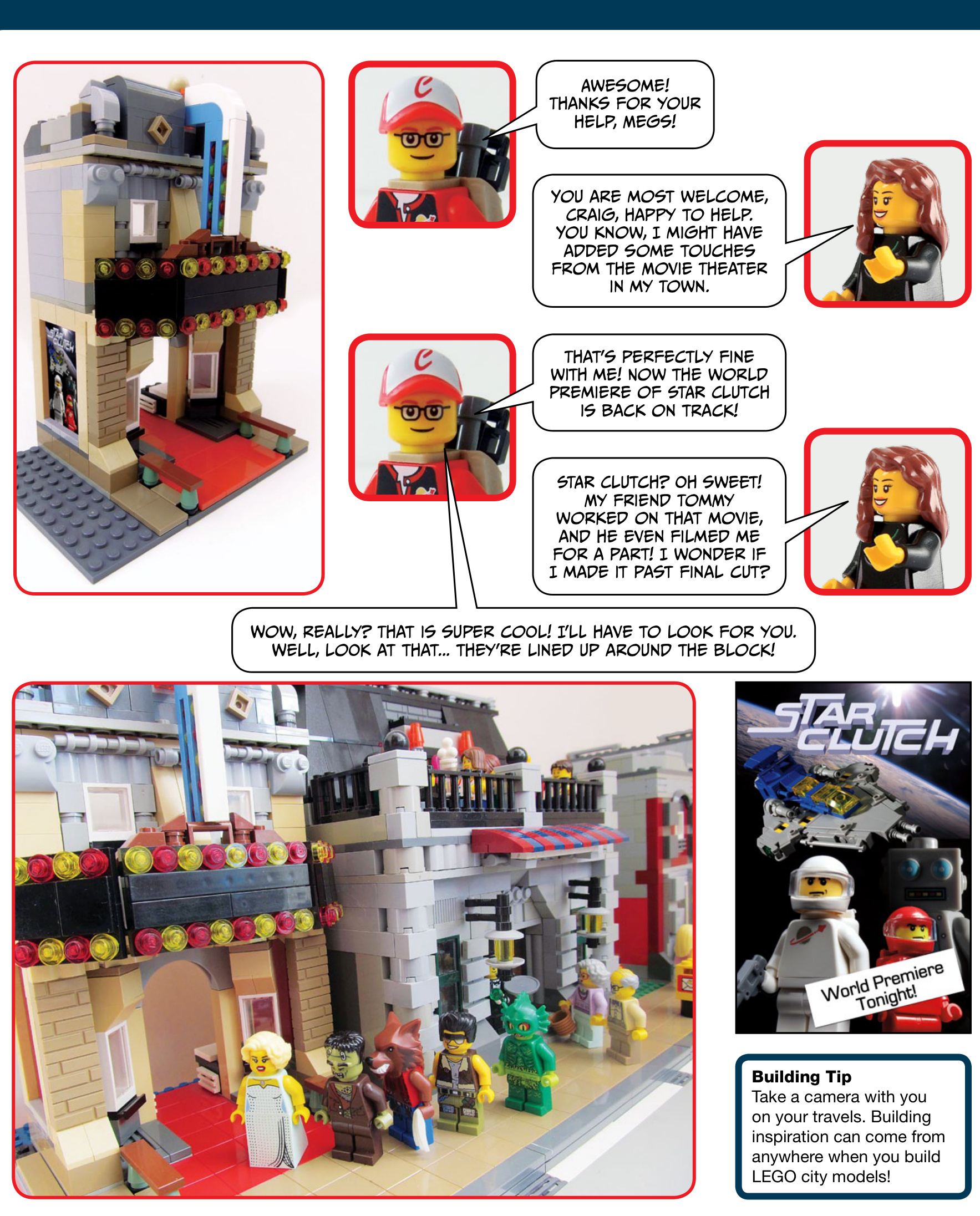
BUILDING JOURNAL
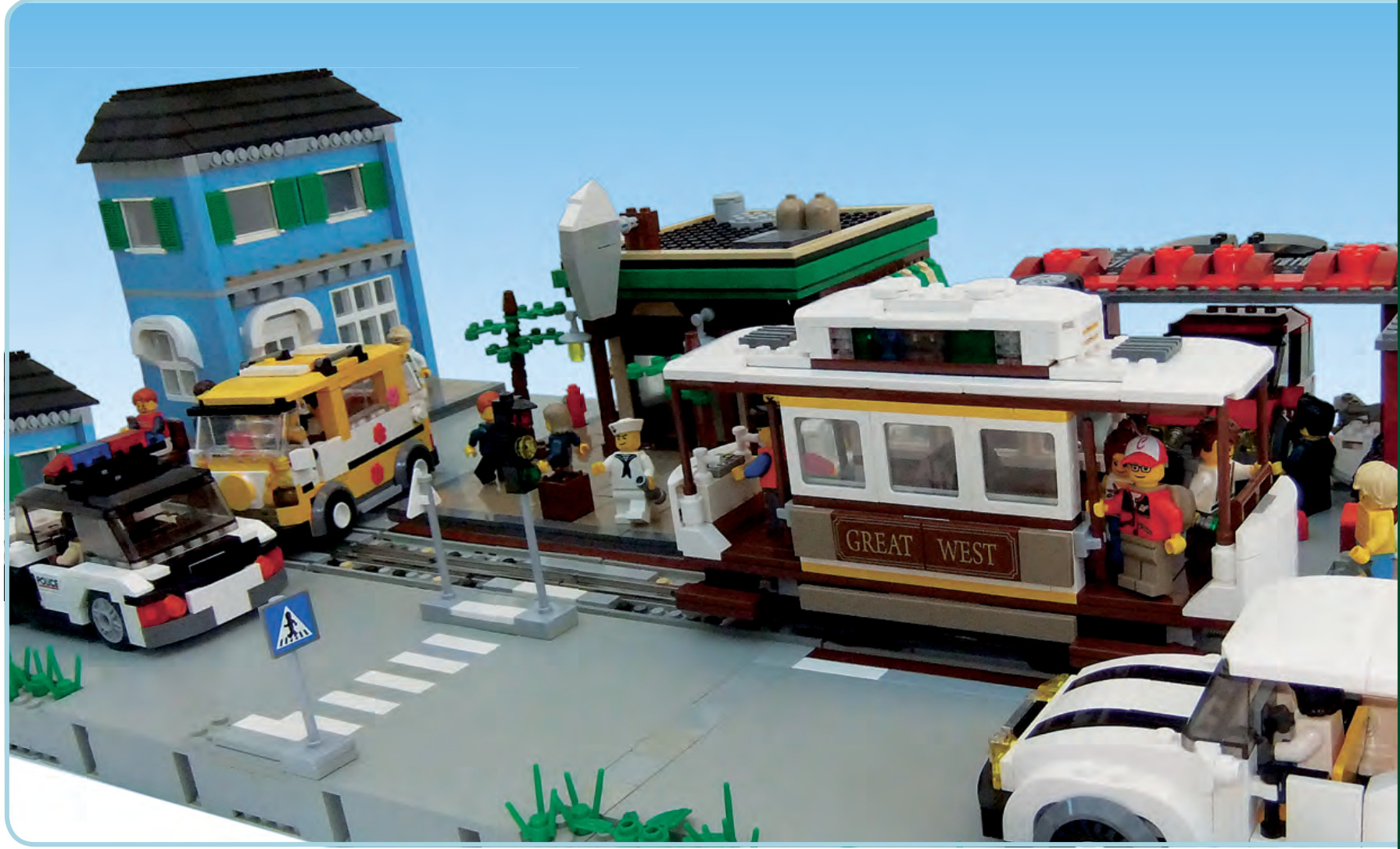
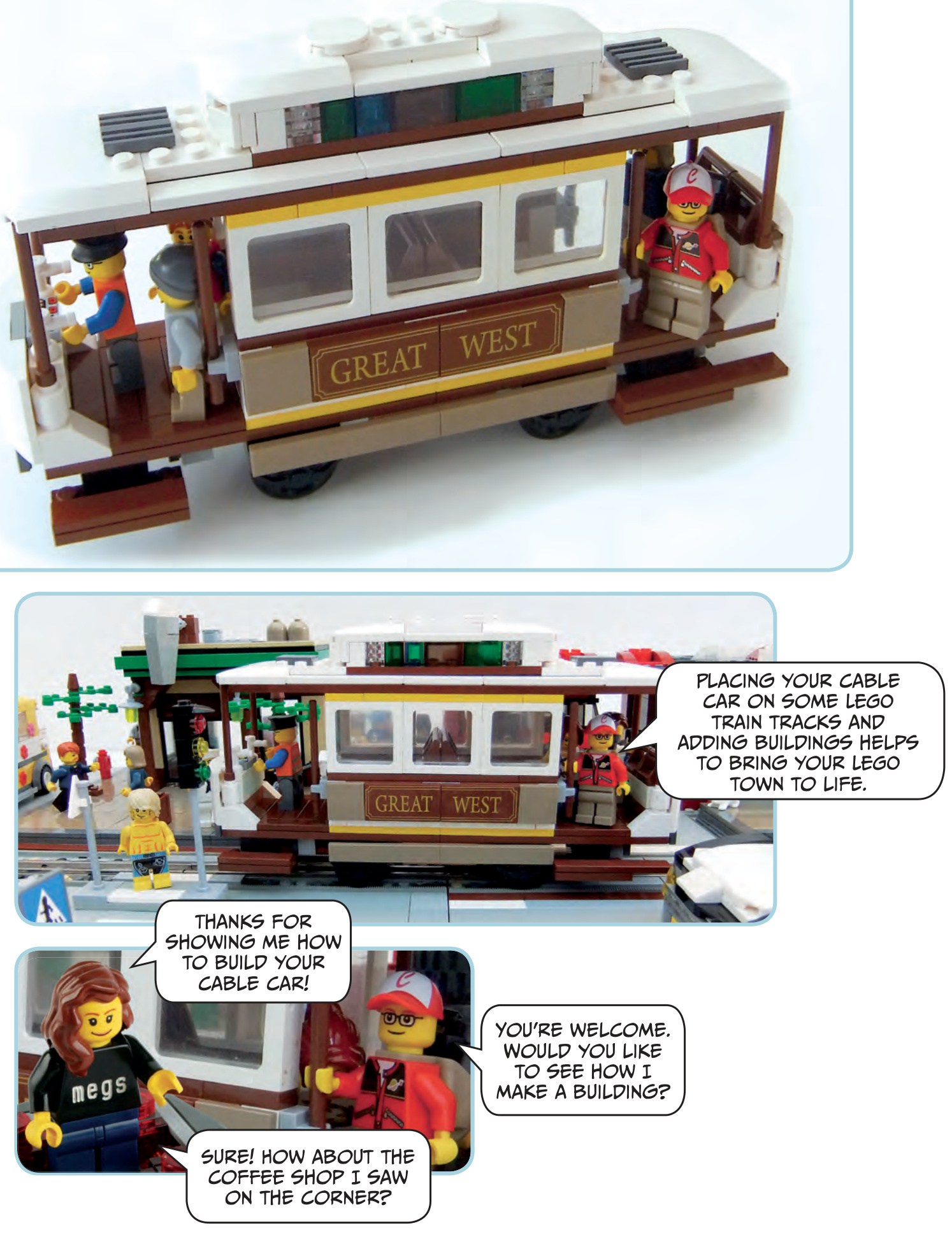
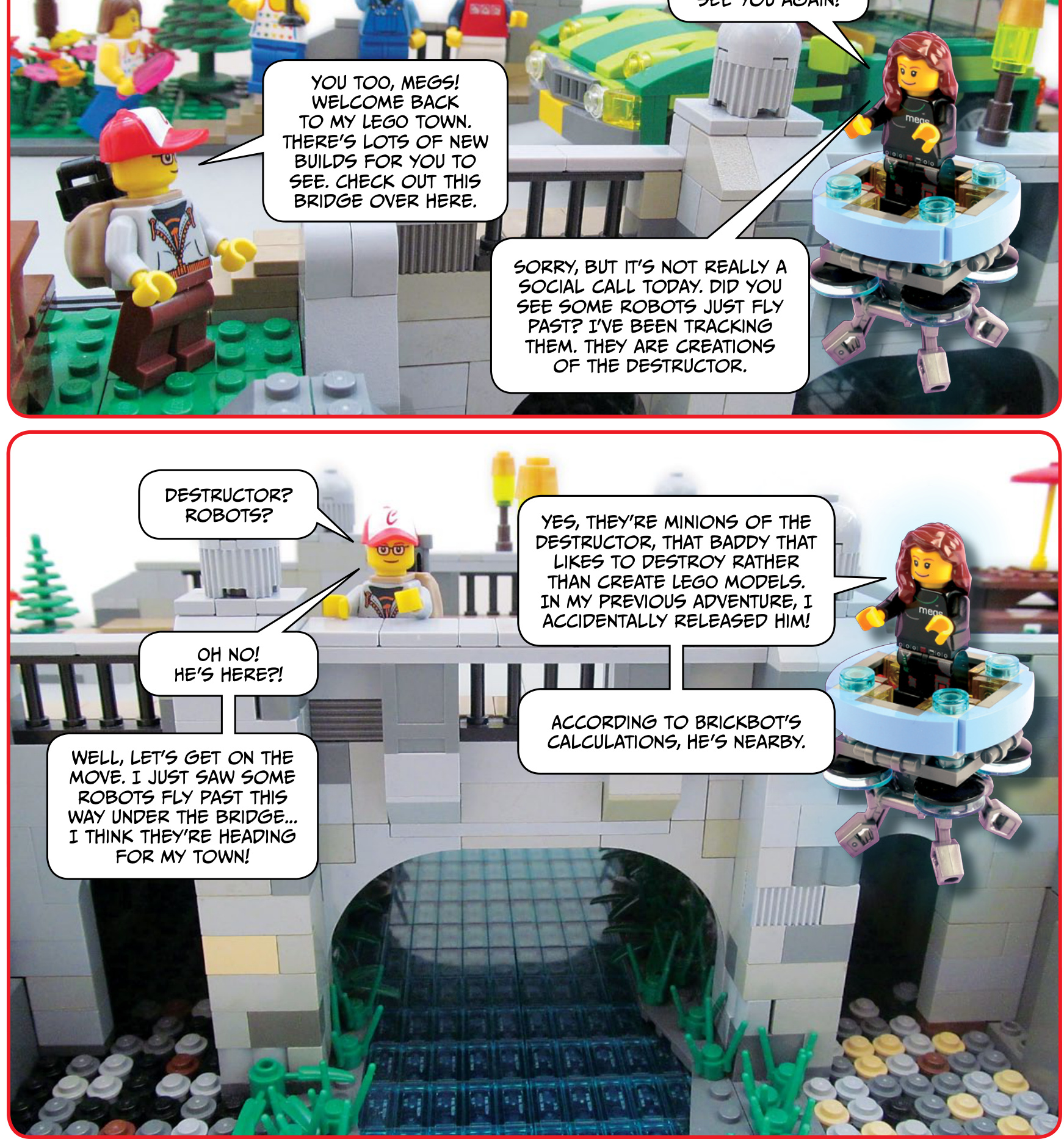
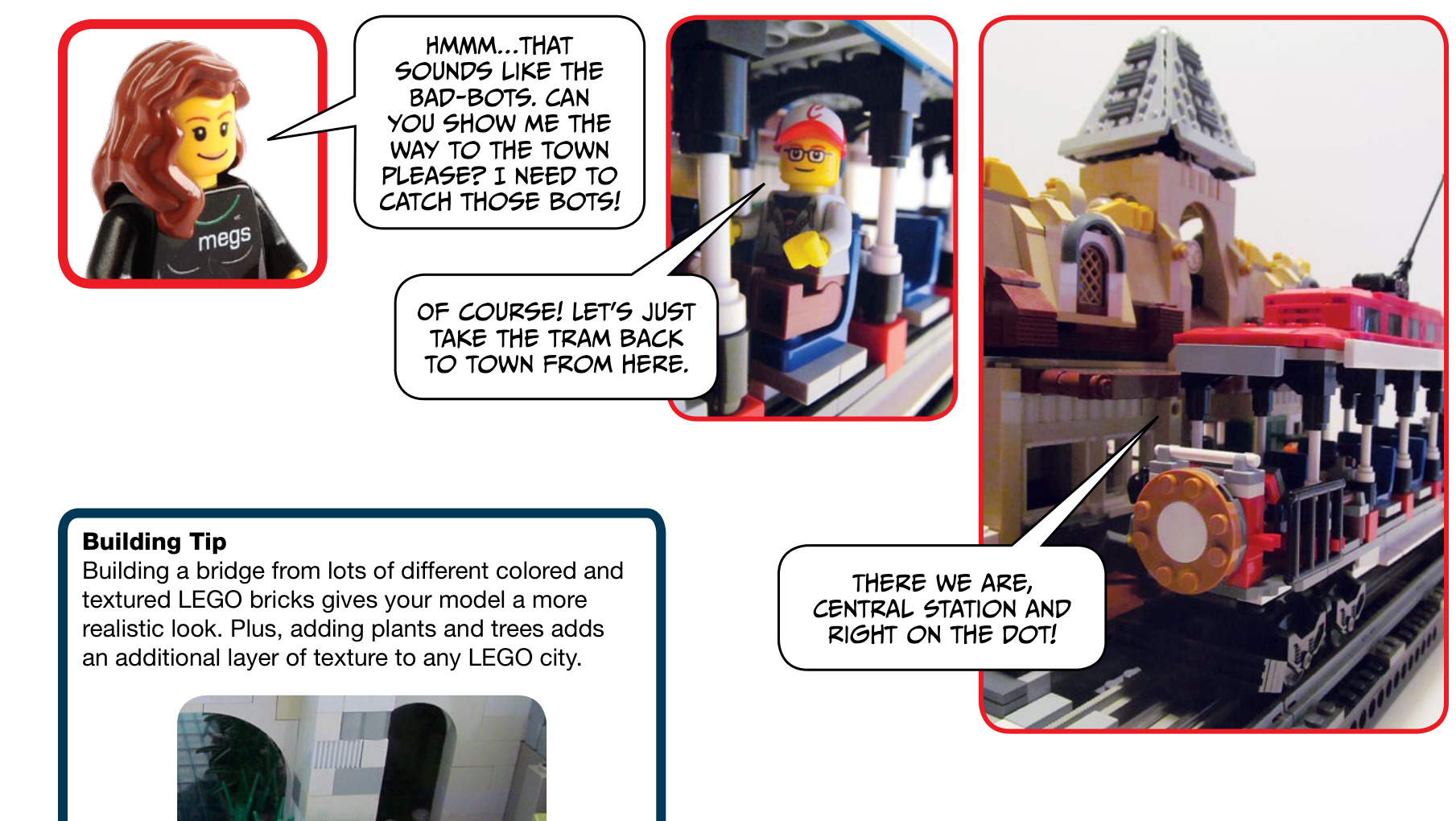
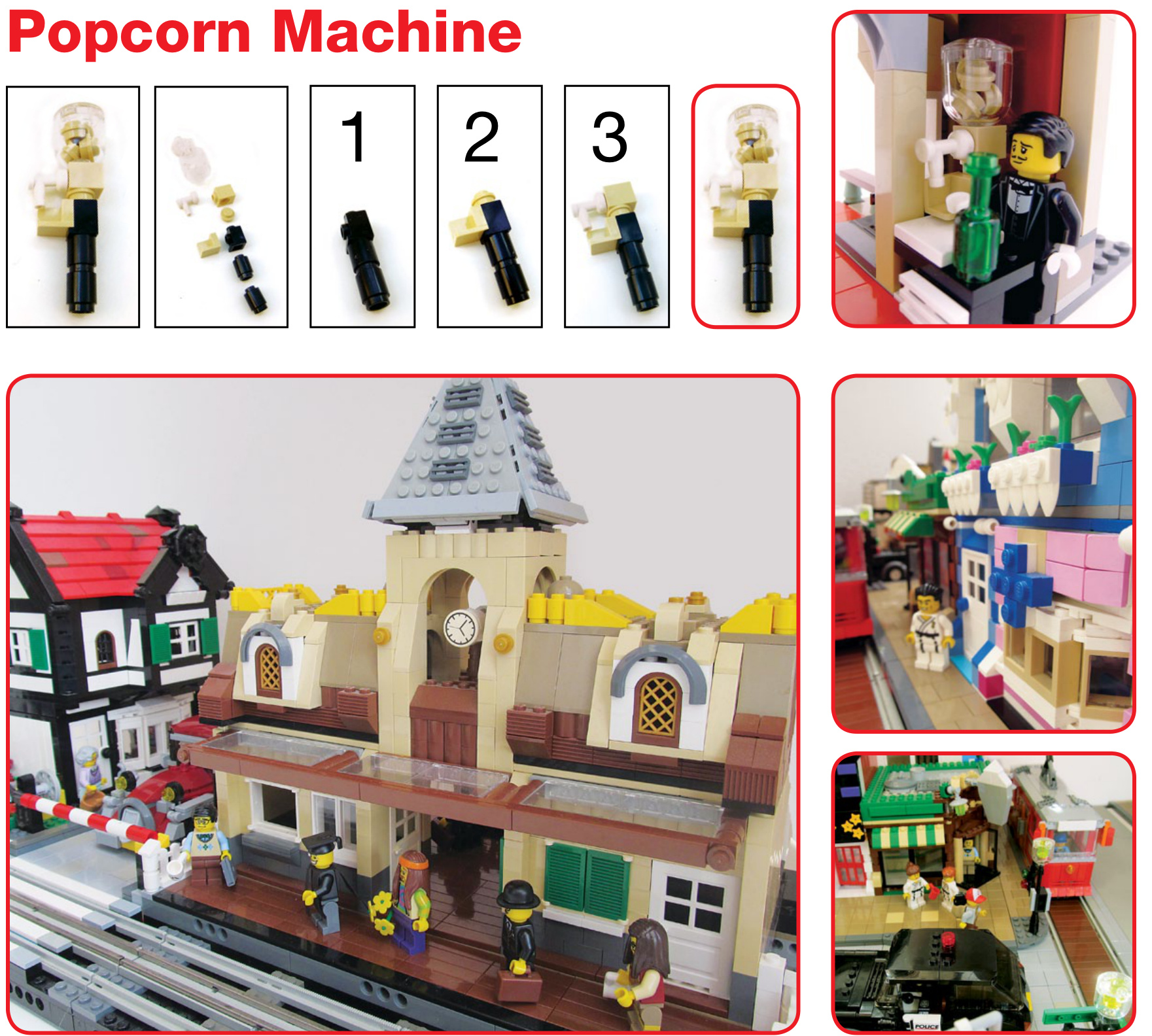
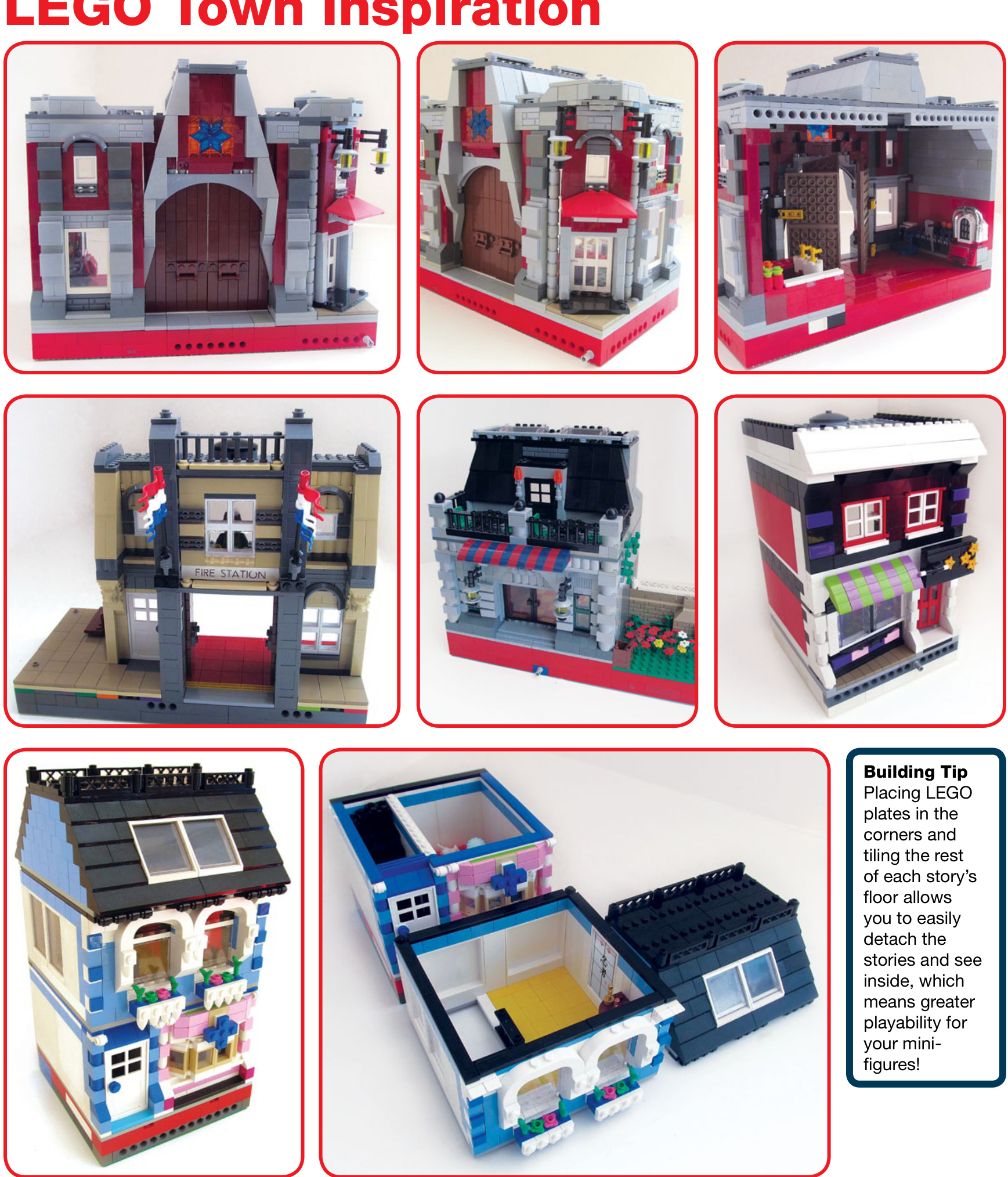
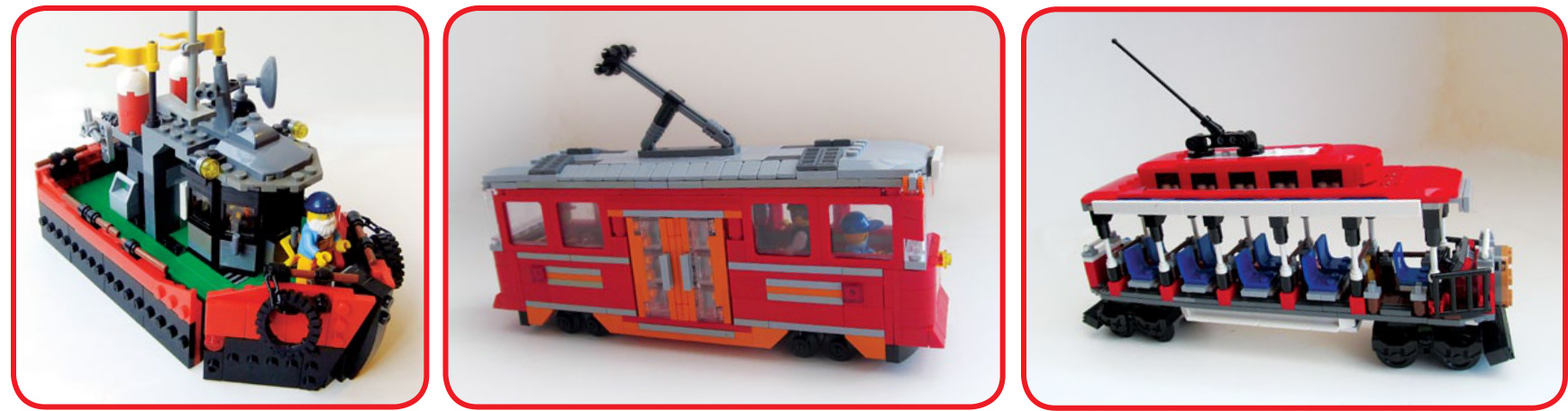
One of the great things about building a LEGO city is that you can build in many styles from many eras. Cities grow over the years, so each part can reflect the time when it was built. The oldest part of Craig’s town is based on Victorian England. Trams like those he has built are still in use in parts of England today. He told me that he also loves building a wide variety of vehicles to go with his town. This helps to bring his LEGO town to life. Mixing different time periods seems like a great way to build a unique LEGO City.
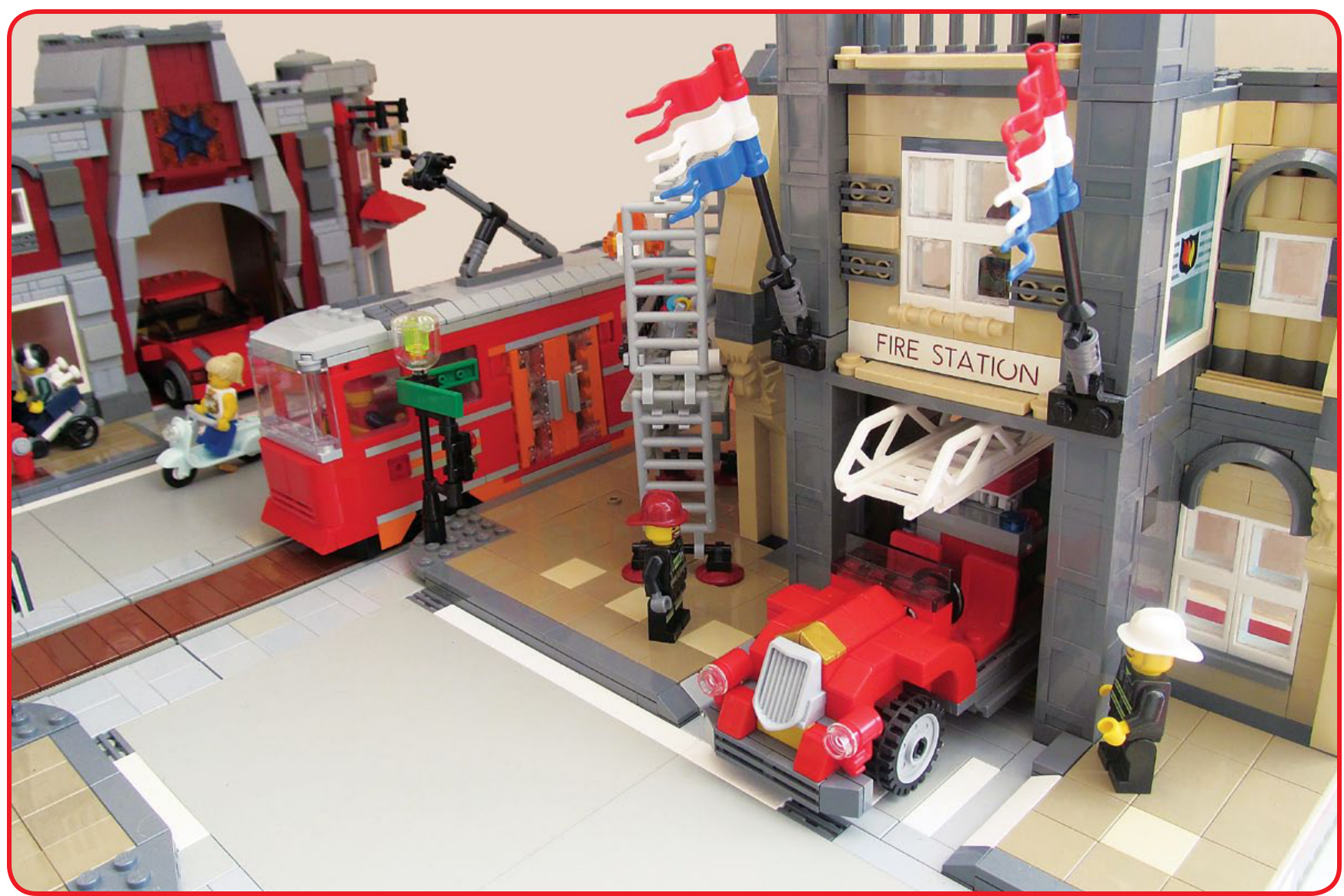
BUILDING JOURNAL
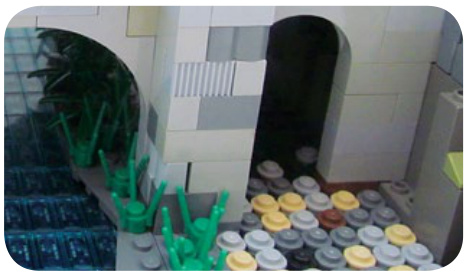
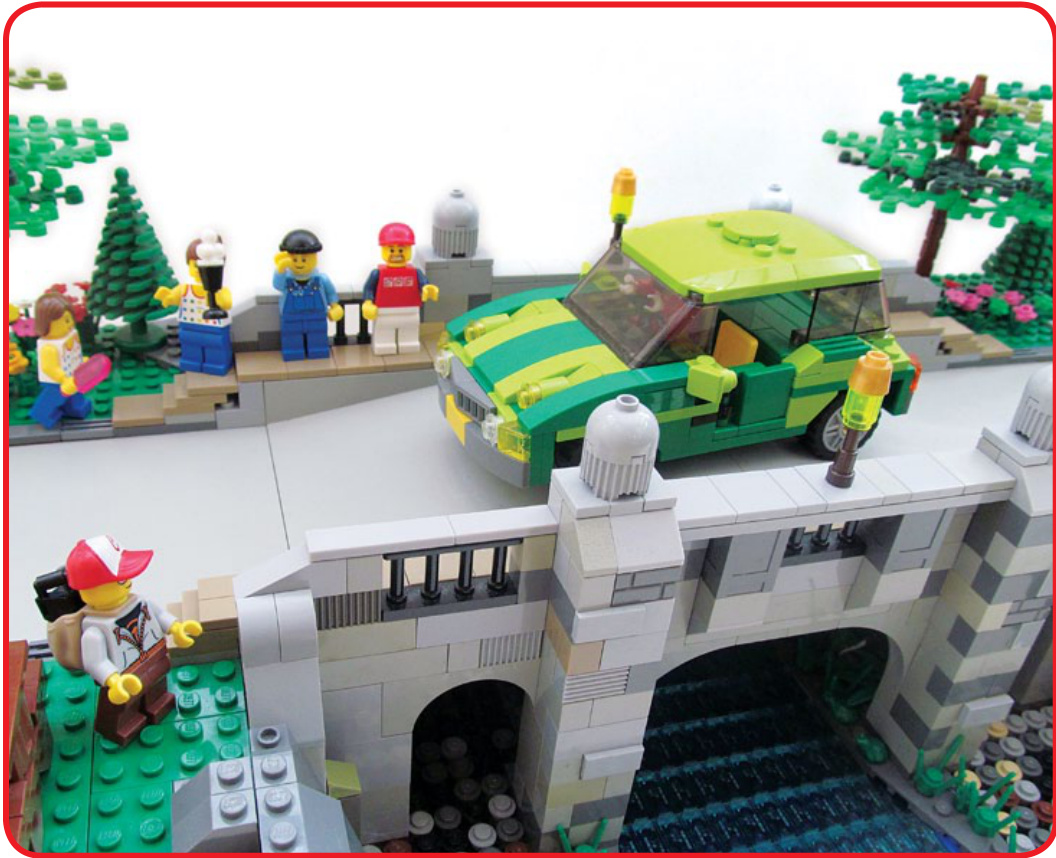
Craig’s models look brilliant! He has shown me that there is so much more to creating a LEGO town than just building houses or fire stations. There can be shops, parks, bridges, and so much more. He shared with me that the next big project for his town is a large bridge that vehicles can travel over and under. Changing the character of a bridge can be as simple as building in LEGO train tracks to make it a railway bridge.
Building Tip
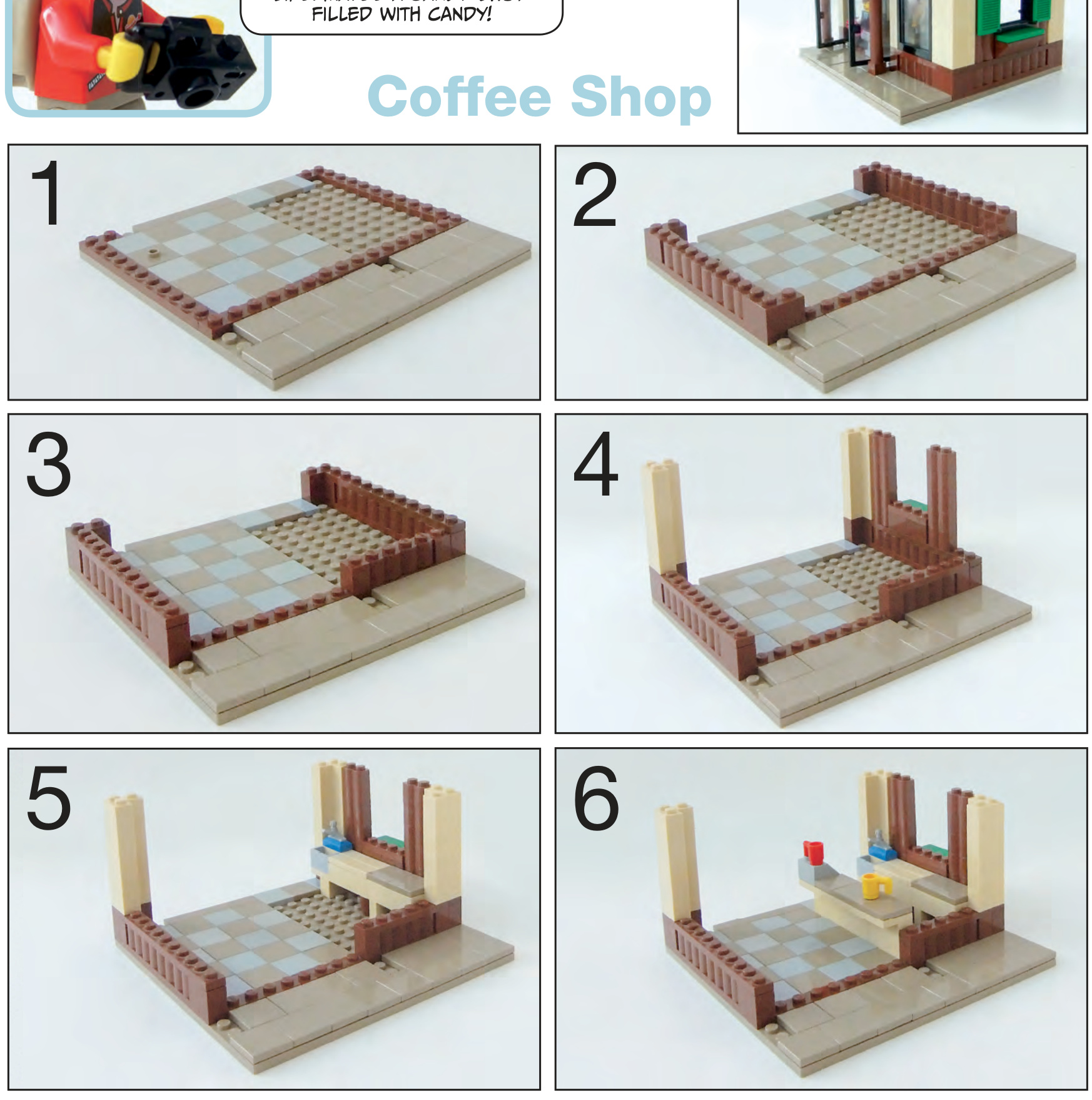
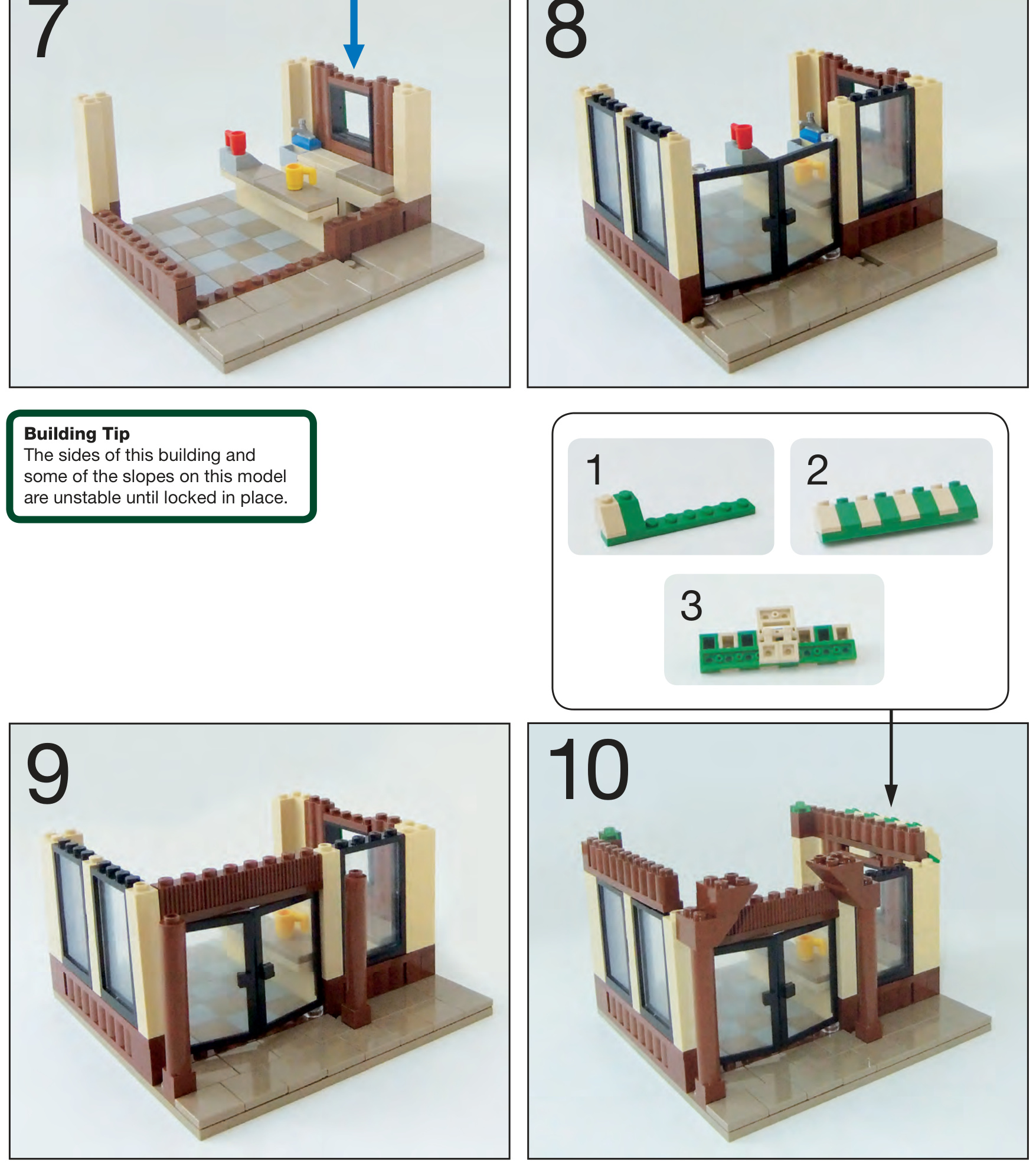
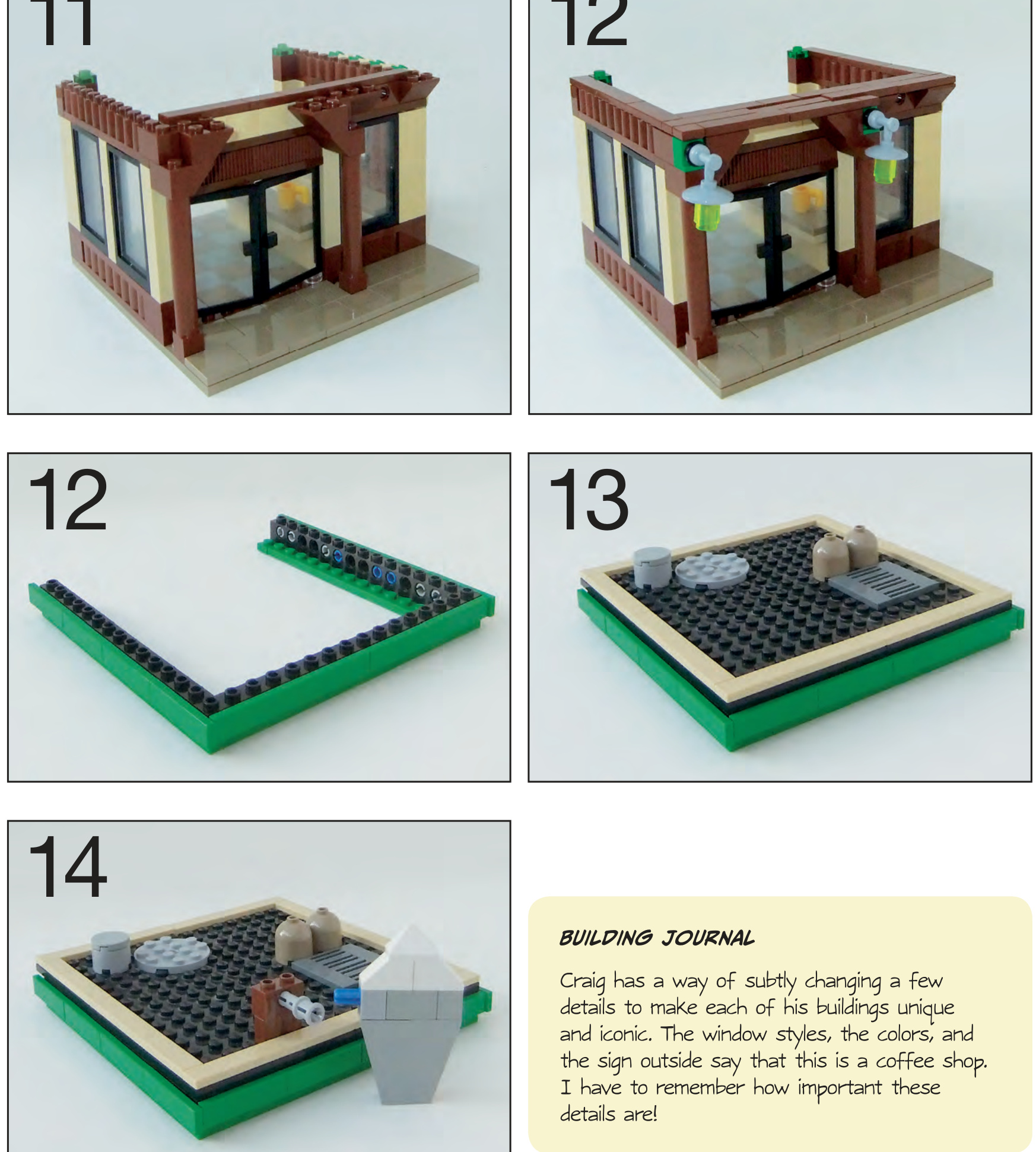
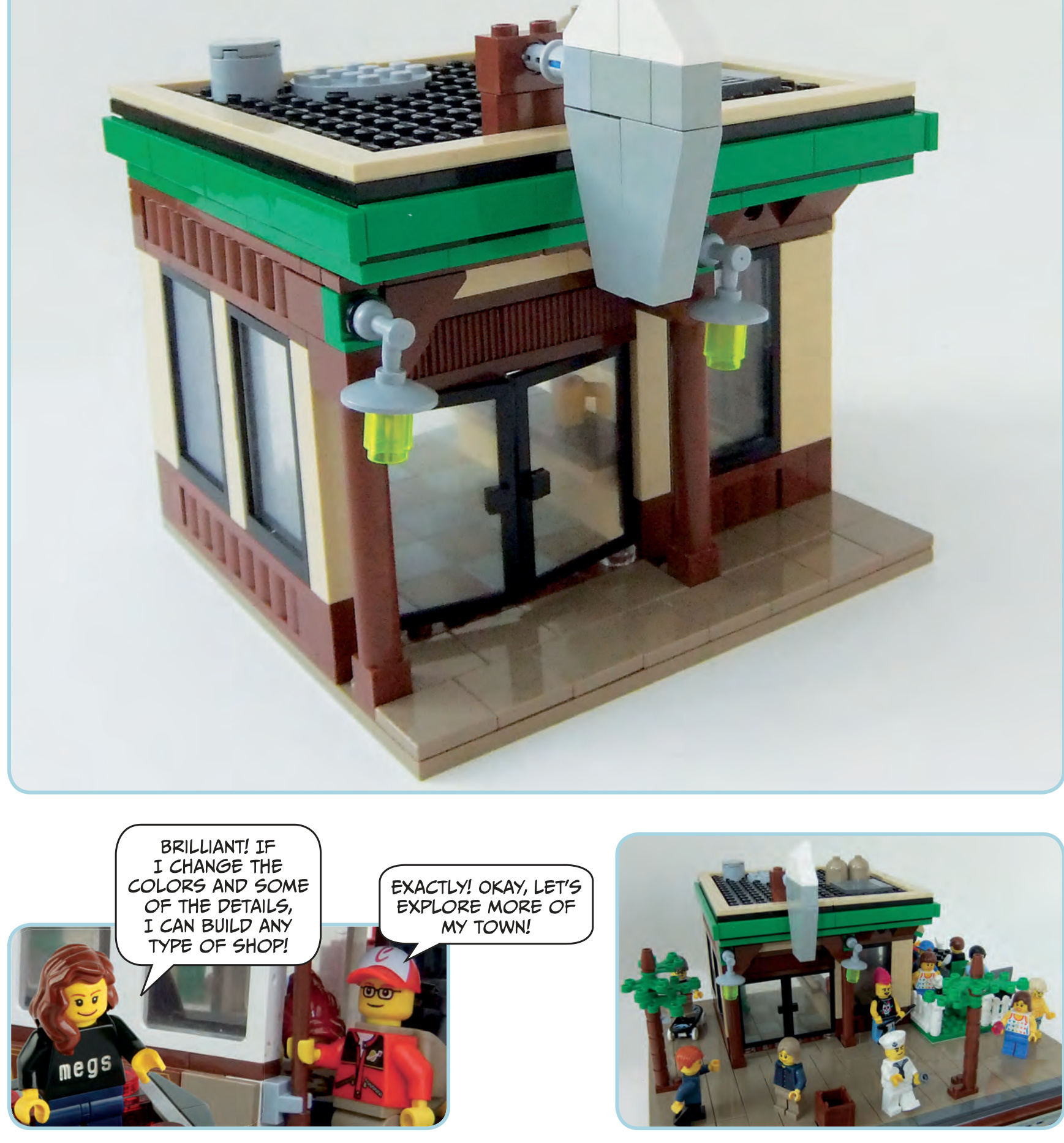
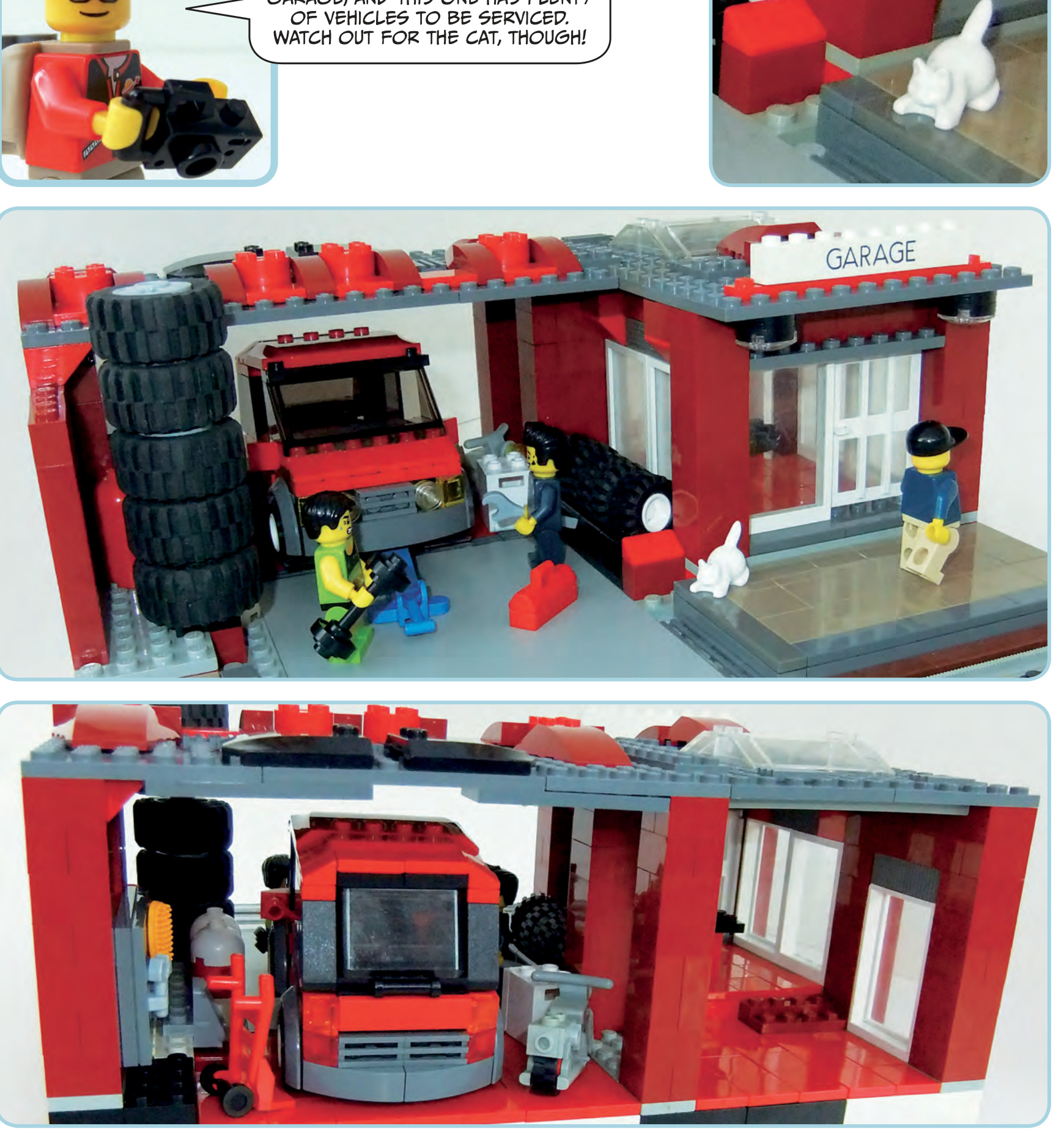
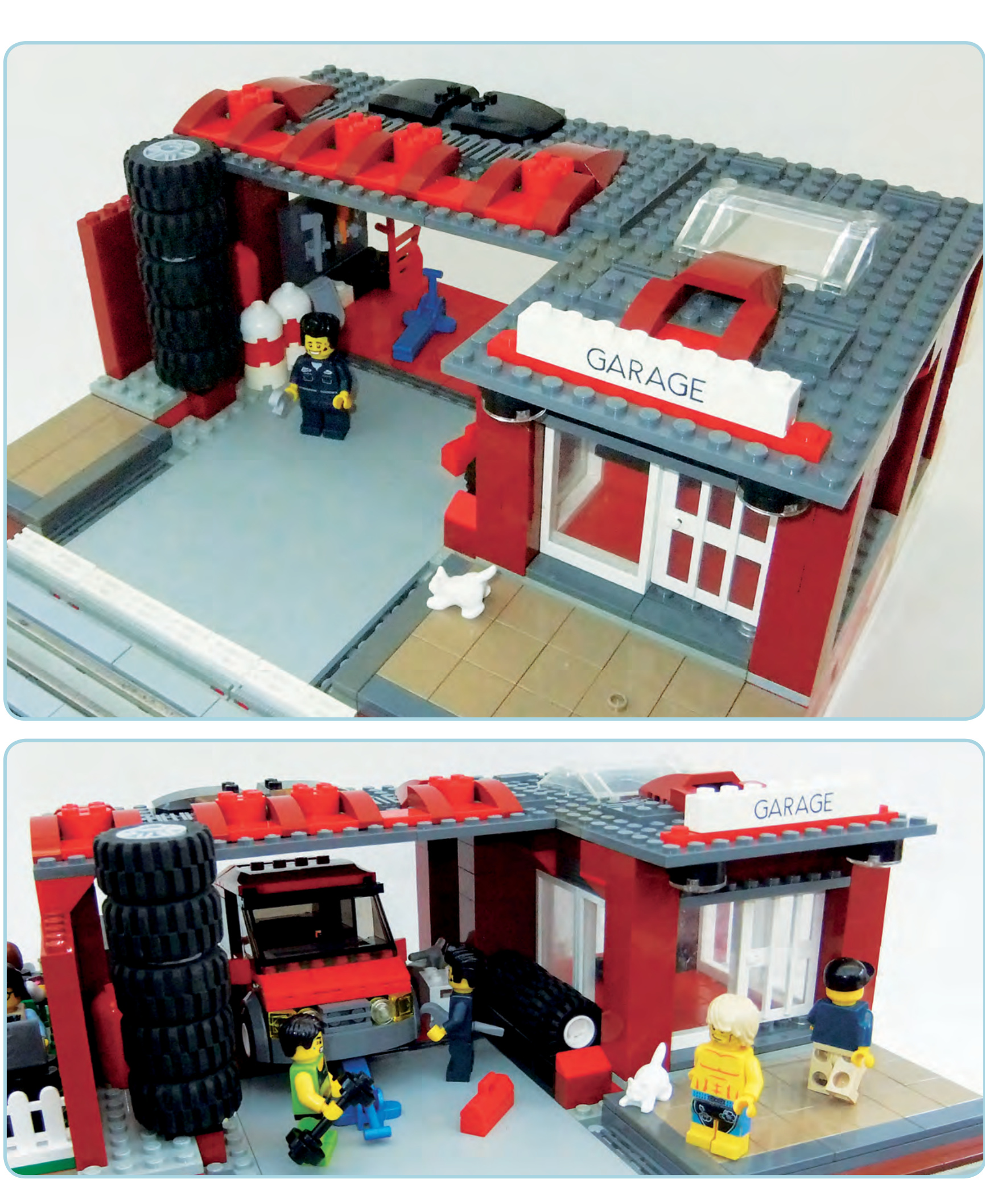
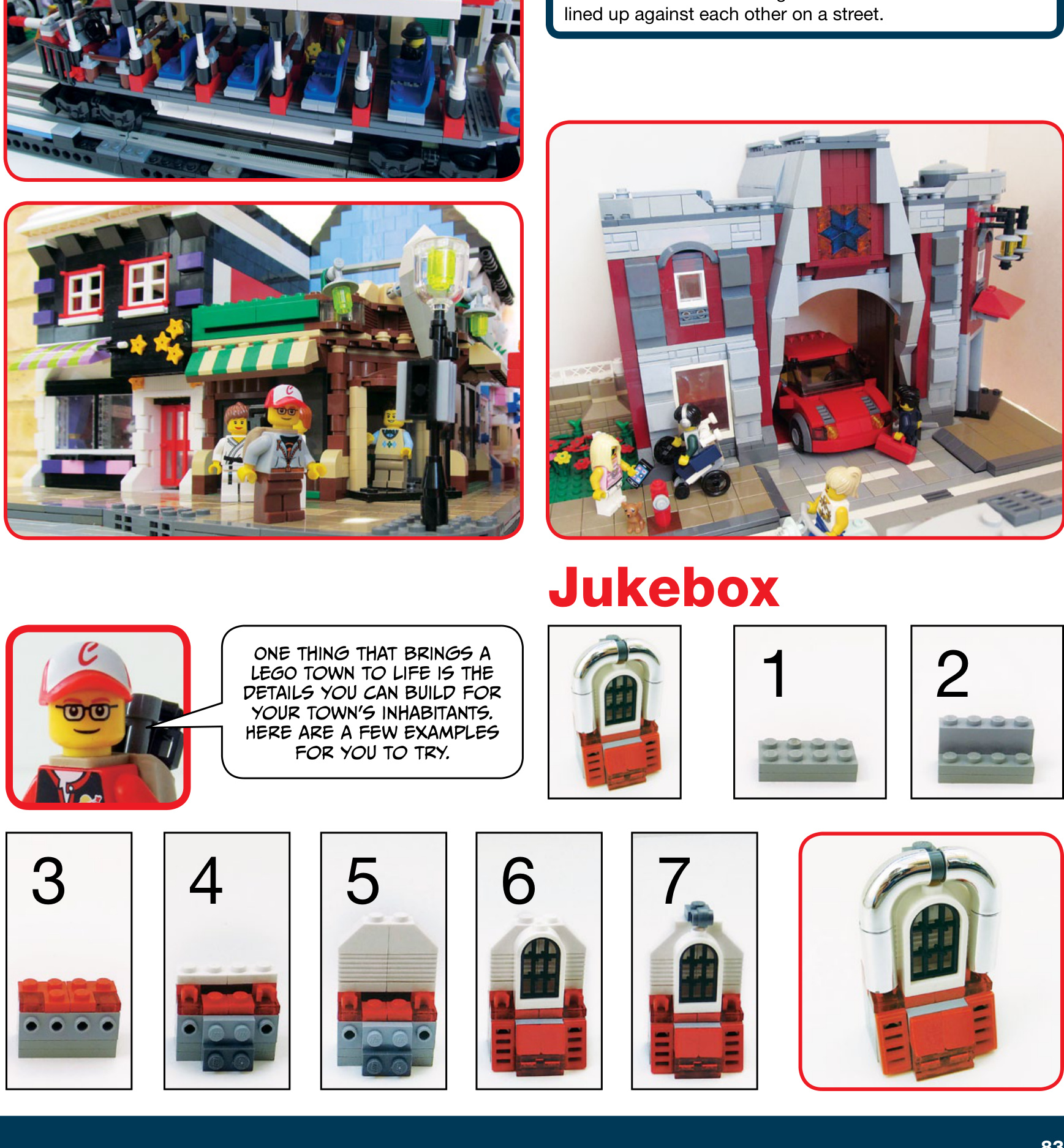
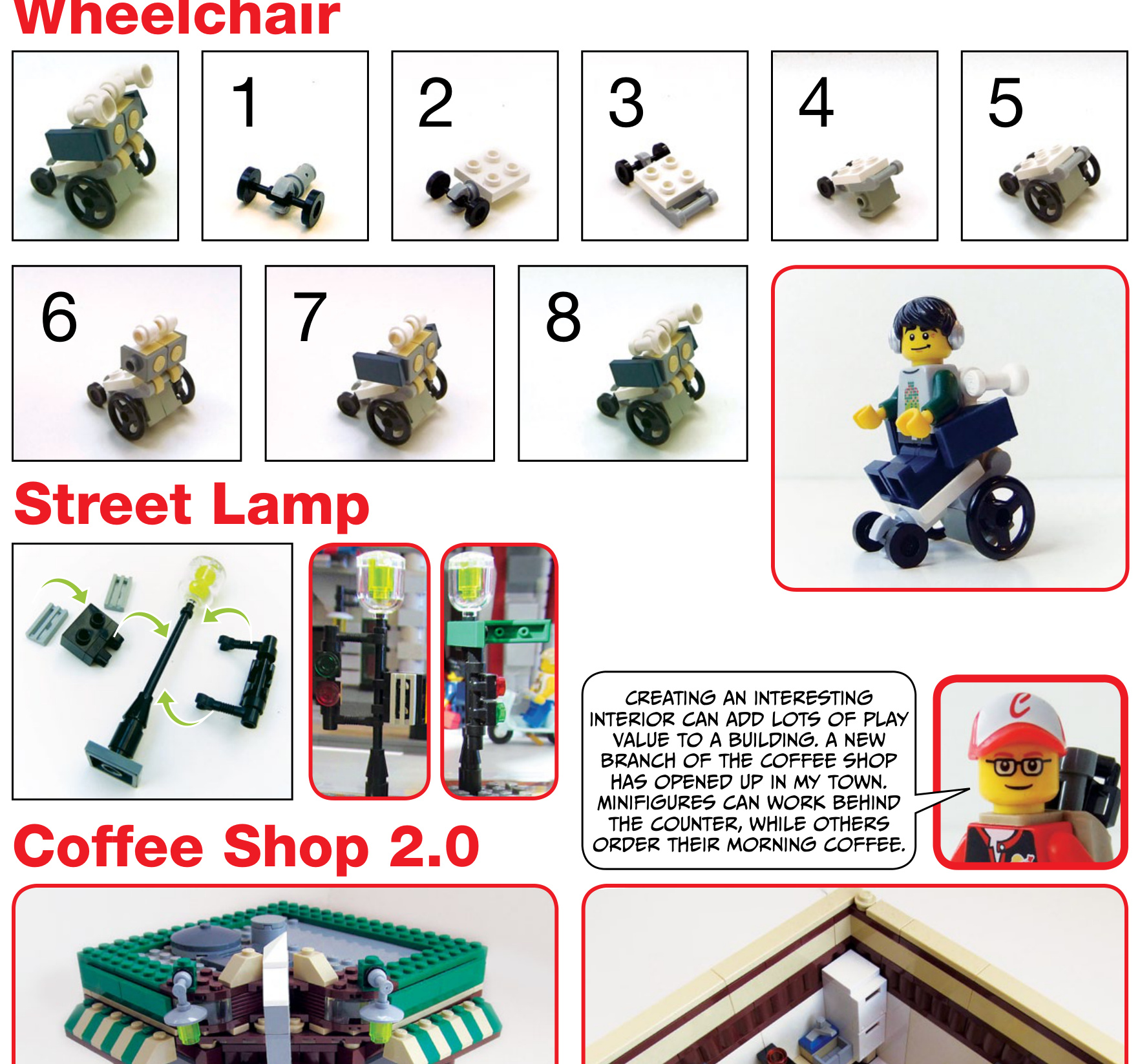
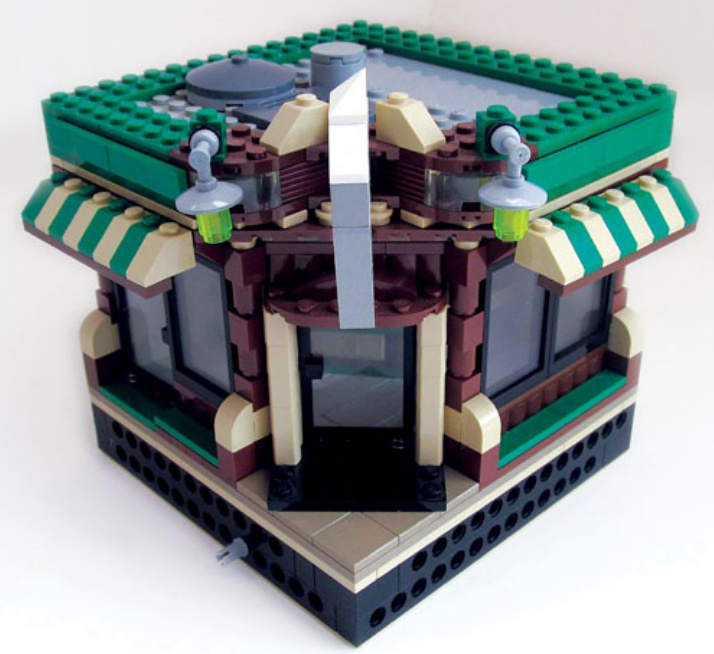
When designing a building, choose the color scheme beforehand. For example, a mechanic’s garage works well with shades of red and grey, while the magic shop in Craig’s town is a more theatrical black, white, and purple. The coffee shop is tan, brown, and green. Different color schemes allow the buildings to be more distinctive when
Building JOURNAL
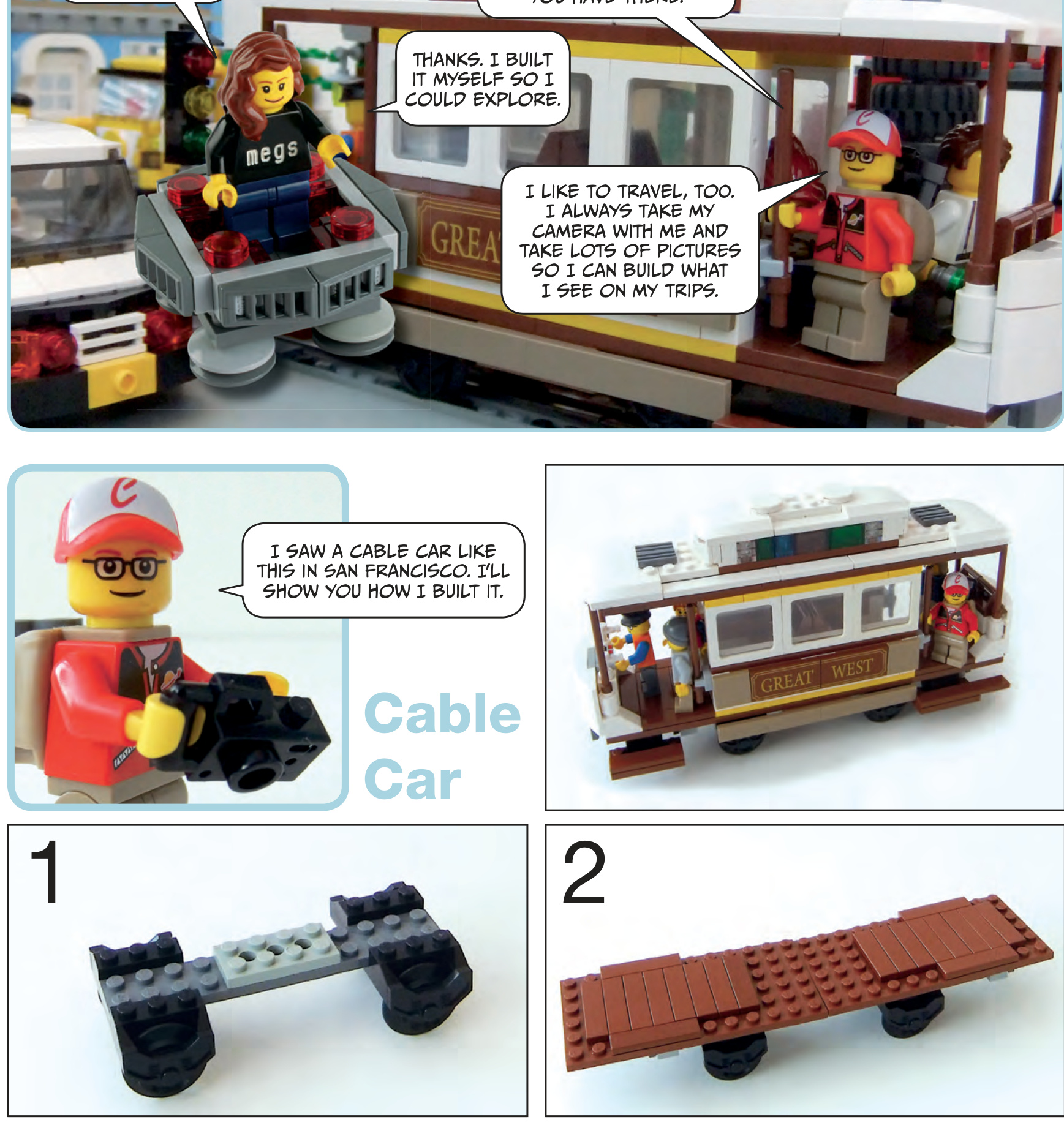
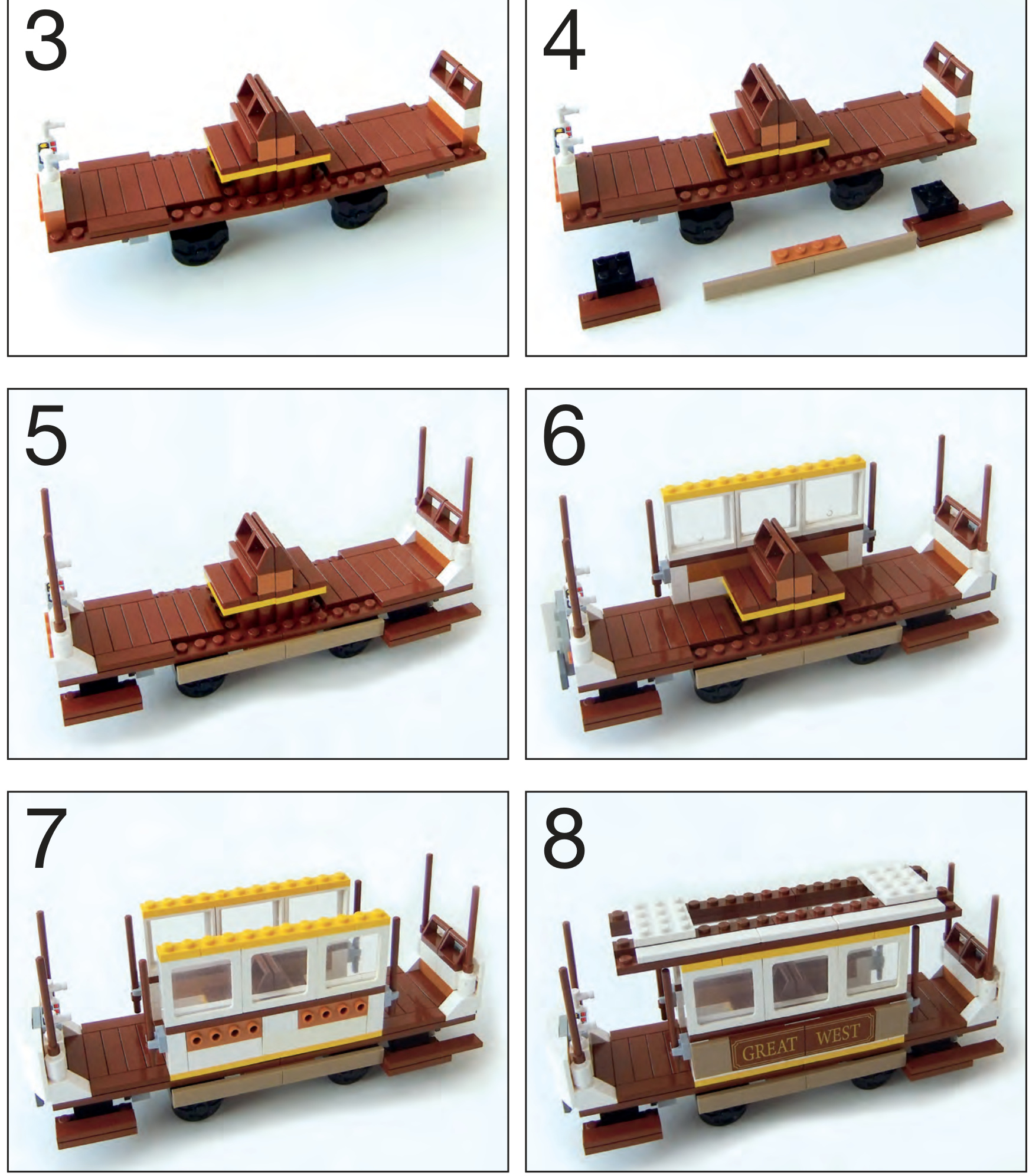
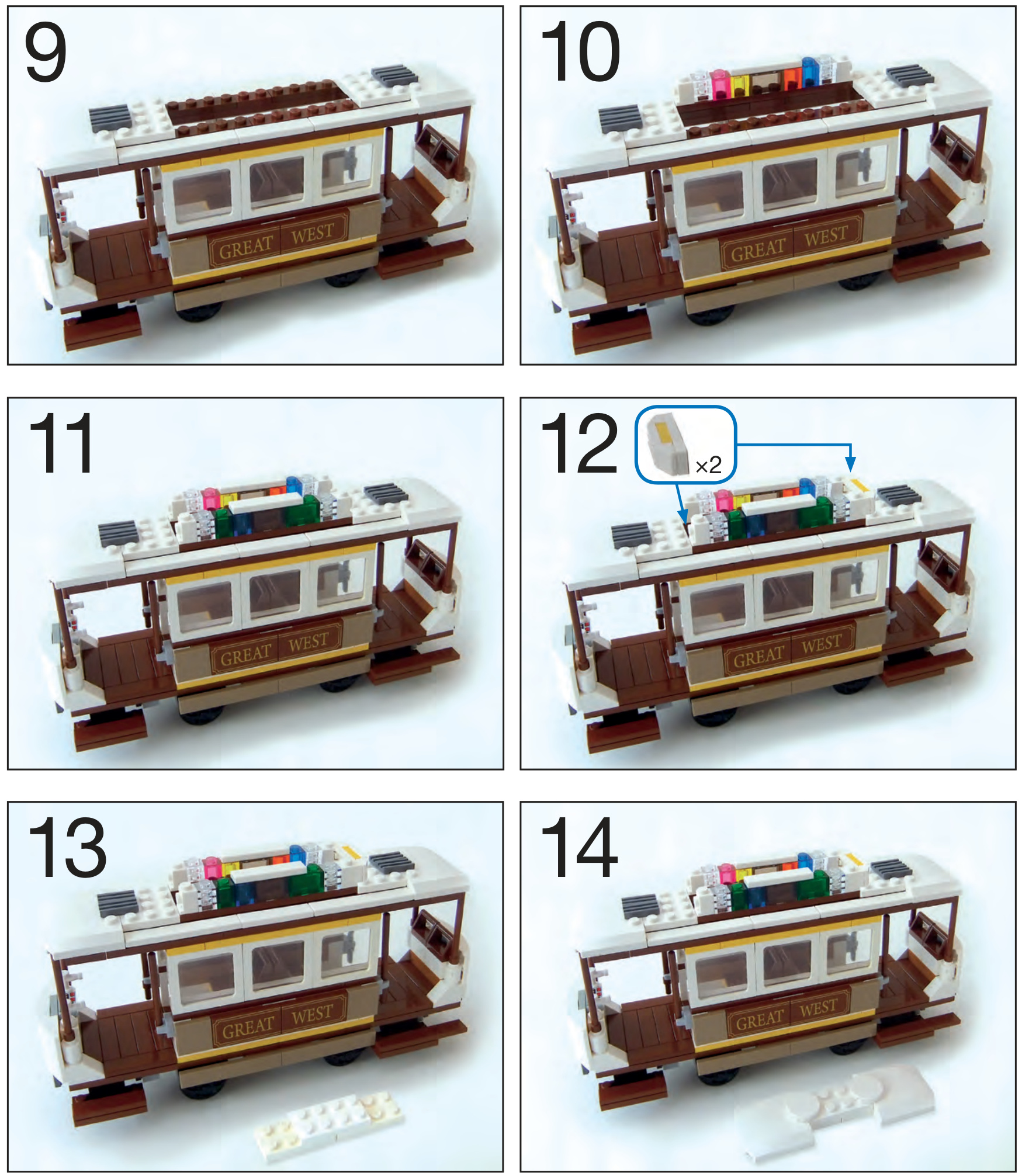
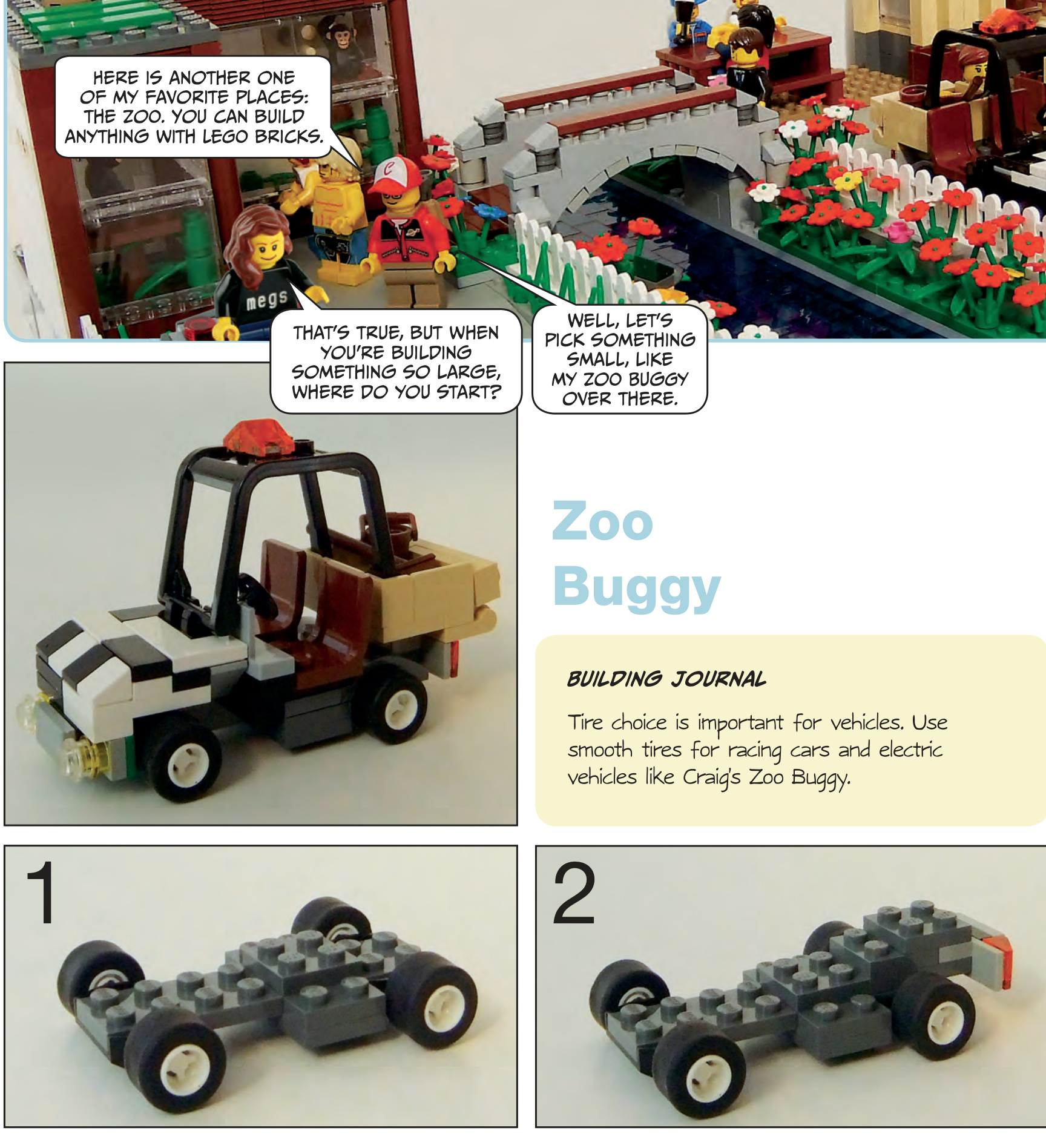
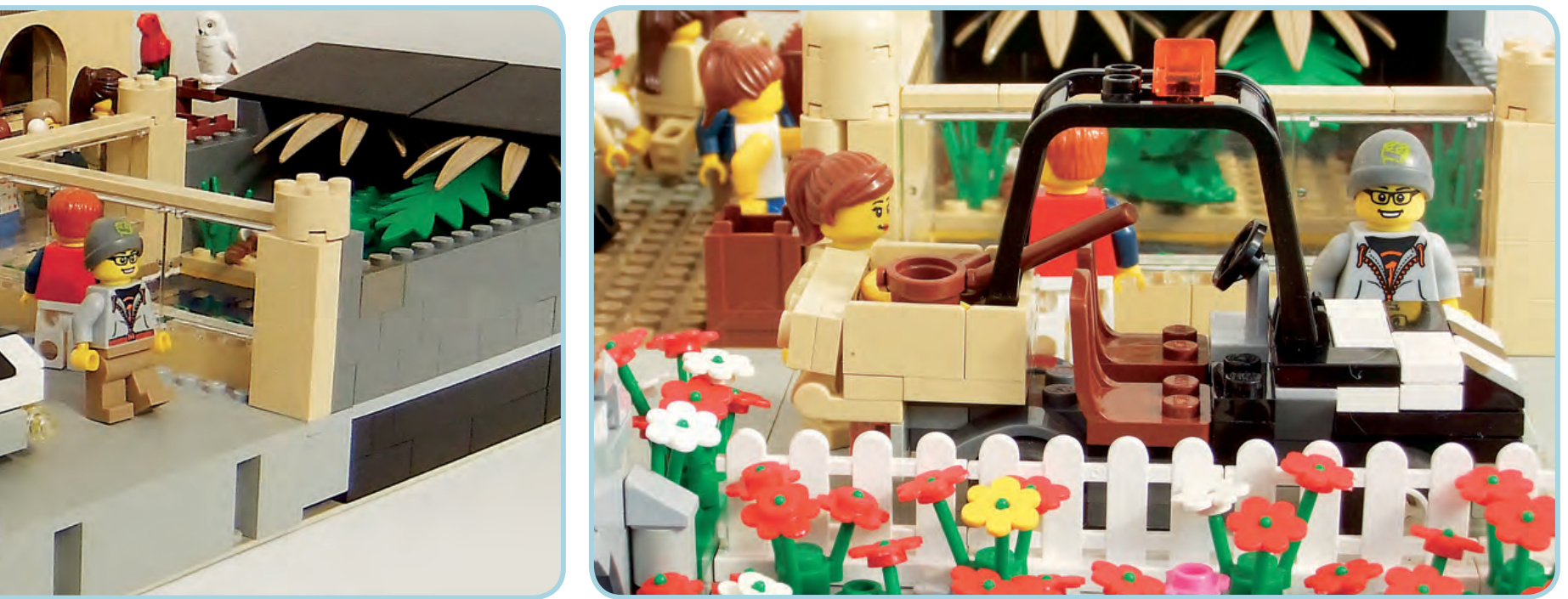
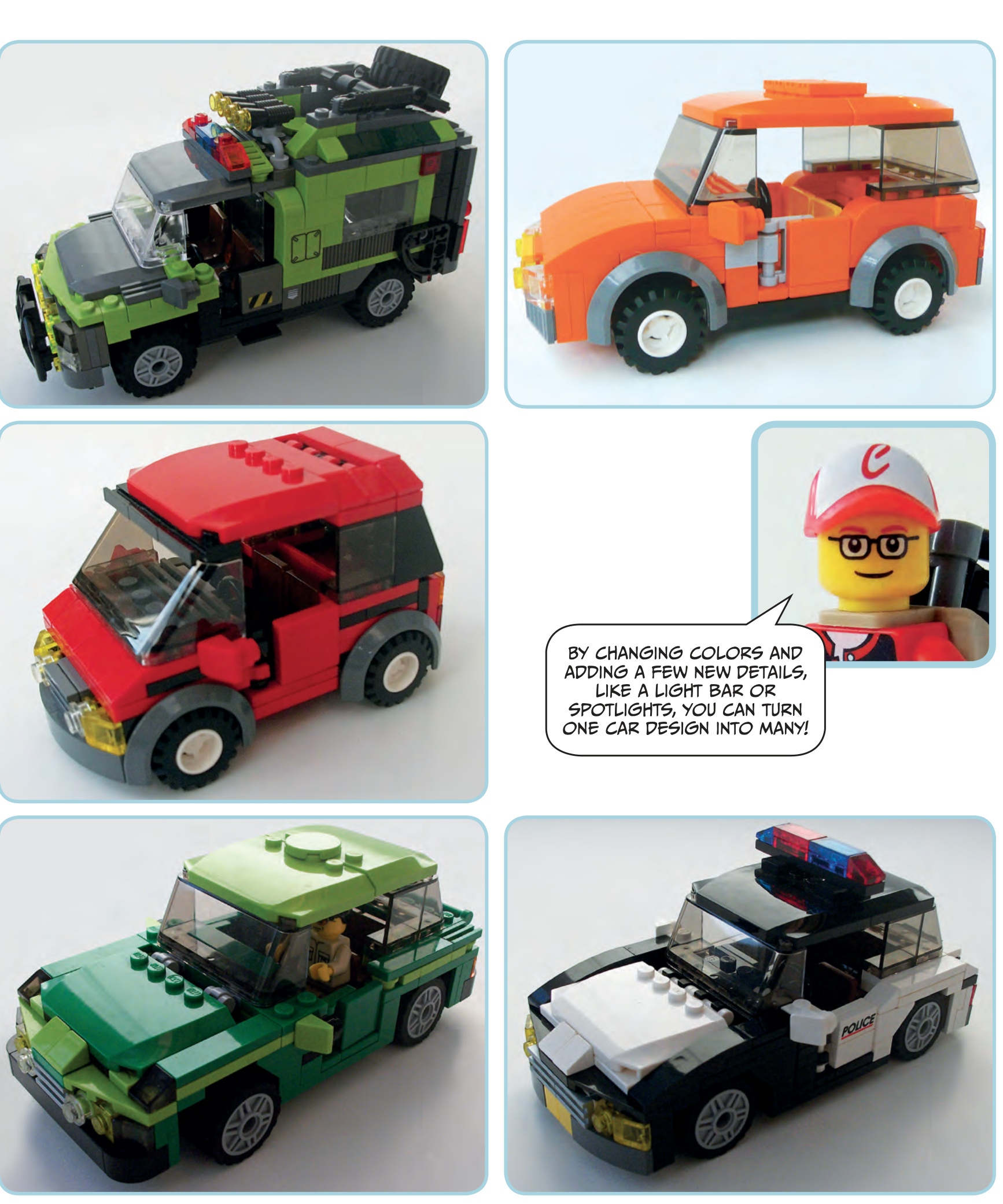
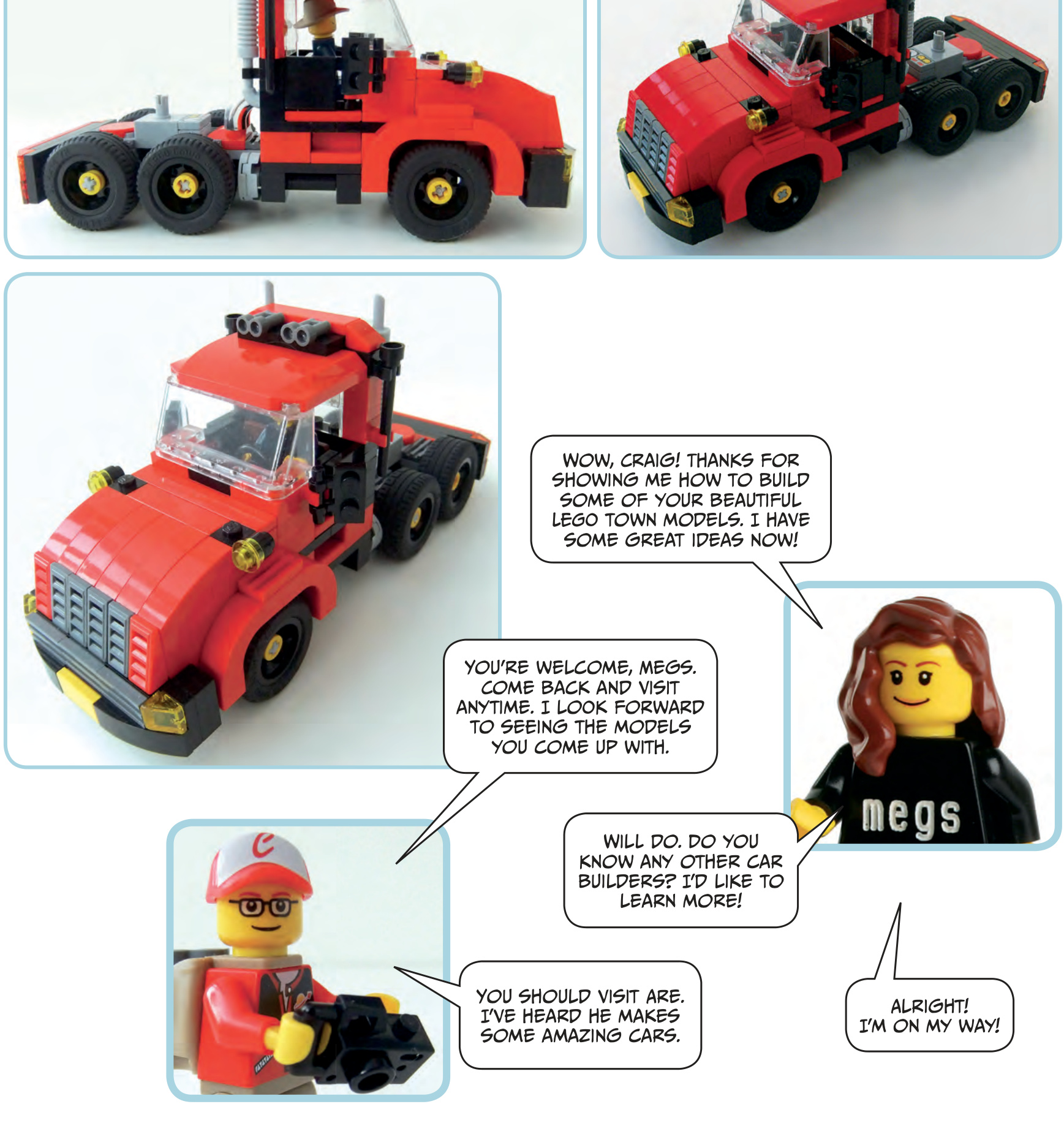
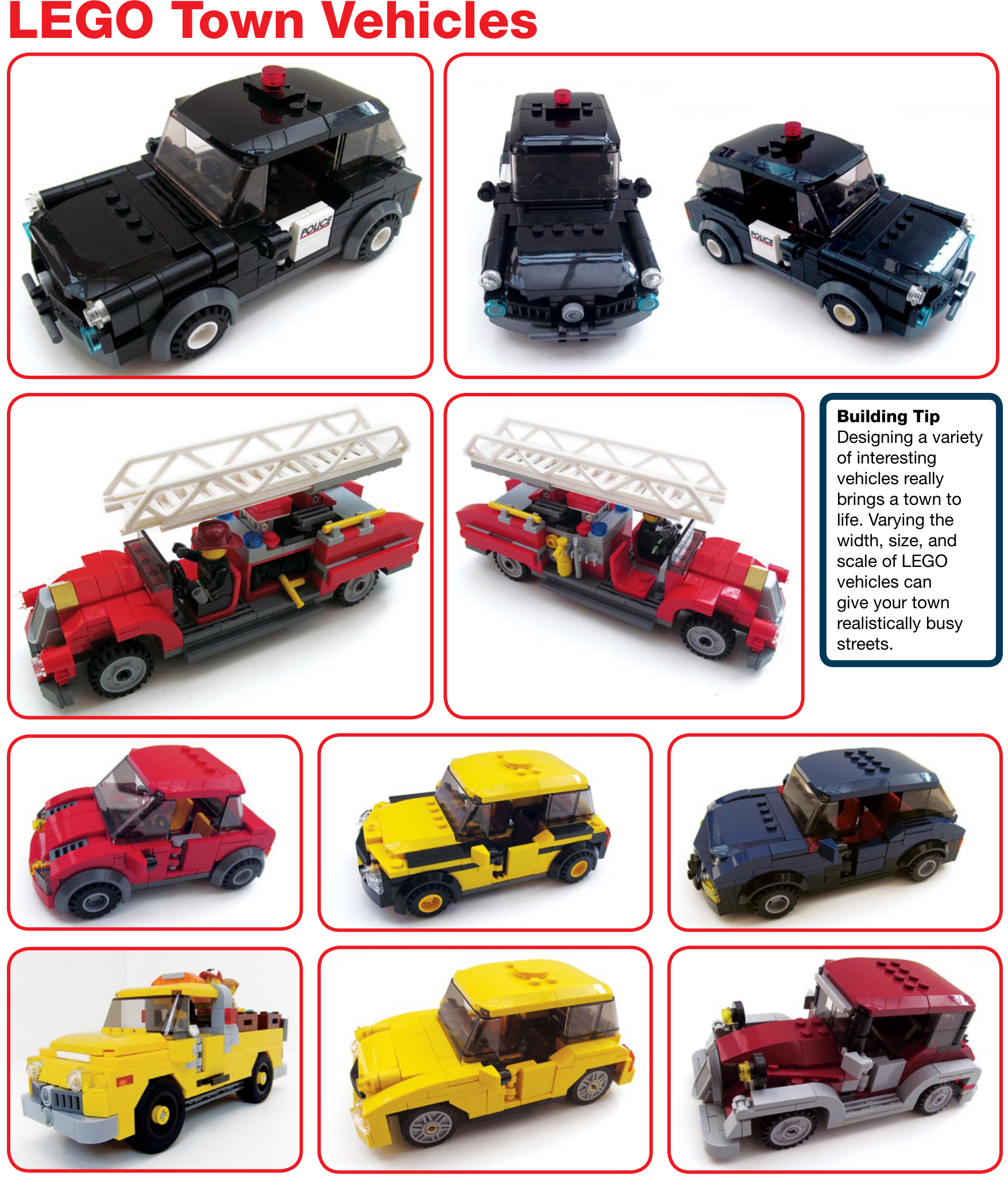
Craig has built some great vehicles. He told me that when you build a car or tram, you should think about the parts that will give your vehicle a personality or show what time period it comes from. For the orange trolley car, he added opening doors and big windows like the real cars that traveled the streets of Los Angeles in the 1930s. When building a version of a real-life vehicle, key in on the iconic details such as shape, size, bumpers, shape of lights, and windshield to help capture that specific vehicle’s look.